
Search the Site with

|
Search the Site with
|
 General Characteristics Crew List Memorabilia Accidents aboard the Ship History Image Gallery to end of page
 | 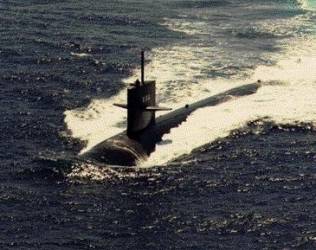 |  |
USS HAWKBILL was the 18th STURGEON - class attack submarine and the second ship in the Navy named after the large sea turtle.
Decommissioned and stricken from the Navy list on March 15, 2000, the USS HAWKBILL subsequently entered the Navy's Nuclear Powered Ship and Submarine Recycling Program at the Puget Sound Naval Shipyard at Bremerton, Wash. Recycling of the submarine was finished on December 1, 2000.
| General Characteristics: | Awarded: December 18, 1964 |
| Keel Laid: September 12, 1966 | |
| Launched: April 12, 1969 | |
| Commissioned: February 4, 1971 | |
| Decommissioned: March 15, 2000 | |
| Builder: Mare Island Naval Shipyard, Vallejo, Calif. | |
| Propulsion system: one S5W2 nuclear reactor | |
| Propellers: one | |
| Length: 292 feet (89 meters) | |
| Beam: 31.7 feet (9.65 meters) | |
| Draft: 29.2 feet (8.9 meters) | |
| Displacement: Surfaced: approx. 4,250 tons | |
| Submerged: approx. 4,700 tons | |
| Speed: Surfaced: approx. 15 knots | |
| Submerged: approx. 30 knots | |
| Armament: four 533 mm torpedo tubes for | |
| Crew: 12 Officers, 95 Enlisted |
 back to top go to the end of the pageback to top go to the end of the page
Crew List:
This section contains the names of sailors who served aboard USS HAWKBILL. It is no official listing but contains the names of sailors who submitted their information.
back to top go to the end of the pageback to top go to the end of the pageAccidents aboard USS HAWKBILL:
| Date | Where | Events |
|---|---|---|
| June 20, 1979 | off Hawaii | The USS HAWKBILL reactor's primary coolant system develops a leak while the submarine is on maneuvers in Hawaiian waters which last for four days. Originally, the leak was about two gallons an hour, but by the time the submarine docks at Pearl Harbor, HI, on June 23, the leak has been reduced to three-quarts an hour. On June 24 it is stopped. The Navy says none of the water escaped, as it was captured and stored in tanks designed for such contingencies and that none of the crew was in danger. Supplemental coolant water was pumped in to prevent overheating. According to the Navy, "the leakage was caused by normal wear of inside parts of valves. Such leaks happen occasionally." |
| December 3, 1980 | Puget Sound Naval Shipyard, Bremerton, Wash. | During a test, about 150 gallons of low-level radioactive water leak from a faulty valve on the USS HAWKBILL undergoing overhaul at the PSNY. Five workers receive low-level radioactive contamination. A Navy spokesman says they received a dose of radiation "less than that typically received by a chest X-ray." |
back to top go to the end of the pageUSS HAWKBILL History:
USS HAWKBILL was the second United States Navy ship to carry the name HAWKBILL, following the World War II submarine USS HAWKBILL (SS 366). Her construction contract was awarded to Mare Island Naval Shipyard at Vallejo, California, on December 18, 1964. Her keel was laid on September 12, 1966. She was launched on April 12, 1969, sponsored by Mrs. Bernard F. Roeder, wife of Vice Admiral Bernard F. Roeder, Commander United States First Fleet. Because of her hull number, 666, USS HAWKBILL was later widely known among her crew as "The Devil Boat" or "Devilfish", but these were informal nicknames.
During August 1970, while still in new-construction status at Mare Island, USS HAWKBILL conducted new-construction power-range testing. In September 1970, she carried out initial sea trials. These trials were part of the final process of proving the ship, propulsion plant, and operating systems before formal delivery and commissioning. USS HAWKBILL was commissioned on February 4, 1971. Rear Admiral W. H. Groverman, Commander Western Sea Frontier, commissioned the boat, and she was assigned to Submarine Squadron Five at San Diego, California. Her first months in commission were spent in the demanding transition from newly delivered submarine to operational fleet unit. In March 1971, she departed the shipyard for shakedown trials in the Puget Sound area. She conducted Weapons System Accuracy Testing in Dabob Bay, Washington, and sound trials at Carr Inlet. On April 19, 1971, she completed an Operational Reactor Safeguards Examination. During May and June 1971, USS HAWKBILL carried out local operations from San Diego.
On July 8, 1971, USS HAWKBILL departed San Diego for post-shakedown availability at Mare Island. That availability corrected deficiencies and made adjustments identified during her first months of operation. She departed Mare Island on September 7, 1971, and returned to San Diego. From October 18, 1971, to December 30, 1971, she participated in a Deep Submergence Rescue Vehicle technical evaluation. On October 26, 1971, she carried out the first mother-submarine mating with DSRV 1, and Captain S. H. Packer, Commander Submarine Development Group One, was transferred aboard. This event placed USS HAWKBILL in the Navy's post-THRESHER (SSN 593) and post-SCORPION (SSN 589) rescue-development environment, in which the submarine force sought more effective ways to rescue personnel from a disabled submarine on the seafloor.
In January and February 1972, USS HAWKBILL conducted local operations and upkeep in the San Diego operating area. On March 9, 1972, she departed on her first Western Pacific deployment and received the Navy Expeditionary Medal for that deployment. During April and May 1972, she operated in the South China Sea and received the Vietnam Service Medal. Her service came during the final phase of direct United States military involvement in the Vietnam War, when submarines, surface ships, and aircraft of the Pacific Fleet continued to support Seventh Fleet operations, surveillance, and regional presence. From June 5, 1972, to June 19, 1972, USS HAWKBILL was in upkeep at Guam. In July and August 1972, she was under way for operations. She returned to San Diego on September 18, 1972, after having logged about 40,000 miles during the deployment. During that cruise, she visited Subic Bay, Guam, Hong Kong, and Yokosuka. From September 18, 1972, to November 7, 1972, she was in port for stand-down, and during November and December 1972 she resumed local operations and upkeep.
USS HAWKBILL began 1973 with local operations and upkeep during January and February. On February 9, 1973, she was moored outboard of USS DIXON (AS 37) at San Diego. On March 2, 1973, she departed San Diego and arrived at Bangor, Washington, on March 6, 1973, for weapons testing. From March 16, 1973, to April 6, 1973, USS HAWKBILL operated under winter ice in the Bering Strait region. This was a demanding environment because of shallow water, ice cover, restricted maneuvering room, and the need for precise navigation. Her later commanding officer, Commander Robert H. Perry, described this 1973 work as the first STURGEON-class submerged winter transit or operation in the Bering Strait. On April 13, 1973, she completed another Operational Reactor Safeguards Examination and returned to San Diego. On May 23, 1973, she departed San Diego for Mare Island and a Selected Restricted Availability, arriving there on May 29, 1973. On June 30, 1973, she returned to San Diego after completion of that availability. On July 1, 1973, she was transferred from Submarine Squadron Five to Submarine Group Five.
On July 13, 1973, USS HAWKBILL departed for Bangor, Washington. She arrived there on July 17, 1973, for weapons-system testing and Mark 48 certification on the Nanoose Range. She departed for San Diego on August 3, 1973, and arrived there on August 13, 1973. After upkeep during August and September, she departed on October 2, 1973, for another Western Pacific deployment. From October 2, 1973, to October 20, 1973, she was in transit, with a port visit at Pearl Harbor during October. From October 1973 into April 1974, she remained deployed. In November 1973, she underwent upkeep at Guam. From December 19, 1973, to January 2, 1974, she was in port at Subic Bay over the Christmas period.
During January 1974, USS HAWKBILL visited Hong Kong. In February 1974, she conducted a Seventh Fleet guest cruise from Subic Bay. On February 14, 1974, she was in port at Guam for upkeep with USS PROTEUS (AS 19). That same month, she completed another Operational Reactor Safeguards Examination. In March and April 1974, she conducted a 67-day underway period for operations. On April 28, 1974, she was again in port at Guam, moored next to USS PROTEUS. She returned to San Diego on May 13, 1974, completing a deployment of about seven and a half months.
After stand-down in May and June, she conducted dependents cruises and an Inspection and Survey Board inspection in July. In August 1974, she was in upkeep alongside USS DIXON at San Diego. During September 1974, she was steaming for POTS testing. In September and October 1974, she conducted local operations from San Diego and initial testing related to the submarine-launched Tomahawk cruise missile. During the same period, she carried out an initial mating with DSRV 2. From October 19, 1974, to October 24, 1974, she was under way in transit to Bangor, Washington. From October 24, 1974, to November 8, 1974, she was in port at Bremerton, Washington. From November 8, 1974, to November 17, 1974, she was under way to Nanoose for weapons tests. On December 9, 1974, she began her first regular overhaul in Dry Dock No. 1 at Puget Sound Naval Shipyard.
USS HAWKBILL remained in overhaul through much of 1975. She undocked on August 29, 1975. In September 1975, she conducted post-overhaul reactor-safeguards work, crew certification, dock trials, and a fast cruise. In October 1975, she conducted sea trials. On November 8, 1975, she completed her first regular overhaul at Puget Sound Naval Shipyard, about one month ahead of schedule, and began weapons testing and sound trials in the Puget Sound area. On December 21, 1975, she arrived at Pearl Harbor, Hawaii, and joined Submarine Squadron One. That move placed USS HAWKBILL in the operating pattern that would define most of the rest of her active life. Pearl Harbor gave her access to the central Pacific, Western Pacific, North Pacific, and Arctic routes, and she remained associated with Submarine Squadron One for the remainder of her long operational career.
During January through March 1976, USS HAWKBILL conducted local operations, training, and in-port work at Pearl Harbor. In April 1976, she conducted underway training and Mark 48 certification. In May 1976, she conducted Subroc testing and firing on the Kauai Range. In June 1976, she underwent upkeep with USS SPERRY (AS 12). On July 4, 1976, she visited Lahaina, Maui. During July, she conducted local operations. On August 4, 1976, she completed another Operational Reactor Safeguards Examination. In September 1976, she underwent pre-overseas-movement upkeep at Pearl Harbor. In October 1976, she conducted Mark 48 proficiency work, firing 31 exercise weapons and recording 25 hits. On October 29, 1976, she departed on another Western Pacific deployment.
From November 20, 1976, to November 26, 1976, USS HAWKBILL visited Chinhae, South Korea. In December 1976, she was under way for operations. In January 1977, she visited Subic Bay and Sattahip, Thailand. In February 1977, she participated in Exercise Sea Siam V, visited Subic Bay again, and visited Hong Kong. From March 3, 1977, to March 20, 1977, she was in upkeep at Guam. On March 21, 1977, she departed for operations, and on May 15, 1977, she returned to Pearl Harbor and began a 30-day stand-down. She received the Navy Unit Commendation for the 1976-1977 deployment period.
In June 1977, she underwent upkeep at the Pearl Harbor submarine base. In July and August 1977, she conducted local operations, took part in filming for a Chief of Naval Operations situation-report series, visited Lahaina, Maui, conducted a dependents cruise, and completed another Operational Reactor Safeguards Examination. On September 1, 1977, she began a six-week Selected Restricted Availability at Pearl Harbor. On November 7, 1977, she got underway for Mark 48 proficiency firings at Kauai, with Commander Submarine Force Pacific and Commander Submarine Squadron One embarked. On November 10, 1977, she underwent an Inspection and Survey Board inspection. On December 1, 1977, she completed a Navy Technical Proficiency Inspection with a rating of Excellent. In December 1977, she visited Kailua-Kona, Hawaii, for liberty. For 1977, she received the Battle Efficiency "E".
In January 1978, USS HAWKBILL conducted local operations and visited Lahaina, Maui, and Kailua-Kona. From February 13, 1978, to March 16, 1978, she underwent upkeep at the Pearl Harbor submarine base. On March 17, 1978, she deployed for the eastern Pacific. On March 24, 1978, she arrived at San Diego for ten days of liberty. On April 4, 1978, she began participation in RIMPAC 78, the multinational Rim of the Pacific exercise. On April 22, 1978, she arrived at Pearl Harbor and began upkeep and drydocking. From June 13, 1978, to June 20, 1978, she conducted sea trials. On July 9, 1978, she deployed again to the Western Pacific. On July 20, 1978, she moored at Guam for shutdown repairs. In August 1978, she participated in READEX 1-79, a major Seventh Fleet anti-submarine warfare exercise. On September 13, 1978, she moored at Subic Bay for a ten-day visit. On September 25, 1978, she got underway for the READEX 1-79 anti-submarine warfare phase. During October 1978, she visited Chinhae, South Korea, and Hong Kong. On October 25, 1978, she moored at Guam for a three-week upkeep with USS HUNLEY (AS 31). She was underway again in November. On November 25, 1978, she completed an Operational Reactor Safeguards Examination and arrived at Subic Bay for two weeks of liberty. On December 6, 1978, she departed Subic Bay for the transit home, and on December 20, 1978, she arrived at Pearl Harbor. For 1978, she received another Battle Efficiency "E" and an Anti-Submarine Warfare "A".
In January 1979, USS HAWKBILL was in stand-down and upkeep at Pearl Harbor. She conducted sea trials on January 22, 1979. In February she conducted local operations and visited Lahaina, Maui. In March she was in upkeep at Pearl Harbor. In April 1979, she conducted local operations and a Mark 48 war-shot firing. In May 1979, she was in upkeep and underwent a Navy Technical Proficiency Inspection. During June and July she conducted local operations, and on July 20, 1979, she completed an Operational Reactor Safeguards Examination. In August she conducted POTS testing and upkeep. In September 1979, she participated in PACSUBASWEX, including evaluation work connected with the newer LOS ANGELES-class anti-submarine warfare environment. On October 16, 1979, she departed Pearl Harbor for Alameda, California. On October 29, 1979, she departed Alameda for a refueling overhaul at Puget Sound Naval Shipyard. On November 2, 1979, she moored at Bremerton, Washington, and began the overhaul.
USS HAWKBILL remained in refueling overhaul at Puget Sound Naval Shipyard through 1980 and 1981. During this yard period, she received the WLQ-4 Sea Nymph system, the AN/BQQ-5 sonar system, and the Mark 117 fire-control system. These installations were part of the continuing modernization of STURGEON-class attack submarines, improving electronic support, sonar capability, and fire-control integration at a time when the Soviet submarine force was becoming more capable and quieter. She undocked on August 5, 1981. On November 24, 1981, she completed a post-overhaul Operational Reactor Safeguards Examination. In January and February 1982, she completed the overhaul. In March 1982, she visited Nanaimo, British Columbia, and used the Nanoose Tracking Range for weapons testing. In April 1982, she transited back toward Pearl Harbor, visiting San Francisco and San Diego en route. On April 29, 1982, she returned to Pearl Harbor and rejoined Submarine Squadron One. During May she was in upkeep at Pearl Harbor. From June through August 1982, she conducted local operations, including submerged lock-in and lock-out training with Navy divers. In September 1982, she visited Lahaina, Maui, and conducted a dependents cruise. During September and October she completed a Nuclear Weapons Acceptance Inspection, a Supply Management Inspection, and an Operational Reactor Safeguards Examination. She also co-hosted the Japanese submarine KUROSHIO. In November 1982 she conducted local operations, and in December she was in pre-overseas-movement upkeep and stand-down.
On January 23, 1983, USS HAWKBILL began a four-week pre-deployment workup. On February 19, 1983, she deployed to the Western Pacific. During March she took part in an operational exercise. On March 24, 1983, she visited Yokosuka, Japan, for liberty. On April 1, 1983, she sortied to the North Pacific for FLEETEX 83-1. On April 20, 1983, she returned to Yokosuka for five days of upkeep. In June 1983, after six weeks at sea, she began an 18-day upkeep in Guam. On June 27, 1983, she departed for a Subic Bay port visit. On July 6, 1983, she began Exercise Battleweek with the USS NEW JERSEY (BB 62) Battle Group. On July 12, 1983, she returned to Subic Bay for upkeep. On July 17, 1983, she got underway for a port visit in Hong Kong. On July 28, 1983, she visited Subic Bay again. On August 1, 1983, she got under way for Pearl Harbor, escorting the USS NEW JERSEY Battle Group. She arrived at Pearl Harbor on August 18, 1983, and began leave and stand-down. During September she conducted local operations and received an Excellent rating in an Underway Material Inspection. During October and November she conducted local anti-submarine warfare exercises and upkeep. On November 26, 1983, she completed a Defense Nuclear Security Inspection. On December 15, 1983, she completed an Operational Reactor Safeguards Examination and began leave and stand-down. For 1983, she received the Battle Efficiency "E" and the Silver Anchor Award.
On January 31, 1984, after January pre-overseas-movement upkeep at Pearl Harbor, USS HAWKBILL began a four-week pre-deployment workup. She completed her first Tactical Readiness Evaluation with an Above Average rating and completed Pre-Overseas Movement Certification. On March 1, 1984, she deployed for a Western Pacific and under-ice operation. She visited Chinhae, South Korea, and returned to Pearl Harbor on May 17, 1984, for three weeks of leave and stand-down. In June 1984 she conducted local operations, and on June 28, 1984, she began two weeks of upkeep at the Pearl Harbor submarine base. In July she conducted local operations, visited Lahaina, Maui, and conducted a dependents cruise on July 22, 1984. On August 1, 1984, she was drydocked for a Selected Restricted Availability at Submarine Base Pearl Harbor. She conducted sea trials on October 1, 1984. During October she received another Battle Efficiency "E". In October and November she conducted local operations, anti-submarine warfare exercises, and a Navy Technical Proficiency Inspection. On December 21, 1984, she completed an Operational Reactor Safeguards Examination. For 1984, she also received the Supply Excellence Award.
During January and February 1985, USS HAWKBILL conducted pre-overseas-movement upkeep and certification. On March 5, 1985, she began another Western Pacific deployment. During this deployment, she participated in the anti-submarine warfare exercise BGAREM 85, provided anti-submarine services to the USS MIDWAY (CV 41) and USS CONSTELLATION (CV 64) battle groups, took part in United States-Malaysian exercises, crossed the equator on July 17, 1985, and participated in the United States-Thailand exercise Cobra Gold 85. She also assisted Vietnamese refugees with food and water. On September 1, 1985, she completed an Operational Reactor Safeguards Examination. She returned to Pearl Harbor on September 5, 1985, after a deployment in which 141 of 185 days were spent at sea. Her port visits included Yokosuka, Japan; Sattahip, Thailand; and Subic Bay, Philippines. She received the Battle Efficiency "E" for 1985. On October 11, 1985, a change of command was held. During October through December, USS HAWKBILL conducted local operations and completed a Navy Technical Proficiency Inspection with no reportable deficiencies. She also received the 1985 Engineering Excellence Award.
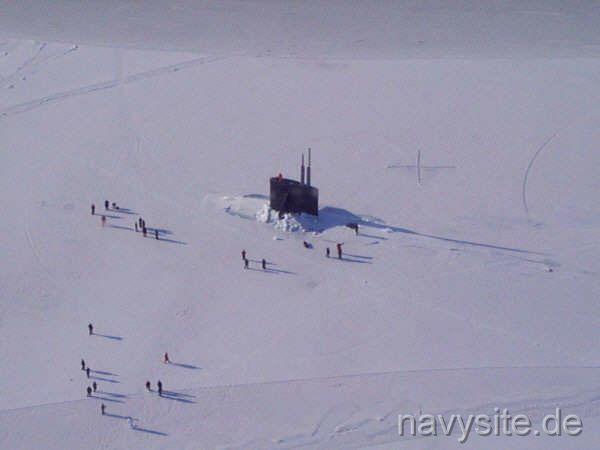
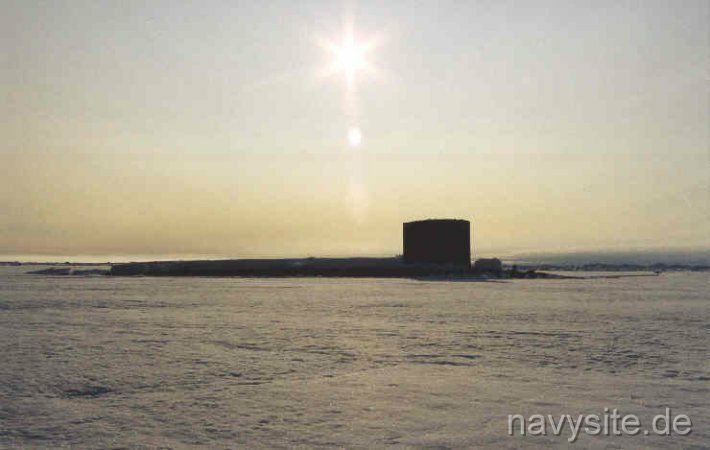
USS HAWKBILL began 1986 with PACSUBASWEX 1-86 on January 1, 1986, operating with USS BUFFALO (SSN 715) and other Pacific Fleet units. On January 6, 1986, she began a four-week pre-overseas-movement upkeep at Submarine Base Pearl Harbor. In February she completed three weeks of pre-overseas-movement workup, Pre-Overseas Movement Certification, and a Tactical Readiness Evaluation. On March 11, 1986, she departed for the Arctic Ocean for ICEX 1-86. On May 6, 1986, USS HAWKBILL, USS ARCHERFISH (SSN 678), and USS RAY (SSN 653) rendezvoused and surfaced together at the North Pole. This was the first time three nuclear-powered submarines surfaced together at the Pole. USS HAWKBILL was commanded by Commander Stephen A. Arndt. Secretary of the Navy John Lehman visited during the operation. The event took place in the late Cold War, when Arctic under-ice proficiency was important for submarine navigation, sensor performance, strategic mobility, and operations near Soviet northern approaches. USS HAWKBILL returned to Pearl Harbor on May 24, 1986, for leave and stand-down.
On June 12, 1986, USS HAWKBILL participated in RIMPAC 86, providing target services. From June 20, 1986, to July 23, 1986, she was in port for Intermediate Maintenance Activity upkeep at Pearl Harbor. On July 24, 1986, she got under way for one week of type training. From August 2, 1986, to August 19, 1986, she underwent a battery-replacement upkeep. From August 19, 1986, to August 29, 1986, she conducted prospective commanding officer operations and torpedo exercises. On August 30, 1986, she visited Lahaina, Maui, and on September 1, 1986, she conducted a dependents cruise from Lahaina to Pearl Harbor. From September 5, 1986, to October 3, 1986, she was involved in a Chief of Naval Operations project and the United States-Canadian anti-submarine warfare exercise MarCot 2-86, with port visits to Nanoose and Esquimalt, British Columbia. From October 4, 1986, to October 13, 1986, she transited to Southern California for SOEC acoustic trials near Santa Cruz Island and made a three-day port visit in San Diego. From October 14, 1986, to October 20, 1986, she was under way in transit, returning to the Pearl Harbor operating area for PACSUBASWEX 1-87 and underway engineering training. On November 13, 1986, she completed an Operational Reactor Safeguards Examination. From November 14, 1986, to November 19, 1986, she conducted local operations and provided Tactical Readiness Evaluation services for USS SAM HOUSTON (SSN 609). From November 20, 1986, to December 7, 1986, she was in port for training. On December 9, 1986, she started up and got under way to provide services for USS CAVALLA (SSN 684)'s Tactical Readiness Evaluation. On December 11, 1986, she offloaded weapons at West Loch, and from December 14, 1986, to December 31, 1986, she was in holiday stand-down.
On January 5, 1987, USS HAWKBILL began a Selected Restricted Availability and was drydocked in USS COMPETENT. She completed the availability and conducted sea trials in March 1987. On March 23, 1987, she began SUBASWEX 3-87 with USS SWORDFISH (SSN 579). On April 5, 1987, she returned to USS COMPETENT for about three weeks to replace a 400-hertz motor generator after an HPP rupture. During this period, she completed a Defense Nuclear Surety Inspection and a Nuclear Technical Proficiency Inspection. From May 13, 1987, to May 15, 1987, she was under way for local operations and PACSUBASWEX with USS BREMERTON (SSN 698). On May 15, 1987, she departed on a two-month Northern Pacific deployment, which included a port visit to Yokosuka, Japan. She returned to Pearl Harbor on July 15, 1987. From July 16, 1987, to August 5, 1987, she underwent Intermediate Maintenance Activity upkeep and a Supply Management Inspection. From August 10, 1987, to August 21, 1987, she conducted prospective commanding officer operations. From August 22, 1987, to August 23, 1987, she visited Lahaina, Maui, and on August 24, 1987, she conducted a dependents cruise from Maui to Pearl Harbor. From August 26, 1987, to August 29, 1987, she underwent a Tactical Readiness Inspection. From September 6, 1987, to September 30, 1987, she conducted local operations, provided Tactical Readiness Evaluation services for USS HENRY M. JACKSON (SSBN 730), and carried out antenna and sonar calibration on the FORACS range. On October 2, 1987, she completed an Operational Reactor Safeguards Examination. On October 3, 1987, she began pre-overseas-movement upkeep. On October 30, 1987, she completed that upkeep and began PACSUBASWEX 88-1 with USS BUFFALO and USS OLYMPIA (SSN 717), employing new joint submarine and aircraft anti-submarine warfare coordinated operations. She returned to port on November 8, 1987, for loadout. On November 16, 1987, she began Pre-Overseas Movement Certification. On November 30, 1987, she departed on another Western Pacific deployment. From December 16, 1987, to December 19, 1987, she visited Chinhae, South Korea. On December 23, 1987, she arrived at Yokosuka, Japan, for upkeep.
During January and February 1988, USS HAWKBILL made port visits to Sasebo, Japan; Subic Bay, Philippines; and Pattaya Beach, Thailand. She also conducted an encounter exercise with the USS ENTERPRISE (CVN 65) battle group and an anti-submarine warfare exercise with USS POGY (SSN 647). On February 24, 1988, she began a three-week upkeep at Subic Bay. On March 15, 1988, she departed Subic Bay for operations. On May 16, 1988, she arrived at Yokosuka, Japan, and on May 19, 1988, she departed Yokosuka for the transit home. She arrived at Pearl Harbor on May 27, 1988, for stand-down. She received the Sea Service Ribbon and a Meritorious Unit Commendation for the March to May 1988 period.
On July 5, 1988, she got under way for RIMPAC 88 with Australia, Canada, and Japan and conducted Mark 48 testing. She returned to port on July 21, 1988. On July 28, 1988, she completed a Navy Technical Proficiency Inspection with an Outstanding rating. On August 1, 1988, she began an Underway Material Inspection that was rated Excellent. On August 9, 1988, she departed for Lahaina, Maui, and visited Lahaina from August 11, 1988, to August 13, 1988. On August 14, 1988, she conducted a dependents cruise from Lahaina to Pearl Harbor with 45 riders. On August 19, 1988, a change of command was held, followed by a one-week shakedown cruise. On August 27, 1988, she began two weeks of Intermediate Maintenance Activity upkeep. During September, she conducted local operations and provided Tactical Readiness Evaluation services for USS BUFFALO and USS ALASKA (SSBN 732). On October 17, 1988, she got under way for local operations with USS HELENA (SSN 725) and USS HONOLULU (SSN 718). On November 10, 1988, she completed another Operational Reactor Safeguards Examination. On November 16, 1988, she began local operations and provided Tactical Readiness Evaluation services for USS OMAHA (SSN 692). From December 12, 1988, to December 15, 1988, she completed a Tactical Readiness Examination and returned to Pearl Harbor for stand-down. For 1988, she received Deck Seamanship, Engineering Excellence, and Medical Excellence awards.
In January 1989, USS HAWKBILL conducted pre-overhaul testing, consolidated anti-submarine warfare readiness testing, and prospective commanding officer support. From January 30, 1989, to February 14, 1989, she conducted anti-submarine warfare exercises with USS OLYMPIA (SSN 717). From February 15, 1989, to March 27, 1989, she was in upkeep. From March 28, 1989, to April 14, 1989, she conducted POPS 205/225 and BQR-23 operational evaluation work with USS OLYMPIA. From April 17, 1989, to April 21, 1989, she provided battle-group services during Fleet Training Group week. From April 22, 1989, to April 26, 1989, she was in port for loadout. In late April and early May, she conducted pre-overseas exercises, and on May 8, 1989, she departed on another Western Pacific deployment, associated with USS OLYMPIA's deployment cycle. During that cruise, she conducted Korean Navy battle-group operations, visited Yokosuka from May 29, 1989, to May 31, 1989, visited Chinhae from June 5, 1989, to June 6, 1989, and visited Hong Kong from June 16, 1989, to June 21, 1989. She returned to Pearl Harbor on July 3, 1989. From July 10, 1989, to July 19, 1989, she provided Tactical Readiness Evaluation services for USS FLORIDA (SSBN 728) and conducted a Chief of Naval Operations project at the Kauai Pacific Missile Range. From July 20, 1989, to September 4, 1989, she underwent Intermediate Maintenance Activity upkeep at Pearl Harbor. On September 5, 1989, she departed Pearl Harbor for overhaul and another Chief of Naval Operations project. From September 15, 1989, to September 19, 1989, she was at Alameda Naval Air Station. On September 20, 1989, she transited to Mare Island Naval Shipyard. On September 30, 1989, she received the 1989 Deck Seamanship Award. On October 17, 1989, during the Loma Prieta earthquake in the San Francisco Bay area, USS HAWKBILL was struck by the pier; the shipyard suffered slight damage, but no damage to the submarine was reported. On October 18, 1989, she entered Dry Dock No. 4 at Mare Island Naval Shipyard.
USS HAWKBILL remained in overhaul in 1990. On February 2, 1990, she completed the rip-out phase. On August 4, 1990, her motor generators were restored. From October 2, 1990, to November 15, 1990, she conducted cold operations testing. During the overhaul, she received upgraded sonar and fire-control equipment and special hull treatment for noise reduction. The yard period also produced and distributed a submarine cleaning and preservation video, and the boat received visits from Commander Submarine Squadron Five, Commander Submarine Force Pacific, Naval Sea Systems Command representatives, and senior reactor-program officials. In 1990, she received her second Silver Anchor Award. On January 30, 1991, USS HAWKBILL undocked. On February 20, 1991, she held her twentieth-anniversary ceremony. On April 18, 1991, a change of command was held. From May to November 1991, she conducted hot operations and engine-room steaming, and on December 21, 1991, she completed a post-overhaul Operational Reactor Safeguards Examination. The Cold War was ending during this period: the Berlin Wall had fallen in 1989, Iraq's invasion of Kuwait had led to Operation Desert Shield and Operation Desert Storm in 1990-1991, and the Soviet Union dissolved on December 26, 1991. USS HAWKBILL's modernization and return to service occurred during the Navy's transition from Cold War readiness to a smaller post-Cold War force.
On March 9, 1992, USS HAWKBILL achieved initial criticality after the overhaul. On March 16 and March 17, 1992, she conducted dock trials. From May 5, 1992, to May 11, 1992, she carried out the first phase of sea trials, followed by a second phase from May 21, 1992, to May 23, 1992. On May 26, 1992, she completed the overhaul and departed Mare Island Naval Shipyard. On May 29, 1992, she arrived at Submarine Base Bangor for degaussing. From June 1, 1992, to June 9, 1992, she conducted sound trials at the Behm Canal acoustic range in Alaska, becoming the first STURGEON-class submarine to use the new range and the third ship overall to use it. From June 10, 1992, to June 17, 1992, she transited to Pearl Harbor and returned to Submarine Squadron One. From June 29, 1992, to July 31, 1992, she conducted local operations for training. On August 10 and August 11, 1992, she underwent an Underway Material Inspection. From August 15, 1992, to September 30, 1992, she was in upkeep and battery replacement. In September 1992, during Hurricane Iniki, she rode out the storm tied to the pier with her masts removed. On September 30 and October 1, 1992, she conducted sea trials. From October 26, 1992, to October 30, 1992, she completed Mark 48 weapons certification. From November 9, 1992, to November 24, 1992, she conducted a Chief of Naval Operations project. On December 18, 1992, she completed another Operational Reactor Safeguards Examination.
On January 4 and January 5, 1993, USS HAWKBILL conducted a dependents cruise. From January 6, 1993, to February 2, 1993, she was in upkeep. From February 3, 1993, to February 5, 1993, she conducted sea trials, followed by local operations from February 8, 1993, to February 11, 1993. From February 12, 1993, to February 14, 1993, she anchored at Lahaina, Maui, for a port call. From February 15, 1993, to February 19, 1993, she resumed local operations. From March 3, 1993, to March 8, 1993, she conducted local operations with Japanese Defense Forces. From March 9, 1993, to March 17, 1993, she carried out mine-readiness certification and testing. From March 18, 1993, to April 19, 1993, she underwent upkeep at Pearl Harbor. From April 30, 1993, to May 4, 1993, she supported SEAL operations. From May 4, 1993, to May 6, 1993, she completed a Tactical Readiness Evaluation and Pre-Overseas Movement Certification. On May 7, 1993, she conducted a VIP cruise, and from May 8, 1993, to May 10, 1993, she conducted loadout.
On May 21, 1993, USS HAWKBILL departed on another Western Pacific deployment. From June 11, 1993, to June 20, 1993, she underwent upkeep at Yokosuka, Japan. From June 21, 1993, to July 20, 1993, she conducted operations and joint exercises with Japanese Defense Forces and the Singapore Navy. From July 21, 1993, to July 25, 1993, she made a port call at Sembawang, Singapore. From July 26, 1993, to July 29, 1993, she was in transit. From July 30, 1993, to August 8, 1993, she underwent upkeep with USS HOLLAND (AS 32), in what her chronology records as her first upkeep in Singapore. From August 9, 1993, to August 13, 1993, she was in transit. From August 14, 1993, to August 18, 1993, she visited Hong Kong. From August 19, 1993, to August 22, 1993, she was again in transit. From August 23, 1993, to September 1, 1993, she underwent upkeep at Sasebo, Japan. From September 2, 1993, to October 18, 1993, she conducted operations. From October 19, 1993, to November 6, 1993, she underwent upkeep with USS HOLLAND at Guam. From November 7, 1993, to November 18, 1993, she transited home. On November 19, 1993, she completed an Operational Reactor Safeguards Examination and returned to Pearl Harbor. She received the Navy Expeditionary Medal for the deployment. On December 6, 1993, a change of command was held, and from December 7, 1993, to December 10, 1993, she conducted independent steaming exercises.
USS HAWKBILL's 1994 schedule was dominated by local operations, readiness work, and support activity from Pearl Harbor, with a later transit to the Pacific Northwest. From January 3, 1994, to January 14, 1994, she conducted torpedo exercises and independent steaming exercises. From January 15, 1994, to February 21, 1994, she underwent Intermediate Maintenance Activity upkeep at Pearl Harbor. From February 22, 1994, to February 25, 1994, she conducted local operations, followed by an in-port period from February 26, 1994, to March 6, 1994. From March 7, 1994, to March 18, 1994, she returned to local operations. From March 19, 1994, to March 27, 1994, she conducted the first phase of tactical-weapons proficiency in port, and from March 28, 1994, to April 8, 1994, she conducted local operations. From April 18, 1994, to April 28, 1994, she completed Tactical Weapons Proficiency Phase Two and certification. From April 29, 1994, to June 1, 1994, she underwent upkeep at Pearl Harbor. She conducted sea trials on June 2 and June 3, 1994, and from June 6, 1994, to June 17, 1994, she took part in battle-group exercises and RIMPAC 94. From July 11, 1994, to July 30, 1994, she conducted local operations and a Tactical Readiness Evaluation. From July 31, 1994, to September 5, 1994, she was in upkeep at Pearl Harbor. From September 6 to September 9, 1994, she conducted sea trials, followed by Marine Corps training while under way from September 10, 1994, to September 15, 1994. From September 19, 1994, to September 28, 1994, she transited to Bangor, Washington, and remained there from September 29, 1994, to October 2, 1994. On October 3 and October 4, 1994, she conducted a Chief of Naval Operations project and operations on the Nanoose Range in Canada. She returned to Bangor on October 5, 1994, and remained there from October 6, 1994, to October 19, 1994. On October 20, 1994, she transited to Puget Sound Naval Shipyard. From October 21, 1994, to December 12, 1994, she was at Puget Sound Naval Shipyard for voyage repairs. On December 13, 1994, she transited to Bangor, remained there into December 14, and from December 15, 1994, to December 22, 1994, she transited back to Pearl Harbor. She returned to Pearl Harbor on December 22, 1994, and received her first Damage Control "DC" award for 1994.
During 1995, USS HAWKBILL remained active from Pearl Harbor. From January 9, 1995, to January 13, 1995, she was under way for local operations and services. From February 2 to February 7 she was under way for services, and from February 8 to February 16 she conducted type training. On February 17, 1995, she completed another Operational Reactor Safeguards Examination. From February 21, 1995, to April 3, 1995, she was under way for type training and services. From April 4 to April 6 she underwent a Mine Readiness Certification Inspection. From April 10 to April 14 she was again under way for services. From April 15 to May 8 she underwent upkeep at Pearl Harbor. From May 8 to June 19 she was in Selected Restricted Availability and drydocked in USS COMPETENT, followed by a continuation of that availability from June 20 to July 24. From July 25 to July 27 she conducted sea trials. From August 1 to August 4 she was under way for services. From August 5 to August 27 she underwent SPRUCE upkeep. From August 28 to September 8 she conducted tactical-weapons proficiency work. From September 18 to October 5 she was under way for services and battle-group exercises. From October 10 to October 20 she underwent a Tactical Readiness Evaluation. From November 27 to November 30 she was under way for services. From December 1 to December 3 she visited Lahaina, Maui, and from December 4 to December 15 she conducted type training. For 1995, she received Tactical Operations "T" and Communications "C" awards.
USS HAWKBILL began 1996 at Pearl Harbor. From January 29, 1996, to February 23, 1996, she was under way for local operations and fleet exercises. On March 6, 1996, she completed an Operational Reactor Safeguards Examination. From March 8 to March 16 she was under way for joint fleet exercises and completed Pre-Overseas Movement Certification. From March 17 to April 21 she underwent pre-overseas-movement upkeep at Pearl Harbor, followed by sea trials from April 22 to April 26. On May 10, 1996, she departed on a Western Pacific deployment. From May 11 to May 31 she was underway for battle-group exercises and transit to the Western Pacific with the USS CARL VINSON (CVN 70) Battle Group. From June 1 to June 16, 1996, USS HAWKBILL underwent upkeep at Guam. On June 21, 1996, she was in port at Yokosuka, Japan, and on June 22 she conducted a VIP cruise. She was again in port at Yokosuka from June 23 to June 24. From June 25 to August 9 she conducted operations, followed by upkeep at Yokosuka from August 10 to August 29. On September 2, 1996, she was in port at Okinawa, Japan. From September 3 to September 5 she participated in Shin Kame exercises with Japanese Defense Forces, then returned to Okinawa on September 6. From September 9 to September 13 she visited Subic Bay, Philippines. From September 19 to September 20 she was in port at Guam. From September 27 to October 1 she visited Darwin, Australia. From October 2 to October 12 she conducted exercises with the Royal Australian Navy in connection with Lungfish, including the first firing of a new Australian torpedo. On October 13 she was in port at HMAS Stirling, Australia. From October 14 to October 16 she conducted torpedo exercises, then returned to HMAS Stirling from October 17 to October 20. From October 21 to November 8 she transited home. On November 9, 1996, she completed an Operational Reactor Safeguards Examination and returned to Pearl Harbor. She received the Sea Service Ribbon and an Expeditionary Medal. On December 12, 1996, a change of command was held. For 1996, she received the Seventh Fleet Undersea Warfare Excellence Award, Tactical Operations Excellence Award, and Communications Excellence Award.
In 1997, USS HAWKBILL conducted local operations, inspections, upkeep, and training from Pearl Harbor. From January 15 to January 16 she was under way for local operations and an Underway Material Inspection. From January 21 to January 25 she conducted local operations. From February 11 to February 21 she conducted local operations and a Tactical Weapons Proficiency Inspection. From March 31 to April 11 she conducted local operations. From April 12 to August 15 she was in Selected Restricted Availability at Pearl Harbor. On July 14, 1997, a change of command was held. From August 16 to September 2 she conducted a Chief of Naval Operations project. From September 5 to September 15 she participated in battle-group exercises. From September 17 to October 3 she conducted local operations. From October 4 to October 20 she underwent SPRUCE upkeep at Pearl Harbor, followed by upkeep from October 21 to December 2. From December 3 to December 18 she conducted local operations. On December 19, 1997, she completed an Operational Reactor Safeguards Examination. For 1997, she received the Engineering Excellence Award.
USS HAWKBILL's final years were strongly tied to SCICEX, the Submarine Arctic Science Program. The program emerged from the post-Cold War opening of submarine Arctic data to civilian science. A 1994 agreement among the Navy and the civilian science community called for dedicated submarine science missions to the Arctic in 1995, 1996, 1997, 1998, and 1999. The program used the ability of nuclear submarines to operate under the ice pack for weeks, collecting data on oceanography, bathymetry, sea-ice thickness, geophysics, biology, chemistry, and Arctic climate. USS HAWKBILL became the only STURGEON-class submarine to conduct two dedicated SCICEX cruises.
In early 1998, USS HAWKBILL conducted local operations and pre-deployment work from Pearl Harbor. From January 16 to January 22 she was under way for local operations. From February 4 to February 8 she conducted local operations, and from February 12 to February 21 she completed a Tactical Weapons Proficiency Inspection with an Excellent rating. From March 20 to March 27 she conducted a Tactical Readiness Evaluation, also rated Excellent. From March 28 to May 3 she was in upkeep at Pearl Harbor with USS McKEE (AS 41). From May 4 to May 15 she was under way for local operations and Pre-Overseas Movement Certification. From June 1 to June 23 she transited to Bangor, Washington. From June 24 to June 28 she was in upkeep at Bangor. From June 29 to July 14 she transited back to Pearl Harbor. From July 15 to July 21 she was in upkeep at Pearl Harbor. From July 22 to September 15, 1998, she was under way for SCICEX 98. During that science expedition, commanded by Commander Robert H. Perry, she operated in the Arctic, conducted scientific data collection, and surfaced at the North Pole. The mission formed part of the transition from Cold War under-ice operations to post-Cold War scientific use of submarine capabilities. She returned to Pearl Harbor and was in stand-down from September 16 to October 18. On November 12, 1998, she completed an Operational Reactor Safeguards Examination. For 1998, she received another Battle Efficiency "E", and her later Meritorious Unit Commendation covered the broader March 1, 1998, to May 31, 1999 period that included her two Arctic scientific expeditions.
USS HAWKBILL began 1999 with local operations and preparation for her final Arctic mission. From January 19 to January 22 she conducted local operations, followed by in-port upkeep from January 23 to February 1. From February 2 to February 5 she conducted local operations, and from February 8 to February 14 she was again under way for local operations. From February 22 to February 26 she conducted Pre-Overseas Movement Certification. From February 27 to March 17 she was in port at Pearl Harbor. On March 18, 1999, USS HAWKBILL got under way for SCICEX 99, the fifth and final planned dedicated science expedition to the Arctic Ocean. The mission was a joint venture involving the Navy, the National Science Foundation, the Office of Naval Research, and civilian scientific institutions. Dr. Margo Edwards of the University of Hawaii served as chief scientist for SCICEX 99, and scientists from several universities and research organizations were embarked at various times. The mission also included an associated science ice camp, known as Ice Camp Lyon and connected with the Applied Physics Laboratory Ice Station concept, north of Alaska. The camp was named for Dr. Waldo K. Lyon, the founder of the Navy's Arctic Submarine Laboratory and a central figure in American submarine Arctic operations. USS HAWKBILL carried Dr. Lyon's ashes to the North Pole after his death in May 1998.
During SCICEX 99, USS HAWKBILL made a difficult winter transit through the Bering Sea, Bering Strait, and Chukchi Sea under ice. The shallow water and heavy ice keels made the transit technically demanding. She passed under the ice edge on March 25, 1999. The mission included geophysical mapping, measurements of the underside of the Arctic ice pack, water sampling, ocean-temperature and salinity work, biological sampling, acoustic experiments, and ice-camp support. Scientific work included Arctic climate observations using underwater sound, testing of an ice-penetrating buoy through more than one meter of ice, collection of temperature and salinity profiles, near-surface heat-flux measurements, and deployment of a meteorological buoy for the International Arctic Buoy Program. VIP visitors during the ice-camp phase included Deputy Secretary of Defense John Hamre, Secretary of the Navy Richard Danzig, Chief of Naval Operations Admiral Jay L. Johnson, Director of Naval Nuclear Propulsion Admiral Frank L. Bowman, National Science Foundation Director Dr. Rita Colwell, Senator Chuck Robb, and Commander Submarine Force, United States Pacific Fleet Admiral Albert H. Konetzni Jr. Media representatives from organizations including CNN and National Geographic were also associated with the mission. USS HAWKBILL surfaced at the North Pole again during the cruise, making Commander Perry's crew the only one to take the same submarine to two SCICEX North Pole surfacings.
From March 18, 1999, to May 20, 1999, USS HAWKBILL was underway on SCICEX 99. Her chronology records that she was the last STURGEON-class submarine to make a winter transit of the Bering Strait under ice, that she conducted seven surfacings through the ice, and that she completed 51 days under ice. On May 16, 1999, she departed the Arctic Circle into the Atlantic Ocean, marking the first time in her 28 years of service that she entered the Atlantic. From May 21 to May 27, 1999, she visited Portsmouth, England. From May 28 to June 7 she was underway in transit. From June 8 to June 14 she was in port at Port Everglades, Florida. From June 15 to July 1 she was underway in transit, making her first transit of the Panama Canal and crossing the equator, which gave members of the crew who had not previously done so the traditional "Shellback" status. On July 1, 1999, she returned to Pearl Harbor for stand-down. From August 1 to August 26, 1999, she was in port at Pearl Harbor for upkeep.
On August 27, 1999, USS HAWKBILL held her inactivation ceremony at Pearl Harbor. The ceremony marked the end of her active operational career, although formal decommissioning would not take place until the following year. Deputy Secretary of Defense John Hamre was the guest speaker, and Commander Robert H. Perry was her commanding officer. Former crew members from the World War II USS HAWKBILL also attended. The ceremony emphasized her long Pearl Harbor service, her Western Pacific and Arctic record, and her two SCICEX missions. After the ceremony, USS HAWKBILL still had to move to the disposal pipeline. From September 1 to September 8, 1999, she was underway in transit. From September 9 to September 15, 1999, she was in port at San Diego. From September 16 to September 20 she was underway in transit. On September 20, 1999, she arrived at Bangor, Washington, to offload weapons. On September 21, 1999, she transited to Puget Sound Naval Shipyard, where her final reactor shutdown was carried out. On October 1, 1999, she commenced inactivation. On December 3, 1999, she was drydocked at Puget Sound Naval Shipyard.
USS HAWKBILL was formally decommissioned and stricken from the Naval Vessel Register on March 15, 2000, at Puget Sound Naval Shipyard in Bremerton, Washington. She was the last active short-hull STURGEON-class submarine to be decommissioned and the last active STURGEON-class submarine in the Pacific Fleet. Her crew was released on April 1, 2000. On the same date as her formal decommissioning, she entered the Navy's Nuclear-Powered Ship and Submarine Recycling Program at Puget Sound Naval Shipyard. Recycling of ex-USS HAWKBILL was completed on December 1, 2000. Through that program, defueled nuclear-powered submarines were dismantled under controlled procedures, reactor compartments were separated and sealed, and the remaining structure was recycled or disposed of through established Navy processes.
After the submarine herself had been dismantled, her sail was preserved. It was moved to Arco, Idaho, a town closely connected with the history of nuclear power and naval nuclear-propulsion training in southeastern Idaho. After more than two years of preparation, the sail was formally dedicated at Arco during the town's Atomic Days celebration on July 19, 2003. The project involved local supporters, Naval Reservists, and former HAWKBILL personnel, and the preserved sail became known locally as a "submarine in the desert". The memorial connected USS HAWKBILL's service with the broader history of nuclear propulsion, including the Idaho prototype facilities where many Navy nuclear operators trained during the Cold War.
back to top go to the end of the pageUSS HAWKBILL Image Gallery:
 |  |  |
back to top Back to Submarines list. Back to ships list. Back to selection page. Back to 1st page.