![]() |
Search the Site with
|
![]() | ![]() |
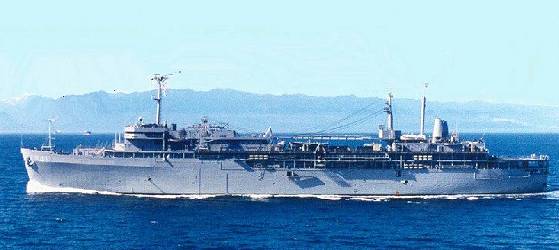
USS McKEE was the third EMORY S. LAND - class submarine tender and most likely was the last submarine tender built for the US Navy. During her 18 years of service the McKEE was awarded the following awards: the Battle E (4 awards), the Meritorious Unit Commendation (3 awards), the Golden Anchor Award, and the Southwest Asia Service Medal. Decommissioned on October 1, 1999, and stricken from the Navy list on April 25, 2006, the McKEE the following years laid up at the Norfolk Naval Shipyard in Portsmouth, Va., awaiting disposal. In June 2024, the former USS McKEE was towed from Portsmouth to Brownsville, Texas, where she entered the commercial ship-recycling process, ending the physical life of the tender.
| General Characteristics: | Awarded: April 29, 1977 |
| Keel laid: January 14, 1978 | |
| Launched: February 16, 1980 | |
| Commissioned: August 15, 1981 | |
| Decommissioned: October 1, 1999 | |
| Builder: Lockheed Shipbuilding & Construction Company, Seattle, Wash. | |
| Propulsion System: two boilers, geared turbines | |
| Propellers: one | |
| Length: 646 feet (197 meters) | |
| Beam: 85 feet (25.9 meters) | |
| Draft: 26 feet (7.9 meters) | |
| Displacement: approx. 23,000 tons | |
| Speed: 20 knots | |
| Armament: two 40mm guns, four 20mm guns | |
| Crew: 81 officers, 1,270 enlisted |
Crew List:
This section contains the names of sailors who served aboard USS McKEE. It is no official listing but contains the names of sailors who submitted their information.
USS McKEE Cruise Books:
History of USS McKEE:
USS MCKEE was a large submarine tender of the EMORY S. LAND-class, built to function as a mobile repair base and logistics hub for attack submarines and, when required, surface warships. Named for Rear Admiral Andrew Irwin McKee, a key architect of inter-war U.S. submarine design, she combined extensive workshops, stores and accommodation with the ability to support multiple submarines alongside at once, and she spent her entire active life tied closely to the Cold War and post-Cold War operations of the Pacific Fleet.
Construction of USS McKEE began at Lockheed Shipbuilding and Construction Company in Seattle, Washington, where her keel was laid on January 14, 1978, as the third EMORY S. LAND-class tender. She was launched on February 16, 1980, with Mrs Ingeborg von Finckh McKee, the widow of the admiral, acting as sponsor. During launching the hull briefly surged beyond the intended stopping point and struck pier pilings, damaging the rudder but not breaching the hull. The incident caused only minor injury to a yard worker, and the ship was quickly brought under control and returned to the fitting-out pier. Over the next year and a half, crews completed her complex workshops, magazines, stores and living spaces, preparing the ship to perform heavy hull, weapons, electronics, and nuclear-system maintenance alongside deployed submarines.
McKEE was commissioned in mid-August 1981 at Seattle under her first commanding officer, Captain David S. Gorham. After initial trials in Puget Sound in October 1981 to prove her propulsion and support systems, she left the Pacific Northwest later that month and arrived at San Diego on November 10, 1981, where she relieved the aging tender USS SPERRY (AS 12) and joined USS DIXON (AS 37) at the submarine pier at Point Loma. Naval Submarine Base Ballast Point in San Diego became her long-term homeport. From the outset, she was designed to provide what amounted to a small shore establishment at sea: machine shops, foundry, pipe and sheet-metal shops, nuclear and non-nuclear repair facilities, medical and dental services, stores for food and technical spares, cranes and internal elevators, all organized to support several submarines simultaneously.
Through 1982, McKEE completed her post-shakedown period and settled into routine tender duties under Submarine Squadron 11. She supported diesel-electric and nuclear attack submarines conducting local operations and maintenance in the Southern California operating areas. That year included a Final Contract Trial in February to confirm her material condition, periods of refresher training off San Diego, and a combined training and goodwill cruise northward with port visits to Esquimalt in British Columbia from April 26 to April 30 and then back to Seattle from April 30 through late June, which also allowed additional yard work and crew familiarization near her building yard.
In 1983, McKEE continued building up her routine as a Pacific Fleet tender. She underwent an Operational Propulsion Plant Examination in February and March and supported numerous training evolutions. Early that year, she sailed to Mazatlan in Mexico from January 15 to January 27, mixing training and public relations, and later visited San Francisco from June 22 to June 29 while exercising with units of the Pacific Fleet. On July 9, 1983, Captain John S. Robertson relieved Captain Gorham, marking the first change of command aboard the new ship. By the end of 1983, she was firmly integrated into the San Diego submarine support infrastructure, alternating periods of alongside maintenance with short underway training cruises and inspections.
The mid-1980s, saw McKEE take on higher-profile roles in both fleet exercises and weapons support. In 1984, she served as flagship for Rear Admiral William J. Holland, commander of Submarine Group 3, which underscored her status as a major command platform as well as a repair ship. That year, she took part in exercises such as Belfry Express 84-1 and the Rim of the Pacific (RIMPAC) 1984 maneuvers, supporting submarines and surface units while simultaneously earning certification as the first submarine tender able to support the new Tomahawk cruise missile system, a key Cold War capability for LOS ANGELES-class submarines. Throughout 1984, she ran multiple training cruises in the first, second, third and final quarters of the year and successfully completed another Operational Propulsion Plant Examination in September, showing that the engineering plant was being kept to a high standard despite the demands of tender operations.
In 1985, McKEE's tempo remained high. She made another series of port visits to Mazatlan from February 19 to March 6 and to San Francisco from April 17 to April 27, combining crew rest with training and maintenance work for the submarines alongside. On July 27, 1985, Captain Richard N. Johannes assumed command. Later that year, the ship entered dry dock from October 7 to December 4 for maintenance, an important mid-1980s overhaul period that ensured her numerous workshops and support systems remained reliable. Her performance earned her a first Battle Efficiency "E" award in 1985, indicating that she was judged the best ship in her type for overall combat readiness and support performance in her squadron or group.
In 1986, McKEE's role as a central node for submarine operations on the U.S. West Coast crystallized. Starting in July, she formally served as the command ship for Submarine Squadron 11, hosting staff and providing the administrative and logistical backbone for several attack submarines. That year, she visited Vancouver, Canada, from May 22 to June 7 to coincide with Expo 86, showcasing U.S. naval presence at a major international exposition. She also conducted a series of training cruises in January, February, March, August and November. For her performance she earned three major recognitions: another Battle Efficiency "E", the Golden Anchor Award for retention excellence in personnel management, and her first Meritorious Unit Commendation, marking superior performance as a unit in submarine support. On August 15, 1986, Captain A. E. Walther relieved Captain Johannes, continuing a pattern of relatively short but intense command tours.
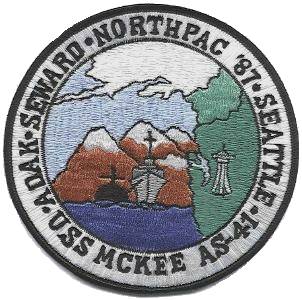
Cold-weather operations in the North Pacific characterized 1987. On June 4, 1987, McKEE departed San Diego for a northern deployment to Alaska that lasted until July 16. During this period, she supported submarine exercises in cold waters, visiting Adak around June 15 and Seward from July 1 to July 7. Operating far from established fleet bases, she demonstrated the ability of a submarine tender to act as a forward support node in austere conditions, carrying out nuclear-submarine upkeeps and repairs without shore-based infrastructure. Additional training periods followed in September and November once she returned to California.
By 1988, McKEE had settled into a pattern of continuous maintenance and exercise support, reportedly completing several dozen submarine upkeeps during the year. She also became the first submarine tender certified to handle the Tomahawk Vertical Launch System, reflecting the shift of LOS ANGELES-class submarines to vertical-launch cruise-missile capability and the need for tenders to support that more complex weapons fit. This role linked her directly to evolving U.S. Navy strike doctrine in the late Cold War period, in which submarines were expected to deliver long-range precision attacks from the sea.
In 1989, McKEE's schedule combined local training, pioneering weapons handling and a major multinational exercise in the North Pacific as the Cold War neared its end. Early in the year, she conducted two training periods, from January 10 to January 12 and from January 30 to February 6, before carrying out the first at-sea weapons transfer by a submarine tender to a ballistic-missile submarine since the Second World War, delivering weapons to the strategic submarine OHIO (SSBN 726) at sea. In April, she visited Vancouver again from April 6 to April 9, reflecting her recurring role in public-facing port visits and regional engagement. On August 5, Captain Ralph Schlichter took command. From September 18 to October 15, McKEE deployed to Cold Bay, Alaska, as part of the large-scale Pacific Exercise (PACEX '89), the last major Cold War fleet exercise in the Pacific. There, she became the first submarine tender to visit Cold Bay since the Second World War and conducted nuclear-submarine upkeep at this remote anchorage, supporting both U.S. and allied submarines as well as surface units before transiting south via Pearl Harbor. Photographic evidence and contemporary accounts also highlight her use as an anchored intermediate maintenance activity, demonstrating that she could support submarines while moored away from any pier.
The end of the 1980s and the beginning of the 1990s showed McKEE adapting to post-Cold-War realities while retaining a high operational tempo. In March 1990, she conducted the first underway fuel replenishment by a Pacific Fleet submarine tender, proving that a ship of her type could refuel at sea rather than relying entirely on harbor facilities. From May 14 to September 10, 1990, she entered dry dock for an extended maintenance period that updated her systems and preserved her hull, and on October 5 she hosted a visit by the Assistant Secretary of Defense, underlining continuing interest in the submarine support infrastructure at a time when the fleet was shrinking.
Alongside these innovations, McKEE continued daily tender work with individual submarines. On March 15, 1990, the LOS ANGELES-class attack submarine USS LOUISVILLE (SSN 724) moored alongside her for a five-day port visit to Monterey, California, an event recorded in the submarine's own operational history and showing McKEE acting as a mobile maintenance base away from her homeport. She also repeatedly hosted IMA (Intermediate Maintenance Activity) upkeep periods and Fleet Maintenance Availabilities with units such as USS HOUSTON (SSN 713), USS LA JOLLA (SSN 701), USS KEY WEST (SSN 722) and others, as documented in their command histories.
The highlight of McKEE's operational career came with the 1991 Gulf War. As the crisis in the Persian Gulf escalated after Iraq's invasion of Kuwait in August 1990 and Operation Desert Storm began on January 17, 1991, McKEE rapidly prepared for deployment. She sailed from San Diego on January 18, 1991, transited via Pearl Harbor and Guam, and anchored at Jebel Ali in the United Arab Emirates on March 7. There, she spent roughly six months, functioning as a floating maintenance and logistics base for submarines and for surface combatants assigned to coalition operations in the confined and logistically demanding waters of the Gulf. On April 13 a sailor, Ron Holyfield, drowned in a swimming accident off the coast of the UAE, a reminder of the hazards of deployment even away from combat. McKEE departed Jebel Ali on May 2 and returned to San Diego on July 18, reportedly the last San Diego-based ship to complete her Desert Storm deployment. For this deployment, she earned another Meritorious Unit Commendation, the Southwest Asia Service Medal with appropriate campaign credit, and a further Battle Efficiency "E" recognizing her contribution to war-time readiness.
After Desert Storm, McKEE returned to routine work in San Diego, but the early 1990s still brought noteworthy events. On February 11, 1992, a major drug sting aboard the ship resulted in the arrest of dozens of crewmembers, a stark reflection of wider disciplinary and societal issues the U.S. Navy was grappling with at the time. Despite this, McKEE's repair crews completed thousands of maintenance jobs during 1992, and the ship continued to modernize, including the installation of a WRN-6 satellite navigation receiver and a modern ship-shore telephone system on April 15, 1994, to better integrate her with evolving submarine combat and navigation systems.
From the mid-1990s onward, McKEE became even more central to submarine support on the U.S. West Coast. After the decommissioning of USS DIXON in 1995, she assumed sole responsibility for tender support to San Diego-based submarines. She also increasingly worked with allied navies, including, for example, assisting the Chilean submarine O'BRIEN during a visit to San Diego on September 22, 1995, illustrating her role in broader cooperative submarine operations. Periods away from San Diego continued as well: between May 18 and June 11, 1996 she conducted a short deployment with visits to Pearl Harbor and San Francisco to provide upkeep and support to Submarine Squadron 11 units operating forward.
The late 1990s brought a final major deployment and then the ship's drawdown. On March 24, 1998, MCKEE departed San Diego for a six-month deployment to Pearl Harbor, where she remained until September 29. During this period, she provided forward maintenance and repair services for U.S. and allied submarines and surface ships operating in the central Pacific, effectively functioning as a floating intermediate maintenance facility for Submarine Squadron units based or deployed to Hawaii and the broader region. Her work included at least one medical evacuation and the movement of missiles and other ordnance, underscoring the breadth of her responsibilities.
After returning to San Diego in autumn 1998, McKEE undertook one of her most notable individual tasks with a foreign navy. In November 1998, her weapons department loaded Tomahawk cruise missiles onto the British submarine HMS SPLENDID, the first of 67 Tomahawk missiles procured by the Royal Navy and the first time a British submarine received the weapon. Those missiles were later used by SPLENDID in strike operations during the Kosovo conflict in 1999, linking McKEE indirectly to NATO's intervention in the Balkans. For the 1998 deployment and its associated work she earned another Meritorious Unit Commendation, reflecting her ongoing contribution to allied and U.S. naval power projection even as the dedicated tender force was shrinking.
By 1999, the U.S. Navy was steadily decommissioning its traditional tenders in favor of shore-based facilities and multi-mission support ships. McKEE began inactivation preparations at Point Loma in mid-1999, progressively reducing crew size and preserving equipment. An inactivation ceremony was held aboard the ship on July 16, 1999, in San Diego, attended by senior submarine commanders and many former crewmembers, marking the end of her active presence on the West Coast. On July 30, she departed her long-time homeport for the final time and steamed to the East Coast. She arrived in Norfolk in September and was formally decommissioned on October 1, 1999, at Norfolk Naval Shipyard in Portsmouth, Virginia, with Captain Jablonski presiding as the final commanding officer.
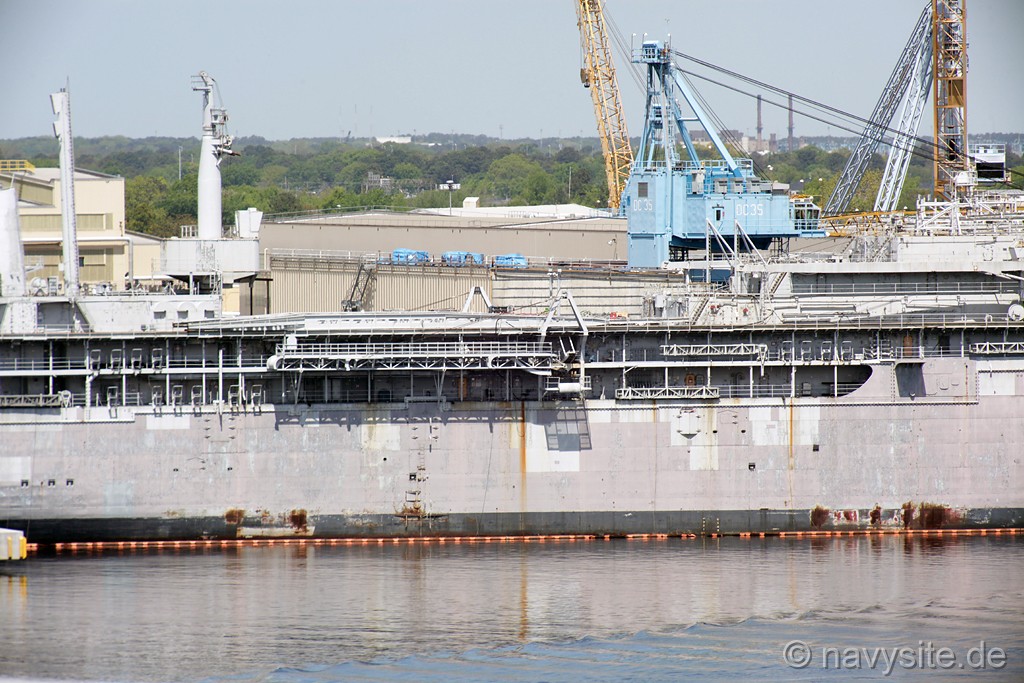
After decommissioning, McKEE entered the Naval Inactive Ship Maintenance Facility at Norfolk Naval Shipyard, remaining there for over two decades. She was stricken from the Naval Vessel Register on April 25, 2006, and continued to serve in a limited way as a non-commissioned asset, providing workshop spaces and support for shipyard activities while under strict environmental controls. Before disposal, extensive radiological and hazardous-material remediation was carried out, including decontamination related to decades of supporting nuclear-powered submarines. A 2023 naval historical evaluation concluded that, despite her long and active service, she did not meet the criteria for exceptional historical significance required for preservation as a museum ship. In June 2024, the former USS McKEE was towed from Portsmouth to Brownsville, Texas, where she entered the commercial ship-recycling process, ending the physical life of the tender.
USS McKEE's Commanding Officers:
| Period | Name |
|---|---|
| August 1981 - July 1983 | Captain D. S. Gorham, USN |
| July 1983 - July 1985 | Captain J. S. Robertson, USN |
| July 1985 - August 1987 | Captain R. N. Johannes, USN |
| August 1987 - August 1989 | Captain A. E. Walther, USN |
| August 1989 - August 1991 | Captain R. Schlichter, USN |
| August 1991 - July 1993 | Captain W. A. Harding, USN |
| July 1993 - August 1995 | Captain T. H. Etter, USN |
| August 1995 - July 1997 | Captain T. J. Traverso, USN |
| July 1997 - July 1998 | Captain J. J. Donnelly, USN |
| July 1998 - October 1, 1999 | Captain E. R. Jablonski, USN |
About the Ship’s Namesake:
Rear Admiral Andrew I. McKee pioneered modern submarine design and development. A native of Lawrenceburg, Kentucky, Admiral McKee graduated from the United States Naval Academy and was commissioned an Ensign in 1917. He served with USS HUNTINGTON until he reported to the Naval Academy as a navigation and physics instructor. In 1921 he received a Master's Degree in Naval Architecture at the Massachusetts Institute of Technology.
Following several design and construction posts, he became Officer in Charge of submarine design for the Navy Department from 1926 to 1930, where he directed the design of the first new classes from which evolved the successful fleet submarines of WWII.
Admiral McKee worked in submarine planning, design and construction as the Design Superintendent of the Portsmouth Navy Yard from 1938 to 1945 and was awarded a Legion of Merit for his service there.
In 1945, he joined the staff of Commander Service Force, Pacific Fleet, as senior Assistant Fleet Maintenance Officer. He was awarded a Bronze Star Medal and also a Gold Star in lien of a second Legion of Merit for directing emergency combat repairs of ships during the assault on Okinawa.
Following his retirement, Admiral McKee spent many years as a research and design engineer for the Electric Boat Division of the General Dynamics corporation in Connecticut. He died in 1976 at the age of 80.
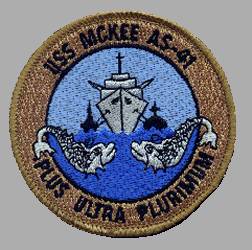
USS McKEE Patch Gallery:
![]() |
USS McKEE Image Gallery:
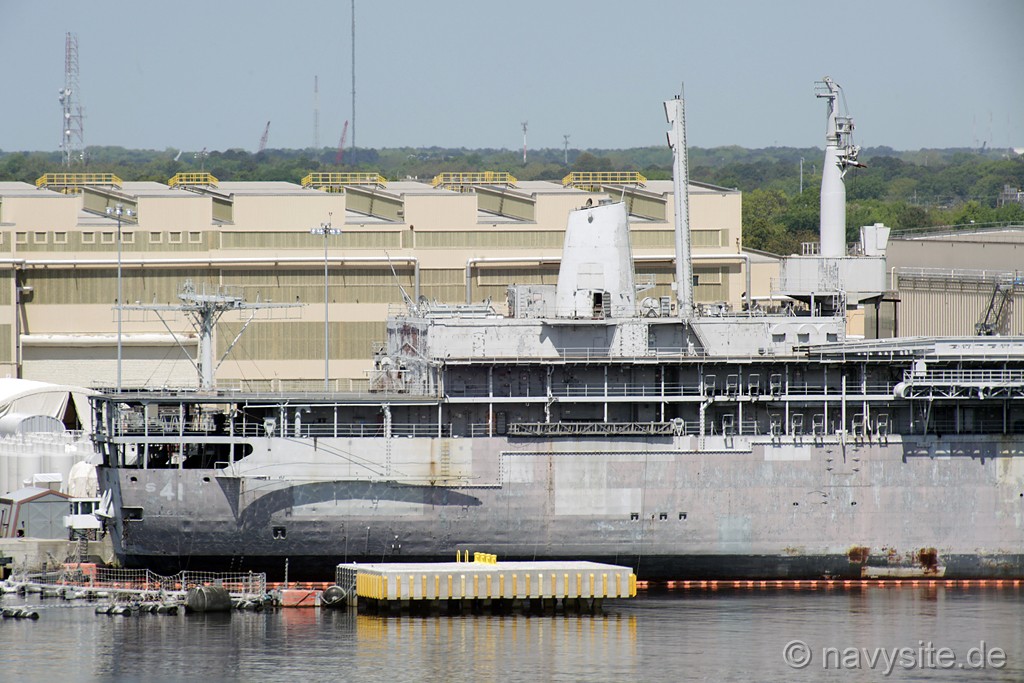
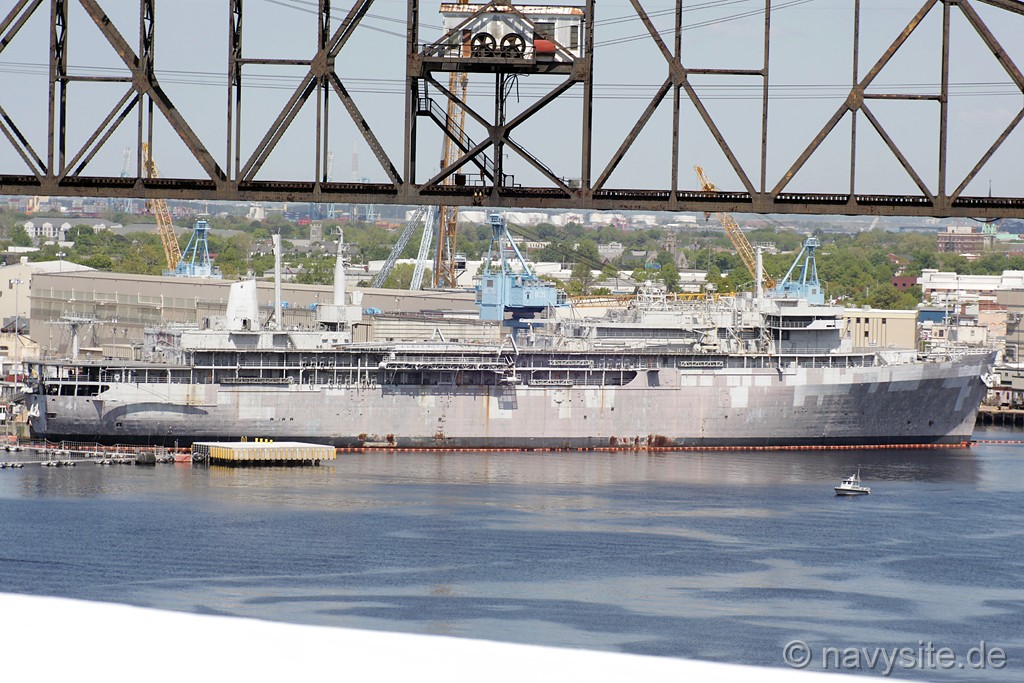
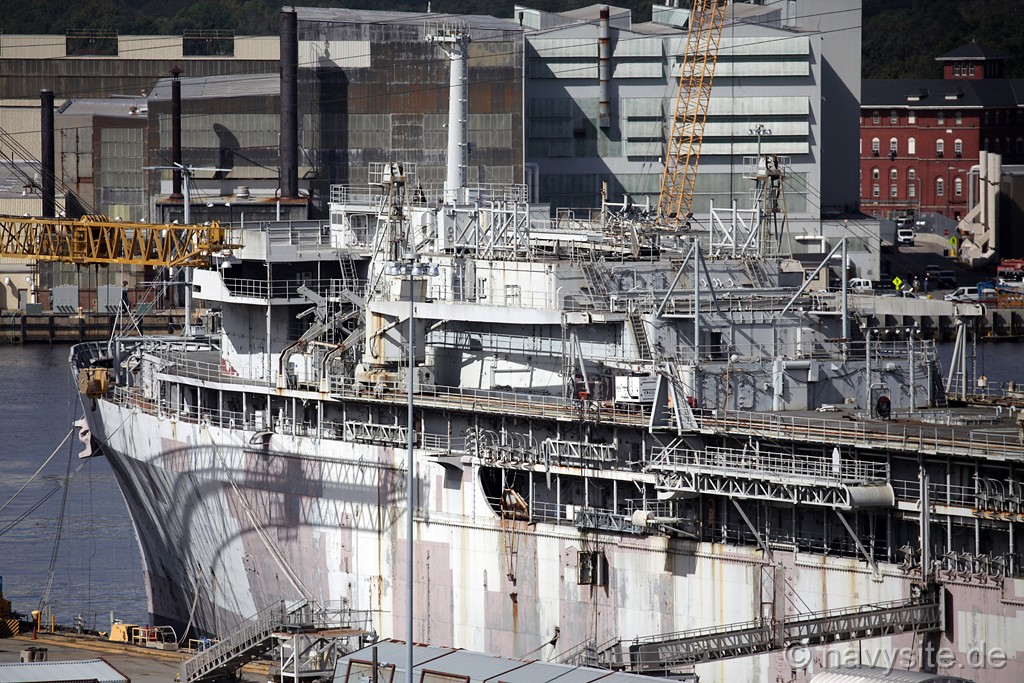
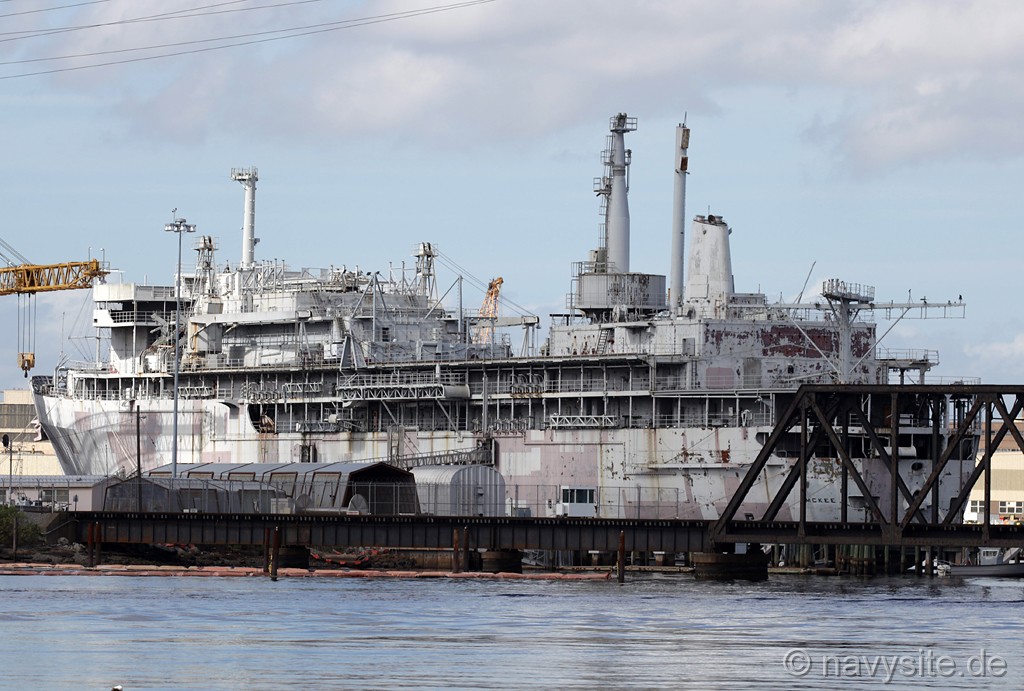
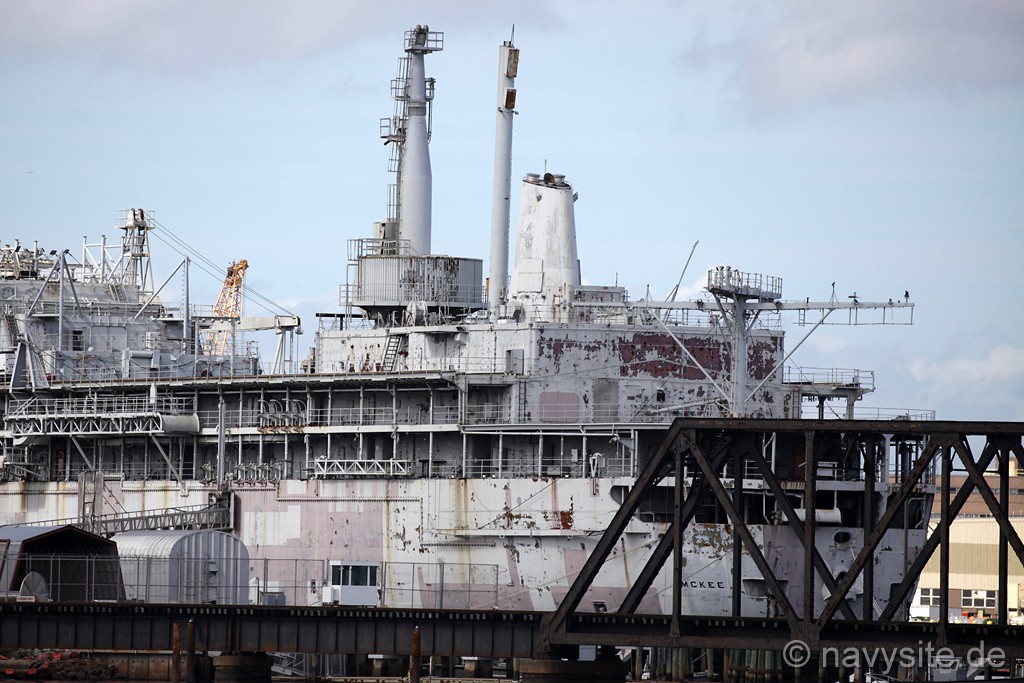
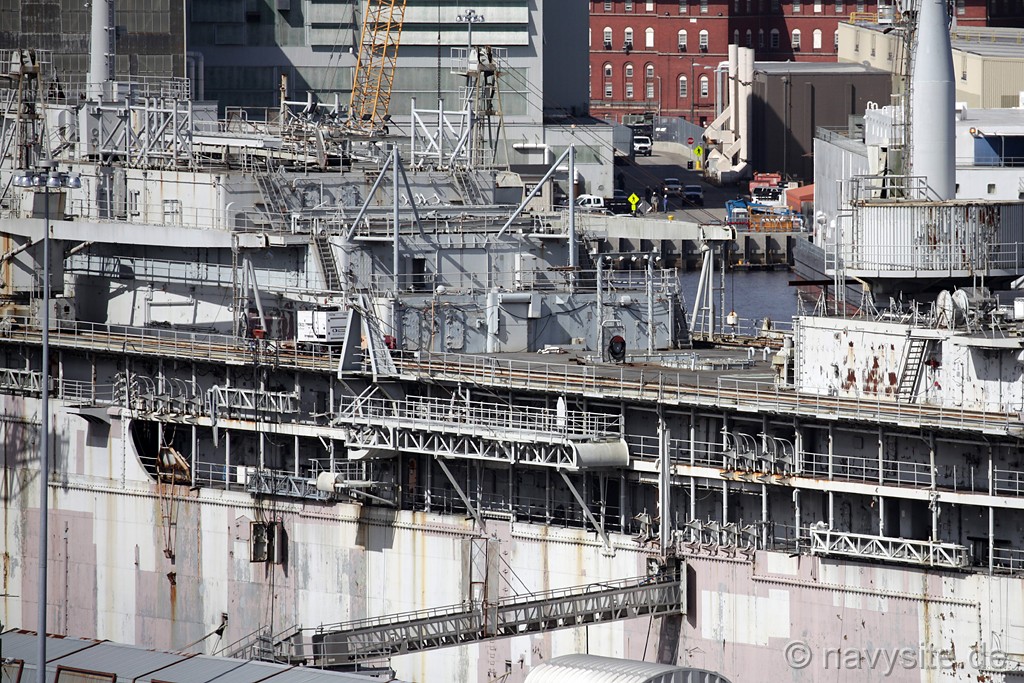
The photo below was taken by me and shows the McKEE laid up at the Norfolk Naval Shipyard, Va., on February 3, 2009.
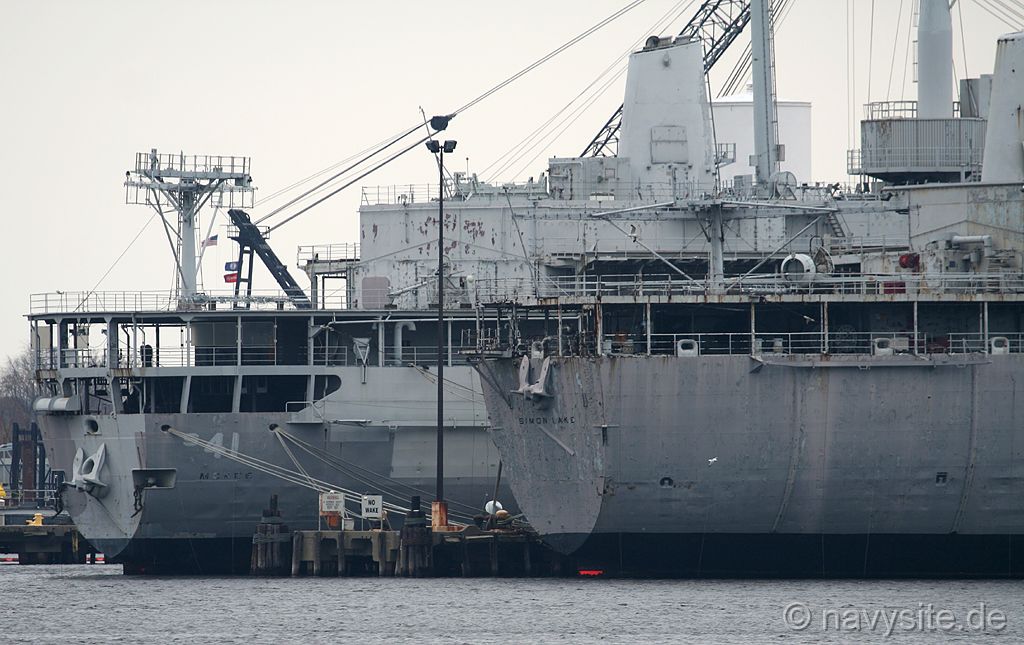
The photos below were taken by me and show the McKEE still laid up at the Norfolk Naval Shipyard, Va., on October 27, 2010. Compared to the photo above, she has been moved a bit closer to the Norfolk Naval Shipyard.
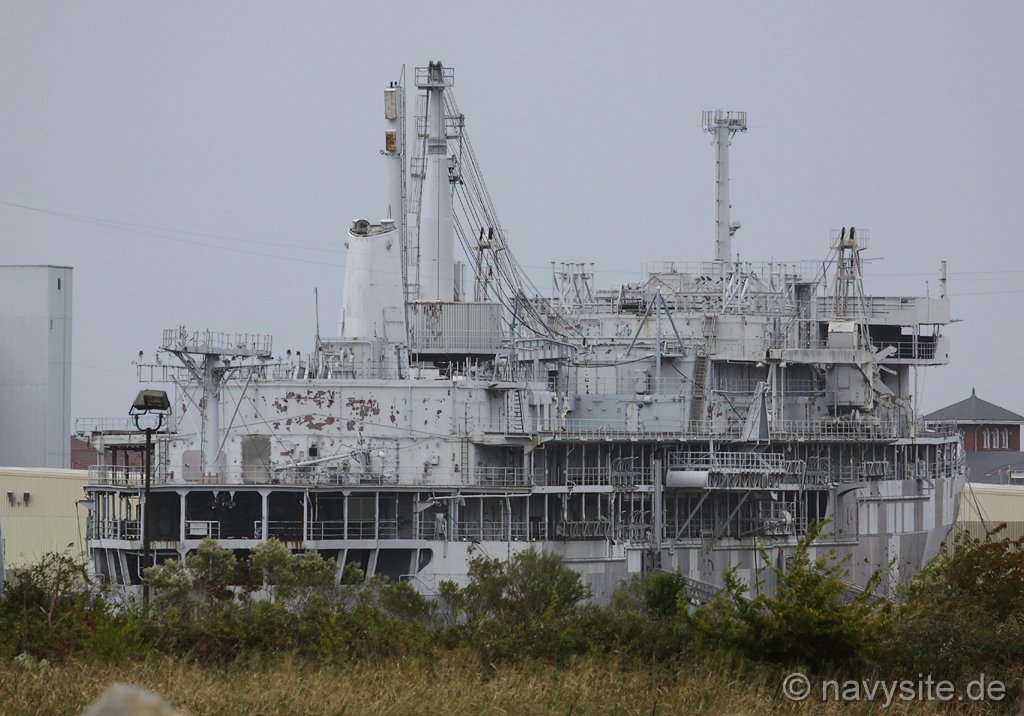
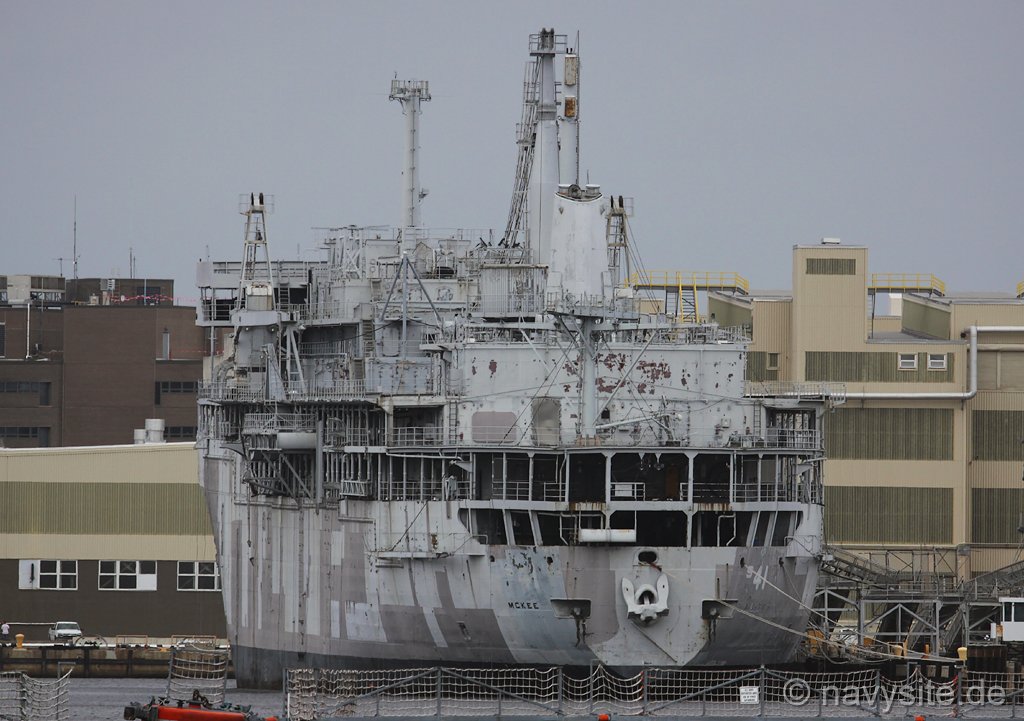
The photo below was taken by me and shows the McKEE still laid up at the Norfolk Naval Shipyard, Va., on May 6, 2012.
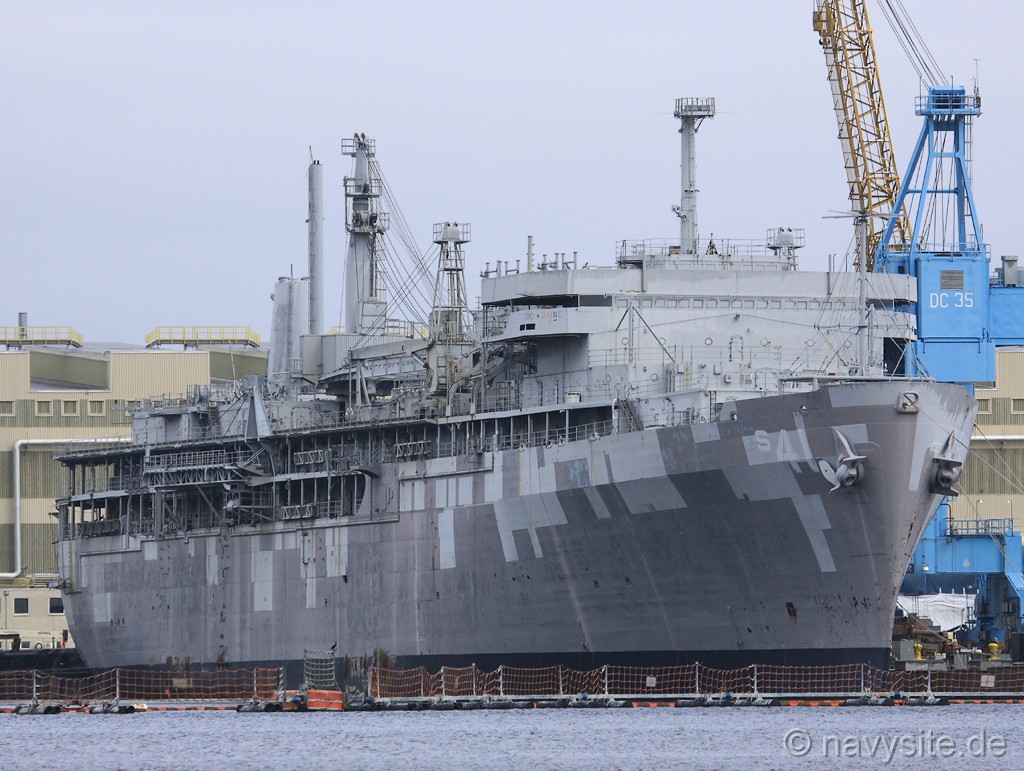
The photos below were taken by Michael Jenning and show the McKEE still laid up at the Norfolk Naval Shipyard, Portsmouth, Va., on April 29, 2015.
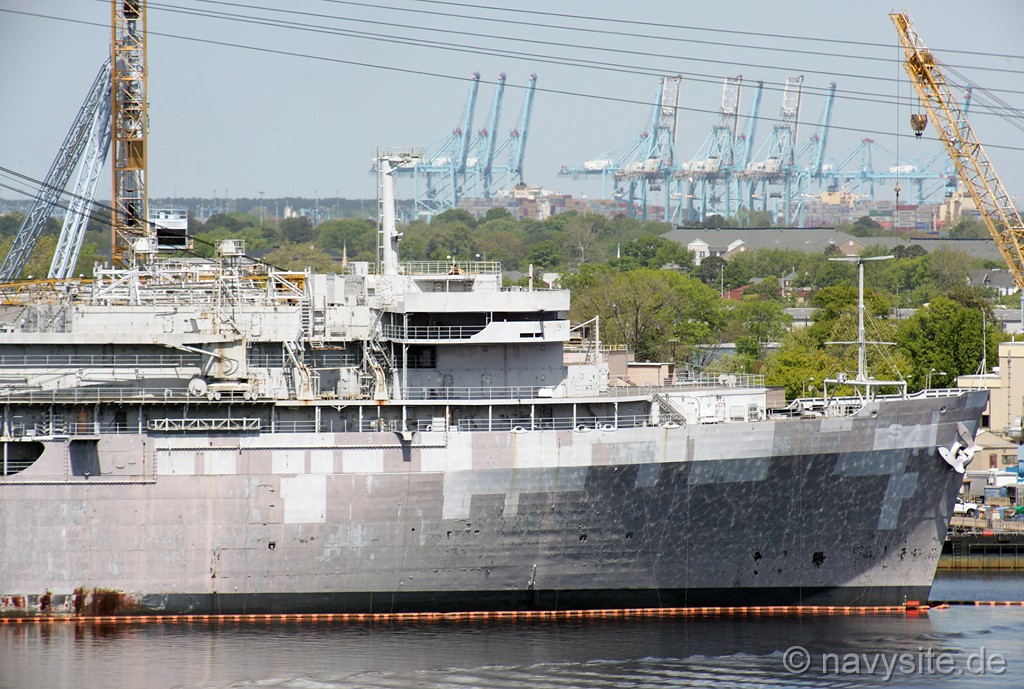
The photos below were taken by Michael Jenning and show the McKEE still laid up at the Norfolk Naval Shipyard, Portsmouth, Va., on April 13, 2016.
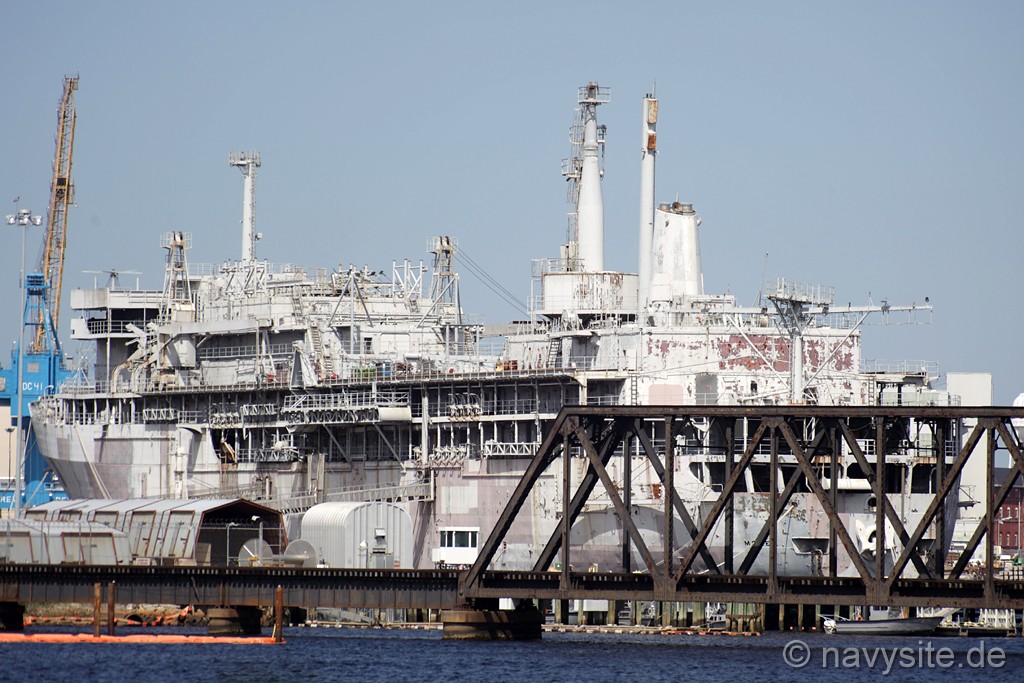
The photos below were taken by Michael Jenning and show the McKEE laid up at the Norfolk Naval Shipyard, Portsmouth, Va., on October 12, 2016.
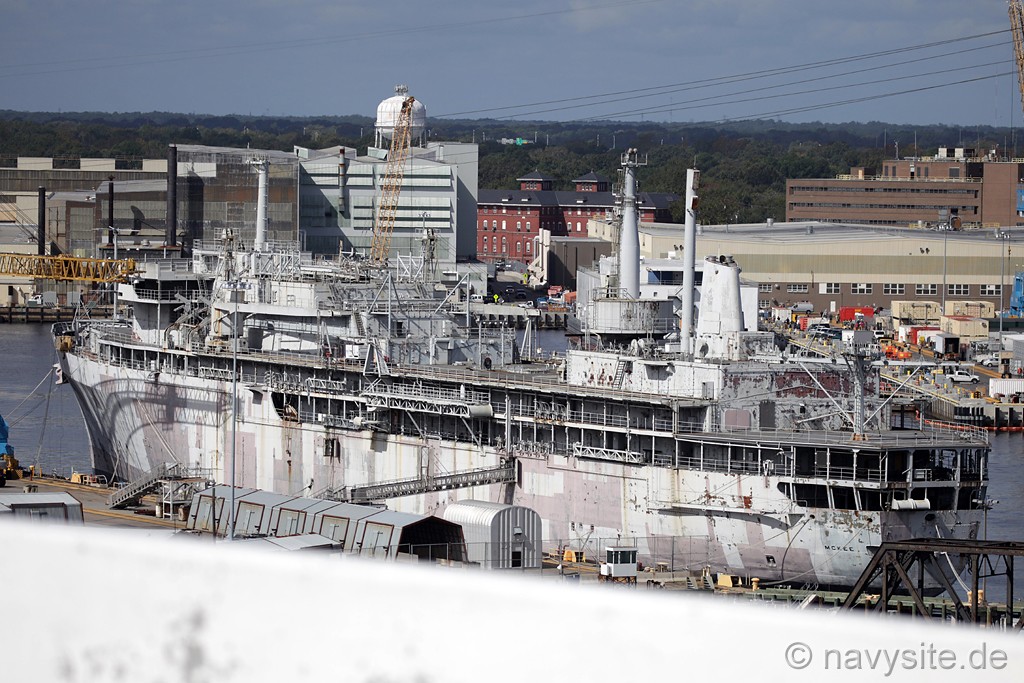

Back to Submarine Tenders list.
Back to ships list.
Back to selection page.
Back to 1st page.