Search the Site with 
General Characteristics Crew List Memorabilia History Image Gallery to end of page

USS Olympia (SSN 717)

- decommissioned -

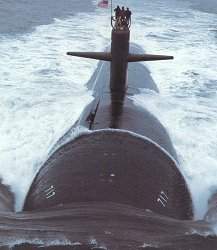
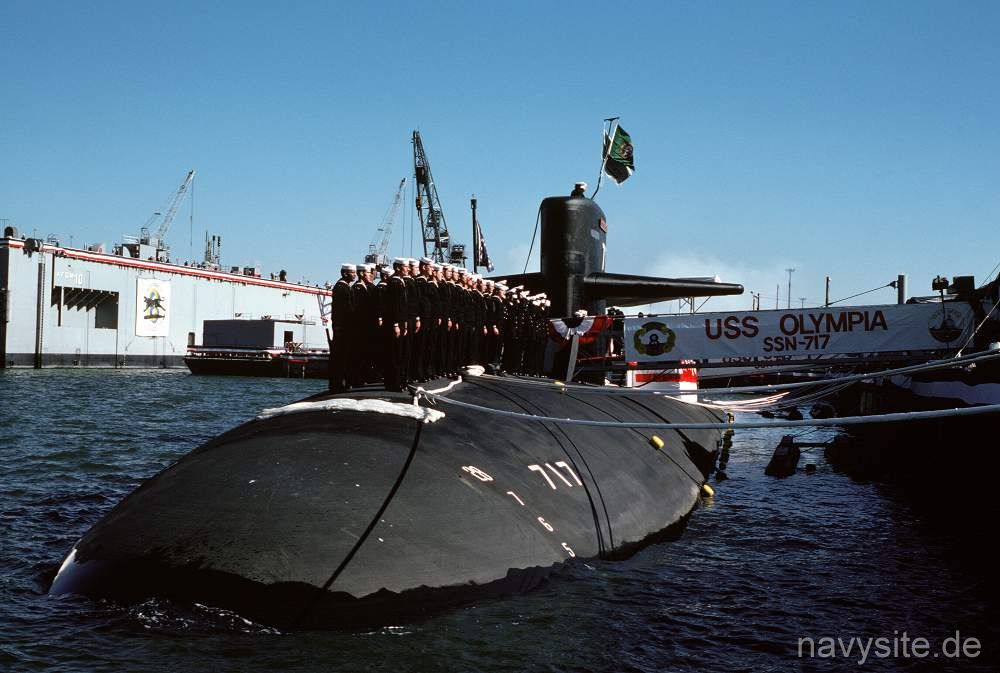
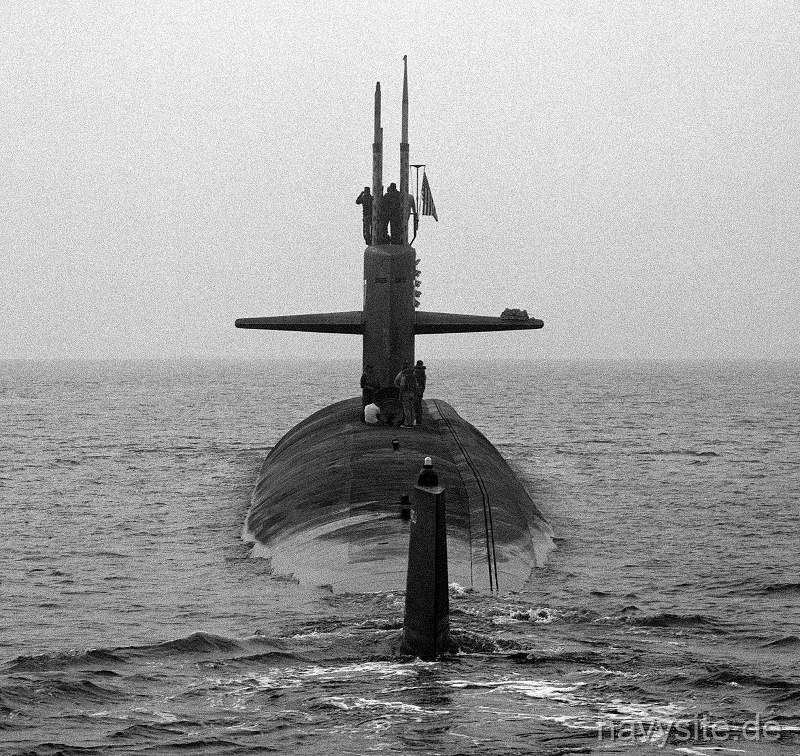
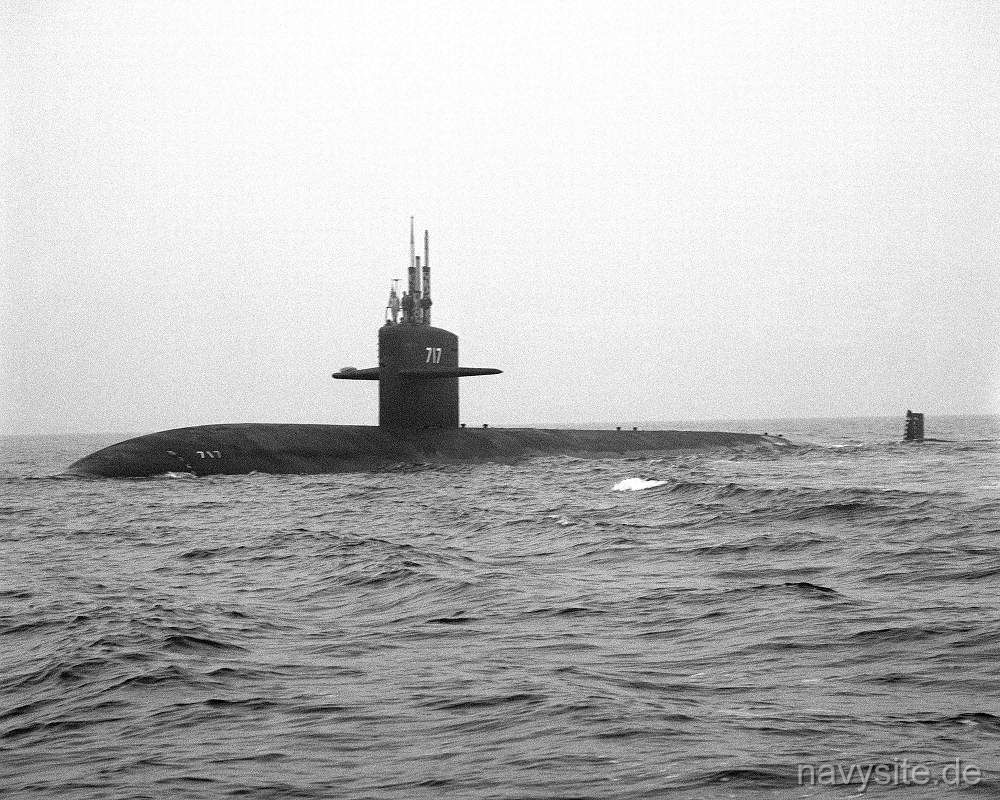
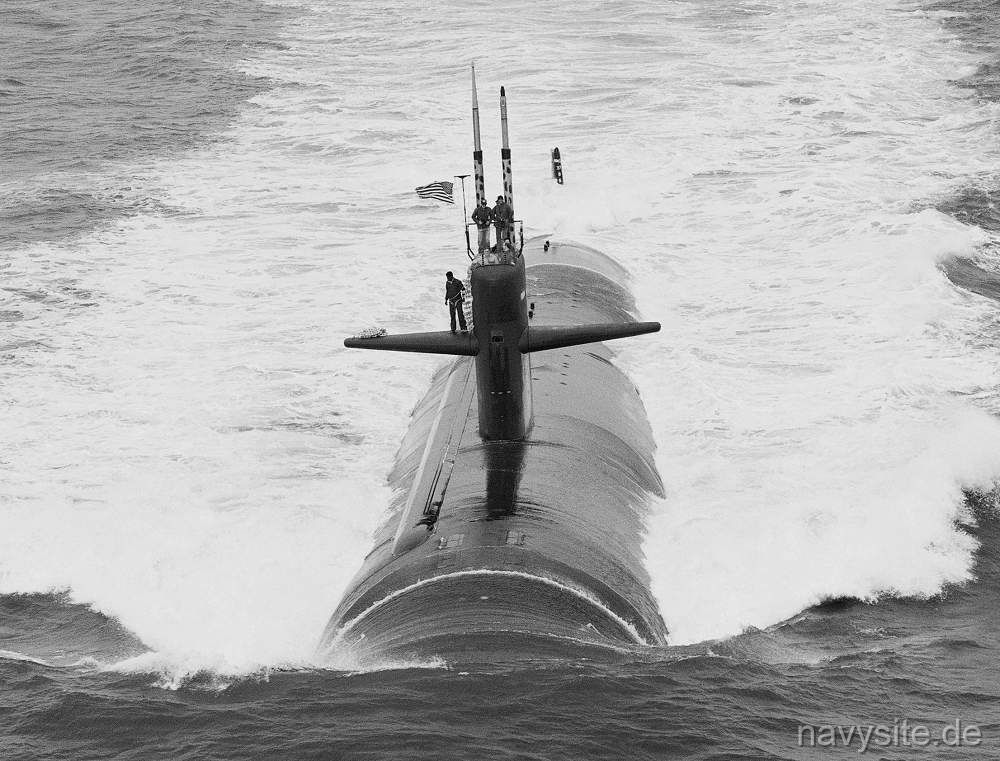
Named after the capital of the state of Washington, USS OLYMPIA was the 30th LOS ANGELES-class nuclear-powered attack submarine and the second ship in the Navy to bear the name.

General Characteristics:Awarded: September 15, 1977
Keel laid: March 31, 1981
Launched: April 30, 1983
Commissioned: November 17, 1984
Inactivated: August 6, 2020
Decommissioned: February 5, 2021
Builder: Newport News Shipbuilding Co., Newport News, Va.
Propulsion system: one nuclear reactor
Propellers: one
Length: 360 feet (109.73 meters)
Beam: 33 feet (10 meters)
Draft: 32,15 feet (9.8 meters)
Displacement: Surfaced: approx. 6,000 tons    Submerged: approx. 6,900 tons
Speed: Surfaced: approx. 15 knots    Submerged: approx. 32 knots
Armament: four 533 mm torpedo Tubes for Mk-48 torpedoes, Harpoon and Tomahawk missiles
Cost: approx. $900 million
Crew: 12 Officers, 115 Enlisted


Back to topback to top  go to endgo to the end of the page


Back to topback to top  go to endgo to the end of the page

Crew List:

This section contains the names of sailors who served aboard USS OLYMPIA. It is no official listing but contains the names of sailors who submitted their information.


back to top  go to the end of the page


Back to topback to top  go to endgo to the end of the page

USS OLYMPIA History:

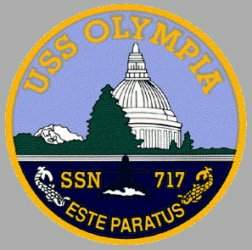
USS OLYMPIA was a LOS ANGELES-class nuclear-powered attack submarine and the second U.S. Navy vessel to carry the name of the city of Olympia, Washington. The construction contract was awarded to Newport News Shipbuilding and Dry Dock Company in Virginia on September 15, 1977, as part of the large Cold War expansion of the U.S. attack-submarine force. Her keel was laid at Newport News on March 31, 1981, and she was launched on April 30, 1983, sponsored by Dorothy Williams. After fitting out and trials, the submarine was commissioned on November 17, 1984, with Captain William C. Hughes Jr. as her first commanding officer. From the outset, she embodied the standard characteristics of the early LOS ANGELES-class: a single S6G pressurized-water reactor driving two steam turbines on one shaft, four 533 mm torpedo tubes, and later the capacity to carry Tomahawk cruise missiles. Her motto, "Este Paratus" ("We are ready"), reflected the intent to keep her available for a wide spectrum of missions throughout the final decade of the Cold War and into the post-Cold War era.

Following commissioning, USS OLYMPIA completed the usual shakedown and work-up phases that every new nuclear submarine undergoes, bringing her systems to full operational status and qualifying her crew in wartime procedures. Initially based on the U.S. East Coast, she operated under Atlantic Fleet control while completing these early periods. Publicly available sources do not give detailed accounts of her first months at sea, but they formed the foundation for the long series of Pacific deployments that followed. On November 17, 1984, the day of commissioning, Captain Hughes turned over command to Commander Lawrence J. Mack Jr., beginning a succession of commanding officers that would mark distinct phases of the boat's service life.

In February 1986, USS OLYMPIA was reassigned to Submarine Squadron 7 and transferred to Pearl Harbor, Hawaii, which remained her homeport for the rest of her career. This move reflected the steady concentration of LOS ANGELES-class boats in the Pacific as U.S. strategy emphasized the western Pacific and Indian Ocean. En route to her new homeport, OLYMPIA made her first visit to her namesake city of Olympia, Washington, in 1986. That visit initiated a long-lasting relationship between the submarine and the city, supported by a namesake committee and local civic organizations. Over the years, crews from OLYMPIA returned many times, often during the Capital Lakefair festivities, staying with host families, volunteering in local charities, and taking part in community events. These namesake visits ran in parallel with the boat's operational schedule and became a recurring element of her peacetime profile.

From 1986 onward, USS OLYMPIA operated as part of the Pearl Harbor-based attack-submarine force, conducting training, local operations, and regular deployments to the western Pacific under U.S. 7th Fleet. Open sources do not describe each of her late-Cold-War patrols in detail, but they formed part of the broader pattern of U.S. undersea presence in the Pacific during the final years of the U.S.-Soviet naval competition and the transition period after 1991. In June 1990, command passed to Commander John C. McMacken, and in August 1991 to Commander Thomas E. Digan, as OLYMPIA adjusted to post-Gulf-War and post-Cold-War tasking.

A notable deployment early in the post-Cold-War period came in 1993, when USS OLYMPIA deployed with the carrier battle group built around USS NIMITZ (CVN 68). According to deployment records for the battle group, the force operated in the Western Pacific and Arabian Gulf from February 1, 1993, to August 19, 1993, with OLYMPIA listed among the attached units. Within that framework, OLYMPIA provided undersea protection and surveillance for the group during a period when U.S. naval forces were enforcing United Nations sanctions and sustaining post-war stability operations in the Gulf following the 1991 conflict with Iraq.

In 1994, command of USS OLYMPIA passed to Commander Manuel A. Malagon-Fajar, followed by Commander Kevin R. Johnson in 1996, as the submarine continued to cycle through training and deployment from Pearl Harbor. In 1998, she achieved a distinctive milestone: she became the first Pacific-based U.S. submarine in more than 35 years to transit the Suez Canal, the last such transit having taken place in 1963. This east-to-west movement through Suez symbolized the renewed flexibility of Pacific Fleet submarines to reach the Mediterranean and Middle East directly and underscored the continuing relevance of attack submarines for global presence in the post-Cold-War security environment.

By the late 1990s and early 2000s, OLYMPIA was firmly established as a regular participant in Western Pacific deployments. Under Commander James R. Burke, who assumed command in January 1999, and then Commander Robert J. Brennan from March 2000, she conducted further 7th Fleet patrols. On January 23, 2002, harbor photographs show USS OLYMPIA being assisted into Pearl Harbor by the harbor tug Z-THREE after returning from a six-month deployment to the Western Pacific. That deployment fell in the immediate aftermath of the September 11, 2001 attacks, at a time when U.S. naval forces were heavily engaged in supporting operations related to the campaign in Afghanistan and broader counter-terrorism missions, and OLYMPIA's presence in the region contributed to those wider efforts, even though her specific tasking remains classified.

A major, well-documented deployment followed in 2003. On April 17, 2003, USS OLYMPIA departed Pearl Harbor for a routine six-month deployment to the Western Pacific under the operational control of U.S. 7th Fleet. Upon arriving in the 7th Fleet area of responsibility, she took part in Exercise Tandem Thrust 03, a large tri-service U.S. exercise conducted near the Northern Mariana Islands. During this joint exercise, OLYMPIA acted as one of the opposing-force submarines and worked closely with other submarines such as USS SAN FRANCISCO (SSN 711) and USS BREMERTON (SSN 698), as well as with surface units including the fast combat support ship USS SACRAMENTO (AOE 1). The exercise aimed to train a joint task force staff in complex maritime and amphibious operations and reflected the U.S. focus on integrated, joint operations in the early years after 9/11.

After Tandem Thrust, OLYMPIA conducted further operations and port visits in the region. She visited Saipan and then Sasebo, Japan, for liberty and logistics, before continuing to Jinhae-gu in the Republic of Korea for a seven-day port visit, reinforcing ties with the South Korean navy during a period of continued tension with North Korea. Following additional at-sea tasking, she returned to Pearl Harbor on October 23, 2003, completing the six-month Western Pacific deployment. This deployment underlined her role as a multi-mission platform: while details of her intelligence and surveillance missions remain undisclosed, the pattern of joint exercises and allied port visits points to a combination of operational and diplomatic objectives.

On February 7, 2005, USS OLYMPIA again left Pearl Harbor for another scheduled six-month Western Pacific deployment, this time as part of the strike group built around USS CARL VINSON (CVN 70). During this 2005 deployment, she called at Saipan, made several port visits in Japan, and visited Singapore and Guam. In June, while alongside at the Republic of Korea Submarine Force headquarters at Jinhae-gu, Korean sailors hosted OLYMPIA's crew and provided tours of their own submarines, illustrating growing undersea cooperation between the two navies. After leaving Jinhae-gu, OLYMPIA conducted an exercise with the South Korean submarine ROKN LEE SUN SHIN and later arrived in Guam on July 6 for a ten-day repair availability alongside the submarine tender USS FRANK CABLE (AS 40). Following that maintenance period, she carried out further exercises with another U.S. submarine, a destroyer, and a maritime patrol aircraft, culminating in a live torpedo-firing exercise before she returned to Pearl Harbor on August 6, 2005.

After this series of demanding deployments, USS OLYMPIA entered a major overhaul phase. Over the three years leading up to April 2009, she underwent an Engineered Refueling Overhaul (ERO) at Pearl Harbor Naval Shipyard, a comprehensive refit that included refueling her reactor and modernizing combat and support systems at a reported cost of about 190 million dollars. The overhaul restored her reactor core life and allowed the submarine to remain in service into the late 2010s, at a time when the U.S. Navy was balancing the retention of older LOS ANGELES-class boats with the introduction of the newer VIRGINIA-class. The ERO was formally completed on April 1, 2009, marking USS OLYMPIA's return to operational status with extended service life.

With her refueling complete, USS OLYMPIA resumed deployments. On June 18, 2010, she left Joint Base Pearl Harbor-Hickam for another scheduled Western Pacific deployment, again under U.S. 7th Fleet. During this deployment, she moored at Akasaki pier in Sasebo, Japan, on August 16 for a two-day port visit, offering rest for the crew and an opportunity for logistics and minor maintenance. On October 10, she made a brief stop at Okinawa for personnel transfer, then returned to Sasebo on October 29 for another short inport period. She came back to Pearl Harbor on December 17, 2010, after six months at sea, completing her first deployment since the refueling overhaul.

In 2011, USS OLYMPIA concentrated on maintenance and preparations for her next major deployment. On December 15, 2011, she became the first submarine to undergo "deperming" at the new drive-in submarine magnetic silencing facility at Pearl Harbor, a process that reduces the boat's magnetic signature to make her less detectable to magnetic sensors and mines. This infrastructure was part of broader U.S. investments in undersea stealth as other powers improved their anti-submarine warfare capabilities.

On August 8, 2012, USS OLYMPIA departed Joint Base Pearl Harbor-Hickam for a scheduled Western Pacific deployment. This deployment extended into early 2013 and saw a series of port visits and operations across the 7th Fleet area. On October 4, 2012, she arrived at Subic Bay in the Philippines, a port visit that highlighted the renewed U.S. naval presence in the Philippines amid increased attention to South China Sea disputes. In early 2013, she called at Changi Naval Station, Singapore, arriving there on February 2, 2013, where the crew had the opportunity to experience the city-state while the submarine replenished and prepared for further tasking.

During this 2012-2013 deployment, USS OLYMPIA also visited Yokosuka, Japan, and Guam, as later accounts noted, combining liberty for the crew with engagement activities, including visits by local officials and U.S. diplomatic representatives. After completing a series of missions - encompassing national-level and theater-level tasking within the Western Pacific - she returned to Joint Base Pearl Harbor-Hickam on March 4, 2013, ending a seven-month deployment. Photographs from that day show OLYMPIA mooring to the submarine pier with families gathered on the waterfront, and Navy reports emphasized that the deployment had included multiple security cooperation events and yielded a substantial number of newly qualified submariners.

Following a period of maintenance and training, USS OLYMPIA deployed again to the Western Pacific in late summer 2014. She left Joint Base Pearl Harbor-Hickam on August 25, 2014, beginning a six-month deployment that closely tracked the evolving U.S. "rebalance" toward the Indo-Pacific. On September 1, 2014, she moored at Romeo Wharf in Apra Harbor, Guam, for a routine port call, reflecting Guam's role as a forward logistics hub for U.S. submarines. On September 19 she conducted a brief stop at White Beach, Okinawa, and on October 17 she entered Akasaki pier at Sasebo for a week-long visit, reinforcing ties with the Japanese Maritime Self-Defense Force. On November 2, she made a brief port call at Yokosuka, the principal U.S. Navy base in Japan, and then returned there for an inport period from November 20 to 24, 2014.

The first weeks of 2015 continued this pattern. From January 9 to 16, 2015, USS OLYMPIA was again in Sasebo, followed by a short stop at Okinawa on January 24. On January 30, she arrived at Jinhae-gu in the Republic of Korea for a six-day port visit, after which she participated in bilateral naval exercises with South Korean forces, contributing to deterrence on the Korean Peninsula during a period of continued missile and nuclear developments by North Korea. On February 25, 2015, she returned to Pearl Harbor, completing the extended Western Pacific deployment that had begun the previous August.

In the years that followed, USS OLYMPIA continued to operate from Pearl Harbor. On November 20, 2013, command had passed to Commander Thomas H. Shugart III, and on May 25, 2016 to Commander Benjamin J. Selph, as the submarine moved into the final phase of her operational life. During this period, she remained a routinely deploying asset, conducting local operations, exercises, and at least one additional Western Pacific deployment. On November 9, 2017, she returned to Joint Base Pearl Harbor-Hickam following such a deployment, which had included three major missions and several coordinated exercises with U.S. and allied forces, as well as four port calls divided between Guam and ports in Japan. The deployment took place against the backdrop of growing concerns over North Korean missile tests and increasing U.S.-China maritime competition in the region.

In parallel with these deployments, USS OLYMPIA played a role in the reintroduction of a long-dormant U.S. submarine capability. On July 12, 2018, during the Rim of the Pacific (RIMPAC) exercise off Hawaii, she fired a UGM-84 HARPOON anti-ship cruise missile in a sinking exercise (SINKEX) against the decommissioned amphibious ship ex-USS RACINE (LST 1191). This launch was the first time since 1997 that a U.S. submarine had fired a sub-launched HARPOON, and it formed part of a broader effort to restore an over-the-horizon anti-ship missile capability to U.S. attack submarines in the face of rising naval competition with China and Russia. Photographs and video from the exercise show OLYMPIA's crew preparing and launching the encapsulated missile from a torpedo tube as multiple allied air, surface and subsurface units participated in the SINKEX.

By 2018, USS OLYMPIA had also become, after the inactivation of USS BREMERTON (SSN 698) in August of that year, the oldest active-duty attack submarine in the Pacific Fleet. In keeping with a long-standing submarine tradition dating back to World War II, the famous cribbage board once associated with Rear Admiral Richard O'Kane was transferred from USS BREMERTON to OLYMPIA during a ceremony at Pearl Harbor on May 3, 2018. The board symbolized the status of being the oldest fast-attack submarine in the Pacific, and it remained aboard OLYMPIA until she in turn prepared to inactivate, at which point it would be passed to the next oldest boat, USS CHICAGO (SSN 721).

In early 2019, USS OLYMPIA undertook the most high-profile deployment of her career: a seven-month around-the-world cruise that would be her final operational deployment. On January 7, 2019, she got underway from Pearl Harbor for local operations in her home operating area, making several short return visits to port on January 15, from January 18 to 19, on January 22 and on January 25 as she completed final preparations. On February 7, 2019 she departed Pearl Harbor for a scheduled deployment in the U.S. 6th Fleet area of responsibility, sailing east across the Pacific and through the Panama Canal, which she transited northbound on February 20.

After entering the Atlantic, USS OLYMPIA continued northeast toward European waters. In April 2019, she took part in the NATO exercise Joint Warrior 19-1, held off the west and north coasts of Scotland and involving a wide range of allied naval and air assets. On April 13, she transited the North Channel, also known as the Strait of Moyle, and then moored at His Majesty's Naval Base Clyde at Faslane, Scotland, from April 13 to 19, 2019, using the base as a logistics and rest stop after the multinational exercise. On May 15, she arrived at His Majesty's Naval Base Gibraltar for a roughly 20-day voyage repair availability, during which scaffolding was erected around her sail to support work on her masts and associated systems. During the Gibraltar visit, OLYMPIA interacted closely with the Royal Navy, including an informal day of sports and social events with the crew of HMS TALENT (S 92) and tours for visiting British parliamentarians, illustrating the close undersea cooperation between the two navies.

From Gibraltar USS OLYMPIA proceeded east into the Mediterranean, continuing operations and later calling at Souda Bay, Crete. From July 6 to 12, 2019, she was alongside at Naval Support Activity Souda Bay, where she conducted an expeditionary weapons load, including the embarkation of Mk 48 torpedoes, and again had scaffolding erected around her sail, likely for additional maintenance and adjustments to mission equipment. After completing her tasks in the 6th Fleet area, she transited the Suez Canal and entered the Red Sea, then continued into the Indian Ocean and ultimately across the Western Pacific, completing a full circumnavigation of the globe. On September 8, 2019, USS OLYMPIA returned to Joint Base Pearl Harbor-Hickam, where Navy statements characterized the deployment as a seven-month around-the-world cruise conducted in support of maritime security operations with allies and partners in an era of renewed great-power competition.

This final deployment also marked the conclusion of USS OLYMPIA's long front-line career. Soon afterward, she prepared for inactivation and decommissioning. On October 31, 2019, she arrived in Bremerton, Washington, entering Puget Sound Naval Shipyard and Intermediate Maintenance Facility for inactivation and dismantling. In this phase, her nuclear fuel would be removed, sensitive electronics extracted, and the hull prepared for eventual recycling under the Navy's nuclear ship and submarine recycling program. In keeping with tradition, during this period OLYMPIA passed the O'Kane cribbage board to USS CHICAGO, which then became the oldest fast-attack submarine in the Pacific Fleet.

USS OLYMPIA was formally placed in an inactive reserve status on August 6, 2020, remaining technically in commission but no longer operational. The official decommissioning and striking from the Naval Vessel Register occurred on February 5, 2021, after more than 36 years of commissioned service. Public accounts from Washington State also describe a decommissioning ceremony at Puget Sound Naval Shipyard in January 2021, marking the end of her active relationship with her namesake city and the wider community, but the Navy's recorded date for decommissioning is February 5. Following that date, the former USS OLYMPIA entered the ship-recycling process at Puget Sound, joining earlier generations of U.S. nuclear submarines in carefully managed dismantlement.


Back to topback to top  go to endgo to the end of the page


Back to topback to top


Back to Submarines list. Back to ships list. Back to selection page. Back to 1st page.