
Search the Site with

|
Search the Site with
|
 General Characteristics Crew List Memorabilia Cruise Books Accidents aboard the Ship USS Saipan History About the Name "Saipan" Patch Gallery Image Gallery to end of page
 |  |  |
USS SAIPAN was the second ship in the TARAWA - class of amphibious assault ships and the second ship in the Navy to bear the name. Both decommissioned and stricken from the Navy list on April 20, 2007, the SAIPAN was subsequently used for weapons effect testing, providing vital information on structural integrity and survivability assisting in the designing and planning of future ships. After the tests the SAIPAN was transferred to the inactive fleet and was now laid up at the Philadelphia Naval Ship Yard awaiting final disposal. On May 22, 2009, the SAIPAN was sold for scrapping to International Shipbreaking Ltd., Brownsville, Tx. On October 28, 2009, the SAIPAN left Philadelphia under tow enroute to Brownsville, Tx., for scrapping. On February 23, 2011, International Shipbreaking completed the dismantling and recycling of ex-SAIPAN at Brownsville, Texas.
| General Characteristics: | Awarded: November 15, 1969 | ||||||||
| Keel laid: July 21, 1972 | |||||||||
| Launched: July 18, 1974 | |||||||||
| Commissioned: October 15, 1977 | |||||||||
| Decommissioned: April 25, 2007 | |||||||||
| Builder: Ingalls Shipbuilding, West Bank, Pascagoula, Miss. | |||||||||
| Propulsion system: two boilers, two geared steam turbines | |||||||||
| Propellers: two | |||||||||
| Aircraft elevators: two | |||||||||
| Length: 833,34 feet (254 meters) | |||||||||
| Flight Deck Width: 132,2 feet (40.3 meters) | |||||||||
| Beam: 106,6 feet (32.5 meters) | |||||||||
| Draft: 26,25 feet (8 meters) | |||||||||
| Displacement: approx. 39,300 tons full load | |||||||||
| Speed: 24 knots | |||||||||
Aircraft: (depends upon mission)
| |||||||||
| Crew: Ship: 82 officers, 882 enlisted Marine Detachment: 1,900+ | |||||||||
| Armament: two |
 back to top go to the end of the pageback to top go to the end of the page
Crew List:
This section contains the names of sailors who served aboard USS SAIPAN. It is no official listing but contains the names of sailors who submitted their information.
back to top go to the end of the pageback to top go to the end of the pageUSS SAIPAN Cruise Books:
back to top go to the end of the page

back to top go to the end of the pageAccidents aboard USS SAIPAN:
| Date | Where | Events |
|---|---|---|
| August 29, 1986 | approx. 60 miles west of Bodo, Norway | A Marine Corps CH-46E Sea Knight helicopter assigned to HMM-162 strikes a parked helicopter while taking off from USS SAIPAN during NATO Exercise Northern Wedding '86 off northern Norway. The CH-46 crashes into the sea, killing eight Marines and injuring thirteen others. |
| May 7, 2003 | Persian Gulf | An explosion in a berthing compartment injurs 11 personnel. The injured personnel were members of the 2nd Marine Expeditionary Brigade, based at Camp Lejeune, N.C., and have been deployed to the Arabian Gulf in support of Operation Enduring Freedom and Operation Iraqi Freedom. The explosion occurred in a trash receptacle in Marine berthing, piercing a bulkhead and injuring personnel in the adjacent compartment. |
back to top go to the end of the pageAbout the Ship's Name:

 USS SAIPAN was named in honor of the Battle of Saipan, fought from June 15 to July 9, 1944, during World War II. Saipan is an island in the Northern Mariana Islands in the western Pacific Ocean, approximately 1,300 miles south of Japan. Under Japanese administration since World War I, the island had been developed into an important military stronghold with airfields, coastal defenses and a substantial garrison. Its capture was a major objective of Operation Forager, the American campaign to seize the Mariana Islands. Control of Saipan, together with neighboring Tinian and Guam, would provide the United States with air bases from which B-29 Superfortress bombers could reach the Japanese home islands.
Following several days of naval bombardment and carrier-based air strikes, American forces began landing on Saipan's western beaches on June 15, 1944. The assault was carried out by the 2nd and 4th Marine Divisions, supported by the U.S. Army's 27th Infantry Division and a large naval task force under Admiral Raymond A. Spruance. Japanese defenders resisted the landings and subsequent advance inland, resulting in heavy casualties on both sides. Fighting was particularly intense around Mount Tapotchau and the island's mountainous interior. While the ground campaign continued, the Japanese Navy attempted to disrupt the invasion, leading to the Battle of the Philippine Sea on June 19-20, 1944, in which Japanese naval aviation suffered severe losses.
During the following weeks, American forces advanced northward against determined Japanese resistance. On July 7, the remaining Japanese defenders launched a large-scale counterattack against positions held by the 27th Infantry Division. The attack caused substantial casualties but failed to reverse the American advance. Saipan was officially declared secured on July 9, 1944, although isolated fighting continued afterward. The battle also resulted in extensive civilian suffering, including the deaths of many Japanese civilians, some of whom died by suicide as American forces approached the northern end of the island.
The capture of Saipan represented an important development in the Pacific War. American forces subsequently established major air facilities on the island, bringing Japan within operational range of sustained long-range bombing campaigns. The loss of Saipan also contributed to a political crisis in Japan and the resignation of Prime Minister Hideki Tojo's cabinet in July 1944. The battle demonstrated the scale and complexity of the amphibious operations conducted by the U.S. Navy, Marine Corps and Army during the Central Pacific campaign.
USS SAIPAN (LHA 2) was the second U.S. Navy ship to bear the name. The first was the light aircraft carrier USS SAIPAN (CVL 48), which was commissioned on July 14, 1946, and later converted into a communications relay ship.
back to top go to the end of the pageHistory of USS SAIPAN:
 USS SAIPAN was the second TARAWA-class amphibious assault ship and the second U.S. Navy ship named in honor of the Battle of Saipan, fought in the Mariana Islands from June 15 to July 9, 1944. The contract for her construction was awarded to the Ingalls Shipbuilding Division of Litton Industries in Pascagoula, Mississippi, on November 15, 1969. Her keel was laid on July 21, 1972, and she was launched on July 18, 1974, followed by her christening on July 20, sponsored by Isabelle Middendorf, wife of Secretary of the Navy J. William Middendorf II. After completion of construction, fitting-out and acceptance trials, SAIPAN was commissioned at Pascagoula on October 15, 1977, with Captain Francis W. Johnston in command.
SAIPAN was designed to transport, deploy and support Marine Corps landing forces using helicopters, landing craft, amphibious vehicles and vertical/short takeoff and landing aircraft. Her full-length flight deck, hangar, aircraft elevators, well deck, vehicle storage areas and medical facilities enabled her to perform several functions previously assigned to different types of amphibious ships. Following commissioning, SAIPAN joined the U.S. Atlantic Fleet with Norfolk, Virginia, as her homeport. During 1978, she conducted trials, training and amphibious exercises in the western Atlantic and Caribbean, establishing operational procedures for her aviation and amphibious systems. On September 23, 1978, she entered Norfolk Naval Shipyard in Portsmouth, Virginia, for a Post-Shakedown Availability, which continued into April 1979.
Following completion of the availability, SAIPAN resumed training and departed Norfolk for Fleet Refresher Training at Guantanamo Bay, Cuba, in June 1979. While conducting the training, she received orders on July 11 to proceed toward Nicaragua, where the Sandinista-led revolution against the government of President Anastasio Somoza had created the possibility that American diplomatic personnel and other civilians would have to be evacuated. Four U.S. Air Force HH-53 helicopters from the 41st and 55th Aerospace Rescue and Recovery Squadrons were embarked, together with a small U.S. Army security detachment from the 193rd Infantry Brigade based in the Panama Canal Zone.
From July 12 to 29, 1979, SAIPAN remained on station off Nicaragua in support of contingency preparations for a possible noncombatant evacuation. During the period, she maintained aviation readiness and communications with U.S. military and diplomatic authorities while monitoring developments ashore. Following completion of her assignment, the embarked Army personnel were transferred ashore in the Panama Canal Zone, and the Air Force helicopters were subsequently offloaded. SAIPAN returned to Guantanamo Bay on July 31 and resumed Fleet Refresher Training on August 1. After successfully completing the final training problem on August 6, she returned to Norfolk on August 9.
During September 1979, SAIPAN completed Amphibious Refresher Training in the Virginia Capes Operating Area, including an amphibious landing exercise at Onslow Beach, North Carolina. Following further maintenance and training, she entered Norfolk Naval Shipyard for a repair availability beginning on October 26 and continuing into January 1980. The work was followed by preparations for operations in the North Atlantic.
From February to April 1980, SAIPAN participated in Exercise Anorak Express 80, transporting an embarked Marine landing force to Norway for combined amphibious operations in northern European waters. The exercise involved operations in cold-weather conditions, helicopter movements and landing force training in an environment markedly different from the ship's previous Caribbean and western Atlantic operating areas. During May 1980, SAIPAN was assigned to assist U.S. Coast Guard operations in the Straits of Florida during the Mariel boatlift, when large numbers of Cuban refugees attempted to reach the United States in small vessels. The ship provided additional aviation, surveillance and maritime support capabilities to the forces responding to the situation.
Following an intermediate maintenance availability at Norfolk Naval Shipyard during May, June and early July 1980, SAIPAN resumed preparations for her first Mediterranean deployment. On August 25, she departed Norfolk as flagship of a Mediterranean Amphibious Ready Group that included USS EL PASO (LKA 117) and USS NEWPORT (LST 1179), with approximately 1,800 Marines embarked among the group's ships. The deployment was the first Mediterranean cruise undertaken by a TARAWA-class amphibious assault ship. SAIPAN participated in NATO's Exercise Teamwork 80 in the North Atlantic and Norwegian Sea during September, operating in the vicinity of other U.S. amphibious units, including USS IWO JIMA (LPH 2).
During the remainder of 1980, SAIPAN operated in the Mediterranean and supported the deployment and training requirements of the embarked 34th Marine Amphibious Unit. The cruise included amphibious exercises, aviation operations and combined training with allied forces. SAIPAN subsequently visited Barcelona, Spain, where she remained through January 4, 1981, before proceeding to Naples, Italy. From January 7 to 18, she underwent a Restricted Availability at Naples, receiving maintenance and logistical support in preparation for further operations.
On January 19, 1981, SAIPAN departed Naples for additional amphibious exercises in the Mediterranean. From January 23 to 29, she participated in PHIBLEX 11-80A, conducting amphibious training with the embarked Marine landing force. Following the exercise, the ship proceeded to Rota, Spain, arriving on February 3. During the following days, the Amphibious Ready Group completed its turnover with the relieving force, and SAIPAN prepared for her return to the United States. She departed the Mediterranean on February 12, proceeding to Morehead City, North Carolina, to disembark Marine personnel and equipment before returning to Norfolk.
During the spring and summer of 1981, SAIPAN conducted maintenance and training in the western Atlantic. On June 20, Captain J. W. Renard relieved Captain R. G. Murphy as commanding officer. Following the completion of a Selected Restricted Availability and preparations for another deployment, SAIPAN embarked elements of the 32nd Marine Amphibious Unit, including Battalion Landing Team 2/6 and Marine Medium Helicopter Squadron 264, for her second Mediterranean cruise.
On September 3, 1981, SAIPAN departed Norfolk for her second deployment to the Mediterranean. During the cruise, she participated in NATO and multinational exercises, including Ocean Venture, Display Determination, Bright Star and National Week. The deployment involved operations in the Mediterranean and adjacent waters, including a transit of the Suez Canal and training with allied and regional military forces in the Middle East. SAIPAN operated or visited ports in seven countries on three continents, conducting amphibious landing exercises, helicopter operations and logistical support activities throughout the deployment.
In October 1981, following the assassination of Egyptian President Anwar Sadat on October 6, U.S. naval forces were repositioned in the eastern Mediterranean as a precaution against possible regional instability. SAIPAN operated in the area north of Alexandria, Egypt, with an amphibious task force that included USS OLIVER HAZARD PERRY (FFG 7), which provided escort and surveillance support. After the immediate crisis subsided, the task force continued scheduled exercises and regional operations. SAIPAN returned to the United States during the first half of 1982 and resumed maintenance and training from Norfolk.
On August 20, 1982, SAIPAN entered Norfolk Naval Shipyard for her first scheduled Complex Overhaul. The availability included extensive maintenance of her steam propulsion plant, electrical and auxiliary machinery, flight deck equipment, aviation support systems and amphibious facilities. Shipyard personnel also completed preservation work and modifications to improve the ship's operational reliability. The overhaul continued until July 1983, after which SAIPAN underwent sea trials and resumed training in the western Atlantic and Caribbean.
During September 1983, SAIPAN conducted Refresher Training at Guantanamo Bay, Cuba, restoring operational qualifications following the overhaul. In late October, she was assigned to participate in Operation Urgent Fury, the U.S.-led military intervention in Grenada that began on October 25 following the collapse of the island's revolutionary government. SAIPAN proceeded toward the eastern Caribbean and joined the naval forces supporting the operation.
From November 1 to 7, 1983, SAIPAN operated off Grenada in support of Operation Urgent Fury. Her responsibilities included maritime surveillance, seaborne security, communications and medical support for the forces engaged in the operation. Unlike several other amphibious ships participating in the intervention, SAIPAN did not have a regularly deployed Marine Corps aviation squadron embarked during this assignment. Following completion of her participation, she returned to routine Atlantic Fleet operations and subsequently resumed amphibious and aviation training.
During 1984, SAIPAN conducted operations in the North Atlantic and participated in exercises with U.S. and allied naval forces. These activities included amphibious training, helicopter operations and readiness evaluations in preparation for her next Mediterranean deployment. On September 14, Captain Ward L. West assumed command of the ship. During the closing months of the year, SAIPAN completed maintenance, equipment inspections and operational training in the Norfolk area.
On January 22, 1985, SAIPAN departed Norfolk for her third Mediterranean deployment as flagship of Amphibious Ready Group 1-85 under Commander, Amphibious Squadron Eight. Accompanying ships included USS NASHVILLE (LPD 13) and USS SPARTANBURG COUNTY (LST 1192). Embarked aboard SAIPAN were elements of the 24th Marine Amphibious Unit, including Battalion Landing Team 2/8, Marine Medium Helicopter Squadron 162, Assault Craft Unit Two and supporting tactical air control and medical personnel. After departing Norfolk, the group proceeded to Morehead City, North Carolina, where Marines, vehicles and equipment were embarked from January 23 to 25 before the ships began their transatlantic crossing.
SAIPAN arrived at Naval Station Rota, Spain, on February 5, 1985, completing the initial deployment turnover with the Amphibious Ready Group led by USS INCHON (LPH 12). After leaving Rota on February 6, SAIPAN proceeded to the Sierra del Retín training area on the southwestern coast of Spain. From February 7 to 12, she conducted a series of amphibious landing exercises involving helicopter-borne and surface landing forces. These exercises included the coordination of landing craft, troop movements and shipboard aviation operations in preparation for subsequent multinational training.
On February 13, 1985, SAIPAN departed the training area for Malaga, Spain, where she arrived the following day and remained in port from February 15 to 25. After departing Malaga, she proceeded to Valencia, Spain, arriving on March 1 for a port visit lasting until March 8. The ship subsequently sailed to Augusta Bay, Sicily, arriving on March 11 to prepare for Exercise Sardinia 85. During the transit, SAIPAN rejoined USS NASHVILLE and USS SPARTANBURG COUNTY.
From March 13 to 16, 1985, SAIPAN proceeded through the Strait of Messina toward Capo Teulada, Sardinia, conducting anti-air and anti-submarine warfare training en route. On March 16, Vice Admiral Frank B. Kelso II, Commander, U.S. Sixth Fleet, visited the ship. From March 16 to 21, SAIPAN participated in Exercise Sardinia 85, conducting amphibious assault operations, the landing and recovery of Marines and equipment, and live naval gunfire support training. During the exercise, she received logistical support from USS SAVANNAH (AOR 4).
Following completion of the exercise, SAIPAN departed Sardinia on March 21 and proceeded to Marseille, France, where she arrived on March 25. During the transit, the ship conducted a vertical replenishment with USS CONCORD (AFS 5). SAIPAN remained at Marseille until April 13, receiving a visit from Rear Admiral Vion of the French Navy on March 27. After leaving Marseille, she proceeded to Livorno, Italy, arriving on April 15 for a port visit lasting until April 20.
On April 20, 1985, SAIPAN departed Livorno for Naples, Italy, conducting replenishment operations en route with USNS NEOSHO (T-AO 143), USS CONCORD and USNS RIGEL (T-AF 58). She arrived at Naples on April 23 and remained there until May 4. During the visit, the embarked Marines participated in official and community activities, including a presentation to representatives of Gioiosa Ionica in southern Italy. SAIPAN also received maintenance and logistical support during the port period.
On May 4, 1985, SAIPAN departed Naples for Capo Teulada, Sardinia, to participate in Exercise Distant Hammer 85. From May 5 to 8, the ship conducted the amphibious assault phase of the exercise, including the landing of Marines and vehicles and live naval gunfire support. She subsequently proceeded toward Trieste, Italy, conducting further anti-air and anti-submarine warfare exercises and replenishment operations with USS CONCORD. SAIPAN arrived at Trieste on May 16 and remained in port until May 24.
After leaving Trieste, SAIPAN proceeded to the Torre Veneri training area in southern Italy. During the transit on May 26, the ship recorded its 25,000th aircraft landing, conducted by Lieutenant Colonel Karamarkovich of the Marine Corps and Captain Ward L. West. From May 27 to June 3, SAIPAN conducted further training near Torre Veneri, including exercises with the embarked Marine landing force. On May 28, Lieutenant General Alfred M. Gray Jr., Commander, Fleet Marine Force Atlantic, visited the ship. SAIPAN subsequently proceeded to the Pian delle Spille training area, where additional amphibious exercises were conducted from June 7 to 10. On June 8, Vice Admiral Kelso observed a simulated noncombatant evacuation operation aboard the ship.
On June 11, 1985, SAIPAN departed the training area for Benidorm, Spain, arriving on June 13. During the transit, she conducted replenishment operations with USS SYLVANIA (AFS 2) and USNS NEOSHO. While SAIPAN was anchored off Benidorm, Trans World Airlines Flight 847 was hijacked on June 14 after departing Athens, Greece. The aircraft was subsequently diverted to Beirut, Lebanon, where passengers and crew members were held hostage by armed militants.
On June 15, 1985, SAIPAN received orders to terminate her port visit and prepare for contingency operations connected with the hijacking. She departed the Benidorm anchorage and initially proceeded toward the Algerian coast while awaiting the arrival of USS NASHVILLE and USS SPARTANBURG COUNTY. From June 18 to 22, the amphibious group proceeded eastward across the Mediterranean, conducting replenishment operations and preparing for possible evacuation or other contingency missions. During the transit, SAIPAN received fuel and supplies from USS KALAMAZOO (AOR 6) and USS SYLVANIA.
From June 22 to July 14, 1985, SAIPAN operated in the eastern Mediterranean off Lebanon, maintaining readiness for a possible noncombatant evacuation during the hostage crisis. The ship conducted helicopter operations and coordinated with U.S. naval forces in the area, including the USS NIMITZ (CVN 68) Battle Group. During this period, SAIPAN received replenishment support from USS NITRO (AE 23), USNS NEOSHO and other supply ships. The TWA hostages were released on June 30 and subsequently transported through Damascus, Syria, to West Germany. SAIPAN remained in the region for additional contingency operations before being released from the assignment in mid-July.
On July 14, 1985, SAIPAN departed the eastern Mediterranean for Exercise Moroccan PHIBEX. She conducted weapons training and live firing during the transit and, on July 18, completed the operational turnover with the relieving Amphibious Ready Group led by USS GUAM (LPH 9). From July 20 to 24, SAIPAN participated in amphibious exercises off the Moroccan coast near Baie Betoya, conducting helicopter and surface landing operations with the embarked Marines.
Following the exercise, SAIPAN proceeded through the Strait of Gibraltar and visited Rota, Spain, where vehicles and equipment were cleaned and prepared for their return to the United States. After crossing the Atlantic, the ship proceeded to Onslow Beach and Morehead City, North Carolina, where the Marines and their equipment were disembarked on August 8. Family members and guests subsequently embarked for a Tiger Cruise to Norfolk, where SAIPAN arrived on August 9, 1985. During the deployment, she had steamed more than 32,000 miles and conducted extensive helicopter operations and amphibious training.
After post-deployment leave and maintenance, SAIPAN resumed local operations during September 1985. As Hurricane Gloria approached the U.S. East Coast, the ship departed Norfolk on September 25 to avoid the storm and subsequently returned to the area. Following an ammunition and fuel offload, she entered Norfolk Naval Shipyard on October 3 for a Selected Restricted Availability. On December 13, Captain Carl V. Lind Jr. relieved Captain Ward L. West as commanding officer during a ceremony at the shipyard. The maintenance period continued into February 1986.
Following completion of the availability, SAIPAN resumed operations in the western Atlantic and conducted Refresher Training at Guantanamo Bay, Cuba. During May 1986, she completed Amphibious Refresher Training off the North Carolina coast, receiving an overall evaluation score of 99.97 percent. The training included amphibious landing exercises, aviation operations and command-and-control evaluations with embarked Marine Corps units.
On August 17, 1986, SAIPAN departed Norfolk for her fourth Mediterranean deployment. The early phase of the cruise included participation in NATO's Exercise Northern Wedding 86 in the North Atlantic and Norwegian Sea. The exercise involved U.S. and allied naval forces conducting amphibious operations, reinforcement training and exercises in northern European waters under conditions intended to simulate wartime operations on NATO's northern flank.
On August 29, 1986, while SAIPAN was operating approximately 60 miles west of Bodo, Norway, a Marine Corps CH-46E Sea Knight helicopter assigned to Marine Medium Helicopter Squadron 162 struck a parked helicopter while taking off from the flight deck. The CH-46 crashed into the sea with 21 Marines aboard. Eight Marines were killed and thirteen were injured. The accident occurred during preparations for flight operations associated with Exercise Northern Wedding and was followed by a search and rescue operation involving shipboard and supporting forces.
After the accident and completion of her northern European exercise commitments, SAIPAN continued her deployment to the Mediterranean. During the following months, she conducted amphibious exercises, aviation training and regional operations with U.S. and allied naval forces. Her deployment was extended briefly for contingency operations in the eastern Mediterranean. Following completion of these commitments, SAIPAN returned to Norfolk on February 24, 1987.
During the remainder of 1987, SAIPAN conducted maintenance and training while preparations were made for another major overhaul. On October 30, she entered an extended Complex Overhaul at Norfolk Naval Shipyard in Portsmouth, Virginia. The availability included major maintenance and modernization of her steam propulsion plant, auxiliary machinery, aviation facilities, electrical systems and amphibious equipment. During 1988, the ship remained in the shipyard while the crew and shipyard personnel carried out repairs, inspections and modifications. The overhaul continued until February 21, 1989, after which SAIPAN resumed sea trials and operational training.
Following her return to the fleet, SAIPAN conducted amphibious exercises and readiness evaluations during 1989 and early 1990. On March 17, 1990, she departed Norfolk for a six-month Mediterranean deployment with an embarked Marine expeditionary force. During the deployment, the security situation in Liberia deteriorated sharply as rebel forces advanced toward Monrovia during the Liberian civil war. U.S. naval forces were ordered to prepare for the evacuation of American citizens and other foreign nationals.
In August 1990, SAIPAN and other ships of the Amphibious Ready Group participated in Operation Sharp Edge off Liberia. The operation involved the use of Marine Corps helicopters and landing forces to evacuate civilians from locations around Monrovia while fighting continued ashore. On August 13, SAIPAN and USS PETERSON (DD 969) supported an evacuation from Buchanan, Liberia. Four CH-46 helicopters evacuated 96 people, while a further three persons were transferred using an LCM-8 landing craft. SAIPAN provided aviation, communications, medical and command support during the operation.
Throughout Operation Sharp Edge, U.S. Navy and Marine Corps forces evacuated more than 1,600 people from 34 countries. The total represented the combined work of the participating ships and their embarked units rather than the activities of SAIPAN alone. After completion of her assigned operations, the ship resumed her deployment and subsequently returned to Norfolk on September 17, 1990.
Following post-deployment maintenance, SAIPAN entered a Selected Restricted Availability at Norfolk Naval Shipyard on November 13, 1990. The availability continued until January 25, 1991, and included repairs and maintenance of equipment used during the previous deployment. The ship subsequently resumed training and preparations for another Mediterranean and Middle East deployment.
On September 17, 1991, SAIPAN departed Norfolk as a unit of Amphibious Ready Group 3-91 for operations in the Mediterranean, Red Sea and Arabian Gulf. The deployment took place during the period following Operations Desert Shield and Desert Storm, when U.S. and coalition forces maintained a substantial presence in the Middle East to enforce United Nations resolutions concerning Iraq and support regional security arrangements. SAIPAN conducted amphibious readiness training, aviation operations and exercises with regional and allied forces while remaining available for contingency missions. She returned to Norfolk on March 17, 1992.
During 1992, SAIPAN resumed maintenance and operational training in preparation for subsequent Mediterranean deployments. Her training cycle included amphibious exercises off the U.S. East Coast, aviation operations and readiness evaluations with Marine Corps units. During the year, the ship also prepared for operations in connection with the continuing international response to the conflict in the former Yugoslavia.
On March 17, 1993, SAIPAN departed Norfolk for another Mediterranean deployment with the 26th Marine Expeditionary Unit embarked. The ship participated in operations supporting NATO and United Nations activities associated with the conflicts in Bosnia and Herzegovina, including Operations Deny Flight and Provide Promise. Deny Flight involved enforcement of the United Nations-authorized no-fly zone over Bosnia, while Provide Promise supported the delivery of humanitarian assistance to civilians affected by the conflict. SAIPAN maintained aviation, amphibious and contingency response capabilities in the Adriatic and Mediterranean regions and participated in additional multinational training during the deployment.
After completing her assigned operations, SAIPAN returned to Norfolk on September 10, 1993. During the year, the ship had spent a total of approximately 245 days away from her homeport. Her operational performance earned command excellence awards in command and control, maritime warfare and logistics management. Following post-deployment maintenance and training, SAIPAN began preparations for another major shipyard overhaul.
 On April 29, 1994, SAIPAN entered Norfolk Naval Shipyard for her third scheduled Complex Overhaul. The availability included extensive maintenance, modernization and preservation work on her engineering plant, aviation support equipment, amphibious facilities and other shipboard systems. The ship remained at Norfolk Naval Shipyard for the remainder of 1994 and the opening months of 1995.
On March 23, 1995, SAIPAN departed Norfolk Naval Shipyard to begin post-overhaul sea trials. She returned to Norfolk on March 27 following initial testing of her engineering and shipboard systems. From April 17 to 19, she embarked approximately 250 Marine Corps officer candidates for training. Further operational evaluations followed during the spring, and from June 5 to 20 SAIPAN conducted Refresher Training at Guantanamo Bay, Cuba. From July 26 to 30, the ship conducted Naval Surface Fire Support Training near Puerto Rico, restoring her weapons qualifications and further preparing the crew for operational deployment.
During the remainder of 1995 and the first half of 1996, SAIPAN continued amphibious training, aviation exercises and pre-deployment preparations. The work included certification of landing force operations, shipboard communications, damage control and logistical procedures. SAIPAN also trained with elements of the 24th Marine Expeditionary Unit, which was scheduled to embark for the following Mediterranean deployment.
In June 1996, SAIPAN departed Norfolk for her next Mediterranean deployment, operating as flagship of an Amphibious Ready Group with the 24th Marine Expeditionary Unit embarked. Other ships of the group included USS AUSTIN (LPD 4) and USS GUNSTON HALL (LSD 44). After completing the Atlantic crossing, the ships proceeded through the Strait of Gibraltar during July and began operations with U.S. Sixth Fleet.
During July 1996, SAIPAN participated in Exercise Atlas Hinge, a combined amphibious exercise with Tunisian armed forces on the North African coast. The exercise involved landing force movements, helicopter operations and coordination between U.S. and Tunisian military units. SAIPAN subsequently participated in Exercise Rescue Eagle in the Adriatic Sea, conducting combined training with Albanian forces. These exercises involved the ship and its embarked Marines in preparation for amphibious and contingency operations in the Mediterranean region.
During the deployment, SAIPAN also operated in support of NATO's implementation force activities associated with the Dayton Peace Agreement, which had ended the war in Bosnia and Herzegovina in December 1995. The ship and her embarked Marines maintained readiness for evacuation, humanitarian assistance and other contingency missions while participating in multinational exercises with regional allies.
On July 31, 1996, SAIPAN arrived at Genoa, Italy, for a scheduled port visit lasting until August 2. During August, she also visited Corfu, Greece, before continuing training and operations in the Mediterranean. Her aviation units conducted frequent helicopter operations and exercises with other ships of the Amphibious Ready Group, including USS AUSTIN and USS GUNSTON HALL. The deployment also included electronic warfare exercises and coordination with U.S. Navy aircraft operating in the region.
Following completion of her assigned operations, SAIPAN proceeded westward toward Spain. From December 2 to 7, 1996, she visited Naval Station Rota, where vehicles and equipment belonging to the embarked Marine Corps forces were cleaned and prepared for return to the United States. The work involved approximately 130 vehicles, including M1 Abrams tanks, and was intended to prevent the introduction of foreign soil, insects and plant material into the United States. SAIPAN subsequently crossed the Atlantic and returned to Norfolk in December 1996.
On April 7, 1997, SAIPAN entered Norfolk Naval Shipyard for a Selected Restricted Availability. The maintenance period included repairs to shipboard machinery and amphibious and aviation equipment and continued until August 1. Following completion, she conducted sea trials and resumed operational training in the western Atlantic and Caribbean. The ship spent the remainder of 1997 and the early months of 1998 preparing for another deployment with an embarked Marine expeditionary unit.
In July 1998, SAIPAN departed Norfolk for her next Mediterranean deployment with elements of the 22nd Marine Expeditionary Unit embarked. The cruise took place during increasing political and military tensions in the Balkans, particularly in Kosovo and Albania. During the first phase of the deployment, SAIPAN conducted training and port visits in the Mediterranean, including a visit to Marseille, France.
On August 12, 1998, SAIPAN departed Marseille after receiving orders to proceed toward the Democratic Republic of the Congo, where renewed fighting raised concerns about the safety of American citizens and diplomatic personnel. The ship and her Amphibious Ready Group prepared for possible noncombatant evacuation operations. The evacuation was not carried out by the group because the Americans concerned were able to depart by commercial transportation. Following the diversion, SAIPAN returned to Mediterranean operations.
From October 16 to November 19, 1998, SAIPAN operated in the Adriatic Sea off Albania during the Kosovo crisis. The ship supported Operation Balkan Calm, maintaining an amphibious and aviation presence and readiness for possible evacuation operations in the event that conditions in the region deteriorated. Her embarked Marines and helicopters were available for contingency missions while NATO and international diplomatic efforts continued to address the conflict between Serbian security forces and ethnic Albanian groups in Kosovo.
After completing her assigned operations off Albania, SAIPAN continued her deployment and began the return passage to the United States. She arrived at Norfolk in December 1998 and subsequently entered a maintenance and training cycle. During the following months, the Navy selected SAIPAN to support developmental testing of the MV-22 Osprey tiltrotor aircraft, which was being evaluated as a replacement for the Marine Corps' CH-46 Sea Knight helicopter.
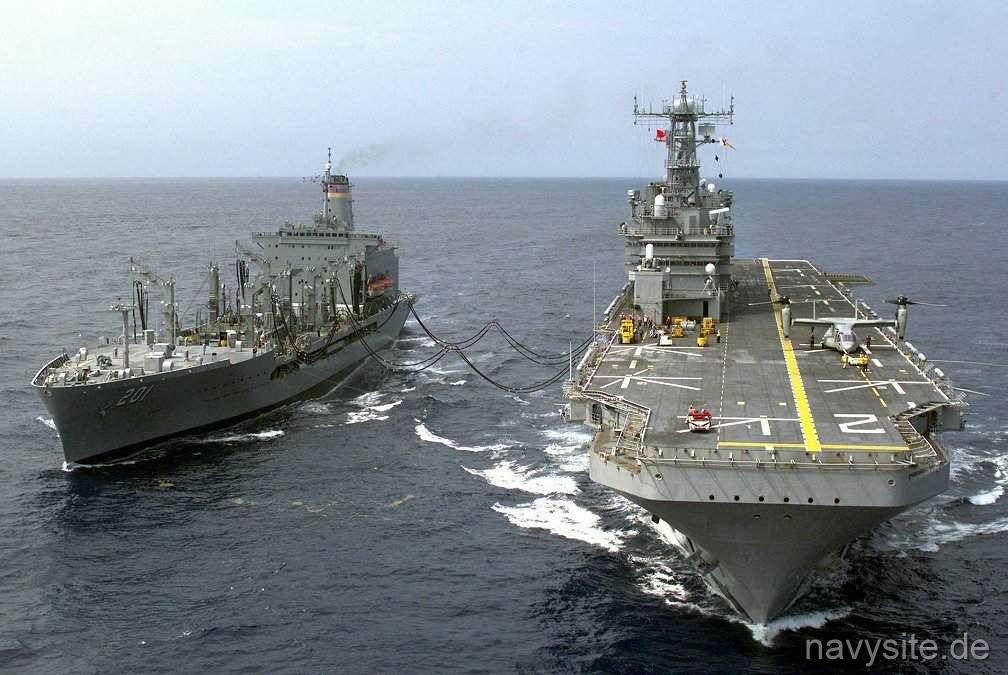
On January 14, 1999, SAIPAN began a series of MV-22 Osprey shipboard trials. The tests were conducted by a joint government and industry test team and involved the evaluation of aircraft handling, takeoff and landing procedures, flight deck compatibility and maintenance requirements aboard a large-deck amphibious assault ship. During the January and February test period, the MV-22 completed more than 350 landings aboard SAIPAN. The evaluation also examined the aircraft's performance under different wind conditions and its compatibility with the ship's aviation facilities.
Following the initial testing, SAIPAN continued supporting the MV-22 development program. Additional trials and engineering evaluations were conducted during 1999, with the ship and its crew providing aviation support and shipboard facilities for the testing program. The results contributed to the evaluation of procedures and equipment required for future operational employment of the Osprey from amphibious ships. Later in the year, SAIPAN resumed amphibious training and preparations for her next overseas deployment.
During 2000, SAIPAN deployed to the Mediterranean and Arabian Gulf with the 26th Marine Expeditionary Unit embarked. The Amphibious Ready Group operated under Amphibious Squadron Four and conducted amphibious exercises, maritime security operations and contingency planning throughout the deployment. In September, SAIPAN maintained a naval presence in the Adriatic Sea during the political crisis surrounding the federal elections in Yugoslavia, as demonstrations and opposition to President Slobodan Milosevic increased.
During the deployment, the embarked 26th Marine Expeditionary Unit participated in Exercise Atlas Hinge in Tunisia, conducting combined training with Tunisian armed forces. The Marines also participated in Croatian PHIBEX 2000, the first bilateral exercise between American Marines and Croatian forces. The training included amphibious operations, landing force coordination and combined field exercises. In October, the Marine expeditionary unit participated in NATO Exercise Destined Glory 2000, while SAIPAN and the Amphibious Ready Group remained available for additional regional contingency operations.
During October 2000, SAIPAN maintained readiness for possible diplomatic or military evacuation operations connected with increasing unrest in Israel and the Palestinian territories. The Amphibious Ready Group continued its assigned operations in the Mediterranean as U.S. naval commanders monitored developments ashore. During November, elements of the 26th Marine Expeditionary Unit participated in Exercise Slunj 2000 in Croatia. The exercise included combined ground training with Croatian forces and the first firing of a Javelin anti-tank missile by an embarked Marine Expeditionary Unit during a deployment.
On December 8, 2000, Amphibious Squadron Four and the 26th Marine Expeditionary Unit were relieved of their Mediterranean duties by the Amphibious Ready Group led by USS NASSAU (LHA 4), with the 22nd Marine Expeditionary Unit embarked. SAIPAN subsequently began the transatlantic return passage and arrived at Norfolk on December 21, 2000, following completion of her six-month deployment.
During January 2001, SAIPAN prepared for a major shipyard availability. On January 23, she departed Norfolk for Naval Weapons Station Earle, New Jersey, arriving the following day to offload ammunition. The ship's crew removed more than 1,000 pallets of munitions in less than 36 hours despite winter weather and strong winds. SAIPAN departed Earle on January 27 and returned to Norfolk on January 28, where final preparations for the overhaul continued.
On February 12, 2001, SAIPAN entered Norfolk Naval Shipyard for her fourth Complex Overhaul. The availability included major work on the ship's engineering plant, electrical systems, aviation facilities and amphibious equipment, together with modifications to improve habitability and accommodate female members of the ship's crew. On March 29, the first permanently assigned female Chief Petty Officer reported aboard SAIPAN. On April 11, a fire occurred in one of the ship's recreation and fitness spaces while the ship was undergoing maintenance. The incident required a firefighting response and was subsequently investigated.
On April 30, 2001, SAIPAN completed her first Women-at-Sea certification, marking another stage in the integration of female sailors into the ship's crew. The overhaul continued throughout the year as shipyard personnel carried out repairs, equipment installations and testing. On December 6, Captain Norma L. Hackney relieved Captain Russell T. Williams as commanding officer of SAIPAN. She subsequently supervised the final stages of the overhaul and the ship's return to operational readiness.
During 2002, SAIPAN completed post-overhaul testing, repairs and operational training in preparation for returning to fleet service. The ship conducted sea trials, engineering evaluations and amphibious exercises and prepared for a scheduled deployment during 2003. Following the escalation of tensions with Iraq and the continuing U.S. military operations against terrorist organizations after September 11, 2001, SAIPAN was assigned to an accelerated deployment as part of the Amphibious Task Force East.
On January 10, 2003, SAIPAN departed Norfolk for a deployment to the Middle East in support of Operations Enduring Freedom and Iraqi Freedom. The deployment was undertaken earlier than originally scheduled as U.S. forces assembled in the region in preparation for possible military action against Iraq. Other ships associated with Amphibious Task Force East included USS PONCE (LPD 15), USS BATAAN (LHD 5), USS ASHLAND (LSD 48), USS GUNSTON HALL, and USS KEARSARGE (LHD 3).
After departing the United States, SAIPAN proceeded across the Atlantic and through the Mediterranean. On February 4, 2003, she transited the Suez Canal southbound and continued through the Red Sea toward the Arabian Gulf. On February 20, Marines and sailors began offloading elements of the 2nd Marine Expeditionary Brigade and associated equipment into Kuwait. The ship supported the movement of personnel, vehicles and supplies as U.S. and coalition forces prepared for the invasion of Iraq.
Following the beginning of Operation Iraqi Freedom on March 19, 2003, SAIPAN supported U.S. Marine Corps operations in the region. The ship provided aviation, command-and-control, medical and logistical facilities for the embarked forces while continuing operations in the Arabian Gulf. Her activities were part of the larger amphibious task force assembled for the campaign, which also included USS BONHOMME RICHARD (LHD 6) and USS BOXER (LHD 4) among the amphibious assault ships operating in the region.
On May 7, 2003, an explosion occurred in a trash receptacle in a Marine berthing area aboard SAIPAN while she was operating in the Arabian Gulf. The explosion penetrated a bulkhead and injured eleven Marines assigned to the 2nd Marine Expeditionary Brigade. One Marine sustained a serious arm injury and was evacuated to an Army field hospital in Kuwait. The remaining injured personnel were treated aboard the ship. None of the injuries was considered life-threatening, and the Navy initiated an investigation into the cause of the explosion.
Following completion of her operations in the Arabian Gulf, SAIPAN began her return transit through the Red Sea and Mediterranean. On June 16, 2003, the ship arrived at Naval Station Rota, Spain, for her first port visit after approximately 148 consecutive days without a liberty port call. The visit allowed the crew to receive supplies and conduct maintenance before continuing the homeward transit. SAIPAN subsequently crossed the Atlantic and arrived off the North Carolina coast, where the embarked Marines and their equipment were offloaded near Morehead City beginning on June 22.
On June 26, 2003, SAIPAN returned to Naval Station Norfolk following completion of her deployment in support of Operations Enduring Freedom and Iraqi Freedom. Following post-deployment leave, maintenance and inspections, the ship resumed local training and preparations for further amphibious operations.
During 2004, SAIPAN conducted training and maintenance in preparation for additional expeditionary operations. The ship participated in exercises involving the Amphibious Ready Group and supporting surface combatants, including air-defense training, amphibious operations and live-fire exercises. On November 12, 2004, SAIPAN participated in a Sinking Exercise approximately 300 miles off the U.S. East Coast. During the exercise, she conducted live firing against the former research ship R/V GOSPORT, using her 25-mm guns, machine guns and grenade launchers. Other participating ships and aircraft attacked the decommissioned destroyer ex-USS HAYLER (DD 997) and other targets during the coordinated exercise conducted from November 12 to 14.
In January 2005, SAIPAN prepared for a humanitarian assistance deployment to Haiti under Operation New Horizons. The mission was organized to assist communities affected by Hurricane Jeanne, which had caused extensive flooding and damage in September 2004. SAIPAN departed Norfolk on January 19 and proceeded to Pascagoula, Mississippi, where construction equipment, supplies and personnel were embarked. On January 26, she departed Pascagoula carrying Seabees from Naval Mobile Construction Battalion One and equipment intended for rebuilding schools, wells and other essential infrastructure in Haiti.
On February 1, 2005, SAIPAN arrived off Gonaïves, Haiti, and began offloading equipment and supplies for Operation New Horizons. The ship transported more than 50 Seabees and approximately 1,200 tons of construction material, vehicles and supporting equipment for projects ashore. Her personnel and embarked units assisted with the logistical requirements of the humanitarian mission while the ship remained in the Caribbean.
After completing her assignment in Haiti, SAIPAN proceeded to Guantanamo Bay, Cuba, arriving on February 9, before continuing to San Juan, Puerto Rico, where she arrived on February 17. The deployment also included a visit to Curacao before the ship began her return passage to the United States. SAIPAN arrived at Norfolk on March 9, 2005, completing the humanitarian assistance deployment.
Following a short maintenance and training period, SAIPAN received orders for another deployment under the Navy's Fleet Response Plan. On May 25, 2005, she departed Norfolk for a three-month surge deployment to northern European and Mediterranean waters. Other ships deploying from Norfolk at the same time included USS NASHVILLE and USS NICHOLAS (FFG 47), while USS PHILIPPINE SEA (CG 58) departed Mayport, Florida, in support of related naval operations.
On June 6, 2005, SAIPAN arrived at Oslo, Norway, for a scheduled port visit coinciding with events marking the centennial of Norway's independence from Sweden. The visit included official engagements with Norwegian representatives and opportunities for the crew to visit the city. After departing Oslo, SAIPAN continued operations in northern European waters and arrived at Rotterdam, Netherlands, on June 13 for a further port visit.
During the final week of June 2005, SAIPAN participated in the International Fleet Review held off Portsmouth, England, as part of events commemorating the 200th anniversary of the Battle of Trafalgar. The review took place on June 28 and involved more than 160 naval and civilian vessels from numerous countries, with Queen Elizabeth II reviewing the assembled fleet. The event was accompanied by the International Festival of the Sea and other maritime commemorations.
Following the fleet review, SAIPAN proceeded southward into the Mediterranean and Adriatic seas. From July 11 to 30, 2005, the ship participated in Exercise Adriatic Engagement 2005, a multinational maritime security and training exercise conducted with regional naval forces. The exercise involved shiphandling, communications, maritime surveillance and cooperation with military units from countries bordering the Adriatic. During the exercise period, SAIPAN visited Split, Croatia, on July 26, and Durres, Albania, on July 28. The visits included professional exchanges and meetings with naval and government representatives. Following completion of the Adriatic operations, SAIPAN proceeded to Augusta Bay, Sicily, arriving on August 2. She subsequently visited Naval Station Rota, Spain, on August 8 before crossing the Atlantic. On August 25, 2005, SAIPAN returned to Norfolk after completing the surge deployment.
During the closing months of 2005 and early 2006, SAIPAN underwent maintenance and operational training while preparations were made for additional maritime security exercises. In May 2006, she embarked the staff of Amphibious Squadron Eight, Fleet Surgical Team Four, elements of Beach Master Unit Two and Assault Craft Unit Four, and personnel from Tactical Air Control Squadron 22 and Helicopter Sea Combat Squadron 26. The embarked personnel prepared for Exercise Phoenix Express 2006, a multinational exercise intended to improve maritime cooperation and security procedures in the eastern Atlantic and western Mediterranean.
Exercise Phoenix Express began on May 30, 2006, and continued through June 13. SAIPAN participated alongside USS SIMPSON (FFG 56) and naval forces from Morocco, Algeria, France and Spain. The exercise involved maritime interception operations, search and rescue procedures, communications, helicopter operations, formation maneuvering and underway replenishment. On June 4, SAIPAN conducted an underway replenishment with USS SIMPSON in the Mediterranean Sea. Following completion of the exercise and associated port and training periods, SAIPAN returned to Norfolk in July.
On August 15, 2006, SAIPAN departed Naval Station Norfolk for her final major overseas deployment, operating as the principal ship of Expeditionary Action Group Three. The deployment took the ship to the U.S. Sixth and Fifth Fleet areas of operations in support of maritime security missions associated with the Global War on Terrorism. Embarked units included personnel from Helicopter Sea Combat Squadron 26 and specialized mine countermeasures forces supporting the group's assigned operations.
During the deployment, SAIPAN conducted maritime security patrols, aviation operations, logistical support and multinational training in the Mediterranean, Red Sea and Middle East regions. Her aviation facilities were used to support helicopter operations, including training connected with airborne mine countermeasures equipment. These operations contributed to the assessment of methods for locating and clearing naval mines in important maritime approaches and shipping routes.
During the latter part of 2006, SAIPAN continued maritime security and regional support operations in the U.S. Fifth Fleet area of responsibility. On December 4, she transited the Suez Canal northbound and proceeded westward through the Mediterranean to begin her return passage to the United States. After crossing the Atlantic, SAIPAN arrived at Naval Station Norfolk on December 22, 2006, completing her final operational deployment.
Following her return, SAIPAN entered the final stages of preparation for decommissioning. During the first months of 2007, equipment and supplies were removed, records were prepared for transfer and the crew completed the administrative and material requirements for inactivation. On April 20, 2007, SAIPAN held a decommissioning ceremony at Naval Station Norfolk, attended by former crew members, family members and Navy and Marine Corps representatives. Captain Richard Fitzpatrick, the ship's final commanding officer, presided over the ceremony. The formal decommissioning date recorded by the Naval History and Heritage Command is April 25, 2007.
Following decommissioning, ex-SAIPAN was retained by the Navy for weapons effects testing. The tests were intended to gather information about the structural response and survivability characteristics of large amphibious ships when subjected to weapon damage. After completion of the testing program, the ship was transferred to the inactive fleet and placed in storage at the Naval Inactive Ship Maintenance Facility in Philadelphia, Pennsylvania. During this period, she remained moored with other decommissioned ships awaiting disposal.
On September 30, 2009, the Navy awarded a contract to International Shipbreaking Ltd. of Brownsville, Texas, for the dismantling and recycling of ex-SAIPAN. The ship had previously been identified for disposal and prepared for transfer from the inactive fleet. On October 28, 2009, ex-SAIPAN departed Philadelphia under tow, bound for Brownsville, where dismantling operations subsequently began. The recycling process involved the removal of equipment, hazardous materials and reusable components, followed by the progressive dismantling of the ship's hull and superstructure. On February 23, 2011, International Shipbreaking completed the dismantling and recycling of ex-SAIPAN at Brownsville, Texas.
back to top go to the end of the pageUSS SAIPAN Patch Gallery:
 |
back to top go to the end of the page back to top go to the end of the page
USS SAIPAN Image Gallery:
 |  |  |  |  |
 |  |  |  |  |
The photo below was taken by Karl-Heinz Ahles when USS SAIPAN visited Corfu, Greece, in August 1996.
 |
The photo below was taken by Brian Barton on October 13, 2008, and shows the SAIPAN laid up at the Philadelphia Naval Shipyard.
 |
The photos below were taken by me on November 7, 2008, and show the SAIPAN laid up at the Philadelphia Naval Shipyard.
 |  |  |  |  |
 |  |  |  |  |
 |  |  |  |  |
back to top Back to Amphibious Assault Ships site. Back to ships list. Back to selection page. Back to 1st page.