![]() |
Search the Site with
|
![]() | ![]() | ![]() |
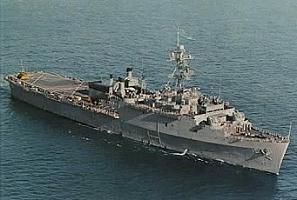
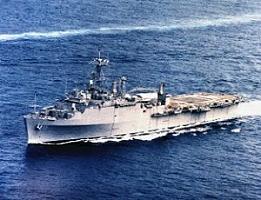
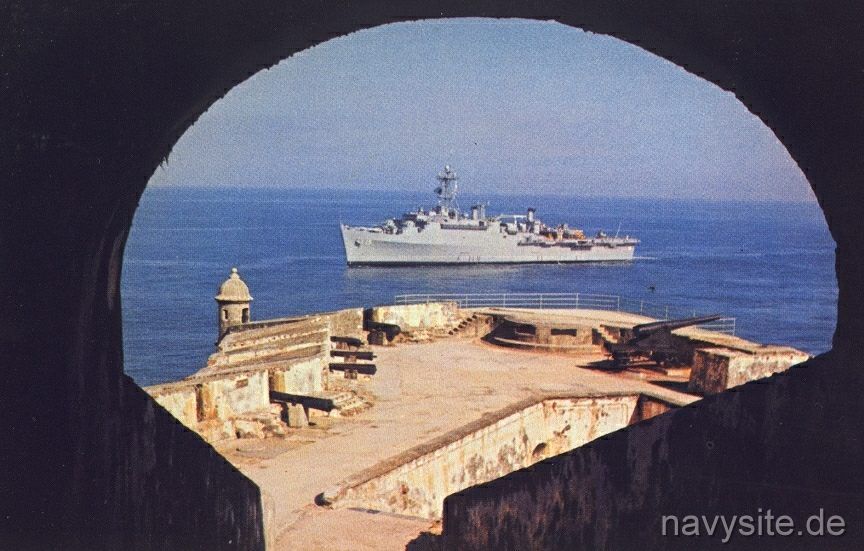
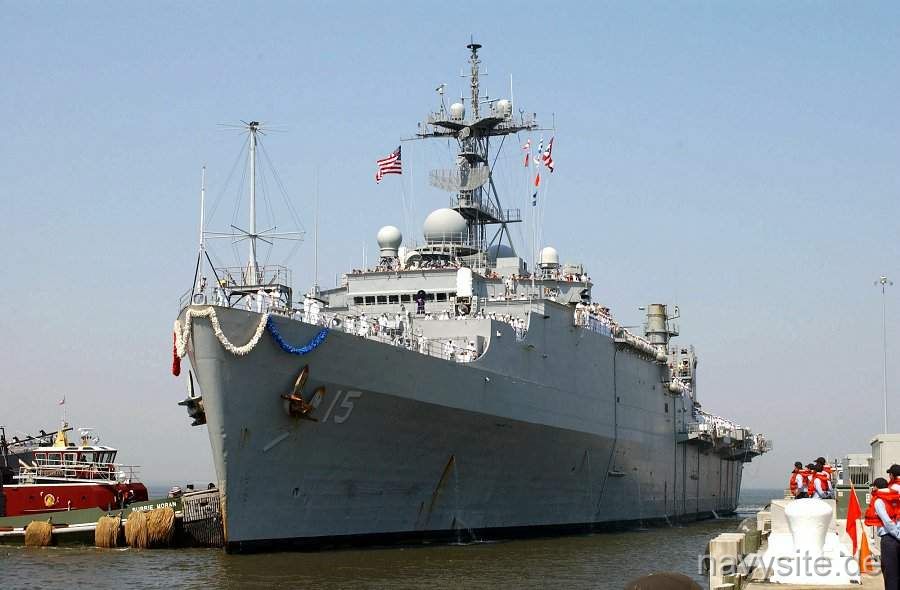
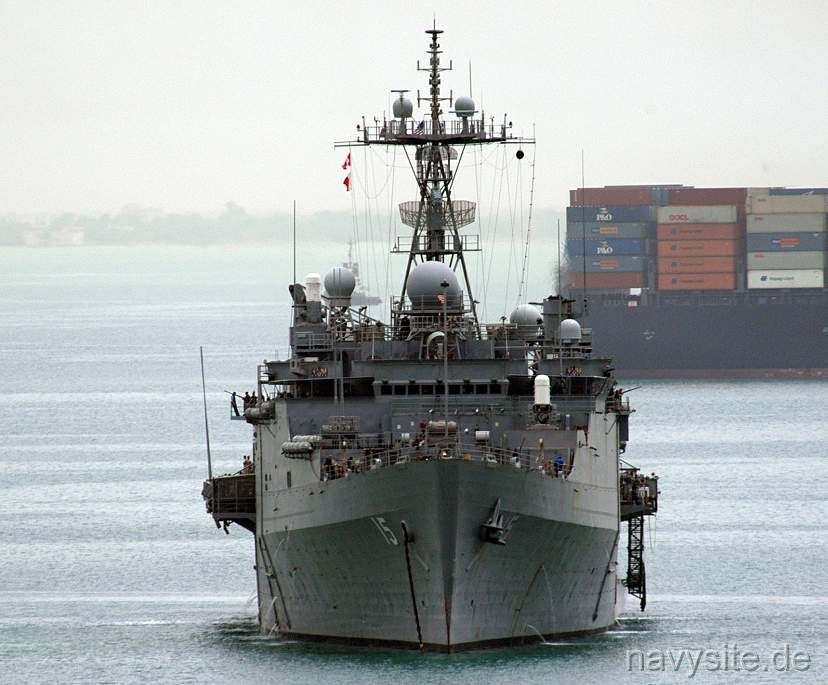
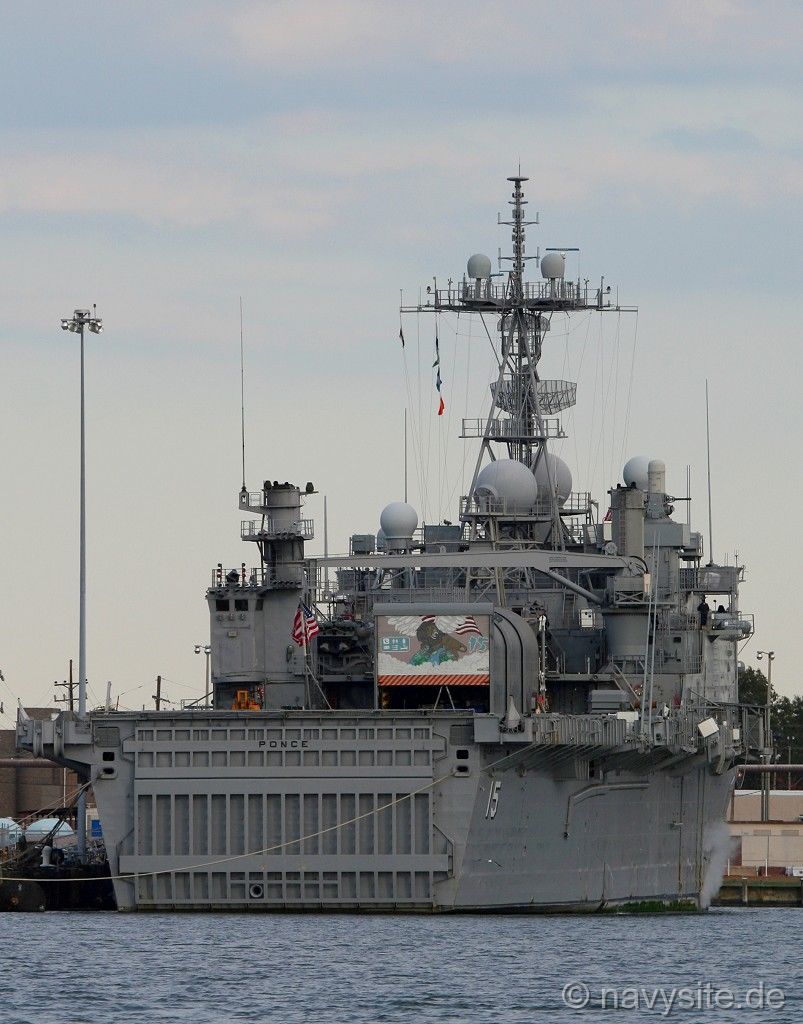
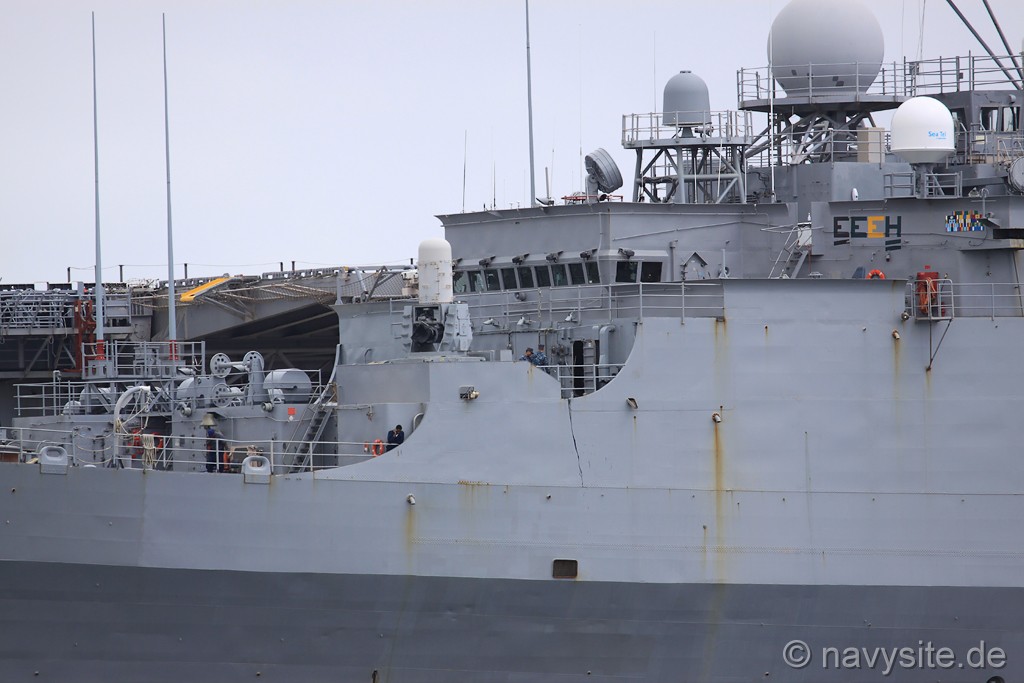
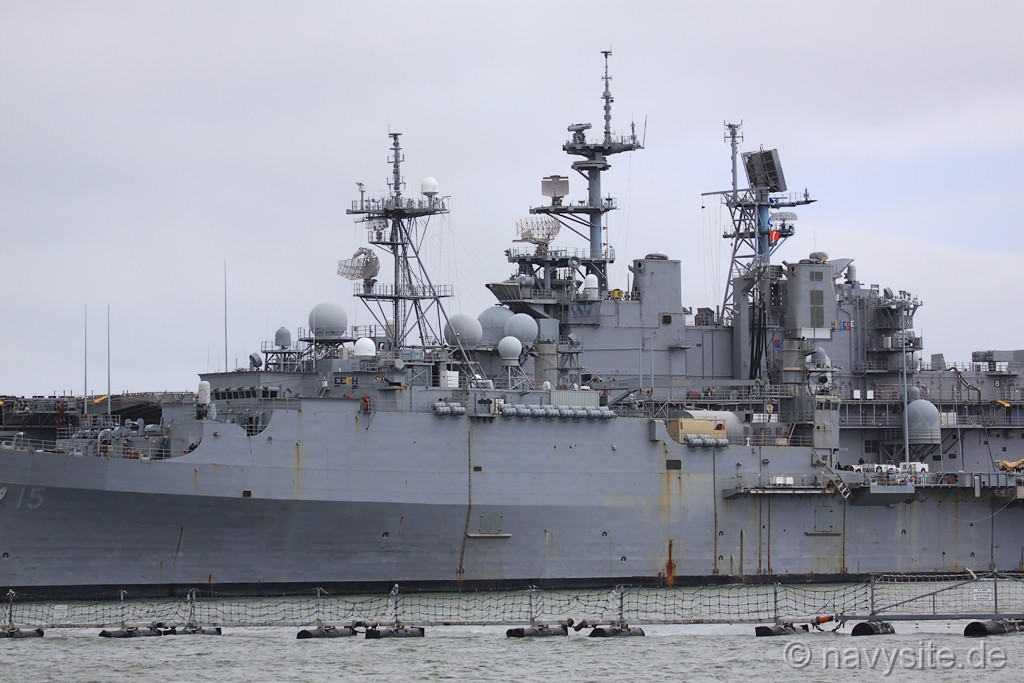
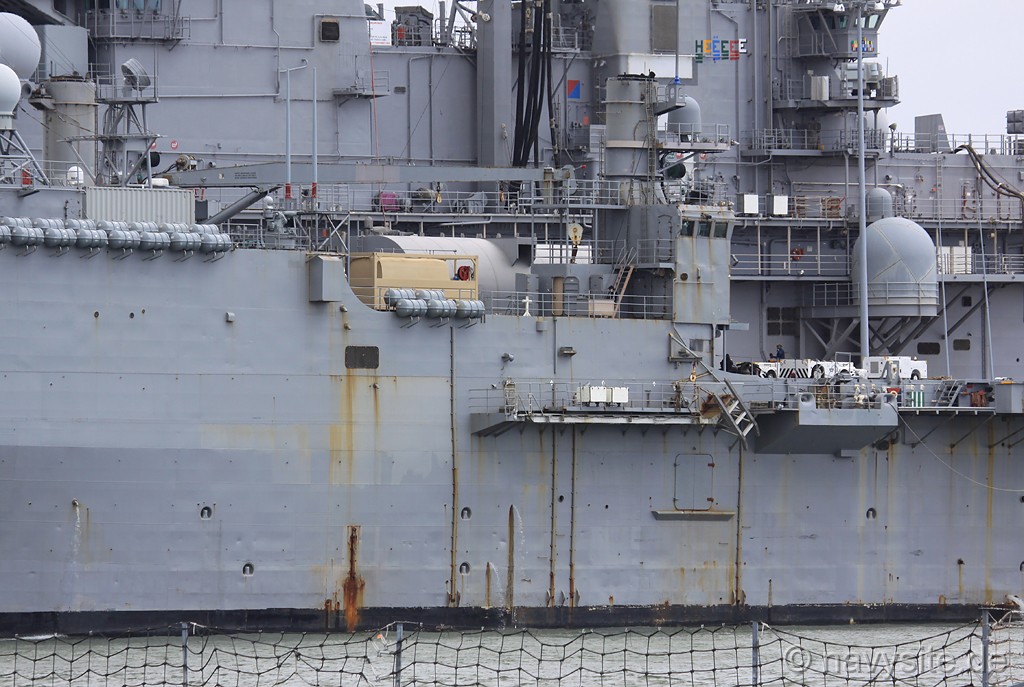
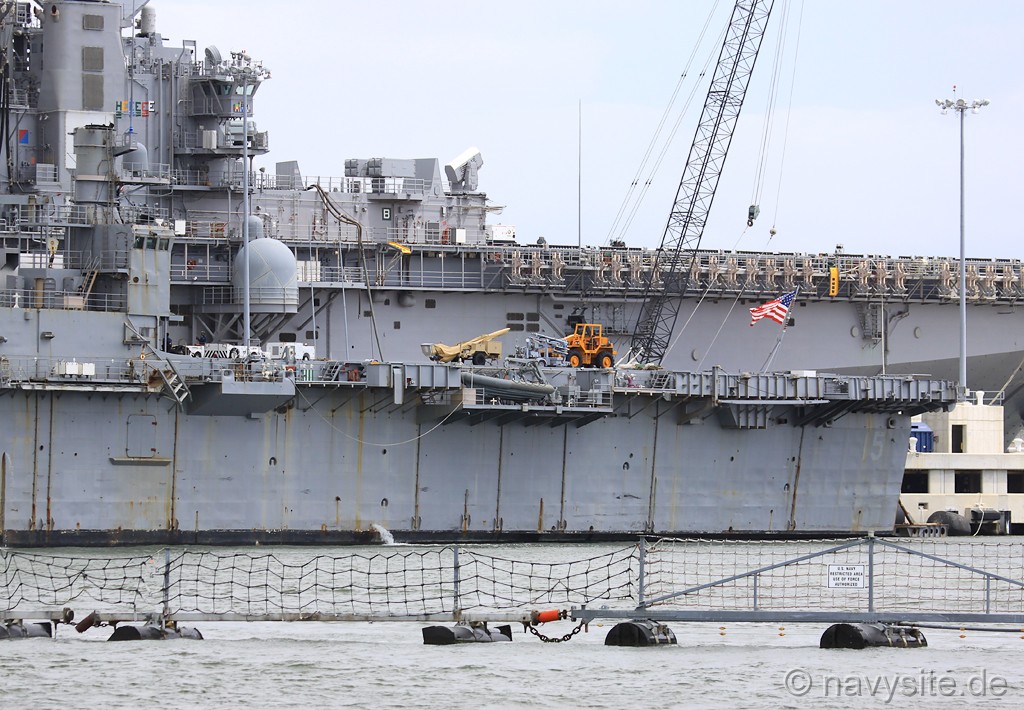
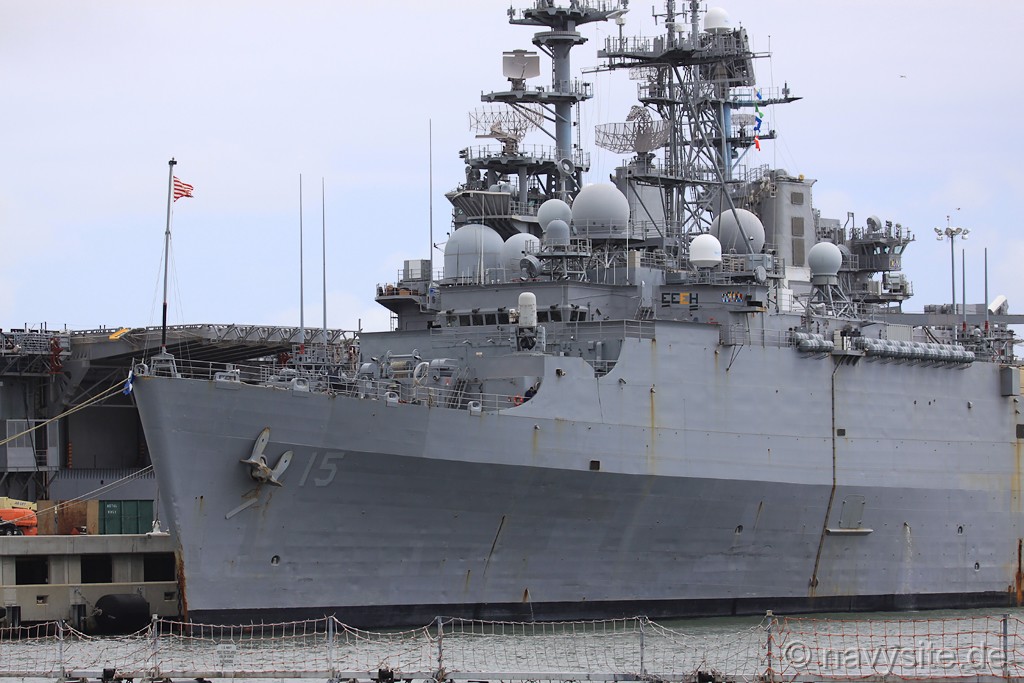
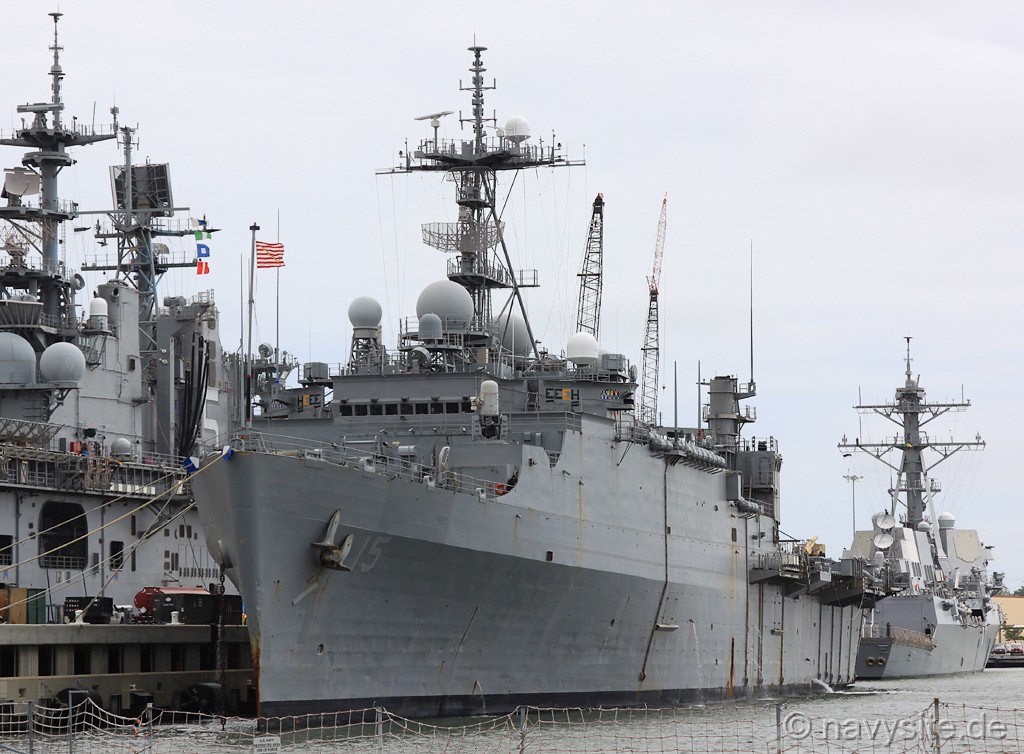
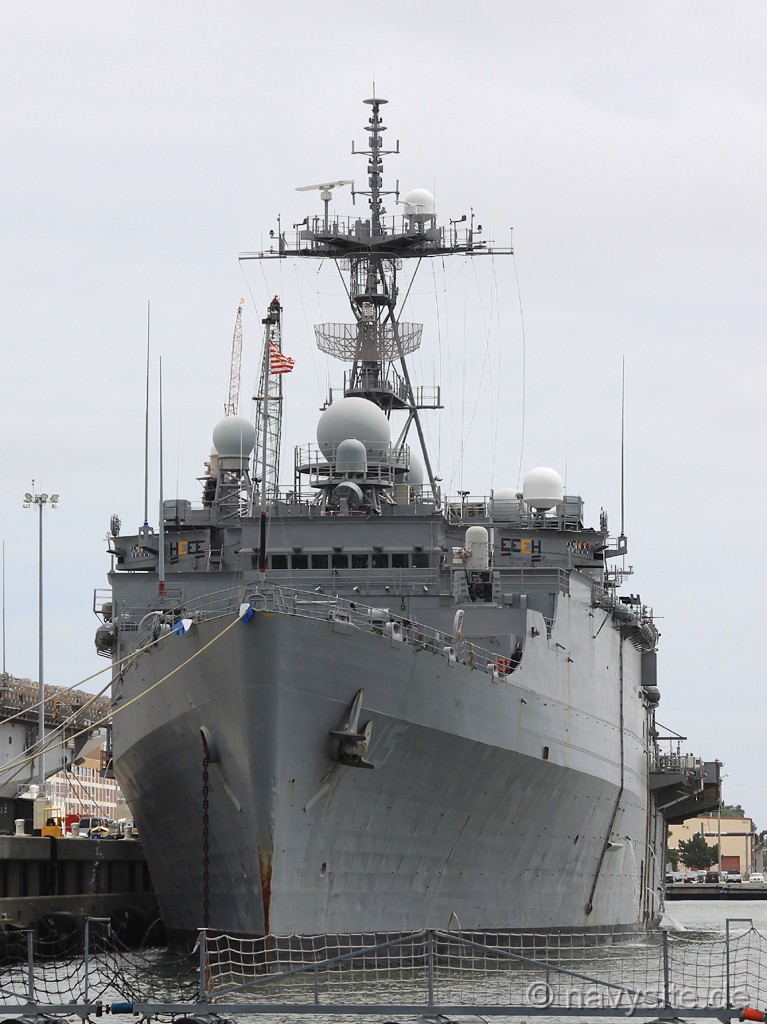
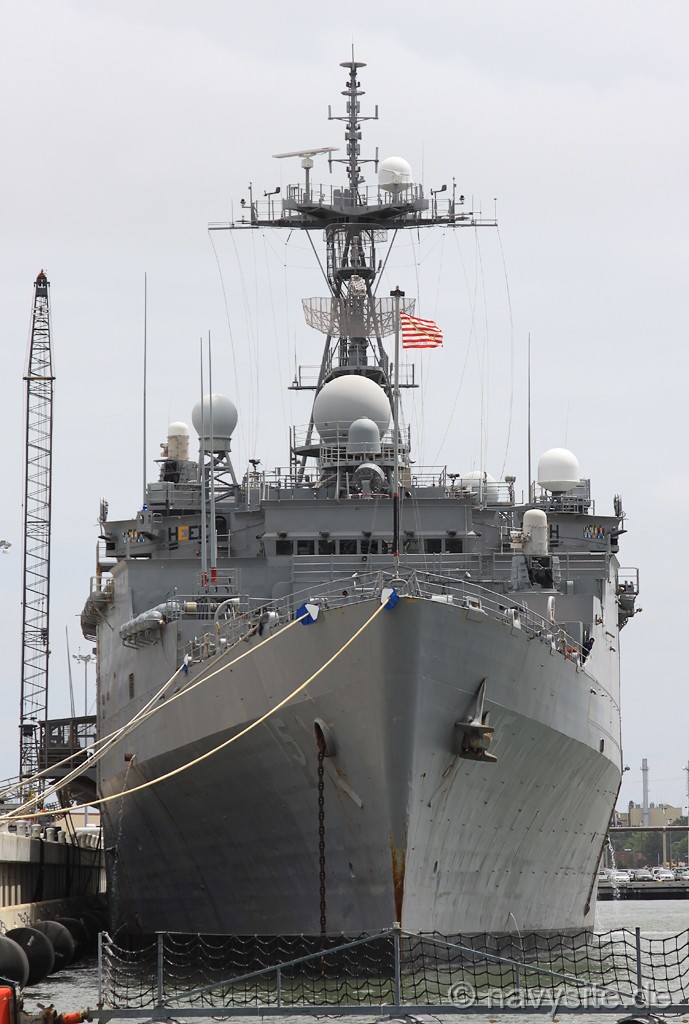
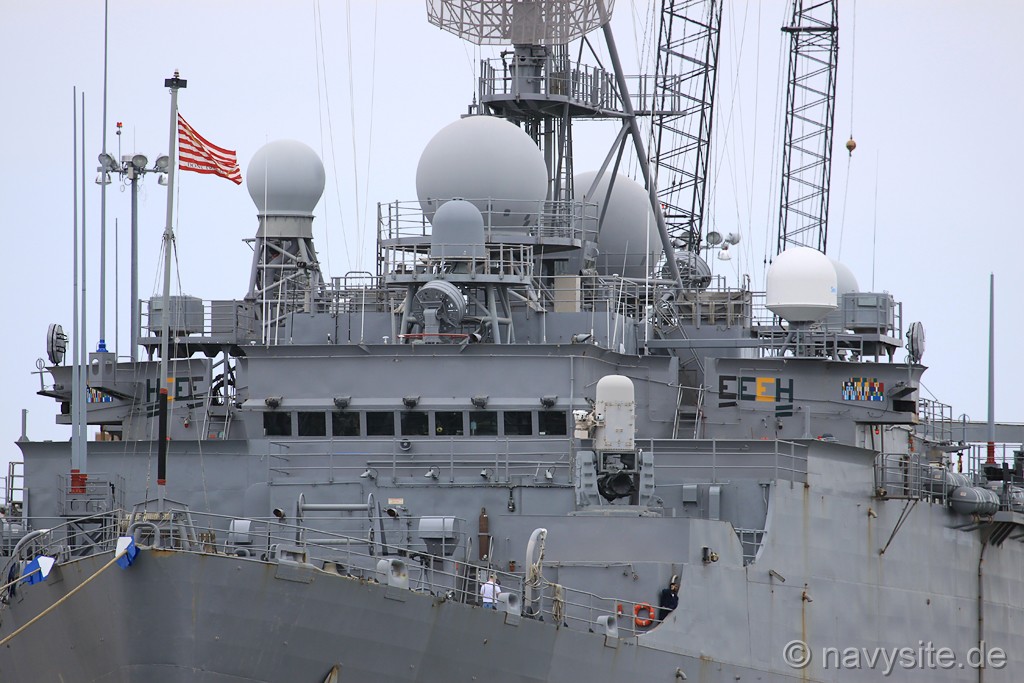
USS PONCE was the 12th and last ship in the AUSTIN - class of Amphibious Transport Docks. The ship was named after the city in the Commonwealth of Puerto Rico, named after the Spanish explorer Juan Ponce de Leon, discoverer of Florida, first governor of Puerto Rico. The PONCE was originally scheduled to be decommissioned on March 30, 2012, however, decommissioning was cancelled and the ship was subsequently converted to an Afloat Forward Staging Base to support MH-53 helicopters and patrol craft. She was then jointly operated by a MSC/Navy crew and operated out of Manama, Bahrain, in the Persian Gulf. In 2014, PONCE tested the laser weapons system, the first of its kind to be employed aboard a deployed US Navy warship. PONCE’s participation in the development of this system was essential to defining a generation of directed energy weapons. Replaced by USS LEWIS B. PULLER (ESB 3) in August 2017, PONCE departed Bahrain on September 3, 2017, and returned to the United States for decommissioning.
Decommissioned on October 14, 2017, and stricken from the Navy list on November 13, 2017, PONCE spent the following years laid up at Philadelphia, Penn. On April 12, 2022, she arrived under tow at All Star Metals, Brownsville, Tx., for scrapping.
| General Characteristics: | Awarded: May 17, 1965 |
| Keel laid: October 31, 1966 | |
| Launched: May 20, 1970 | |
| Commissioned: July 10, 1971 | |
| Decommissioned: October 14, 2017 | |
| Builder: Lockheed Shipbuilding Co., Seattle, Wash. | |
| Propulsion system: two boilers, two steam turbines | |
| Propellers: two | |
| Length: 569 feet (173.4 meters) | |
| Beam: 105 feet (32 meters) | |
| Draft: 23 feet (7 meters) | |
| ballasted: 34 feet (10.4 meters) | |
| Displacement: approx. 16,900 tons | |
| Speed: 21 knots | |
| Well deck capacity: one LCAC or one LCU or four LCM-8 or nine LCM-6 or 24 amphibious assault vehicles (AAV) | |
| Aircraft: none, but telescopic hangar installed aboard. The hangar is not used to accommodate helicopters but on the flight deck there is space for up to six | |
| Crew: Ship: 24 officers, 396 enlisted | |
| Marine Detachment: approx. 900 | |
| Armament: two |
Crew List:
This section contains the names of sailors who served aboard USS PONCE. It is no official listing but contains the names of sailors who submitted their information.
USS PONCE Cruise Books:
Accidents aboard USS PONCE:
| Date | Where | Events |
|---|---|---|
| 1977 / 1978 | Moorehead City, NC | Either in the fall or spring of 1977 or 1978, the USS PONCE runs aground outside of the harbor of Moorehead City, NC, after missing the harbor entrance. The PONCE was about to embark Marines for a Med cruise. Damage was minor and the PONCE was laid up for about a week. Info by Richard Othmer, former BM3 aboard PONCE. |
| February 2, 1982 | Atlantic | USS PONCE collides with USS FORT SNELLING (LSD 30) during a towing exercise which causes minor damage to PONCE's port side, mainly to the accommodation ladder and flight deck catwalk. The two ships were en route to Portsmouth, UK. |
| February 14, 1984 | Radio Island, near Moorehead City, NC | During attempts to move an assault craft to Radio Island, USS PONCE suffers a major casualty when her sterngate is damaged and eventually lost. PONCE goes to Philadelphia Naval Shipyard for repairs. |
USS PONCE History:
USS PONCE was ordered on May 17, 1965 and laid down by Lockheed Shipbuilding in Seattle, Washington, on October 31, 1966. She was launched on May 20, 1970, sponsored by Florence W. Hyland, and commissioned at Norfolk on July 10, 1971 as the twelfth and final AUSTIN-class amphibious transport dock. She then shifted from post-commissioning trials to the long delivery to the Atlantic Fleet. She transited the Panama Canal on September 15, 1971, proceeded directly to a namesake visit at Ponce, Puerto Rico, arriving September 18, 1971, and then established herself with the Norfolk-based amphibious force for the first full training cycle.
Early 1972 was dominated by certification workups and an early public-relations port call: in company with USS TRENTON (LPD 14) she departed Hampton Roads in early for New Orleans, Louisiana, and remained February 9-15 during Mardi Gras 1972, a typical mid-winter presence and recruiting visit for Atlantic Fleet ships. After returning to the East Coast, PONCE entered post-shakedown availability at Philadelphia Naval Shipyard beginning March 7, 1972, correcting trial discrepancies and incorporating early habitability improvements before resuming Atlantic Fleet training.
By spring 1973, PONCE was operating with the U.S. SIXTH FLEET on her first Mediterranean cruise, combining NATO amphibious exercises with routine presence. On March 21, 1973 she and USS SHREVEPORT (LPD 12) got underway for Izmir, Turkey, to embark Turkish participants for a scheduled allied landing exercise, a good snapshot of the ship's core mission in a Cold War Med: embark, transport, and control allied landing forces in combined drills. A week later, the command history places the ship operating around Sardinia (March 27), another standard training locale for allied amphibious rehearsals. She completed the cruise and rotated home to Norfolk later that year.
In 1974, PONCE moved through the full rhythm of Atlantic Fleet amphibious operations. The command history records her return to Norfolk on July 28, 1974 from the large NATO/Atlantic phase "NATRONLANT-74", followed by local type training and a tactical evaluation at Onslow Bay, North Carolina, with Amphibious Squadron FOUR (August 19-29). After a month of in-port preparations, she sailed on September 25, 1974, to begin a six-month Mediterranean deployment with the 2d Battalion, 8th Marines embarked.
Her 1974-1975 Mediterranean tour included a string of documented calls and evolutions. In February 1975 PONCE made routine port visits to Toulon, France (February 8-9) and Valencia, Spain (February 14-23), then shifted west. The command history notes her last foreign port as Rota, Spain (March 2-8, 1975), from which she sailed on March 8 for home, closing the cruise and returning to stateside training and upkeep.
In 1976, PONCE again operated with SIXTH FLEET. After summer amphibious events, she conducted a tender availability alongside USS PUGET SOUND (AD 38) at Naples (August 24-September 10, 1976), then shifted to Toulon, France, for shipyard maintenance. Toulon also hosted a change of command on September 16, 1976, when Capt. James R. Allingham relieved Capt. Paul J. McIlroy - a practical example of how forward-based amphibs sustained long deployments using allied facilities.
Back in the United States, 1977 mixed Caribbean work with a major exercise and the start of a deep industrial period. The command report records participation in Exercise SOLID SHIELD '77 - the big East Coast amphibious capstone that year - and Caribbean training (including Puerto Rico), before the ship entered an extended overhaul at Sun Shipbuilding, Chester, Pennsylvania later in the year.
The 1977-1978 overhaul was substantial. The 1978 report tracks multiple moves in and out of dry dock at Sun Ship between January and April 1978, with completion of pier-side work that summer. After roughly 14 months in the yard, PONCE got underway down the Delaware River for post-overhaul sea trials on September 14, 1978, marking her formal return to the operating fleet and the start of re-certification in all amphibious warfare mission areas.
Re-certified and back on tempo, PONCE deployed again to the Mediterranean in 1979. According to her command history, she sailed on May 23, 1979 for a five-and-a-half-month cruise that ran until November 7, 1979, serving as an amphibious control and transport platform within the SIXTH FLEET amphibious ready group amid the heightened NATO exercise cycle of the late 1970s.
In 1980, she continued allied amphibious operations in European waters. The 1980 command history records PONCE acting as the primary control ship for an amphibious landing during a North Atlantic phase and then making a documented port visit to Portsmouth, England, March 1-4, 1980 - a classic diplomacy/presence call nested in a broader series of NATO exercises and certifications that year as the Atlantic amphibious force maintained high readiness.
PONCE began 1981 moored at Naval Station Norfolk, Virginia, finishing post-deployment upkeep and then completing workups for a Mediterranean cruise with the SIXTH FLEET. During a six-month deployment, she made multiple ports of call - including Naples, Messina (Sicily) and Saint-Raphael (France) - while conducting the usual amphibious embarkation drills, helicopter deck operations, and landing-craft control exercises. A key marker of the cycle is the underway turnover with USS TRENTON in the western Mediterranean, completed by noon on June 18, 1981, after which PONCE assumed the scheduled ARG duties.
Early 1982 saw PONCE in the North Atlantic en route to Portsmouth, United Kingdom, when she collided with USS FORT SNELLING (LSD 30) during a towing evolution on February 2, 1982. The scrape caused minor damage (principally to the port accommodation ladder and flight-deck catwalk). After inspections and repairs, she continued with training and her operating schedule.
PONCE spent much of 1983 in heavy maintenance to reset for later deployments. Her 1983 Command History places the ship in regular overhaul at Coastal Drydock Corporation, Brooklyn, New York, before returning to type training and certifications - a standard mid-life refresh that improved hull, machinery, and habitability in advance of renewed amphibious tasking.
At the start of 1984, PONCE suffered a major casualty. While attempting to bring an assault craft into the well deck in heavy seas off Morehead City, North Carolina, on February 14, 1984, the ship's stern gate was damaged and ultimately lost. PONCE proceeded to Philadelphia Naval Shipyard for repairs, then completed her North Carolina embarkation and crossed to the Mediterranean, where she assumed scheduled SIXTH FLEET duties that spring. Contemporary records also note an April relief - USS TRENTON (LPD 14) was relieved by USS PONCE at Rota, Spain, on April 9, 1984, as amphibious tasking turned over. In the Med that year, PONCE operated in the eastern basin amid the lingering Lebanon crisis, providing presence and contingency capacity.
In 1985, the ship balanced humanitarian engagement with large-scale exercises. A change of command occurred in January 1985 (Capt. Robert P. Lucas relieving Capt. Emory P. Zimmer). In April, PONCE supported Operation Handclasp deliveries to Haiti and Honduras. In May, she participated in the joint amphibious exercises Universal Trek '85 and Solid Shield '85 - the latter the Atlantic Fleet's capstone amphibious exercise. On July 4, 1985, she made a high-visibility port visit to New York City before returning to Atlantic training.
PONCE deployed again with SIXTH FLEET in 1986 as part of MARG 1-86, a year of unusually intense U.S. naval operations in the Mediterranean. Her command history records a routine port visit to Naples, Italy, February 11-19, 1986, followed by further exercises and presence operations across the western and central Med. While other U.S. units engaged Libya that spring, PONCE's role remained the amphibious staple: embarkation drills, landing-craft control, helo operations, and allied interoperability, under the ARG/PHIBRON construct.
PONCE spent spring 1987 in a significant industrial period at Metro Machine's Imperial Docks in Norfolk, Virginia - a contemporaneous yard panorama dated circa April 1987 shows her pier-side amid overhaul activity. By September 1, 1987, she was back at sea: a U.S. National Archives image records PONCE underway in the Atlantic on that date, reflecting a return to post-availability workups. Her 1987 Command History also notes community engagement as a participant in Norfolk's "Adopt-A-School" program while she cycled through inspections and certifications to rebuild full amphibious readiness.
In 1988, PONCE operated under SIXTH FLEET in the Mediterranean. The ship's command report captures a mid-year logistics sequence as she departed Tunisia and moved north, conducting an underway replenishment (UNREP) with USS SAN DIEGO (AFS 6) and then a refueling with USNS WACCAMAW (T-AO 109) - a snapshot of the tempo that sustained amphibious ready group operations across the basin.
PONCE began 1989 with holiday stand-down at Naval Station Norfolk and then executed a well-documented maintenance cycle: she off-loaded fuel at Craney Island on January 19, 1989, entered Metro Machine (Portsmouth/Norfolk area) for roughly four months, returned to sea for trials on May 16, and moored at Norfolk Waterside on May 19 - dressed overall for Armed Forces Day and opened to visitors. She then resumed local underway periods to restore certifications and amphibious control proficiency.
PONCE entered 1990 in Atlantic Fleet workups and then deployed with the amphibious group that would be retasked to West Africa as Liberia's civil war intensified. On May 27, 1990, the 22d Marine Expeditionary Unit departed the Mediterranean for contingency posture off Monrovia, and in the early execution phase of Operation SHARP EDGE on August 5, 1990, PONCE - operating with USS SAIPAN (LHA 2), USS SUMTER (LST 1181), and USS PETERSON (DD 969) - inserted a reinforced Marine rifle company by helicopter into the U.S. Embassy compound to bolster security and enable sustained non-combatant evacuations. She then remained on station ("Mamba Station") off Liberia supporting follow-on extractions and logistics until relieved, before returning to the Atlantic training cycle.
From June-December 1991, PONCE completed a six-month Mediterranean deployment under SIXTH FLEET. Though the ground campaign in Kuwait had ended in February 1991, the post-war posture continued. PONCE's command history records participation in the Desert Shield/Desert Storm support period and associated Med/Adriatic presence operations during the coalition's consolidation phase, interleaving port visits with amphibious certifications and logistics evolutions.
In 1992 she spent the first half of the year in a four-month maintenance availability at Norfolk, then shifted to training and a summer CORTRAMID embark for midshipmen off the Virginia Capes. When Hurricane Andrew struck South Florida, PONCE entered Miami on August 29, 1992 and remained through September 18, 1992, her crew dewatering buildings and repairing roofs - including a large public high school - before resuming tasking. In October 1992, she commenced counter-drug operations in the Caribbean with a U.S. Coast Guard Law Enforcement Detachment embarked, conducting boardings and patrols before returning to Norfolk for upkeep.
On March 17, 1993, PONCE sailed again for a six-month Mediterranean deployment with the 26th MEU, shifting soon to the Adriatic as NATO established Operation Deny Flight (no-fly zone over Bosnia and Herzegovina) and Operation Provide Promise (humanitarian airlift and sealift support). PONCE's group trained bilaterally with Greece during Exercise "Alexandros '93" and conducted a Tunisian PHIBLEX '93 amphibious landing series, while cycling logistics in ports such as Rota and Augusta Bay characteristic of that theater. She completed the deployment late summer and returned to the Atlantic Fleet routine.
Early 1994 found PONCE in a planned maintenance availability at Metro Machine (Portsmouth, Virginia), followed by sea trials on March 1, 1994, and a return to workups for another Med cycle. The ship's 1994-1995 period included the standard amphibious ready group pattern: transit via Rota, periods of Adriatic presence tied to the ongoing Bosnia operations, and port visits and bilateral drills across the central and western Mediterranean documented in the deployment cruise book for those years.
In 1995, PONCE remained aligned to SIXTH FLEET tasking as Deny Flight and Provide Promise continued into that year (the air campaign ended in December 1995), serving as a seagoing base for helicopters, landing craft, and Marine forces during the alliance's transition from combat air patrols to implementation oversight and humanitarian sustainment. Her command history for 1995 captures the sequence of certifications, logistics ports, and at-sea periods needed to keep the ARG on 96-hour crisis response through the Adriatic.
The tempo remained high in 1996. After amphibious training in the western Atlantic early in the year, PONCE deployed with elements of the 22d MEU(SOC) and - often paired tactically with USS CARTER HALL (LSD 50) - shifted rapidly among Sixth Fleet tasks. As civil conflict again endangered U.S. citizens in Liberia, the Navy-Marine team executed Operation ASSURED RESPONSE in the spring and summer. Contemporary Marine and Navy records note PONCE's use as an improvised aviation and small-boat staging base off the Liberian coast. Later that deployment, the two-ship team pushed through the Bosphorus into the Black Sea, conducting Exercise Cooperative Partner in Bulgaria, Rescue Eagle in Romania, and Sea Breeze in Ukraine, before returning stateside in the autumn.
In March 1997, PONCE was again forward in the Adriatic when unrest in Albania triggered a rapid non-combatant evacuation. During Operation SILVER WAKE (March 14-27, 1997), she embarked Marines and supported helicopter insertions into Tirana to secure the U.S. Embassy and housing areas, evacuating hundreds of U.S. citizens and third-country nationals while coordinating with allied ships and airlift. The ship's own annual report records participation in SILVER WAKE and the evacuation of 889 people, alongside additional Sixth Fleet contingency tasks that spring.
PONCE's 1998 year opened with a drydocking planned maintenance availability (DPMA) at Metro Machine beginning in January 1998, focusing on hull, machinery, and habitability. She undocked in the spring and completed sea trials and post-availability inspections before returning to local operating areas to rebuild amphibious certifications. The command history notes routine type training through the remainder of the year, setting conditions for a busy 1999.
In 1999, PONCE deployed to the Mediterranean amid the Balkans crisis, and her annual report explicitly states she was "directly involved in combat operations in the Balkans", supporting NATO's Operation Allied Force and the U.S. component Operation Noble Anvil (March 24-June 10, 1999). While carrier air wings struck Serbian targets, PONCE's role reflected the amphibious force's broader mission set: she provided afloat staging, logistics, and a contingency platform for Marines and special mission detachments in the Adriatic, supported humanitarian relief associated with the Kosovo refugee flows, and sustained readiness for potential evacuations or amphibious demonstrations along the littoral. She closed out the year with post-deployment upkeep and the normal inspection cycle back in Norfolk.
After a stateside work-up year in 2000, PONCE sailed on April 27, 2001, for a six-month Mediterranean cruise. That deployment is best remembered for a practical piece of seamanship in the Straits of Messina: on August 29, 2001, PONCE's boat crews intercepted two unmanned Italian craft - a small motorboat and a sailing dinghy - adrift and a hazard to navigation. The ship flooded down, recovered the derelicts to her well deck, and turned them over to the Guardia Costiera at Catania, Sicily, before continuing the schedule and returning to Norfolk on October 15, 2001.
As the run-up to the Iraq War gathered pace, PONCE got orders on January 10, 2003, to embark Marines from Camp Lejeune and head for the U.S. Fifth Fleet. At the end of February she hoisted the pennant of Commander, MINE COUNTERMEASURES SQUADRON THREE and became flagship for Commander, Task Group 55.4, coordinating a mixed U.S.-U.K.-Australian mine warfare force that included AVENGER-class MCMs, OSPREY-class coastal minehunters, MH-53E SEA DRAGON helicopters from HM-14/HM-15, Explosive Ordnance Disposal detachments, unmanned vehicles, and the Navy's marine mammal teams. PONCE staged the group from Bahrain after a short liberty period in Manama (February 28-March 5) and directed round-the-clock clearance in the Khawr Abd Allah waterway and at Umm Qasr so humanitarian shipping could enter Iraq's only deep-water port. A first safe channel was declared on March 28, 2003. That same day, the British landing ship RFA SIR GALAHAD berthed at Umm Qasr with hundreds of tons of aid, an early tangible result of the minesweeping effort that PONCE's embarked staff had choreographed. The use of trained dolphins alongside helicopters, divers, and unmanned systems - deployed from and controlled by the task group with PONCE as afloat nerve center - was widely noted at the time. Clearance operations continued into April to widen and maintain the approaches before PONCE stood down from the flagship role.
After a reset year that mixed local training and maintenance, PONCE deployed again on March 25, 2005, with the KEARSARGE (LHD 3) Expeditionary Strike Group for a six-month Mediterranean and Arabian Gulf tour tied to Global War on Terrorism tasking. She made a brief stop at Augusta Bay, Sicily, then spent roughly three months in the Gulf, cycling through maritime security operations, exercises, and port calls at Bahrain and Jebel Ali in the United Arab Emirates. In mid-August, she transited up the Red Sea toward a scheduled visit to Aqaba. On August 19, 2005, while USS KEARSARGE and USS ASHLAND (LSD 48) were moored pierside in Aqaba, attackers fired Katyusha rockets from shore. The U.S. ships were not struck but a Jordanian soldier was killed and another wounded. PONCE, waiting offshore for her turn alongside, remained in the Gulf of Aqaba for more than a week as the strike group responded and regional authorities secured the area. She then resumed the homeward leg via Malta and Rota, Spain, returning to Norfolk on September 27, 2005. A lengthy post-deployment overhaul period followed.
By mid-2007, PONCE was back overseas with Marines embarked for a Mediterranean-Arabian Sea deployment. Photographic and cruise book records place her in Fifth Fleet by June, conducting underway replenishments, Strait of Hormuz transits, and maritime security patrols typical of amphibious ready group operations at the time, with the ship shuttling detachments, landing craft, and helicopters across the force as the ARG moved between Red Sea chokepoints, the Gulf of Aden, and the central Gulf. She kept a steady logistics rhythm - one image sequence shows her alongside USNS LARAMIE (T-AO 203) for fuel on June 20, 2007 - while her Marines cross-decked to the "big-deck" amphib for bilateral exercises and presence missions. The cruise wrapped in early 2008 after the standard composite of port periods and at-sea evolutions that characterized these long, mixed Sixth/Fifth Fleet circuits.
The ship remained Norfolk-based in 2008 with maintenance and type-training blocks before surging again in 2009 as part of the BATAAN (LHD 5) Amphibious Ready Group. From May through December 2009, PONCE operated across the Mediterranean, Red Sea, Gulf of Aden, and Arabian Gulf in the U.S. Sixth and Fifth Fleet areas, supporting maritime security operations and theater engagement while cycling through the usual logistics and liberty ports. Contemporary unit histories and photo captions place her with BATAAN and FORT McHENRY (LSD 43) through the summer in the 5th Fleet operating box, then on the homeward track by December.
PONCE entered 2010 Norfolk-based and Atlantic-focused, cycling through inspections and type training while the Fleet prepared for higher-tempo contingency work that would follow the next year.
In early 2011, unrest in Libya drove a rapid Sixth Fleet surge. On March 2, 2011, PONCE and USS KEARSARGE transited to posture for evacuations, maritime security, and support to the coalition response that would become Operations ODYSSEY DAWN/UNIFIED PROTECTOR. While deployed, Sixth Fleet relieved PONCE's top two officers on April 23, 2011 after a command climate investigation. The ship remained on task under new leadership and continued her schedule.
In 2012, the Navy repurposed PONCE as its first Afloat Forward Staging Base (Interim) to give U.S. Central Command a persistent sea base for mine warfare and special missions. The hybrid manning concept combined a Navy command cadre and sailors with Military Sealift Command civilian mariners. The converted ship deployed on June 1, 2012, transited Suez on June 22, and arrived in Bahrain on July 5, taking station with U.S. FIFTH FLEET. She immediately supported and then showcased the concept during International Mine Countermeasures Exercise 2012 (IMCMEX 12), September 16-27, hosting and coordinating a multinational mix of MCM ships, helicopters, unmanned systems, divers, and EOD units across the Gulf. Thereafter, on October 29, 2012, PONCE's crew rescued seven Bahraini fishermen in heavy weather northeast of Bahrain, towing their skiffs back to Mina Salman and transferring them to the Royal Bahraini Coast Guard after onboard medical checks.
Through May 2013, PONCE settled into her forward role as the hub for mine warfare staffs and detachments. During IMCMEX 13, she acted as a visible formation leader and afloat command post. Imagery from May 12-21, 2013 shows AFSB(I) 15 directing MCM forces at sea and hosting senior CENTCOM and CTF-52 leaders during unmanned vehicle patrols.
In August 2014, the Navy installed the AN/SEQ-3 Laser Weapon System (LaWS) aboard PONCE for an extended operational evaluation in the harsh Gulf environment. From September-November 2014 the ship conducted live demonstrations integrating LaWS with her combat systems. On December 10, 2014, the Navy declared the laser an operational defensive asset, authorizing the commanding officer to employ it under the rules of engagement - a first for a deployed U.S. warship.
PONCE remained forward in 2015, continuing as FIFTH FLEET's sea base for mine warfare and special missions, cycling through Bahrain pier periods and Gulf patrols while the Navy finalized the purpose-built replacement that would eventually relieve her.
Joint integration reached a new level in spring 2016 when U.S. Army AH-64 Apache units from the 40th Combat Aviation Brigade (3-6 Cavalry) conducted deck landings, rearming and refueling aboard PONCE on March 17, 2016, then flew a nearby live-fire - a proof-of-concept for using sea-based logistics to extend Army attack helicopter reach around the Strait of Hormuz. Official video and releases document the aircraft arming on deck with AGM-114 Hellfires and 30 mm ammunition.
In October 2016, regional tensions spiked when anti-ship missiles were launched from Houthi-controlled Yemen toward U.S. ships near the Bab el-Mandeb. USS MASON (DDG 87) - operating alongside PONCE - defeated the threats with a layered defense, and U.S. forces struck coastal radar sites in response. These episodes underscored the kind of contested littorals where an AFSB like PONCE added real operational flexibility.
In summer-fall 2017, the Navy deployed the permanent follow-on platform USS LEWIS B. PULLER (ESB 3) to FIFTH FLEET, which relieved PONCE in September. PONCE returned to Norfolk on September 27, 2017, closing more than five continuous years forward. She was decommissioned on October 14, 2017, and stricken on November 13, 2017.
After lay-up at the Naval Inactive Ship Maintenance Facility, Philadelphia, PONCE was taken under tow on March 24, 2022, for dismantlement at Brownsville, Texas, arriving April 12, 2022, marking the end of her 46-year career.
USS PONCE Image Gallery:
![]() | ![]() | ![]() | ![]() |
The photos below were taken by me and show the PONCE at Naval Base Norfolk, Va., on November 9, 2008.
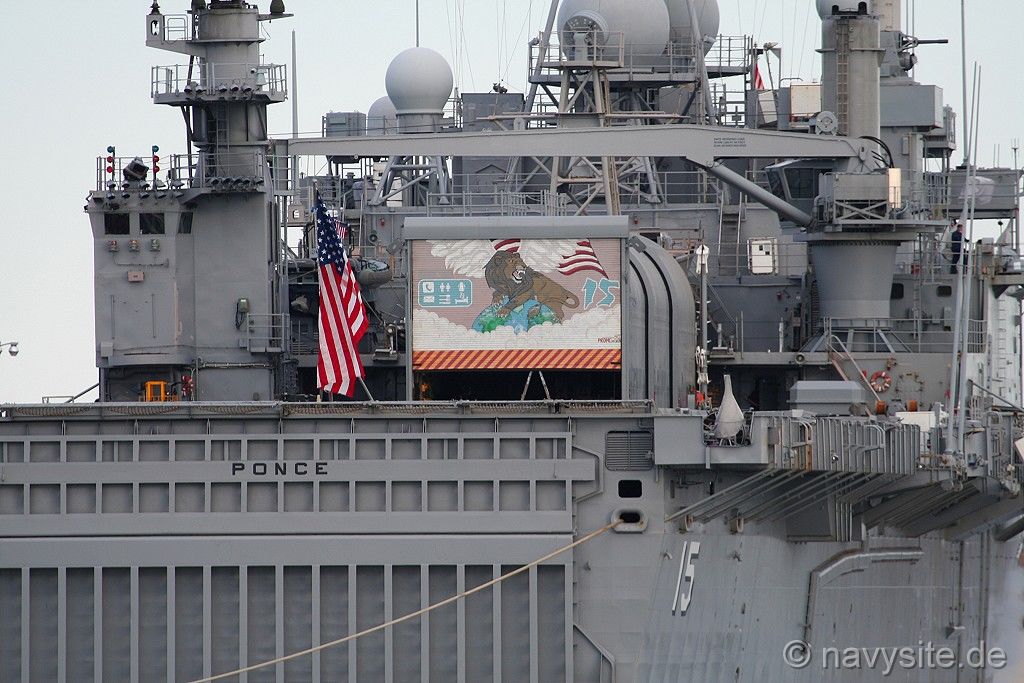
![]() | ![]() |
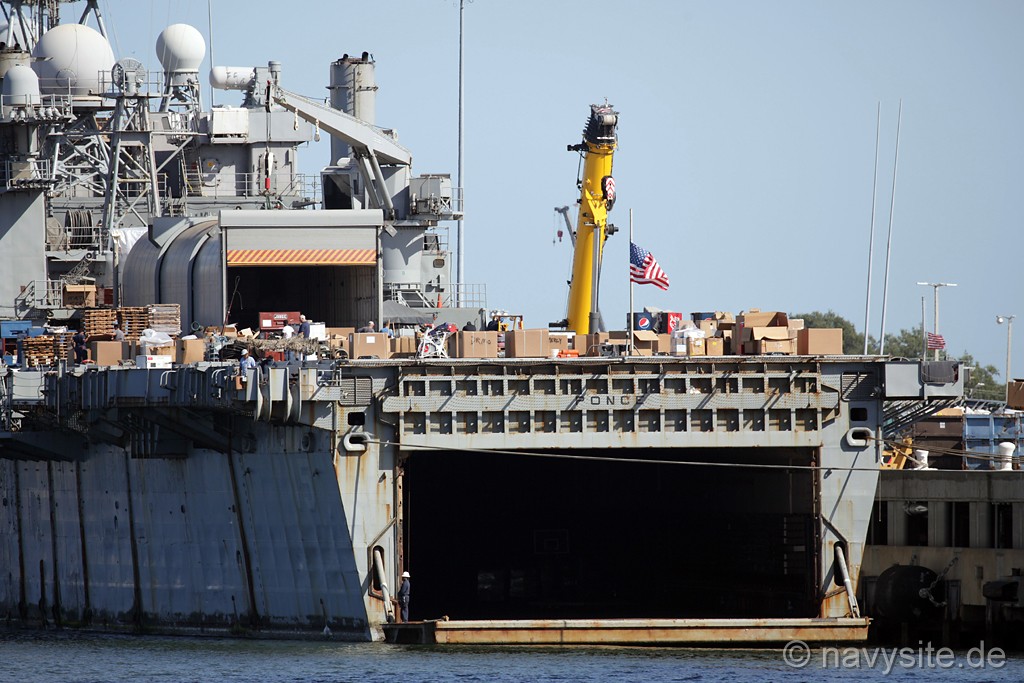
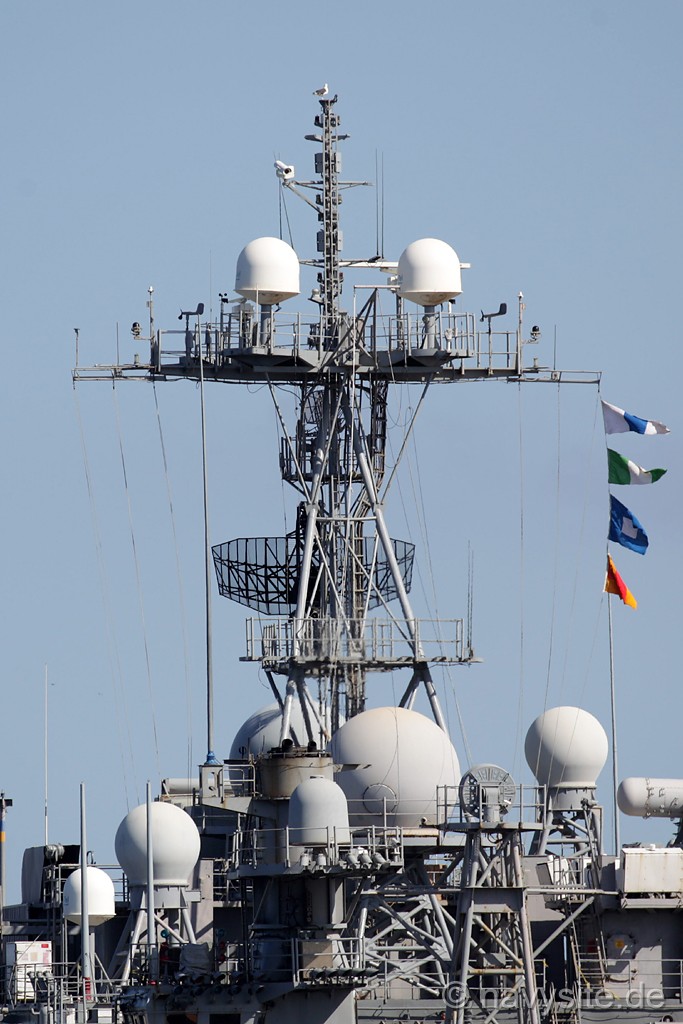
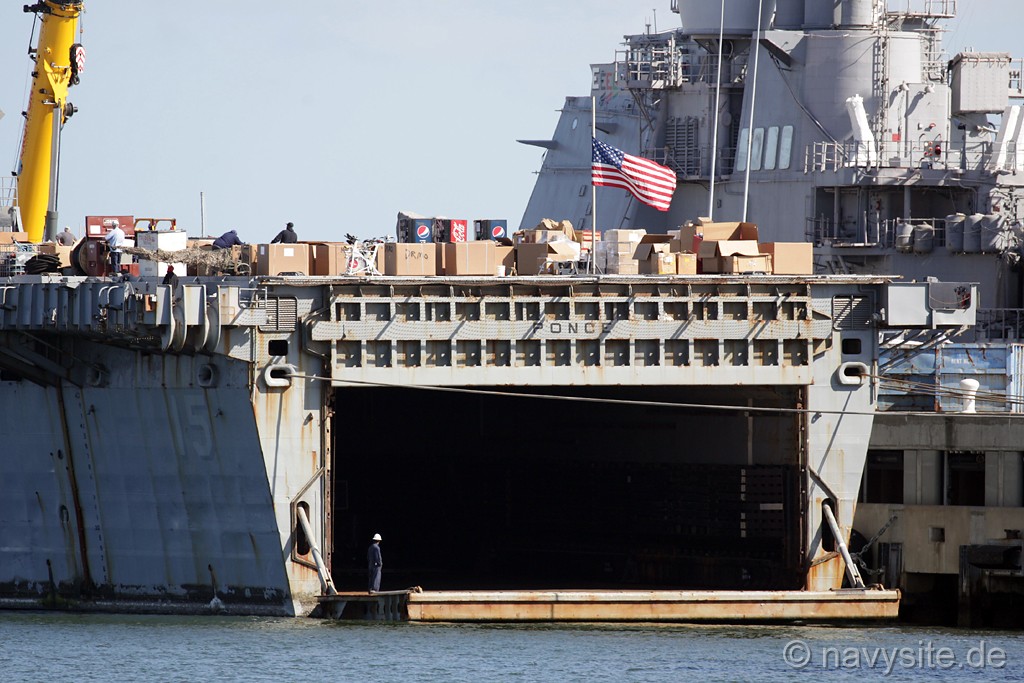
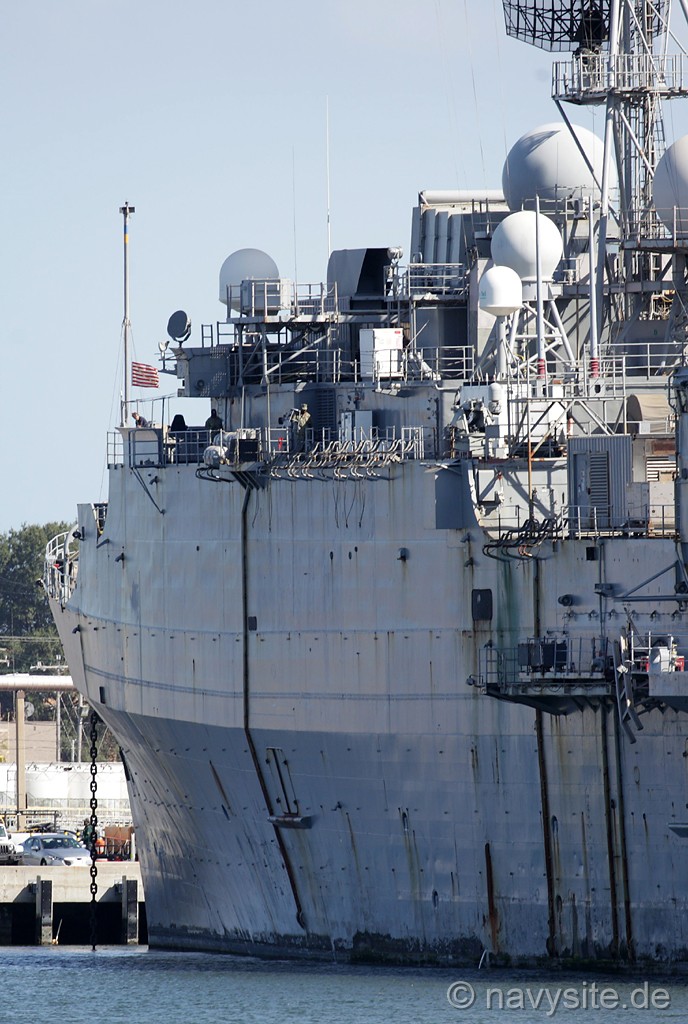
The photos below were taken by me and show the PONCE at Norfolk, Va., after completion of her convertion and modification to an Afloat Forward Staging Base (AFSB). Work was conducted at MHI Ship Repair & Services in Norfolk, Va., and included replacing bridge equipment with modern commercial systems for the CIVMARs who will navigate, operate and maintain the ship. In addition, PONCE's main propulsion boilers were overhauled; main and auxiliary condensers were cleaned; additional overhauls were made and maintenance performed on existing ship's equipment; and the galley was upgraded and overhauled. Soon, PONCE will be redesignated AFSB(I) 15 while the "I" stands for interim.
The first photo shows PONCE returning to Norfolk, Va., from sea trials on May 4, 2012, while the other photos show her berthed at the Naval Base on May 6, 2012.
![]() | ![]() | ![]() | ![]() | ![]() |
![]() | ![]() | ![]() | ![]() | ![]() |
The photos below were taken by Michael Jenning and show the PONCE at Naval Base Norfolk, Va., on October 4, 2017, shortly after returning to the East Coast after completing more than five years of forward-deployed duty in Bahrain. PONCE departed Khalifa Bin Salman Port (KBSP), Bahrain, for the last time on September 3 and arrived at Naval Weapons Station Yorktown, Va., on September 22. She arrived at Norfolk five days later and commenced preparations for her October 14 decommissioning.
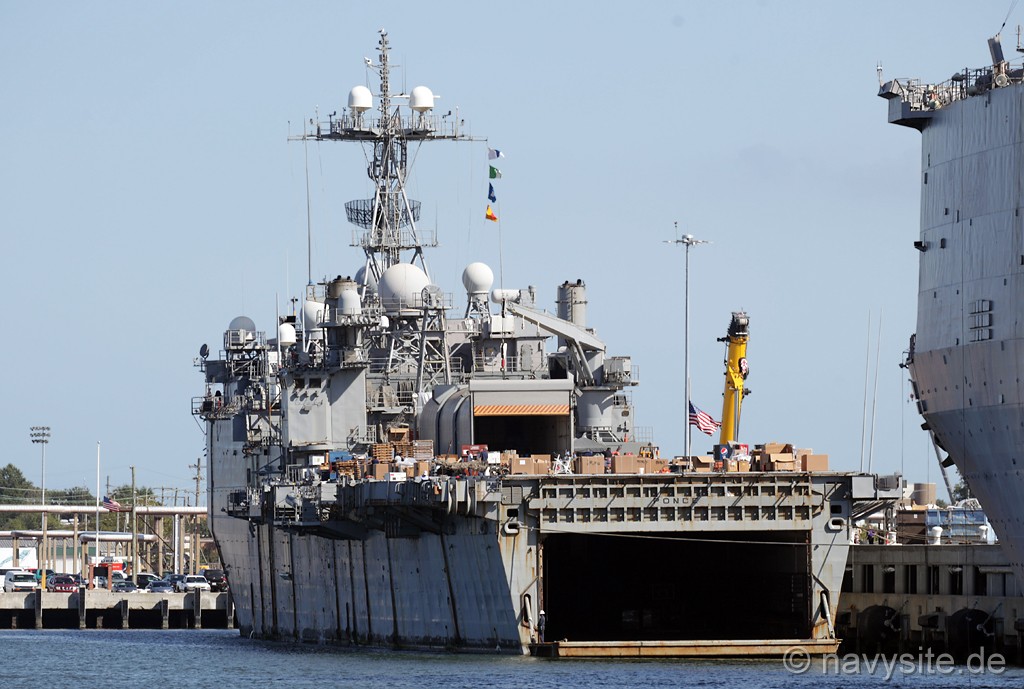
![]() | ![]() | ![]() | ![]() | ![]() |
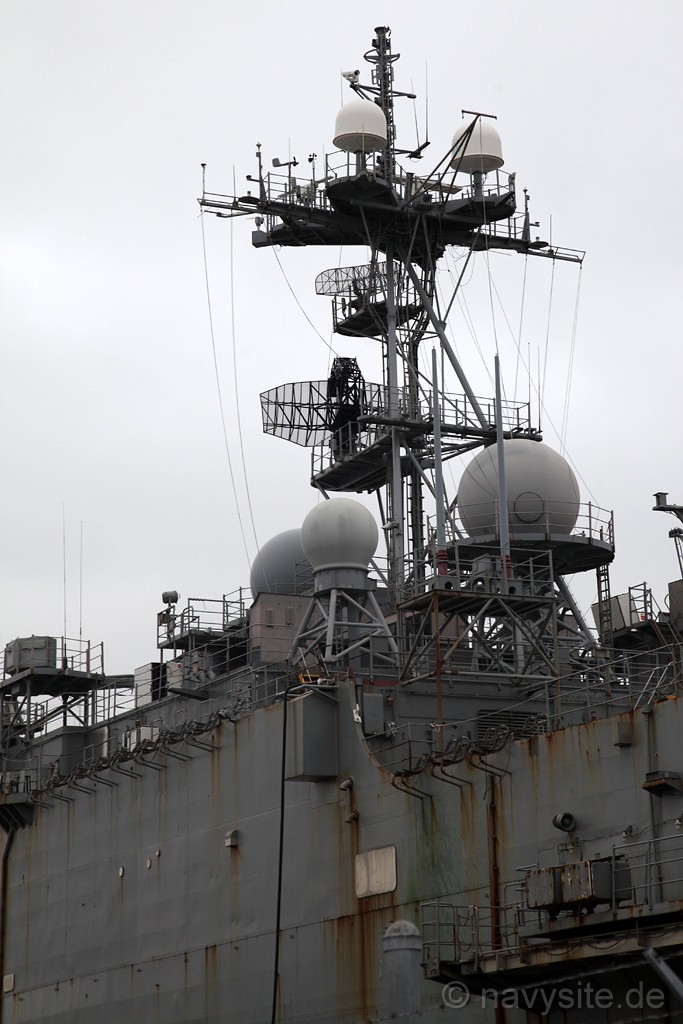
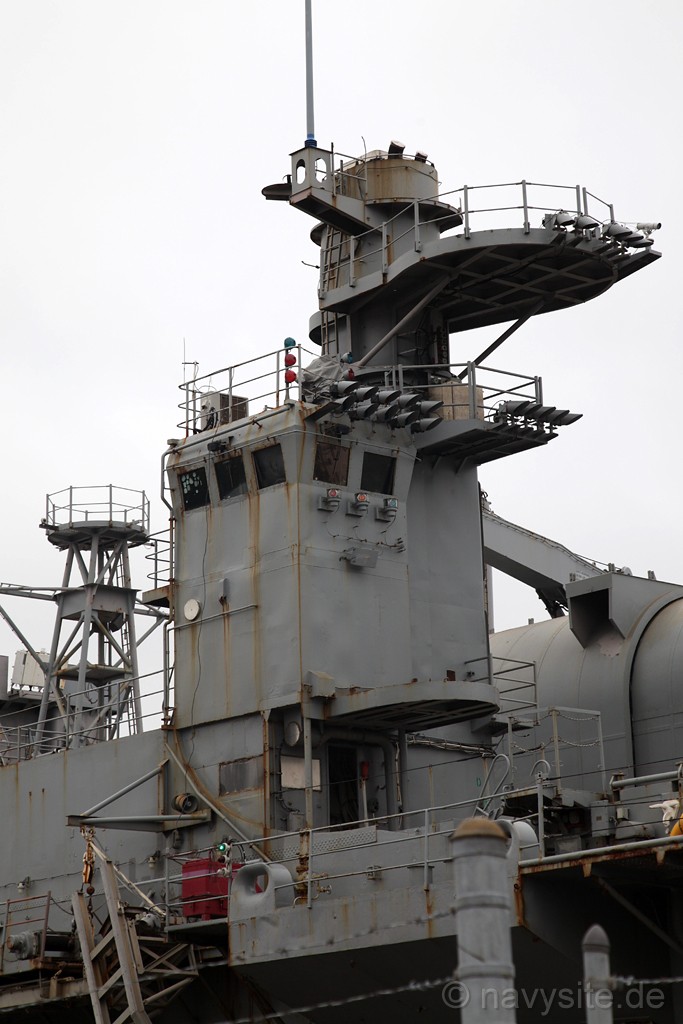
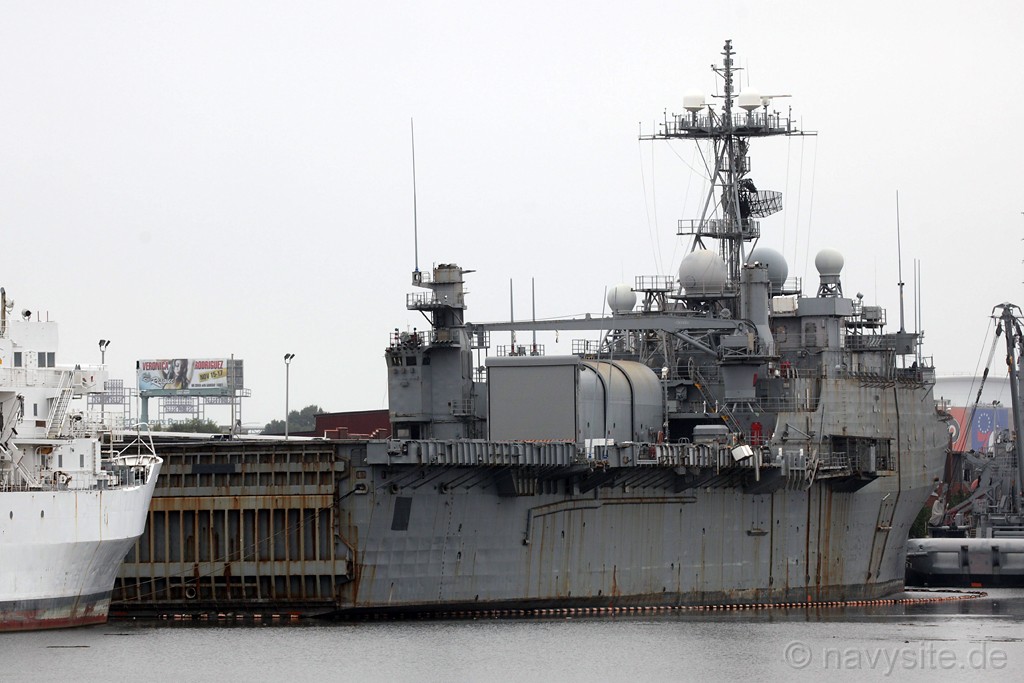
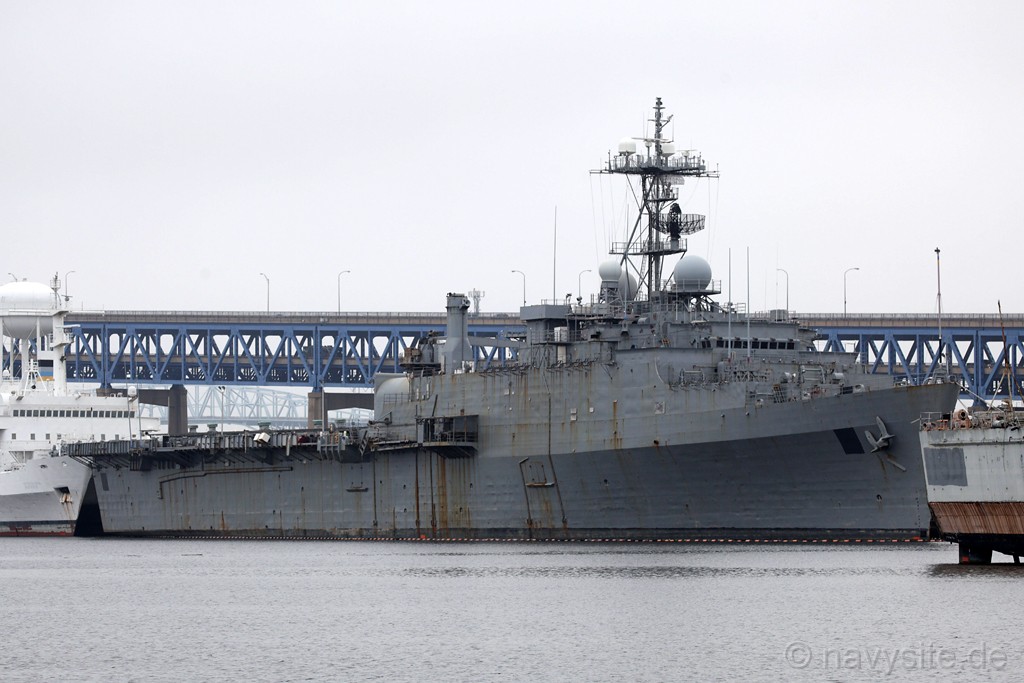
The photos below were taken by Michael Jenning and show the decommissioned PONCE laid up at Philadelphia, Penn., on October 7, 2018.
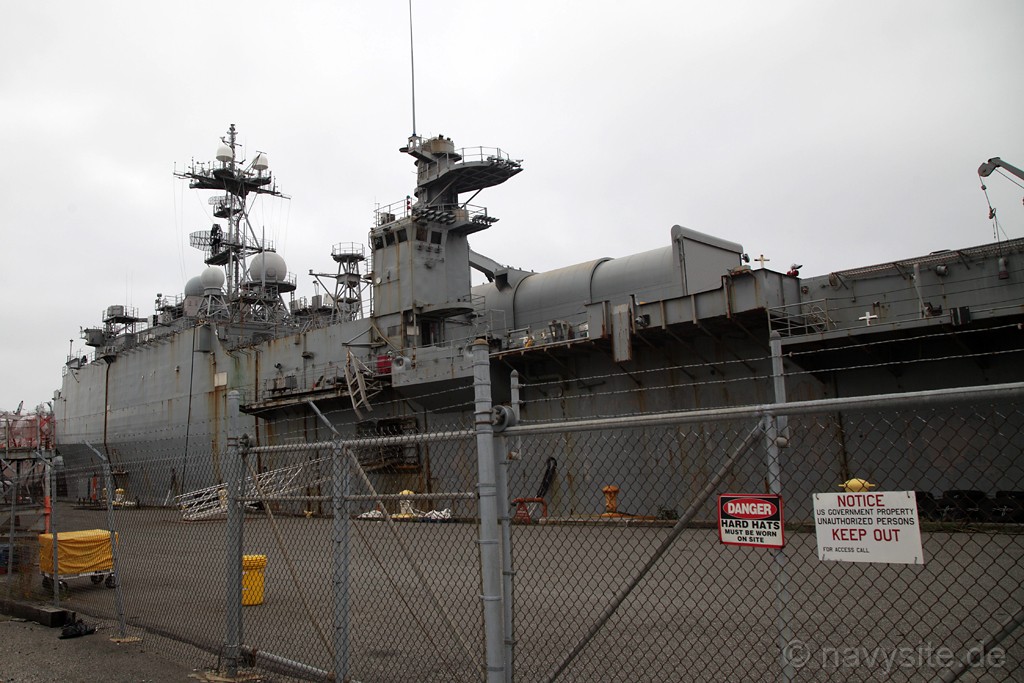
![]() | ![]() | ![]() | ![]() | ![]() |
Back to Amphibious Transport Dock site.
Back to ships list.
Back to selection page.
Back to 1st page.