
Search the Site with

|
Search the Site with
|
 General Characteristics Crew List Memorabilia Cruise Books Accidents aboard the Ship USS England's COs About the Ship's Name Image Gallery to end of page
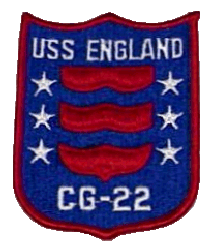 | 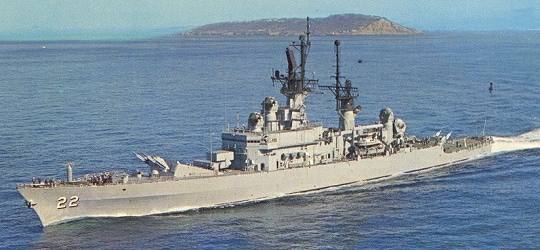 |
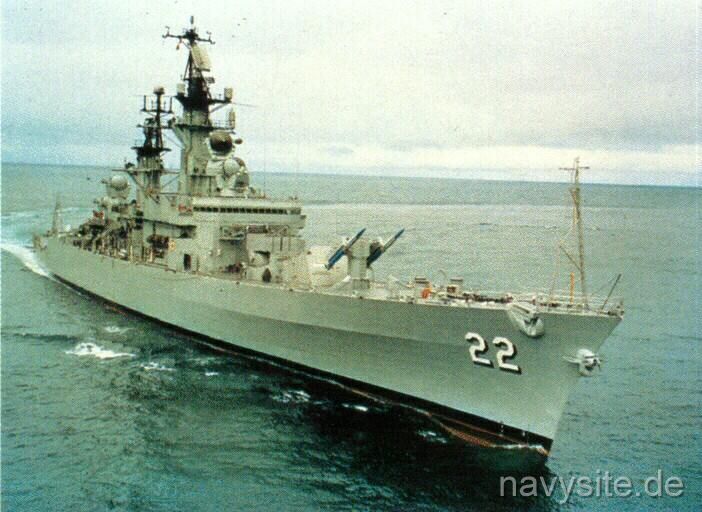
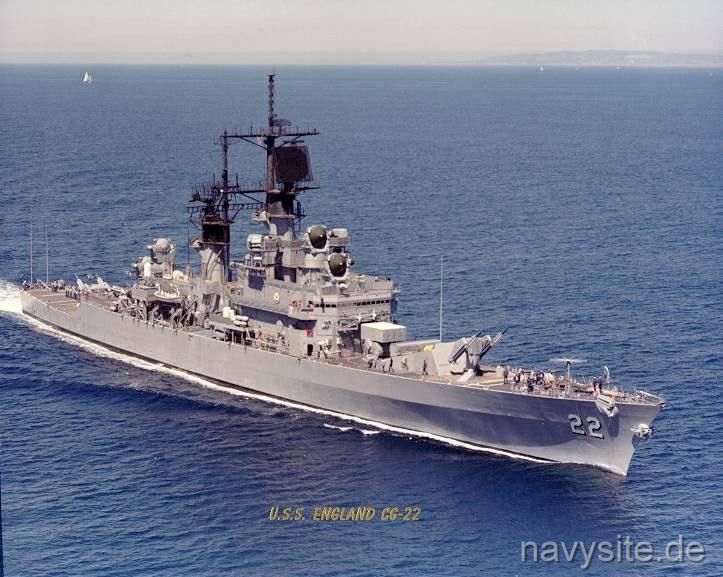
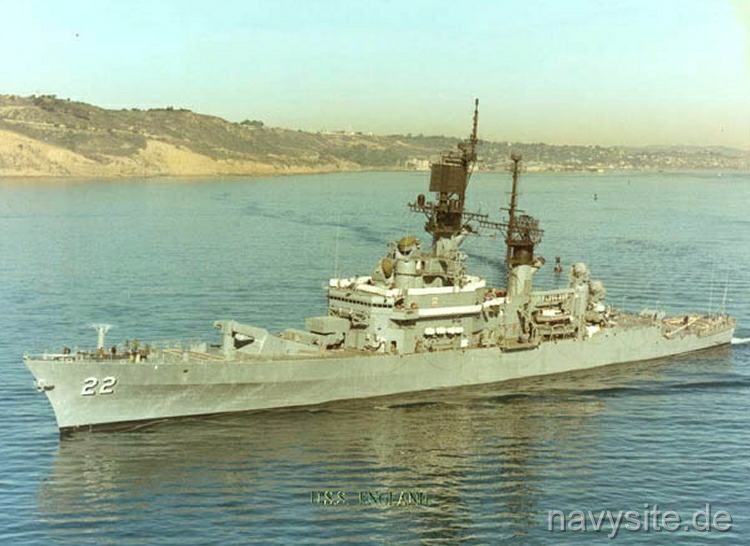
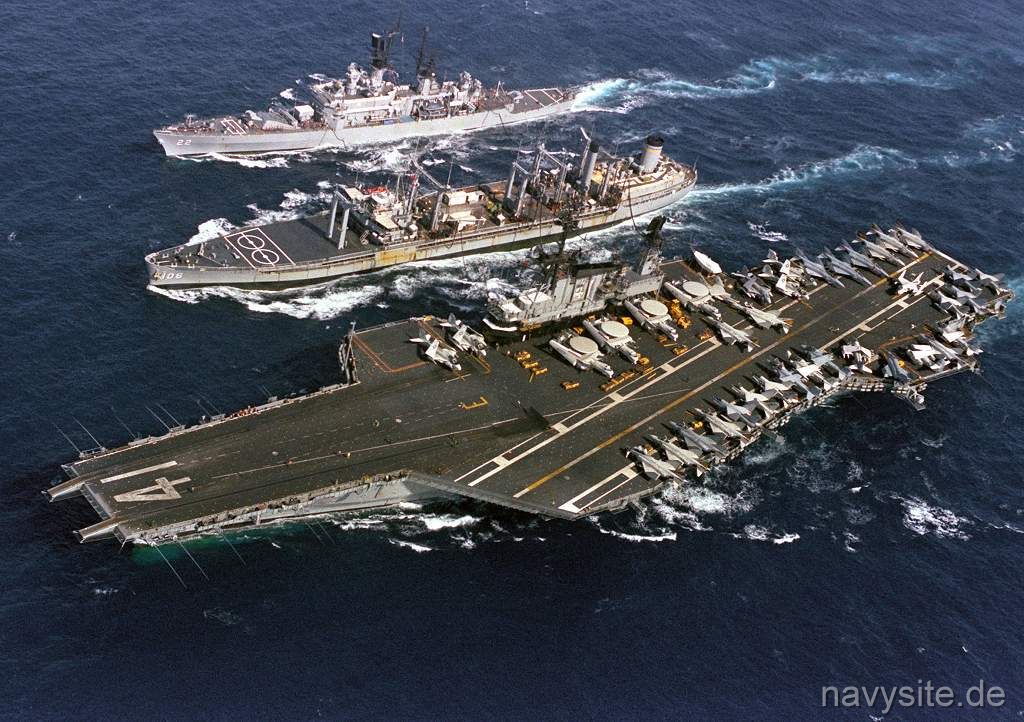
USS ENGLAND was the seventh ship in the LEAHY - class of guided missile cruisers and the second ship in the Navy to bear the name. ENGLAND was last homeported in San Diego, Ca.. After decommissioning the ship was laid up at the Suisun Bay Reserve Fleet in Benicia, Ca., until sold to International Shipbreaking Corp., Brownsville, Tx., for scrapping.
| General Characteristics: | Keel laid: October 4, 1960 |
| Launched: March 6, 1962 | |
| Commissioned: December 7, 1963 | |
| Decommissioned: January 21, 1994 | |
| Builder: Todd Shipbuilding Corp. | |
| Propulsion system:4 - 1200 psi boilers; 2 General Electric geared turbines | |
| Propellers: two | |
| Length: 535 feet (163 meters) | |
| Beam: 53 feet (16.1 meters) | |
| Draft: 26 feet (7.9 meters) | |
| Displacement: approx. 7,800 tons | |
| Speed: 30+ knots | |
| Aircraft: none | |
| Armament: two Mk 141 | |
| Crew: 27 officers and 413 enlisted |
 back to top go to the end of the pageback to top go to the end of the page
Crew List:
This section contains the names of sailors who served aboard USS ENGLAND. It is no official listing but contains the names of sailors who submitted their information.
back to top go to the end of the pageback to top go to the end of the pageUSS ENGLAND Cruise Books:
back to top go to the end of the page
Accidents aboard USS ENGLAND:
| Date | Where | Events |
| March 30, 1962 | San Pedro, Calif. | USS ENGLAND suffers an explosion and fire at San Pedro, Calif., injuring 18 workmen before the fire is brought under control. |
back to top go to the end of the pageUSS ENGLAND's Commanding Officers:
| Period | Name |
|---|---|
| December 7, 1963 - December 1964 | Captain William J. Caspari, USN |
| December 1964 - November 1965 | Captain Richard E. Brega, USN |
| November 1965 - September 1966 | Captain Leslie H. Shell, USN |
| September 1966 - February 1968 | Captain Robert H. Ewing, USN |
| February 1968 - May 1969 | Captain Gary A. Mitchell, USN |
| May 1969 - April 10, 1970 | Captain Oliver L. Norman, Jr., USN |
| June 26, 1971 - October 1972 | Captain Joseph J. Paulis, Jr., USN |
| October 1972 - October 5, 1974 | Captain James R. Hogg, USN |
| October 5, 1974 - April 30, 1976 | Captain John M. Poindexter, USN |
| April 30, 1976 - May 26, 1978 | Captain C. Neil Ammerman, USN |
| May 26, 1978 - August 2, 1980 | Captain Hugh L. Webster, USN |
| August 2, 1980 - October 1982 | Captain Henry H. Mauze, USN |
| October 1982 - September, 1984 | Captain Donald L. Gurke, USN |
| September, 1984 - September 6, 1986 | Captain Gerald L. Dunn, USN |
| September 6, 1986 - August 12, 1988 | Captain George M. Musick III, USN |
| August 12, 1988 - September 14, 1990 | Captain Coenraad Vanderschroefe, USN |
| September 14, 1990 - August 8, 1992 | Captain James W. Orvis, USN |
| August 8, 1992 - January 21, 1994 | Captain Peter J. Gaskin II, USN |
back to top go to the end of the pageAbout the Ship's Name, about Ensign John Charles England, USNR:
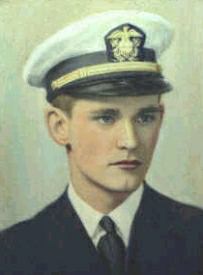 John Charles England was born in Harris, Mo., on December 11, 1920. His family then moved to Alhambra, Ca. where he attended Alhambra High School. He later attended Pasadena City College, Pasadena, California, graduating in spring 1940.
He enlisted in the U.S. Naval Reserve as an Apprentice Seaman at Los Angeles on September 6, 1940 After active duty training on board the USS NEW YORK from November 25, to December 21, 1940 he attended Naval Reserve Midshipman's School, New York, N.Y., and was appointed Midshipman, USNR, March 6, 1941. He completed his training on June 5 and was commissioned Ensign, USNR, June 6, 1941.
He was next assigned duty under instruction at the Naval Radio School, Norton Heights, Connecticut, reposting June 20, 1941. Upon detachment from school, he reported on September 3, 1941 to the USS OKLAHOMA (BB 37) at Pear Harbor.
On the morning of December 7, 1941, just four days from his 21st birthday John C. England volunteered to work in the ships radio room for a friend so that he might have more time with his family when they arrived. That morning the Japanese attacked Pear Harbor and the USS OKLAHOMA was one of their first targets.
OKLAHOMA was moored Battleship Row 7, outboard alongside MARYLAND. USS OKLAHOMA took 3 torpedo hits almost immediately after the first Japanese bombs fell. As she began to capsize, 2 more torpedoes struck home, and her men were strafed as they abandoned ship. Within 20 minutes after the attack began, she had swung over until halted by her masts touching bottom, her starboard side above water, and a part of her keel clear.
Ensign England survived the initial attack and escaped topside as the ship was capsizing. He remembered the men still in the radio room. He returned three times to the radio room, each time guiding a man to safety. He left to go back below decks for the fourth time and was never seen again. He was one of twenty officers and 395 enlisted men who were killed on board USS OKLAHOMA that morning. Ensign England's gallant effort saved three, but cost him his own life.
His family would hear of his death by Postal Telegram sent by Rear Admiral Nimitz on December 16, 1941.
back to top go to the end of the pageUSS ENGLAND Image Gallery:
 | 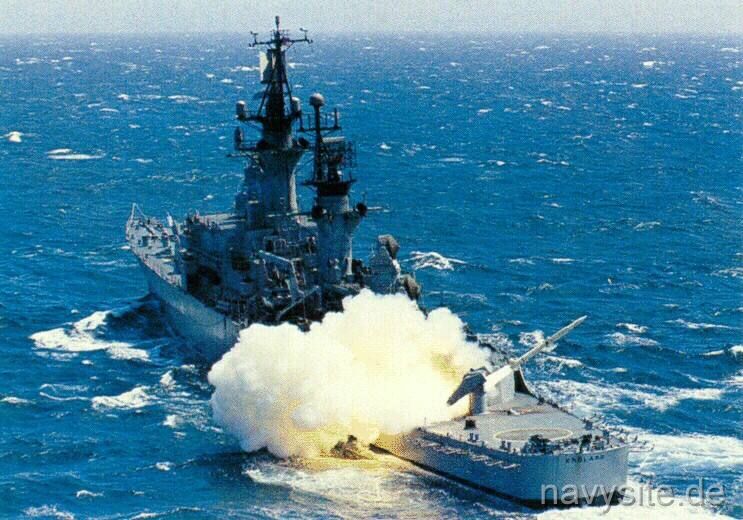 |  |  |  |
 |
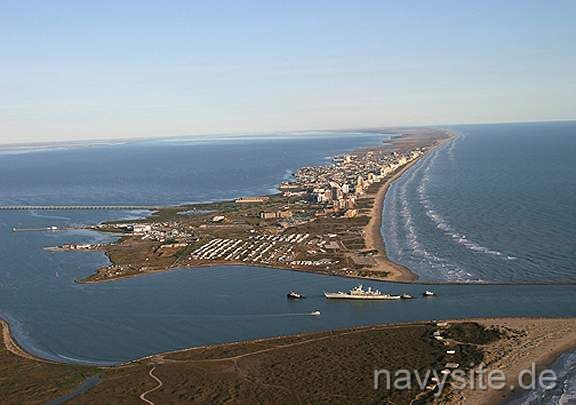
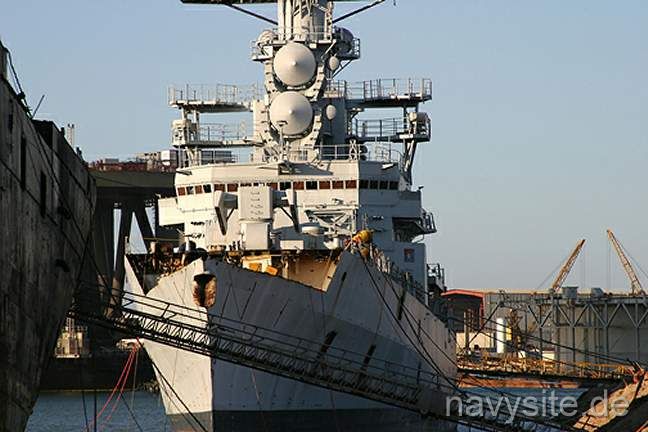
The two photos below are from International Shipbreaking Corp., Brownsville, Tx. The photo on the left shows the ENGLAND arriving at Brownsville and the photo on the right shows the cruiser being scrapped.
 |  |
The two photos below were taken and contributed by Michael Martin and show the ENGLAND being scrapped at International Shipbreaking Corp., Brownsville, Tx., on February 27, 2004.
 |
back to top
 Back to Cruisers list. Back to ships list. Back to selection page. Back to 1st page.