Search the Site with 
General Characteristics Crew List Memorabilia Cruise Books Accidents aboard the Ship USS Biddle's COs About the Ship's Name History Image Gallery to end of page

USS Biddle (CG 34)

- formerly DLG 34 -
- decommissioned -


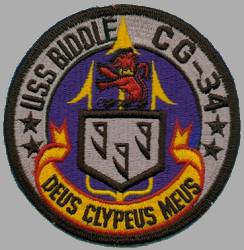
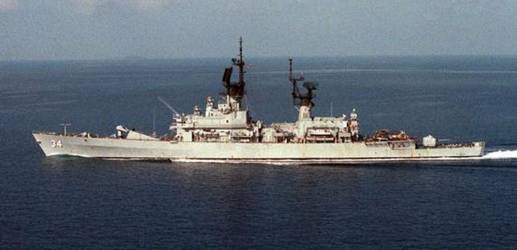
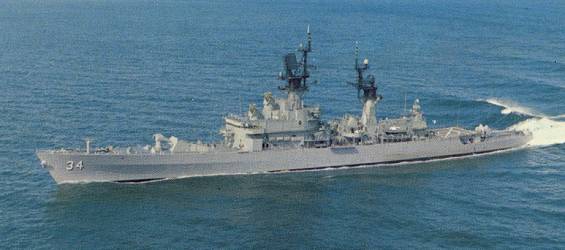
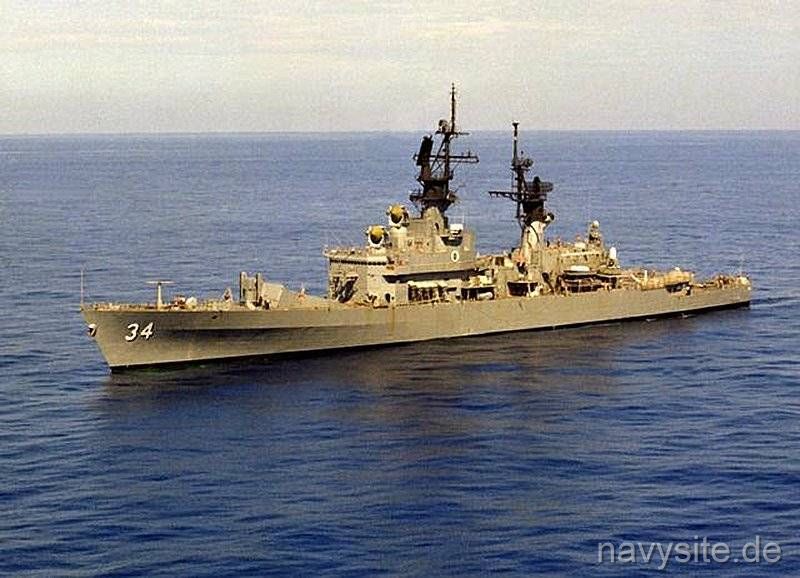
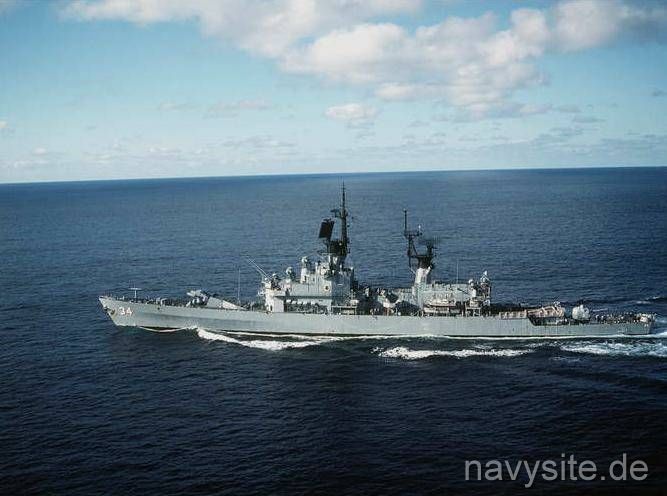
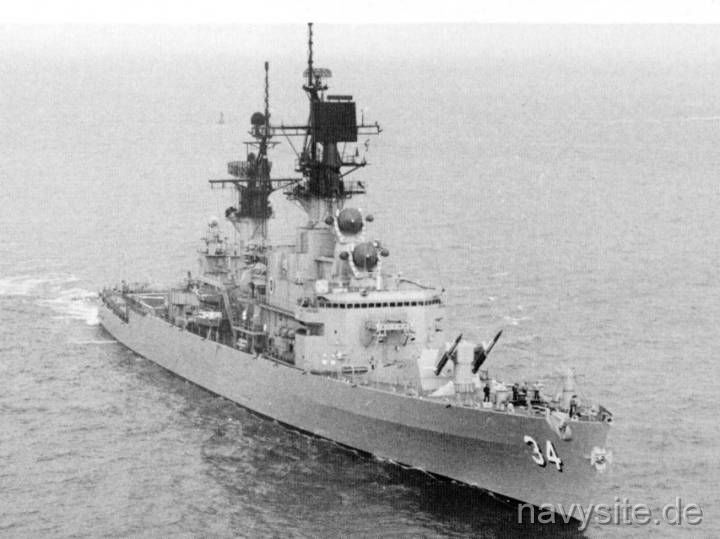
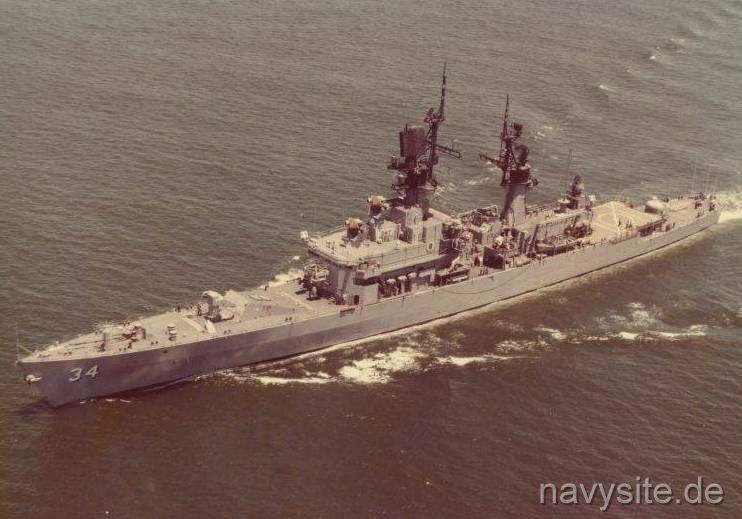
USS BIDDLE was the ninth and last ship in the BELKNAP - class of guided missile cruisers and the fourth ship in the Navy to bear the name. Decommissioned and stricken from the Navy list on November 30, 1993, the BIDDLE was later sold for scrapping.

General Characteristics:Awarded: January 16, 1962
Keel laid: December 9, 1963
Launched: July 2, 1965
Commissioned: January 21, 1967
Decommissioned: November 30, 1993
Builder: Bath Iron Works, Bath, Maine
Propulsion system:4 - 1200 psi boilers; 2 General Electric geared turbines
Propellers: two
Length: 548 feet (167 meters)
Beam: 55 feet (16.8 meters)
Draft: 28,5 feet (8.7 meters)
Displacement: approx. 8,100 tons
Speed: 30+ knots
Aircraft: one SH-2F (LAMPS 1) helicopter
Armament: two Mk 141 Harpoon missile launchers, one Mk-42 5-inch/54 caliber gun, two 20mm Phalanx CIWS, one Mk-10 missile launcher for Standard missiles (ER) and ASROC, Mk 46 torpedoes from two Mk-32 triple mounts
Crew: 27 officers and 450 enlisted


Back to topback to top  go to endgo to the end of the page


Back to topback to top  go to endgo to the end of the page

Crew List:

This section contains the names of sailors who served aboard USS BIDDLE. It is no official listing but contains the names of sailors who submitted their information.


back to top  go to the end of the page


Back to topback to top  go to endgo to the end of the page

USS BIDDLE Cruise Books and Pamphlets:


Back to topback to top  go to endgo to the end of the page


Back to topback to top  go to endgo to the end of the page

Accidents aboard USS BIDDLE:

DateWhereEvents
January 10, 1981Norfolk, Va.USS BIDDLE and the USS RALEIGH (LPD 1) are slightly damaged when the BIDDLE strikes the moored RALEIGH while approaching a pier in Norfolk, Va.


Back to topback to top  go to endgo to the end of the page

USS BIDDLE's Commanding Officers:


PeriodName
January 1967 - September 1968Captain Maylon T. Scott, USN
September 1968 - May 1970Captain Alfred R. Olsen, USN
May 1970 - June 1971Captain Louis J. Collister, USN
June 1971 - July 1972Captain William O. McDaniel, USN
July 1972 - August 1974Captain Edward W. Carter III, USN
August 1974 - August 1976Captain Francis L. Carreli, USN
August 1976 - August 1978Captain Albert L. Henry, USN
August 1978 - September 1980Captain John N. Ryan, USN
September 1980 - September 1982Captain Hollis E. Robertson, USN
September 1982 - June 1984Captain Alvaro R. Gomez, USN
June 1984 - June 1986Captain Joseph T. Hock, USN
June 1986 - October 1988Captain Benjamin E. Allen, Jr., USN
October 1988 - September 1990Captain Grant D. Fulkerson, USN
September 1990 - May 1992Captain Louis F. Harlow, Jr., USN
May 1992 - November 1993Captain Larry Gionet, USN


Back to topback to top  go to endgo to the end of the page

About the Ship's Name:

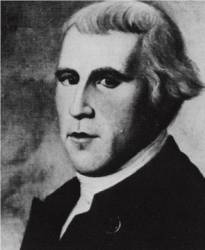
Captain Nicholas Biddle was born 10 September 1750 in Philadelphia. At the age of 13 he went to sea in the merchant service, and in 1772 entered the British Navy as a midshipman. As tension mounted between the Colonies and the Crown, Biddle resigned his commission and returned to America, volunteering his services to his home state of Pennsylvania. On 1 August, 1775 he became Commanding Officer of the armed galley FRANKLIN, which had been fitted out by the Pennsylvania Committee of Safety to defend the Delaware.

In December 1775, Captain Biddle took command of the 14-gun brig ANDREW DORIA and joined the fleet commanded by Esek Hopkins in the expedition against New Providence. In this action ANDREW DORIA captured numerous armed merchantmen, including two armed transports carrying 400 reinforcements for the British Army in North America.

Later, Captain Biddle assumed command of RANDOLPH, which was manned in part by paroled British prisoners of war. These prisoners mutinied shortly after the ship sailed, but the superb leadership of the 27 year old captain ended the trouble quickly.

Violent storms dismasted his ship off the Delaware Capes, but Captain Biddle's superb seamanship brought RANDOLPH into Charleston for repairs. He sailed again for the West Indies on 4 September, 1777 and enroute captured HMS TRUE BRITON, along with her three ship convoy. Captain Biddle took his fourth prize back to Charleston and blockaded there until late February 1778, when he successfully eluded the British patrol and escaped to the open sea.

On 7 March, 1778 RANDOLPH, 32 guns, engaged HMS YARMOUTH, 64 guns. Despite his firepower disadvantage and a severe wound received early in action, Captain Biddle brilliantly directed the cannon fire of his ship, and YARMOUTH's commanding officer later reported that RANDOLPH fired three accurate broadsides to YARMOUTH's one. Tragically, however, fire penetrated RANDOLPH's powder magazines, and the ship exploded and sank instantly. Captain Biddle perished, and his 315 man crew had only four survivors.

Thus ended the brief but illustrious career of Captain Nicholas Biddle, Continental Navy. His life ended short of its twenty eighth year.


Back to topback to top  go to endgo to the end of the page

History of USS BIDDLE:

USS BIDDLE was built at Bath Iron Works - entered service in the late 1960s as an Atlantic Fleet air-defense combatant and over the next quarter-century alternated Mediterranean patrols, Indian Ocean/Gulf tasking, and yard periods that kept her sensors, weapons, and propulsion effective. Commissioned on Januar 21, 1967, she completed trials and weapons qualifications out of Norfolk and Guantanamo Bay before settling into her first Mediterranean routine with the Sixth Fleet: radar picket and identification control for carrier groups, NATO exercises (often "National Week" and allied AAW/ASW serials), and short logistics pauses at Rota, Souda Bay, Augusta Bay, and Gaeta, interspersed with liberty calls at Naples, Barcelona, Palma de Mallorca, Toulon, and Piraeus. By 1968-1969 she added a Western Pacific deployment - PIRAZ/plane-guard and SAR support in the Gulf of Tonkin with quick turnarounds through Subic Bay, and brief resets at Yokosuka or Hong Kong - before returning to the Atlantic pace of Sixth Fleet cruises and East Coast workups.

Across the early 1970s, BIDDLE's pattern was steady: Mediterranean air-defense stations on the flanks of cyclic carrier flight operations; replenishment choreography underway; and recurring NATO events in the central Med and eastern Atlantic. The ship's missile battery (Terrier to Standard ER), fire-control radars, and combat-direction spaces were kept current through selected restricted availabilities at Norfolk Naval Shipyard and electronics grooming at Naval Station Rota or Souda Bay between evolutions. During the Oktober 1973 Arab-Israeli War she operated with the Sixth Fleet in a high-readiness posture while U.S. logistics flows surged to the region; port activity compressed to functional fuel, ordnance, and brief crew-rest stops. On June 30, 1975, the Navy redesignated all ships of her type and DLG 34 became CG 34, formally aligning title with the long-range air-defense role she had performed since commissioning.

From 1976 through the end of the decade she cycled through two kinds of cruises: classic Med deployments with carrier groups and NATO partners, and eastward extensions into the Red Sea and Indian Ocean as U.S. presence expanded toward Southwest Asia. Those longer legs used Diego Garcia as the logistics hinge and occasionally Mombasa for maintenance pierside, then retraced the route back through the Med with a final liberty pause at Naples or Palma before homecoming to Norfolk. Yard time at mid-decade bundled hull preservation, main-space reliability work, and incremental electronics upgrades to keep the ship's watch teams effective in denser air pictures.

The early 1980er brought a tighter operating box as crises accumulated from the Horn of Africa to the Persian Gulf. BIDDLE's Med tours still included allied exercises and port engagements - Haifa and Alexandria joined the familiar rotation of Toulon, Barcelona, and Gaeta - but she increasingly pushed through the Suez Canal for Indian Ocean presence. When required, she took stations in the Gulf of Oman or northern Arabian Sea, maintaining radar guard for the carrier and coordinating airspace with maritime patrol aircraft while using Muscat or Bahrain for short logistics windows. Between cruises she completed post-deployment inspections, a combat systems groom, and sonar/EW checks at Norfolk, resetting the ship for the next workup.

By 1986, as tension with Libya spiked, BIDDLE spent extended periods in the central Med supporting freedom-of-navigation operations south of Crete and near the Gulf of Sidra while carriers executed complex air plans; her contribution was the methodical one of a BELKNAP - class cruiser - hold the recognized air picture, manage links and identification, and keep Standard-missile coverage available at all times. Logistics pauses at Augusta Bay or Souda Bay punctuated long at-sea stretches. A follow-on yard availability consolidated topside preservation and fire-control reliability fixes, and crew qualifications were rebuilt on the VACAPES ranges before another deployment.

The Iran-Iraq War's final phase and the convoy-escort demands that followed drew the ship toward maritime security duty in the Persian Gulf during 1987-1988. Whether in the Strait of Hormuz approaches or staging farther east, BIDDLE alternated long air-defense/ID stations with short fuel and repair windows in Bahrain and Muscat. Escort patterns were deliberate and predictable, built around reflagged tankers and layered screens. The ship's combat-information center fused the air/surface picture for the formation and deconflicted allied activity in congested sea-lanes.

To remain viable against evolving threats, BIDDLE entered a deep modernization late in the decade: a New Threat Upgrade (NTU) availability that integrated SPS-48E/SPS-49 air-search radars, upgraded SPG-55 fire-control, improved combat-direction architecture, and doctrine/tactics to fully employ SM-2ER in dense airspace. The yard period, running approximately 1989-1990 at an East Coast industrial facility, bundled hull and piping preservation with electronics reliability work. Post-availability sea trials, Combat Systems Ship Qualification Trials, and missile exercises ran into late 1990, after which BIDDLE returned to fleet operations with markedly better track handling and engagement coordination.

When Operation Desert Shield began on August 7, 1990, and Desert Storm opened on Januar 17, 1991, BIDDLE's upgraded suite made her a natural fit for airspace control and maritime interception support around the Sixth and Red Sea theaters. Through spring 1991 she alternated AAW stations tied to carrier flight cycles with sanctions/enforcement duties and escorts through choke points, using Souda Bay and Jeddah for logistics. Port visits remained short and functional. The operational aim was a sustained, predictable presence that kept sea-lines open and air operations deconflicted.

In the immediate aftermath of the Gulf War, BIDDLE's Mediterranean patrols increasingly touched the Adriatic, where U.N. sanctions and maritime embargo enforcement around the Balkans matured into the long-running Maritime Guard/Sharp Guard regime. Here she again fused the air/surface picture for boarding units and maritime patrol aircraft, worked closely with allied ships, and used Taranto, Trieste, Split, and Souda Bay as recurring conference and logistics nodes. Between deployments she completed short selected-restricted availabilities at Norfolk to preserve machinery reliability and maintain electronics performance as the hull aged.

By 1992-1993 the post-Cold War drawdown was accelerating and Aegis-equipped cruisers had taken over much of the fleet air-defense mission. BIDDLE executed her final readiness periods and ammunition offloads at Naval Weapons Station Yorktown, completed equipment redistribution and preservation pierside at Norfolk, and decommissioned on November 30, 1993. Stricken the same day, she entered reserve status before disposal concluded the following decade.


Back to topback to top  go to endgo to the end of the page


Back to topback to top


Back to Cruisers list. Back to ships list. Back to selection page. Back to 1st page.