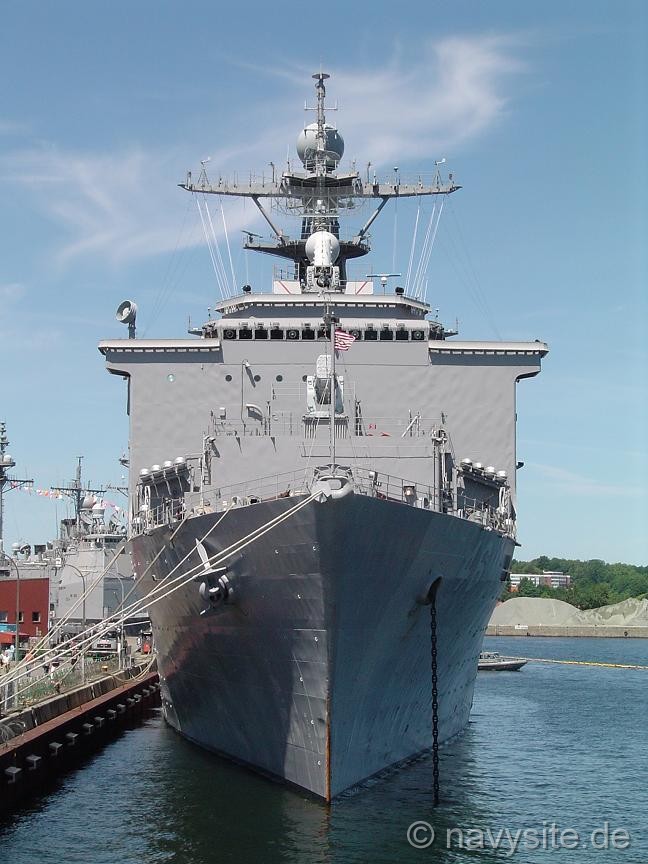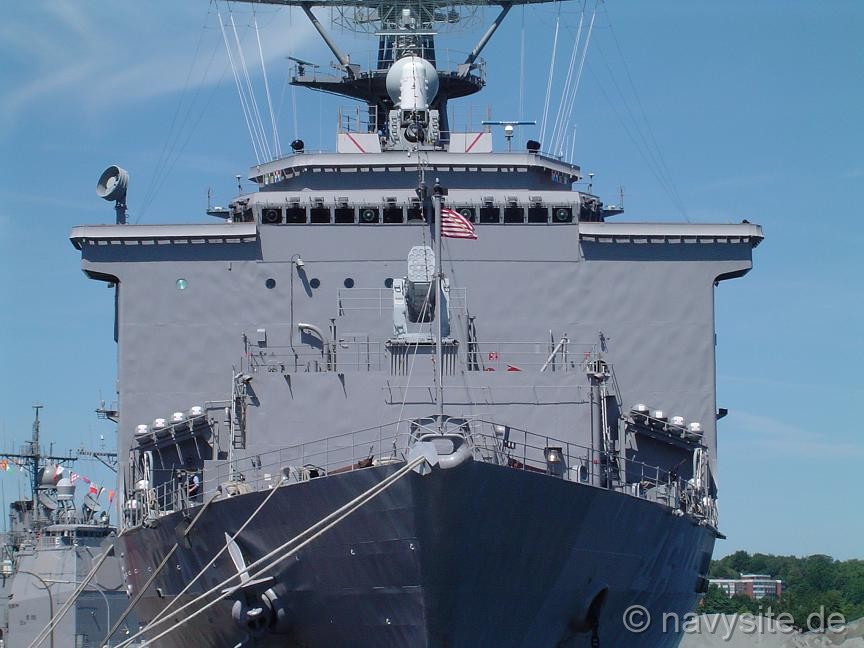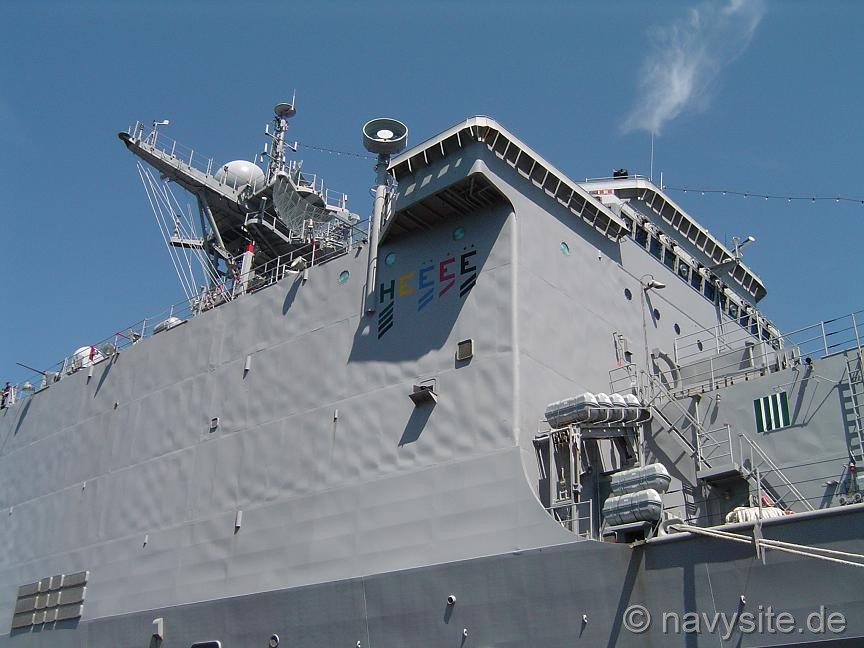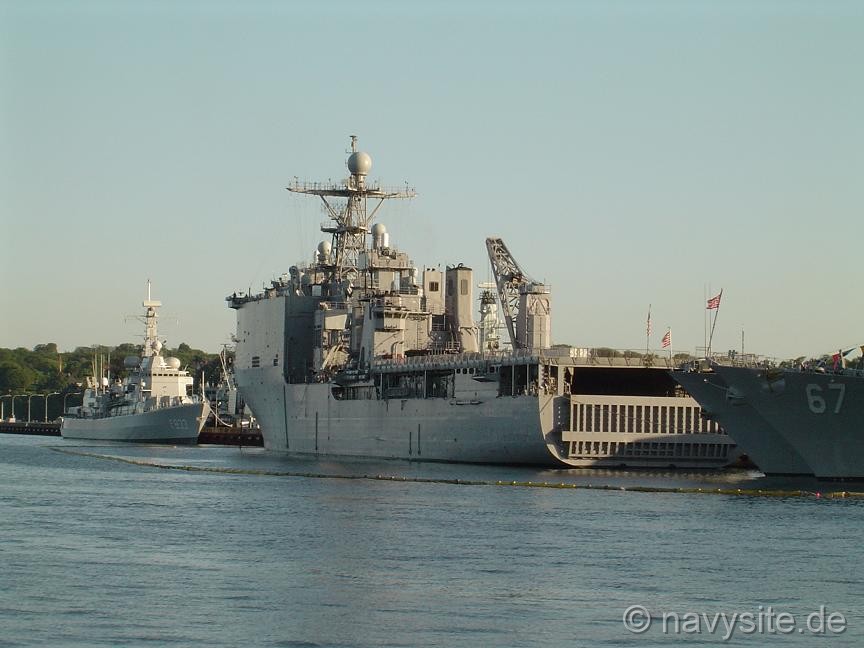
![]() |
Search the Site with
|
![]() | ![]() | ![]() |
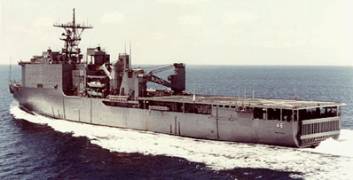
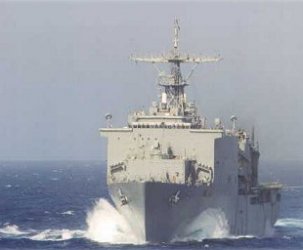
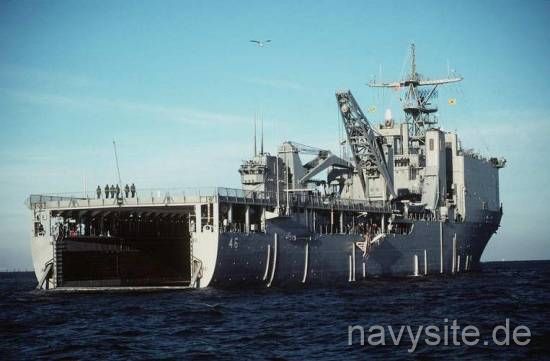
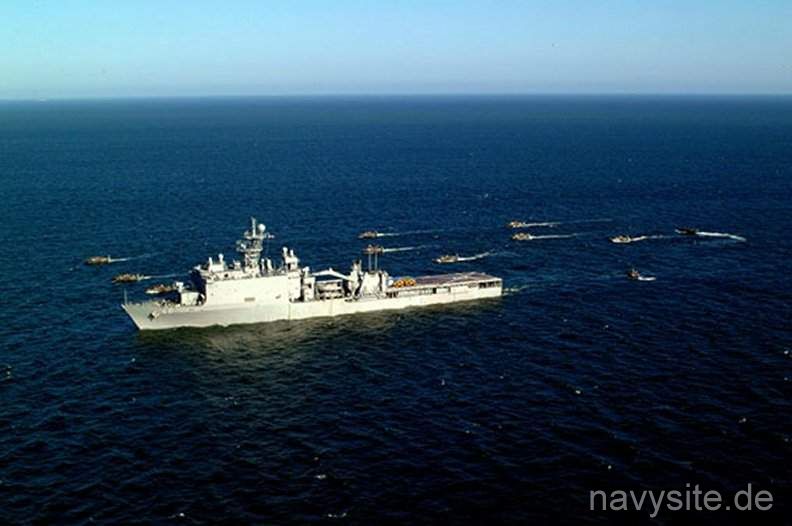
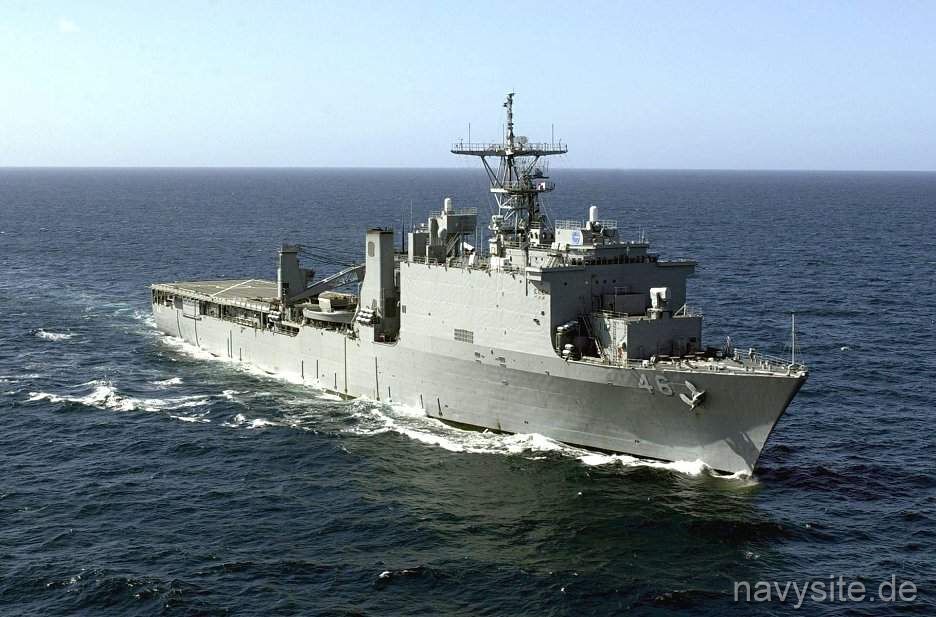
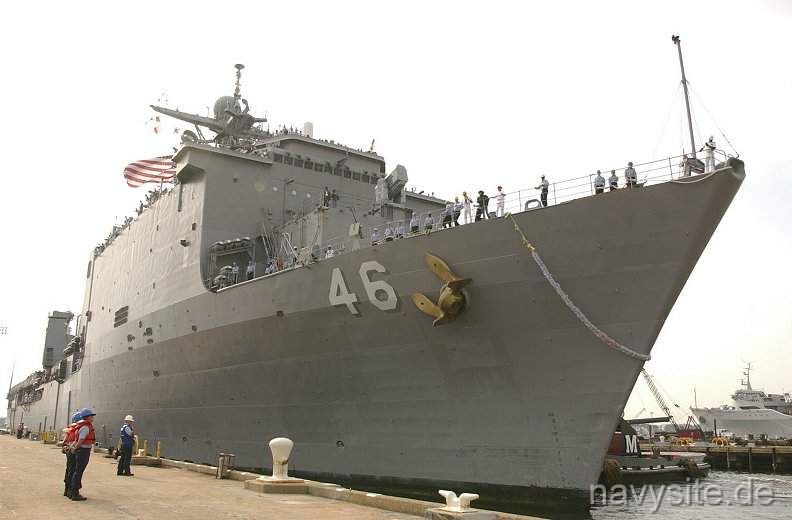
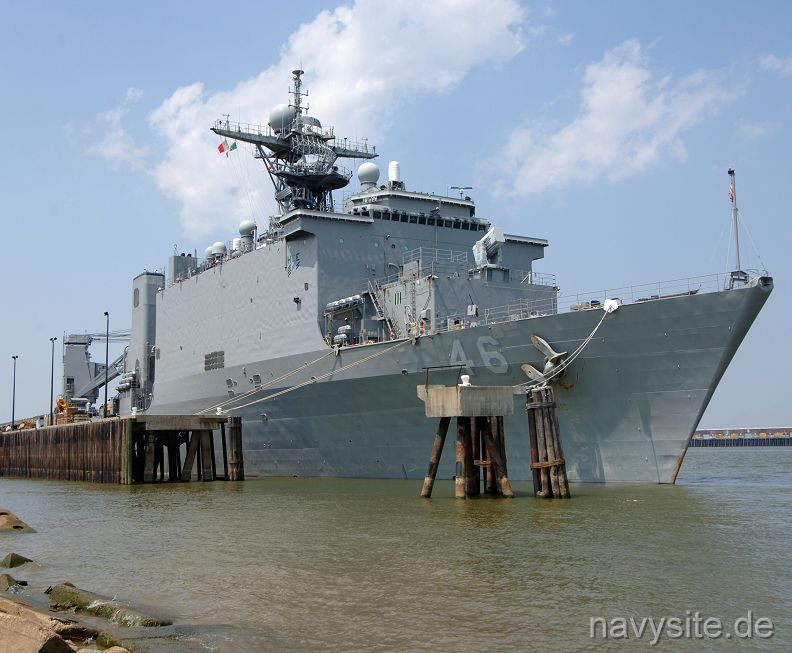
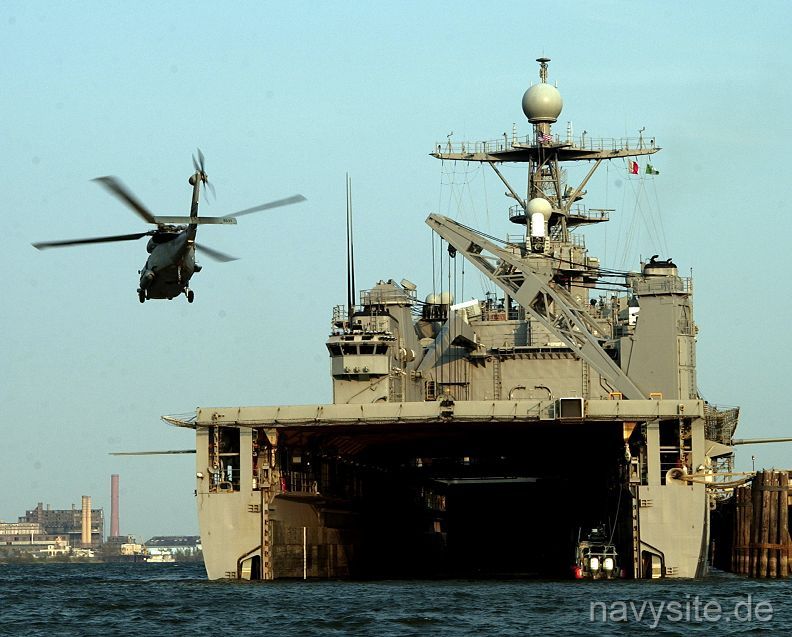
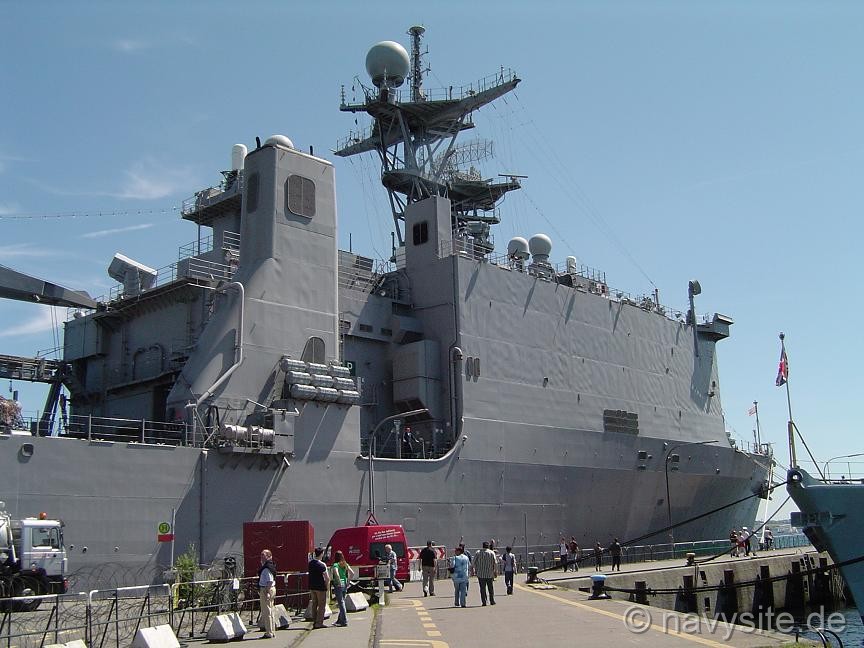
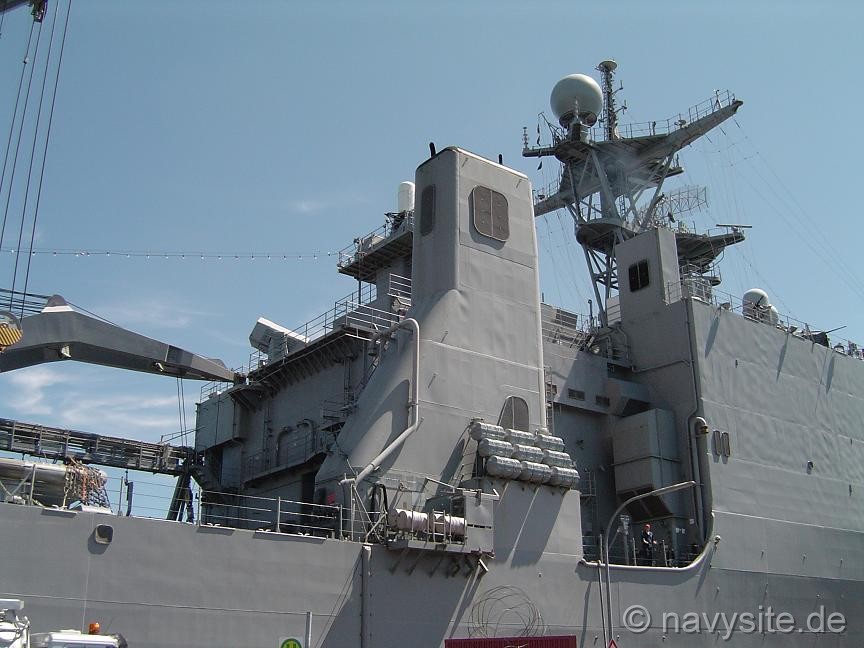
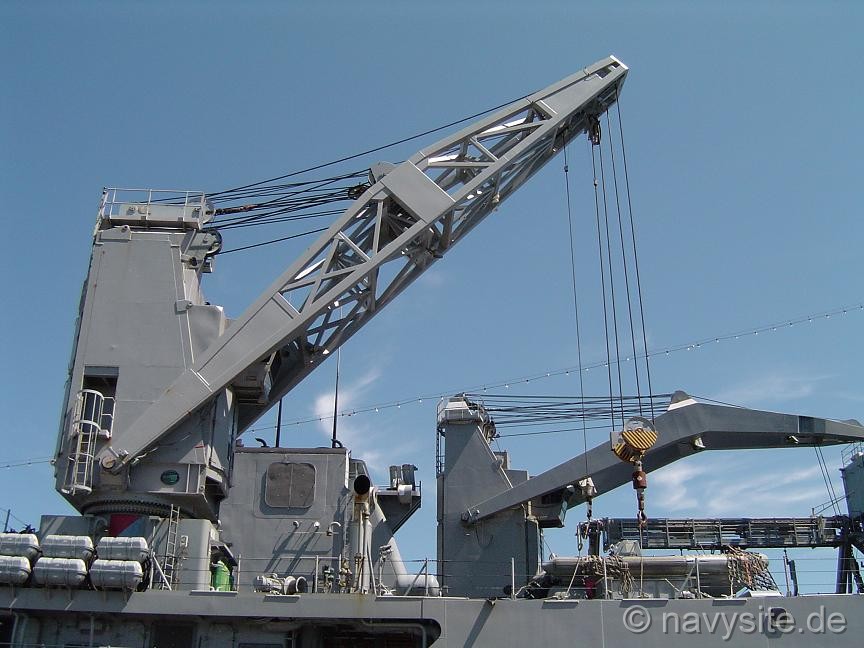
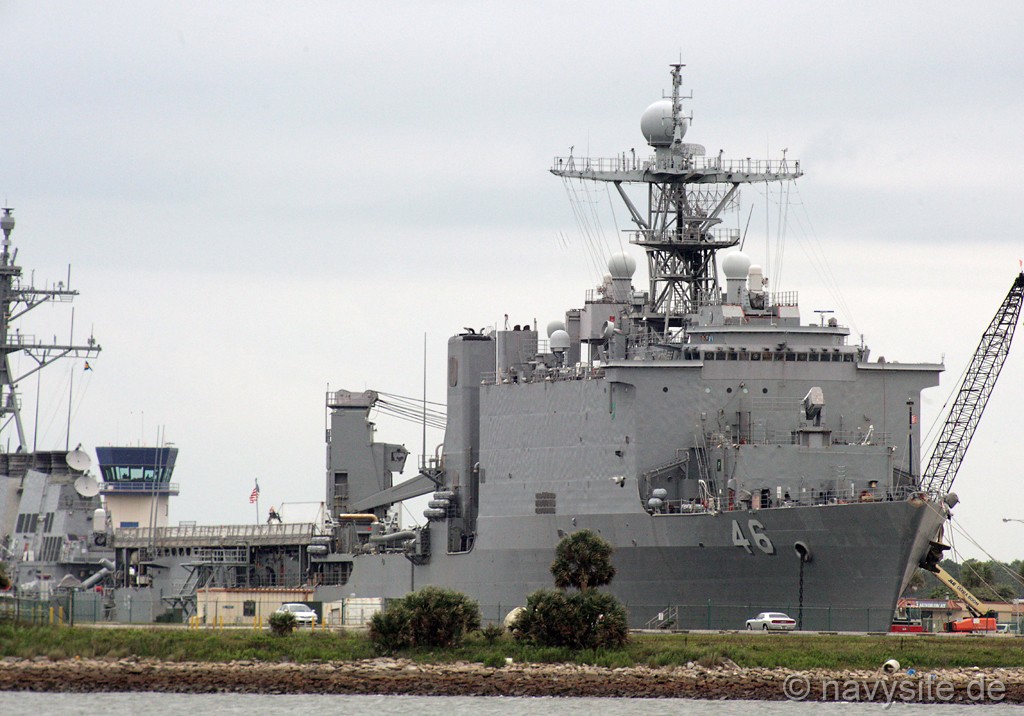
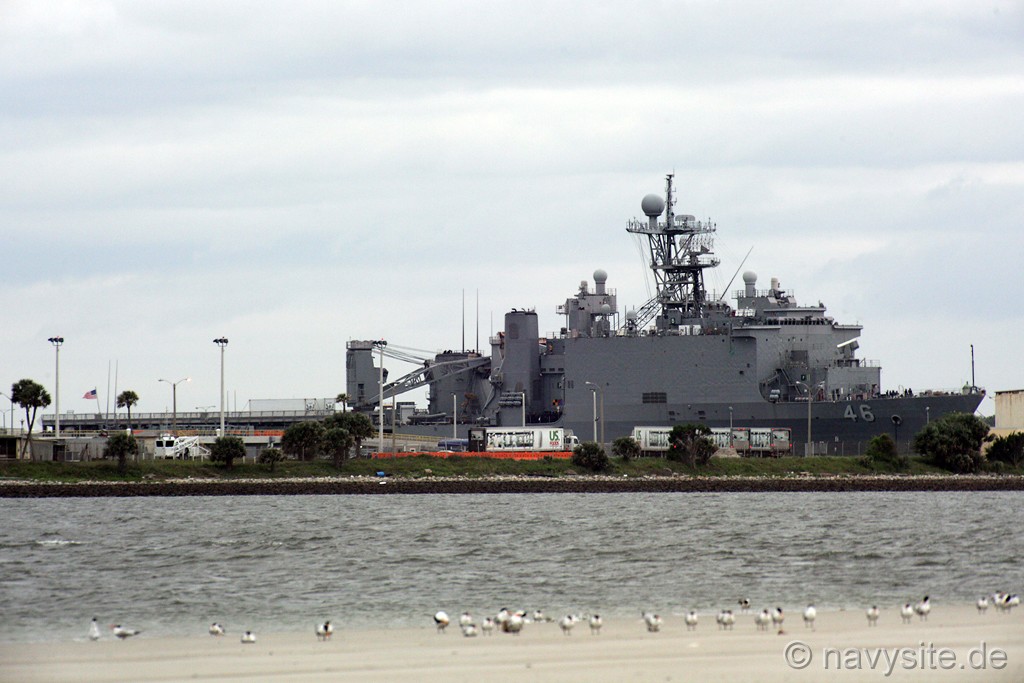
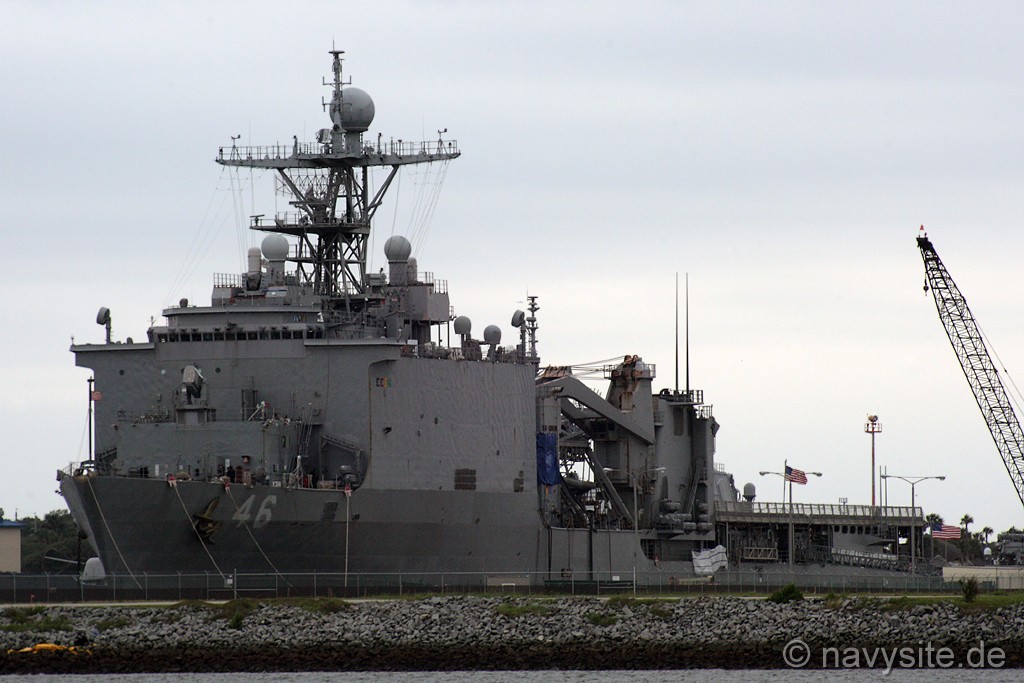
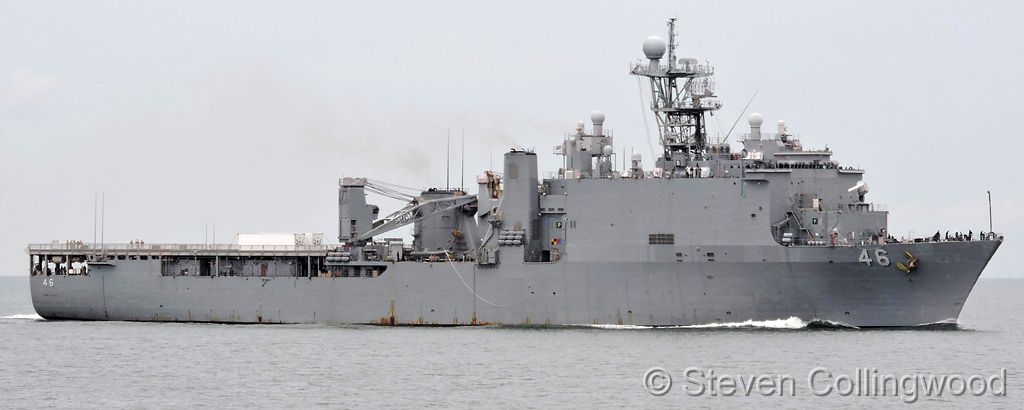
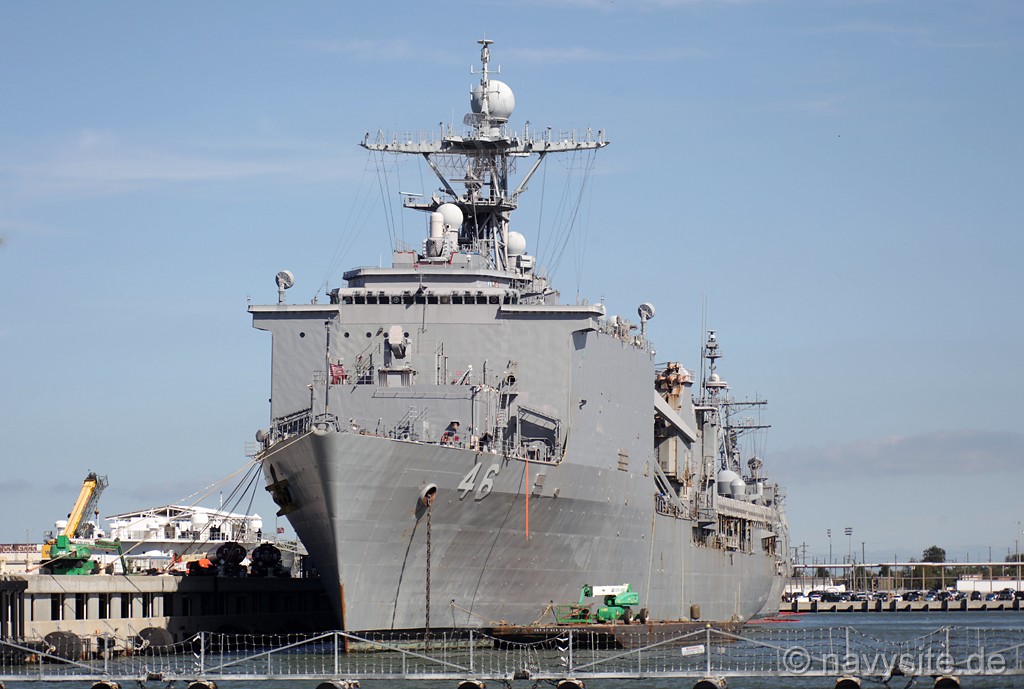
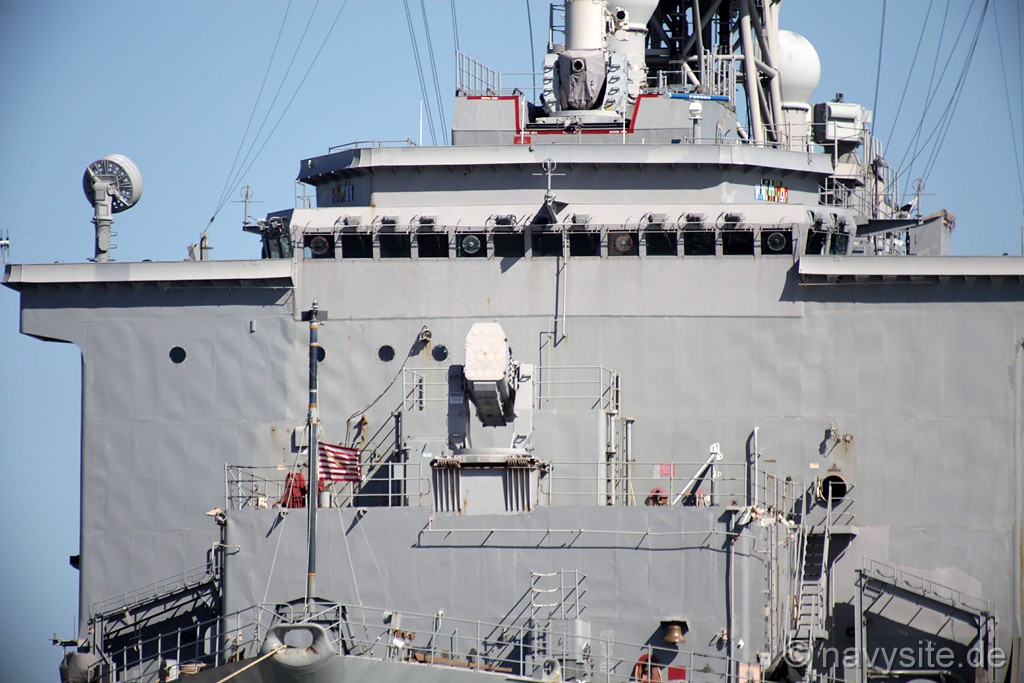
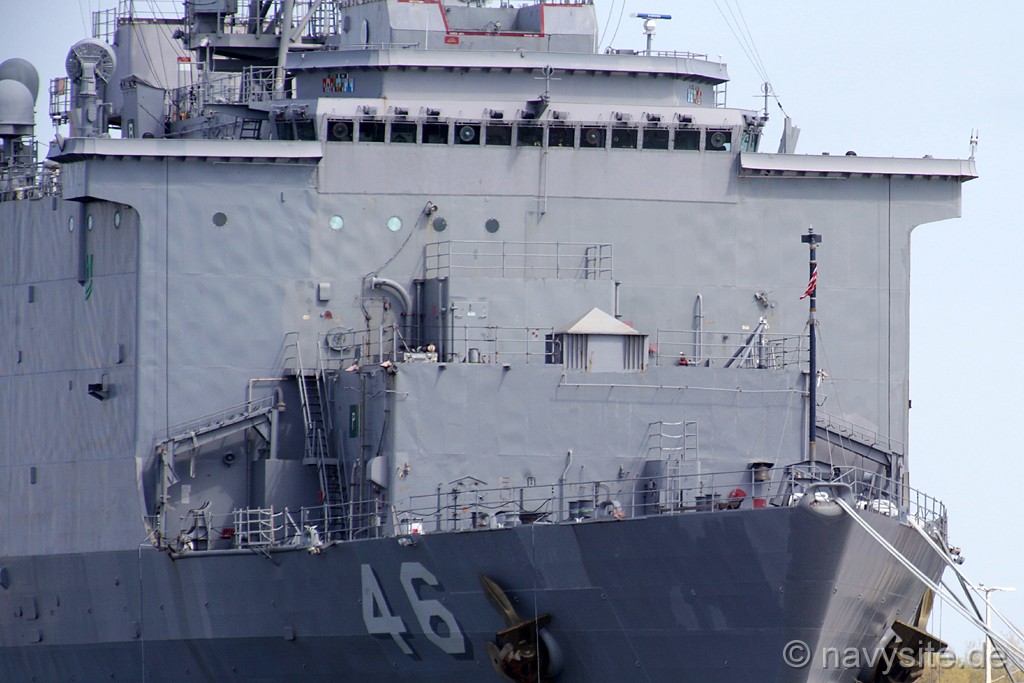
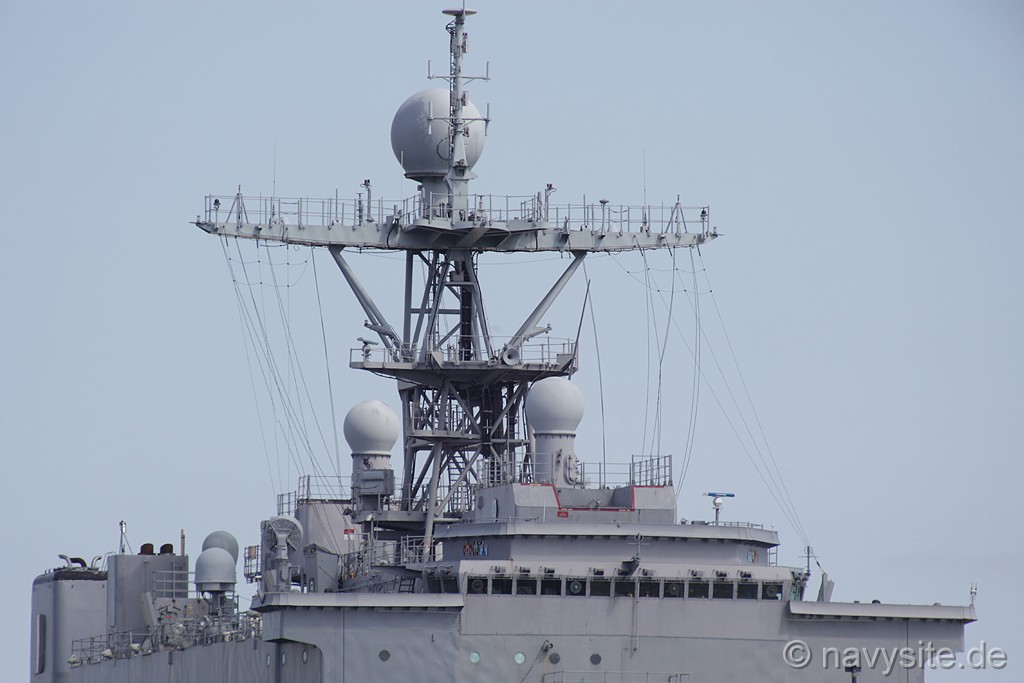
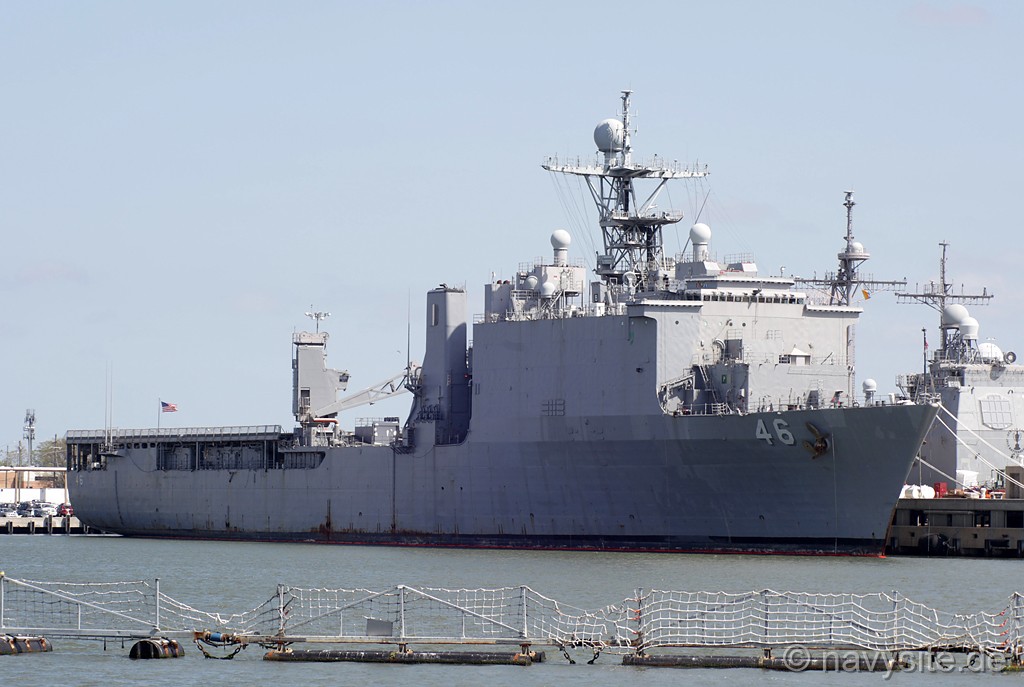
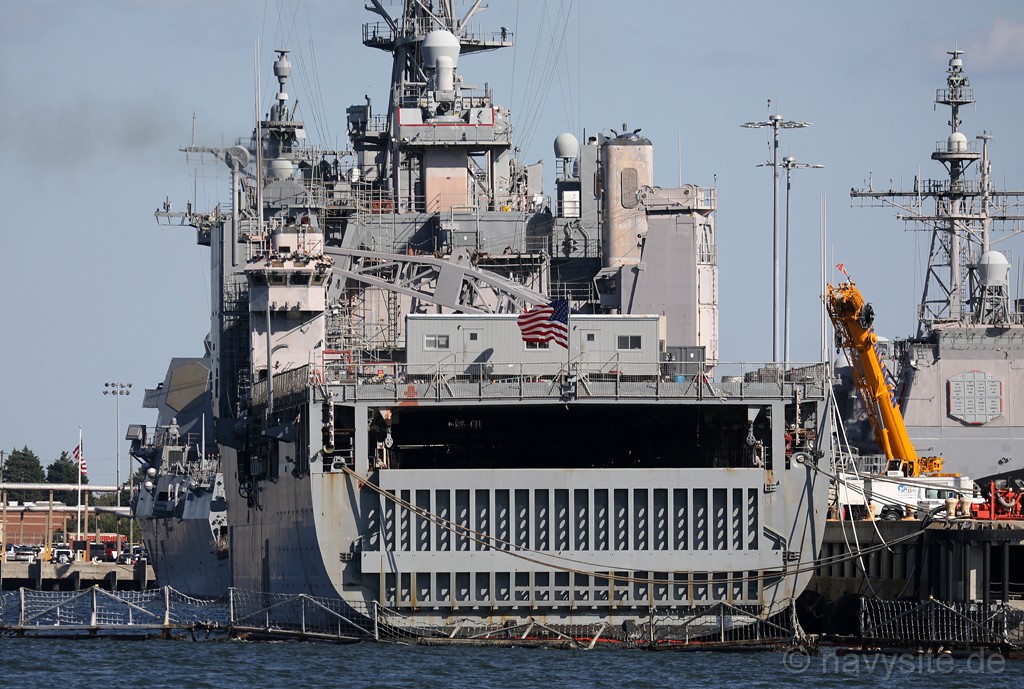
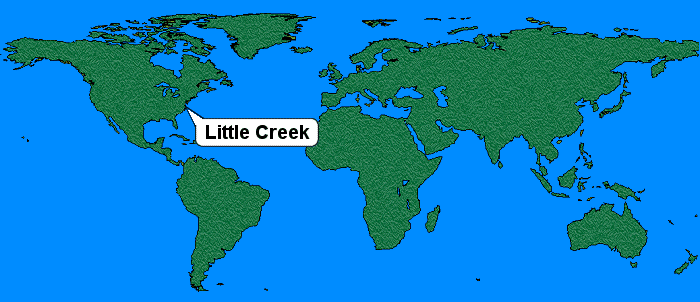
USS TORTUGA is the sixth Dock Landing Ship in the WHIDBEY ISLAND class and the third ship in that class built by Avondale in New Orleans. In April 2006, the TORTUGA replaced the USS FORT McHENRY (LSD 43) as a forward deployed naval unit in Sasebo, Japan. The hull swap was part of the Navy's long-range plan to routinely replace older ships assigned to the Navy's Forward Deployed Naval Force with newer or more capable ships. The TORTUGA was previously homeported in Little Creek, Va. In August 2013, the TORTUGA was replaced again in Japan by sistership USS ASHLAND (LSD 48) and changed her homeport to Little Creek again.
| General Characteristics: | Keel laid: March 23, 1987 |
| Christened: November 19, 1988 | |
| Commissioned: September 7, 1990 | |
| Builder: Avondale Shipyards, New Orleans, La. | |
| Propulsion system: four Colt Industries 16 Cylinder Diesels | |
| Propellers: two | |
| Length: 610 feet (186 meters) | |
| Beam: 84 feet (25.6 meters) | |
| Draft: 21 feet (6.4 meters) | |
| Displacement: approx. 16,000 tons full load | |
| Speed: 22 knots | |
| Well deck capacity: four LCAC or 21 LCM-6 (on deck: one LCM-6, two LCPL and one LCVP) | |
| Aircraft: none, but two landing spots allow for operation of aircraft as large as the | |
| Crew: Ship: 20 Officers, 25 Chief Petty Officers, 302 Enlisted | |
| Marine Detachment: approx. 400 + approx. 100 surge | |
| Armament: two | |
| Cost: $153 million | |
| Homeport: Little Creek, Va. |
Crew List:
This section contains the names of sailors who served aboard USS TORTUGA. It is no official listing but contains the names of sailors who submitted their information.
USS TORTUGA Cruise Books:
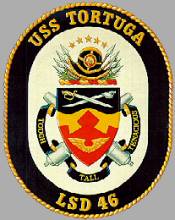
About the Ship's Coat of Arms:
The Shield:
Dark blue and gold are traditional Navy colors and symbolize the sea and excellence. In honor of Ponce de Leon, the Spanish explorer who discovered the Dry Tortugas in 1513, the colors red and yellow are adopted from the national flag of Spain. Red is also the color of valor and is symbolic of the proud history of amphibious warfare. The angular configuration simulating Fort Jefferson appears as a spearhead and represents the ship’s primary mission of amphibious assault. The gold wings below the spearhead reflect the ship’s capability of amphibious airlift. The crossed officer’s sword and enlisted cutlass honor the spirit of leadership and teamwork between the ship’s wardroom and crew. The supporters are rifled Parrott guns of the mid-19th century and are of the same design as those first installed at Fort Jefferson. They symbolize toughness and tenacity in battle.
The Crest:
The morion embellished with a lion’s head commemorates Ponce de Leon. The wreath of palm refers to the tropical climate of Florida and the Dry Tortugas. The stars and spearheads surrounding the morion represent the five battle stars the first USS TORTUGA (LSD 26) earned for Korean service and the eight battle stars LSD 26 earned for service in Vietnam.
USS TORTUGA History:
USS TORTUGA was laid down at Avondale Shipyards in New Orleans on March 23, 1987. Because Hurricane Gilbert threatened the Gulf of Mexico in September 1988, the Navy chose to launch the hull early as a precaution on September 15, 1988, before formally christening the ship on November 19, 1988, with Mrs. Rosemary Parker Schoultz as sponsor. She commissioned on November 17, 1990, joining the Atlantic Fleet and spending her initial years in shakedown, post-shakedown availability, and routine East Coast and Caribbean workups that refined well-deck operations with landing craft and amphibious vehicles. These early years established the ship's basic operating pattern: embarked Marines, well-deck evolutions with LCU and LCAC, and close integration with amphibious ready groups.
TORTUGA spent 1991 completing shakedown, amphibious certifications, and Atlantic Fleet work-ups out of Little. That first peacetime year ended abruptly with the Haitian coup and boatlift: on November 21, 1991, as the United States stood up a joint task force at Guantanamo Bay, TORTUGA received 858 interdicted Haitian migrants alongside Coast Guard cutters at the naval base, using her berthing, messing and medical spaces as an interim safe-haven platform. Through late November, the ship remained anchored off GTMO as additional refugees were shifted from overloaded cutters to larger Navy hulls, reflecting the humanitarian tenor of the mission and the legal debates then unfolding in Washington over repatriation.
Through 1992, the ship's center of gravity moved back to forward presence. A Mediterranean deployment ran from May 1992 into November 1992, TORTUGA joining a MARG built around an amphibious assault ship and transport dock to support Sixth Fleet tasks as Yugoslavia fractured and NATO's Adriatic vigilance tightened. The ship shuttled Marines and landing craft for routine amphibious training, stood contingency watch for non-combatant evacuation planning, and made traditional port calls that framed the era's naval diplomacy, returning to Little Creek before year's end to begin post-deployment maintenance and inspections.
By early 1994, TORTUGA was back in the work-up cycle with GUAM (LPH 9), AUSTIN (LPD 4) and HARLAN COUNTY (LST 1196) as the 24TH MEU built toward a summer Mediterranean deployment. On March 1994, status sheets the four-ship group was operating off Onslow Bay as it finished certifications. On May 20, 1994, the quartet departed Norfolk for Morehead City to onload Marines and equipment, then got underway for Sixth Fleet and eastward beyond the Suez Canal. Crossing the Equator in the Indian Ocean on July 8, 1994, TORTUGA marked a traditional "shellback" ceremony while the task group's movements mirrored the period's shifting priorities: transit security in the Red Sea and Gulf of Aden, presence in the North Arabian Sea, and sustained logistics for embarked landing craft and vehicles before the ARG looped back toward the Mediterranean and home in November. These movements unfolded against two backdrops that defined the year: NATO enforcement and peacekeeping linked to the Balkans, and U.S.-led preparations that culminated in OPERATION UPHOLD DEMOCRACY in HAITI (September-October 1994), for which amphibious groups from both coasts were postured as options while diplomats forced a capitulation that averted an opposed entry.
A second mid-1990s Mediterranean rotation followed as amphibious forces alternated between Adriatic presence and Middle East transits. By the first half of 1996, TORTUGA was deployed with the 22D MEU(SOC) during a period that saw simultaneous crises in West Africa and commitments in the Mediterranean. As GUAM and PORTLAND (LSD 37) executed OPERATION ASSURED RESPONSE (April-August 1996) off Monrovia and OPERATION QUICK RESPONSE for the Central African Republic, TORTUGA and TRENTON (LPD 14) continued Sixth Fleet tasks. The ship's movements included a port visit at Villefranche, France, from May 27-29, 1996, amid an itinerary that balanced bilateral amphibious drills and liberty ports with contingency alerting as NATO transitioned from IFOR to SFOR in the Balkans. Over the same deployment, TRENTON was detached on May 9 to join TORTUGA in the Mediterranean for additional tasking, a common reshuffle as PHIBRON commanders aligned hulls to missions. The ARG/MEU team closed out its January 27-July 26, 1996 deployment in step with broader U.S. naval patterns: persistent amphibious presence in the Med, rapid detachments to African littorals for evacuations, and rehearsals for ship-to-shore maneuver that kept well-decks and flight decks cycling daily.
After inter-deployment training and maintenance in 1997, TORTUGA entered another extended Sixth Fleet period in 1998. Commanded that year by CDR Kenneth M. Rome, she deployed from July 1, 1998 to December 8, 1998 with the SAIPAN ARG (SAIPAN and AUSTIN under PHIBRON 8) and the 22D MEU(SOC). The itinerary combined routine amphibious evolutions, maritime security cooperation and port calls, including Souda Bay, Crete, from July 29 to August 3, 1998, as the ARG ranged the eastern Mediterranean during a phase when NATO presence signals in the Adriatic still resonated from the Bosnia conflicts. The ARG's daily activity sheets also tracked FAST detachment security missions in Bahrain at the other end of the CENTCOM theater, underscoring the way contemporaneous commitments pulled amphibious shipping across seams between numbered fleets. TORTUGA returned to the United States in December to begin a new training cycle.
The ship's 1999 narrative was dominated by home-cycle events - evaluations, certifications, and command turnover - as she rotated through East Coast exercises, embarked detachments for amphibious proficiency off the Virginia Capes and Jacksonville OPAREA, and prepared for hemispheric engagement in the following year's schedule.
In September 2000, the NEWPORT-class tank landing ship USS LA MOURE COUNTY (LST 1194) grounded off Caleta Cifuncho, Chile, during UNITAS exercises. To keep the multinational series on track, TORTUGA was ordered on an emergency deployment in October 2000 to assume amphibious duties in South America, completing the UNITAS commitments and returning to Little Creek thereafter. The episode - one of the more closely examined U.S. Navy mishaps of the era - prompted extensive navigation-training reforms; for TORTUGA it marked a rapid, unplanned shift from Atlantic routines to hemispheric engagement operations.
After the 9/11 attacks, TORTUGA's tempo quickened. In August 2002, she sailed with the NASSAU (LHA 4) Amphibious Ready Group - USS NASSAU and USS AUSTIN (LPD 4) - embarking Battalion Landing Team 2/2. Through September and October 2002, she supported BLT 2/2 activities from Thessaloniki, Greece, as NATO peacekeeping in Kosovo evolved and the Balkans stabilized. In November 2002, she transited the Suez Canal as the ARG shifted to U.S. Fifth Fleet waters, off-loaded Marines in Djibouti for operations linked to counterterrorism and regional security in the Horn of Africa, and paused for brief liberty in the Seychelles. In March 2003, she moved into the Persian Gulf for the opening phase of Operation Iraqi Freedom, supporting amphibious and logistics movements along the northern Gulf littorals. Her embarked Marines re-embarked in April, and the ship returned to the United States on May 27, 2003, closing a nine-month deployment that had ranged from the eastern Mediterranean to the Arabian Gulf.
Following the post-deployment stand-down and local readiness workups through 2003 and early 2004, TORTUGA was assigned to the U.S. Southern Command's principal annual naval engagement, UNITAS 45-04, which in 2004 was nested in the Navy's global "Summer Pulse 2004" surge experiment under the new Fleet Response Plan. TORTUGA departed Norfolk on June 7, 2004, to support UNITAS in the SOUTHCOM area of responsibility, joining a U.S. contingent that also featured RONALD REAGAN (CVN 76) during the carrier's transit to the Pacific. The UNITAS 45-04 roster that summer brought together regional partners including Argentina, Bolivia, Chile, Ecuador, the Dominican Republic, Paraguay, Peru, and Uruguay, with events staged ashore and at sea to stress combined maritime security, peacekeeping, and amphibious skills under the geopolitical frame of deepening hemispheric interoperability after 9/11 and during concurrent U.S. operations in the Middle East.
Within UNITAS 45-04, TORTUGA took part in the Amazon River field phase centered on Iquitos, Peru, where riverine and littoral assault training with regional marine forces unfolded on June 26, 2004. The exercise then shifted to Peru's Pacific coast for a large combined amphibious landing at Salinas on July 4, 2004, with close-air support coordinated to the multinational force afloat. During the South American phase, the U.S. formation around RONALD REAGAN operated alongside the cruiser THOMAS S. GATES (CG 51) and the destroyers MUSTIN (DDG 89) and BENFOLD (DDG 65). RONALD REAGAN also conducted a SIFOREX antisubmarine phase and visited Callao around July 9, 2004, while TORTUGA handled the amphibious lift and well-deck operations for landing forces. The Peru-hosted sequence illustrated UNITAS's dual focus that year - blue-water integration with a carrier group and demanding brown-water amphibious work in the Amazon basin - underlining regional security cooperation aims amid evolving post-9/11 doctrine.
After concluding the UNITAS itinerary and the wider "Summer Pulse 2004" evolutions in the region, TORTUGA returned to the U.S. East Coast later that summer and resumed Atlantic training and maintenance. In the first half of 2005, the ship again shifted into multinational mode - this time to Europe - getting underway from Little Creek on May 20, 2005, with COLE (DDG 67) and ANZIO (CG 68) for the 33rd iteration of the BALTOPS exercise in the Baltic Sea, an amphibious-heavy Partnership for Peace event co-hosted that year by Latvia and the United States. The BALTOPS scenario set included maritime security, peace support operations, and a combined landing, and TORTUGA's itinerary featured a port visit to Kiel, Germany, during Kiel Week from June 17-20, 2005, where the U.S. contingent joined allied ships alongside. These Northern European operations reflected NATO's and partners' focus that summer on interoperability, access, and littoral proficiency in the Baltic as the Alliance adapted to expeditionary demands while reassuring new member and partner states.
On August 25, 2005, as Hurricane Katrina devastated the U.S. Gulf Coast, TORTUGA broke from training and sprinted to the Mississippi River. On September 4, 2005, she steamed upriver to New Orleans - the first Navy warship to do so after landfall - mooring at Naval Support Activity New Orleans. Over the following days her crew conducted small-boat rescues in inundated neighborhoods, used CRRCs and RHIBs to move evacuees and first responders, and served as a waterside hub for interagency relief, while LCAC, helicopter, and landing craft flows moved food, water, and medical support into isolated pockets. Her humanitarian role concluded as port infrastructure stabilized and command posts ashore took over sustained recovery.
On October 14, 2005, the Navy announced that TORTUGA would shift to Forward Deployed Naval Forces in Japan, relieving USS FORT McHENRY (LSD 43) at Sasebo to bolster rapid regional response in the western Pacific. She arrived in Sasebo on March 31, 2006, and completed a 12-day "hull swap" and turnover on April 12, 2006 - the quickest on record at the time - taking on the FDNF mission set under Amphibious Squadron 11. Within weeks, on May 15, she sailed for a three-month Cooperation Afloat Readiness and Training (CARAT) series through Southeast Asia, operating in a small task group built for engagement and maritime-security drills. In CARAT 2006 she worked alongside USS HOPPER (DDG 70), USS CROMMELIN (FFG 37), USNS SALVOR (T-ARS 52), and USCGC SHERMAN (WHEC 720), visiting and exercising with Singapore, Thailand, Indonesia, Malaysia, Brunei, and the Philippines to build partner amphibious, boarding, and disaster-response proficiency.
The FDNF years that followed kept TORTUGA almost constantly underway. In June 2007, she pulled into Brisbane, Australia, for Talisman Saber 2007, a large U.S.-Australian joint exercise that rehearsed crisis-action planning and combined amphibious operations. She wrapped up the field phase by early July and made additional Australian port calls before returning to Japan. In March 2008, she supported the Reunion of Honor commemorations at Iwo To (Iwo Jima), a role the ship repeated for the 65th anniversary on February 28, 2010, providing sea-based lift and ceremonial support off the island as veterans, U.S. and Japanese officials, and III MEF contingents marked the World War II battle's legacy.
In early 2009, TORTUGA joined COBRA GOLD in the Gulf of Thailand with the ESSEX (LHD 2) Amphibious Ready Group. On February 6, 2009, she and the amphibious assault ship USS ESSEX refueled simultaneously from USNS RAPPAHANNOCK (T-AO 204) during pre-exercise preparations. The following week, during the main phase, her well deck cycled assault amphibian vehicles and landing craft in bilateral drills with Thai forces as the exercise balanced amphibious training with humanitarian civil-assistance projects. That summer she headed for Australia again. After an eight-day visit to Cairns in July 2009 she got underway for Talisman Saber 2009, continuing the pattern of biennial Indo-Pacific amphibious interoperability events.
On March 11, 2011, a 9.0-magnitude earthquake and tsunami struck Japan's Tohoku region. As part of Operation Tomodachi, TORTUGA rapidly loaded Japanese Self-Defense Force troops and vehicles at Tomakomai, Hokkaido, and ferried them to Honshu, using her well deck and vehicle stowage to move heavy equipment quickly into the disaster zone. Her embarked divers and explosive-ordnance specialists surveyed and helped clear obstructions at damaged ports - including Hachinohe and Miyako - to reopen maritime access for relief traffic, while the wider U.S.-Japan naval effort surged carriers, amphibs, and logistics ships into the area. Across March 2011, she functioned as a shuttle and diving platform, emblematic of the FDNF amphibs' dual combat-support and humanitarian roles.
Through 2012, she remained Sasebo-based and 7th Fleet-focused. After completing an engineering assessment (ULTRA-E) on August 10, 2012, she deployed with the BONHOMME RICHARD (LHD 6) Amphibious Ready Group to support the 31st MEU's regional training cycle. Her crew cross-trained with regional navies during CARAT evolutions and supported boarding, small-boat, and amphibious drills that reflected post-Arab Spring emphasis on maritime security, counter-piracy, and humanitarian readiness.
In spring 2013, the ship moved into a final sequence of FDNF operations before turnover. She embarked for exercise Balikatan in the Philippines, with ship-to-shore training around Manila and Luzon from April 5-7, 2013, including LCUs cycling through her well deck during events ashore. She then flowed into CARAT 2013, calling at Jakarta, Indonesia, on May 26, 2013, and conducting amphibious and visit-board-search-and-seizure training with Indonesian and Malaysian forces through late May and June, including AAV splash-outs and re-entries to TORTUGA's well deck in the South China Sea on June 20-21. After a final White Beach, Okinawa, period at the end of March and early April to stage gear and complete certifications, she prepared to rotate stateside. On August 23, 2013, at Sasebo, she held a hull-swap ceremony with USS ASHLAND (LSD 48), formally passing the forward-deployed billet. TORTUGA departed Sasebo on September 9, 2013, transited the Pacific and the Panama Canal, and arrived at Joint Expeditionary Base Little Creek-Fort Story on October 22, 2013, closing seven years of continuous 7th Fleet service.
From January 2014, USS TORTUGA settled into her new Atlantic Fleet rhythm at Joint Expeditionary Base Little Creek-Fort Story after the August-October 2013 homeport shift from Sasebo. Through the first three quarters of 2014 she executed local amphibious workups in Hampton Roads and off the Virginia Capes - watch teams rebuilding to East Coast procedures, navigation routes, and range protocols after seven years forward-deployed in SEVENTH FLEET. The year turned on an operational safety inflection: at 07:30 on October 6, 2014, while proceeding to a scheduled anchorage off the Virginia coast, TORTUGA collided with Thimble Shoals buoy "1TS", setting the buoy adrift and inflicting notable hull damage. Following investigation, the Navy relieved the commanding officer, Cmdr. Thomas Goudreau, and executive officer, Cmdr. John Fleming, on December 16, 2014, citing loss of confidence in their ability to safely operate and navigate the ship. The episode triggered a near-term stand-down for repairs and a renewed emphasis on bridge resource management and restricted-waters navigation aboard the ship.
In 2015, TORTUGA's schedule reflected recovery and reset more than forward presence. After returning to routine pier periods, crew certification events, and limited local operations, the ship entered an Intermediate Continuous Maintenance Availability on October 5, 2015, a pierside package that carried through the holiday period and completed on January 8, 2016. That availability- typical of post-deployment refit cycles - focused on getting hull, mechanical and electrical systems back to full health while allowing ship's force to execute parallel training and material checks. By early 2016, she had closed out the ICMAV and transitioned to planning for a deeper yard period.
The maintenance profile intensified in 2016. On May 25, 2016, the Navy awarded BAE Systems Norfolk Ship Repair a $17.7 million firm-fixed-price contract for TORTUGA's Fiscal Year 2016 special Selected Restricted Availability - an East Coast shipyard period that the Navy framed for repair, maintenance, habitability and ventilation work, ship alterations, and targeted modernization. Execution ran across the back half of the year, with the availability aligned to bring systems condition up to spec before longer-horizon modernization. Toward the end of that yard period, on September 30, 2016, Naval Sea Systems Command modified a separate NASSCO-Norfolk contract to fund TORTUGA's Fiscal Year 2017 Continuous Maintenance Availability, scheduled to begin in December 2016 and complete by March 2017. In practical terms, the back-to-back SSRA and CMA bridged depot-level work into early 2017 without a return to operational tasking, allowing contractors and ship's force to sequence compartment preservation, fire-main, pump and motor repairs, and structural work while the crew kept up core certifications ashore.
The 2017 calendar year opened with TORTUGA still in that continuous-maintenance window in Norfolk, closing it out by March and shifting almost immediately to pre-availability inspections, planning conferences, and long-lead material staging for a major CNO-directed modernization period. The amphibious force writ large was exercising on the East Coast - Fleet Forces ran the scaled "BOLD ALLIGATOR 17" from October 18-30 to keep naval expeditionary skills sharp - but TORTUGA's contribution that year remained on the industrial side of readiness. On November 14, 2017, the Navy awarded BAE Systems a $139.8 million firm-fixed-price contract to execute TORTUGA's Fiscal Year 2018 Modernization Period (Chief of Naval Operations Availability), with optional items raising the total potential value to $183.8 million. BAE announced work would begin in January and run through 2019 in Norfolk. That award marked the ship's entry into the LSD-class mid-life modernization track that, by 2015 program guidance, was designed around extended availabilities to sustain a 40-year expected service life. TORTUGA had been one of the last of her class still awaiting the full mid-life package, and the FY18 start locked in the investment needed to return her to operational relevance after several maintenance-heavy years.
Cost growth and schedule slippage extended her downtime, and by mid-2024 she had not deployed since 2013 even as policymakers debated near-term decommissioning versus service-life extension for the aging WHIDBEY ISLAND-class. Congress ultimately kept the ship on the rolls while the Navy worked through maintenance backlogs across the amphibious force. As of 2025 she remained a SURFLANT-assigned unit with leadership billets turning over and the crew focused on readiness recovery after modernization.
Homeports of USS TORTUGA:
| Period | Homeport |
|---|---|
| commissioned at New Orleans, La. | |
| 1990 - 2006 | Little Creek, Va. |
| 2006 - 2013 | Sasebo, Japan |
| 2013 - present | Little Creek, Va. |

Accidents aboard USS TORTUGA:
| Date | Where | Events |
|---|---|---|
| June 6, 2002 | 1,000 yards off the North Carolina coast, near Morehead City | While conducting operations in support of a routine exercise as part of the USS NASSAU (LHA 4) Amphibious Ready Group TORTUGA ran aground late at night. No one was injured, and there did not appear to be any significant damage. TORTUGA was safely floated the next morning but remained at anchor while divers conducted an underwater inspection of the hull. Following the grounding, USS TORTUGA's CO and the XO were relieved. |
| October 6, 2014 | off Virginia | While proceeding to a scheduled anchorage off the Virginia coast, TORTUGA collided with Thimble Shoals buoy "1TS", setting the buoy adrift and inflicting notable hull damage. Following investigation, the Navy relieved the commanding officer, Cmdr. Thomas Goudreau, and executive officer, Cmdr. John Fleming, on December 16, 2014, citing loss of confidence in their ability to safely operate and navigate the ship. The episode triggered a near-term stand-down for repairs and a renewed emphasis on bridge resource management and restricted-waters navigation aboard the ship. |
USS TORTUGA Image Gallery:
![]() | ![]() | ![]() | ![]() | ![]() |
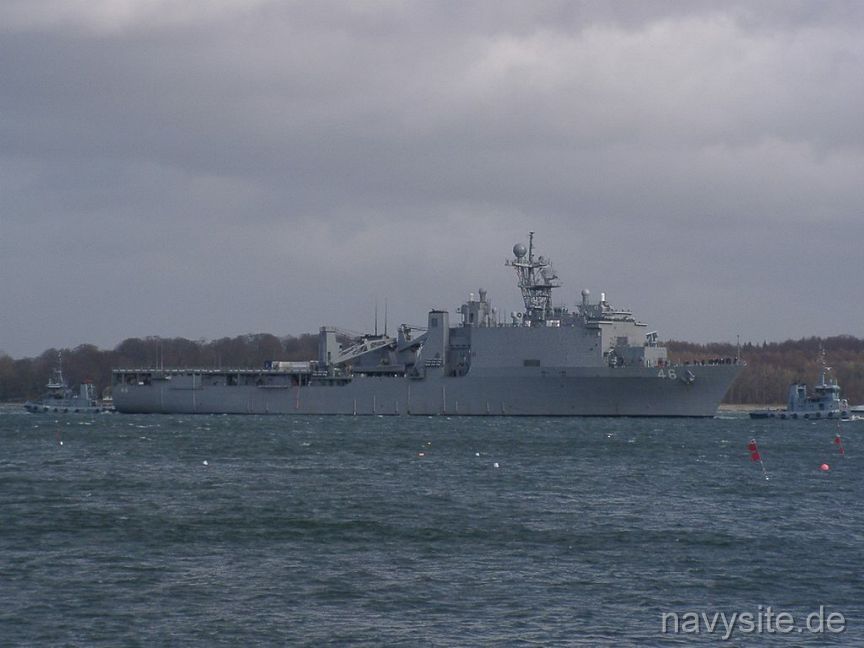
The photo below was taken by Stefan Karpinski and shows the TORTUGA in Kiel, Germany, for Exercise Strong Resolve in 2002.
![]() |
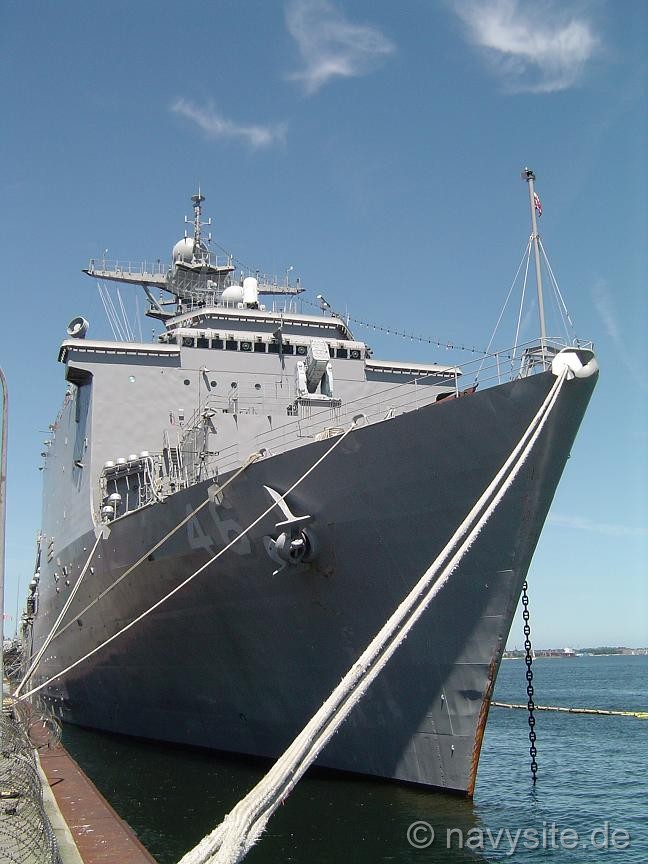
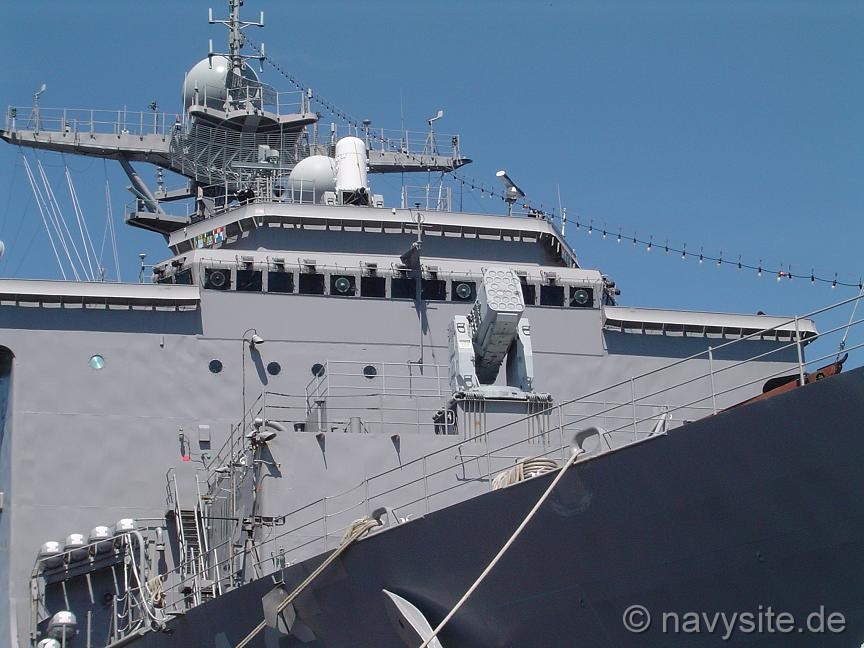
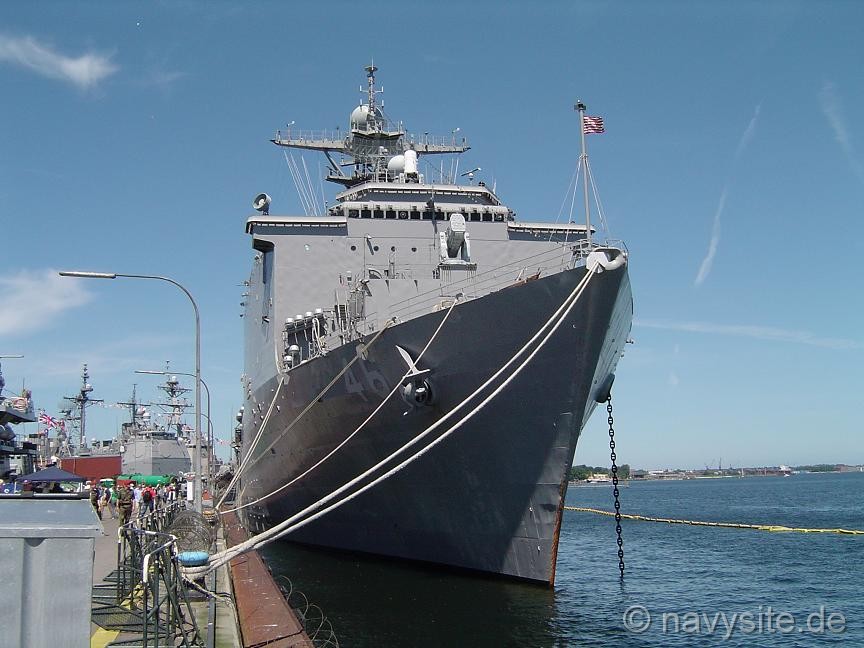
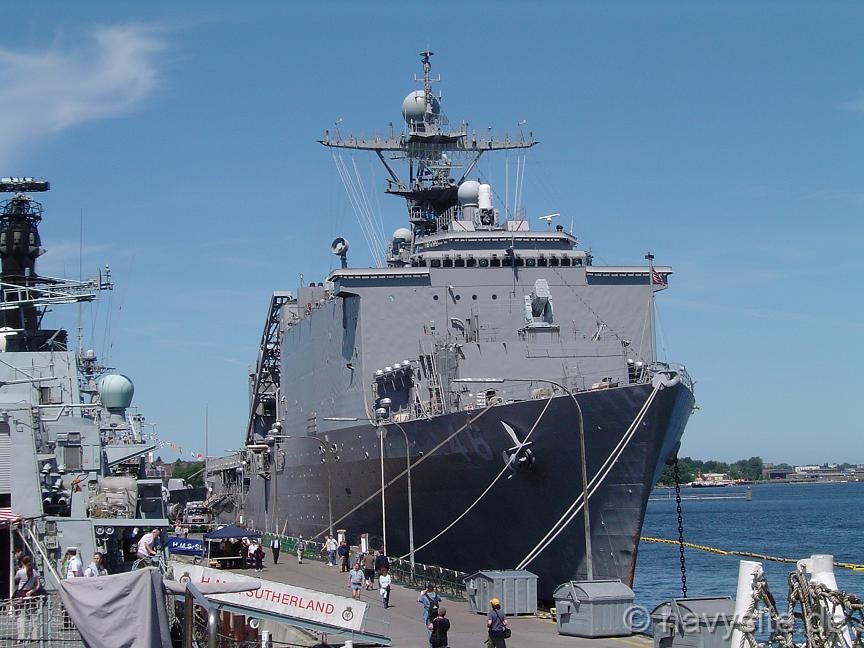
The photos below were taken by me during TORTUGA's port visit to Kiel, Germany, June 17 - 20, 2005, after her participation in BALTOPS 2005.
![]() | ![]() | ![]() | ![]() | ![]() |
![]() | ![]() | ![]() | ![]() | ![]() |
![]() | ![]() | ![]() |
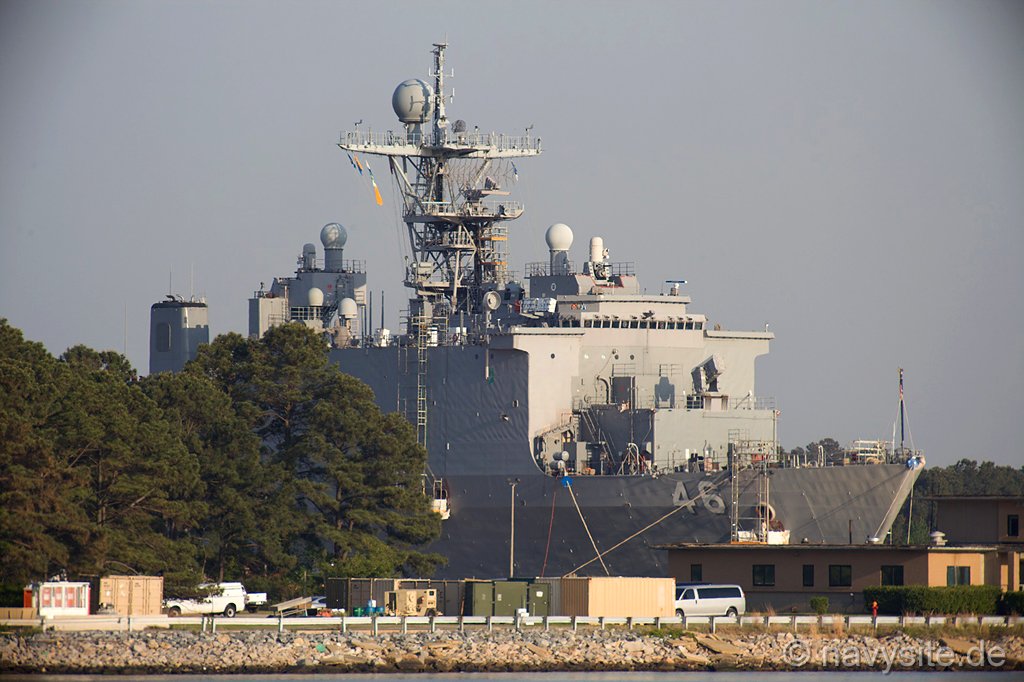
The photo below was taken by Michael Jenning and shows the TORTUGA at Little Creek, Va., on May 8, 2014.
![]() |
The photos below were taken by Michael Jenning and show the TORTUGA at Naval Station Mayport, Fla., on April 28, 2015.
![]() | ![]() | ![]() | ![]() |
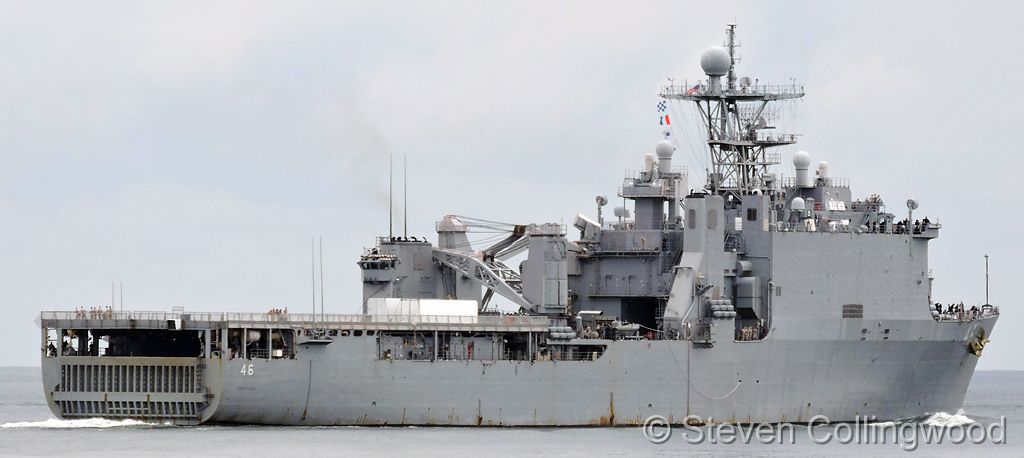
The photos below were taken by Steven Collingwood and show the TORTUGA passing the Chesapeake Bay Bridge Tunnel after departure from Naval Base Norfolk, Va., on July 27, 2015. USS TORTUGA is heading for Rockland, Maine, to participate in the annual Lobster Festival.
![]() | ![]() |
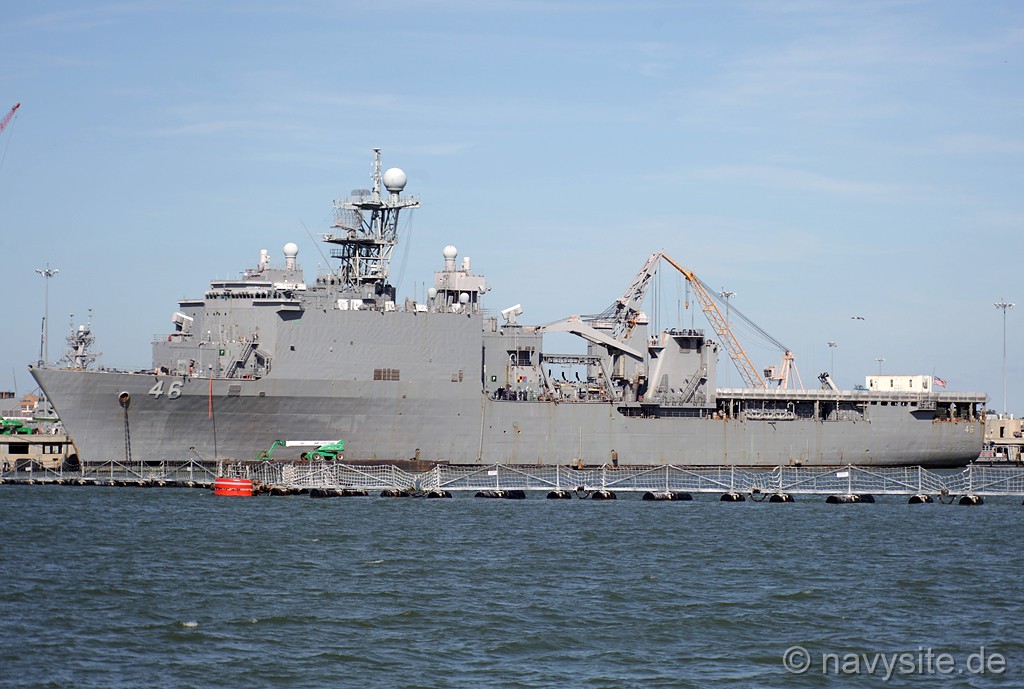
The photos below were taken by Michael Jenning and show the TORTUGA at Naval Base Norfolk, Va., on October 6, 2015.
![]() | ![]() | ![]() | ![]() |
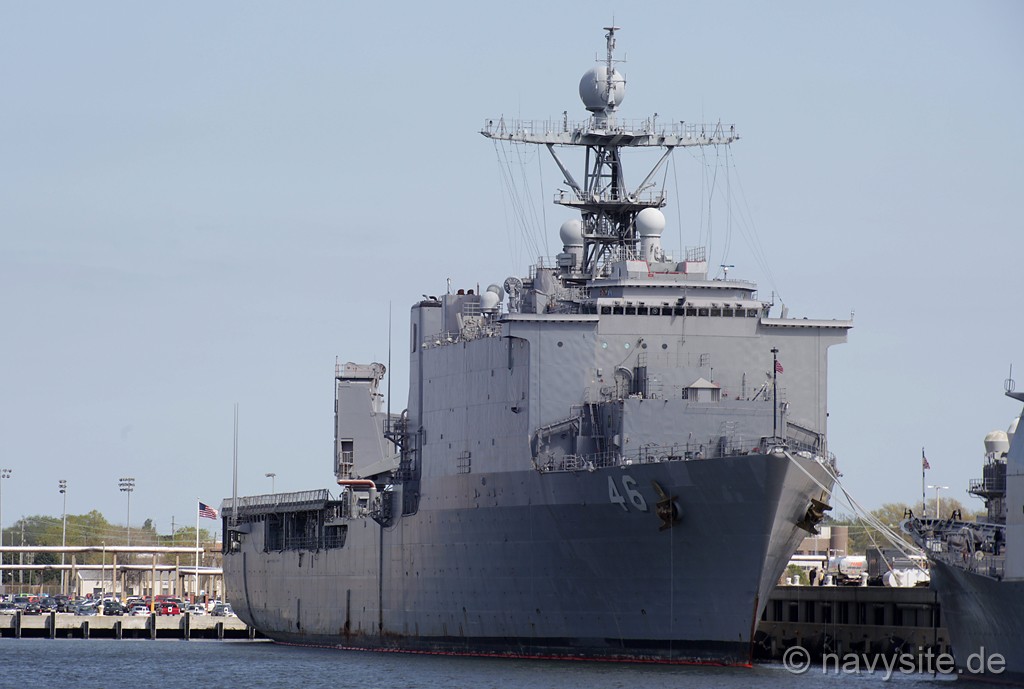
The photos below were taken by Michael Jenning and show the TORTUGA at Naval Base Norfolk, Va., on April 13, 2016. Her Phalanx and RAM systems as well as some sensors have been removed in preparation for an upcoming shipyard period.
![]() | ![]() | ![]() | ![]() |
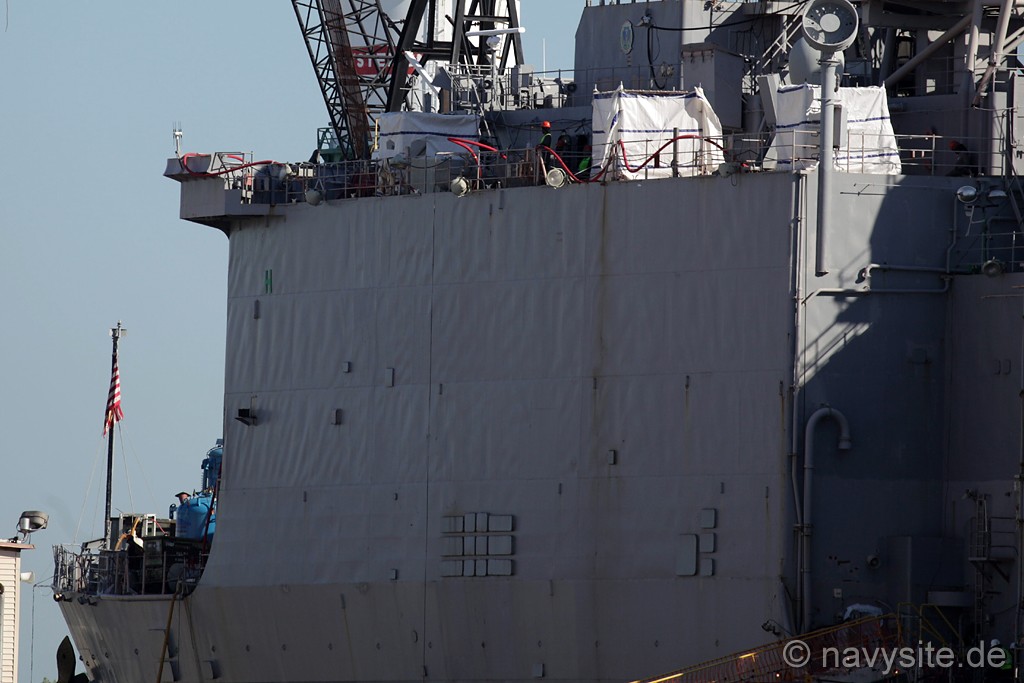
The photos below were taken by Michael Jenning and show the TORTUGA at BAE Systems Norfolk Ship Repair undergoing a Selected Restricted Availability (SRA) on October 12, 2016.
![]() | ![]() | ![]() | ![]() | ![]() |
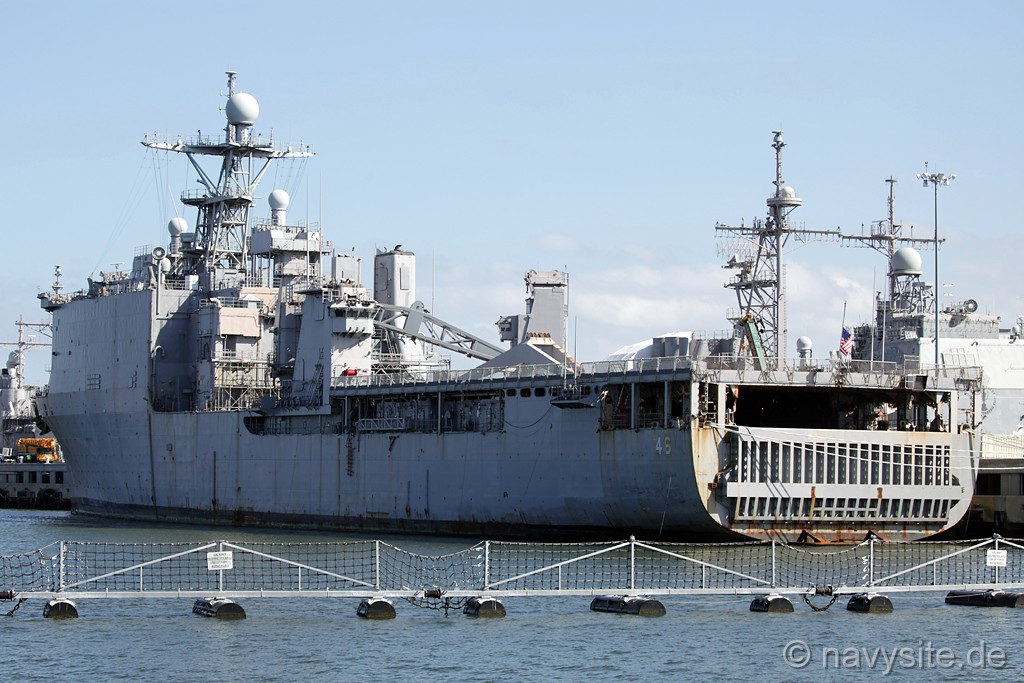
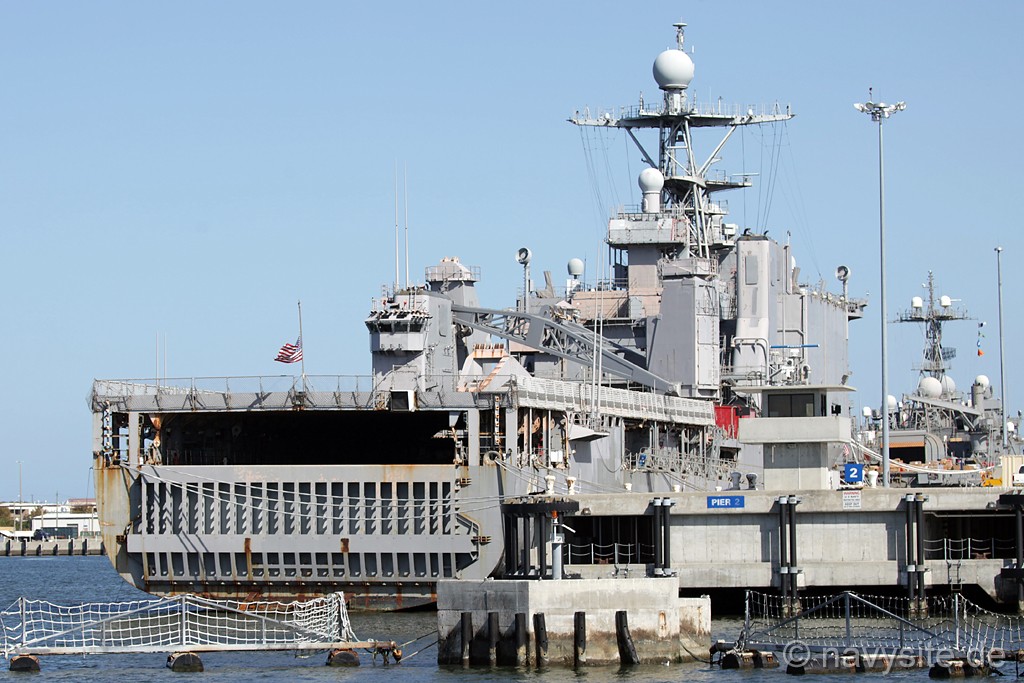
The photos below were taken by Michael Jenning and show the TORTUGA laid up at Naval Base Norfolk, Va., on October 4, 2017. As a cost saving measure, TORTUGA is presently in a lay up status and is only maintained by a small crew. The ship is scheduled to later undergo modernization and return to active status.
![]() | ![]() | ![]() | ![]() | ![]() |
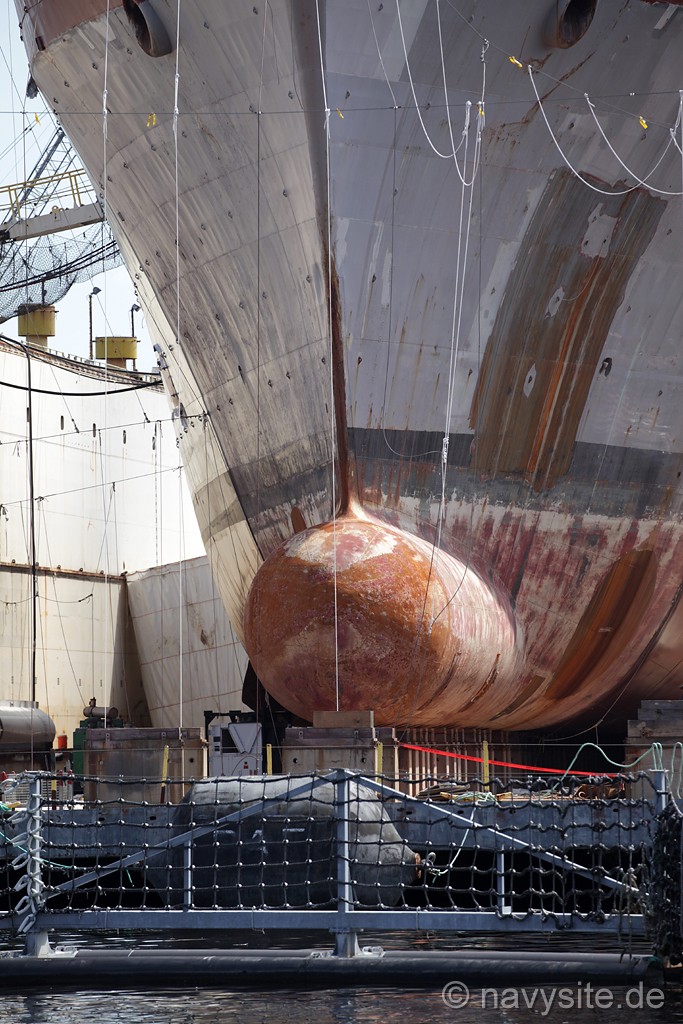
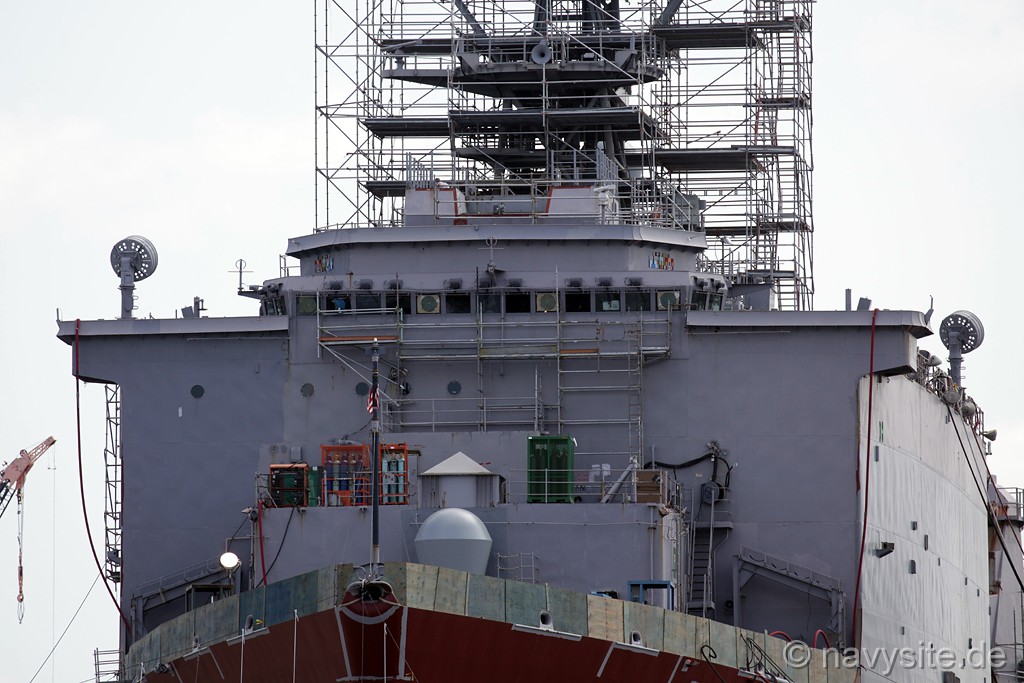
The photos below were taken by Michael Jenning and show the TORTUGA high and dry at BAE Systems Norfolk Ship Repair on September 21, 2018.
![]() | ![]() | ![]() |
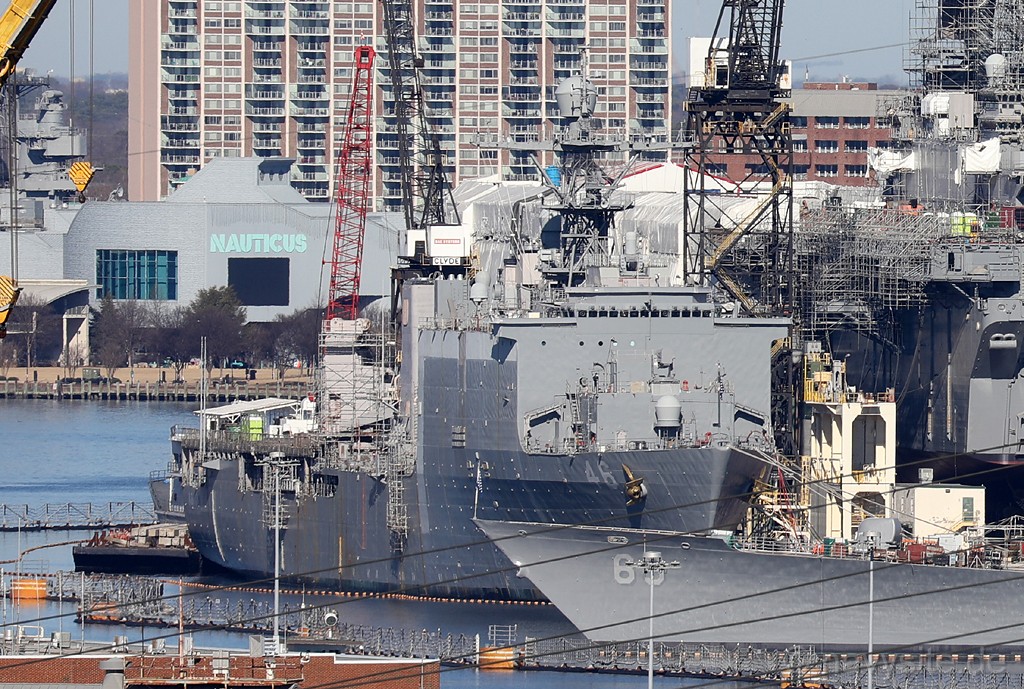
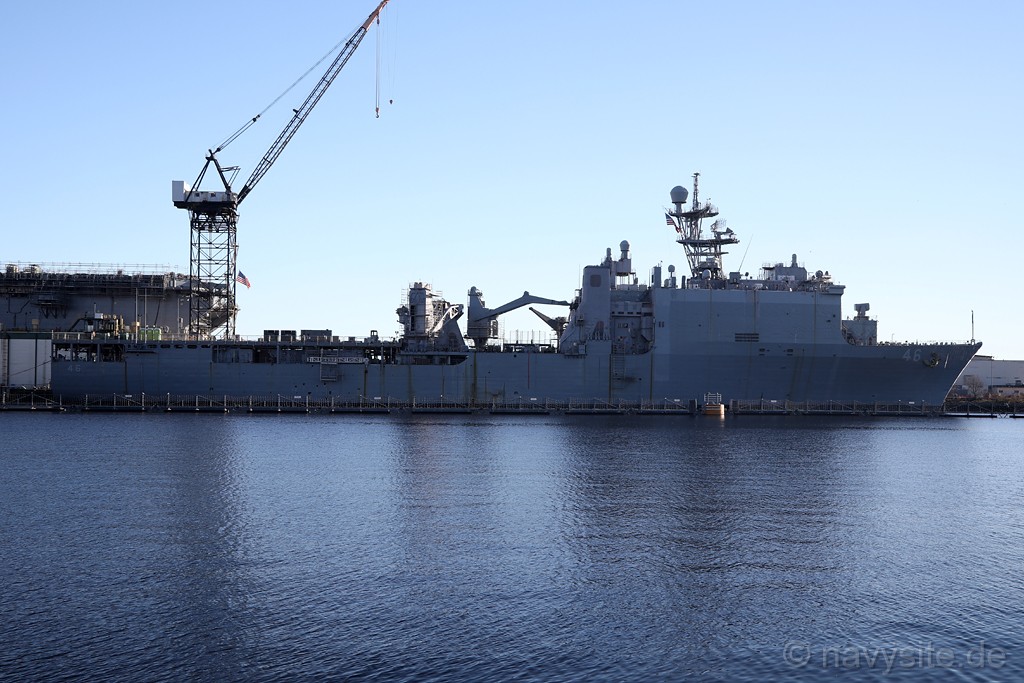
The photos below were taken by Michael Jenning and show the TORTUGA at BAE Systems Norfolk Ship Repair on December 26, 2021.
![]() | ![]() |
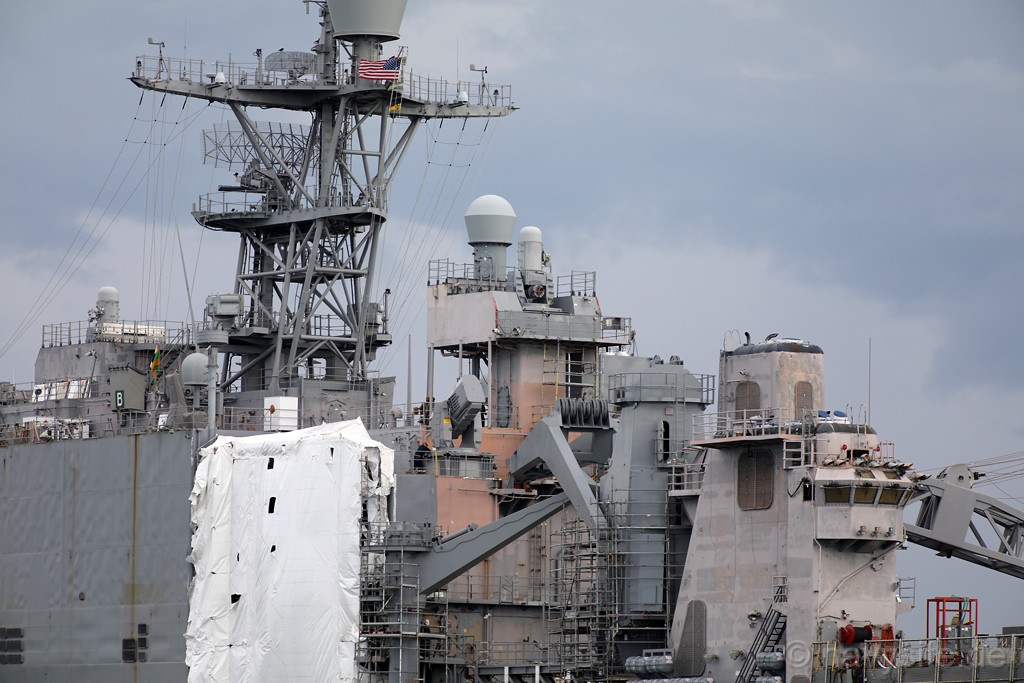
The photos below were taken by Michael Jenning and show the TORTUGA at Naval Base Norfolk, Va., on September 6, 2022.
![]() | ![]() | ![]() | ![]() |
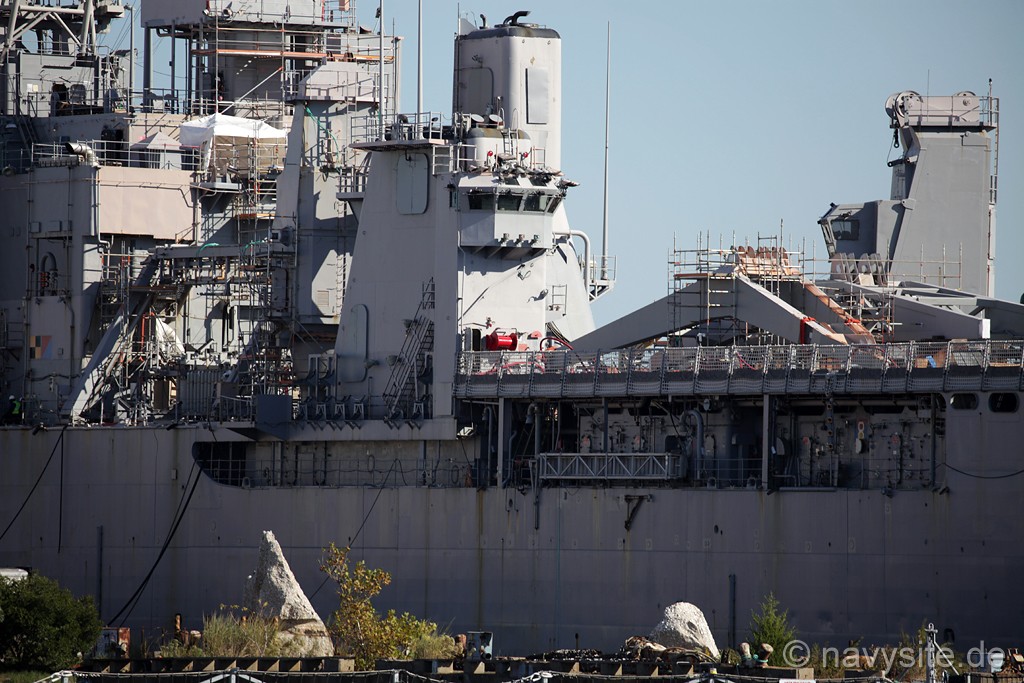
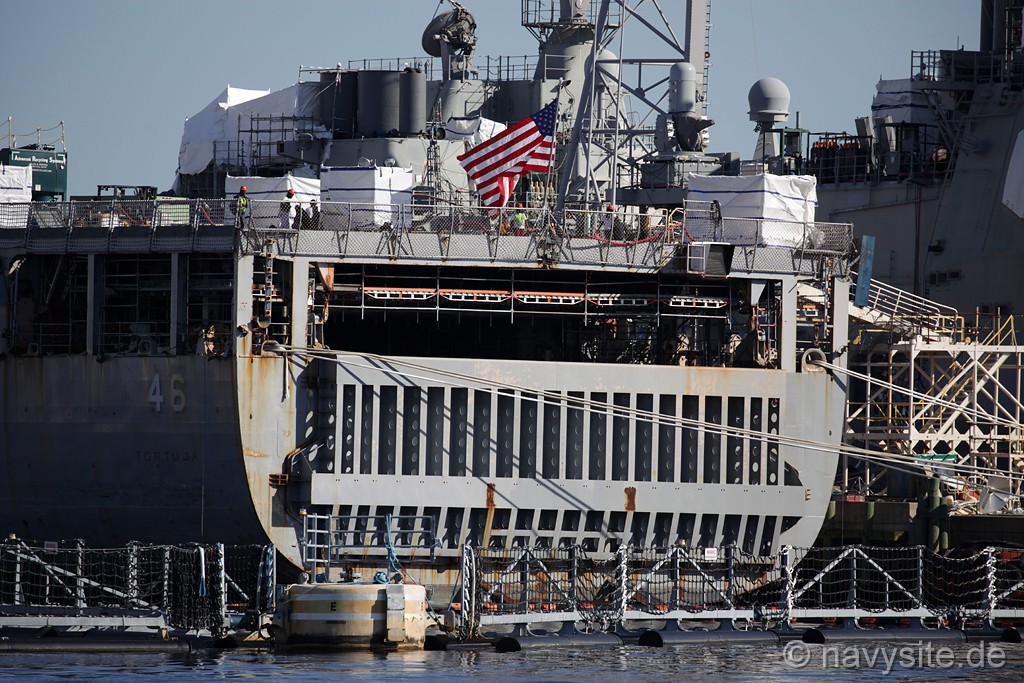
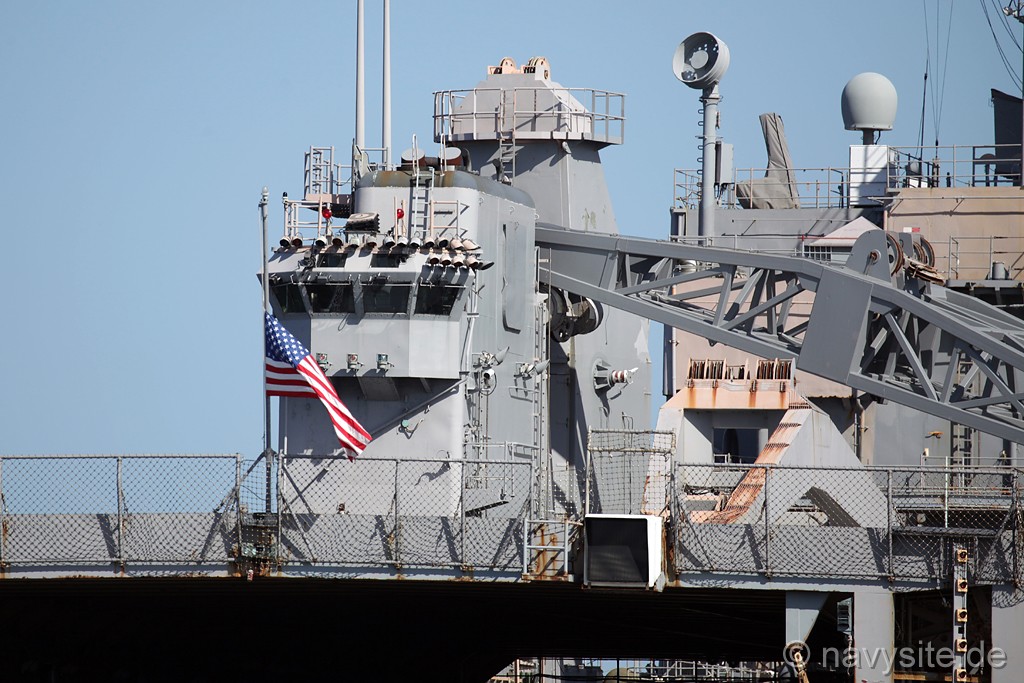
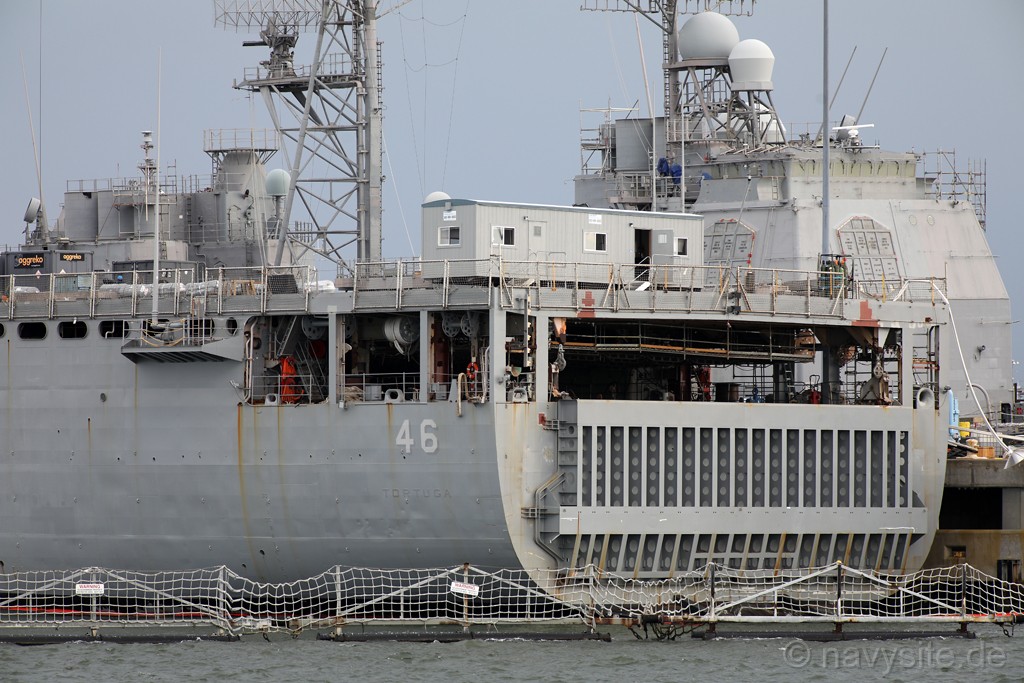
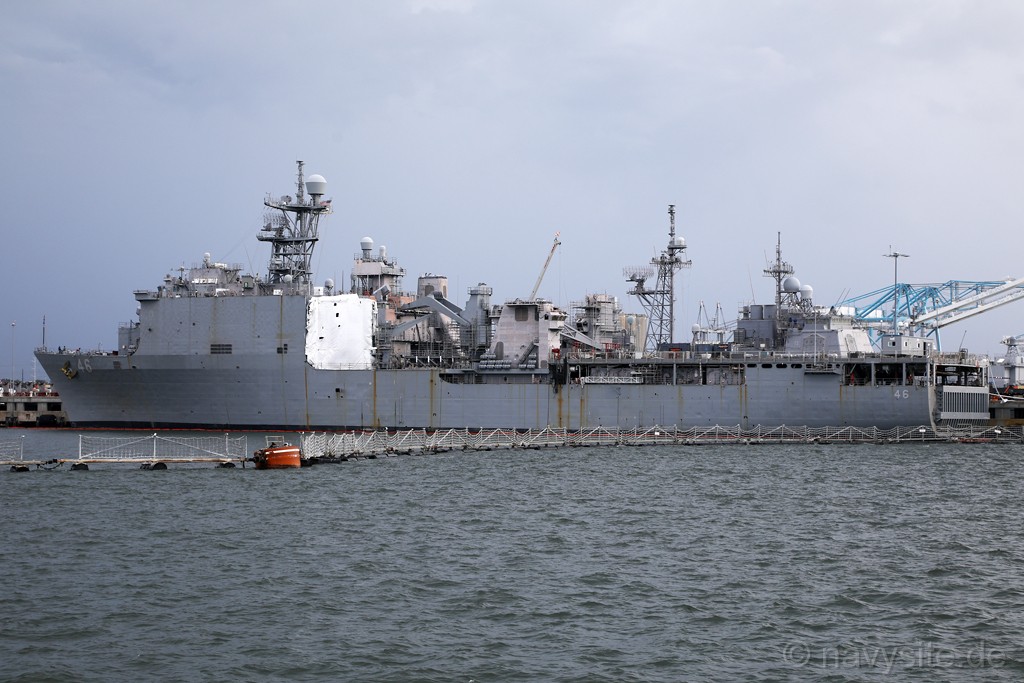
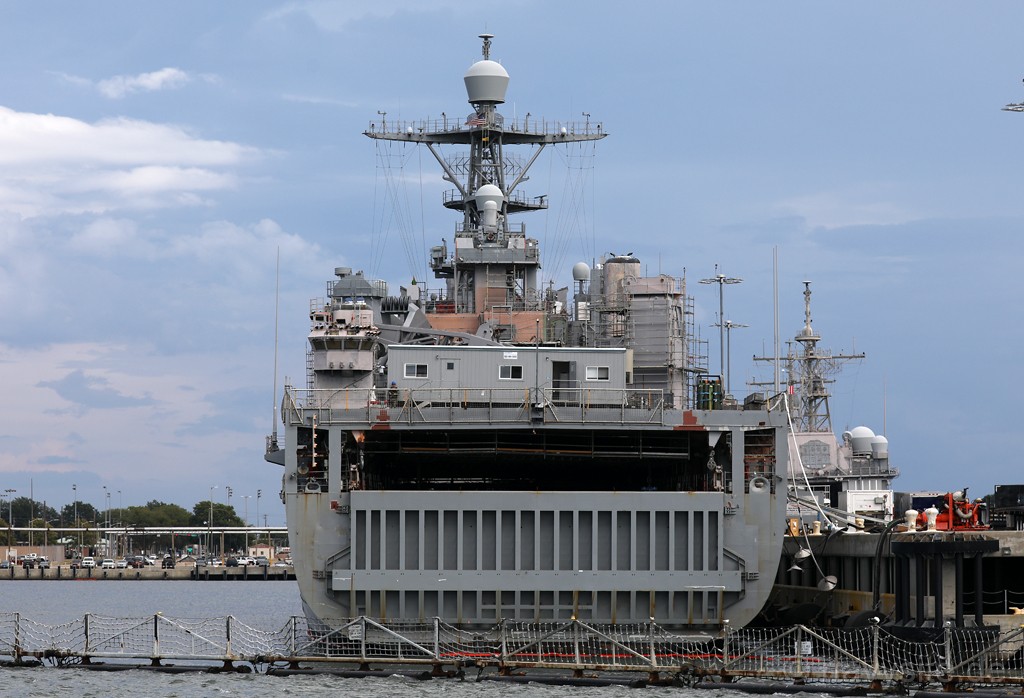
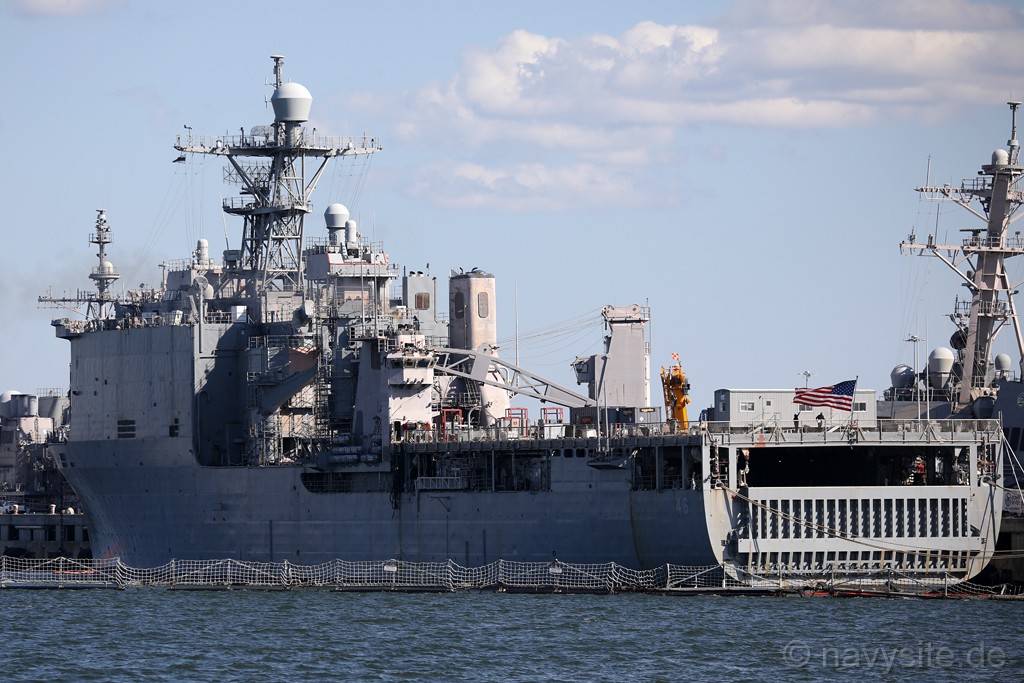
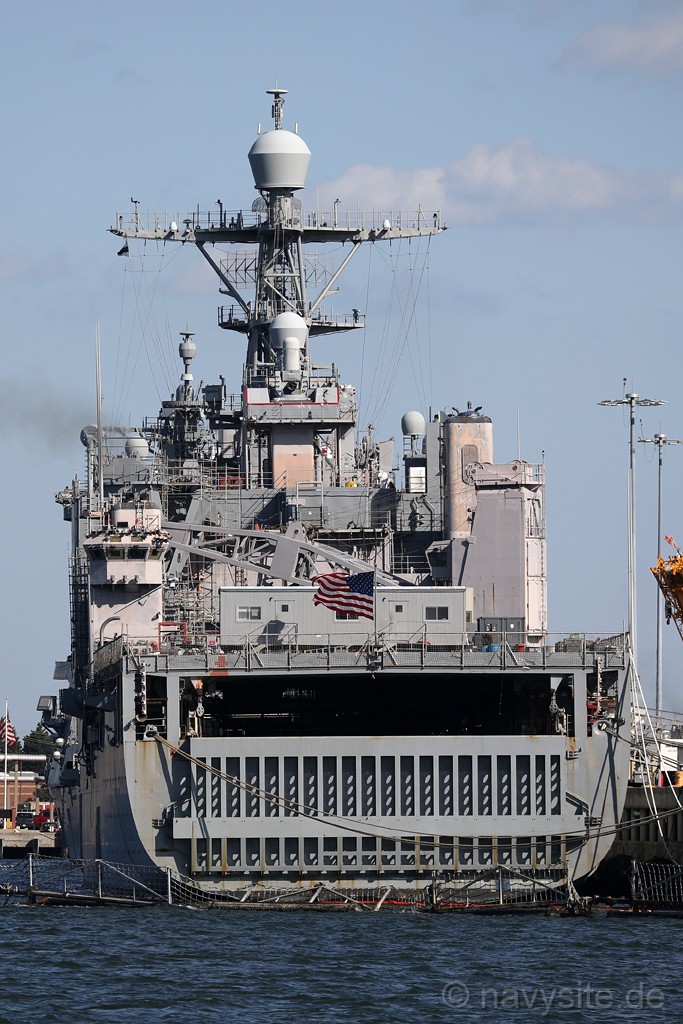
The photos below were taken by Michael Jenning and show the TORTUGA at Naval Base Norfolk, Va., on October 9, 2023. TORTUGA is already laid up for almost 8 years now while the Navy has spent more than $200 million for the ship's maintenance and modernization because initial plans called for the return of TORTUGA to active service. In 2022, however, TORTUGA's name appeared on the Navy's annual inactivation schedule message to Congress for the first time, but Congress refused approval for the decommissioning of the ship. Judging from the fate of other US Navy ships in similar situations, it's unlikely that TORTUGA will ever return to sea under her own power. Instead, she will probably be decommissioned in the near future.
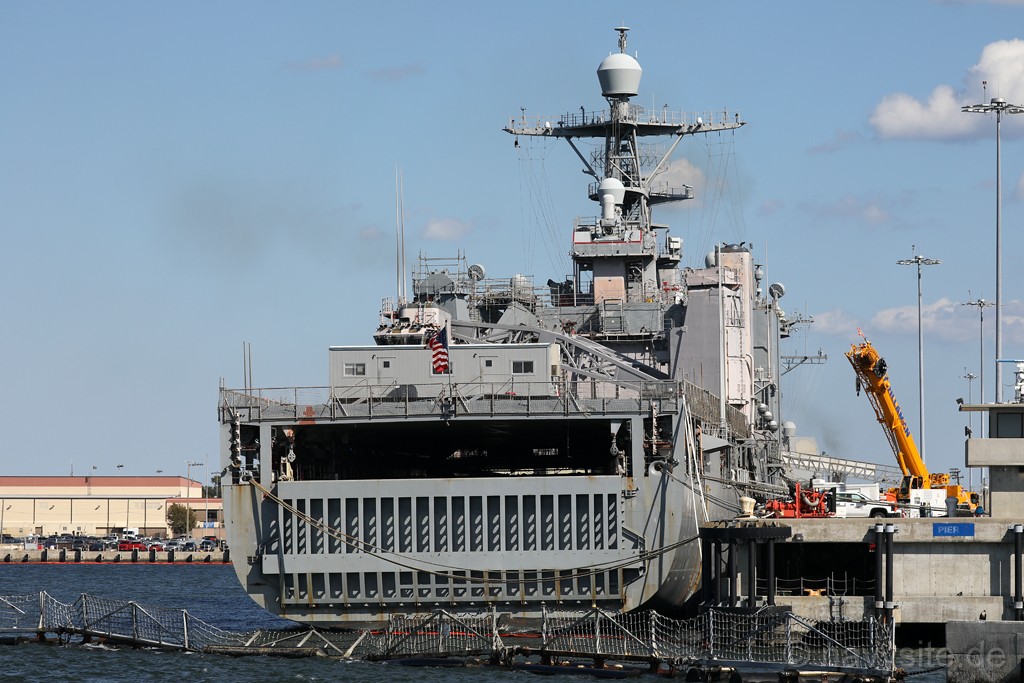
![]() | ![]() | ![]() | ![]() |
The photos below were taken by Michael Jenning and show the TORTUGA at Naval Base Norfolk, Va., on October 4, 2024.
![]() | ![]() | ![]() |
Back to Dock Landing Ship site.
Back to ships list.
Back to selection page.
Back to 1st page.