Search the Site with 
General Characteristics Crew List About the Ship's Coat of Arms USS Salvor History Image Gallery to end of page
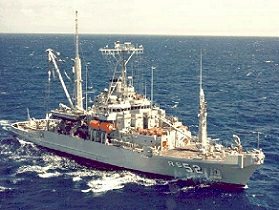
USNS Salvor (T-ARS 52)

- formerly ARS 52 -

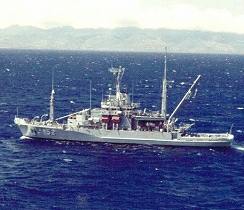
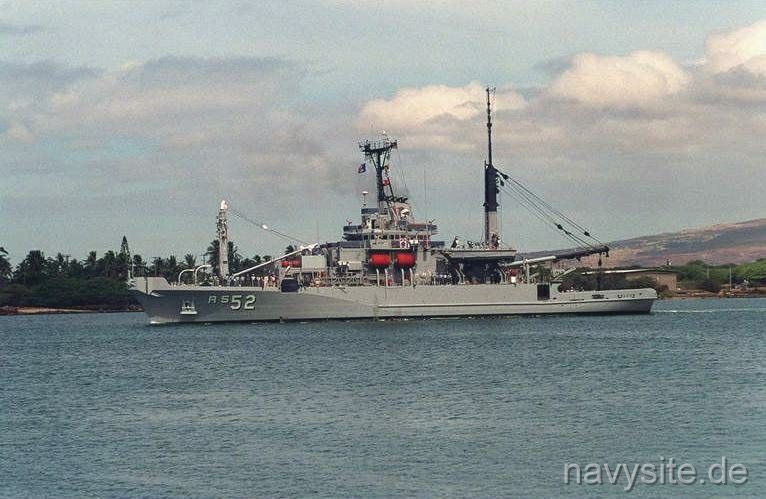
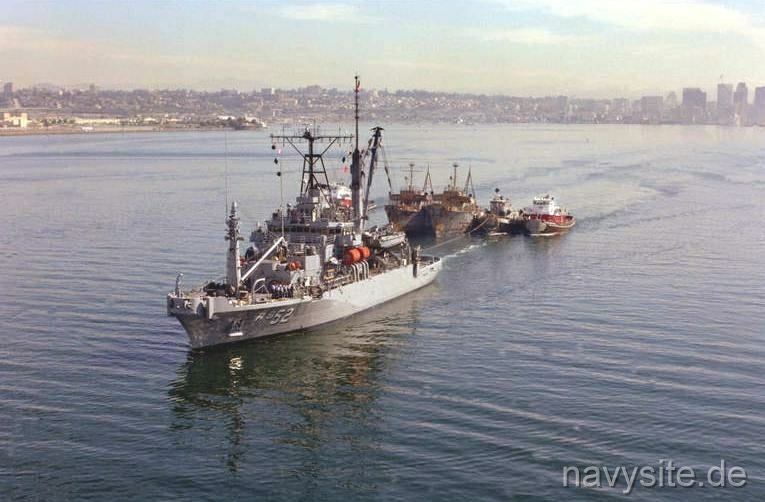
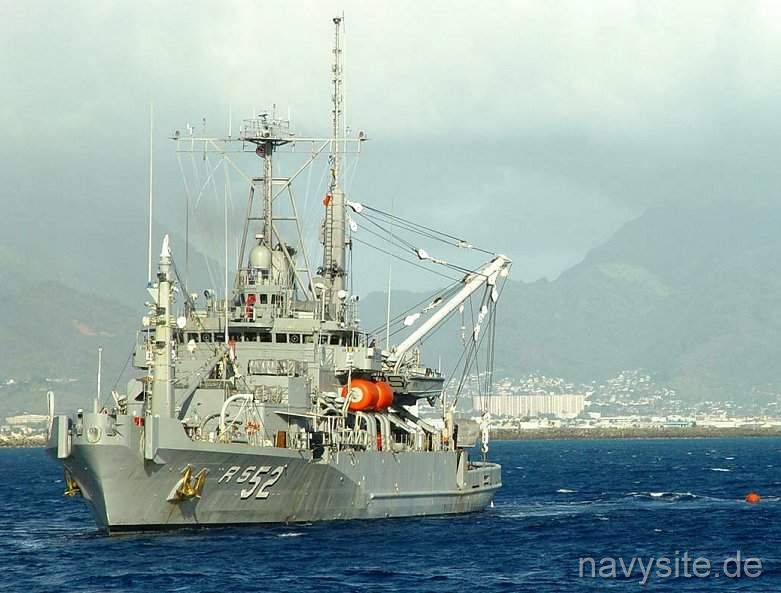
USNS SALVOR is the third ship in the SAFEGUARD class of Rescue and Salvage Ships. The SALVOR was transfered to the Military Sealift Command on January 12, 2007, and is now manned by a civilian crew and a US Navy detachment.

General Characteristics:Keel Laid: September 16, 1983
Commissioned: June 14, 1986
Decommissioned: January 12, 2007
MSC "in service": January 12, 2007
Builder: Peterson, Sturgeon Bay
Propulsion system: four Caterpillar 399 Diesel Engines
Propellers: two
Length: 255 feet (77.7 meters)
Beam: 50 feet (15.2 meters)
Draft: 15.5 feet (4.7 meters)
Displacement: approx. 3,200 tons
Speed: 15 knots
Armament: two .50 caliber machine guns; two Mk-38 25mm guns
Workboats: two 35-Ft. Aluminum Boats, two 14-Ft. Inflatable Boats
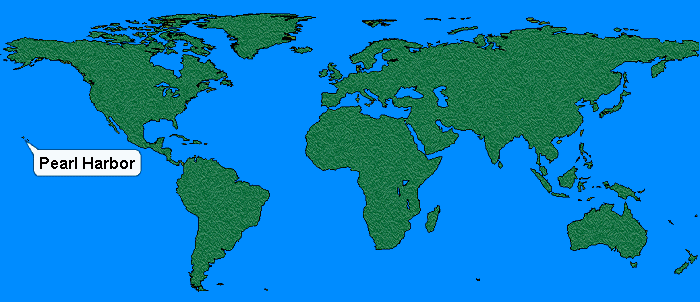
Homeport: Pearl Harbor, HI.
Crew: 26 MSC and 4 US Navy


Back to topback to top  go to endgo to the end of the page


Back to topback to top  go to endgo to the end of the page

Crew List:

This section contains the names of sailors who served aboard USS / USNS SALVOR. It is no official listing but contains the names of sailors who submitted their information.

Back to topback to top  go to endgo to the end of the page

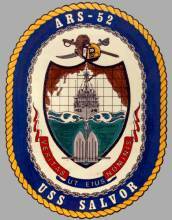
About the Ship's Coat of Arms:

The Shield:

The navigator chart of the Pacific Ocean represents SALVOR's theater of operation. SALVOR's bow-on aspect is representative of the view those in peril on the high seas will have as SALVOR appears on the horizon to render rescue and salvage assistance. The bow wave is modeled after that of the Surface Warfare insignia, worn by those who have mastered the intricacies of a U.S. Navy surface ship. The Stato anchor, ideally suited to salvage operations due to its excellent holding power to weight ratio, is an appropriate symbol of the strength and stability on which salvage operations are based.

The Crest:

The crossed sword and cutlass represent the officer and enlisted crew members that proudly wear the Surface Warfare insignia. The MK V and MK 12 diving helmets symbolize the proven tradition methods of diving and the latest technological advances that have been applied to diving techniques. There are 94 links in the chain, one for every "plankowner" - those sailors comprising SALVOR's commissioning crew. The encirclement of chain represents the strength and teamwork inherent in a ship's crew.


Back to topback to top  go to endgo to the end of the page

History of USS / USNS SALVOR:

USS SALVOR was laid down at Peterson Builders, Sturgeon Bay, Wisconsin, on September 16, 1983, launched on December 8, 1984, and commissioned on June 14, 1986. After trials and fitting-out, she transited to the Pacific and first arrived at her long-term operating base at Pearl Harbor on November 1, 1986, entering service with Commander, Naval Surface Force Pacific. Through late 1986 and 1987 she established the operating rhythm typical of SAFEGUARD-class rescue and salvage ships: local diving and towing drills in Hawaiian waters; trials of heavy-lift systems over the bow and stern rollers; and early ocean tows moving large fleet support assets between Pacific bases. By the end of 1987, she had already demonstrated the class's core portfolio - open-ocean towing, beach-gear retractions, and manned diving - supporting Fleet readiness in the Central and Western Pacific during a period of heightened U.S. forward presence as Cold War tensions tapered but naval activity remained intense in the Pacific Rim.

In 1989, SALVOR's salvage capabilities were tested in two high-profile civil maritime emergencies off Oahu. On March 2-3, 1989, the tanker EXXON HOUSTON broke free of her moorings off Barbers Point and grounded, spilling heavy fuel. SALVOR joined a multi-agency response, conducting de-beaching and salvage support alongside Coast Guard and commercial units during a multi-week effort that combined lightering, damage control, and towage. On May 20, 1989, the barge KAMALU caught fire while adrift off the Wai'anae coast. SALVOR fought the fire for extended hours from her off-ship monitors and provided subsequent tow and safety support. Between these emergent tasks, she continued scheduled fleet support duties, including synthetic-hawser towing experiments and torpedo recovery work in the Hawaiian operating areas, and then headed south for a SOUTHPAC deployment that summer, a routine Pacific presence mission anchored in diving, towing, and port-clearance training with partners.

RIMPAC 1990 framed the next phase of her career. In April 1990, SALVOR delivered the decommissioned submarine rescue ship ex-COUCAL (ASR 8) as a target hulk and, during the May exercise, shuttled in and out of Pearl Harbor to stage special warfare craft, support SEAL Delivery Vehicle operations, and conduct recovery tasks. In the same period, she handled precision lifts - recovering propeller blades for an Australian guided-missile frigate participating in the exercise - and executed an emergency assist of the survey ship USNS H.H. HESS (T-AGS 38). After a mid-year yard availability at Pearl Harbor Naval Shipyard, she returned to readiness training through the end of 1990.

On January 4, 1991, SALVOR departed Pearl Harbor for a Western Pacific deployment, towing the floating dry dock AFDL 40 to Subic Bay, with fuel stops at Kwajalein and Guam. Through the spring, she rotated among port calls and bilateral salvage training events across Japan, Korea, the Philippines, Indonesia, and back to Japan, before returning to Hawaii on July 3, 1991. The emphasis of these bilateral drills - moors, retractions, and clearance diving - reflected the post-Cold War shift toward coalition interoperability and humanitarian/contingency preparedness in the region.

In early 1992, SALVOR executed what became one of the signature feats of Cold War-era U.S. Navy deep-ocean recovery. After system tests of the CURV III remotely operated vehicle from January 6-20, 1992, she departed for Wake Island on January 21. There, her team located and recovered a UH-46 Sea Knight helicopter from a depth of roughly 17,250 feet, a world-record deep recovery for that time, then returned to Pearl Harbor on March 9. Later that spring, she shifted to the Eastern Pacific, towing decommissioned units between West Coast yards and Pearl Harbor and, in September 1992, delivering the ex-FLASHER (SSN 613) to Puget Sound for recycling, with port visits at Seattle, New Westminster, and Portland before returning to Hawaii on October 10. The next two years alternated between island-chain diving/training blocks, brief forward periods, and exercise support. In June 1994, she again formed part of RIMPAC's salvage and special operations support, staging divers and small craft from the Hawaiian anchorages and conducting local wreck and harbor-clearance work.

Through the mid-1990s SALVOR also performed a steady stream of emergent assists and complex recoveries typical of the class. In 1995, she retrieved heavy towing gear lost at sea during an ocean tow, recovered a lost anchor and chain from 170 feet of water off Honolulu International Airport's Reef Runway during a master-diver evaluation event, and conducted beach-gear retractions and at-sea firefighting drills on the hulk ex-TUNICA (ATA 178). On August 1, 1996, she began another Western Pacific deployment. Over the next five months, she rotated through Sasebo and multiple bilateral salvage exercises - off Chinhae, South Korea; in Hong Kong; Singapore; Pattaya/Utapao, Thailand; and Surabaya and Pasir Putih, Indonesia - before executing an emergency tasking in late December near White Beach, Okinawa, to recover two sunken LARC-V amphibious vehicles and to locate and dispose of a submerged Mk-82 1,000-lb bomb. She returned to Pearl Harbor at year's end and completed the transit back on December 29, 1996. Early in 1997, she came off deployment and resumed the Pearl Harbor cycle of maintenance, inspections, and local training. In recognition of consistent material readiness and operational performance she received the Pacific Fleet's Marjorie Sterrett Battleship Fund Award in 1995 and again in 2000 as the most battle-ready ship of her type in the Pacific.

On February 9, 2001, the Japanese fisheries training vessel EHIME MARU was accidentally struck and sunk off Oahu by the submarine USS GREENEVILLE (SSN 772) during an emergency-surface maneuver, a high-visibility peacetime tragedy with extensive international repercussions. SALVOR was assigned significant roles during the complex, months-long effort to locate, lift, and relocate the wreck to facilitate the recovery of remains and the return of the vessel to deeper water, providing platform support to Navy salvage divers and contractors during the evolution through the fall of 2001. The early 2000s also saw routine support to fleet exercises and recoveries - ranging from aircraft debris and ordnance to wreck assessments - across the Central Pacific.

In June 2006, SALVOR acted as the Navy's at-sea platform for divers who surveyed and conclusively identified the WWII submarine USS LAGARTO (SS 371) in the Gulf of Thailand. The mission, undertaken in cooperation with naval historians and host-nation authorities, closed a 61-year uncertainty for families about the boat's resting place. That summer and fall she also supported Cooperation Afloat Readiness and Training 2006 around Southeast Asia before returning to Hawaii.

After more than twenty years in commissioned service, SALVOR decommissioned at Pearl Harbor on January 12, 2007, and was transferred the same day to the Military Sealift Command as USNS SALVOR (T-ARS 52), with a civil service mariner crew and a small embarked Navy detachment for diving and salvage operations. Based from Pearl Harbor under MSC Far East/Western Pacific tasking, she continued the same mission set - now with an MSC logistics framework - supporting fleet towing, emergency response, and diving operations across the Indo-Pacific.

In February 2009, SALVOR supported the emergency retraction and refloating of the guided-missile cruiser USS PORT ROYAL (CG 73), which had grounded on a shoal just outside Honolulu on February 5. After extensive lightering and dredging, a coordinated effort refloated the ship on February 9, with SALVOR providing salvage platform and gear handling during the evolution. The following spring, she shifted to Northeast Asia. In April 2010, she embarked U.S. Navy and Republic of Korea Sea Salvage and Rescue Unit divers in the Yellow Sea to support recovery operations for the corvette ROKS CHEONAN, lost near Baengnyeong Island on March 26. Working alongside U.S. surface combatants including USS HARPERS FERRY (LSD 49), USS CURTIS WILBUR (DDG 54), and USS LASSEN (DDG 82), SALVOR served as the salvage and diving platform for joint operations as the stern, stack, and bow were eventually raised and transported to Pyeongtaek for investigation, an operation conducted under intense regional tension and international scrutiny.

Towing and target preparation dominated her RIMPAC 2012 commitments. In July 2012, SALVOR towed multiple decommissioned ships from Pearl Harbor to designated SINKEX areas for live-fire exercises, including the former ammunition ship ex-KILAUEA (T-AE 26) (sunk July 24), the former combat stores ships ex-NIAGARA FALLS (T-AFS 3) (sunk July 14), and ex-CONCORD (T-AFS 5) (sunk July 25). On August 17, 2012, she departed Pearl Harbor towing ex-CORONADO (AGF 11) to waters south of Guam. During Exercise VALIANT SHIELD the hulk was sunk by joint live fire on September 12, 2012, in more than 18,000 feet of water, an event used to collect real-world weapons effects data. In January-February 2013, SALVOR was part of the joint U.S.-commercial team that removed the grounded mine countermeasures ship USS GUARDIAN (MCM 5) from Tubbataha Reef in the Philippines, staging gear and personnel as sections of the wreck were cut away and lifted to prevent further reef damage.

Humanitarian and test-support tasks followed. On May 16, 2014, after HMCS PROTECTEUR (AOR 509) suffered a disabling engine-room fire northeast of Hawaii and was initially towed into Pearl Harbor, SALVOR took the Canadian replenishment oiler under long-tow to Esquimalt, British Columbia, delivering her on May 31, 2014, for disposition - an allied logistics assist across more than 2,300 nautical miles at ocean-tow speeds. In September 2014, SALVOR served as a platform for NASA's Orion spacecraft underway recovery tests off San Diego (September 11-12) and then again on December 5, 2014, when, alongside USS ANCHORAGE (LPD 23) and other support craft, she participated in the recovery of the Orion crew module after splashdown at the conclusion of Exploration Flight Test-1. In January 2015, at Simpson Harbour, Rabaul, she supported the investigation and respectful recovery of remains associated with a USMC TBF/TBM AVENGER (VMTB-233) lost mining the harbor on February 14, 1944. Once remains were recovered and documentation completed, the wreckage was returned to approximately its original position.

From September 1 to October 15, 2018, SALVOR was the primary afloat platform for Mobile Diving and Salvage Unit ONE during a historic environmental-protection operation at Enubuj Island, Kwajalein Atoll: "hot-tapping" and removal of roughly 229,000-250,000 gallons of fuel oil from the capsized hull of the former German heavy cruiser PRINZ EUGEN, a nuclear-test veteran that had slowly begun to leak after decades on the lagoon floor. Working with the Republic of the Marshall Islands, U.S. Army Garrison Kwajalein Atoll, and the chartered products tanker HUMBER, the team recovered the oil and secured the wreck's tanks to mitigate long-term spill risk.

USNS SALVOR has continued in service into the mid-2020s as one of the Navy's two dedicated MSC rescue and salvage ships. On July 9, 2023, she arrived at Larsen & Toubro's Kattupalli Shipyard near Chennai, India, for voyage repairs under a new Master Ship Repair Agreement framework that routes certain U.S. Navy MSC maintenance to Indian yards, reflecting expanding U.S.-India maritime logistics cooperation in the Indo-Pacific. From her enduring base at Pearl Harbor, she remains tasked across the theater for heavy tows, emergency response, diver-intensive clearance, and special test-support evolutions.


Back to topback to top  go to endgo to the end of the page


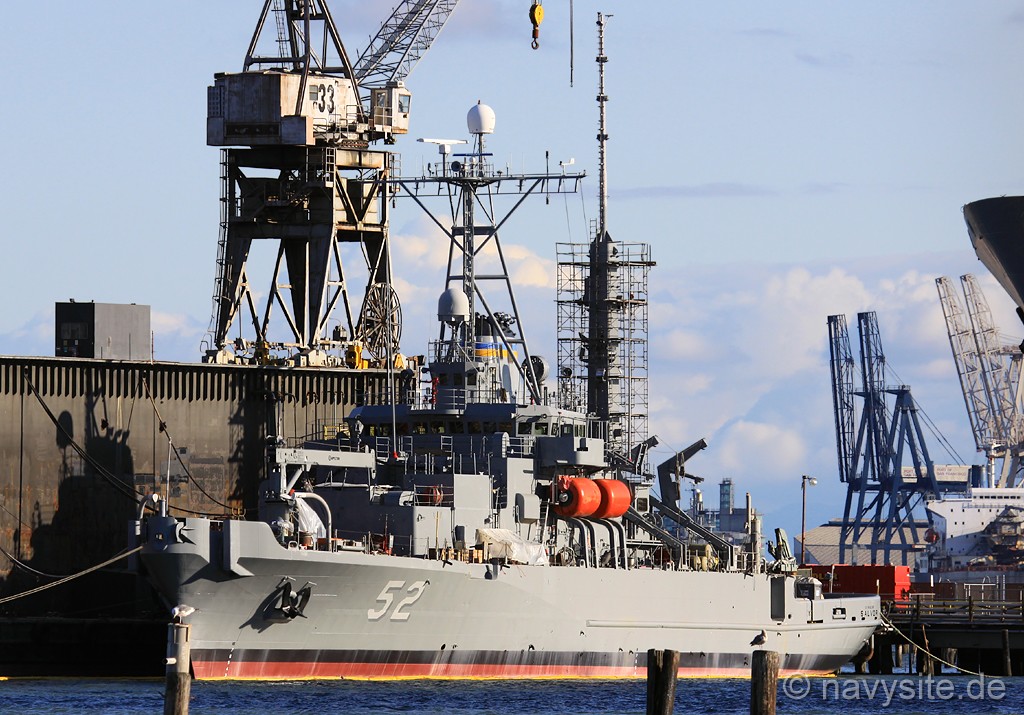
The photo below was taken by me and shows the SALVOR undergoing maintenance at San Francisco, Calif., on October 6, 2011.


Back to topback to top


Back to Rescue and Salvage Ships site. Back to ships list. Back to selection page. Back to 1st page.