
Search the Site with

|
Search the Site with
|
 General Characteristics Crew List Memorabilia Cruise Books and Booklets About the Ship's Coat of Arms About the Ship's Name Patch Gallery History Image Gallery to end of page
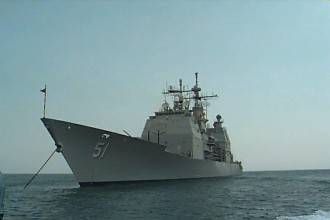 |  | 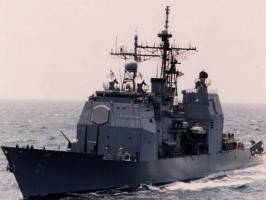 |
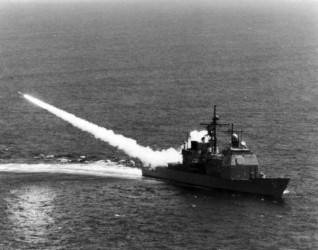
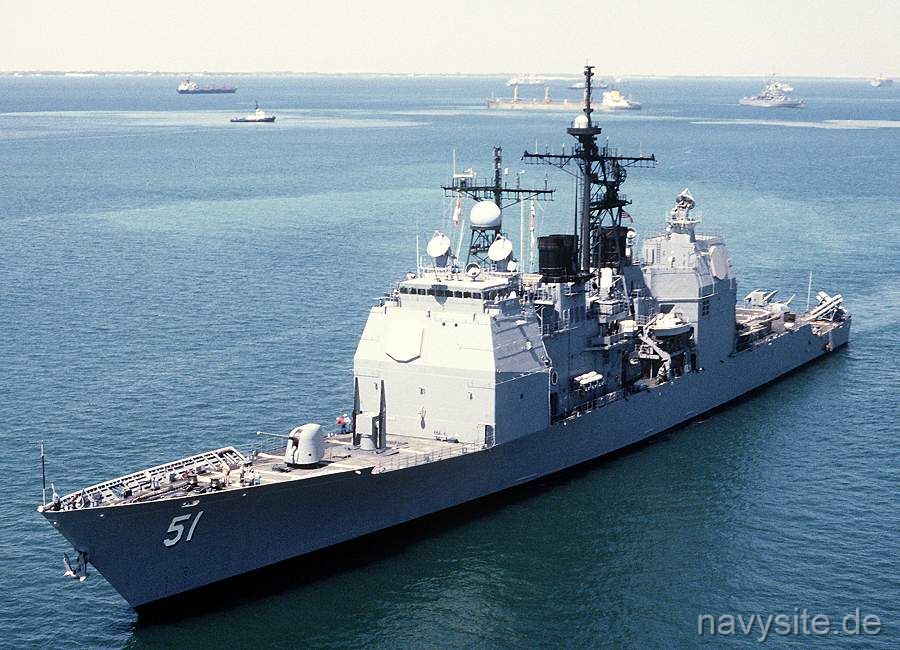
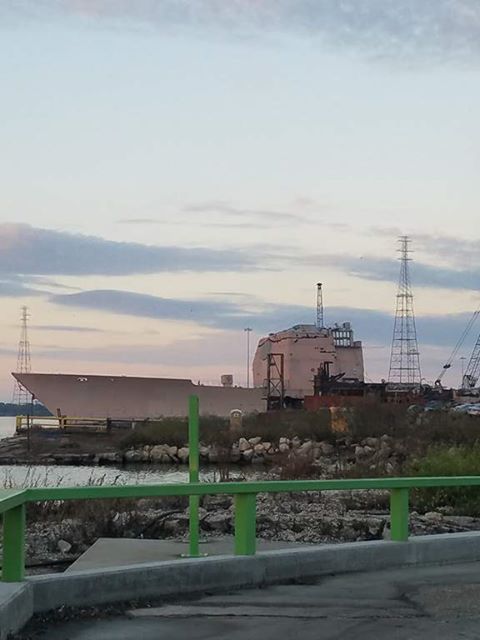
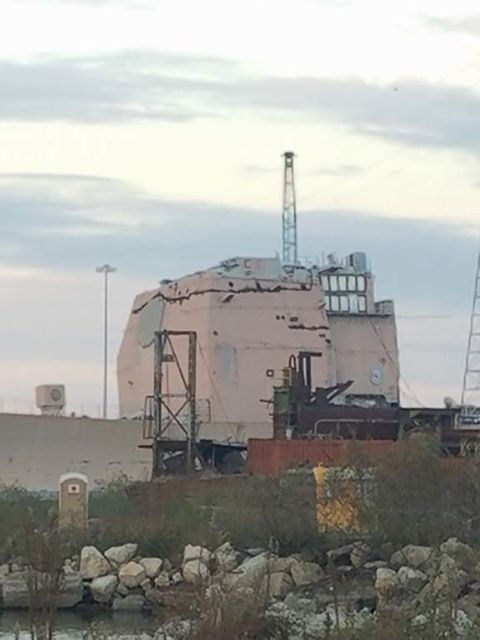
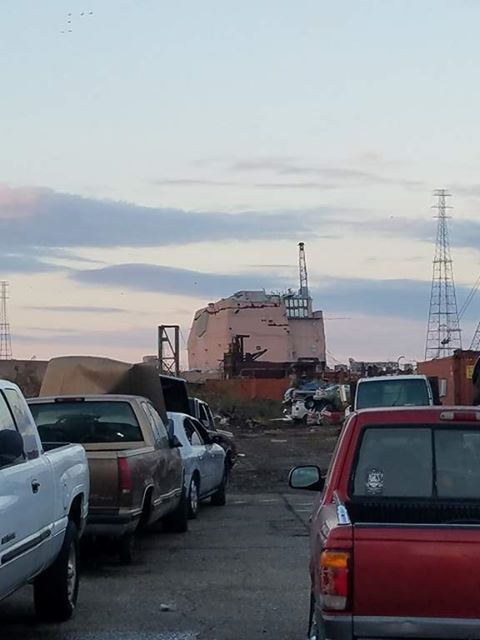
USS THOMAS S. GATES was the fifth ship in the TICONDEROGA - class and the last ship of that class equipped with the Mk-26 missile launchers. THOMAS S. GATES was also the only ship in her class to be named after a person and not after a famous American battle. Both decommissioned and stricken from the Navy list on December 14, 2005, the ship spent the following years laid up at Philadelphia, Penn. On December 15, 2014, the THOMAS S. GATES was sold for scrapping to ESCO Marine of Brownsville, Tx. The ship, however, spent another 2 1/2 years at Philadelphia until she was towed to New Orleans, La., for scrapping in June 2017. THOMAS S. GATES arrived at her final destination on June 30, 2017.
| General Characteristics: | Awarded: May 20, 1982 |
| Keel laid: August 31, 1984 | |
| Launched: December 14, 1985 | |
| Commissioned: August 22, 1987 | |
| Decommissioned: December 14, 2005 | |
| Builder: Bath Iron Works, Bath, Maine | |
| Propulsion system: four General Electric LM 2500 gas turbine engines | |
| Propellers: two | |
| Blades on each Propeller: five | |
| Length: 567 feet (173 meters) | |
| Beam: 55 feet (16.8 meters) | |
| Draft: 34 feet (10.2 meters) | |
| Displacement: approx. 9,600 tons full load | |
| Speed: 30+ knots | |
| Cost: about $1 billion | |
| Aircraft: two | |
| Armament: two | |
| Crew: 33 Officers, 27 Chief Petty Officers and approx. 340 Enlisted |
 back to top go to the end of the pageback to top go to the end of the page
Crew List:
This section contains the names of sailors who served aboard USS THOMAS S. GATES. It is no official listing but contains the names of sailors who submitted their information.
back to top go to the end of the pageback to top go to the end of the pageUSS THOMAS S. GATES Cruise Books:
back to top go to the end of the pageAbout the Ship’s Coat of Arms:
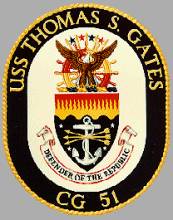
The crest is built on the government service of the ship's namesake, the Honorable Thomas S. Gates, Jr. of Philadelphia. The upper section of the shield represents the World War II service of Thomas S. Gates, Jr. aboard various aircraft carriers. The deep blue represents the waters of the Pacific Ocean and the gold symbolizes the U.S. Navy tradition. The heraldic rayonne division of scarlet and gold, simulating fire and flames, is symbolic of the severity of the Japanese Kamikaze attacks concentrated upon U.S. aircraft carriers during the invasions of Lingayen, Iwo Jima and Okinawa, in which Gates participated. The anchor and stars, adapted from the flag of the Secretary of the Navy, refer to his tenure as Under Secretary and Secretary of that Department. His subsequent terms as Deputy Secretary and Secretary of Defense are indicated by the three arrows which appear on the flag of the Secretary of Defense.
On the crest, the eagle, symbolic of power and authority, along with the ship's wheel, allude to the strong leadership Mr. Gates provided while leading the Department of Defense during a period that heralded technological changes from guns to missiles, conventional power to nuclear, piston to jet aircraft engines, and the beginning of space exploration. This era of change is recognized by the alternating colors of the wheel.
Mr. Gates' last public service followed his appointment by President Ford to head the U.S. Liaison Office to the People's Republic of China. He stated that his task would be "to work for the normalization of Chinese-American relations." This concept is indicated by the blue and red stars above the gold rays. The blue represents the USA; red is for China; and the gold rays from the President's Seal emphasize the significance of this appointment, and Mr. Gates' contributions to the United States in this role.
back to top go to the end of the page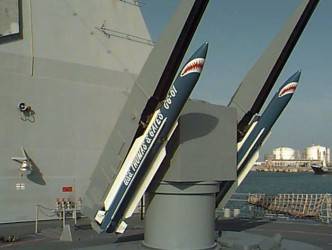
back to top go to the end of the pageAbout the Ship’s Name, about Thomas Sovereign Gates, Jr.:
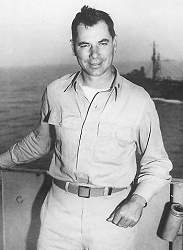 Thomas Sovereign Gates, Jr. was born in Philadelphia on 10 April 1906 to Thomas Sovereign and Marie Rogers Gates. His father was a lawyer and investment banker who served as President of the University of Pennsylvania from 1930 to 1944. His mother died when he was born. After graduating from Chestnut Hill Academy in 1924, Gates attended the University of Pennsylvania, where he was a Phi Beta Kappa member of the Class of 1928. On 29 September 1928, Gates married Millicent Anne Brengle of Philadelphia. Following graduation, Gates entered his father's investment banking business, Drexel and Co., and in 1940, became a partner. During those years he served in the Pennsylvania National Guard as a private.
A member of the U.S. Naval Reserve since 1935, Gates was called to World War II active duty in April 1942, and commissioned a Lieutenant. He graduated from the Quonset Point Air Intelligence School in Rhode Island and was assigned to the staff of the Commander in Chief, Atlantic Theater to help organize the Naval Air Intelligence Center under that Command. During this tour, he participated in the North African "Casablanca" landings as an observer in the aircraft carrier USS RANGER.
In the summer of 1943, Gates joined the new light carrier USS MONTEREY as Air Combat Intelligence Officer. As part of the Fast Carrier Task Force, Pacific Fleet, MONTEREY supported amphibious landings at Tarawa and Kwajalein, and participated in strikes against New Britain, New Guinea, and the Island of Truk. Gates returned to the United States in the early summer of 1944 to join the staff of Rear Admiral Calvin T. Durgin as Flag Lieutenant and Air Intelligence Officer, and participated in Operation DRAGOON, the planned invasion of Southern France.
Upon the successful completion of DRAGOON, Durgin's American carriers redeployed to the Pacific, where on the USS MAKIN ISLAND, Gates participated in the invasions of Lingayen, Iwo Jima, and Okinawa. For service in these operations, Gates received the Bronze Star Medal. After three additional months of combat operations in support of the Okinawa Invasion, Gates completed his service and arrived in San Francisco on V-J Day, where he reverted to the Naval Reserve with the rank of Commander.
Gates resumed civil life as a partner in Drexel and Co. in the fall of 1945, and shortly thereafter was elected a director of several corporations in the Philadelphia area. Continuing in the reserves, Gates was promoted to Captain and continued to take an interest in local reserve activities, being a founder of the "Reserve Officers of Naval Service." In addition to serving as National Vice President and Director of the Navy League of the United States, he served on the naval advisory council of the Bureau of Aeronautics, in Washington.
 In October of 1953, he accepted an appointment as Under Secretary of the Navy from President Dwight D. Eisenhower. Four years later, on 1 April 1957, Thomas S. Gates, Jr. assumed the Office of Secretary of the Navy. Admiral Arleigh Burke summed up Gates' time in the Navy Department when he told him "Your service was in an era marked by the most rapid technological changes in the history of the Navy." Missiles were replacing guns, nuclear power for conventional, jets replaced propellers, supersonic speeds, and even exploration into space, were part of the changing Navy. During that time, he participated in a re- organization of the Department, and delineated Navy-Marine Corps relationship to the satisfaction of both services.
In May of 1959, President Eisenhower asked Gates to become Deputy Secretary of Defense. He then succeeded Neil McElroy as Secretary of Defense in December of the same year. During his tenure as Secretary, Gates accomplished management innovations that facilitated the Pentagon's transition to modern weapons and tactics, including long- range ballistic missiles, supersonic jets and tactical atomic bombs. After 14 months as Secretary, Gates left the Pentagon. He was appointed President of Morgan Guaranty Trust, and in 1966 became Chairman of the Board and CEO.
In 1976, Gates was called back to government service when an old shipmate from the MONTEREY, President Gerald Ford, appointed him as head of the U.S. Liaison Office to the People's Republic of China. He relieved Vice President Bush when he took over the post in May 1976. Mr. Gates retired from public life, at the age of 71, in May of 1977.
Thomas S. Gates' service as Secretary of the Navy, Secretary of Defense, and the post with the U.S. Liaison Office to the People's Republic of China are represented by flags.
back to top go to the end of the page
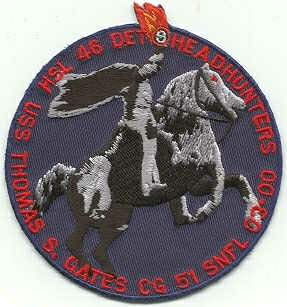
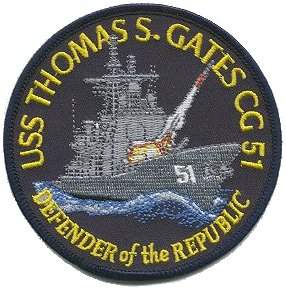
USS THOMAS S. GATES Patch Gallery:
 |  |
back to top go to the end of the page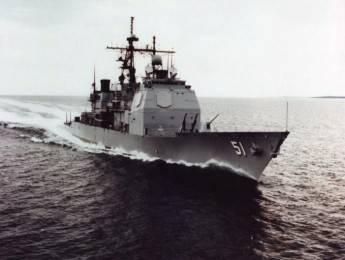
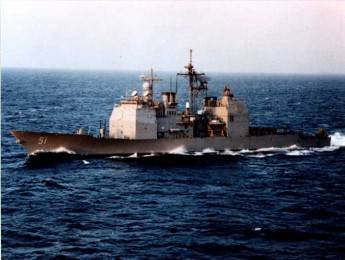
back to top go to the end of the pageHistory of USS THOMAS S. GATES:
USS THOMAS S. GATES was scheduled to become, in fall 1998, the first installation ship in the U.S. Navy's Integrated Ship Controls (ISC) Program. This upgrade program aimed to install innovative labor and cost savings initiatives on USS THOMAS S. GATES, USS TICONDEROGA (CG 47), USS VINCENNES (CG 49) and USS VALLEY FORGE (CG 50). Many of the technologies installed are the result of the initiatives proven sucessful on YORKTOWN (CG 48). The upgrade program also included options to install systems on the remaining 22 CG 47 Class AEGIS Cruisers.
During Operations Desert Shield/Storm, USS THOMAS S. GATES conducted operations in the Maritime Intercept Force, and under the command of Destroyer Squadron 36, the Red Sea escort cruiser played a decisive role in maritime interceptions.
USS THOMAS S. GATES deployed in late July 2000 to serve as the flagship for the North Atlantic Treaty Organization (NATO) Standing Naval Forces Atlantic (SNFL). The ship hosted an international professional naval staff made up of officers from Germany, Poland, Spain, Norway, the Netherlands, Great Britain and Canada. SNFL fills a very important role in the NATO military command structure. It is a permanently established multinational force which conducts routine presence and surveillance missions as well as providing a maritime Immediate Reaction Force. If needed, SNFL is prepared to deploy to crisis areas in support of NATO objectives. As STANAVFORLANT, the ship's first exercise was DANEX 2000.
Ship personnel were to also participate in cross-deck opportunities with the other NATO ships and, as well, have the opportunity to visit Finland, a non-NATO nation, and Poland. Ports visited during this deployment were Oslo, Norway; Helsinki, Finland; Copenhagen, Denmark; Gdynia, Poland; Rotterdam, Netherlands; Leith, Scotland; Plymouth, U.K.; Plymouth, U.K.; Brest, France; Santander, Spain.
back to top go to the end of the page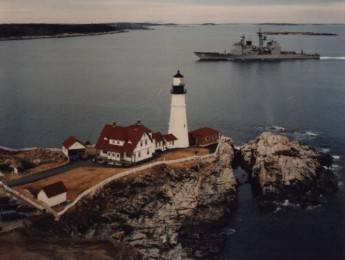
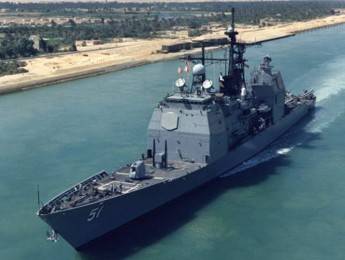
back to top go to the end of the pageUSS THOMAS S. GATES Image Gallery:
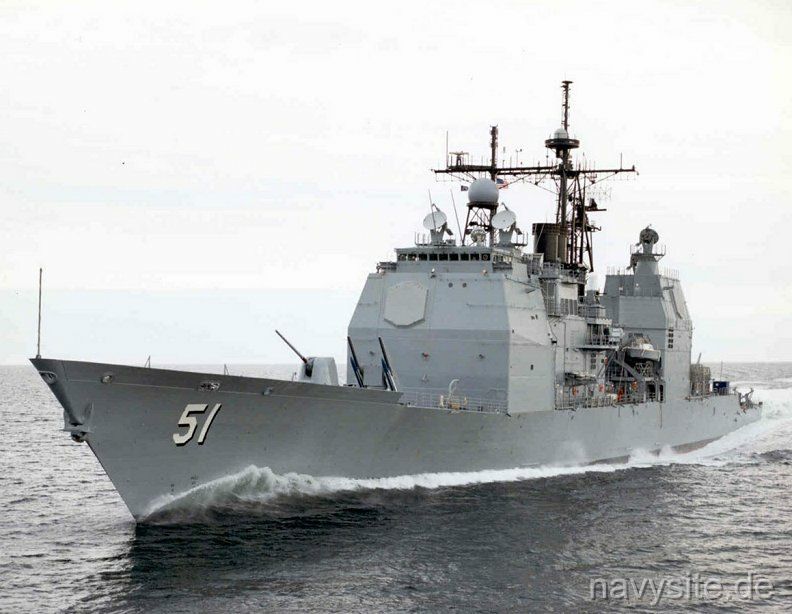 | 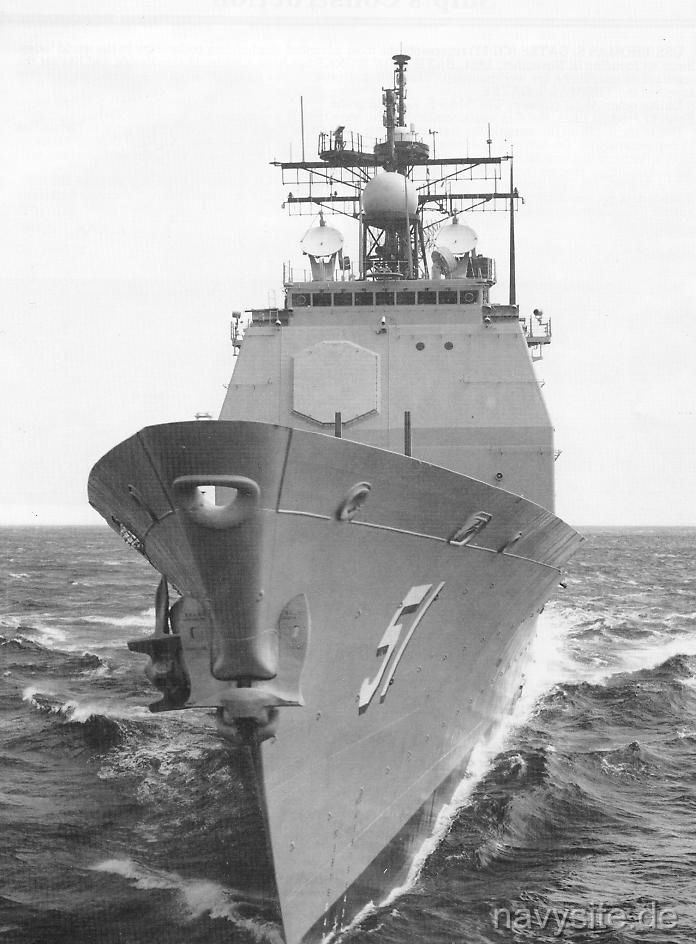 | 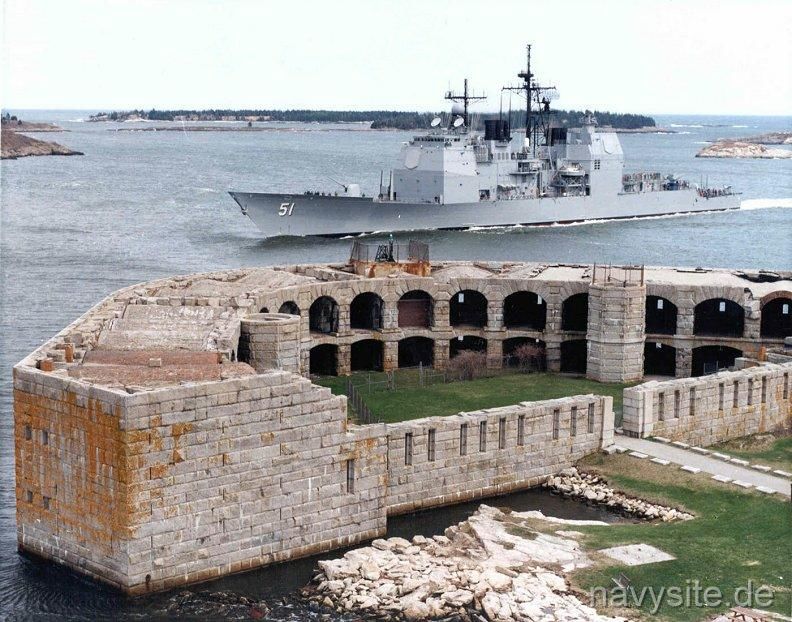 | 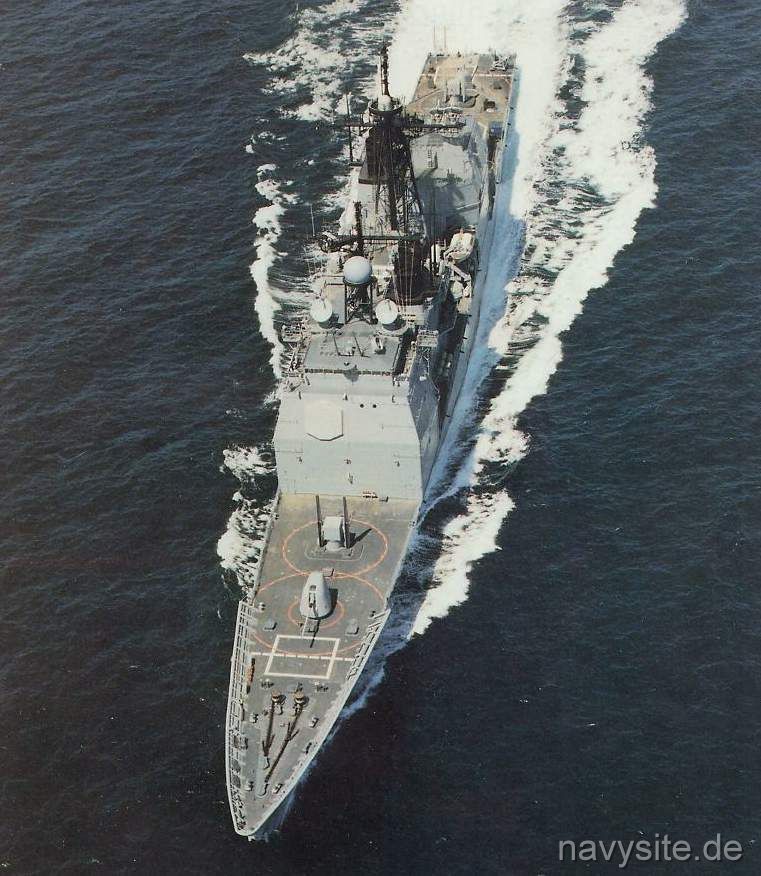 | 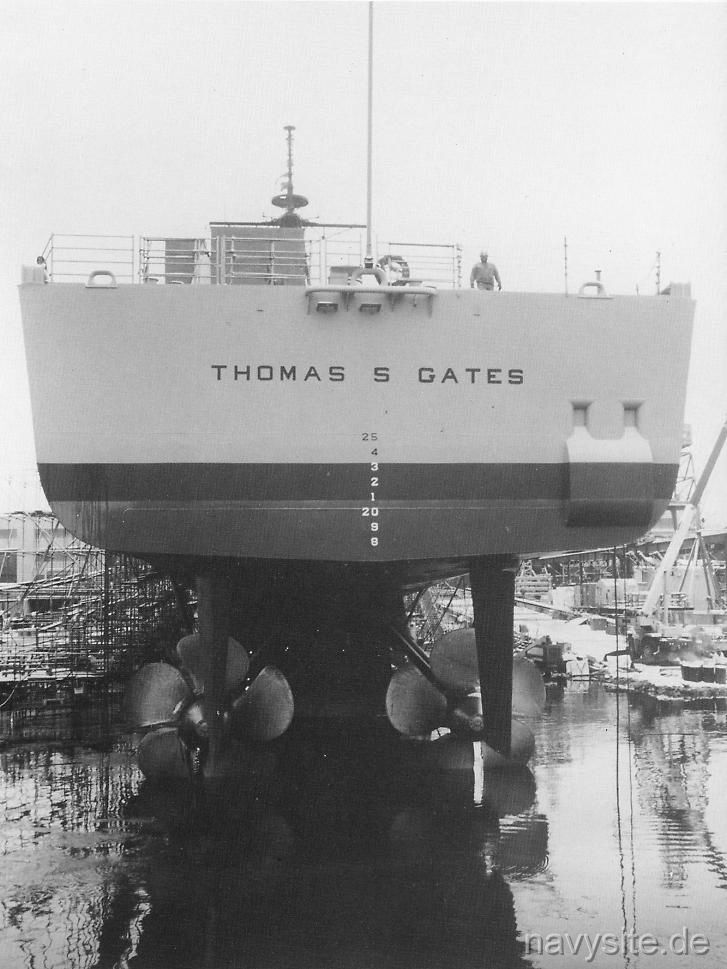 |
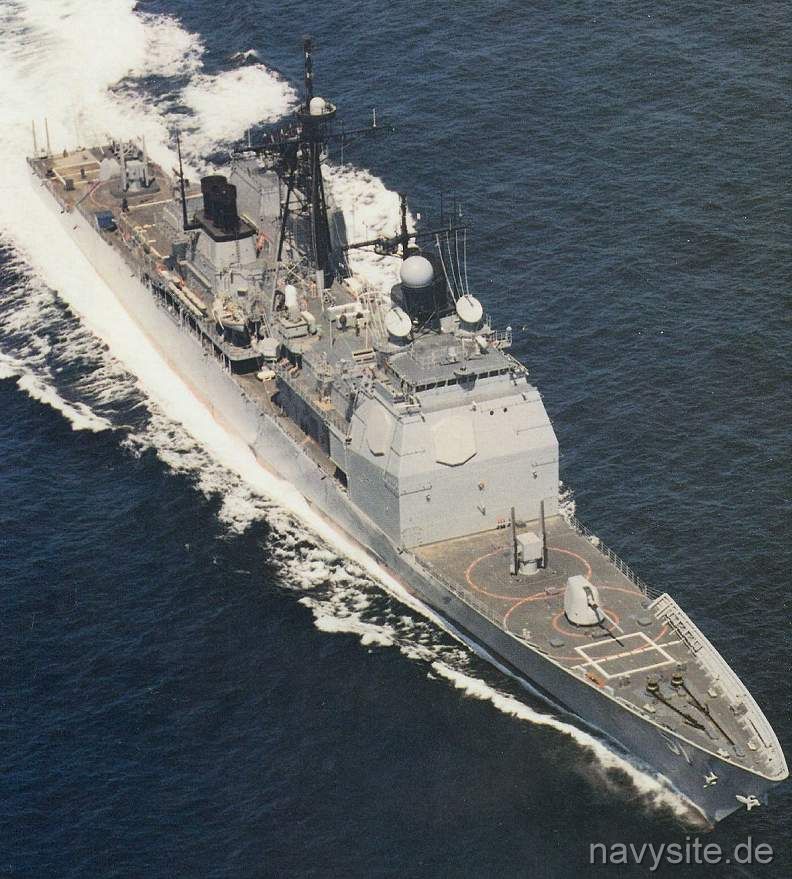 | 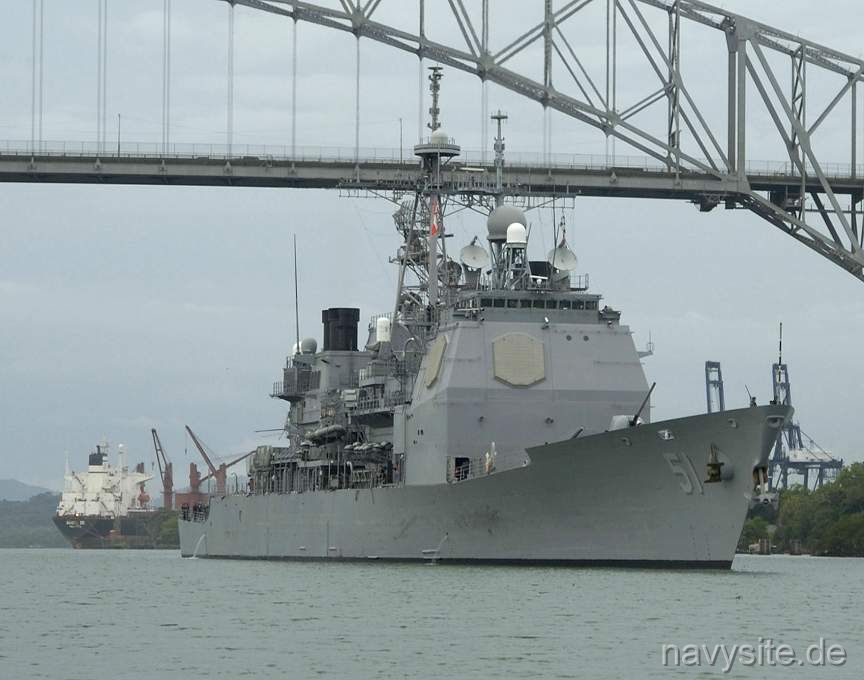 | 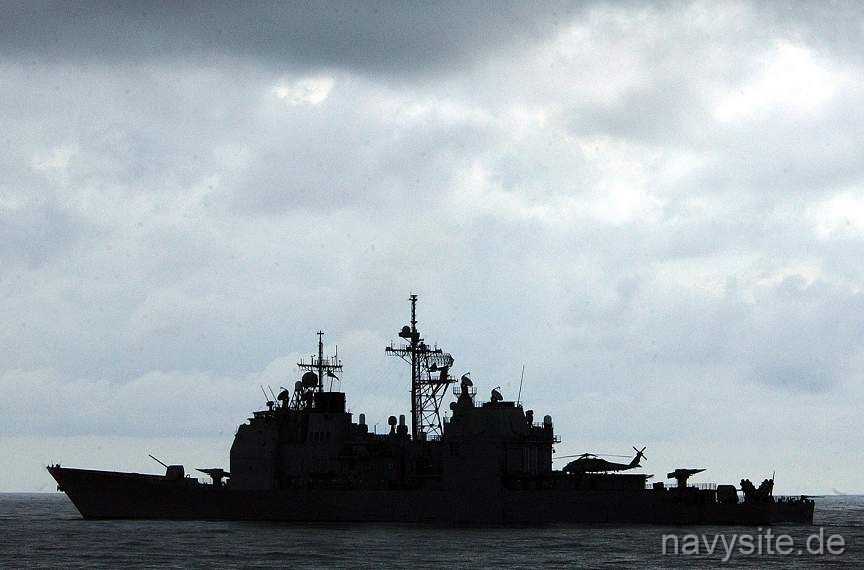 |  |
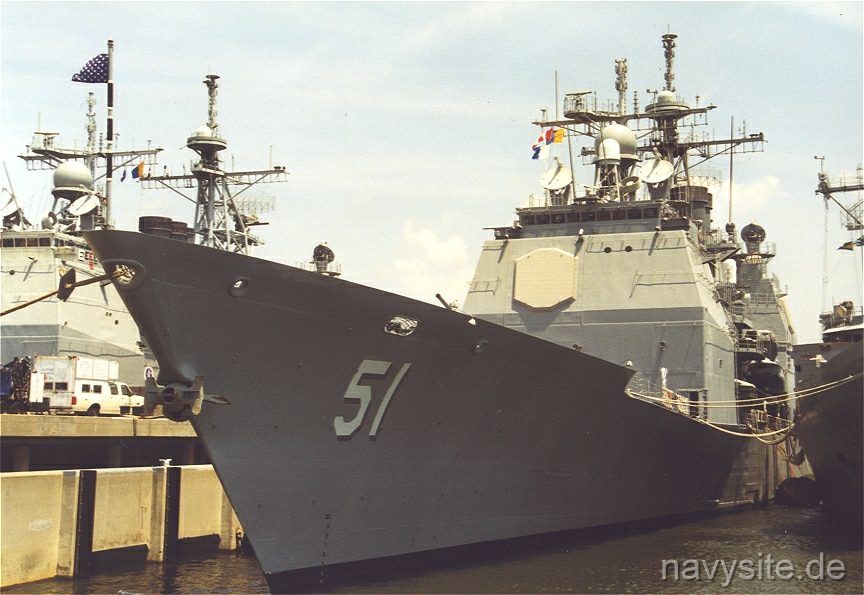
The photo below was taken by Karl-Heinz Ahles and shows the USS THOMAS S. GATES at Naval Station Pascagoula, Miss., on May 17, 1999.
 |
The photos below were taken by me on November 7, 2008, and show the THOMAS S. GATES laid up at the Philadelphia Naval Shipyard.
 |  |  | Click here to view more photos. | |
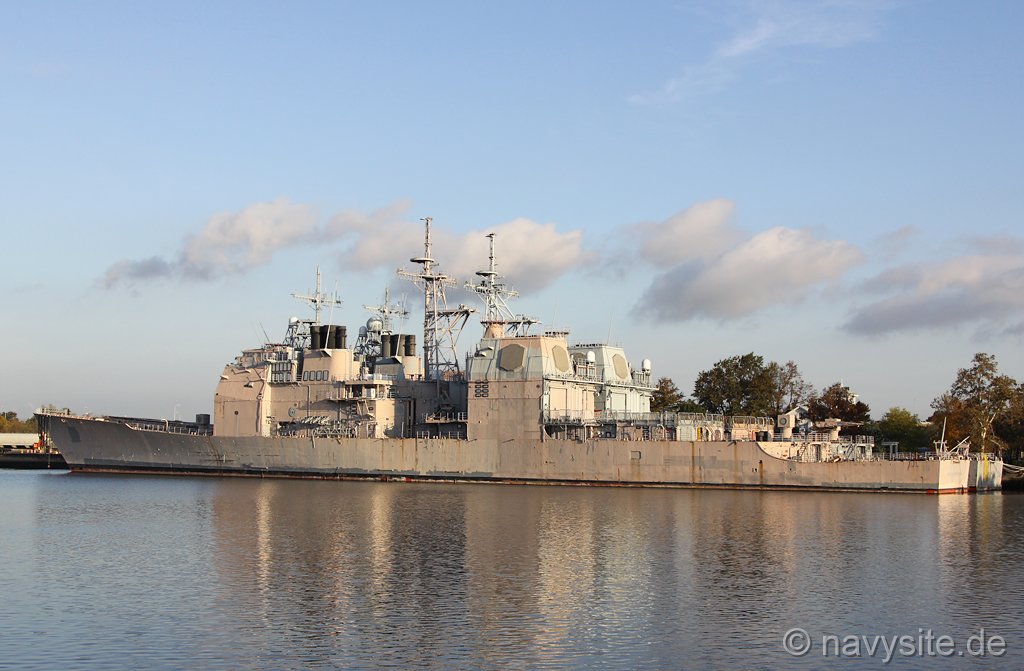
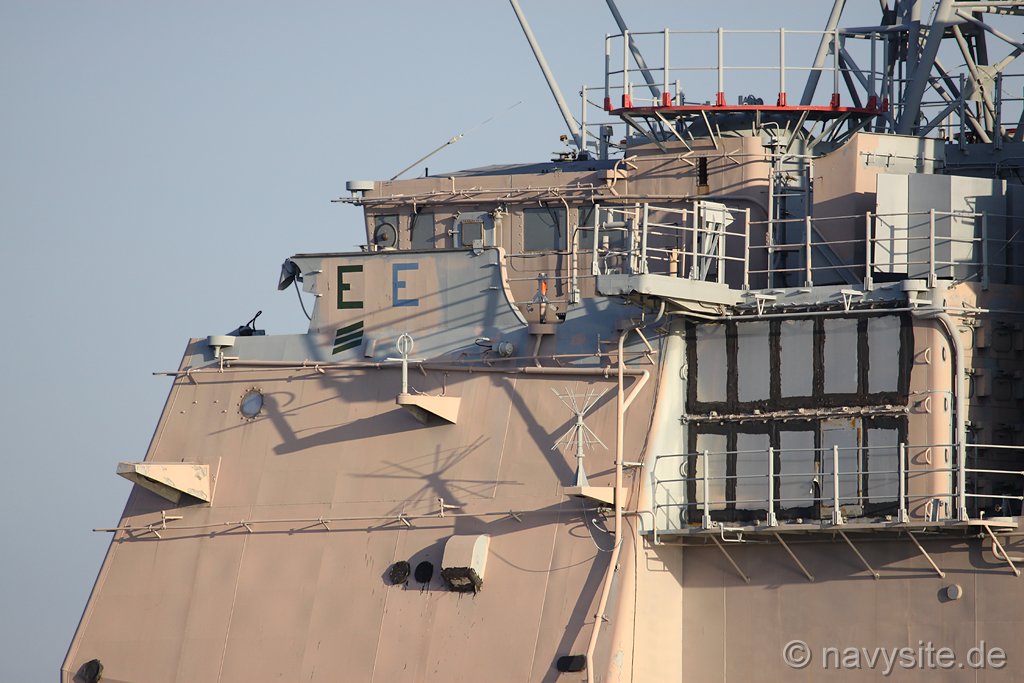
The photos below were taken by me on October 26, 2010, and show the THOMAS S. GATES still laid up at the Philadelphia Naval Shipyard.
 |  |  | Click here to view more photos. | |
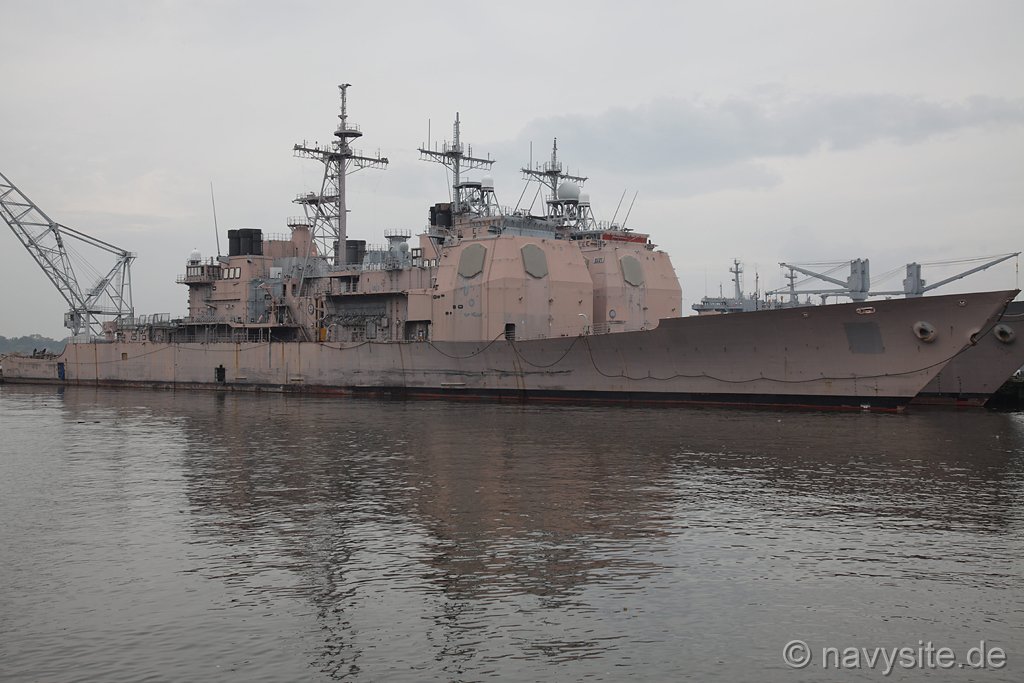
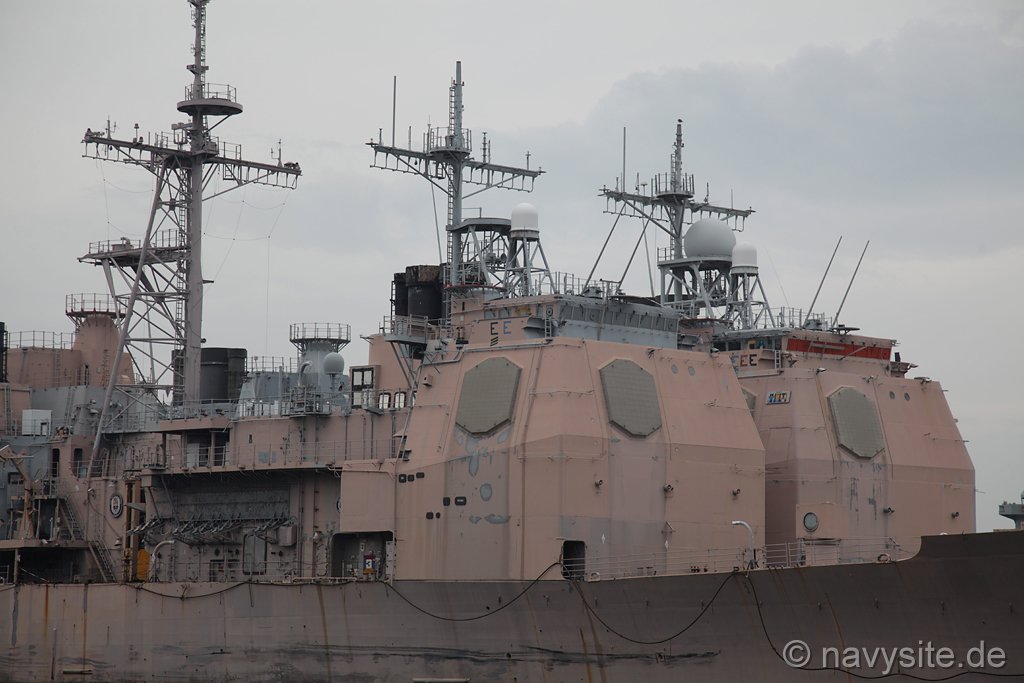
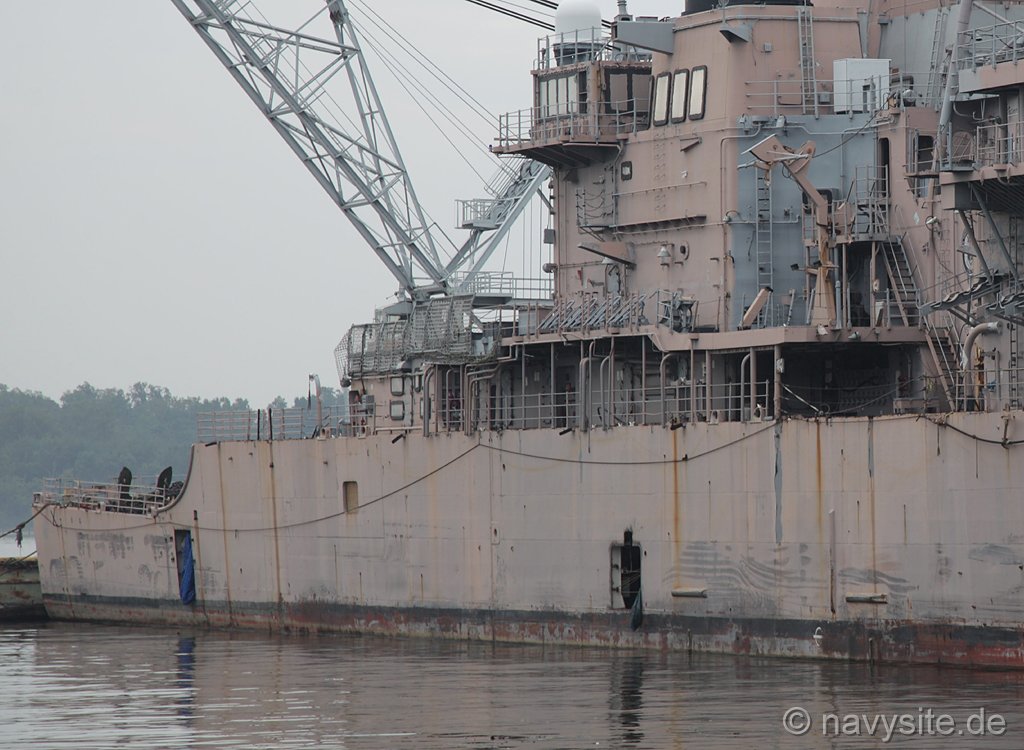
The photos below were taken by Michael Jenning on October 3, 2012, and show the THOMAS S. GATES laid up alongside her sistership YORKTOWN (CG 48) at the Philadelphia Naval Shipyard. Note the holes cut into the hull above the waterline.
 |  |  |
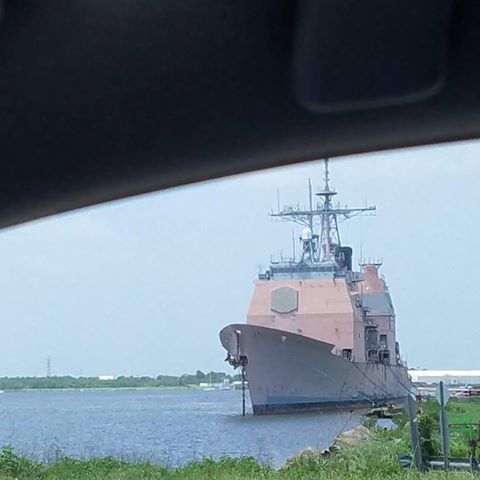
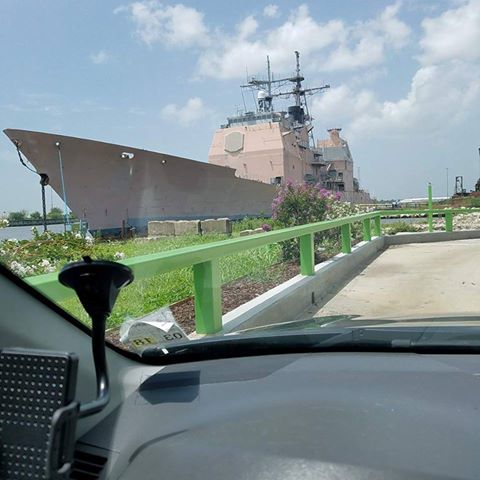
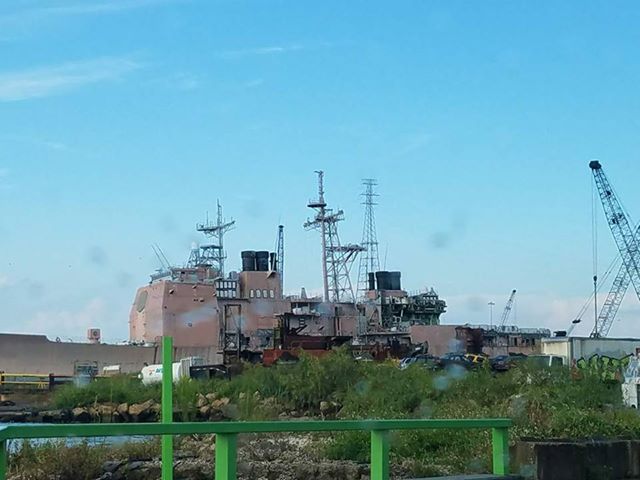
The photos below were taken by Harley Bodden and show the THOMAS S. GATES being scrapped near New Orleans, La. The photos were taken between July and November 2017.
 |  |  |  |  |
 |  |  |  |
back to top Back to Cruisers list. Back to ships list. Back to selection page. Back to 1st page.