Search the Site with 
General Characteristics Crew List Memorabilia Cruise Books Accidents aboard the Ship About the Ship's Name History Homeports of USS Simon Lake Image Gallery to end of page

USS Simon Lake (AS 33)

- decommissioned -


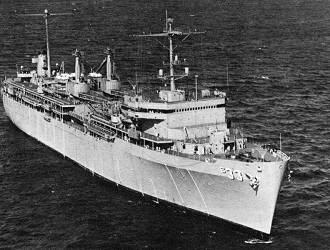
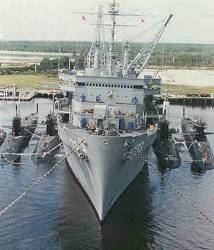
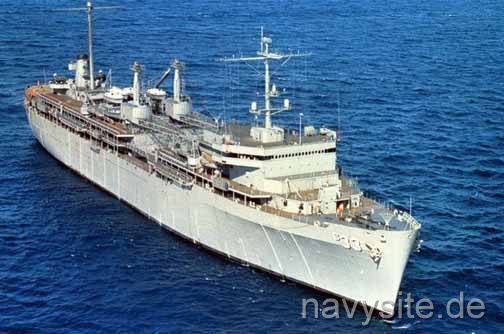
USS SIMON LAKE was the lead ship of the SIMON LAKE - class of submarine tenders and the first ship in the Navy named after Simon Lake who was a mechanical engineer and naval architect. He was the inventor of even-keel type submarines and built ARGONUT, in 1897, which was the first submarine to operate successfully in the open sea. He also invented submarine apparatus for locating and recovering sunken vessels and their cargoes, and a heavy-oil internal combustion engine for marine use. He died on 23 June 1945.

The USS SIMON LAKE served the Navy for 34 years until decommissioned on July 31, 1999. She was stricken from the Navy list on April 25, 2006. Initially laid up at Philadelphia, Penn., the SIMON LAKE was towed to Portsmouth, Va., for lay-up near the Norfolk Naval Shipyard in 2008. There she was decontaminated between 2011 and 2015. On December 3, 2015, the ship was towed to the James River Reserve Fleet site to await final disposal. Later sold for scrapping, the SIMON LAKE left Virginia under tow for Brownsville, Tx., on February 5, 2019, arriving there on February 27.

General Characteristics:Awarded: August 8, 1962
Keel laid: January 7, 1963
Launched: February 8, 1964
Commissioned: November 7, 1964
Decommissioned: July 31, 1999
Builder: Puget Sound Naval Shipyard, Bremerton, Wash.
Propulsion System: two boilers, steam turbines, one shaft
Propellers: one
Length: 643.7 feet (196.2 meters)
Beam: 85 feet (25.9 meters)
Draft: 30 feet (9.1 meters)
Displacement: approx. 20,000 tons
Speed: 18 knots
Armament: four 20mm guns
Crew: approx. 1,200


Back to topback to top  go to endgo to the end of the page


Back to topback to top  go to endgo to the end of the page

Crew List:

This section contains the names of sailors who served aboard USS SIMON LAKE. It is no official listing but contains the names of sailors who submitted their information.


back to top  go to the end of the page


Back to topback to top  go to endgo to the end of the page

USS SIMON LAKE Cruise Books:


Back to topback to top  go to endgo to the end of the page

Accidents aboard USS SIMON LAKE:


DateWhereEvents
May 1990Atlantic, off FranceWhile enroute to Brest, France, the USS SIMON LAKE is conducting Basic Engineering drills and is dead in the water during heavy seas. The ship is hit by a "rogue wave" and lists so badly, that equipment and desks are torn from their weldings. One female Seaman had to be medivac'd when the SIMON LAKE pulled into Brest the next day. There were other numerous minor injuries among the crew.
December 27, 1996La Maddalena, ItalyOne of SIMON LAKE's mooring chains breaks during a storm with 90 to 100 knot wind gusts resulting in SIMON LAKE hitting the USS JAMES K. POLK (SSN 645), a LCM and a YFNB. All involved vessels experienced some scrapes to their hulls. Additional damage was caused to the pier and a light pole.


Back to topback to top  go to endgo to the end of the page

About the Ship's Name:

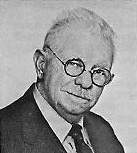
Simon Lake, born 4 September 1866, son of John Christopher Lake, an inventor and foundry owner, attended public schools in Philadelphia and Toms River, New Jersey and was graduated from the Clinton Liveral Institute at Fort Poain, New York. After a course in mechanical drawing he became a partner in his father's business.

Lake's main ambition since his childhood had been to build submarines for the United States Navy. His first submarine, ARGONAUT, was built in 1894. He was not a wealthy man and had a difficult time financing the building of this boat. Since the submarine was still considered experimental, the United States Government held trials to see if the Lake submarine or that of his rival inventor Holland was to be adopted. Neither was considered satisfactory at that time and Lake's much improved submarine PROTECTOR was built in 1901. PROTECTOR was the first successfully tested even-keeled submarine.

American naval authorities were slow in considering PROTECTOR and she was sold to Russia. Lake spent the next seven years in Europe where he advised on submarine construction as well as designing and building. On return to the United States he founded the Lake Torpedo Boat Company which built submarines for both the Austrian and American Governments. His first submarine for the United States Navy was USS G-1 constructed at the Newport News Shipbuilding and Dry Dock Company under a subcontract from the Lake Torpedo Boat Company. Commissioned on 28 October 1912, the G-1 set a record by submerging to the depth to 256 feet. Soon the United States Government adopted the Lake type of submarine to be built in its Navy yards under royalty to the Lake company. There was universal recognition of the efficiency of his underseas craft and his influence on designs of the United States Navy submarines has endured over the years to reach the era of atomic and hydrodynamic design.

Simon Lake's interest was not in the military uses of underwater craft, but rather, throughout his life he attempted to convince the world of the commercial and peaceful uses of the submarine. Although his boyhood dream never came true he went on to make many significant salvage and marine inventions and served in an advisory capacity during World War II. As the inventor of the first even-keeled submarine, Simon Lake was one of the greatest factors in the development of the submarine and, before his death, 23 June 1945, he had seen many of his early visions become reality.


Back to topback to top  go to endgo to the end of the page

USS SIMON LAKE History:

USS SIMON LAKE was conceived at the height of the Polaris ballistic-missile submarine program as a large, seagoing maintenance and logistics base able to keep a full squadron of nuclear submarines on patrol far from the United States. She was ordered on August 8, 1962, and laid down at Puget Sound Naval Shipyard in Bremerton, Washington, on January 7, 1963. Launched on February 8, 1964, she was sponsored by Simon Lake's daughters, Mrs. Cecil Ford and Mrs. Herbert Diamond, and commissioned at Bremerton on November 7, 1964, as the lead ship of a new class of submarine tenders.

Following fitting out on the U.S. Pacific coast, USS SIMON LAKE began her shakedown period early in 1965. On January 16, 1965, she left Bremerton for Pearl Harbor, where she carried out trials and training as a brand-new Polaris submarine tender. She returned to Bremerton on February 17, 1965, and entered a roughly six-week post-shakedown availability to correct defects and finalize equipment. On April 16, 1965, the ship sailed again from Bremerton, transiting the Panama Canal and joining the Atlantic Fleet. On May 1, 1965, she arrived at Charleston, South Carolina, where she began work as tender to the local submarine squadron, supporting both attack submarines and the growing ballistic-missile force that underpinned the United States' nuclear deterrent.

From May 1965 until July 1966, USS SIMON LAKE operated out of Charleston. In this period, she functioned as a pier-side industrial complex: repairing propulsion and auxiliary machinery, maintaining electronics and sonar systems, handling torpedoes and Polaris missiles, and serving as administrative and supply hub for the submarines alongside. Public sources do not list individual refits in detail, but her assignment to the Charleston squadron and her specialized missile-handling facilities make clear that she was fully integrated into the Polaris deterrent cycle, turning around boats between patrols while also caring for conventional attack submarines assigned to the Atlantic Fleet.

On July 11, 1966, USS SIMON LAKE left Charleston for Holy Loch, on the Clyde estuary in Scotland, which since 1961 had been the principal forward base for U.S. Polaris submarines in the eastern Atlantic. On arrival, she relieved USS HUNLEY (AS 31) as primary tender for Submarine Squadron 14 at "Site One", taking over responsibility for keeping the squadron's ballistic-missile submarines at sea in the Greenland-Iceland-UK gap and beyond. For nearly four years, until May 24, 1970, she remained anchored at Holy Loch, continuously tending a rotation of Polaris-armed submarines that came alongside for refit, upkeep, and missile or torpedo loading, while also supporting associated small craft and service vessels assigned to the base. Holy Loch was one of the most visible manifestations of U.S. strategic presence in Europe, and USS SIMON LAKE's long tenure there placed her at the center of NATO's sea-based nuclear deterrent in the North Atlantic. She was relieved in turn by USS CANOPUS (AS 34) on May 24, 1970, and departed Scotland for the United States.

In June 1970, the tender proceeded back to Puget Sound Naval Shipyard for her first major overhaul since commissioning. From July 6, 1970 until March 1971, she remained in the Bremerton yard. During this period, her missile magazines, handling gear and supporting systems were modified to support the newer UGM-73 Poseidon C-3 missile, which was beginning to replace Polaris in the U.S. fleet. This conversion involved significant changes in weapons-handling equipment and electronics, preparing USS SIMON LAKE to support Poseidon-converted submarines on forward deployments during the 1970s.

USS SIMON LAKE left Bremerton in early 1971 and returned to Charleston, arriving on April 3, 1971. From the spring of 1971 until November 19, 1972, she again served as the primary submarine tender in Charleston, supporting attack and ballistic-missile submarines as Poseidon conversions progressed across the fleet. On November 19, 1972, she sailed from Charleston for Rota, Spain, and in December 1972 she relieved USS HOLLAND (AS 32) there for what would become a roughly four-year homeport assignment. Operating from Naval Station Rota, USS SIMON LAKE served as tender to Submarine Squadron 16, the Atlantic fleet ballistic-missile squadron based in Spain, tightening the U.S. strategic link to NATO's southern flank while providing maintenance and logistics support to Poseidon-armed submarines conducting deterrent patrols in the North Atlantic and Mediterranean.

The Rota tour coincided with an intense period of Cold War at sea. Through the mid-1970s, USS SIMON LAKE kept squadron submarines on patrol through a continuous cycle of refits, repair work, and weapons handling at the Spanish base, while her crew also participated in fleet exercises and NATO port visits around the region. Her performance in this era was recognized with both a Navy "E" Ribbon for overall battle efficiency and a Meritorious Unit Commendation covering July 1, 1975 to late 1976, reflecting sustained readiness in support of forward-deployed strategic forces.

In January 1977, USS SIMON LAKE left Rota and headed to Charleston Naval Shipyard for a "complex overhaul". Entering one of the yard's large dry docks, she underwent an extensive modernization that lasted more than a year. Hull and machinery received major refurbishment, and her heavy ballistic-missile cranes were overhauled and load-tested. When the dry dock was finally flooded and she returned to the water, the tender conducted a shakedown cruise to verify the yard work before returning to full service. After this modernization she again relieved USS HUNLEY as resident tender at Charleston, continuing her long association with that port.

The political decision to withdraw the U.S. ballistic-missile submarine squadron from Spain led directly to USS SIMON LAKE's next major move. In mid-1979, the tender USS CANOPUS departed Rota to relieve her at Naval Weapons Station Charleston, allowing USS SIMON LAKE to shift further south. On July 2, 1979, with Commander, Submarine Squadron 16 embarked, she arrived at the newly established refit site at Kings Bay, Georgia, formally activating the base as a forward operating point for Poseidon and the emerging Trident force. Four days later, the ballistic-missile submarine USS JAMES MONROE (SSBN 622) moored alongside to begin the first refit there, marking the start of Kings Bay's long role as a strategic submarine base.

From 1979 to 1985, USS SIMON LAKE formed the backbone of Kings Bay's early operations. She was the first submarine tender to be permanently stationed at the base and, significantly, the first tender on the U.S. east coast to have women assigned to the crew, reflecting broader social changes in the Navy. As the Navy introduced Trident C-4 missiles and the first OHIO-class submarines, the tender was further upgraded: by 1978-1979 she had been modified to support Trident systems and became the first tender certified to handle the new missile, later earning distinction in 1981 as the first to off-load a damaged Trident missile from a submarine launch tube. Her day-to-day work consisted of intensive mechanical, electrical and weapons maintenance to keep the squadron's ballistic-missile submarines ready for patrol, while also supporting visiting attack submarines and surface ships. For this performance, she received Battle Efficiency "E" awards in the early 1980s and a Meritorious Unit Commendation for the period 1980-1984.

The new capabilities were captured in contemporary imagery and exercises. On October 2, 1981, for example, the fleet ballistic-missile submarine USS FRANCIS SCOTT KEY (SSBN 657) was photographed alongside USS SIMON LAKE at Kings Bay taking on Trident C-4 missiles from the tender's heavy cranes, a typical evolution for the Kings Bay site during this period.

In August-September 1985, USS SIMON LAKE left Kings Bay for Ingalls Shipbuilding in Pascagoula, Mississippi, for another major overhaul. There, she underwent a "stem-to-stern" renewal: hull and superstructure were blasted to bare metal and repainted, the helicopter deck was replaced, the older 3-inch/50 gun mounts were repaired, and new 25 mm Mk 38 chain-gun mounts and additional small-caliber weapons were installed to bring her defensive armament up to contemporary standards. After her refit, she was relaunched in September 1986, conducted a short shakedown deployment to Guantanamo Bay, Cuba, and in December 1986 returned to Charleston for a brief logistics stop. During the mid-1980s, she also operated in the Caribbean. In 1986, she rescued 13 Haitian refugees from a disabled motor vessel off the coast of Cuba, an event noted in U.S. Navy historical evaluations of the ship.

In May 1987, the tender once again crossed the Atlantic to Holy Loch, returning to a base she had last left in 1970. There, she relieved USS HUNLEY yet again as the primary tender for Submarine Squadron 14. From 1987 until early 1992, USS SIMON LAKE formed the heart of the last U.S. ballistic-missile submarine support complex in Scotland, this time in the final years of the Cold War and its immediate aftermath. She won additional Battle Efficiency "E" awards in 1988 and 1991 and several Meritorious Unit Commendations tied to the performance of Submarine Squadron 14 and the Holy Loch support community, reflecting the high operational tempo and standards maintained even as global tensions began to ease.

Life at Holy Loch in this period remained demanding. USS SIMON LAKE reportedly spent on the order of 350 days per year at sea or on station, supporting a steady queue of ballistic-missile submarines while also acting as a host and repair platform for visiting units. In May 1990, while en route to Brest, France and temporarily dead in the water during heavy-weather engineering drills in the Atlantic, she was struck by a powerful "rogue wave" that caused a severe roll, ripping equipment and furniture from their foundations. The following day, after arriving in Brest, one injured female seaman was medically evacuated ashore and numerous other minor injuries were treated, but the ship remained operational.

The end of the Holy Loch base came quickly after the Cold War. In early 1992, the U.S. Navy decided to close the Scottish facility and withdraw all assets. USS SIMON LAKE remained on station until March 1992, serving as the last U.S. submarine tender at Holy Loch and, symbolically, marking the end of three decades of Polaris/Poseidon forward basing there. Departing Scotland, she participated in the large NATO exercise Teamwork '92 in the Norwegian Sea and North Atlantic. During this deployment, she entered Trondheim, Norway, where she carried out repair work on the tank landing ship USS LA MOURE COUNTY (LST 1194), demonstrating the utility of a submarine tender's repair facilities even for surface units. After leaving Trondheim, she crossed the Arctic Circle - an event marked on board by the traditional "Order of the Blue Nose" ceremony - and then made a port call at Halifax, Nova Scotia, before returning to Norfolk, Virginia, to begin a lengthy conversion.

Back in the United States, USS SIMON LAKE entered an extensive overhaul at Norfolk Naval Shipyard in 1992-1993. In line with evolving force structure after the Cold War, the ship was converted from a ballistic-missile submarine tender into an attack-submarine tender, optimized to support LOS ANGELES-class attack submarines rather than fleet ballistic-missile boats. Missile-related spaces were reconfigured, and maintenance facilities were adapted to the needs of fast-attack submarines and their more varied deployments. When work was complete she carried out post-overhaul trials and, in March 1993, visited Palma, Spain, before proceeding to her new forward homeport.

In March 1993, USS SIMON LAKE arrived at La Maddalena, a small island off Sardinia, Italy, and relieved USS ORION (AS 18) as the permanently assigned tender supporting U.S. Sixth Fleet submarines in the Mediterranean. From this base, she provided repair, weapons, and logistics support to attack submarines and visiting surface ships throughout the region, working closely with Submarine Group 8 and the Sixth Fleet Battle Force. For her performance between July 7, 1993 and August 31, 1994, she received a Battle Efficiency "E", a Weapons "Black W", and a Meritorious Unit Commendation, and she also earned an Armed Forces Service Medal covering operations from 1993 to 1997, reflecting a period of sustained high-tempo deployments in support of post-Cold War crisis-response and presence missions.

Throughout the mid-1990s, USS SIMON LAKE's crews maintained a demanding schedule. According to later summaries, over more than 20 years of forward deployment she averaged about 45 submarine and surface-ship availabilities per year - more than 5,000 major repair jobs annually - and completed nearly 100 foreign port visits during her career, acting both as a repair ship and as a visible symbol of U.S. presence in European and Mediterranean ports. In the La Maddalena years, she regularly hosted visiting U.S. attack submarines and surface combatants and participated in Sixth Fleet exercises and goodwill visits around the Mediterranean.

In March 1998, the tender left the Mediterranean for one of her most distant operations. Transiting the Suez Canal, she deployed to the Arabian Gulf region to support Operation Southern Watch, the long-running U.S. and coalition enforcement of no-fly zones over southern Iraq. Operating from ports in the United Arab Emirates and surrounding waters, USS SIMON LAKE provided repair and logistics support during 47 ship availabilities in this period. For this deployment, she received a Navy Unit Commendation and an Armed Forces Expeditionary Medal. In June 1998, she returned to La Maddalena to resume her regular Mediterranean duties.

Her final years in service were marked by a concentration of awards that reflected both her technical standards and her role in fleet readiness. In 1997 and 1998, USS SIMON LAKE again earned the Battle Efficiency "E", received the Chief of Naval Operations Safety Award and the Golden Anchor award for excellence in personnel retention, and was nominated for the Secretary of Defense Maintenance Award. She also became the first surface ship authorized to fly both the Enlisted Surface Warfare and Surface Warfare Officer qualification pennants, underscoring the high proportion of warfare-qualified personnel in her crew.

In May 1999, her long Mediterranean chapter closed. At La Maddalena, USS EMORY S. LAND (AS 39) arrived to relieve her as the local submarine tender, and on May 11, 1999, USS SIMON LAKE departed her Italian homeport for the last time, crossing the Atlantic to Norfolk, Virginia. After more than three decades of continuous service, largely forward-deployed in Europe, she was decommissioned at Norfolk on July 31, 1999, and officially inactivated on June 25, 1999. She was struck from the Naval Vessel Register on April 25, 2006.

Post-service, the ship remained an element of the inactive fleet for almost twenty more years. Initially laid up at Philadelphia, Pennsylvania, she was towed in 2008 to lay-up berths near Norfolk Naval Shipyard in Portsmouth, Virginia. There, she underwent decontamination and deactivation work between 2011 and 2015. On February 5, 2015, she departed Norfolk Naval Shipyard and later that year, on December 3, 2015, was placed in the James River Reserve Fleet near Fort Eustis as part of the National Defense Reserve Fleet, where she lay moored among other retired ships.

Eventually sold for scrapping, SIMON LAKE left Virginia under tow on February 5, 2019, bound for the recycling facilities at Brownsville, Texas. She arrived there on February 27, 2019, ending a career that had begun with Polaris in the 1960s and finished in the post-Cold War era. In more than three decades of active service she had supported generations of ballistic-missile and attack submarines, transitioned from Polaris to Poseidon to Trident, and shifted from strategic deterrence to versatile attack-submarine and theater operations, while also acting as a long-term forward presence in Holy Loch, Rota, Kings Bay and La Maddalena.


Back to topback to top  go to endgo to the end of the page

Homeports of USS SIMON LAKE:

PeriodHomeport
commissioned at Bremerton, WA.
1965 - 1966Charleston, SC.
1966 - 1970Holy Loch, Scotland
overhaul at Bremerton, WA., 1970-71
1971 - 1972Charleston, SC.
1972 - 1977Rota, Spain
1977 - 1979Charleston, SC.
1979 - 1985Kings Bay, GA.
overhaul at Pascagoula, MS., 1985-86
1987 - 1992Holy Loch, Scotland
overhaul at Norfolk, VA., 1992-93
1993 - 1999La Maddalena, Italy


Back to topback to top  go to endgo to the end of the page


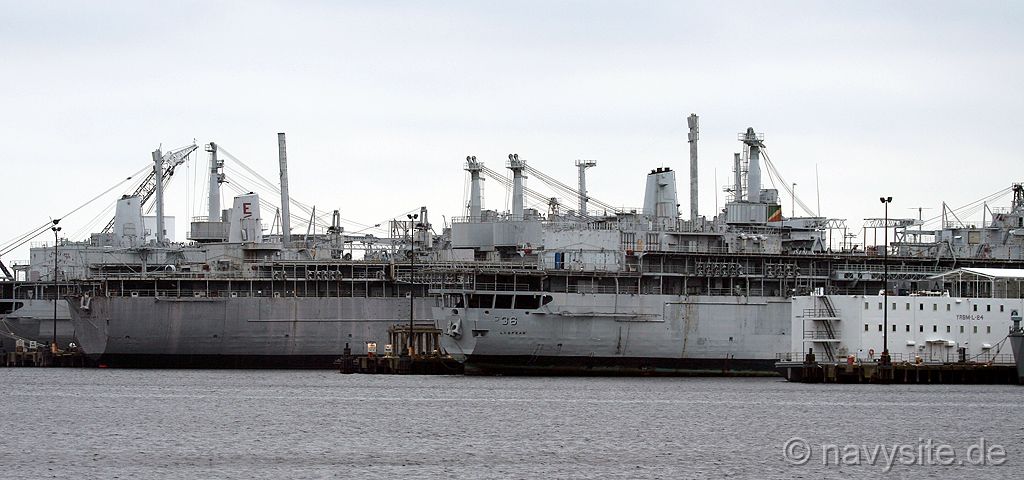
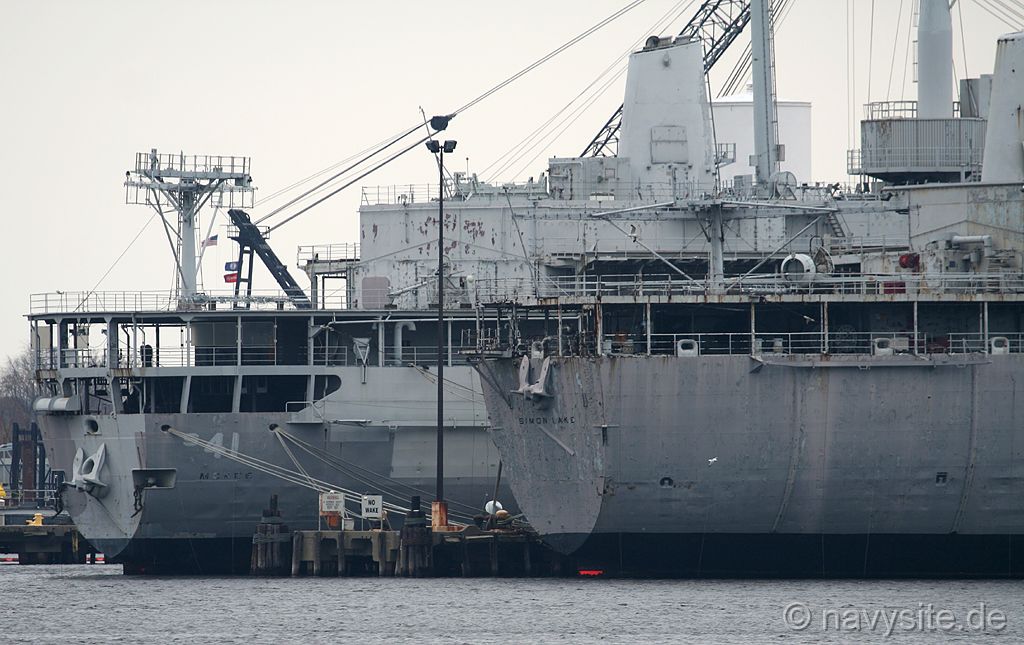
The photos below were taken by me and show the SIMON LAKE laid up at Norfolk, Va. The photos were taken on February 3, 2009. The SIMON LAKE is laid-up between the L. Y. SPEAR (AS 36) and the McKEE (AS 41).


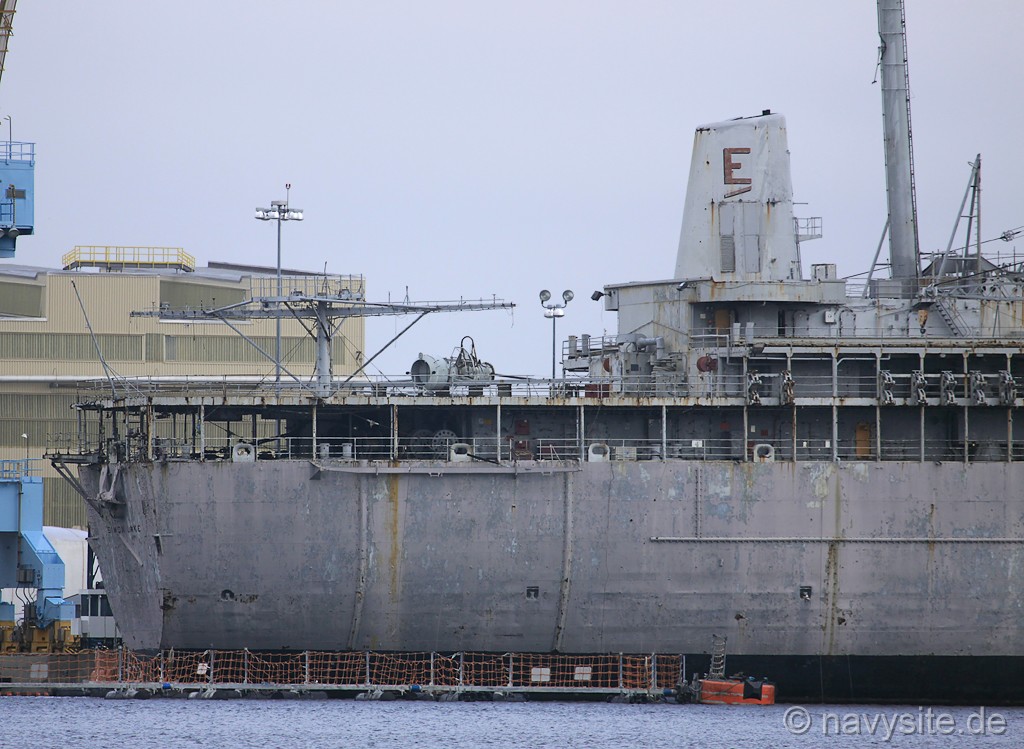
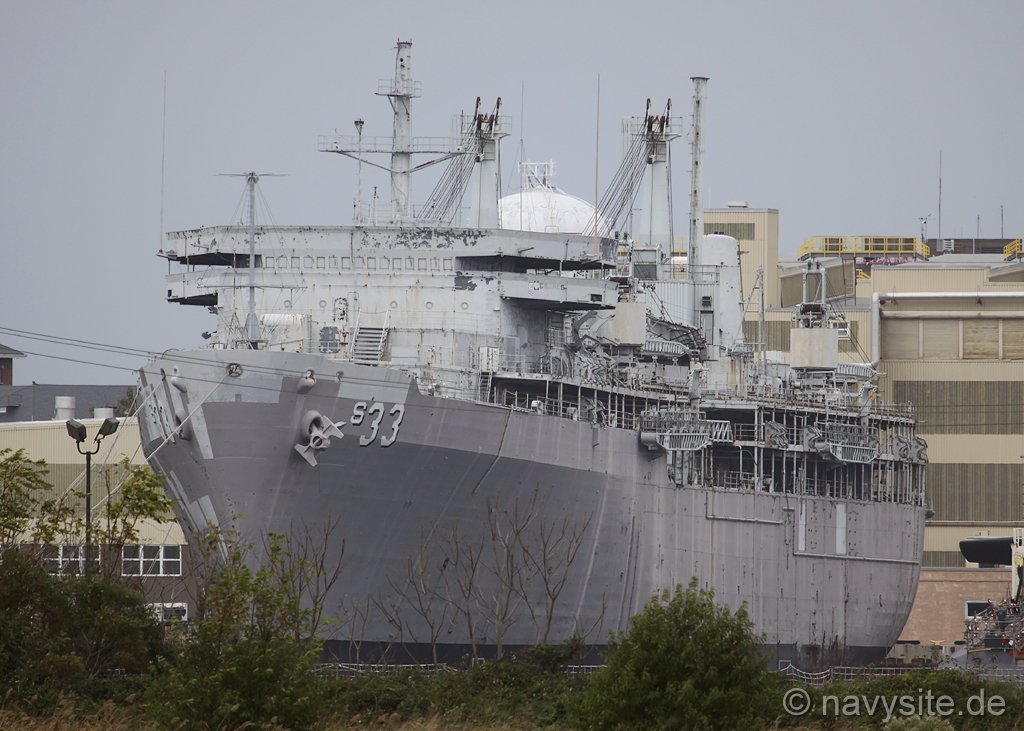
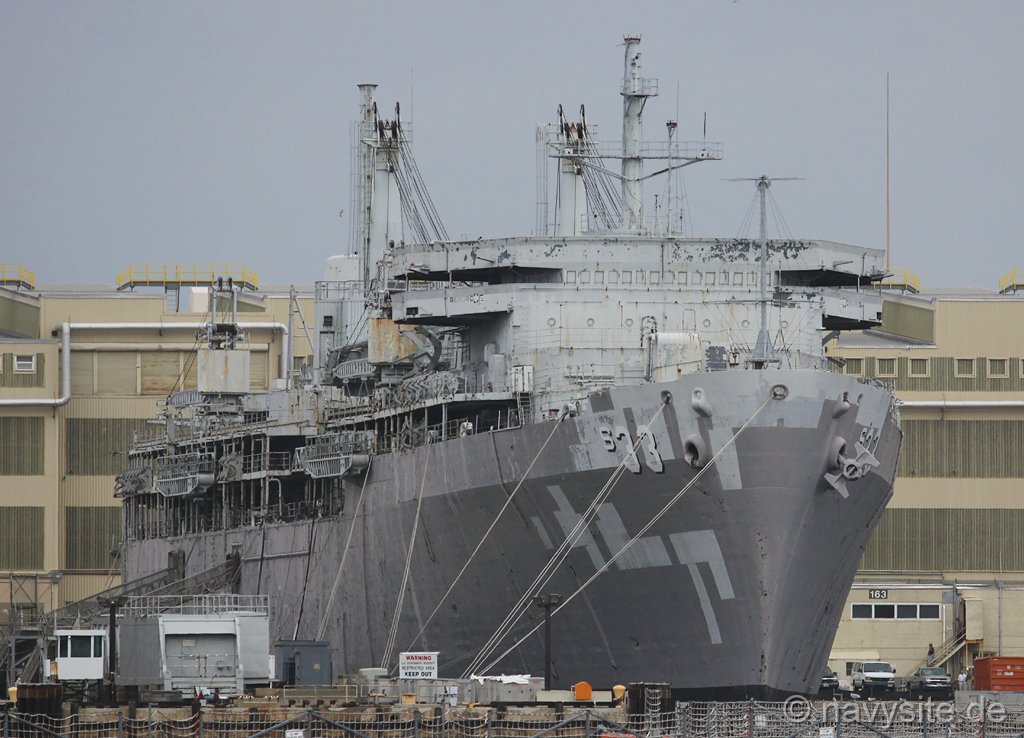
The photos below were taken by me and show the SIMON LAKE still laid up at Norfolk, Va. She has been moved a bit closer to the Norfolk Naval Shipyard compared to the photos above. The photos were taken on October 27, 2010.


The photos below were taken by me and show the SIMON LAKE still laid up at Norfolk, Va., on May 6, 2012.
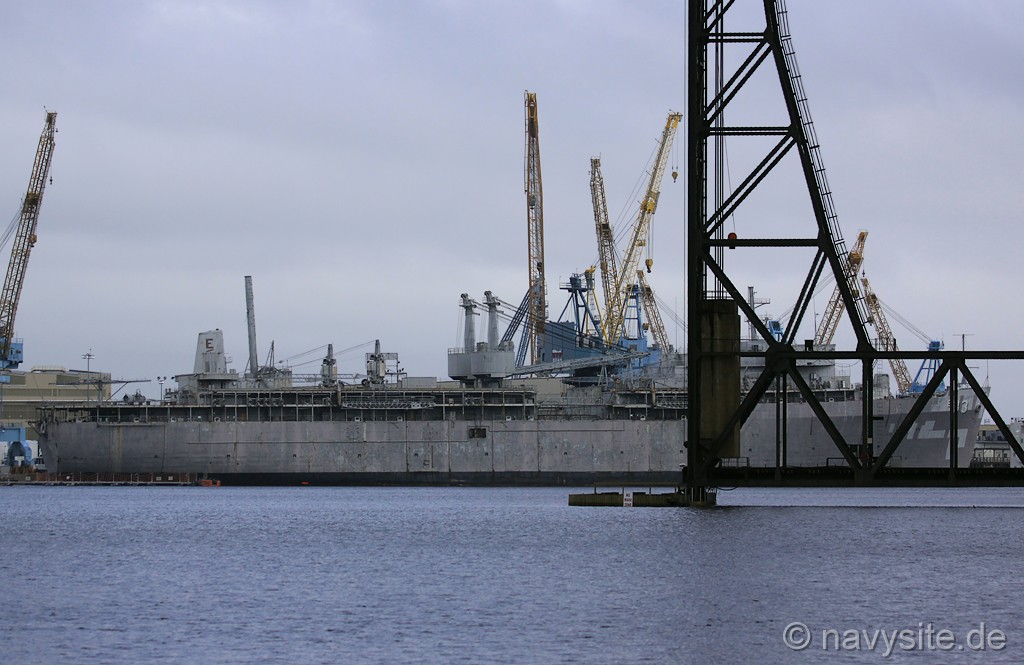
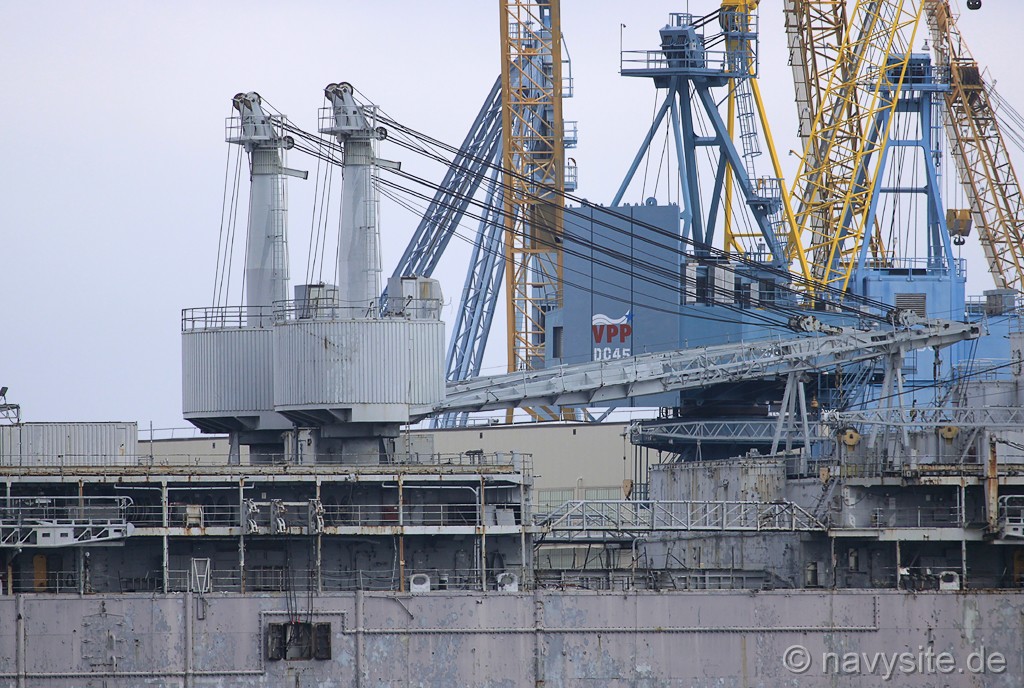


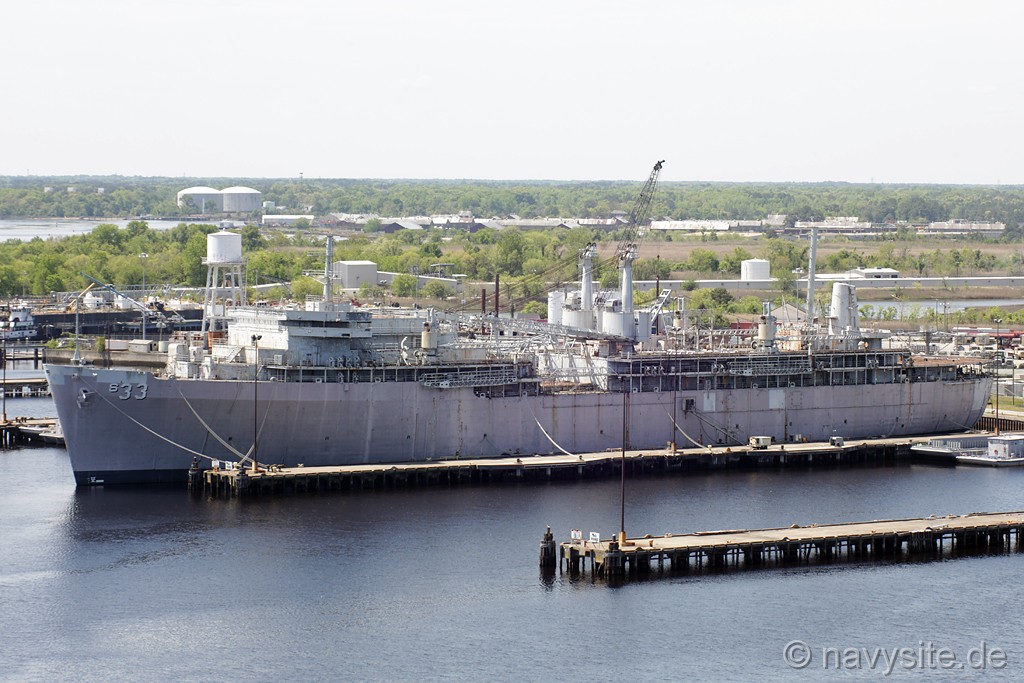
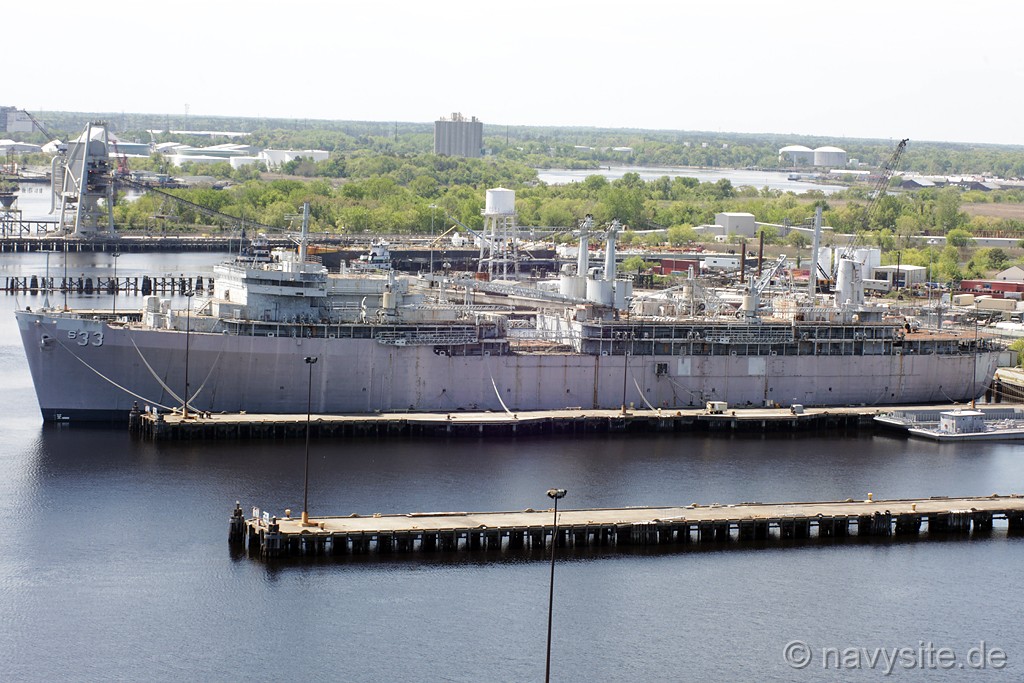
The photos below were taken by Michael Jenning and show the SIMON LAKE still laid up at Norfolk, Va., on April 29, 2015.
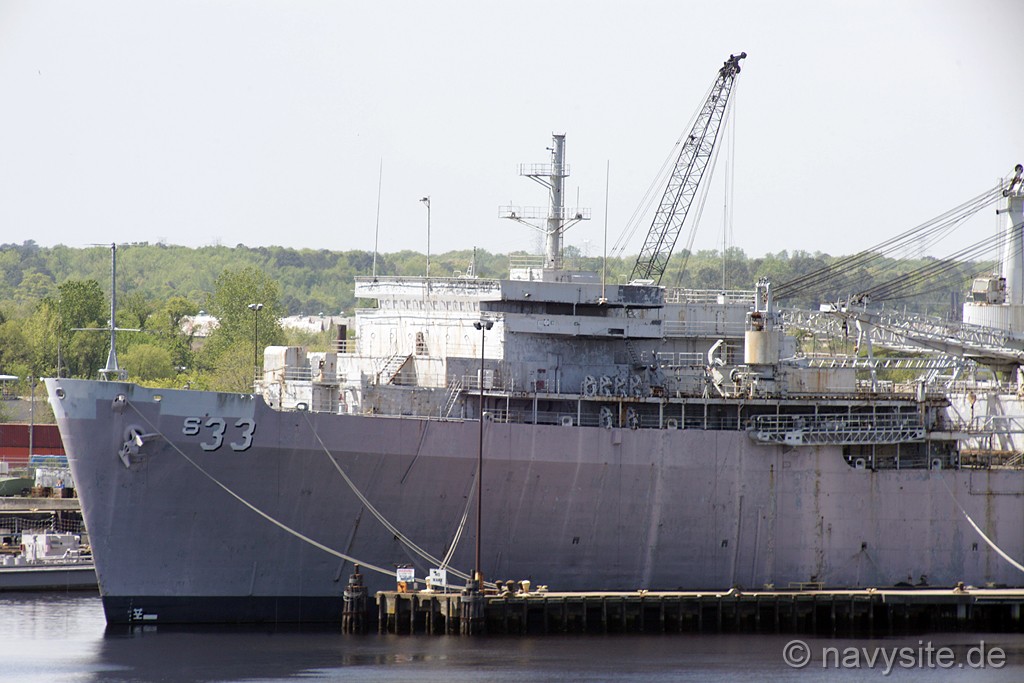


Back to topback to top


Back to Submarine Tenders list. Back to Ships list. Back to selection page. Back to 1st page.