Search the Site with 
General Characteristics Crew List Memorabilia About the Name "Carney" Accident aboard USS Carney History Homeports of USS Carney Image Gallery to end of page
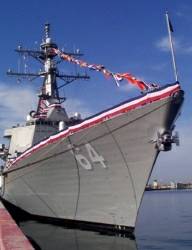
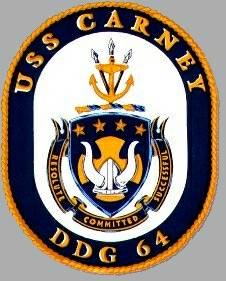
USS Carney (DDG 64)

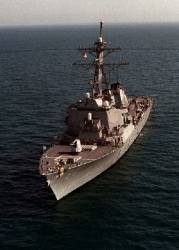
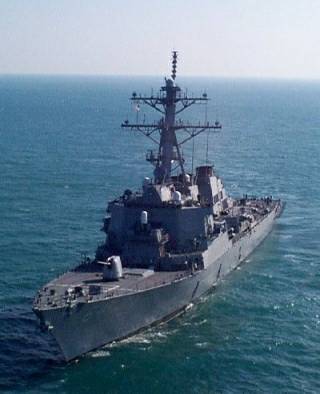
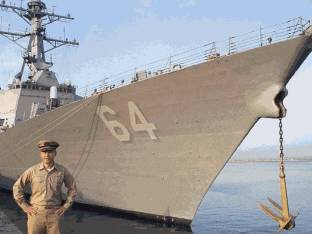
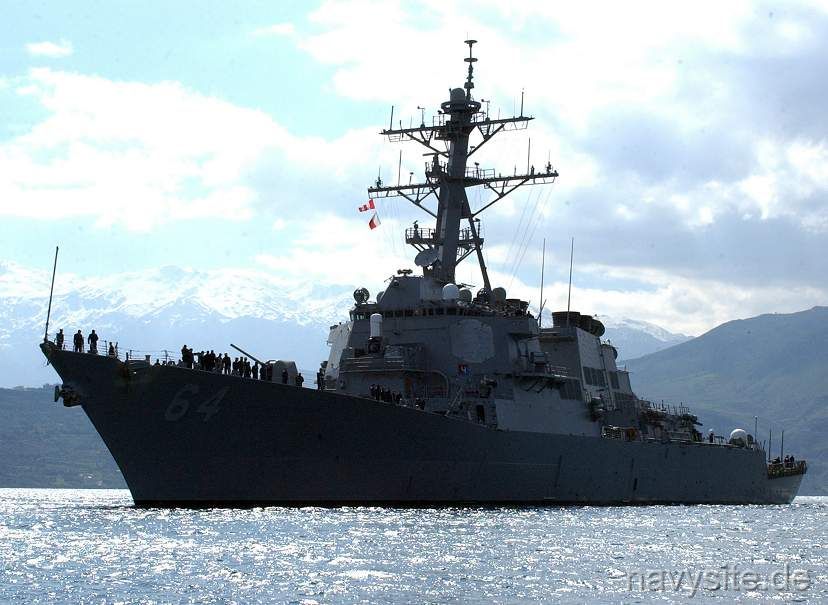
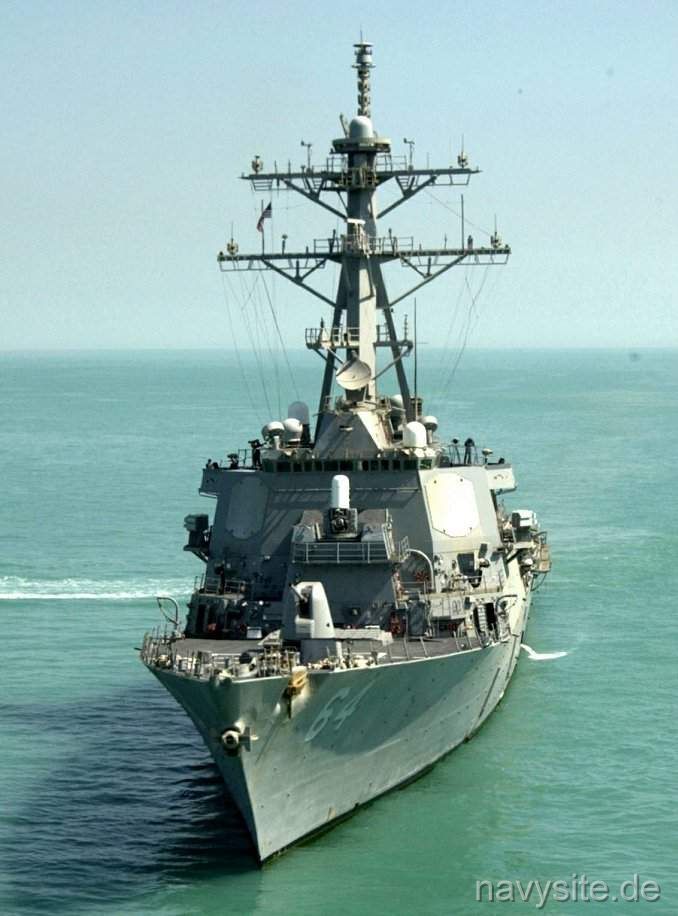
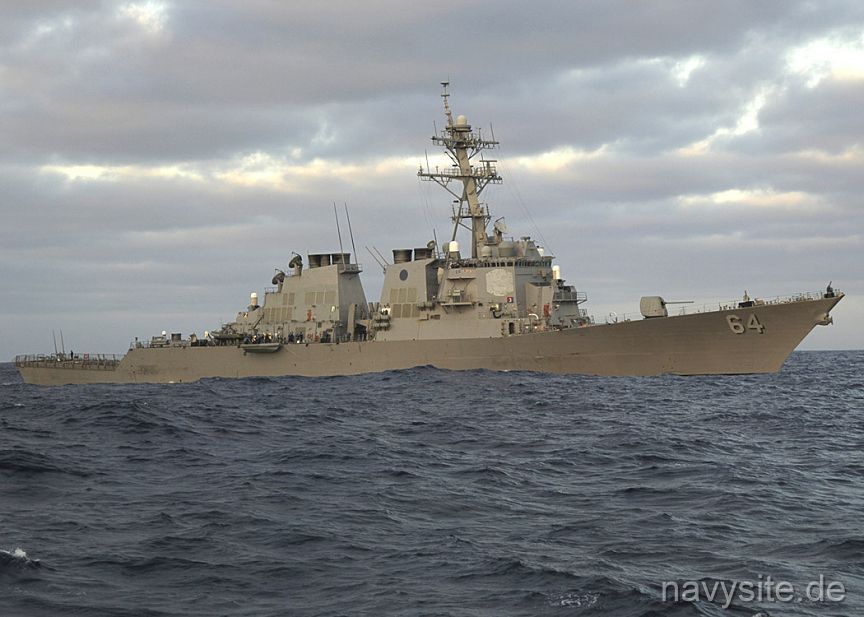
The USS CARNEY is the Navy’s 14th ARLEIGH BURKE Class Destroyer. Built at the Bath Iron Works in Bath, ME, the ship was named after Admiral Robert B. Carney, an influential leader during World War II and the years following. The CARNEY was commissioned in Mayport, Fla., where she was subsequently homeported for 19 years until she shifted her homeport to Rota, Spain, in September 2015. In June 2020, she was relieved in Europe by USS ROOSEVELT (DDG 80) and returned to her new old homeport of Mayport, Fla.

General Characteristics:Keel Laid: August 3, 1993
Launched: July 23, 1994
Commissioned: April 13, 1996
Builder: Bath Iron Works, Bath, Maine
Propulsion system: four General Electric LM 2500 gas turbine engines
Propellers: two
Blades on each Propeller: five
Length: 505,25 feet (154 meters)
Beam: 67 feet (20.4 meters)
Draft: 30,5 feet (9.3 meters)
Displacement: approx. 8.300 tons full load
Speed: 30+ knots
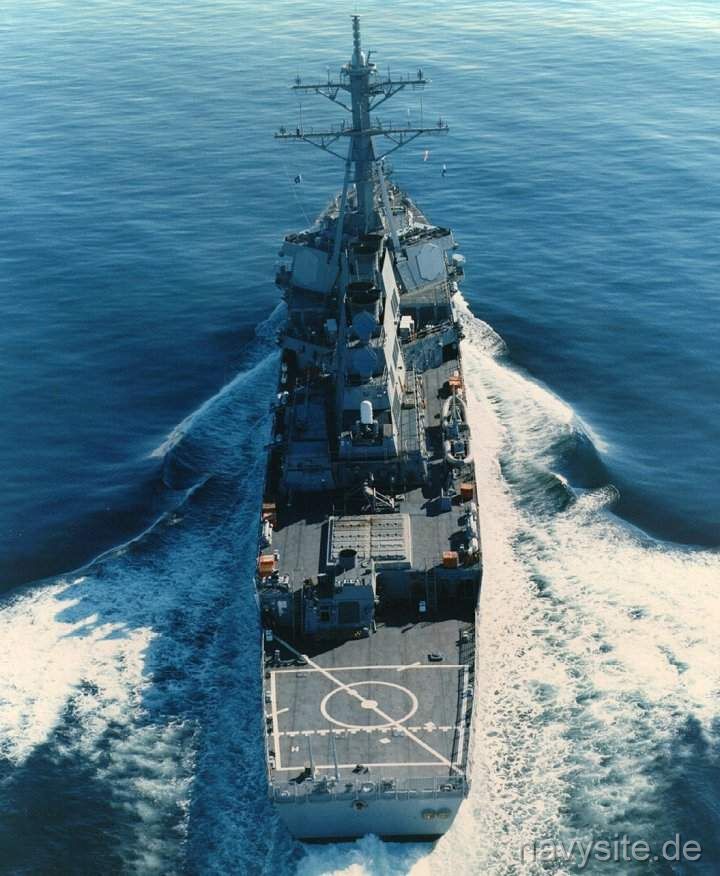
Aircraft: None. But LAMPS 3 electronics installed on landing deck for coordinated DDG/helicopter ASW operations.
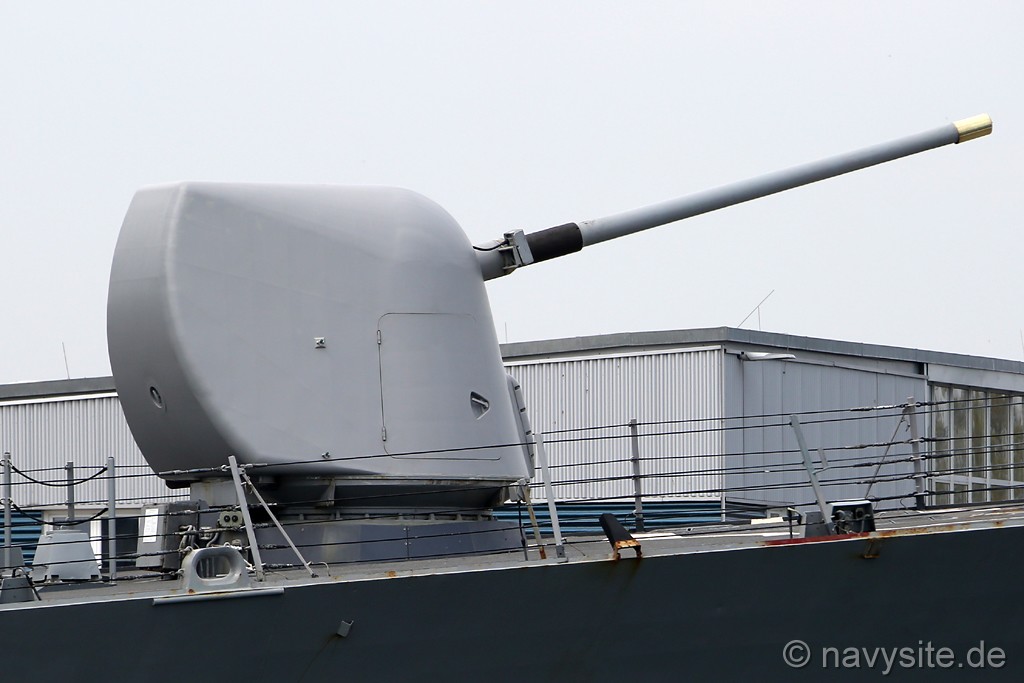
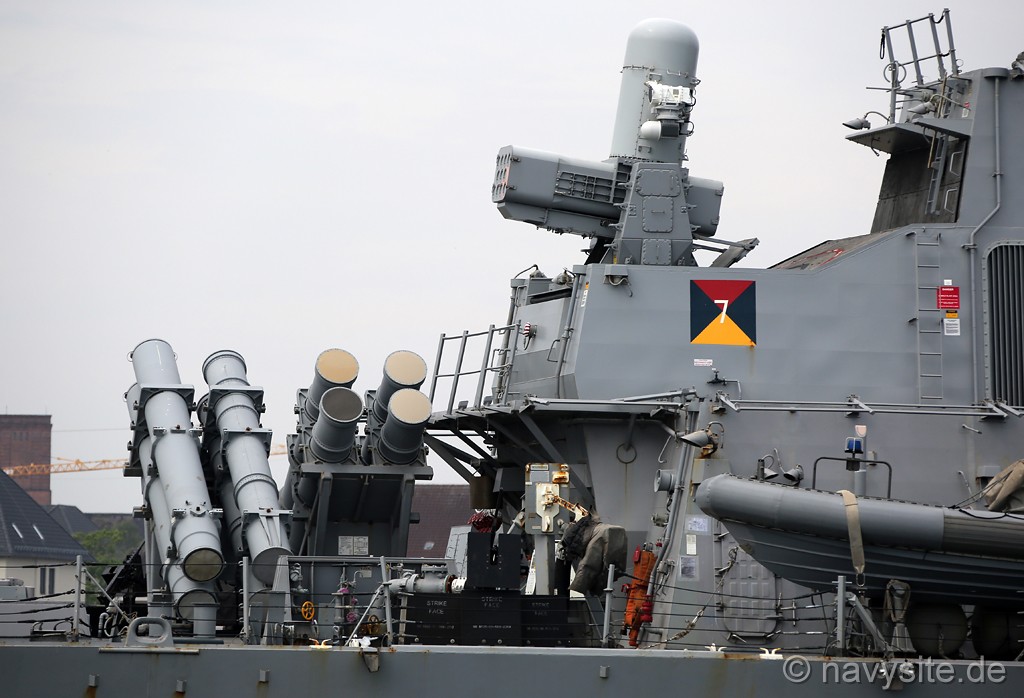
Armament: two MK 41 VLS for Standard missiles, Tomahawk; Harpoon missile launchers, one Mk 45 5-inch/54 caliber lightweight gun, two Phalanx CIWS, Mk 46 torpedoes (from two triple tube mounts)
Homeport: Mayport, Fla.
Crew: 23 Officers, 24 Chief Petty Officers and 291 Enlisted


Back to topback to top  go to endgo to the end of the page


Back to topback to top  go to endgo to the end of the page

Crew List:

This section contains the names of sailors who served aboard USS CARNEY. It is no official listing but contains the names of sailors who submitted their information.


back to top  go to the end of the page


Back to topback to top  go to endgo to the end of the page


Back to topback to top  go to endgo to the end of the page

About the Destroyer’s Name, about Admiral Robert B. Carney:
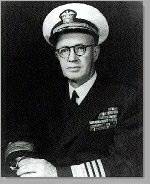
Upon graduation from the Naval Academy, in 1916, the future Chief of Naval Operations and son of Lieutenant Commander R.E. Carney (1868-1935) served onboard the Battleship USS NEW HAMPSHIRE. In October of that year, he joined the destroyer tender USS DIXIE until July 1917, when he transferred to the destroyer USS FANNING. Admiral Carney, then a lieutenant, was serving as Gunnery and Torpedo Officer when the FANNING sank the German U-58 on November 17, 1917.

Between the wars, he commanded several destroyers, including commissioning the destroyer USS REID. Additionally, he served as Executive Officer of a battleship and acquired staff experience in the fleet. Ashore, he served in the Navy Department in the Division of Fleet Training and in the Shore Establishment Division of the Secretary of the Navy’s office.

After the onset of the Second World War, Admiral Carney, newly promoted to Captain, brought the light cruiser USS DENVER into commission and set out for the South Pacific. While participating in the Solomon Island campaign Admiral Carney was twice decorated for "exceptionally meritorious conduct...in action against enemy Japanese forces..."

On July 26, 1943, he was promoted to Rear Admiral and became Chief of Staff to Admiral William F. Hasley, Jr., Commander, South Pacific Force, which included all ground, sea, and air forces in the South Pacific area. When Admiral Halsey assumed command of the Third Fleet in the Central Pacific in June 1944, Rear Admiral Carney accompanied him as Chief of Staff. He took part in the Palau, Leyte, Lingayen, and Okinawa campaigns and in the attack on Formosa, in the China Sea; against the Japanese homeland and the Second Battle of the Philippine Sea. During this period, he earned the Navy Cross, the United States Navy’s ranking decoration for "-invaluable assistance in formulating the plans for a series of combat operations in which task forces of the Third Fleet engaged capitol ships of the Japanese fleet waging devastation attacks on major Japanese combatant an carrier task forces-"

Rear Admiral Carney arranged with Japanese emissaries for the entry of the Third Fleet into Tokyo Bay, accepted the surrender ceremony held in Admiral Halsey’s Flagship, the battleship USS MISSOURI.

After the war, he was promoted to Vice Admiral in 1946, and until February 1950, served as Deputy Chief of Naval Operations. Next he assumed command of the Second Fleet operating on the East Coast of the United States. On October 2, 1950, he was advanced in rank to Admiral and on May 13, 1953, President Eisenhower announced his selection of Admiral Carney as the next Chief of Naval Operations.

On completion of his appointment as Chief of Naval Operations, Admiral Carney retired from active service. Over the next several years, Admiral Carney’s various assignments, coupled with his personal interest in industrial participation in the defense effort, resulted in close contact with industry including the position of Chairman of the Board, Bath Iron Works, Corporation. The very same shipyard which built the destroyer proudly bearing his name.


Back to topback to top  go to endgo to the end of the page

Accidents aboard USS CARNEY:

DateWhereEvents
June 9, 2004off North Carolina
USS CARNEY collides with HMS SOUTHERLAND (F 81) while conducting personnel transfers between the ships. Only light damage and no injuries are reported.


Back to topback to top  go to endgo to the end of the page


Back to topback to top  go to endgo to the end of the page

USS CARNEY History:

USS CARNEY entered commissioned service at Naval Station Mayport, Florida, on April 13, 1996, then spent the remainder of the year and early 1997 in post-commissioning trials, shakedown and basic phase certifications along the U.S. East Coast. After integrating with the GEORGE WASHINGTON (CVN 73) battle group, the destroyer began her maiden overseas deployment on October 3, 1997, bound for the Mediterranean. Early port activity included Tunis, Tunisia, from October 15-18, 1997, as the ship settled into Sixth Fleet presence operations typical of the immediate post-Cold War era, with air-defense and maritime security drills shaping the work-up to sustained tasking.

Following a stateside reset in 1998, CARNEY deployed again in late 1999 with the JOHN F. KENNEDY (CV 67) battle group for a Mediterranean-Arabian Gulf cruise during a period when coalition forces continued to enforce United Nations sanctions and no-fly zones over Iraq. The destroyer's participation included layered air-defense, Strait of Hormuz transits, and maritime interception operations alongside carrier and surface escorts. The group's itinerary bridged Sixth and Fifth Fleet waters before returning the ship to Mayport in 2000.

In 2001, CARNEY took part in New York City's Fleet Week from May 23-29, then transitioned back to training as the maritime security environment shifted after September 11. In early 2002, the destroyer conducted Cooperative Engagement Capability evaluations with the JOHN F. KENNEDY group - phase one in the Puerto Rico operating areas and phase two off the Virginia Capes - validating networked air-defense data-sharing across the force. In February 2002, she deployed to the Mediterranean and into Fifth Fleet in support of Operation Enduring Freedom, joining the surge of naval presence that underwrote air operations and maritime interdiction as U.S. and coalition forces expanded counter-terrorism efforts. CARNEY returned home in August 2002.

After concluding her early post-9/11 operating cycle, USS CARNEY spent 2003 largely in Atlantic Fleet readiness and training tasking as a designated surge asset under Commander, Task Force 20, maintaining high readiness for rapid deployment while cycling through certifications and local operating areas from Mayport. On October 24, 2003, command passed to CDR Ronald A. Boxall, a change that coincided with the ship's continued role as a CTF-20 "surge ship" and public-relations commitments typical of the period's fleet engagement tempo.

In late 2004, CARNEY assembled with a small Surface Strike Group for deployment to U.S. Sixth Fleet waters, a construct then used to position independent surface combatants for presence and contingency tasks. By the opening weeks of 2005, she was in the western Mediterranean, beginning the year moored at Cartagena, Spain, as part of that Surface Strike Group with USS O'BANNON (DD 987) and USS TAYLOR (FFG 50). The itinerary included an eastern Mediterranean swing that brought the destroyer to Souda Bay, Crete, where she was in port March 3-7, 2005, before returning to sea on March 7 for further operations and transits under Sixth Fleet. The port call at the Marathi NATO pier complex underscored Souda Bay's role as a logistics hub for deployed U.S. and NATO ships at the time.

Back stateside in 2006, CARNEY supported Navy outreach around Florida's Gulf Coast. On January 27, 2006, she departed Tampa Bay after a week of participation in the city's Gasparilla Pirate Fest, a recurring fleet engagement event for the service. That summer, she shifted to the Southern Command/4th Fleet lane for a South America surge under Destroyer Squadron 40, culminating in the Peruvian-led Silent Forces Exercise (SIFOREX) - an advanced anti-submarine warfare series - off Callao from July 12-14, 2006. The evolution paired CARNEY with allied submarines and surface units, including USS HALYBURTON (FFG 40) and an HSL-44 SH-60B detachment, and featured a rare crew-swap with a Peruvian submarine to sharpen cross-culture ASW procedures. The ship ranged as far south as Valparaiso, Chile, and also trained with Chilean, Ecuadorian, Colombian, Argentine and Panamanian forces, plus Spanish and Canadian participants. These South American evolutions matched the mid-2000s emphasis on hemispheric maritime security and proficiency in blue-water ASW.

On March 10, 2007, CARNEY got underway for a two-month Operation Enduring Freedom - Caribbean Central America (OEF-CCA) surge deployment supporting counter-terrorism and counter-trafficking aims in the Caribbean basin, a mission set that included VBSS (visit, board, search, and seizure) training and security cooperation with the Jamaica Defence Force during the Cricket World Cup host period. Returning to the Atlantic work-up cycle afterward, the destroyer redeployed later that year with CARRIER STRIKE GROUP TEN centered on USS HARRY S. TRUMAN (CVN 75), departing in November 2007 for U.S. Fifth Fleet waters. Through the winter, the ship executed theater security operations and multinational drills typical of the Gulf and Arabian Sea while carrier air wings flew presence and contingency sorties. CARNEY completed the cruise and returned to Mayport on June 4, 2008. Post-deployment events in 2008 included participation in Independence Day observances at Philadelphia, Pennsylvania, in early July, part of routine public-engagement tasking as the ship reset from a high-tempo Arabian Gulf cruise. In 2009, the destroyer joined New York City commemorations around the 400th anniversary of Henry Hudson's 1609 voyage, arriving on September 8, 2009, amid a year otherwise focused on sustainment training and certifications in the Western Atlantic. Both years reflected the standard East Coast cycle of maintenance, basic phase, and regional engagements following a major deployment.

On January 2, 2010, CARNEY departed Mayport for Sixth and Fifth Fleet operations that combined maritime security with coalition exercising across the Red Sea, Arabian Sea, and Gulf approaches. After several months of routine patrol and convoy-corridor overwatch with Combined Maritime Forces, she stepped out in April-May 2010, for a trio of back-to-back, partner-led drills that underscored regional cooperation: Arabian Shark 2010 in the North Arabian Sea (an anti-submarine warfare series with Bahraini and Pakistani participation) held April 15-17; Khunjar Haad 2010, an Omani-led, multilateral event that stresses layered air defense and maritime interdiction in the Gulf of Oman; and Eagle Salute 2010, an Egyptian Naval Force-hosted, multi-warfare exercise in the Red Sea. With the exercise string complete and maritime security tasking resumed, CARNEY returned to Naval Station Mayport on July 31, 2010, closing a deployment characterized by steady coalition interoperability and the still-evolving Combined Maritime Forces construct for counter-piracy and sea-lane assurance. After returning to Mayport, the destroyer stood down for post-deployment maintenance and certifications through the autumn. The year closed with Atlantic basic-phase events and material inspections that positioned the ship for extended operations the following summer.

CARNEY deployed again in August 2011 to join NATO's Operation Ocean Shield, the alliance's contribution to coalition counter-piracy in the Gulf of Aden, the Guardafui Channel, and the western Indian Ocean. Operating with NATO standing maritime forces and Combined Maritime Forces, she patrolled the International Recommended Transit Corridor, conducted approach-and-query evolutions, and integrated helicopter and rigid-hull boarding drills to deter pirate action groups. A logistics and liberty stop at Djibouti on September 19-21, 2011, punctuated the early patrol phase before the ship returned to station. On December 8, 2011, NATO reported CARNEY's role in disrupting a pirate attack group in the Gulf of Aden, an example of the coordinated surveillance, cueing, and rapid interception that characterized the mission's maturing tactics. The counter-piracy deployment continued into 2012. On January 6, 2012, acting on coalition intelligence, CARNEY intercepted the Indian-flagged dhow AL QASHMI and conducted a compliant boarding. Suspected pirates were disarmed and the vessel was provisioned and released, a routine outcome under prevailing legal arrangements when evidentiary thresholds were not met. Across the cruise the destroyer disrupted four attacks, boarded nine vessels, conducted 28 approaches, and detained or disarmed 30 suspects, illustrating the mix of presence, interdiction, and de-weaponization that gradually reduced successful hijackings in the region. CARNEY returned to Naval Station Mayport on March 4, 2012, closing a seven-month independent deployment in support of Ocean Shield just as NATO extended the operation's mandate later that month.

The destroyer departed Mayport again on October 17, 2013, for a seven-month independent deployment centered on Maritime Interdiction Operations in the Persian Gulf, returning on May 25, 2014. That cruise reflected a period of persistent Gulf security and interdiction missions as coalition navies enforced sanctions regimes and counter-smuggling measures in support of regional stability and ongoing operations in Iraq and Afghanistan.

On September 25, 2015, CARNEY arrived at Rota, Spain, to become the fourth forward-deployed ballistic-missile defense destroyer in Europe. The homeport shift placed her under Commander, Task Force 65 for continuous Sixth Fleet presence from the Baltic and North Atlantic to the Black Sea and Eastern Mediterranean during a phase of renewed NATO-Russia tension and emerging missile-defense architecture on the European periphery.

In 2016, the ship moved from routine patrols to direct support of Operation Odyssey Lightning off Libya, escorting amphibious assault ship WASP (LHD 1) as U.S. aircraft struck ISIS positions in Sirte. CARNEY's crew provided naval gunfire support with 5-inch illumination and bombardment, spending 54 days on the line and firing 285 rounds in support of U.S.-backed Libyan ground forces before the operation concluded in December. In November 2016, the destroyer staged at Drapetsona, Greece, to provide air-defense coverage during the U.S. presidential visit to Athens, and in March-April 2017, she shifted north for the U.K.-led Joint Warrior exercise, operating from HMNB Clyde with allied escorts such as HNLMS TROMP to refine anti-submarine, air-defense, and maritime strike coordination.

The Black Sea became a recurring focus as Russia's posture in Crimea hardened. CARNEY visited Odesa, Ukraine, on January 8, 2018, then entered the Black Sea on February 17 and called at Varna, Bulgaria, February 18-22 before exiting March 3. In August, the destroyer re-entered the Black Sea on August 12 for presence operations and port calls, including Batumi, Georgia, August 23-25, reinforcing NATO and partner engagement in waters where the Montreux Convention restricts non-littoral naval activity and short, frequent deployments carry signaling weight.

In summer 2019, CARNEY again moved into the Black Sea ahead of the multinational exercise Sea Breeze 2019, mooring in Odesa on June 30 for the in-port phase and joining a wide slate of participating navies for air, surface, and amphibious training, then continuing patrols under Sixth Fleet before returning to routine tasking from Rota.

CARNEY completed five years as a forward-deployed European destroyer in mid-2020. She departed Rota on June 27 and arrived at her new homeport of Mayport on July 19, marking the end of a cycle that had seen frequent Black Sea presence, BMD patrols in the Eastern Med, and episodic support to counter-terrorism and crisis response from North Africa to the Levant.

After post-homeport-shift maintenance and basic-phase workups through 2021–2022 under the Optimized Fleet Response Plan, the ship prepared for a 2023 deployment that would become the U.S. Navy's most intense surface combat employment in decades. CARNEY departed Mayport on September 27, 2023, initially integrating with GERALD R. FORD (CVN 78) Carrier Strike Group elements in Sixth Fleet before shifting to Fifth Fleet to operate primarily with DWIGHT D. EISENHOWER (CVN 69) Carrier Strike Group. On October 19, 2023, while transiting the Red Sea, CARNEY shot down a combination of three land-attack cruise missiles and multiple drones fired northward from Yemen, the first in a long string of defensive engagements as the Houthis expanded attacks on shipping amid the Gaza war.

Across late 2023 and into early 2024, the destroyer repeatedly intercepted one-way attack drones and various anti-ship missiles in the Red Sea and Gulf of Aden as the United States and partners launched Operation Prosperity Guardian to protect maritime commerce. On December 16, 2023, CARNEY and the U.K. destroyer HMS DIAMOND shot down a wave of attack drones threatening commercial traffic, part of a pattern that included large salvos in January 2024 and marked the coalition's shift from episodic to sustained air- and missile-defense at sea. By deployment's end the ship had executed dozens of live engagements under strict rules of engagement, demonstrating layered defense from SM-2 intercepts to close-in measures.

CARNEY completed the deployment in spring 2024 and returned to Mayport, with Navy leadership recognizing the crew in a May 14, 2024, event that summarized the cruise: initial integration in the Mediterranean, prolonged Red Sea operations largely alongside the EISENHOWER group, and continuous protection of international shipping through the Bab-el-Mandeb. The experience fed back into fleet training and doctrine for integrated air and missile defense, particularly the employment of destroyers against mixed salvos of drones and land-attack missiles from shore-based launch sites.

Through late 2024 the Navy publicly chronicled the deployment's operational lessons, noting the October 19, 2023 opening engagement as a defining moment. In 2025, CARNEY remained in the post-deployment sustainment and maintenance rhythm in Mayport.


Back to topback to top  go to endgo to the end of the page

Homeports of USS CARNEY:

PeriodHomeport
commissioned at Mayport, Fla.
1996 - 2015Mayport, Fla.
2015 - 2020Rota, Spain
2020 - presentMayport, Fla.


Back to topback to top  go to endgo to the end of the page


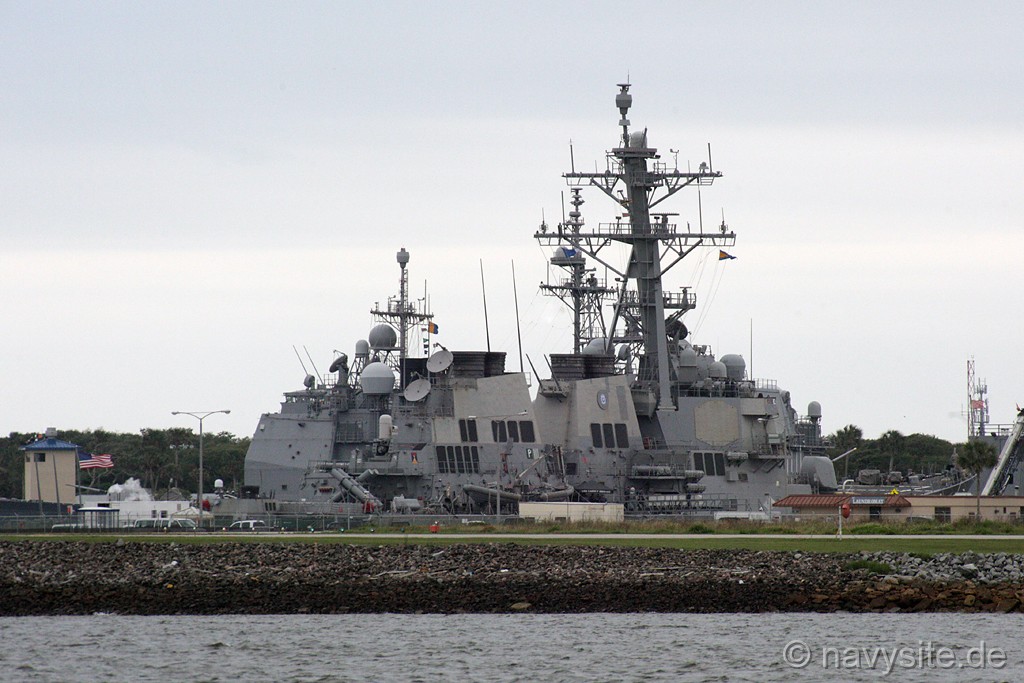
The photo below was taken by Michael Jenning and shows the CARNEY at Naval Station Mayport, Fla., on April 28, 2015.


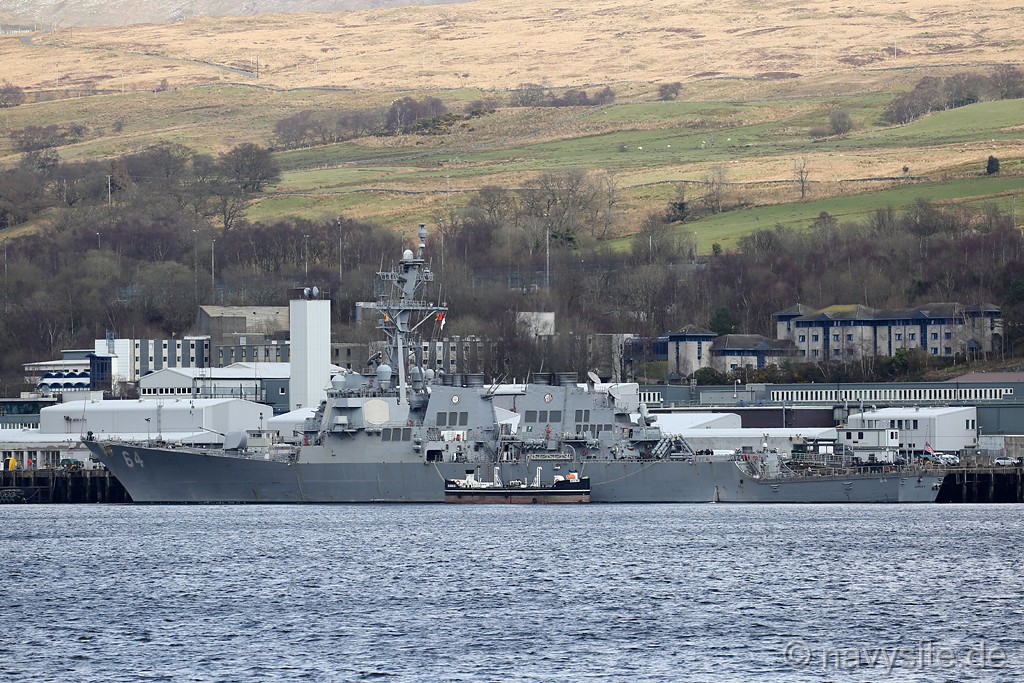
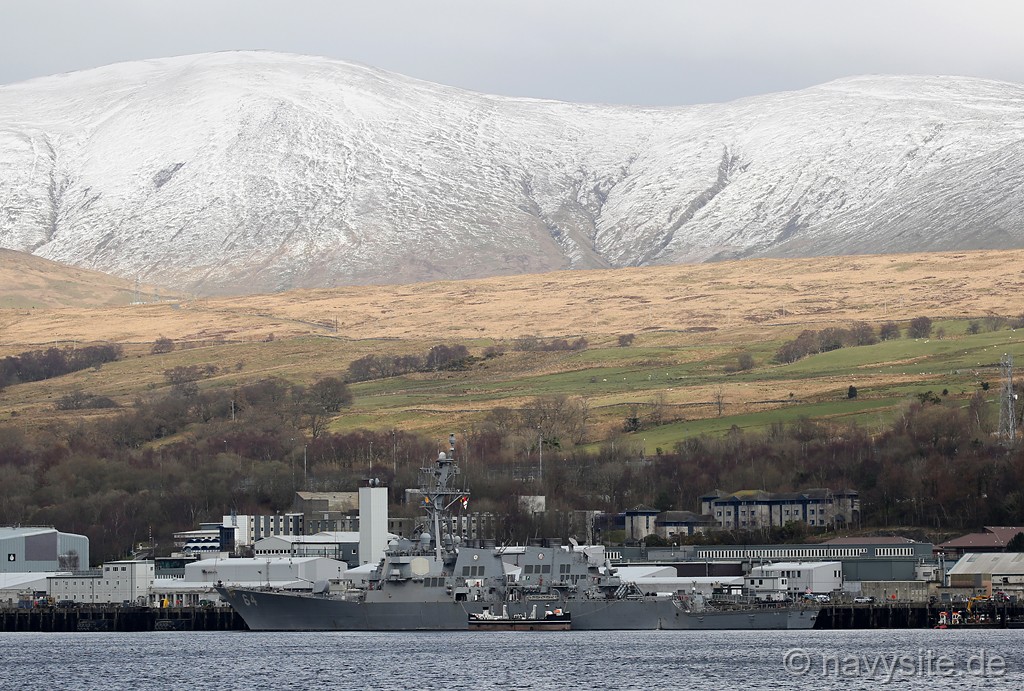
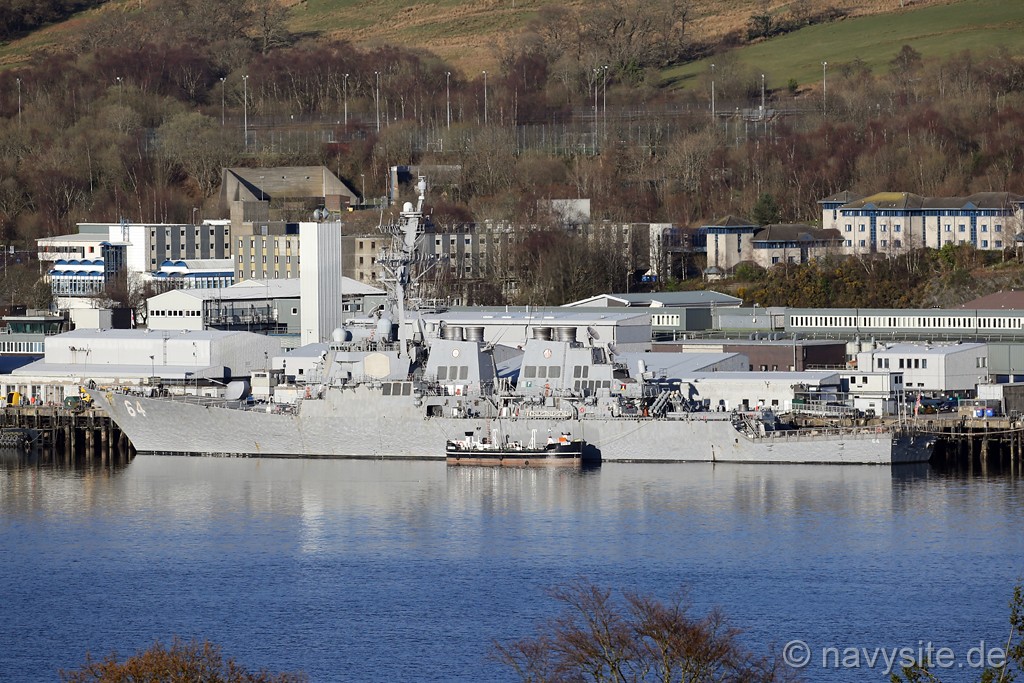
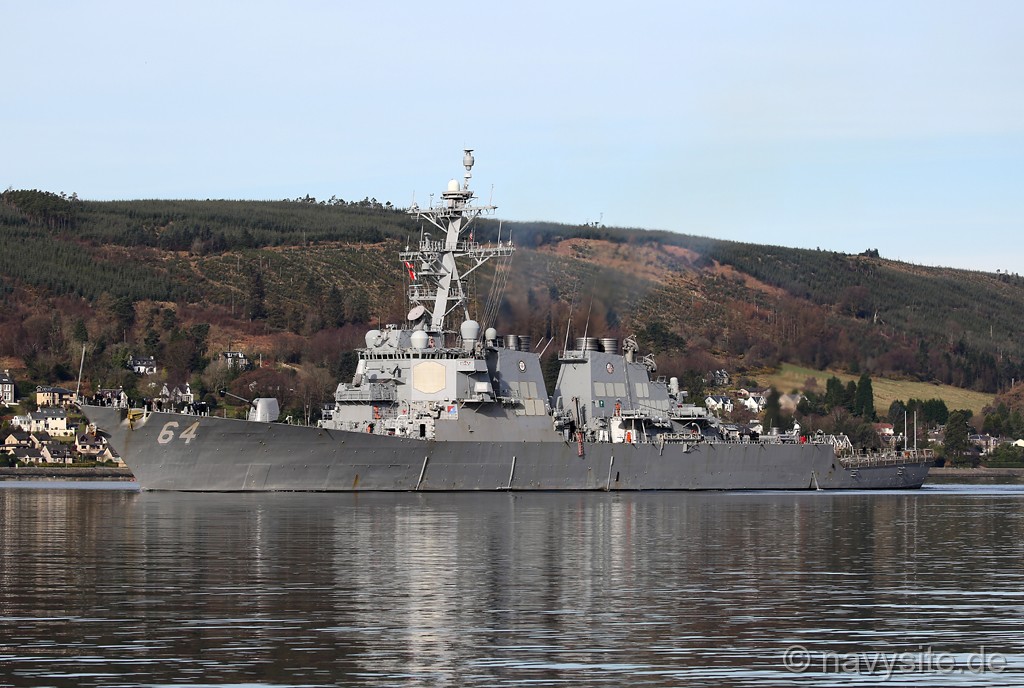
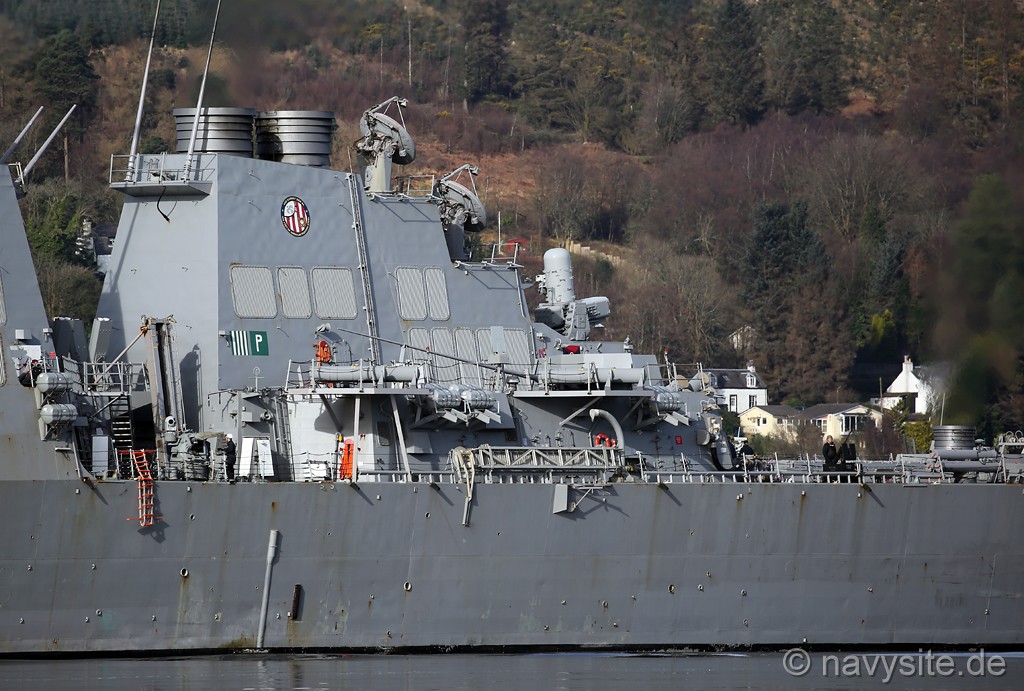
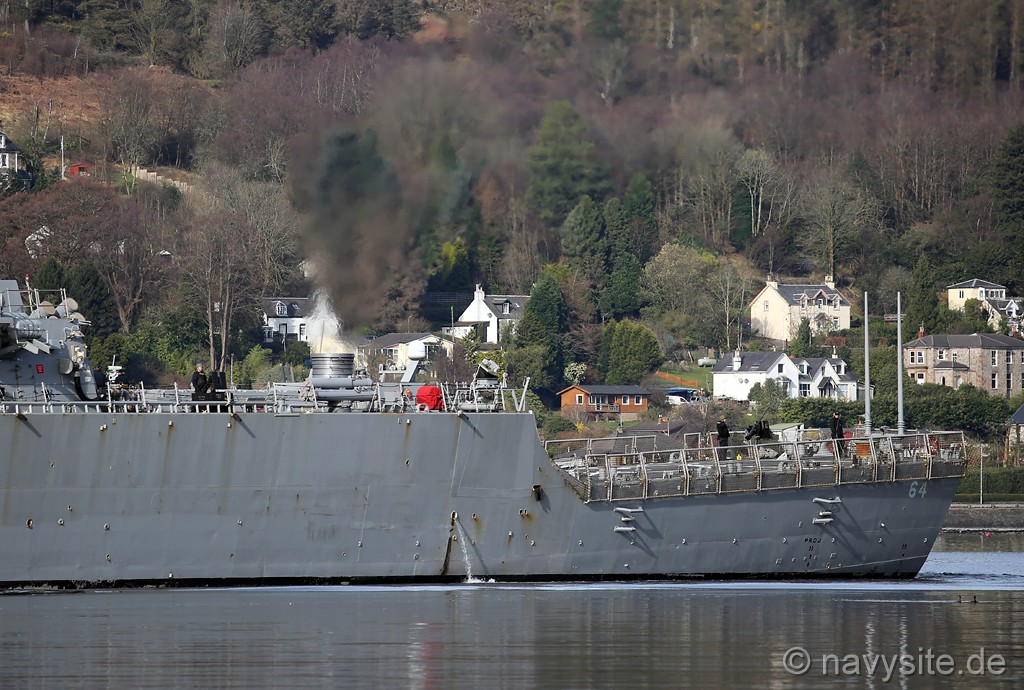
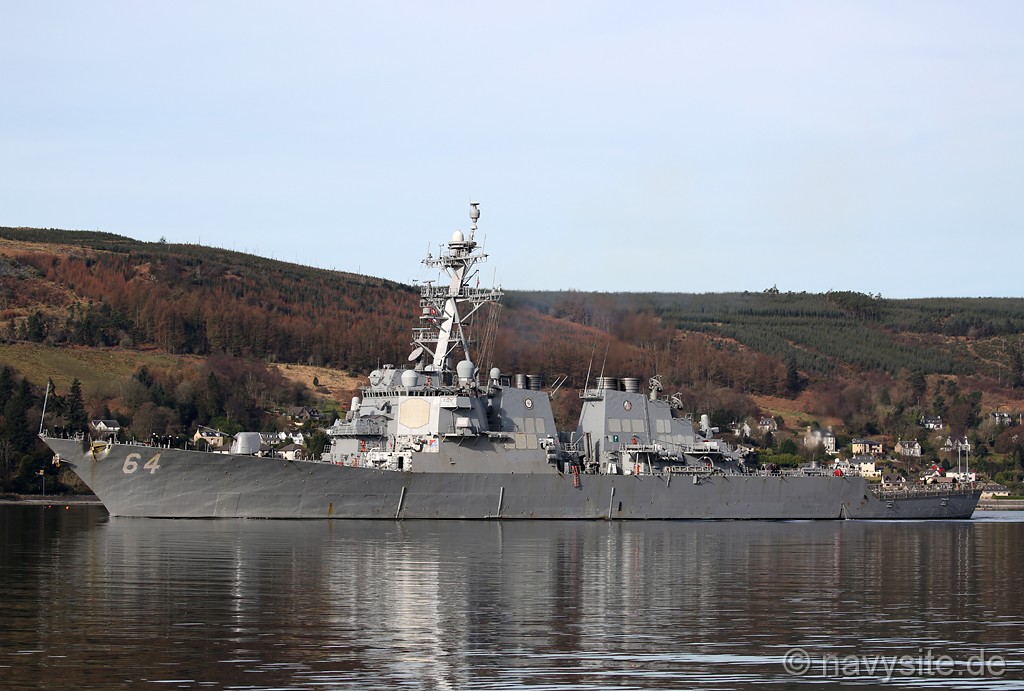
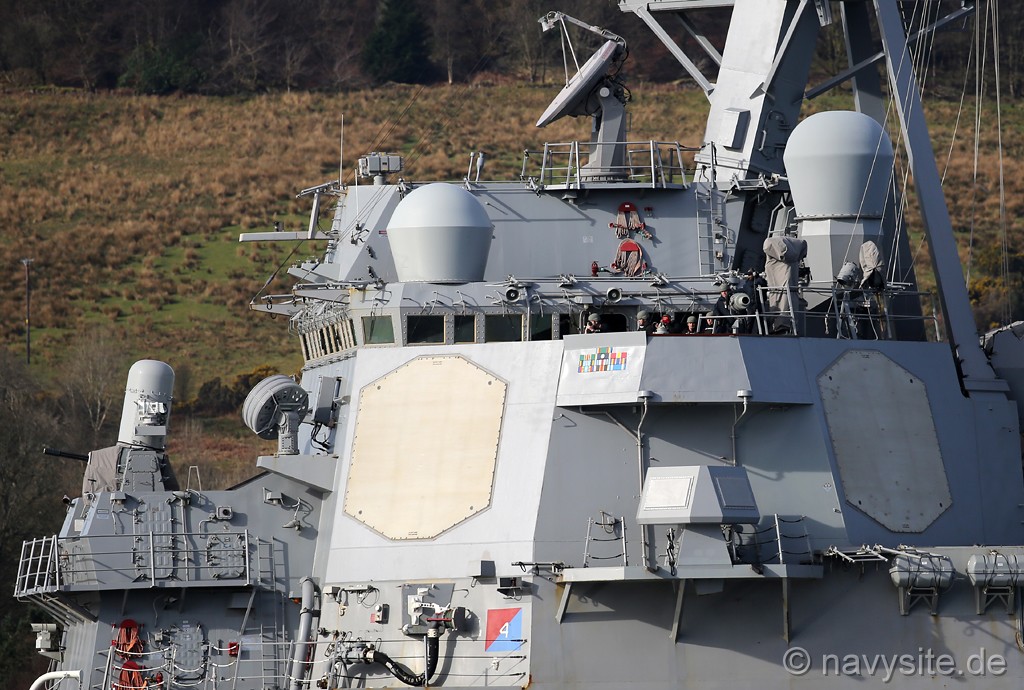
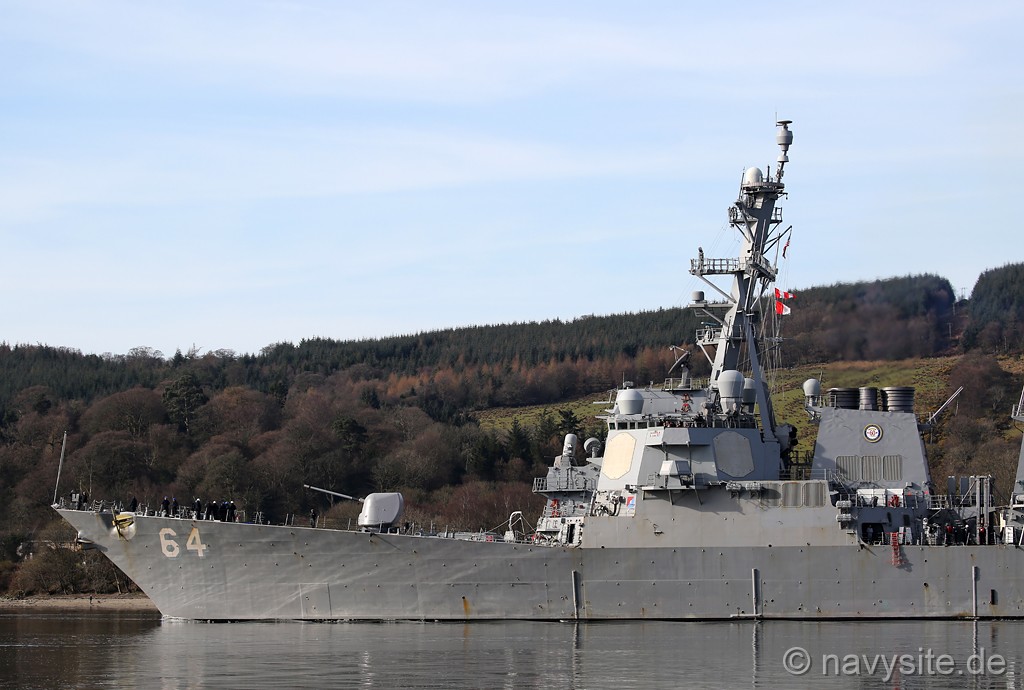
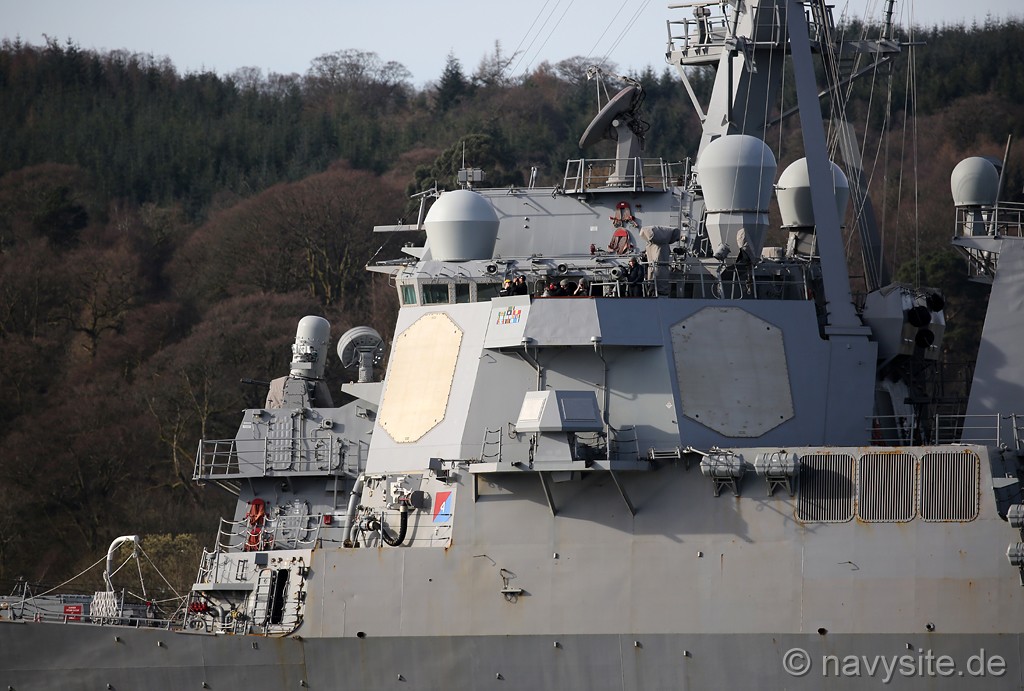
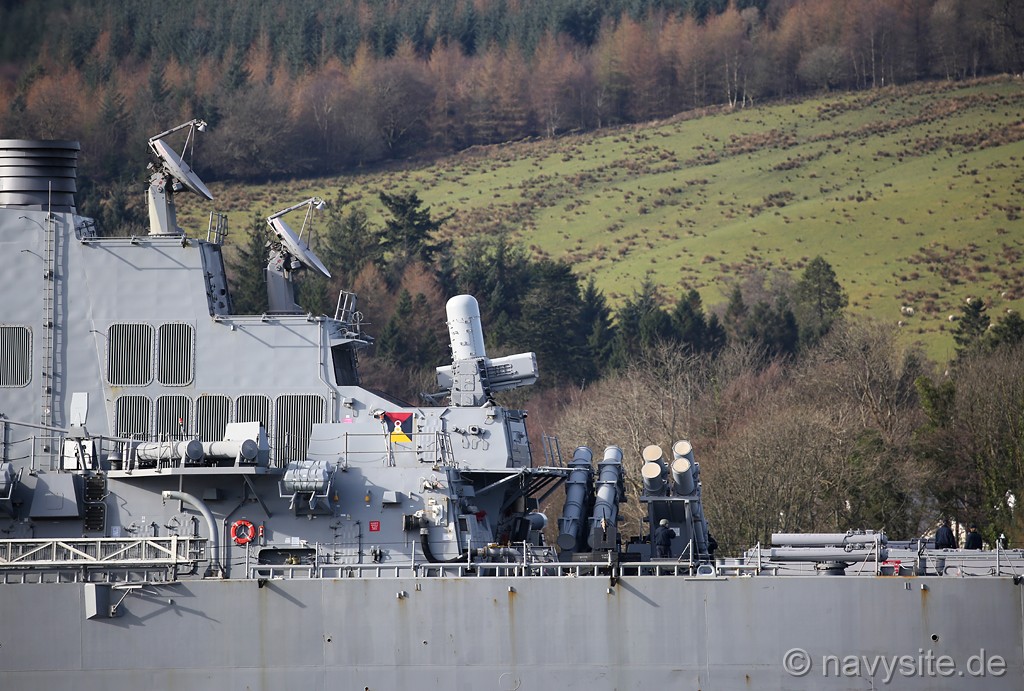
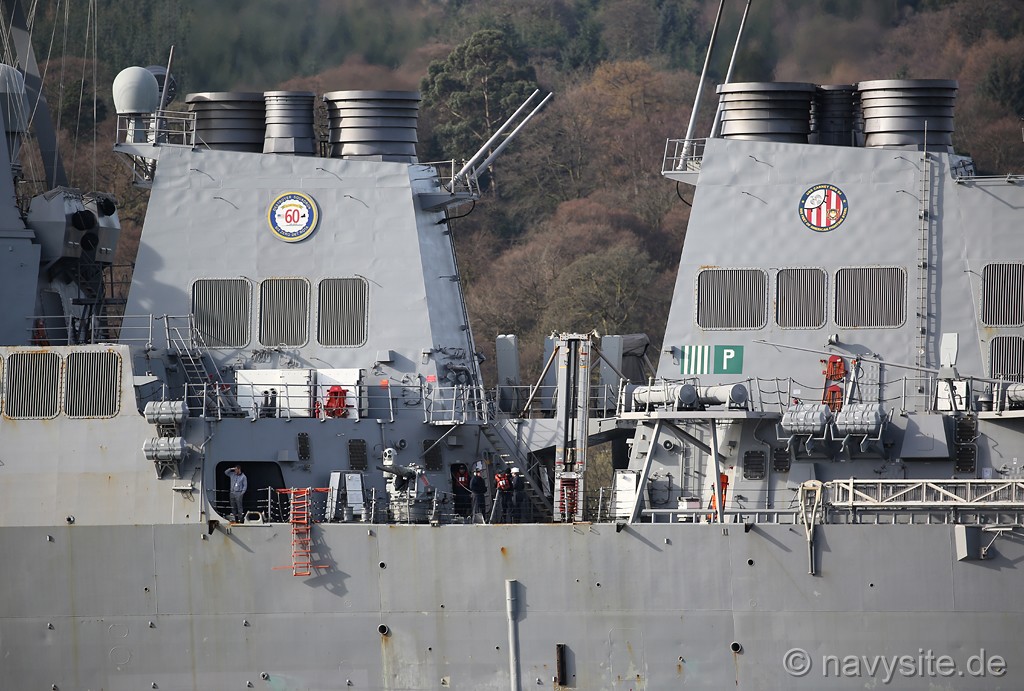
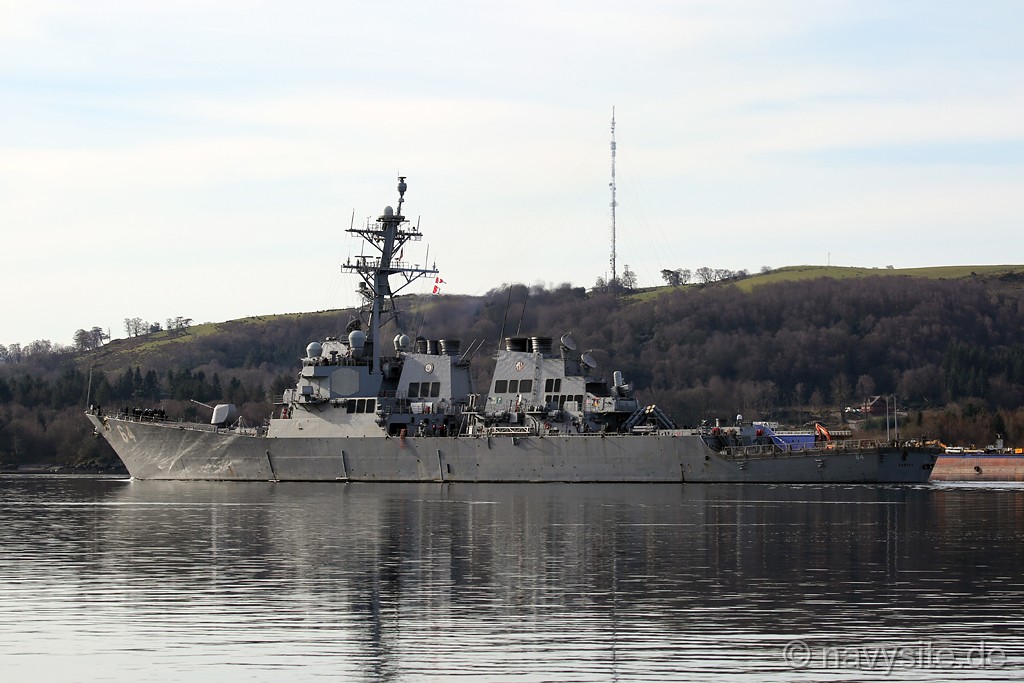
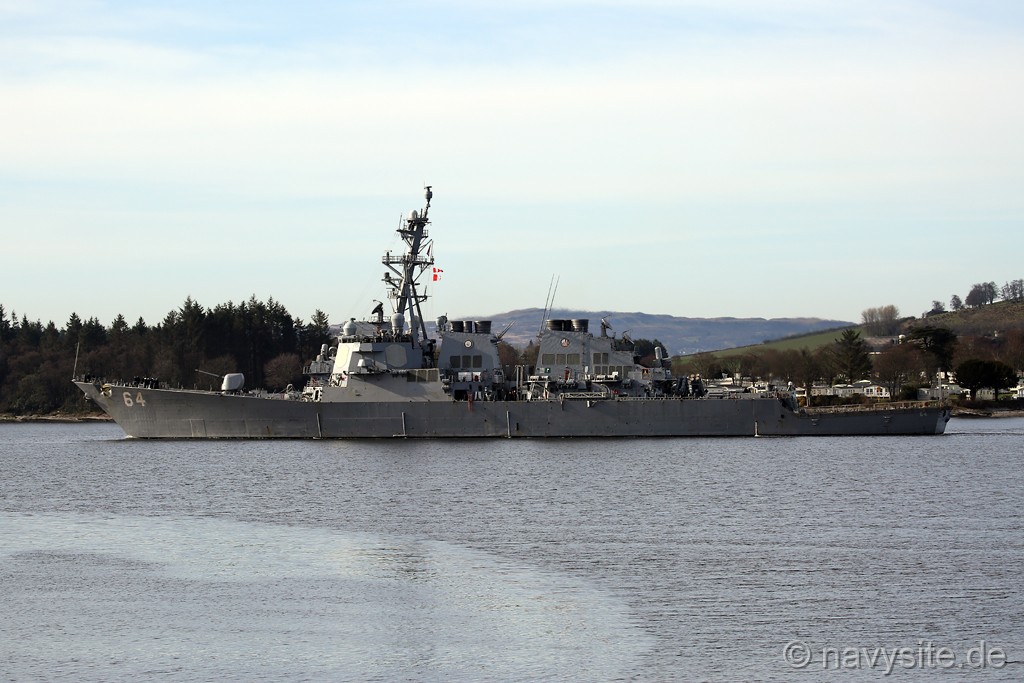
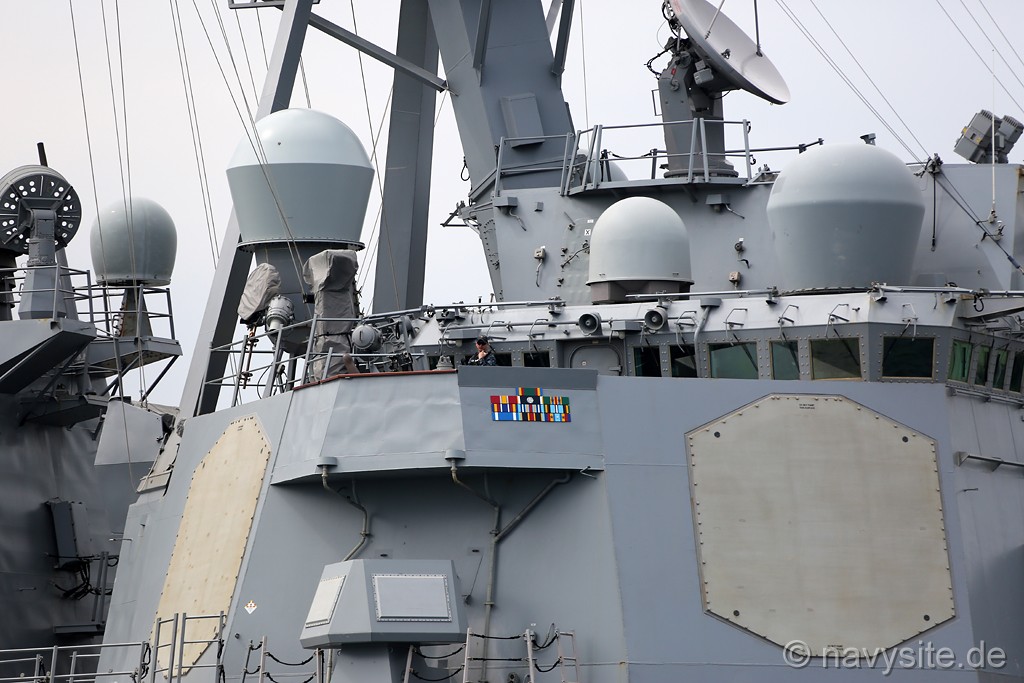
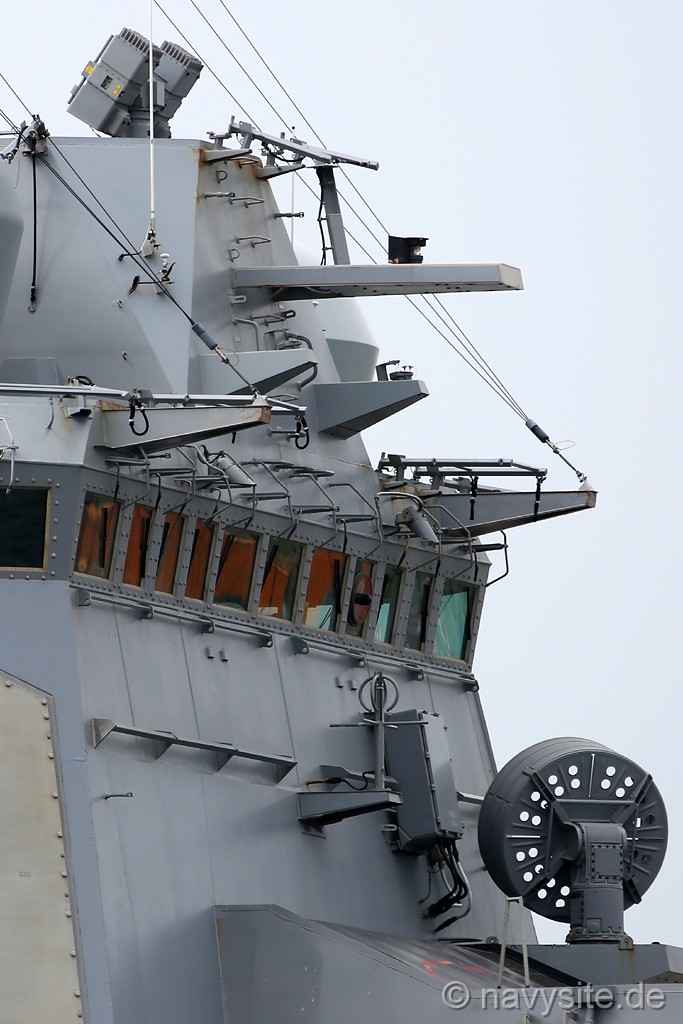
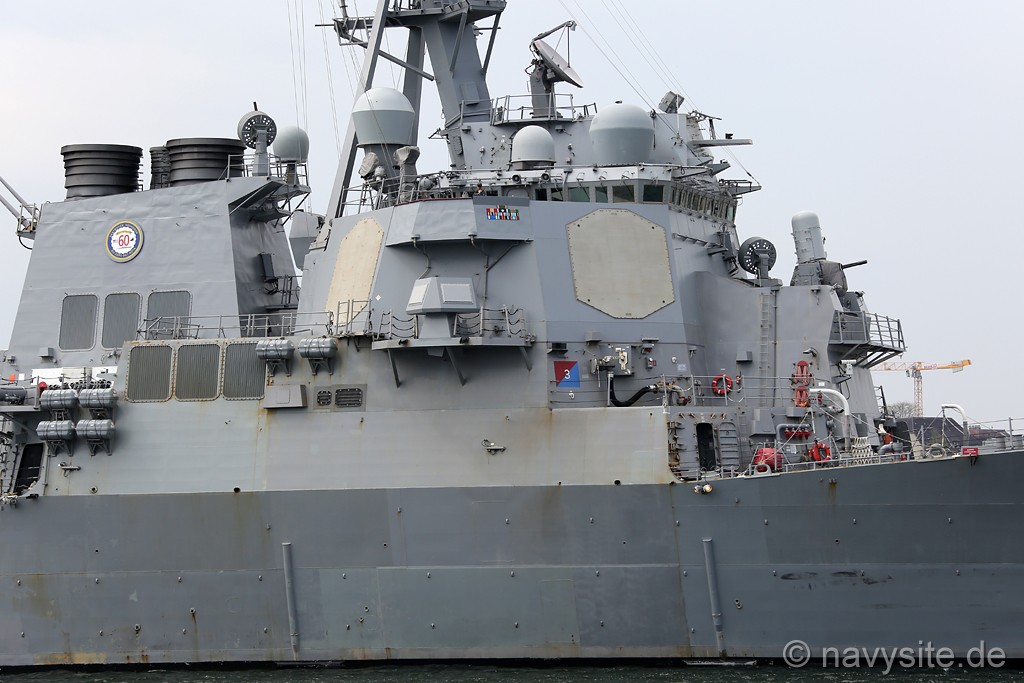
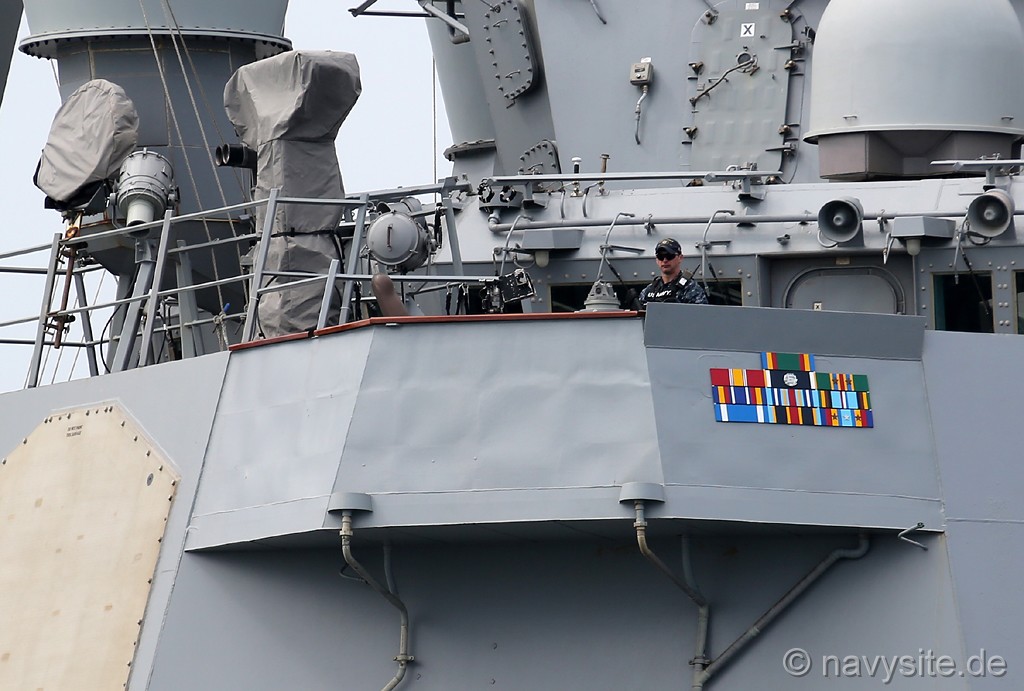
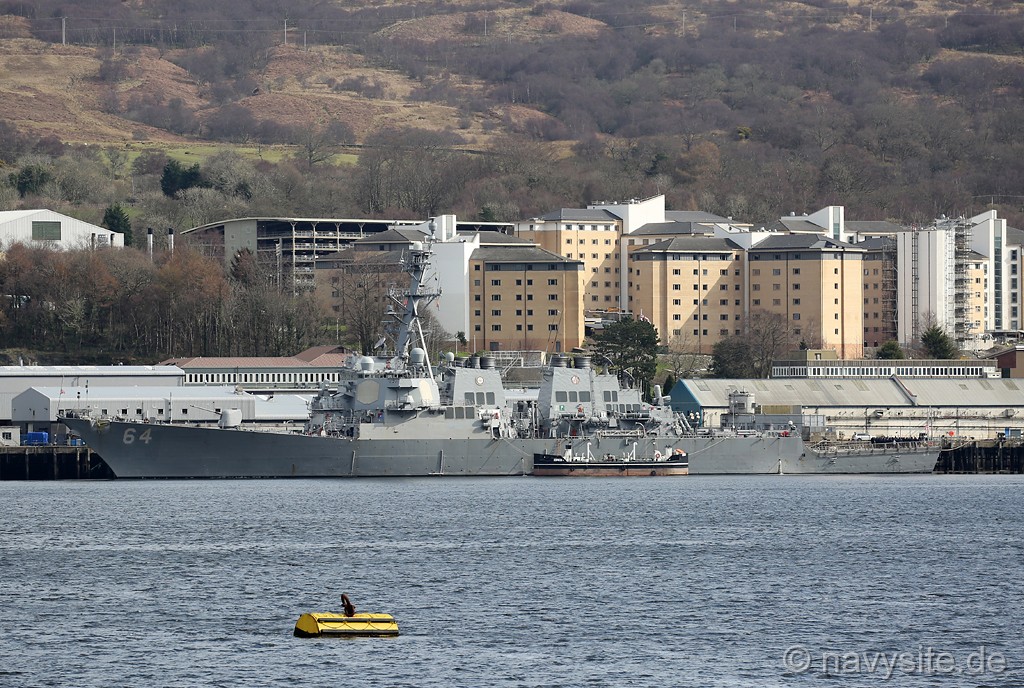
The photos below were taken by me and show the CARNEY at HMNB Clyde, Faslane, Scotland, shortly before her participating in Exercise Joint Warrior 171. The first three photos were taken on March 23, 2017, while the last photo was taken on March 25, 2017.


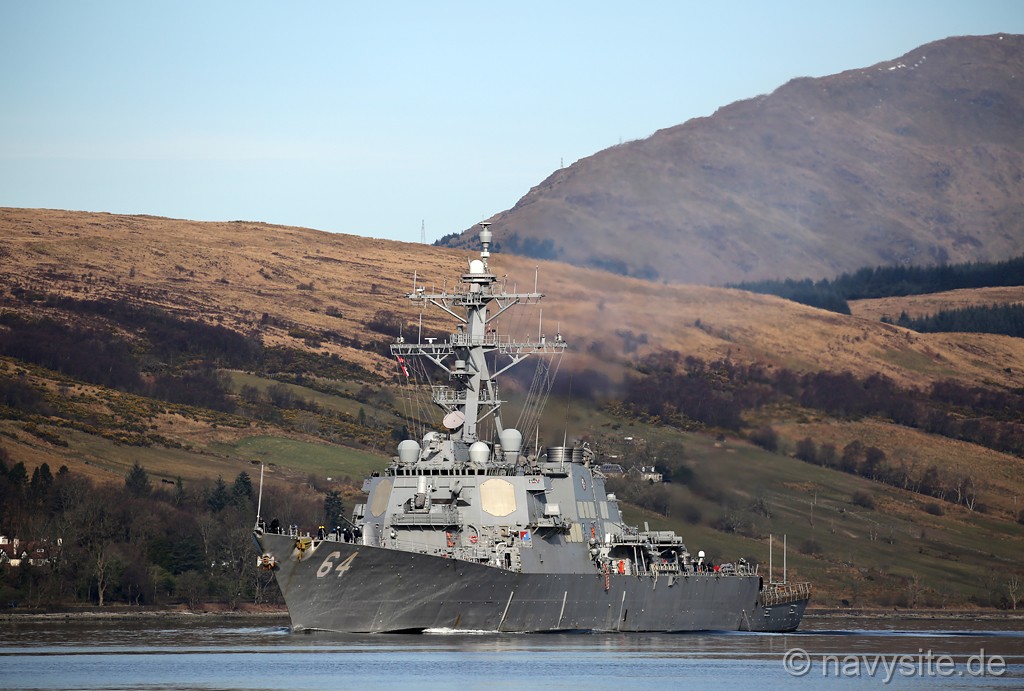
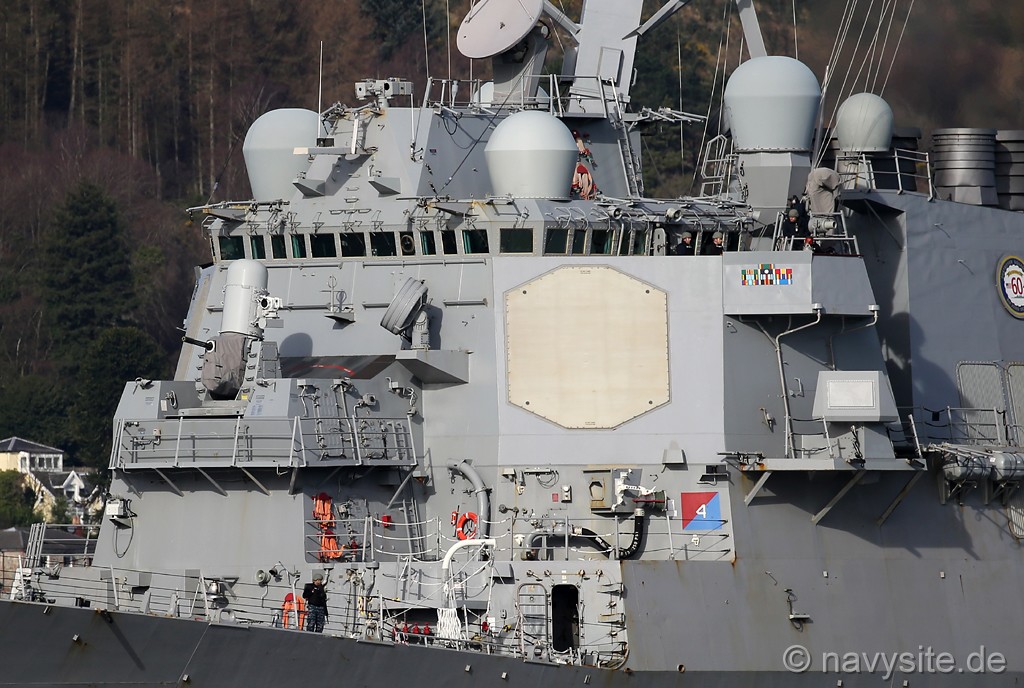
The photos below were taken by me and show the CARNEY departing HMNB Clyde, Faslane, Scotland, on March 26, 2017, to join Exercise Joint Warrior 171.


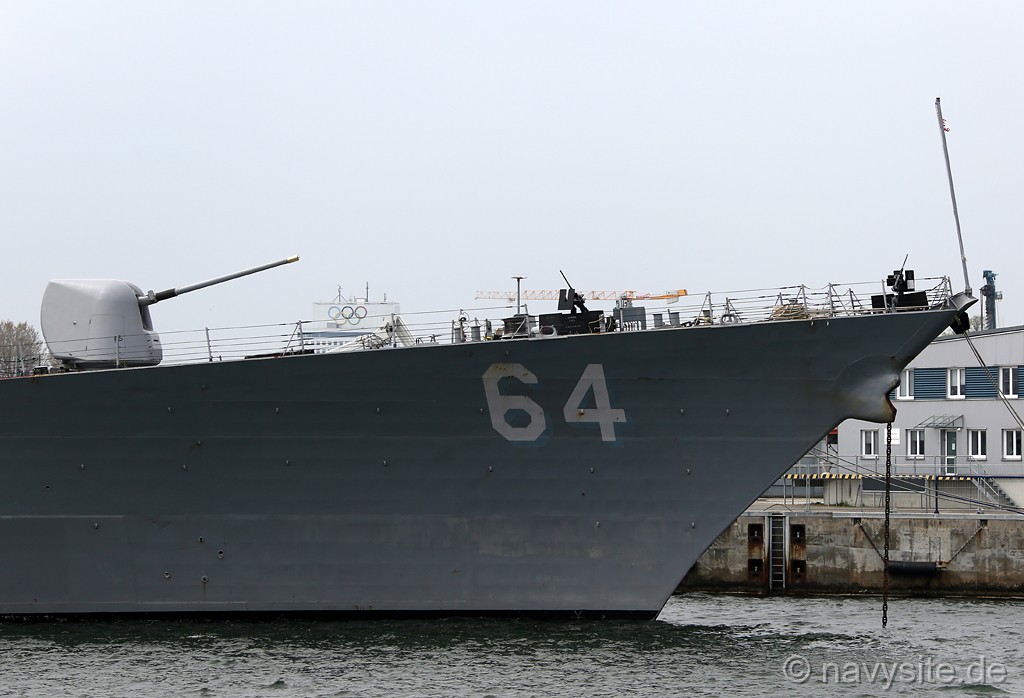
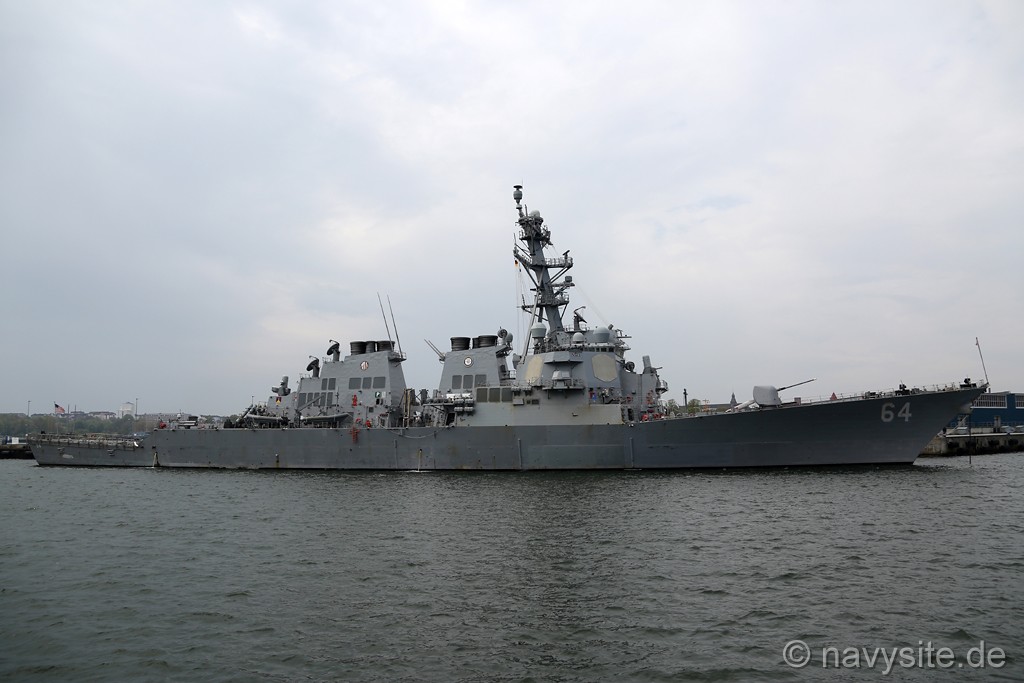
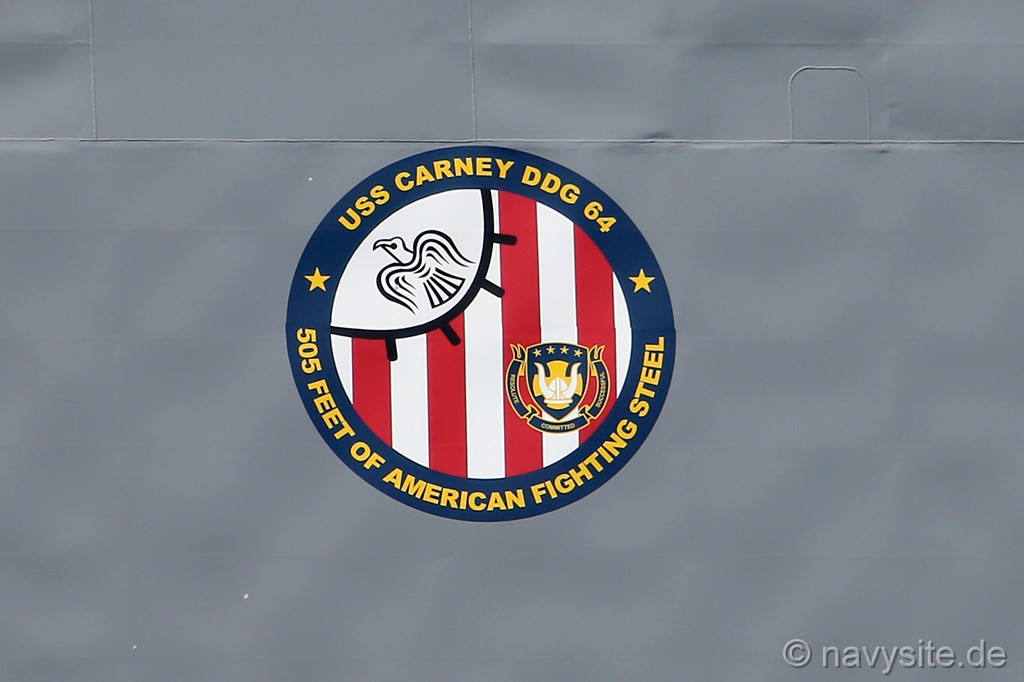
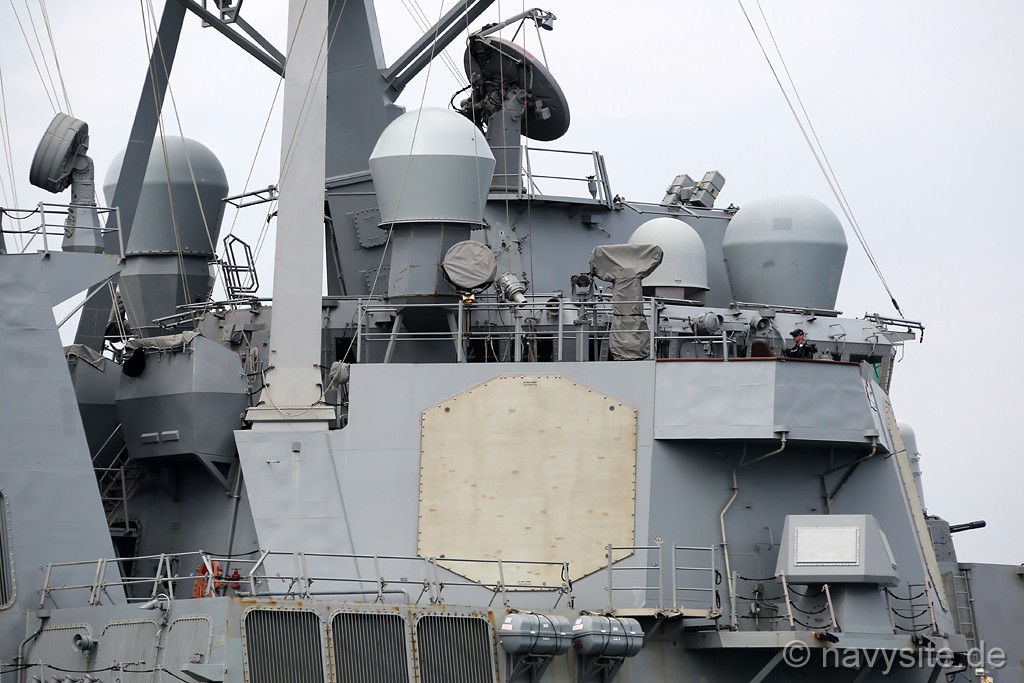
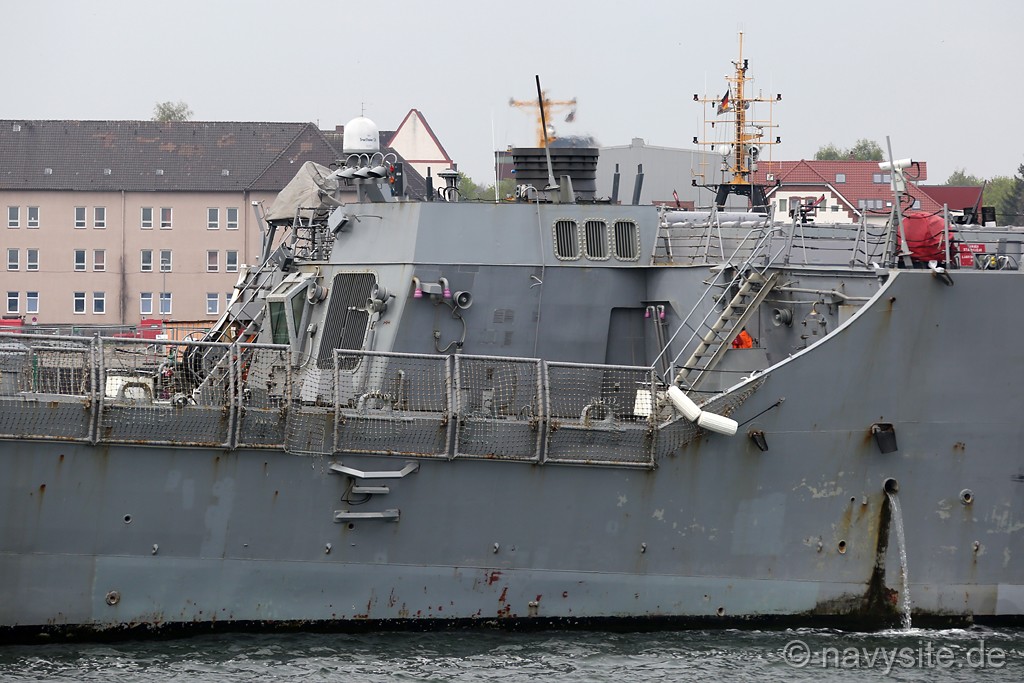
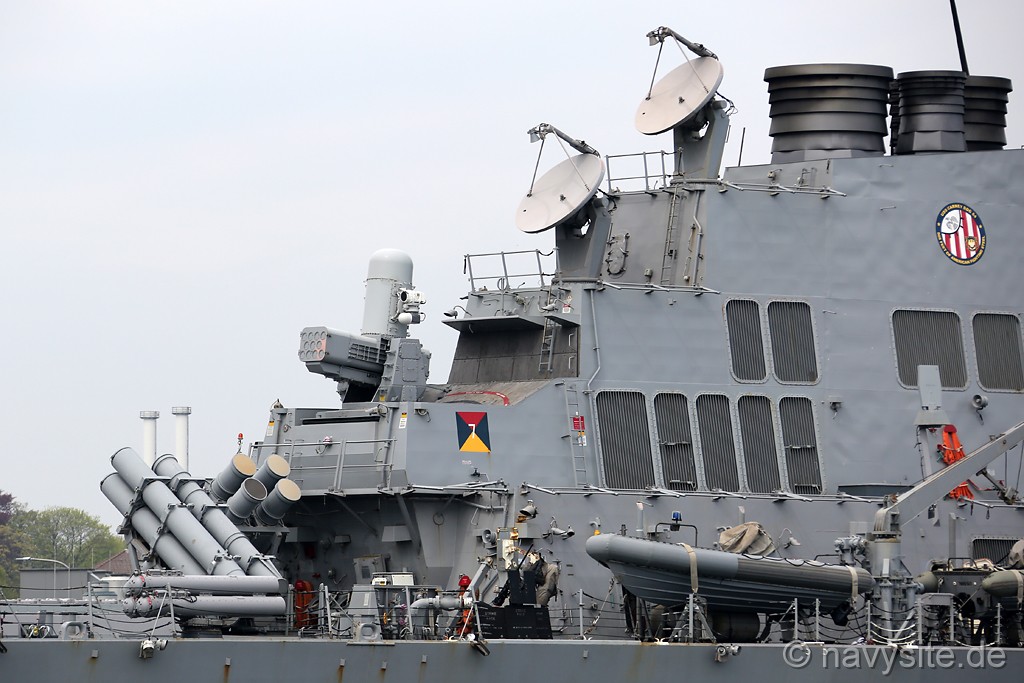
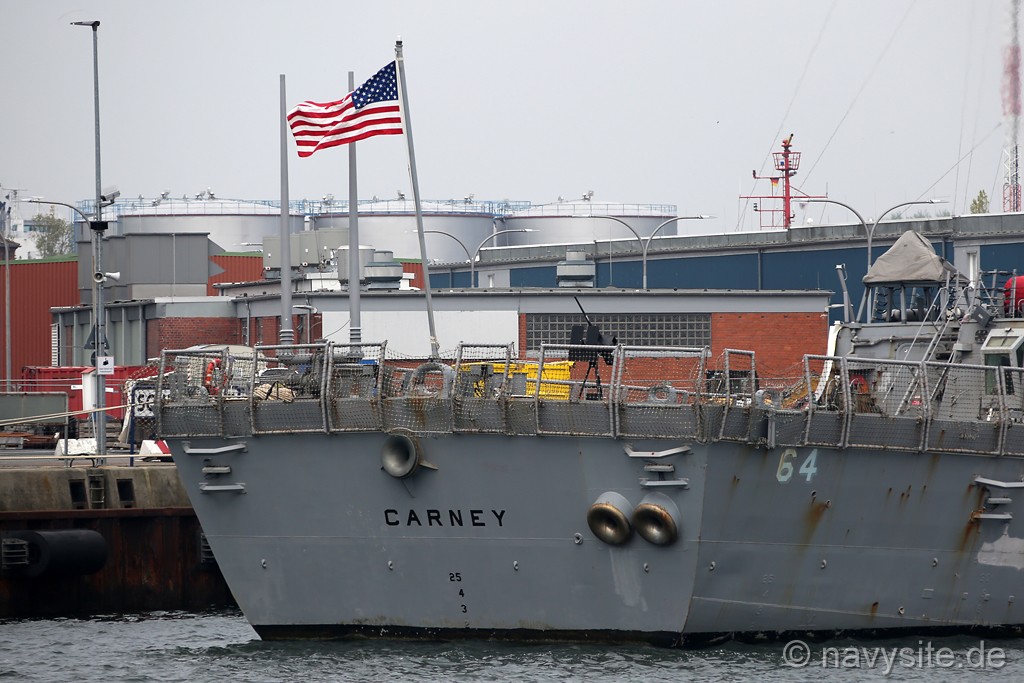
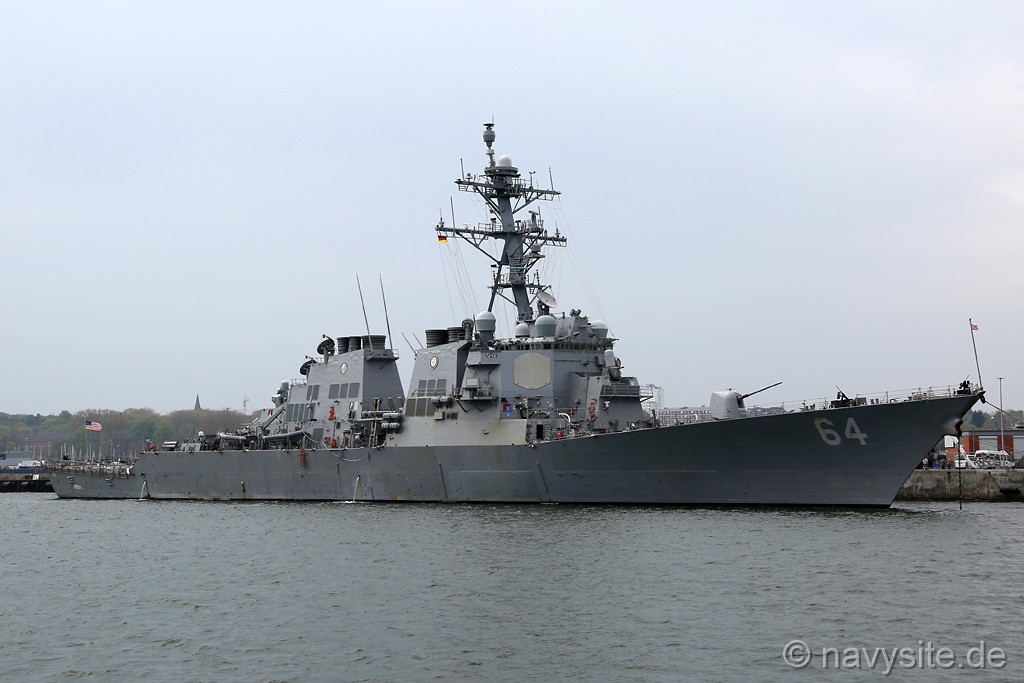
The photos below were taken by me and show the CARNEY at Naval Base Kiel, Germany, on May 12, 2017. Kiel is CARNEY's third port visit after her participation in Exercise Joint Warrior 171. After completion of Joint Warrior, CARNEY proceeded south to Plymouth, UK, for the Royal Navy's Flag Officer Sea Training (FOST). After a visit to Amsterdam, The Netherlands, CARNEY entered the Baltic Sea in early May and arrived at Kiel on May 10.


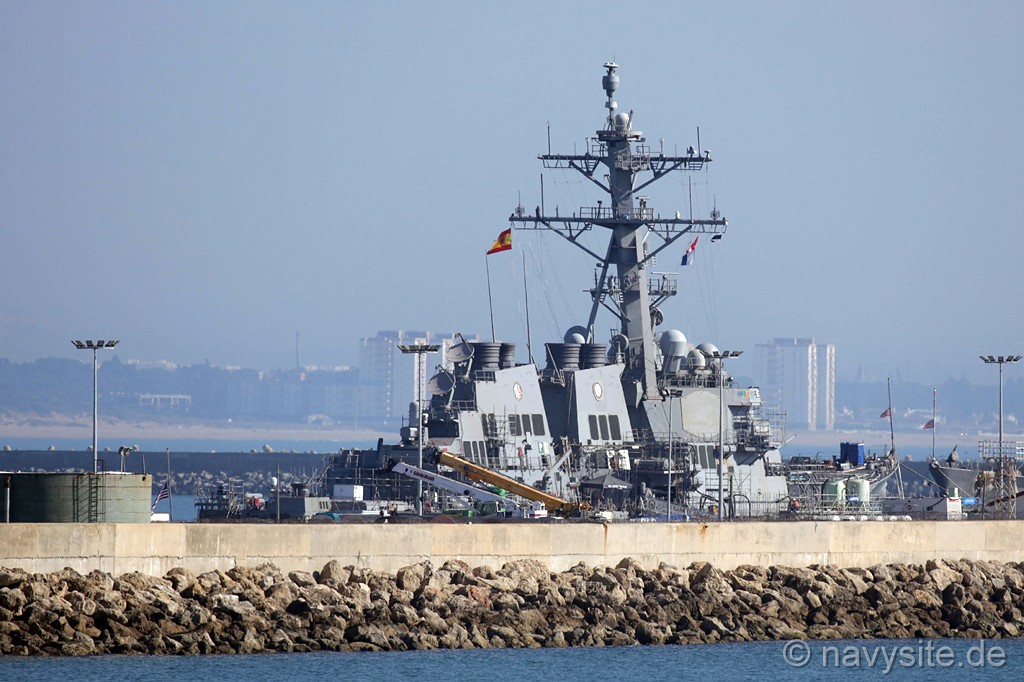
The photo below was taken by Michael Jenning and shows the CARNEY at Naval Station Rota, Spain, on February 9, 2019.


Back to topback to top


Back to Destroyers list. Back to ships list. Back to selection page. Back to 1st page.