![]() |
Search the Site with
|
![]() | ![]() | ![]() |
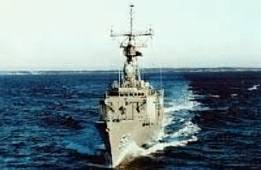
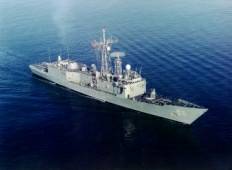
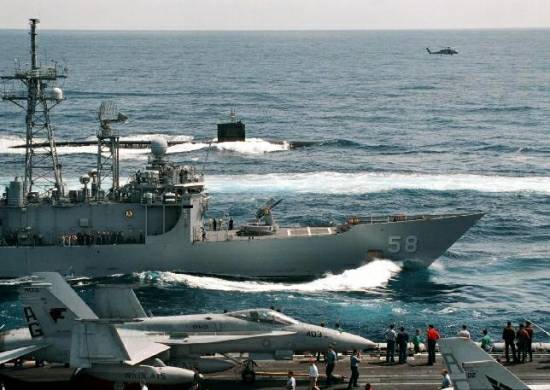
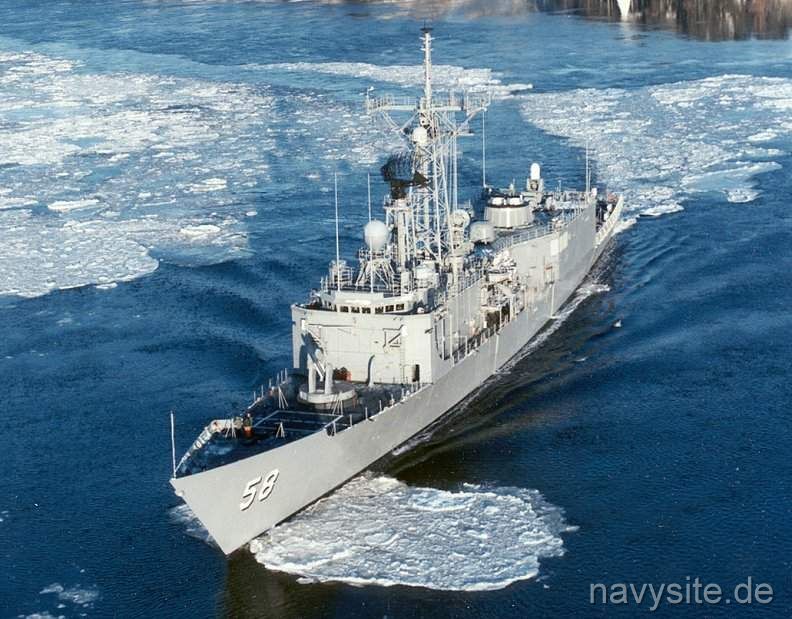
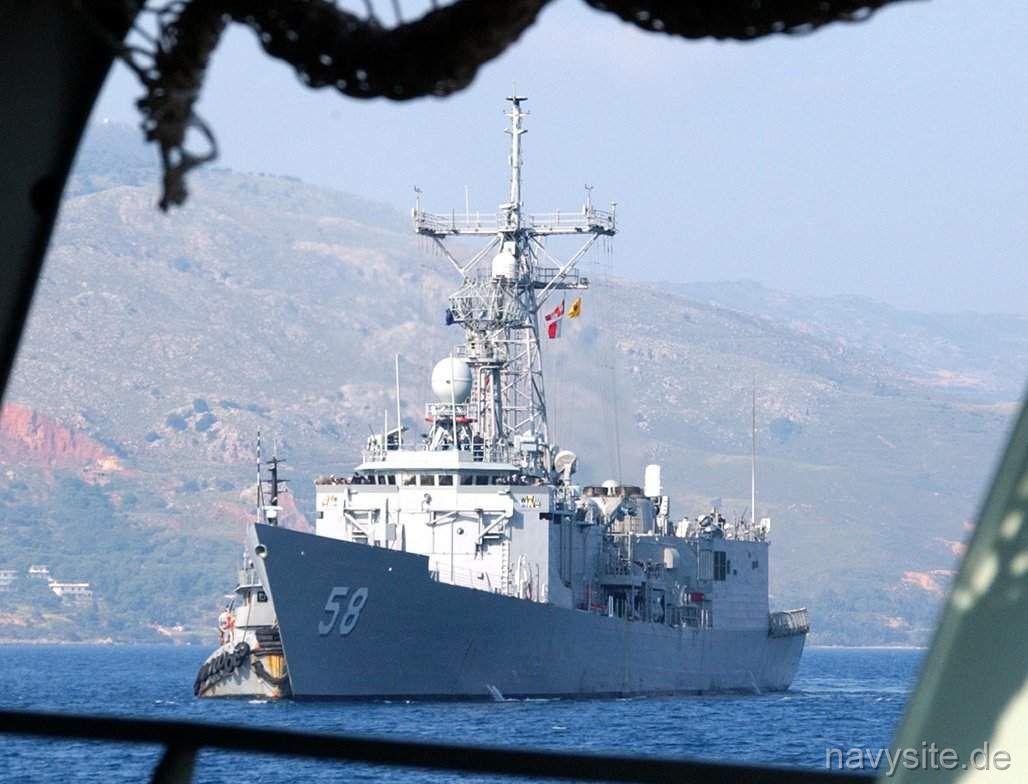
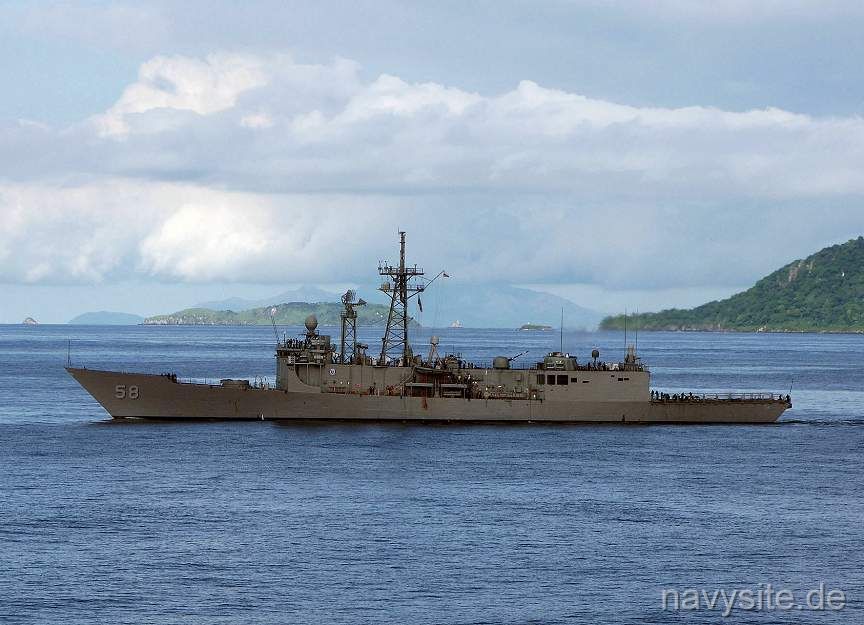
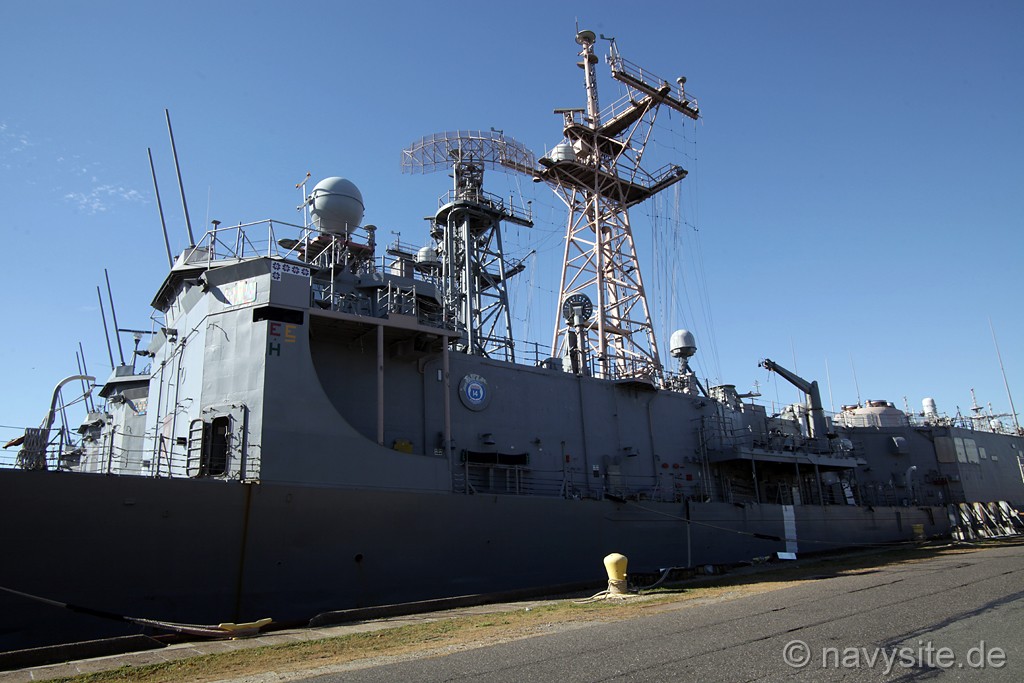
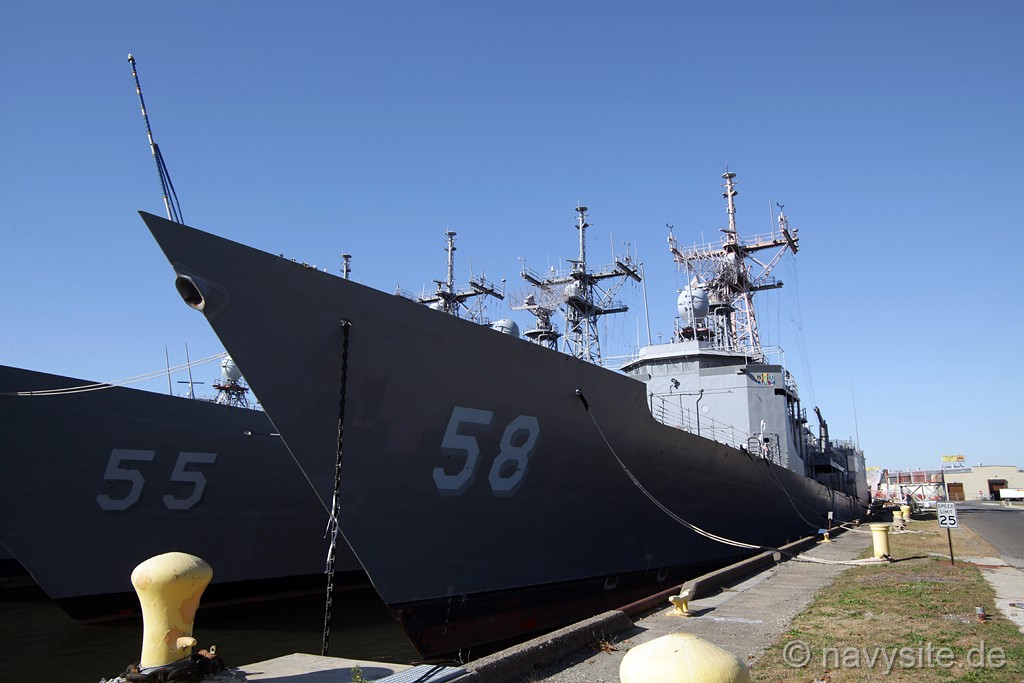
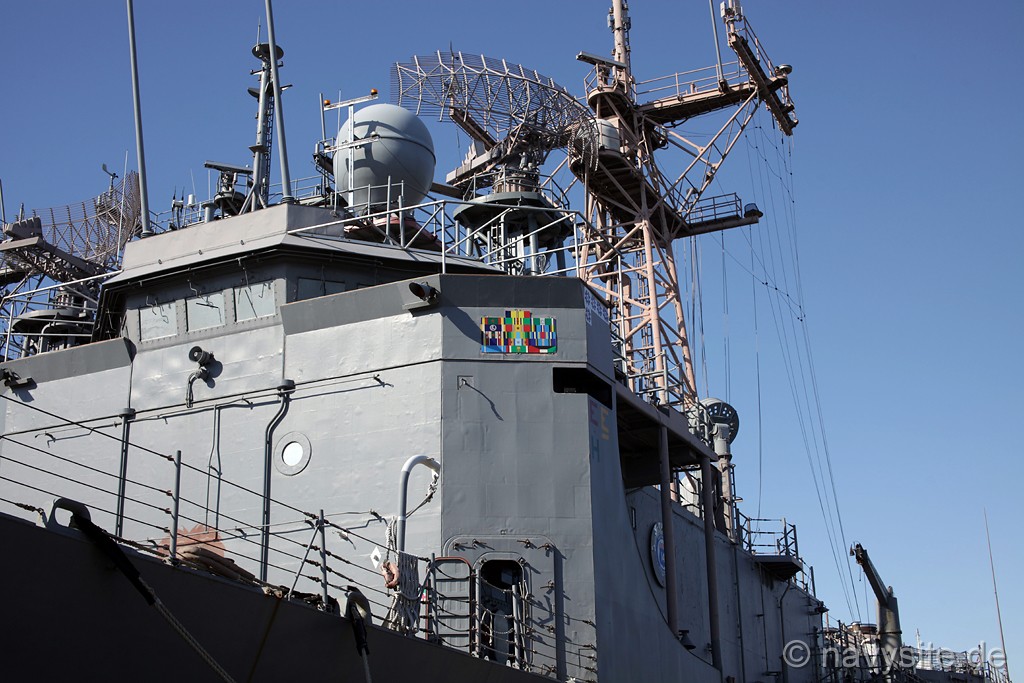
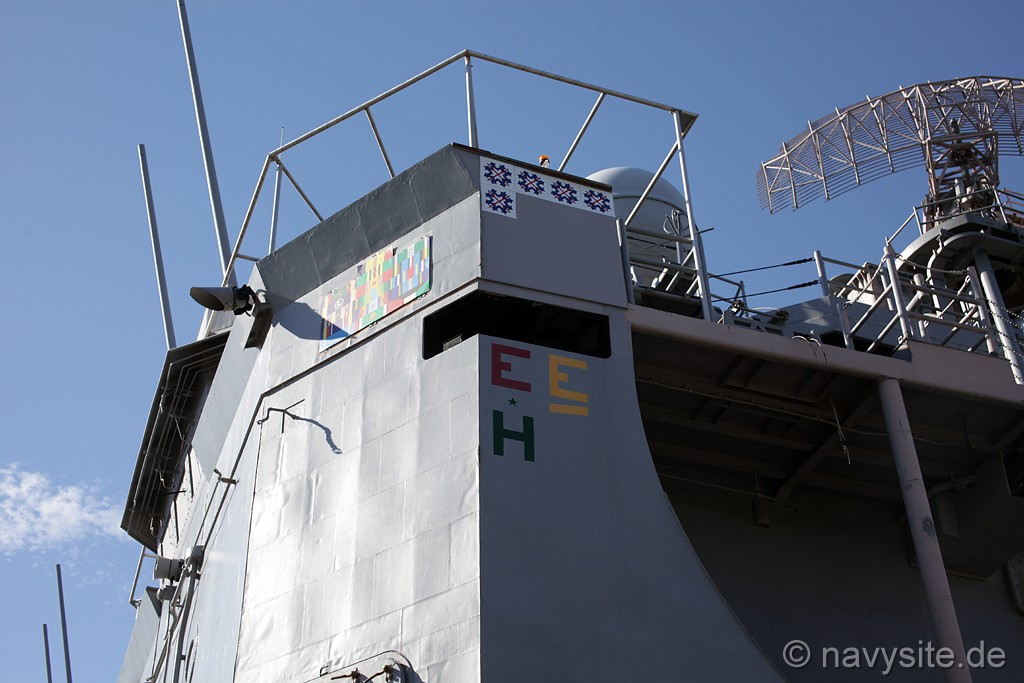
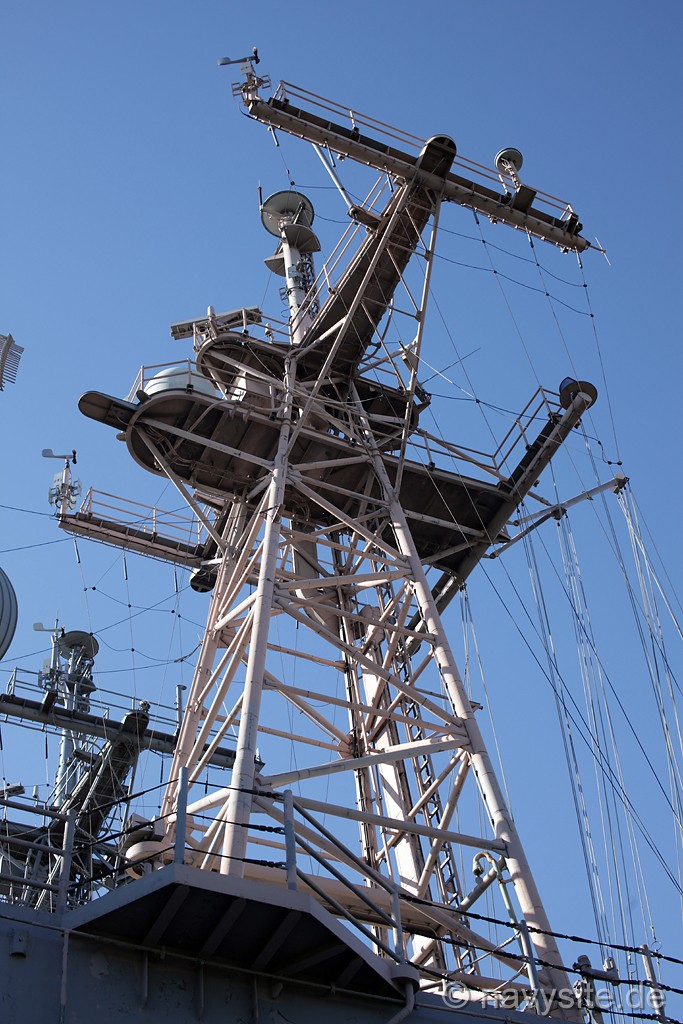
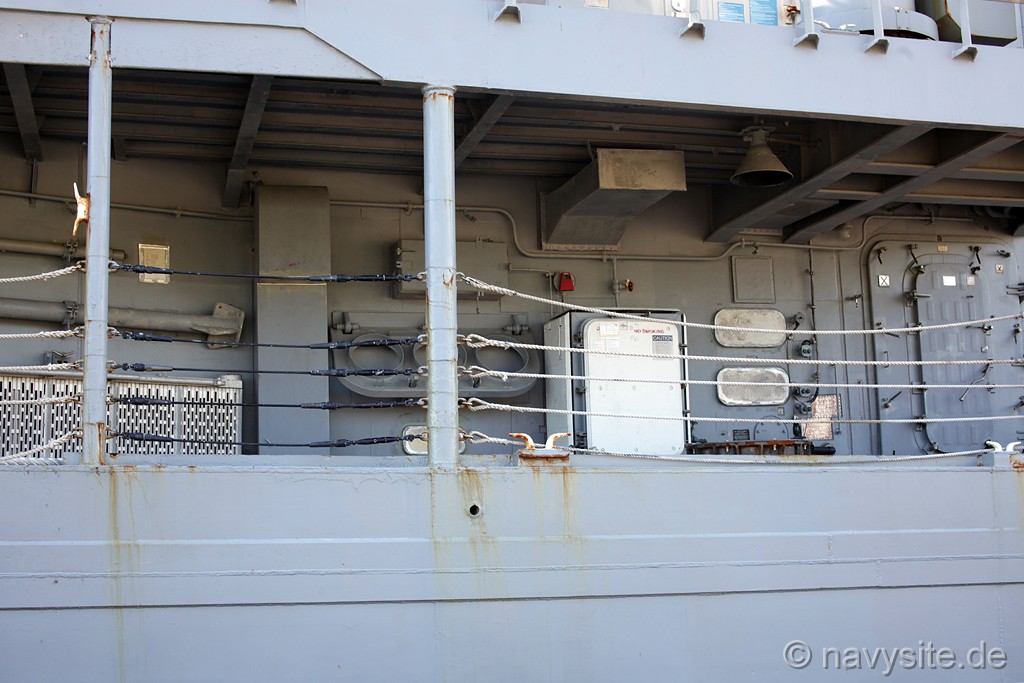
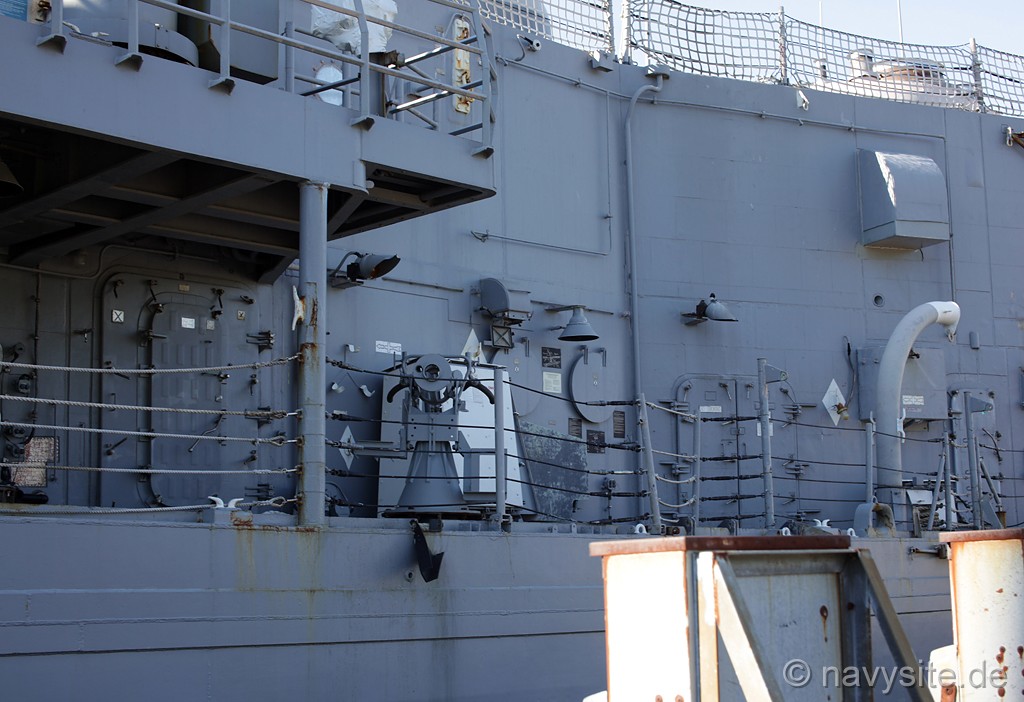
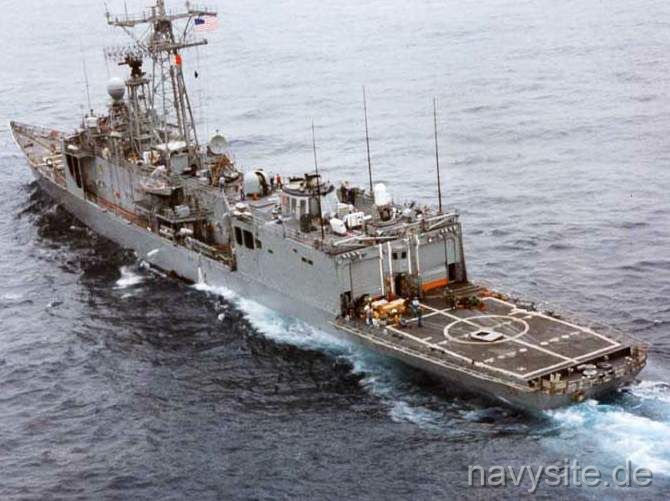
USS SAMUEL B. ROBERTS was an OLIVER HAZARD PERRY class frigate and the second ship in her class heavily damaged while in action in the Persian Gulf. USS SAMUEL B. ROBERTS was the third ship in the US Navy to bear the name. Decommissioned on May 22, 2015, the ship was subsequently laid up at the former Philadelphia Naval Shipyard until towed to Brownsville, Tx., for scrapping in late 2022.
| General Characteristics: | Keel Laid: May 21, 1984 |
| Launched: December 8, 1984 | |
| Commissioned: April 12, 1986 | |
| Decommissioned: May 22, 2015 | |
| Builder: Bath Iron Works, Bath, Maine | |
| Propulsion system: two General Electric LM 2500 gas turbines, two 350 Horsepower Electric Drive Auxiliary Propulsion Units | |
| Propellers: one | |
| Blades on each Propeller: five | |
| Length: 453 feet (138 meters) | |
| Beam: 47 feet (14.32 meters) | |
| Draft: 24,6 feet (7.5 meters) | |
| Displacement: 4,100 tons | |
| Speed: 28+ knots | |
| Aircraft: two | |
| Armament: one | |
| Crew: 17 Officers and 198 Enlisted |
Crew List:
This section contains the names of sailors who served aboard USS SAMUEL B. ROBERTS. It is no official listing but contains the names of sailors who submitted their information.
USS SAMUEL B. ROBERTS Cruise Books:

USS SAMUEL B. ROBERTS in the News:
About the Frigate's Name, about Coxswain Samuel B. Roberts:
Coxswain Samuel B. Roberts, Jr. was born in San Francisco on 12 May 1921. He enlisted in the U.S. Naval Reserve in 1939 and was called to active duty in 1940. Roberts served aboard the USS CALIFORNIA (BB 44) and the USS HEYWOOD (AD 12), before being transferred to the troop transport USS BELLATRIX (AKA 20).
In 1942, BELLATRIX was assigned to task group FOUR and became part of the Guadalcanal Assault Force. As a coxswain for the BELLATRIX's Assault (Higgins) boats, Roberts became extensively involved in the landing of supplies from ships at sea to what was a very tenuous beachhead. As a result of the heavy fighting at sea beginning 7 August 1942, Coxswain Roberts was transferred to the Beachmaster unit on the island of Guadalcanal to perform transport and medevac duties.
Early on the morning of 27 September 1942, Roberts volunteered for a rescue mission to save a company size unit of Marines who had been surrounded by a numerically superior Japanese force. Initially, the rescue group of several Hogging boats was taken under heavy fire and was perilously close to failure. Realizing the state of the rescue mission, Roberts unselfishly volunteered to distract Japanese forces by passing directly in front of their lines drawing their fire. This decoy act was performed effectively until all Marines had been evacuated. However, as he was about to withdraw from the range of the Japanese guns, Roberts' boat was hit and he was mortally wounded. For his valor and courage in the face of the enemy fire Coxswain Samuel Booker Roberts was awarded posthumously the Navy Cross which was later proudly displayed in the Wardroom of USS SAMUEL B. ROBERTS (FFG 58).
About the Ship's Coat of Arms:
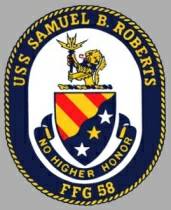
The Shield:
The shield is divided wavy blue, red and yellow, suggesting the shoreline of Guadalcanal and the Marines trapped there is September 1942. The three stars allude to the Naval Forces who volunteered to rescue the hard-pressed Marines. The gold star represents Coxswain Samuel B. Roberts, Jr., who was mortally wounded during this mission when his boat drew enemy fire away from the other boats embarking the Marines. The three stars also stand for the three ships named for Samuel B. Roberts, Jr.; the gold star denotes the current ship.
The Crest:
The lion, a symbol of courage, signifies Roberts' ultimate sacrifice for his comrades. The lion's red claws and tongue symbolize courage; the blue collar bearing a cross pattee convexed indicates that Roberts' died in battle and was awarded the Navy Cross for his gallant actions. The lion is grasping in his paws a blue torch, suggesting the passing on of Naval history. The lightening flashes represent the armament of this ship, and indicate the quick-strike capabilities of the modern warship.
The Motto:
Admiral Copeland, the LCDR, Commanding Officer of DE 413, concluded in his report of the Battle of Samar, with these words; "In the face of this knowledge, the men zealously manned their stations wherever they might be, and fought and worked with such calmness, courage, and efficiency that no higher honor could be conceived than to command such a group of men."
Accidents aboard USS SAMUEL B. ROBERTS:
USS SAMUEL B. ROBERTS History:
USS SAMUEL B. ROBERTS was an OLIVER HAZARD PERRY-class guided-missile frigate built by Bath Iron Works at Bath, Maine, named in honor of coxswain Samuel Booker Roberts Jr., who was killed while evacuating marines during the fighting around Guadalcanal in September 1942. She was launched on December 8, 1984, with Mrs. Ivonette Roberts, a relative of the namesake, serving as sponsor. After fitting out and trials, the ship was delivered to the Navy on April 1, 1986, and commissioned on April 12, 1986, at Bath with Commander Paul X. Rinn as her first commanding officer.
Assigned to the Atlantic Fleet and initially homeported at Newport, Rhode Island, USS SAMUEL B. ROBERTS spent the remainder of 1986 and early 1987 working up as a new unit. She completed the usual combination of shakedown training, inspections, and post-shakedown availability while integrating her combat systems and helicopter detachment into fleet operations along the U.S. East Coast and in the western Atlantic. Publicly available summaries do not give detailed day-by-day movements for this early phase, but they show her preparing to join the increasingly tense U.S. naval presence in the Persian Gulf as the Iran-Iraq War neared its end and attacks on merchant shipping intensified.
In late 1987, USS SAMUEL B. ROBERTS deployed to the Persian Gulf as part of the U.S. effort to protect re-flagged Kuwaiti tankers during Operation EARNEST WILL and the related covert helicopter and special-operations campaign known as Operation PRIME CHANCE. Operating with Middle East Force units in confined and heavily mined waters, the frigate escorted convoys in the central Gulf and helped provide radar picket, air-defense, and surface surveillance coverage for the oil-shipping lanes linking Kuwait and the Strait of Hormuz. The deployment placed a relatively new frigate and a largely first-tour crew into one of the most demanding operating environments of the late Cold War.
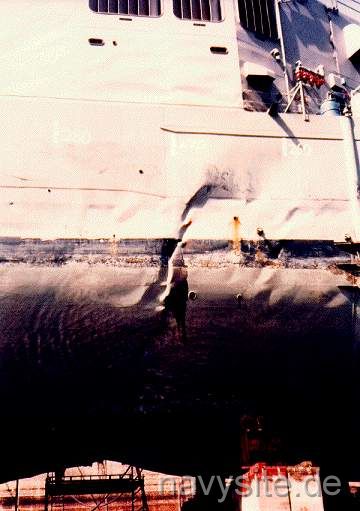
On April 14, 1988, while escorting a convoy of re-flagged tankers in the central Persian Gulf, USS SAMUEL B. ROBERTS struck an Iranian M-08 contact mine. The explosion tore a hole about 4.5 meters across in the hull and blew the two gas-turbine engines off their mounts, flooding the engine room and nearly breaking the ship's back. Ten sailors were injured badly enough to require evacuation, but none were killed. For several hours the crew fought extensive fires and flooding to keep the hull from sagging and the ship from breaking in two. The damage control effort eventually stabilized the situation sufficiently for the frigate to be taken under tow to Dubai for temporary repairs.
The mining of USS SAMUEL B. ROBERTS triggered the U.S. retaliatory strikes of Operation PRAYING MANTIS on April 18, 1988, in which other U.S. surface combatants, including USS SIMPSON (FFG 56) and USS WAINWRIGHT (CG 28), destroyed Iranian naval units and oil platforms used to support attacks on shipping. While those actions unfolded, the damaged frigate remained under tow and then in port, undergoing temporary structural reinforcement and preparation for transport out of the Gulf.
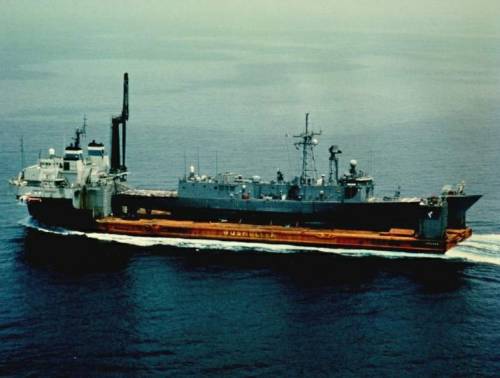
On June 27, 1988, USS SAMUEL B. ROBERTS was loaded aboard the Dutch semi-submersible heavy-lift ship MIGHTY SERVANT 2 and carried from the Gulf back to Newport, Rhode Island, under a charter that cost about $1.3 million. After off-loading, she was taken to Bath Iron Works' yard at Portland, Maine, arriving there on October 6, 1988, to begin a major reconstruction. Bath Iron Works cut out the entire machinery-spaces section and installed a 315-ton prefabricated module to replace the destroyed engine room and adjacent structure, a repair approach that was unusual in U.S. naval practice at the time. The ship undocked for post-repair trials on April 1, 1989, and after about 13 months in the yard she was formally returned to service on October 16, 1989.
In 1990, USS SAMUEL B. ROBERTS made her second major deployment, sailing to the Red Sea in support of Operations DESERT SHIELD and DESERT STORM as part of the multinational Red Sea Maritime Interception Force that enforced United Nations sanctions on Iraq. The frigate's crew conducted more than 100 boardings of merchant shipping to enforce embargoes on cargo entering or leaving Iraqi-controlled ports, an aspect of coalition strategy intended to restrict Baghdad's ability to finance and sustain its military operations. USS SAMUEL B. ROBERTS returned to Newport on March 28, 1991, after the conclusion of major combat operations and the drawdown of the interception effort.
SAMUEL B. ROBERTS only briefly settled back into routine Atlantic Fleet duties before being sent on a high-visibility inland cruise. On June 15, 1991, she departed the East Coast to enter the Great Lakes via the St. Lawrence Seaway for a six-week public relations deployment. Between June 15 and July 23, she visited a string of U.S. and Canadian ports around the Great Lakes, including Ogdensburg and Buffalo in New York, Windsor in Ontario, Milwaukee and Muskegon in Michigan, Chicago in Illinois, and Montreal in Quebec. The cruise combined "show the flag" presence, recruiting, and community-relations events at each port, with ship tours and receptions emphasizing the ship's survival and repair after the 1988 mine strike and her recent role in enforcing U.N. sanctions during the Gulf War.
Following her return from the Great Lakes in late July 1991, SAMUEL B. ROBERTS resumed operations with the Atlantic Fleet from Newport. Publicly available summaries do not list detailed day-by-day activities for the remainder of 1991 and early 1992. They simply record that the frigate remained in commission and in service with the Atlantic Fleet while the crew maintained the high readiness that had characterized the Desert Storm deployment. The ship's performance in this period is reflected indirectly in later award summaries noting a Navy "E" Ribbon (Battle Efficiency) for 1992, indicating that SAMUEL B. ROBERTS was judged among the most tactically proficient and well-run ships in her type within the Atlantic Fleet.
By late 1992, the focus of U.S. overseas operations had shifted from the Middle East to humanitarian crises elsewhere, notably the civil war and famine in Somalia. As part of this pivot, SAMUEL B. ROBERTS deployed again to the Indian Ocean and waters off the Horn of Africa in support of the United Nations operation in Somalia, known as Operation Restore Hope. Contemporary Navy historical summaries and later official evaluations make clear that the frigate's role in this period formed the basis for a Meritorious Unit Commendation explicitly associated with RESTORE HOPE, and crew eligibility for the Armed Forces Expeditionary Medal and Armed Forces Service Medal.
The frigate's tasks in this deployment involved maritime presence and escort in the approaches to Somalia, support to the multinational task force protecting relief convoys, and enforcement of embargoes designed to stabilize the situation onshore. Exact day-by-day dates and a complete list of port visits from this deployment are not available in the accessible official summaries, but the operation itself ran from late 1992 into 1993, and SAMUEL B. ROBERTS' documented unit award confirms her direct participation alongside other U.S. and coalition ships providing seaward security for the humanitarian mission.
Through 1993 and into 1994, SAMUEL B. ROBERTS continued to operate with the Atlantic Fleet in the post-Cold-War environment, where the U.S. Navy was reorienting from a single major adversary to a series of regional contingencies and peacekeeping operations. Award records show that in 1993, the ship not only received the Meritorious Unit Commendation for RESTORE HOPE but was also recognized in the Battenberg Cup competition as the Atlantic Fleet's best surface combatant, reflecting sustained excellence across seamanship, engineering readiness, and tactical performance rather than a single isolated event.
Although publicly available summaries for these years do not provide a continuous log of every exercise or port visit, they indicate that SAMUEL B. ROBERTS remained fully active, conducting Atlantic and Mediterranean operations consistent with the broader pattern of U.S. 6th Fleet and joint/combined activities in the immediate post-Gulf-War era.
The mid-1990s brought a return to more traditional blue-water deployments. In 1996, SAMUEL B. ROBERTS undertook a deployment that included the North Atlantic and the Mediterranean Sea. A concise post-hoc summary, drawing on official Navy histories, notes that during this deployment, she made a documented port call at Gibraltar from July 11 to July 12, 1996, while operating in the Mediterranean. The visit to Gibraltar fits into a wider pattern of U.S. surface combatants working with allied navies under NATO and national tasking in the mid-1990s, at a time when NATO was heavily engaged with peace support operations in the Balkans and with maintaining maritime stability across the Mediterranean. NAVSEA's historical evaluation of the ship also records that SAMUEL B. ROBERTS' 1996 activities contributed to the crew's eligibility for multiple awards of the Armed Forces Service Medal that year, reflecting participation in operations deemed non-combat but operationally significant, likely related to peacekeeping or enforcement missions within that theater.
During the later 1990s, the ship's operational pattern included further expeditionary deployments recognized by the award of the Armed Forces Expeditionary Medal in 1997 and 1998. The precise names of those operations and a detailed list of ports for each deployment are not specified in the accessible official summaries; however, the nature of that medal implies that SAMUEL B. ROBERTS was again employed outside routine peacetime exercises, in operations that involved significant overseas presence under conditions short of declared war. These might have included combined maritime security, embargo-enforcement, or crisis-response patrols in regions such as the Mediterranean, Red Sea, or Persian Gulf, in line with the general mission set of PERRY-class frigates at the time, but the surviving higher-level summaries do not assign a specific operation name to the ship for those years, so they cannot be identified with certainty here.
One discrete, photographically documented episode from this period occurred on March 2, 2000, when SAMUEL B. ROBERTS was recorded in Gibraltar in company with the guided-missile destroyer USS CARNEY (DDG 64). A contemporary caption from a U.S. Navy photo archive notes both ships together at Gibraltar on that date, indicating that SAMUEL B. ROBERTS was again operating in the 6th Fleet area of responsibility at the turn of the millennium, likely as part of a broader Atlantic-Mediterranean deployment that attracted award of the Armed Forces Expeditionary Medal for 2000.
By the late 1990s and into 2000-2001, SAMUEL B. ROBERTS was clearly operating from Naval Station Mayport, Florida, which is consistently listed as her homeport in decommissioning-era documentation and late-career summaries. The exact date of the formal homeport change from Newport to Mayport is not specified in the accessible, authoritative sources, but by the end of the decade the ship is firmly associated with Mayport and with Destroyer Squadron-level organizations based there, reflecting wider Atlantic Fleet realignments of PERRY-class frigates in the mid-1990s. From Mayport, she continued to deploy to the Caribbean, Atlantic, and Mediterranean, alternating between extended deployments, shorter exercises, and maintenance/upkeep periods.
After the attacks of September 11, 2001, USS SAMUEL B. ROBERTS continued to serve in Atlantic and Caribbean waters during the opening phases of the global war on terror.
In 2002, USS SAMUEL B. ROBERTS spent nearly six months as the only U.S. Navy ship assigned to the NATO Standing Naval Force Atlantic (STANAVFORLANT / SNFL). She joined the force in late January, completed about two weeks of intensive warfare training in all mission areas, and then took part in the exercise Unified Odyssey off the Portuguese island of Porto Santo, which simulated a maritime crisis-response operation after a major earthquake with a threatened volcanic eruption. Over the following months she operated with units from Denmark, Germany, France, Italy, the Netherlands, Norway, Poland, Portugal, Spain, and the United Kingdom, riding out heavy winter weather in the North Atlantic and Norwegian fjords, and visiting ports including Bergen and Trondheim in Norway and Lisbon in Portugal.
In March she participated in the large-scale exercise Strong Resolve 2002, focused on the defense of the Norwegian coast. After another stop in Lisbon the force shifted into the Mediterranean, where SAMUEL B. ROBERTS spent about two months in Operation Direct Endeavor as the maritime contribution to Operation Enduring Freedom, monitoring merchant traffic, using her embarked helicopter to identify and report contacts, and tracking more than 600 ships before returning to Naval Station Mayport, Florida, on July 5, 2002.
On September 25, 2003, commanded by Commander Michael A. Hall and homeported at Mayport, USS SAMUEL B. ROBERTS departed for a deployment to the U.S. Naval Forces Southern Command and U.S. 4th Fleet area of responsibility, focusing on counter-drug operations in the eastern Pacific and Caribbean. During this deployment, she worked closely with U.S. Coast Guard law-enforcement detachments and embarked SH-60B helicopters to detect and intercept drug-smuggling vessels. In late 2003 and early 2004, she operated in the eastern Pacific as part of Joint Interagency Task Force-South's layered interdiction architecture. On January 9, 2004, the Navy reported that USS SAMUEL B. ROBERTS, working with Coast Guard LEDET 403 and an embarked helicopter from Helicopter Anti-Submarine Squadron Light 44 Detachment 7, had intercepted a suspicious wooden vessel. The suspects attempted to scuttle and burn their craft, but the boarding team and ship's firefighting parties salvaged the hull and later uncovered more than 7,000 pounds of cocaine concealed in a false water tank, one of several seizures that together totaled more than nine metric tons of cocaine during this deployment. She returned to Mayport on March 19, 2004, completing roughly six months of counter-drug and theater-security operations under U.S. Southern Command.
In 2005, USS SAMUEL B. ROBERTS took part in UNITAS 46-05, the long-running multinational naval exercise series with Latin American partners. In July 2005, she operated in the Pacific phase off Colombia and neighboring waters, working alongside navies and coast guards from Colombia, Chile, Ecuador, Peru, Panama, and the United States. Photographs from July 11, 2005, show the frigate steaming alongside the Coast Guard cutter USCGC FORWARD (WMEC 911) during these exercises, and images from July 19, 2005, depict USS SAMUEL B. ROBERTS maneuvering in formation with the multinational force prior to live-fire events.
Later that year, she participated in UNITAS 47-06 Atlantic Phase. On October 21, 2005, she executed divisional tactical maneuvers in the Atlantic alongside units from Argentina, Brazil, Spain, and Uruguay as part of that iteration of UNITAS, which focused on improving interoperability and coalition tactics across the South Atlantic. According to her official history, she also conducted further drug-interdiction operations toward the end of 2005, again under U.S. Naval Forces Southern Command.
In October 2006, USS SAMUEL B. ROBERTS participated in the British-led exercise NEPTUNE WARRIOR off the United Kingdom, a complex joint and multinational training event designed to hone anti-submarine warfare, air defense, and maritime interdiction skills among NATO and partner navies. Her inclusion reflected her role as a flexible escort capable of working with European and North American forces in high-end warfare scenarios.
The ship's 2007 schedule was dominated by the Partnership of the Americas (POA) 2007 deployment to South America. Official summaries record that USS SAMUEL B. ROBERTS arrived at Fort-de-France, Martinique, for the first port visit of this deployment, then continued south to participate in PANAMAX 2007, a large multinational exercise focusing on the defense of the Panama Canal and surrounding sea lanes. Later in 2007, after Hurricane Felix struck parts of Central America in early September, the frigate supported rescue and relief operations in Honduras, with embarked helicopters and small boats helping to move supplies into affected coastal areas.
In 2008, USS SAMUEL B. ROBERTS was again active in the U.S. Southern Command area. Her official history notes that she conducted rescue missions in Panama following catastrophic flooding, in addition to continued counter-drug patrols that extended into 2009. On December 2, 2008, while on patrol in the eastern Pacific with Helicopter Anti-Submarine Squadron Light 60 Detachment 2 and Coast Guard LEDET 402 embarked, she pursued a go-fast smuggling vessel into Panamanian waters. After the suspect craft was abandoned, the U.S. forces recovered 41 bales of cocaine, more than a metric ton of drugs, from the sea surface, again in coordination with U.S. 4th Fleet and Joint Interagency Task Force-South.
That deployment continued into 2009. In its latter stages, USS SAMUEL B. ROBERTS operated in the Caribbean, including the Honduran Rise area, conducting counter-illicit trafficking operations and working with regional navies. On April 2, 2009, she made a brief refueling and logistics stop at Naval Station Guantanamo Bay, Cuba, while nearing the end of a six-month deployment that had included transits of the Panama Canal, port visits such as Panama City, and several community-relations projects, including support to a school in Honduras and hosting Honduran naval personnel on board. The ship carried two SH-60B helicopters and had seized hundreds of bales of cocaine during the first half of the cruise before returning to Mayport shortly after departing Guantanamo.
According to the Naval Sea Systems Command historical evaluation, later in 2009 USS SAMUEL B. ROBERTS deployed for about four months in support of Africa Partnership Station (APS) West, a U.S. Naval Forces Europe-Africa initiative aimed at building maritime capacity with West African navies. This deployment spanned into 2010 and involved training and engagement activities along the West African coast, though most of the detailed port-by-port movements remain in internal reports rather than public summaries.
During one of these West African training periods in 2010, the Nigerian Navy patrol boat BURUTU collided with USS SAMUEL B. ROBERTS during a maneuvering exercise. The frigate had warned the smaller ship by loudspeaker that it was on a collision course, but BURUTU nevertheless scraped along the U.S. warship's side. The incident caused damage that required approximately $371,000 in maintenance and repairs to the frigate but did not significantly alter her overall deployment schedule. Imagery from March 5, 2010, shows USS SAMUEL B. ROBERTS visiting Madeira, Portugal, during this period, likely as part of her trans-Atlantic movements associated with Africa-oriented operations.
In 2011, the frigate first participated in the multinational exercise JOINT WARRIOR 2011-1 off Scotland, integrating with allied surface, air, and submarine forces in complex scenarios that simulated high-intensity maritime conflict. Later that year, she shifted to the U.S. 6th Fleet area in support of Africa Partnership Station East. Her APS East deployment included a series of port visits along the East African littoral: she called at Mombasa, Kenya; Dar es Salaam, Tanzania; and Victoria in the Seychelles, conducting maritime-security training and community-relations events with regional partners.
During the same 2011 deployment, USS SAMUEL B. ROBERTS acted as the at-sea U.S. platform for the inaugural exercise CUTLASS EXPRESS, held from October 25 to 28, 2011, in the Somali Basin. Operating near the coasts of Tanzania, Kenya, and the Seychelles, she embarked boarding teams from the Uganda People's Defence Force and hosted ship-riders from the South African Navy, including the commanding officer of the patrol vessel SAS TEKWAME (P 1554). The frigate provided a venue for live boarding-operations training, communications drills, and multinational coordination designed to improve regional counter-piracy capabilities. CUTLASS EXPRESS was conducted under the broader framework of Africa Partnership Station, emphasizing information sharing and cooperative maritime security among Djibouti, Mauritius, Mozambique, Tanzania, the Seychelles, Uganda, the United States, and other regional actors.
On August 26, 2011, during this deployment, USS SAMUEL B. ROBERTS arrived in Maputo, Mozambique, for a four-day goodwill visit that included cultural and outreach activities with Mozambican sailors and local children before departing on August 29 to resume operations.
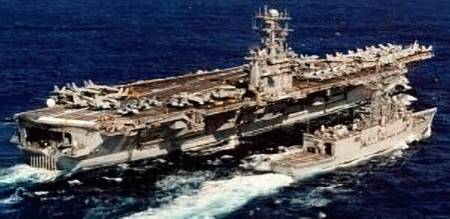
In 2012, USS SAMUEL B. ROBERTS operated closer to home, serving as a simulated opposition-force unit during the ENTERPRISE (CVN 65) Carrier Strike Group's Composite Training Unit Exercise (COMPTUEX). In that role, she helped test the strike group's ability to detect, track, and counter realistic surface threats, a key step before the carrier undertook its final deployment.
The following year, the frigate again prepared for independent deployment. In 2013, she completed a three-week Independent Deployer Certification Exercise, validating her ability to operate without an attached carrier strike group. She then deployed to the Mediterranean under 6th Fleet, supporting U.S. Africa Command counter-terrorism, intelligence, surveillance, and reconnaissance missions. For this deployment, USS SAMUEL B. ROBERTS embarked four MQ-8B Fire Scout unmanned aerial vehicles in addition to her usual helicopter detachment, using the Fire Scouts to extend her surveillance reach over maritime approaches and coastal areas of interest. Photographs from August 19, 2013, show her visiting Souda Bay, Crete, during this cruise, a routine logistics and rest stop that also underscored the enduring role of that base in supporting U.S. naval operations in the Mediterranean.
On October 23, 2013, after six months deployed to the central Mediterranean and Africa Command area of responsibility, USS SAMUEL B. ROBERTS returned to Naval Station Mayport. Over the course of this deployment, she set a Navy record of 1,712 Fire Scout flight hours in support of assigned missions, surpassing the previous record by more than 800 hours. Contemporary reports emphasized her contribution to maritime domain awareness and intelligence collection along the North African littoral and central Mediterranean sea lanes during a period of instability in parts of the region.
In 2014, the frigate continued to operate primarily in the North Atlantic and Mediterranean. She took part in JOINT WARRIOR 14-1 off Scotland from March 30 through April 10, working with a range of NATO and partner units in complex anti-submarine, anti-surface, and air-defense scenarios designed to simulate high-end conflict in northern waters. In June 2014, USS SAMUEL B. ROBERTS deployed again to the Mediterranean with an embarked Helicopter Maritime Strike Squadron (HSM), once more supporting U.S. Africa Command counter-terrorism, intelligence, surveillance, and reconnaissance missions. These deployments reflected the U.S. Navy's increasing reliance on small surface combatants and unmanned aviation to maintain persistent presence and awareness in regions characterized by diffuse security challenges rather than large-scale naval conflict.
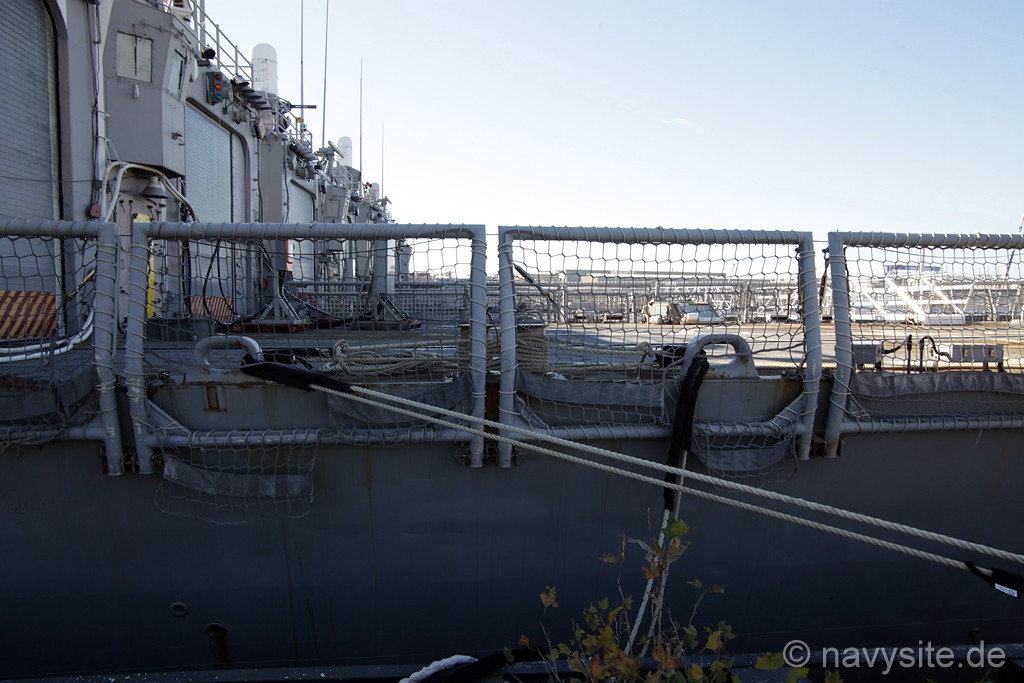
By 2015, USS SAMUEL B. ROBERTS had been in commission for nearly twenty-nine years. She was decommissioned at Naval Station Mayport on May 22, 2015, and her name was struck from the Naval Vessel Register the same day, closing the active-duty career of the third U.S. Navy ship to bear the name. Subsequently, she was towed to the Naval Inactive Ship Maintenance Facility at Philadelphia, Pennsylvania, where she remained laid up until she was moved in late 2022 to a ship-recycling facility at Brownsville, Texas, for scrapping, bringing to an end a service life that had begun amid the final decade of the Cold War and extended into the complex maritime security environment of the early twenty-first century. Her formal decorations, including the Combat Action Ribbon, Meritorious Unit Commendations, the Battenberg Cup recognition in 1993, and multiple Battle "E" awards, reflect a service history that spanned from high-end Cold War confrontation through the diverse missions of the post-Cold War and post-9/11 eras.

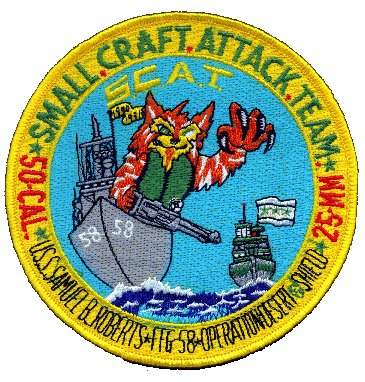
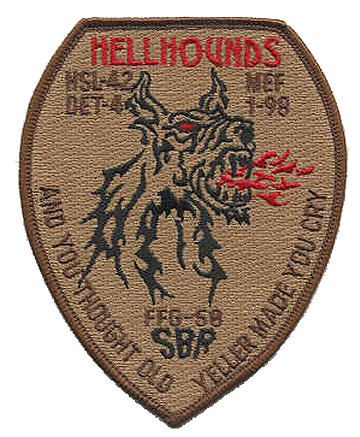
USS SAMUEL B. ROBERTS Patch Gallery:
![]() | ![]() |
USS SAMUEL B. ROBERTS Image Gallery:
![]() | ![]() | ![]() | ![]() | ![]() |
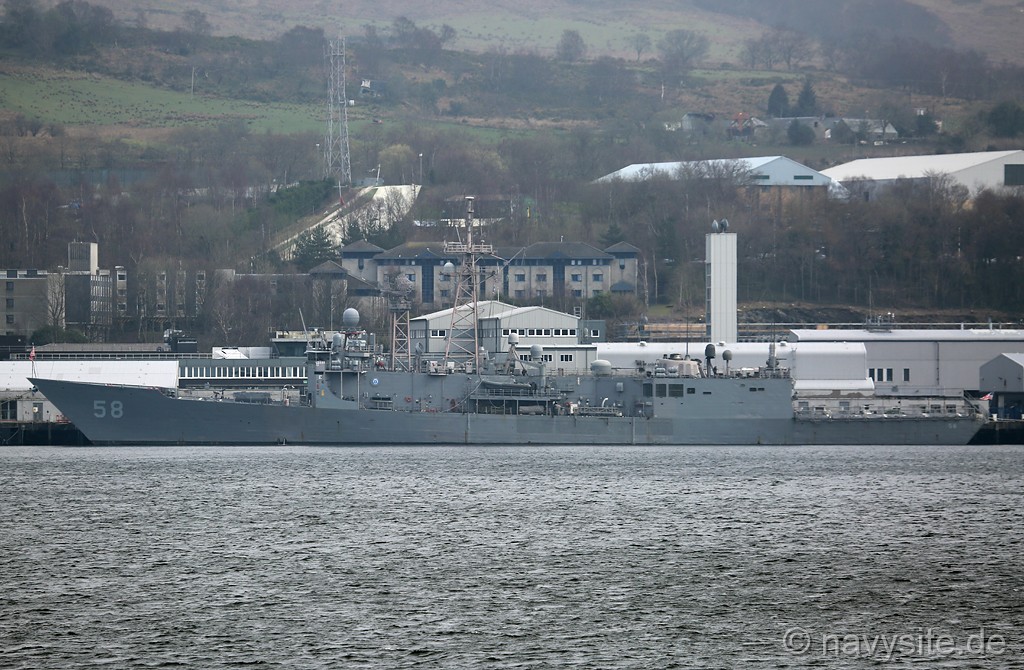
The photo below was taken by me and shows the SAMUEL B. ROBERTS at Royal Navy Base Clyde in Faslane, Scotland, on March 30, 2014. She is visiting Scotland to participate in Exercise Joint Warrior 14-1, however, she did not depart Faslane with the other US ships due to technical problems.
![]() |
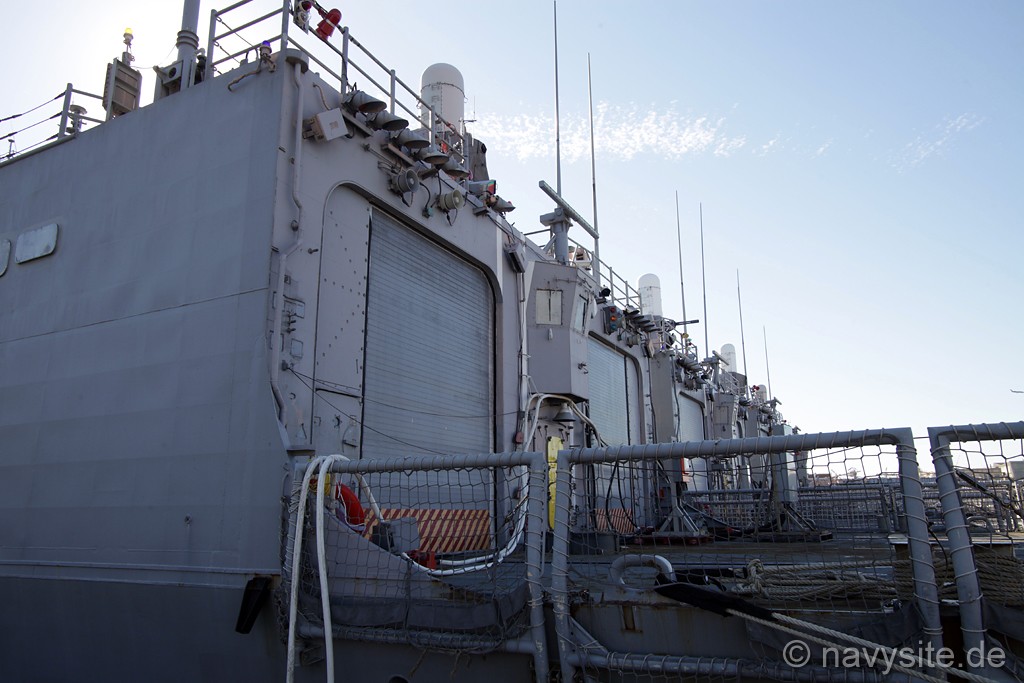
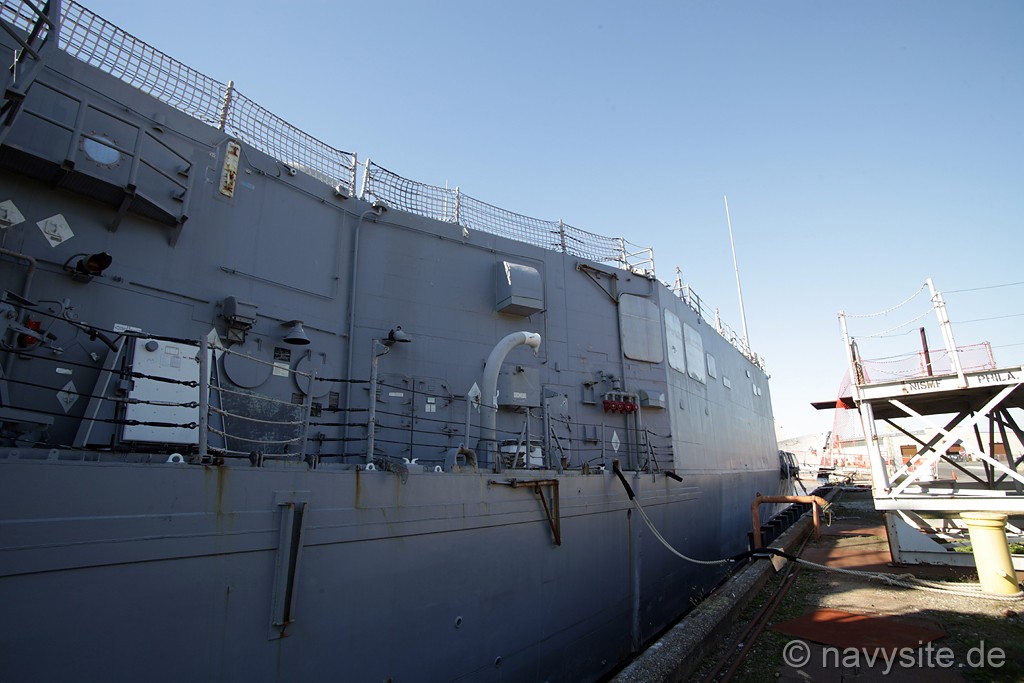
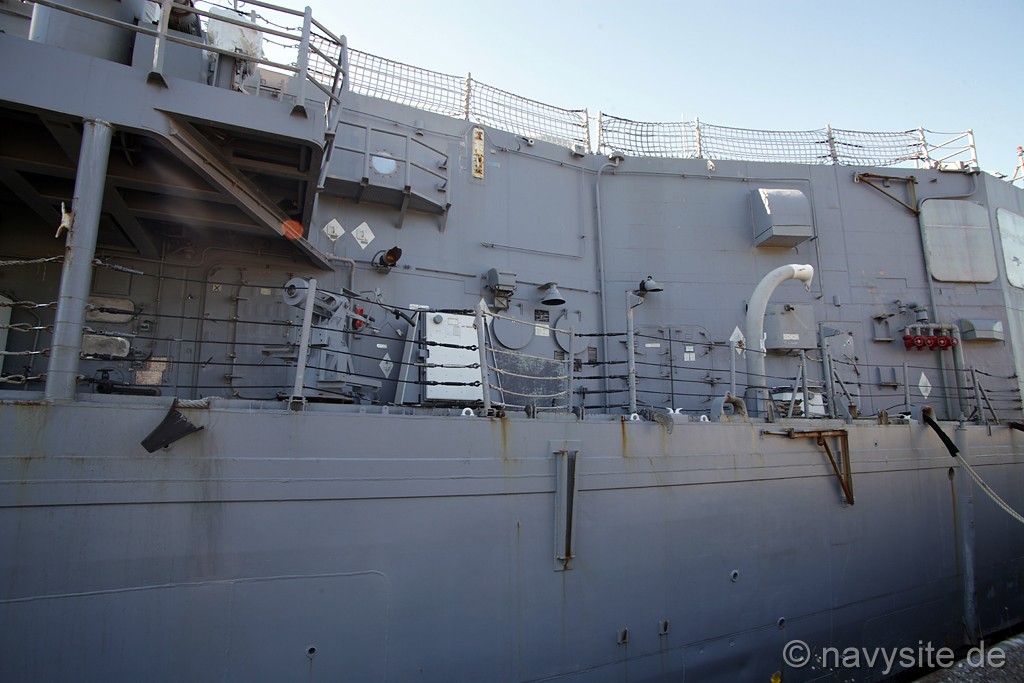
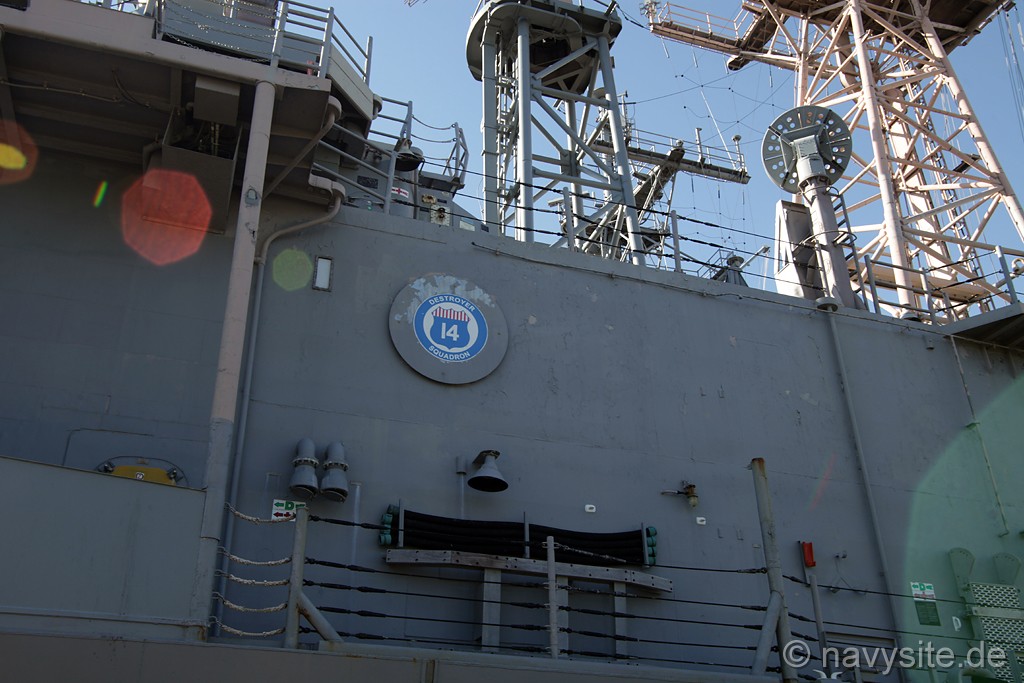
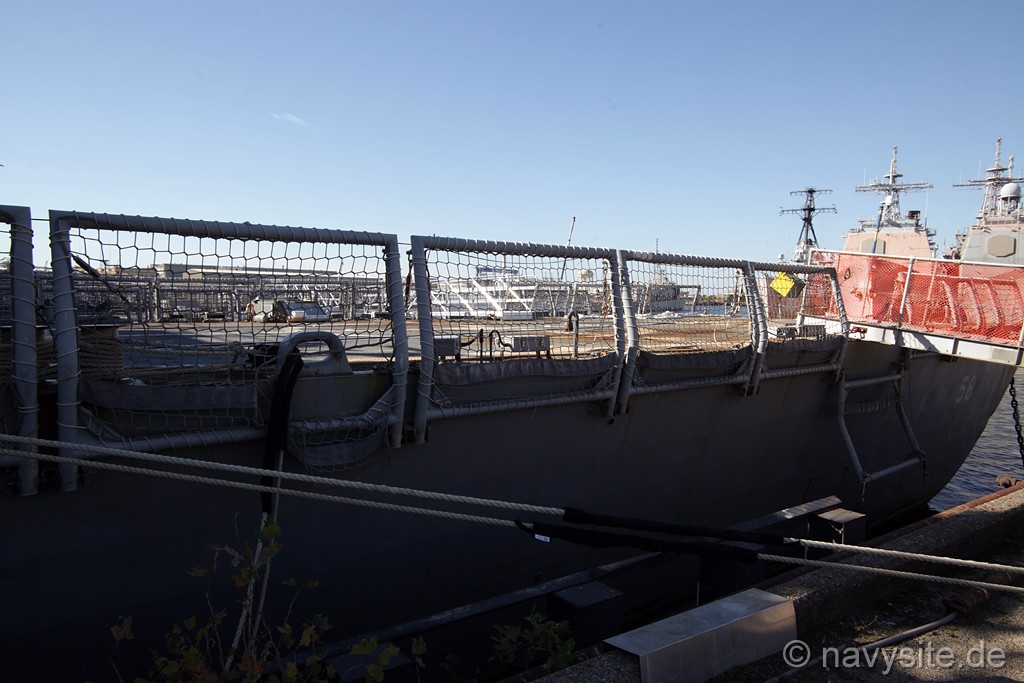
The photos below were taken by Michael Jenning and show the SAMUEL B. ROBERTS laid up at the former Philadelphia Naval Shipyard, Philadelphia, Penn., on October 16, 2015.
![]() | ![]() | ![]() | ![]() | ![]() |
![]() | ![]() | ![]() | ![]() | ![]() |
![]() | ![]() | ![]() | ![]() |
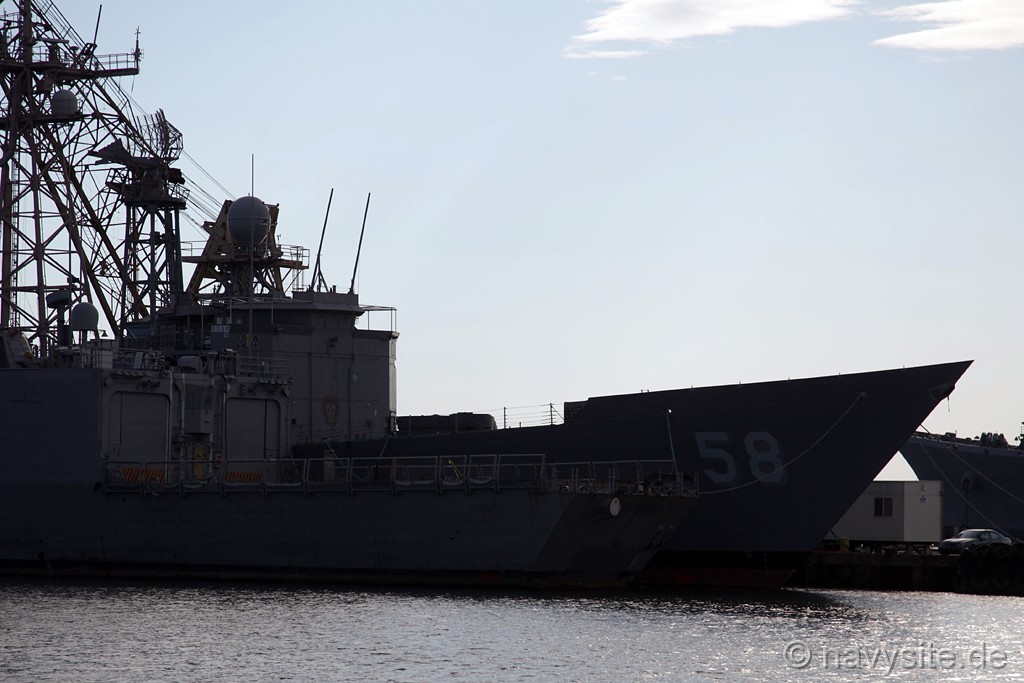
The photo below was taken by Michael Jenning and shows the SAMUEL B. ROBERTS laid up at the former Philadelphia Naval Shipyard, Philadelphia, Penn., on October 17, 2016.
![]() |
The photo below was taken by Michael Jenning and shows the SAMUEL B. ROBERTS laid up at the former Philadelphia Naval Shipyard, Philadelphia, Penn., on October 7, 2018.
![]() |
Back to Frigates list.
Back to ships list.
Back to selection page.
Back to 1st page.