![]() |
Search the Site with
|
![]() | ![]() |
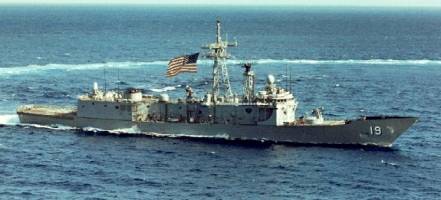
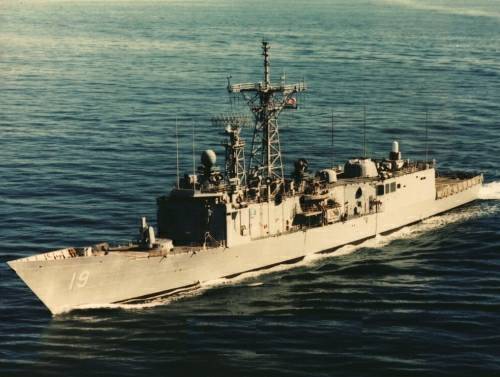
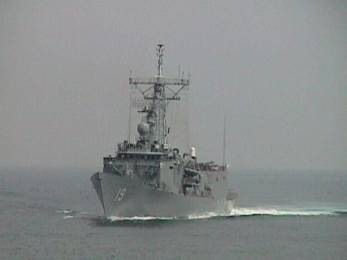
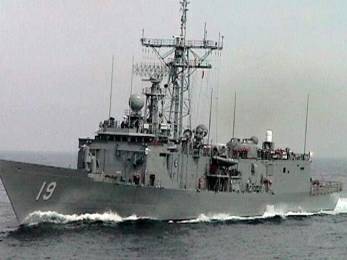
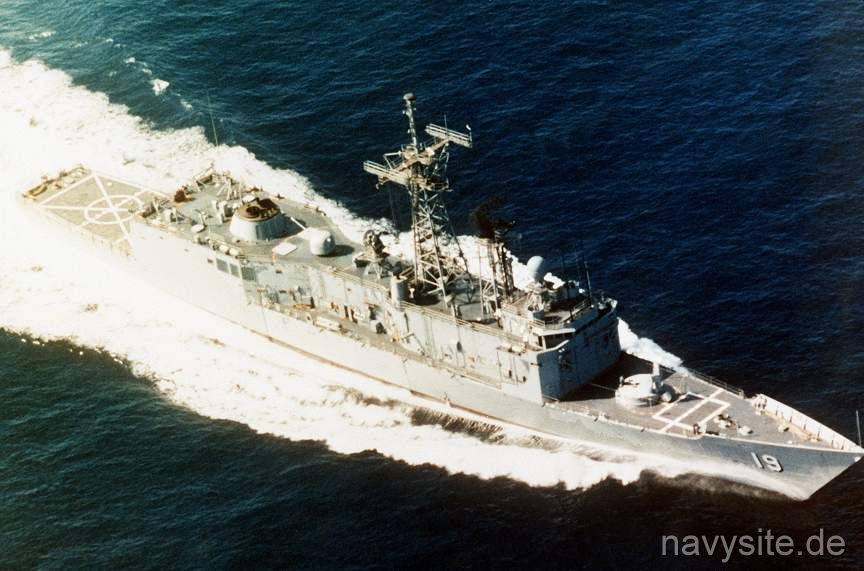
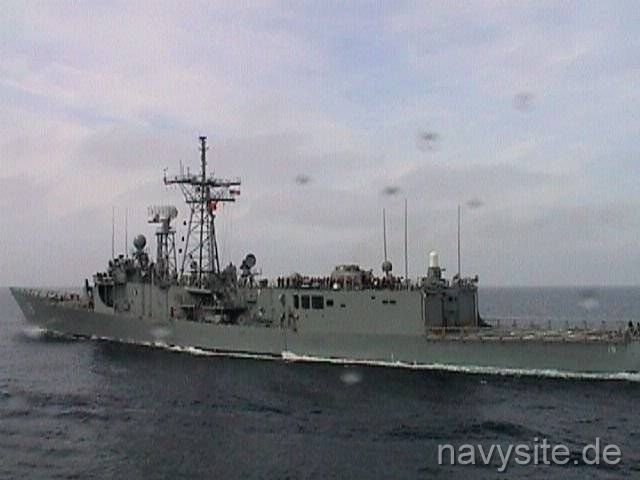
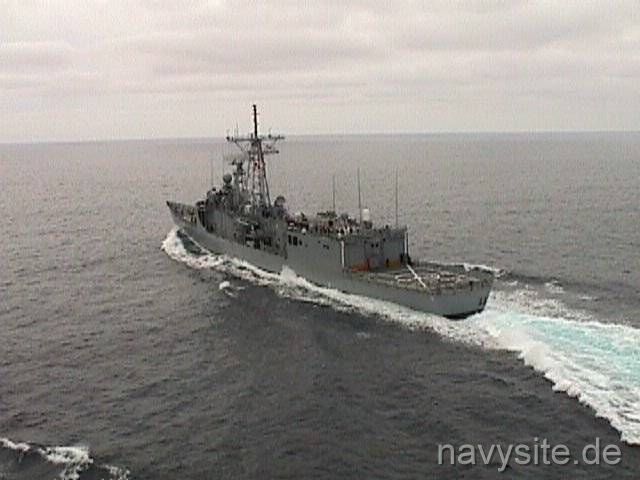
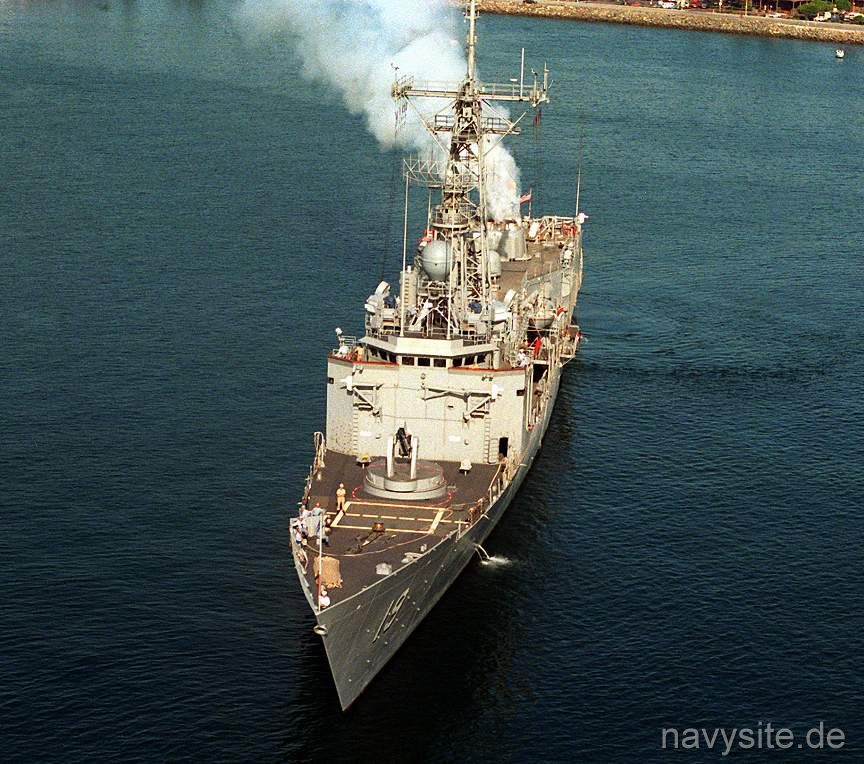
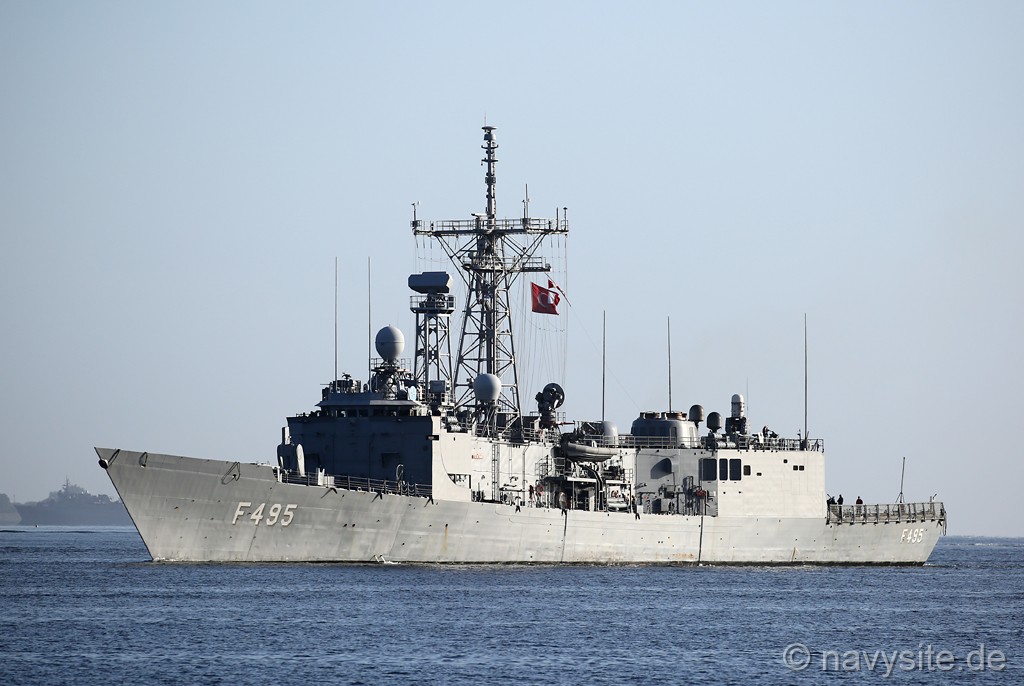
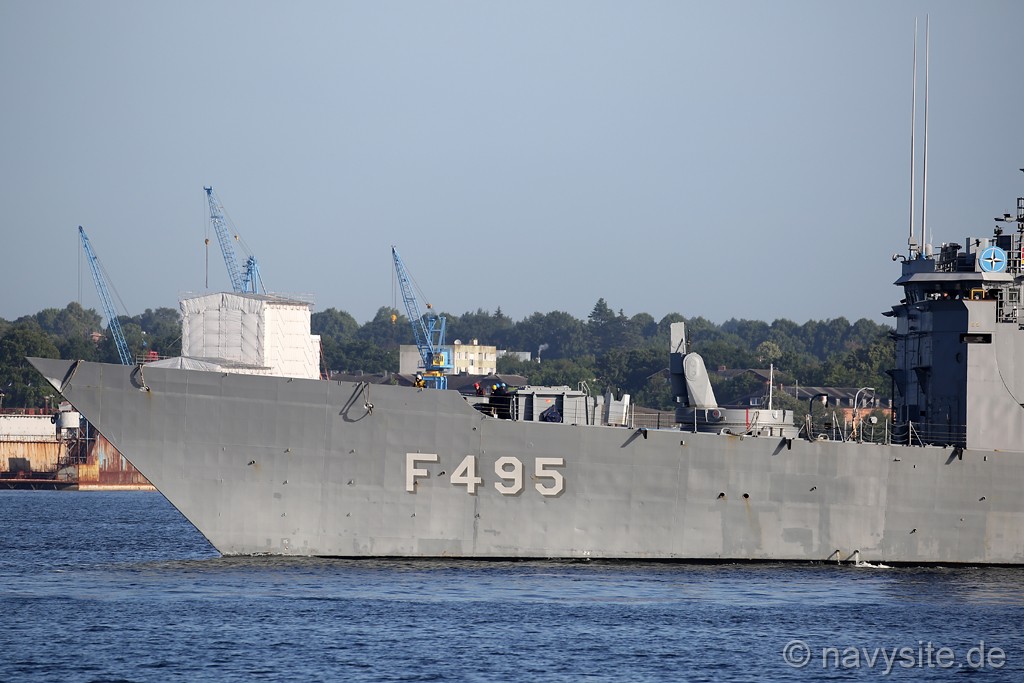
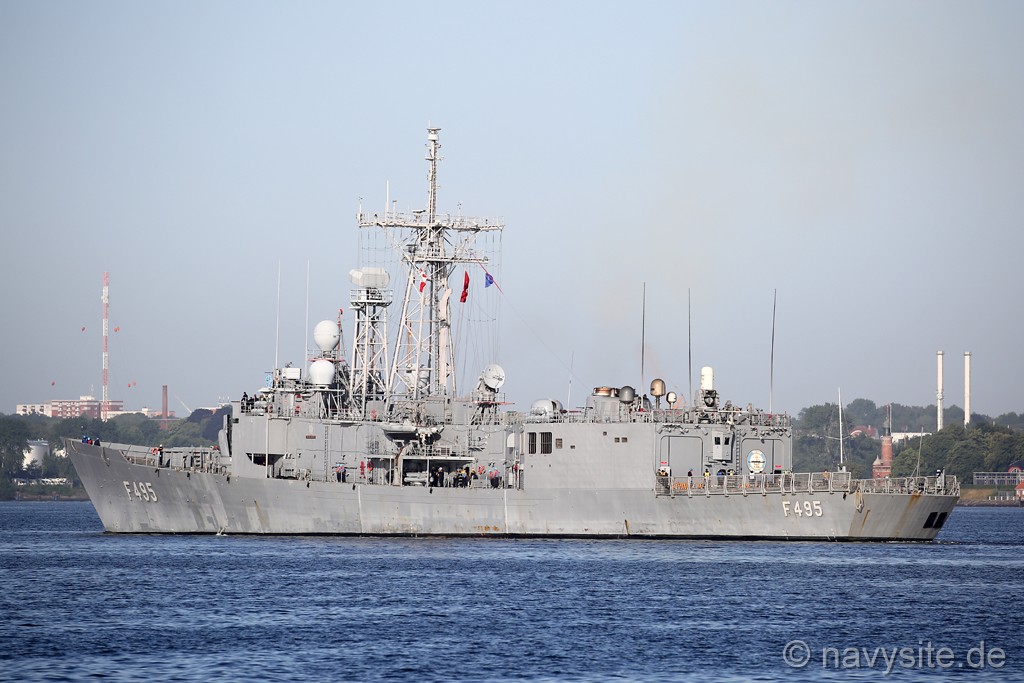
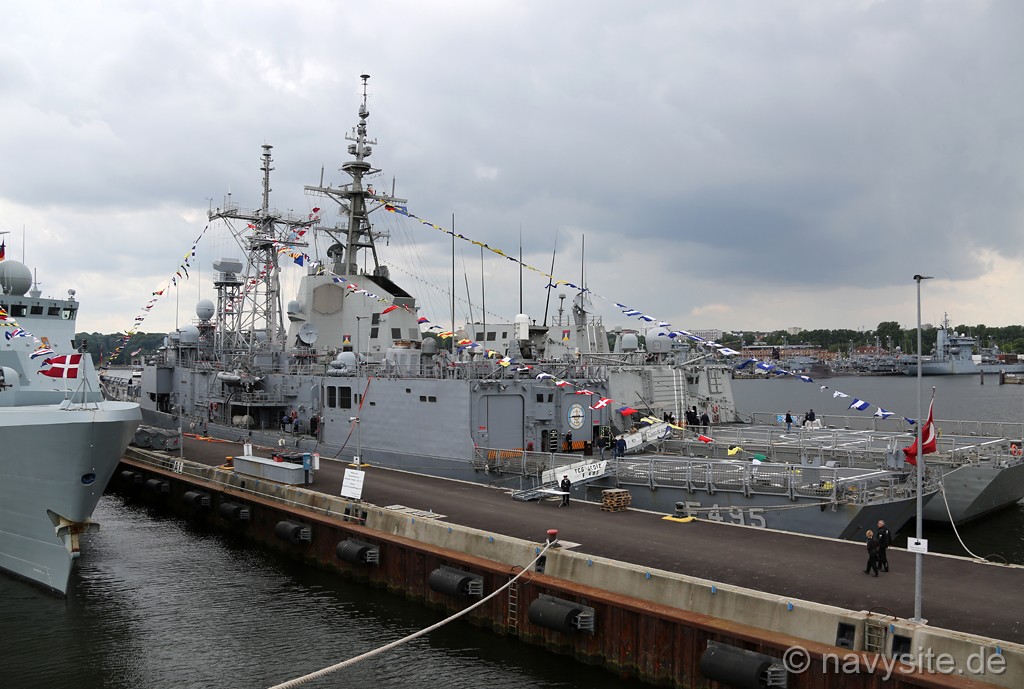
USS JOHN A. MOORE was an OLIVER HAZARD PERRY - class guided missile frigate. She was last homeported in San Diego, Calif. Decommissioned on September 1, 2000, the ship was transfered to the Turkish Navy the same day and was recommissioned as TCG GEDIZ (F 495).
| General Characteristics: | Keel Laid: December 19, 1978 |
| Christened: August 20, 1979 | |
| Commissioned: November 14, 1981 | |
| Decommissioned: September 1, 2000 | |
| Builder: Todd Pacific Shipyards Co., Los Angeles Division, San Pedro, Ca. | |
| Propulsion system: two General Electric LM 2500 gas turbines, two 350 Horsepower Electric Drive Auxiliary Propulsion Units | |
| Propellers: one | |
| Blades on each Propeller: five | |
| Length: 445 feet (133.5 meters) | |
| Beam: 45 feet (13.5 meters) | |
| Draft: 24,6 feet (7.5 meters) | |
| Displacement: 4,100 tons | |
| Speed: 28+ knots | |
| Aircraft: one | |
| Armament: one Mk 13 guided missile launcher (36 Standard (MR) and 4 | |
| Crew: 17 Officers and 198 Enlisted |
Crew List:
This section contains the names of sailors who served aboard USS JOHN A. MOORE. It is no official listing but contains the names of sailors who submitted their information.
USS JOHN A. MOORE Cruise Books:
Accidents aboard USS JOHN A. MOORE:
| Date | Where | Events |
|---|---|---|
| October 26, 1984 | off Hawaii | USS JOHN A. MOORE collides with the USS OUELLET (FF 1077) during FleetEx 85-1 exercises in the Pacific, causing minor damage. |
History of USS JOHN A. MOORE:
USS JOHN A. MOORE was ordered on February 28, 1977, as part of the OLIVER HAZARD PERRY-class program and assigned to Todd Pacific Shipyards' Los Angeles Division at San Pedro, California. Construction began with the laying of her keel on December 19, 1978, reflecting the United States Navy's post-Vietnam emphasis on relatively economical escort ships able to perform anti-submarine, anti-air and surface warfare in support of carrier battle groups, amphibious forces and convoys during the later stages of the Cold War. She was launched and christened on October 20, 1979, and commissioned into United States Navy service on November 14, 1981, entering the fleet as the eleventh ship of the class and the first to bear the name in honor of Commander John Anderson Moore, a decorated World War II submarine commander of USS GRAYBACK (SS 208).
After commissioning, USS JOHN A. MOORE was assigned to the Pacific Fleet with Long Beach, California as her homeport, joining other new PERRY-class frigates in the Southern California operating areas. Early in her career, she conducted shakedown training, combat systems trials and local operations out of Long Beach and San Diego, working up her crew and integrating into multi-ship task group exercises as the Navy refined tactical doctrine for the new class. A Department of Defense fact file from the early 1980s lists her among the frigates homeported at Long Beach, confirming her role within the Southern California surface force at that time.
By the mid-1980s, USS JOHN A. MOORE had begun a pattern of deployments to the Western Pacific that would characterize much of her Cold War service. In 1985, she took part in at least one Western Pacific cruise that included a port visit to Subic Bay in the Philippines. A command history from the frigate USS CROMMELIN (FFG 37) records that from July 31 to August 3 the ships were in port together at Subic Bay before getting underway again, placing USS JOHN A. MOORE in company with other Pacific Fleet frigates during forward operations in Southeast Asian waters. These deployments typically combined anti-submarine exercises, surface warfare drills and presence missions with visits to regional allies, contributing to U.S. efforts to reassure partners and deter Soviet naval activity in the Pacific.
In 1987, USS JOHN A. MOORE was transferred to the Naval Surface Reserve Force as part of Surface Squadron 1, later redesignated Destroyer Squadron 1, based on the Pacific coast. Under this arrangement, she remained an active fleet unit but carried a mixed crew of regular Navy sailors and Naval Reservists, a scheme intended to maintain readiness while reducing personnel costs during a period of growing budget constraints near the end of the Cold War. Even with this manning structure, she continued to deploy overseas, and in the late 1980s, she was drawn into the complex and hazardous convoy protection effort in the Persian Gulf that followed the escalation of the Iran-Iraq War at sea.
During the period of Operation Earnest Will and the closely related clandestine Operation Prime Chance, USS JOHN A. MOORE deployed to the northern Persian Gulf as part of the U.S. naval force protecting reflagged tankers and other merchant shipping from Iranian mines and small-boat attacks. In this environment, she operated alongside other OLIVER HAZARD PERRY-class frigates such as USS JARRETT (FFG 33), USS KLAKRING (FFG 42), USS SAMUEL B. ROBERTS (FFG 58), USS THACH (FFG 43) and USS REUBEN JAMES (FFG 57), as well as the command ship USS LA SALLE (AGF 3) and the amphibious assault ship USS GUADALCANAL (LPH 7), which supported special operations forces and Army helicopters staged from mobile sea bases in the northern Gulf. Her role included providing air defense, surface surveillance and anti-submarine coverage for the convoys and special operations units while operating in confined, heavily mined waters under the constant threat of Iranian attack, illustrating the flexibility of the frigate design in a high-tension regional conflict.
Contemporary documentation also shows USS JOHN A. MOORE in technically demanding command-and-control roles during the late 1980s. A 1988 command history for the frigate USS GARY (FFG 51) notes that GARY "relieved USS JOHN A. MOORE as Southern Link Control Ship", describing how JOHN A. MOORE had been acting as the controlling ship for a Navy Tactical Data System (NTDS) link that integrated nearby U.S. units and Royal Navy warships into a common tactical picture. This function underscored her use not only as an escort but also as a node in a multinational, networked force, managing digital information flows that were increasingly central to fleet operations in both exercises and real-world contingencies.
With the end of the Cold War and the drawdown of Soviet naval power, USS JOHN A. MOORE's operational focus began to shift in the early 1990s from great-power confrontation toward regional security and law-enforcement missions. A U.S. Pacific Command history for 1993 records that she contributed nine steaming days under tactical control of Commander, Joint Task Force Five (CJTF-5), the Pacific theater counter-narcotics organization. In this role, she operated in support of interdiction efforts against drug-trafficking routes in the Eastern Pacific, using her surface search radar, embarked helicopters and embarked law-enforcement detachments to detect, track and help stop suspect vessels, reflecting a broader reorientation of U.S. naval forces toward transnational threats after the collapse of the Soviet Union.
In early 1994, USS JOHN A. MOORE underwent a significant administrative change when she shifted homeport from Long Beach to San Diego, California, as noted in her official summary. This move reflected the gradual closure or realignment of several Navy facilities in the Los Angeles-Long Beach area and the consolidation of surface combatants at Naval Station San Diego. Around this time, she continued to participate in fleet training off the Southern California coast. A 1994 command history for the amphibious transport dock USS OGDEN (LPD 5) records a close-in weapons system (CIWS) gun exercise conducted in company with USS JOHN A. MOORE on January 28, illustrating her ongoing role in gunnery and air-defense training for Pacific Fleet units as she adjusted to her new homeport.
Over the course of her career, USS JOHN A. MOORE completed nine major deployments: four to the Western Pacific, one to the Arabian Gulf in the context of the late 1980s Gulf operations, and four counternarcotics deployments to the Eastern Pacific and Caribbean. During these cruises, she visited ports in twenty-one different countries and operated with a wide range of allied and partner navies, from Asian and Middle Eastern states during her WestPac and Gulf tours to Latin American and Caribbean nations during her later law-enforcement missions. These deployments combined routine bilateral and multilateral exercises, presence operations, maritime interception duties and, in the case of the counter-drug patrols, direct support to U.S. interagency task forces aimed at disrupting seaborne cocaine trafficking routes into North America.
In the later 1990s, her activities increasingly reflected this counternarcotics and regional security emphasis. Photographic collections from the Naval History and Heritage Command include images of Secretary of the Navy John Dalton visiting USS JOHN A. MOORE at Naval Station Panama Canal, indicating her presence in the Panama area during this period and highlighting the importance placed on her contribution to operations in and around Central America and the Caribbean. These visits coincided with broader U.S. efforts to work closely with regional partners and to use forward-deployed surface combatants as visible symbols of commitment to cooperative maritime security and law-enforcement operations.
Her final deployment encapsulated this mature mission profile. Returning to San Diego on May 22, 2000, USS JOHN A. MOORE completed a highly successful counter-drug cruise in the Eastern Pacific and Caribbean during which she embarked a detachment from Helicopter Anti-Submarine Squadron Light HSL-84 and a U.S. Coast Guard Pacific Tactical Law Enforcement Team. According to her official summary, during this deployment the frigate and her embarked units were credited with assisting in the interdiction of 11.5 metric tons of cocaine and in detecting six fishing vessels violating Colombian law and suspected of supporting narcotics traffic. This operational record underscored how a ship originally designed for Cold War convoy and battle-group escort had become, by the end of her U.S. service, a key asset in peacetime law-enforcement missions requiring persistence, aviation support and robust command-and-control.
After nearly nineteen years in commission, USS JOHN A. MOORE was decommissioned and stricken from the Naval Vessel Register on September 1, 2000, at San Diego. On the same date, she was transferred to Turkey under the Security Assistance Program and entered Turkish service as TCG GEDIZ (F 495), continuing the life of the hull within another NATO navy. As of the mid-2010s she remained in active Turkish service, modernized and integrated into that country's surface force as part of a group of ex-U.S. OLIVER HAZARD PERRY-class frigates. In this second career, she has continued the pattern established in U.S. service: multi-role escort duties, participation in multinational exercises and operations in the Mediterranean and surrounding seas.
Homeports of USS JOHN A. MOORE:
| Period | Homeport |
|---|---|
| commissioned at Long Beach, Calif. | |
| 1981 - 1994 | Long Beach, Calif. |
| 1994 - 2000 | San Diego, Calif. |

About the Ship's Name, about Commander John A. Moore:
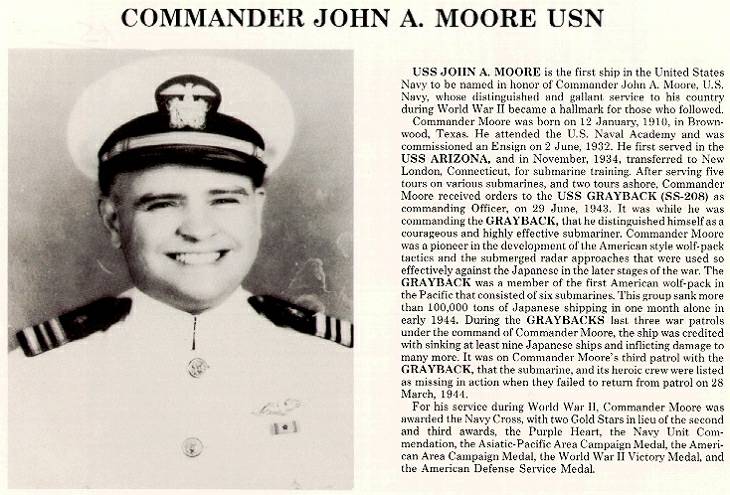
Commander Moore was born on January 12, 1910, in Brownswood, Texas. He attended the US Naval Academy and was commissioned an Ensign on June 2, 1932. He first served onboard the USS ARIZONA and in November 1934 he was transferred to New London, Connecticut, for submarine training.
After serving five tours on various submarines, and two tours ashore, Commander Moore received orders to the USS GRAYBACK (SS 208) as Commanding Officer, on June 29, 1943. It was while he was commanding the GRAYBACK that he distinguished himself as a courageous and highly effective submariner.
Commander Moore was a pioneer in the development of the American style wolf-pack tactics and the submerged radar approaches that were used so effectively against the Japanese in the later stages of the war. The GRAYBACK was a member of the first American wolf-pack in the Pacific that consisted of six submarines. This group sank more than 100,000 tons of Japanese shipping in one month alone in the early 1944.
During the GRAYBACK's last three war patrols under the command of Commander Moore, the ship was credited with sinking at least nine Japanese ships and inflicting damage to many more. It was on Commander Moore's third patrol with the GRAYBACK, that the submarine and its heroic crew were listed as missing in action (MIA) when they failed to return from patrol on March 28, 1944.
For his service during World War II, Commander Moore was awarded the Navy Cross with two Gold Stars in lieu of the second and third awards, the Purple Heart, the Navy Unit Commendation, the Asia-Pacific Area Campaign Medal, the American Area Campaign Medal, the World War II Victory Medal and the American Defense Service Medal.


USS JOHN A. MOORE Image Gallery:
![]() | ![]() | ![]() | ![]() | ![]() |
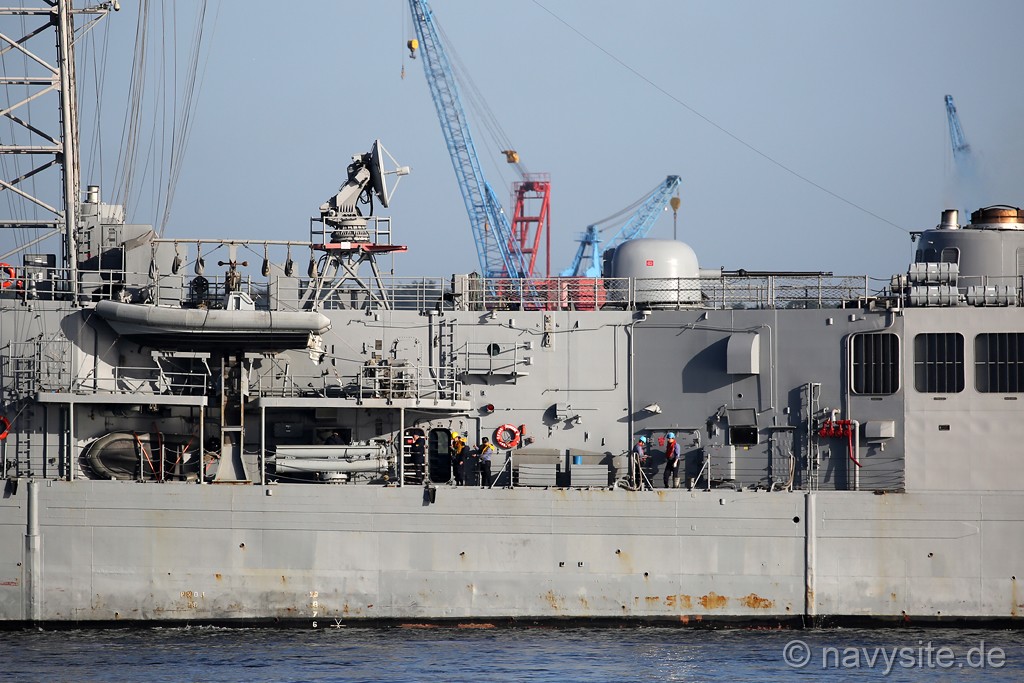
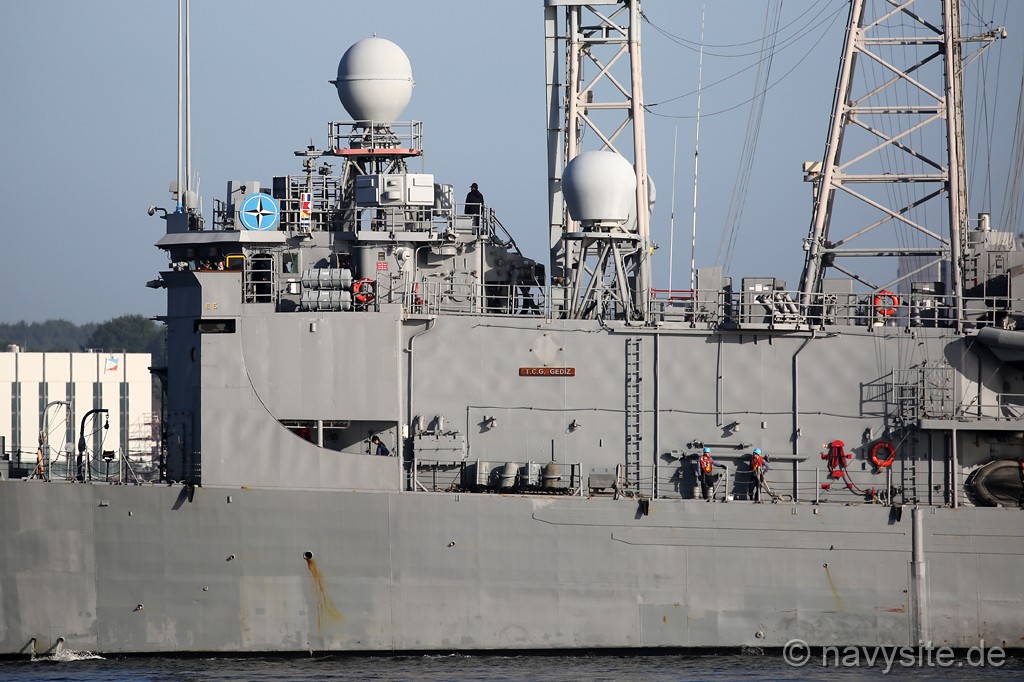
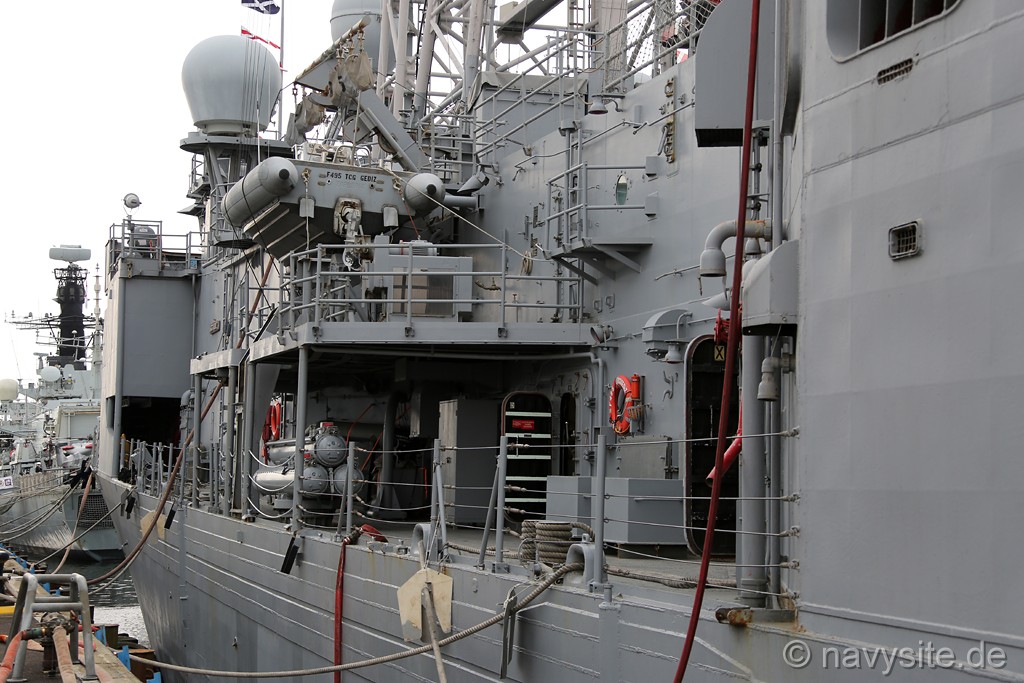
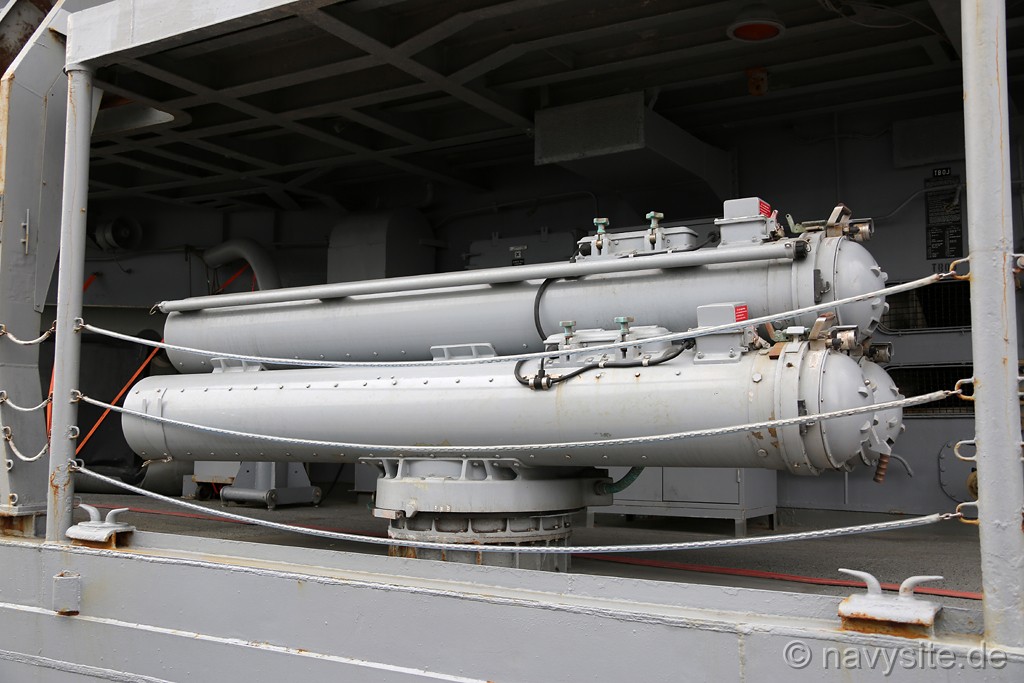
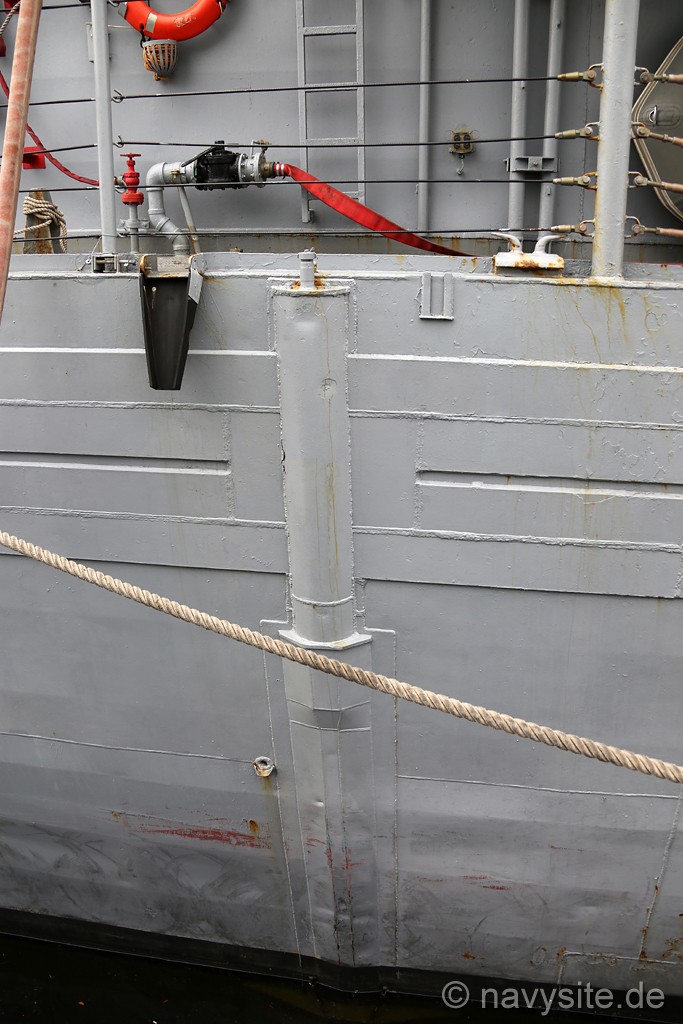
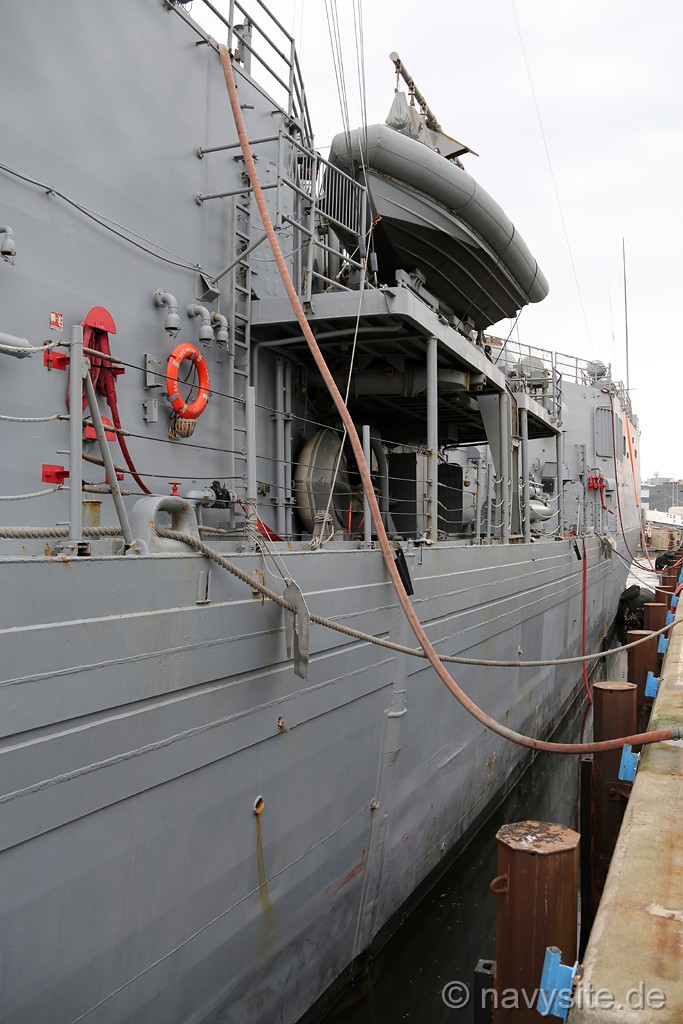
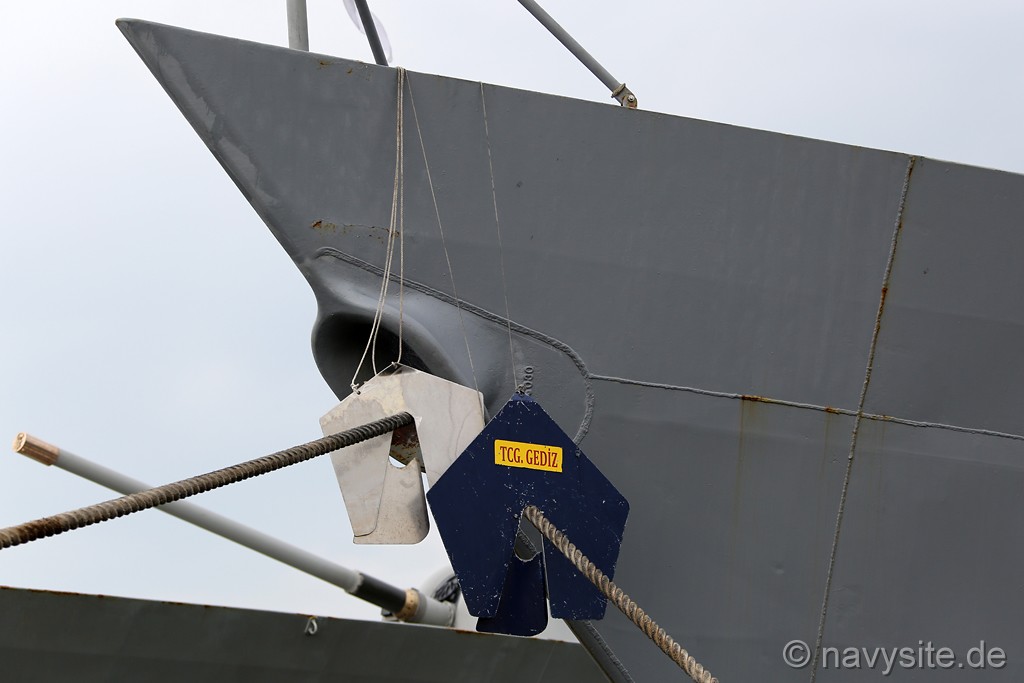
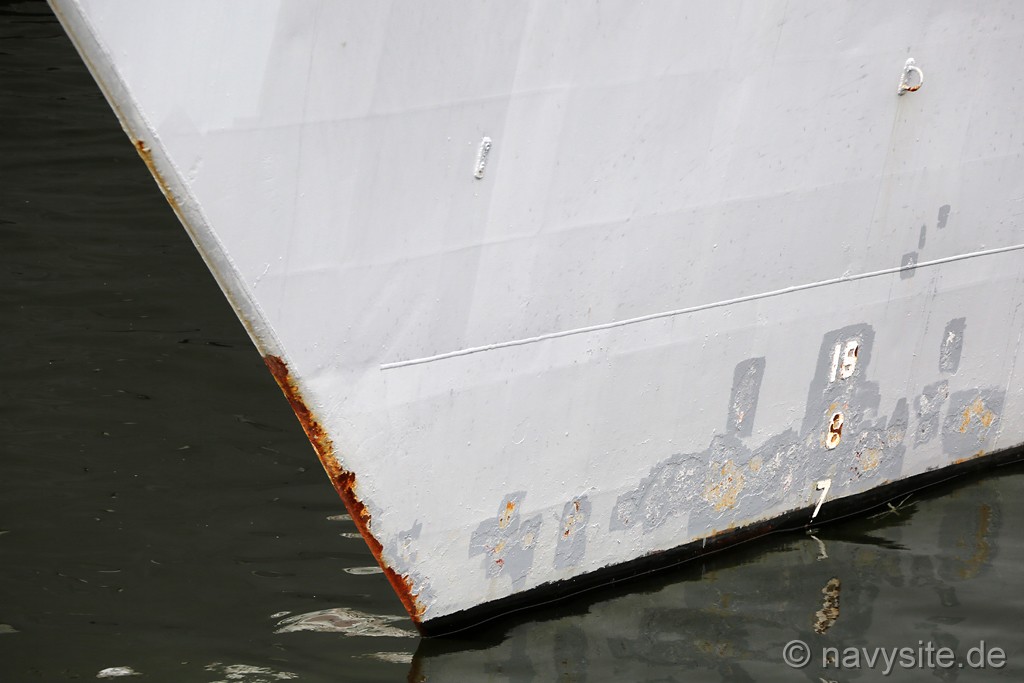
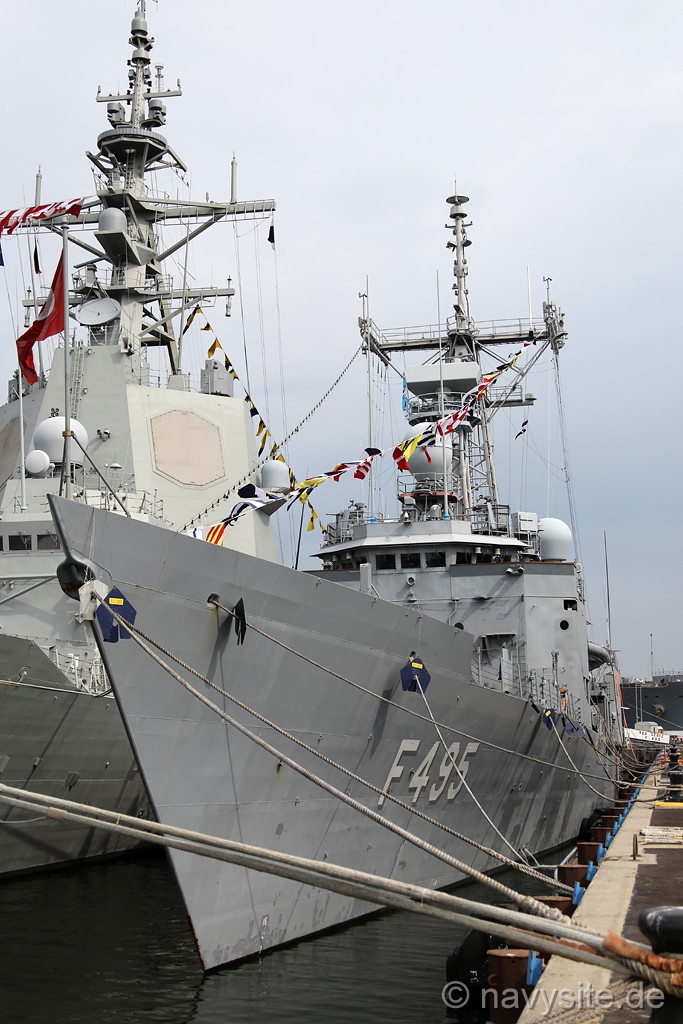
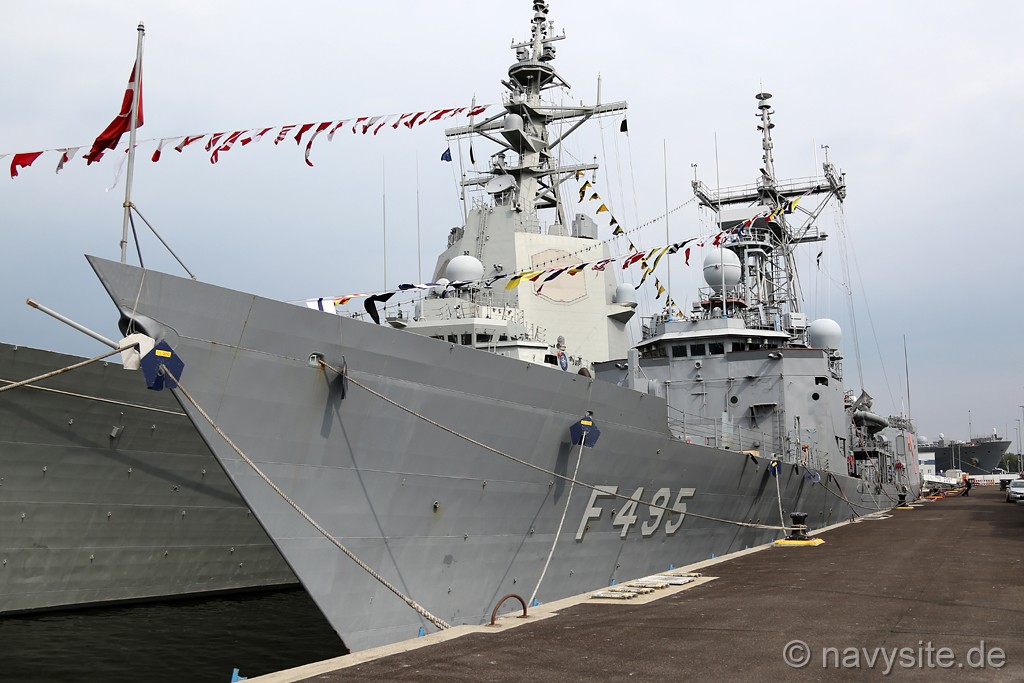
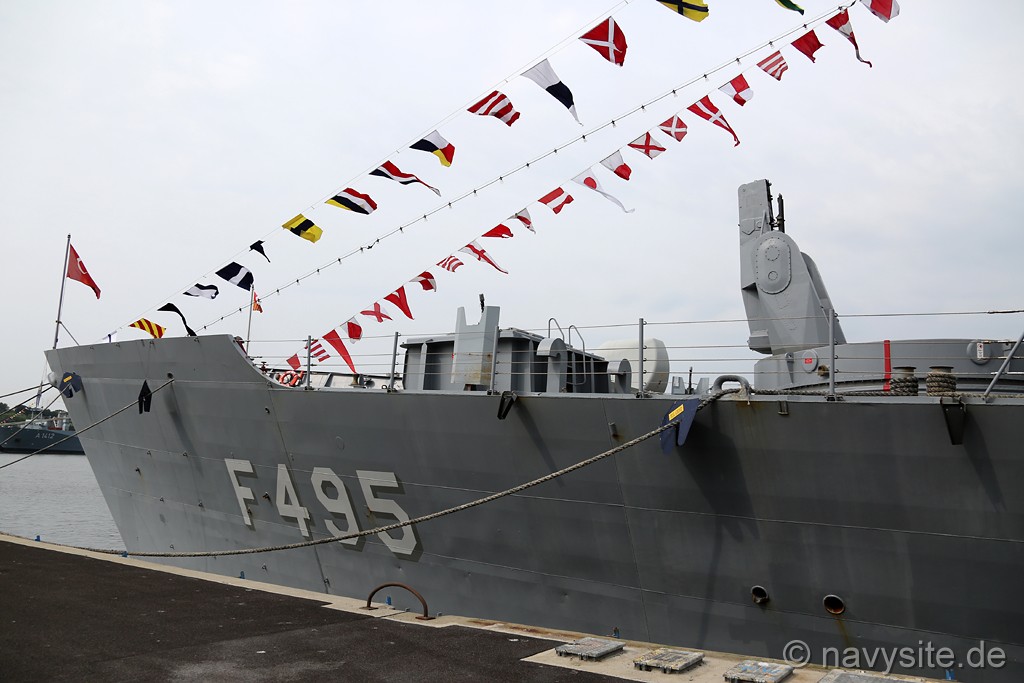
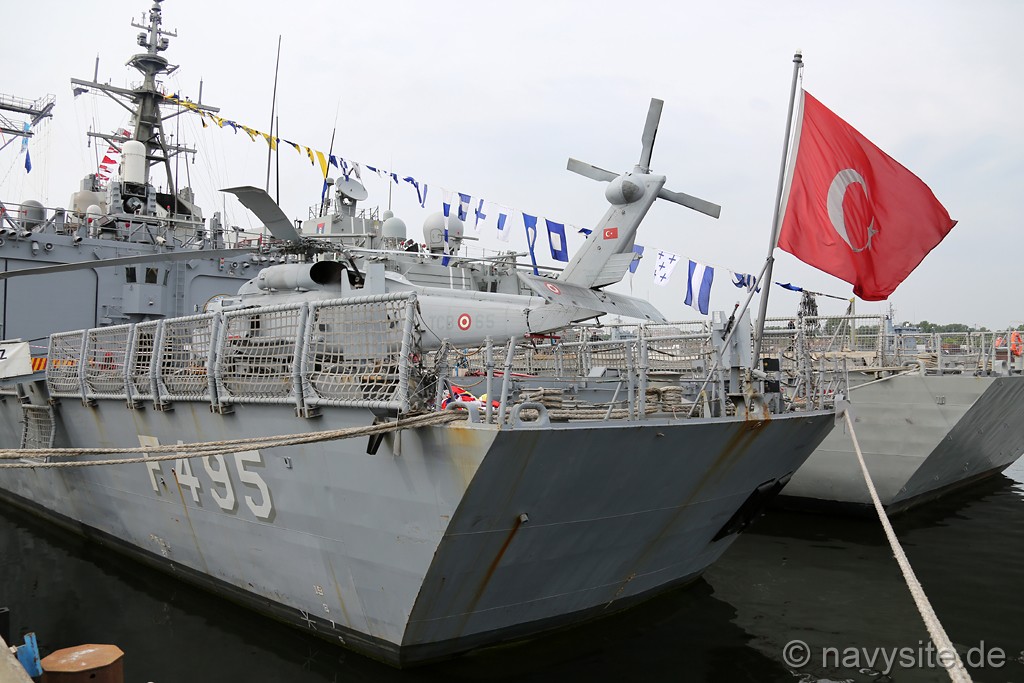
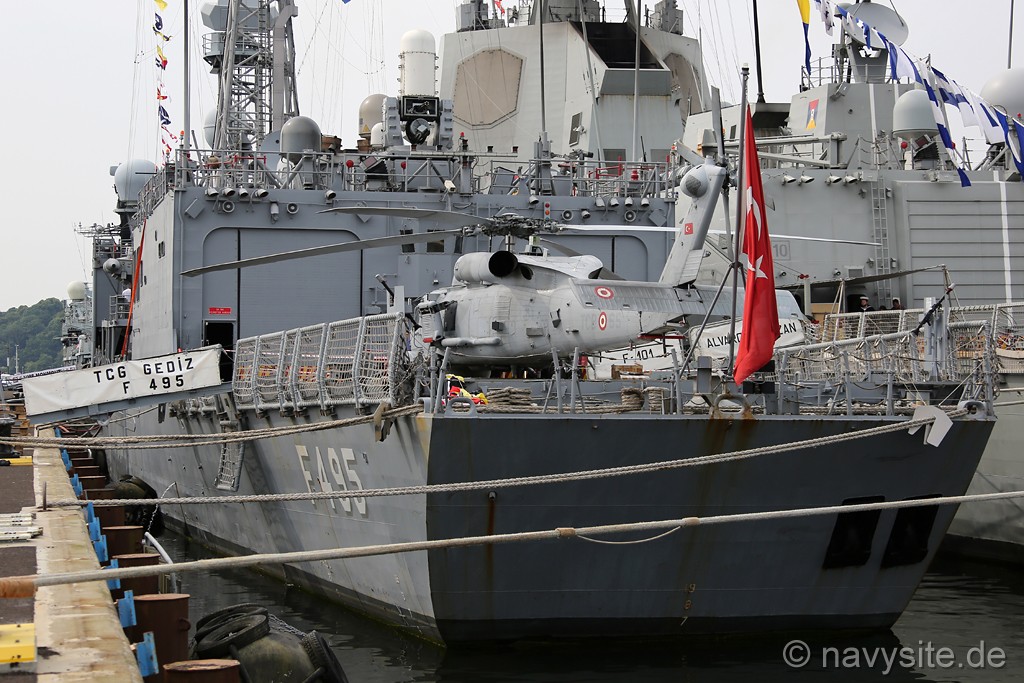
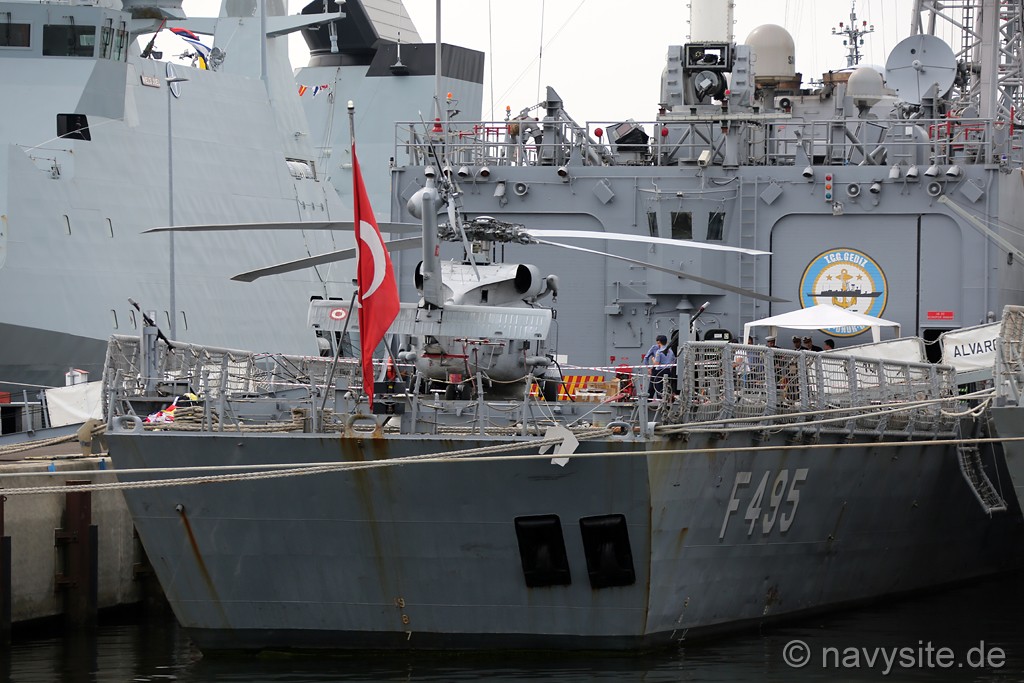
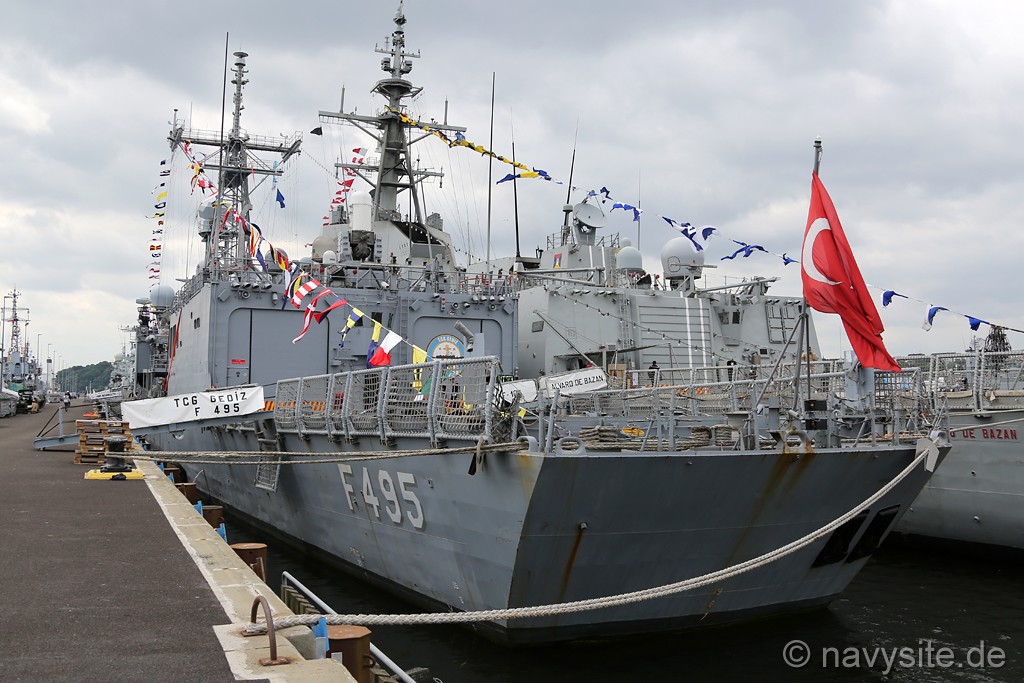
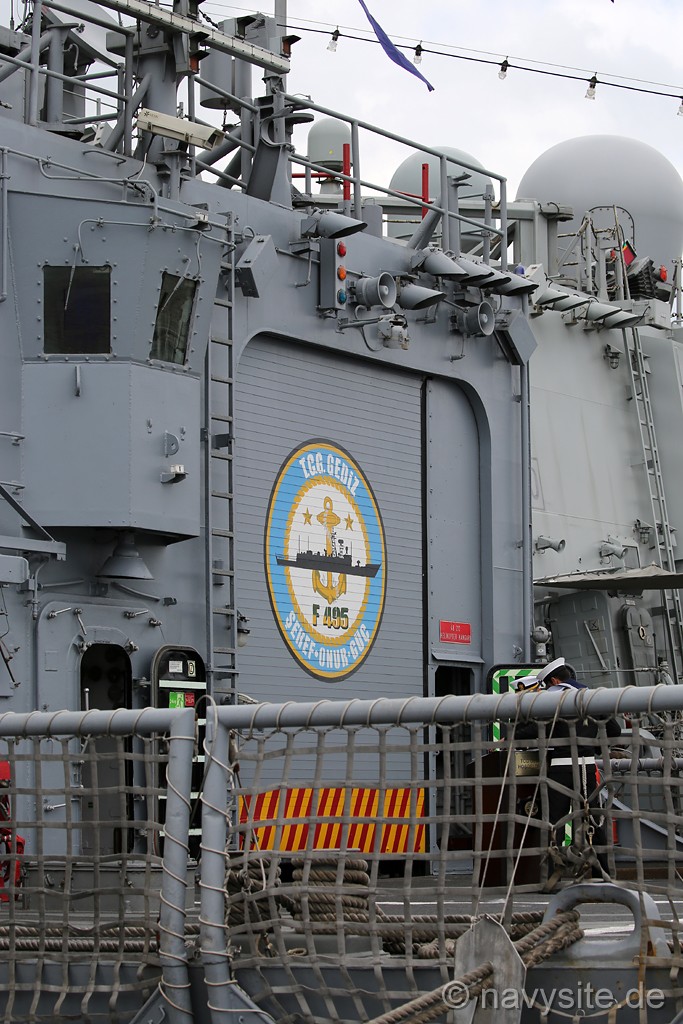
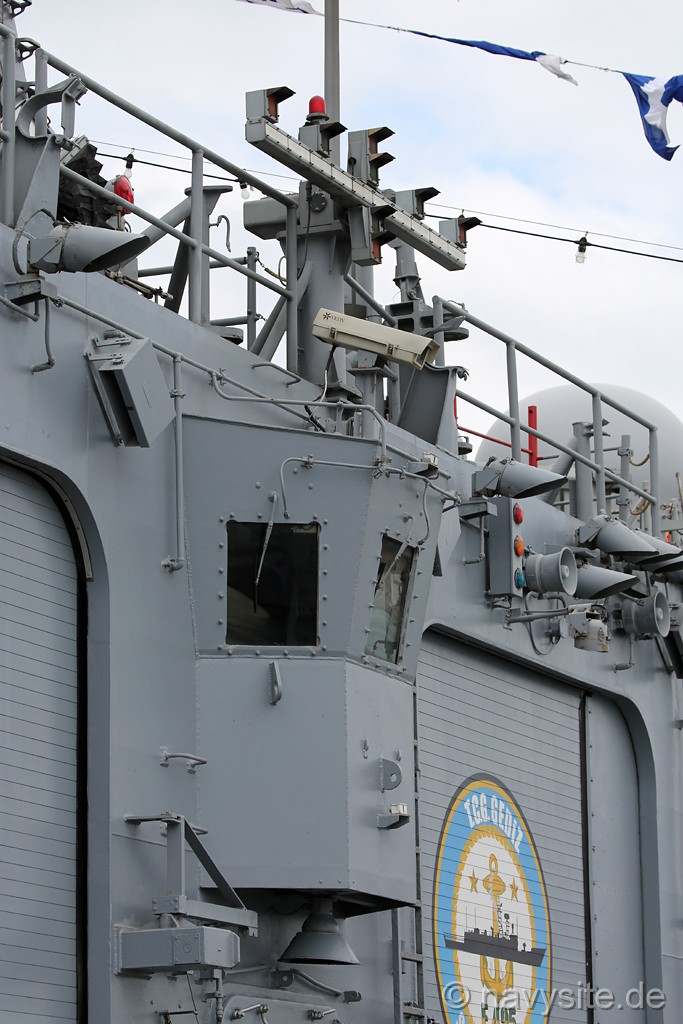
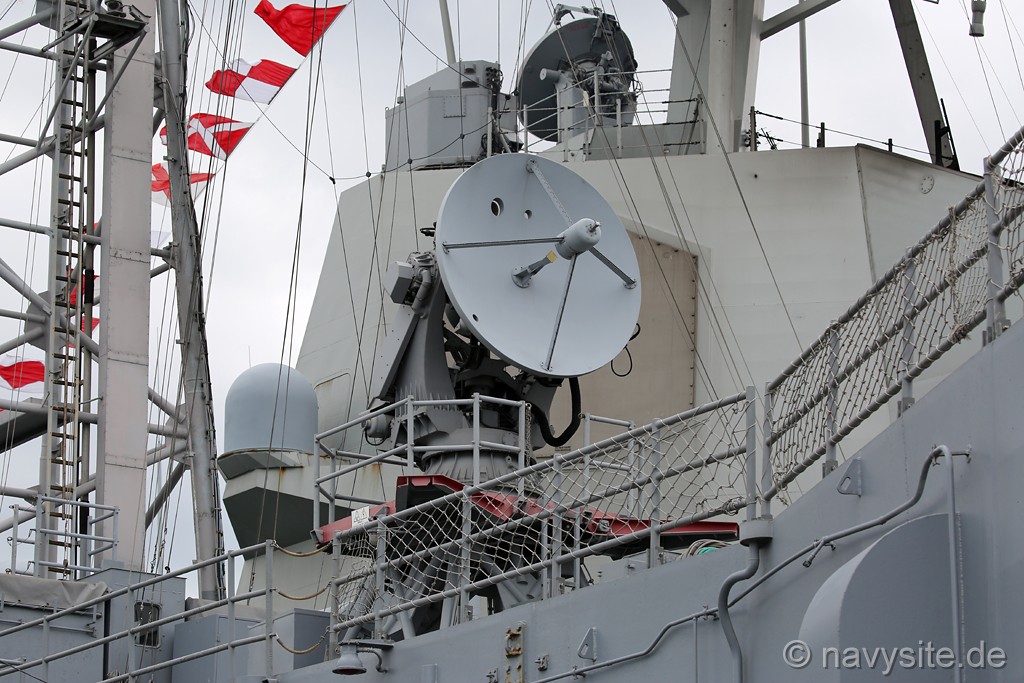
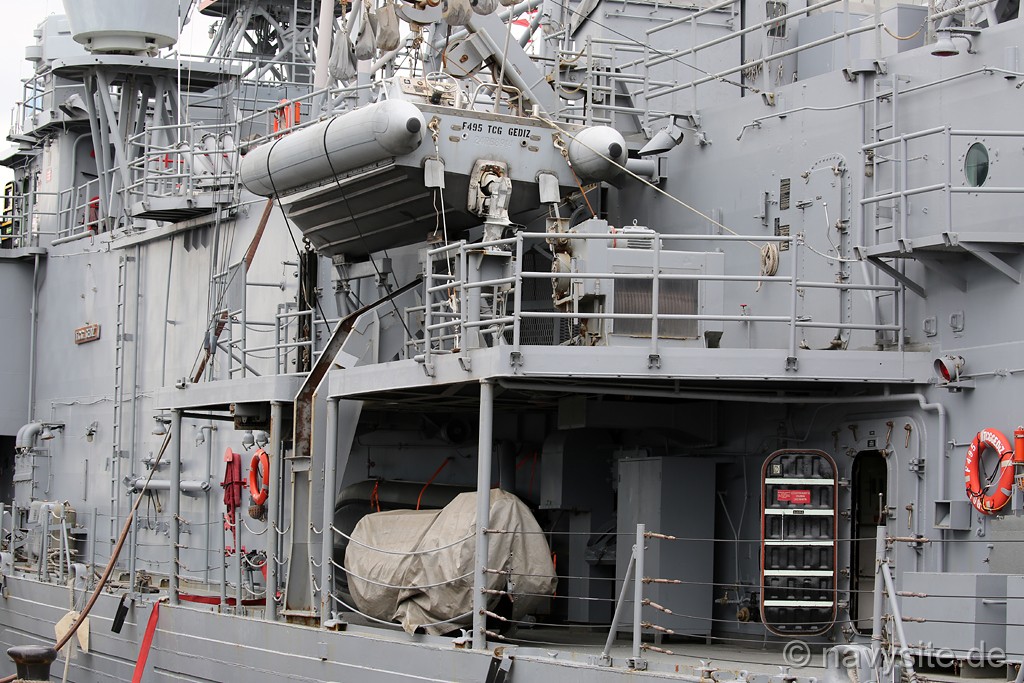
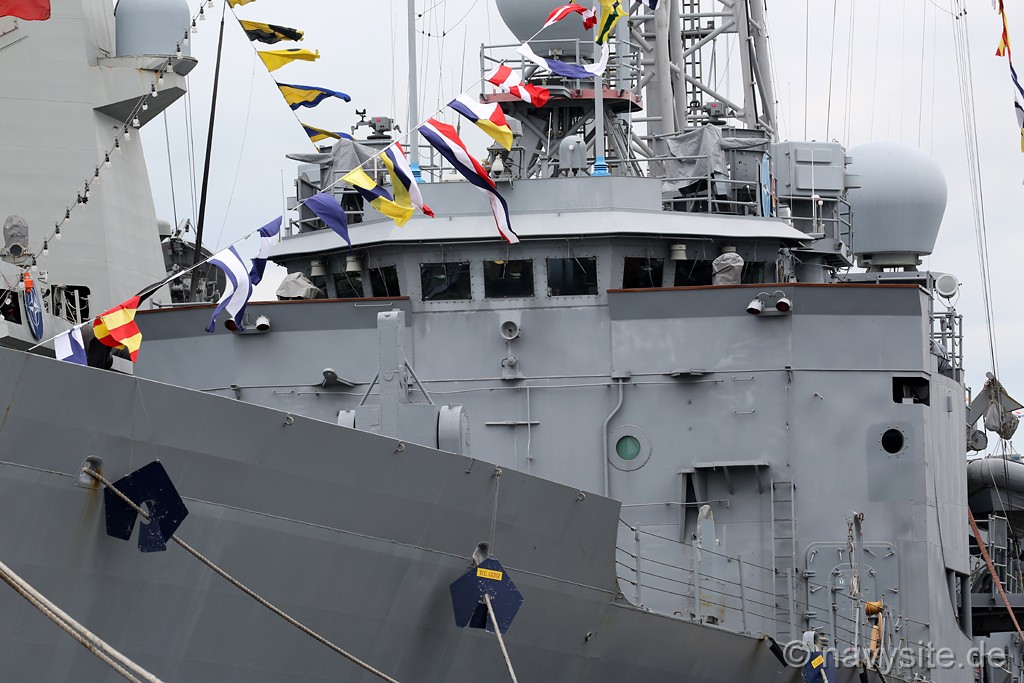
After decommissioning, the JOHN A. MOORE was transferred to the Turkish Navy where she was recommissioned as TCG GEDIZ (F 495). The photos below were taken by me and show TCG GEDIZ arriving at and at Naval Base Kiel, Germany, on June 15-17, 2018, after participating in BALTOPS 2018. The ship has been extensively modernized: The old AN/SPS-49 antenna was replaced by the advanced SMART-S Mk-2 3D air search radar and an 8-cell Mk-41 VLS for 32 ESSM was added in front of the Mk-13 missile launcher. Additionally, a new digital combat management system called GENESIS and a new long range sonar were installed.
![]() | ![]() | ![]() | ![]() | ![]() |
![]() | ![]() | ![]() | ![]() | ![]() |
![]() | ![]() | ![]() | ![]() | ![]() |
![]() | ![]() | ![]() | ![]() | ![]() |
![]() | ![]() | ![]() | ![]() | ![]() |
![]() | ![]() | ![]() | ![]() | ![]() |
![]() |
Back to Frigates list.
Back to ships list.
Back to selection page.
Back to 1st page.