Search the Site with 
General Characteristics Crew List Memorabilia Accidents aboard the Ship History About the Ship's Name Image Gallery to end of page

USS Ouellet (FF 1077)

- formerly DE 1077 -
- decommissioned -


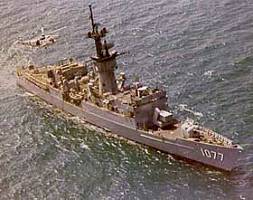
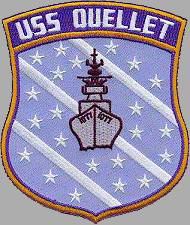
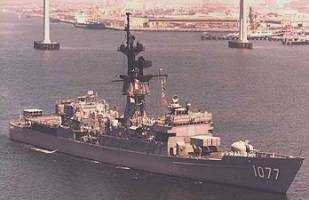
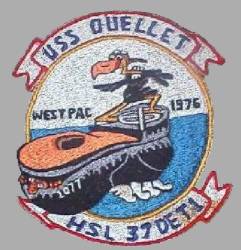
USS OUELLET was the 26th KNOX - class frigate and the first ship in the Navy to bear the name. Decommissioned on August 6, 1993, and stricken from the Navy list on January 11, 1995, the OUELLET was transfered to the Royal Navy of Thailand on November 27, 1996, and was recommissioned as PHUTTALOETLA NAPHALAI.

General Characteristics:Awarded: July 22, 1964
Keel laid: January 15, 1969
Launched: January 17, 1970
Commissioned: December 12, 1970
Decommissioned: August 6, 1993
Builder: Avondale Shipyards, New Orleans, La.
Propulsion system: 2 - 1200 psi boilers; 1 geared turbine, 1 shaft; 35,000 shaft horsepower
Length: 438 feet (133.5 meters)
Beam: 47 feet (14.4 meters)
Draft: 25 feet (7.6 meters)
Displacement: approx. 4,200 tons full load
Speed: 27 knots
Armament: one Mk-16 missile launcher for ASROC and Harpoon missiles, one Mk-42 5-inch/54 caliber gun, Mk-46 torpedoes from single tube launchers, one 20mm Phalanx CIWS
Aircraft: one SH-2F (LAMPS I) helicopter
Crew: 18 officers, 267 enlisted


Back to topback to top  go to endgo to the end of the page


Back to topback to top  go to endgo to the end of the page

Crew List:

This section contains the names of sailors who served aboard USS OUELLET. It is no official listing but contains the names of sailors who submitted their information.


back to top  go to the end of the page


Back to topback to top  go to endgo to the end of the page

Accidents aboard USS OUELLET:

DateWhereEvents
October 26, 1984off HawaiiUSS JOHN A. MOORE (FFG 19) collides with USS OUELLET during FleetEx 85-1 exercises in the Pacific, causing minor damage.


Back to topback to top  go to endgo to the end of the page

History of USS OUELLET:

USS OUELLET was a KNOX-class destroyer escort, later redesignated as a frigate, built primarily for antisubmarine warfare and the protection of aircraft carriers, amphibious forces, replenishment groups, military convoys, and other important shipping. The contract for the new destroyer escort was awarded on July 22, 1964. Her keel was laid at Avondale Shipyards in Westwego, Louisiana, on January 15, 1969. She was launched and christened on January 17, 1970, with Mrs. Chester J. Ouellet, the mother of the ship's namesake, serving as sponsor. After fitting out and builder's trials, USS OUELLET conducted sea trials in the Gulf of Mexico during September 1970.

USS OUELLET was commissioned at the Charleston Naval Shipyard in South Carolina on December 12, 1970. Rear Admiral H. J. Kossler presided over the commissioning ceremony, and Commander Albert L. Henry Jr. became the ship's first commanding officer. She was assigned to Destroyer Squadron 25 and Destroyer Division 251, with Pearl Harbor, Hawaii, designated as her home port.

After commissioning, USS OUELLET completed fitting-out work, acceptance trials, engineering qualifications, weapons testing, sonar evaluation, aviation training, and other preparations for service with the Pacific Fleet. She was reassigned to Destroyer Squadron 33 on April 1, 1971 and arrived at her new home port of Pearl Harbor on April 15. The remainder of 1971 was devoted to local operations in Hawaiian waters, inspections, further crew training, maintenance, and preparations for her first overseas deployment.

USS OUELLET departed Pearl Harbor on January 27, 1972 for her first Western Pacific deployment. The voyage took place during a major escalation of naval and air operations in the Vietnam War. North Vietnam began its large Easter Offensive in March, and the United States responded by increasing carrier aviation, naval gunfire, surveillance, mining, and interdiction operations. After crossing the Pacific, USS OUELLET operated with the United States Seventh Fleet in the Gulf of Tonkin and along the Vietnamese coast. Her primary combat assignment was naval gunfire support. The ship's 5-inch gun engaged assigned targets ashore in cooperation with airborne or ground-based observers, while her sensors and embarked helicopter supported surveillance and general task-force operations.

USS OUELLET served in Vietnamese waters during several periods between February and July 1972. Her documented Vietnam service included operations from February 15 through March 2, March 13 through May 3, May 23 through May 31, June 3 through June 14, and July 1 through July 31. These repeated periods reflected the normal rotation of Seventh Fleet ships between operational areas, replenishment rendezvous, maintenance facilities, and port periods.

The ship came under hostile fire during April 10-11 and again on April 24. No members of her crew were killed or wounded in either engagement. Personnel who met the applicable participation requirements received two awards of the Combat Action Ribbon for the two actions. Her combat service coincided with Operation Linebacker, which began in May 1972 and was intended to restrict the movement of North Vietnamese forces and supplies. American surface ships operated close to the coast while carrier aircraft attacked transportation networks, storage areas, air defenses, and other military targets. The presence of coastal artillery, shore-based radar, patrol craft, mines, and aircraft required the ships to maintain a high level of readiness while conducting gunfire missions.

USS OUELLET remained active in the Gulf of Tonkin during July 1972. On July 29, a motorized whaleboat from the ship went ashore from Da Nang Harbor. This placed members of the ship's company within the harbor area during the period of her Vietnam service. After completing her final operational period off the Vietnamese coast, USS OUELLET began the return voyage across the Pacific. She arrived at Pearl Harbor on August 25, 1972, ending a deployment of almost seven months. The months following her return were occupied by post-deployment leave, maintenance, inspections, equipment repairs, and renewed training in Hawaiian waters.

On February 1, 1973, the United States Third Fleet was formally re-established as part of a reorganization of Pacific Fleet command arrangements. During the associated ceremonies, USS OUELLET became the first flagship of the reactivated Third Fleet and the first ship to serve in that role since the command had been disestablished following the Second World War. Her selection was primarily ceremonial and temporary but represented an unusual assignment for a recently commissioned destroyer escort.

USS OUELLET conducted her second Western Pacific deployment from May through September 1973. The Paris Peace Accords of January 27 had ended direct American combat operations in Vietnam, but United States naval forces remained active throughout the western Pacific. They maintained surveillance, supported regional allies, conducted exercises, and preserved the ability to respond to renewed instability in Southeast Asia. USS OUELLET's activities included Seventh Fleet antisubmarine training, escort duties, helicopter operations, surface surveillance, communications exercises, and replenishment at sea. Soviet submarines and surface ships remained active in the Pacific, and the United States continued to train with Japanese, Australian, and other allied forces.

After returning to Pearl Harbor, USS OUELLET spent much of 1974 in local training, maintenance, readiness inspections, and preparations for her first regular overhaul. The work-up schedule included engineering drills, damage-control training, sonar tracking, gunnery exercises, helicopter qualifications, and coordinated operations with other Pacific Fleet units.

On September 14, 1974, USS OUELLET began her first regular overhaul. The yard period removed her from normal fleet operations for almost nine months. Her boilers, turbine, propulsion shaft, electrical generators, auxiliary machinery, piping, hull, weapons, sonar, radar, communications equipment, aviation facilities, and living spaces were inspected and repaired. The work restored material condition after two lengthy Western Pacific deployments and combat service off Vietnam. The overhaul was completed on June 3, 1975. USS OUELLET then conducted dock trials, sea trials, engineering examinations, weapons testing, and refresher training. These activities were necessary because an extended yard period disrupted established crew routines and required the ship to requalify in all major operational areas.

On June 30, 1975, the United States Navy introduced a revised ship classification system. USS OUELLET's designation changed from DE 1077 to FF 1077, and she was thereafter officially classified as a frigate.

During the autumn of 1975, USS OUELLET was selected to serve as the flagship of the Commander in Chief, United States Pacific Fleet, during ceremonies commemorating the 200th anniversary of the United States Navy. The Navy regarded October 13, 1775, when the Continental Congress authorized the first national naval force, as its founding date. After the ceremonial assignment, the frigate resumed fleet training and preparation for another overseas deployment. By early 1976, she had regained full operational readiness and was photographed underway off Oahu on January 29.

During her 1976 Western Pacific deployment, USS OUELLET operated with a task group centered on the aircraft carrier USS RANGER (CV 61). The ships initially conducted normal Seventh Fleet operations in western Pacific waters before being directed into the Indian Ocean. The task group's approximately 30-day Indian Ocean operation was intended to demonstrate a continuing American naval presence in an area where Soviet activity had expanded. The Soviet Navy had increased its use of ports and anchorages around the Indian Ocean, while political changes in Africa, the Middle East, and South Asia were altering established regional relationships.

USS OUELLET provided antisubmarine screening and general escort support for USS RANGER. Her sonar personnel and embarked helicopter detachment searched for submarine contacts, while the combat information center maintained the surface and air picture around the formation. The ship also conducted replenishments, communications drills, formation maneuvers, and other training evolutions. USS OUELLET subsequently returned to Pearl Harbor after completing the deployment.

During 1977, USS OUELLET underwent maintenance and participated in local and multinational exercises in preparation for another Western Pacific deployment. On November 2, she departed Pearl Harbor as part of a larger force associated with USS KITTY HAWK (CV 63). Other Pearl Harbor-based escorts involved in the deployment included USS BADGER (FF 1071), USS PREBLE (DDG 46), USS GOLDSBOROUGH (DDG 20), and USS SAMPLE (FF 1048). USS SACRAMENTO (AOE 1) provided replenishment support during the movement across the Pacific.

The deployment continued into 1978. From February 15 through April 28, USS OUELLET operated in company with USS FOX (CG 33) and USNS HASSAYAMPA (T-AO 145). The ships proceeded south to Fremantle, Australia, where they arrived on February 24, and subsequently entered the Indian Ocean for an extended period of operations. The Indian Ocean deployment occurred while the United States and the Soviet Union were discussing possible limitations on their military activities in the region. At the same time, both powers continued to deploy ships and aircraft there. Political instability in the Horn of Africa, the Ogaden War between Ethiopia and Somalia, Soviet influence in Ethiopia, and the importance of petroleum routes through the Arabian Sea and around the Cape of Good Hope gave the area increasing strategic importance.

USS OUELLET's duties included antisubmarine surveillance, surface tracking, communications, coordinated maneuvering, and support for the other ships in the formation. The group monitored Soviet naval activity in the Gulf of Aden, the Red Sea, and waters near Ethiopia. Fremantle provided access to Australian logistical facilities before the ships moved farther into the Indian Ocean.

Following the completion of the deployment, USS OUELLET returned to Hawaii. Late in 1978, she entered another major overhaul. The work continued into the middle of 1979 and included extensive maintenance of the steam plant, hull, piping, sensors, weapons, electrical equipment, helicopter facilities, and crew spaces. After leaving the yard, she completed trials, engineering examinations, inspections, and refresher training.

During the latter half of 1979 and the opening months of 1980, USS OUELLET rebuilt operational proficiency and prepared for another extended deployment. In February 1980, she participated in the Rim of the Pacific exercise. This large multinational series brought together ships, submarines, and aircraft from the United States and allied Pacific nations to practice antisubmarine warfare, air defense, surface operations, communications, and the protection of sea routes around Hawaii.

In March 1980, USS OUELLET conducted additional deployment work-ups with USS RANGER and ships assigned to the carrier's battle group. The training included coordinated protection of the carrier, submarine detection and tracking, air-defense drills, surface surveillance, replenishment, and communications under simulated combat conditions.

USS OUELLET departed on another Western Pacific and Indian Ocean deployment in September 1980. The battle group included USS RANGER, USS GOLDSBOROUGH, USS BADGER (FF 1071), and the replenishment ship USNS PASSUMPSIC (T-AO 107). The force moved into the Indian Ocean to relieve a group centered on USS MIDWAY (CV 41). The deployment occurred during the Iranian hostage crisis, which had begun when the American embassy in Tehran was seized on November 4, 1979. The Soviet invasion of Afghanistan in December 1979 created an additional strategic concern, and the United States maintained carrier groups in the Arabian Sea and Gulf of Oman to provide military options, protect regional interests, and demonstrate that the Indian Ocean sea routes would remain open.

USS OUELLET's qualifying service in the operational area began on October 30, 1980. She screened USS RANGER and maintained surveillance of submarine, surface, and air activity around the formation. The ships remained at sea for lengthy periods and depended heavily on underway replenishment because suitable American bases in the region were limited. The American hostages in Iran were released on January 20, 1981, immediately after the inauguration of President Ronald Reagan. The release did not produce an immediate withdrawal of all naval forces. The USS RANGER battle group remained in the Indian Ocean for several additional weeks while the United States adjusted its regional posture.

USS OUELLET's recognized Iranian-crisis and Indian Ocean service continued through March 11, 1981. The group then moved eastward through the Strait of Malacca and returned to the western Pacific. Following a maintenance and liberty period at Subic Bay, USS OUELLET returned to Pearl Harbor during the spring. The remainder of 1981 was spent largely in Hawaiian waters. The ship conducted engineering training, sonar exercises, aviation operations, weapons qualifications, maintenance, and preparations for her next Western Pacific deployment. As the KNOX-class aged, increasing attention had to be given to boilers, high-pressure steam piping, condensers, turbines, electrical systems, and auxiliary machinery.

USS OUELLET departed for the western Pacific again in April 1982. The deployment combined Seventh Fleet exercises and presence operations with humanitarian and Indian Ocean assignments. It took place during the continuing departure of large numbers of people from Vietnam by sea. Many travelled in overcrowded and poorly maintained boats vulnerable to engine failures, storms, dehydration, and piracy.

In late May, USS OUELLET encountered a sinking fishing vessel approximately 180 nautical miles south of Vietnam. The boat carried 72 Vietnamese refugees. The frigate took them aboard and provided food, water, shelter, and medical attention. The operation formed part of a five-day period during which USS OUELLET, USS FOX (CG 33), and USS BREWTON (FF 1086) rescued a combined total of 378 refugees in separate incidents.

USS OUELLET subsequently continued toward the Indian Ocean. On June 16, USS BREWTON detached from its previous group together with USS OUELLET, and the two frigates set a course for Berbera, Somalia, on the Gulf of Aden. The port occupied a strategic position near the entrance to the Red Sea and had earlier been used by the Soviet Union before political changes shifted Somalia toward closer relations with the United States. After operating in the Gulf of Aden region, USS OUELLET and USS BREWTON continued northward. They arrived at Karachi, Pakistan, on July 5. The port call supported American naval contacts with Pakistan and provided maintenance and crew-rest opportunities during an extended period away from the principal Seventh Fleet bases.

The ships' presence in the western Indian Ocean occurred during continuing tension around Afghanistan, the Iran-Iraq War, and political instability in the Horn of Africa. USS OUELLET conducted surveillance, training, communications, and antisubmarine operations while remaining ready for regional contingencies. USS OUELLET returned to Pearl Harbor later in 1982. Post-deployment maintenance continued into 1983, together with local exercises and preparations for another Western Pacific assignment. She was documented at Apra Harbor, Guam, on June 2, 1983 during regional operations.

In October 1983, USS OUELLET began another Western Pacific deployment. Her activities included Seventh Fleet antisubmarine exercises, surface surveillance, aviation operations, and training with American and allied ships. The deployment came during a period of heightened tension in Asia and the Middle East, including the continuing Iran-Iraq War and the crisis involving American forces in Lebanon. After returning to Hawaii, USS OUELLET resumed fleet exercises and readiness work. On October 26, 1984, while participating in Fleet Exercise 85-1 off Hawaii, she collided with the guided missile frigate USS JOHN A. MOORE (FFG 19). The collision caused comparatively minor damage, but repairs and safety inspections were required.

During the remainder of 1984, USS OUELLET was frequently present at Pearl Harbor between local operations. In February 1985, USS OUELLET began a major overhaul. The yard period included substantial work on the propulsion plant, hull, piping, electrical systems, weapons, sensors, communications equipment, and living spaces. It also introduced several important combat-system improvements. The 5-inch gun mount and its associated control equipment received upgrades. A Phalanx close-in weapon system replaced the earlier Sea Sparrow point-defense installation, providing a radar-controlled rapid-fire gun intended as a final defense against aircraft and incoming antiship missiles. The ship also received improved onboard computing through the Shipboard Non-tactical Automated Data Processing system and updates to other sensors and combat equipment. The overhaul and subsequent trials occupied much of 1985 and were followed by inspections, engineering examinations, weapons tests, and refresher training during 1986. USS OUELLET was photographed underway off Oahu on May 15, 1986 while rebuilding readiness for another major deployment.

USS OUELLET began her eighth overseas deployment in April 1987. She sailed with Pearl Harbor-based units assigned to the wider force known as Battle Group Delta, centered on USS CONSTELLATION (CV 64). After a period at Subic Bay, USS OUELLET passed through the Strait of Malacca and entered the Indian Ocean. She operated near Diego Garcia during early June with elements of the deployment force. Diego Garcia served as an important American logistics and support center for ships operating in the Indian Ocean and Arabian Sea.

The regional situation changed abruptly after the Iraqi attack on USS STARK (FFG 31) on May 17, 1987. Two Exocet missiles struck the frigate in the Persian Gulf, killing 37 sailors. American naval forces strengthened their presence in and around the Gulf while preparing to protect commercial shipping threatened by the Iran-Iraq War. From June 24 through August 24, USS OUELLET served in the Persian Gulf operational area. The first portion of this service preceded the formal beginning of Operation Earnest Will, while the remainder coincided with its opening phase. Under that operation, the United States protected Kuwaiti tankers that had been transferred to the American flag.

The first Earnest Will convoy entered the Persian Gulf on July 24. USS OUELLET supported the broader American naval presence through surveillance, surface tracking, escort readiness, antisubmarine operations, and coordination with other deployed units. No sufficiently reliable record establishes that she served as the immediate escort of a specific convoy.

The Persian Gulf presented a demanding operating environment. Commercial traffic, fishing vessels, oil installations, narrow sea areas, high temperatures, and short warning distances complicated navigation and contact identification. USS OUELLET also had to maintain her steam plant and electronic equipment in sustained heat while remaining prepared for mines, small attack craft, missiles, and aircraft. After completing her Persian Gulf assignment, USS OUELLET returned through the Indian Ocean and western Pacific. Following upkeep at Subic Bay, she rejoined the returning deployment force and arrived at Pearl Harbor on October 6, 1987, ending a deployment of approximately six months.

From February 11 through February 19, 1988, USS OUELLET participated in a joint Navy and Coast Guard counter-narcotics operation against the Panamanian-flagged cargo ship CHRISTINA M. A United States Coast Guard law-enforcement detachment from USCGC JARVIS embarked aboard the frigate, while USCGC MALLOW and an HC-130 aircraft from Coast Guard Air Station Barbers Point also supported the operation. The suspect vessel was intercepted approximately 800 miles southeast of Hawaii. The subsequent boarding uncovered more than twelve tons of marijuana, making the operation the largest drug seizure in Hawaiian waters recorded up to that time. USS OUELLET provided surveillance, transportation, communications, logistical support, and the platform from which Coast Guard personnel exercised their law-enforcement authority.

For much of the remainder of 1988, USS OUELLET underwent a selected restricted availability. Machinery, electronics, weapons, habitability spaces, and other shipboard systems were repaired or improved. The work was followed by inspections and training intended to prepare the frigate for another deployment. She was photographed underway near Kauai on December 16.

USS OUELLET began her ninth major deployment in mid-December 1988. This cruise concentrated on the North Pacific, western Pacific, and Sea of Japan. Operations included surveillance, antisubmarine exercises, coordination with the Japanese Maritime Self-Defense Force, and monitoring of Soviet naval activity during the final years of the Cold War. From February 2 through February 6, 1989, USS OUELLET participated in Anti-Submarine Warfare Exercise 89-1JA with USS CURTS (FFG 38), USS HEPBURN (FF 1055), Japanese surface ships, and a Japanese submarine. The exercise tested the ability of American and Japanese ships and aircraft to detect, classify, track, and conduct simulated attacks against a submarine while exchanging tactical information through combined command procedures. The participating units held their post-exercise conference at Kagoshima on February 7.

On April 21, 1989, a United States Air Force SR-71A Blackbird reconnaissance aircraft, serial number 61-7974, suffered an engine explosion and complete hydraulic failure after departing Kadena Air Base on Okinawa. The crew ejected safely before the aircraft crashed into the South China Sea. USS OUELLET and the salvage tug USNS SIOUX (T-ATF 171) were dispatched to secure the crash area and support the recovery effort until specialized salvage forces arrived. USS BEAUFORT (ATS 2) later assumed the principal recovery role. The operation was important because the aircraft contained sensitive reconnaissance equipment and materials. American ships maintained security around the wreckage and assisted in preventing unauthorized access while salvage preparations were made.

USS OUELLET returned to Pearl Harbor on May 26, 1989. The period at home was relatively brief because the frigate soon began preparations for another major multinational exercise. From September 5 through October 19, 1989, USS OUELLET participated in Pacific Exercise 89. The exercise was the largest conducted by the United States Pacific Command up to that time and involved approximately 100 American naval ships as well as allied units. Three aircraft carriers, two battleship groups, amphibious forces, submarines, aircraft, and support ships operated across a large area of the North Pacific. The exercise tested the ability to move and sustain several naval formations simultaneously, protect sea routes, conduct antisubmarine and air-defense operations, and coordinate forces from different commands and allied nations. USS OUELLET contributed her sonar, towed-array, helicopter, and surface-surveillance capabilities to the wider exercise organization.

After returning to Pearl Harbor in November 1989, USS OUELLET entered dry dock. The work continued until she was refloated in February 1990. The availability included inspection and repair of the underwater hull, propeller, shaft, sea valves, and other equipment that could be accessed only while the ship was out of the water. Additional machinery, piping, electrical, sensor, and habitability work was completed before the frigate returned to sea for trials and inspections.

USS OUELLET spent the spring and early summer of 1990 rebuilding readiness and preparing for another counter-narcotics assignment. In August, she departed Hawaii for operations off Central America and in the Caribbean. A Coast Guard law-enforcement detachment embarked aboard the ship so that suspect vessels could be boarded and searched under Coast Guard authority. The deployment took USS OUELLET into the eastern Pacific and through the Panama Canal. She made a port visit in Panama and later called at Curacao in the Netherlands Antilles. Her passage through the canal allowed the same Navy-Coast Guard team to operate on both sides of Central America.

During the operation, USS OUELLET recovered nearly one ton of cocaine that had been thrown overboard by the crew of an unidentified suspect vessel attempting to evade the authorities. The frigate's crew located and retrieved the jettisoned cargo while continuing surveillance and law-enforcement support operations. The assignment reflected the increasing use of Navy ships and aircraft in support of the national counter-narcotics campaign. The Navy supplied sensors, endurance, communications, helicopters, and transportation, while embarked Coast Guard personnel exercised legal authority to stop, board, search, and seize civilian vessels.

USS OUELLET's participation in the joint operation extended from August 15 through November 18, 1990. She returned to Pearl Harbor in November. Her performance during the period was recognized as part of a Joint Meritorious Unit Award, and she also received the Battle Efficiency Award for her wider performance during the competitive cycle.

During 1991, USS OUELLET concentrated on training, inspections, maintenance, and exercises in the central and northern Pacific. In June, she participated in three phases of shipboard training for United States Naval Academy midshipmen. The young officers received practical instruction in navigation, engineering, watchstanding, communications, damage control, seamanship, and the daily operation of a fleet warship. The training period also included Anti-Submarine Operations 91. USS OUELLET used her sonar, towed array, helicopter, combat information center, and torpedo-control organization during coordinated exercises. The itinerary included visits to Vancouver, British Columbia, and Kodiak, Alaska. These operations exposed the crew and midshipmen to the colder waters and different weather conditions of the northeastern Pacific.

The remainder of 1991 included local operations around Hawaii, maintenance, readiness inspections, and preparation for what became the ship's final major deployment. By then, the strategic environment had changed substantially. The Warsaw Pact had collapsed, the Soviet Union had dissolved, and the United States Navy was beginning a major reduction in its older steam-powered surface fleet.

USS OUELLET departed Pearl Harbor on March 25, 1992 for her tenth and final major deployment. She sailed as part of Destroyer Squadron 31 with USS FLETCHER (DD 992), which served as squadron flagship, and USS REUBEN JAMES (FFG 57). The three ships began Pacific Exercise 92-1 while proceeding south from Hawaii. The task group crossed the Equator on March 29 and continued toward Tonga. The ships visited Nuku'alofa from April 3 through April 10 and Noumea, New Caledonia, from April 14 through April 16. These visits supported regional naval contacts and gave the crews maintenance and rest periods between antisubmarine and formation exercises.

The force reached Sydney, Australia, during the latter part of April. On May 1, American and Australian ships entered Sydney Harbour in connection with the commemoration of the 50th anniversary of the Battle of the Coral Sea. That battle, fought from May 4 through May 8, 1942, had halted a Japanese seaborne movement toward Port Moresby and became an important shared event in the naval histories of the United States and Australia. USS OUELLET operated with elements of the Royal Australian Navy during the commemorative period. The accompanying exercises included antisubmarine warfare, communications, maneuvering, surface surveillance, and other combined procedures. Her participation also formed part of a wider Pacific antisubmarine exercise intended to improve cooperation between American and Australian forces.

The deployment continued through the Pacific region during the following weeks. USS OUELLET remained assigned to Task Group 75.4 from March 31 through July 17 and received a Secretary of the Navy Letter of Commendation as part of that organization. She returned to Pearl Harbor on July 24, 1992, ending a final deployment of almost four months.

After the 1992 cruise, USS OUELLET remained at Pearl Harbor for local operations, maintenance, inspections, and preparations for retirement. The Navy was rapidly removing the KNOX-class from service because the ships required large crews and expensive maintenance of their steam plants, while newer gas-turbine-powered frigates, destroyers, and cruisers were assuming their remaining duties.

USS OUELLET was decommissioned at Pearl Harbor on August 6, 1993 after 22 years and almost eight months of commissioned service. Following decommissioning, the ship was retained in reserve while the Navy considered possible foreign transfer. She was formally stricken from the Naval Vessel Register on January 11, 1995.

The former USS OUELLET was sold to Thailand on November 27, 1996. Before transfer, she underwent an approximately 14-million-dollar service-life extension and conversion at Cascade General Shipyard in Portland, Oregon. Work began during 1997 and included repair and refurbishment of propulsion machinery, weapons, sensors, electrical equipment, communications systems, crew spaces, and other installations required for continued service. The ship arrived in Thailand in November 1998 and entered the Royal Thai Navy as HTMS PHUTTHALOETLA NAPHALAI, with the hull number FFG-462.

HTMS PHUTTHALOETLA NAPHALAI was decommissioned on April 1, 2015, more than 44 years after the former USS OUELLET had first entered service.


Back to topback to top  go to endgo to the end of the page

About the Ship's Name:
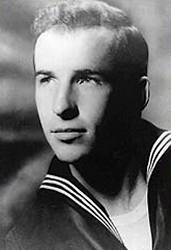
David George Ouellet was born in Newton, Massachusetts, on June 13, 1944, son of Chester J. and Elizabeth E. Ouellet. He graduated from Hardy School, Wellesley, Massachusetts, in 1958; attended Wellesley Junior High School; and subsequently was employed by the Alfred Fisher Trucking Company in Wellesley. On July 28, 1964 he enlisted in the U.S. Navy at Boston, Massachusetts, and had recruit training at the Naval Training Center, Great Lakes, Illinois. Completing his training in October 1964, he joined Assault Craft Division TWELVE, and while attached to that division served for five months in 1965 in the Vietnam era.

Between June and August 1966 he had river patrol boat training at the Naval Schools Command, Vallejo, California, after which he had trining at the Naval Amphibious Base, Coronado, California. On September 21, 1966 he reported for duty with River Squadron FIVE and was attached to My Tho Detachment 532 of that squadron and at the time of his death on March 6, 1967. He was posthumously awarded the Medal of Honor and cited as follows:

"For conspicuous gallantry and intrepidity at the risk of his life above and beyond the call of duty while serving with river Section 532, in combat against the enemy in the Republic of Vietnam. As the forward machine gunner on River Patrol Boat (PBR) 124, which was on patrol on the Mekong River during the early evening hours on March 6, 1967, Seaman Ouellet observed suspicious activity near the river bank, alerted his Boat Captain, and recommended movement of the boat to the area to investigate. While the PBR was making a high-speed run along the river bank, Seaman Ouellet spotted an incoming enemy grenade falling toward the boat. He immediately left the protected position of his gun mount and ran aft for the full length of the speeding boat, shouting to his fellow crew members to take cover. Observing the Boat Captain standing unprotected on the boat, Seaman Ouellet bounded onto the engine compartment cover, and pushed the Boat Captain down to safety. In the split second that followed the grenade's landing and in the face of certain death, Seaman Ouellet fearlessly placed himself between the deadly missile and his shipmates, courageously absorbing most of the blast fragments with his own body in order to protect his shipmates from injury and death. His extraordinary heroism and his selfless and courageous actions on behalf of his comrades at the expense of his own life were in the finest traditions of the United States Naval Service."

Seaman Ouellet was also awarded the Purple Heart Medal for wounds received in enemy action.


Back to topback to top  go to endgo to the end of the page


Back to topback to top


Back to Frigates List. Back to Ships List. Back to selection page. Back to 1st page.