![]() |
Search the Site with
|
![]() | ![]() | ![]() |
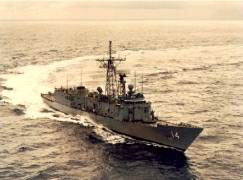
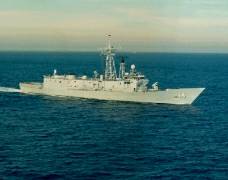
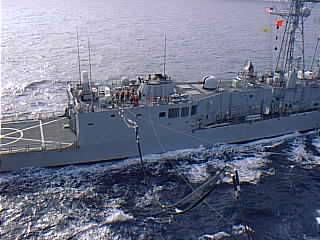
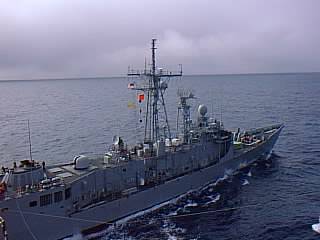
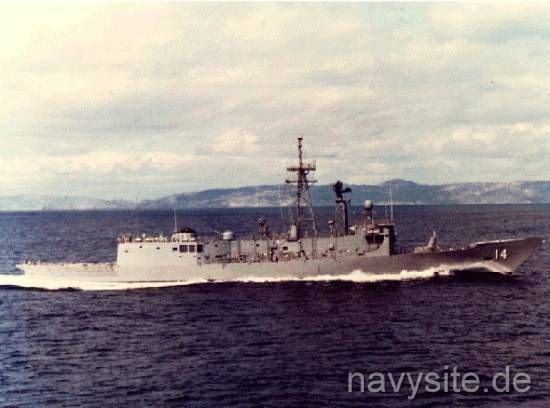
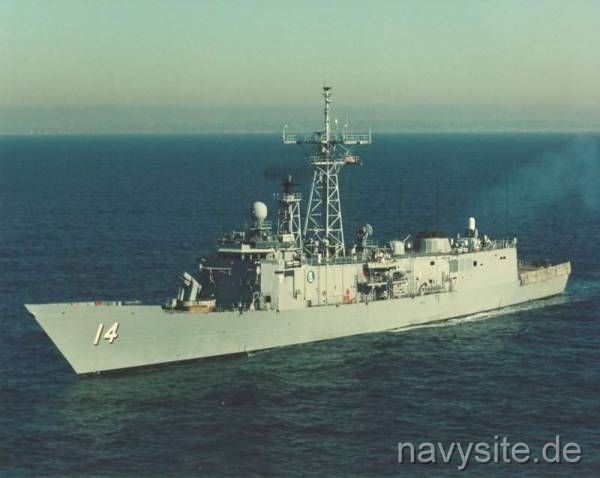
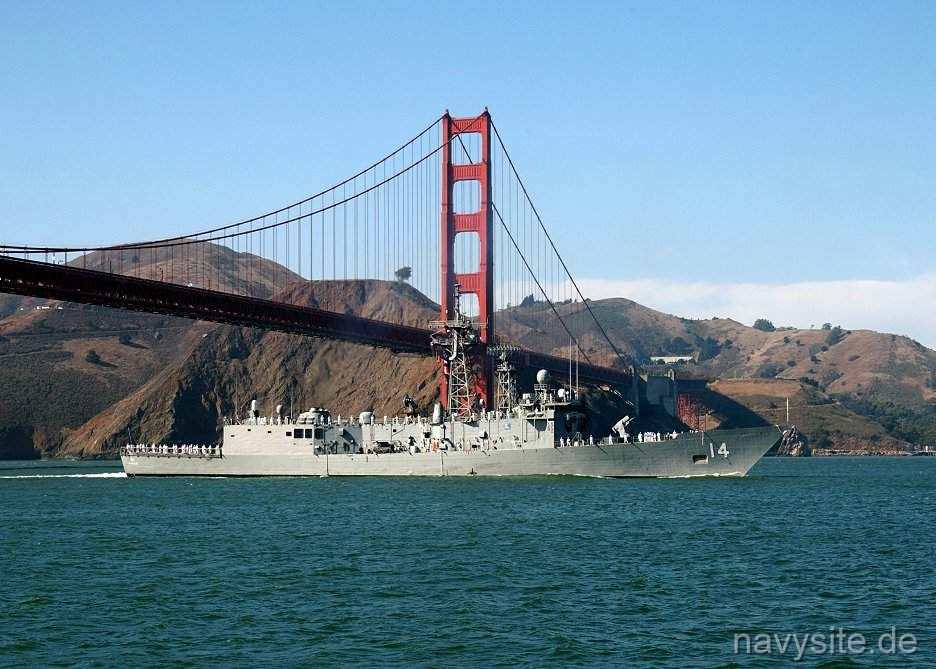
USS SIDES was the eighth guided missile frigate in the OLIVER HAZARD PERRY-class and the seventh "short hull" version in her class. USS SIDES was the first ship named in honor of Admiral John H. Sides.
In 1988, while deployed to the Arabian Gulf, SIDES completed a record 32 safe transits of the Strait of Hormuz while escorting oil tankers in and out of the volatile Gulf region. The ship also participated in combat operations as part of Operation Praying Mantis, the US retaliation in response to the Iranian mining of USS SAMUEL B. ROBERTS (FFG 58).
In 2002, SIDES participated in the war on terrorism, conducting maritime operations in support of Operations Noble Eagle and Enduring Freedom during her last deployment. Also in 2002, she led a combined U.S.-Australian task group in defense of strategic interests in the Indian Ocean.
A decommissioning ceremony at Naval Station San Diego on February 15, 2003, marked the end of USS SIDES' 21-year naval career. Shortly afterwards, SIDES was formally decommissioned and entered the Inactive Reserve Fleet at Bremerton, Wash., on February 28. Initially planned for a foreign military sale, the Navy sold the SIDES for scrapping on December 15, 2014. In June 2015, the SIDES arrived at Southern Recycling at Sulphur, La., and was subsequently scrapped.
| General Characteristics: | Keel Laid: August 7, 1978 |
| Christened: May 19, 1979 | |
| Commissioned: May 30, 1981 | |
| Decommissioned: February 15, 2003 | |
| Builder: Todd Pacific Shipyards Co., Los Angeles Division, San Pedro, Ca. | |
| Propulsion system: two General Electric LM 2500 gas turbines, two 350 Horsepower Electric Drive Auxiliary Propulsion Units | |
| Propellers: one | |
| Blades on each Propeller: five | |
| Length: 445 feet (133.5 meters) | |
| Beam: 45 feet (13.5 meters) | |
| Draft: 24,6 feet (7.5 meters) | |
| Displacement: 4,100 tons | |
| Speed: 28+ knots | |
| Aircraft: one | |
| Armament: one Mk 13 guided missile launcher (36 Standard (MR) and 4 | |
| Crew: 17 Officers and 198 Enlisted |
Crew List:
This section contains the names of sailors who served aboard USS SIDES. It is no official listing but contains the names of sailors who submitted their information.
USS SIDES Cruise Books:
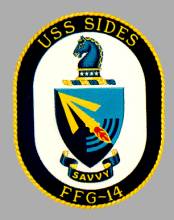
About the Ship's Coat of Arms:
The Shield:
The light blue on the shield of the coat of arms is symbolic of the hours of daylight and dark blue of the night. Together they connote the 24 hour watch and the vigilance required of warships at sea. The three arcs on the light blue suggest the very high frequency radio waves of radar, those on the dark blue symbolize the acoustic waves used in sonar to detect submerged objects. The broad arrow represents a missile on course to its target.
The Crest:
Blue and gold on the crest, are the colors associated with the Navy. The scaled horse's head, alluding to the heraldic sea horse, represents a knight, one of the pieces in the game of chess, suggesting at once the personal reputation of Admiral Sides as a man of knightly character and integrity and as a naval officer experienced in the strategies of sea warfare. The mullets, heraldic symbols related to the spurs of a knight, symbolize the four star rank attained by the Admiral.
About the Frigate's Name, about Admiral John H. Sides:
A native of Roslyn, Washington, Admiral Sides received his commission from the U.S. Naval Academy, having graduated with distinction in the class of 1925. His early sea tours were served principally aboard battleships. While ashore he pursued development of his specialty - ordnance - First, in 1942, as Chief of Ammunition and explosive section of the Bureau of Ordnance; then in 1948 as Deputy to the Assistant Chief of Naval Operations for Guided Missiles; in 1951 in the Office of the Director of Guided Missiles, Office of the Secretary of Defense; and, most notably, in 1952, as Director of the Guided Missile Division, Office of the CNO, from which he director the Navy's Guided Missile Efforts for almost four years.
Admiral Sides at sea commands include: Commander Mine Division Eight (1944), Commander Destroyer Squadron Forty-Seven (1945), USS ALBANY (1950), and Commander Cruiser Division Six (1956).
On August 31, 1960, he was appointed Commander in Chief, U.S. Pacific Fleet, and served in that capacity until 1963 at which time he retired from active duty. He passed away April 3, 1978 leaving his spouse, the former Virginia E. Roach and daughter, Mrs. Joanne Savina Sides Watson.
USS SIDES History:
USS SIDES was ordered on February 27, 1976 from Todd Pacific Shipyards' Los Angeles Division at San Pedro as part of the FY76 program, named for Admiral John H. Sides, a pioneer of the Navy's guided-missile era. Her keel was laid on August 7, 1978; she was launched on May 19, 1979 with Joanne Sides Watson as sponsor, and entered service on May 30, 1981, joining Destroyer Squadron 1 in San Diego for post-commissioning trials and shakedown. Photographs from early May 1981 show the ship on sea trials off California before her crew worked up on the Southern California ranges and in the Hawaiian OPAREA.
From 1981 into early 1983, SIDES settled into the Pacific Fleet routine of training, inspections, and certifications out of Naval Station San Diego, building proficiency with her single-arm Mk 13 missile launcher, 76-mm gun, LAMPS helicopter detachment, and antisubmarine suite. Her first long deployment began in March 1983 and ran through October 1983 to the Western Pacific, Indian Ocean, and the Persian Gulf, a reflection of the period's maritime priorities as the Iran-Iraq War's "Tanker War" phase intensified and U.S. presence operations expanded. During the cruise she crossed the equator on May 24, 1983, a small logbook milestone within a deployment shaped by convoy escort training, strait transit drills, and combined exercises with regional partners before returning to San Diego in the autumn.
Amid force redistributions on the U.S. West Coast, SIDES shifted homeport to Long Beach in 1985 before returning later to San Diego. The mid-1980s cycle included further Pacific training and another equator crossing on August 8, 1985. In these years the ship continued independent steaming, formation exercises with carrier battle groups, and readiness inspections that set the baseline for her later Gulf work.
By mid-1987, the Iran-Iraq War had turned the Gulf into a contested zone for merchant shipping, and the United States began Operation Earnest Will on July 24, 1987, to protect reflagged Kuwaiti tankers. SIDES' preparations and subsequent deployment placed her squarely in that mission set - escorting convoys, screening for small-boat and mine threats, and rehearsing actions against shore-based antiship missiles. The American response culminated in Operation Praying Mantis on April 18, 1988, after USS SAMUEL B. ROBERTS (FFG 58) struck a mine. SIDES was among the U.S. surface combatants operating in the northern Gulf during this period, as the Navy conducted the largest surface action since World War II while keeping convoys moving.
On July 3, 1988, during a Strait of Hormuz escort day in which multiple U.S. ships covered traffic, events ashore and on the water escalated around USS VINCENNES (CG 49). SIDES was operating nearby with USS ELMER MONTGOMERY (FF 1082) as part of the surface forces maintaining the escort cycle. The subsequent downing of Iran Air Flight 655 by VINCENNES occurred as SIDES and ELMER MONTGOMERY remained in the vicinity. SIDES transmitted an additional radio challenge on a civilian frequency in an attempt to clarify the unknown contact. The ship and crew later received a Meritorious Unit Commendation for their Gulf operations that spring and summer, a period in which SIDES also built a record of safe Strait of Hormuz transits that underscored the escort mission's tempo at the war's end.
From 1990 into early 1991, after the intense Hormuz escort cycle of 1987-1988, USS SIDES returned to a Third Fleet routine out of San Diego. The ship's publicly documented activity in this window points to local operations, certifications, and maintenance on the Southern California ranges and in the Hawaiian operating areas, while other Pacific units surged for the Gulf War. No evidence from open records indicates an extended overseas deployment by SIDES during the DESERT SHIELD/DESERT STORM period, which aligns with the Navy's broader force-management approach of keeping a portion of the frigate force in homewaters for readiness and training.
In 1992, SIDES is clearly visible in the Pacific Northwest. On August 1, 1992, the frigate entered Elliott Bay, Seattle, for SeaFair '92, combining public visitation with underway periods in Puget Sound and the Strait of Juan de Fuca. These inland-waters evolutions exercised close-quarters shiphandling and navigation in constrained channels before SIDES returned south to resume the normal San Diego workup and evaluation cycle.
Across 1993-1994, available public records show SIDES in a steady rhythm of West Coast and Hawaii training, inspections (to include engineering, damage control, and combat systems readiness events), and interim maintenance availabilities typical for the class in that era. While the Navy's operational focus in 1994 expanded in the Caribbean (e.g., migrant-interdiction cordons and Haiti operations), the open, ship-specific documentation for SIDES in these two years does not list a long, named overseas deployment. The frigate's trajectory reads as homeport-centric readiness, periodic composite training with other Pacific Surface Force ships, and short logistics port visits consistent with that pattern.
The tempo increased in 1995 with a documented U.S.-Canadian sea phase in the Northeast Pacific. During SEA PHASE 95-1, SIDES operated alongside USS GARY (FFG 51) and USS SALT LAKE CITY (SSN 716) against Canadian consorts HMCS CALGARY and HMCS ANNAPOLIS. The serials emphasized anti-submarine and surface warfare interoperability: coordinated sonar prosecutions, helicopter-vector tactics, gunnery events, maneuvering drills, and replenishment approaches. For SIDES, the phase validated the ship's ASW team, LAMPS detachment integration, and bridge/Combat Information Center coordination at the end of a training cycle.
In 1996, SIDES shifted to a law-enforcement mission set with a counter-narcotics deployment in the Caribbean and the approaches to the Panama Canal. The frigate embarked a Coast Guard Law Enforcement Detachment and conducted a sustained schedule of VBSS (visit, board, search, and seizure) operations on "go-fast" craft and suspect freighters, supported by her helicopter for over-the-horizon detection and sprints. Contemporary cruise book imagery from this deployment shows multiple seizures documented aboard and highlights the integration of Selected Reservists into the ship's departments during the cruise. Immediately prior to entering the patrol boxes, SIDES completed refresher training at Guantanamo Bay in September 1996, the standard certification crucible for Atlantic-side units, before shifting to operational tasking. The deployment blended short logistics calls with boarding-intensive patrols and concluded with the ship returning to her West Coast training cycle.
In early 1998, SIDES headed west for Cooperation Afloat Readiness and Training (CARAT) 98, the U.S. Navy's annual series of bilateral exercises across Southeast Asia designed to build interoperability in maritime security, boarding procedures, and littoral operations. Assigned to Commander, Task Group 712.0 alongside USS SALVOR (ARS 52), USS FORT McHENRY (LSD 43), USS MOBILE BAY (CG 53), and patrol coastal ships USS MONSOON (PC 4) and USS HURRICANE (PC 3), SIDES worked successive phases with partner navies in Brunei, Malaysia, Thailand, Singapore, and Indonesia. During the Malaysia phase, the U.S. contingent - including SIDES and HURRICANE - operated from Lumut beginning June 21, conducting extensive visit, board, search, and seizure (VBSS) drills and at-sea exercises with the Royal Malaysian Navy.
The ship's Western Pacific deployment pattern continued into 2000. SIDES took part in CARAT 2000 events and a broader WESTPAC from May to October, conducting gunnery, antisubmarine, and air-defense training at sea with U.S. and regional units. Contemporaneous imagery shows her operating with patrol coastal craft during the series, and public accounts from other participating ships place the final CARAT 2000 phase at Singapore in late September. Between phases, SIDES made logistics and liberty visits typical of the exercise circuit while maintaining readiness with her embarked helicopter detachment.
Following the September 11 attacks in 2001, SIDES' final major deployment began in February 2002 and ran into mid-year across the Western Pacific, North Arabian Sea, and the Arabian Gulf in support of the maritime security components of Operations Enduring Freedom and Noble Eagle. Her tasks included maritime interception operations, air-defense and surface screens for transiting units, and presence patrols through the Strait of Hormuz - missions that echoed her late-1980s employment but within a different geopolitical context focused on counterterrorism and coalition maritime control. Port calls during this deployment included Darwin, Australia from June 19-24, 2002, a documented visit amid the ship's swing through northern Australia before she returned across the Pacific to home waters.
Back in Southern California, SIDES entered the training cycle and weapons exercises that closed her career. On October 9, 2002, she participated in a fleet SINKEX off the coast of California, employing her main battery as part of the sinking exercise that disposed of the decommissioned guided missile destroyer ex-USS TOWERS (DDG 9). Images from the same period show SIDES launching a Standard SM-1 as part of workups. These events reflected the class's enduring role as multirole escorts even as the Navy's force structure evolved.
A formal decommissioning ceremony at Naval Station San Diego on February 15, 2003, marked SIDES' farewell to the waterfront. The ship was officially decommissioned on February 28, 2003, and later stricken on May 24, 2004. She entered the Naval Inactive Ship Maintenance Facility at Bremerton to await disposition, closing a 22-year service life that had spanned Cold War convoy drills, high-tempo Gulf escorts at the end of the Iran-Iraq War, post-Cold War regional exercises from Southeast Asia to the Caribbean, and the first maritime security deployments of the post-9/11 era.
Homeports of USS SIDES:
| Period | Homeport |
|---|---|
| commissioned at San Pedro, Calif. | |
| 1981 - 1985 | San Diego, Calif. |
| 1985 - 1991 | Long Beach, Calif. |
| 1991 - 2003 | San Diego, Calif. |
USS SIDES Image Gallery:
![]() | ![]() | ![]() | ![]() | ![]() |
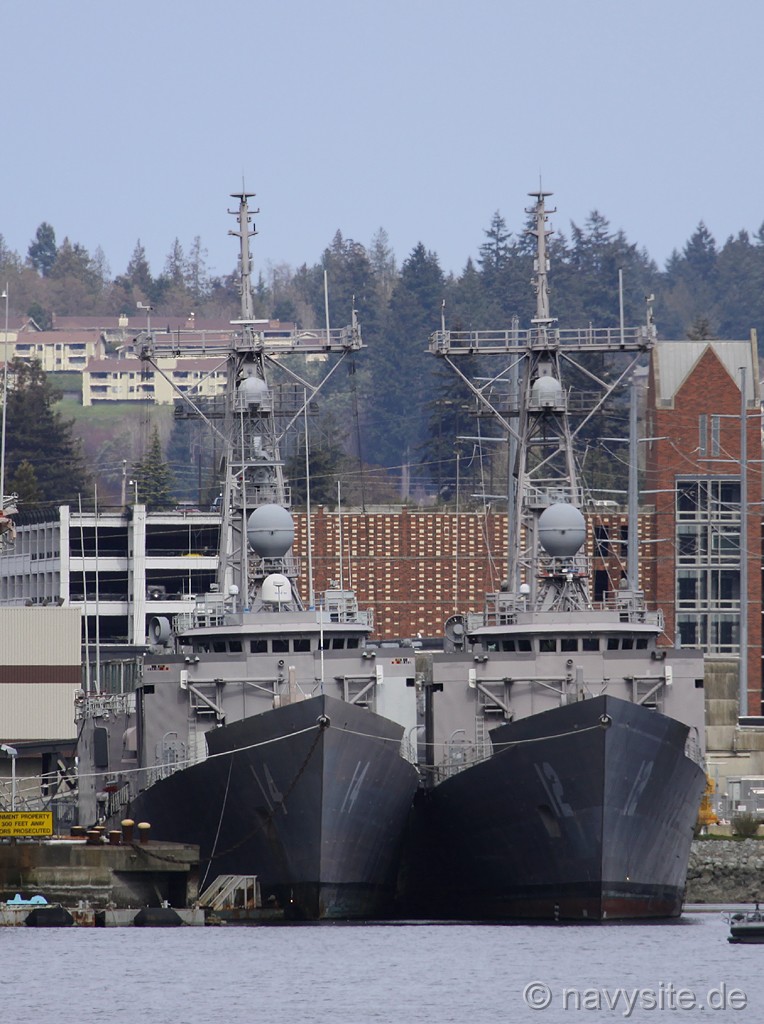
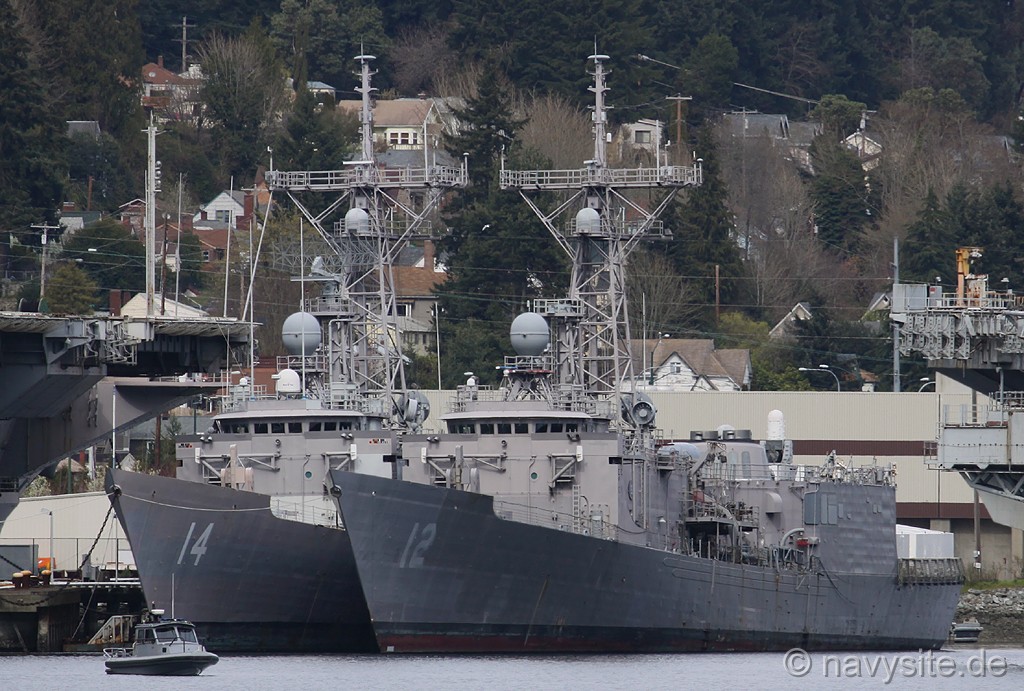
The photos below were taken by me and show the SIDES and her sistership GEORGE PHILIP (FFG 12) laid-up at Bremerton, Wash., on March 14, 2010.
![]() | ![]() |
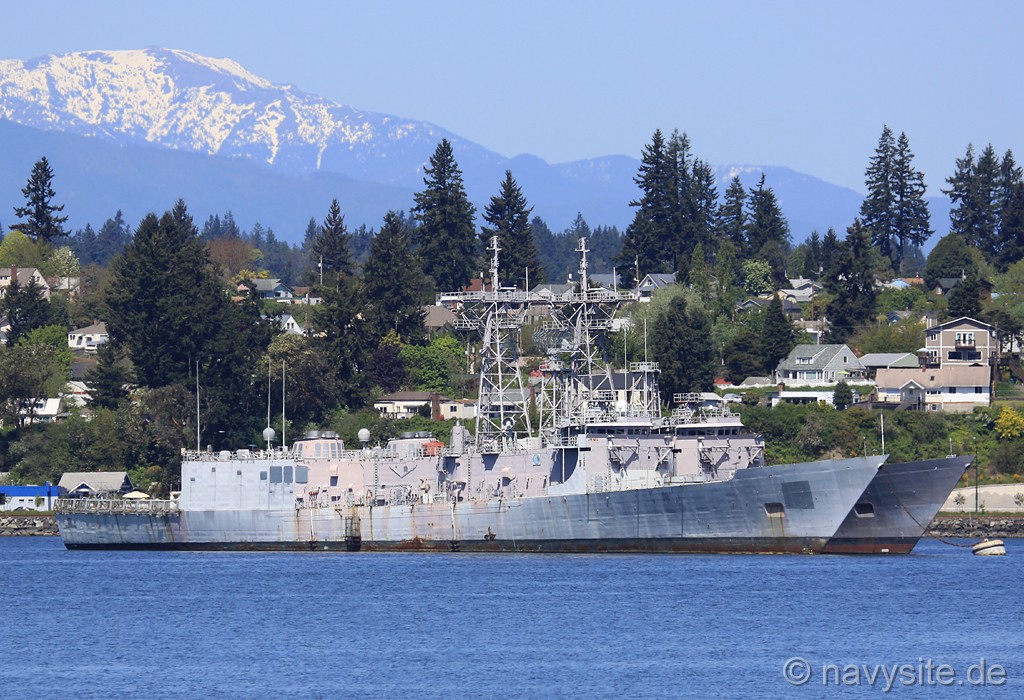
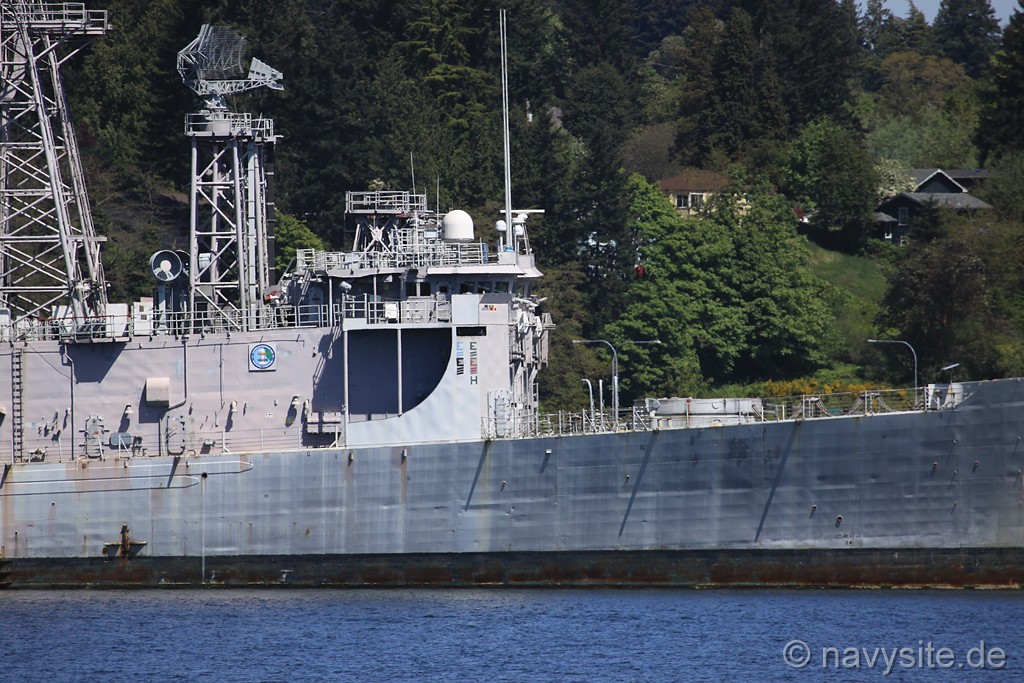
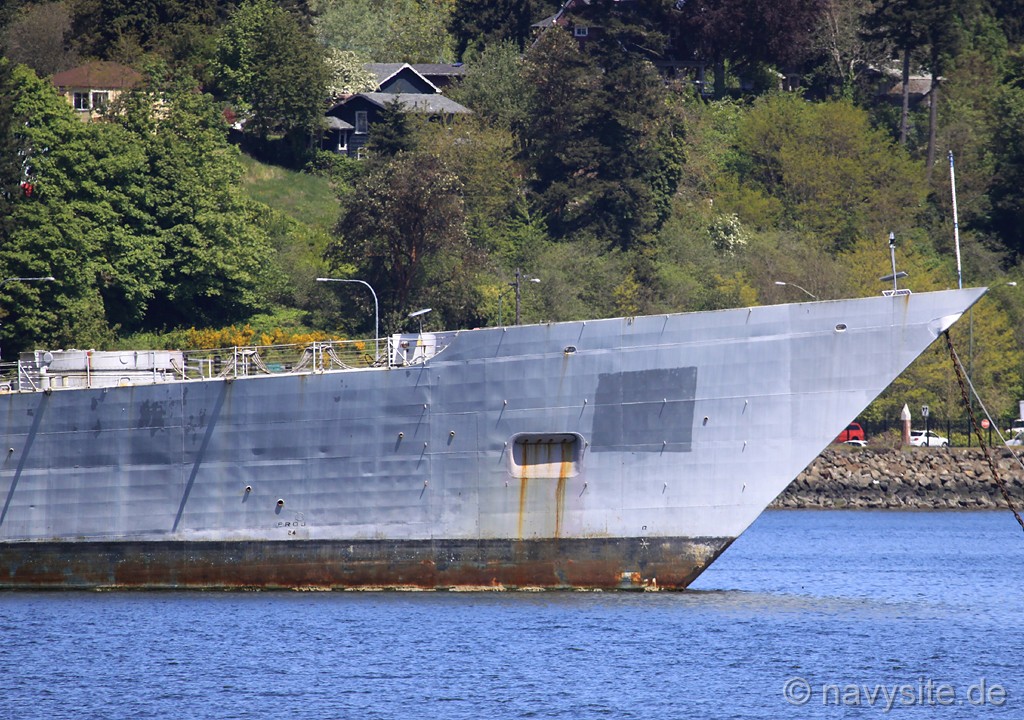
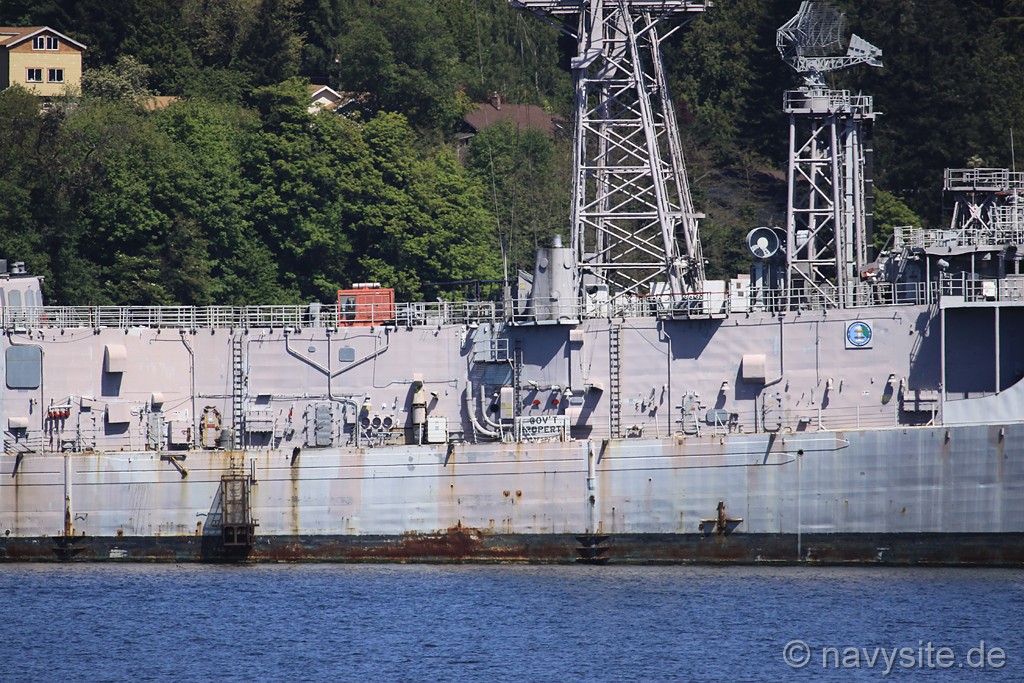
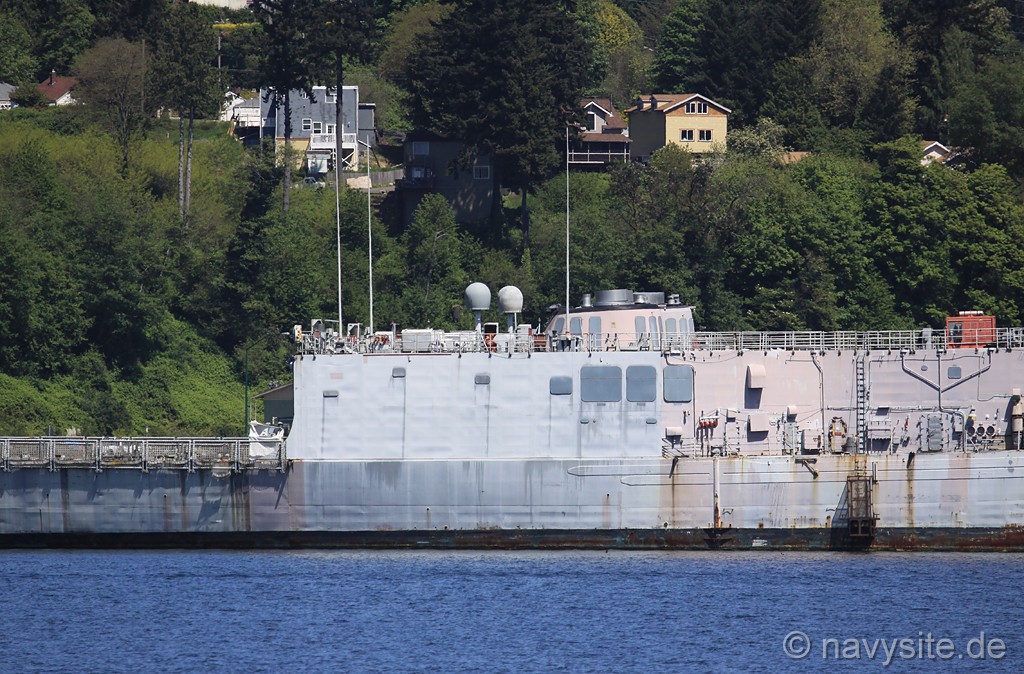
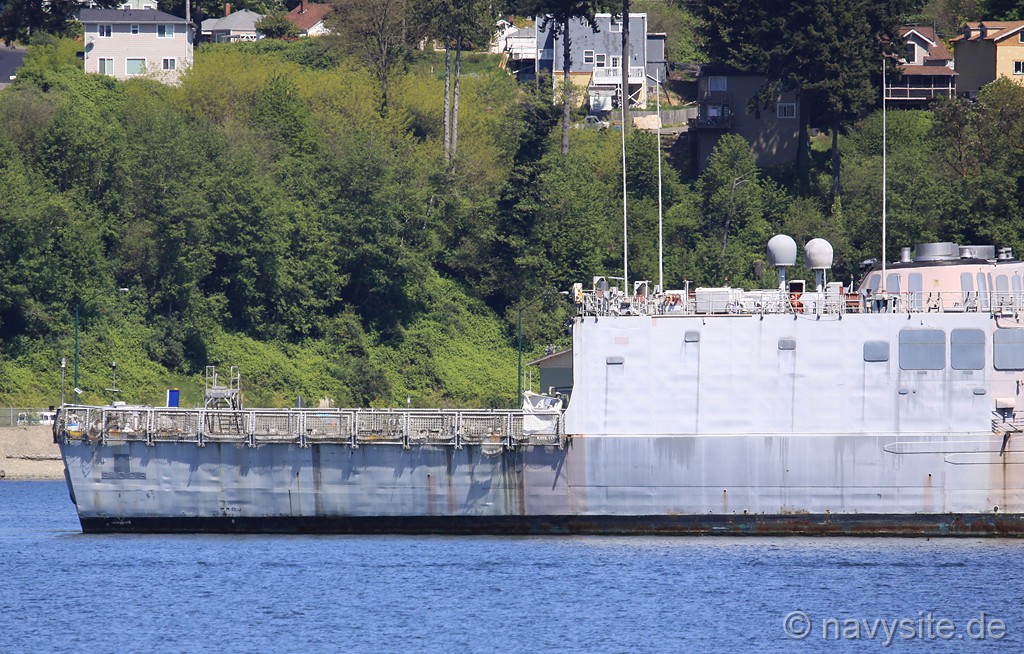
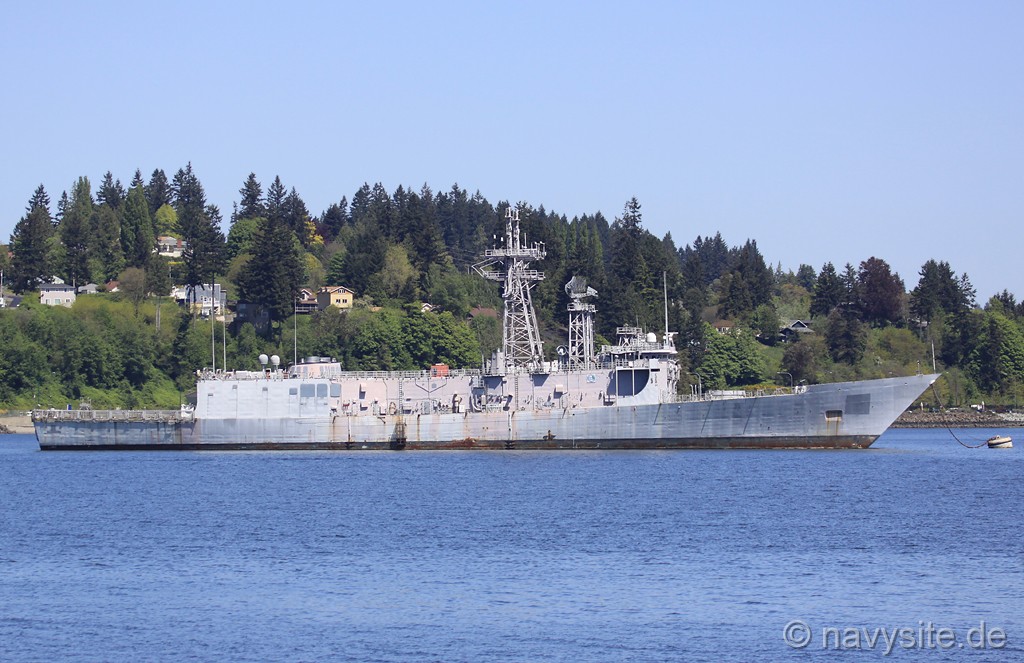
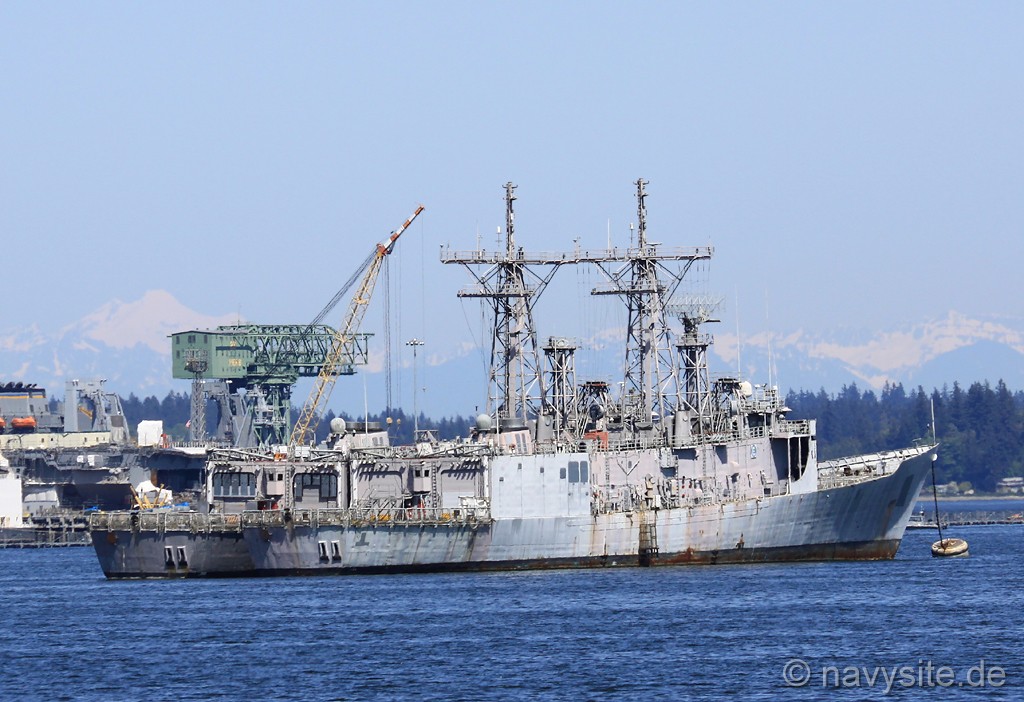
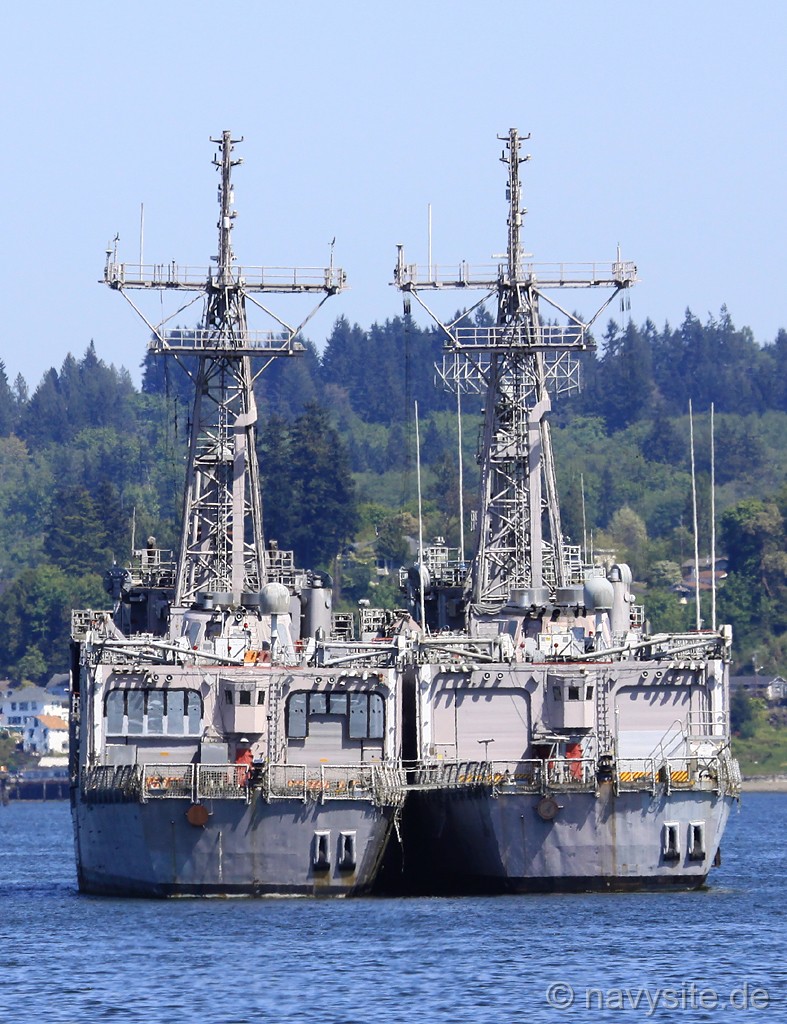
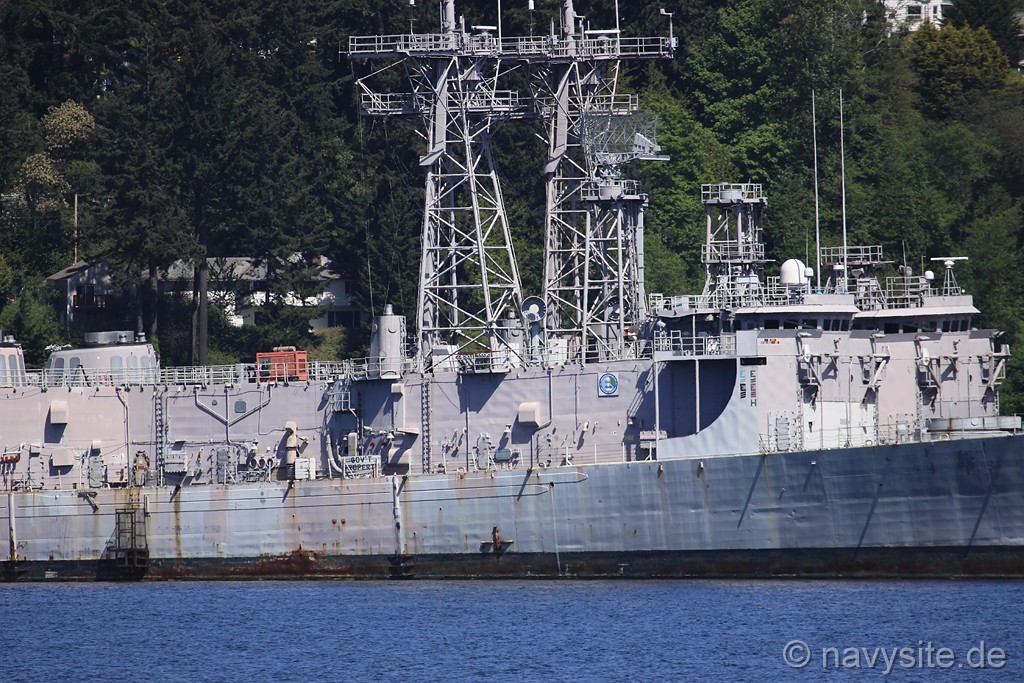
The photos below were taken by me and show the SIDES and her sistership GEORGE PHILIP (FFG 12) still laid-up at Bremerton, Wash., on May 13, 2012. Both ships have been moved from the pier to an anchorage in Sinclair Inlet off the naval shipyard.
![]() | ![]() | ![]() | ![]() | ![]() |
![]() | ![]() | ![]() | ![]() | ![]() |
Back to Frigates list.
Back to ships list.
Back to selection page.
Back to 1st page.