![]() |
Search the Site with
|
![]() | ![]() | ![]() |
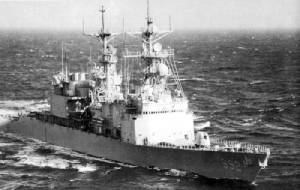
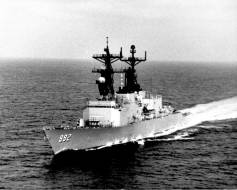
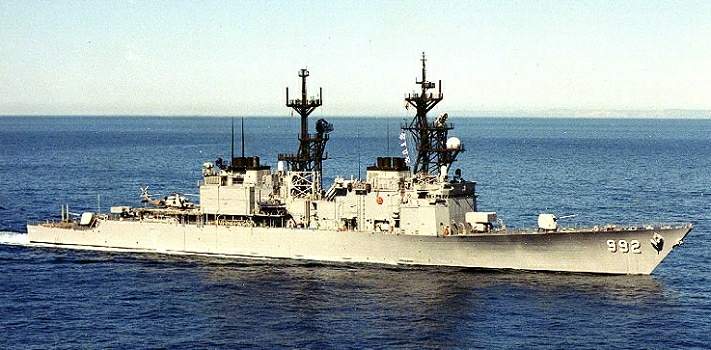
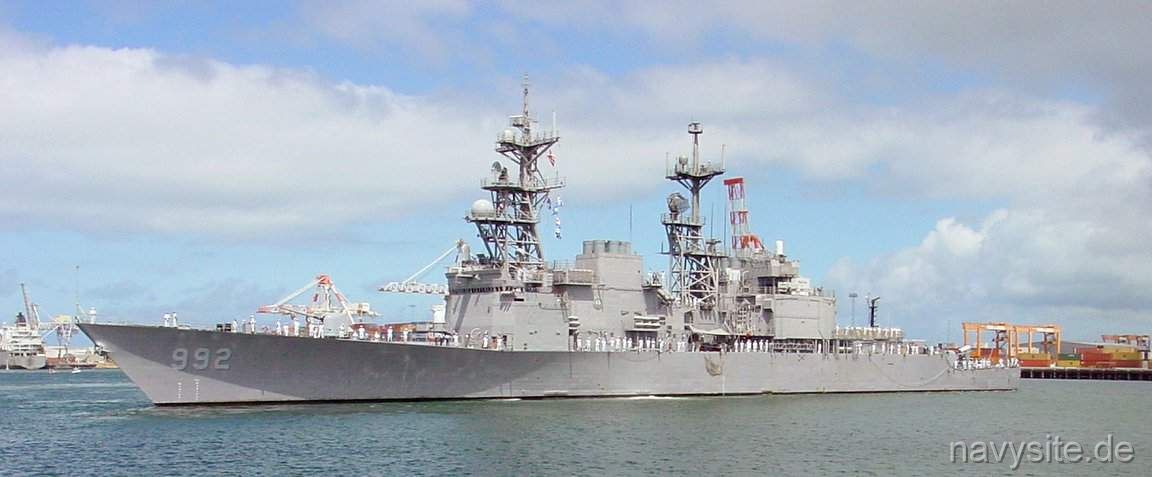
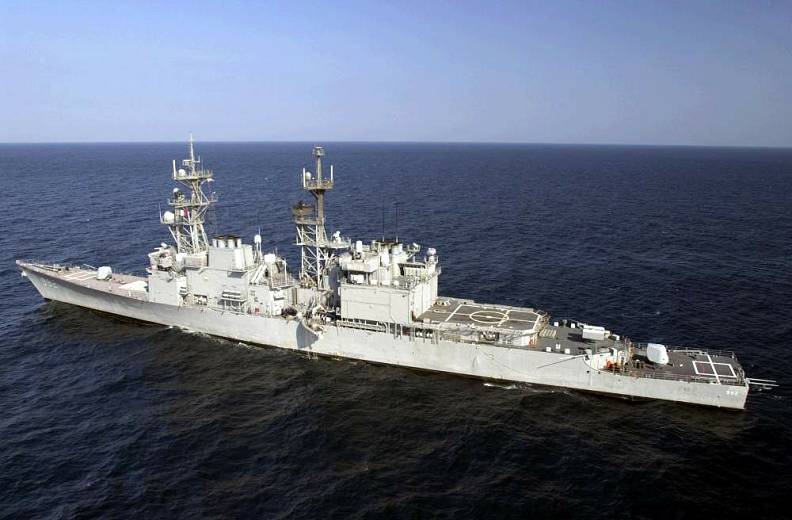
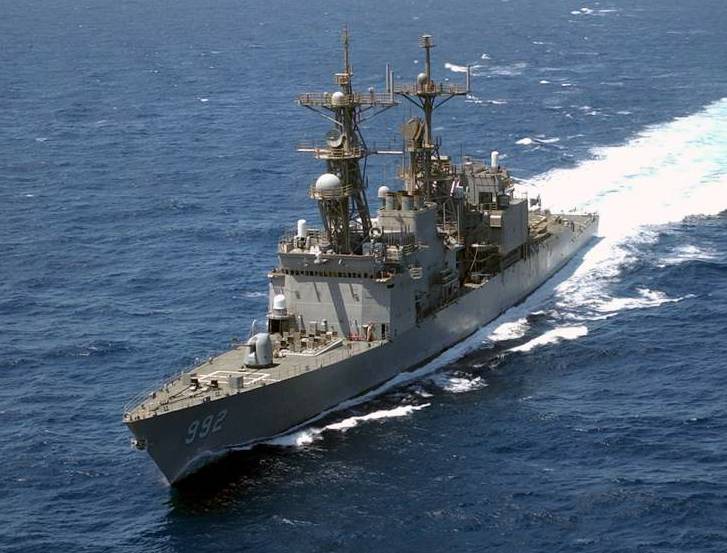
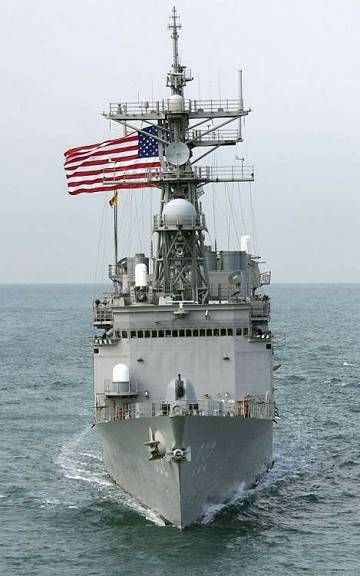
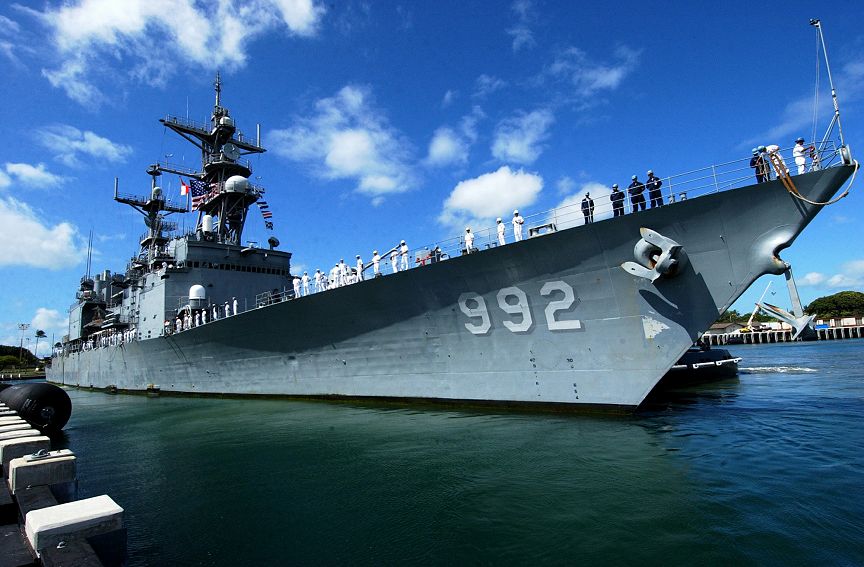
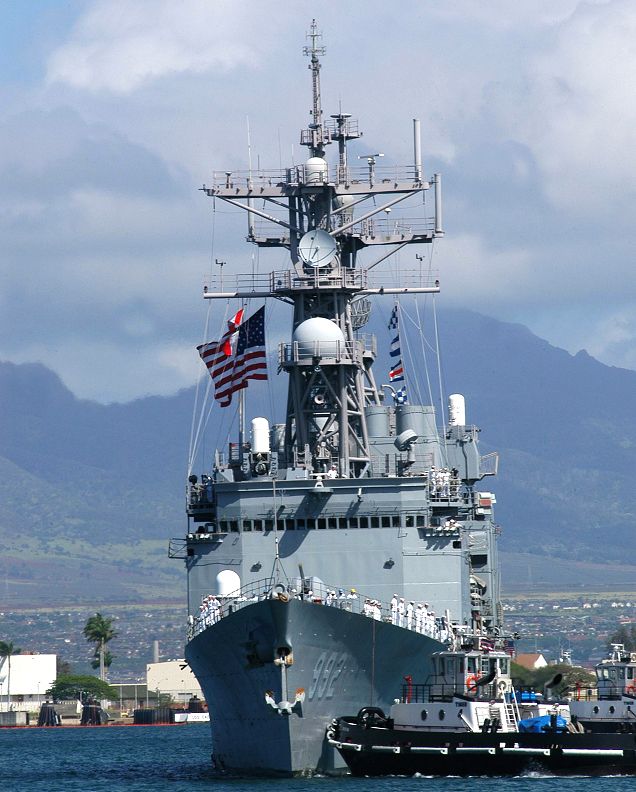
USS FLETCHER was the last but one ship in the SPRUANCE - class of destroyers and the first ship in the Navy named after Admiral Frank Jack Fletcher. Both decommissioned and stricken from the Navy list on October 1, 2004, the FLETCHER was currently laid-up at the Inactive Ships On-site Maintenance Office, Pearl Harbor, HI., awaiting transfer to the Pakistani Navy. However, those plans were cancelled and the FLETCHER was sunk as a target on July 16, 2008 off Kauai, Hawaii, during RIMPAC 2008. She was sunk by a modified live Mk48 ADCAP torpedo fired from the Australian submarine HMAS WALLER.
| General Characteristics: | Awarded: January 15, 1975 |
| Keel laid: April 24, 1978 | |
| Launched: June 16, 1979 | |
| Commissioned: July 12, 1980 | |
| Decommissioned: October 1, 2004 | |
| Builder: Ingalls Shipbuilding, West Bank, Pascagoula, Miss. | |
| Propulsion system: four General Electric LM 2500 gas turbine engines | |
| Propellers: two | |
| Blades on each Propeller: five | |
| Length: 564,3 feet (172 meters) | |
| Beam: 55,1 feet (16.8 meters) | |
| Draft: 28,9 feet (8.8 meters) | |
| Displacement: approx. 9,200 tons full load | |
| Speed: 30+ knots | |
| Aircraft: two | |
| Armament: two | |
| Crew: approx. 340 |
Crew List:
This section contains the names of sailors who served aboard USS FLETCHER. It is no official listing but contains the names of sailors who submitted their information.
USS FLETCHER Cruise Books:
Accidents aboard USS FLETCHER:
| Date | Where | Events |
|---|---|---|
| May 22, 1982 | Subic Bay, Philippines | USS FLETCHER strikes the USS TOWERS (DDG 9) and the USS FRANCIS HAMMOND (FF 1067) causing minor damage while attempting to moor alongside the two ships. |

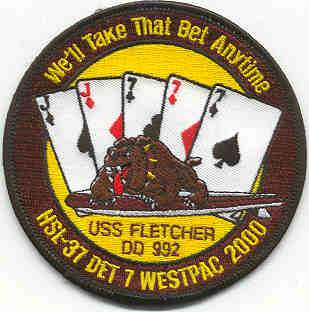
USS Fletcher Patch Gallery:
![]() |
USS Fletcher History:
USS FLETCHER took shape at Ingalls Shipbuilding on the west bank of the Pascagoula River after her keel was laid on 24 April 1978 and her hull met the water on 16 June 1979. Acceptance by the Navy followed on 16 June 1980 with Rear Admiral William C. Wyatt signing the delivery papers alongside the prospective commanding officer, in a ceremony captured in official photographs. She was commissioned on 12 July 1980, entering service as the thirtieth SPRUANCE-class destroyer and the fifteenth assigned to the Pacific Fleet, named for Admiral Frank Jack Fletcher.
Within weeks of commissioning, FLETCHER departed the Gulf Coast for the Pacific, transiting the Panama Canal during July-August 1980 and joining Cruiser-Destroyer Group Five for shakedown and fleet integration on the U.S. West Coast. The initial months were spent working up as an anti-submarine and multi-mission surface combatant in the Pacific Fleet, establishing the pattern of training and inspections that would precede her first overseas deployment.
By the spring of the following year, the destroyer's tracklines reached into equatorial waters: on 11 May 1981, the crew held a Shellback ceremony marking an Equator crossing during at-sea operations, a milestone recorded in shipboard memorabilia. This set the stage for her maiden Western Pacific cruise, which ran from February to August 1982. On that cruise, FLETCHER again crossed the line - another Shellback entry dated 4 August 1982 - and worked with Seventh Fleet units across the Western Pacific, a tempo and itinerary preserved in her 1982 cruise book and companion image series of ports of call.
Her next overseas period began in mid-1983 and unfolded against the wider Cold War tensions in the Pacific and the concurrent crises in Central America and the Middle East. On 15 July 1983, FLETCHER sailed from San Diego with the RANGER (CV 61) battle group and, within days, the formation was diverted south to conduct flight and maritime training off the coasts of Nicaragua, El Salvador, and Honduras. Ships operating alongside included the carrier, the cruiser USS HORNE (CG 30), the guided-missile destroyer USS LYNDE McCORMICK (DDG 8), the destroyer USS FIFE (DD 991), the frigate USS MARVIN SHIELDS (FF 1066), the fast combat support ship USS CAMDEN (AOE 2), and the oiler USS WICHITA (AOR 1). The diversion, reported on 20 July 1983, reflected the U.S. decision to mass visible naval air power near Central America that summer. After completing those operations, the group resumed its trans-Pacific track with the usual stops at Pearl Harbor and Subic Bay and continued toward the Indian Ocean.
Once through the Strait of Malacca, FLETCHER spent the bulk of the late-1983 deployment on station in the North Arabian Sea amid the latter years of the Iran-Iraq War, supporting presence and escort postures typical of U.S. surface combatants in the region. The ship's one liberty break in that stretch came with an unplanned visit to Port Victoria, Seychelles, 4-7 December 1983 - the first U.S. Navy ship call there in four years. With the deployment nearing its end, she shaped course from the Arabian Sea for Australia and made a three-day port visit to Darwin before turning for home. She returned to San Diego on 29 February 1984, closing a seven-and-a-half-month cruise marked by sustained blue-water operations, frequent underway replenishments, and multinational presence in the Indian Ocean.
In July 1984, Cmdr. Francis K. Holian assumed command in San Diego, setting the ship on a workup path with DESTROYER SQUADRON 31 for another Western Pacific/Indian Ocean cruise with the CONSTELLATION (CV 64) battle group. On 21 February 1985, FLETCHER stood in to Pearl Harbor with the carrier's battle group at the outset of her third Western Pacific deployment. The early-mid-1985 phase reflected standard Cold War Seventh Fleet tasking - screening and anti-submarine exercises around the carrier and logistics streams - before she returned to the U.S. West Coast to resume the training-maintenance cycle.
Through 1986 and into 1987, FLETCHER operated principally from Southern California and Hawaii. The ship is documented underway off Santa Catalina Island on 4 February 1988 - a dated Navy photograph that anchors her Southern California operating period and captures her in the configuration typical of mid-SPRUANCE-class units just prior to the class's major 1990s modernizations.
In 1989, FLETCHER shifted to a concentrated three-month Northern Pacific "mini-deployment" with DESRON 31 that wove together bilateral and multi-national evolutions as the Cold War waned. The package began with MARCOT 2-89 alongside the Royal Canadian Navy (18 September-15 October), included large-force war-at-sea work in the Gulf of Alaska, and culminated in PACEX '89 - the largest Pacific Fleet exercise since 1945 - with overlapping phases documented from 5 September to 19 October and from 20 to 30 September as multiple carrier and surface action groups maneuvered from the Aleutians into the western North Pacific. FLETCHER's role in the DESRON 31 contingent placed her in the antisubmarine and screen duties that underpinned the multi-carrier formations operating with allies from Japan, Canada, and the Republic of Korea.
During the first half of 1990 the destroyer remained on the U.S. West Coast for short underway periods focused on readiness drills and refresher training. She then entered a brief dry-dock availability at Long Beach from 27 June to 10 July 1990, an inter-deployment maintenance window that set up a late-summer Seventh Fleet commitment. Getting back underway, FLETCHER shifted to Japan and embarked on anti-submarine warfare operations and training from Yokosuka between 28 August and 22 September 1990, a tightly framed at-sea period that closed her pre-Gulf-War calendar and returned her to the Pacific Fleet's routine cycle.
FLETCHER is documented pier-side at San Diego on 2 April 1991 - visible in the background as USS CHICAGO (SSN 721) returned from Operation Desert Storm.
The ship's next long deployment followed in 1992. A dedicated WestPac cruise book for that year confirms a March-August 1992 Western Pacific tour, reflecting the ship's routine carrier-support, presence, and training roles across Seventh Fleet waters, with the usual port calls and air/antisubmarine warfare evolutions that characterized such cruises in the immediate post-Cold War period.
By early 1994, FLETCHER was based at Pearl Harbor. At 10:10 on 27 January 1994, she stood out from Pearl Harbor to begin another WestPac, her first port visit being at Majuro Atoll in the Republic of the Marshall Islands. The itinerary for this deployment extended beyond the Western Pacific into the Indian Ocean and the Persian Gulf, aligning with the Navy's ongoing maritime security and sanctions-enforcement commitments after the 1991 war.
Following this tour, during 1994-1995 the destroyer received a significant combat-system modernization: installation of the Mk 41 vertical launching system, which broadened her strike and ASW options by adding vertical-launch Tomahawk and VLA capability and updated her mission profile for late-1990s tasking. FLETCHER was recognized in this period with a Battle Efficiency "E" for 1994, reflecting sustained readiness during the deployment/modernization cycle.
FLETCHER returned to the Western Pacific and Middle East again in the 1996-1997 timeframe, deploying from November 1996 to May 1997 into the Indian Ocean and Northern Arabian Gulf, where the ship joined the familiar regime of maritime interception operations and carrier-strike group support that enforced United Nations measures on Iraqi shipping. Contemporary command histories and summaries for the period note FLETCHER on maritime interception duty in early 1997, consistent with Northern Arabian Gulf escort and boarding operations then being directed by Fifth Fleet.
In December 1998, FLETCHER was among the U.S. Navy ships assigned during Operation Desert Fox (16-20 December 1998), the four-day Anglo-American strikes intended to degrade Iraqi WMD-related capability and enforcement-resistant air defenses. The ship's participation in that operational window is reflected both in contemporary orders of battle and in the Navy Unit Commendation subsequently credited to FLETCHER for those exact dates.
Through 1999-2001, the destroyer remained engaged in Pacific Fleet tasking: award records show a Navy Meritorious Unit Commendation spanning January 1999-September 2001 as well as August 2000-January 2001, and a Coast Guard Unit Commendation for January-February 2000, which aligns with cross-service law-enforcement and interdiction missions that surface combatants periodically supported alongside embarked Coast Guard Law Enforcement Detachments.
On 2 August 2002, FLETCHER departed Pearl Harbor for what became her signature late-career employment: Sea Swap, an experiment to keep a single hull forward for well over a year while rotating entire crews. The initial FLETCHER crew under CDR Thomas Neal took the ship across the Pacific with set-piece port calls - Yokosuka on 16-20 August, then Hong Kong and Singapore for an availability - before proceeding to the Persian Gulf to conduct Maritime Interdiction Operations in support of United Nations sanctions on Iraq. In January 2003, at Fremantle, Australia, the original crew turned the ship over to the former crew of USS KINKAID (DD 965) under CDR Mike Slotsky. That team took FLETCHER back to the Gulf, where in the opening phase of Operation Iraqi Freedom they performed escort duties and supported Tomahawk strike operations as coalition forces initiated large-scale air and maritime strikes and amphibious deception measures in March 2003. Contemporaneous summaries also place FLETCHER on North Arabian Gulf maritime interception duty 8-12 March, operating out of Bahrain and remaining Bahrain-based through May. A subsequent crew rotation delivered the ship in Singapore to the former crew of USS OLDENDORF (DD 972) under CDR Charles Gaouette, who completed another Gulf deployment before turning the ship over at Fremantle to the former crew of USS ELLIOT (DD 967) under CDR John Nolan. The ELLIOT team carried FLETCHER through a final Gulf stint in 2004 conducting continued maritime interdiction in support of OIF.
With the protracted forward deployment complete, FLETCHER called at Pearl Harbor on 25 May 2004 for a short visit en route to the mainland, a homecoming of sorts for the former Hawaii-based destroyer now bound to close out service. She was decommissioned at Naval Station San Diego on 1 October 2004 after twenty-four years in commission, having ended her career as a highly capable, VLS-equipped multi-mission unit that had shifted from Cold War Pacific patrols to sanctions enforcement, strike support, and an intensive forward-deployed experiment in her last years.
The Sinking of USS FLETCHER:
USS FLETCHER was sunk as a target during RIMPAC 2008. She was sunk by the Australian submarine HMAS WALLER using the MK-48 Mod 7 Common Broadband Advanced Sonar System (CBASS) torpedo - a new enhancement for the MK-48. The video below was created by Charles Walker and is a tribute to the FLETCHER and also shows her sinking on July 16, 2008, north off Kauai, Hawaii. This is a long video (11:51 minutes) but it's worth watching.
USS FLETCHER Image Gallery:
![]() | ![]() | ![]() | ![]() | |
![]() | ![]() | ![]() | ![]() | ![]() |
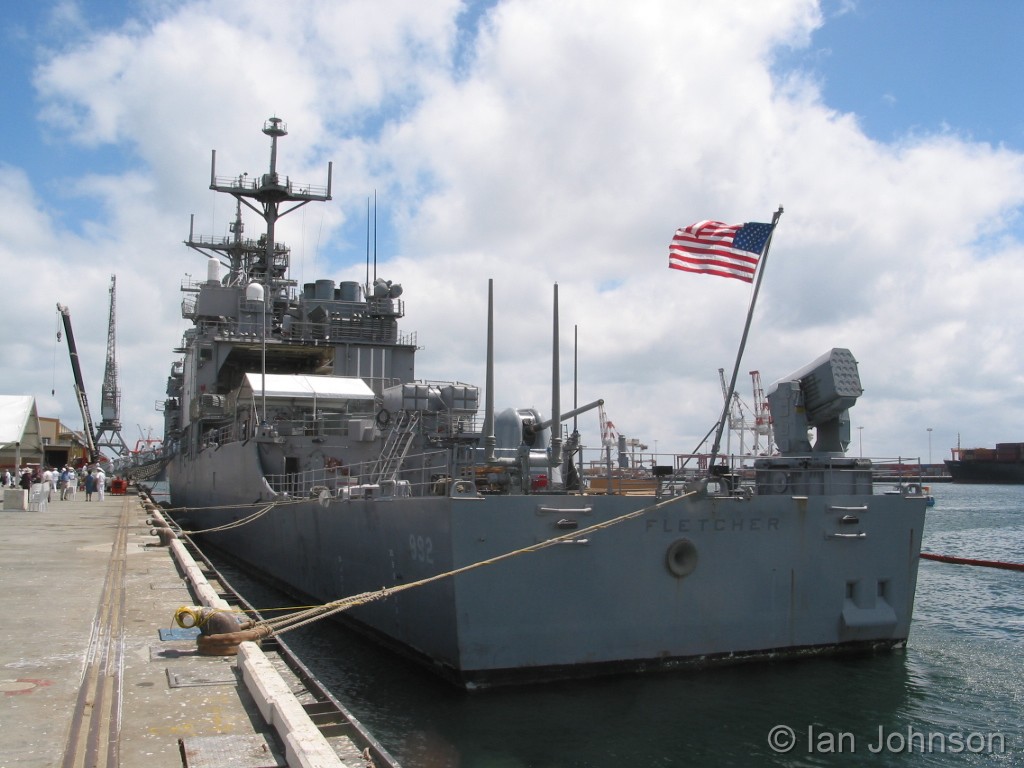
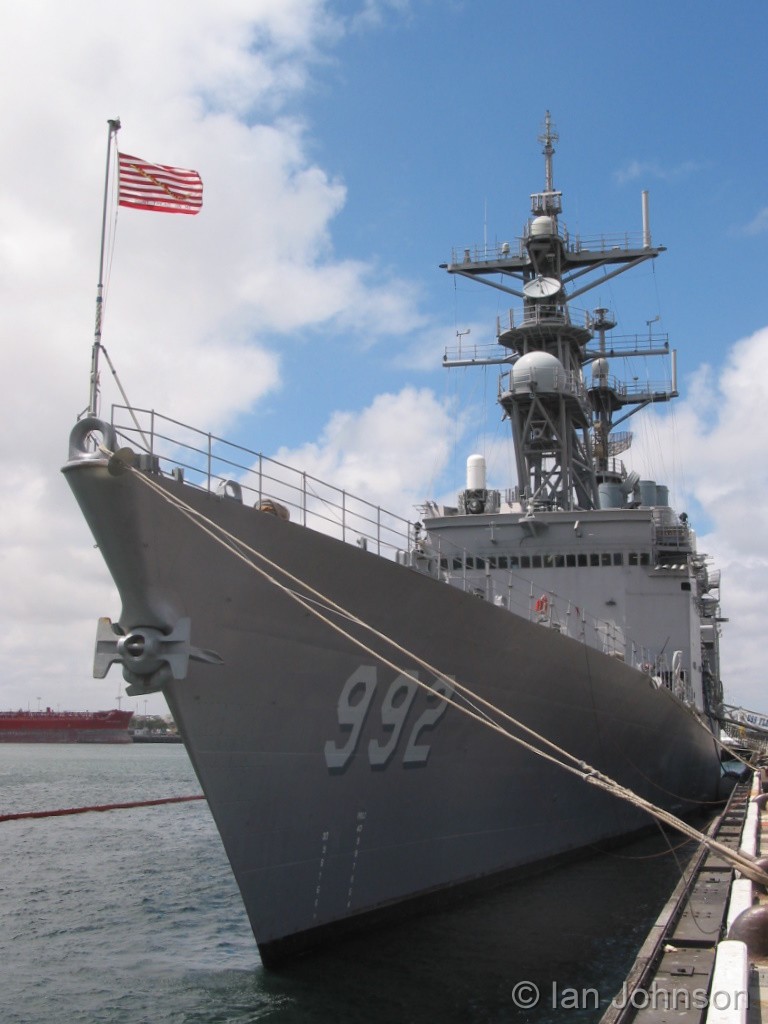
The photos below were taken by Ian Johnson on January 22, 2003, and shows the FLETCHER at Fremantle, Australia. USS FLETCHER was on her fifth visit to Western Australia to conduct the USN's first “Sea Swap” which occurred in Fremantle on 20 January 2003 with the current crew of the USS FLETCHER being releived by the crew of the recently decommissioned USS ELLIOT (DD 967) before sailing the USS FLETCHER to the Persian Gulf as part of the USN forces that served in Operation Iraqi Freedom 2003.
![]() | ![]() |
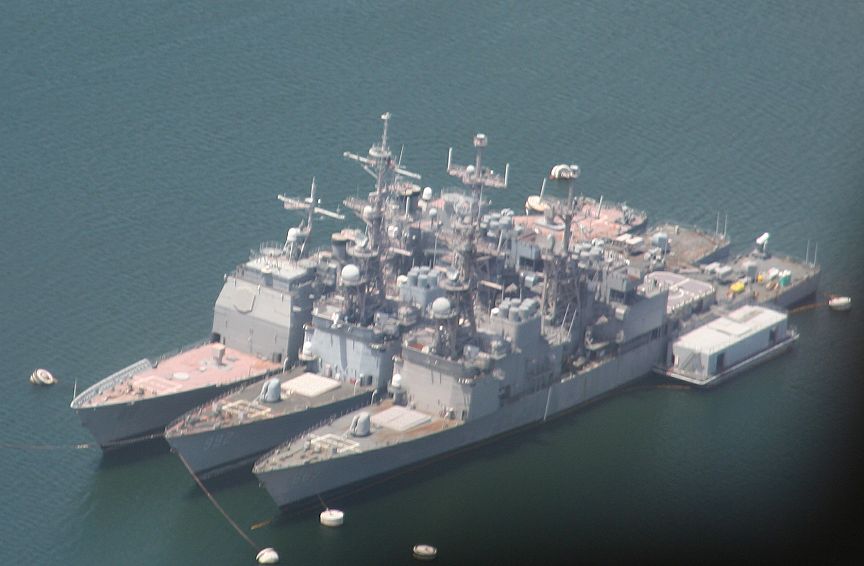
The photo below was taken by me on July 29, 2006, and shows the FLETCHER [center] berthed at the Naval Inactive Ships Maintenance Facility in Pearl Harbor, HI. The ship in the front is the CUSHING (DD 985) and the ship in the background is the VALLEY FORGE (CG 50).
![]() |
Back to Destroyers list.
Back to ships list.
Back to selection page.
Back to 1st page.