Search the Site with 
GeneralGeneral Characteristics Crew List History Image Gallery to end of page

USNS Sioux (T-ATF 171)

- Military Sealift Command -
- stricken -


Sorry,
no coat of arms
available.

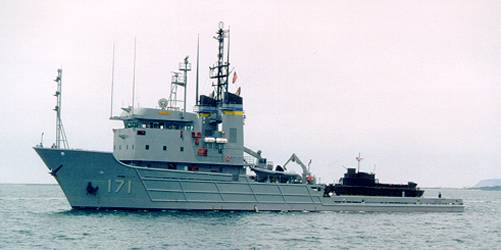
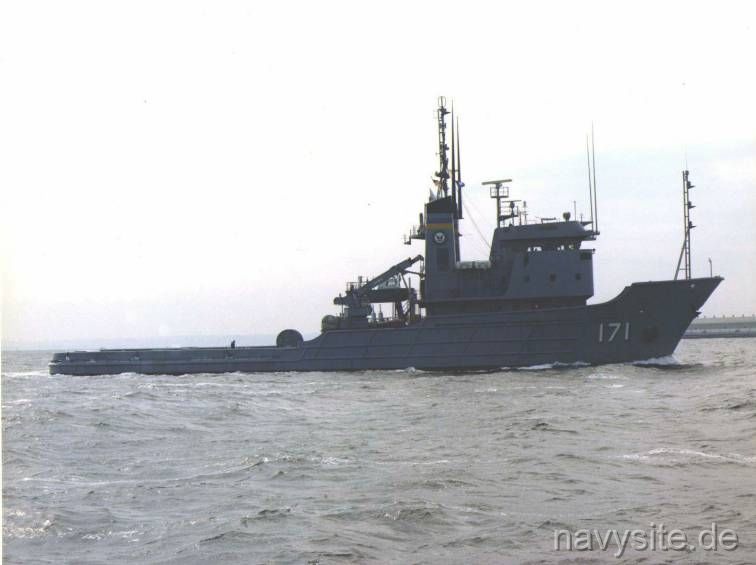
Named after the Dakota Indians of North America, which occupy North and South Dakota, the USNS SIOUX was the sixth POWHATAN - class ocean tug. The Indian tribe after which the SIOUX was named became known as the Sioux from a mispronounciation of an enemy tribe's word meaning "snake."

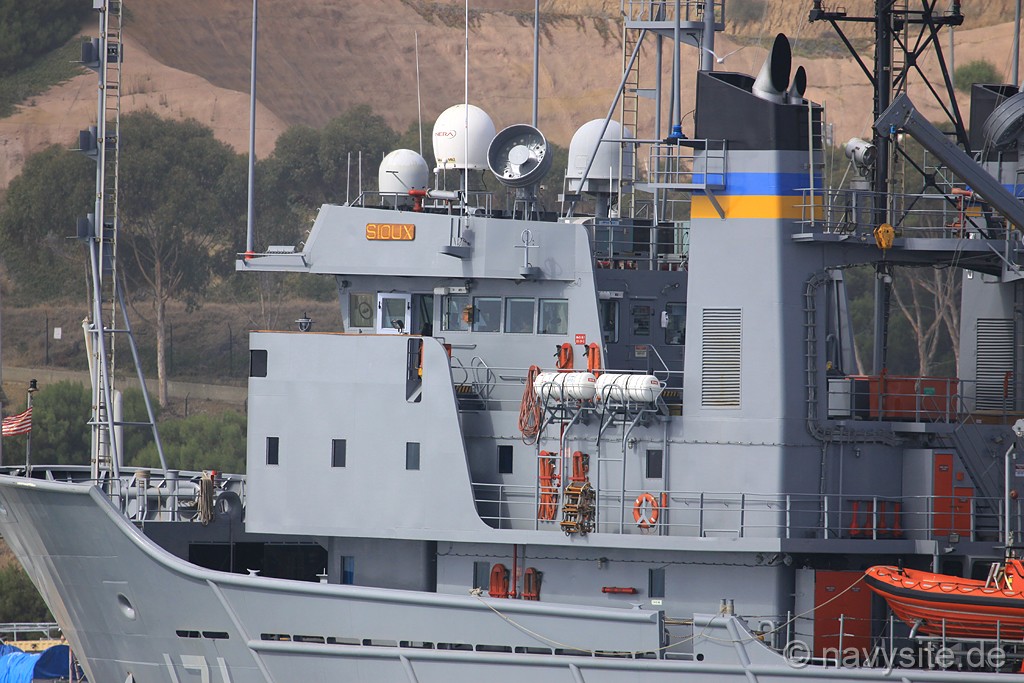
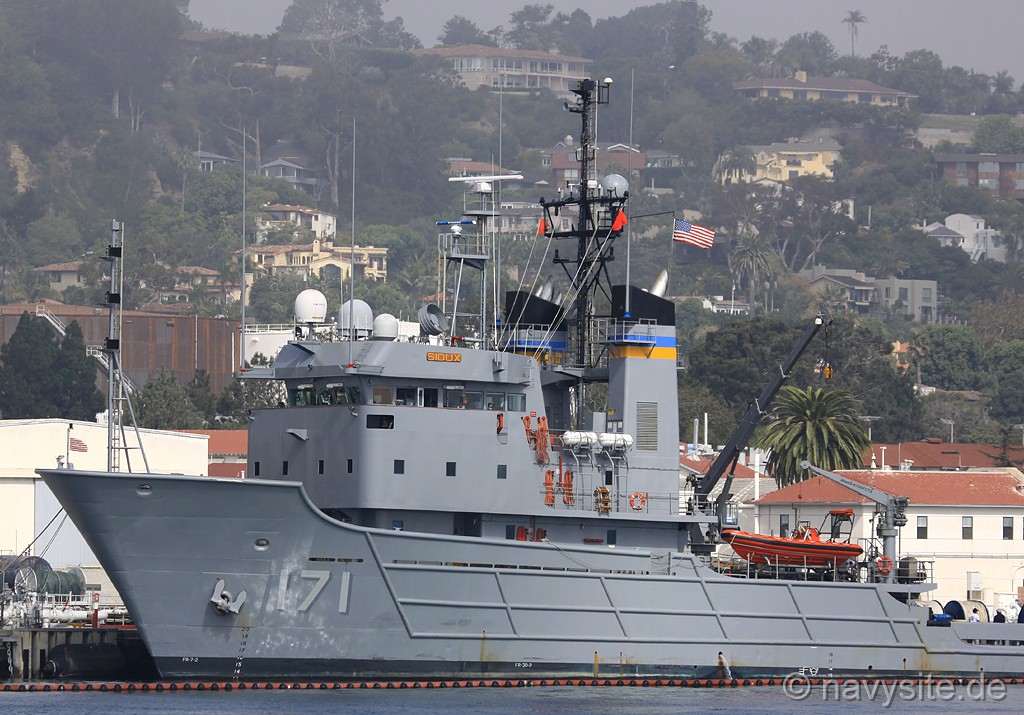
The USNS SIOUX was equipped with a 10-ton capacity crane and a bollard pull of at least 54 tons. A deck grid was fitted aft which contained 1 inch bolt receptacles spaced 24 inches apart. That allowed for the bolting down of a wide variety of portable equipment. There were two GPH fire pumps supplying three fire monitors with up to 2,200 gallons of foam per minute. A deep module could be embarked to support naval salvage teams.

After more than 40 years of service, SIOUX was deactivated and stricken from the Navy list on September 30, 2021. The ship is presently laid up at Pearl Harbor, Hi., awaiting final disposal.

General Characteristics:Awarded: February 27, 1978
Keel laid: March 22, 1979
Launched: November 15, 1980
Delivered: May 1, 1981
Stricken: September 30, 2021
Builder: Marinette Marine Corp., Marinette, WI.
Propulsion system: 2 GM EMD 20-645F7B diesels; 5.73 MW sustained; 2 shafts; Kort nozzles; cp props; bow thruster; 300 hp (224 kW)
Propellers: two
Length: 226 feet (68.9 meters)
Beam: 42 feet (12.8 meters)
Draft: 15.1 feet (4.6 meters)
Displacement: approx. 2,260 tons full load
Speed: 14.5 knots
Aircraft: none
Armament: none
Crew: 16 civilians and 4 naval communications technicians


Back to topback to top  go to endgo to the end of the page


Back to topback to top  go to endgo to the end of the page

Crew List:

This section contains the names of sailors who served aboard USNS SIOUX. It is no official listing but contains the names of sailors who submitted their information.


Back to topback to top  go to endgo to the end of the page

USNS SIOUX History:

USNS SIOUX, a POWHATAN-class fleet ocean tug built at Marinette Marine, entered Military Sealift Command service on May 1, 1981, after being laid down on March 22, 1979, and launched on November 15, 1980. In the early Pacific Fleet months that followed, she settled into the steady rhythm of ocean towing, salvage stand-by, and diving-support assignments that would define four decades of work.

The first major test came in heavy winter weather in the Strait of Juan de Fuca. On December 5, 1981, while towing the berthing and messing barge YRBM-26, SIOUX's tow pendant parted and the barge went hard aground near Pachena Point on Vancouver Island. Mobile Diving and Salvage Unit ONE (MDSU-1) and Canada's Fleet Diving Unit joined a multi-day effort to lighten, patch, and prepare the casualty. A first extraction attempt at high tide on December 17 failed. The team then rigged beach gear and waited. On December 21, after Canadian divers blasted a channel through rock and sand, SIOUX took a full bollard pull, refloated YRBM-26, paid out a thousand feet of tow wire, and hauled the barge off the beach to begin the tow to Bremerton. The episode set the tone for the ship's pragmatic, methodical salvage work.

By May 21, 1984, SIOUX was operating in the Western Pacific, including a port call at Yokosuka, Japan, and routine support to allied exercises and tasking around Japan and Korea. In 1987, she accompanied hospital ship USNS MERCY (T-AH 19) on a 4 1/2-month humanitarian and training deployment across the western Pacific, supporting port visits in the Philippines - seven in all - as well as Papua New Guinea and Fiji, before MERCY returned to San Francisco on July 13, 1987. The tug's role was the unglamorous but essential work of station keeping, small tows, and diving-platform duty at anchorages with limited support.

In May 1988, SIOUX was back in the Philippines, conducting towing exercises with USS REEVES (CG 24) at Subic Bay. That same month, as a train of typhoons disrupted roads and bridges, she ran relief runs by sea, delivering supplies to coastal villages cut off ashore.

On May 9, 1989, when combat stores ship USS WHITE PLAINS (AFS 4) caught fire off Luzon, the Navy ordered SIOUX to take the damaged ship in tow for Subic Bay while nearby U.S. ships, including USS CONSTELLATION (CV 64), helped fight the blaze and evacuate crew. Contemporary reporting captured both the human cost and the quick decision to commit an ocean tug to get the casualty under control and pier-side.

After the 1991 cease-fire in the Gulf War, SIOUX arrived in theater in late May to relieve USS BEAUFORT (ATS 2) on salvage and diving duties with an embarked MDSU detachment. Her work fit the post-conflict pattern - harbor clearance, inspections, and assistance to vessels in the northern Arabian Gulf as coalition navies reorganized the maritime picture following the liberation of Kuwait.

In November 1994, SIOUX was dispatched to recover the wreckage of an F-14 TOMCAT that crashed while attempting to land on USS ABRAHAM LINCOLN (CVN 72) about 50 miles off the Southern California coast. Serving as platform for deep-water gear and Navy divers, she supported the investigation's need to locate and document key components on the seabed.

The tug's best-documented domestic salvage came after the crash of Alaska Airlines Flight 261 on January 31, 2000, off Anacapa Island. SIOUX served as a principal platform for the Navy's deep-water remotely operated vehicles and recovery teams, coordinating with Coast Guard and NTSB personnel through weeks of operations to bring up flight recorders, structural pieces, and other evidence from difficult depths in strong currents.

SIOUX continued to be tasked for aircraft recoveries. Following the fatal crash of an MH-60S Knighthawk north of Oahu on January 26, 2007, she remained on station through February 16, recovering remains and major wreckage with the Deep Drone 8000 ROV to support the mishap investigation.

A long ocean tow followed in 2008: from April 25 through May 30, SIOUX hauled decommissioned submarine ex-HYMAN G. RICKOVER (SSN 709) from the Panama Canal to Bremerton, Washington, pausing in San Diego from May 13-23 for logistics. That summer she also supported RIMPAC events around Hawaii, underscoring the fleet tug's routine role in moving hulks and serving as a safety and support ship for large exercises.

On November 12, 2009, SIOUX embarked personnel from Explosive Ordnance Disposal Group ONE, MDSU-1, and NAVSEA to conduct deep-water ROV work after a mid-air collision off Southern California between a U.S. Coast Guard C-130 and a U.S. Marine Corps AH-1 helicopter. Using Deep Drone, the team documented the underwater site and recovered the aircrafts' flight data recorders for the investigations.

In February 2012, SIOUX shifted to the Indian Ocean for Salvage Exercise (SALVEX) 2012 with the Indian Navy off Goa. The bilateral drill rehearsed towage, diving operations, and gear handling at sea and in port, building habits of cooperation with partners that were increasingly central to U.S. Indo-Pacific posture.

A widely reported assist came in late winter 2014, when Royal Canadian Navy oiler HMCS PROTECTEUR suffered a major engine-room fire roughly 340 nautical miles northeast of Pearl Harbor on February 27. U.S. ships USS MICHAEL MURPHY (DDG 112) and USS CHOSIN (CG 65) provided initial aid and tow attempts; SIOUX then took the casualty under tow on March 2 and delivered her safely into Pearl Harbor on March 6. Canada later recognized SIOUX and her crew with a Canadian Forces Unit Commendation for the mission.

SIOUX's last years were marked by a string of high-visibility towing tasks linked to large Pacific exercises. During RIMPAC 2018, she towed the decommissioned LST ex-RACINE (LST 1191) out of Pearl Harbor on July 10 for SINKEX, then the frigate ex-McCLUSKY (FFG 41) on July 17 to another target area. Imagery shows the tug steadily paying out tow and delivering each hulk to the range on schedule.

In September 2019, SIOUX brought ex-FORD (FFG 54) out from Bremerton toward Hawaii and executed a rare at-sea transfer of the tow to rescue-salvage ship USNS GRASP (T-ARS 51) off the islands - an adjustment made to protect sensitive Hawaiian reef areas from risk. GRASP continued on to Guam, where ex-FORD was sunk during the U.S.-Singaporean PACIFIC GRIFFIN 2019 SINKEX on October 1.

RIMPAC 2020, compressed by pandemic precautions and held in August, again put SIOUX in the towing spotlight as she hauled the decommissioned cargo ship ex-DURHAM (LKA 114) to the exercise area for the closing SINKEX at month's end.

On September 30, 2021, after four decades in the Pacific, SIOUX was inactivated. She has since remained laid up at Pearl Harbor pending final disposition.


Back to topback to top  go to endgo to the end of the page


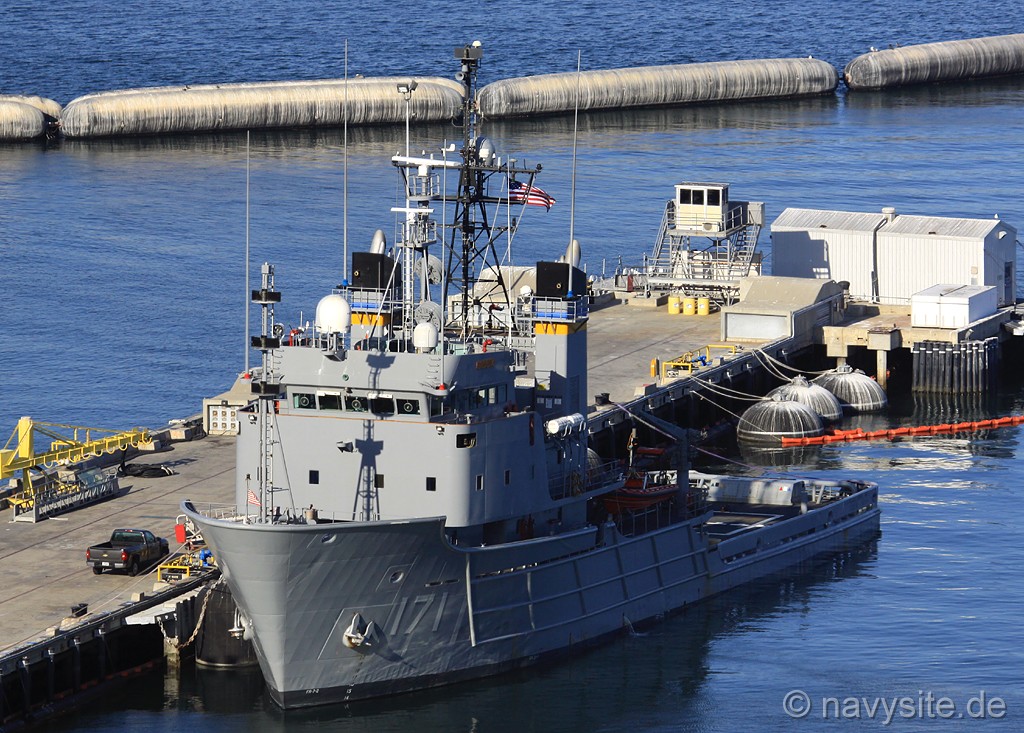
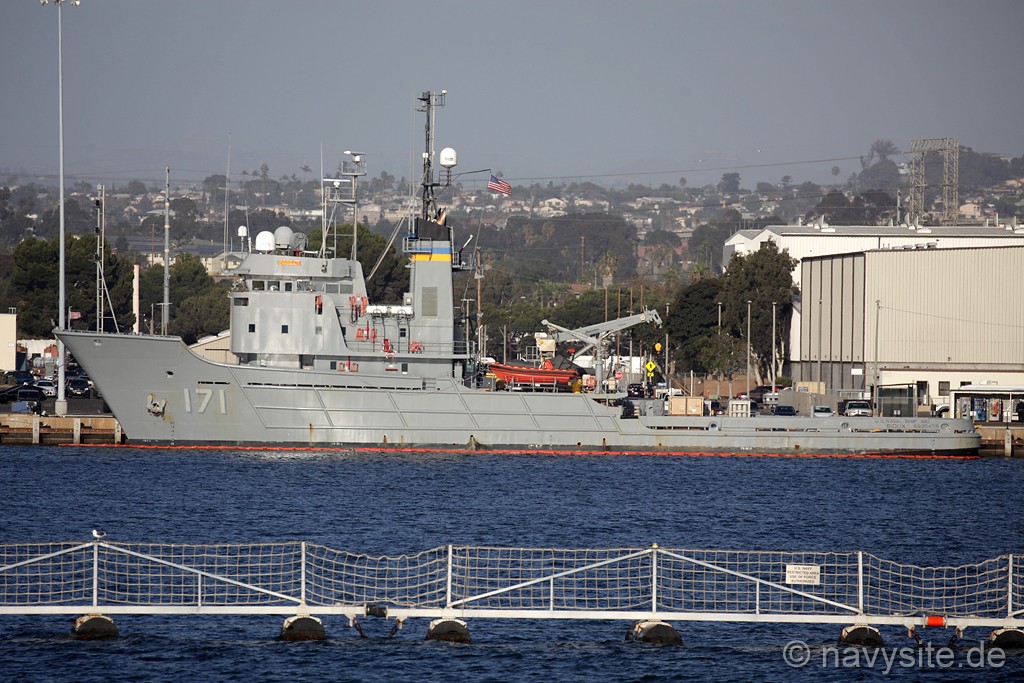
The photo below was taken by me and shows the SIOUX at Naval Base San Diego, Calif., on March 10, 2008.
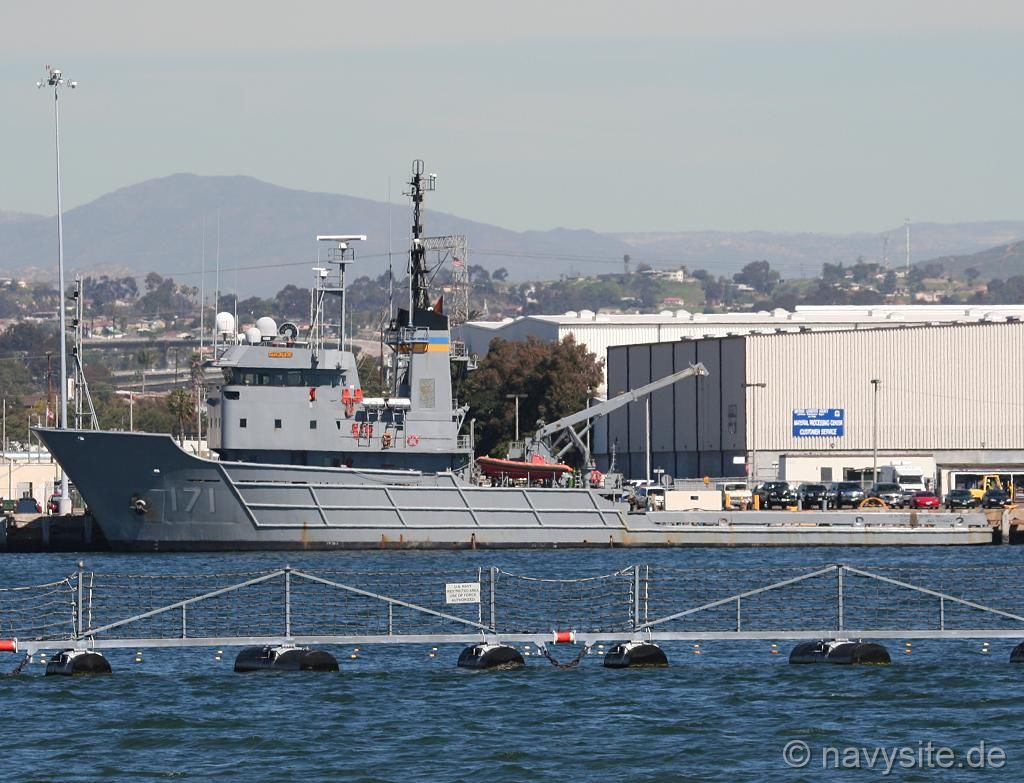


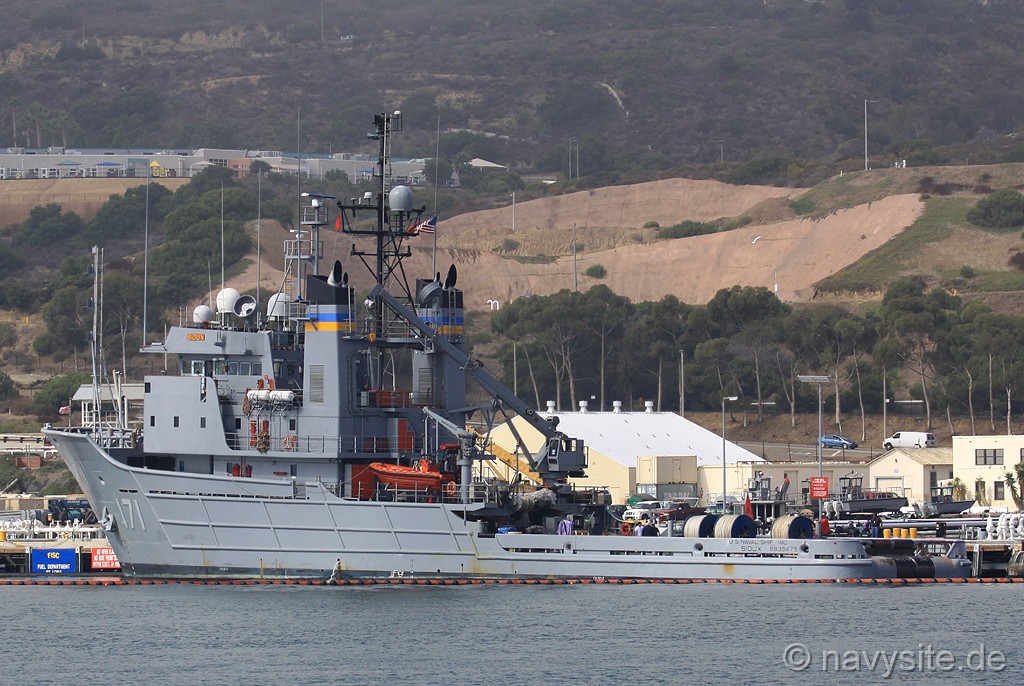
The photos below were taken by me and show the SIOUX at Naval Base Point Loma, Calif. The first four photos were taken on September 29, 2011, while the last photo was taken on October 2, 2011.


The photo below was taken by Michael Jenning and shows the SIOUX at Naval Base San Diego, Calif., on December 27, 2014.
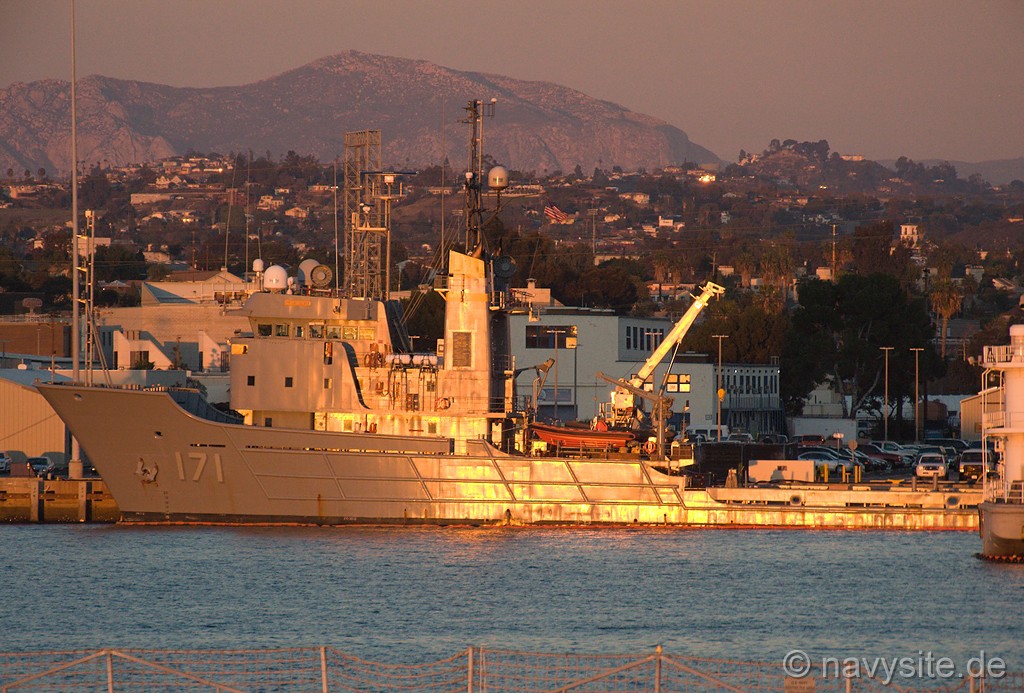


The photo below was taken by Michael Jenning and shows the SIOUX at Naval Base San Diego, Calif., on April 18, 2016.


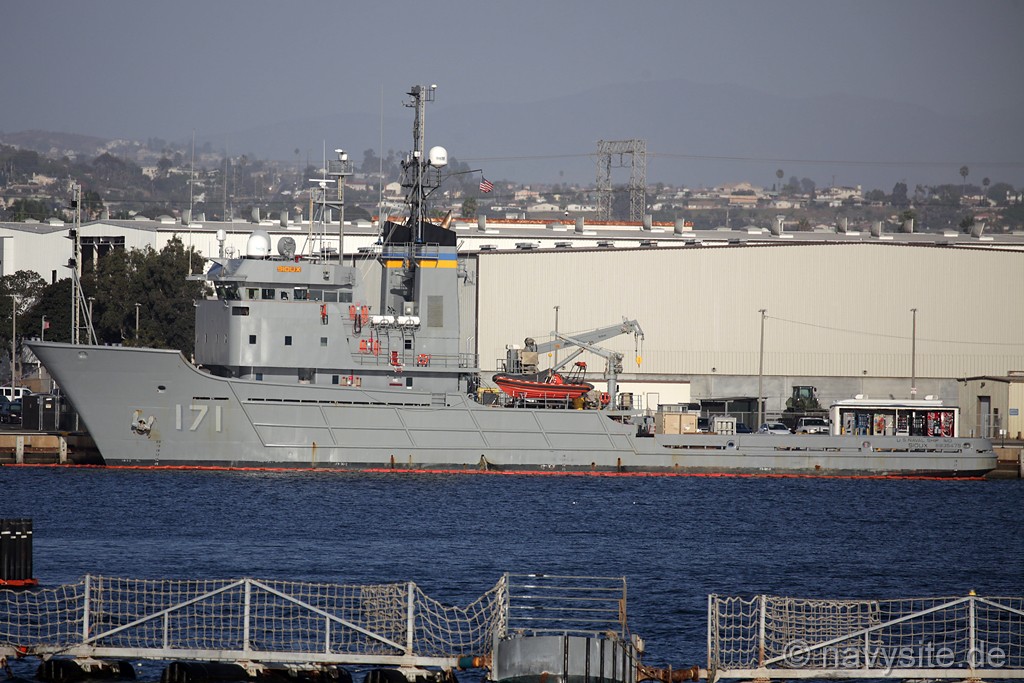
The photos below were taken by Michael Jenning and show the SIOUX at Naval Base San Diego, Calif., on October 11, 2017.


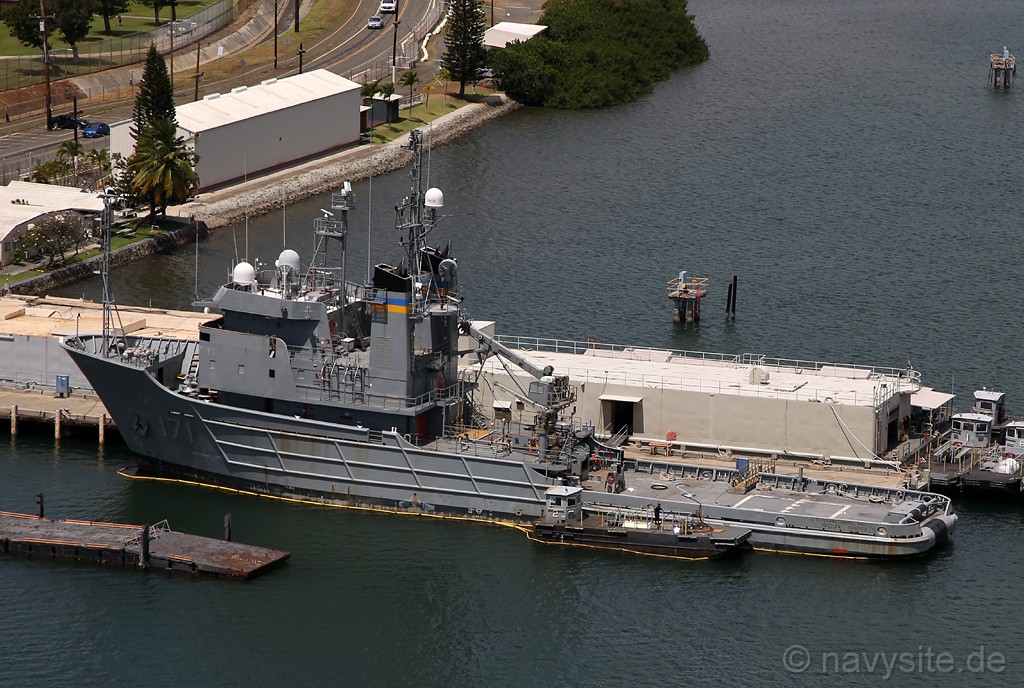
The photo below was taken by Sebastian Thoma and shows ex-SIOUX in Middle Loch at Pearl Harbor, Hi., on March 18, 2022.


Back to topback to top


Back to Fleet Ocean Tugs Page. Back to ships list. Back to selection page. Back to 1st page.