Search the Site with 
General Characteristics Crew List Memorabilia History Image Gallery to end of page

USS Providence (SSN 719)

- decommissioned -


USS PROVIDENCE was the 32nd LOS ANGELES - class Attack Submarine. Starting with USS PROVIDENCE and beyond the last 31 hulls of the LOS ANGELES - class had 12 vertical launch tubes for the Tomahawk cruise missile, along with an upgraded reactor core.

Homeported at Naval Submarine Base New London, Groton, Conn., throughout her entire service life, PROVIDENCE departed her homeport for the last time in late August 2021, enroute to the Puget Sound Naval Shipyard, Bremerton, Wash., for the year-long inactivation process. The submarine arrived in Bremerton on September 23, 2021, and was inactivated on December 2, 2021. On August 22, 2022, PROVIDENCE was officially decommissioned and stricken from the Navy list.

General Characteristics:Awarded: April 16, 1979
Keel Laid: October 14, 1982
Launched: August 4, 1984
Commissioned: July 27, 1985
Decommissioned: August 22, 2022
Builder: Electric Boat Division of General Dynamics Corporation, Groton, Conn.
Propulsion system: one nuclear reactor
Propellers: one
Length: 360 feet (109.73 meters)
Beam: 33 feet (10 meters)
Draft: 32,15 feet (9.8 meters)
Displacement: Surfaced: approx. 6,000 tons     Submerged: approx. 6,900 tons
Speed: Surfaced: approx. 15 knots     Submerged: approx. 32 knots
Armament: Harpoon missiles, Tomahawk missiles from 12 vertical launch tubes, four 533 mm torpedo tubes for Mk-48 torpedoes
Cost: approx. $900 million
Crew: 12 Officers, 115 Enlisted


Back to topback to top  go to endgo to the end of the page


Back to topback to top  go to endgo to the end of the page

Crew List:

This section contains the names of sailors who served aboard USS PROVIDENCE. It is no official listing but contains the names of sailors who submitted their information.


back to top  go to the end of the page


Back to topback to top  go to endgo to the end of the page

USS PROVIDENCE History:

USS PROVIDENCE originated in the later stages of the Cold War, when the United States sought to expand and modernize its nuclear-powered attack submarine force. The contract to build the boat was awarded on April 16, 1979, to General Dynamics' Electric Boat division in Groton, Connecticut, and she was designed as a Flight I LOS ANGELES-class submarine modified from the outset to carry a twelve-cell vertical launching system for Tomahawk cruise missiles, the first fast-attack submarine so equipped. Her keel was laid at Groton on October 14, 1982, and she was launched there on August 4, 1984, sponsored by Jean W. Smith, the wife of then-attorney general William F. Smith. After delivery to the navy on June 26, 1985, she was commissioned at Naval Submarine Base New London in Groton on July 27, 1985, with Captain Emil D. Morrow in command, joining Submarine Squadron 12 with Groton as her long-term homeport.

In the months following commissioning, USS PROVIDENCE completed the usual post-construction trials and shakedown in the western Atlantic before entering the regular deployment and training cycle out of Groton. As the first LOS ANGELES-class boat with an integrated Tomahawk vertical-launch system, she quickly became a test bed for cruise-missile tactics. Navy historical evaluations later recorded that she was the first submarine to fire a Tomahawk from a vertical-launch system using her own CCS Mk 1 combat system and associated software, rather than test instrumentation, marking a practical transition of the VLS concept from development into routine fleet capability.

By the summer of 1986, she was fully integrated into Atlantic Fleet operations. From June 21 to July 5, 1986, USS PROVIDENCE was at sea for the antisubmarine exercise ASWEX 4-86 and operations with the battle group built around the carrier USS NIMITZ (CVN 68), training against carrier-strike-group escorts and aircraft in Cold War open-ocean warfare scenarios. Between July 14 and 26, she took part in FLEETEX 2-86, another large-scale fleet exercise, before briefly shifting to the pier at Naval Weapons Station Earle, New Jersey, from August 27 to 29 to certify procedures for handling and loading the new Tomahawk vertical-launch system. Soon afterward she made an early liberty visit to Port Everglades, Florida, from September 8 to 11, then spent the late autumn on a routine training period from October 20 to November 6, followed by local operations from December 8 to 12 and again from January 5 to 10 as the crew refined tactics for integrated sonar, weapons, and Tomahawk employment.

On February 2, 1987, USS PROVIDENCE left Groton on her first overseas deployment, heading for the Mediterranean and adjacent waters in the United States 6th Fleet area of responsibility. During this maiden deployment, she participated in a multinational antisubmarine warfare exercise designated ASWEX 2-87, operating both independently and under the control of allied surface and air antisubmarine forces. After problems with her towed array sonar during this period, she entered the submarine base at Holy Loch, Scotland, on March 20, 1987, for a short port visit and replacement of the faulty array. On March 28, she made a brief stop at Gibraltar, one of the traditional choke points for North Atlantic-Mediterranean submarine transits, before resuming operations. Over these early deployments she also began to build the long list of ports that would be associated with her career, including calls at Halifax in Canada, Gibraltar and later Mediterranean ports such as Toulon, Souda Bay, La Maddalena and Koper, as well as training stops at Port Canaveral and Naval Station Roosevelt Roads in Puerto Rico.

In early 1988, USS PROVIDENCE focused again on advanced training. Between January 28 and February 11 that year, she operated in the Atlantic Undersea Test and Evaluation Center (AUTEC) range off Andros Island in the Bahamas, a deep-water instrumented range used for precise tracking of submarines and weapons. There, she conducted intensive sonar, weapons and tactics drills under controlled conditions. Around this period, she also took part in Tomahawk Strike Derby competition, and navy records note that in 1988 she won the event with a five-second time-on-target performance, demonstrating the precision with which her crew could plan and execute time-coordinated Tomahawk salvos. In the late 1980s, she continued the pattern of Atlantic and Mediterranean deployments typical of LOS ANGELES-class boats during the final Cold War years, alternately exercising with U.S. carrier groups and NATO allies and conducting quiet independent patrols.

With the end of the Cold War and the onset of the 1990-1991 crisis in the Persian Gulf, USS PROVIDENCE's operations shifted toward emerging regional contingencies. Philatelic and naval documentation associated with Operation Desert Shield and Desert Storm identify the submarine on a lengthy special-operations deployment, listed from April 25 to October 11 and supported by the submarine tender USS PUGET SOUND (AD 38), indicating a sustained presence in the Red Sea and surrounding waters during and immediately after the conflict. Public summaries of her career also note subsequent participation in Operation Southern Watch, the long-running enforcement of no-fly zones over Iraq during the 1990s, and deployments into the Persian Gulf that included port visits to al-Manama in Bahrain and to both Dubai and Jebel Ali in the United Arab Emirates. These deployments reflected the shift from superpower confrontation to regional crisis response, with attack submarines performing intelligence, surveillance, strike-support, and presence missions alongside more traditional antisubmarine roles.

On January 5, 1995, USS PROVIDENCE again left her Groton homeport for a deployment in the 6th Fleet area, returning to familiar Mediterranean operating areas in a Europe still adjusting to post-Cold War realities and to conflicts in the Balkans. During the mid-1990s, she continued a pattern of Atlantic and Mediterranean patrols interspersed with maintenance and training at New London. By this time, her port-visit history already included Gibraltar, Tromso, Halifax, and numerous Mediterranean liberty ports such as Toulon, Souda Bay, La Maddalena and Koper, representing both traditional NATO partners and newer coastal states emerging from the breakup of Yugoslavia.

The year 1998 illustrates the high operational tempo that characterized the boat's late-1990s service. On February 26, 1998, USS PROVIDENCE departed Groton for a deployment spanning both the 5th and 6th Fleet areas of responsibility and including operations in the Arabian Gulf. During that deployment, she transited the Suez Canal, one of several such passages recorded for the boat in 1998, 2001 and 2003, reflecting repeated movements between the Mediterranean, Red Sea and Persian Gulf in support of ongoing operations against Iraq. Between April 25 and May 18, 1998, she operated in the central and eastern Mediterranean with port visits to Alexandria in Egypt and Augusta Bay in Italy, linking strike, surveillance and theater antisubmarine missions with diplomatic port calls. Later that year, from August 31 to October 15, she conducted a western and northern Atlantic deployment, including a call at Tromso, Norway, a high-latitude port visit consistent with North Atlantic and Norwegian Sea operations.

In the same general timeframe, USS PROVIDENCE spent extended periods in the western Atlantic and Caribbean, including operations out of the Puerto Rican operating area and the AUTEC ranges. From late September to late October 1998, she was at sea for antisubmarine exercises and a Composite Training Unit Exercise (COMPTUEX) in the Puerto Rican operating area with the carrier battle group centered on USS DWIGHT D. EISENHOWER (CVN 69), training to integrate submarine strike and antisubmarine capabilities into a carrier task force preparing for deployment. Shortly afterward, from October 26 to November 16, she supported Prospective Commanding Officer operations in the AUTEC range and Puerto Rican operating area, providing an at-sea platform for officers qualifying for submarine command. These sequences of exercises and deployments, sometimes overlapping in summary sources, show how tightly scheduled her late-1990s program had become.

By the turn of the century, attention was shifting toward growing instability in the Middle East and South Asia. From January 16 to 19, 2001, USS PROVIDENCE was again underway for battle group operations, and on February 26 she left for COMPTUEX, torpedo exercises and independent steaming in the Cherry Point and Puerto Rican operating areas as part of work-ups for a major deployment. That spring, she joined the carrier battle group of USS ENTERPRISE (CVN 65), deploying from April 25 to November 10, 2001, under U.S. Central Command and later supporting Operation Enduring Freedom after the terrorist attacks of September 11. On October 7, 2001, when coalition forces began the opening air and missile strikes of Operation Enduring Freedom in Afghanistan, attack submarines in the Arabian Sea and Red Sea fired Tomahawk Land Attack Missiles against Taliban and al-Qaeda targets. Official navy accounts single out USS PROVIDENCE as having launched three missiles against emerging targets ashore during this phase. This early use of submarine-launched cruise missiles in the Global War on Terror underscored the value of her vertical-launch capability.

USS PROVIDENCE returned to Groton but was called on again quickly. On February 10, 2002, she departed for a surge deployment to the Mediterranean Sea in continued support of Operation Enduring Freedom. Operating principally in the Mediterranean and Red Sea, she provided strike and surveillance capabilities alongside carrier and land-based aircraft. When the focus shifted toward Iraq, she was among the attack submarines positioned in the Red Sea at the outset of Operation Iraqi Freedom. Public histories and navy commemorative articles record that from March 20 to 23, 2003, she launched Tomahawk cruise missiles from the Red Sea as part of the opening wave of strikes against Iraqi military infrastructure, alongside other U.S. and allied submarines sometimes collectively nicknamed the "Red Sea wolf pack". For her role in these operations and for firing the largest number of missiles among submarines in 2003, she acquired the sobriquet "Big Dog of the Red Sea wolf pack".

After this intense sequence of deployments and combat operations, the navy scheduled USS PROVIDENCE for a major modernization. Congressional testimony in 2001 already cited an engineered overhaul for the submarine planned for fiscal year 2004, to be carried out in the private sector to balance public-yard workloads. A 2004 news report noted that she was then undergoing the navy's first engineered overhaul for a LOS ANGELES-class attack submarine, including major maintenance and system upgrades. Subsequent naval-league reporting confirms that she completed this engineered overhaul at Portsmouth Naval Shipyard in the summer of 2005, the first boat of her class to do so. During this period she received upgrades such as the AN/BYG-1 fire-control system and AN/BQQ-10 Advanced Rapid Commercial Off-The-Shelf Insertion sonar suite, keeping her combat systems current with newer attack submarines.

With her overhaul complete, USS PROVIDENCE returned to front-line service in the mid-2000s, now focused increasingly on the Indian Ocean and Western Pacific. In late 2006, she undertook an extended around-the-world deployment, heading eastward through the Mediterranean and Indian Ocean. From October 24 to November 5, 2006, she took part in the Indo-U.S. naval exercise MALABAR '06 in the Indian Ocean, a bilateral exercise that highlighted growing maritime cooperation between the United States and India and involved complex antisubmarine, air-defense and strike-warfare events. Over the course of this deployment, she visited ports including Singapore, Yokosuka and Okinawa in Japan, and Goa in India, and her track included transits of both the Suez Canal and the Panama Canal, qualifying the crew for the traditional "Order of Magellan" certificate awarded for circumnavigations. On July 2, 2007, during the return phase of this period of operations, she called at Bristol, Rhode Island, to participate in local Independence Day events, a rare public appearance for an operational attack submarine in a small New England port.

In 2008, USS PROVIDENCE undertook another unusual transit: this time beneath the Arctic ice. On July 1, 2008, she broke through the ice at the North Pole while en route to the United States 7th Fleet area of responsibility, commemorating the fiftieth anniversary of the first under-ice polar transit by USS NAUTILUS (SSN 571) in 1958. Photographs from this period show the submarine's sail and bridge team protruding from a field of Arctic ice, underscoring the continued emphasis on under-ice navigation even as strategic attention was shifting toward the Western Pacific. After her polar emergence she continued south into 7th Fleet waters, conducting operations in the Pacific and making port calls in Japan and Southeast Asia before eventually returning to the Atlantic.

In the years immediately before the Arab Spring, USS PROVIDENCE alternated between local operations and deployments, keeping up proficiency in both Atlantic and expeditionary missions. That experience fed directly into her role in another set of missile strikes, this time against Libya. On March 19, 2011, at the opening of Operation Odyssey Dawn, she launched Tomahawk Land Attack Missiles from the Mediterranean Sea against Libyan targets as part of a coalition effort to enforce United Nations resolutions addressing the Qadhafi regime's actions. She fired in company with surface combatants such as the destroyers USS STOUT (DDG 55) and USS BARRY (DDG 52), the attack submarine USS SCRANTON (SSN 756) and the guided-missile submarine USS FLORIDA (SSGN 728), which together delivered a coordinated salvo against Libya's air-defense and command structures. The operation showcased once again the flexibility of attack submarines in delivering precision strike in support of multinational coalitions.

Following this, USS PROVIDENCE returned to the familiar rhythm of Atlantic deployments. On April 26, 2012, she left New London for a deployment that would last more than seven months in the 5th and 6th Fleet areas, transiting once more through the Suez Canal and operating in the Mediterranean and Arabian Gulf. On March 19, 2013, she returned to Naval Submarine Base New London from this deployment, during which she had visited Haifa in Israel; Manama in Bahrain; Jebel Ali in the United Arab Emirates; and Rota in Spain. The deployment combined traditional submarine tasks - such as tracking potential adversary units and collecting intelligence - with contributions to maritime security operations and presence missions in regions marked by tensions over Iran's nuclear program and unrest following the Arab Spring.

Two years later, she again headed east. On September 12, 2015, USS PROVIDENCE transited the then-newly expanded Suez Canal northbound, escorted by the destroyer USS FORREST SHERMAN (DDG 98), a visible symbol of continued U.S. interest in secure passage through this vital waterway. On October 9, 2015, she completed a six-month Middle East deployment during which she had travelled more than 32,000 nautical miles and carried out missions in the 5th and 6th Fleet areas of responsibility. Port calls on this deployment included Duqm in Oman, Hidd in Bahrain, and the European ports of Toulon in France and Rota in Spain. This period coincided with ongoing coalition operations against the so-called Islamic State and continuing maritime security tasks in the Arabian Gulf and adjacent waters.

In the later 2010s, as strategic attention widened to the North Atlantic and European theaters, USS PROVIDENCE increasingly operated in northern European waters. After an earlier surge deployment in July 2018, she left Groton again in October 2018 for a European Command-focused deployment. During this period, she conducted operations in the North Atlantic and Norwegian Sea and made port visits to Haakonsvern Naval Base near Bergen, Norway, and to Her Majesty's Naval Base Clyde at Faslane, Scotland, key hubs for NATO's northern maritime posture. She returned to New London on March 15, 2019, after completing this deployment, which navy reports describe as executing the chief of naval operations' maritime strategy in support of national security and maritime security operations. Between the July 2018 surge and the 2018-2019 deployment, she covered more than 50,000 nautical miles in less than a year, an indication of how heavily the boat was still being employed even as she approached three decades of service.

In 2020, USS PROVIDENCE remained active despite the emerging global pandemic. Photographs from August 18, 2020, show her returning to Naval Submarine Base New London after completing routine operations, still homeported in Groton and assigned to Submarine Squadron 12. Soon afterward, she prepared for what would become her sixteenth and final deployment. According to navy-league and official accounts, from September 2020 to April 2021 she deployed from Groton to the Western Pacific via the Arctic, conducting an under-ice transit through the Arctic Ocean and Bering Strait to reach 7th Fleet waters for the first time since 2009. During the first underway period of this deployment, she reportedly remained at sea for 83 consecutive days, executing two theater missions, two fleet exercises, two multinational exercises, a tactical development exercise and the Arctic transit itself, a workload that reflected the intensity of contemporary undersea operations.

While in the Western Pacific, USS PROVIDENCE took part in exercises focused on anti-submarine warfare cooperation with allied air forces. Sea Dragon 2021, an anti-submarine warfare exercise conducted from Guam, used her as the live submarine adversary for maritime patrol aircraft from the United States and partner nations such as Canada, India and Japan, with the crews rotating through scenarios to detect, track and simulate attacks against the submarine. This role underscored how an aging LOS ANGELES-class submarine remained valuable as a realistic training target even in an era increasingly focused on newer platforms.

At the end of this final deployment, USS PROVIDENCE once again used the Arctic route, transiting back through the Bering Strait and Arctic Ocean toward the United States. She made a brief stop off Groton to embark the Nuclear Propulsion Examination Board (NPEB) personnel for Operational Reactor Safeguards Examination (ORSE) on March 27, 2021, before continuing to Norfolk and finally concluding the 7-month delpoyment at Groton on April 1.

In August 2021, PROVIDENCE departed her homeport for the last time to head for the Pacific for inactivation. She arrived at Naval Base Kitsap-Bremerton on September 23, 2021, completing her last underway period and beginning the inactivation and decommissioning process on the U.S. West Coast. Official navy reporting notes that she left her Groton homeport for inactivation at Puget Sound Naval Shipyard and Intermediate Maintenance Facility and that her nuclear reactor was defueled there while the hull was retained for safe storage pending final disposition. Navy-league accounts add that she conducted multiple Arctic transits in her final year of operations, underlining how her career closed with the same emphasis on high-latitude capability that had marked her 2008 polar emergence.

USS PROVIDENCE was placed in inactivated status on December 2, 2021, and officially decommissioned and stricken from the naval vessel register on August 22, 2022, at Puget Sound Naval Shipyard. A formal decommissioning ceremony was held on September 1, 2022, at the U.S. Naval Undersea Museum in Keyport, Washington. Contemporary speeches at Bremerton and Keyport emphasized that over thirty-seven years of service she had conducted sixteen deployments and combat operations in support of Operation Enduring Freedom, Operation Iraqi Freedom and Operation Odyssey Dawn, and that during Iraqi Freedom she had earned the title "Big Dog of the Red Sea" for launching the largest number of Tomahawk missiles among submarines in 2003.


Back to topback to top  go to endgo to the end of the page


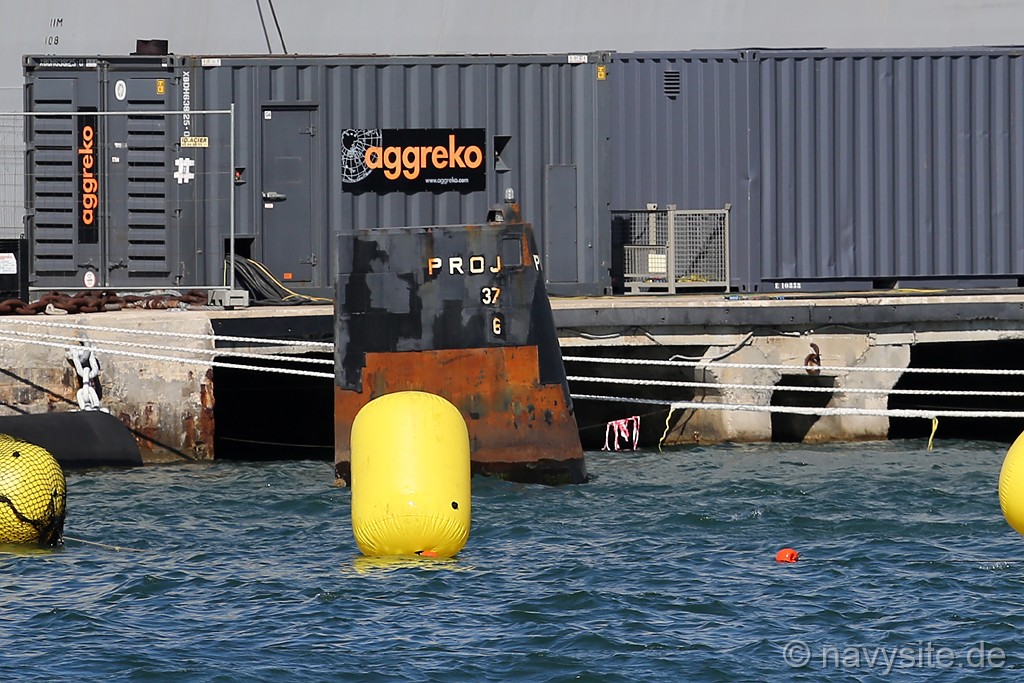
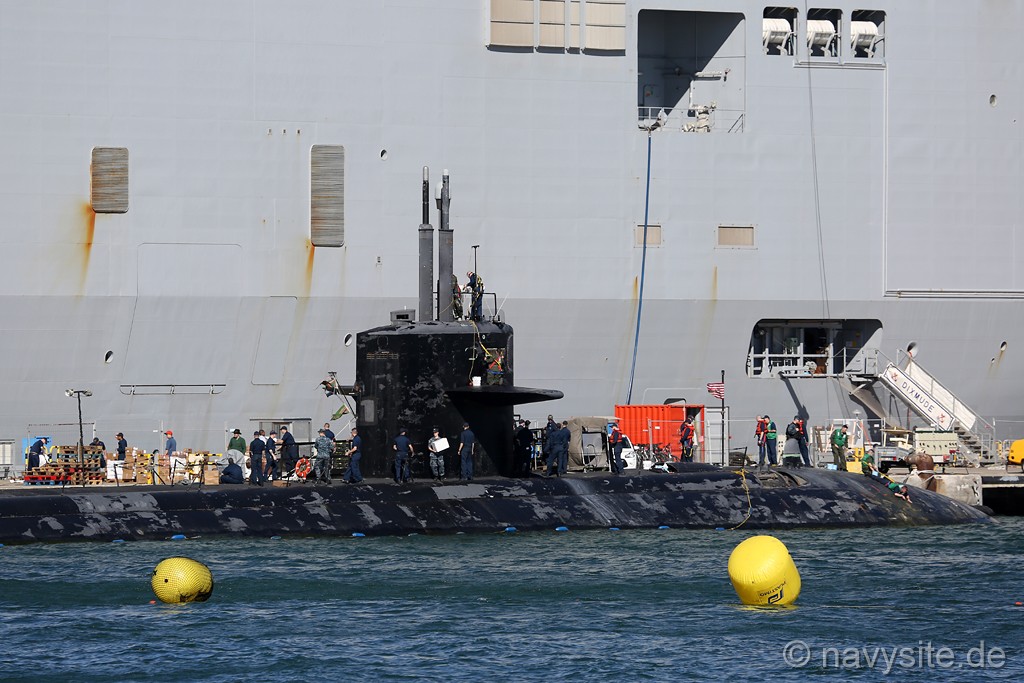
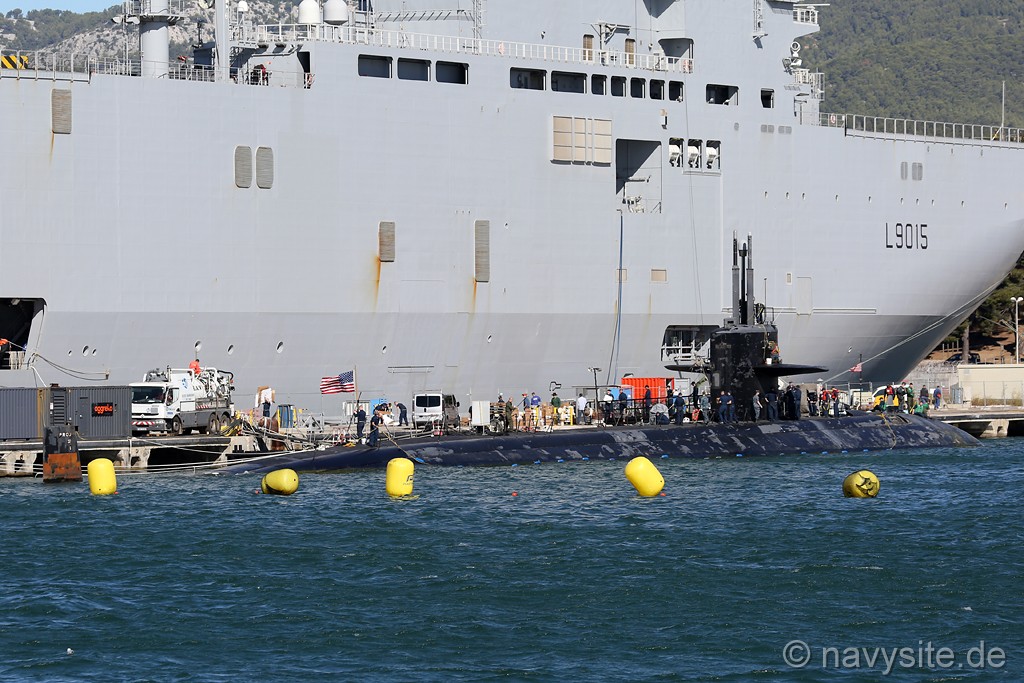
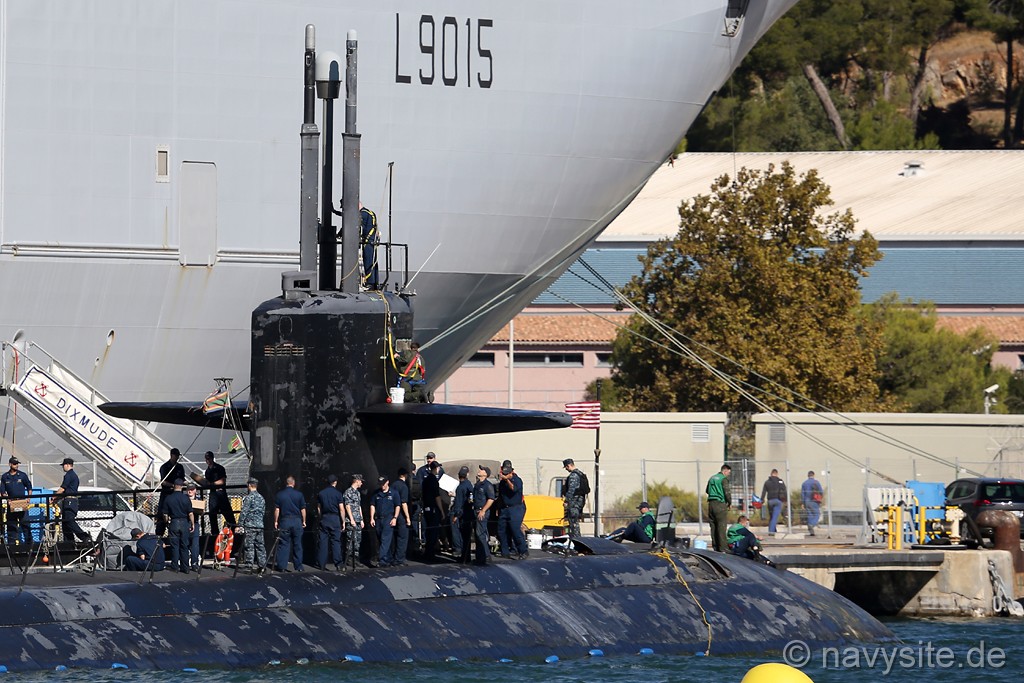
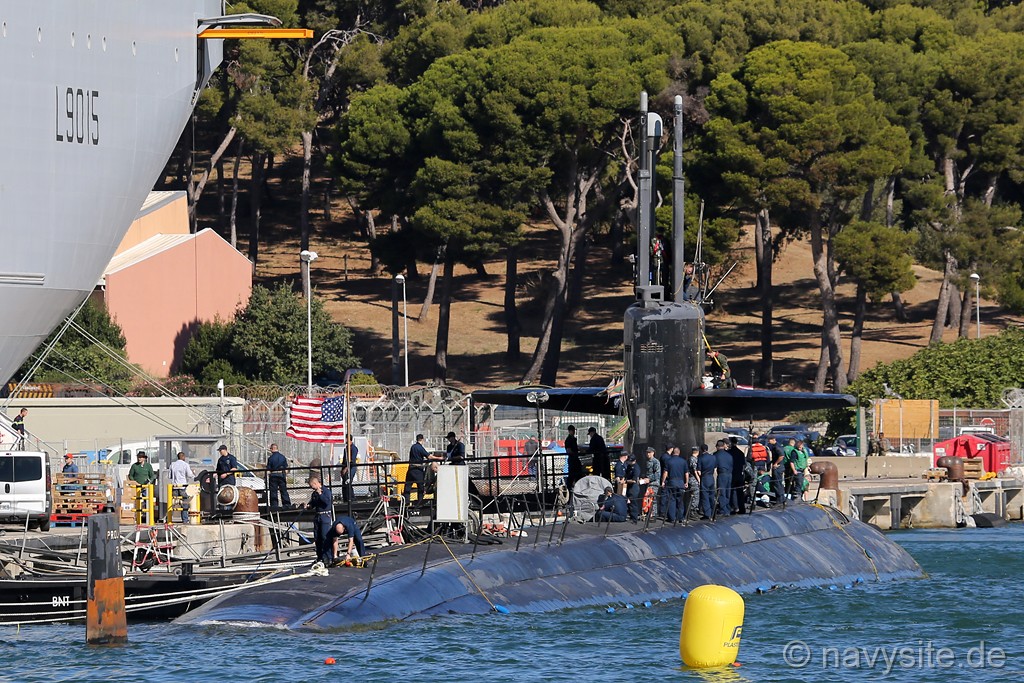
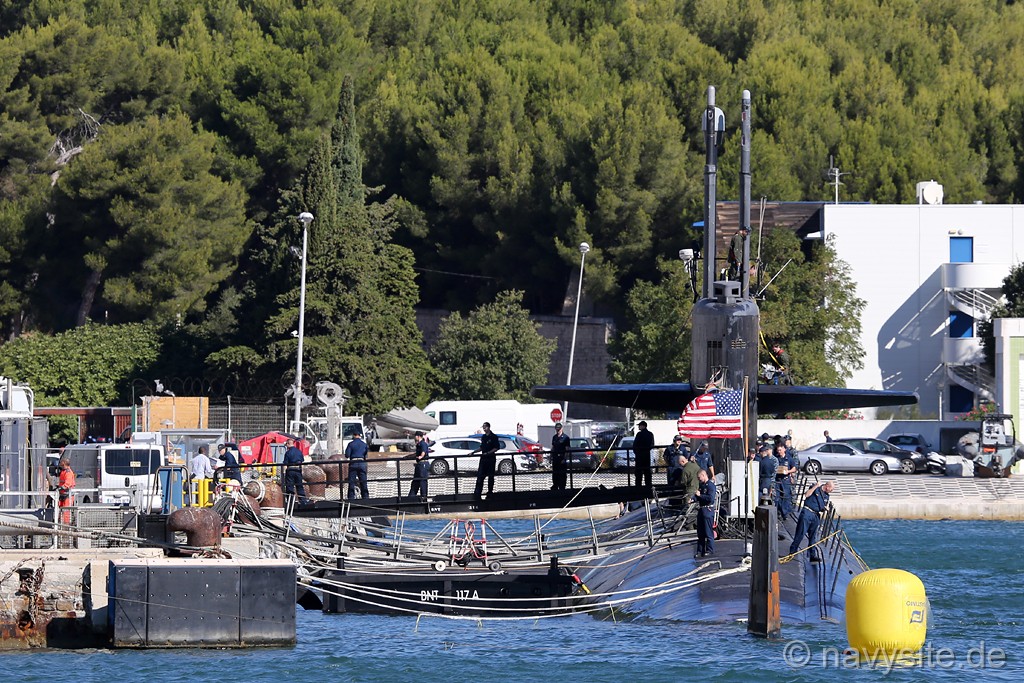
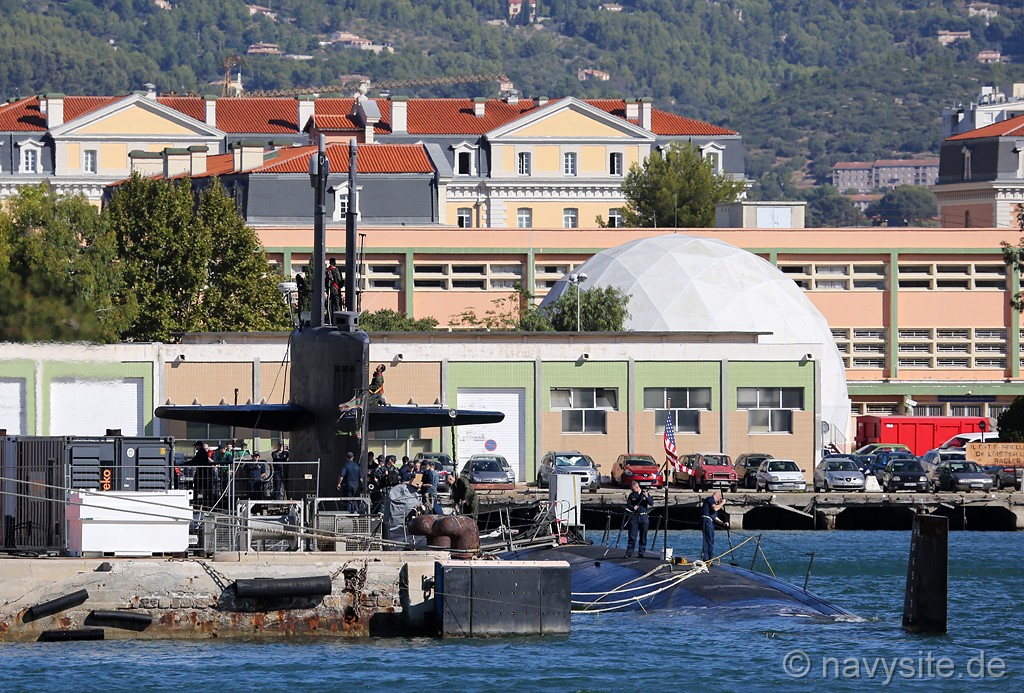
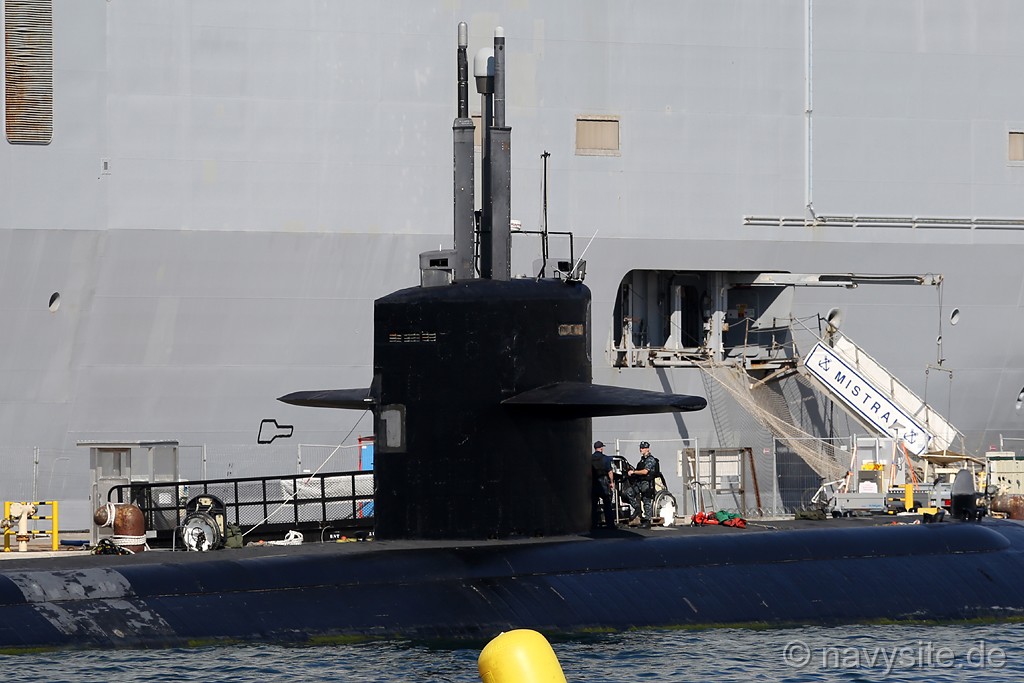
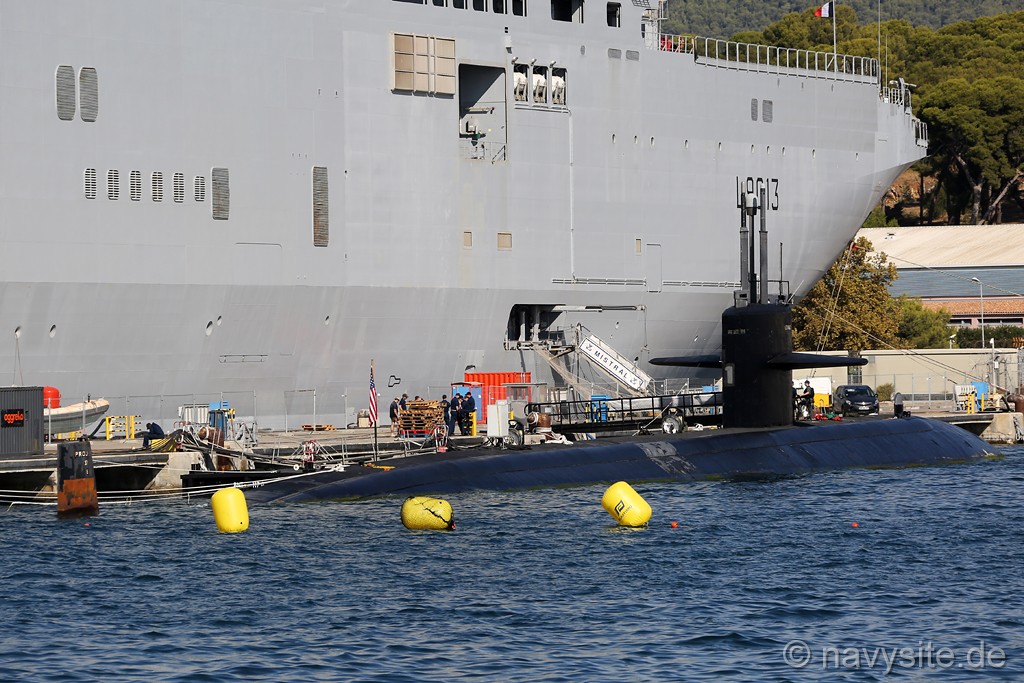
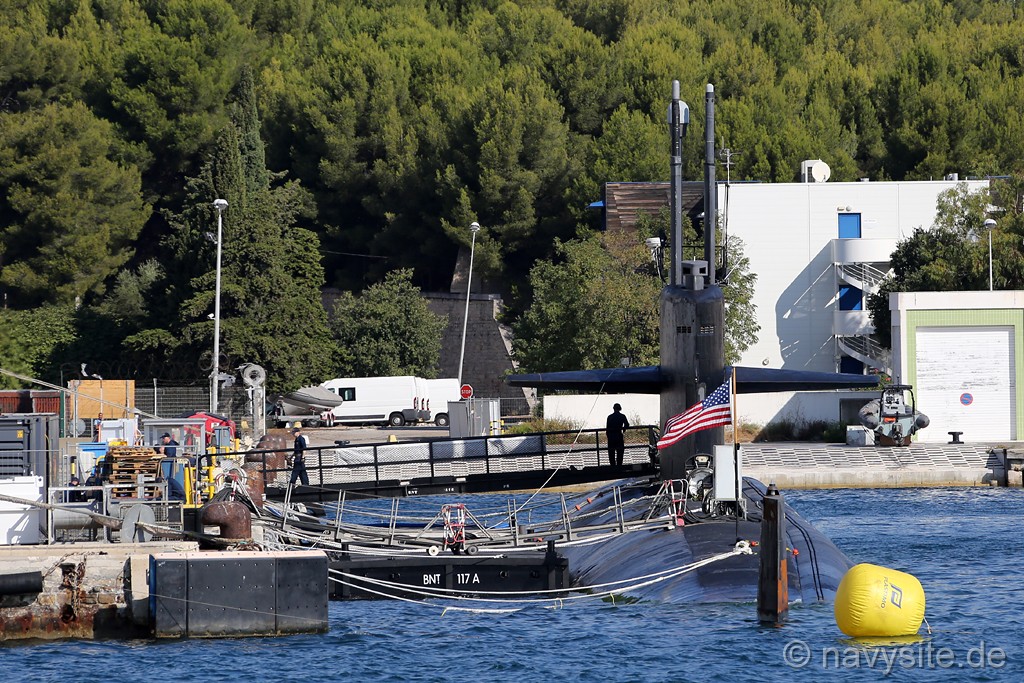
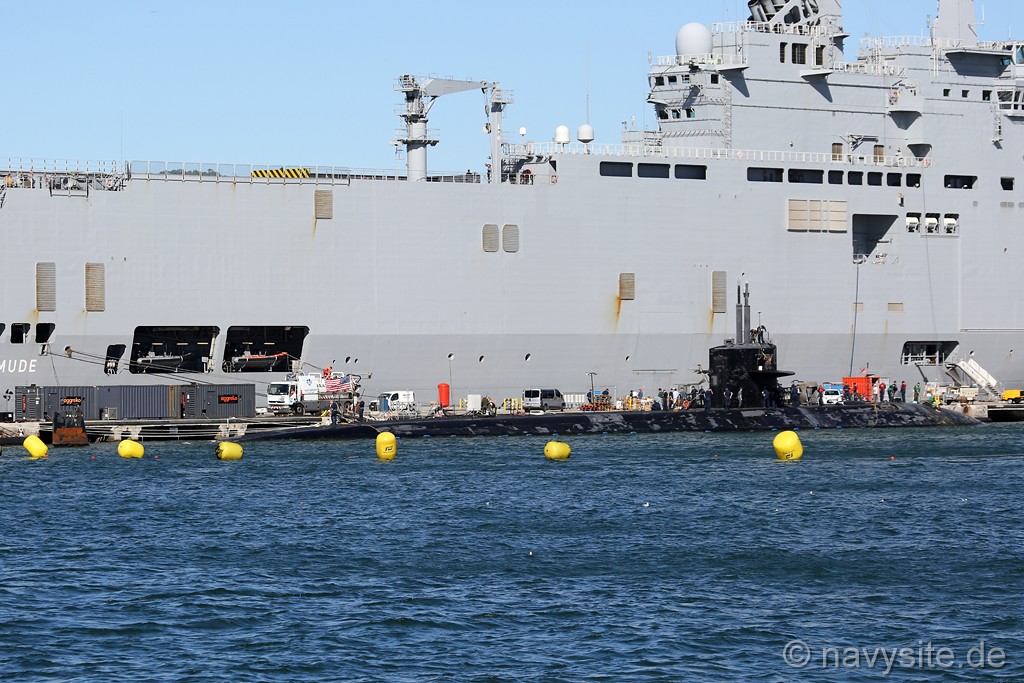
The photos below were taken by me and show the PROVIDENCE at Naval Base Toulon, France, in late September 2015. At the time, the PROVIDENCE was in the final days of a six-month Middle East deployment. On September 12, 2015, the submarine transited the Suez Canal re-entering the Mediterranean. After participating in Exercise Dynamic Manta in the Ionian Sea, the PROVIDENCE arrived at Toulon. The first photos below show the pretty worn PROVIDENCE on September 23. Note the missing coating on the rudder. The last three photos were taken three days later on September 26 and show the repainted submarine. USS PROVIDENCE returned home to Groton on October 9, 2015.


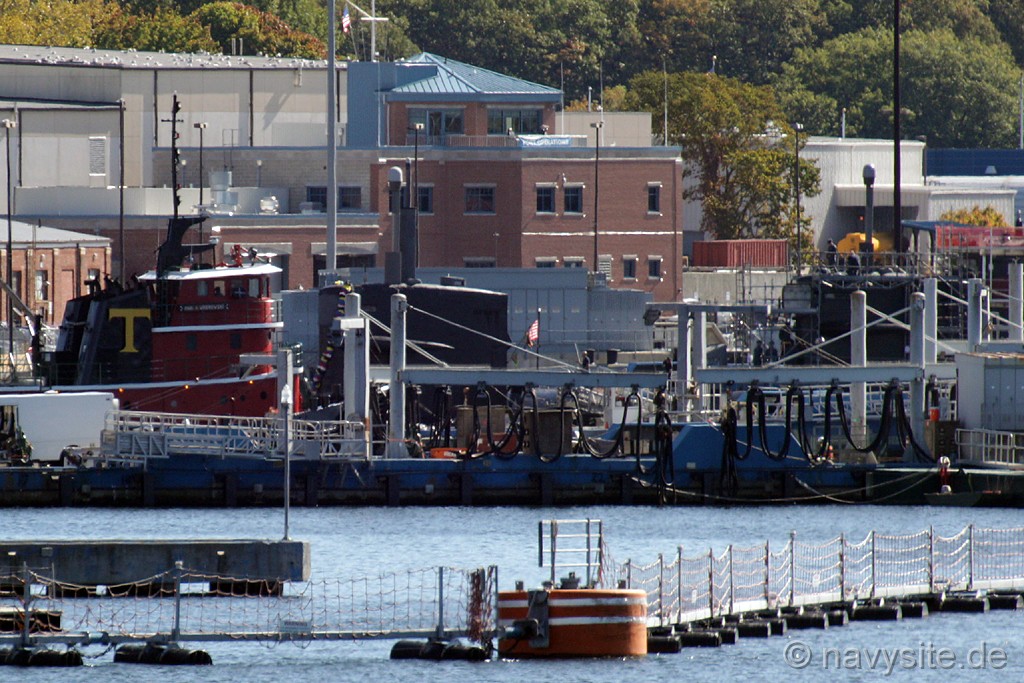
The photo below was taken by Michael Jenning and shows the PROVIDENCE at Submarine Base Groton, Conn., on October 15, 2015. She is still wearing her homecoming lei on the sail.


The photo below was taken by Michael Jenning and shows ex-PROVIDENCE laid-up at the Puget Sound Naval Shipyard, Bremerton, Wash., awaiting recycling on August 4, 2023.


The photo below was taken by me and shows ex-PROVIDENCE laid-up at the Puget Sound Naval Shipyard, Bremerton, Wash., awaiting recycling on July 15, 2024.


Back to topback to top


Back to Submarines list. Back to ships list. Back to selection page. Back to 1st page.