
Search the Site with

|
Search the Site with
|
 General Characteristics Crew List Memorabilia Cruise Books History of USS Doyle About the Ship's Name Patch Gallery Image Gallery to end of page
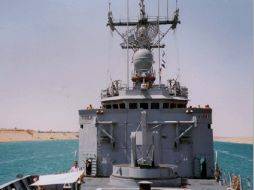 |  | 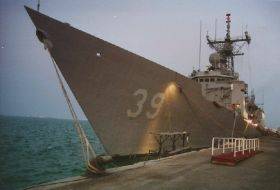 |
USS DOYLE was the 30th guided missile frigate in the OLIVER HAZARD PERRY - class and the first ship in the Navy named after Admiral James Henry Doyle. USS DOYLE was last homeported in Mayport, Fla. Both decommissioned and stricken from the Navy list on July 29, 2011, the DOYLE spent the following years laid up at Philadelphia, Penn. On December 15, 2014, a contract for the dismantling of DOYLE was awarded to ESCO Marine of Brownsville, Texas. Despite the contract award, DOYLE remained in Philadelphia for several additional years. On June 23, 2018, DOYLE departed Philadelphia under tow for New Orleans, Louisiana, where she was to be dismantled by Southern Recycling.
| General Characteristics: | Keel Laid: October 23, 1981 |
| Launched: May 22, 1982 | |
| Commissioned: May 21, 1983 | |
| Decommissioned: July 29, 2011 | |
| Builder: Bath Iron Works, Bath, Maine | |
| Propulsion system: two General Electric LM 2500 gas turbines, two 350 Horsepower Electric Drive Auxiliary Propulsion Units | |
| Propellers: one | |
| Blades on each Propeller: five | |
| Length: 453 feet (138 meters) | |
| Beam: 47 feet (14.32 meters) | |
| Draft: 24,6 feet (7.5 meters) | |
| Displacement: 4,100 tons | |
| Speed: 28+ knots | |
| Aircraft: two | |
| Armament: one | |
| Crew: 17 Officers and 198 Enlisted |
 back to top go to the end of the pageback to top go to the end of the page
Crew List:
This section contains the names of sailors who served aboard USS DOYLE. It is no official listing but contains the names of sailors who submitted their information.
back to top go to the end of the pageback to top go to the end of the pageUSS DOYLE Cruise Books:
back to top go to the end of the page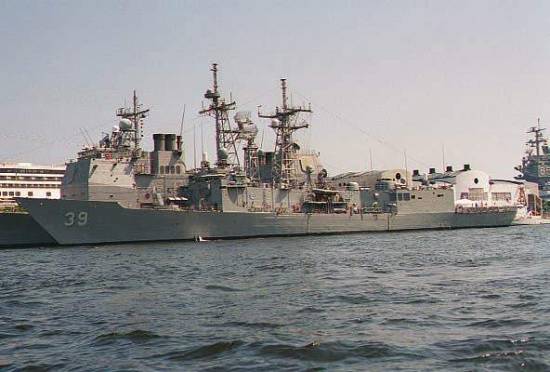 back to top go to the end of the page
History of USS DOYLE:
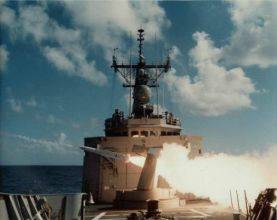 USS DOYLE was built by Bath Iron Works in Bath, Maine, as the 30th ship of the OLIVER HAZARD PERRY-class of guided missile frigates. Her keel was laid on October 23, 1981, and she was launched on May 22, 1982, sponsored by Kathleen Doyle Watson and Ann J. Doyle, granddaughters of the ship's namesake. USS DOYLE was commissioned at Bath on May 21, 1983, with Cmdr. William J. Erickson as her first commanding officer. Assigned to Destroyer Squadron 8 and homeported at Naval Station Mayport, Florida, she subsequently completed her initial sea trials, combat systems evaluations and shakedown training. After operating in the Atlantic and Caribbean, the frigate departed Mayport on November 28, 1983, for a four-day visit to New York City before proceeding via Newport, Rhode Island, and Portland, Maine, to Bath Iron Works. She arrived at Bath on December 9 to begin a five-month post-shakedown availability, during which deficiencies identified during her initial operating period were corrected and additional equipment was installed. On December 20, DOYLE entered dry dock for the installation of fin stabilizers and hull maintenance.
During the first months of 1984, USS DOYLE remained at Bath Iron Works undergoing modifications, equipment repairs and post-shakedown maintenance. After completing the availability, she resumed operations from Mayport, conducting engineering evaluations, weapons training, aviation certification and tactical exercises in preparation for her first extended overseas deployment. These activities formed part of the Atlantic Fleet's regular readiness cycle, which included antisubmarine warfare training and the integration of the SH-60B Seahawk helicopter into the frigate's operating procedures.
In 1985, USS DOYLE deployed to the Mediterranean as part of the U.S. Sixth Fleet. During the transatlantic passage and subsequent operations, she exercised with other American warships, including USS KIDD (DDG 993), USS FLATLEY (FFG 21), and USS UNDERWOOD (FFG 36). Between April 25 and May 1, DOYLE visited Taormina, Sicily, in company with USS KIDD. The two ships later conducted a towing exercise on July 3 and operated together again in early August. On August 4, DOYLE and USS KIDD joined for operations that included a passage through the Turkish Straits into the Black Sea. From August 8 to August 12, 1985, both vessels visited Constanta, Romania, a Warsaw Pact country that maintained diplomatic and economic relations with the United States despite the continuing East-West confrontation. The port visit represented an example of the limited naval exchanges possible between the United States and Eastern European countries during the Cold War. Following the visit, DOYLE continued her Mediterranean deployment, participating in Sixth Fleet operations and exercises before eventually returning to the United States.
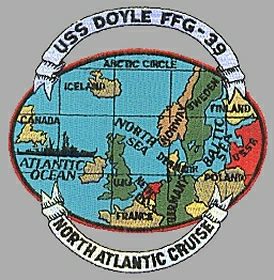 During 1986, USS DOYLE conducted further Atlantic Fleet training and took part in NATO operations in northern European waters. From August through October, she participated in exercises Northern Engagement and Northern Wedding '86, which involved American and allied naval forces operating in the North Atlantic, Norwegian Sea and surrounding waters. The exercises were intended to test NATO reinforcement procedures, maritime communications, antisubmarine warfare and the coordination of naval forces defending northern Europe. Participating American units included the aircraft carrier USS NIMITZ (CVN 68) and the battleship USS IOWA (BB 61). During Northern Wedding, DOYLE conducted an underway replenishment with USS IOWA, an evolution documented in contemporary U.S. Navy photographs. Following the exercise period, the frigate resumed preparations for her next Mediterranean deployment.
On December 30, 1986, USS DOYLE departed for Mediterranean Deployment 1-87 with the USS NIMITZ Battle Group. Operating under the U.S. Sixth Fleet, she carried out escort duties, antisubmarine warfare exercises and maritime surveillance during a period of continued American naval presence in the Mediterranean. From February 24 to March 3, 1987, DOYLE operated with the guided missile cruiser USS JOSEPHUS DANIELS (CG 27) during a passage through the Turkish Straits and into the Black Sea. The operation was conducted as part of the U.S. Navy's freedom-of-navigation activities. Soviet naval units monitored the American ships, and on March 1, a Bulgarian DRUZKI-class frigate closely followed their movements. After leaving the Black Sea, DOYLE operated near Astypalaia, Greece, from March 3 to March 12, conducting surveillance of Soviet surface vessels and submarines at anchor. The deployment continued with Sixth Fleet operations in the Mediterranean until DOYLE returned to Mayport on June 30, 1987.
Following the Mediterranean deployment, USS DOYLE continued Atlantic Fleet assignments and subsequently prepared for service with the Middle East Force. During 1988, she deployed to the Persian Gulf region, where American naval forces were protecting commercial shipping and maintaining a maritime presence during the final stages of the Iran-Iraq War. The U.S. Navy's Operation Earnest Will, which had begun in July 1987, involved the escort of reflagged Kuwaiti tankers threatened by attacks and naval mines. Although Iran and Iraq agreed to a ceasefire in August 1988, American warships continued operating in the Gulf and its approaches. DOYLE performed maritime security and surveillance duties as part of the Middle East Force during this period.
At the beginning of 1989, USS DOYLE was operating in the northern Persian Gulf. During the final phase of her deployment, she rendezvoused with the combat stores ship USS MARS (AFS 1) for replenishment and subsequently transited the Strait of Hormuz. An engineering casualty involving one of her gas turbine engines required her to return to Mina Sulman, Bahrain, for repairs. Maintenance support was available in the region, including the facilities of the destroyer tender USS ACADIA (AD 42), whose technicians assisted with the replacement of a gas turbine engine aboard DOYLE. After completion of the repairs, the frigate resumed her return voyage. She proceeded through the Gulf of Oman, stopped at Raysut, Oman, for fuel, crossed the Gulf of Aden and entered the Red Sea. A port visit to Jeddah, Saudi Arabia, followed before she transited the Suez Canal northbound into the Mediterranean.
During the westward passage through the Mediterranean, USS DOYLE received replenishment support from USS KALAMAZOO (AOR 6) and anchored at Naples, Italy, in company with USS AUBREY FITCH (FFG 34). Continuing toward the Strait of Gibraltar, she received additional supplies from the ammunition ship USS NITRO (AE 23). After leaving the Mediterranean, DOYLE crossed the Atlantic, made a stop at Ponta Delgada in the Azores and returned to Mayport in March 1989. During the spring, she entered Jacksonville Shipyard for a docking selected restricted availability, which included repairs, maintenance and inspections intended to restore equipment readiness following her extended deployment.
During 1990, USS DOYLE maintained an intensive operating schedule in the Atlantic and Caribbean. A particularly significant assignment came when she accompanied the aircraft carrier USS ABRAHAM LINCOLN (CVN 72) during the carrier's transit around South America from the Atlantic toward the Pacific. The voyage included operations in the South Atlantic and required sustained periods underway, logistical support and navigation through waters rarely visited by Atlantic Fleet frigates on routine deployments. On October 5, 1990, DOYLE conducted underway replenishment operations alongside USS ABRAHAM LINCOLN in the South Atlantic. On October 9, she received fuel from the Military Sealift Command oiler USNS PAWCATUCK (T-AO 108) near the equator. During the South American voyage, DOYLE covered more than 16,000 miles in approximately 1,000 hours underway.
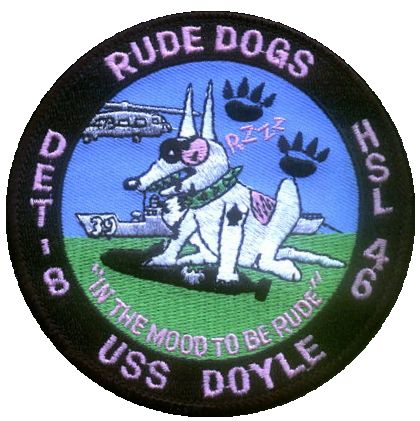
In 1991, USS DOYLE shifted her principal operational emphasis toward NATO maritime cooperation. During the autumn, she deployed with elements of Standing Naval Force Atlantic (STANAVFORLANT), NATO's permanent multinational Atlantic naval formation. Her embarked aviation detachment included personnel from Helicopter Antisubmarine Squadron Light 46, Detachment 8. An unusual aspect of the deployment was the operational testing of the CL-227 Maritime Aerial VTOL Unmanned System, an experimental vertical-takeoff unmanned aircraft intended for shipboard reconnaissance and surveillance. The trials formed part of the early development of unmanned aviation systems capable of operating from smaller warships. DOYLE continued her multinational deployment through the latter part of the year before returning to Mayport. She began 1992 in a period of leave, upkeep and maintenance following approximately six months of STANAVFORLANT operations. During the remainder of the year, she resumed training, inspections and routine Atlantic Fleet assignments.
In 1993, USS DOYLE returned to northern European waters for exercise BALTOPS '93. After preparatory operations, she departed Mayport on May 24, stopping at Halifax, Nova Scotia, from May 27 to May 28 before crossing the Atlantic. She visited Aarhus, Denmark, from June 7 to June 8, and then participated in multinational operations in the Baltic Sea. From June 12 to June 14, DOYLE visited Klaipeda, Lithuania, followed by further NATO tactical exercises. She subsequently visited Riga, Latvia, from June 18 to June 20, Turku, Finland, from June 22 to June 24, and Tallinn, Estonia, from June 25 to June 27. Her final Baltic port visit was to Aalborg, Denmark, from July 1 to July 7. During BALTOPS, DOYLE operated alongside other participating warships, including the destroyer USS DEYO (DD 989), which served as flagship for the exercise commander. She also conducted replenishment operations with the German Navy's fleet oiler FGS RHÖN. The exercise was notable for the participation of Baltic and Eastern European countries in multinational maritime activities following the end of the Cold War. DOYLE returned to Mayport on July 16, 1993. During August and September, she carried out combat systems assessments, engineering training and further operations in the Jacksonville operating area.
USS DOYLE began 1994 with aviation certification and preparations for another Mediterranean deployment. During the early part of the year, she operated with the battle group of the aircraft carrier USS GEORGE WASHINGTON (CVN 73), participating in a Composite Training Unit Exercise in the Puerto Rico operating area. The workup included antisubmarine warfare exercises against the attack submarine USS NEWPORT NEWS (SSN 750), torpedo exercises involving the frigate and her embarked helicopter, and the successful firing of a Standard SM-1 surface-to-air missile after earlier equipment difficulties. February and March included an intermediate maintenance availability at Mayport. In April, DOYLE participated in FLEETEX off the southeastern United States, operating with the USS GEORGE WASHINGTON Battle Group and a Marine amphibious readiness group in exercises involving simulated amphibious operations, air defense and the engagement of hostile patrol craft.
On May 20, 1994, USS DOYLE departed Mayport for Mediterranean Deployment 2-94 with the USS GEORGE WASHINGTON Battle Group. She arrived at Portsmouth, England, on June 2 and subsequently took part in naval activities associated with the fiftieth anniversary of the Allied landings in Normandy. These included commemorative ceremonies and a naval review marking the June 6, 1944, invasion. Following the ceremonies, DOYLE proceeded to Rota, Spain, where operational arrangements were completed before entering the Mediterranean. On June 9, she transferred to the operational control of the Sixth Fleet and began duties connected with Operation Sharp Guard, the NATO and Western European Union maritime enforcement operation established to implement United Nations sanctions against the former Yugoslavia. The operation involved monitoring commercial shipping and conducting inspections to prevent prohibited cargo from reaching the conflict area through the Adriatic Sea.
During the first part of the Mediterranean deployment, USS DOYLE conducted maritime interception operations and visited Brindisi and Civitavecchia, Italy, as well as Corfu, Greece. She subsequently assumed duties as flagship for Commander Standing Naval Force Mediterranean. In August, she operated along the French Mediterranean coast, including an anchorage at Villefranche, before visiting Haifa, Israel, from August 19 to August 23. She then proceeded to Kos, Greece, where she remained from August 25 to August 29. A missile exercise followed on September 1, after which the frigate visited Menton, France, from September 8 to September 12. On September 13, she conducted a passing exercise with the Romanian destroyer MARASESTI, reflecting the developing cooperation between NATO naval forces and Romania after the dissolution of the Warsaw Pact.
From September 14 to September 20, 1994, USS DOYLE underwent an intermediate maintenance availability alongside the destroyer tender USS PUGET SOUND (AD 38) at Augusta Bay, Sicily. She departed for Antalya, Turkey, where she remained from September 23 to September 27. Thereafter, she participated in Operation Dynamic Guard from September 27 to October 12, a NATO exercise involving multinational maritime forces in the Mediterranean. Following the exercise, DOYLE visited Istanbul from October 14 to October 17 and Varna, Bulgaria, from October 18 to October 23. She then participated in Operation Maritime Partner from October 23 to October 25 before arriving at Constanta, Romania, for a port visit lasting until October 27. The successive visits to Turkey, Bulgaria and Romania formed part of the growing program of naval contacts between NATO and countries bordering the Black Sea. DOYLE returned to Augusta Bay on October 30 and remained until October 31. She began the transatlantic return passage on November 3, anchored at Bermuda on November 14 and arrived back at Mayport on November 17, 1994, completing an approximately six-month deployment.
During the opening months of 1995, USS DOYLE entered a period of maintenance and readiness restoration. From January 12 to January 14, she offloaded ammunition at Charleston, South Carolina. Between January 30 and February 3, she supported Space Shuttle operations in the Jacksonville operating area. On February 15, she arrived at Detyens Shipyard in Charleston to begin a four-month docking selected restricted availability. The ship underwent hull and machinery maintenance, equipment repairs and inspections. Following a successful light-off assessment on June 6, DOYLE conducted post-availability sea trials, reloaded ammunition at Charleston and returned to Mayport on June 23. On July 7, Cmdr. Leendert R. Hering relieved Cmdr. R. Cameron Ingram as commanding officer.
In preparation for her next deployment, USS DOYLE completed further inspections and exercises. Her schedule was briefly interrupted when she sortied to avoid Hurricane Erin. On August 4, 1995, the frigate departed Mayport for counter-narcotics operations in the Caribbean and eastern Pacific with Helicopter Antisubmarine Squadron Light 44, Detachment 9, and a U.S. Coast Guard Law Enforcement Detachment embarked. Operating in support of U.S. counter-drug efforts, DOYLE conducted surveillance, vessel inspections and interdiction operations along suspected maritime smuggling routes. During the deployment, she crossed the equator in early September and carried out nearly twenty boardings. She subsequently transited northbound through the Panama Canal, refueled at Guantanamo Bay, Cuba, and returned to Mayport on September 18, 1995.
The remainder of 1995 was devoted principally to engineering readiness, tactical training and combat systems evaluations. USS DOYLE underwent an Operational Propulsion Plant Examination in October and completed further shipboard training assessments. On November 11, she conducted a missile exercise during which four surface-to-air missiles were fired. The ship also served as a test platform for the CANDO modification to the Mk 92 fire-control system, a software improvement intended to enhance the ability of OLIVER HAZARD PERRY-class frigates to engage fast, low-flying targets. An inspection by the Board of Inspection and Survey in December concluded the year's major readiness evaluations.
During 1996, USS DOYLE deployed once more to the Persian Gulf, operating in support of the United Nations sanctions imposed on Iraq following its invasion of Kuwait in 1990. Maritime interception operations required American and allied warships to identify, question and board merchant vessels suspected of carrying cargo prohibited under the UN embargo. During the deployment, DOYLE conducted 72 queries and 39 boardings, contributing to the confiscation of contraband valued at more than three million dollars. The frigate also participated in Operation Desert Strike in September 1996, when the United States conducted military operations against Iraqi targets following Iraqi military action in northern Iraq. Other American forces operating in the region during this period included the aircraft carrier USS CARL VINSON (CVN 70). DOYLE returned from the Persian Gulf later in 1996 and subsequently resumed operations from Mayport.
During 1997, USS DOYLE continued her Atlantic Fleet duties, including readiness training and operations under Commander Western Hemisphere Group. The ship's annual activities included exercises, inspections and preparations for further deployments in support of regional maritime security objectives. Her operating schedule increasingly reflected the expanding role of surface combatants in counter-narcotics enforcement and multinational naval cooperation in the Caribbean and Latin America.
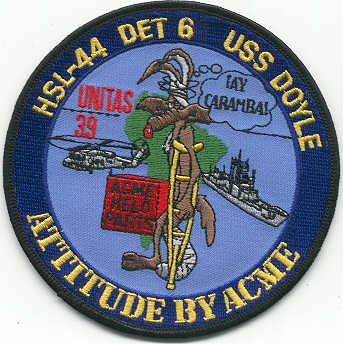
In 1998, USS DOYLE participated in Caribbean operations and multinational exercises, including INDEX 98-2, during which she visited St. Maarten in the Netherlands Antilles. After returning to Mayport at the beginning of May, the crew prepared for another extended deployment. On May 15, DOYLE departed for Earle Naval Weapons Station, New Jersey, to load ammunition and subsequently participated in the Parade of Ships and Fleet Week activities in New York City from May 20 to May 26. Later in the year, she took part in UNITAS 39-98, the annual multinational naval exercise series conducted with South American navies. The U.S. task force included USS DOYLE, USS MOOSBRUGGER (DD 980), USS LA MOURE COUNTY (LST 1194), USS BOSTON (SSN 703), and the Coast Guard cutter USCGC MOHAWK. The deployment involved a clockwise circumnavigation of South America over approximately four months, with the American ships conducting exercises and exchanges with naval forces from nine South American countries. Activities included combined tactical maneuvers, communications exercises, boarding procedures and maritime security training. DOYLE completed the UNITAS deployment in November 1998.
USS DOYLE continued training and operational assignments during 1999. Between May 6 and June 1, she participated in the twelfth annual Fleet Week in New York City, where she was berthed at Staten Island and received civilian visitors during the event. In August 1999, the frigate was reassigned to Destroyer Squadron 14. During the remainder of the year she continued readiness training, maintenance and preparations for another counter-narcotics deployment.
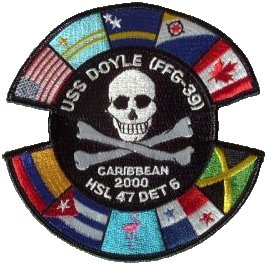
On January 19, 2000, USS DOYLE departed Mayport with Helicopter Antisubmarine Squadron Light 47, Detachment 6, embarked for a multipurpose deployment to the Caribbean and eastern Pacific. The primary mission involved maritime drug interdiction in cooperation with the U.S. Coast Guard and other federal agencies. During operations off the coast of Ecuador, DOYLE intercepted the suspected smuggling vessel REBELDE. After stopping and searching the vessel, members of the embarked Coast Guard Law Enforcement Detachment discovered approximately six tons of cocaine. REBELDE was subsequently taken under tow and delivered to St. Petersburg, Florida. The seizure represented one of the major drug interdiction operations conducted during DOYLE's service. After completing the deployment, the frigate returned to Mayport and resumed her normal Atlantic Fleet training and maintenance schedule.
On September 11, 2001, USS DOYLE was at Naval Station Mayport when the terrorist attacks took place in New York and Washington, D.C. Security measures at the naval station were increased, and the ship's routine activities were affected by the resulting force-protection requirements. During 2002, DOYLE participated in the Caribbean phase of UNITAS 43-02, operating with the guided missile cruiser USS YORKTOWN (CG 48), the attack submarine USS PROVIDENCE (SSN 719), and units from several Central and South American navies. The exercise began on February 22 and concluded on March 8, 2002, at Roosevelt Roads, Puerto Rico. On February 25, DOYLE conducted personnel transfer operations with USS YORKTOWN while the multinational task group was operating in the Caribbean. On October 1, 2002, the frigate was assigned to the Naval Reserve Force at Mayport, combining an active-duty nucleus crew with reservists while remaining available for operational deployments.
In 2003, USS DOYLE returned to European waters as the American contribution to NATO's Standing Naval Force Atlantic. During the deployment, the frigate operated with warships from several allied countries, participating in multinational patrols and maritime security exercises. On September 11, 2003, the second anniversary of the terrorist attacks against the United States, the German frigate FGS NIEDERSACHSEN (F 208) requested permission to make a close passage alongside DOYLE. During the maneuver, the German crew manned the rails in dress uniforms and rendered honors to the American ship while the United States flag was displayed from NIEDERSACHSEN's mainmast. On October 3, DOYLE reciprocated with a ceremonial salute to the German frigate on the anniversary of German reunification.
From October 5 to October 6, 2003, USS DOYLE visited Naples, Italy, together with the British frigate HMS CORNWALL, the Dutch frigate HNLMS TJERK HIDDES and FGS NIEDERSACHSEN. The port visit allowed the NATO force commander and his staff to conduct consultations with NATO headquarters before the ships proceeded to the eastern Mediterranean. From October 9, the formation operated in support of Operation Active Endeavour, NATO's maritime security operation established after the September 11 attacks to monitor shipping and deter terrorist activity in the Mediterranean. DOYLE's duties included maritime surveillance, identification of merchant traffic and coordinated operations with allied warships. On December 16, 2003, the frigate arrived at Souda Bay, Crete, for a brief port visit while continuing her assignment to Standing Naval Force Atlantic.
During 2004, USS DOYLE continued NATO-related operations and multinational maritime cooperation. Helicopter Antisubmarine Squadron Light 48, Detachment 1, was embarked during her service with Standing Naval Force Atlantic, where DOYLE was the only American warship assigned to the multinational formation during that detachment's deployment. These activities involved maritime surveillance, helicopter operations, joint training and the integration of American communications and tactical procedures with those of allied naval forces. The deployment took place during a period in which NATO was expanding its maritime security activities beyond traditional Cold War defense missions. The Standing Naval Force Atlantic designation remained in use until the NATO standing naval forces were reorganized in January 2005.
On April 4, 2005, USS DOYLE began another counter-narcotics deployment to the Caribbean and eastern Pacific with Helicopter Antisubmarine Squadron Light 46, Detachment 3, and a Coast Guard Law Enforcement Detachment embarked. On May 3, while operating north of the Panama-Colombia coast, DOYLE and her SH-60B Seahawk helicopter, call sign Cutlass 463, pursued the fishing vessel DOS CONTINENTES, suspected of transporting cocaine. As the American forces approached, the crew of the fishing vessel set it on fire and abandoned ship. DOYLE proceeded toward the vessel at high speed while her helicopter monitored the situation. A rigid-hull inflatable boat was launched to rescue four men from the water. Damage control personnel from DOYLE subsequently fought the fire aboard DOS CONTINENTES, and a boarding party supported by Coast Guard law-enforcement personnel recovered packages containing approximately 150 pounds of cocaine from the damaged vessel. After the operation, the fishing vessel was sunk to prevent it from becoming a navigational hazard. During the deployment, DOYLE conducted five interdictions that resulted in the apprehension of 28 suspected drug traffickers and the seizure or destruction of substantial quantities of cocaine. The deployment concluded on June 20, 2005.
During 2006, USS DOYLE continued operations and training from Mayport. On October 9, she was berthed at the Charlestown Navy Yard in Boston, Massachusetts, during a Columbus Day weekend port visit. Members of her crew participated in local events, including the city's Columbus Day parade and community service activities. In 2007, the frigate took part in maritime security cooperation activities in West African waters. On June 21, 2007, she arrived at Conakry, Guinea, where she conducted a port visit intended to strengthen cooperation with the Guinean Navy and support regional maritime security efforts. The visit included professional exchanges, meetings with local naval personnel and community activities. The deployment reflected the increasing emphasis placed on maritime security cooperation with African countries, particularly regarding illegal trafficking and the security of coastal waters.
In 2008, USS DOYLE continued Atlantic Fleet exercises and port visits. On July 3, she arrived at the Port of Palm Beach, Florida, remaining in the area during the Independence Day celebrations on July 4. Later in the year, DOYLE deployed to northern European waters to participate in Joint Warrior 08-2, a large multinational exercise conducted off Scotland in October. The exercise included complex surface, air and antisubmarine warfare scenarios intended to improve cooperation between American and European naval forces. American participants included USS HAWES (FFG 53), USS KLAKRING (FFG 42), USS MITSCHER (DDG 57), and the Military Sealift Command fleet oiler USNS LEROY GRUMMAN (T-AO 195). DOYLE also operated with British naval forces, including the aircraft carrier HMS ARK ROYAL. During the exercise, a sailor from DOYLE was transferred by helicopter to ARK ROYAL for dental treatment, an example of the logistical and medical support provided between participating ships. After completing Joint Warrior, DOYLE visited Portsmouth, England, where USS HAWES was moored alongside her on November 9, 2008. The ships subsequently returned to their respective Atlantic Fleet homeports.
During the first months of 2009, USS DOYLE prepared for another deployment to Latin America. On April 22, her visit, board, search and seizure team demonstrated maritime interdiction procedures to personnel from partner navies during UNITAS Gold activities at Mayport. On May 7, DOYLE departed Mayport for Southern Seas 2009, a deployment conducted under U.S. Southern Command and the newly reestablished U.S. Fourth Fleet. The operation was intended to strengthen regional maritime partnerships, develop interoperability and support cooperative security activities throughout the Caribbean and Latin America. Other American frigates participating in the broader Southern Seas program included USS KAUFFMAN (FFG 59) and USS FORD (FFG 54).
From May 13 to May 17, 2009, USS DOYLE visited Cartagena, Colombia, following participation in Operation Multinational Alliance, an exercise involving naval forces from several American countries. During the port visit, members of the crew took part in professional exchanges and local activities. The frigate then proceeded to Honduras, arriving at La Ceiba on May 21. During the visit, which lasted until May 26, DOYLE's crew participated in maritime security discussions, training exchanges and community projects with Honduran personnel. Continuing southward, the ship operated off the Pacific coast of South America. On June 17, she participated in a multinational group sail involving American and Peruvian naval forces. The deployment included operations associated with Southern Seas and exercises off Chile, including Teamwork South 2009. During June, American and allied naval personnel also conducted activities at Mejillones, Chile.
In July 2009, USS DOYLE continued operations along the Pacific coast of South America. On July 2, her crew rendered a ceremonial gun salute during commemorative activities honoring Chilean sailors lost aboard a sunken Chilean warship. The frigate continued multinational training and maritime cooperation exercises with regional partners. During the second half of the deployment, she visited Santa Marta, Colombia, arriving on August 23 and remaining until August 26. The visit included the transfer of Project Handclasp humanitarian supplies, including medical materials, hygiene products and toys, for distribution to local communities. After leaving Santa Marta, DOYLE continued her Southern Seas assignment before completing the deployment and returning to Mayport later in the year.
During 2010, USS DOYLE prepared for her final extended operational deployment. In the autumn, she departed Mayport for a six-month counter-illicit-trafficking assignment in the Caribbean and eastern Pacific under U.S. Southern Command. The deployment involved maritime surveillance, helicopter-supported searches and the interception of suspected drug-smuggling vessels in cooperation with the U.S. Coast Guard and other American agencies. During the cruise, DOYLE visited ports in Guatemala, Costa Rica and Panama, as well as Naval Station Guantanamo Bay, Cuba.
On December 6, 2010, USS DOYLE participated in the interception of the fishing vessel RIO TUIRA in the eastern Pacific approximately 180 miles off the coast of Panama. Working with her embarked SH-60B Seahawk helicopter from Helicopter Antisubmarine Squadron Light 42, Detachment 3, call sign Proud Warrior 423, and Coast Guard law-enforcement personnel, DOYLE's boarding team recovered 22 bales of cocaine weighing approximately 1,100 pounds. Five suspected smugglers were detained during the operation. The seizure formed part of the continuing multinational effort to disrupt maritime drug-trafficking routes between South America, Central America and the United States.
USS DOYLE returned to Naval Station Mayport on April 5, 2011, completing her final six-month deployment. Following her return, the frigate entered preparations for decommissioning. On July 29, 2011, USS DOYLE was formally decommissioned at Naval Station Mayport after more than 28 years of service. Her name was removed from the Naval Vessel Register on the same day.
Following her decommissioning, the former USS DOYLE was transferred to the Naval Inactive Ships Maintenance Facility at the former Philadelphia Naval Shipyard, Pennsylvania, where she remained laid up with other decommissioned warships. On December 15, 2014, a contract for the dismantling of DOYLE and five other former U.S. Navy ships was awarded to ESCO Marine of Brownsville, Texas. Despite the contract award, DOYLE remained in Philadelphia for several additional years. On June 23, 2018, the former frigate departed Philadelphia under tow for New Orleans, Louisiana, where she was to be dismantled by Southern Recycling, a company associated with EMR International Shipbreaking. By August 9, 2018, her arrival at New Orleans had been reported and preparations for recycling were underway. The dismantling process was subsequently completed, and the U.S. Maritime Administration recorded the former USS DOYLE as disposed of through recycling in June 2019.
back to top go to the end of the pageAbout the Ship's Name:
USS DOYLE's namesake is most known for his impressive contributions during the Korean War. As Commander Amphibious Group One during the Korean War, Admiral Doyle was personally responsible for the flawless execution of the amphibious phase of the invasion of Inchon in 1950.
Admiral Doyle’s naval attack force put 13,000 Marines ashore on a forbidding coastline, together with all their weapons and equipment. Rarely had so small a force entered so large a land mass under such difficult conditions. Later, when the Chinese entered North Korea from across the Yalu River and entrapped U.S. ground forces, Admiral Doyle commanded the Hungnam withdrawal, an operation characterized by ingenuity and superb naval gunfire support.
The 1st Marine Division, 3rd and 7th Infantry Divisions, and 100,000 civilians were evacuated under the sweep of heavy enemy gunfire without a single casualty. For these masterful exploits, Admiral Doyle was awarded the Navy Distinguished Service Medal and the Army’s Silver Star.
Admiral James Henry Doyle retired from the Navy in 1953 and died in Oakland, California, on February 9, 1981.
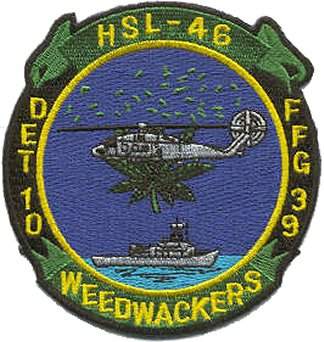
back to top go to the end of the pageUSS DOYLE Patch Gallery:
 |  |  |  |
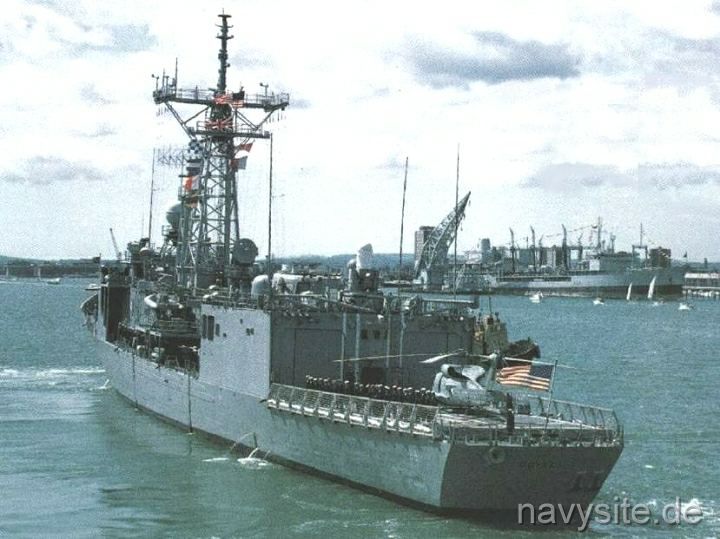
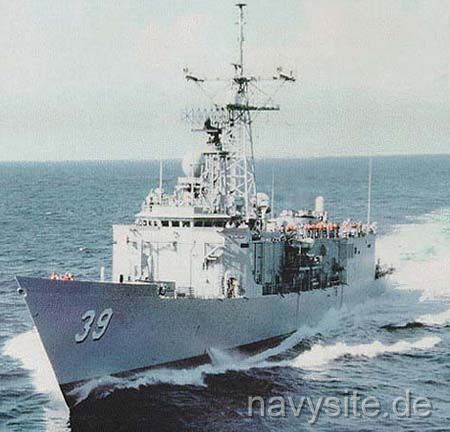
back to top go to the end of the pageUSS DOYLE Image Gallery:
 |  |  |  |  |
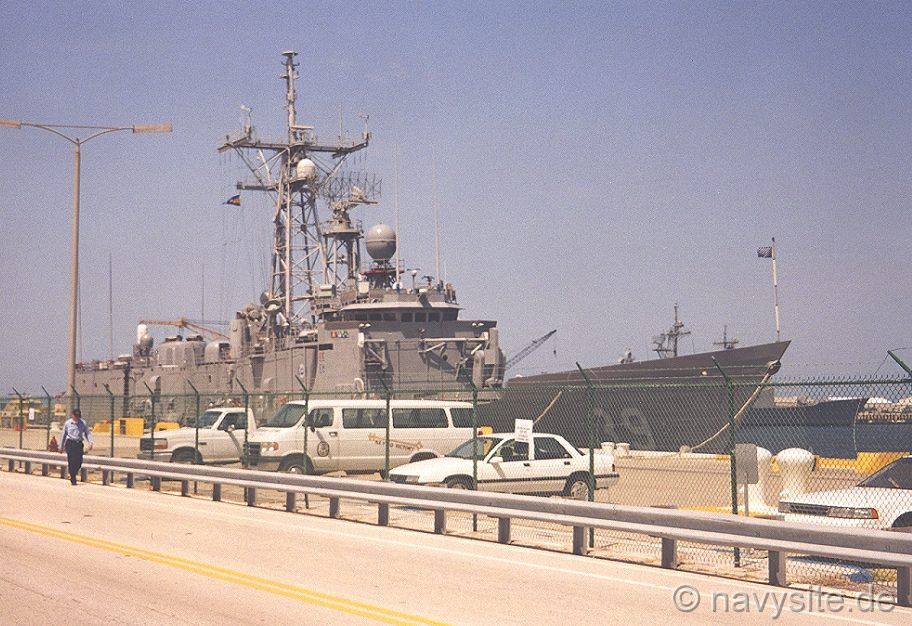
The photos below were taken by me and show the DOYLE at Naval Station Mayport, Fla., on July 31, 2000.
 |  |
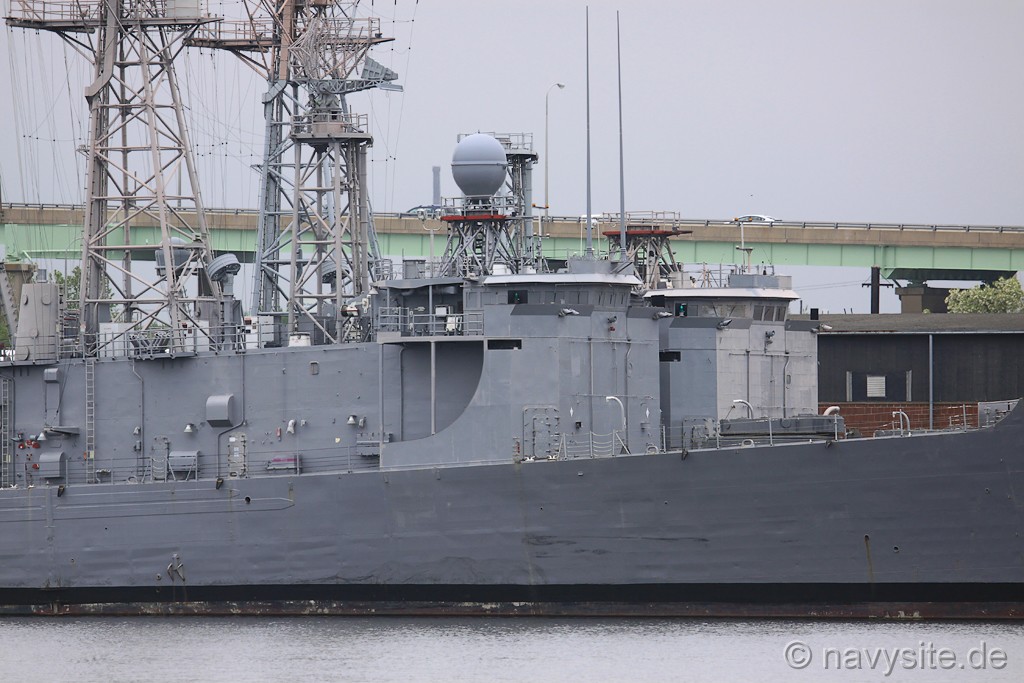
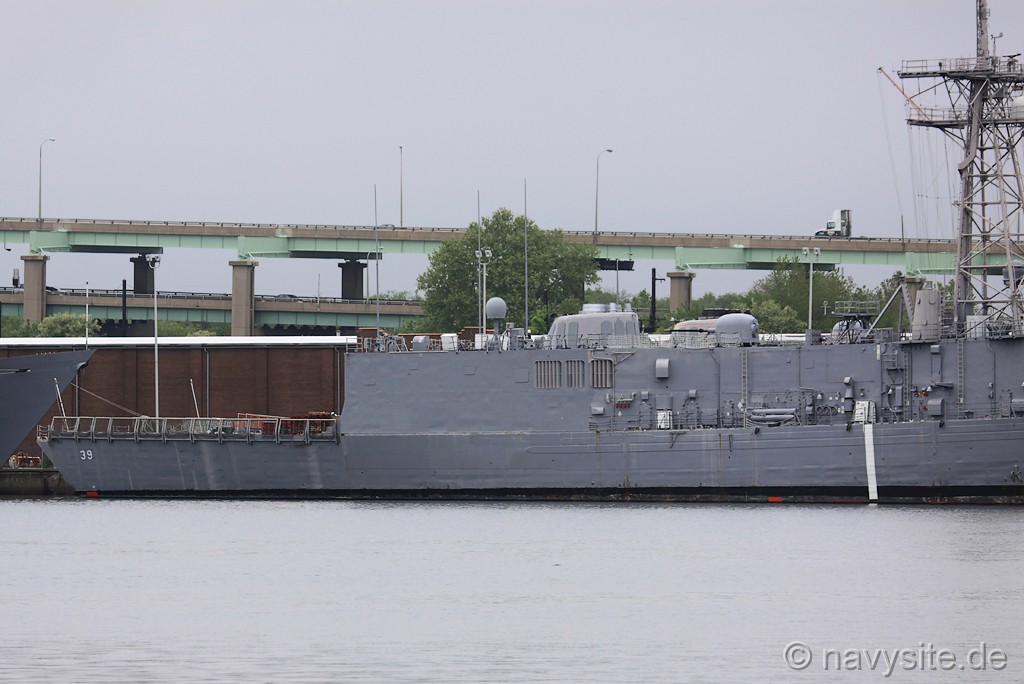
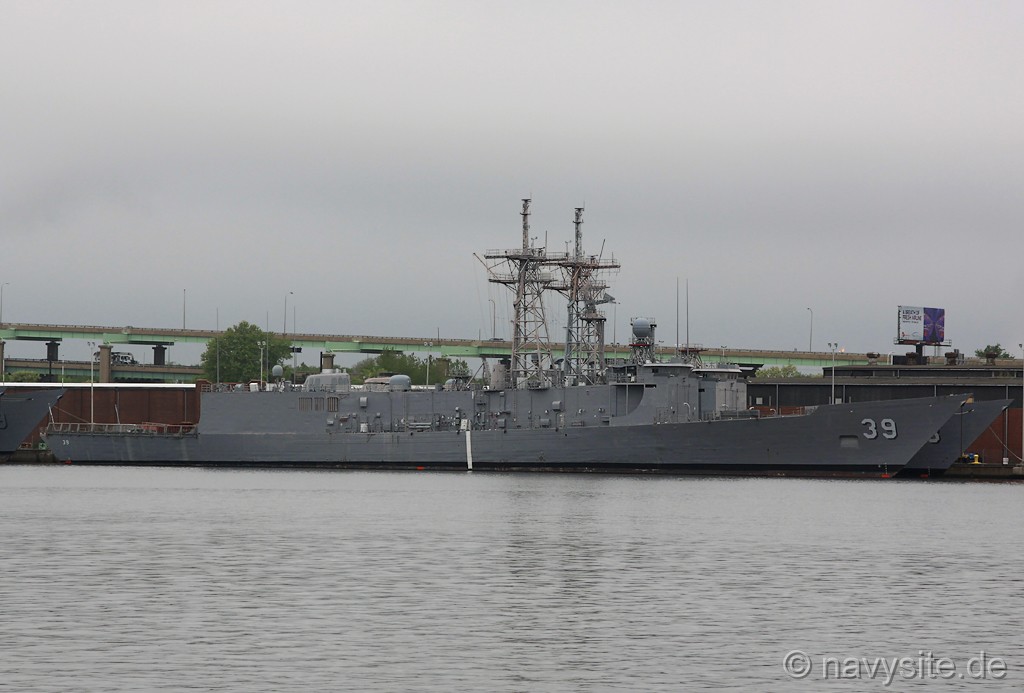
The photos below were taken by me and show the DOYLE laid up at the former Philadelphia Naval Shipyard, Penn., on May 4, 2012.
 |  |  |  |
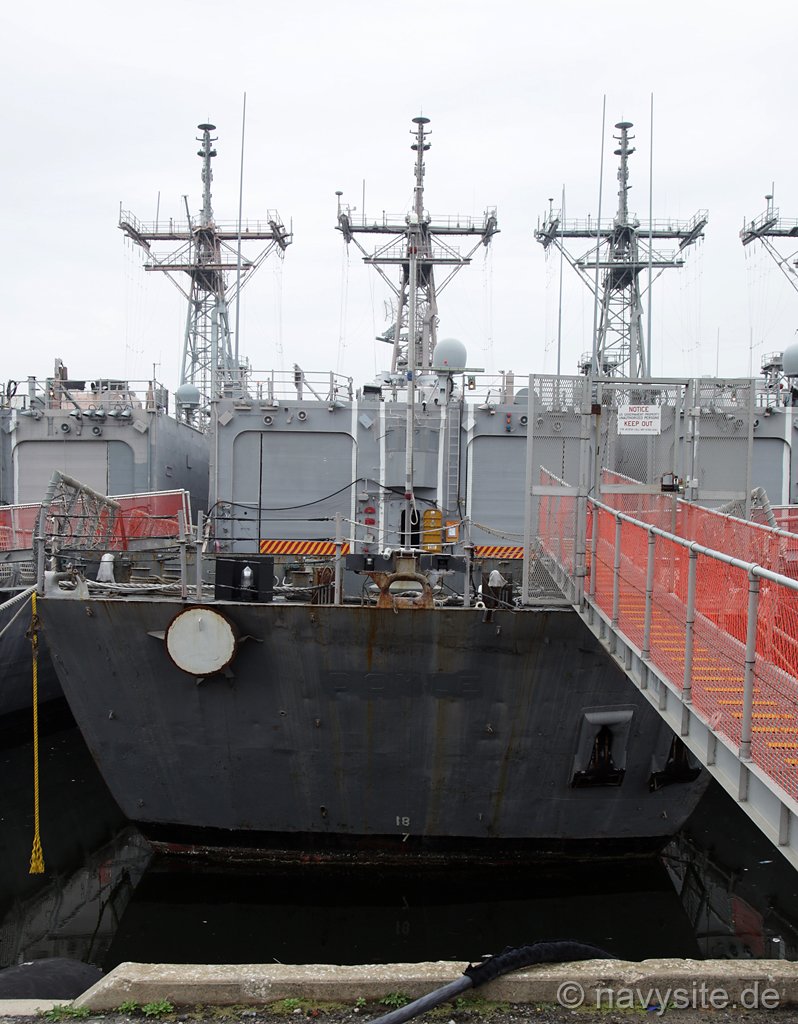
The photo below was taken by Michael Jenning and shows the DOYLE laid up at the former Philadelphia Naval Shipyard, Penn., on October 3, 2012.
 |
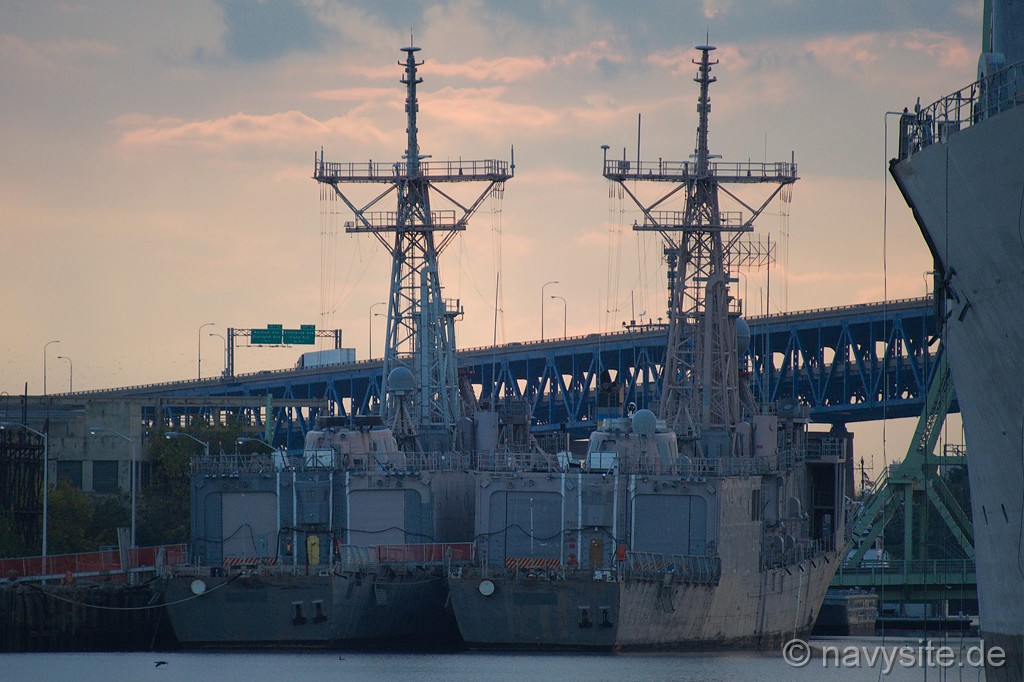
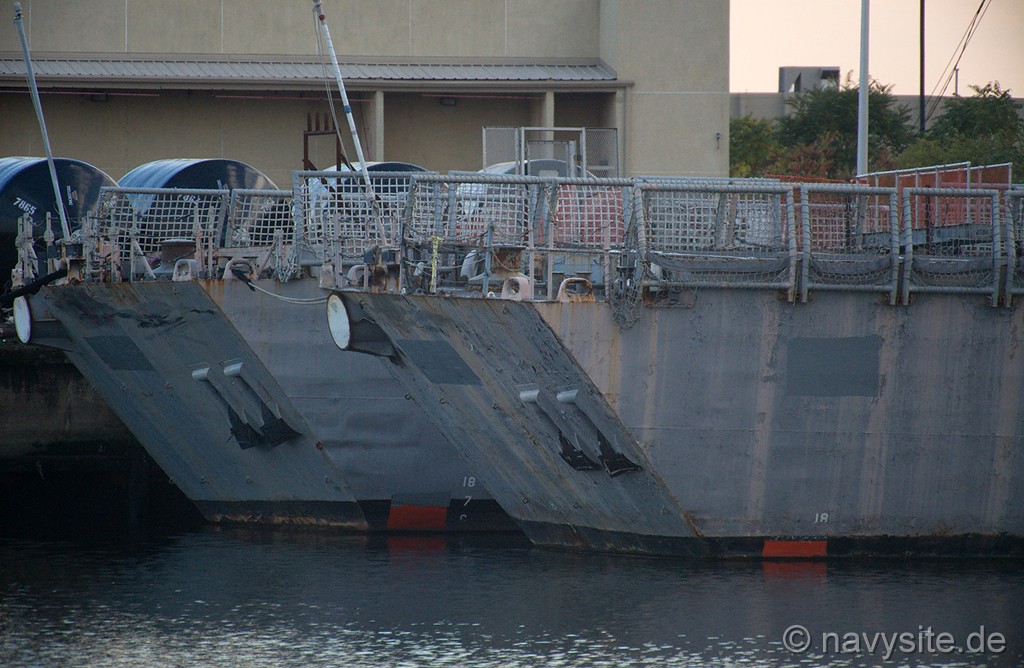
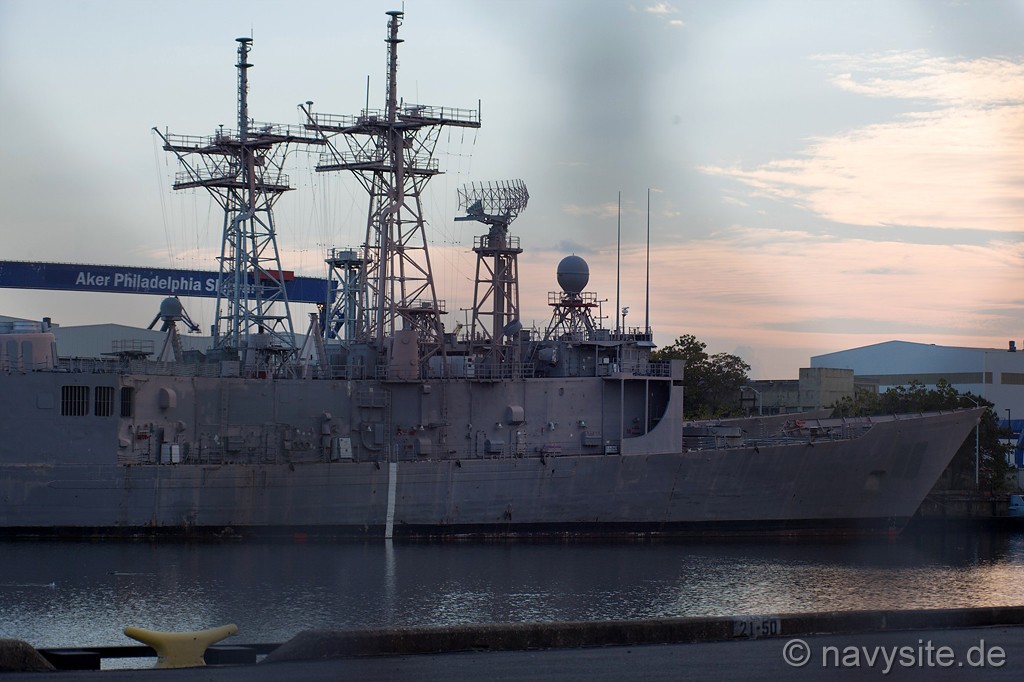
The photos below were taken by Michael Jenning and show the DOYLE laid up alongside her sistership HAWES (FFG 53) at the former Philadelphia Naval Shipyard, Penn., on October 21, 2014. DOYLE is the ship moored outboard.
 |  |  |  |  |
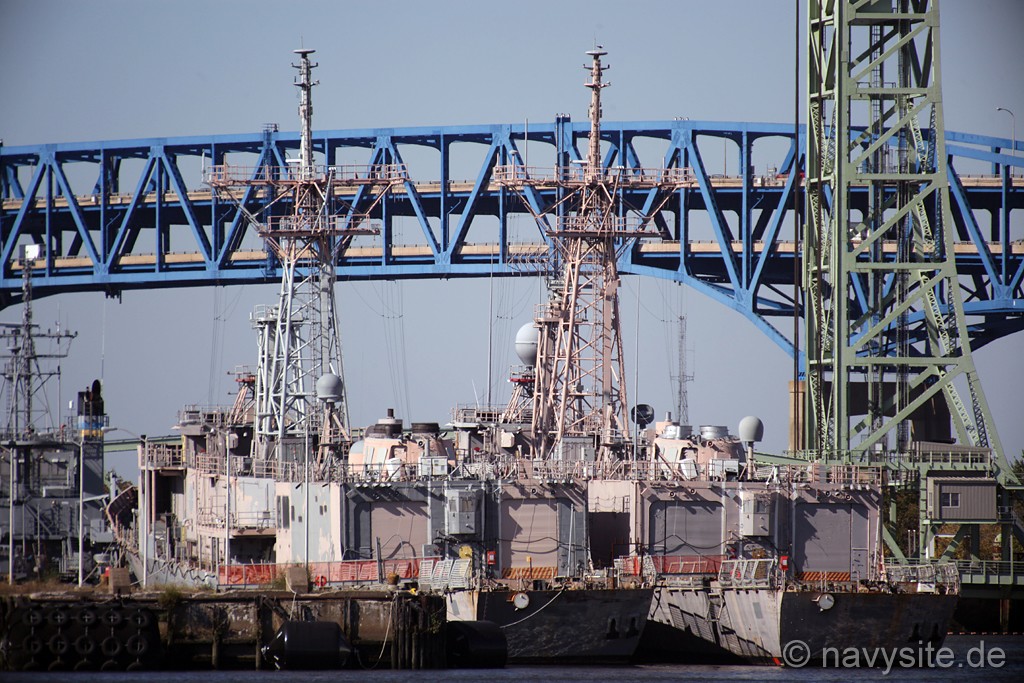
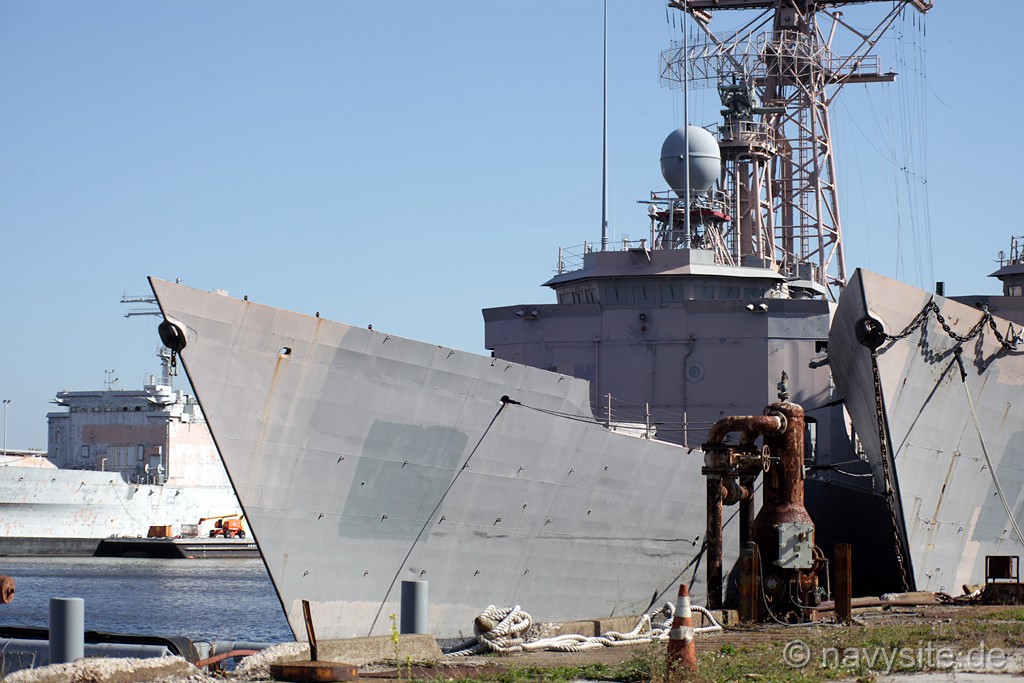
The photos below were taken by Michael Jenning and show the DOYLE laid up alongside her sistership HAWES (FFG 53) at the former Philadelphia Naval Shipyard, Penn., on October 16, 2015. DOYLE is the ship moored outboard.
 |  |
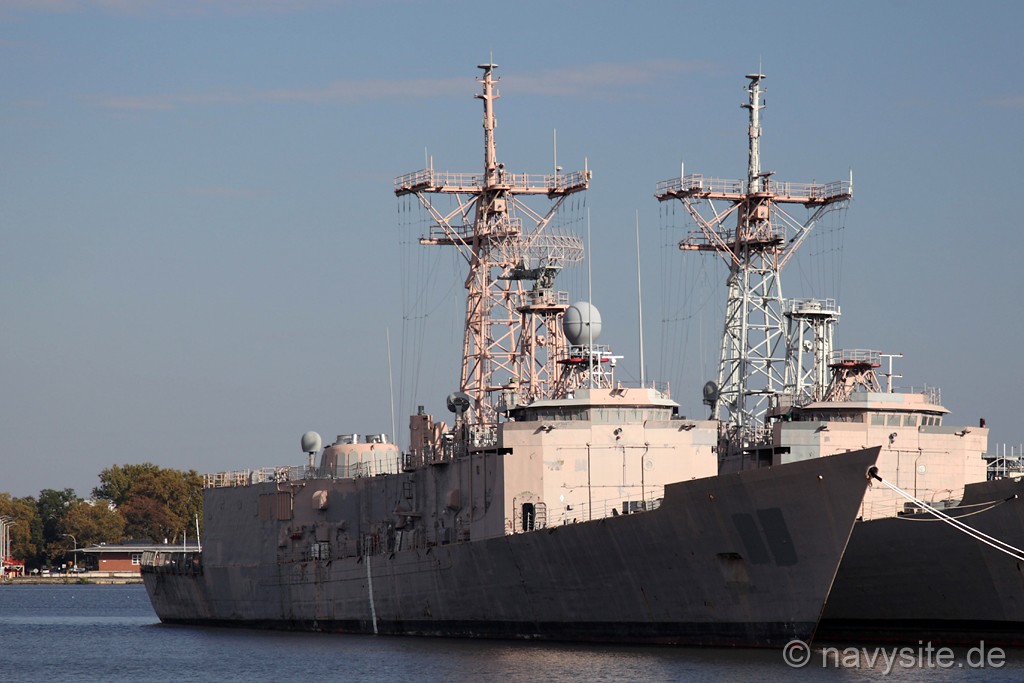
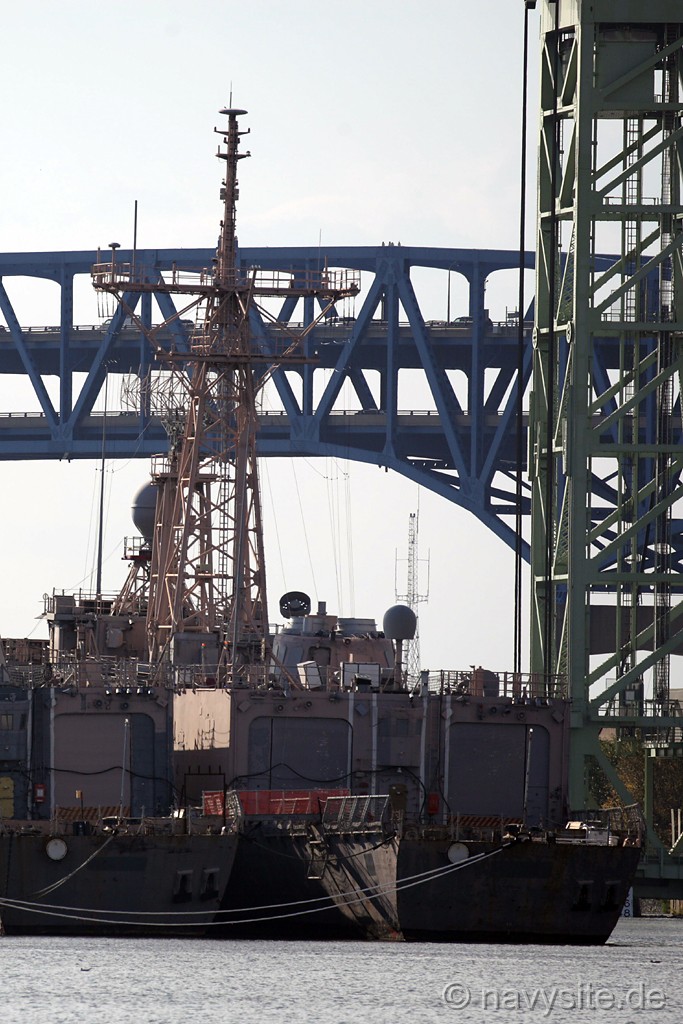
The photos below were taken by Michael Jenning and show the DOYLE laid up alongside her sistership HAWES (FFG 53) at the former Philadelphia Naval Shipyard, Penn., on October 17, 2016. DOYLE is the ship moored outboard.
 |  |
back to top Back to Frigates list. Back to ships list. Back to selection page. Back to 1st page.