Search the Site with

|
Search the Site with
|
 General Characteristics Crew List Memorabilia Cruise Books About the Ship's Name About the Ship's Coat of Arms Patch Gallery Image Gallery to end of page
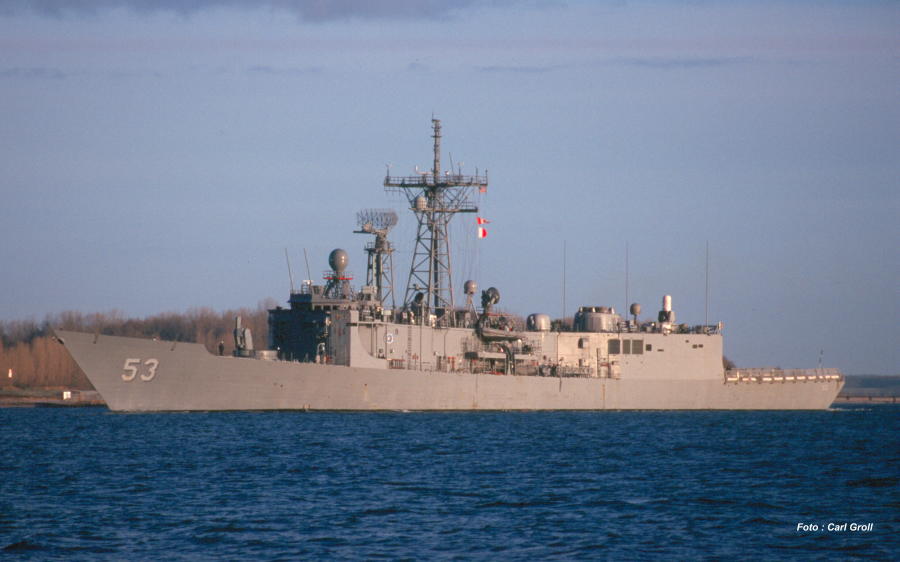
 | 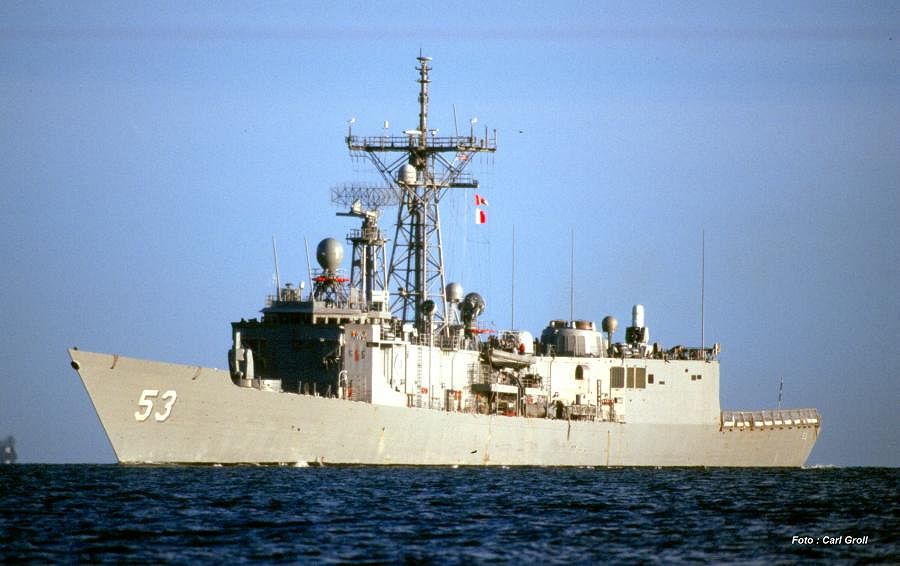 Photo by Carl Groll; FFG 53 entering the port of Kiel, Germany, in February 2002. Click to enlarge. |
USS HAWES was the 47th frigate in the OLIVER HAZARD PERRY - class and the first ship in the Navy named after Rear Admiral Richard E. Hawes. Last homeported in Norfolk, Va., the HAWES was decommissioned on December 10, 2010, and was subsequently towed to Philadelphia where she was used as a logistic support asset for the remaining ships of her class. On October 19, 2020, HAWES arrived under tow at International Shipbreaking at Brownsville, Tx., for scrapping.
| General Characteristics: | Keel Laid: August 26, 1983 |
| Launched: February 18, 1984 | |
| Commissioned: February 9, 1985 | |
| Decommissioned: December 10, 2010 | |
| Builder: Bath Iron Works, Bath, Maine | |
| Propulsion system: two General Electric LM 2500 gas turbines, two 350 Horsepower Electric Drive Auxiliary Propulsion Units | |
| Propellers: one | |
| Blades on each Propeller: five | |
| Length: 453 feet (138 meters) | |
| Beam: 47 feet (14.32 meters) | |
| Draft: 24,6 feet (7.5 meters) | |
| Displacement: 4,100 tons | |
| Speed: 28+ knots | |
| Aircraft: two | |
| Armament: one | |
| Crew: 17 Officers and 198 Enlisted |
 back to top go to the end of the pageback to top go to the end of the page
Crew List:
This section contains the names of sailors who served aboard USS HAWES. It is no official listing but contains the names of sailors who submitted their information.
back to top go to the end of the pageback to top go to the end of the pageUSS HAWES Cruise Books:
back to top go to the end of the pageAbout the Ship’s Name, about Rear Admiral Richard E. Hawes:
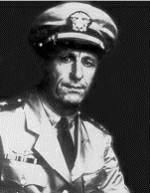 Richard Ellington Hawes was born in Thomson Georgia, on February 12, 1894. He attended the University of Georgia on a baseball scholarship before transferring to Mercer University. There he won recognition in both baseball and football. He earned a law degree along the way, but passed up the bar exam to coach and play professional baseball.
When America entered World War I in 1917, Hawes enlisted in the Navy as a Fireman Second Class. Fifteen months later he accepted a temporary appointment as an Ensign, but reverted to Boatswain (Warrant Officer) in 1920.
In March 1926 Hawes joined USS FALCON (ARS 2) as Executive Officer. While aboard FALCON he played a key role in the salvage of USS S-51 off Block Island, RI in September 1925. For his part in that difficult and dangerous operation Boatswain Hawes received his first Navy Cross. He also assisted in the salvaging of USS S-4, which sank off Provincetown, MA in December 1927.
On February 18, 1929, Hawes was commissioned an Ensign by a special act of Congress in recognition of his services in salvaging the S-51 and S-4.
In January 1940 Lieutenant Hawes assumed command of USS PIGEON (ARS 6) and was serving in that role when the United States entered World War II.
On December 10, 1941 the PIGEON was docked at the Cavite Navy Yard on Manila Bay for repairs to her steering gear when Japanese warplanes attacked. Since Pearl Harbor three days before, Hawes had main steam pressure up and the full crew aboard, ready to get underway at an instant. Lashed to the minesweeper QUAIL (AM 15), which provided steering for both, PIGEON cleared the docks and headed for the relative safety of the bay to dodge the enemy bombs. By this time Cavite had become a hellish inferno. After separating from QUAIL Hawes could see that the submarine SEADRAGON (SS 194) was about to be engulfed by bombs and fire in her berth. Through heavy bombing and strafing, Lieutenant Hawes maneuvered the 187 foot PIGEON back to the flaming dock to haul the helpless submarine stern first from her berth. Another submarine and a minesweeper had just been sunk there by direct hits. The heat and flames were so intense that they blistered the ship's paint, singed off body hair, and melted the brim of Hawes' cap. But PIGEON's crew managed to rig a line on the SEADRAGON and tow her to safety. For this heroic action, Hawes received his second Navy Cross and PIGEON was awarded the Presidential Unit Citation, the first warship to receive the award in World War II. SEADRAGON went on to distinguished service, earning eleven battle stars before the war ended.
Immediately after the attack Hawes found and mounted on his ship two 3 inch guns and twelve .50 caliber machine guns from the wrecked Navy Yard. By the end of December the new "gunboat" had received her second Presidential Unit Citation for shooting down several enemy planes and bombarding enemy troops. She was the only surface warship to win two Presidential Unit Citations in World War II.
Except for the brief periods when he was in transit or putting USS CHANTICLEER (ARS 1) and USS ANTHEDON (AS 24) into commission, Hawes spent virtually all of World War II at sea in the Pacific in command of his three ships. Like Hawes himself, his ships always had a reputation for efficiency and readiness. When he put CHANTICLEER into commission, he had depth charge racks installed so he could prosecute Japanese submarines. When he put ANTHEDON into commission, 92% of his crew were inductees and had never been to sea, but he sailed directly from commissioning to the Pacific war and within two hours of his arrival was servicing submarines. He received the Bronze Star for "undaunted courage and professional skill" for his command of that ship. As he left the Western Pacific theater in January 1945, the Commander, Submarines, Philippine Sea Frontier sent ANTHEDON a message of thanks and good wishes, describing Commander Hawes and his men as "ever ready, ever fearless."
Hawes was promoted to Captain on March 25, 1945. On December 1, 1952 he was transferred to the retired list and promoted to Rear Admiral.
Rear Admiral Hawes died at his home in Thomson, Georgia, on December 30, 1968.
back to top go to the end of the pageAbout the Ship’s Coat of Arms:
The Shield:
The chevron extending into chief represents the process of submarine rescue, the transition from sea to air further suggested by the chevron wavy below and straight above. The shield, divided vertically, alludes to the Atlantic and Pacific oceans Rear Admiral Hawes distinguished himself, and is colored gold and blue in the Navy tradition. At the top, two awards of the Navy Cross, received for distinguished service in submarine salvage operations, are denoted by the silhouetted crosses. The five-pointed star at the center signifies an award of the Bronze Star Medal to Admiral Hawes when, as commander of the submarine tender ANTHEDON (AS 24), he organized the refitting of thirty-four submarines.
The Crest:
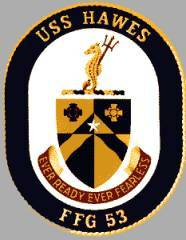
The trident suggests retrieval from the sea and the special equipment and vessels used in submarine rescue. The seahorse is a traditional symbol of the Navy diving service. The color scarlet is symbolic of courage in the face of danger and gold signifies excellence and achievement. The complete coat of arms as emblazoned upon a white oval background enclosed by a dark blue border edged with gold rope and inscribed "USS HAWES" at top and "FFG 53" in base all in gold.
back to top go to the end of the page
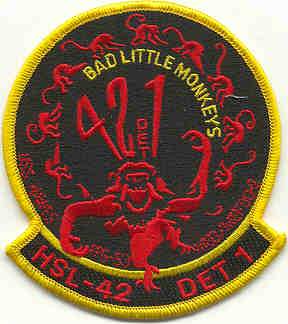
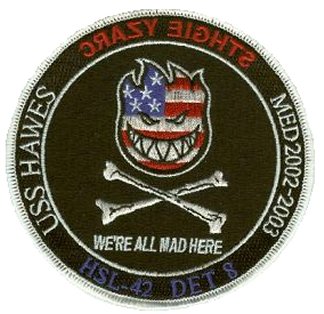
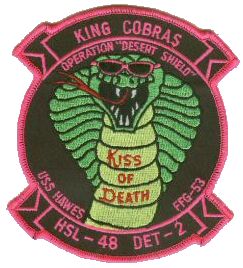
back to top go to the end of the pageUSS HAWES Patch Gallery:
 |  |  |
back to top go to the end of the pageUSS HAWES Image Gallery:
 |  |  |
The photo below was taken by Karl-Heinz Ahles and shows the USS HAWES at Naval Base Norfolk, Va., on May 11, 1999.
 |
The photo below was taken by Carl Groll in February 2002 during exercise Strong Resolve in the Baltic Sea and shows the HAWES entering the port of Kiel, Germany.
 |
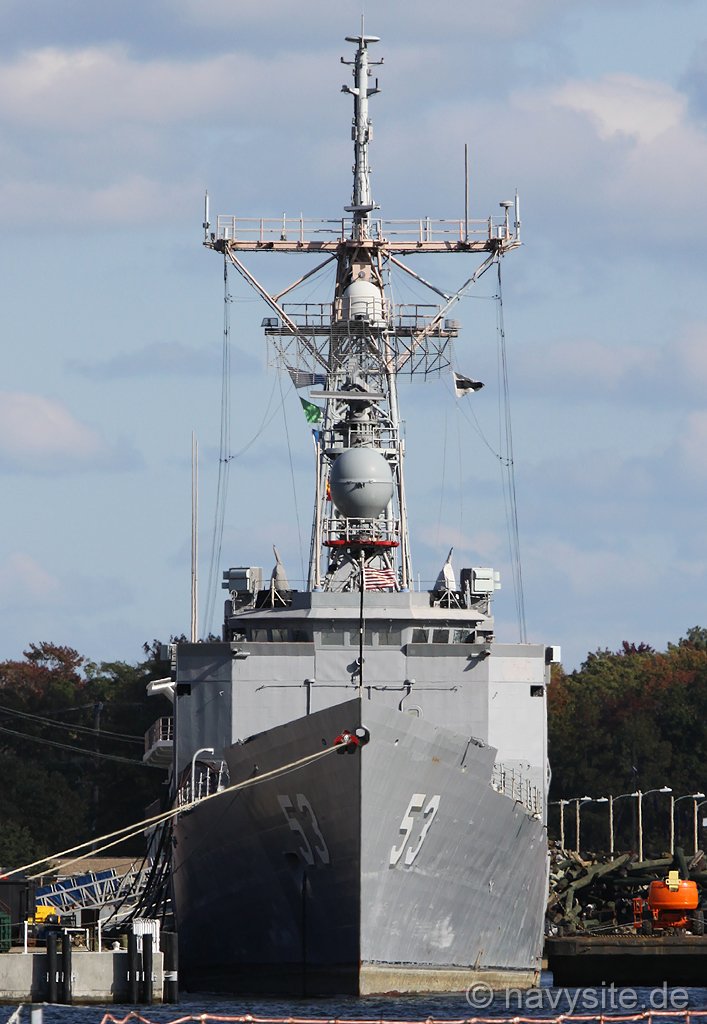
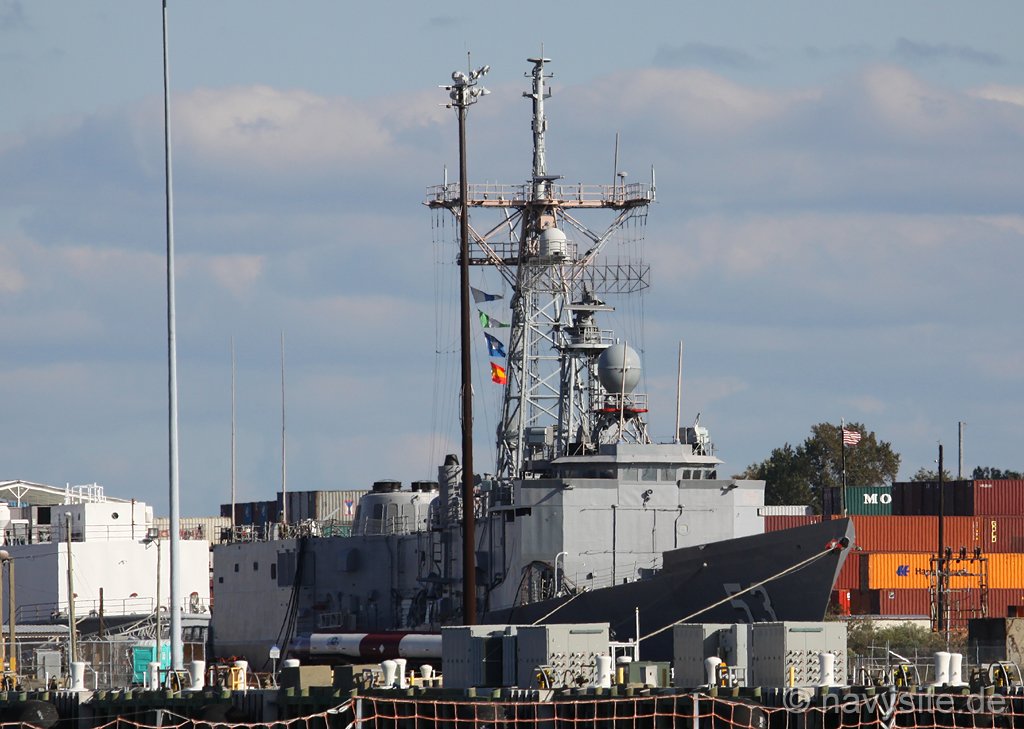
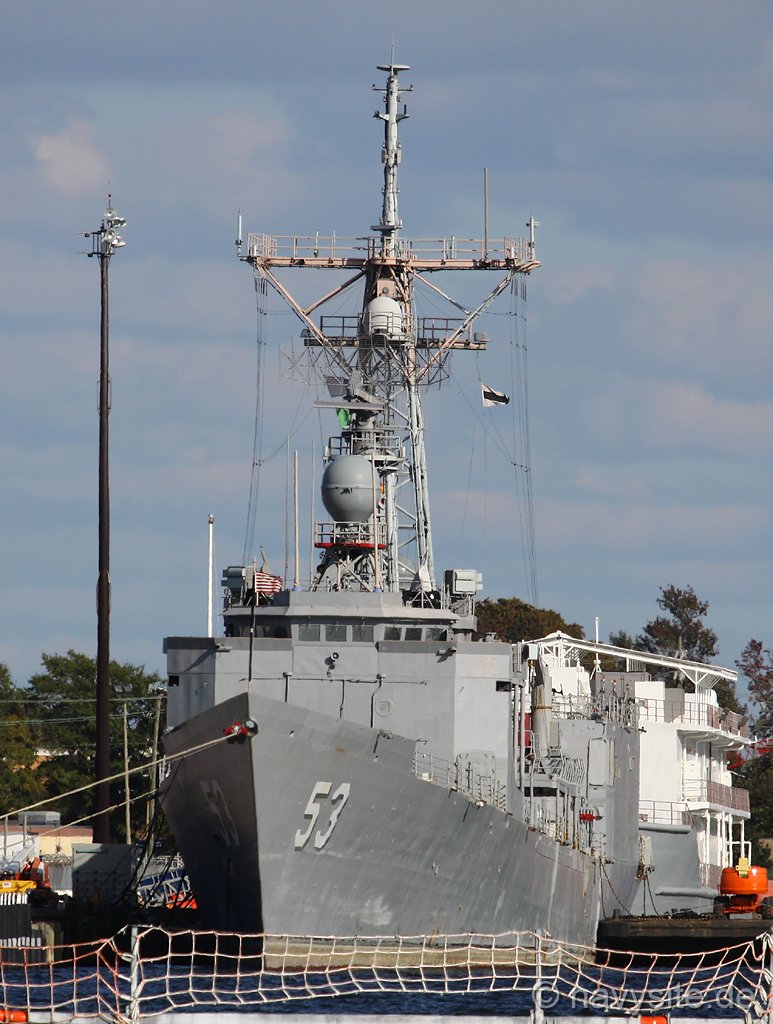
The photos below were taken by me and show the HAWES at Naval Base Norfolk, Va., preparing for decommissioning. She is sitting high in the water as she has been striped of some of her equipment (e.g. liferafts and the Phalanx CIWS are missing) and her awards have already been removed as well. The photos were taken on October 29, 2010.
 |  |  |  |
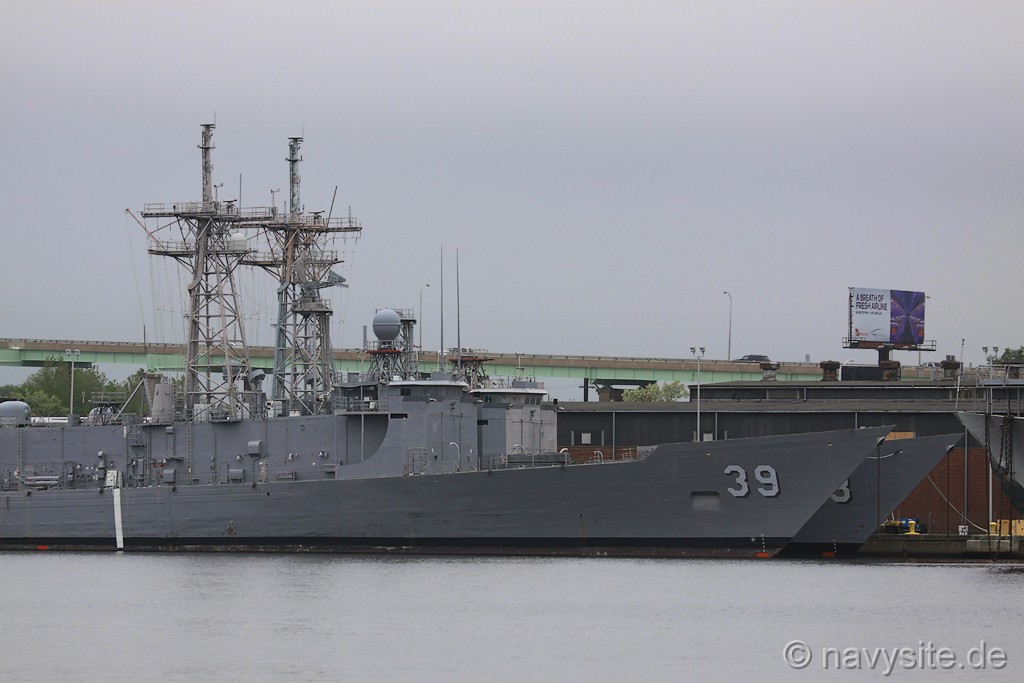
The photo below was taken by me and shows the HAWES laid up behind her sistership DOYLE (FFG 39) at the former Philadelphia Naval Shipyard, Penn., on May 4, 2012.
 |
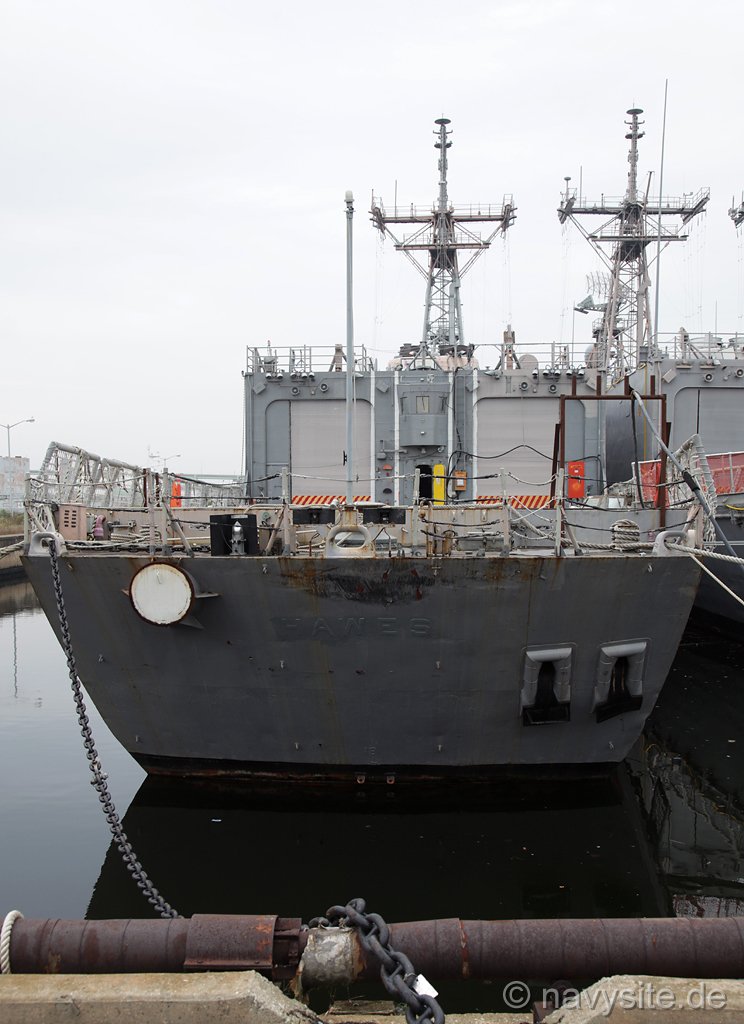
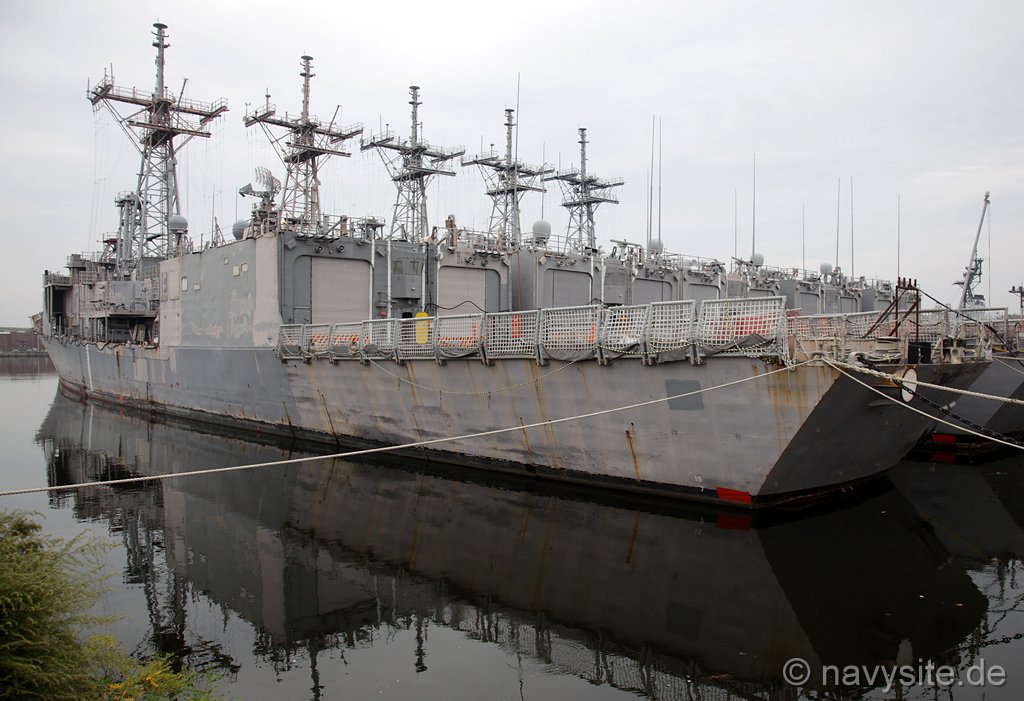
The photos below were taken by Michael Jenning and show the HAWES laid up alongside her sisterships at the former Philadelphia Naval Shipyard, Penn., on October 3, 2012.
 |  |  |
The photos below were taken by Michael Jenning and show the HAWES laid up alongside her sistership DOYLE (FFG 39) at the former Philadelphia Naval Shipyard, Penn., on October 21, 2014. DOYLE is the ship moored outboard.
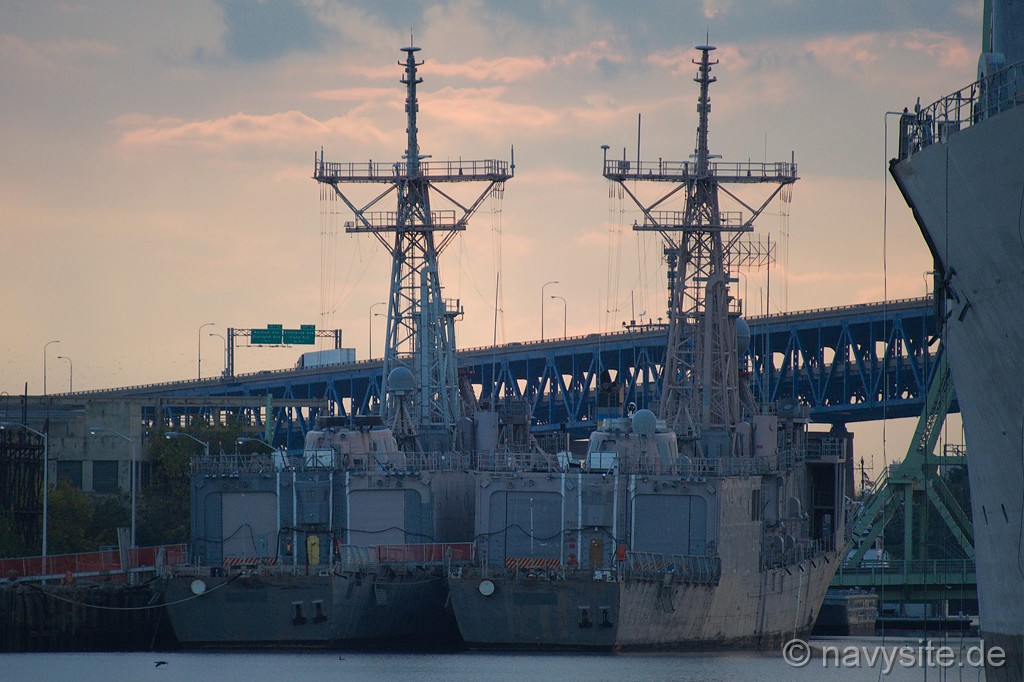 | 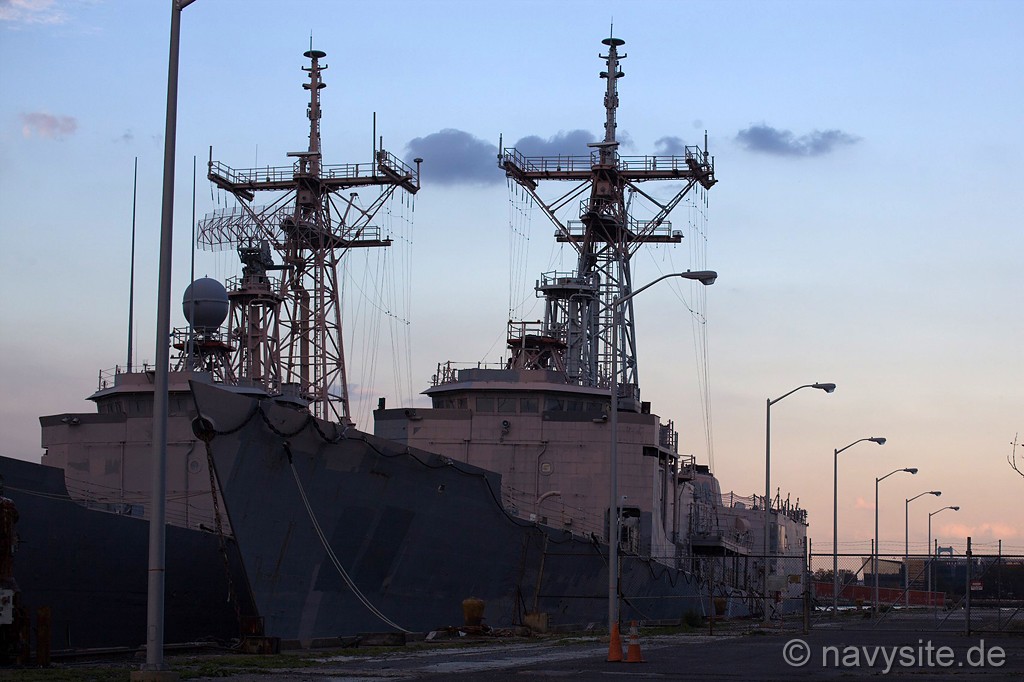 |
The photos below were taken by Michael Jenning and show the HAWES laid up alongside her sistership DOYLE (FFG 39) at the former Philadelphia Naval Shipyard, Penn., on October 16, 2015. HAWES is the ship moored at the pier.
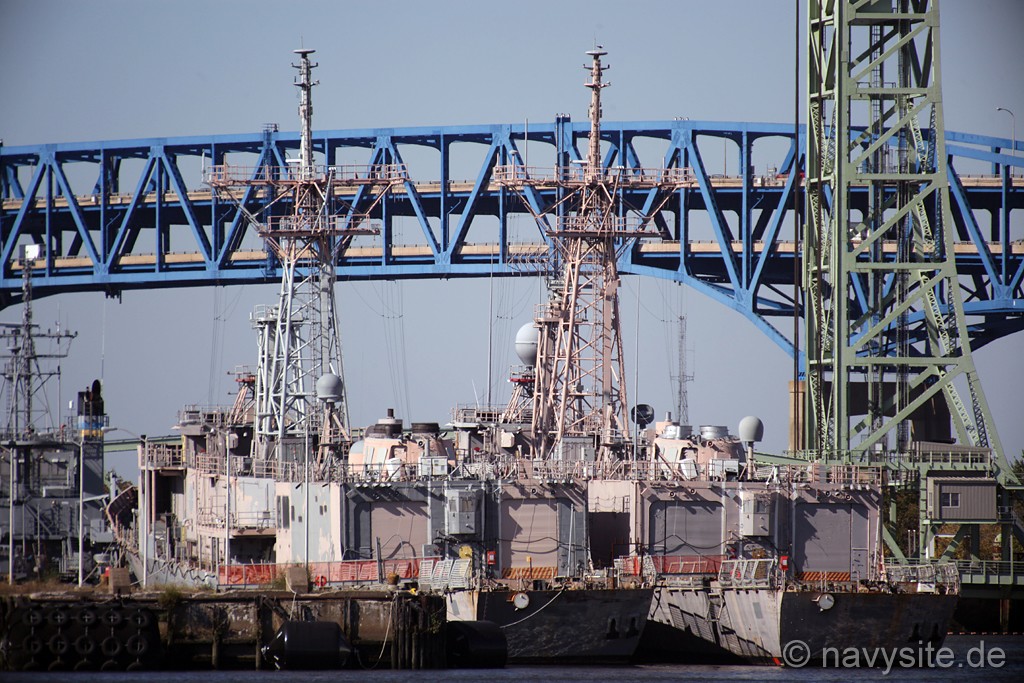 | 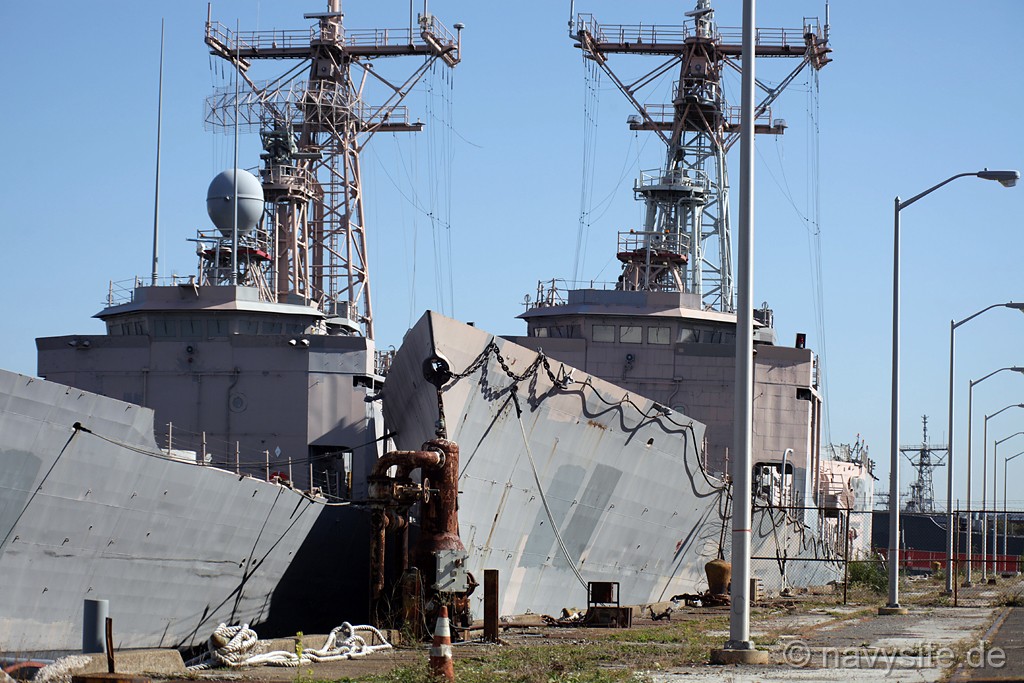 |
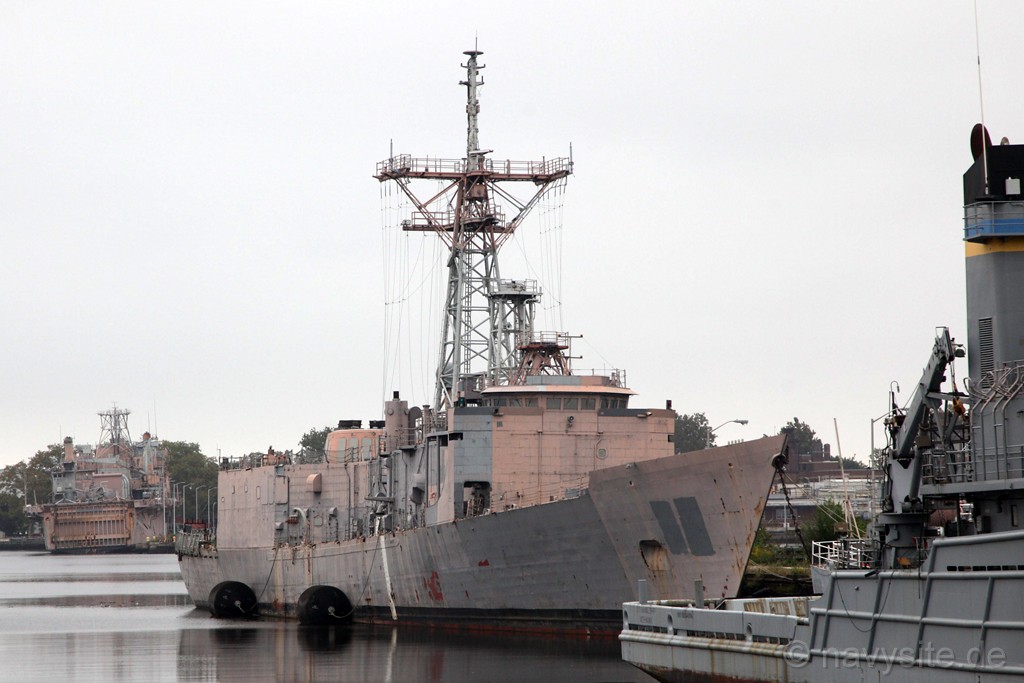
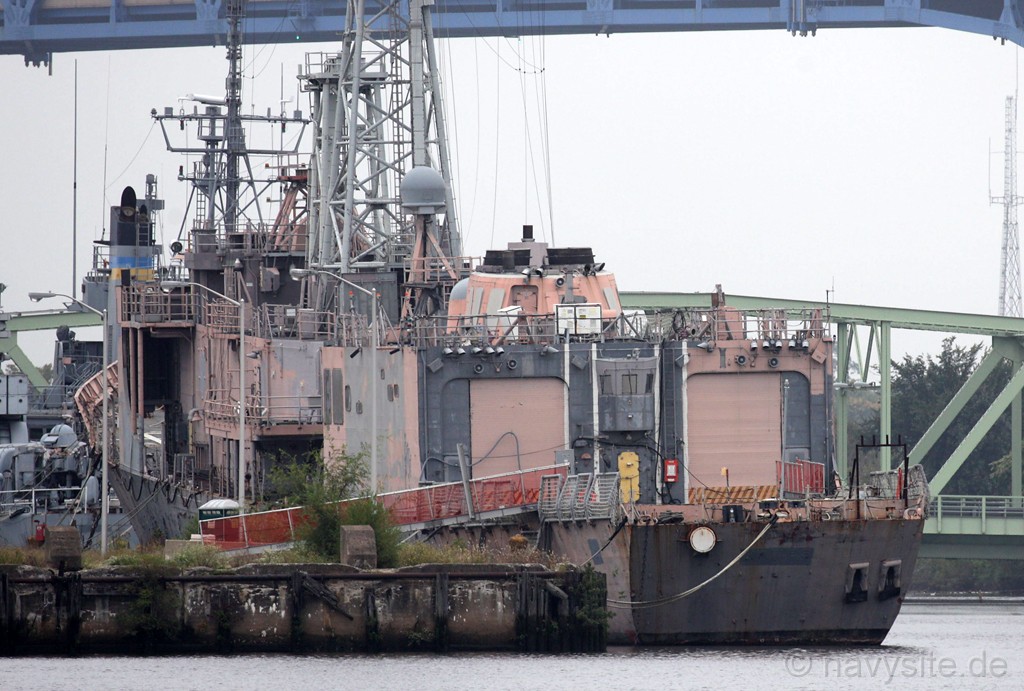
The photos below were taken by Michael Jenning and show the HAWES laid up at the former Philadelphia Naval Shipyard, Penn., on October 7, 2018.
 |  |
back to top Back to Frigates list. Back to ships list. Back to selection page. Back to 1st page.