Search the Site with 
General Characteristics Crew List Memorabilia Cruise Books About the Ship's Coat of Arms Patch Gallery USS Ford's CO's About the Name "Ford" History Image Gallery to end of page

USS Ford (FFG 54)

- decommissioned -
- sunk as target -


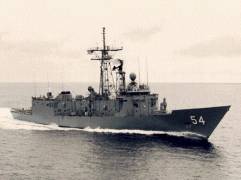
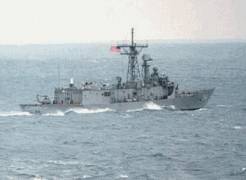
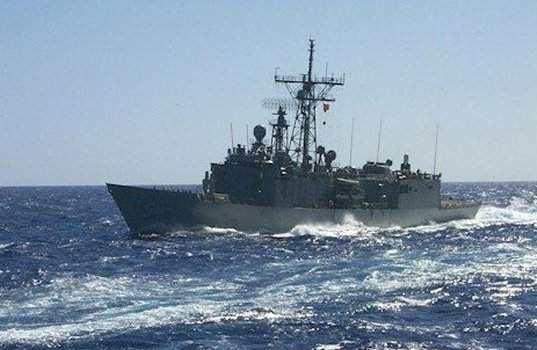
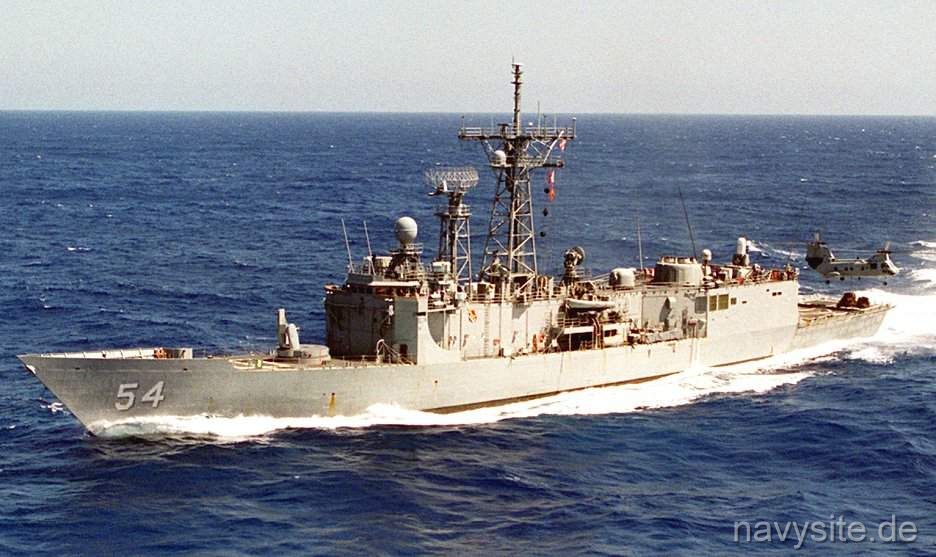
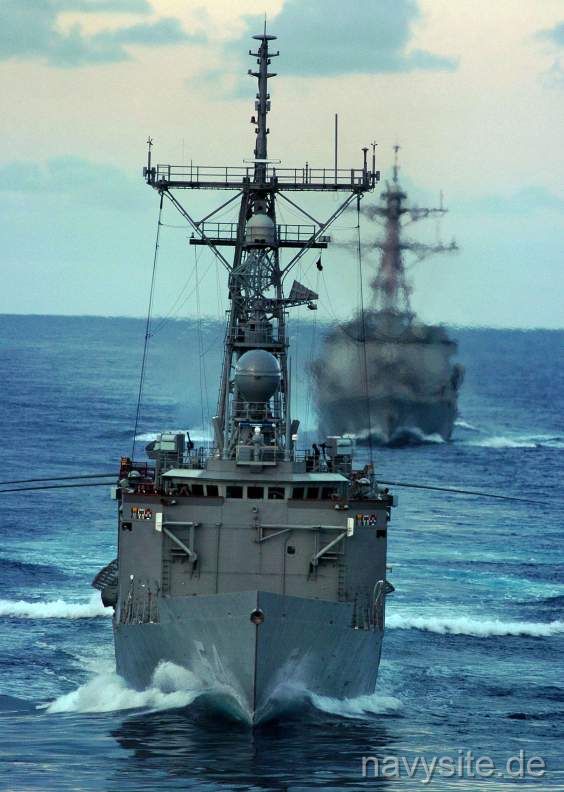
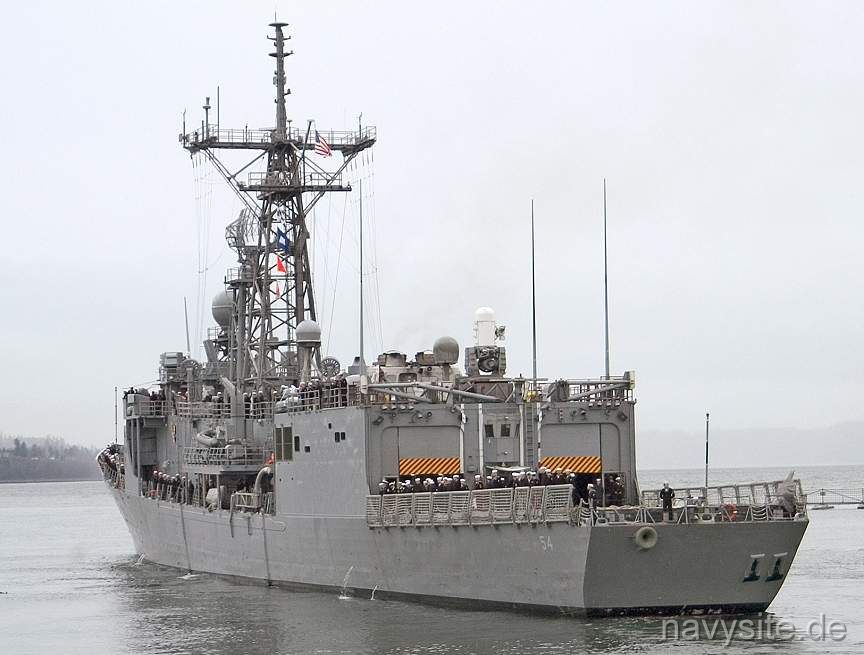
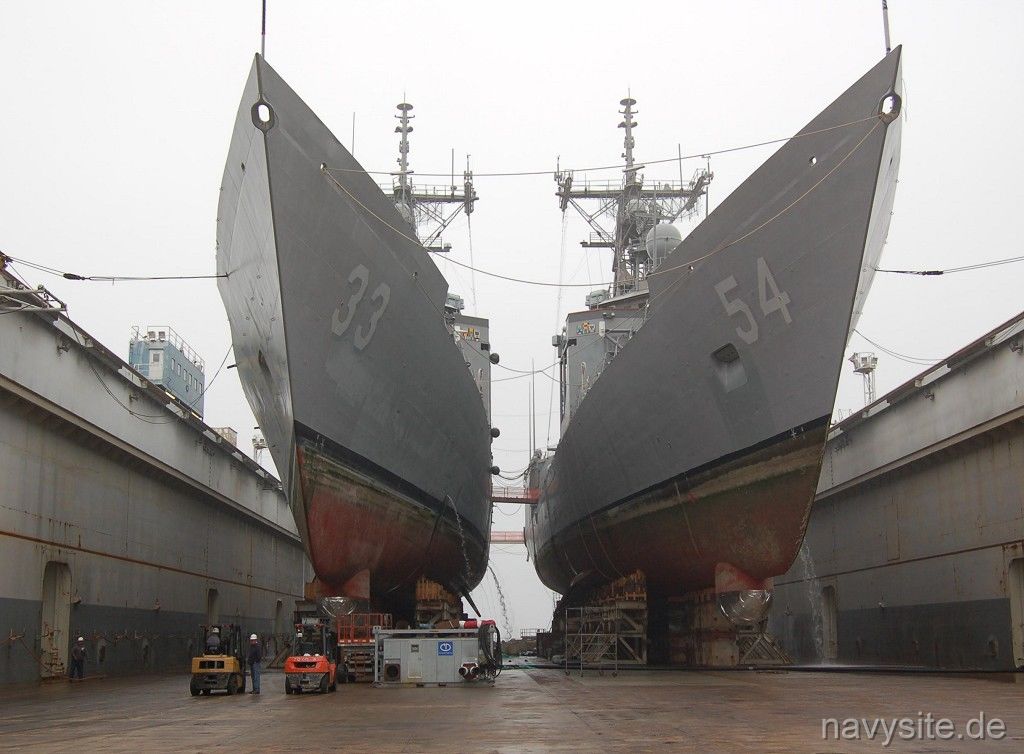
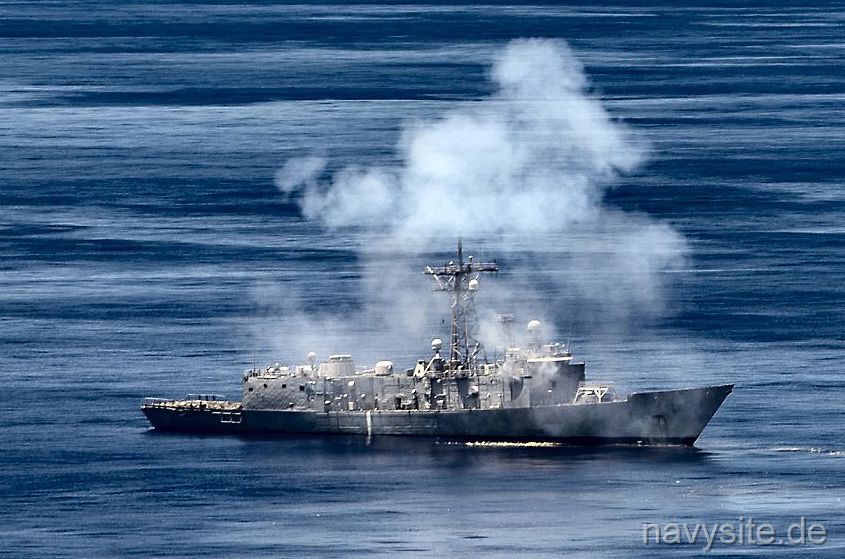
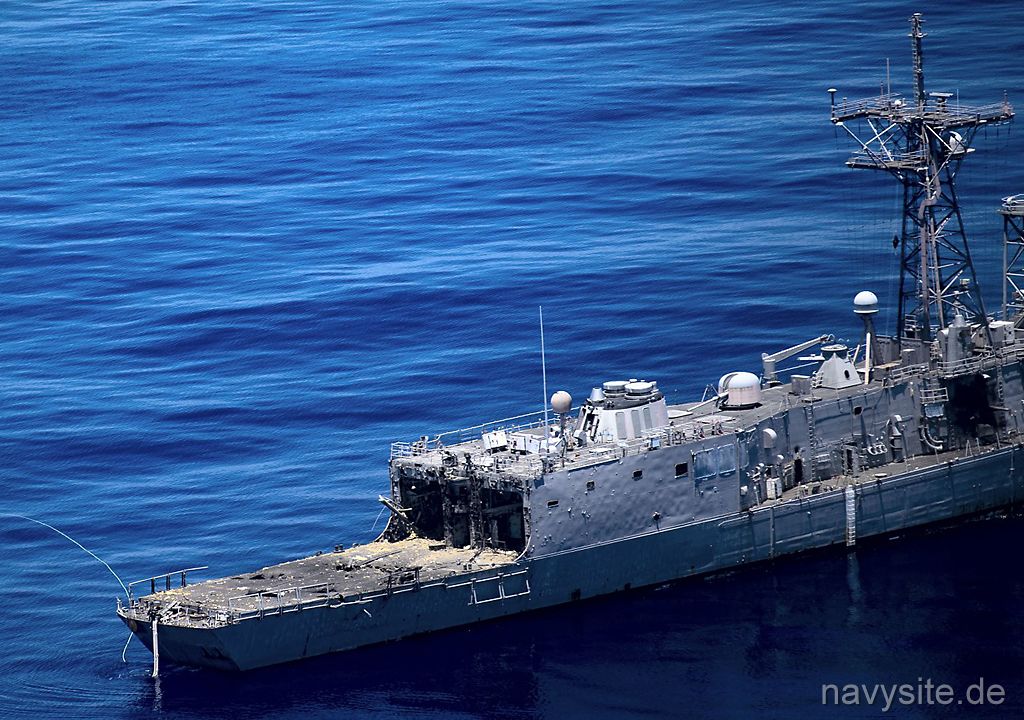
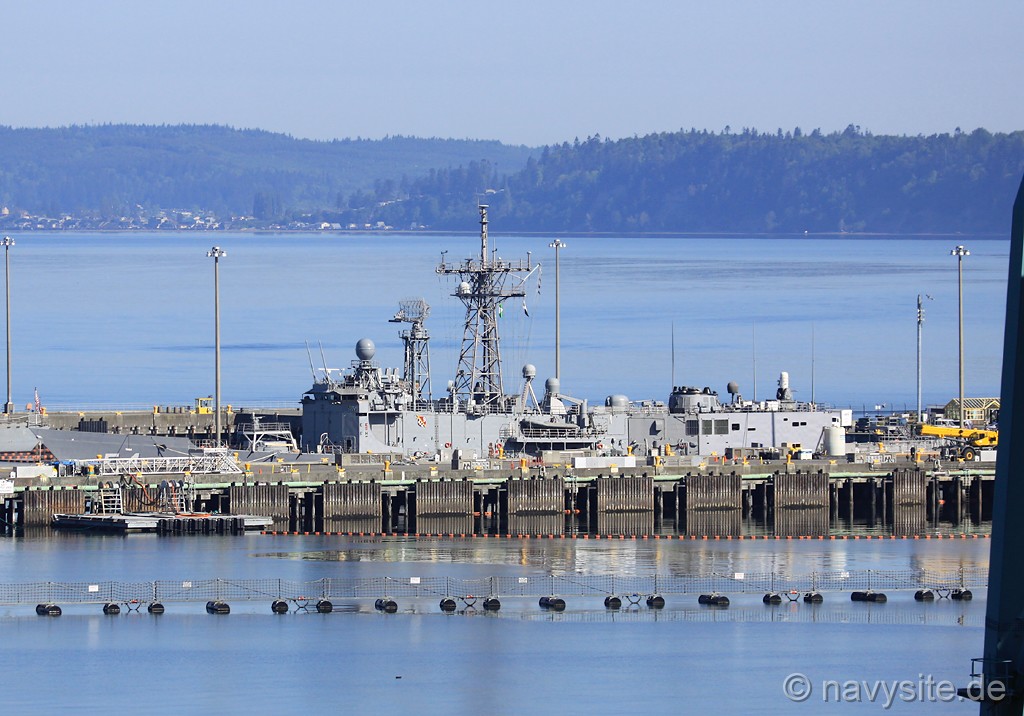
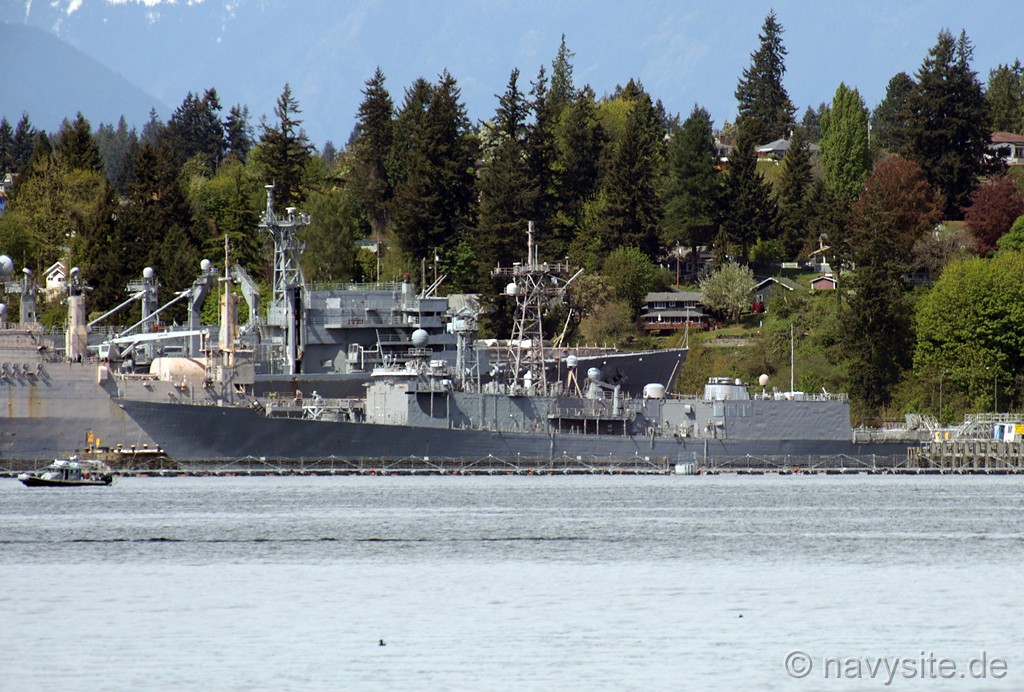
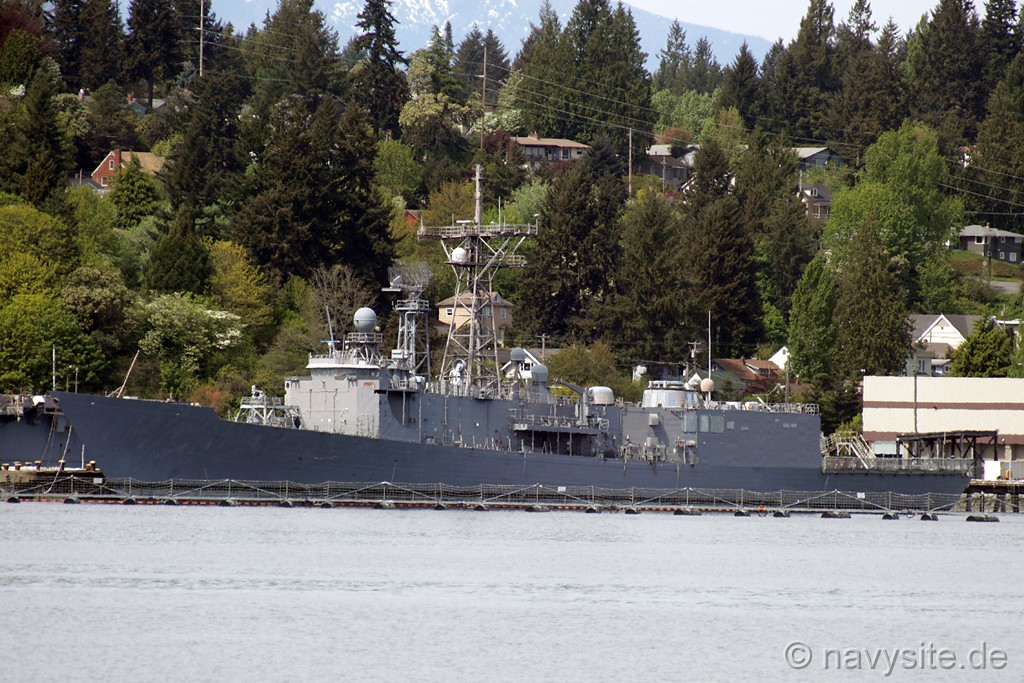
USS FORD was one of the OLIVER HAZARD PERRY - class guided missile frigates and the first ship in the Navy named after Gunner’s Mate Second class Patrick Osborne Ford. The ship was last homeported at Everett, Wash. Decommissioned on October 31, 2013, the FORD was subsequently laid up at the Puget Sound Naval Shipyard, Bremerton, Wash. On October 1, 2019, the ship was sunk as a target approx. 170 nautical miles off Guam during Exercise Pacific Griffin 2019. US and Republic of Singapore forces participated in the SINKEX.

General Characteristics:Keel Laid: July 16, 1983
Christened: June 23, 1984
Commissioned: June 29, 1985
Decommissioned: October 31, 2013
Builder: Todd Pacific Shipyards Co., Los Angeles Division, San Pedro, Ca.
Propulsion system: two General Electric LM 2500 gas turbines, two 350 Horsepower Electric Drive Auxiliary Propulsion Units
Propellers: one
Blades on each Propeller: five
Length: 453 feet (135.9 meters)
Beam: 45 feet (13.5 meters)
Draft: 24,6 feet (7.5 meters)
Displacement: 4,100 tons
Speed: 28+ knots
Aircraft: two SH-60 Sea Hawk (LAMPS 3)
Armament: one Mk 75 76mm/62 caliber rapid firing gun, MK 32 ASW torpedo tubes (two triple mounts), one Phalanx CIWS, one Mk 38 Mod 2 25mm machine gun system
Crew: 17 Officers and 198 Enlisted


Back to topback to top  go to endgo to the end of the page


Back to topback to top  go to endgo to the end of the page

Crew List:

This section contains the names of sailors who served aboard USS FORD. It is no official listing but contains the names of sailors who submitted their information.


back to top  go to the end of the page


Back to topback to top  go to endgo to the end of the page

USS FORD Cruise Books:


Back to topback to top  go to endgo to the end of the page

About the Frigate's Coat of Arms:

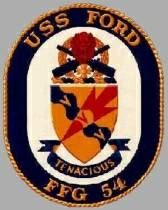
The coat of arms for USS FORD has much symbolism in its design. The predominant colors of dark blue and gold are traditionally associated with the Navy; blue to represent the sea and gold to signify excellence.

The Shield:

The various designs on the shield depict the heroic naval career of Second Class Gunner's Mate Patrick Osborne Ford, who gave his life for fellow sailors and country. The colors yellow and scarlet allude to the flag of South Vietnam. The wavy blue band symbolizes the My Tho River, site of the battle in which Petty Officer Ford gave his life to save several of his shipmates aboard Patrol River Boat 750. The Roman numerals 'V' identify the attachment of this vessel to River Squadron Five. The scarlet spearhead issuing from the left, or sinister, side of the shield is indicative of the ambush attack by Viet Cong forces on Patrol River Boat 750. The scarlet color of the central figure depicts the result of the attack where hostile rockets set the craft ablaze.

The Crest:

The scarlet lion's head is symbolic of the courage and self-sacrifice exhibited by Petty Officer Ford. The crossed naval cannons represent his rating as a Gunner's Mate. The inverted laurel signifies the tragic end of the story. The cross below center denotes the posthumous award of the Navy Cross.


Back to topback to top  go to endgo to the end of the page

USS FORD Patch Gallery:

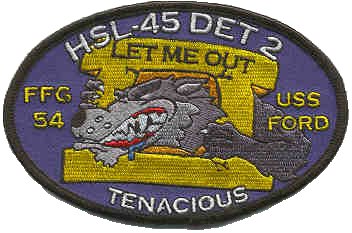
Operation Desert StormHSL Detachment


Back to topback to top  go to endgo to the end of the page

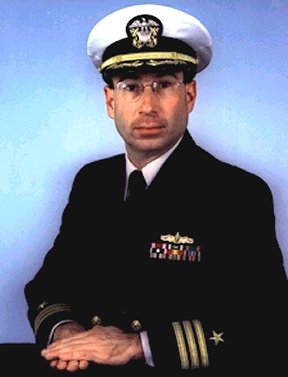
USS FORD's Commanding Officers:


PeriodName
June 29, 1985 - May 23, 1987Commander J. F. Eckler, USN
May 23, 1987 - May 13, 1989Commander J. D. Price, USN
May 13, 1989 - June 15, 1991Commander W. W. Spotts, USN
June 15, 1991 - December 30, 1992Commander J. L. Johnson, USN
December 30, 1992 - September 23, 1994Commander J. R. Eckelberry, USN
September 23, 1994 - July 1, 1996Commander K. R. Trass, USN
July 1, 1996 - February 4, 1998Commander S. W. Keith, USN
February 4, 1998 - August 13, 1999Commander G. A. McCaffrey, USN
August 13, 1999 - April 27, 2001Commander T. F. Nedervold, USN
April 27, 2001 - January 24, 2003Commander David Matawitz, USN
January 24, 2003 - November 9, 2004Commander D. A. Schnell, USN
November 9, 2004 - July 20, 2006Commander T. B. Spratto, USN
July 20, 2006 - January 25, 2008Commander M. J. Taylor, USN
January 25, 2008 - August 27, 2009Commander J. D. Wilshusen, USN
August 27, 2009 - April 4, 2011Commander C. H. Luby, USN
April 4, 2011 - October 2, 2012Commander D. M. Foss, Jr., USN
October 2, 2012 - October 31, 2013Commander J. T. Schuler, USN


Back to topback to top  go to endgo to the end of the page


Back to topback to top  go to endgo to the end of the page

About the Frigate's Name, about Gunner's Mate Second class Patrick Osborne Ford:

Patrick Osborne Ford was born in San Francisco, California, on 2 May 1942. At the age of 15, he moved to Phoenix, Arizona, where he attended Camelback and North High School.

Shortly after graduation, Ford enlisted in the Navy. He completed basic training at the Naval Training Center, San Diego, California, and received orders to report to the Naval Station, Adak, Alaska. He reported aboard the destroyer USS JAMES E. KYES (DD 787) where he served as a Gunner's Mate until the end of his enlistment in 1963.

Petty Officer Ford reenlisted in 1965 and served at the Naval Station, Long Beach, California. In 1966, he was transferred to the Naval Support Activity, Danang, Republic of Vietnam, where he was ordered to report aboard the USS GEORGE K. MacKENZIE (DD 836). Following completion of his tour aboard MACKENZIE, Ford was subsequently transferred to the USS HENDERSON (DD 785) where he remained until the end of his second enlistment in 1967.

Later that year Ford reenlisted for the second time at the Naval Receiving Station, San Francisco, California. He was ordered to the Naval Amphibious Base, Coronado, California for River Patrol Craft Training. Following completion of training in 1968, Petty Officer Ford was directed to report to the Naval Support Activity, Saigon, Republic of Vietnam. He was assigned to Task Force 116, River Squadron 5, in 1968.

For the next five months, he served as a patrol river boat sailor, monitoring the traffic of the many rivers and coastal waterways of the area. On 21 June 1968, Petty Officer Ford was serving as the after machine-gunner aboard Patrol River Boat 750 as part of a two-boat patrol operating in the upper My Tho River near the town of Cai Be. The boats were maneuvering down the river when they spotted a sampan fleeing into a nearby canal. The two patrol boats gave chase and captured the sampan one hundred meters further up the canal. As the patrol boat returned to the river with the captured sampan in tow, it was ambushed by a Viet Cong patrol that unleashed an overwhelming barrage of heavy machine-gun fire and rockets.

Two explosive B-40 rockets struck Ford's boat, immediately killing the patrol leader and coxswain. Within seconds, the boat was ablaze and out of control, heading directly for the Viet Cong positions. Even as the boat was hit by four additional rockets, and after suffering serious injuries, Ford tenaciously maintained a steady volume of return fire from his aft machine-gunner's station. In the face of enemy gunfire and with his clothing on fire, Ford assisted three seriously wounded shipmates into the water. Only after ensuring that all the surviving crew had left the boat did Ford make his way into the water. He was the last man alive to leave what remained of Patrol River Boat 750.

Soon after Petty Officer Ford entered the water, he was killed by a burst of enemy machine-gun fire. However, as a result of his fearless devotion to duty, he saved the lives of two of his shipmates. For his "extraordinary heroism" and in keeping with the highest traditions of the United States Navy, Petty Officer Ford was posthumously awarded the Navy Cross.


Back to topback to top  go to endgo to the end of the page

USS FORD History:

USS FORD was the 44th OLIVER HAZARD PERRY-class guided-missile frigate. The keel was laid on July 16, 1982, at Todd Pacific Shipyards Corporation, Seattle Division, in Seattle, Washington. The ship was launched on June 23, 1984, sponsored by Jonda McFarlane, and was commissioned as USS FORD on June 29, 1985, at Naval Station Long Beach, California, with Cmdr. Joseph F. Eckler as the first commanding officer.

The ship's first months were dominated by the classic new-construction proving sequence: an engineering light-off examination on July 23-24, 1985; shakedown refresher training from September 3-20; a weapon system accuracy trial from September 23-October 2; and combat system ship qualification tests from October 15-November 15. The year closed with focused weapons and contract-validation milestones, including Harpoon certification from December 2-6 and final contract trials from December 16-20, 1985. From January 13-May 9, 1986, USS FORD entered a post-shakedown availability at Todd Pacific Shipyard's Los Angeles Division in San Pedro, punctuated by a fast cruise on April 25 and sea trials on April 29-30, then formal delivery back to the Navy on May 9. A dependent's cruise on May 10 was followed by a dense progression of team training and assist visits - antisubmarine warfare escort team work beginning May 27, engineering mobile training through June and early July, and additional readiness events that culminated in an operational propulsion plant examination on July 29-31 and a training readiness evaluation on August 10-12.

The late summer and fall combined signature-reduction and combat readiness work: deperming at Esquimalt, British Columbia from August 15-21, a Vancouver port visit from August 22-26, refresher training from September 8-26, and a succession of inspections and certifications (including a shipboard explosives safety inspection and a supply material inspection in November). In early December 1986, the ship conducted a port visit to San Francisco, then executed surface action group operations with USS NEW JERSEY (BB 62) from December 10-12 before finishing the year with an additional exercise period.

In 1987, USS FORD maintained a steady rhythm of inport upkeep at Long Beach and repeated underway periods in the Southern California operating areas to sharpen engineering, combat systems, and helicopter operations. In January and February, the ship completed command-level inspections and operated as an opposing-force unit in a readiness exercise, then transitioned into a heavy training schedule that included an antisubmarine warfare team-trainer phase, a Harpoon re-certification, and additional calibrations and certifications. A March deployment to Mazatlan, Mexico - transiting March 9-12, inport March 13-16, and returning March 17-20 - was paired with embarked helicopter and law-enforcement elements, reflecting growing U.S. interest in maritime law enforcement support missions.

The spring and early summer were filled with inspections, maintenance availabilities, midshipman training, equipment installations, and dry-docking for repairs, followed by intensified pre-deployment events in San Diego and repeated ammunition onloads at Seal Beach. That preparation fed directly into a major operational deployment: on August 17, 1987, USS FORD departed Long Beach for a six-month Persian Gulf deployment, rendezvoused with USS THACH (FFG 43), embarked a helicopter detachment, and transited via Pearl Harbor, Subic Bay, Singapore, and a fuel stop at Colombo. After turnover briefings off Fujairah, USS FORD became part of the U.S. effort to protect reflagged and escorted commercial shipping during the "tanker war" phase of the Iran-Iraq conflict, including multiple Earnest Will convoy transits through the Strait of Hormuz and escort work between Kuwait and the Gulf of Oman. The deployment included repeated brief logistics stops at Bahrain and operations concentrated in the northern Persian Gulf. On October 8, 1987, the ship's helicopter was fired upon from an oil platform without damage, and later in November the helicopter sighted and destroyed mines during operations. By late 1987, the ship continued escort and patrol cycles, including another Earnest Will transit in December and operations through the end of the year.

USS FORD began 1988 underway in the northern Persian Gulf escorting U.S. mobile sea bases, then transitioned out of the Gulf in early January after relief and a brief stop at Bahrain. The return to Long Beach included additional merchant escort tasks and a sequence of liberty and logistics calls that included Phuket, Hong Kong, and a brief Pearl Harbor stop to embark "tiger" guests for the final leg, arriving Long Beach on February 17, 1988. After post-deployment leave and upkeep, the ship moved through inspections and training, including an aviation assist visit upgraded on the spot because of material condition and performance, a restricted availability from March 22-April 8, and participation in a Middle East Force exercise.

The year also featured a strong 3M inspection result, followed by an operational propulsion plant examination that recorded unsatisfactory outcomes, shaping subsequent engineering focus. Beginning August 15, 1988, USS FORD entered a selected restricted availability with a civilian contractor for roughly two and a half months, overhauling multiple major systems and undergoing a command inspection that recorded numerous "outstanding" grades. Interim refresher training from November 7-18 - tailored to likely Middle East Force missions - emphasized air defense, antisubmarine and antisurface warfare, damage control, boarding skills, and command-and-control. A combat systems readiness test found no safety or major discrepancies, and a combat systems assessment on December 12 produced high scores across warfare areas. Immediately afterward, the ship executed another Middle East Force exercise that included live missile firings, one successful and one affected by a missile-round failure, before closing 1988 with additional mobile team training.

In 1989, a planned Persian Gulf deployment was delayed by regional conditions and scheduling changes until May 9, 1989. During the delay, USS FORD conducted helicopter operations alongside a Coast Guard law-enforcement detachment and participated in exercises and drug-interdiction operations, followed by a port call to Mazatlan. April included a training availability and an unannounced accounting audit, then a dependent's cruise and a Navy League cruise. After deploying in May with an embarked helicopter detachment, the ship made port calls that included Hawaii and Subic Bay, completed an enroute Middle East Force exercise, conducted a crossing-the-line ceremony, and continued via Singapore and Sri Lanka before transiting the Strait of Hormuz into Persian Gulf operations. From June through September 1989, USS FORD operated in the Gulf before turning over to USS LEAHY (CG 16). The deployment's outchop transit included port visits to Cochin, Phuket, Singapore, Hong Kong, Subic Bay, and Pearl Harbor, and the ship returned to Long Beach on November 9, 1989. The year ended with deperming preparations and additional inspections, then holiday leave and upkeep.

USS FORD opened 1990 in post-deployment leave and upkeep, but the year quickly became an intensive readiness sprint: dozens of examinations, inspections, certifications, and assist visits were completed in under a year, and the ship served as a material-readiness school ship at points during the year. The ship also supported midshipman training and conducted well-attended dependent and Navy League cruises. Although originally scheduled to deploy in early 1991, the Iraqi invasion of Kuwait in August 1990 and the ensuing coalition buildup drove an earlier deployment: on November 13, 1990, USS FORD deployed two months ahead of plan in support of the broader Desert Shield posture, with a helicopter detachment embarked. The westbound transit included Pearl Harbor on November 21-22, Subic Bay from December 8-12, and Pattaya Beach from December 17-21, with Christmas spent at sea enroute to Diego Garcia.

In 1991, USS FORD operated as the only surface combatant escort and "shotgun" for USS MISSOURI (BB 63) and USS SACRAMENTO (AOE 1) while transiting across the Pacific and Indian Oceans toward the Persian Gulf as the coalition prepared for combat operations. Enroute events included a Middle East Force training exercise, a visit to Port Louis, Mauritius - used for community engagement and diplomatic outreach - and a technical exchange visit to Bombay, India, supporting a gas-turbine foreign military sales program, including an at-sea demonstration for senior Indian Navy representatives. With little notice after departing India, USS FORD was diverted into Operation Desert Storm tasking in the Persian Gulf and took on air-defense coordination responsibilities for a key logistics holding area before serving as a screen ship for carrier operations.

During the peak air campaign, USS FORD executed sustained plane-guard and "shotgun" duties for USS THEODORE ROOSEVELT (CVN 71), USS MIDWAY (CV 41), and USS RANGER (CV 61) across a prolonged stretch of continuous flight operations, while also conducting large numbers of ship interdictions in heavily trafficked Gulf sea lanes and supporting extensive helicopter operations without reported safety incidents.

After the cessation of hostilities, USS FORD remained aligned with USS RANGER's battle group, then transited out of the Persian Gulf beginning March 20, 1991, departing the region on March 24 in company with USS SACRAMENTO. The return included liberty and upkeep stops at Pattaya Beach and Subic Bay and a Pearl Harbor stop to embark tiger-cruise guests. Back in U.S. waters, the ship re-entered the inter-deployment readiness cycle: an all-comers at-sea training period beginning June 24, 1991; a 3M assist visit from July 8-12; an intermediate maintenance availability from July 15-August 4; and a two-week training availability in San Diego beginning August 10. The fall was split between underway periods and inspections, and the ship executed a large dependent and Navy League cruise on November 1, 1991. December included a short San Francisco visit from December 3-5, a return to Long Beach on December 7, weapons offload at Seal Beach on December 13-14 in preparation for a yard period, and a holiday leave and upkeep period through the end of the year.

In 1992, USS FORD entered a selected restricted availability at Southwest Marine in San Pedro, during which the ship received the Golden Anchor Award on February 14, 1992. The yard period intentionally paired repairs with training to keep teams proficient, and the ship passed a light-off examination on June 19, followed by sea trials June 25-26. A weapons onload at Seal Beach on June 29 preceded an aviation readiness examination from June 30-July 1 and successive training assists in July focused on preparing the ship for law-enforcement-support operations.

On August 4, 1992, USS FORD departed Long Beach for nearly three months of counter-narcotics and law enforcement operations off Central America and in the Caribbean, serving as a detection, tracking, and boarding platform. The deployment's logistics pattern relied heavily on Rodman, Panama, with multiple stops, and also included a fuel stop at Puerto Quetzal on August 9 and a three-day diplomatic visit to Panama City from August 26-29. After transiting the Panama Canal on September 14 to shift between operating areas, USS FORD conducted a port visit to St. Kitts-Nevis from September 18-21 that included official receptions during the nation's independence celebrations, then later visited Puntarenas, Costa Rica from October 3-5 and held another diplomatic reception with U.S. and local officials. A crossing-the-line ceremony took place on October 9, followed by an underway replenishment with USS WICHITA (AOR 1) on October 16 and a Cabo San Lucas port visit from October 19-21. USS FORD returned to Long Beach on October 25, 1992, then moved through post-deployment standdown into a comprehensive command assessment readiness training period beginning November 16 and a tailored ship's training availability from November 30-December 18. An intermediate maintenance availability began December 18, 1992, and on December 30, Commander John R. Eckelberry relieved Commander J. Lee Johnson.

In 1993, the ship's early-year focus was completing the inspection cycle, highlighted by passing the operational propulsion plant examination on March 17, 1993, and completing the final preparation for a return to the Arabian Gulf. USS FORD deployed on April 7, 1993, with an embarked helicopter detachment and a transit route that included Pearl Harbor, Guam, Singapore, Penang, and a fuel stop at Colombo. By late May, the ship entered the Arabian Gulf and completed turnover with USS HORNE (CG 30) on May 24, then spent roughly three months enforcing post-Gulf War United Nations restrictions through maritime interception and related duties, resupplying frequently in Bahrain and making additional port visits that included Kuwait, Abu Dhabi, Dubai, and Jubail. During this period, USS FORD also executed multinational exercises with regional partners and operated alongside U.S. units including USS HALSEY (CG 23) and USS O'BRIEN (DD 975), with training focused on damage control, tactical maneuvering, and communications interoperability.

In early August, the ship supported carrier plane-guard operations with the USS ABRAHAM LINCOLN (CVN 72) battle group, then departed the Gulf by mid-August. The return transit included a crossing-the-line ceremony on August 24, a stop at Diego Garcia on August 25, and liberty calls at Surabaya, Darwin, Port Moresby, and Kwajalein, followed by Pearl Harbor where tiger-cruise guests embarked. USS FORD arrived back in Long Beach on October 7, 1993, then shifted quickly into post-deployment logistics and experimentation: on November 9 she offloaded deployment stocks at Seal Beach, conducted additional underway activity that included a Chief of Naval Operations experiment and an engineering readiness assessment, and made an underway port visit to Everett on December 2 - an early preview of the ship's future Pacific Northwest basing - before returning to Long Beach on December 14 to begin selected restricted availability work and holiday standdown.

In 1994, USS FORD spent the first half of the year in a major selected restricted availability at Long Beach Naval Shipyard, concentrating on combat system modernization and shipwide refurbishment. Key upgrades included the SQR-19 tactical towed array sonar, Victor Mod 5 improvements to SPS-49 and the AN/SLQ-32 suite, and a Mod 6 upgrade to the Mk 92 fire control system, alongside extensive engineering and habitability work. The ship passed a light-off examination on time by late June - an outcome emphasized as notable within the Pacific surface force at that moment - then returned to sea in mid-August for weapons onload at Seal Beach and post-yard sea trials.

A major organizational shift followed: with Naval Station Long Beach heading toward closure under base realignment decisions, USS FORD departed Long Beach on August 26, 1994, executed a liberty stop at Treasure Island in San Francisco, and arrived at Naval Station Everett on September 1 as one of the first ships to relocate there. The fall became a fast-paced re-certification period: the ship began CART-level training in September, then on September 23 Commander Kenneth R. Trass assumed command. Two days later, USS FORD sailed for a torpedo exercise in Puget Sound and subsequently completed a three-day Vancouver port visit. On October 25, the ship deployed south to San Diego for combat systems qualification and testing, using the period to prepare for a logistics management assessment with significant support from afloat training teams. After returning to Everett on November 17, USS FORD completed the logistics management assessment from November 27-December 2 and was recognized for logistics and maintenance excellence, then remained inport through the holiday leave period beginning December 16.

In 1995, USS FORD began with an availability period, then shifted into pre-inspection preparations for a Board of Inspection and Survey: pre-inspection work began January 16, 1995, followed by the formal inspection from January 23-27, after which the ship proceeded into a shipboard explosive safety inspection on February 6-10. From February 21-March 10, the ship executed the first tailored ship's training phase, then transited south for the next training level beginning March 27, 1995, which included major live-fire events off San Clemente Island and produced a direct missile engagement result.

After returning to Everett and briefly standing down, the ship returned south to prepare for an operational propulsion plant examination and achieved a favorable outcome with the propulsion examination board onboard for only 48 hours. June combined community engagement and final deployment certification: USS FORD served as a featured "visit ship" during Everett's Salty Sea Days, executed a family day cruise on June 10, and completed final evaluation events with U.S. and Canadian support. Late summer was devoted to cruise missile qualification and combat systems readiness reviews, then battle group workups began August 21, 1995, including embarked helicopter operations, missile and gunnery success during exercises, and repeated practice boardings in preparation for anticipated maritime interception duties. After an Indian Island weapons onload, a pre-overseas movement leave period began October 20, and USS FORD deployed on November 28, 1995, stopping briefly in San Diego to embark her helicopter detachment before transiting the Pacific with the NIMITZ (CVN 68) battle group and conducting antisubmarine warfare exercises enroute. USS FORD spent December 21-25, 1995, in Hong Kong, then escorted USS PORTSMOUTH (SSN 707) toward Singapore, ending the year in Singapore.

In 1996, USS FORD transited from Singapore into the Arabian Gulf as part of a six-month deployment and was employed primarily as the battle group's maritime interception operations platform, operating largely in the North Arabian Gulf. The ship recorded multiple interceptions, boardings, and diversions of vessels carrying illicit cargo, and a collision with a dhow during boarding preparations in February forced a Bahrain repair stop before USS FORD resumed tasking. In March 1996, rising tensions between China and Taiwan - driven by Chinese missile tests near Taiwan during a sensitive political period - prompted the redeployment of U.S. naval forces to waters southeast of Taiwan, and USS FORD operated there as part of the visible U.S. posture intended to discourage escalation before resuming the deployment's planned flow.

Liberty calls followed at Pattaya Beach and Cebu, then USS FORD returned via Pearl Harbor and arrived Everett on May 17, 1996, earlier than originally scheduled. A post-deployment standdown preceded a change of command on July 1, 1996, when Commander Stephen W. Keith assumed command. The remainder of 1996 was dominated by overhaul and the start of the next readiness cycle: major diesel generator overhauls, work on gas turbine intakes, and application of radar-signature reduction coatings were followed by sea trials and pierside training events. The ship then moved into tailored ship's training preparations and achieved strong logistics assessment results in November, earning another supply excellence recognition. A Vancouver port visit from December 7-9, 1996, punctuated late-year underway training, and the ship finished 1996 in Everett for holiday leave.

In 1997, USS FORD pressed through the next phases of tailored ship's training - Total Ship Training Assessment levels II and III - followed by engineering certification on February 11-12 and a final evaluation problem on March 6-7 that assessed the ship as deployment-ready. After a short upkeep window, USS FORD deployed south for comprehensive unit training beginning April 28 and returned Everett on May 23.

A second, longer southern California period began June 20 and combined multiple battle group-level exercises - fleet, joint task force, missile, and amphibious-oriented events - designed to validate integrated operations ahead of deployment. On September 2, 1997, USS FORD deployed for a six-month Persian Gulf deployment. Heavy weather forced route adjustments during the Pacific transit, but the ship still reached Yokosuka on September 21 and then Hong Kong on September 28. As tensions sharpened in the Persian Gulf over Iraq's refusal to cooperate with United Nations inspection requirements, USS FORD bypassed a planned Singapore stop to arrive earlier in theater. The ship's principal Gulf mission became sanctions enforcement through maritime interception operations, largely in the North Arabian Gulf, punctuated by key logistics and holiday port visits including Jebel Ali from October 22-25, Doha from November 26-30, and Abu Dhabi from December 24-26. USS FORD ended 1997 on station in the Persian Gulf.

In early 1998, USS FORD continued maritime interception operations, then stopped in Bahrain from January 7-9 to prepare for the transit home. Departing the Gulf on January 10, she headed toward Australia and conducted a crossing-the-line ceremony on January 18. The ship arrived Melbourne on January 29 for a five-day visit that also supported planning for a major upcoming drydock period, and on February 4, 1998, Commander George A. McCaffrey relieved Commander Keith. A Sydney port call followed, then an overnight stop at Pearl Harbor where tiger-cruise guests embarked, and USS FORD returned to Everett on March 1, 1998, concluding the deployment.

After post-deployment leave, the ship transited to Vancouver on April 16, offloaded ammunition at Indian Island, and entered an unusually ambitious drydocking selected restricted availability from April 27-June 30, completing the entire package on schedule. The second half of 1998 was dedicated to rebuilding readiness: a destroyer squadron group sail beginning July 14 with USS PAUL F. FOSTER (DD 964) and USS RODNEY M DAVIS (FFG 60), a visit to Esquimalt, and a commander's readiness assessment from July 20-24 evaluated at a higher training level than typical for that stage. The year included propulsion examination board engineering certification on October 22-23, a logistics management assessment from December 7-11, and completion of the final evaluation period on December 17 before entering an availability and holiday standdown on December 18. For overall performance across the training cycle, USS FORD earned the Pacific surface force battle efficiency award for 1998.

In 1999, USS FORD began the year in Everett, then sailed on January 25 to the Nanoose undersea warfare range for exercises and continued to Esquimalt for a three-day port visit. On February 8, she transited south to Port Hueneme for a combat systems readiness review and achieved a notably high "fix to find" ratio, then participated in a Middle East Force exercise alongside USS DAVID R. RAY (DD 971), USS INGRAHAM (FFG 61), and USS STETHEM (DDG 63). Returning Everett on March 18, the ship entered an inport maintenance availability, then executed another short availability in San Diego in early May.

On May 17, USS FORD took on a tow-escort mission for ex-USS BALTIMORE (SSN 704) and ex-USS PHOENIX (SSN 702) during their movement toward Bremerton, transferring escort responsibility to the Coast Guard before proceeding to Bellingham for a Navy League adoption ceremony and a three-day port visit. After returning to Everett and completing a weapon systems accuracy event at Nanoose on June 7, USS FORD underwent a Board of Inspection and Survey inspection from June 22-25 and completed the inspection in less time than scheduled. On June 29 she departed for an Independence Day port call in Kodiak, Alaska, returning July 9. After an Indian Island ordnance onload and operations in the Southern California operating area as part of Pacific Middle East Force training with USS JOHN YOUNG (DD 973) and USS JOHN PAUL JONES (DDG 53), command changed again: on August 13, 1999, Commander Thomas F. Nedervold relieved Commander McCaffrey.

On September 20, 1999, USS FORD departed Naval Station Everett, Washington, for a scheduled deployment as part of Middle East Force (MEF) 99-3. After crossing the Pacific, the ship made a brief refueling stop at Pearl Harbor, Hawaii, on September 26, 1999, then continued westward to Singapore, where it was in port from October 14 to October 18, 1999. USS FORD then anchored off Phuket, Thailand, from October 20 to October 25. Proceeding onward, the frigate entered the Arabian Gulf on November 2, 1999, to conduct Maritime Interception Operations - boardings and surveillance intended to enforce maritime security regimes and protect commercial shipping routes in a region that remained strategically sensitive due to Iraq sanctions enforcement and broader Gulf security concerns. USS FORD called at Manama, Bahrain, from November 4 to November 7, 1999, then visited Jubail, Saudi Arabia, on November 13 for a three-day port call and Doha, Qatar, from November 24 to November 28.

As the deployment continued into winter, USS FORD moored at Mina Zayed Port in Abu Dhabi, United Arab Emirates, on December 11, 1999, for a three-day port visit, then made a port call to Dubai from January 6 to January 11, 2000. Returning to Bahrain, the ship moored at Mina Salman Pier in Manama on January 17, 2000, for a four-day port call, returned again to Manama from January 30 to January 31, and transited the Strait of Hormuz southbound on February 1, 2000, departing the Gulf for the voyage home. USS FORD reached Bunbury, Australia, on February 14, 2000, for a five-day visit, then continued to Devonport, Australia, from February 24 to February 29. Crossing the southwest Pacific, the ship made a brief refueling stop at Noumea, New Caledonia, from March 4 to March 5, followed by a short inport visit to Pearl Harbor from March 11 to March 12. USS FORD returned to Everett on March 20, 2000, completing a six-month deployment spanning the U.S. 5th and 7th Fleet areas of responsibility.

In the months that followed, USS FORD conducted ordnance and maintenance events consistent with post-deployment reset and readiness generation. On May 9, 2000, the ship moored at Naval Magazine Indian Island at Port Hadlock, Washington, for ammunition offload, getting underway the next day. USS FORD then made a short port call at CFB Esquimalt near Victoria, British Columbia, from May 12 to May 15. On May 23, 2000, USS FORD entered Todd Shipyard in Seattle for a three-month Selected Restricted Availability, a maintenance period aimed at repairing and modernizing critical systems to sustain deployment readiness.

The ship conducted sea trials from July 25 to July 26, 2000, and got underway again on September 8. A training availability at Naval Station San Diego followed from September 12 to September 18, after which USS FORD arrived at Naval Base Ventura County, Port Hueneme, California, on September 19 for a six-day visit, returning to Everett on September 29. The ship's late-2000 schedule included underway time for Type Training beginning October 10, an inport period at Esquimalt from October 13 to October 16, underway for Tailored Ship's Training Availability (TSTA) I from November 28 to December 1, and underway for Engineering Underway Demonstration from December 7 to December 8, reflecting a structured progression of certifications and drills used to validate the ship's warfighting and engineering standards.

Command leadership changed as the ship advanced into the early 2000s. On April 27, 2001, Cmdr. David F. Matawitz relieved Cmdr. Thomas F. Nedervold as the 10th commanding officer of USS FORD. In October 2001, USS FORD departed Naval Station Everett for a six-month deployment in support of Operation Enduring Freedom and maritime security operations in the western Pacific and Indian Ocean, reflecting the post-September 11 operational environment in which surface combatants were tasked with presence, escort, surveillance, and interdiction missions across a wide arc from the western Pacific to the North Arabian Sea.

On January 24, 2003, Cmdr. David A. Schnell relieved Cmdr. David F. Matawitz as commanding officer. On June 10, 2003, USS FORD pulled into Portland, Oregon, to participate in the annual Rose Festival, a public-engagement event that also typically supports recruiting and civil-military outreach while ships remain in a near-homeport operating cycle. In April 2004, USS FORD departed homeport for a scheduled deployment with the USS JOHN C. STENNIS (CVN 74) Carrier Strike Group in support of the Global War on Terrorism. On June 16, 2004, USS FORD was underway in the Gulf of Alaska participating in the annual large-scale air exercise Northern Edge as part of the strike group's integrated training program, emphasizing joint command-and-control and high-end readiness in challenging operating areas. USS FORD returned to Everett on November 5, 2004, after more than a five-month underway period in the western Pacific, Sea of Japan, and South China Sea. During the deployment, the ship took part in Northern Edge 2004, Rim of the Pacific (RIMPAC), and Joint Air-Sea Exercise (JASEX), and made port visits including Bunbury, Australia, in October, reflecting both operational tasking and the routine diplomacy-and-rest cycle that accompanies sustained forward operations.

On November 9, 2004, Cmdr. Timothy B. Spratto relieved Cmdr. David A. Schnell as commanding officer during a change-of-command ceremony at Naval Station Everett. USS FORD's next major operational pivot came amid continued U.S. emphasis on counter-illicit trafficking and partner-nation capacity building. On January 6, 2006, USS FORD departed homeport for a scheduled deployment to conduct anti-drug operations in South American waters, operating under the broader framework of U.S. Southern Command maritime interdiction efforts. In the early morning hours of January 20, 2006, the ship rescued two civilian sailors at sea after responding to an incident that occurred on January 19 in the Gulf of Tehuantepec off Mexico. USS FORD then pulled into Puerto Quetzal, Guatemala, on January 21 for a brief port call. After completing a six-month underway period in the Southern Command area of operations, USS FORD returned to Naval Station Everett on July 3, 2006. A command change followed quickly: on July 20, 2006, Cmdr. Michael J. Taylor relieved Cmdr. Timothy B. Spratto as commanding officer. On September 22, 2006, USS FORD commenced a nine-week Selected Restricted Availability while pierside at Naval Station Everett, again reflecting the maintenance-intensive cycle required to keep gas-turbine surface combatants ready for repeated deployments.

On May 4, 2007, USS FORD departed Everett for a scheduled deployment in support of Cooperation Afloat Readiness and Training (CARAT), a recurring series of bilateral and multilateral exercises designed to strengthen interoperability with regional partners through combined maritime operations, gunnery, boarding procedures, and coordinated seamanship evolutions. During this 2007 deployment, the ship supported multiple CARAT phases: it arrived in Sattahip, Thailand, on June 18, 2007, for the Thailand phase, with the Philippine phase recorded as ending on June 8. USS FORD then pulled into Kemaman, Malaysia, on July 2 for a subsequent phase, and arrived in Muara, Brunei, on August 3 for another. On August 17, 2007, USS FORD participated in the week-long Southeast Asia Cooperation Against Terrorism (SEACAT) 2007 exercise, reflecting the region's growing focus on maritime-domain awareness and coordinated responses to terrorism, piracy, and illicit trafficking. USS FORD returned to homeport on September 20, 2007, concluding a four-and-a-half-month underway period.

On January 25, 2008, Cmdr. John D. Wilshusen relieved Cmdr. Michael J. Taylor as commanding officer. USS FORD again deployed into the CARAT framework in 2008, arriving at Puerto Princesa, Philippines, on May 28, 2008, for the first phase of CARAT 2008. On July 20, 2008, USS FORD - together with USS TORTUGA (LSD 46), USS JARRETT (FFG 33), and USNS SAFEGUARD (T-ARS 50) - arrived in Surabaya, Indonesia, to participate in a week-long Naval Engagement Activity between the U.S. and Indonesian navies, part of a broader pattern of maritime engagement intended to support partner capacity, disaster-response coordination, and maritime security cooperation. The closing ceremony of the 14th CARAT exercise was held in Brunei on August 10, 2008, and USS FORD returned to Everett on September 28 after a five-month deployment.

In 2009, USS FORD continued sustained operations focused on maritime security and counter-illicit trafficking across Latin America and the Caribbean. She operated in support of Southern Seas 2009, sailing in the waters surrounding Latin America and the Caribbean as part of a persistent U.S. naval presence aimed at regional partnership and maritime law enforcement support. The ship pulled into Callao Naval Base, Peru, on June 11, 2009, for a scheduled port visit. On August 27, 2009, Cmdr. Cord H. Luby relieved Cmdr. John D. Wilshusen as the 15th commanding officer of USS FORD during a change-of-command ceremony held on board the ship off the coast of Panama City. USS FORD returned to homeport on October 20, 2009, after a six-month deployment in the U.S. 4th Fleet area of responsibility. During this deployment the ship intercepted cocaine valued at $425 million and assisted in a number of search-and-rescue missions off the coasts of Panama, Colombia, and Guatemala, reflecting the dual emphasis of such patrols: direct interdiction outcomes and life-saving response capacity in heavily trafficked sea lanes.

In 2010, USS FORD participated in major multinational naval activities in the Pacific region. On June 9, 2010, the ship pulled into CFB Esquimalt in Victoria, Canada, to participate in an International Fleet Review. On June 24, 2010, USS FORD arrived at Joint Base Pearl Harbor-Hickam to participate in RIMPAC 2010, the large biennial exercise that brings together allied and partner navies for coordinated training across surface, subsurface, air, and amphibious warfare areas.

A new commanding officer took charge in 2011. On April 4, 2011, Cmdr. Donald M. Foss relieved Cmdr. Cord H. Luby during a change-of-command ceremony on board USS FORD at Naval Station Everett. On May 9, 2011, USS FORD departed Everett for a scheduled western Pacific deployment that combined port visits, partnership engagements, and formal exercise events. By June 7, 2011, USS FORD had arrived in Kuantan, Malaysia, to participate in CARAT exercise events. Prior to reaching Malaysia, the ship had visited Hawaii, Guam, and Japan. USS FORD called at White Beach, Okinawa, from June 22 to June 23, 2011, and at Sasebo, Japan, from June 24 to June 28. On July 2, 2011, USS FORD arrived in Vladivostok, Russia, for a three-day port call to celebrate both the city's day and the U.S. Independence Day period, a notable example of port-visit diplomacy in a region where U.S.-Russia relations combined cooperation, competition, and frequent strategic friction. Later in the deployment, USS FORD anchored off Phuket, Thailand, from September 10 to September 15, 2011. On September 23, 2011, the ship completed the at-sea phase of CARAT Bangladesh 2011 in the Bay of Bengal, then pulled into Kochi, India, on October 1 for a four-day port call and anchored off Galle, Sri Lanka, from October 11 to October 14. USS FORD returned to Naval Station Everett on November 17, 2011, completing a six-month deployment.

In 2012, USS FORD was associated with a notable alternative-fuel demonstration connected to Department of the Navy efforts to diversify fuel sources and evaluate operational performance. On March 2, 2012, USS FORD successfully transited from Everett to Naval Base San Diego, California, using 25,000 gallons of a 50/50 algae-derived, hydro-processed algal oil and petroleum F-76 blend in the ship's LM2500 gas turbines. On October 2, 2012, Cmdr. Joseph T. Shuler relieved Cmdr. Donald M. Foss as commanding officer. On October 14, 2012, USS FORD was recorded as participating in a Task Group Exercise with Canadian naval forces off the coast of Vancouver Island through October 22, reinforcing routine U.S.-Canada interoperability in the northeastern Pacific.

In 2013, USS FORD's final operational period and administrative closeout unfolded through local operations, exercise participation, and the steps required for decommissioning. From January 22 to January 25, 2013, USS FORD was underway for local operations. On April 29, 2013, the ship departed homeport to participate in the biennial joint training exercise Trident Fury off the coast of Vancouver Island from May 3 to May 14, an event that emphasizes anti-submarine warfare and integrated maritime operations. USS FORD moored at CFB Esquimalt on April 30, 2013, for a three-day port call and returned to Everett on May 14. The ship later got underway for a plank owner's cruise on July 9, 2013. From July 22 to July 26, 2013, USS FORD was underway for the last time before decommissioning, supporting a Chief of Naval Operations project and offloading ammunition at Naval Magazine Indian Island, Washington - typical end-of-service steps intended to render the ship safe for layup, towing, and eventual disposition.

On August 1, 2013, a change-of-command ceremony for Destroyer Squadron 9 was held on board USS FORD, with Capt. William M. Triplett relieving Capt. Mark A. Johnson, indicating the ship's role as a platform for squadron-level ceremonial and administrative functions as it approached the end of active service. On October 31, 2013, USS FORD was officially decommissioned during a ceremony at Naval Station Everett after more than 28 years of active service, with plans for the ship to be towed to Bremerton, Washington, on November 6 for storage.

After years in inactive status, the former USS FORD entered the final phase of its existence as a target for weapons testing and training. On August 23, 2019, the ex-USS FORD departed Bremerton under tow by USNS SIOUX (T-ATF 171) en route to its final resting place near Guam. During the transit, the ship anchored off Oahu, Hawaii, for a brief stop, then got underway again under tow by USNS GRASP (T-ARS 51) on September 9, 2019. On October 1, 2019, the ex-USS FORD was sunk during a sinking exercise (SINKEX) as part of the bilateral exercise Pacific Griffin 19, approximately 170 nautical miles off the coast of Guam, marking the ship's final contribution to fleet readiness as a realistic target for live-fire training and evaluation.


Back to topback to top  go to endgo to the end of the page


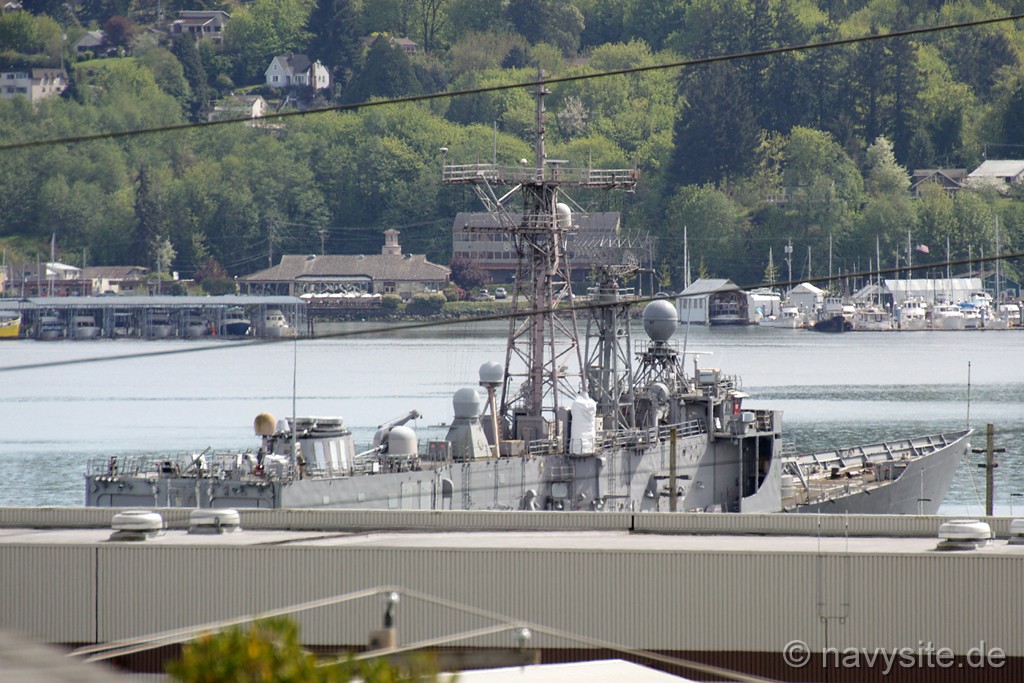
The photos below were taken by me and show the FORD at Naval Station Everett, Wash., on May 13, 2012.
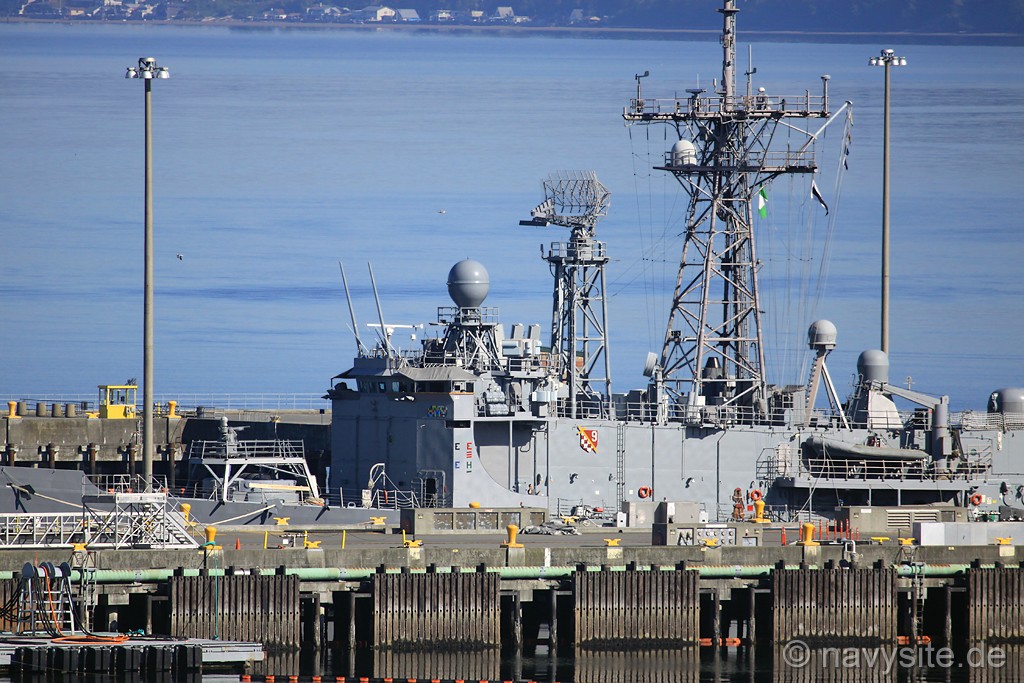


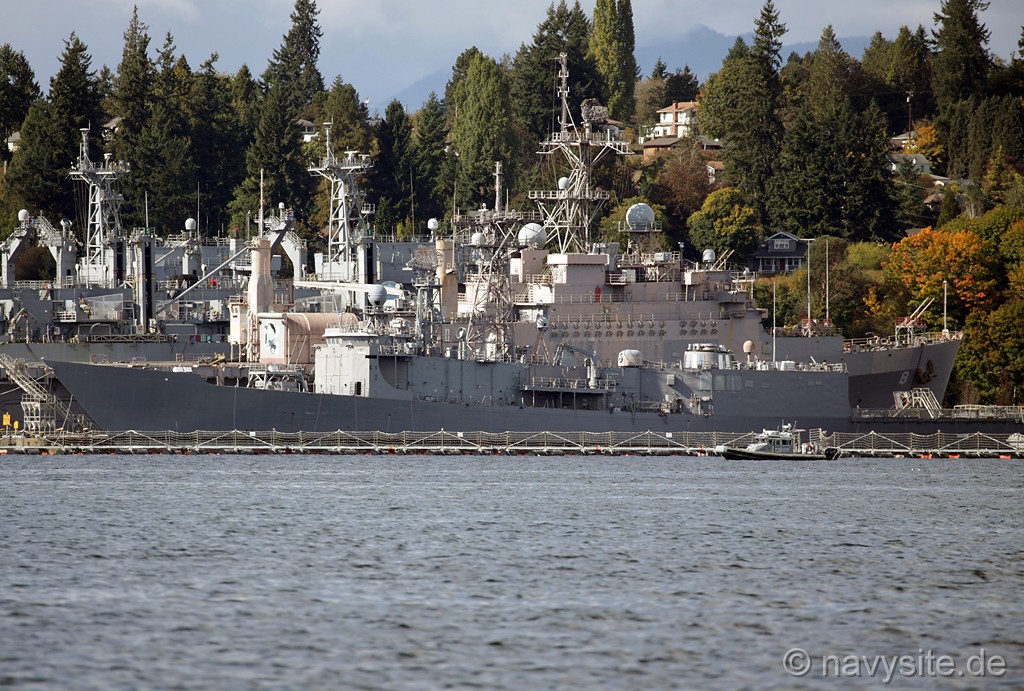
The photos below were taken by Michael Jenning and show the FORD laid up at the Puget Sound Naval Shipyard, Bremerton, Wash., on April 17, 2016.
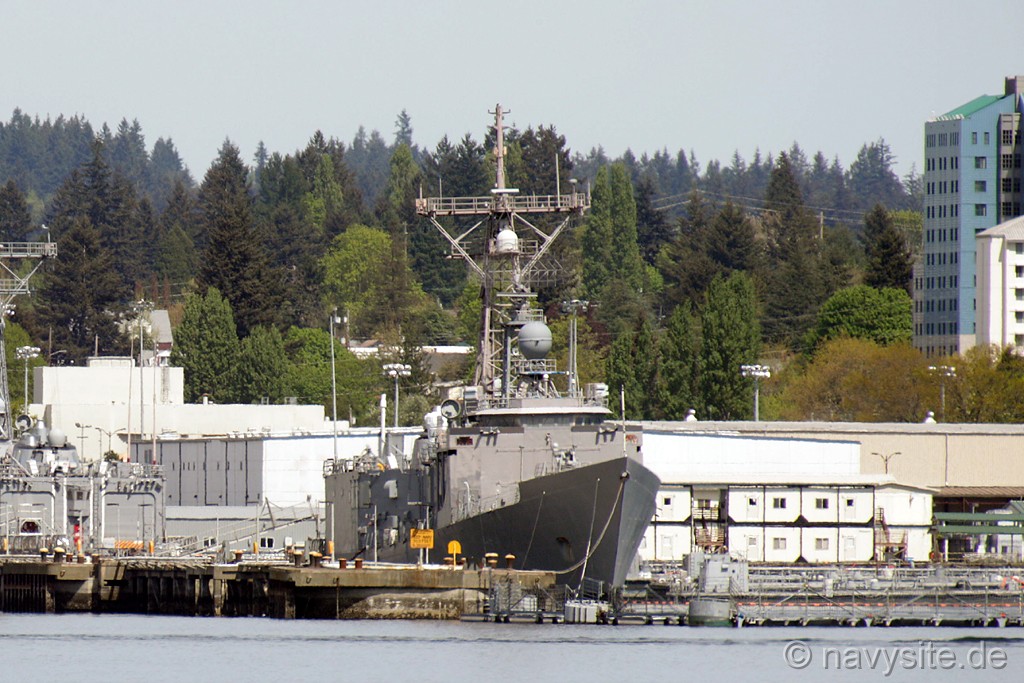


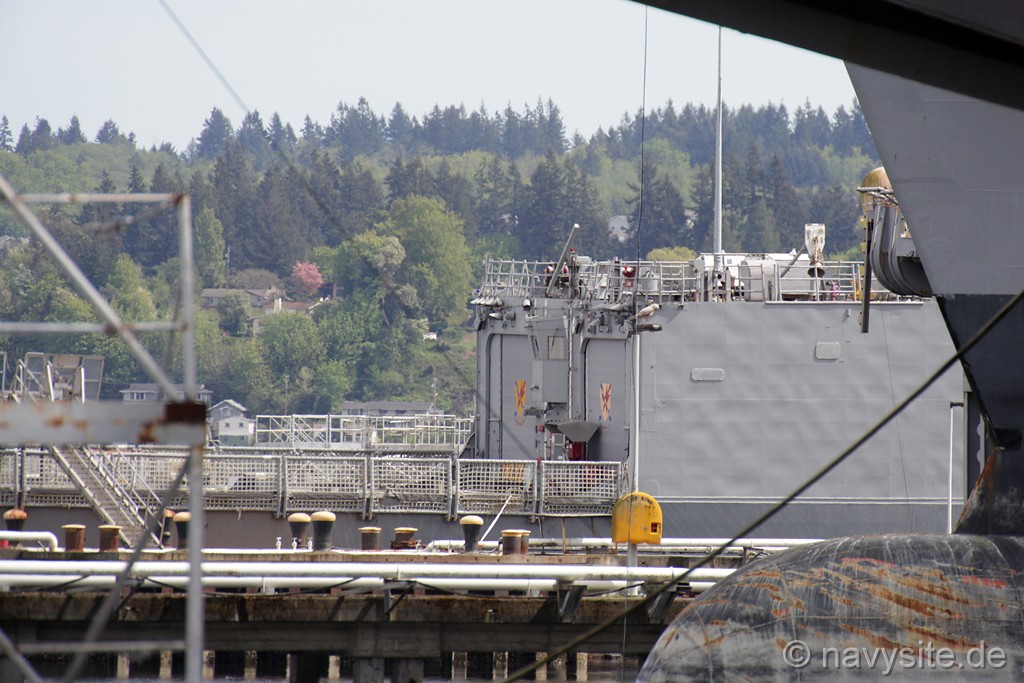
The photos below were taken by Michael Jenning and show the FORD laid up at the Puget Sound Naval Shipyard, Bremerton, Wash., on October 13, 2017.


Back to topback to top


Back to Frigates list. Back to ships list. Back to selection page. Back to 1st page.