Search the Site with 
General Characteristics Crew List Memorabilia Accidents aboard the Ship History Patch Gallery Image Gallery to end of page
USS Guardian (MCM 5)

- decommissioned -


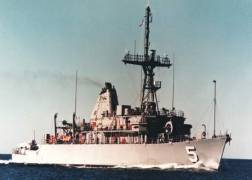
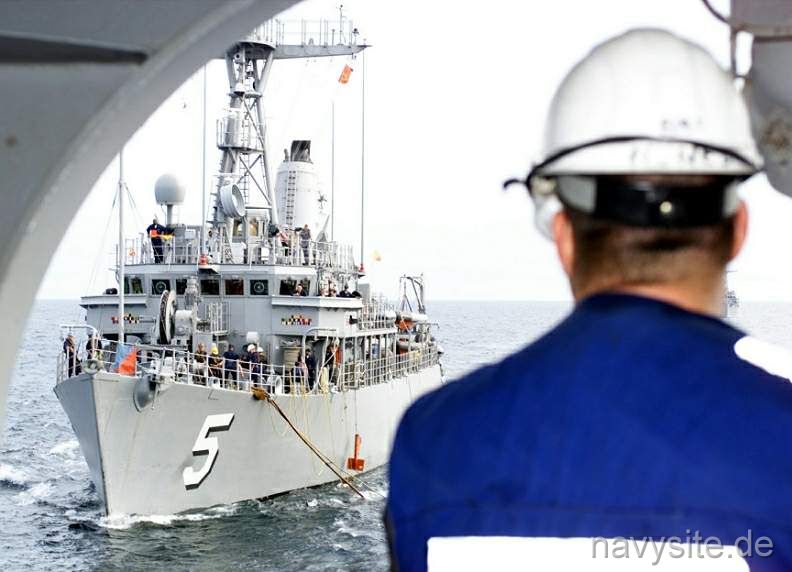
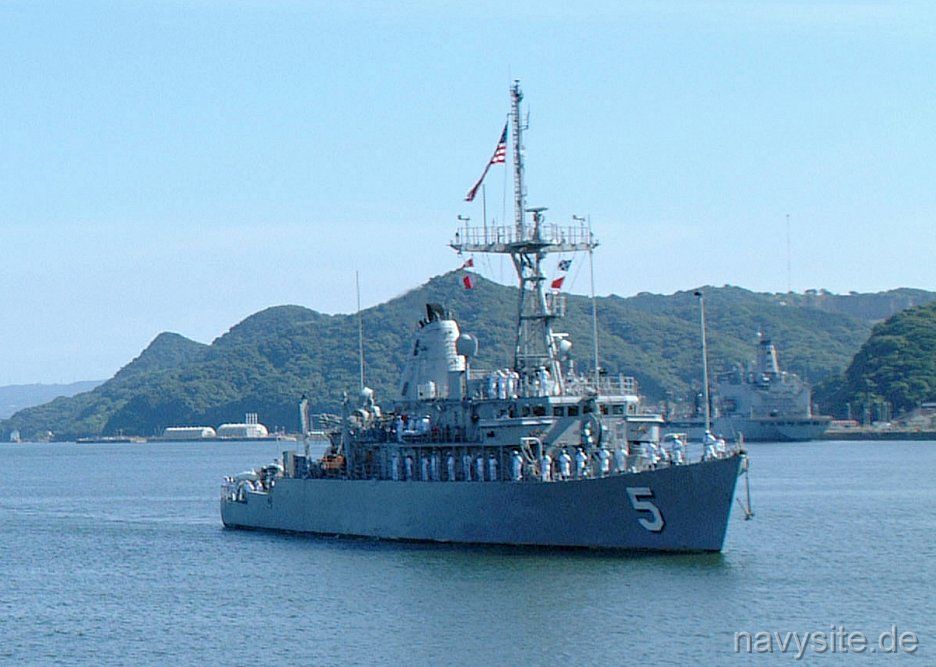
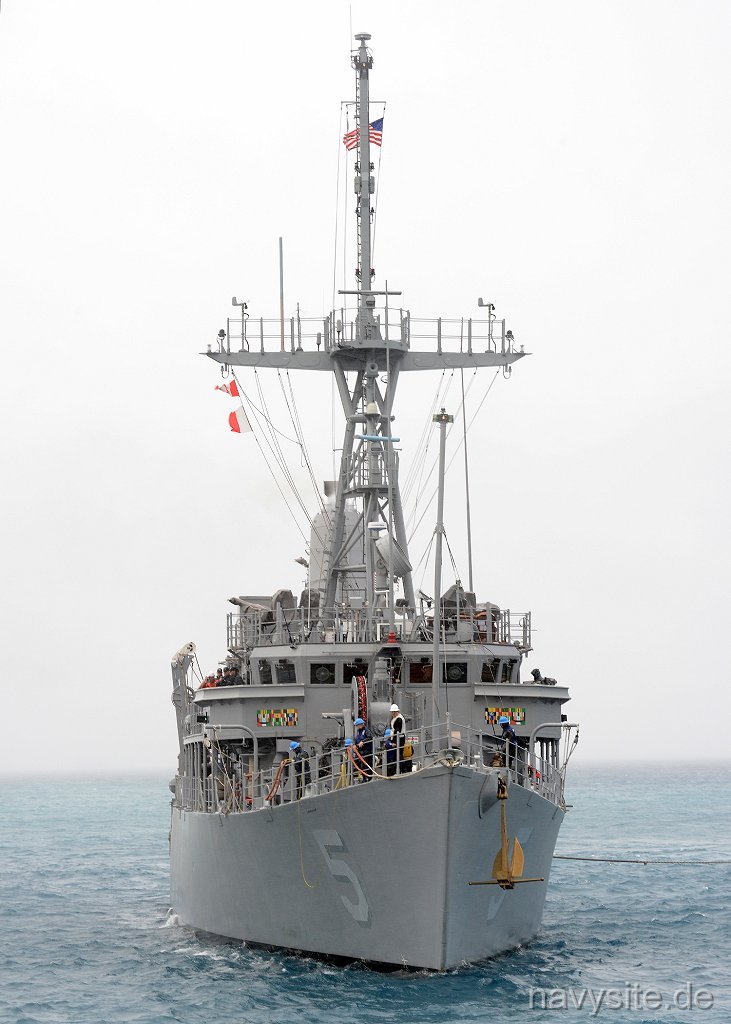
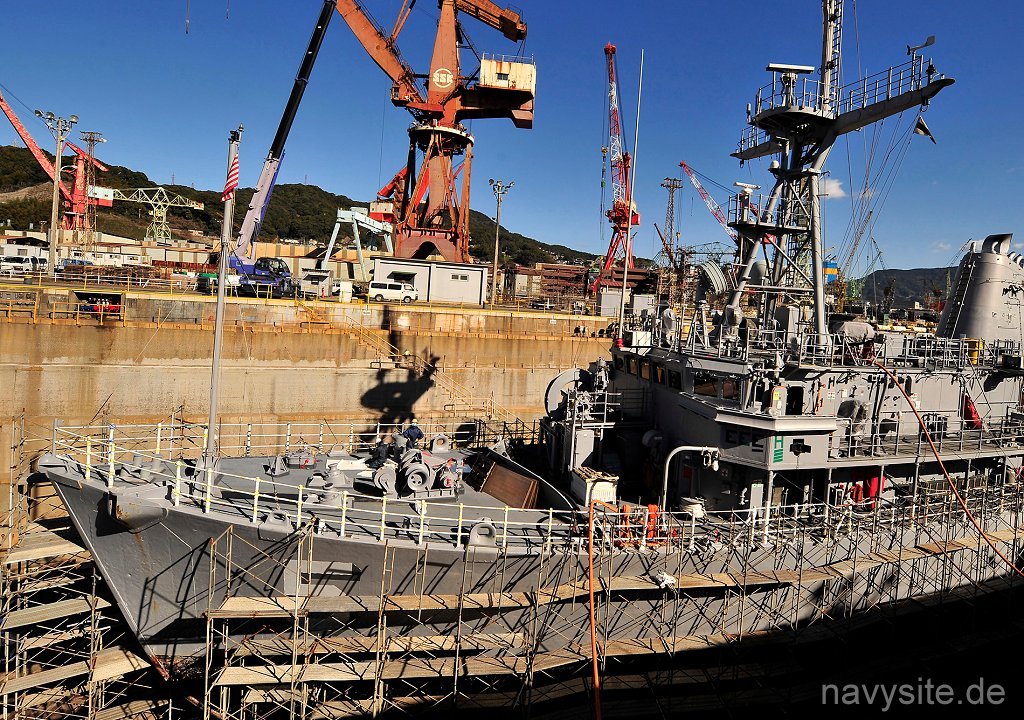
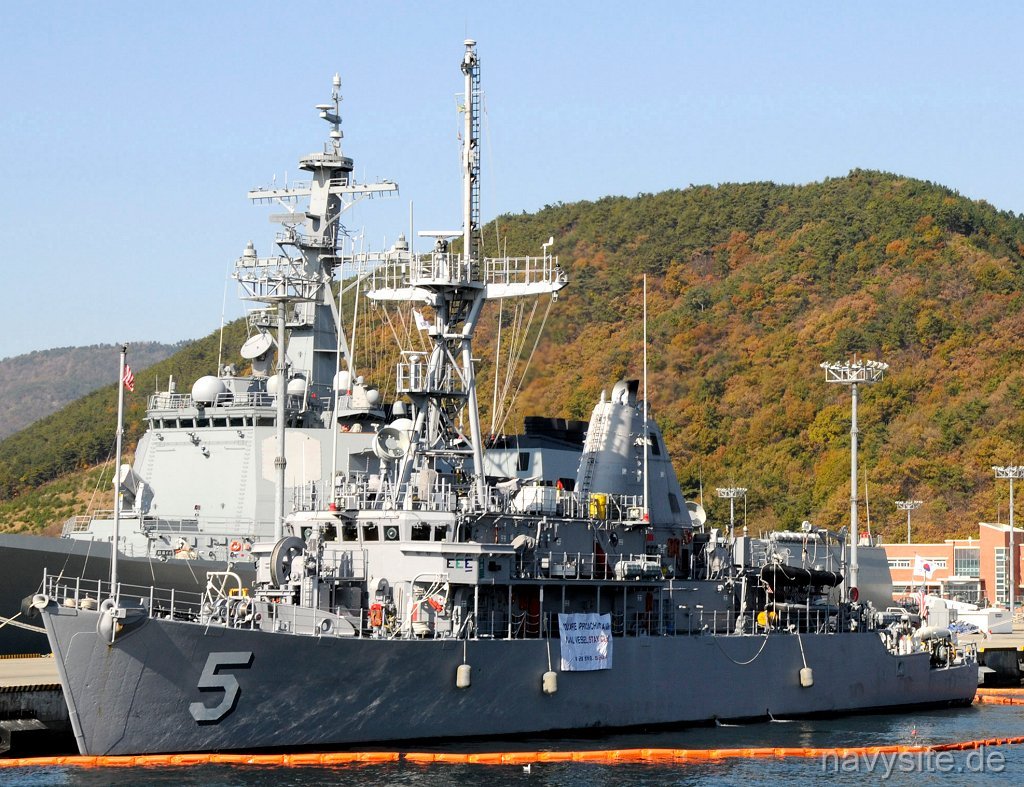
USS GUARDIAN was the fifth AVENGER - class Mine Countermeasures Ship. From 1996 on, the GUARDIAN was forward deployed to Sasebo, Japan. In January 2013, the ship ran aground on the Tubbataha Reef in the Philippines and was estimated to be beyond economical repair and to protect the reef, the GUARDIAN was dismantled while still sitting on the reef. The GUARDIAN was administratively decommissioned and stricken from the Navy list on February 15, 2013, and a decommissioning ceremony was held at Sasebo, Japan, on March 6, 2013.

General Characteristics:Keel Laid: May 8, 1985
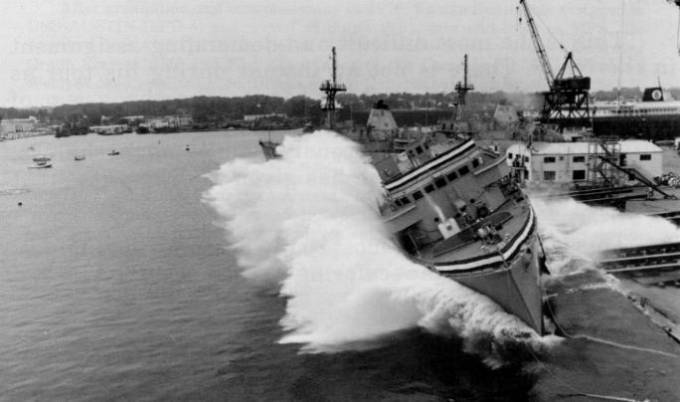
Launched: June 20, 1987
Commissioned: December 16, 1989
Decommissioned: March 6, 2013
Builder: Peterson Shipbuilders, Sturgeon Bay, Wis.
Propulsion System: four diesels
Propellers: two
Length: 224 feet (68.28 meters)
Beam: 39 feet (11.89 meters)
Draft: 11,5 feet (3.5 meters)
Displacement: 1,312 tons
Speed: 14 knots
Armament: Mine neutralization system, two .50 caliber machine guns
Crew: 8 Officers, 6 Chief Petty Officers and 58 Enlisted


Back to topback to top  go to endgo to the end of the page


Back to topback to top  go to endgo to the end of the page

Crew List:

This section contains the names of sailors who served aboard USS GUARDIAN. It is no official listing but contains the names of sailors who submitted their information.


back to top  go to the end of the page


Back to topback to top  go to endgo to the end of the page

Accidents aboard USS GUARDIAN:

DateWhereEvents
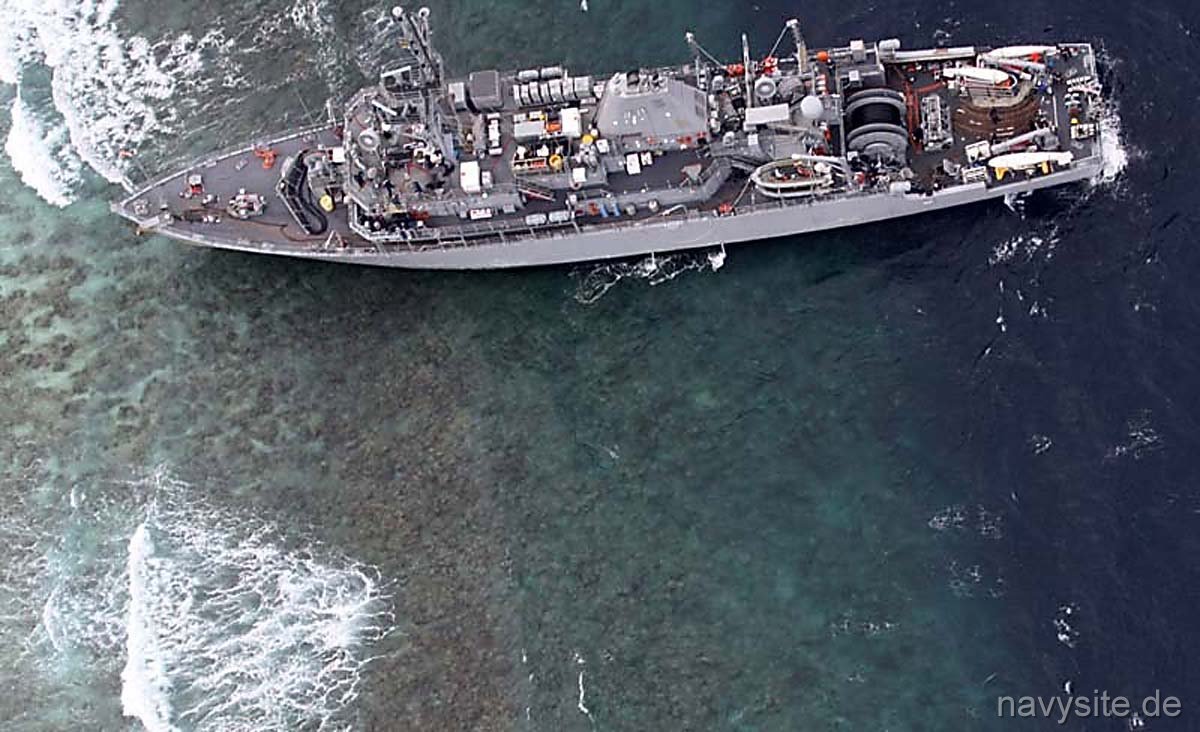
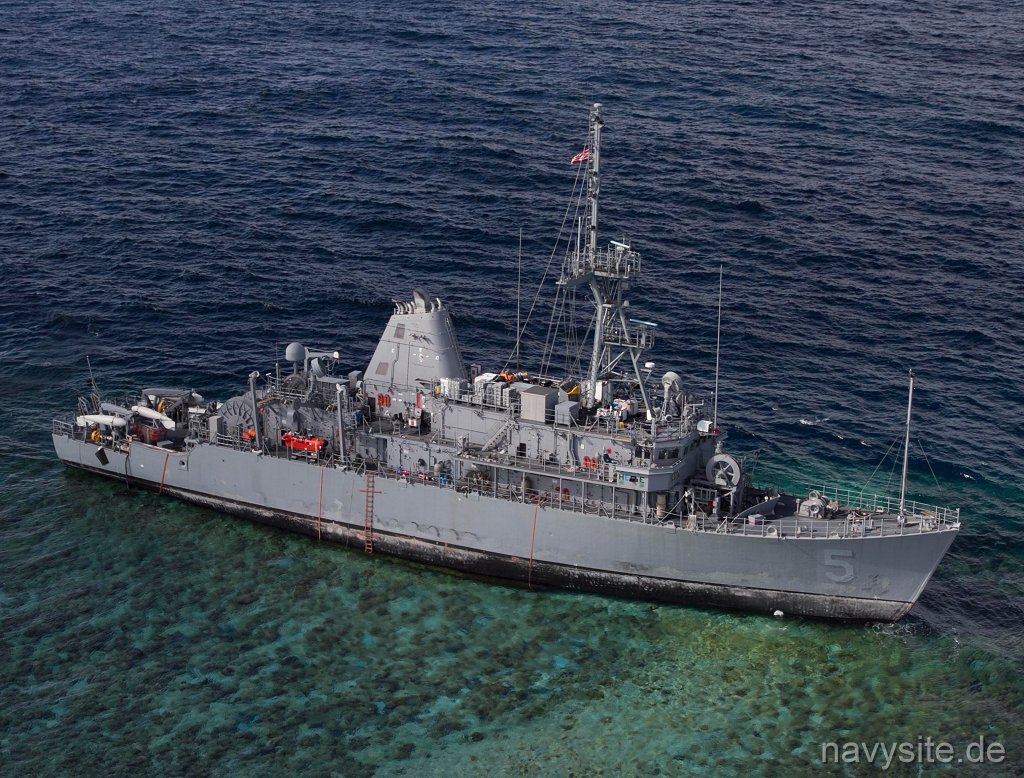
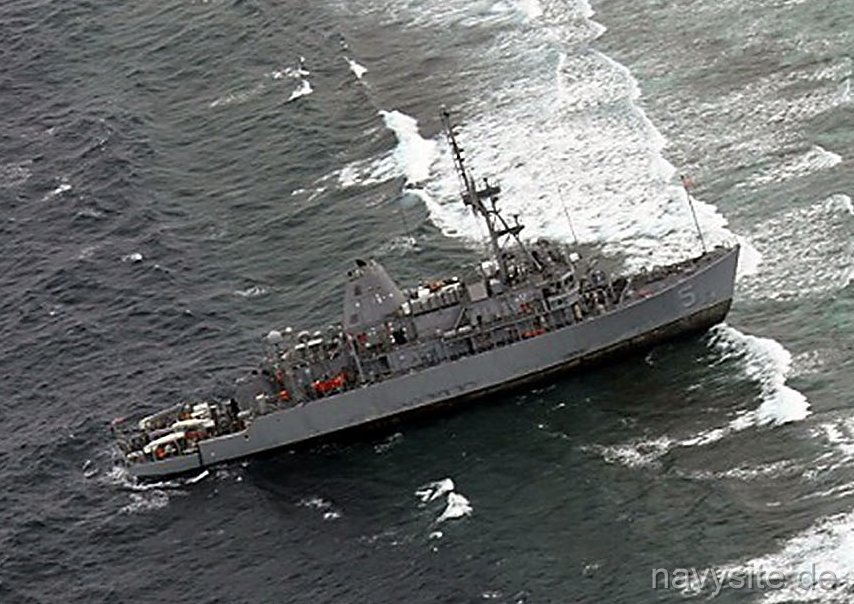
January 17, 2013Tubbataha Reef, approx. 400 nautical miles southeast of Manila, PhilippinesUSS GUARDIAN runs aground on a coral reef approx. 0225 a.m. local time. Initial reports indicated no damage to the ship or injuries among the crew. One significant reason for the grounding was an inaccurate digital chart used for the navigation that misplaced the reef by about 8 nautical miles. On January 17, all 79 personnel aboard the GUARDIAN during the grounding were evacuated from the ship with the help of the Philippine Navy.

On January 19, the GUARDIAN is still stuck on the reef and multiple spaces aboard the ship are flooded. While the ship was initially only grounded with the bow, the rough seas have now pushed the GUARDIAN onto the reef with the entire starboard side. The USS MUSTIN (DDG 89) and USNS BOWDITCH (T-AGS 62) have also arrived on scene to provide assistance. Other vessels engaged in the salvage operation include the tug VOS APOLLO, the Philippine salvage tug TRABAJADOR and the USNS SALVOR (T-ARS 52) which is currently en route to the GUARDIAN.

On January 21, the GUARDIAN is still grounded.

The photos below are from the Armed Forces of the Philippines and show the GUARDIAN on the reef on January 17.


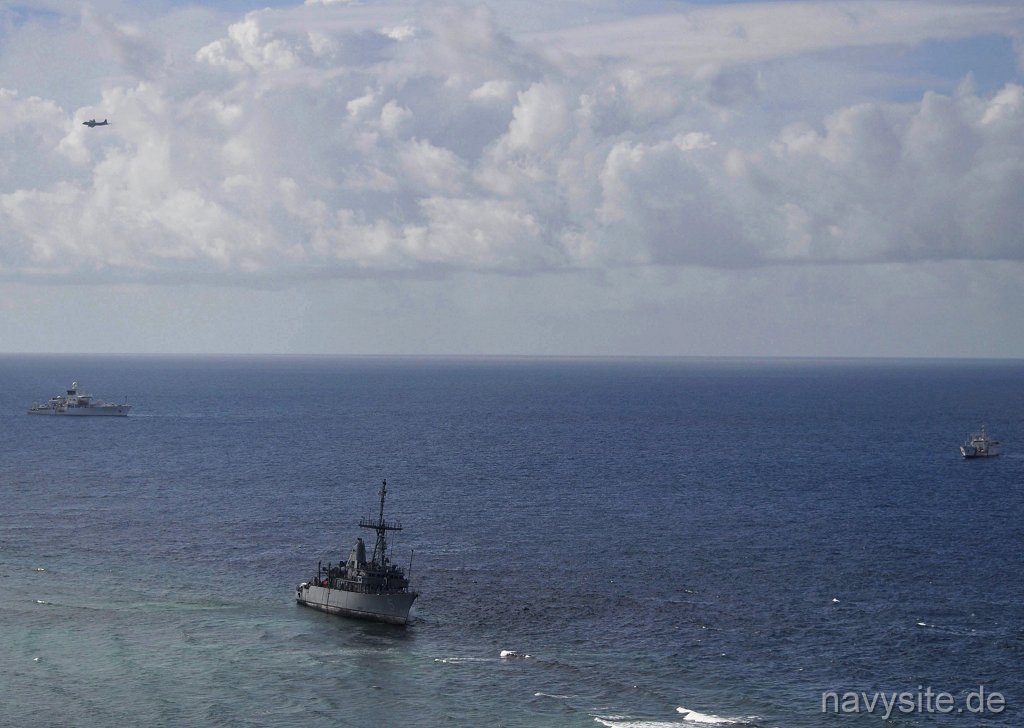
On January 24 - one week after hitting the reef - the GUARDIAN is still aground. On January 23, salvage teams started preparing hoses and lines to remove the ship's fuel, but defueling has not started by January 24. Meanwhile, 69 of the 79 GUARDIAN sailors are returning to Sasebo, Japan, aboard the oiler USNS RAPPAHANNOCK (T-AO 204). Ten crewmembers remain on scene. The photos below are official US Navy photos and show the ship's condition on January 22.


By January 25, all diesel fuel and oil was removed from the GUARDIAN and it was reported that the ship is too heavily damaged to be towed off the reef. On January 27, the Pearl Harbor-based SALVOR arrived on scene while two heavy-lift floating cranes were estimated to reach the reef by February 1.

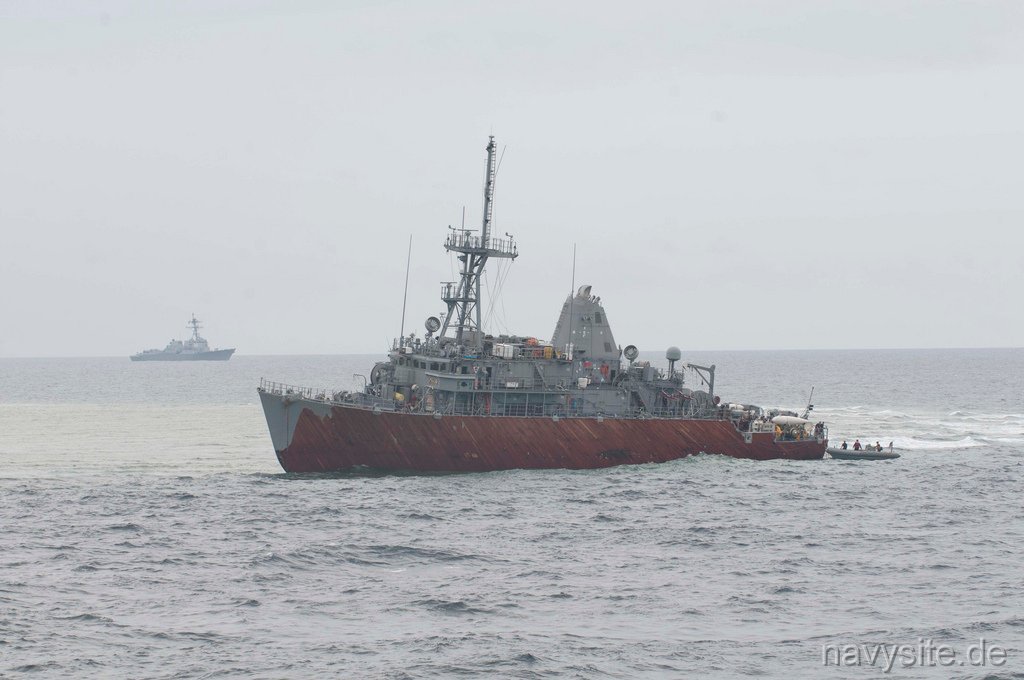
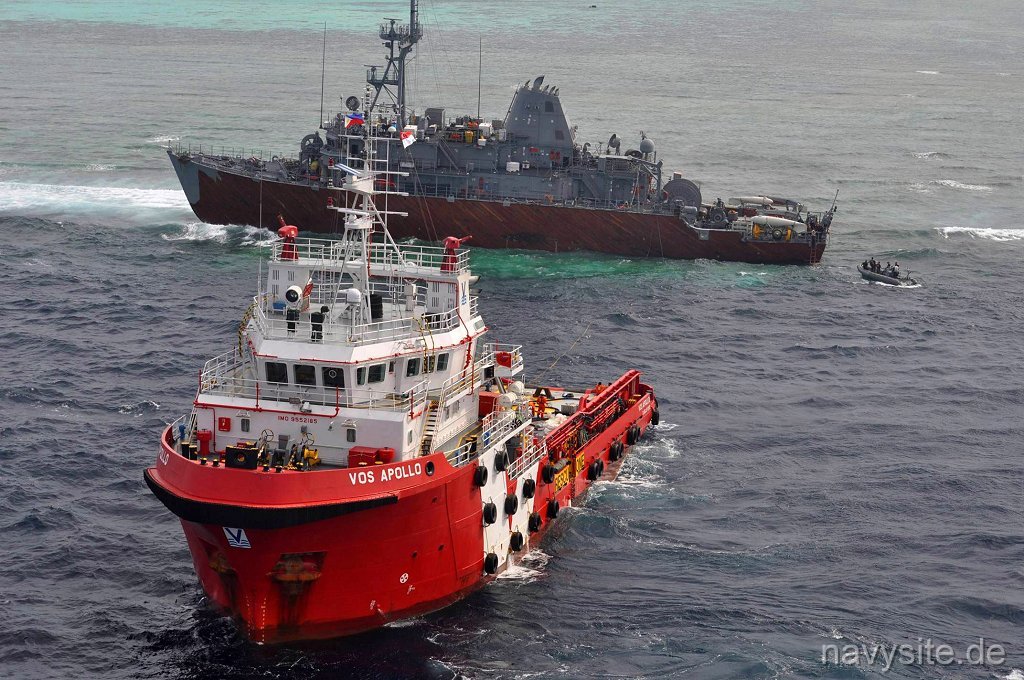
The photo below is a US Navy photo showing the VOS APOLLO defueling the GUARDIAN on January 24. The GUARDIAN has also lost her fiberglass sheating from the hull, now showing the wooden hull.


On January 28, the Navy said that it will no longer try to safe the GUARDIAN but that it will now break up the ship into individual sections and take it away piece by piece. This statement marked the official confirmation of the loss of the GUARDIAN.

The US Navy photos below show cargo being transported from the GUARDIAN to the nearby MUSTIN on January 26.
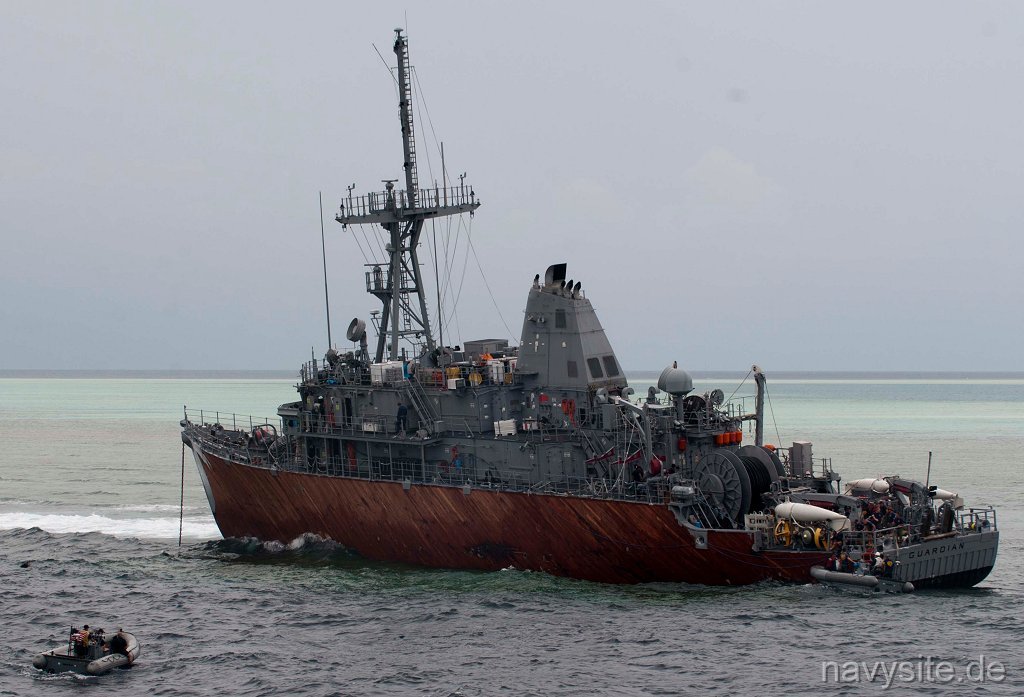


The photos below are also official US Navy photos showing GUARDIAN's situation on January 28 and January 29 (the third photo).


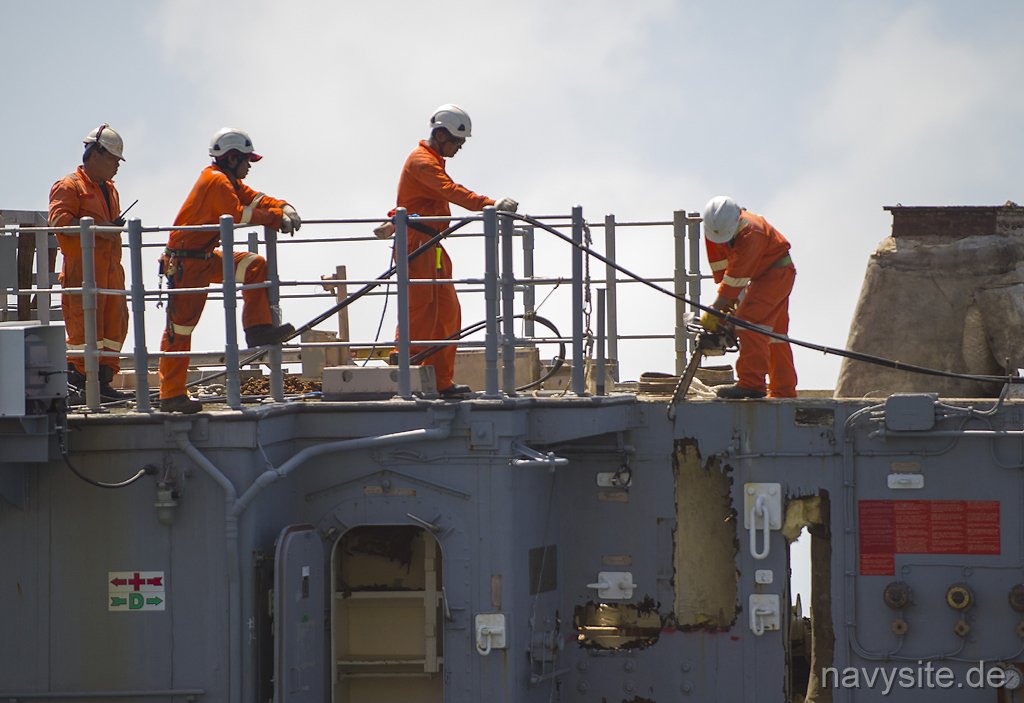
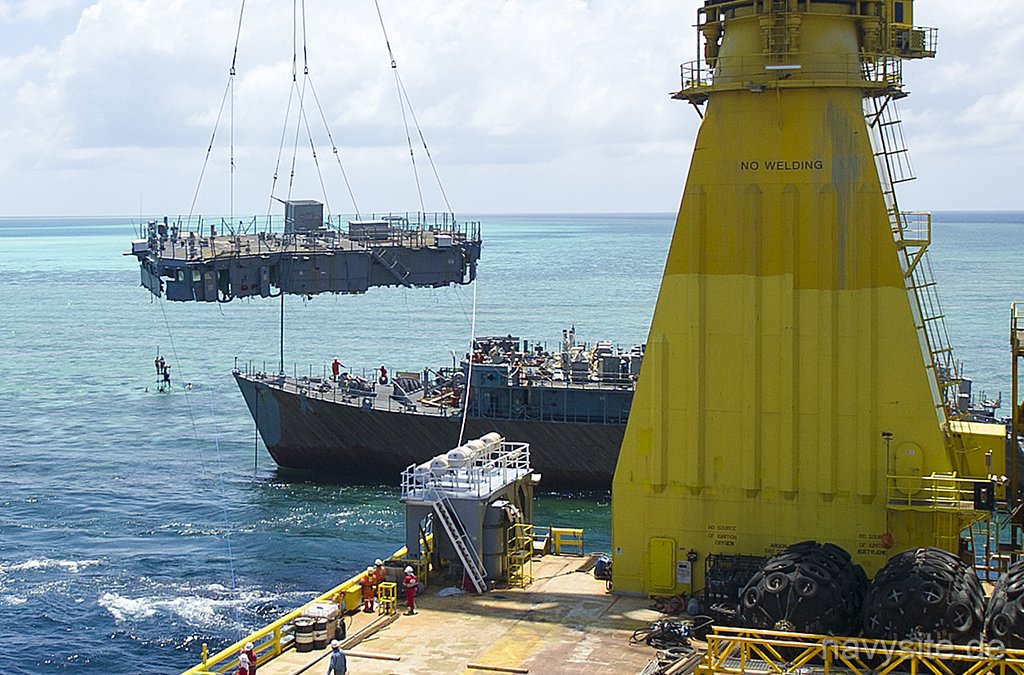
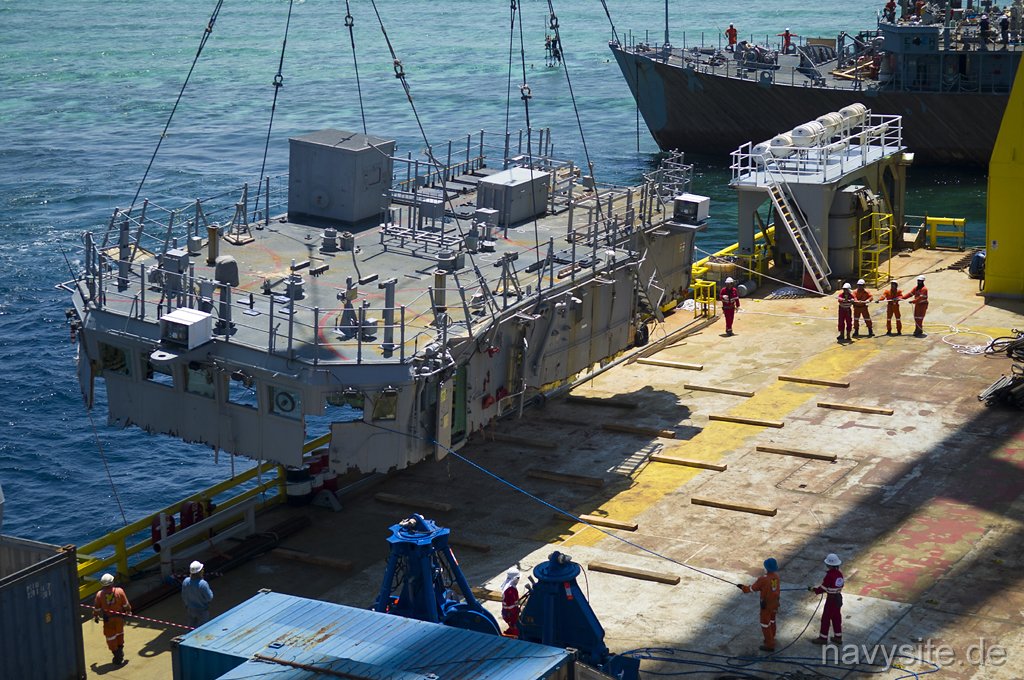
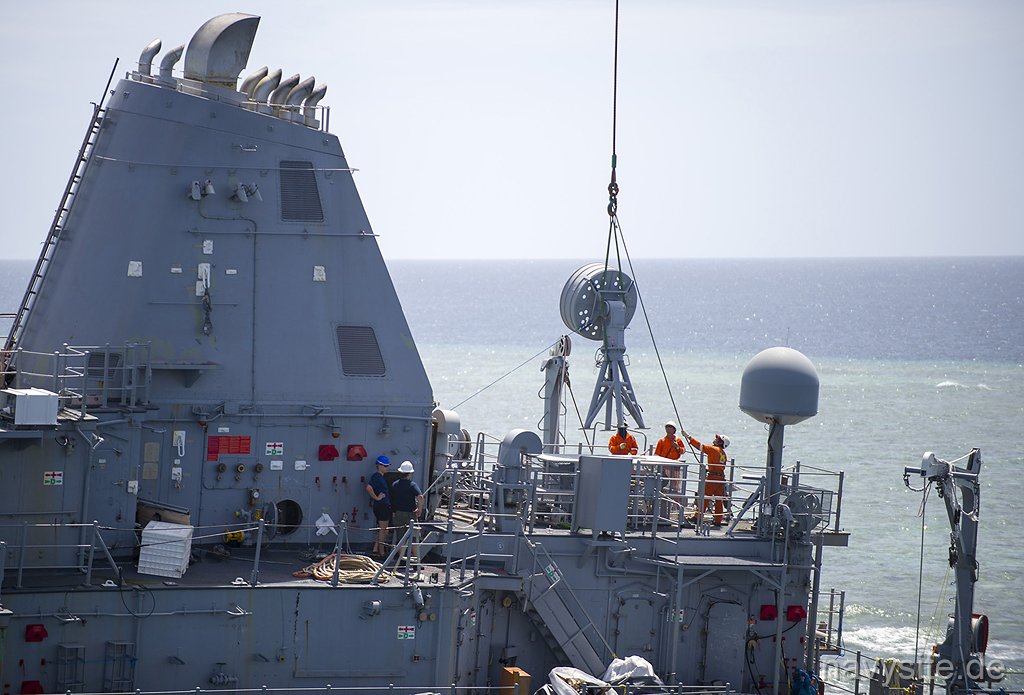
The photos below are official US Navy photos and show the GUARDIAN being dismantled in late February and early March 2013.


Back to topback to top  go to endgo to the end of the page

USS GUARDIAN History:

USS GUARDIAN was built as the fifth unit of the AVENGER-class mine countermeasures ships, constructed with a wooden hull sheathed in fiberglass to minimize magnetic signatures and improve survivability in mined waters. She was laid down on May 8, 1985, at Peterson Builders in Sturgeon Bay, Wisconsin, launched on June 20, 1987, and commissioned on December 16, 1989, at the Naval Education and Training Center in Newport, Rhode Island, which also became her first homeport. Equipped with the AN/SQQ-32 mine-hunting sonar and the AN/SLQ-48 remotely operated mine neutralization system, GUARDIAN joined a mine warfare force being rebuilt after lessons learned in the Iran-Iraq War and was intended for precise minehunting close to contested coasts, ports and shipping lanes.

During 1990, GUARDIAN's early service was centered on Newport and the western Atlantic, where she conducted trials, mine countermeasures refresher training and inspections in preparation for full operational deployment. Command histories show her completing propulsion examinations and mine warfare readiness training from Newport as she integrated into the Atlantic Fleet mine countermeasures force. These activities took place against the backdrop of increasing U.S. concern about naval mines, which had already damaged U.S. warships in the Persian Gulf in the late 1980s and were recognized as a major threat to any future crisis in that region.

With Iraq's invasion of Kuwait in August 1990 and the subsequent coalition buildup for Operations Desert Shield and Desert Storm, GUARDIAN was deployed to the Persian Gulf as part of the Navy's rapidly assembled mine countermeasures group. Historical accounts of Desert Storm mine warfare describe AVENGER-class ships, including AVENGER (MCM 1) and GUARDIAN, conducting minehunting and neutralization operations in the northern Gulf to clear approaches to Kuwaiti and Saudi ports and to support potential amphibious operations. During this period, GUARDIAN used her sonar and mine neutralization vehicle to locate and destroy Iraqi mines in areas designated as mine danger zones, supporting the wider coalition effort to restore freedom of navigation after Iraqi forces laid extensive defensive minefields.

By mid-1991, GUARDIAN remained deployed to the Persian Gulf for follow-on mine clearance and post-war security operations. A Naval History and Heritage Command command history notes that on October 15, 1991, at Mina Salman, Manama, Bahrain, the crew formerly of USS DEVASTATOR (MCM 6) relieved the deployed crew of GUARDIAN in what is described as the first crew swap performed on a mine countermeasures ship. On that date, the DEVASTATOR crew took over GUARDIAN in theater while the original crew returned to the United States, allowing the ship to remain continuously committed to Persian Gulf mine warfare duties while reducing strain on personnel.

After completing her initial Gulf deployment and crew swap, GUARDIAN returned to the United States and continued operating from Newport, Rhode Island, in the early 1990s, still focused on mine warfare training and readiness.

As the Navy reorganized its mine force and concentrated many mine countermeasures ships at Ingleside, Texas, crew recollections indicate that GUARDIAN later operated from Ingleside and was subsequently moved across the Pacific as part of a homeport change, foreshadowing her long-term role in the western Pacific. By the mid-1990s, GUARDIAN was selected for forward deployment to Commander, Fleet Activities Sasebo, Japan, aligning with the Navy's decision to base a portion of the AVENGER-class permanently in the western Pacific to support both U.S. and allied mine warfare requirements. Official Navy and defense press sources note that by 1996, two AVENGER-class mine countermeasures ships, GUARDIAN and PATRIOT (MCM 7), were based in Sasebo. Forward deployment placed her under Seventh Fleet operational control and integrated her into Amphibious Force, U.S. Seventh Fleet, which was responsible for amphibious ready groups and mine warfare units across Northeast and Southeast Asia.

In this new role, GUARDIAN became a regular participant in Cooperation Afloat Readiness and Training (CARAT), the bilateral exercise series launched to deepen U.S. Navy partnerships with Southeast Asian navies. In 1997, a Singapore Ministry of Defence press release records that GUARDIAN and PATRIOT arrived to operate with the Republic of Singapore Navy during CARAT 97. The exercise, conducted from July 21 to August 1, 1997, emphasized combined mine warfare, surface operations and maritime security training, and underlined the growing role of U.S. mine countermeasures forces in regional engagement beyond traditional blue-water operations.

GUARDIAN returned to Southeast Asia in 1999 for CARAT 99, this time as part of a multi-phase series in which U.S. ships rotated among partner navies including those of Thailand, Singapore, Malaysia and Indonesia. Navy and defense summaries of that year's CARAT mention GUARDIAN and PATRIOT among the core mine countermeasures units, using their minehunting systems in combined drills and visiting ports in the region to support at-sea phases with ashore professional exchanges and community events. Through these repeated CARAT deployments, GUARDIAN helped embed modern U.S. mine warfare doctrine within allied navies that faced their own challenges in chokepoints like the Malacca Strait and approaches to the South China Sea.

In parallel, GUARDIAN took part in a growing series of dedicated mine countermeasures exercises in the western Pacific. In 2001, a U.S. Information Agency report on a Western Pacific Mine Countermeasures Exercise (MCMEX) lists GUARDIAN and PATRIOT operating with the mine countermeasures command and control ship USS INCHON (MCS 12) and units from thirteen other nations. During this multilateral MCMEX, GUARDIAN conducted combined minehunting operations and associated drills that were designed to improve interoperability in mine clearance, reflecting a shift from strictly bilateral to regional frameworks in mine warfare cooperation.

Photographic and command history material from 2004 shows GUARDIAN engaged in Mine Countermeasures Exercise/Explosive Ordnance Demolition Exercise (MCMEX/EODEX) 2004, where deck personnel are documented recovering gear after completing a mine sweep. These exercises, conducted off the Korean coast, linked GUARDIAN's minehunting capabilities to the work of diving and explosive ordnance disposal units, ensuring that bottom mines and mine-like contacts could be located by the ship's sonar and then physically inspected and neutralized by divers or remotely operated vehicles.

GUARDIAN's close association with the Republic of Korea Navy intensified as she became a fixture in the annual Reception, Staging, Onward Movement and Integration/Foal Eagle series, the large joint and combined exercises held on and around the Korean Peninsula. In March 2006, Navy reports on RSOI/Foal Eagle 06 list GUARDIAN and PATRIOT operating alongside units such as the cruiser USS CHANCELLORSVILLE (CG 62) under U.S. and Korean command, providing minehunting support to simulated amphibious and logistics operations.

During that same year, Stars and Stripes reported on an anti-mine training exercise off Oita, Japan, noting that GUARDIAN and PATRIOT from Sasebo were working with Japanese ships URAGA and BUNGO and 17 Japanese mine countermeasures vessels. The exercise, running to February 27, 2006, focused on coordinated minehunting, sweeping and clearance off the coast of Kyushu, underscoring GUARDIAN's role in U.S.-Japan mine warfare interoperability.

In 2007, coverage of exercise Foal Eagle '07 described Sasebo-based GUARDIAN and PATRIOT completing minesweeping operations with the Republic of Korea Navy on March 30. The minesweeping portion of the exercise included the aerial dropping of training mines by a Korean P-3C Orion and subsequent hunting and tagging of mine-like shapes for neutralization by the U.S. and Korean minesweepers. GUARDIAN's participation in these drills demonstrated the integration of air, surface and subsurface mine warfare assets in a regional scenario aimed at keeping Korean and Japanese sea lines of communication open during a crisis.

Throughout the late 2000s, GUARDIAN remained forward deployed to Sasebo, conducting recurring bilateral and multilateral mine warfare training across the Seventh Fleet area of responsibility. In 2010, GUARDIAN became the first mine countermeasures ship in Seventh Fleet modified for a mixed-sex crew, gaining separate sanitary facilities and spaces to accommodate women sailors and reflecting broader personnel policy changes within the fleet.

By February 2011, photographic records show GUARDIAN departing her forward-deployed base at Sasebo for patrol, emphasizing that even outside major named exercises she spent considerable time at sea in mine warfare patrol and training roles. In March 2011, she is documented supporting Foal Eagle 2011, with images and media reports showing her crew preparing and operating a Mine Neutralization Vehicle in support of the large field training exercise, and again working closely with Korean and other allied forces.

In the early 2010s, GUARDIAN also continued to be linked to Persian Gulf mine warfare planning through broader Navy mine warfare doctrine, although she remained homeported at Sasebo. Official descriptions of the AVENGER-class reference that these ships, including GUARDIAN, had been used extensively in Persian Gulf operations during Desert Storm and were available for deployment should tensions again threaten to disrupt the Strait of Hormuz or regional shipping. While other AVENGER-class ships were based permanently in Bahrain, GUARDIAN's primary operational focus remained in Seventh Fleet, including Southeast Asian cooperation and Northeast Asian exercises.

On January 17, 2013, GUARDIAN's long career ended abruptly. After a port call and fuel stop at Subic Bay in the Philippines, she got underway across the Sulu Sea bound first for Indonesia and then Timor-Leste to take part in a training exercise. At approximately 02:25 local time, she ran aground on the south atoll of Tubbataha Reef, a protected national marine park roughly 80 miles east-southeast of Palawan. Initial reports noted no injuries among the 79-member crew and no immediate fuel leakage, but the wood-and-fiberglass hull was firmly embedded on the coral and subject to heavy seas. Philippine authorities estimated significant damage to the reef, and the incident occurred in a sensitive area that highlighted the environmental stakes involved in any salvage attempt.

In the days after the grounding, the U.S. Navy and Philippine Navy evacuated the crew and began a complex salvage operation. All 79 personnel were removed from the ship on January 17 with Philippine assistance. The destroyer USS MUSTIN (DDG 89), survey ship USNS BOWDITCH (T-AGS 62), the tug VOS APOLLO, Philippine salvage tug TRABAJADOR and rescue and salvage ship USNS SALVOR (T-ARS 52) all became involved in the operation.

Over the following week, salvage teams rigged hoses and lines and by January 25 had removed all diesel fuel and lubricating oil - about 15,000 gallons - from GUARDIAN's tanks to prevent further environmental damage. Heavy seas meanwhile pushed the ship further onto the reef, causing flooding in multiple spaces and stripping away much of her fiberglass sheathing, leaving the laminated wooden hull exposed. On February 1, 2013, after assessments by naval architects and salvage experts, the Navy announced that GUARDIAN was beyond economical repair and would be dismantled and removed from the reef in sections rather than refloated or towed.

Salvage teams focused on removing reusable equipment and hazardous materials before cutting the hull into pieces. The dynamic positioning crane vessel M/V JASCON 25 was used to lift large sections of the ship - including the 250-ton stern section - off the reef. By March 30, 2013, the final section of the hull had been removed, and officials declared the physical removal complete, though environmental monitoring and reef restoration efforts continued.

Subsequent surveys by Filipino authorities and environmental organizations measured the damaged reef area at over 2,300 square meters, and in January 2015 the United States government paid compensation to the Philippine government for reef damage and associated costs. Administratively, GUARDIAN was decommissioned and stricken from the Naval Vessel Register on February 15, 2013, while still a grounded wreck, as reflected in Navy inventory documents. She was subsequently referred to as ex-GUARDIAN in official communications. A formal decommissioning ceremony took place at Commander, Fleet Activities Sasebo on March 6, 2013, bringing together crew and guests to mark the end of her 23 years of service. A U.S. Navy photo from that day shows the commanding officer, Lieutenant Commander Mark A. Rice, placing the ship's ensign into a time capsule along with the decommissioning pennant, messages and mementos.

At the same time, the crew of ex-GUARDIAN was reassigned to USS WARRIOR (MCM 10), which arrived in Sasebo to assume GUARDIAN's forward-deployed mine warfare role, ensuring continuity of Seventh Fleet mine countermeasures capability.

An investigation overseen by U.S. Pacific Fleet into the Tubbataha grounding concluded that inaccurate digital chart data - placing the reef several miles from its actual position - contributed to the accident, but also identified serious navigational and leadership failures on board. Several officers, including the commanding officer, executive officer, officer of the deck and assistant navigator, were relieved and received administrative action. The case became a widely cited example within the Navy of the need for cross-checking electronic charts, maintaining rigorous bridge watchstanding standards, and balancing operational demands with environmental stewardship in sensitive maritime areas.


Back to topback to top  go to endgo to the end of the page

USS GUARDIAN Patch Gallery:

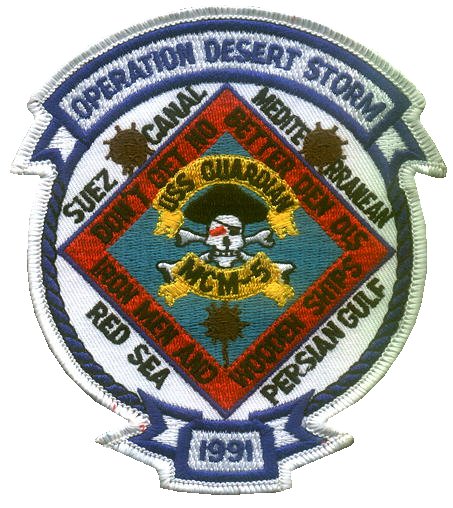
Operation Desert StormOperation Desert Storm


Back to topback to top  go to endgo to the end of the page


Back to topback to top


Back to Mine Countermeasure Ships site. Back to ships list. Back to selection page. Back to 1st page.