
Search the Site with

|
Search the Site with
|
 General Characteristics Crew List Memorabilia About the Ship's Coat of Arms About the Name "Jarrett" History Patch Gallery Image Gallery to end of page
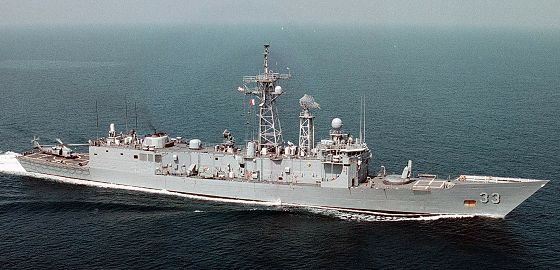 |  |
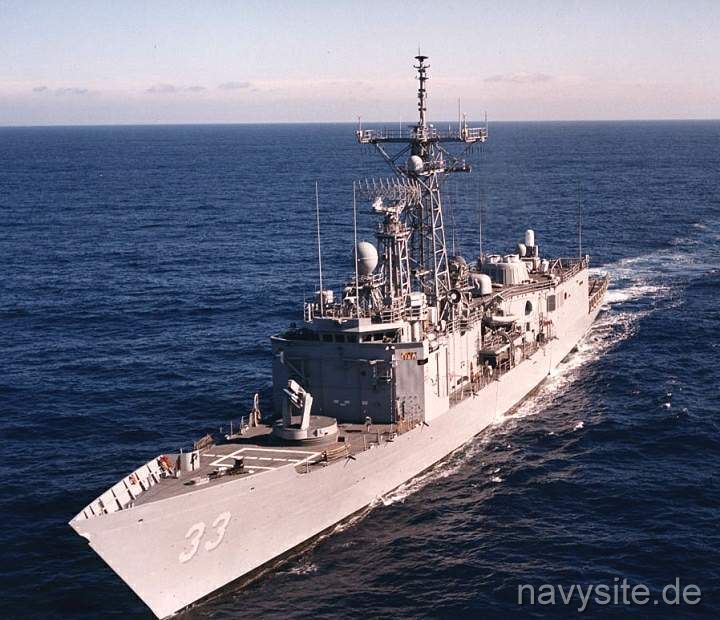
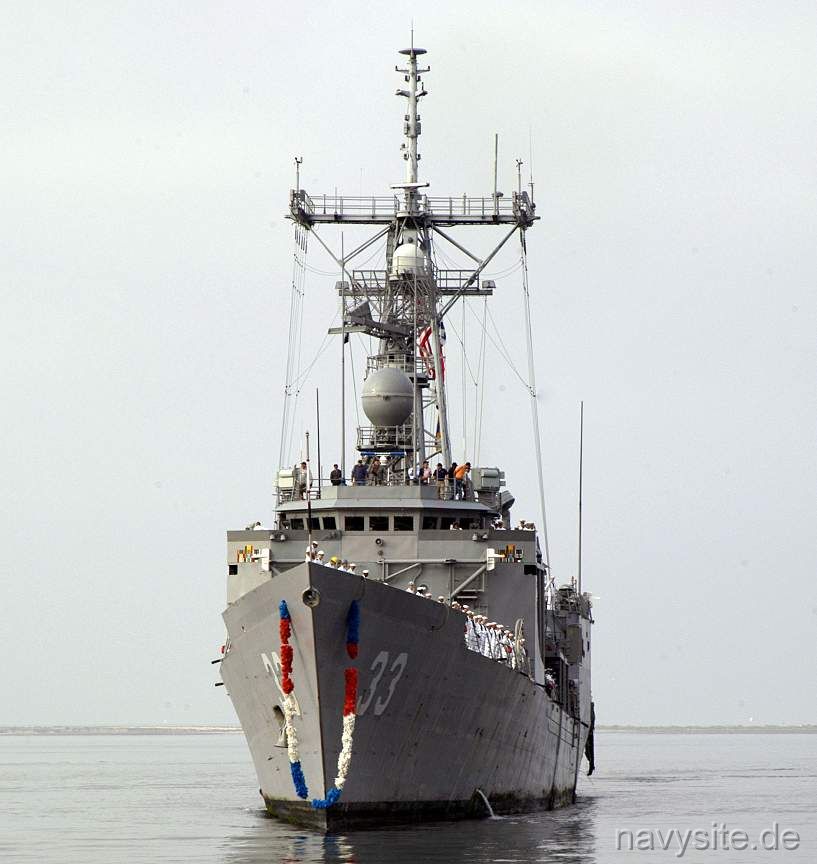
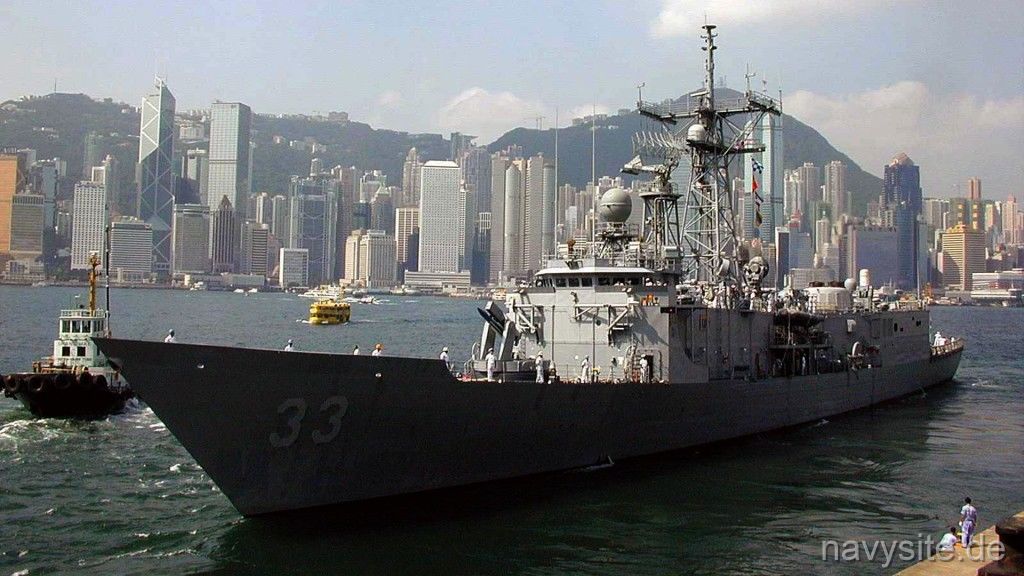
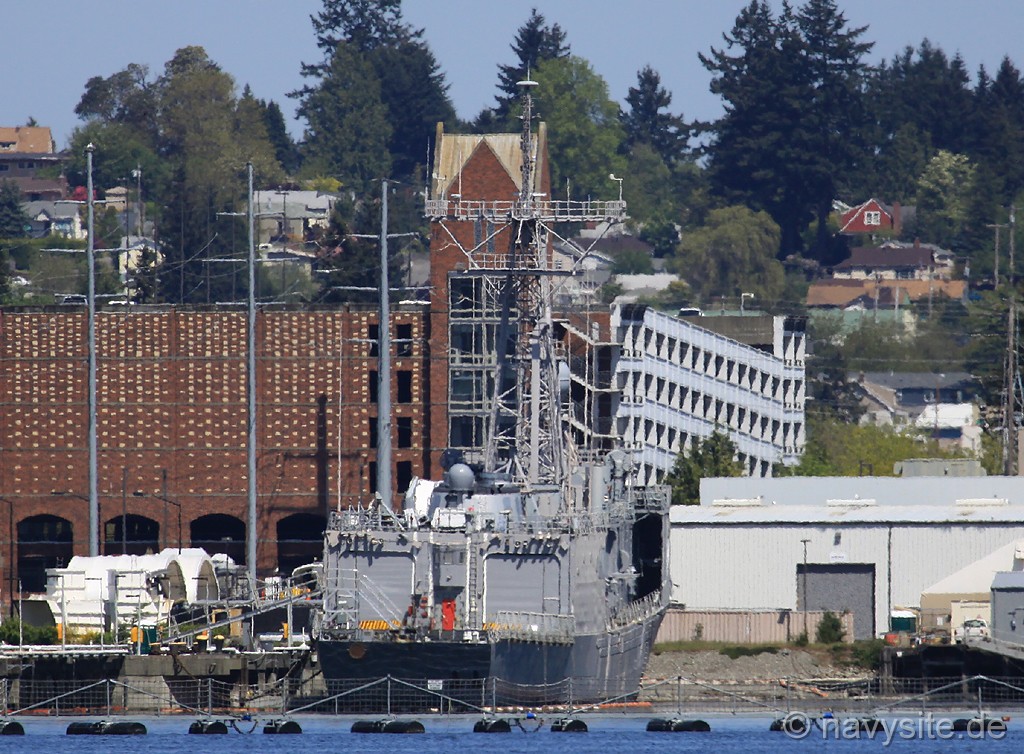
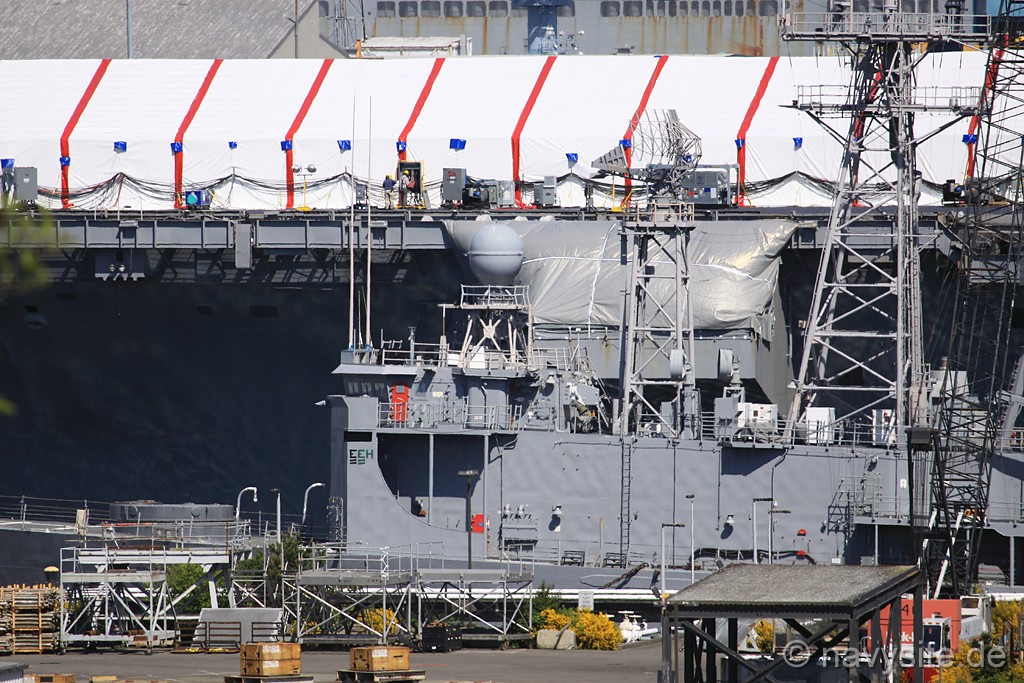
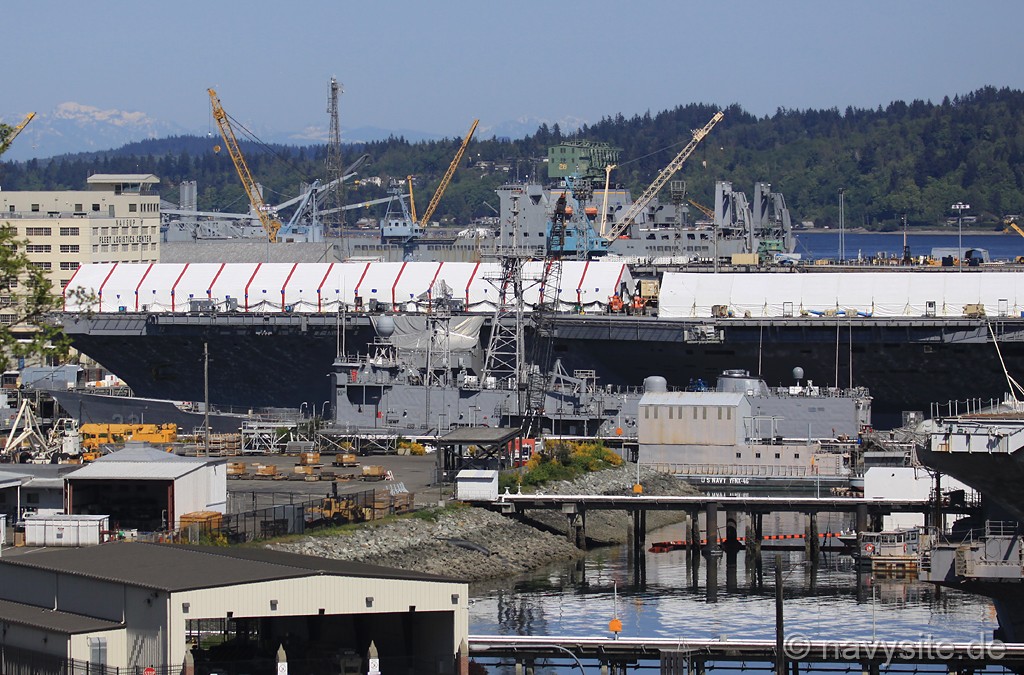
USS JARRETT was the 26th OLIVER HAZARD PERRY class guided missile frigate and the first ship in the Navy named after Vice Admiral Harry B. Jarrett. Decommissioned on April 21, 2011, the JARRETT spent the following years laid up at Bremerton, Wash. On December 15, 2014, she was sold for scrapping. In June 2015, the JARRETT arrived at Southern Recycling at Sulphur, La., and was subsequently scrapped.
| General Characteristics: | Awarded: January 23, 1978 |
| Keel laid: February 11, 1981 | |
| Launched and Christened: October 17, 1981 | |
| Commissioned: July 2, 1983 | |
| Decommissioned: April 21, 2011 | |
| Builder: Todd Pacific Shipyards Co., Los Angeles Division, San Pedro, Ca. | |
| Propulsion system: two General Electric LM 2500 gas turbines, two 350 Horsepower Electric Drive Auxiliary Propulsion Units | |
| Propellers: one | |
| Blades on each Propeller: five | |
| Length: 453 feet (135.9 meters) | |
| Beam: 45 feet (13.5 meters) | |
| Draft: 24,6 feet (7.5 meters) | |
| Displacement: 4,100 tons | |
| Speed: 28+ knots | |
| Aircraft: two | |
| Armament: one | |
| Crew: 17 Officers and 198 Enlisted |
 back to top go to the end of the pageback to top go to the end of the page
Crew List:
This section contains the names of sailors who served aboard USS JARRETT. It is no official listing but contains the names of sailors who submitted their information.
back to top go to the end of the pageback to top go to the end of the pageAbout the Ship's Coat of Arms:
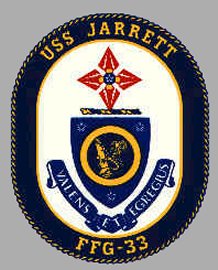
The Shield:
The sea-griffin grasping a cannon alludes to Vice Admiral Jarrett as commander of bombardment groups in the Pacific Theater and is placed within a ring symbolizing his command of destroyer screens for fast carrier task forces operating in the Pacific during World War II. The three stars refer to the Admiral's rank.
The Crest:
The cross refers to the Navy Cross the Admiral was awarded for heroism during the Battle of the Coral Sea. The pheon allude to the multidirectional fire power of the destroyer screen and bombardment group Admiral Jarrett commanded during World War II and reflect the Legion of Merit he was awarded for command of the destroyer support fire during Pacific island campaigns. The two stars on the disc symbolize the Admiral's personal heroism for which he was awarded the Silver Star and the Bronze Star.
The Motto:
"Valens et egregius" which translated from the Latin means "able and excellent".
back to top go to the end of the pageAbout the Ship's Name, about Vice Admiral Harry B. Jarrett:
USS JARRETT is named for the late Vice Admiral Harry B. Jarrett, USN (1898-1974), an outstanding sailor of World War II. He received the Navy Cross for heroism in the Battle of the Coral Sea and served with great valor as a destroyer screen commander for the fast carrier task force operations in the Pacific as well as a bombardment group commander in the Marshalls and Marianas campaigns. He was awarded the Legion of Merit for command of his destroyer fire support unit in the Marianas campaign; the Silver Star Medal for gallantry in commanding the destroyer screen for carriers striking the Palaus, the Philippines and the Marianas; and the Bronze Star Medal for heroic actions as Commander Scouting Line for the fast carrier force bound for the raids early in 1945 on Okinawa, Tokyo and Formosa.
Upon the close of World War II, Vice Admiral Jarrett had commanded the light cruiser USS ASTORIA (CL 90); was a member of the staff of the Training Command, U.S. Atlantic Fleet; served as the Plans and Policy Officer (Naval Reserve) under the Chief of Naval Operations; and was Senior Military Attache, Taiwan, before successive command of Destroyer Flotilla 4 and Cruiser Flotilla 4. In February 1953, he became the Deputy Inspector General, Navy Department, serving until his retirement in November 1954.
back to top go to the end of the pageUSS JARRETT History:
USS JARRETT was ordered on January 23, 1978, laid down at Todd Shipyards' Los Angeles Division at San Pedro on February 11, 1981, launched on October 17, 1981, and commissioned on July 2, 1983. In her first months of service she completed the normal sequence of post-commissioning evaluations, training, and engineering inspections required to bring a new OLIVER HAZARD PERRY-class frigate into regular fleet service. During 1983 she completed her Training Readiness Evaluation and other early readiness events, and in 1984 she emerged from a post-shakedown availability at Todd Shipyard, a yard period that had begun in December 1983 and was used to incorporate changes and corrections identified during her first months in service. By 1985 she had moved from initial fleet integration into sustained Pacific Fleet operations. On July 10, 1985, she departed on her first major deployment to the Western Pacific, Indian Ocean, and Persian Gulf, a cruise that covered more than 20,000 nautical miles and established the pattern of long forward deployments that would shape much of her early career. After returning, the first months of 1986 were spent in upkeep, training, and preparation for renewed forward service.
A second major deployment began on May 12, 1987, when USS JARRETT sailed from Long Beach for the Persian Gulf during the Tanker War phase of the Iran-Iraq War. Her transit west included Pearl Harbor, Subic Bay, Singapore, and Colombo before she entered Gulf operations. During this deployment, she took part in Operation Earnest Will escort duties and in mine-interdiction work tied to the protection of merchant shipping in the Gulf. On September 21-22, 1987, Army AH-6 helicopters operating from USS JARRETT detected the Iranian vessel IRAN AJR while it was laying mines, an event that became the best-known episode of the ship's 1987 deployment. The same cruise also included operations connected with USS ACADIA (AD 42) and USS STARK (FFG 31), a turnover with USS REID (FFG 30) off Fujairah, a port visit to Muscat, and a later turnover with USS FORD (FFG 54) off Dubai before the return voyage by way of Phuket, Colombo, Hong Kong, and Pearl Harbor. USS JARRETT returned to Long Beach on November 12, 1987.
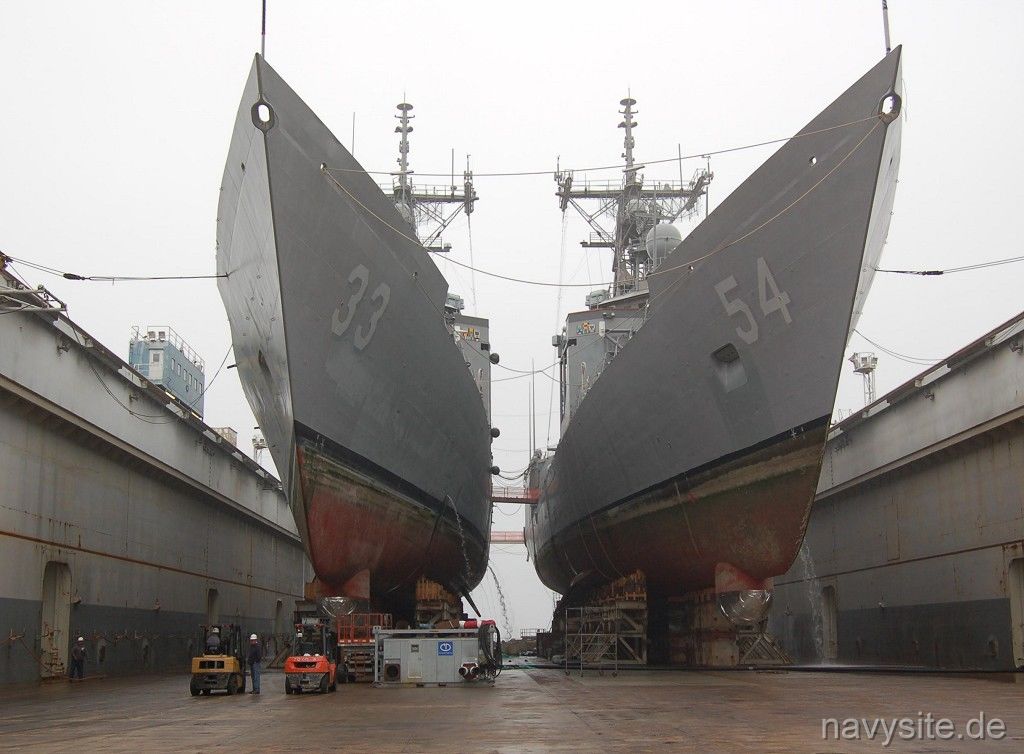
The ship's next important phase was a long modernization period. By November 16, 1988 she had entered an Extended Drydocking Selected Restricted Availability at Southwest Marine in San Pedro. She entered drydock on January 10, 1989 and undocked on April 3, 1989, while overhaul and modernization work continued through the remainder of the year. The package of alterations was substantial and included installation of the AN/SQQ-89(V)2 antisubmarine warfare suite, the SQR-19 Tactical Towed Array Sonar System, fin stabilizers, LAMPS III-related improvements, changes to shipboard firefighting and damage-control systems, and other engineering and combat-systems upgrades associated with the class modernization program. Sea trials followed in early December 1989, USS JARRETT returned to Long Beach on December 6, 1989, and Southwest Marine formally delivered the ship back to the Navy on December 8, 1989.
Almost exactly one year later, on December 7, 1990, USS JARRETT departed on a six-month deployment that carried her into the Gulf War. She arrived in the Arabian Gulf on January 25, 1991. From February 3 to February 11, 1991 she operated as an antiair warfare picket off the Iranian coast while coalition air operations against Iraq continued under Operation Desert Storm. On February 16, 1991, her embarked OH-58D helicopters carried out a night coastal reconnaissance mission and were redirected to examine bomb damage at an Iraqi Silkworm missile site. On February 25, 1991, during the Iraqi Silkworm attack directed at USS MISSOURI (BB 63), USS JARRETT launched chaff and decoys. In the confusion her Phalanx Close-In Weapon System, operating in automatic mode, engaged MISSOURI's chaff cloud and fired, with several rounds striking the battleship without causing casualties. After the cease-fire she escorted merchant ships through mined waters from March 1 to April 14, 1991, a duty that reflected the continuing danger posed by Iraqi minefields even after major combat had ended. During that deployment she also made a brief port call at Bahrain. The official deployment window ran from December 7, 1990 to June 6, 1991.
In 1992 USS JARRETT resumed the standard Pacific Fleet cycle of inspections, workups, and deployment preparation. During that year, she completed an Operational Propulsion Plant Examination, a Supply Management Assessment, a Board of Inspection and Survey visit, a Training Readiness Evaluation and Combat Systems Assessment, and an Aviation Readiness Evaluation. On May 15, 1992, CDR Raymond J. Valencia relieved CDR William L. Snyder as commanding officer. Refresher training followed from May 18 to June 5, 1992, and the ship then took part in Exercise RIMPAC 92 from June 21 to July 22, 1992. Additional tactical and certification events followed during the late summer and autumn, including Harpoon certification and several fleet exercises, and on October 29, 1992 the ship conducted a dependents' day cruise.
On November 3, 1992, she deployed with the USS KITTY HAWK (CV 63) battle group. During the outward leg, she made recorded port visits to Hong Kong and Singapore, stopped for fuel at Colombo, and on December 18, 1992 reported to U.S. naval command in the Arabian Gulf for post-war Gulf operations connected with sanctions enforcement and the continuing American naval presence in the region. The year ended with a port visit and tender availability alongside USS JASON (AR 8) in Bahrain. The 1993 continuation of that deployment included Jebel Ali before the ship departed the Gulf and returned eastward by way of Penang and Port Klang. In 1994 she remained fully active, spending approximately 150 days underway without a missed commitment.
Publicly available records are thinner for the middle of the decade, but they show USS JARRETT remaining in active Pacific Fleet service. In 1996 she was underway for approximately 160 days, completed the Basic Tactical Training Phase, and moved through deployment workups associated with MEFEX 96-3. Reporting tied to her embarked helicopter detachment places HSL-43 Detachment 5 in USS JARRETT from August 12, 1996 to February 12, 1997, consistent with the command-history summary that she completed another successful Middle East Force deployment in 1997. After returning from that cruise, she conducted sea trials and made port visits to Mazatlan and Seattle during Sea Fair. The 1997 command summary described that cruise as USS JARRETT's sixth successful deployment since commissioning.
The next clearly documented major deployment began in 1998. After COMPTUEX, FLEETEX, and JTFEX in Southern California waters, an initial departure was interrupted on June 17, 1998, when the ship suffered damage to her sonar dome. USS JARRETT then departed successfully on June 24, 1998, with the USS ESSEX (LHD 2) Amphibious Ready Group. During this deployment she visited Pearl Harbor, Kota Kinabalu, Singapore, Phuket, Manama, Dubai, Al Jubayl, Doha, Bali, Darwin, and Pearl Harbor again before returning to San Diego on December 7, 1998. While operating in the Arabian Gulf, she carried out 18 boardings of suspected sanctions violators and diverted multiple vessels. On December 18, 1998, CDR Kathleen A. McGrath relieved CDR Stuart O. Kendrick in command. Navy historical material later identified her assumption of command in USS JARRETT as the first command of a U.S. Navy combatant ship by a woman. In 1999, the ship was underway for 109 days and completed a successful inter-deployment training cycle.
On January 31, 2000, USS JARRETT took part in the response to the crash of Alaska Airlines Flight 261 off southern California, joining the multi-agency search and recovery effort. In late 2001, the ship entered the operational environment created by the attacks of September 11. During 2001, she was underway for 119 days, completed a compressed Inter-Deployment Training Cycle, and on November 12, 2001 deployed with the USS JOHN C. STENNIS (CVN 74) battle group in support of Operation Enduring Freedom. The 2002 command history preserves this deployment in unusual detail. The year opened with the ship in Bahrain. During this cruise, USS JARRETT conducted training with the Bahraini frigate BANS SABHA, carried out professional exchanges followed by a visit to Doha, executed one leadership-interdiction boarding in the northern Arabian Sea and three maritime interception missions in the northern Gulf, and towed the self-sabotaged smuggling vessel LINA for two days until turnover in Dubai. She also escorted USS PELELIU (LHA 5) and other ships through the Strait of Hormuz 18 times. On March 30, 2002, she made an emergency stop in Bahrain for the replacement of a damaged LM2500 gas-turbine engine. On the homeward leg she visited Bali from April 26 to May 1, 2002 and Cairns from May 7 to May 12, 2002. On May 9, 2002, CDR R. S. Hospodar relieved CDR C. B. Kyker as commanding officer while the deployment was still in progress. The ship crossed the Equator at 180 degrees on May 18, 2002, stopped in Hawaii on May 19-21, 2002, and returned to San Diego on May 28, 2002. Later that year, she completed a Selected Restricted Availability and took part in Fleet Week events at San Francisco.
On July 2, 2003, the crew marked USS JARRETT's twentieth anniversary while preparing for another major deployment. On August 22, 2003, she departed San Diego with the USS PELELIU Expeditionary Strike Group as part of the inaugural deployment of Expeditionary Strike Group One. The 2004 command history shows the ship operating during that cruise in the Western Pacific, the Persian Gulf, the Red Sea, and waters near the Horn of Africa in support of the wider post-September 11 maritime security campaign. She was in Seychelles at the turn of the year, later departed Broome, Australia on February 6, 2004 after a five-day port visit, had recently completed bilateral training with the Kenyan Navy, and returned to San Diego on March 9, 2004 after a deployment of roughly six and a half months. On October 8, 2004 she appeared again at Fleet Week in San Francisco.
In 2006, USS JARRETT shifted back toward counter-drug operations in the eastern Pacific and South American waters. On April 19, 2006, during the ship's first Family Day Cruise in more than a year, guests took part in a steel beach picnic and observed firefighting and small-arms demonstrations. Two days later, on April 21, 2006, USS JARRETT departed San Diego for her second deployment in less than two years, beginning a nearly six-month cruise focused on counter-drug and counter-terrorism operations in the southern Pacific. During that deployment she made a scheduled port visit to Callao, Peru, departing there on August 16, 2006, before returning to San Diego on October 11, 2006 after an extended underway period in South American waters.
In 2007, USS JARRETT deployed again from Naval Station San Diego in May for service connected with the Cooperation Afloat Readiness and Training exercise series in Southeast Asia. On June 18, 2007 she arrived at Sattahip for the Thailand phase of CARAT 2007, followed by arrival at Kemaman, Malaysia, on July 2, 2007 for the next phase of the exercise. On August 3, 2007, she reached Muara, Brunei, for the fifth phase of CARAT, and by August 17, 2007, she was operating in the South China Sea in support of Southeast Asia Cooperation Against Terrorism 2007. USS JARRETT returned to San Diego on September 11, 2007, completing a four-month deployment centered on regional training, security cooperation, and counter-terrorism coordination.
In her final years USS JARRETT increasingly shifted toward eastern Pacific interdiction missions. From May 11 to October 19, 2009, with HSL-49 Detachment 3 and a Pacific Tactical Law Enforcement Detachment embarked, she completed a counter-narcotics deployment in the eastern Pacific that resulted in the seizure or disruption of more than nine tons of narcotics with an estimated street value of $266 million. On September 3, 2010 she departed again for an eastern Pacific deployment focused on drug interdiction and humanitarian-assistance tasks, and on September 20, 2010 she was off Valparaiso, Chile, participating in the Bicentennial Fleet Review. She returned to San Diego on February 18, 2011 after a deployment of roughly five and a half months in the U.S. Fourth Fleet area. USS JARRETT held her decommissioning ceremony at Naval Base San Diego on April 21, 2011. After decommissioning and striking on May 26, 2011, JARRETT was moved into inactive reserve at the Puget Sound Naval Shipyard/Inactive Ship Maintenance Facility in Washington. Her story ended in 2015, when she was towed to Sulphur, Louisiana, arriving on June 18, 2015 for scrapping.
back to top go to the end of the pageUSS JARRETT Patch Gallery:
 |
back to top go to the end of the pageUSS JARRETT Image Gallery:
 |  |  |  | |
 |  | |||
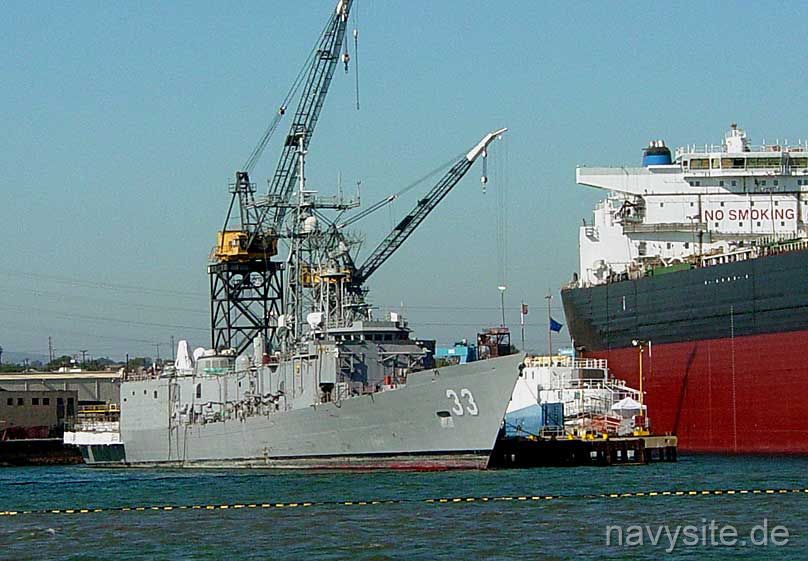
The photo below was taken by Charles Barton and shows the JARRETT at San Diego, Calif, on July 22, 2004.
 |
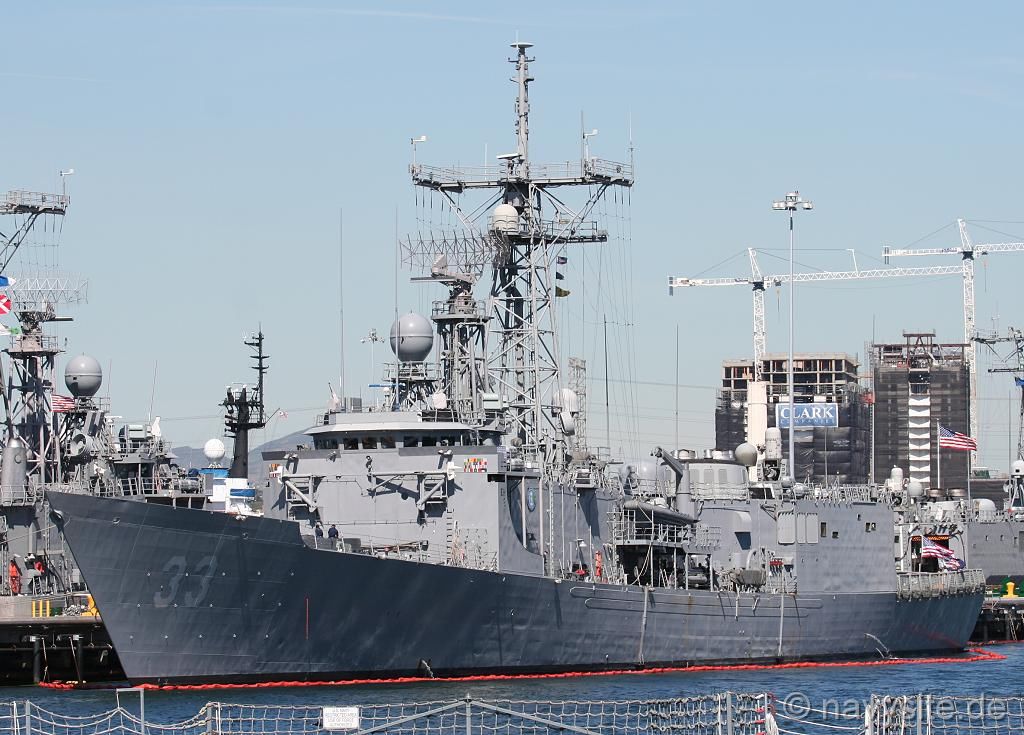
The photo below was taken by me and shows the JARRETT at Naval Base San Diego, Calif, on March 10, 2008.
 |
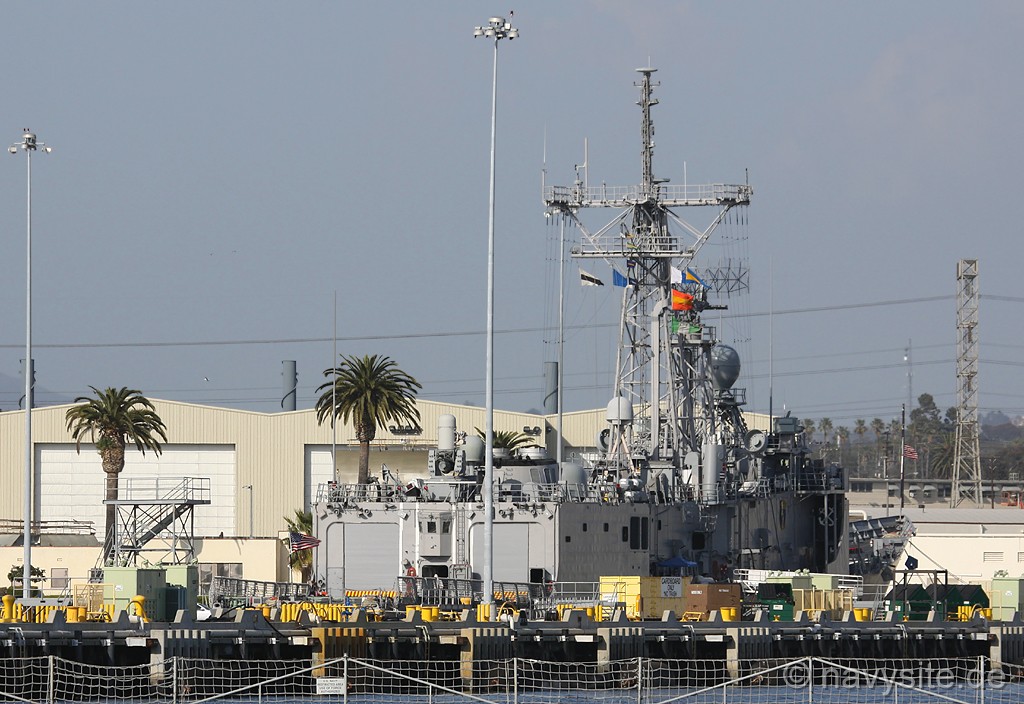
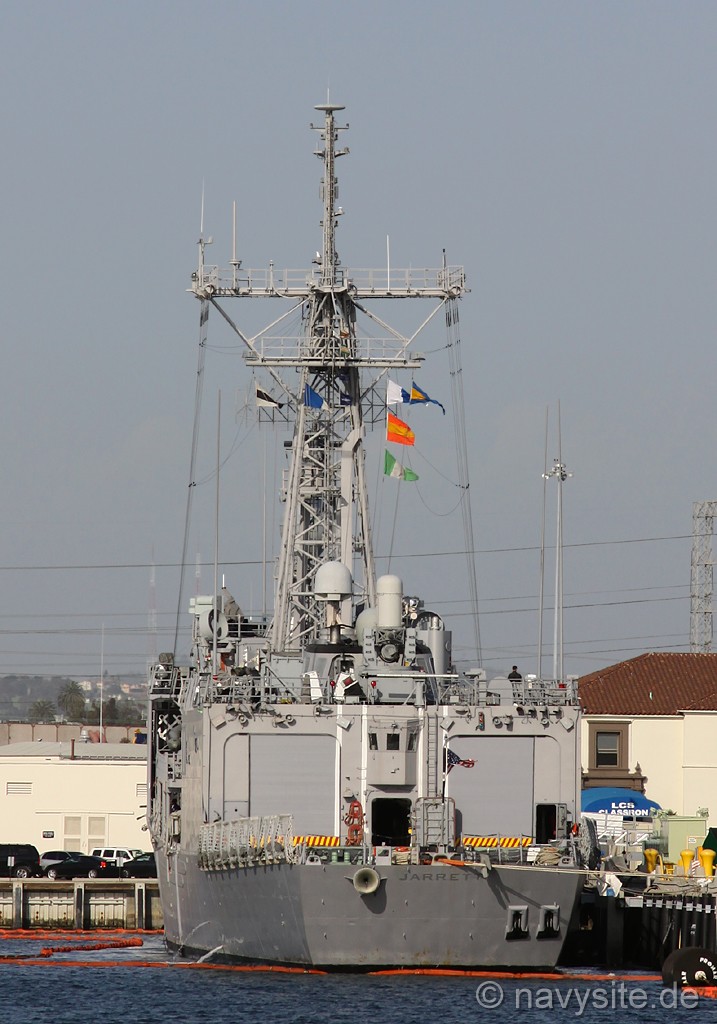
The photos below were taken by me and show the JARRETT at Naval Base San Diego, Calif, on March 23, 2010.
 |  |  |
The photos below were taken by me and show the JARRETT laid up at the Puget Sound Naval Shipyard, Bremerton, Wash., on May 13, 2012.
 |  |  |  |
back to top Back to Frigates list. Back to ships list. Back to selection page. Back to 1st page.