
Search the Site with

|
Search the Site with
|
 General Characteristics Crew List Memorabilia Cruise Books Accidents aboard the Ship About the Ship's Name History Homeports of USS Henry B. Wilson Image Gallery to end of page
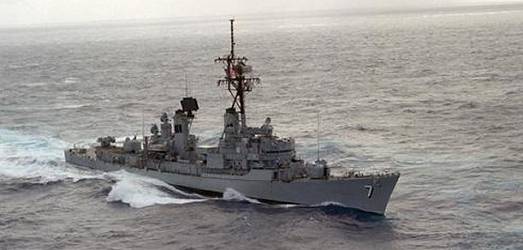 |  |
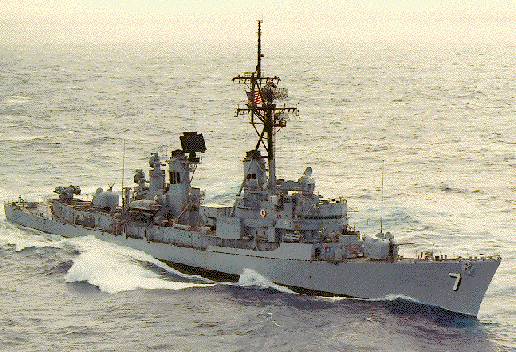
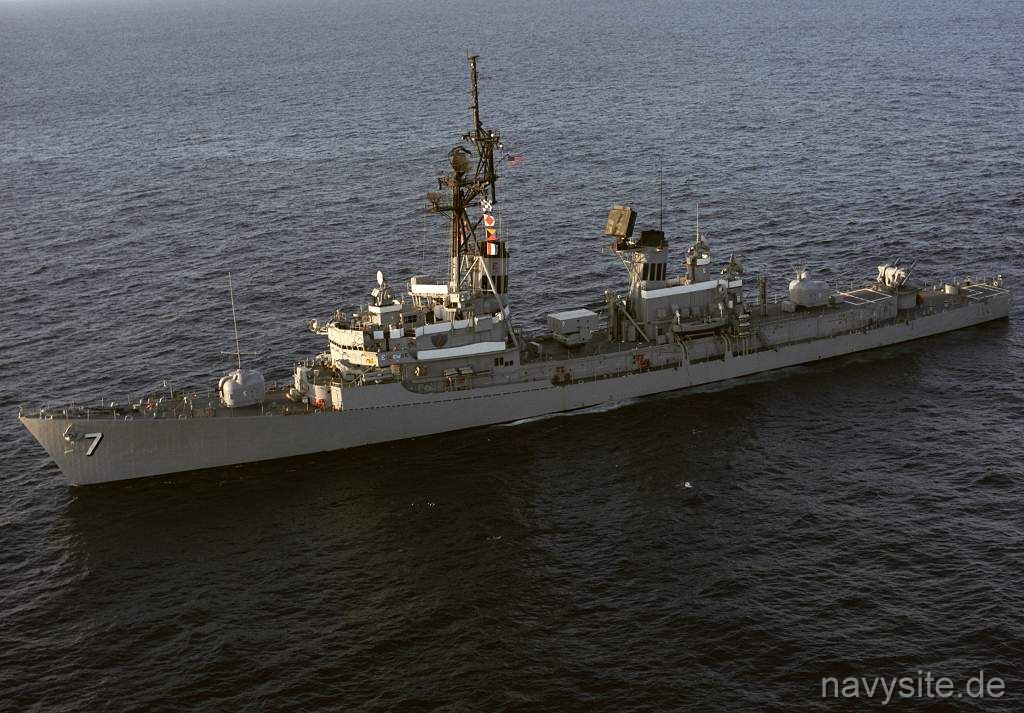
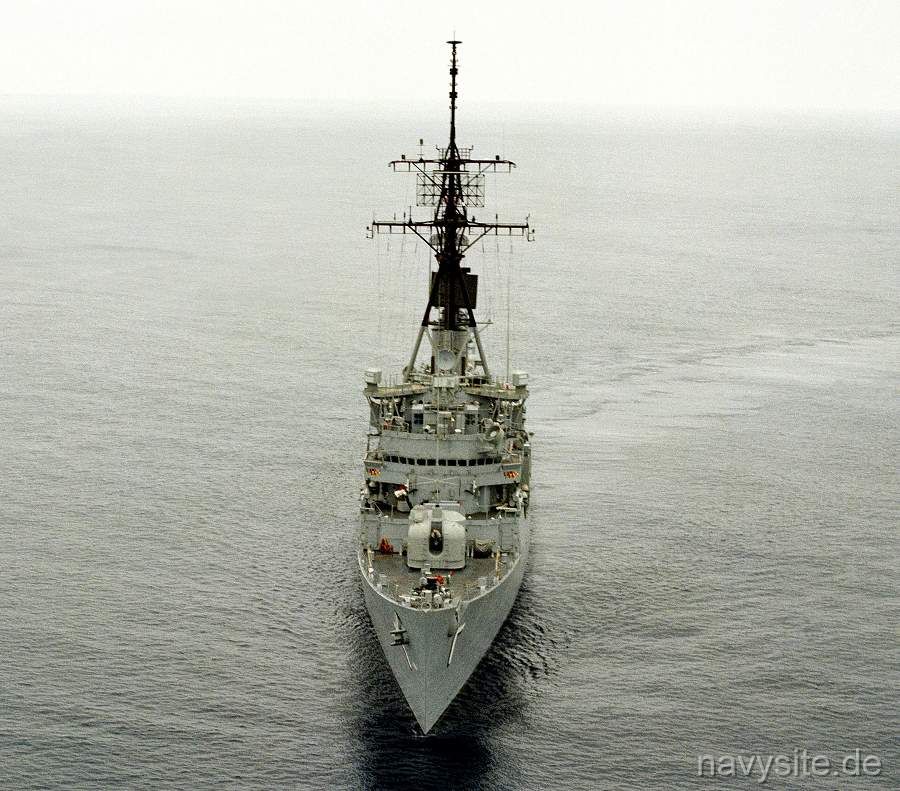
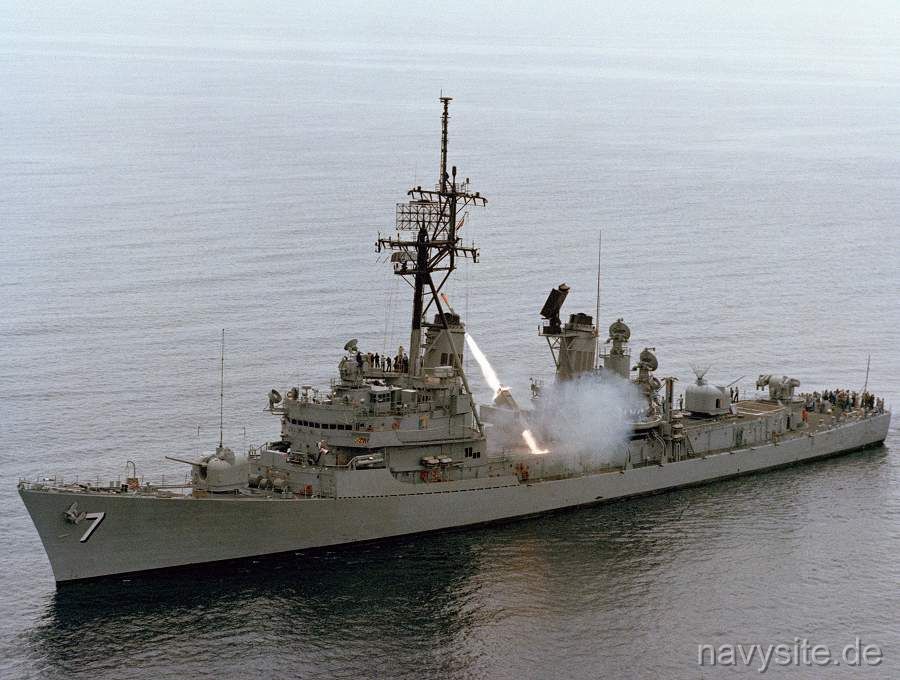
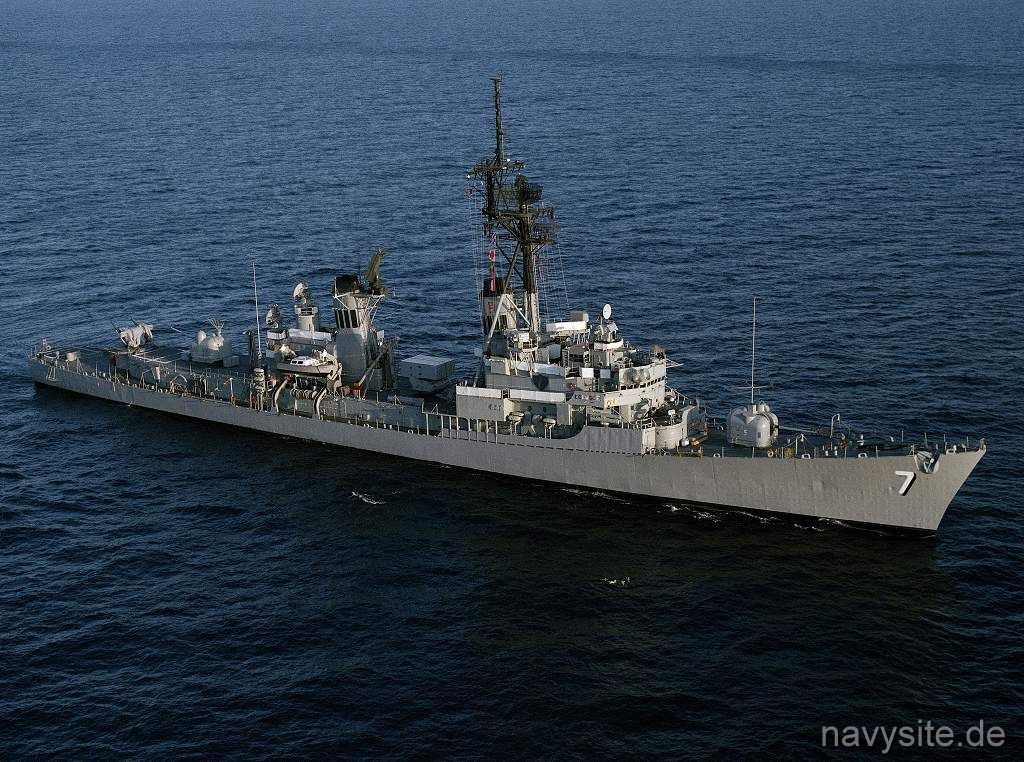
USS HENRY B. WILSON was the sixth CHARLES F. ADAMS - class guided missile destroyer and the first ship in the Navy named after Admiral Wilson. The ship was also the first ship of her size to be side-launched and when launched was the largest warship ever constructed on the Great Lakes. Because of these unique circumstances, she was christened not with the traditional champagne but with a bottle filled with water from the Great Lakes, the St. Lawrence River, and the Atlantic Ocean.
Decommissioned on October 2, 1989, and stricken from the Navy list on January 26, 1990, HENRY B. WILSON was sold to Consolidated Minerals for conversion into a power barge but was repossessed by the Navy on March 22, 1999. The HENRY B. WILSON spent the next years berthed at Benicia, CA, as part of the Suisun Bay Reserve Fleet before she was towed to Mare Island in preparation for her SINKEX. The HENRY B. WILSON was finally sunk as a target on August 15, 2003, off the coast of southern California.
| General Characteristics: | Awarded: March 28, 1957 |
| Keel laid: February 28, 1958 | |
| Launched: April 22, 1959 | |
| Commissioned: December 17, 1960 | |
| Decommissioned: October 2, 1989 | |
| Builder: Defoe Shipbuilding, Bay City, Michigan | |
| Propulsion system:4 - 1200 psi boilers; 2 geared turbines | |
| Propellers: two | |
| Length: 437 feet (133.2 meters) | |
| Beam: 47 feet (14.3 meters) | |
| Draft: 20 feet (6.1 meters) | |
| Displacement: approx. 4,500 tons | |
| Speed: 31+ knots | |
| Aircraft: none | |
| Armament: two Mk 42 5-inch/54 caliber guns, | |
| Crew: 24 officers and 330 enlisted |
 back to top go to the end of the pageback to top go to the end of the page
Crew List:
This section contains the names of sailors who served aboard USS HENRY B. WILSON. It is no official listing but contains the names of sailors who submitted their information.
back to top go to the end of the pageback to top go to the end of the pageUSS HENRY B. WILSON Cruise Books:
back to top go to the end of the page
Accidents aboard USS HENRY B. WILSON:
| Date | Where | Events |
|---|---|---|
| January 5, 1973 | off Saigon, South Vietnam | USS HENRY B. WILSON suffers an explosion in mount 51 while off Saigon. The explosion destroys a foot of the barrel and injures two crewmen. |
| February 24, 1975 | Subic Bay, Philippines | USS KANSAS CITY (AOR 3) is struck by the HENRY B. WILSON while moored at Subic Bay, Philippines. Both ships suffer minor damage. |
back to top go to the end of the page
About the Ship's Name:
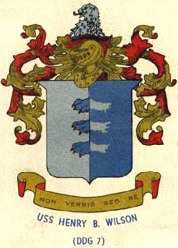
Henry Braid Wilson was born 23 February 1861 at Camden, N.J., and graduated from the Naval Academy in 1881. During the early days of his career he served in TENNESSEE and SARATOGA and on coast survey expeditions to the Bering Sea. During the Spanish-American war Wilson was attached to gunboat BANCROFT and was commended for bravery. In the years that followed he served in many ships, and was PENNSYLVANIA's first commanding officer in 1916. He commanded the Atlantic Fleet's patrol forces during the First World War, and was responsible for the safe convoying of troops and supplies to Europe. For his outstanding service Wilson was awarded both the Navy and War Department Distinguished Service Medals. Following the war, he was Commander-in-Chief U.S. Atlantic Fleet and later the Battle Fleet commander. In 1921 Admiral Wilson took over as Superintendent of the Naval Academy, and in his 4 years at Annapolis did much to raise its academic standing and improve the quality of education. Admiral Wilson retired in 1925 after nearly 50 years of service as seaman, leader, and educator. He died 30 January 1954 at New York City.
back to top go to the end of the pageUSS HENRY B. WILSON History:
USS HENRY B. WILSON, a CHARLES F. ADAMS-class guided-missile destroyer built by Defoe Shipbuilding in Bay City, Michigan, was laid down on February 28, 1958, side-launched into the Saginaw River on April 22, 1959 - the largest warship yet constructed on the Great Lakes and the first of her size to be side-launched - and commissioned on December 17, 1960. Following shakedown in the Caribbean, she reached her initial homeport at San Diego in early May 1961 and spent the remainder of that year proving her Tartar missile battery and integrating with carrier task groups in Eastern Pacific exercises.
The destroyer made her first Western Pacific deployment on January 6, 1962, entering Seventh Fleet routines that included calls at Pearl Harbor and Yokosuka and anti-submarine warfare exercises around Japan and the Philippines before returning to the United States on July 19, 1962. Training and missile firings off California filled late 1962 and most of 1963 until she sailed again on October 17, 1963, in company with KITTY HAWK (CVA 63) for a second WestPac cruise that alternated between carrier plane-guard duty and presence operations in the Philippine Sea. She arrived back at San Diego on April 16, 1964.
Her third Far East tour began on June 4, 1965. After arriving Subic Bay on June 21, HENRY B. WILSON served as flagship for Destroyer Squadron 21 and, from July 31, took up Gulf of Tonkin radar picket and rescue stations as U.S. naval air operations over North Vietnam expanded. She combined air defense and search-and-rescue coverage with coastal gunfire support, then escorted MIDWAY (CV 41) out of theater and reached San Diego on November 24, 1965. After a year on the U.S. West Coast, she departed again on November 5, 1966. By December 23 she had resumed Vietnam picket duty. From January through March 1967 she alternated South China Sea patrols, Tonkin Gulf SAR, and naval gunfire missions ashore, returning to San Diego in early May. These deployments situated the ship within the early phases of Operation Rolling Thunder and the growing need for destroyers to guard carriers at "Yankee Station", interdict coastal logistics, and deliver call-for-fire to allied forces ashore.
Combat intensified in 1968 as the Navy expanded Operation Sea Dragon to disrupt North Vietnamese coastal traffic and strike infrastructure north of the DMZ. HENRY B. WILSON's Vietnam service that year included repeated naval gunfire engagements and hazardous coastal patrols that drew counter-battery fire (reflected in Combat Action Ribbon dates of May 16 and June 3, 1968). The destroyer's Vietnam duty continued into 1969 and 1970 with cycles of Yankee Station plane-guard, SAR coordination, and gunfire missions. During this period she was credited in fleet reporting with destructive fires against supply sites and movement corridors ashore as U.S. forces pressed interdiction along Routes 1A and 15. She also earned a Meritorious Unit Commendation for November 4, 1969 to April 3, 1970, framing the tempo of those operations.
Operations diversified in 1971-1972 as the regional context shifted from Vietnamization to the Easter Offensive. HENRY B. WILSON's deployment chronology includes Armed Forces Expeditionary Medal credit for July 23 to September 11, 1971, followed by a high-intensity 1972 tour in which she supported mining and interdiction (the "Linebacker" period), executed northern gunline strikes and Sea Dragon sorties, and covered SAR and radar pickets in the Tonkin Gulf. Her awards log records a Navy Unit Commendation from July 16, 1972 to January 21, 1973, and Combat Action Ribbons on November 3 and November 9-10, 1972. On January 5, 1973, while off Saigon, an explosion in 5-inch Mount 51 severed about a foot of the barrel and injured two sailors - a stark reminder of sustained gunfire tempo in the final months before the Paris Accords. After post-deployment stand-down, the ship's administrative record shows homeport activity at San Diego through October 3, 1973, then a shift to Long Beach as the Navy rebalanced Pacific force laydowns.
After the 1973 cease-fire, HENRY B. WILSON remained a forward presence asset as the region unraveled in 1975. On February 24, 1975, at Subic Bay she accidentally struck the replenishment oiler KANSAS CITY (AOR 3) while moored, with only minor damage to both ships. The destroyer then entered the climactic evacuations of spring 1975. During Operation Eagle Pull, April 12, 1975, she provided naval gunfire support and seaward security as U.S. and allied helicopters evacuated Phnom Penh. During Operation Frequent Wind, April 29-30, 1975, she screened the Saigon seaborne evacuation, using her gunfire and presence to deter shore batteries while helicopters and small craft ferried evacuees to U.S. ships offshore. Two weeks later, on May 15, 1975, she was among the primary surface units in the SS MAYAGUEZ recovery off Koh Tang. Her ship's boat ("gig") rescued downed U.S. Air Force helicopter personnel under fire, and that afternoon the merchant crew came aboard HENRY B. WILSON after their release, closing the last combat action of the Vietnam era. These actions earned Armed Forces Expeditionary and Humanitarian Service Medal credits tied to the evacuations and Mayaguez incident.
In the later 1970s and 1980s the ship's pattern settled into peacetime WestPac cycles interleaved with maintenance and training at home. She departed for WestPac on August 10, 1976, and returned March 21, 1977, then again sailed on August 8, 1979, and returned February 14, 1980 - periods characterized by Seventh Fleet exercises with allies, Taiwan Strait and Philippine Sea presence, and routine port calls at Subic Bay, Yokosuka, and Hong Kong typical of the era. Another Western Pacific deployment ran from February 27 to September 21, 1981. Post-Vietnam modernization gradually shifted her weapons suite from Tartar to SM-1 and added Harpoon capability while retaining the Mk-42 5-inch guns and ASROC, aligning the ship with 1980s integrated air/surface/ASW doctrine.
The destroyer embarked again on March 16, 1984, for a WestPac that concluded on October 2, 1984, before preparing for a combined Western Pacific-Indian Ocean cruise from September 15, 1986 to March 14, 1987, that reflected the Navy's Indian Ocean presence mission of the late Cold War. She sailed on her final deployment on December 2, 1988, operating in the Western Pacific and Indian Ocean before returning on June 1, 1989. Across these late-career cruises she continued the familiar mix of carrier escort, air-defense picket, anti-submarine exercises, and multinational port visits that underpinned alliance relationships from Northeast Asia to the Arabian Sea.
USS HENRY B. WILSON was decommissioned on October 2, 1989, and stricken on January 26, 1990. Initially sold for conversion to a power barge on April 15, 1994, she was repossessed by the Navy in March 1999 and held in the Suisun Bay Reserve Fleet before final disposal. On August 15, 2003, off Southern California, she was expended as a target during a SINKEX - an end common to many Cold War combatants that also yielded valuable live-fire data - closing the record of a destroyer that had spanned early missile-age experiments, years of Vietnam combat and evacuation work, and a long post-war arc of deterrence deployments in the Pacific and Indian Oceans.
back to top go to the end of the pageHomeports of USS HENRY B. WILSON:
| Period | Homeport |
|---|---|
| commissioned at Boston, Mass. | |
| 1960 - 1982 | San Diego, Calif. |
| 1982 - 1982 | Portland, Or. (Overhaul) |
| 1982 - 1989 | San Diego, Calif. |
back to top go to the end of the pageUSS HENRY B. WILSON Image Gallery:
 |  | 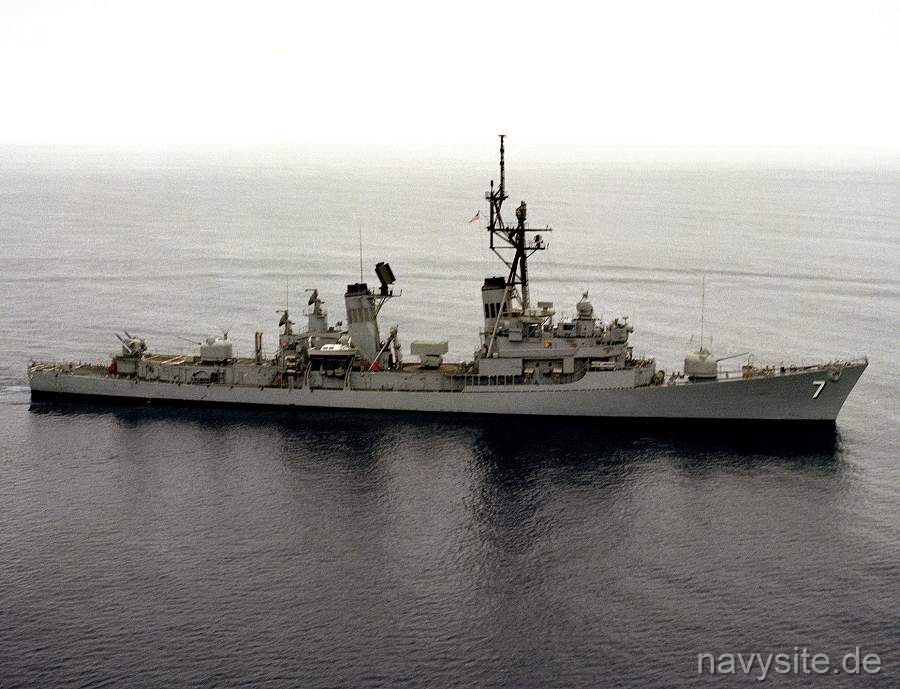 |  | 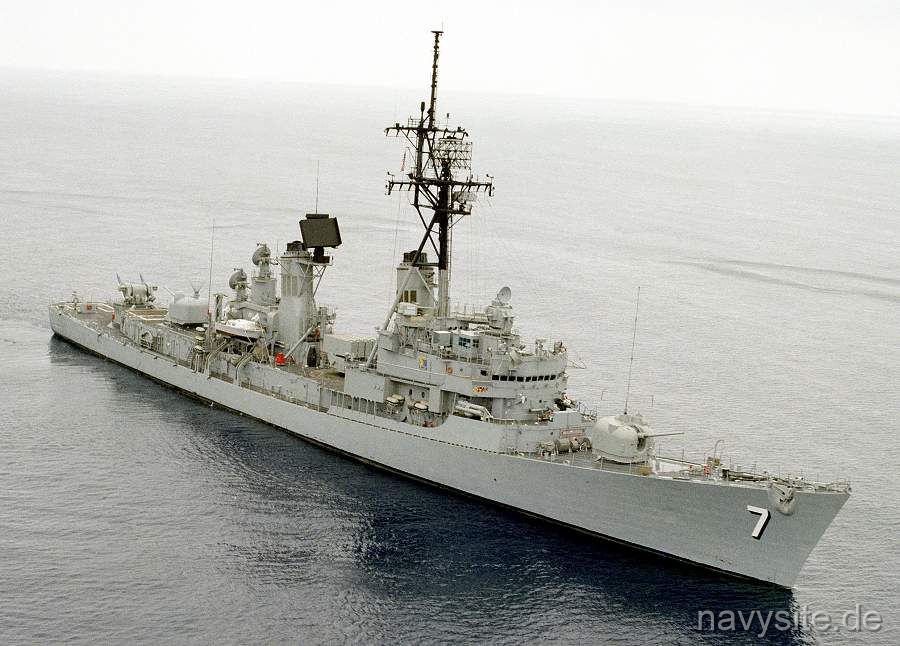 |
 |  |  |
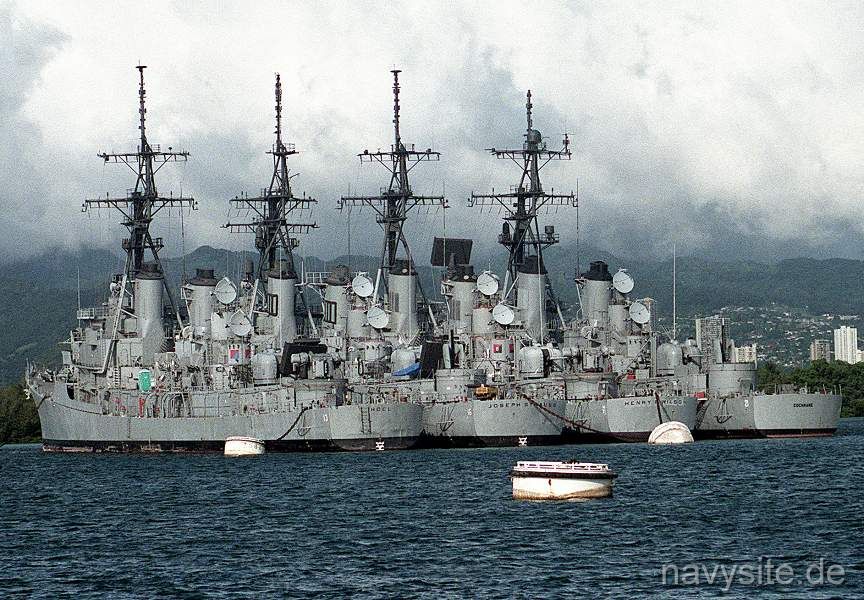
The photo below is an official US Navy photo taken on June 1, 1991. It shows four CHARLES F. ADAMS - class ships laid up at the Pearl Harbor Naval Inactive Ship Maintenance Facility. Visible are (from left to right): HOEL (DDG 13), JOSEPH STRAUSS (DDG 16), HENRY B. WILSON, and COCHRANE (DDG 21).
 |
back to top
 Back to Destroyer list. Back to ships list. Back to selection page. Back to 1st page.