
Search the Site with

|
Search the Site with
|
 General Characteristics Crew List Memorabilia Cruise Books and Pamphlets History Homeports About the Name "Foster" Commanding Officers About the Ship's Coat of Arms Patch Gallery Image Gallery to end of page
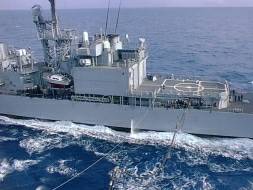 |  | 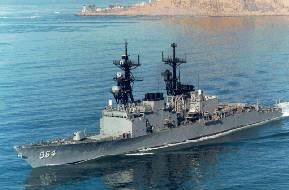 |
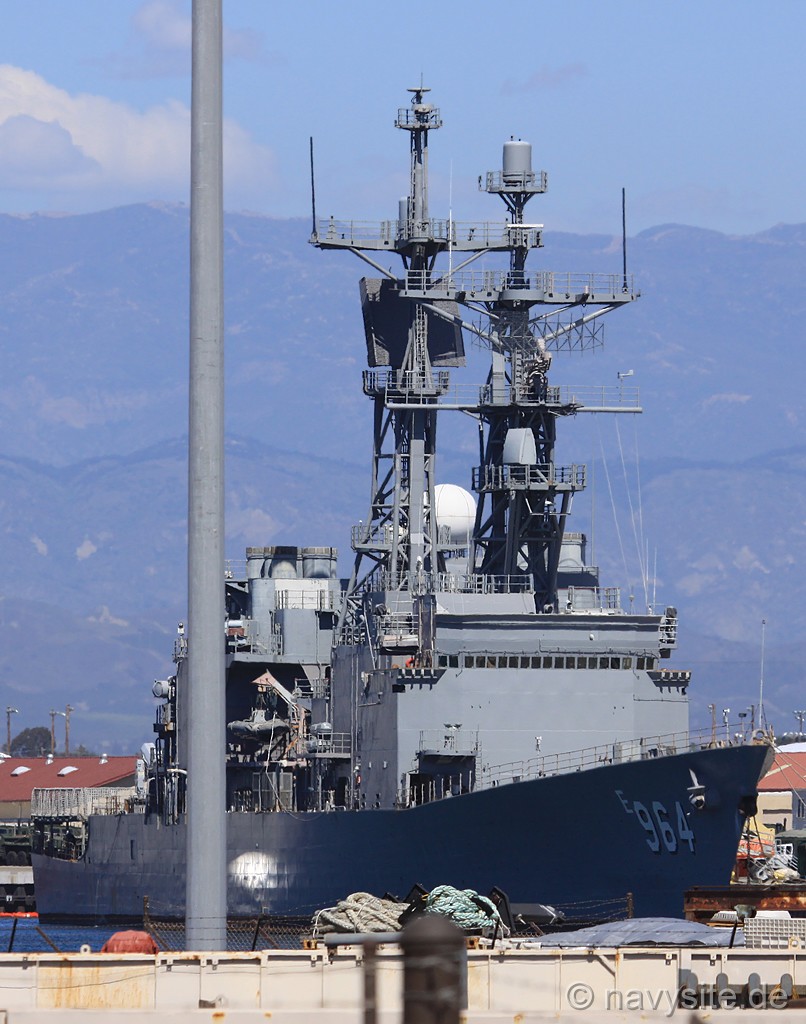
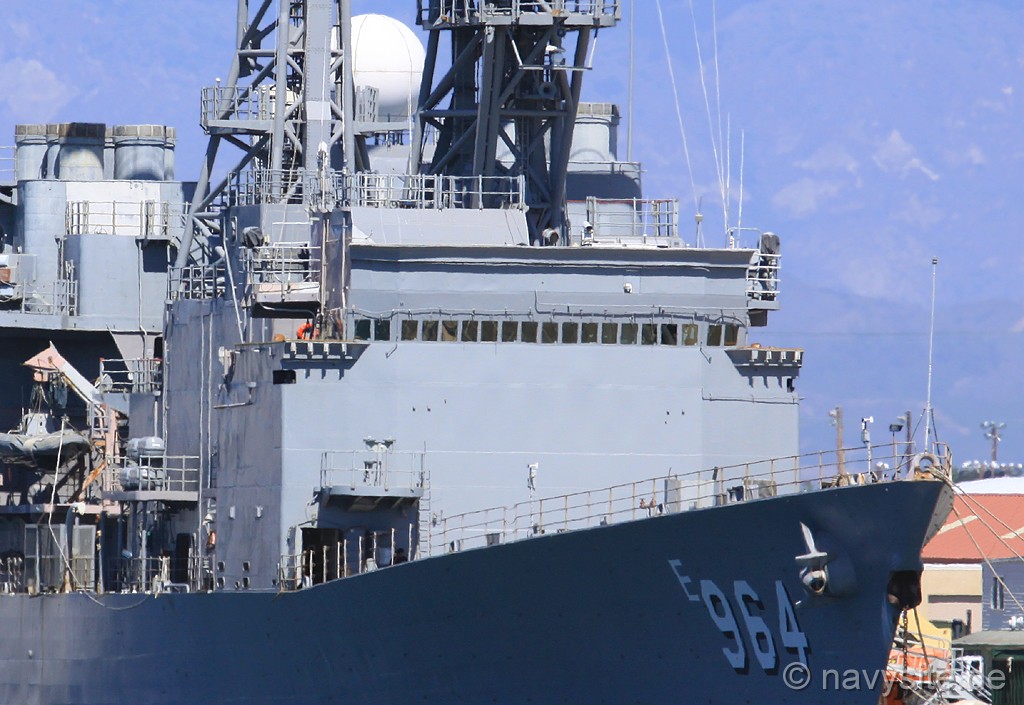
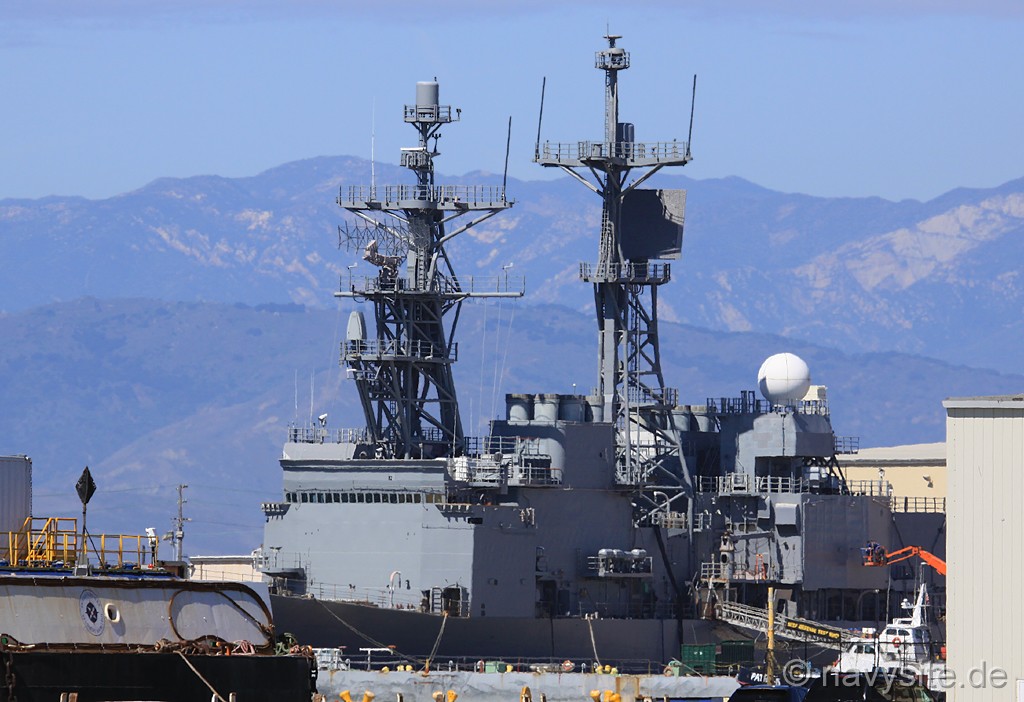
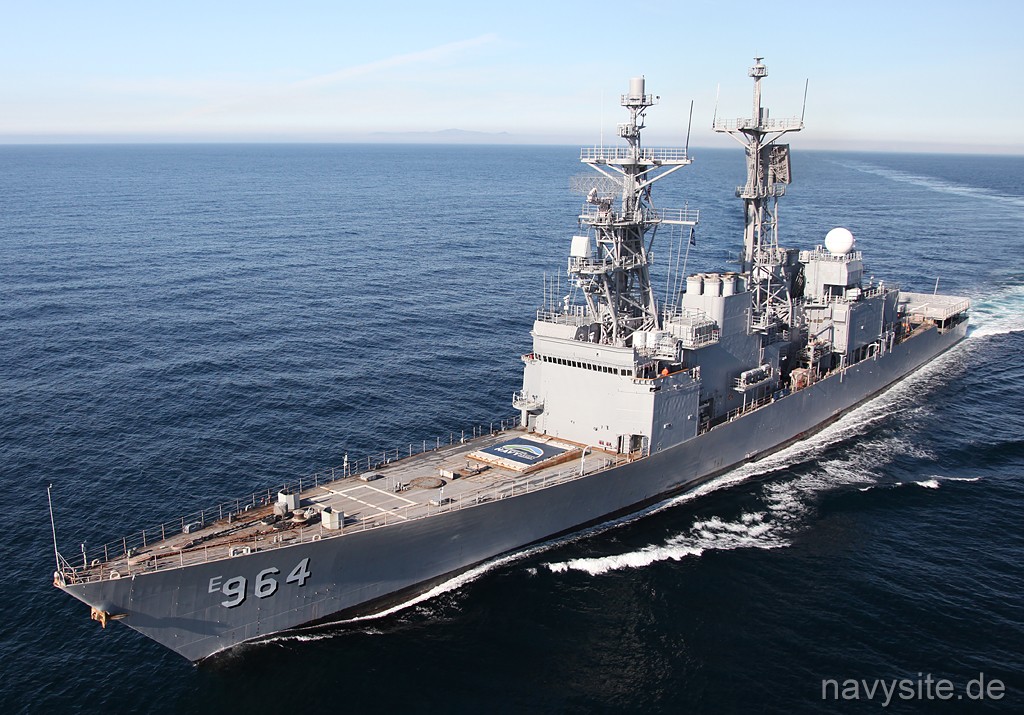
USS PAUL F. FOSTER was the second ship in the SPRUANCE - class of destroyers and the first ship in the Navy named after Vice Admiral Paul F. Foster. Last homeported in Everett, Wash., the PAUL F. FOSTER is currently at Port Hueneme, Calif., serving as EDD 964 as the Navy’s new Self Defense Test Ship (SDTS).
| General Characteristics: | Keel Laid: February 6, 1973 |
| Launched: February 23, 1974 | |
| Commissioned: February 21, 1976 | |
| Decommissioned: March 14, 2003 | |
| Builder: Ingalls Shipbuilding, West Bank, Pascagoula, Miss. | |
| Propulsion system: four General Electric LM 2500 gas turbine engines | |
| Propellers: two | |
| Blades on each Propeller: five | |
| Length: 564,3 feet (172 meters) | |
| Beam: 55,1 feet (16.8 meters) | |
| Draft: 28,9 feet (8.8 meters) | |
| Displacement: approx. 9,200 tons full load | |
| Speed: 30+ knots | |
| Aircraft: two | |
| Armament: two | |
| Crew: approx. 340 |
 back to top go to the end of the pageback to top go to the end of the page
Crew List:
This section contains the names of sailors who served aboard USS PAUL F. FOSTER. It is no official listing but contains the names of sailors who submitted their information.
back to top go to the end of the pageback to top go to the end of the pageUSS PAUL F. FOSTER Cruise Books and Pamphlets:
back to top go to the end of the pageHistory of USS PAUL F. FOSTER:
USS PAUL F. FOSTER was designed and built by Ingalls Shipbuilding Division of Litton Industries in Pascagoula, Mississippi, and was commissioned on 21 February 1976. As the initial DD 963 class destroyer assigned to the Pacific Fleet, PAUL F. FOSTER had many milestone firsts, including successfully firing NATO
Operating out of San Diego, California, PAUL F. FOSTER became the first SPRUANCE class destroyer to deploy to the Western Pacific in March 1978. The ship deployed again in 1979 and 1982, serving in the Indian Ocean and Western Pacific.
PAUL F. FOSTER joined Destroyer Squadron NINE and moved to its new homeport of Long Beach, California, in August 1983. PAUL F. FOSTER became the Navy's first "all electric destroyer" after major modifications at Long Beach Naval Shipyard, which included the addition of a fourth ship's service gas turbine generator.
On 29 August 1987, Paul F. Foster began its fourth Western Pacific deployment as Destroyer Squadron NINE's flagship, leading a five ship Surface Action Group and participating in several major allied fleet exercises. During a fifth deployment in August 1986 with the USS CARL VINSON (CVN 70) Battle Group, PAUL F. FOSTER was awarded the Meritorious Unit Citation for its performance in operation KERNAL POTLATCH in the North Pacific and Bering Sea.
 From July 1987 through July 1988, PAUL F. FOSTER completed a regular overhaul at Northwest Marine Iron Works in Portland, Oregon. During the overhaul the ship received over 55 major ship alterations, including installation of the
PAUL F. FOSTER departed on its sixth Western Pacific/Indian Ocean deployment on 24 February 1989 in company with the USS RANGER (CV 61) Battle Group. Conducting North Arabian Sea operations, the ship was awarded the Armed Forces Expeditionary Medal.
On 8 December 1990, PAUL F. FOSTER departed Long Beach on its seventh overseas deployment to the Arabian Gulf in support of Operations Desert Shield and Desert Storm. The first ship to fire
Deploying for the eighth time on 20 July 1992, PAUL F. FOSTER returned to the Arabian Gulf witse it operated in support of Operation Desert Storm-Soutitsn Watch while participating in numerous bilateral exercise with Arabian Gulf Nations.
During the ship's most recent deployment, its ninth, Paul F. FOSTER served with USS CARL VINSON Battle Group and was the first ship on the scene to provide assistance to a burning ocean going tug, GLORIOUS CITY, putting out the fire and saving it's crew of seven.
Upon returning from deployment on 20 October 1994, PAUL F. FOSTER entered into a regular overhaul at Long Beach Naval Shipyard where several of the latest technology weapons, sensors and engineering systems were added. After completion of overhaul, PAUL F. FOSTER moved to its new homeport of Everett, Washington, arriving in November 1995.
During the ship's tenth deployment which began February 21, 1997, PAUL F. FOSTER was a part of the multinational force in the Arabian Gulf, enforcing United Nations sanctions against Iraq.
PAUL F. FOSTER departed for its eleventh deployment on January 27, 1999. While serving as part of the Pacific Middle East Force, PAUL F. FOSTER participated in OPERATION IRON SIREN, EAGER SENTRY, and ARABIAN GAUNTLET. In addition, the ship conducted boarding's in support of United Nations Sanctions against Iraq.
On January 12, 2001 USS PAUL F. FOSTER departed Naval Station Everett, WA, for a six-month Middle East Force deployment on time and ready to carry out any mission tasking.
The US Navy Surface Force was scheduled to begin, in the summer of 2002, an initiative to test the effectiveness of deploying a single ship for 18-months while swapping out crews at six-month intervals. Called Sea Swap, this initial two-phased initiative would involve three SPRUANCE-class destroyers -- USS FLETCHER (DD 992), USS KINKAID (DD 965) and USS OLDENDORF (DD 972), and three ARLEIGH BURKE-class guided missile destroyers -- USS HIGGINS (DDG 76), USS JOHN PAUL JONES (DDG 53) and USS BENFOLD (DDG 65). For the DD phase, FLETCHER and her crew would deploy with their battle group, but after six months, only the crew would return. The ship would remain deployed and be manned by the crew from KINKAID. After completing their training cycle and decommissioning KINKAID, these Sailors would fly to a port in either Australia or Singapore to assume ownership of FLETCHER and steam her back on-station. After six months, they would be replaced by the crew from OLDENDORF who would have completed the same training and decommissioning schedule with their ship before flying out to relieve the KINKAID crew. After four more months on station, the OLDENDORF crew would then bring the ship (FLETCHER) back to the United States where it too would be decommissioned. Additionally, by executing this plan, the Navy would be able to eliminate the deployment of USS PAUL F. FOSTER because the additional on-station time generated by swapping out the crews meant a ship would already be in theater meeting that requirement.
USS PAUL F. FOSTER was decommissioned on March 14, 2003, at its homeport of Everett, Wash.
back to top go to the end of the page
Homeports of USS PAUL F. FOSTER:
| Period | Homeport |
|---|---|
| commissioned at Pascagoula, Miss. | |
| 1976 - 1983 | San Diego, Calif. |
| 1983 - 1995 | Long Beach, Calif. |
| 1995 - 2003 | Everett, Wash. |
back to top go to the end of the pageAbout the Destroyer's Name, about Vice Admiral Paul F. Foster:
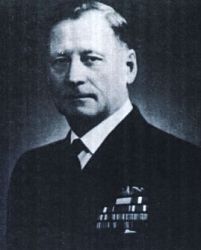 Vice Admiral Paul Frederick Foster was born in Wichita, Kansas, on 25 March 1889. Appointed to the U.S. Naval Academy, Paul Frederick Foster graduated with the class of 1911 and commissioned as an ensign.
Upon graduation, he received orders to cruiser WASHINGTON (CA 11), serving until December of that year, when he was transferred to the newly commissioned battleship UTAH (BB 31). While serving on board UTAH, he participated in the Mexican Campaign and was awarded the Congressional Medal of Honor for “Distinguished conduct in battle engagements of Vera Cruz (21-22 April 1914), fighting at the head of his company, Ensign Foster was eminent and conspicuous in his conduct, leading his men with skill and courage.”
While commanding AL-2 (SS 41), Lt. Cmdr. Foster received the Distinguished Service Medal for “exceptionally meritorious service in a duty of great responsibility in an encounter with an enemy submarine (UB-65) on 10 July 1918, in which the enemy submarine was sunk.”
In January 1924, Lt. Cmdr. Foster received orders to Philadelphia to assist in fitting out light cruiser TRENTON (CL 11), serving on board as Engineer Officer upon the ship’s commissioning in April of that year.
In January 1927, he received the Navy Cross for extraordinary heroism in the aftermath of a turret explosion on board TRENTON. Lt. Cmdr. Foster became the first man to receive all three of the Navy’s highest awards.
Recalled to active duty in 1941 (after resigning his commission in March 1927), Admiral Foster served on the Navy Inspector General’s Staff during World War II, conducting three major inspections at the personal direction of President Franklin D. Roosevelt.
In June 1954, Admiral Foster joined the staff of the Atomic Energy Commission as special assistant to the General Manager for International Activities. Later appointed to the International Atomic Energy Agency in Vienna, Austria, with the rank of Ambassador, Adm. Foster served in the position until 1961. He died in 1972 in Virginia Beach, Va., at the age of 83.
back to top go to the end of the pageUSS PAUL F. FOSTER's Commanding Officers:
| Period | Name |
|---|---|
| February 21, 1976 - April 7, 1978 | Commander George E. Sullivan III, USN |
| April 7, 1978 - May 11, 1980 | Commander Albert L. Kaiss, USN |
| May 11, 1980 - May 17, 1982 | Commander Theodore C. "Ted" Lockhart, USN |
| May 17, 1982 - June 15, 1984 | Commander Laurence H. Turner, Jr., USN |
| June 15, 1982 - November 1, 1986 | Commander Raymond P. Conrad, USN |
| November 1, 1986 - February 11, 1989 | Commander Robert B. Danberg, USN |
| February 11, 1989 - February 23, 1991 | Commander Timothy M. Ahern, USN |
| February 23, 1991 - November 28, 1992 | Commander Edward J. Kujat, USN |
| November 28, 1992 - August 6, 1994 | Commander Kim S. Buike, USN |
| August 6, 1994 - August 4, 1995 | Commander David A. Gelenter, USN |
| August 4, 1995 - June 17, 1997 | Commander David M. Armitage, USN |
| June 17, 1997 - November 6, 1998 | Commander Thomas S. Abernathy, USN |
| November 6, 1998 - June 5, 2000 | Commander Thomas J. Strei, Jr., USN |
| June 5, 2000 - February 11, 2002 | Commander Thomas L. Reese, USN |
| February 11, 2002 - March 14, 2003 | Commander John C. "Chuck" Nygaard, USN |
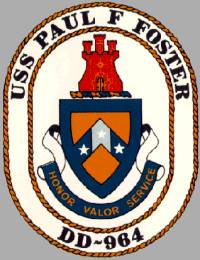
back to top go to the end of the pageThe Coat of Arms of USS PAUL F. FOSTER:The design of the PAUL F. FOSTER Coat of Arms is a composite of emblems representing the many outstanding honors and achievements of Vice Admiral Foster during his long and vigorous service to his country and the Navy.
Within the shield of the Coat of Arms is a chevron also appearing in the blazon of the Foster family. A traditional symbol of support and achievement, the chevron has been divided into three sections. These sections represent the Medal of Honor, the Navy Cross, and the Distinguished Service Medal, all awarded to Admiral Foster during his brilliant career. The three five-pointed stars within the chevron represent his final rank of Vice Admiral.
A triple towered castle forms the crest of the ship's emblem. The same castle appears as part of the Coat of Arms from the port of Vera Cruz, representing where, the Ensign Foster, distinguished himself and earned the Medal of Honor. The tower's red color alludes to the turret explosion on the USS TRENTON and extraordinary heroism in that crisis for which he was awarded the Navy Cross. The navy blue border represents the service during World War I and the sinking of a German submarine, for which he received the Distinguished Service Medal.
Below the shield, on a scroll of navy blue, is the ship's motto: "Honor, Valor, Service", each word having come from the citations accompanying the decorations awarded to Admiral Foster.
back to top go to the end of the pageUSS PAUL F. FOSTER Patch Gallery:
 |
back to top go to the end of the pageUSS PAUL F. FOSTER Image Gallery:
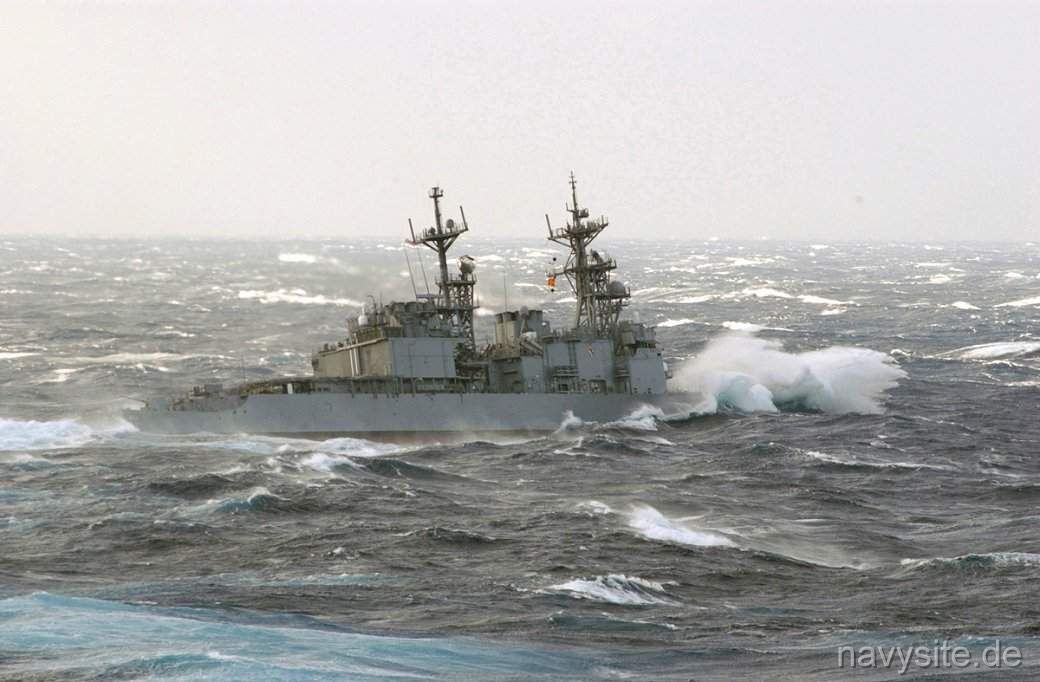 |  | 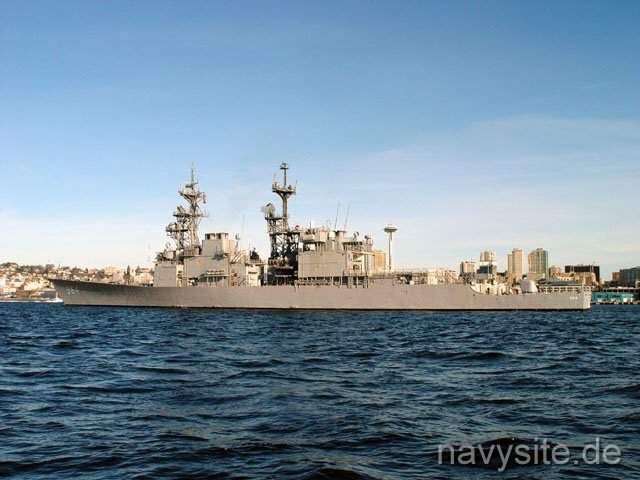 | 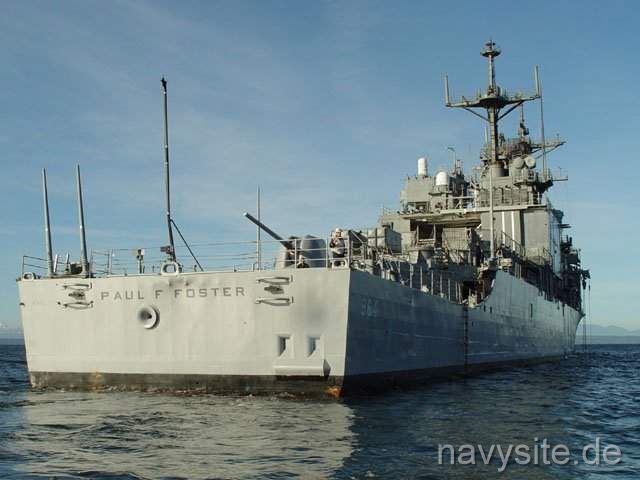 | 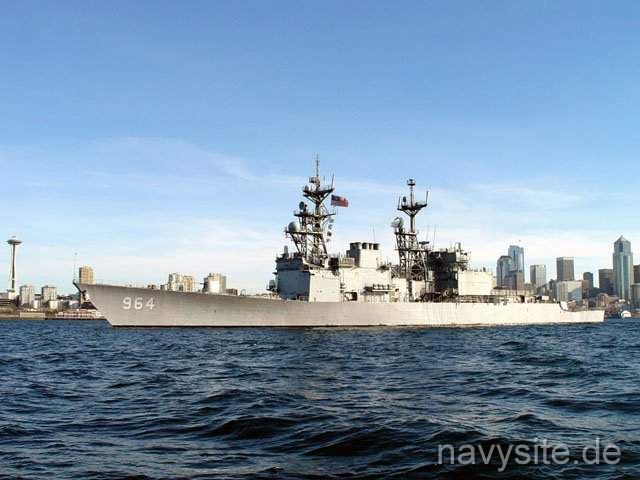 |
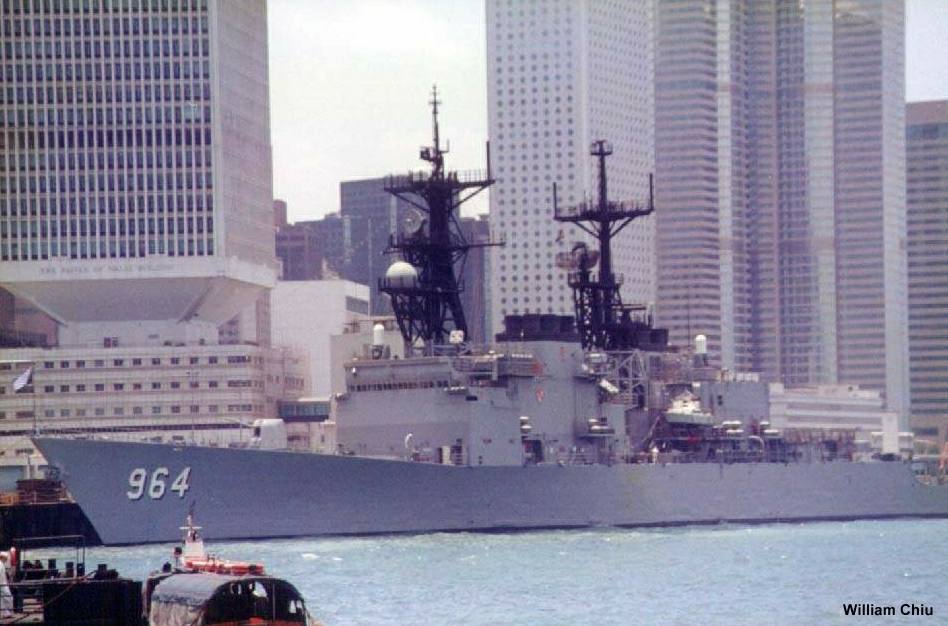
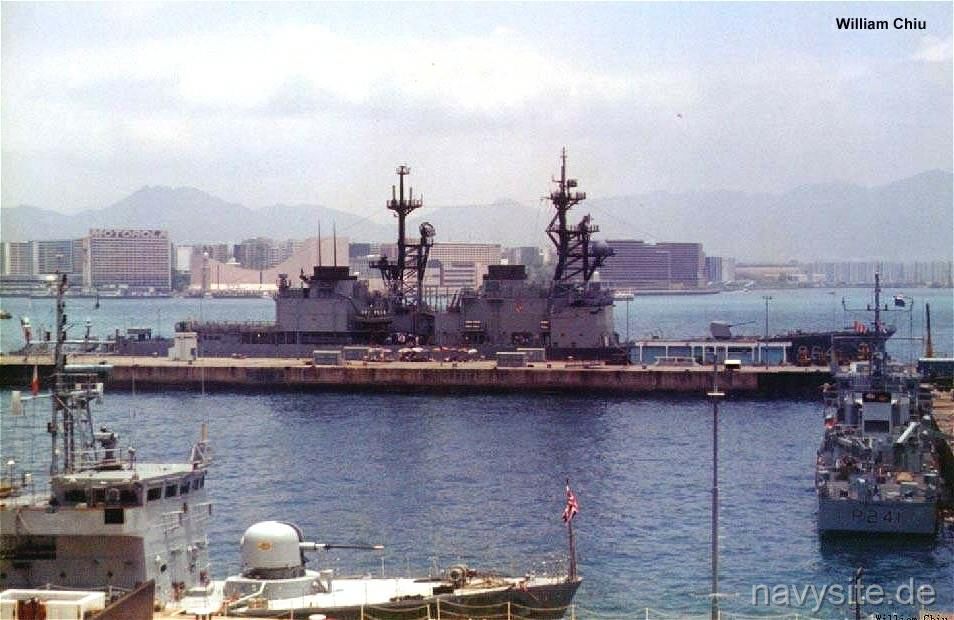
The two photos below were taken by William Chiu when USS PAUL F. FOSTER visited Hong Kong on May 12, 1991.
 |  |
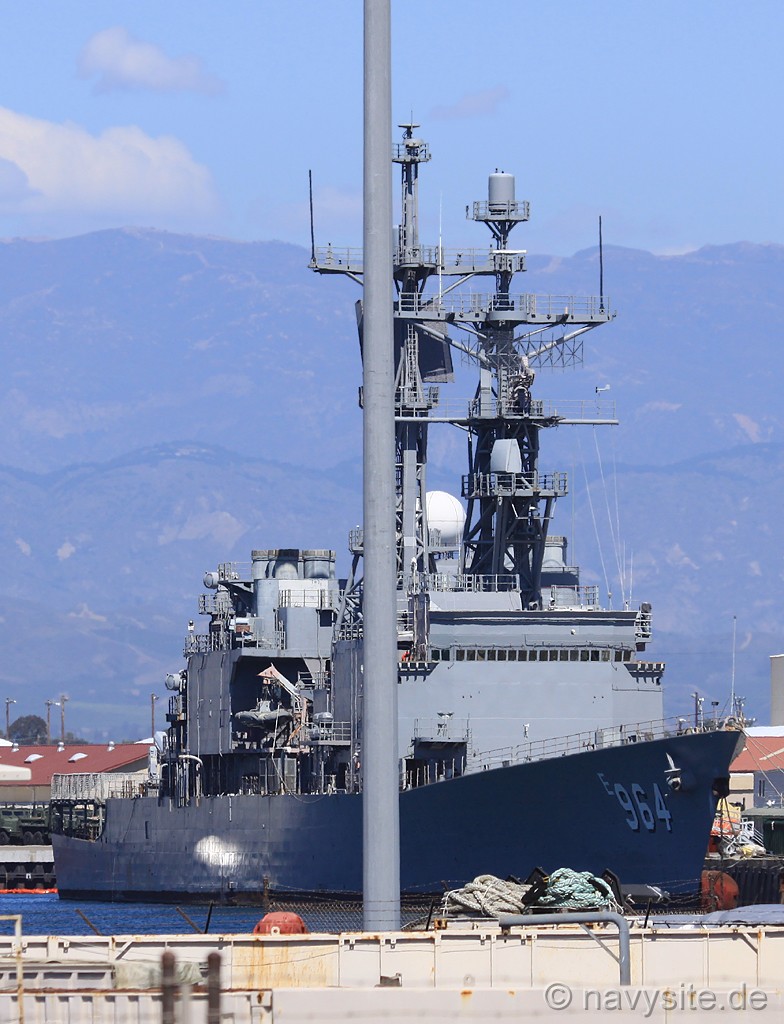
The photos below were taken by me and show the PAUL F. FOSTER as EDD 964 at Port Hueneme, Calif., on October 3, 2011. Unfortunately, at Port Hueneme it's impossible to take unobstructed photos from public places outside the Naval Base. At the time the photos were taken, the PAUL F. FOSTER was the last remaining SPRUANCE - class destroyer.
 |  |  |  |
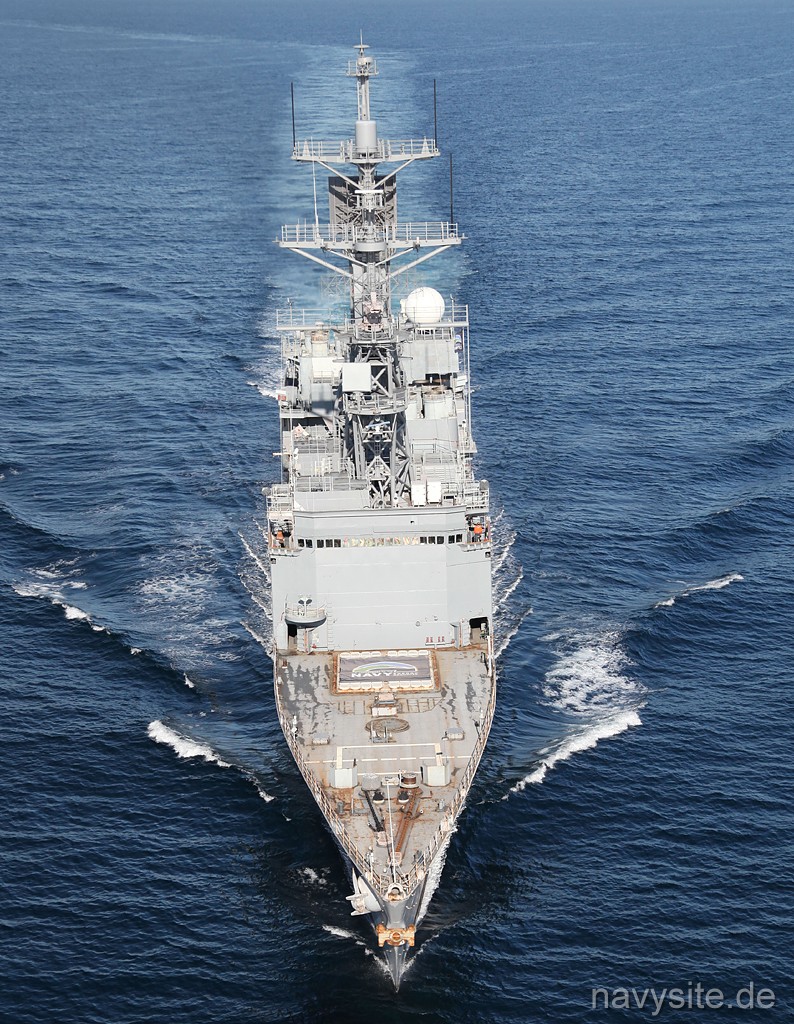
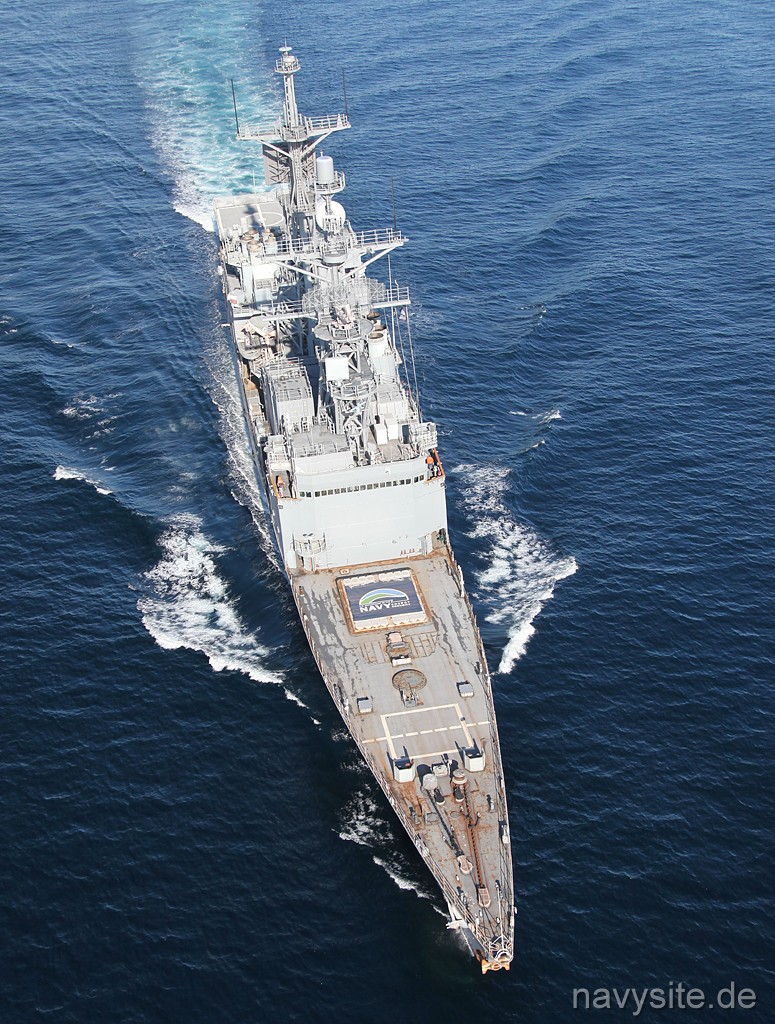
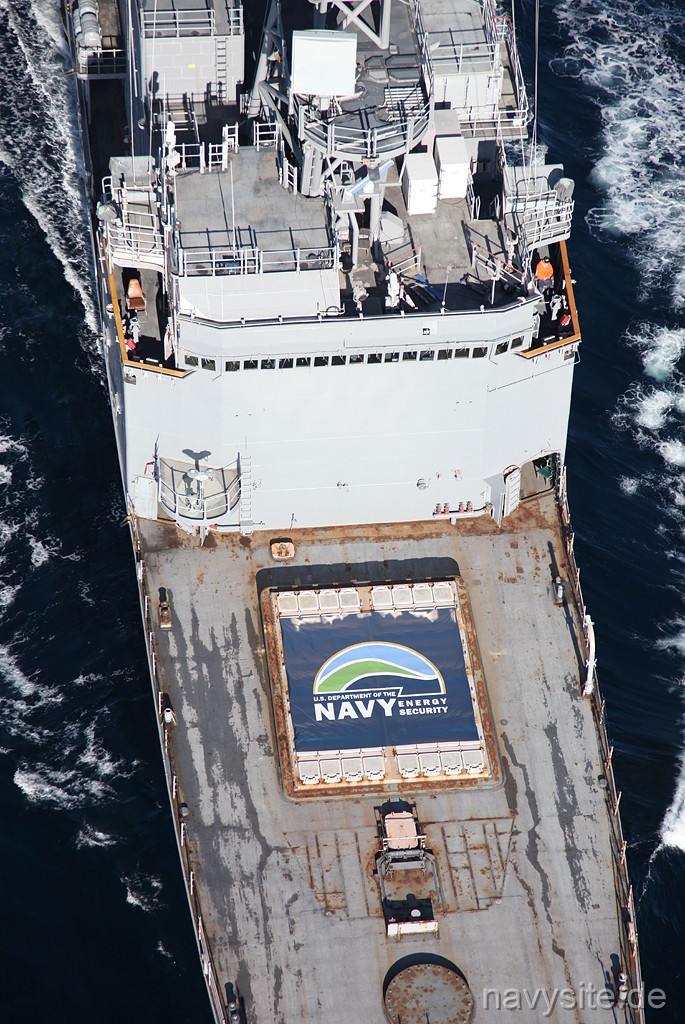
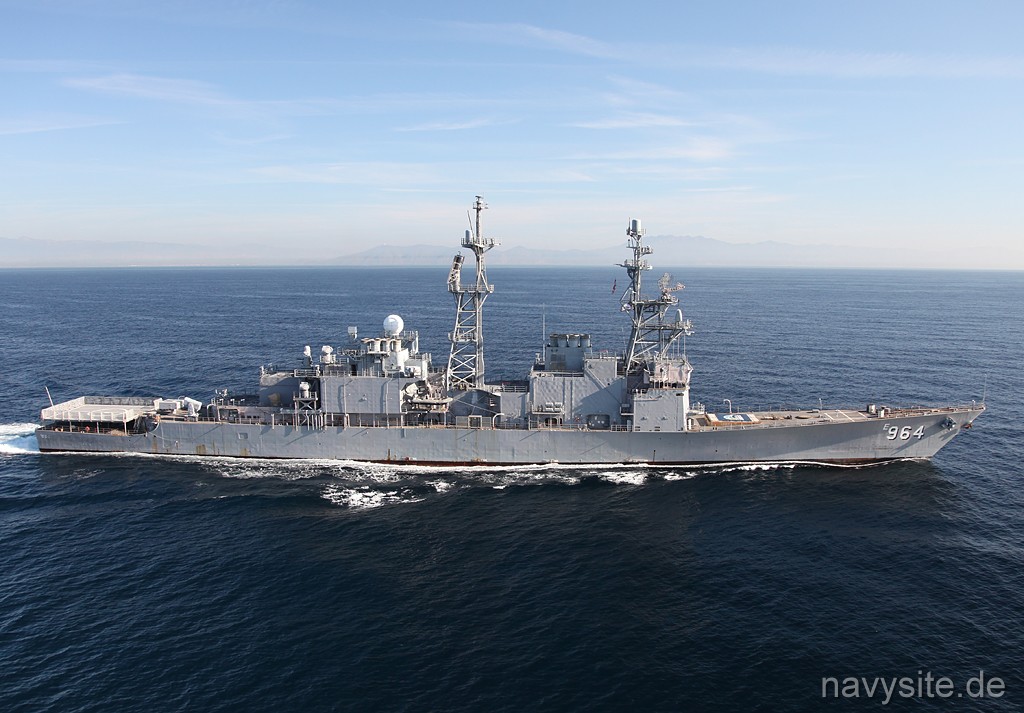
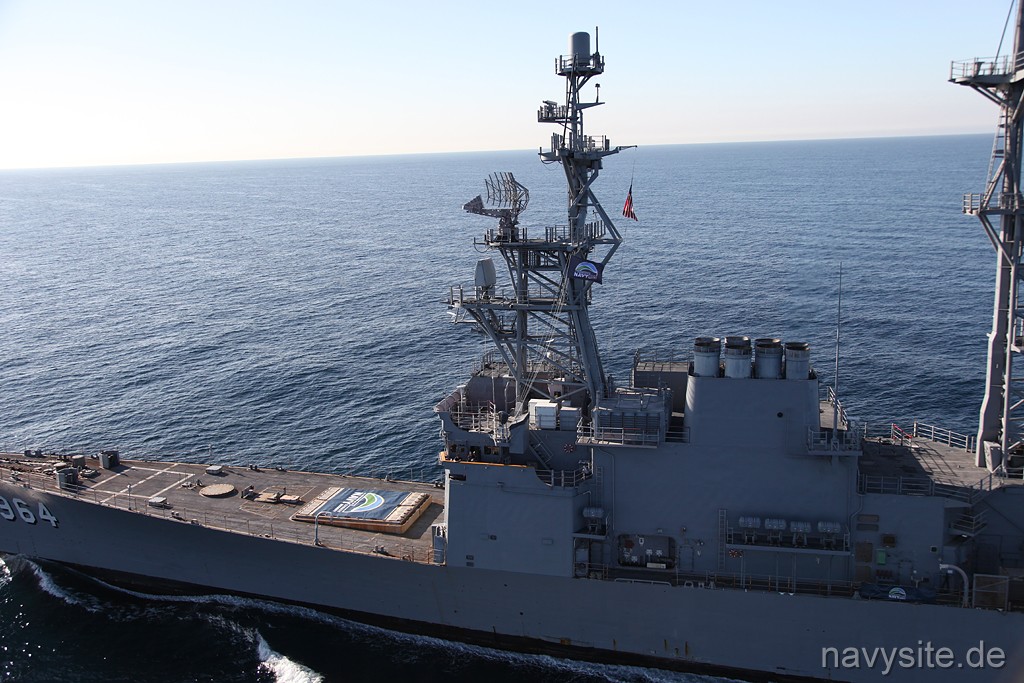
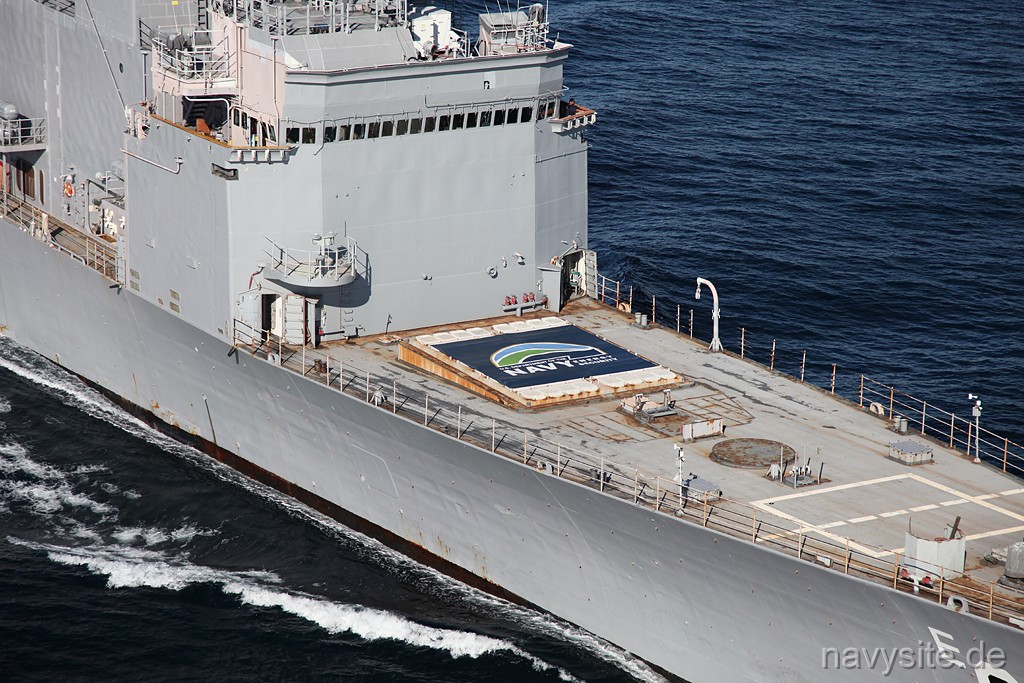
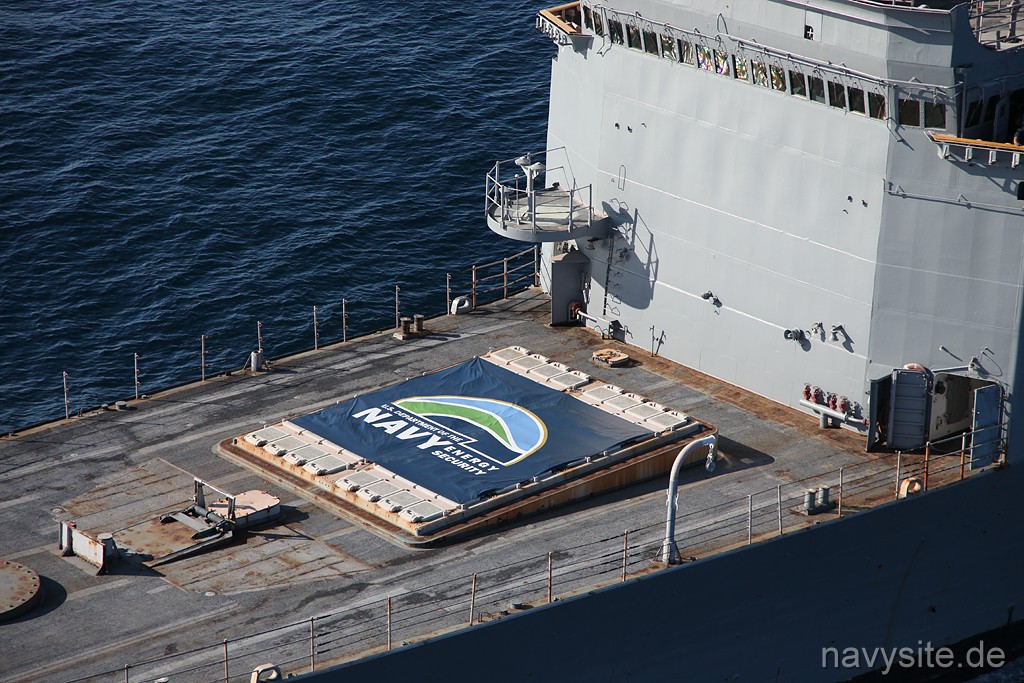
The photos below are official US Navy photos and show the PAUL F. FOSTER on November 17, 2011, off the US west coast conducting a demonstration of shipboard alternative fuel use on a 50-50 blend of an algae-derived, hydro-processed algal oil and petroleum F-76.
 |  |  |  |  |
 |  |  |  |
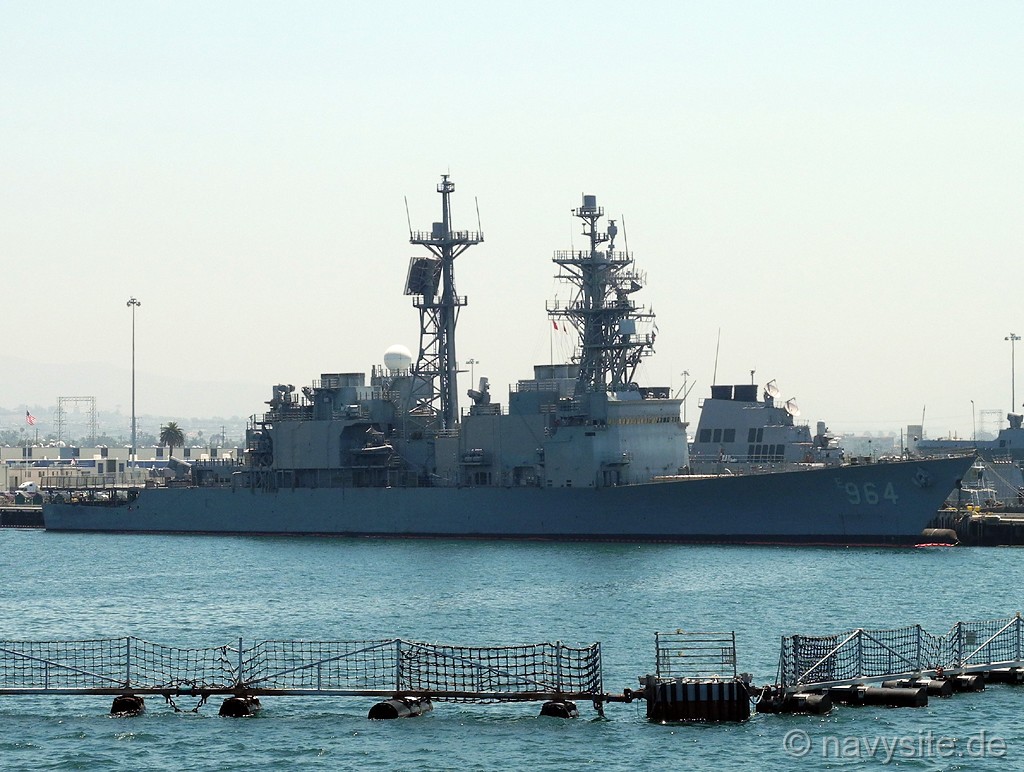
The photo below was taken by John Rebus (Michael) and shows the PAUL F. FOSTER during a visit to Naval Base San Diego, Calif., on June 2, 2016. She is now carrying a Sea RAM system.
 |
back to top
 Back to Destroyers list. Back to ships list. Back to selection page. Back to 1st page.