Search the Site with 
General Characteristics Crew List Memorabilia USS Greeneville History Accidents aboard USS Greeneville About the Name "Greenville" Image Gallery to end of page
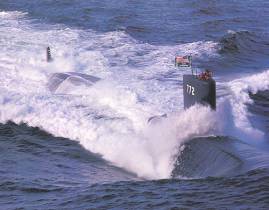
USS Greeneville (SSN 772)

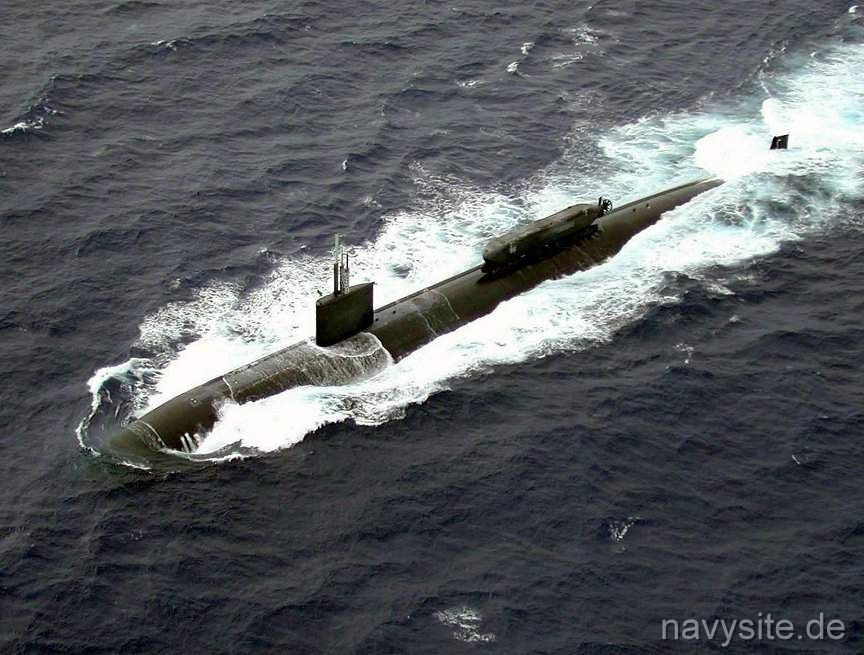
USS GREENEVILLE is the 61st LOS ANGELES class submarine and the 22nd Improved LOS ANGELES class attack submarine.

General Characteristics:Awarded: December 14, 1988
Keel laid: February 28, 1992
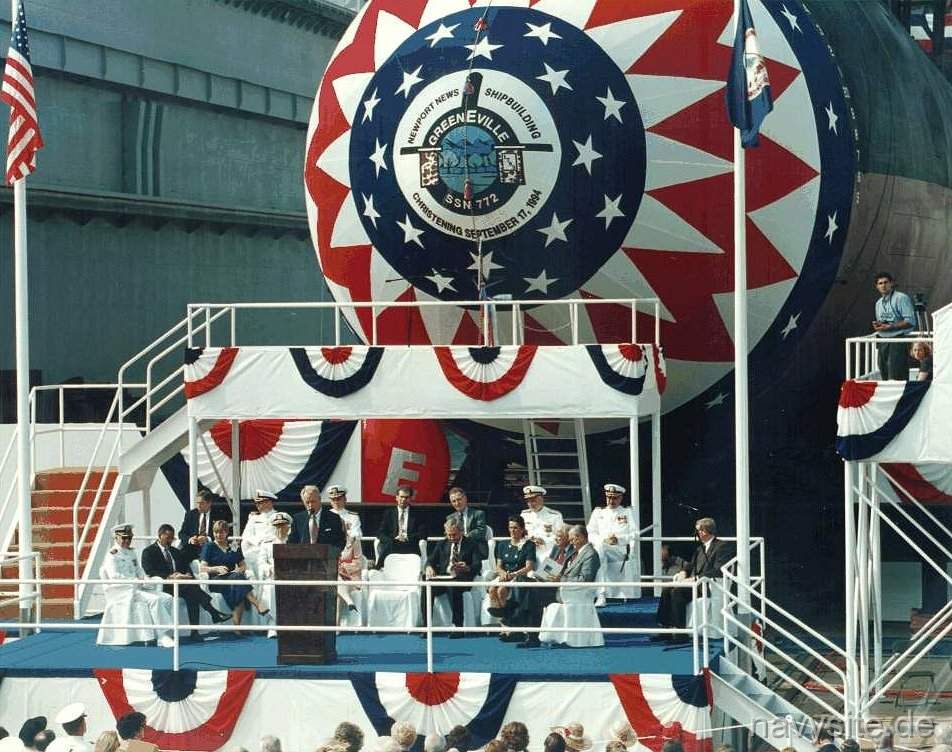
Launched: September 17, 1994
Commissioned: February 16, 1996
Builder: Newport News Shipbuilding Co., Newport News, Va.
Propulsion system: one nuclear reactor
Propellers: one
Length: 360 feet (109.73 meters)
Beam: 33 feet (10 meters)
Draft: 32,15 feet (9.8 meters)
Displacement: Surfaced: approx. 6,300 tons     Submerged: approx. 7,100 tons
Speed: Surfaced: approx. 15 knots     Submerged: approx. 32 knots
Armament: Harpoon and Tomahawk missiles from 12 VLS-tubes, four 533 mm torpedo Tubes for Mk-48 torpedoes, ability to lay mines
Cost: approx. $900 million
Homeport: San Diego, Calif.
Crew: 13 Officers, 116 Enlisted


Back to topback to top  go to endgo to the end of the page


Back to topback to top  go to endgo to the end of the page

Crew List:

This section contains the names of sailors who served aboard USS GREENEVILLE. It is no official listing but contains the names of sailors who submitted their information.


back to top  go to the end of the page


Back to topback to top  go to endgo to the end of the page

History of USS GREENEVILLE:

The nuclear-powered attack submarine USS GREENEVILLE is a late Flight III unit of the LOS ANGELES-class and the only U.S. Navy ship named for the town of Greeneville, Tennessee. The contract for her construction was awarded to Newport News Shipbuilding and Dry Dock Company in Newport News, Virginia, on December 14, 1988, at the end of the Cold War when the U.S. Navy was still expanding its nuclear attack-submarine force. Construction work started around March 1, 1990, and the keel was laid at Newport News in early 1992, marking the formal beginning of the boat's assembly. GREENEVILLE was launched on September 17, 1994, with Tipper Gore, wife of then-Vice President Al Gore, serving as sponsor, and after fitting-out and trials she was commissioned at Naval Station Norfolk on February 16, 1996, with Commander Duane B. Hatch as her first commanding officer.

Following commissioning, GREENEVILLE spent much of 1996 in the western Atlantic and off the U.S. East Coast conducting the usual series of post-delivery and shakedown trials. These months were used to verify propulsion-plant reliability, quieting performance and weapons systems, and to train and certify the crew in basic submarine operations. In the second half of 1996, the boat entered a shipyard availability that extended into early 1997. During this period she received additional acoustic quieting improvements and unique modifications that allowed her to carry the Advanced SEAL Delivery System and a Dry Deck Shelter, reflecting a broader post-Cold War emphasis on clandestine special-operations capabilities for attack submarines.

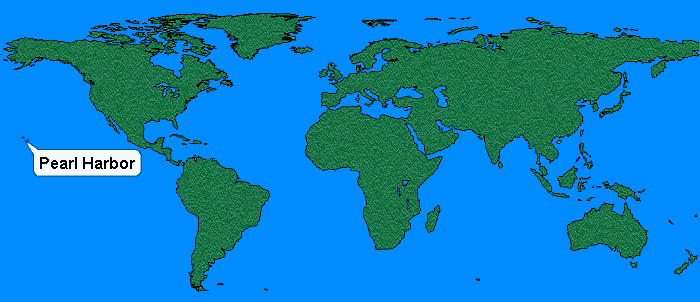
In March 1997, GREENEVILLE shifted homeport from Norfolk to Pearl Harbor, Hawaii, joining Submarine Squadron ONE and moving from the Atlantic to the Pacific Fleet. From that point, her operations were largely oriented toward the western Pacific and Indian Ocean, in support of U.S. 7th Fleet and, later, the Middle East commitments of 5th Fleet. Through 1997, she conducted local operations in the Hawaiian operating areas, tactical training, and certifications to prepare for forward deployments from her new base.

In 1998, the submarine's schedule became more precisely documented. From January 5-23, 1998, GREENEVILLE was at sea undergoing a Tactical Readiness Evaluation, testing the crew's ability to conduct submerged operations, contact management, weapons employment and damage control under realistic conditions. Further underway periods followed from March 16-April 2 and June 15-July 3, combining training with workups for deployment. On July 22, 1998, she departed Pearl Harbor for a six-month Western Pacific deployment, her first extended cruise from Hawaii. During this WESTPAC 98/99 she operated in the 7th Fleet area at a time when the United States was focused on maintaining post-Cold War stability in Northeast and Southeast Asia, monitoring developments on the Korean Peninsula and in the Taiwan Strait. The boat made port calls at Yokosuka and Sasebo in Japan and at Apra Harbor, Guam, giving the crew liberty and allowing minor maintenance while also demonstrating U.S. undersea presence to allies. A more southerly leg of the cruise took GREENEVILLE into the Strait of Malacca and the Indian Ocean. On September 14, she entered Port Klang, Malaysia, for a five-day visit to Kuala Lumpur that underscored growing U.S.-Southeast Asian naval ties during the Asian financial-crisis period. Afterward, the submarine returned north, with a port visit to Sasebo from late September into mid-October. GREENEVILLE completed the deployment and returned to Pearl Harbor on January 22, 1999.

Open sources provide comparatively few details for 1999-2000, but GREENEVILLE remained based at Pearl Harbor with Submarine Squadron ONE, conducting a mix of local training, fleet exercises and shorter deployments. These years coincided with a U.S. strategic focus on containing Iraqi non-compliance with U.N. resolutions and maintaining a forward presence in East Asia. Attack submarines such as GREENEVILLE contributed through intelligence collection, anti-submarine warfare (ASW) exercises and Tomahawk land-attack readiness, even when specific patrol details remain classified.

On February 9, 2001, GREENEVILLE became involved in one of the most serious peacetime incidents in modern U.S. submarine history. While conducting a distinguished-visitor embarkation off Oahu, the crew executed an emergency main-ballast-tank blow to demonstrate a rapid surfacing maneuver. As the submarine rocketed to the surface about 9 nautical miles south of Oahu, she collided with the Japanese fishing-training ship EHIME MARU, a high-school training vessel from Ehime Prefecture. EHIME MARU sank in less than ten minutes. Of the 35 people on board, nine - four students, two teachers and three crew members - were lost. The collision triggered an international outcry and a high-profile investigation. GREENEVILLE's commanding officer, Commander Scott Waddle, accepted responsibility, was relieved, faced a court of inquiry and ultimately received non-judicial punishment rather than court-martial. He retired later that year. The U.S. government undertook salvage operations to recover the victims and parts of EHIME MARU, and negotiated compensation agreements with Japanese authorities and families, in an effort to repair bilateral relations strained by the incident.

GREENEVILLE herself suffered damage to her rudder and parts of the sail and hull. She entered dry dock at Pearl Harbor Naval Shipyard for repairs that cost on the order of a few million dollars. During this period, the crew was partially turned over and the boat's operating and safety procedures were scrutinized in depth. By mid-2001, with repairs complete and a new command team in place under Commander David Bogdan, the submarine was cleared to return to sea.

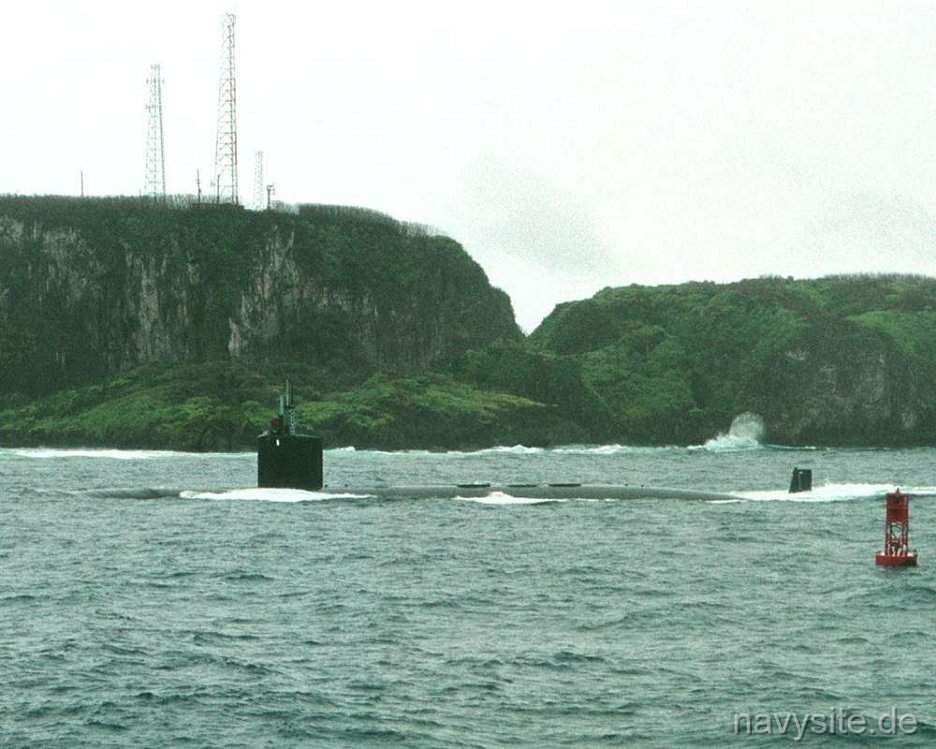
Later in 2001, GREENEVILLE sailed on her first deployment since the EHIME MARU collision, a Western Pacific cruise that again placed her in the 7th Fleet operating areas. On August 27, 2001, while approaching Saipan for a port visit, the submarine grounded near the harbor entrance. Heavy seas led to a decision to abort the harbor entry and turn back. During the turn, the stern scraped over coral, damaging parts of the underside of the hull and the rudder. GREENEVILLE surfaced and proceeded on the surface to Apra Harbor, Guam, where she arrived on August 28. Divers from a submarine tender inspected the damage, which was judged repairable without major structural work. The cost of repairs was estimated in the low six-figure range. The boat remained in Apra through most of September for assessment and corrective action, and a formal investigation followed. On September 11, a board of inquiry examined the circumstances, focusing on navigation practices and chart usage in waters where the IALA buoyage system differs from U.S. standards. Several officers received reprimands, and Commander Bogdan was relieved of command. The grounding, coming only months after the EHIME MARU collision, reinforced Navy efforts to tighten submarine navigation and risk-management procedures.

Despite these setbacks, GREENEVILLE continued to be employed operationally. On January 27, 2002, less than a year after the collision with EHIME MARU and five months after the Saipan grounding, the submarine was involved in another mishap. During a personnel transfer operation with the amphibious transport dock USS OGDEN (LPD 5) in the Arabian Sea near Oman, the two ships collided, and GREENEVILLE's bow or control surfaces punctured one of OGDEN's fuel tanks, creating a hole roughly 5 by 18 inches and spilling several thousand gallons of fuel oil into the sea. Both vessels were able to continue under their own power, and damage to GREENEVILLE was described as minor. After investigations, OGDEN's commanding officer was relieved, while GREENEVILLE's then-captain, Commander Lindsay R. "Lee" Hankins, received a formal reprimand but was allowed to remain in command, a decision that reflected the Navy's assessment of his overall performance and the relative responsibilities in the evolution.

In the early 2000s, GREENEVILLE continued operations in the Pacific and Indian Oceans, including participation in Tomahawk weapons testing. A Navy aviation systems report notes a submerged launch of a Tomahawk cruise missile from GREENEVILLE in the Pacific during this period, demonstrating the boat's role in validating land-attack capabilities for the fleet. At the same time, the submarine carried out more routine deployments and training evolutions out of Pearl Harbor as the U.S. shifted from post-Cold War posture to the "Global War on Terrorism", using submarines for intelligence collection and strike readiness in support of operations in Afghanistan and Iraq.

By early 2003, GREENEVILLE was back in Hawaii after periods of maintenance and at-sea training. A command-history summary notes the boat underway for CNO-directed operations from February 4-14 in the Hawaiian operating areas. Later in 2003, she became the submarine element of EXPEDITIONARY STRIKE GROUP ONE (ESG 1), centered on the amphibious assault ship USS PELELIU (LHA 5). The group also included USS GERMANTOWN (LSD 42), USS JARRETT (FFG 33), USS OGDEN, USS PORT ROYAL (CG 73) and USS DECATUR (DDG 73). ESG 1 deployed to the western Pacific and then into the Indian Ocean and Persian Gulf region in support of Operation Iraqi Freedom and wider U.S. maritime security tasks during the buildup and aftermath of the 2003 Iraq invasion. Operating largely independently but under ESG tasking, GREENEVILLE provided undersea surveillance, escorted the group through choke points such as the Strait of Hormuz and the Bab el-Mandeb, and contributed to deterrence of regional adversaries.

During this deployment, the ESG operated in the North Arabian Sea, Persian Gulf, Gulf of Oman and Red Sea, with the group's movements recorded in early 2004 as they left the Gulf and returned east. A timeline of the ESG shows activity in the Persian Gulf in December 2003, movements through the Gulf of Oman and back into the North Arabian Sea, and then transits of the Red Sea and Gulf of Aden in January 2004, before the group turned east across the Indian Ocean. On February 4, 2004, the strike group conducted a port visit at Darwin, Australia, reflecting long-standing U.S.-Australian amphibious and undersea cooperation. A few days later, on February 9, GREENEVILLE herself arrived once again at Apra Harbor, Guam, for about ten days of liberty and voyage repairs, an opportunity to give the crew rest after extended operations in the 5th Fleet theater and to address maintenance issues discovered during the deployment. On February 27, 2004, after roughly six months deployed across both 5th and 7th Fleet areas, the submarine returned to her homeport of Pearl Harbor.

In April and the following months of 2004, GREENEVILLE underwent further maintenance and training in Hawaii, and open sources indicate that she later that year took part in multinational submarine exercises in Northeast Asia, at a time when the U.S. and its allies were deepening cooperation in submarine rescue and ASW in response to regional concerns about North Korean missile and nuclear developments and the growth of the Chinese submarine fleet. The boat's performance under Commander Hankins during this period was later singled out. In July 2004, he was relieved in a normal change of command by Commander Lorin Selby. At the ceremony on July 9, 2004, the commodore of Submarine Squadron ONE, Captain Cecil Haney, publicly praised the tactical and engineering readiness achieved under Hankins' command. Hankins subsequently was selected for promotion and went on to senior submarine squadron billets, indicating institutional confidence that GREENEVILLE had recovered professionally from her earlier mishaps.

Under Commander Selby, GREENEVILLE continued a pattern of training and deployments. In March 2006, she was one of several submarines participating in a large anti-submarine warfare exercise in Hawaiian waters from March 25-27. This series of exercises involved CARRIER STRIKE GROUP NINE, built around the aircraft carrier USS ABRAHAM LINCOLN (CVN 72), and the nuclear-powered attack submarines USS SEAWOLF (SSN 21), USS CHEYENNE (SSN 773), USS TUCSON (SSN 770) and USS PASADENA (SSN 752), together with P-3 ORION maritime patrol aircraft from squadrons VP-4, VP-9 and VP-47. For the U.S. Navy, these exercises were part of a broader effort to refine carrier-submarine integration and to practice defending carrier and expeditionary strike groups against increasingly capable submarine threats.

Later in 2006, GREENEVILLE deployed again to the western Pacific for about six months, operating in the western Pacific and Indian Ocean region under 7th Fleet. Early in 2007, she spent time in Apra Harbor, Guam, for maintenance and logistics support, and participated in Exercise FOAL EAGLE 2007, a major U.S.-Republic of Korea joint and combined exercise that included anti-submarine warfare events. As part of this deployment, she made a port visit to Jinhae, South Korea, reinforcing alliance ties and giving Korean naval personnel the opportunity to interact with a U.S. nuclear submarine in the context of heightened attention to North Korea's nuclear and missile program after Pyongyang's first nuclear test in 2006.

After returning from this deployment, GREENEVILLE entered a major mid-life overhaul and modernization. On October 15, 2007, she departed Pearl Harbor for Portsmouth Naval Shipyard in Kittery, Maine, beginning a Depot Modernization Period (DMP) expected to last over a year. Press reports from the time describe the boat's arrival at Portsmouth in December 2007 for an extensive package of work, including systems upgrades and hull, mechanical and electrical repairs. The DMP lasted into mid-2009. Open sources indicate that GREENEVILLE returned to Pearl Harbor in June or July 2009, once again assigned to the Pacific after having temporarily shifted to the Atlantic coast for the shipyard period.

With modernization completed, the submarine resumed operational deployments. On September 10, 2010, GREENEVILLE departed Joint Base Pearl Harbor-Hickam for a scheduled deployment to the western Pacific, her first deployment since the DMP. She spent roughly six months in 7th Fleet areas conducting a variety of missions - anti-submarine tracking, intelligence collection and presence operations - at a time when U.S. attention was increasingly focused on the maritime balance in the western Pacific and on maintaining open sea lanes in the South China Sea. On March 11, 2011, she returned to Pearl Harbor, with official photographs noting that this marked the completion of her first deployment in more than three years.

In mid-2012, GREENEVILLE deployed again. On July 6, 2012, she departed Joint Base Pearl Harbor-Hickam for another scheduled six-month Western Pacific deployment, as documented in U.S. Navy imagery. Open public releases do not provide a detailed port-by-port account of this cruise, but the boat operated under 7th Fleet tasking, likely visiting a combination of allied ports and conducting freedom-of-navigation, ASW and surveillance missions in line with U.S. Pacific strategy in the early years of the "rebalance to Asia". She returned to Hawaii after completing the deployment, resuming local operations and maintenance.

By the mid-2010s, GREENEVILLE had settled into a rhythm of deployments and training from Pearl Harbor. She deployed again to 7th Fleet in 2014, as indicated by Pacific Fleet social-media releases showing her departure from Pearl Harbor for a "regularly scheduled deployment" that year. The detailed itinerary is not publicly documented, but the deployment fits the pattern of routine Western Pacific patrols that maintain U.S. undersea presence in East and Southeast Asia.

A particularly well-documented deployment began in 2016. GREENEVILLE left Pearl Harbor in May 2016 for another Western Pacific cruise, and on November 3, 2016, she returned to Joint Base Pearl Harbor-Hickam after completing a six-month deployment to U.S. 7th Fleet. During this deployment the submarine steamed more than 40,000 nautical miles and executed nearly two dozen strait transits, a reflection of the dense geography of the western Pacific and Southeast Asian archipelagos. One notable milestone was a port visit to Puerto Princesa on the Philippine island of Palawan, described in official reports as the first visit by a U.S. submarine to that city. The port call underscored growing U.S.-Philippine naval cooperation against the backdrop of maritime disputes in the South China Sea. For her performance in 2016, GREENEVILLE was awarded the Battle Efficiency ("Battle E") award for Submarine Squadron ONE, recognizing the boat as having the highest overall readiness in the squadron. The award was presented on January 27, 2017, at a ceremony in Honolulu, where the squadron commander highlighted the crew's ability to execute a wide range of missions during the deployment.

In the following years, GREENEVILLE continued to operate from Pearl Harbor, mixing training with further Indo-Pacific deployments. A notable engagement occurred in late 2018. On November 26, 2018, the submarine moored alongside the submarine tender USS EMORY S. LAND (AS 39) off Kota Kinabalu, Sabah, Malaysia. During this visit, crews from GREENEVILLE and EMORY S. LAND participated in a series of bilateral activities with Malaysian counterparts, including subject-matter exchanges and community-relations events. U.S. 7th Fleet described the port call as reinforcing long-standing U.S.-Malaysian maritime cooperation and highlighted that Royal Malaysian Navy submariners had recently embarked on U.S. boats during submarine exercises. In operational terms, the visit formed part of a wider pattern of U.S. submarine presence operations in the South China Sea and surrounding areas during a period of intensifying regional competition and concern over freedom of navigation.

In 2020, with global attention focused on the COVID-19 pandemic, GREENEVILLE was again forward deployed. On August 21, 2020, she entered Diego Garcia's harbor in the British Indian Ocean Territory, where U.S. Navy Support Facility Diego Garcia provided mail delivery and trash disposal services. Official captions describe the submarine as being supported logistically while forward deployed to the Indian Ocean and Arabian Gulf, implying operations under U.S. 5th Fleet or 7th Fleet tasking in the broader Middle East and Indian Ocean region. Diego Garcia has long served as a key logistics and support hub for U.S. naval and air operations in those theaters, and a call there by GREENEVILLE fits the established pattern of extended attack-submarine patrols.

After this period of tempo, GREENEVILLE entered another major yard period. By 2022, she was at Portsmouth Naval Shipyard again, this time for a comprehensive Engineered Overhaul (EOH). A June 16, 2023 change-of-command ceremony for the submarine, held at Portsmouth, notes that Commander Robert Lane turned over command to Commander Chad Tella with the boat assigned to Submarine Squadron TWO at the yard, reflecting her temporary administrative alignment while in overhaul. The EOH, described in Navy releases as a 30-month maintenance and modernization period, encompassed extensive hull, mechanical and electrical work, modernization of combat systems and sensors, and life-extension maintenance meant to keep the submarine fully capable well into the later 2020s. Engineered Overhauls are typically scheduled near mid-life for nuclear attack submarines, and GREENEVILLE's EOH fit this pattern, ensuring she remained certified for unrestricted operations.

On May 20, 2024, GREENEVILLE and her crew of about 155 sailors arrived at their new homeport: Naval Base Point Loma in San Diego, California. The homeport shift, formally announced by Commander, Submarine Squadron 11, followed completion of the EOH at Portsmouth. Navy statements emphasized that the submarine would join four other SSNs already assigned to Squadron 11 and that the overhaul's production work would allow GREENEVILLE to operate at full technical capacity and mission capability for many more years. The move from Pearl Harbor to San Diego reflected broader U.S. force-structure adjustments within the Pacific, positioning attack submarines both in Hawaii and on the U.S. West Coast to support Indo-Pacific deterrence and operations.

Later that year, according to a December 16, 2024 report summarizing U.S. Department of Defense information, GREENEVILLE was already back at sea on a "key Pacific mission", operating in the Pacific Ocean as part of ongoing U.S. undersea presence and readiness activities.


Back to topback to top  go to endgo to the end of the page

Accidents aboard USS GREENEVILLE:

DateWhereEvents
February 9, 20019 miles off Honolulu, HI.During a visit of civilians aboard the submarine, the GREENEVILLE demonstrated an emergency surfacing during which the submarine collided with the Japanese fishing trawler EHIME MARU (499 tons). The collision occurred at 1.45pm local time. The trawler sank about 5 minutes after the collision. 26 of the trawler's 35 crew members could be rescued immediately. 12 of them suffered minor injuries. The trawler was a training ship of a Japanese fishing school and had 13 students and their teachers aboard. From the 35 people aboard 9 were killed in the accident. These were four 17 years old students, two teachers and three crew members of the trawler.
The collision caused damage to the USS GREENEVILLE and she had to return to Pearl Harbor for repairs. The Commanding Officer was relieved.

Click here to listen to COMSUBPAC's distress call to the Coast Guard following the collision. (20 seconds - 246 KByte)

The Distress Call:

"Coast Guard, uh, this is, uh, COMSUPAC Pearl Harbor. We have a vessel that has had a collision approximately nine miles south of Diamond Head. A commercial ship with a submarine. Vessel has sunk. Uh, people are in the water. The rough seas may prohibit submarine from ..."

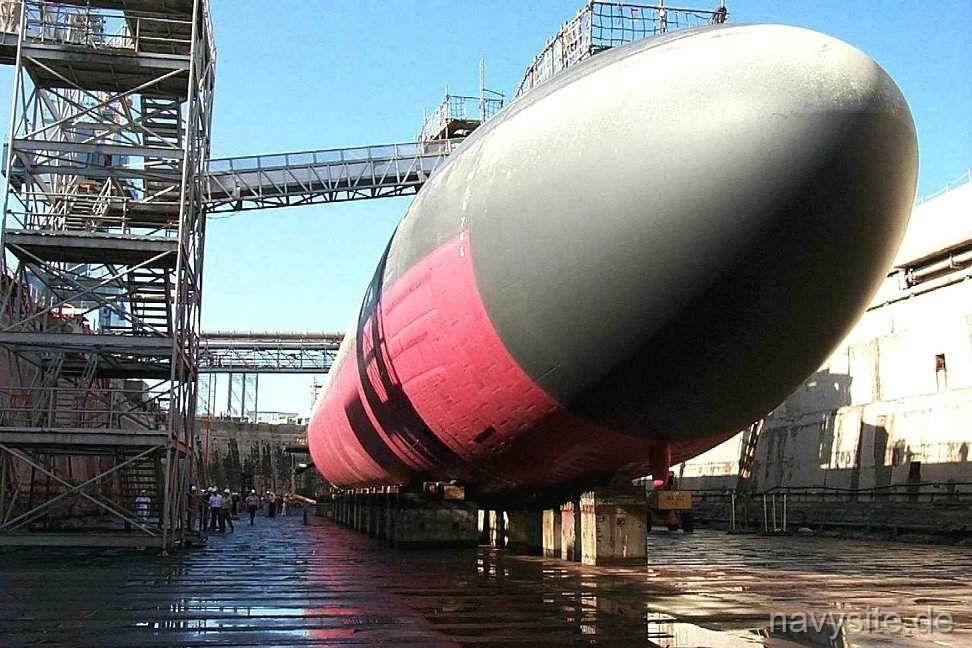
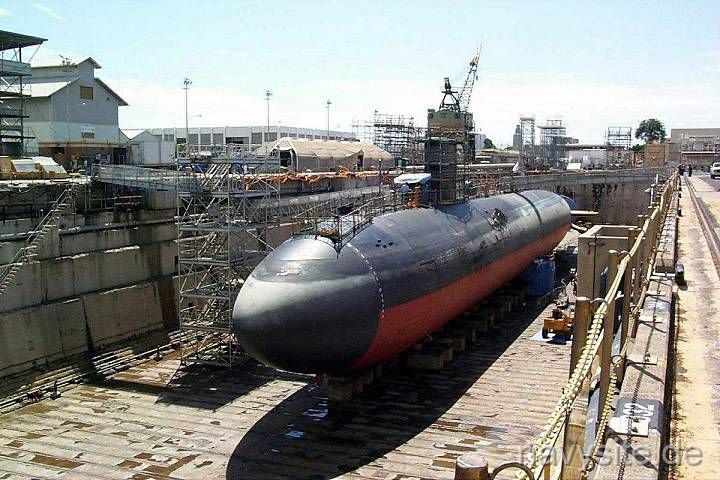
The photo below shows the GREENEVILLE in dock at the Pearl Harbor Naval Shipyard. The place on which the GREENEVILLE contacted the EHIME MARU can be seen right below the sail.


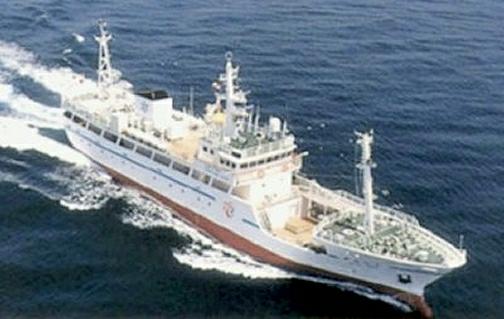
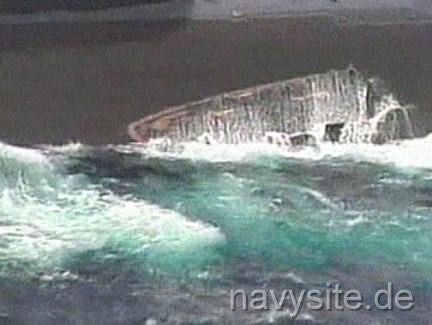
The two photos below show the fishing trawler EHIME MARU and once again the damage on board GREENEVILLE.

August 27, 2001off SaipanWhile approaching Saipan for a port visit, GREENEVILLE grounded near the harbor entrance. Heavy seas led to the decision to abort the harbor entry and turn back. During the turn, the stern scraped over coral, damaging parts of the underside of the hull and the rudder. GREENEVILLE surfaced and proceeded on the surface to Apra Harbor, Guam, where she arrived on August 28. Divers from a submarine tender inspected the damage, which was judged repairable without major structural work. The cost of repairs was estimated in the low six-figure range. Following an investigation, several officers received reprimands, and the commanding officers CDR Bogdan was relieved of command.
January 27, 2002about 40 nautical miles off the coast of OmanWhile transferring personnel from USS GREENEVILLE to USS OGDEN (LPD 5), the hull of OGDEN and GREENEVILLE's stern plate came into contact which resulted in a rupture to one of OGDEN's fuel tanks. The 5-by-18-inch long rupture was below the waterline at the back on the right side. Both ships continued to operate safely and GREENEVILLE headed toward Diego Garcia for an underwater assessment.


Back to topback to top  go to endgo to the end of the page

About the Submarine's Name, about Greeneville and Greene County, Tennessee:

Greeneville, a historic town in northeastern Tennessee of approximately 15,000 people, is named in honor of Revolutionary War hero General Nathaniel Greene. Settled around 1780 by Scot-Irish settlers, the town is older than the state of Tennessee. Although many town and cities share the name, only Greeneville, Tennessee has an extra "E" in the middle.

The famous frontiersman, Davy Crockett, was born in Greene County in 1786. Davy's great-great-great-great grandson lives in Greene County today.

From 1785 to 1788, Greeneville was the capital of "the most successful unsuccessful political experiment" in history, the Lost State of Franklin. The region now known as "East Tennessee" was part of Virginia and later North Carolina. Known as the State of Franklin in the late 18th century, the Continental Congress under heavy adverse pressure from North Carolina, missed statehood ratification by only two votes. A replica of the Capital stands today as one of several historical points of interest in the Greeneville Historic District.

During the Civil War the area often changed hands, providing a classic study of how the Civil War divided friends and families throughout the south. Greene County’s courthouse lawn contains two monuments, one dedicated to the Union and one to the Confederacy.

Greeneville, the county seat of Greene County, has a strong agricultural base, yet boasts 14 companies with fortune 500 affiliations.

Deeply rooted in our nation's history, it lays claim to our 17th president, Andrew Johnson. Johnson's two homes have been restored as national monuments and are administered by the National Park Service. The site includes "Monument Hill" - a beautiful hilltop cemetery where Johnson and his family are buried. Greenevillians felt the Navy should honor small town America by naming a ship after a city other than a major metropolitan area. What community could be more representative of small-town America than Greeneville? With only two remaining SSN's scheduled to be built before the LOS ANGELES class ended, the people of Greeneville and Greene County decided they wanted one of their own.

The idea originated with two Greeneville Metal Manufacturing employees Supervisor Dale Long, and plant manager Bob Herndon (GMMI built many submarine components). They approached Mayor G. Thomas Love and the local Chamber of Commerce. A decision was made to pursue the naming and the USS GREENEVILLE Committee was formed.

The citizens began a very active campaign, organizing a drive that included local businesses, schools and various government and civic organizations. Many petitions and letters were written to Washington officials. A 12-member delegation flew to Washington for meetings and presentations with state Senators and Congressmen, as well as representatives of the Secretary of the Navy and President Bush. On December 12, 1989 the Secretary of the Navy announced that SSN 772 would be christened USS GREENEVILLE.


Back to topback to top  go to endgo to the end of the page


Back to topback to top  go to endgo to the end of the page


The photos below were taken by me and show USS GREENEVILLE at Submarine Base Point Loma, Calif., in late July 2024.


Back to topback to top


Back to Submarines list. Back to ships list. Back to selection page. Back to 1st page.