![]() |
Search the Site with
|
![]() | ![]() | ![]() |
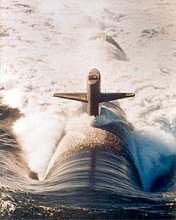
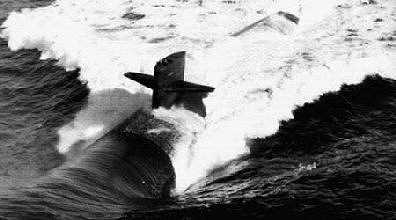
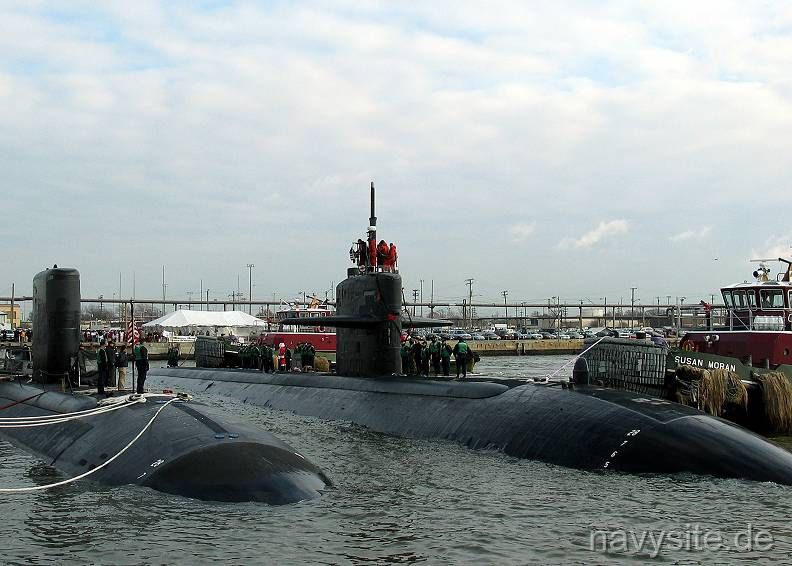
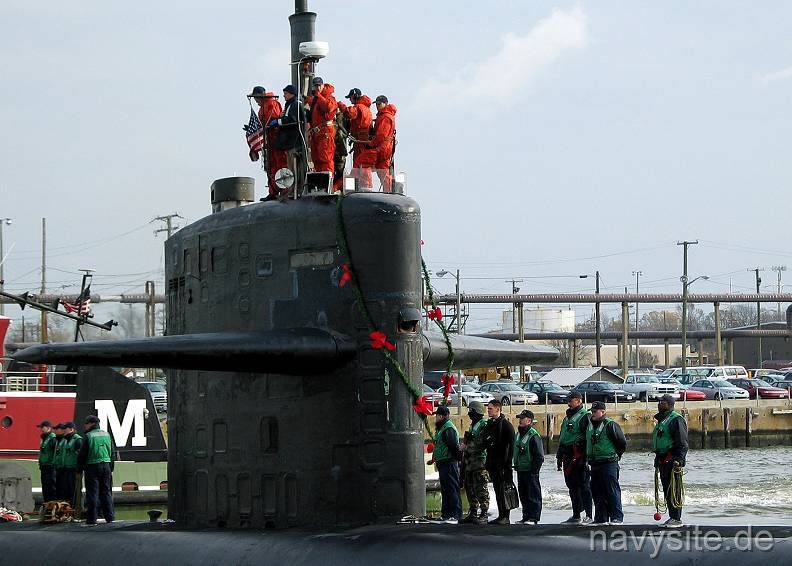
USS JACKSONVILLE was the 12th LOS ANGELES-class nuclear powered attack submarine and the first ship in the Navy to bear the name of the city in northern Florida.
| General Characteristics: | Awarded: January 24, 1972 |
| Keel Laid: February 21, 1976 | |
| Launched: November 18, 1978 | |
| Commissioned: May 16, 1981 | |
| Inactivated: May 1, 2018 | |
| Decommissioned: October 28, 2021 | |
| Builder: Electric Boat Division of General Dynamics Corporation, Groton, CT | |
| Propulsion system: one nuclear reactor | |
| Propellers: one | |
| Length: 360 feet (109.73 meters) | |
| Beam: 33 feet (10 meters) | |
| Draft: 32,15 feet (9.8 meters) | |
| Displacement: Surfaced: approx. 6,000 tons | |
| Submerged: approx. 6,900 tons | |
| Speed: Surfaced: approx. 15 knots | |
| Submerged: approx. 32 knots | |
| Armament: four 533 mm torpedo Tubes for | |
| Cost: approx. $900 million | |
| Crew: 12 Officers, 115 Enlisted |
Crew List:
This section contains the names of sailors who served aboard USS JACKSONVILLE. It is no official listing but contains the names of sailors who submitted their information.
Accidents aboard USS JACKSONVILLE:
| Date | Where | Events |
|---|---|---|
| March 22, 1982 | 25 miles east of Cape Charles, Va. | USS JACKSONVILLE collides with the Turkish cargo ship GENERAL Z. DOGAN while running on the surface. Damage to the JACKSONVILLE is reported as minor and characterized as "bumps and scrapes" while the bow damage is reported on the GENERAL Z. DOGAN. |
| September 21, 1984 | off Norfolk, Va. | USS JACKSONVILLE collides with a Navy barge off Norfolk, Va., while travelling on the surface. JACKSONVILLE strikes the barge amidships and is reported to have caused minor damage to her bow. |
| May 17, 1996 | Chesapeake Bay | USS JACKSONVILLE crashed into the SAUDI MAKKAH cargo ship in thick fog in the Chesapeake Bay. Both ships suffered significant damage but no one was injured. JACKSONVILLE's captain was relieved of command two weeks later. |
| December 21, 2004 | Portsmouth Naval Shipyard, Portsmouth, Va. | USS JACKSONVILLE experiences a small fire in a front compartment while docked at the Portsmouth Naval Shipyard. The fire causes minor injuries to one shipyard firefighter and one sailor. |
| January 10, 2013 | Persian Gulf | USS JACKSONVILLE collides with a small unidentified vessel while transiting the Persian Gulf at periscope depth damaging one of the submarine's two periscopes. The other vessel most likely didn't notice the collision as it continued on its course and speed. The collision occurred at approx. 5 a.m. local time and nobody was injured. |
USS JACKSONVILLE History:
USS JACKSONVILLE was a LOS ANGELES-class nuclear-powered attack submarine built for the United States Navy at a time when the service was expanding its undersea force for high-tempo operations against the Soviet Navy. The contract for the boat was awarded to the Electric Boat Division of General Dynamics at Groton, Connecticut on January 24, 1972, as part of the early production run of the new class. Her keel was laid at Groton on February 21, 1976, and she took shape as a Flight I LOS ANGELES-class submarine.
The hull was launched on November 18, 1978, using the pontoon system originally developed for the much larger OHIO-class ballistic-missile submarines, a method that allowed the yard to shift large hulls from the building ways into the water with greater control. The sponsor was Dorothy Jean Bennett, wife of congressman Charles E. Bennett of Florida, linking the submarine to its namesake, the city of Jacksonville. After fitting-out and dockside testing, the crew began machinery and reactor trials in the waters off New England, working closely with Electric Boat and Navy test teams to bring the new submarine to operational status.
USS JACKSONVILLE was commissioned at Naval Submarine Base New London, Groton, on May 16, 1981, with Captain Robert B. Wilkinson as her first commanding officer. From that date she joined the Atlantic Fleet as the only U.S. Navy ship named for Jacksonville, Florida, adopting the motto "The Bold One". Her early months in commission were devoted to shakedown operations, weapons and sonar trials, and post-shakedown availability while she refined the use of her AN/BQQ-5 sonar suite, fire-control systems, and quieting features that were characteristic of the LOS ANGELES-class.
By 1982, with the Cold War still shaping U.S. maritime strategy, USS JACKSONVILLE was working from the east coast as an operational attack submarine. That year, however, her early career was marked by the first of several collisions that would punctuate her service history. On March 22, 1982, while outbound on the surface from the Norfolk area, she collided with the inbound Turkish merchant ship GENERAL Z. DOGAN in the approaches to the port. Public reports indicate that the submarine suffered damage but maintained watertight integrity. She returned to port under her own power and later entered Norfolk Naval Shipyard for repairs and inspections. The incident led to the relief of her commanding officer and emphasized the risks of submarine navigation in crowded coastal waters even in peacetime. Following repairs and an intensive period of training and evaluation, the boat returned to sea.
Despite this early setback, USS JACKSONVILLE quickly entered the routine of high-end Cold War submarine operations. Her activities in the first half of the 1980s included a series of fleet exercises and extended deployments, among them two complete around-the-world cruises in 1982 and 1985.
These global deployments, typical of LOS ANGELES-class boats at the time, took her through the Atlantic, Indian, and Pacific Oceans and demonstrated the ability of U.S. fast-attack submarines to operate for months at a time far from homeport, tracking foreign submarines, escorting carrier groups, and gathering intelligence. Open sources do not list detailed port schedules for these circumnavigations, but they place the boat repeatedly in both the Atlantic and Pacific theaters, reflecting the worldwide posture of the U.S. submarine force.
In September 1984, during a period of local operations and training in the Chesapeake Bay area, USS JACKSONVILLE again experienced a serious navigation incident. On September 21, 1984, while returning to port, she struck a barge that was positioned across the Thimble Shoal Channel in the lower Chesapeake. The contact damaged the submarine's sonar dome to the extent that it had to be replaced, requiring an extended repair period.
Through the mid-1980s, USS JACKSONVILLE continued to make regular deployments to the western Atlantic in 1983 and 1986, operating primarily in anti-submarine warfare roles against Soviet units in the North Atlantic and Arctic approaches, and to the Mediterranean Sea in 1987. In those years, Atlantic Fleet attack submarines commonly supported carrier battle groups, shadowed foreign submarines, and collected acoustic and electronic intelligence as part of NATO's efforts to monitor Warsaw Pact naval activity. USS JACKSONVILLE's western Atlantic and Mediterranean deployments fit into this pattern, though specific patrol areas and contacts remain classified. The publicly available record simply notes repeated tours in those regions.
In 1988, as the LOS ANGELES-class matured, the Navy selected USS JACKSONVILLE to participate in a shock-trials test program intended to validate the class's ability to withstand underwater explosions. During these trials, live charges were detonated at standoff distances while the submarine operated with full instrumentation, allowing engineers to measure hull and system responses and refine design standards. After completing the demanding shock-trials schedule, the boat entered a major modernization and overhaul at Norfolk Naval Shipyard that lasted roughly three years.
By the early 1990s, USS JACKSONVILLE rejoined the fleet in a strategic environment that was rapidly changing. The dissolution of the Soviet Union reduced the likelihood of a large-scale blue-water conflict, but U.S. submarines remained in demand for regional contingencies and intelligence collection. The boat made additional deployments to the western Atlantic in 1993 and 1994 and another to the Mediterranean in 1993.
On May 17, 1996, during local operations off the Virginia capes, USS JACKSONVILLE was involved in another well-documented collision. While submerged, she collided with the container ship SAUDI MAKKAH near the entrance to the Chesapeake Bay. The impact damaged the submarine's fairwater planes and rudder, though again there were no reported casualties or loss of watertight integrity. The boat surfaced and returned to port, subsequently moving to Norfolk Naval Shipyard where she underwent repairs in dry dock from June through September 1996. The incident occurred in a period when U.S. warships were making frequent transits to and from the Atlantic approaches to support post-Gulf War presence operations in the Middle East and the Mediterranean, and it focused attention on traffic separation and submerged ship control in heavily used sea lanes.
Following this repair period, USS JACKSONVILLE resumed routine operations. In the later 1990s and early 2000s, she remained part of the Atlantic Fleet, conducting training, exercises and overseas deployments as the Navy adjusted to post-Cold War demands. A key milestone came in 2001, when she was assigned to the battle group built around the aircraft carrier USS ENTERPRISE (CVN 65). According to public Navy deployment records, ENTERPRISE and her associated forces, including USS JACKSONVILLE and the attack submarine USS PROVIDENCE (SSN 719), deployed from April 25, 2001, to November 10, 2001, with Carrier Air Wing 8 embarked.
The group operated in the Mediterranean, Red Sea, and Arabian Sea. After the terrorist attacks of September 11, 2001, ENTERPRISE and her escorts, among them USS JACKSONVILLE, took part in the opening stages of Operation Enduring Freedom, launching air strikes into Afghanistan and providing maritime security and intelligence collection in the broader region. In this context, USS JACKSONVILLE's roles would have included tracking potential adversary vessels, providing targeting information, and standing by as a Tomahawk shooter if required, though open sources do not state that she fired missiles.
During the early 2000s, the submarine also underwent significant maintenance. On December 20, 2004, while she was in a refueling overhaul at Portsmouth Naval Shipyard in Kittery, Maine, a small fire broke out onboard. The fire was quickly extinguished by shipyard and ship's force personnel; the reactor plant was never endangered, but one sailor and a shipyard firefighter were treated for smoke inhalation.
After completing her overhaul and testing, USS JACKSONVILLE returned to sea duty from Norfolk. Photographic records and news reports show her making a port call at Naval Station Mayport, Florida, in June 2007, part of an east coast deployment that included exercises and visits along the U.S. southeast coast. She was also photographed at Norfolk in May and November 2008, including during a visit by Vice Admiral Georgios Karamalikis, chief of the Hellenic Navy general staff, who toured the submarine and received briefings on her sonar room and capabilities, reflecting the use of operational submarines as engagement platforms with allied navies.
On May 30, 2008, publicly available deployment summaries indicate that USS JACKSONVILLE departed Norfolk for her first extended overseas deployment in more than four years, marking a return to forward operations after her lengthy maintenance and modernization periods earlier in the decade.
In late 2009, as part of a broader rebalance of submarine force structure toward the Pacific, the Navy shifted USS JACKSONVILLE's homeport from Norfolk to Joint Base Pearl Harbor-Hickam in Hawaii. This move placed her under Commander, Submarine Force, U.S. Pacific Fleet, aligning the boat with a growing emphasis on the western Pacific and the Indian Ocean at a time of increasing attention to maritime security in the Asia-Pacific region.
From her new base in Hawaii, USS JACKSONVILLE began a series of Western Pacific deployments that would characterize the remainder of her operational life. On June 2, 2010, she departed Pearl Harbor for a scheduled deployment to the western Pacific region, as documented by official Navy imagery. During this cruise she took part in the Cooperation Afloat Readiness and Training (CARAT) 2010 series, participating in the Singapore phase alongside the Republic of Singapore Navy in a bilateral exercise focused on anti-submarine warfare, maritime security, and interoperability. The deployment also included a port visit to Fleet Activities Yokosuka, Japan, where senior enlisted leadership such as the Master Chief Petty Officer of the Navy visited the submarine and recognized crew achievements, reflecting the boat's role in forward-deployed undersea operations with the U.S. 7th Fleet.
A notable stop on this 2010 deployment occurred on October 11, 2010, when USS JACKSONVILLE arrived at Sepanggar Naval Base near Kota Kinabalu in Sabah, Malaysia. There she moored across the pier from KD TUNKU ABDUL RAHMAN, Malaysia's first SCORPENE-class submarine, in a highly symbolic visit that underscored growing Malaysian undersea capabilities and U.S. interest in regional partnerships. The boat's Western Pacific cruise concluded with her return to Pearl Harbor on or about December 2, 2010, after roughly six months at sea, having strengthened bilateral ties and maintained the undersea presence that underpins U.S. security commitments in the region.
In the early 2010s, USS JACKSONVILLE continued this rhythm of deployments and port visits. Imagery places her again in Yokosuka in August 2010 and later in November 2012, where on November 15, 2012, she arrived at Fleet Activities Yokosuka for a scheduled port visit as part of another Western Pacific deployment. These repeated calls in Japan underline the close integration of U.S. attack submarines with 7th Fleet operations and with the Japan Maritime Self-Defense Force in anti-submarine warfare training and regional deterrence.
On January 10, 2013, while operating at periscope depth in the Arabian Gulf as part of a deployment to the U.S. 5th Fleet area of responsibility, USS JACKSONVILLE was involved in one of the most widely reported incidents of her career. At about 5:00 a.m. local time, the submarine's primary periscope was sheared off in a collision with what post-event analysis suggested was a fishing vessel traveling in the opposite direction. The boat surfaced and, using radar tracks and visual observations, the crew concluded that a small trawler was the likely contact, though no distressed vessel was found. She then proceeded on the surface to Bahrain, arriving at the U.S. naval base there for damage assessment and repairs. Fifth Fleet statements emphasized that the reactor remained in a safe condition and that there was no damage to propulsion systems or hull integrity.
The collision triggered significant command consequences. On February 10, 2013, in Manama, Bahrain, Commander Task Force 54 held an admiral's mast at which the commanding officer, Commander Nathan Sukols, and the executive officer, Lieutenant Commander Lauren Allen, were relieved of duty for loss of confidence in their ability to command and to serve as executive officer, respectively. Both officers received non-judicial punishment and were reassigned to administrative positions with the submarine force in Pearl Harbor. Commander Richard Seif, previously commanding officer of the LOS ANGELES-class submarine USS BUFFALO (SSN 715), took over temporarily as commanding officer of USS JACKSONVILLE, while Lieutenant Commander Todd Santala assumed duties as executive officer. The incident occurred at a time of heavy U.S. naval presence in the Gulf, where submarines were routinely used for surveillance and deterrence amid tensions with Iran, and it added to wider Navy discussions about navigation, training, and readiness in congested waters.
Following repairs to her periscope and associated systems, USS JACKSONVILLE returned to operations in the Pacific. Imagery from 2013 shows her back at Joint Base Pearl Harbor-Hickam, indicating that she resumed local training and preparations for additional Western Pacific deployments.
In April 2015, according to publicly accessible deployment chronologies, she departed Pearl Harbor for another scheduled Western Pacific deployment. During this cruise, she participated in Exercise Talisman Sabre 2015, a large joint and combined exercise off Australia that involved the Australian Defence Force, U.S. forces and elements from New Zealand. After completing the exercise, she arrived in Singapore for a port visit beginning July 27, 2015, where Navy reporting highlighted the crew's opportunity for rest and for engagement with local counterparts after the demanding at-sea phase. Earlier in this same deployment, USS JACKSONVILLE visited Fleet Base West at Stirling, near Perth in Western Australia, as confirmed by official photographs dated June 2015, reflecting the long-standing submarine cooperation between the U.S. and Australian navies. Later, she again operated in Southeast Asian waters, building on earlier ties with Malaysia and Singapore. When the submarine returned to Pearl Harbor on October 16, 2015, Navy news releases described the cruise as a scheduled six-month deployment to the Western Pacific, noting that the crew had enjoyed an "outstanding lineup" of port calls that included Malaysia, Australia, Singapore, and Guam. The deployment took place in the broader context of the U.S. rebalance to the Asia-Pacific, in which attack submarines played a key role in regional presence, intelligence gathering and anti-submarine warfare training with partner navies.
USS JACKSONVILLE's final operational deployment followed two years later. In early 2017, she again sailed west from Pearl Harbor for what would be her fifteenth deployment and her last. During this extended Western Pacific cruise, she operated in the U.S. 5th Fleet area of operations and the Indian Ocean, conducting maritime security operations and joint exercises with the Japan Maritime Self-Defense Force and the Indian Navy, according to official statements from Commander, Submarine Force, U.S. Pacific Fleet. She covered more than 48,000 nautical miles during this deployment and spent 209 days at sea, roughly eight months away from homeport. Port visits included Bahrain on the Arabian Gulf, Guam in the western Pacific, Oman on the Arabian Sea, and Singapore, demonstrating the geographic range of an attack submarine cruise that linked the central Pacific, Indian Ocean, and Gulf regions.
While deployed in 2017, USS JACKSONVILLE also made another visit to Singapore, described in a July 5, 2017 news release as part of an ongoing Western Pacific deployment. That report emphasized that with a crew of roughly 150, the submarine would conduct a range of missions while maintaining proficiency in the latest undersea warfare capabilities, and it quoted her commanding officer, Commander Steven Faulk, on the importance of the continued presence of U.S. submarines in supporting regional security and stability. During the same deployment, thirty-three sailors earned their submarine warfare qualification and sixteen were advanced in rank, reflecting the boat's role as both an operational asset and a platform for training the next generation of submariners.
USS JACKSONVILLE returned to Joint Base Pearl Harbor-Hickam from this final deployment on August 10, 2017. The homecoming received media attention, including photographs of family reunions on the pier and of a sailor proposing to his partner on the submarine's topside as the boat moored. Navy releases at the time noted that the submarine was scheduled to be retired from the fleet in the near future, after more than thirty-six years in commission. With her return, she shifted from an operational schedule to preparation for inactivation, including off-load of weapons, removal of certain equipment, and administrative steps required before transit to the shipyard where her reactor compartments would be defueled and disposed of under U.S. nuclear-ship decommissioning procedures.
Following standard practice for LOS ANGELES-class submarines, USS JACKSONVILLE transferred from Hawaii to Puget Sound Naval Shipyard in Bremerton, Washington, where inactivation work could be completed. Open-source material associated with her inactivation ceremony indicates that by June 26, 2019, an official ceremony was held at Keyport, Washington, commemorating her service and formally marking her retirement from the active fleet while technical inactivation work proceeded.
In line with the normal sequence for nuclear-powered submarines, she subsequently completed defueling and dismantling of her nuclear propulsion plant under controlled conditions. By 2021, after roughly four decades of service, USS JACKSONVILLE had been fully decommissioned and stricken from the Naval Vessel Register.
USS JACKSONVILLE Image Gallery:
![]() | ![]() |
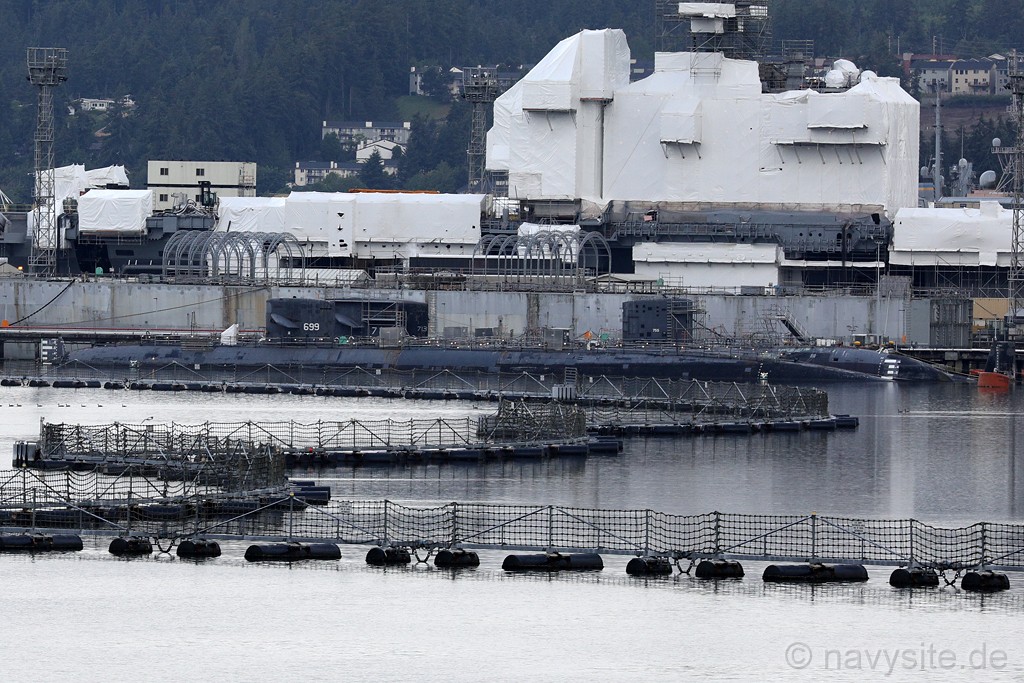
The photo below was taken by Michael Jenning and show the ex-JACKSONVILLE laid up at the Puget Sound Naval Shipyard, Bremerton, Wash., on June 12, 2022, awaiting recycling.
![]() |
The photo below was taken by Michael Jenning and shows ex-JACKSONVILLE laid up behind at the Puget Sound Naval Shipyard in Bremerton, Wash., awaiting recycling on August 4, 2023.
![]() |
The photo below was taken by me and shows ex-JACKSONVILLE laid up behind ex-OKLAHOMA CITY (SSN 723) at Bremerton, Wash., awaiting recycling on July 15, 2024.
![]() |
Back to Submarines list.
Back to ships list.
Back to selection page.
Back to 1st page.