Search the Site with

|
Search the Site with
|
 General Characteristics Crew List Memorabilia History Image Gallery to end of page
 |  |
USS MICHIGAN is the second OHIO-class submarine and the third United States Navy vessel to bear the name of the state. In October 2004, conversion started to modify the USS MICHIGAN to carry 154 conventional cruise missiles instead of 24 Trident missiles. After completion of the conversion, the MICHIGAN was redesignated SSGN 727. As an SSGN, the MICHIGAN is also able to support operations of up to 66 Special Forces Personnel for up to 90 days. The MICHIGAN rejoined the fleet on June 12, 2007.
| General Characteristics: | Keel Laid: April 4, 1977 |
| Launched: April 26, 1980 | |
| Commissioned: September 11, 1982 | |
| Builder: General Dynamics Electric Boat Division, Groton, Conn. | |
| Propulsion system: one nuclear reactor | |
| Propellers: one | |
| Length: 560 feet (171 meters) | |
| Beam: 42 feet (12.8 meters) | |
| Draft: 36,5 feet (11.1 meters) | |
| Displacement: Surfaced: approx. 16,765 tons Submerged: approx. 18,750 tons | |
| Speed: 20+ knots | |
| Armament: Tomawhawk missiles, | |
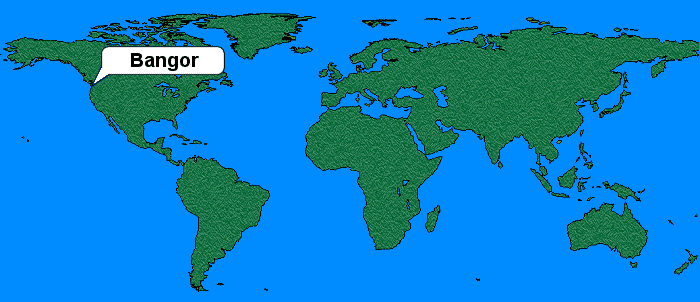
| Homeport: Bangor, Wash. | |
| Crew: 17 Officers, 15 Chief Petty Officers and 122 Enlisted |
 back to top go to the end of the pageback to top go to the end of the page
Crew List:
This section contains the names of sailors who served aboard USS MICHIGAN. It is no official listing but contains the names of sailors who submitted their information.
back to top go to the end of the pageback to top go to the end of the pageUSS MICHIGAN History:
USS MICHIGAN was ordered on February 28, 1975, as the second unit of the new OHIO-class nuclear-powered ballistic missile submarines. She was built by the Electric Boat Division of General Dynamics at Groton, Connecticut, where her keel was laid on April 4, 1977. The submarine was launched and christened on April 26, 1980, sponsored by Margaret Garvey Nedzi, wife of Congressman Lucien N. Nedzi of Michigan.
Following completion of construction and fitting-out, MICHIGAN began her builder's sea trials on May 21, 1982, and was delivered to the U.S. Navy on August 28, 1982. She was commissioned as USS MICHIGAN (SSBN 727) at Groton on September 11, 1982, with Captain W. E. Rickman commanding the Blue Crew and Captain F. M. Conway III commanding the Gold Crew. Admiral Kinnaird R. McKee, Director of Naval Nuclear Propulsion, was the principal speaker at the commissioning ceremony. Designed for strategic nuclear deterrence, MICHIGAN was equipped with 24 Trident I (C4) submarine-launched ballistic missiles and four torpedo tubes.
After commissioning, MICHIGAN began a period of shakedown operations and weapons system testing in the Atlantic. On November 21, 1982, her Blue Crew successfully launched a Trident I missile during a Demonstration and Shakedown Operation (DASO). The launch was the 40th flight of a Trident I (C4) missile and demonstrated the operational readiness of the submarine's strategic weapons system. Additional demonstration and shakedown activities continued in the Atlantic through January 1983.
In early 1983, MICHIGAN departed the Atlantic and proceeded to the Pacific via the Panama Canal. She arrived at Naval Submarine Base Bangor, Washington, on March 16, 1983, and joined Submarine Squadron 17. During the spring, she underwent a Post Shakedown Availability at Puget Sound Naval Shipyard, followed by additional operational preparations. On June 3, she completed her first strategic weapons loadout at Strategic Weapons Facility Pacific, taking aboard her complement of Trident I missiles. MICHIGAN subsequently departed Bangor on her first strategic deterrent patrol in August 1983.
During the 1980s, MICHIGAN operated primarily from Bangor, alternating extended strategic deterrent patrols between her Blue and Gold crews. The two-crew system allowed the submarine to maintain a high operational tempo while providing time for maintenance, training and crew turnover between patrols. Her operations formed part of the Pacific Fleet's contribution to the United States' sea-based nuclear deterrent during the Cold War.
In addition to her deterrent patrols, MICHIGAN participated in tests designed to demonstrate the accuracy and reliability of the Trident I weapons system. On July 2, 1984, she successfully launched four Trident I missiles during an operational test. Four additional missiles were launched during a follow-on operational test on April 22, 1985, and another two were successfully fired on September 12, 1986. These tests verified the continuing performance of the submarine and its strategic missile system under operational conditions.
Throughout the late 1980s and early 1990s, MICHIGAN continued her regular patrol schedule in the Pacific. As the Cold War ended and the United States adjusted its strategic forces to the changing international security environment, the submarine remained an active component of the nation's nuclear deterrent. Her Blue and Gold crews continued to alternate between patrols, operational evaluations, training periods and maintenance at Bangor.
On February 5, 1993, MICHIGAN's Gold Crew returned to Bangor after completing the submarine's 35th strategic deterrent patrol. The Blue Crew subsequently conducted the 36th patrol from March 26 to May 14, 1993, followed by a visit to San Diego, California, where the submarine underwent a Tactical Readiness Evaluation and a Navy Technical Proficiency Inspection. The Gold Crew relieved the Blue Crew at the end of May and began preparations for further weapons system testing.
On July 27 and 28, 1993, MICHIGAN successfully launched four Trident I missiles during a Follow-on Commander-in-Chief Evaluation Test. The launches verified the accuracy and reliability of the strategic weapons system under simulated wartime conditions. The Gold Crew subsequently conducted the 37th strategic deterrent patrol between July and September, while the Blue Crew completed the 38th patrol during the final months of the year. MICHIGAN also visited Alameda, California, in November and underwent further engineering and supply inspections in December.
On October 10, 1994, MICHIGAN entered an Engineered Overhaul at Naval Submarine Base Bangor. The overhaul was conducted by Puget Sound Naval Shipyard in conjunction with the Trident Refit Facility at Bangor and included extensive maintenance of the submarine's engineering and supporting systems. The overhaul was completed on June 7, 1995, after approximately eight months. Following post-maintenance preparations, the Gold Crew successfully launched a Trident I missile during a Demonstration and Shakedown Operation on October 29, 1995, confirming the readiness of the submarine's strategic weapons system.
After completing her strategic weapons loadout, MICHIGAN resumed operational deterrent patrols on February 21, 1996. Her Blue and Gold crews continued their regular rotation from Bangor throughout 1996 and 1997, conducting strategic patrols interspersed with maintenance, tactical readiness evaluations and engineering inspections. The Gold Crew returned from the 44th strategic deterrent patrol on February 14, 1997, and completed the 46th patrol on September 12.
On January 25, 1998, MICHIGAN's Gold Crew departed Bangor on the submarine's 48th strategic deterrent patrol. During the patrol, the crew successfully completed an Operational Reactor Safeguards Examination from April 6 to 8, receiving a grade of "Excellent." MICHIGAN returned to Bangor on April 8, completing not only her own 48th patrol but also the 500th strategic deterrent patrol conducted by the Trident submarine force.
Later in 1998, the Gold Crew conducted another extended patrol, departing Bangor on September 7. During October, MICHIGAN visited Naval Submarine Base Point Loma in San Diego, where she moored outboard the submarine tender USS McKEE (AS 41) while loading Mk 48 torpedoes and preparing for tactical weapons testing. The submarine successfully completed a Tactical Weapons Proficiency Inspection and a Tactical Readiness Evaluation, receiving an "Above Average" evaluation and recognition as a Commander, Submarine Force Pacific Fleet Tactical Readiness Evaluation "Top Performer." Following additional inspections, including a Naval Technical Proficiency Inspection in November, MICHIGAN returned to Bangor on November 18, completing her 50th strategic deterrent patrol.
The Gold Crew's performance during 1998 was recognized through several awards, including the Battle Efficiency "E", the Strategic White "S", the Communications Green "C" and the Engineering Red "E". The crew also received recognition as the Best Trident Crew and the United States Strategic Command Omaha Trophy, reflecting its performance in strategic deterrence operations.
MICHIGAN continued operating from Bangor into the early 2000s as one of the remaining Trident I-equipped OHIO-class submarines. The Navy's changing strategic requirements and the planned reduction in the number of ballistic missile submarines led to a decision to convert four of the earliest boats of the class to a new conventional strike and special operations role. Along with MICHIGAN, the submarines selected for conversion were USS OHIO (SSBN 726), USS FLORIDA (SSBN 728) and USS GEORGIA (SSBN 729). Instead of being decommissioned as originally considered, the four submarines would have their ballistic missile systems removed and replaced with conventional weapons and facilities for special operations forces.
While preparations for the conversion program proceeded, MICHIGAN continued her strategic deterrent mission. On February 26, 2003, her Gold Crew returned to Bangor after completing the submarine's 64th patrol. The Blue Crew departed on patrol 65 on April 6 and returned to Bangor on June 3, following operations that included visits to San Diego for inspections and pre-overhaul preparations. The Gold Crew subsequently departed on patrol 66 on July 31, conducted a Tactical Readiness Evaluation in September, and visited Pearl Harbor, Hawaii, from September 18 to 22 before returning to Bangor on October 6, 2003.
MICHIGAN had originally been scheduled to begin her Engineered Refueling Overhaul and conversion to a guided-missile submarine in November 2003. However, delays in the shipyard schedule and maintenance problems affecting other submarines assigned to Submarine Squadron 17 resulted in an additional strategic deterrent patrol. On October 17, the Blue and Gold crews were combined under Commander Thomas M. Calabrese, and MICHIGAN departed Bangor on October 18 for her 67th and final strategic deterrent patrol.
During the final patrol, MICHIGAN returned briefly to Bangor from November 26 to December 3, 2003, before conducting additional operations on the Nanoose acoustic range. She returned to Bangor on December 15, completing her 67th strategic deterrent patrol and ending her operational service as a ballistic missile submarine after more than twenty years as part of the United States' sea-based nuclear deterrent.
Following her withdrawal from the strategic deterrent force, MICHIGAN began preparations for conversion to a nuclear-powered guided-missile submarine. During January and early February 2004, her remaining Trident missiles were removed at Bangor. On February 2, 2004, she departed Naval Submarine Base Bangor and proceeded to Puget Sound Naval Shipyard & Intermediate Maintenance Facility in Bremerton to begin her Engineered Refueling Overhaul and preparations for conversion.
The SSGN conversion program involved extensive modifications to the submarine's former ballistic missile compartments, weapons systems, communications equipment and support facilities. Twenty-two of her 24 missile tubes were adapted to accommodate Multiple-All-Up-Round Canisters, each capable of carrying seven Tomahawk land-attack cruise missiles. The remaining two forward missile tubes were modified to support special operations personnel and equipment, including swimmer lock-out operations and the use of Dry Deck Shelters. The modifications also included facilities for accommodating additional special operations personnel and improved command, control and communications capabilities.
The conversion work formally commenced in October 2004, following the initial overhaul and preparatory phases. MICHIGAN was redesignated SSGN 727 as part of her transition from a strategic ballistic missile submarine to a guided-missile and special operations platform. Work continued at Puget Sound Naval Shipyard throughout 2005 and 2006, with the submarine's conversion completed and the vessel delivered from the shipyard in November 2006.
On June 12, 2007, MICHIGAN formally returned to active service as USS MICHIGAN (SSGN 727) during a ceremony at Naval Base Kitsap-Bremerton, Washington. In her new configuration, she was capable of carrying up to 154 Tomahawk cruise missiles and supporting extended special operations missions with embarked personnel and specialized equipment. She was assigned to Submarine Squadron 19 and subsequently conducted testing, certification and crew training in preparation for operational deployment.
On November 10, 2008, MICHIGAN's Blue Crew departed Naval Base Kitsap-Bangor on the submarine's first operational deployment as a guided-missile submarine. Operating in the Western Pacific, she conducted missions involving Naval Special Warfare, experiments with unmanned aerial vehicles and theater security cooperation activities with regional partners. During the extended deployment, her Blue and Gold crews alternated through forward crew exchanges, allowing the submarine to remain deployed for more than a year.
On June 27, 2009, MICHIGAN arrived at Fleet Activities Yokosuka, Japan, for a nine-day port visit. She subsequently proceeded to Apra Harbor, Guam, where she arrived on July 24 for maintenance and a crew exchange. The submarine returned to Yokosuka on October 10 for another nine-day port visit and also visited Singapore and Busan, Republic of Korea, during the deployment. On December 12, 2009, MICHIGAN returned to Naval Base Kitsap after completing her first SSGN deployment, which had lasted approximately thirteen months. Following her return, she offloaded more than 100 cruise missiles and approximately 40 tons of weapons and explosives before entering a scheduled maintenance period at Puget Sound Naval Shipyard.
On April 29, 2010, MICHIGAN departed Bangor on her second operational deployment as an SSGN. During this deployment, she operated extensively in the Western Pacific and made a scheduled port visit to Busan, Republic of Korea, on June 28. On the same date, USS OHIO, operating near the Philippines, and USS FLORIDA, operating near Diego Garcia in the Indian Ocean, also made highly visible appearances. The presence of the three guided-missile submarines in widely separated areas attracted considerable international attention.
The deployment also coincided with a milestone for the converted OHIO-class submarine force. In June 2010, all four SSGNs, including MICHIGAN, USS OHIO, USS FLORIDA and USS GEORGIA, were forward deployed simultaneously for the first time. The event demonstrated the Navy's ability to sustain guided-missile submarine operations in widely separated theaters.
MICHIGAN continued operating in the Western Pacific during the remainder of 2010, visiting Yokosuka from September 28 to October 4 and returning to Busan on December 24. Further operations and port visits followed in early 2011, including another visit to Busan beginning on April 30. On June 2, 2011, the Gold Crew returned the submarine to Bangor after approximately thirteen months of deployment. MICHIGAN subsequently offloaded ammunition at Naval Magazine Indian Island before entering Puget Sound Naval Shipyard on June 14 for a Major Maintenance Period.
Following maintenance and preparations for another deployment, MICHIGAN arrived at Apra Harbor, Guam, on January 3, 2012, where she received support from the submarine tender USS FRANK CABLE (AS 40). On March 1, the submarine conducted a Tomahawk missile reload at Polaris Point, Guam, with assistance from personnel of the submarine tender USS EMORY S. LAND (AS 39) and Naval Munitions Command East Asia. The operation was the first reload of an SSGN's Tomahawk missiles conducted at Guam.
During April 2012, MICHIGAN visited HMAS Stirling at Garden Island, Western Australia, arriving on April 13 and returning for another visit on April 22. She continued operating from Guam and, on June 13, arrived at Fleet Activities Yokosuka for a six-day port visit. During September, she underwent additional maintenance at Apra Harbor with support from USS EMORY S. LAND. MICHIGAN returned to Bangor in November 2012 after approximately twelve months of operations in the U.S. 7th Fleet area of responsibility.
The submarine subsequently entered another major maintenance period at Puget Sound Naval Shipyard. Following approximately eleven months in the shipyard, MICHIGAN departed the facility on November 2, 2013, and prepared for another extended Western Pacific deployment. In December, she departed Bangor and proceeded across the Pacific, using Guam as a forward logistics and crew exchange location for operations in the U.S. 7th Fleet area.
On March 25, 2014, MICHIGAN arrived at Subic Bay in the Philippines for a routine port visit. Further operations in the Western Pacific followed, and on August 10, the Gold Crew brought the submarine into Changi Naval Base, Singapore, for a four-day visit. The extended deployment continued into 2015, supported by periodic maintenance, replenishment and crew exchanges at Guam.
On June 23, 2015, MICHIGAN's Blue Crew arrived at Busan Naval Base in the Republic of Korea for a scheduled port visit. The submarine subsequently visited Fleet Activities Yokosuka, arriving on July 6 for an approximately twelve-day stay. On July 7, Captain Joseph M. Turk relieved Captain Erik A. Burian as commanding officer of the Blue Crew during a ceremony at Yokosuka, marking the first time MICHIGAN had conducted a change-of-command ceremony in Japan.
On August 1, 2015, MICHIGAN arrived at Naval Magazine Indian Island, Washington, after completing a twenty-month deployment in the Western Pacific. During the deployment, the submarine had operated primarily from Guam and conducted surveillance, training and other missions in support of Commander, Task Force 74. In addition to Singapore, the Philippines, South Korea and Japan, she had visited ports including Perth, Australia, and Sasebo, Japan.
Following her return to the United States, MICHIGAN offloaded ammunition and proceeded to Naval Base Kitsap-Bangor, arriving on August 11, 2015. She subsequently entered a Major Maintenance Period at Puget Sound Naval Shipyard & Intermediate Maintenance Facility. In addition to extensive maintenance and repairs, the availability included modifications to the submarine's living accommodations to support the integration of enlisted women into the submarine force. Separate berthing and facilities were prepared for female chief petty officers and enlisted crew members, allowing MICHIGAN to become one of the first U.S. submarines to embark enlisted women as permanent members of the crew.
On July 8, 2016, MICHIGAN was undocked from Dry Dock 2 at Puget Sound Naval Shipyard and moored alongside Pier 5 as the remaining maintenance work continued. During this period, Chief Culinary Specialist Dominique Saavedra, assigned to MICHIGAN's Blue Crew, became the first enlisted woman in the U.S. Navy to earn the submarine warfare qualification insignia, commonly known as the "dolphins." She received the qualification on August 2, 2016, during a ceremony at Puget Sound Naval Shipyard. Although assigned to MICHIGAN, Saavedra had completed her underway and watchstanding qualification requirements while embarked aboard USS OHIO, which was conducting an operational deployment at the time. Her qualification preceded the deployment of MICHIGAN with its newly integrated crew.
After completing post-maintenance preparations and training, MICHIGAN departed Bangor in December 2016 for another extended deployment to the Western Pacific. On April 25, 2017, she arrived at Busan Naval Base, Republic of Korea, for a four-day port visit during a period of increased tension on the Korean Peninsula resulting from North Korea's nuclear weapons and ballistic missile programs. The visit was part of the submarine's Western Pacific deployment and provided an opportunity for continued cooperation with the Republic of Korea Navy.
MICHIGAN continued operations in the U.S. 7th Fleet area during the following months, including maintenance and crew exchange periods at Apra Harbor, Guam. On October 13, 2017, her Gold Crew returned to Busan for another routine port visit. The submarine remained forward deployed into 2018, operating from Guam and conducting additional visits to Yokosuka. During February 2018, she received maintenance and logistical support from USS FRANK CABLE at Apra Harbor.
On August 22, 2018, MICHIGAN arrived at Fleet Activities Yokosuka for a six-day port visit, followed by further Western Pacific operations. In November, she began a Deployed Continuous Maintenance Availability at Guam. During this extended maintenance period, the submarine continued to receive logistical and technical support from Guam-based facilities and submarine tenders.
During the closing months of 2018 and early 2019, MICHIGAN continued operating in the Western Pacific, including several brief personnel transfer stops near Okinawa and Yokosuka. In April 2019, she visited Joint Base Pearl Harbor-Hickam, Hawaii, for a crew exchange period before continuing to the Pacific Northwest. On May 13, she arrived at Naval Magazine Indian Island following an extended deployment of approximately thirty months. During the deployment, the submarine's Blue and Gold crews conducted seven crew exchanges while maintaining continuous forward operations from Guam. Maintenance support was provided by Puget Sound Naval Shipyard personnel and the Guam-based submarine tenders USS FRANK CABLE and USS EMORY S. LAND. Following her return, MICHIGAN proceeded to Puget Sound Naval Shipyard, arriving at Pier 6 on May 22, 2019.
On July 10, 2019, MICHIGAN entered Dry Dock 2 at Puget Sound Naval Shipyard & Intermediate Maintenance Facility for an Extended Refit Period originally scheduled to last seventeen months. The maintenance program involved major work on the submarine's hull and engineering systems, including structural preservation and repairs to the superstructure and main ballast tanks, replacement of the ship's main storage battery and propulsion shaft, and maintenance of the steering and diving systems. Additional work included repairs to hatches, the sail and external hydraulic systems, as well as maintenance of the emergency diesel generator.
The overhaul was complicated by the COVID-19 pandemic, which disrupted shipyard operations beginning in 2020 and required changes to workforce arrangements and maintenance procedures. The availability was extended beyond its original schedule as additional repairs and maintenance requirements were incorporated into the work package. Despite these difficulties, the shipyard completed major repairs and alterations intended to support the submarine's continued operational service.
On March 16, 2021, MICHIGAN was undocked from Dry Dock 2 after more than twenty months and moved alongside for the remaining work. Final maintenance, testing and preparations for returning to operational service continued into 2022. On February 19, 2022, the submarine began sea trials following approximately thirty-two months of overhaul and associated maintenance, marking the completion of one of the most extensive maintenance periods of her SSGN service.
Following additional operational preparations, MICHIGAN proceeded to Hawaii in April 2022. During the following months, the submarine operated in the vicinity of Pearl Harbor, conducting training, personnel transfers and logistical preparations. In August, she received ammunition at Naval Magazine Lualualei, Hawaii, and continued preparations for operations in the Western Pacific.
On November 10, 2022, MICHIGAN conducted a brief personnel transfer stop near White Beach Naval Facility, Okinawa, Japan, while operating in the U.S. 7th Fleet area of responsibility. Operating under Commander, Task Force 74, the submarine conducted missions supporting maritime security and regional deterrence. She also received logistical support at Apra Harbor, Guam, during the deployment.
In 2023, MICHIGAN continued her Western Pacific operations, including periodic visits to Guam for maintenance and crew exchanges. On June 16, 2023, her Blue Crew arrived at Busan Naval Base in the Republic of Korea for a scheduled port visit. This was MICHIGAN's first visit to South Korea since 2017 and came during renewed tensions on the Korean Peninsula following North Korean ballistic missile launches. The port call formed part of ongoing military cooperation between the United States and the Republic of Korea.
After departing Busan, MICHIGAN proceeded to Japan and arrived at Fleet Activities Yokosuka on July 2, 2023, for a scheduled port visit and crew exchange. The submarine was operating under Commander, Submarine Group 7, within the U.S. 7th Fleet area of responsibility. Following the visit, she continued forward operations from Guam during the second half of the year, including maintenance and crew support periods at Apra Harbor.
During 2024, MICHIGAN remained operational in the Western Pacific, continuing the extended deployment pattern established by the OHIO-class SSGN force. On March 28, Captain Thomas J. Niebel relieved Captain Ravi M. Desai as commanding officer of the Gold Crew during a ceremony at the U.S. Naval Undersea Museum in Keyport, Washington. MICHIGAN continued operating from Guam during the year, with further periods underway and maintenance at Apra Harbor. In December, she visited Pearl Harbor, Hawaii, where she remained from December 6 to 20 before continuing her return transit toward the Pacific Northwest.
In January 2025, MICHIGAN returned to Washington following an extended deployment of approximately thirty-four months. She proceeded to Naval Magazine Indian Island to offload ammunition before arriving at Puget Sound Naval Shipyard in Bremerton on January 20. The submarine subsequently entered another Major Maintenance Period intended to address maintenance and modernization requirements associated with her continued service as a guided-missile submarine.
During this availability, MICHIGAN entered Dry Dock 2 at Puget Sound Naval Shipyard & Intermediate Maintenance Facility. On May 29, 2025, the submarine conducted a ballast blow while in dry dock, an event documented by official shipyard photographs. Maintenance activities continued through the remainder of the year and into 2026.
On March 20, 2026, Captain Trevor J. Conger relieved Captain Thomas J. Niebel as commanding officer of MICHIGAN's Gold Crew during a change-of-command ceremony at the U.S. Naval Undersea Museum in Keyport, Washington. The submarine remained assigned to Submarine Group 9, which exercises operational and administrative oversight of submarines based in the Pacific Northwest and those undergoing maintenance at Puget Sound Naval Shipyard.
back to top go to the end of the pageUSS MICHIGAN Image Gallery:
 |  |
The photos below were taken by me and show the MICHIGAN at Naval Station Pearl Harbor, Hi., on March 14, 2008, and (the last photo) cruising off Pearl Harbor on March 21, 2008. Note the Advanced SEAL Delivery System (ASDS) on the first two photos.
 |  |  |
back to top
 Back to Ballistic Submarines list. Back to ships list. Back to selection page. Back to 1st page.