![]() |
Search the Site with
|
![]() | ![]() | ![]() |
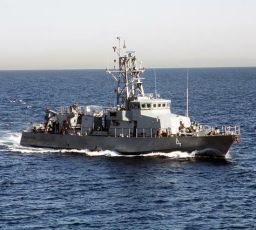
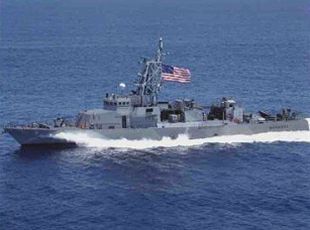
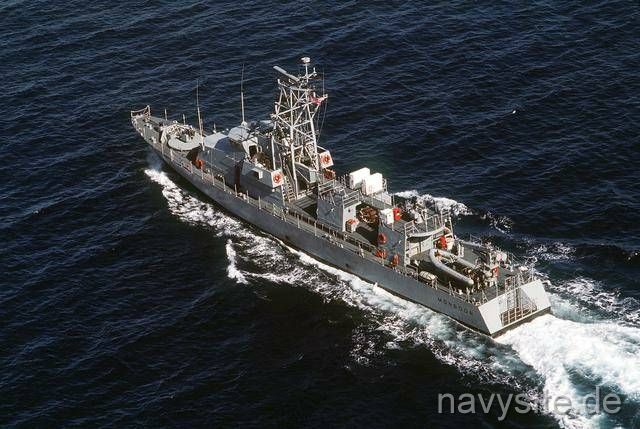
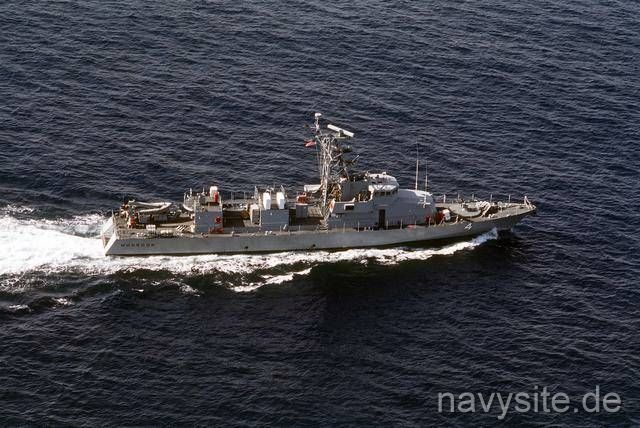
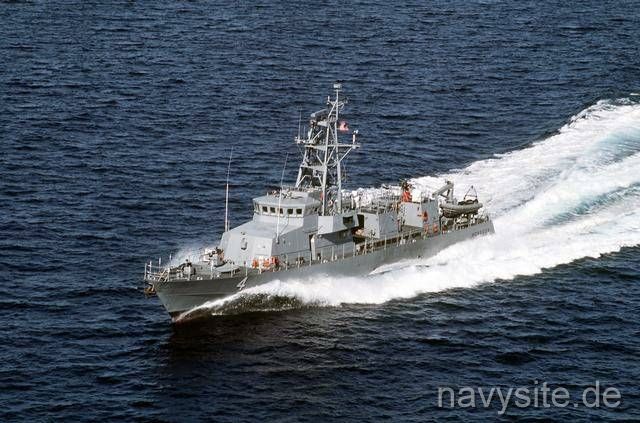
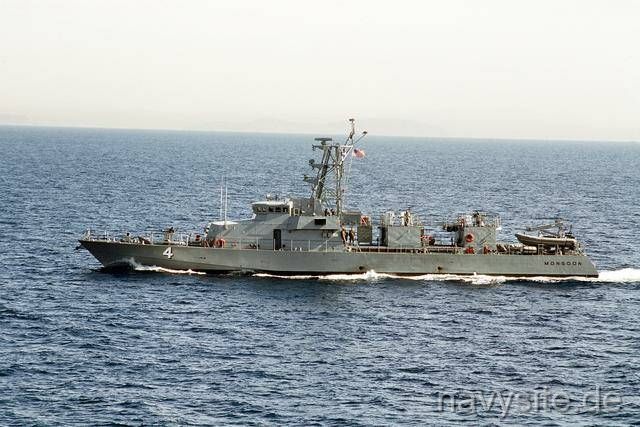
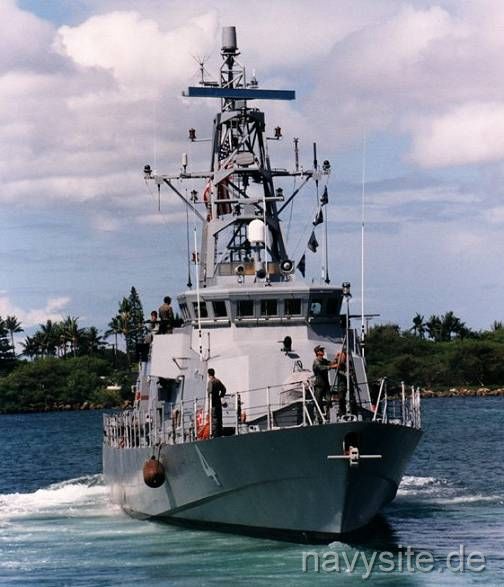
USS MONSOON was the fourth CYCLONE - class patrol coastal boat. From November 2001 on, the CYCLONE - class ships were temporarily operated under US Coast Guard control for homeland defense. On September 30, 2004, the MONSOON was decommissioned and officially transferred to the US Coast Guard where she was recommissioned as USCGC MONSOON (WPC 4). Transferred back to the Navy and recommissioned as USS MONSOON on August 22, 2008, she later operated out of Manama, Bahrain. On March 28, 2023, at Naval Support Activity Bahrain, USS MONSOON held a decommissioning ceremony marking the final withdrawal of CYCLONE-class patrol coastal ships from U.S. service in Bahrain. MONSOON was subsequently transferred to the Philippine naval forces as BRP VALENTIN DIAZ (PS-177).
| General Characteristics: | Awarded: August 3, 1990 |
| Keel laid: February 15, 1992 | |
| Launched: October 10, 1992 | |
| Commissioned: January 22, 1994 | |
| Decommissioned: September 30, 2004 | |
| Recommissioned: August 22, 2008 | |
| Decommissioned: March 28, 2023 | |
| Builder: Bollinger Machine Shop & Shipyard, Lockport, Louisiana | |
| Propulsion system:4 Paxman diesels | |
| Propellers: four | |
| Length: 170 feet (51.8 meters) | |
| Beam: 25 feet (7.6 meters) | |
| Draft: 7.5 feet (2.3 meters) | |
| Displacement: approx. 331 tons | |
| Speed: 35 knots | |
| Aircraft: none | |
| Armament: 2 25mm 2 Mk-19 automatic grenade launchers; 6 stinger missiles | |
| Crew: 4 officers, 24 enlisted and 8 Special Forces personnel |
Crew List:
This section contains the names of sailors who served aboard USS MONSOON. It is no official listing but contains the names of sailors who submitted their information.
USS MONSOON History:
USS MONSOON was ordered on August 3, 1990, as part of the CYCLONE-class program, a group of small, fast patrol coastal ships intended to support naval special warfare forces and other littoral operations. Built by Bollinger Shipyards in Lockport, Louisiana, her keel was laid on February 15, 1992, and she was launched on October 10, 1992. The Navy formally accepted the ship on September 20, 1993, and she was commissioned on January 22, 1994, at Naval Station San Diego, moored at Broadway Pier for the ceremony.
From the outset, MONSOON was configured to operate at high speed in shallow waters, with a small crew, rigid-hull inflatable boat, and armament optimized for close-in defense, boardings, and support to special operations forces. Following her commissioning, USS MONSOON joined the Navy's coastal patrol force on the U.S. west coast. Like her CYCLONE-class sisters, she fell under the operational orbit of U.S. Naval Special Warfare Command, providing a platform for insertion and extraction training, maritime interdiction rehearsals, and security patrols in coastal and near-shore waters. Public sources do not document every patrol or exercise during these early years, but the ship's mission profile placed her regularly off southern California and in nearby Pacific training areas, working with special boat units, SEAL teams, and other small combatants in the immediate post-Cold War environment, when the Navy was refining its approach to low-intensity and coastal warfare.
A major documented milestone in her early career came in the summer of 1998, when MONSOON took part in Cooperation Afloat Readiness and Training (CARAT) 1998, the recurring series of bilateral exercises the United States conducts with Southeast Asian partners. On August 9, 1998, she was photographed in Apra Harbor, Guam, having completed CARAT events and Naval Special Warfare support operations in the region. The deployment marked the first trans-Pacific cruise by a Patrol Forces boat, underscoring both the ship's reliability over long distances and the expanding geographic reach of the CYCLONE-class. After CARAT, MONSOON transited onward from Guam toward Hawaii, using the long leg across the Pacific as an opportunity for extended endurance steaming and crew training far from her normal coastal operating areas.
In the late 1990s and into 2001, MONSOON remained part of the small-combatant force available to U.S. Pacific Fleet commanders. Her documented activities in this period are sparse in the open record, but in line with the role assigned to her class she continued to conduct patrols, maritime security training, and exercises designed to support special operations forces and to refine littoral tactics. During these years, the broader geopolitical context shifted from post-Cold War drawdown to growing concern about terrorism and non-state threats at sea, developments that would soon reshape MONSOON's employment.
After the terrorist attacks of September 11, 2001, the Navy reassigned several CYCLONE-class patrol coastal ships to support homeland defense and port security on the U.S. coasts. In November 2001, MONSOON was placed under U.S. Coast Guard operational control for these missions, alongside other ships of her class. Operating from the U.S. west coast, she contributed to the layered maritime security posture implemented under Operation Noble Eagle, providing a small, fast, armed platform capable of escorting high-value vessels, patrolling approaches to major ports, and supporting Coast Guard boarding teams. The early 2000s thus saw the ship shift from primarily training and special-operations support toward continuous homeland-security and port-defense duty in U.S. coastal waters.
As the Navy reduced its direct employment of the CYCLONE-class in 2004, several of the ships were formally removed from the Navy's active roster and loaned to the U.S. Coast Guard. MONSOON was decommissioned by the Navy at Naval Base Coronado, California at the end of September 2004 and, effective October 1, 2004, transferred on loan to the Coast Guard, where she entered service as USCGC MONSOON (WPC 4). In Coast Guard hands she kept her basic configuration but operated under different administrative control and law-enforcement authorities, continuing to work largely from San Diego in homeland security and law-enforcement roles.
During her Coast Guard service, MONSOON took part in both domestic maritime security patrols and Eastern Pacific counter-narcotics missions. Public histories of the ship describe a focus on harbor security, high-value unit escort, and patrols in U.S. coastal zones, followed by deployments under Joint Interagency Task Force South in the Eastern Pacific drug-trafficking corridors. These missions reflected a broader post-9/11 trend in which small naval combatants and Coast Guard cutters were increasingly used interchangeably to enforce maritime laws and interdict trafficking networks linked to organized crime.
This phase of MONSOON's career is most widely remembered for her role in the apprehension of Mexican drug cartel leader Francisco Javier Arellano Felix. On August 16, 2006, operating in international waters off the Baja California Peninsula, USCGC MONSOON supported a joint operation in which U.S. authorities intercepted the U.S.-registered sport-fishing vessel DOCK HOLIDAY. Arellano Felix, then one of the most-wanted cartel leaders, was taken into custody from the vessel by forces embarked with MONSOON, and DOCK HOLIDAY was towed back to San Diego by a Coast Guard patrol boat. The case illustrated how the small patrol coastal, operating under Coast Guard authority, could be used as a flexible platform for complex law-enforcement and intelligence-driven interdiction missions in the Eastern Pacific.
By 2008, the Navy decided to bring several of the loaned patrol coastal ships back into its own inventory to meet growing demands in U.S. Central Command's maritime theater. On August 22, 2008, MONSOON and her sister TEMPEST (PC 2) took part in an inter-service transfer ceremony at Naval Amphibious Base Little Creek, Virginia, at which the two ships were formally returned from the Coast Guard and recommissioned in the Navy as USS MONSOON and USS TEMPEST. After the ceremony, MONSOON fell under Coastal Patrol Squadron ONE (PCRON 1), joining a group of patrol coastals based at Little Creek and Coronado that were being readied for rotational deployments to the Middle East.
In the years immediately after her return to Navy service, MONSOON operated primarily from the U.S. East Coast as she re-entered Navy training cycles. She conducted local and regional operations and exercises as the Navy refined how best to employ the CYCLONE-class within the broader surface fleet. The ships' shallow draft, high speed, and robust armament made them valuable for maritime security operations, visit-board-search-and-seizure training, and support to special operations forces, and they increasingly were earmarked for forward deployment to U.S. 5th Fleet in the Arabian Gulf. That transition culminated in 2014. On August 13, 2014, USS MONSOON and USS HURRICANE (PC 3) arrived together at Naval Support Activity Bahrain, formally shifting their homeport to Bahrain and joining other patrol coastals already forward-deployed to 5th Fleet. The move was part of a broader realignment plan that concentrated all ten CYCLONE-class ships in the region to support maritime security, theater security cooperation, and operations in the constrained and strategically sensitive waters of the Arabian Gulf, the Strait of Hormuz, and surrounding sea lanes.
Once established in Bahrain, MONSOON settled into a pattern of forward-deployed operations. On March 17, 2014, shortly before her arrival in theater, she had already been documented alongside USS TYPHOON (PC 5) and USS THUNDERBOLT (PC 12) in a divisional tactics exercise under Coastal Patrol Squadron ONE while forward deployed to 5th Fleet, an evolution that emphasized maneuvering in company and coordinating small-ship tactics for maritime security missions.
After 2014, she continued to operate under Task Force 55, conducting patrols, escort duty, and presence operations in support of U.S. and partner-nation interests in the region's congested sea lanes and vital energy shipping routes. MONSOON also served as a visible symbol of U.S. naval presence in Bahrain itself. On June 5, 2016, she provided the backdrop for a Battle of Midway commemoration ceremony held at U.S. Naval Support Activity Bahrain, during which Rear Admiral Eugene Black addressed sailors on the lessons of the 1942 battle. The ceremony took place on the pier in front of USS MONSOON, underscoring the linkage between the Navy's World War II heritage and its contemporary forward-deployed patrol forces in the Middle East.
As with all forward-based small combatants, MONSOON periodically required substantial maintenance to remain effective under heavy operational tempo. In 2017, she entered a maintenance availability in a commercial dry dock operated by Bahrain Ship Repair and Engineering Company, with work overseen by Forward Deployed Regional Maintenance Center Detachment Bahrain. On May 17, 2017, she was successfully undocked after extensive repairs and upgrades: shipyard teams had removed and replaced shafts and propellers, overhauled and reinstalled rudders and sea valves, repaired and replaced several hundred square feet of hull plating, and inspected, repaired, and preserved all tanks and voids.
Following completion of remaining production work and testing, the ship carried out dock trials, fast cruise, and sea trials before fully resuming operations, ensuring that she could continue to meet demanding patrol commitments in the harsh climatic and maritime environment of the Arabian Gulf.
By 2020, MONSOON was part of a maturing patrol-coastal force in 5th Fleet that routinely integrated with newer platforms. On March 9, 2020, she completed a joint underway in the Arabian Gulf with Mark VI patrol boats assigned to Commander, Task Force 56. This evolution reflected the Navy's emphasis on coordinating legacy patrol coastal ships with modern riverine and coastal combatant craft to provide layered security, flexible response options, and improved maritime domain awareness across the fleet's inshore and near-shore operating areas.
In early 2023, MONSOON took part in operations that highlighted the increasing use of unmanned systems and combined exercises with regional partners. On January 22, 2023, in the Arabian Gulf, she was photographed approaching an L3 Harris Arabian Fox MAST-13 unmanned surface vessel, working with the system as part of U.S. 5th Fleet's efforts to integrate unmanned platforms into routine maritime security patrols. The same day, imagery from exercise Neon Defender 23 showed U.S. and Bahrain forces conducting a vessel-boarding drill in the Arabian Gulf, with Royal Bahrain Naval Force missile corvette RBNS AL MUHARRAQ (P 51) involved in the scenario. MONSOON's presence in the associated image gallery indicates her participation in the bilateral exercise, which focused on maritime security, installation defense, and medical response in cooperation with Bahrain.
After nearly three decades of combined Navy and Coast Guard service, USS MONSOON reached the end of her U.S. career in 2023. On March 28, 2023, at Naval Support Activity Bahrain, Navy leaders and crewmembers of USS MONSOON and USS CHINOOK (PC 9) held a decommissioning ceremony marking the final withdrawal of CYCLONE-class patrol coastal ships from U.S. service in Bahrain. The ceremony formally ended the active U.S. Navy careers of the last two patrol coastals stationed in 5th Fleet, as earlier in 2022 and early 2023 other ships of the class had been decommissioned and transferred to partners including Bahrain and Egypt. The Navy announced that MONSOON and CHINOOK were slated for transfer to the Philippine Navy, where they would continue service under a new flag and contribute to maritime security in the Philippine archipelago and the South China Sea.
According to the Navy's historical evaluation of the ship, MONSOON was formally transferred to the Philippine naval forces as BRP VALENTIN DIAZ (PS-177), preserving the hull in active use and closing the chapter on her long tenure as a U.S. patrol coastal ship.
USS MONSOON Image Gallery:
![]() | ![]() | ![]() | ![]() | ![]() |
Back to Patrol Coastal Boats list.
Back to ships list.
Back to selection page.
Back to 1st page.