
Search the Site with

|
Search the Site with
|
 General Characteristics Crew List Memorabilia Cruise Books History About the Ship's Name Accidents aboard the Ship Image Gallery to end of page
 |  |
USS FLOYD B. PARKS was one of the GEARING - class destroyers and the first ship in the Navy to bear the name. Both decommissioned and stricken from the Navy list on July 2, 1973, the FLOYD B. PARKS was sold for scrapping on April 29, 1984.
| General Characteristics: | Awarded: 1943 |
| Keel laid: October 30, 1944 | |
| Launched: March 31, 1945 | |
| Commissioned: July 31, 1945 | |
| Decommissioned: July 2, 1973 | |
| Builder: Consolidated Steel Co., Orange, TX | |
| FRAM I Conversion Shipyard: Puget Sound Naval Shipyard, Bremerton, Wash. | |
| FRAM I Conversion Period: 1962 - May 1963 | |
| Propulsion system: four boilers, General Electric geared turbines; 60,000 SHP | |
| Propellers: two | |
| Length: 391 feet (119.2 meters) | |
| Beam: 41 feet (12.5 meters) | |
| Draft: 18.7 feet (5.7 meters) | |
| Displacement: approx. 3,400 tons full load | |
| Speed: 34 knots | |
| Aircraft after FRAM I: two DASH drones | |
| Armament after FRAM I: one ASROC missile launcher, two 5-inch/38 caliber twin mounts, Mk-32 ASW torpedo tubes (two triple mounts) | |
| Crew after FRAM I: 14 officers, 260 enlisted |
 back to top go to the end of the pageback to top go to the end of the page
Crew List:
This section contains the names of sailors who served aboard USS FLOYD B. PARKS. It is no official listing but contains the names of sailors who submitted their information.
back to top go to the end of the pageback to top go to the end of the pageUSS FLOYD B. PARKS Cruise Books:
back to top go to the end of the pageUSS FLOYD B. PARKS History:
FLOYD B. PARKS was launched 31 March 1945 by Consolidated Steel Corp., Orange, Tex.; sponsored by Mrs. Floyd B. Parks, widow of Major Parks; and commissioned 31 July 1945, Commander M. Slayton in command.
FLOYD B. PARKS arrived at San Diego, her home port, 16 November 1945, and sailed 20 November for her first tour of duty in the Far East, patrolling the coast of China and operating in the Marianas until her return to San Diego 11 February 1947. In the period prior to the outbreak of war in Korea, FLOYD B. PARKS twice more deployed to the Far East for duty with the 7th Fleet, returning from her second such cruise 13 June 1950, just before the North Koreans crossed the 38th parallel. At once she prepared to return to duty as a standby at Pearl Harbor, available should war spread, returning to San Diego 20 August.
FLOYD B. PARKS sailed from San Diego 19 February 1951 to join in United Nations operations in Korea. On 16 March she joined the fast carrier task force, screening them during air operations off the east coast as well as spending a total of 60 days in Wonsan Harbor on blockade and bombardment duty. She returned to San Diego 10 October 1951, and after west coast operations, sailed for duty in the Far East again 31 May 1952. Along with duty similar to that of her first war cruise, she patrolled in the South China Sea and the Taiwan Strait. She returned to San Diego 18 December 1952, and began a peace-time schedule of annual Far East cruises interspersed with west coast training operations and necessary maintenance.
During her 1955 Far Eastern cruise, FLOYD B. PARKS took part in evacuation of the Tachen Islands, and while in the Orient once more 11 March 1956, collided with COLUMBUS (CA 74), losing 2 men and a 40-foot section of her bow. Skillful work by her crew saved their ship, and brought her safely into Subic Bay for temporary repairs. Upon her return to Long Beach Naval Shipyard 14 May 1956, FLOYD B. PARKS' damaged bow was replaced with that of the uncompleted destroyer LANSDALE (DD 766) and after completion of repairs and installation of new equipment FLOYD B. PARKS returned to her west coast-Far East rotation through 1962.
Beginning in 1962, USS FLOYD B. PARKS entered the Fleet Rehabilitation and Modernization (FRAM I) program at Puget Sound Naval Shipyard, Bremerton, Washington. Through May 1963 the ship received an extensive anti-submarine warfare refit that replaced aging equipment with an ASROC launcher, two triple Mk-32 ASW torpedo tube mounts, facilities for two QH-50 DASH drones, updated sensors, and associated habitability and machinery overhauls. She returned to the fleet in mid-1963 as a modernized escort tailored to 1960s Cold War and Western Pacific requirements.
After FRAM acceptance and refresher training, FLOYD B. PARKS resumed the well-established West Coast-Far East rotation with the U.S. Seventh Fleet. By the mid-1960s she was again a regular on WESTPAC deployments, operating from advanced bases such as Subic Bay and Yokosuka, screening carrier task groups, and conducting exercises with regional allies amid rising tensions in Southeast Asia. Contemporary imagery places her in the theater by the mid-1960s and specifically shows her at sea during a Vietnam-era deployment that ran from October 1966 to April 1967.
During the 1966-1967 cruise FLOYD B. PARKS performed the typical mix of carrier plane-guard duty on Yankee Station in the Gulf of Tonkin, coastal surveillance, and naval gunfire support (NGFS) periods on the Vietnam gunline. Photographic records from the period include views of the destroyer operating with the fast carrier force. While day-to-day movements are captured largely in cruise books rather than official narratives, the ship's operational profile mirrored that of her Destroyer Squadron peers: screening, escorting underway replenishment groups, and periodic liberty or logistics calls in forward ports between combat assignments.
In early 1968, as the conflict intensified with the Tet Offensive, FLOYD B. PARKS moved into especially demanding roles. Official veterans' adjudication records place the ship on inland and brown-water duty in the Saigon River and Ganh Rai Bay during February and March 1968 - work that combined NGFS with interdiction and direct support of ground forces in the III Corps area. That assignment reflected the broader shift toward more aggressive naval presence in river approaches and coastal chokepoints aimed at disrupting enemy logistics following Tet.
The destroyer's Vietnam tempo continued into the 1969-1970 period with another WESTPAC/Vietnam cruise. Ship's cruise book documentation for 1969-1970 confirms the deployment and depicts the routine of gunline periods, plane guard for carriers, and brief port visits framed by upkeep at Subic Bay or in Japan between tasking cycles. By then, her post-FRAM sensor and ASW fit also made her useful in screening duties whenever the carrier force transited or exercised away from the combat zone.
FLOYD B. PARKS' 1971 operations are preserved in detail in her officially submitted command history. After a January inport period at San Diego, she deployed on 5 February 1971 under Captain J. J. Herzog (COMDESRON ONE embarked). Following brief stops at Hawaii, Midway, Guam, and Subic Bay, she entered the Tonkin Gulf on 1 March to assume screening duties with the Ready Amphibious Task Group (CTG 76.4) during U.S. and South Vietnamese operations extending into Laos (the ARVN’s Lam Son 719 offensive). On 7 March she shifted to plane-guard duty with the carrier USS KITTY HAWK (CVA 63), and on 14 March joined the fast PIRAZ unit before returning via Subic to Manila to begin a SEATO exercise on 26 March that ran through 7 April. On 9 April, she became the first U.S. ship to participate in Bataan Day Memorial ceremonies in Manila Bay, with honors conducted off Corregidor.
After a short logistics reset at Subic, FLOYD B. PARKS made a port visit to Bangkok, then proceeded to Da Nang to assume Naval Gunfire Support duties under Vietnam Region I and COMDESRON ONE/CTU 70.8.9. Her gunline sectors lay between Chu Lai and the DMZ. She earned high marks for accurate support despite weather diversions for two typhoons. On 15 May she was relieved on station by the Australian destroyer HMAS BRISBANE. Between gunline periods she visited Kaohsiung, Hong Kong, Sasebo, and Keelung, then returned to Subic.
In late June 1971, while embarked families were ferried by a special CRUISE-PAC flight for ceremonies in Hong Kong, command passed at Sasebo on 29 June 1971 from CDR James F. Donovan to LCDR James M. McCulloch, who was promoted to Commander on 1 July and continued in command. In July, the destroyer departed Subic with USS COCHRANE (DDG 21) for scheduled visits to Australia and New Zealand, but on 18 July, west of the Palau Islands, a starboard-side propeller blade failed. Divers at Guam removed the damaged propeller. FLOYD B. PARKS then proceeded to Pearl Harbor on one shaft in company with USS HANSON (DD 832) and USS DENNIS J. BUCKLEY (DD 808). At Pearl Harbor she received a new propeller on 29 July and departed after midnight on 30 July, arriving San Diego on 04 August.
Post-deployment, the ship conducted leave and upkeep through early September 1971, then made a public-relations visit to San Luis Obispo, California, 16-20 September to support a harbor bond campaign. Through October and November she was underway off Southern California for ASW operations, Pacific Missile Range events, and Project CHASER tasks near San Clemente. A short tender availability and additional upkeep closed out the year in San Diego. Operational statistics compiled in the official history record 467,559 engine miles steamed for 1971, 3,477,516 gallons of fuel consumed, and 1,920 five-inch rounds fired during that year's commitments.
In 1972, as the conflict in Southeast Asia surged with the North Vietnamese Easter Offensive and the subsequent U.S. air and naval counter-offensives, FLOYD B. PARKS again deployed to WESTPAC. Consistent with her 1968-1971 pattern - and as summarized in recognized naval histories - she alternated between gunline assignments, search-and-rescue and PIRAZ support, and carrier plane-guard/escort on Yankee Station. The ship's Vietnam-era summaries specifically note active shore-bombardment work in 1972, reflecting the intensity of Seventh Fleet gunfire support that year.
Following her final deployment cycle, FLOYD B. PARKS returned to San Diego in early 1973. She was decommissioned and stricken on 2 July 1973, concluding nearly three decades of service that had ranged from post-war China patrols to Korean War combat and sustained Vietnam operations. The Navy subsequently sold the hull for scrapping. The transaction was recorded in April 1974.
back to top go to the end of the pageAbout the Ship's Name:
 Floyd B. Parks was born in Salisbury, Missouri, on 16 January 1911. He became a Marine Corps officer after graduating from the U.S. Naval Academy in 1934 and later became a Naval aviator. He commanded Marine Fighting Squadron 221 during the Battle of Midway. On 4 June 1942, Major Parks was killed in action leading his squadron against overwhelming numbers of qualitatively superior enemy fighter planes during the Japanese Air Attack on Midway.
back to top go to the end of the pageAccidents aboard USS FLOYD B. PARKS:
| Date | Where | Events |
|---|---|---|
| March 11, 1956 | off Luzon, Philippines | USS COLUMBUS (CA 74) and the USS FLOYD B. PARKS are damaged after colliding off Luzon, Philippines. The FLOYD B. PARKS loses 2 sailors and a 40-foot section of her bow.  The collision is also mentioned in USS COLUMBUS's 1956 WestPac Cruise Book: 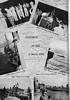   |
back to top go to the end of the page
USS FLOYD B. PARKS Image Gallery:
 |  |
back to top
 Back to Destroyers list. Back to ships list. Back to selection page. Back to 1st page.