![]() |
Search the Site with
|
![]() | ![]() | ![]() |
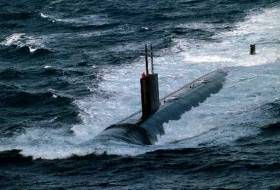
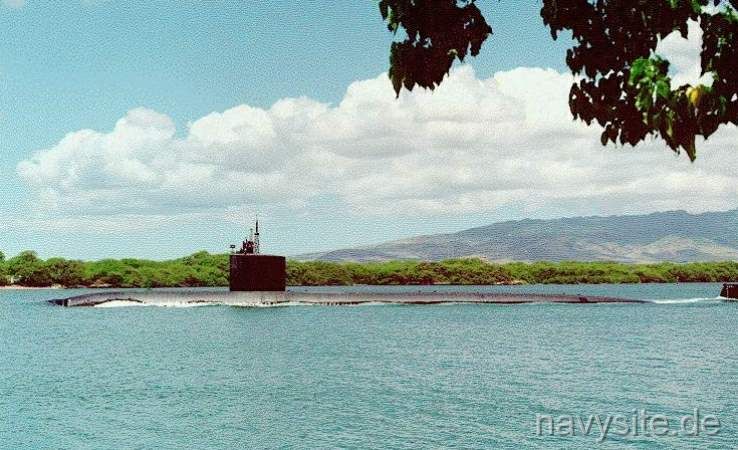
USS COLUMBIA is the 60th submarine in the LOS ANGELES-class and the seventh ship in the Navy named after the capital of South Carolina, and cities in Missouri and Illinois.
| General Characteristics: | Awarded: December 14, 1988 |
| Keel laid: April 21, 1993 | |
| Launched and Christened: September 24, 1994 | |
| Commissioned: October 9, 1995 | |
| Builder: Electric Boat Division of General Dynamics Corporation, Groton, Conn. | |
| Propulsion system: one nuclear reactor | |
| Propellers: one | |
| Length: 360 feet (109.73 meters) | |
| Beam: 33 feet (10 meters) | |
| Draft: 32,15 feet (9.8 meters) | |
| Displacement: Surfaced: approx. 6,000 tons Submerged: approx. 6,900 tons | |
| Speed: Surfaced: approx. 15 knots Submerged: approx. 32 knots | |
| Armament: | |
| Cost: approx. $900 million | |
| Homeport: Pearl Harbor, HI. | |
| Crew: 13 Officers, 116 Enlisted |
Crew List:
This section contains the names of sailors who served aboard USS COLUMBIA. It is no official listing but contains the names of sailors who submitted their information.
USS COLUMBIA History:
USS COLUMBIA began as a paper project during the last decade of the Cold War, when the U.S. Navy ordered another unit of the LOS ANGELES-class attack submarines to sustain undersea superiority against the Soviet Union and its successors. On December 14, 1988, the Navy awarded the construction contract to General Dynamics Electric Boat in Groton, Connecticut, specifying an "Improved" 688-class design with vertical launch tubes for Tomahawk cruise missiles and updated quieting based on lessons from the SEAWOLF program. After several years of design finalization and component fabrication, COLUMBIA's keel was laid at Electric Boat on April 21, 1993, marking the formal start of construction on what would become the last 688-class submarine built at the yard.
The hull took shape in modular sections, incorporating enhanced combat systems and computerization that distinguished the "Improved" boats from earlier LOS ANGELES-class units. By late 1994, the submarine was ready for launching. On September 24, 1994, at Groton, First Lady Hillary Rodham Clinton, serving as the ship's sponsor, christened COLUMBIA and the hull slid down a 1,300-foot wooden building way into the Thames River. This dramatic side-launch made COLUMBIA the last American submarine to enter the water via a wooden ramp instead of flooding a dry dock, a small historical milestone that later figured prominently in descriptions of the boat.
Over the next year, Electric Boat and Navy crews completed fitting out and sea trials. COLUMBIA was placed "in service - active" on May 31, 1995, then formally delivered to the Navy on August 18, 1995, after acceptance trials in the North Atlantic and off the New England coast. On October 9, 1995, the submarine was commissioned at Naval Submarine Base New London in Groton, with Hillary Rodham Clinton as principal speaker and sponsor, taking her place as the 60th LOS ANGELES-class submarine and the 33rd of the class built at Electric Boat.
In the months following commissioning, COLUMBIA conducted post-shakedown acoustic and systems trials from New London, working with test ranges and support ships to verify the performance of her sonars, combat systems and propulsion plant. Once those activities were complete, she shifted focus to fleet integration and, by the late 1990s, had joined the U.S. Pacific Fleet, homeported at Pearl Harbor and assigned to Submarine Squadron 7. As an Improved LOS ANGELES-class boat, she arrived in the Pacific with a versatile mission set: anti-submarine and anti-surface warfare, Tomahawk land-attack strikes, intelligence collection and special operations support, all under the strategic backdrop of the post-Cold-War "peace dividend" and growing attention to regional crises rather than global confrontation.
By 1998, the international environment had shifted again, with U.S. attention increasingly focused on terrorism and regional instability. That year, COLUMBIA deployed to the Western Pacific with the USS ABRAHAM LINCOLN (CVN 72) Carrier Battle Group, operating across the Pacific and Indian Oceans. According to later Navy and analytical summaries, the submarine's 1998 Western Pacific deployment with ABRAHAM LINCOLN earned her a Meritorious Unit Commendation and the Navy Expeditionary Medal, reflecting operations that included Tomahawk-related mission profiles and direct involvement in Operation INFINITE REACH, the August 1998 U.S. cruise-missile strikes against terrorist targets in Afghanistan and Sudan following the bombings of the American embassies in Kenya and Tanzania. This deployment confirmed the role of Pacific Fleet attack submarines as not only sea-denial platforms but also land-attack assets in emerging counterterrorism campaigns.
In 1999, COLUMBIA's publicly documented activities included a period from March to May operating off the California coast, conducting exercises and port visits as part of fleet training and readiness workups.
The early 2000s saw COLUMBIA pulled directly into the global response to the September 11, 2001 attacks. In late 2002, she was assigned to the USS CONSTELLATION (CV 64) Carrier Battle Group for a deployment that would span the initial phases of Operation ENDURING FREEDOM and, soon after, Operation IRAQI FREEDOM. On December 6, 2002, COLUMBIA departed Pearl Harbor for a six-month cruise, underway with CONSTELLATION, the guided-missile cruisers USS VALLEY FORGE (CG 50) and USS BUNKER HILL (CG 52), the guided-missile destroyers USS HIGGINS (DDG 76) and USS MILIUS (DDG 69), the guided-missile frigate USS THACH (FFG 43), the fast combat support ship USS RAINIER (AOE 7) and the Coast Guard cutter USCGC BOUTWELL (WHEC 719).
The battle group steamed west across the Pacific, transited through Southeast Asian waters with at least one documented port call in Singapore, and continued into the Indian Ocean, Arabian Sea and Persian Gulf in the buildup to war with Iraq. When Operation IRAQI FREEDOM began in March 2003, COLUMBIA was one of the Pacific Fleet attack submarines already in position. SUBPAC's official history later recorded that CHEYENNE (SSN 773) fired the first Tomahawks into Baghdad and that three other Pacific Fleet submarines - LOUISVILLE (SSN 724), COLUMBIA and KEY WEST (SSN 722) - also participated in the early cruise-missile strike missions of the campaign, delivering land-attack Tomahawks in support of coalition forces ashore. For COLUMBIA, this meant submerged operations in the restricted waters of the Arabian Gulf and Arabian Sea, integrated into strike packages also involving carrier aviation and surface combatants under 5th Fleet. On June 6, 2003, after nearly six months away, COLUMBIA moored at a Pearl Harbor pier, returning from deployment in support of both ENDURING FREEDOM and IRAQI FREEDOM, as recorded in official Navy photography and press releases.
In the mid-2000s, COLUMBIA continued a pattern of recurring Western Pacific deployments typical of Pearl Harbor-based attack submarines. Deployment records show a WESTPAC from October 2005 to March 2006. On March 17, 2006, COLUMBIA returned to Pearl Harbor from the six-month deployment that had begun in late 2005 and taken her across the Western Pacific in support of what was then termed the global war on terrorism. During that deployment she had operated with allied navies, including the Royal Australian Navy, and visited ports in Singapore, Guam, Australia, Japan and the Republic of Korea, combining surveillance and presence missions with multinational exercises before ending the cruise back at her homeport in Hawaii.
Shortly after this return, the submarine's performance over the preceding year was formally recognized. On June 13, 2006, the crew was notified that COLUMBIA had been selected as the Pacific Fleet's recipient of the Arleigh Burke Fleet Trophy, an annual award for the ship that has achieved the greatest improvement in battle efficiency. The citation highlighted how the crew had compressed a normally eighteen-month readiness cycle into eight months and then deployed 45 days ahead of schedule to provide an additional attack-submarine presence in the Western Pacific. That earlier accelerated deployment, coupled with intensive training, weapons exercises and acoustic trials, formed the background against which her 2005-2006 cruise and the award were judged.
In mid-2006, COLUMBIA moved quickly from the end of a long deployment into large-scale multinational exercise activity. On July 5, 2006, she departed Pearl Harbor to take part in Rim of the Pacific (RIMPAC) 2006, the major biennial maritime exercise conducted in the waters around Hawaii. Contemporary imagery and captions show the boat getting underway from Pearl Harbor as part of a force that brought together units from eight nations - the United States, Australia, Canada, Chile, Peru, Japan, the Republic of Korea and the United Kingdom - for anti-submarine warfare, anti-surface and combined task-group training. Through July 2006 she contributed to the undersea warfare element of the exercise before returning to local operations out of Pearl Harbor.
After the tempo of deployments and exercises in 2005-2006, the submarine's next major milestone was a long planned modernization and overhaul period. In April 2007, COLUMBIA entered a Depot Modernization Period (DMP) at Pearl Harbor Naval Shipyard and Intermediate Maintenance Facility. This availability involved extensive maintenance and system upgrades and was described afterward as a very large project, with a work package amounting to nearly 202,000 man-days of effort. The shipyard and crew managed to complete the work faster than any of the comparable DMPs then used as benchmarks, and the period concluded on July 25, 2008, returning COLUMBIA to operational status.
Soon after the DMP finished, the submarine drew high-level attention. On August 18, 2008, the Chief of Naval Operations, Admiral Gary Roughead, visited Pearl Harbor and was photographed being piped ashore after time aboard USS COLUMBIA, reflecting the boat's status as a recently modernized asset returning to the fleet. Through late 2008 and into 2009, the crew focused on training, work-ups and inspections to re-establish full operational readiness after the long shipyard period, under the command of Cmdr. Craig Blakely, who had relieved Cmdr. Gene Sievers in a change of command ceremony at Pearl Harbor on October 26, 2007.
By late 2009, COLUMBIA was again ready for extended forward operations. On November 3, 2009, she departed Naval Station Pearl Harbor for a regularly scheduled deployment to the Western Pacific. Official statements at the time emphasized the youth of the crew and their preparation after "just recently" coming out of the shipyard, underlining the transition from overhaul to deployment within roughly a year. As is usual for contemporary attack-submarine operations, detailed information on the missions and exact ports of call during this 2009-2010 deployment has not been released publicly, but it is clear that the boat spent several months forward-deployed in the western Pacific before eventually returning to Pearl Harbor.
In the early 2010s, COLUMBIA continued in a rhythm of deployment, maintenance and advanced exercises. She made another Western Pacific deployment in 2011, during which she operated in the wider WestPac region and is known to have called at Yokosuka, Japan, reflecting her continuing role in supporting the United States' forward naval presence and alliance commitments in Northeast Asia. Between deployments she underwent an extended docking maintenance period of around six months at Pearl Harbor, during which systems were overhauled and modernized to keep the ship at full combat capability. In the same period, the submarine earned a Battle Efficiency ("Battle E") Award, a Meritorious Unit Commendation and other distinctions, recognizing sustained improvements in readiness and performance across operations, inspections and training.
A particularly well-documented deployment followed in the mid-2010s. In May 2014, USS COLUMBIA again left Joint Base Pearl Harbor-Hickam for a Western Pacific deployment. During that cruise the submarine conducted a range of operations and exercises in support of U.S. national security interests in the Indo-Pacific. On November 5, 2014 she arrived at Fleet Activities Yokosuka for a port visit described in contemporaneous reports as part of her Western Pacific deployment, giving the crew time ashore and providing a visible symbol of U.S.-Japan naval cooperation. After completing the deployment, COLUMBIA returned to her homeport later in November 2014, having spent about six months forward-deployed.
The submarine's performance over this period was again formally recognized. In July 2015, COLUMBIA received the Arleigh Burke Fleet Trophy for a second time, this time as the Pacific Fleet unit judged to have achieved the greatest improvement in battle efficiency over the previous year. The award reflected the cumulative effect of the 2014 deployment, the preceding maintenance period and the crew's progress in tactical proficiency and material readiness. Around this time the boat also received additional awards, including a Meritorious Unit Commendation and another Battle Efficiency Award, underscoring the consistently high marks she was earning in inspection and operational performance.
COLUMBIA deployed once more to the Western Pacific in 2016. During this six-month patrol she again operated widely in the region and made port visits to Yokosuka and Sasebo, both major Japanese naval hubs, as well as to Guam. A photograph dated October 25, 2016 shows the submarine preparing to moor at Fleet Activities Yokosuka during this cruise, illustrating her pattern of periodic liberty and logistics stops amid largely unpublicized undersea operations. The deployment fitted into a broader pattern of U.S. submarine activity in the Indo-Asia-Pacific, providing flexible strike, intelligence and anti-submarine capabilities in support of the wider fleet.
In 2017, COLUMBIA remained based at Pearl Harbor and continued with local operations, training and proficiency underways. Imagery from September 2017 shows her transiting Pearl Harbor for such a training sortie, a routine but necessary part of keeping crews qualified and systems exercised between major deployments. This period of intensive training set the stage for another major deployment the following year.
In late 2017, COLUMBIA left Hawaii for a further Western Pacific deployment that lasted into mid-2018. She returned to Joint Base Pearl Harbor-Hickam on June 6, 2018, after a six-month deployment described as a cruise to the Indo-Pacific region. During this deployment she conducted a series of operations and exercises in support of national security objectives and made port visits to Sasebo and Yokosuka in Japan, again reinforcing interoperability and visible presence alongside an allied maritime partner. The homecoming in June 2018, captured in photographs of the boat transiting Pearl Harbor and mooring at the historic submarine piers, closed out what was publicly characterized as a demanding and successful deployment for the crew.
Following this 2018 cruise, USS COLUMBIA entered a major mid-life modernization. In October 2018, she began an engineered overhaul at Pearl Harbor Naval Shipyard and Intermediate Maintenance Facility, a comprehensive refit typical for LOS ANGELES-class submarines at this stage of their service life. While in dry dock she underwent extensive repairs, modernization and routine maintenance to ensure that hull, propulsion, combat systems and habitability could support many more years of front-line service.
This otherwise routine overhaul period was overshadowed by a serious incident at the shipyard. On December 4, 2019, while COLUMBIA was in Dry Dock 2, a sailor assigned to the submarine opened fire on civilian shipyard workers, killing two and wounding another before taking his own life. The event prompted a detailed investigation into mental-health screening and security procedures for armed watchstanders and produced case-study analyses within the Navy's safety and personnel system. The incident did not change the technical course of the overhaul itself but marked a tragic chapter in the boat's time in the yard.
Despite this, the engineering work progressed. On July 16, 2020 Pearl Harbor Naval Shipyard undocked COLUMBIA from Dry Dock 2, a milestone described as one of the key achievements of the engineered overhaul. The boat remained in the shipyard for further pier-side work, testing and crew training before beginning sea trials. On May 6, 2021, she departed the Pearl Harbor Naval Shipyard for those trials, getting underway from Joint Base Pearl Harbor-Hickam as part of the final phase of returning the submarine to full operational status. Official descriptions of this period emphasized that the shipyard and crew had carried out essential repairs and modernization, along with routine maintenance, to restore full technical capacity and mission capability.
By May 2021, the overhaul was essentially complete. COLUMBIA was formally returned to the operational fleet on May 17, 2021, closing the engineered overhaul availability that had begun in 2018. The following day, May 18, 2021, a change of command at Joint Base Pearl Harbor-Hickam saw Cmdr. Corey Barksdale relieve Cmdr. Tyler Forrest as commanding officer of the submarine, marking a leadership transition just as the boat re-entered front-line service.
The post-overhaul period saw COLUMBIA immediately used in high-end training. On June 3, 2021, she left Joint Base Pearl Harbor-Hickam to take part in exercise Agile Dagger 2021, a submarine-focused training event described as putting roughly one-third of Pacific submarine forces to sea simultaneously. The exercise was designed to assess warfighting readiness and build joint capabilities with other forces, with COLUMBIA contributing as one of the refurbished attack-submarine assets in the Pacific.
Later in 2021, the submarine deployed farther afield. In September 2021, COLUMBIA participated in the 62nd iteration of UNITAS, a long-running multinational maritime exercise conducted off South America. During this exercise she worked alongside allied surface ships and submarines from a range of regional and extra-regional navies, contributing U.S. nuclear-powered attack-submarine capabilities to combined anti-submarine and anti-surface training scenarios in the southern hemisphere. This deployment demonstrated the boat's restored reach after overhaul, extending her operations beyond the Indo-Pacific into the Atlantic and South American theaters.
In the years that followed, COLUMBIA continued to operate from Pearl Harbor as an active unit of the U.S. Pacific Fleet, taking part in local training, regional exercises and operational patrols as required. Specific details of many of these activities are not publicly released, which is typical for nuclear-powered attack submarines, but images and brief references show the boat periodically getting underway from Joint Base Pearl Harbor-Hickam for both training and operational purposes as she settled into the second half of her service life.
The most recent clearly documented chapter in this period came in 2024-2025. Public posts in mid-2025 record that USS COLUMBIA returned to Joint Base Pearl Harbor-Hickam on June 1, 2025, following a seven-month deployment. Though open sources do not yet describe the route, specific operations or ports of call for this cruise, its duration indicates a substantial period of forward presence and tasking, consistent with the long-range patrol patterns COLUMBIA had followed in earlier Western Pacific and Indo-Pacific deployments.
USS COLUMBIA Patch Gallery:
![]() |
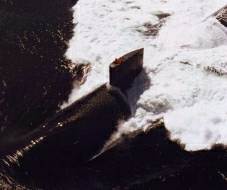
USS COLUMBIA Image Gallery:
![]() | ![]() | ![]() | ![]() | ![]() |
![]() | ![]() | ![]() | ![]() |
Back to Submarines list.
Back to ships list.
Back to selection page.
Back to 1st page.