
Search the Site with

|
Search the Site with
|
 General Characteristics Crew List Memorabilia History Image Gallery to end of page

Named after the most southern place of the United States, USS KEY WEST was the 35th LOS ANGELES-class nuclear-powered attack submarine. On July 22, 2024, KEY WEST's crew held a decommissioning ceremony at the Naval Undersea Museum in Keyport, Wash., before the submarine was officially decommissioned and stricken from the Navy list on September 12, 2025 - exactly 38 years after her commissioning.
| General Characteristics: | Awarded: August 13, 1981 |
| Keel Laid: July 6, 1983 | |
| Launched: July 20, 1985 | |
| Commissioned: September 12, 1987 | |
| Decommissioned: September 12, 2025 | |
| Builder: Newport News Shipbuilding, Newport News, Va. | |
| Propulsion system: one nuclear reactor | |
| Propellers: one | |
| Length: 360 feet (109.73 meters) | |
| Beam: 33 feet (10 meters) | |
| Draft: 32,15 feet (9.8 meters) | |
| Displacement: Surfaced: approx. 6,100 tons | |
| Submerged: approx. 6,900 tons | |
| Speed: Surfaced: approx. 15 knots | |
| Submerged: approx. 32 knots | |
| Armament: four 533 mm torpedo tubes for | |
| Cost: approx. $900 million | |
| Crew: 12 Officers, 115 Enlisted |
 back to top go to the end of the pageback to top go to the end of the page
Crew List:
This section contains the names of sailors who served aboard USS KEY WEST. It is no official listing but contains the names of sailors who submitted their information.
back to top go to the end of the pageback to top go to the end of the pageUSS KEY WEST History:
The history of USS KEY WEST begins on August 13, 1981, when the U.S. Navy awarded the construction contract to Newport News Shipbuilding in Newport News, Virginia, at a time when the United States was still deeply engaged in the late Cold War naval build-up. Her keel was laid down on July 6, 1983, and she was launched on July 20, 1985, sponsored by Virginia Conn, whose husband was then Assistant Secretary of the Navy for financial management. The submarine, a later member of the LOS ANGELES-class and the fourth in the class to receive a twelve-cell vertical launch system for Tomahawk missiles, represented an evolutionary step in U.S. attack submarine capability.
After fitting out and trials, USS KEY WEST was commissioned at Norfolk, Virginia, on September 12, 1987, with Commander Warren Lipscomb Jr. in command, and was assigned to the Atlantic Fleet with Norfolk as her homeport. In the months after commissioning, the boat completed post-shakedown workups and certifications along the U.S. East Coast and in the western Atlantic, building crew proficiency in anti-submarine and anti-surface warfare, surveillance, and strike mission areas. Public sources do not list every short underway period of these early years, but they show that USS KEY WEST operated primarily from Norfolk, conducting local exercises in the western Atlantic and Caribbean and integrating into fleet training events typical of the late 1980s. Late in 1987 she made a high-profile visit to her namesake city, Key West, Florida, for a week-long celebration that cemented ties with the community she was named for.
By 1989 the submarine was undertaking longer overseas deployments. After completing initial testing and certifications, she carried out her first major deployment to the eastern Atlantic, operating with NATO forces in an environment still shaped by the Soviet Navy's presence. The following year, 1990, she deployed to the Mediterranean Sea, again working closely with allied navies on anti-submarine warfare and surveillance tasks. For her performance during this 1990 Mediterranean cruise, USS KEY WEST received the "Hook-em" anti-submarine warfare excellence award, reflecting successful participation in complex ASW operations against high-value exercise targets at a time when tracking quiet submarines remained a central U.S. Navy concern. Her combined performance during the 1989 and 1990 deployments also led to award of a Meritorious Unit Commendation for Cold War operations, recognizing the cumulative effect of her patrols in the Atlantic and Mediterranean.
During the early 1990s, USS KEY WEST continued to work out of Norfolk, regularly deploying to the Atlantic and Caribbean and taking part in multinational exercises as the Cold War ended and the Navy shifted toward regional crisis response.
In 1992, she earned further distinction by winning the "TOP TORP" torpedo shooting competition and receiving the Battle Efficiency "E" award for Submarine Squadron Eight, reflecting overall excellence across warfare areas, engineering, and shiphandling. That same year she returned to Key West, Florida, on another namesake visit that strengthened her relationship with the city. A third visit followed in 1994, which would prove to be her last call there before her later reassignment to the Pacific Fleet.
In 1995, USS KEY WEST deployed with the carrier battle group built around USS THEODORE ROOSEVELT (CVN 71), as NATO and U.S. forces enforced a no-fly zone and other sanctions related to the conflict in the former Yugoslavia. Operating in the Mediterranean Sea and later in the Persian Gulf, she contributed to intelligence collection, surveillance, and strike support tasks associated with operations such as Deny Flight over Bosnia and continued maritime enforcement against Iraq in the Gulf. For this deployment, she and her crew received the Navy Unit Commendation, as well as eligibility for the Armed Forces Service Medal and the NATO medal, which reflected participation in alliance operations during the Balkan conflict.
Following her return from the 1995 deployment, the submarine entered an availability in Norfolk to prepare for reassignment to the Pacific Fleet. This period included maintenance, upgrades to combat systems and machinery, and extensive training to ready the crew for long-range operations in a new theater. In June 1996, USS KEY WEST left Norfolk for the Pacific, transiting the Panama Canal as part of her inter-fleet transfer and formal change of homeport.
She arrived at Pearl Harbor, Hawaii, in July 1996, becoming part of Submarine Squadron One and joining a community of attack submarines focused on the Pacific and Indian Ocean regions. The shift to the Pacific quickly brought new operational patterns. After initial local operations in Hawaiian waters to integrate with her new squadron and to familiarize the crew with Pacific Fleet procedures, USS KEY WEST prepared for her first deployment from Pearl Harbor. In April 1997, she sailed as part of the battle group centered on USS CONSTELLATION (CV 64), heading west across the Pacific. During this deployment she operated across the Pacific Ocean, Indian Ocean, and the Persian Gulf, supporting both U.S. Third Fleet and Seventh Fleet, and then Fifth Fleet once in the Gulf. Her tasks included screening the carrier against submarine threats, shadowing surface contacts, and gathering intelligence in waters where tensions with Iraq remained high under the framework of post-Gulf War sanctions and Operation Southern Watch. After several months of operations and port visits in the western Pacific and Middle East, she returned to Pearl Harbor later in 1997. That year she was reassigned from Submarine Squadron One to Submarine Squadron Three, aligning her more directly with carrier strike group support in the central and western Pacific.
In 1998, the submarine's schedule reflected a balance of large-scale multinational exercises and real-world deployments. Early in the year, she deployed in the eastern Pacific to support the carrier battle groups of USS CARL VINSON (CVN 70) and USS ABRAHAM LINCOLN (CVN 72), rehearsing blue-water operations, coordinated strike planning, and screen duties ahead of their own overseas cruises.
During the summer, she took part in the Rim of the Pacific (RIMPAC) 1998 exercise off Hawaii, contributing to a major combined training event that involved surface ships, submarines, and aircraft from several Pacific nations and focused on coalition maritime warfare in open-ocean scenarios. In the autumn of 1998, USS KEY WEST embarked on a Western Pacific deployment that carried her back toward East Asia. She departed Pearl Harbor on October 13 for this cruise, and on October 24 entered Chinhae Naval Base in the Republic of Korea for a brief port visit ahead of major exercises. After leaving Chinhae she participated in FOAL EAGLE '98, a large U.S.-Republic of Korea combined exercise emphasizing joint operations on and around the Korean Peninsula. The submarine's role included anti-submarine and anti-surface warfare training, as well as coordinated operations with allied surface forces and aircraft. She then moved on to ANNUALEX, an annual bilateral exercise with the Japan Maritime Self-Defense Force conducted in the Sea of Japan, where she again practiced high-end submarine warfare and coordination with Japanese ships and aircraft. During this deployment, she also carried out a torpedo exercise, testing her weapons employment under realistic conditions. After roughly three months in the region, she returned to Pearl Harbor in late 1998, closing out a year dominated by multilateral training and forward presence.
From 1998 through 2001, USS KEY WEST continued to support operations across both the Third Fleet and Seventh Fleet areas of responsibility, spending much of her time cycling between local training around Hawaii, shorter regional deployments, and extended patrols in the western Pacific and Indian Ocean. She participated in a series of bilateral and multilateral exercises with Pacific allies, reflecting a U.S. emphasis on combined operations in the post-Cold War environment. Specific public details for each year are limited, but the pattern shows frequent integration with carrier strike groups and theater anti-submarine warfare exercises as tensions with Iraq persisted and concerns about regional flashpoints in East Asia remained.
In 2001, the submarine's operations intersected with a major global crisis. In early September, she was en route toward Bahrain for a liberty visit after operations in the region. Following the terrorist attacks of September 11, she was abruptly redirected and ordered to proceed at speed to the northern Arabian Sea as the United States assembled forces for what would become Operation Enduring Freedom in Afghanistan. Her transit turned into an extended war patrol of roughly ten weeks, conducted largely in the northern Arabian Sea and adjacent waters, where U.S. and allied submarines took up positions to provide strike and intelligence capabilities. On October 7, 2001, when the opening strikes of Operation Enduring Freedom began, USS KEY WEST and the British attack submarine HMS TRAFALGAR were among the coalition submarines positioned to deliver Tomahawk cruise missile attacks against Taliban and al-Qaeda targets.
Later that month, during a further wave of attacks, she again participated by launching Tomahawk Land Attack Missiles against military facilities and airfields in Afghanistan, including targets around Kabul, Kandahar and in the country's north, as part of a broader campaign to degrade Taliban command, control, and air capabilities.
After this intense deployment, USS KEY WEST returned to Pearl Harbor and, in 2002, underwent a period of modernization and maintenance. Available descriptions indicate that this year included work to sustain her combat systems and hull, interspersed with local operations in Hawaiian waters. She also took part in exercise RIMPAC 2002, again working with multinational naval forces to rehearse high-end maritime operations and to integrate submarine capabilities into large task group battle problems.
In 2003, the submarine deployed once more to the Western Pacific and the broader Central Command region at a time when the United States was preparing for and then conducting Operation Iraqi Freedom. Public sources identify this as a WESTPAC deployment that included strike operations in support of the campaign against Iraq. Operating under U.S. Seventh Fleet in the Pacific and then Fifth Fleet when in the Middle East, she contributed to the undersea strike and surveillance capability that complemented carrier air power and land-based aircraft. Details of specific launch events are not publicly enumerated, but her role is described as part of the coordinated submarine strike effort that marked the early phase of the Iraq war. After this mission she returned to Pearl Harbor and resumed local operations.
The following year, 2004, saw USS KEY WEST again heavily engaged in training and readiness activities. Imagery from that year shows her at periscope depth during RIMPAC 2004, indicating participation in the recurring multinational exercise around Hawaii. In the broader geopolitical context, this was a period in which the U.S. Navy focused on honing joint and combined capabilities while maintaining presence in both the western Pacific and the Middle East. Although individual port visits from 2004 are not well documented in open sources, the submarine's pattern of activity suggests a mix of local training, certification events, and shorter patrols in the Pacific.
In 2005, she undertook another major Western Pacific deployment. Leaving Pearl Harbor for a deployment that lasted about six months, USS KEY WEST operated across the Western Pacific and took part in the large U.S.-Australian exercise Talisman Sabre, which involved extensive joint land, sea, and air operations in and around Australian waters. During this deployment, she visited Australia, including a port call at Brisbane, where the crew enjoyed shore leave after a month of exercise activity. She also visited ports in Japan and Guam, reflecting a cruise that combined major coalition training with routine theater engagement. USS KEY WEST returned to her homeport at Pearl Harbor on November 10, 2005, closing out the deployment with a ceremony attended by families and squadron leadership.
The tempo remained high in 2006. The submarine took part in RIMPAC 2006, the large multinational exercise held that summer in the central Pacific. On July 25, 2006, she was photographed sailing in formation with a group of twenty-eight ships and submarines at the conclusion of the exercise, highlighting the degree to which she was integrated into complex combined operations involving surface combatants, aircraft, and other submarines from several Pacific navies. In addition to RIMPAC, she continued local operations from Pearl Harbor and underwent routine maintenance and crew training, ensuring sustained readiness for follow-on deployments.
In January 2007, USS KEY WEST departed Pearl Harbor again for a Western Pacific deployment that would last seven months. She spent this cruise supporting U.S. commitments in the Western Pacific and contributing to regional deterrence and maritime security at a time of growing attention to North Korea's nuclear program and the rise of China's naval power. During the deployment, she conducted multiple community relations activities in Japan and in Hong Kong, reflecting the diplomatic and public-relations dimension of submarine port visits. She also participated in Valiant Shield 2007, a major joint exercise held near Guam, where she was photographed transiting alongside USS KITTY HAWK (CV 63) during a large photo exercise involving the KITTY HAWK, JOHN C. STENNIS (CVN 74) and NIMITZ (CVN 68) carrier strike groups and numerous other ships and aircraft. USS KEY WEST returned to Pearl Harbor on August 28, 2007, closing a deployment that produced new chiefs, many newly qualified submariners, and multiple theater-specific operations. For her performance over this period, she was awarded the Battle Efficiency "E" for Submarine Squadron Three, the Arleigh Burke Trophy as the most improved sea command in the Pacific Fleet, and a Naval Unit Commendation, reflecting sustained excellence across the deployment.
The next years continued the pattern of high operational tempo. Open sources indicate that USS KEY WEST took part in another iteration of RIMPAC in 2008, again operating off Hawaii as part of multinational anti-submarine and strike warfare scenarios.
In 2009, she deployed once more to the Western Pacific. This six-month deployment involved several missions described as of "vital importance", including a trilateral exercise with the Japan Maritime Self-Defense Force and the Royal Australian Navy, underlining the growing emphasis on three-way maritime cooperation among those navies. She returned to Naval Station Pearl Harbor on December 10, 2009. For her performance associated with this 2009 WESTPAC deployment, USS KEY WEST again received the Battle "E" for Submarine Squadron Three.
Between 2010 and 2012, the submarine remained based at Pearl Harbor and continued to conduct Pacific-wide operations. While detailed public chronologies for each year are scarce, she is recorded as regularly supporting Pacific Fleet operations, participating in exercises and patrols that kept her active in the Western Pacific and Indian Ocean. During this period, the U.S. Navy increasingly emphasized the Indo-Pacific as a strategic priority, and the submarine force adjusted by forward-basing more units closer to potential flashpoints. That shift framed USS KEY WEST's next major change. On September 20, 2012, she departed Joint Base Pearl Harbor-Hickam bound for a new homeport at Guam, marking her reassignment as a forward-deployed submarine in direct support of U.S. Seventh Fleet.
After transiting across the Pacific, she arrived at Apra Harbor, Guam, on November 9, 2012, where families and squadron leaders welcomed her during an arrival ceremony on U.S. Naval Base Guam. From that point, USS KEY WEST was assigned to Submarine Squadron Fifteen, operating on shorter notice in the Western Pacific and taking advantage of Guam's position closer to East and Southeast Asia.
From 2013 onward, USS KEY WEST's routine became that of a forward-deployed attack submarine: alternating between patrols, local training, and maintenance. Imagery from 2013 shows her moored at Apra Harbor and Polaris Point during the spring, indicating periods of upkeep and crew turnover between underway stretches.
In 2015, she is recorded visiting Phuket, Thailand, in May, a port visit that took place during a deployment in the Indo-Pacific and reflected her role in regional engagement, including presence in the busy sea lanes of Southeast Asia. In 2016, USS KEY WEST completed a four-and-a-half-month forward-operating period to the Western Pacific. She returned to her homeport of Apra Harbor on October 25, 2016, after operating throughout the U.S. Seventh Fleet area of responsibility in support of the Navy's maritime strategy. During this patrol, she carried out missions typical of Guam-based submarines: presence operations, training with allied navies, and surveillance tasking aligned with U.S. national security objectives in the region. For her performance around this time, she was again awarded the Battle Efficiency "E", this time as the top unit in Submarine Squadron Fifteen.
The submarine remained active in the years that followed. In November 2017, she arrived at Fleet Activities Yokosuka for a port visit during an Indo-Asia-Pacific deployment, highlighting her integration into allied operations with the Japan Maritime Self-Defense Force and providing crew rest and opportunities for joint engagement ashore. In 2018, she continued operations from Guam and was recognized with the Hugh McCracken Award as the top chiefs' mess in the Pacific Submarine Force, underscoring the strength of her senior enlisted leadership at a time of sustained forward presence.
By 2019 and 2020, USS KEY WEST was a mature, long-serving asset in the Indo-Pacific, still operating intensely while the United States and its allies focused on deterrence and maritime security amid tensions on the Korean Peninsula and in the South China Sea. Open-source imagery shows her conducting operations and port berthings in Guam, and in 2020 she underwent a scheduled maintenance period that included work in the floating drydock ARCO (ARDM 5) at Naval Base Point Loma in San Diego. Photographs dated September 23, 2020, document her entering and being positioned in ARCO for this maintenance, indicating a temporary shift from Guam to the U.S. West Coast for yard work under the control of Commander, Submarine Force, U.S. Pacific Fleet. After completion of the work she returned to the Western Pacific and resumed patrols.
In the final years of her active service, USS KEY WEST continued to cycle through Indo-Pacific deployments. A change of command ceremony held at Naval Base Guam on December 30, 2021, marked the relief of Commander Michael McGuire by Commander Jeb Parm as commanding officer, symbolizing continuity as the boat prepared for yet another deployment from Guam.
In 2022, she undertook what would become her last operational cruise. During this Indo-Pacific deployment she operated once more across the Western Pacific, conducting maritime security operations and exercises in support of U.S. and allied interests. On October 31, 2022, she arrived in Busan, Republic of Korea, for a scheduled port visit, where she moored with tug assistance and hosted local engagements as part of her presence mission. Later that autumn, she returned to Guam from this final deployment, as recorded in official releases noting the completion of a Western Pacific deployment and her return to homeport at the end of November 2022.
With more than three decades of service completed, USS KEY WEST then began the inactivation phase of her life. In early 2023, she left Guam for the last time and transited the Pacific to the U.S. West Coast. On January 16, 2023, she arrived at Puget Sound Naval Shipyard in Bremerton, Washington, where she was placed in the reserve fleet awaiting decommissioning and eventual recycling under the Navy's nuclear-powered ship disposal program. On July 22, 2024, KEY WEST's crew held a decommissioning ceremony at the Naval Undersea Museum in Keyport, Wash., before KEY WEST was officially decommissioned on September 12, 2025.
back to top go to the end of the pageUSS KEY WEST Image Gallery:
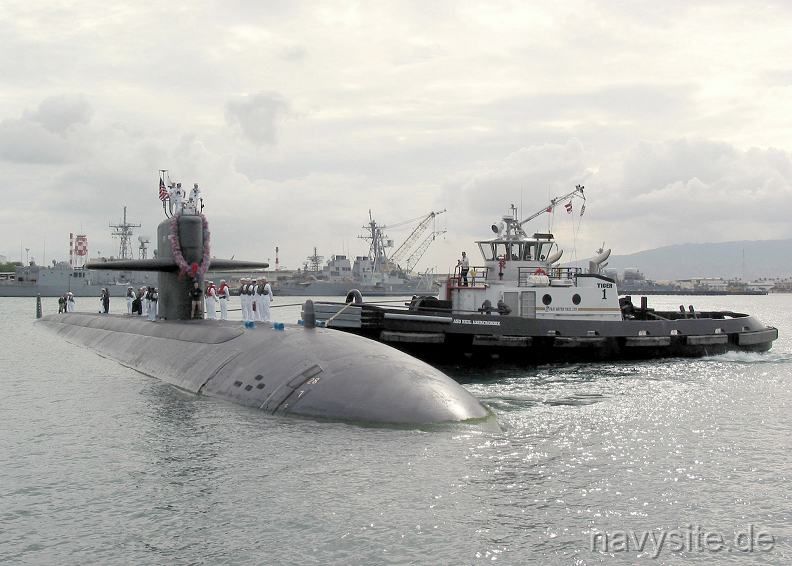 |  |
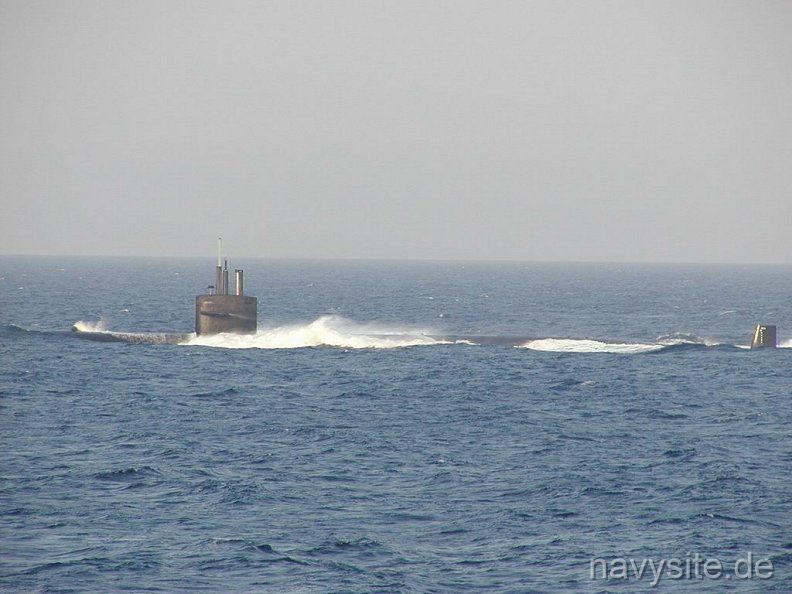
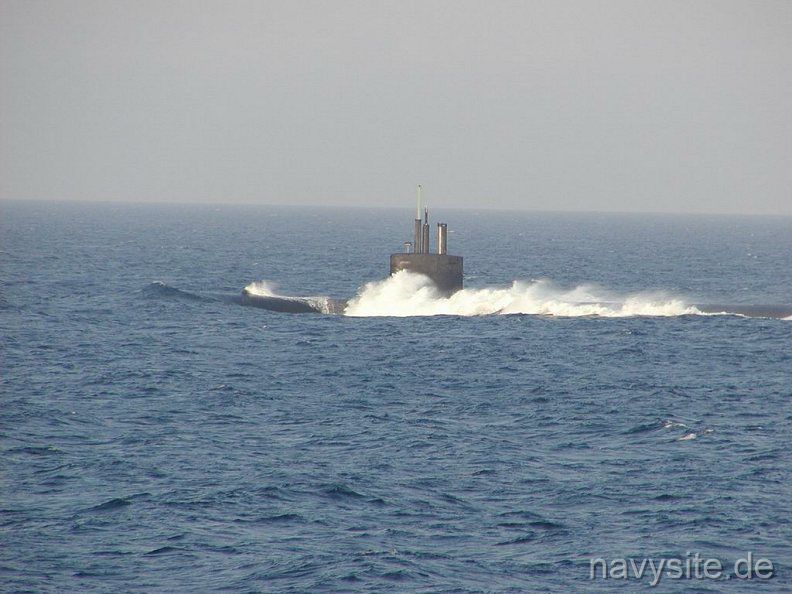
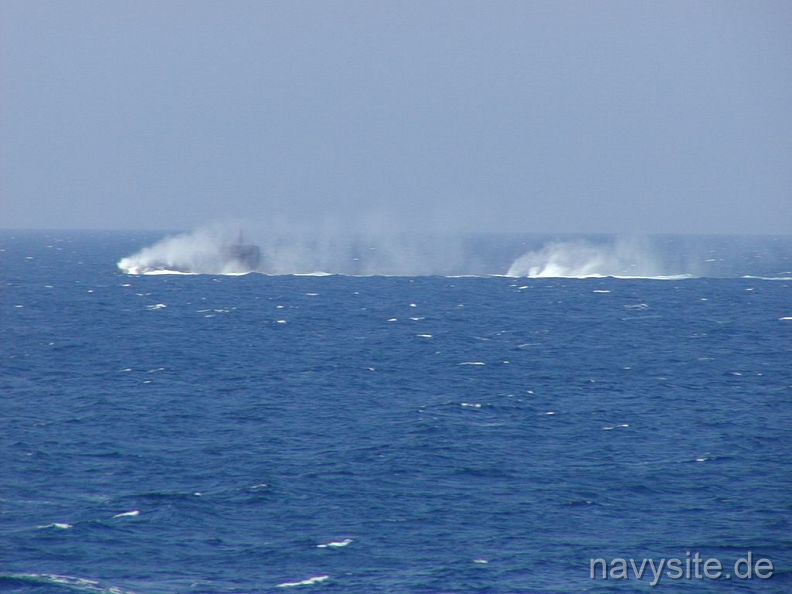
The photos below were taken by Stefan Karpinski and show the KEY WEST underway in Middle East waters in 2003.
 |  |  |
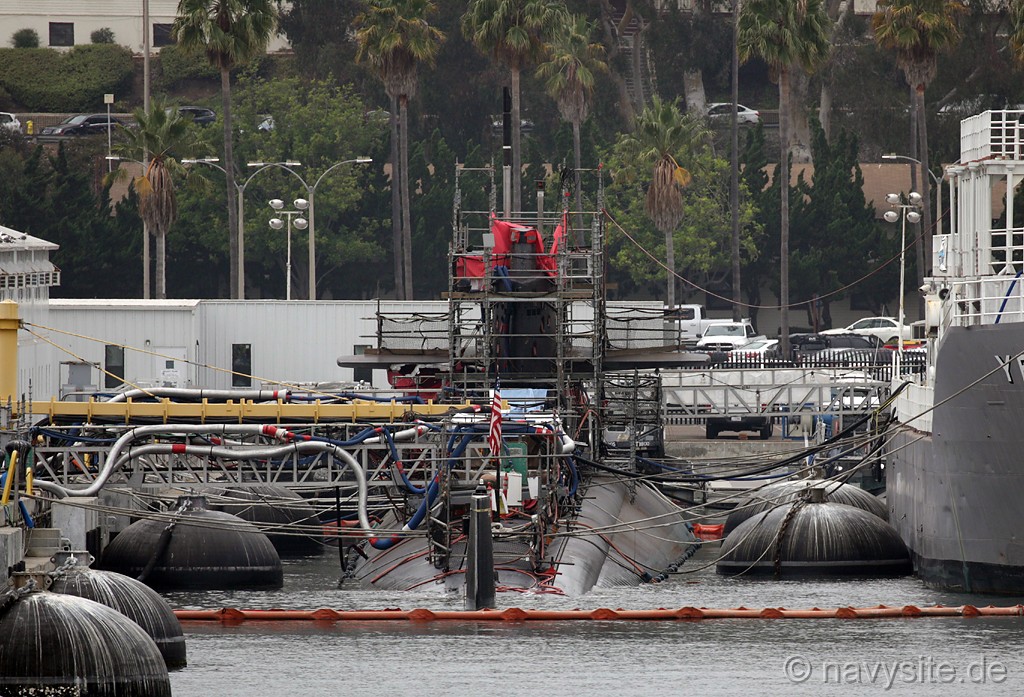
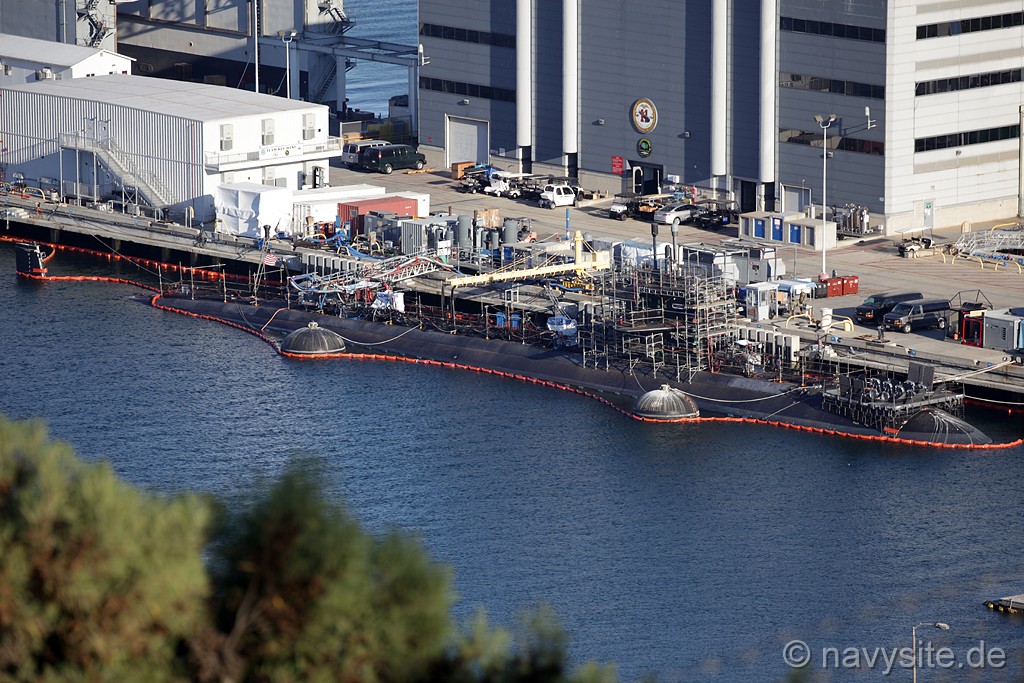
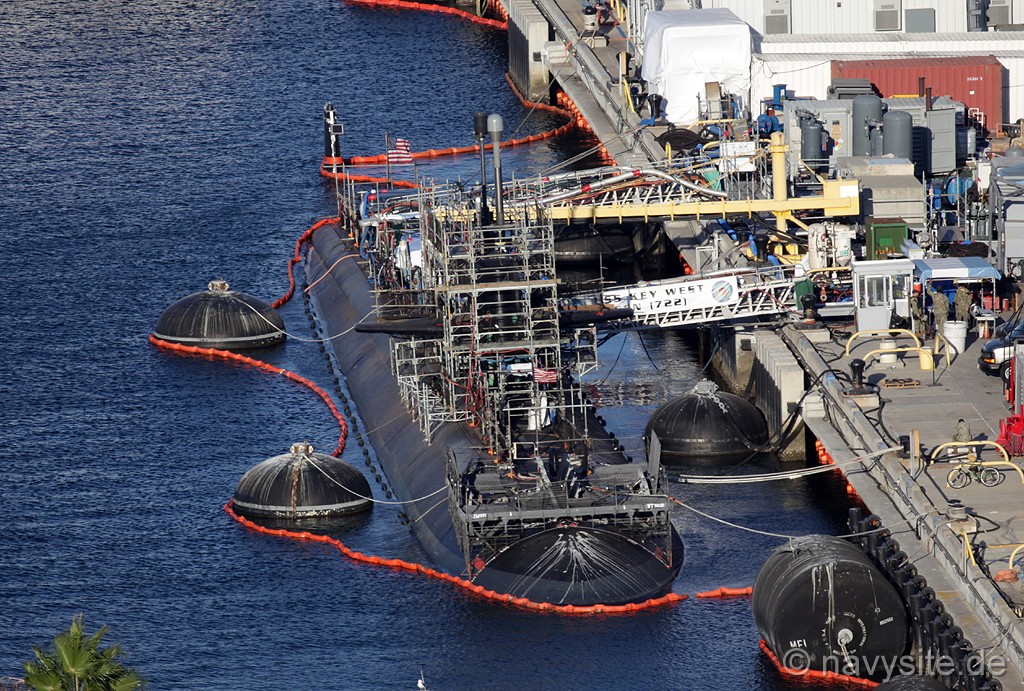
The photos below were taken by Michael Jenning and show the KEY WEST undergoing a Drydocking Selected Restricted Availability (DSRA) at Naval Base Point Loma, Calif., on September 28 (first photo) and September 29, 2018.
 |  |  |
The photo below was taken by Michael Jenning and shows the KEY WEST at the Puget Sound Naval Shipyard, Bremerton, Wash., on June 10, 2023.
 |
back to top Back to Submarines list. Back to ships list. Back to selection page. Back to 1st page.