
Search the Site with

|
Search the Site with
|
 General Characteristics Crew List Memorabilia History Image Gallery to end of page
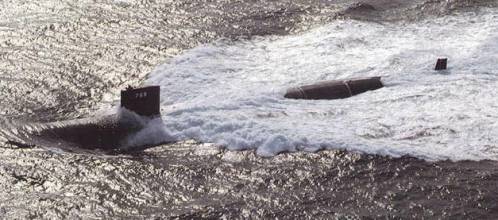
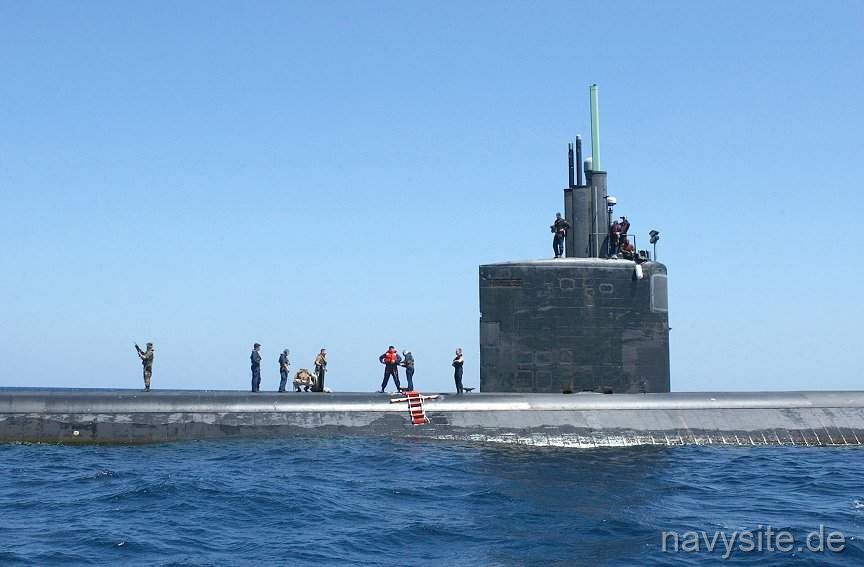
USS TOLEDO is one of the LOS ANGELES-class nuclear powered attack submarines and the third ship in the Navy named after the city in Ohio.
| General Characteristics: | Awarded: June 10, 1988 |
| Keel Laid: May 6, 1991 | |
| Launched: August 28, 1993 | |
| Commissioned: February 24, 1995 | |
| Builder: Newport News Shipbuilding Co., Newport News, Va. | |
| Propulsion system: one nuclear reactor | |
| Propellers: one | |
| Length: 360 feet (109.73 meters) | |
| Beam: 33 feet (10 meters) | |
| Draft: 32,15 feet (9.8 meters) | |
| Displacement: Surfaced: approx. 6,000 tons | |
| Submerged: approx. 6,900 tons | |
| Speed: Surfaced: approx. 15 knots | |
| Submerged: approx. 32 knots | |
| Armament: | |
| Cost: approx. $900 million | |
| Homeport: Pearl Harbor, Hi. | |
| Crew: 13 Officers, 116 Enlisted |
 back to top go to the end of the pageback to top go to the end of the page
Crew List:
This section contains the names of sailors who served aboard USS TOLEDO. It is no official listing but contains the names of sailors who submitted their information.
back to top go to the end of the pageback to top go to the end of the page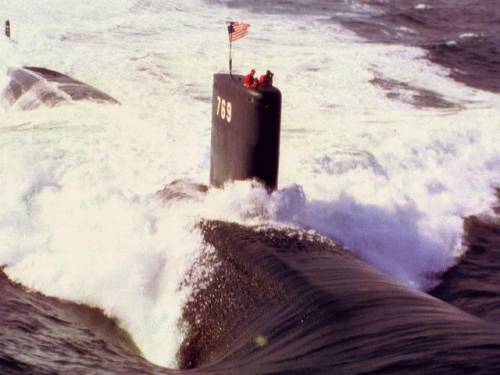 back to top go to the end of the page
USS TOLEDO History:
USS TOLEDO is a LOS ANGELES-class nuclear-powered attack submarine and the third U.S. Navy vessel to carry the name of the city of Toledo, Ohio. The contract for her construction was awarded to Newport News Shipbuilding in Newport News, Virginia on June 10, 1988, reflecting the U.S. decision in the late Cold War to expand and modernize its fast-attack submarine force. Her keel was laid on May 6, 1991, and she was launched on August 28, 1993, with Mrs. Sabra Smith as sponsor. After fitting out and trials, she was commissioned on February 24, 1995, with Commander Jack Loye III in command, and assigned to the Atlantic Fleet. From the outset she was based out of Naval Submarine Base New London in Groton, Connecticut, operating under a submarine squadron there, and began the usual cycle of shakedown, post-shakedown availability, crew work-ups and tactical certification in the western Atlantic.
In the years immediately after commissioning, USS TOLEDO spent most of her time in the western Atlantic and Caribbean, conducting local operations, antisubmarine warfare exercises and tactical development with other U.S. and NATO units. These early years included acoustic trials, weapons system testing and participation in fleet exercises designed to integrate the new boat into carrier and joint task groups. Although detailed day-to-day movements are not publicly recorded, open sources agree that by the mid-1990s she had completed this intensive work-up phase and was ready for extended overseas deployment.
Her first major deployment came in 1997-1998, when USS TOLEDO deployed to the Mediterranean with the carrier strike group centered on USS GEORGE WASHINGTON (CVN 73). This deployment placed the submarine under U.S. Sixth Fleet in a period marked by continuing no-fly-zone enforcement against Iraq and by instability in the Balkans. TOLEDO operated as the group's fast-attack submarine element, performing intelligence, surveillance and reconnaissance (ISR), antisubmarine screening and strike readiness with Tomahawk land-attack missiles. The deployment included routine liberty port calls in the Mediterranean, though specific ports are not listed in open sources. After returning from this cruise she undertook a follow-on six-month tour of the North Atlantic, conducting patrols and exercises in waters where NATO navies routinely monitor Russian Northern Fleet activity and practice operations in challenging North Atlantic conditions.
Following these first cruises, TOLEDO continued to operate from Groton, participating in exercises and patrols in the North Atlantic through the late 1990s. During this period U.S. submarine operations increasingly focused on post-Cold War tasks such as land-attack strike support, littoral intelligence collection and support to special operations forces, in addition to traditional blue-water antisubmarine warfare. TOLEDO's activities fit that broader pattern, but specific short deployments and port visits from 1998 to 2000 are only sparsely documented in open records.
In August 2000, USS TOLEDO was one of the U.S. submarines present in the Barents Sea monitoring Russian Northern Fleet exercises when the Russian OSCAR-II-class cruise-missile submarine KURSK (K-141) suffered a catastrophic explosion and sank on August 12, 2000. TOLEDO and USS MEMPHIS (SSN 691) were reported to be observing the exercise at the time. In the days after the disaster some Russian officials suggested that a collision with a NATO submarine might have caused the sinking, and TOLEDO was one of the boats named in speculation. Subsequent analysis of underwater seismic data, which recorded two explosions consistent with an internal torpedo accident, together with the fact that both TOLEDO and MEMPHIS returned to port fully operational, led Western and later Russian official investigations to reject the collision theory. The loss of KURSK was ultimately attributed to the failure of a training torpedo using high-test peroxide oxidizer, which triggered a chain of explosions in the forward torpedo room. TOLEDO's role remained that of an observer, but the episode illustrates how U.S. fast-attack submarines were routinely present near major Russian naval events in the post-Cold War period.
After the September 11, 2001 attacks, U.S. submarine deployments were rapidly adjusted to support the opening of Operation Enduring Freedom in Afghanistan and broader counter-terrorism operations. In this context, USS TOLEDO deployed again from Groton for operations in the Mediterranean and the Arabian Sea. According to U.S. Navy deployment summaries, on February 16, 2002, she departed her homeport for a six-month deployment with the carrier battle group centered on USS JOHN F. KENNEDY (CV 67), operating in support of what was then described as the "war on terrorism". During this cruise, TOLEDO worked in conjunction with the carrier, escorting surface forces, gathering acoustic and signals intelligence, and standing ready as a Tomahawk strike platform against targets in Southwest Asia. She returned to Naval Submarine Base New London in late summer 2002, closing out a deployment that bridged the early years of U.S. operations in Afghanistan.
As the focus of U.S. operations shifted toward Iraq, TOLEDO again deployed from Groton. On February 10, 2003, she departed for a "surge" Mediterranean deployment in support of the approaching invasion of Iraq. During this period, she joined the substantial naval force assembled under U.S. Sixth Fleet and Fifth Fleet to support Operation Iraqi Freedom, operating primarily in the Eastern Mediterranean and adjoining seas. Logistics and maintenance support during this deployment included work alongside the submarine tender USS EMORY S. LAND (AS 39), which provided forward maintenance services to TOLEDO in Souda Bay, Crete, reflecting the continued use of tenders to sustain submarines far from their home ports. TOLEDO's mission set combined ISR, battlespace preparation, and readiness for Tomahawk land-attack missile strikes. Open sources indicate that she returned to New London in mid-April 2003 after the initial phase of major combat operations in Iraq.
In 2004, USS TOLEDO embarked on another extended deployment. She spent roughly six months operating in the Persian Gulf and Arabian Sea as part of a U.S. carrier strike group, again supporting operations associated with Iraq and broader maritime security tasks in the Middle East. During this deployment, she made port calls at Souda Bay in Crete, Dubai in the United Arab Emirates, and Bahrain, reflecting the pattern of liberty and logistics ports used by U.S. ships in Fifth Fleet. On the return leg from Bahrain to the United States, TOLEDO followed an unusual route: instead of re-entering the Mediterranean via the Suez Canal, she continued south through the Indian Ocean, rounded the Cape of Good Hope at the southern tip of Africa, and crossed the South and North Atlantic back to the United States, a routing that provided additional blue-water operations and training opportunities. Once back in the Atlantic, she was diverted to the Caribbean Sea for a classified counter-narcotics mission conducted under Joint Interagency Task Force-South, working with U.S. and partner nation forces against drug-trafficking networks before finally returning to Groton on December 7, 2004.
On January 31, 2006, USS TOLEDO again left Groton for a six-month deployment to the U.S. Central Command area of responsibility. During this 2006 cruise she conducted operations in the Mediterranean, Arabian Sea and Indian Ocean at a time when U.S. naval forces were heavily engaged in supporting operations in Iraq and Afghanistan and in wider maritime security operations against terrorism and piracy. Port visits are better documented for this deployment: TOLEDO called at Augusta Bay, Sicily; Dubai in the United Arab Emirates; Diego Garcia in the British Indian Ocean Territory; and La Maddalena, Sardinia. In Augusta Bay, she received services from USS EMORY S. LAND, which was operating there as a forward-deployed tender, illustrating again how submarine tenders extended the reach of attack submarines. She returned to New London on July 31, 2006, having completed another high-tempo deployment in the Middle East and Indian Ocean.
By late 2006, USS TOLEDO was scheduled for a major mid-life refit. Northrop Grumman's Newport News shipyard in Virginia received a contract for what the Navy terms a Depot Modernization Period (DMP), with an initial planning value of approximately $34.7 million and a final value of about $178.5 million once full execution was included. TOLEDO arrived at Newport News in December 2006 and entered an extended maintenance and modernization period that ran until March 2009. The project ultimately ran about eight months longer than initially planned because of roughly 2,000 changes to the work package, which is not unusual for complex mid-life overhauls of nuclear submarines. During the DMP the boat received significant upgrades to her sonar suite, combat control system, weapons handling equipment and other shipboard systems, bringing her capabilities up to a standard comparable with later LOS ANGELES-class and newer submarines.
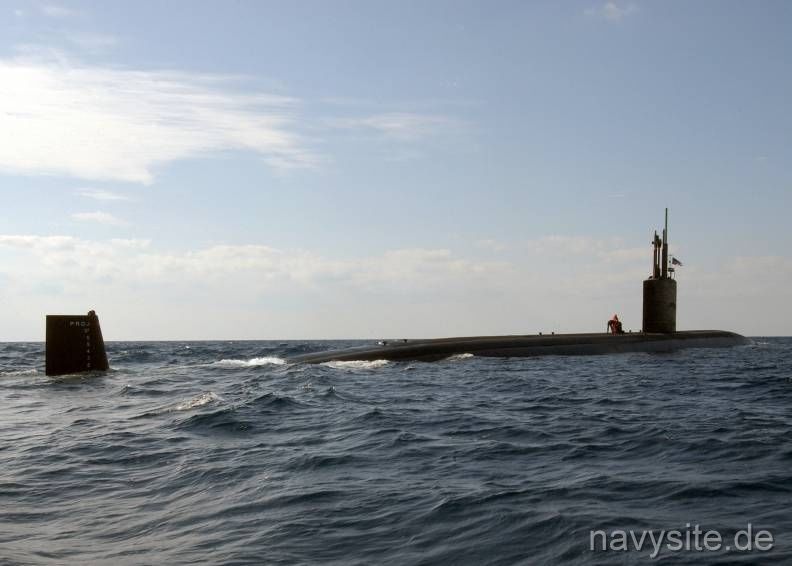
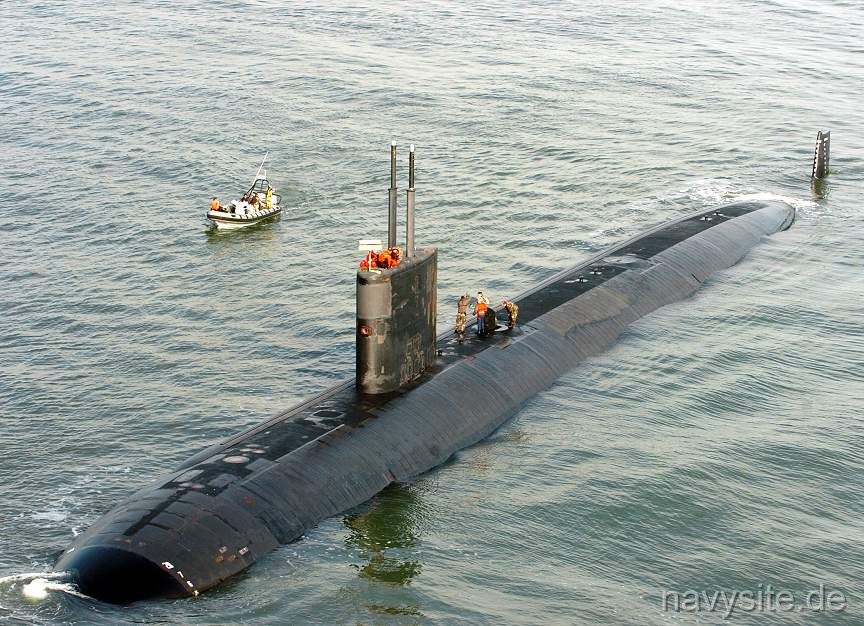
Following completion of the overhaul, TOLEDO was redelivered to the Navy in early 2009 and returned to sea to conduct post-refit trials and training. Photography and reporting from that period describe her operating off the Florida coast on a post-modernization cruise in 2009, testing her new bow sonar array and updated combat system and validating the work done during the DMP. These sea trials and work-ups were essential to restore the crew's proficiency after more than two years alongside and to re-establish the boat's readiness for deployment.
Shortly after this return to service, in July 2009, two cracks were discovered in TOLEDO's hull during a routine inspection while she lay at New London. One was a 21-inch crack in the outer hull below the sail, and the other a smaller, approximately one-inch crack in the pressure hull beneath that point. The discovery raised understandable concern, prompting Navy and shipyard investigations into welding practices and structural integrity. The inquiries concluded that the cracks did not originate in welds and were not indicative of a systemic welding problem at the yard. The defects were repaired, and TOLEDO returned to service, but the incident fed into a broader discussion within the Navy about aging LOS ANGELES-class hulls and the need for rigorous inspection regimes as the class served well beyond its original design life.
On July 20, 2010, USS TOLEDO left New London for another deployment, this time returning to the EUROCOM and CENTCOM regions. The submarine spent roughly six months at sea, operating in both the U.S. Africa Command and Central Command areas of responsibility. According to the official Navy news release on her return, she steamed close to 40,000 miles during this deployment. TOLEDO visited Limassol, Cyprus, and Haifa, Israel, and other sources indicate a port call in Bahrain as well. In December 2010, she made her Haifa visit, where her commanding officer, Commander Douglas Reckamp, was formally received by the Mayor of Haifa, Yona Yahav, in line with customary protocols for visiting foreign warships. Operationally, the deployment reflected the continued use of fast-attack submarines for ISR, presence and support to regional contingencies off North Africa and in the Middle East. On January 20, 2011, she returned to Naval Submarine Base New London, arriving in snow-covered New England after what was described as a highly successful deployment.
After post-deployment maintenance and training, TOLEDO again deployed from Groton in 2012. She departed her homeport on March 23, 2012 for a nearly seven-month deployment to the U.S. European Command area of responsibility. This cruise, which lasted until her return to New London on October 12, 2012, saw her operate primarily under U.S. Sixth Fleet in the Atlantic and Mediterranean, executing what the Navy described as national security and maritime security operations in support of the Chief of Naval Operations' tasking. The deployment coincided with a period of NATO focus on the Mediterranean, North Africa and the wider European periphery in the wake of the 2011 Libya intervention and broader regional instability. While specific port calls for this deployment are not detailed in official releases, photographs and reports emphasize the length of the cruise and its high operational tempo, with the crew spending only a handful of days at home over an eight-month span.
In December 2012, the U.S. Navy awarded General Dynamics Electric Boat a contract worth about $48 million for maintenance and modernization work on USS TOLEDO at Groton. This availability, separate from the earlier DMP, provided additional updates and life-extension work, including improvements to onboard systems to keep pace with evolving threats and technology. The boat subsequently returned to operations from New London, participating in local exercises, training missions, and shorter at-sea periods in the western Atlantic through the mid-2010s. Public imagery shows her arriving at or departing from Naval Submarine Base New London in 2015 and 2016, underlining that she remained an active East Coast attack submarine in this period even though specific deployments were not covered in detail in open sources.
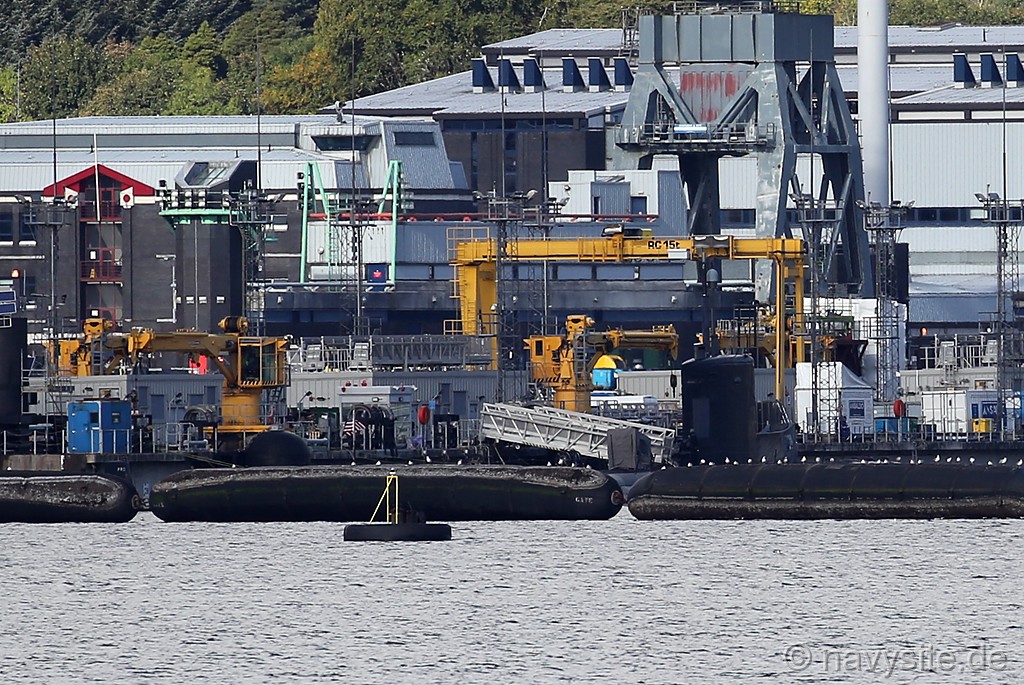
By the end of the 2010s, USS TOLEDO was again undertaking extended forward deployments. On September 12, 2019 she completed an eight-month deployment under U.S. European Command, during which she made documented port calls at Faslane, Scotland and Haakonsvern, Norway - both key bases for British and Norwegian submarine forces. The deployment came at a time of renewed concern in NATO about increasing Russian submarine activity in the North Atlantic and the Norwegian Sea, and TOLEDO's operations fit into a wider pattern of U.S. and allied submarines working together to monitor and, if necessary, counter that activity, particularly in and around the historic GIUK gap.
In early 2020, USS TOLEDO shifted to a very different environment, joining Ice Exercise (ICEX) 2020 in the Arctic Ocean. On March 4, 2020, she surfaced through the ice at Ice Camp SEADRAGON, a temporary ice camp established on a floating ice floe, to begin the exercise. ICEX 2020 was a three-week biennial event involving U.S. and allied forces, designed to test submarine operations under the ice, assess equipment performance in extreme cold and increase experience in the rapidly changing Arctic security environment. TOLEDO participated alongside the SEAWOLF-class attack submarine USS CONNECTICUT (SSN 22), conducting dual-submarine under-ice operations and working with personnel at the ice camp. Public statements on ICEX 2020 describe the exercise as including both operations from the camp and an "unassisted North Pole Exercise", underlining the high-latitude focus of the event.
The 2020 period also brought TOLEDO into the public eye in an unusual way when science communicator Destin Sandlin spent about 24 hours embarked aboard the submarine, documenting life and work onboard in a widely viewed video series. Around the same time, in May 2020, the Navy awarded TOLEDO's crew a Navy Unit Commendation for an eight-month intelligence-collection deployment. Official summaries do not specify where this deployment took place, but given the timing it is generally associated with the extended operations that concluded in 2019 and the high tempo of intelligence and surveillance missions conducted by U.S. attack submarines in both the Atlantic and other theaters. The commendation underscores the extent to which TOLEDO's missions in this period involved sensitive information-gathering in contested or strategically important waters.
By 2021, recognizing both her age and the continued need for capable fast-attack submarines, the Navy scheduled USS TOLEDO for a major Engineered Overhaul (EOH) at Norfolk Naval Shipyard (NNSY) in Portsmouth, Virginia. She arrived there on January 21, 2021 to begin the availability. Because Dry Dock 2 at NNSY was itself undergoing significant upgrades - improving the caisson, flood wall and piping as part of the long-term Shipyard Infrastructure Optimization Program - TOLEDO initially remained pierside for an extended period while yard workers started as much work as possible alongside. On May 1, 2021, she finally entered Dry Dock 2, allowing the shipyard to tackle the most intrusive hull and propulsion work. The EOH was extensive, involving hundreds of thousands of workdays to refurbish, repair and modernize systems throughout the boat and to extend her service life.
During 2022-2024 TOLEDO remained at NNSY for this overhaul. Norfolk Naval Shipyard and Naval Sea Systems Command described her as one of the lead projects implementing new shipyard performance-improvement initiatives. A photograph released in May 2024 showed the submarine pierside at the yard with production work reported as more than 95 percent complete, with the focus shifting toward "end-game" tasks such as moving the crew back aboard, completing mast and periscope installation and conducting engine-room testing. The overhaul updated her combat systems, improved propulsion-plant reliability and addressed hull, mechanical and electrical systems to keep the submarine effective into the next decade, in line with U.S. plans to retain selected LOS ANGELES-class boats as a complement to newer VIRGINIA-class submarines.
On April 19, 2025, Norfolk Naval Shipyard officially returned USS TOLEDO to the fleet, marking completion of her Engineered Overhaul. A Navy release on April 21, 2025, highlighted the scale of the work and described the EOH as a key element in sustaining U.S. undersea power. With the overhaul complete, TOLEDO was once again considered fully mission-capable, with modernized systems and an extended life span.
The next major milestone came less than three months later. On July 12, 2025, USS TOLEDO arrived at Joint Base Pearl Harbor-Hickam in Hawaii, completing a change of homeport from Portsmouth, Virginia, and joining Submarine Squadron 7 as its fourth LOS ANGELES-class fast-attack submarine. Navy announcements described the crew's satisfaction at arriving in Hawaii after the long maintenance period in Hampton Roads and emphasized that TOLEDO would now support Indo-Pacific missions, including antisubmarine warfare, anti-surface warfare, strike and ISR, from her new base at Pearl Harbor. Reports on the move noted that her previous official homeport before the change was Portsmouth, Virginia, reflecting the extended EOH at Norfolk Naval Shipyard. The relocation to Hawaii fits the broader U.S. strategic shift toward the Indo-Pacific in response to rising Chinese naval capabilities.
back to top go to the end of the pageUSS TOLEDO Image Gallery:
 |  |  |  |  |
The photo below was taken by me and shows the TOLEDO at HMNB Clyde in Faslane, Scotland, on September 30, 2017.
 |
The photo below was taken by Michael Jenning and shows USS TOLEDO at the Norfolk Naval Shipyard, Portsmouth, Va., on October 4, 2024.
 |
back to top Back to Submarines list. Back to ships list. Back to selection page. Back to 1st page.