
Search the Site with

|
Search the Site with
|
 General Characteristics Crew List Memorabilia Notes of Interest Patch Gallery About the Name "Albuquerque" History Image Gallery to end of page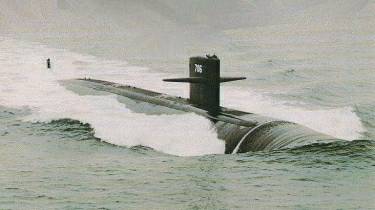
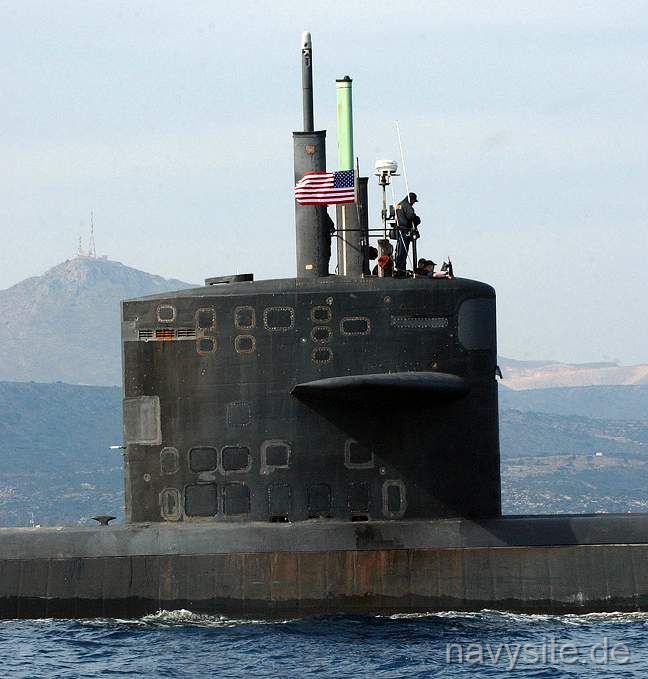
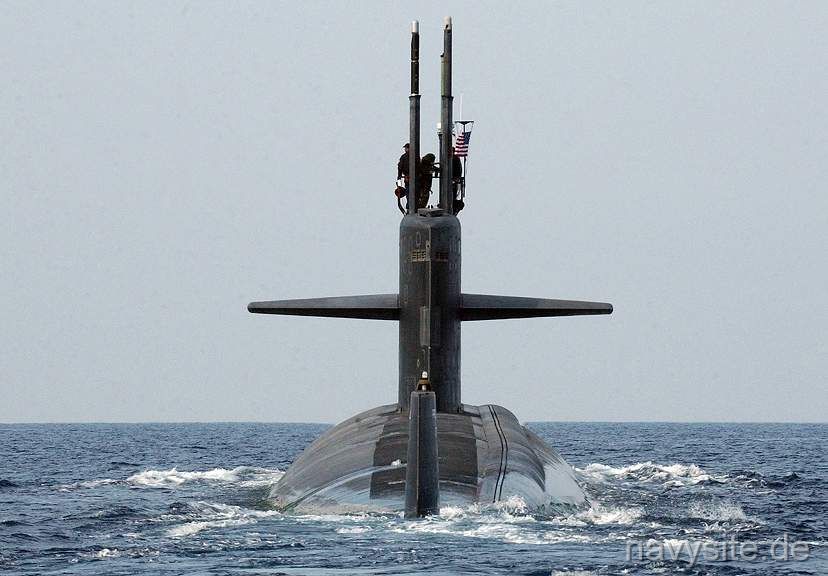
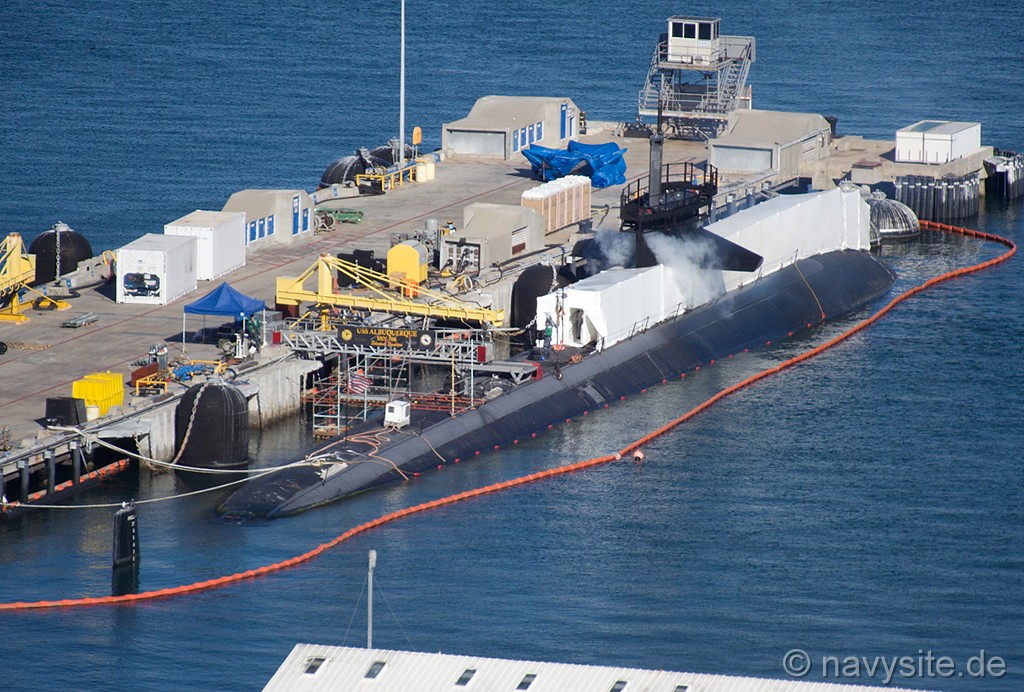
USS ALBUQUERQUE was the 19th attack submarine in the LOS ANGELES class of submarines and the second ship in the Navy to bear the name. During her almost 34 years of service, USS ALBUQUERQUE has completed 21 deployments in every ocean and has been awarded four Meritorious Unit Commendations, three Navy Unit Commendations and four battle E awards. In mid-2009, she shifted her homeport from Groton, Conn., to San Diego, Calif. On October 16, 2015, the ALBUQUERQUE held a decommissioning ceremony at Naval Base Point Loma. Afterwards, she departed for Bremerton, Wash., where she was inactivated on February 3, 2016. USS ALBUQUERQUE was decommissioned on February 27, 2017, at Keyport Undersea Museum in Keyport, Wash.
| General Characteristics: | Awarded: October 31, 1973 |
| Keel laid: December 27, 1979 | |
| Launched: March 13, 1982 | |
| Commissioned: May 21, 1983 | |
| Decommissioned: February 27, 2017 | |
| Builder: Electric Boat Division of General Dynamics Corporation, Groton, Conn. | |
| Propulsion system: one nuclear reactor | |
| Propellers: one | |
| Length: 360 feet (109.73 meters) | |
| Beam: 33 feet (10 meters) | |
| Draft: 32,15 feet (9.8 meters) | |
| Displacement: Surfaced: approx. 6,000 tons Submerged: approx. 6,900 tons | |
| Speed: Surfaced: approx. 15 knots Submerged: approx. 32 knots | |
| Armament: four 533 mm torpedo Tubes for | |
| Cost: approx. $900 million | |
| Crew: 12 Officers, 115 Enlisted |
 back to top go to the end of the pageback to top go to the end of the page
Crew List:
This section contains the names of sailors who served aboard USS ALBUQUERQUE. It is no official listing but contains the names of sailors who submitted their information.
back to top go to the end of the pageback to top go to the end of the pageNotes of Interest:
At the ship's commissioning on May 21, 1983, the Mayor of the City of Albuquerque presented a set of keys for a new Rolls Royce to the Commanding Officer. The first skipper to pilot the submarine up the Rio Grande to Albuquerque for a port visit will win this prize. At each Change of Command these keys are turned over to the new Commanding Officer by the Mayor or his representative.
back to top go to the end of the pageUSS ALBUQUERQUE Patch Gallery:
 |
back to top go to the end of the page About the Submarine's Name, about the City of Albuquerque:
Albuquerque, the ship's namesake city, was founded in 1706 by Spanish explorers and named for the Duke of Albuquerque. Located in rich farmland in the Rio Grande Valley, Albuquerque lies at an elevation of nearly 5,000 feet and is surrounded by the Sandia mountains.
Today, Albuquerque is a commercial, military research, and finance center which boasts a population of nearly 400,000. In addition to high-technology industries such as Sandia National Laboratories and Kirtland Air Force Base weapons research center, Albuquerque hosts over 700 firms which produce a wide variety of goods from processed foods to electrical machinery. The city also offers outstanding recreational areas for skiing, hiking and camping.
back to top go to the end of the pageUSS ALBUQUERQUE History:
The fast-attack submarine USS ALBUQUERQUE was a LOS ANGELES-class nuclear-powered attack submarine of the United States Navy, named for the city of Albuquerque in New Mexico. She was ordered on October 31, 1973, when the United States was still deeply engaged in the Cold War maritime competition with the Soviet Union, as part of a large series of LOS ANGELES-class boats intended to provide high-end anti-submarine, anti-surface and strike capabilities. The contract went to the Electric Boat Division of General Dynamics at Groton, Connecticut, which would remain closely associated with the boat throughout her life.
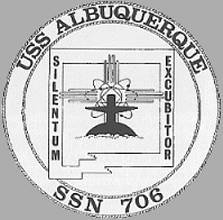
Electric Boat laid the keel of USS ALBUQUERQUE on December 27, 1979. She was launched at Groton on March 13, 1982, with Nancy L. Domenici, wife of New Mexico senator Pete Domenici, serving as sponsor and christening the boat in honor of her state's largest city. After fitting out and dockside testing, she was commissioned at Naval Submarine Base New London in Groton on May 21, 1983, under the command of Captain Richard H. Hartman. From the outset her homeport was New London, and she was assigned to Submarine Group 2 in the Atlantic Fleet. Her Latin motto, "Silentum Excubitor" ("Silent Sentinel"), reflected the quiet, persistent presence expected of attack submarines on forward patrols.
In the months after commissioning in 1983, USS ALBUQUERQUE remained largely at sea, completing the full sequence of post-commissioning trials, inspections, certifications and crew training events that were required before she could be considered fully operational. During this initial period, she carried out acoustic trials, combat-system checks and weapons handling drills under the close supervision of Electric Boat and Navy acceptance authorities. In October 1983, Captain Scott L. Sears relieved Captain Hartman as commanding officer, marking the first change of command in the boat's life, while the submarine was still in its extended shakedown phase.
At the beginning of 1984, USS ALBUQUERQUE went back into the Electric Boat shipyard at Groton for her formal post-shakedown availability, during which yard workers and the crew corrected deficiencies discovered during the first year at sea and incorporated early modifications. She returned to sea on April 15, 1984. In May she proceeded south to waters off the Florida coast to complete weapons and combat-system certifications, firing exercise torpedoes and Tomahawk-related tests while working with surface and air units. Over the summer of 1984, she took part in a fleet exercise and served as a platform for a midshipman training cruise, giving future officers exposure to nuclear submarine operations at sea. By August, she had settled into a pattern of normal operations from New London, conducting Atlantic training runs and local exercises. Extended at-sea periods followed in October and November in the wider Atlantic Ocean, before she returned to Electric Boat again in December 1984 for additional repair work and fine-tuning after her first full year of operations.
USS ALBUQUERQUE began 1985 with sonar training and weapons drills in her local operating areas off New England, sharpening the crew's skills in anti-submarine warfare at a time when tracking Soviet submarines in the North Atlantic remained a central mission of the LOS ANGELES-class. In February 1985, she completed preparations for a two-month patrol that started on February 27 and ran into early May. Open sources do not specify the patrol area or tasking, but describe it as a continuous deployment away from home waters. After returning to New London at the beginning of May, she spent the next weeks on operations along the United States East Coast. She went to sea again in mid-June, then returned about two months later and resumed local duties until November, when she cruised to Florida to act as a school ship for prospective commanding officers on the final phase of their command qualification course. She rounded out 1985 with local operations out of New London in December.
On January 14, 1986, USS ALBUQUERQUE entered Electric Boat once more, this time for a two-month restricted availability focused on maintenance and incremental upgrades. After leaving the yard in March, she alternated between upkeep in New London and local operations at sea through late May. From May 19 to September 14, 1986, she remained deployed at sea on an extended North Atlantic cruise that included port visits in Scotland and England, reflecting the close cooperation between the United States Navy and Royal Navy during the final decade of the Cold War. Following post-deployment stand-down at New London in mid-September, she got underway again in late October for sound-trial operations in Exuma Sound in the Bahamas, a deep-water range often used for acoustic testing. Early in November, she made a short return to Groton and then departed again on November 4 to participate in two fleet exercises, likely focused on anti-submarine and carrier-battle-group operations. Between November 24 and December 7, she was in upkeep at New London, and she spent the remainder of December 1986 engaged in an anti-submarine warfare exercise off the East Coast. During this intense period of operations, Captain John T. Byrd relieved Captain Sears as commanding officer on December 3, 1986, ensuring continuity of leadership while the boat remained fully active.
During 1987, detailed public information on individual operations is limited, but a contemporary United States Submarine Veterans newsletter records that after a deployment of about four and a half months, ALBUQUERQUE returned to Submarine Base New London in late October 1987. The report notes the length of the deployment but not its exact operating areas, reflecting the classified nature of fast-attack submarine tasking during the final phase of the Cold War. The timing suggests that the boat spent much of the middle part of the year at sea on an extended Atlantic or Norwegian Sea patrol, returning to New London for post-deployment stand-down as the U.S. Navy was beginning to transition from a focus on Soviet open-ocean operations to a broader mix of regional contingencies.
In 1988, ALBUQUERQUE's activities are described more clearly in later official histories. Following a major antisubmarine-warfare exercise that included a port visit to Haakonsvern, near Bergen, Norway, and operations with a carrier battle group, she conducted sound trials and provided ADCAP torpedo target services at the Atlantic Underwater Test and Evaluation Center in the Bahamas. Those tasks linked the submarine both to high-end NATO ASW training in the Norwegian Sea and to weapons testing in warmer-water conditions in the western Atlantic. Later in 1988, she underwent a Selected Restricted Availability, followed by a pre-overseas-movement work-up. Once that maintenance and training cycle was complete, ALBUQUERQUE deployed to the North Atlantic, continuing the pattern of Cold-War patrols and surveillance missions in northern waters that characterised the final years before the dissolution of the Soviet Union. After returning from this deployment, ALBUQUERQUE spent 1989 in a mix of training and representational roles. She conducted operations for embarked midshipmen, giving future officers practical exposure to nuclear-submarine life, and she hosted a high-level visitor when Secretary of the Navy Richard Cheney came aboard, a visit that underlined the importance attached to the attack-submarine force in the last year of the Cold War.
On August 25, 1989, command passed from Byrd to Commander James C. Kane, marking another transition in the boat's leadership as the geopolitical environment itself was shifting with events such as the fall of the Berlin Wall later that year.
In 1990, ALBUQUERQUE deployed to the Mediterranean Sea. Summary histories describe her participating in "many national and international fleet exercises", reflecting the pattern of U.S. and NATO naval activity in the region at the time, as the alliance adjusted to the end of superpower confrontation in Europe and, in the latter part of the year, began to react to Iraq's invasion of Kuwait.
Specific exercise names and port visits for this deployment are not given in open sources, but the deployment fits into the wider U.S. Navy practice of sending Atlantic-based attack submarines to the Mediterranean to integrate with carrier battle groups and practice both strike and antisubmarine roles in a confined and politically sensitive theatre. After returning from the Mediterranean, ALBUQUERQUE entered a Depot Modernization Period, during which she received upgrades to her combat and engineering systems, and at the same time her homeport was shifted from Groton, Connecticut, to Portsmouth, New Hampshire, linking her more closely to Portsmouth Naval Shipyard and the northern New England operating areas.
Open sources do not provide a detailed month-by-month narrative for 1991, but they make clear that by 1992, ALBUQUERQUE was back in full operational service and again deploying overseas. In October 1992, she deployed with the carrier battle group centred on USS JOHN F. KENNEDY (CV 67), operating in the Mediterranean and visiting at least Naples and La Maddalena in Italy and Athens in Greece.
During this battle group deployment, she represented the U.S. Submarine Force in Exercise Niriis, a multinational antisubmarine and maritime-security exercise sponsored by the Hellenic Navy and focused on Eastern Mediterranean contingencies. During this period command passed from Kane to Commander Michael R. King on May 29, 1992, so the deployment and exercise activity spanned a change of commanding officer.
In early 1993, ALBUQUERQUE was still deployed to the European theatre. She took part in Exercise Magellan in the central Mediterranean and Ionian Seas, a NATO exercise framework that emphasised combined maritime operations in the post-Cold-War environment, and carried out several classified operations at sea whose details remain undisclosed in open sources. On April 7, 1993, ALBUQUERQUE returned to Groton following her six-month deployment.
The following year, 1994, began with an intensive period of shipyard work in which many of ALBUQUERQUE's major systems were upgraded. These modernisations prepared her for continued service in a fleet that was incorporating more advanced sensors, communications, and weapons in response to a broader spectrum of regional crises after the Cold War. Later in the year she deployed to the western Atlantic for classified operations. Public documents do not specify the exact nature of these tasks, but the geography and timing align with the U.S. Navy's focus on supporting counter-narcotics patrols in the Caribbean and maintaining readiness for contingencies in the western Atlantic, even as attention was also directed towards Europe and the Middle East.
By 1995, ALBUQUERQUE was again heavily engaged in North Atlantic operations. Upon completion of a Western Atlantic deployment she made a port visit to Rosyth, Scotland, and then participated in the NATO exercise Strong Resolve 95. Strong Resolve 95, conducted in February and March 1995, involved more than 22,000 personnel and a large multinational naval force in the North Atlantic and Norwegian Sea, practising rapid deployment and joint operations in response to crisis scenarios in northern Europe. ALBUQUERQUE's participation placed her alongside surface combatants and allied ships in complex war-fighting serials that blended antisubmarine warfare, strike planning, and joint operations, underscoring the continuing requirement for attack-submarine capabilities even after the end of the superpower confrontation. On April 6, 1995, during this period, command passed from King to Commander Leonard A. Zingarelli.
In 1996, the submarine's routine training off the U.S. East Coast briefly intersected with a major civilian aviation disaster. ALBUQUERQUE was operating off the coast of Long Island, New York, on the evening of July 17, 1996, when TWA Flight 800 exploded after takeoff from John F. Kennedy International Airport. Because several U.S. military units were in the general area, including the submarine, early public speculation asked whether a missile might have been involved. The subsequent investigation determined that ALBUQUERQUE and the other units were either too far away, unarmed with suitable weapons, or lacked the vertical-launch capability required to have played any role in the accident, and the official explanation centred on an internal fuel-tank explosion rather than any external cause. Although the boat's specific operational tasking during this period remains classified, the episode shows how even routine submarine operations could be drawn into wider public attention in the mid-1990s.
After a maintenance availability, ALBUQUERQUE deployed again in 1997, this time to the North Atlantic. She participated in the NATO exercise Linked Seas, an amphibious and maritime-security exercise directed by NATO's Iberia-Atlantic command, and operated alongside surface combatants such as the destroyer SPRUANCE (DD 963) and fellow attack submarines including USS MIAMI (SSN 755).
During Linked Seas she made port visits in Norway, Scotland, and Portugal, reflecting the exercise's focus on northern and southwestern European waters. As 1997 drew to a close, ALBUQUERQUE received the Battle Efficiency "E" award and was recognised as the top submarine in Submarine Squadron Two, a reflection of her operational performance across deployments, inspections, and exercises in that cycle. On June 24, 1997, command passed from Zingarelli to Commander Stephen G. Gabriele, who would lead the boat through the final years of the decade.
In 1998, ALBUQUERQUE completed several Joint Task Force exercises, the details of which remain general in open sources but which fit into the U.S. Navy's pattern of integrating submarines into joint and combined training for regional contingencies. After this series of exercises, she entered dry dock for a significant maintenance period. This availability included a technically demanding resin discharge from her reactor plant and substantial modifications to the radio room that enabled the crew to send and receive e-mail while at sea, a capability that marked the gradual integration of more modern digital communications into the submarine force at the end of the 1990s. The work completed in 1998 ensured that ALBUQUERQUE entered the next deployment cycle with upgraded systems suitable for high-tempo joint operations.
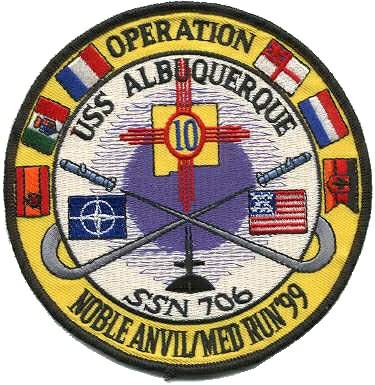
In 1999, USS ALBUQUERQUE carried out one of the most visible deployments of her career. On March 26, 1999, she departed Groton for a six-month Mediterranean deployment as part of the USS THEODORE ROOSEVELT (CVN 71) battle group. During this cruise, she conducted Tomahawk land-attack operations in support of Operation Noble Anvil, the maritime portion of NATO's campaign against the Federal Republic of Yugoslavia during the Kosovo War, better known overall as Operation Allied Force. Initially worked up as a platform for special operations forces and carrying only a small number of Tomahawk missiles, USS ALBUQUERQUE was retasked as a primary Tomahawk shooter once the air campaign intensified. She launched several strike salvos, then reloaded missiles in theater and fired again, with open sources noting that all missions achieved their planned performance.
Liberty port visits during this 1999 Mediterranean cruise included Naples in Italy, La Maddalena in Sardinia and Toulon in France, illustrating the combination of high-intensity operations and traditional alliance port engagements that characterized the deployment.
Following the 1999 deployment, USS ALBUQUERQUE prepared for a major mid-life modernization and refuelling period. On July 1, 2001, she entered Portsmouth Naval Shipyard in Kittery, Maine, to begin an Engineered Refueling Overhaul (ERO), during which her nuclear reactor was refuelled and a wide range of systems were upgraded. Portsmouth and Navy authorities later noted that this ERO, which lasted approximately 22.3 months, was completed more quickly and cost-effectively than previous overhauls of similar scope, reflecting both careful planning and the experience gained from refuelling earlier LOS ANGELES-class boats. USS ALBUQUERQUE left Portsmouth and returned to Groton on May 8, 2003, effectively rejoining the operational fleet with a renewed reactor core and modernized combat and sonar suites.
The rest of 2003 was spent on local operations out of New London, completing an Operational Reactor Safeguards Examination and verifying the performance of new weapons and combat-system upgrades. In 2004, the submarine devoted most of the year to preparations for her first deployment since the shipyard period. This included a two-month overseas surge deployment that included a port call at Rota, Spain, and participation in large-scale fleet activities that were part of the U.S. Navy's "Summer Pulse 2004" initiative.
In July 2004, USS ALBUQUERQUE took part in Exercise Majestic Eagle, a major NATO maritime and air exercise conducted in the Atlantic Ocean off Morocco, during which she operated at sea alongside carrier strike groups built around USS HARRY S. TRUMAN (CVN 75) and USS ENTERPRISE (CVN 65) and the French carrier CHARLES DE GAULLE, as well as ships from several other allied navies.
From October 13, 2004, to April 12, 2005, USS ALBUQUERQUE carried out a six-month deployment as part of the USS HARRY S. TRUMAN carrier strike group. During this cruise, she operated in the Mediterranean and Middle East, making port calls in Scotland and Portugal on the transit legs and visiting Bahrain, the Seychelles and Crete (via Souda Bay) while operating under U.S. Fifth Fleet and Sixth Fleet control. For her performance in 2004, which encompassed the demanding preparations for deployment, surge operations and the early stages of the HARRY S. TRUMAN cruise, USS ALBUQUERQUE received the Squadron 2 Battle Efficiency ("Battle E") Award, reflecting top overall readiness within her squadron.
In May 2005, while in port, she hosted a visit by Paul Teutul Sr. and other members of the "American Chopper" television program, who toured the submarine and filmed a segment, a small cultural footnote in her operational history. Later in 2005, USS ALBUQUERQUE became indirectly linked to an espionage case. In July 2005, Fire Control Technician Third Class Ariel Weinmann deserted from the submarine while she was in port. He remained at large until 2006, when he was arrested and charged with espionage, desertion, larceny and destruction of government property after passing classified information to foreign contacts. He was sentenced by court-martial to 12 years in prison in December 2006. These events concerned the individual sailor and not the boat's operational conduct, but they are part of the documented history of the crew during this period.
On June 6, 2006, ALBUQUERQUE departed Groton for a six-month deployment as part of the USS IWO JIMA (LHD 7) Expeditionary Strike Group in support of the Global War on Terrorism. The group operated in the Mediterranean and after a Suez Canal transit, entered the 5th Fleet area of operations. Photographic records show USS ALBUQUERQUE operating in the Persian Gulf in September 2006 during ongoing maritime security operations in support of the broader campaigns in Iraq and the region.
In late July 2007, ALBUQUERQUE visited Trinidad and Tobago during a scheduled deployment to the U.S. Southern Command's (USSOUTHCOM) Area of Responsibility (AoR) in support of the Joint Inter-Agency Task Force South (JIATF-S).
By February 2009, she was again in the Mediterranean, with images placing her at Souda Bay, Crete, reflecting continued involvement in Sixth Fleet activities and NATO exercises. Afterwards, the submarine continued east and visited Yokosuka, Japan, for Independence Day celebrations in early July, before arriving at Naval Base Point Loma, San Diego, Calif., on August 6, 2009, formally completing a change of homeport from Groton to Naval Base Point Loma. This move was part of a broader strategic decision, linked to the 2006 Quadrennial Defense Review, to base about 60 percent of the U.S. attack submarine force in the Pacific, reflecting the growing importance of the Asia-Pacific region and the need for submarines closer to potential contingency areas in the western Pacific and Indian Ocean. With this shift she came under Submarine Squadron 11 and began operating regularly in the Pacific and Indian Oceans instead of the North Atlantic and Mediterranean.
In the early 2010s, USS ALBUQUERQUE undertook a series of extended deployments from San Diego. In 2011, she completed a six-month Western Pacific deployment, returning to San Diego on December 15, 2011. During this cruise, she steamed more than 40,000 nautical miles and made port visits to Brisbane in Australia, Yokosuka in Japan and Guam, while participating in Exercise Talisman Sabre 2011 alongside units from the United States, Australian and Canadian navies. Photographs from the deployment show the submarine in Apra Harbor, Guam, in October 2011 and alongside the submarine tender USS FRANK CABLE (AS 40) at Polaris Point, Guam, in November 2011, underscoring the maintenance and logistics support required to sustain extended undersea operations far from homeport.
On January 29, 2013, USS ALBUQUERQUE departed San Diego for another Western Pacific deployment and returned on August 21, 2013, after steaming more than 30,000 nautical miles. During this 2013 cruise, she visited Yokosuka, ports in Thailand, Sasebo in Japan and Saipan, and she participated in several bilateral and multilateral exercises with the Japan Maritime Self-Defense Force and the Royal Thai Navy, reflecting the growing emphasis on undersea cooperation with Indo-Pacific partners. This deployment also included the submarine's 1,000th dive and coincided with the 30th anniversary of her commissioning, milestones that were marked on board. Shortly after returning, on August 23, 2013, Commander Trent Hesslink relieved Commander Chris Cavanaugh as commanding officer, continuing the pattern of leadership rotation as the boat approached the later stage of its service life.
In early 2015, USS ALBUQUERQUE undertook her final operational deployment. A news release and subsequent histories record that she sailed from San Diego on February 6, 2015, for a six-month cruise focused on the U.S. Fifth Fleet area of responsibility. On this deployment, she executed the Chief of Naval Operations' maritime strategy by supporting national security and maritime security operations in the central Indian Ocean and Arabian Sea region. Port visits included HMAS Stirling near Perth in Western Australia, where local reporting in late February 2015 described her arrival for exercises with the Royal Australian Navy, as well as visits to Stirling again later in the deployment, Duqm in Oman and Diego Garcia, where she spent the period from July 13 to July 23 in upkeep. USS ALBUQUERQUE steamed more than 50,000 nautical miles on this final deployment before returning to San Diego on August 21, 2015.
Only a week after that return, on August 28, 2015, Commander Don Tenney relieved Commander Trent Hesslink during a change-of-command ceremony at Naval Base Point Loma, becoming the submarine's final commanding officer during the inactivation and decommissioning phase. On October 16, 2015, the crew held an inactivation ceremony for USS ALBUQUERQUE at Naval Base Point Loma, marking the end of more than 32 years of active service. This ceremony was the boat's last public event in San Diego. Five days later, on October 21, 2015, she departed San Diego for the final time, bound for Puget Sound Naval Shipyard and Intermediate Maintenance Facility at Bremerton, Washington, to begin the inactivation and dismantlement process. She arrived at Bremerton on October 28, 2015, where she was awaiting decommissioning and eventual recycling of her reactor compartment under the Navy's submarine recycling program.
USS ALBUQUERQUE was formally decommissioned and stricken from the Naval Vessel Register on February 27, 2017, during a ceremony at the U.S. Navy Undersea Museum in Keyport, Washington. At that event, Rear Admiral John Tammen, commander of Submarine Group 9, summarized the boat's career: commissioned on May 21, 1983, she had, by decommissioning, completed 21 deployments to every major ocean, steamed roughly 1.1 million nautical miles, made more than 1,000 dives, called at over 35 different foreign ports, and participated in more than 18 major international naval exercises under 14 different commanding officers. Over her service life she earned three Navy Unit Commendations, four Meritorious Unit Commendations and four Battle Efficiency "E" awards, reflecting consistent high performance in inspections, readiness and operational evaluations rather than any single event.
After decommissioning, USS ALBUQUERQUE remained at Puget Sound Naval Shipyard for the methodical process of reactor defueling and hull recycling. As part of a wider tradition of preserving submarine sails as memorials, the sail and other large components from the boat were later transported to New Mexico so that the city of Albuquerque could create a permanent memorial at Tingley Beach, linking the decommissioned submarine's physical remains to the community whose name she carried. In this way, even after her hull is fully recycled, the visible features of USS ALBUQUERQUE will continue to represent her three-plus decades of undersea service in the late Cold War and post-Cold-War eras.
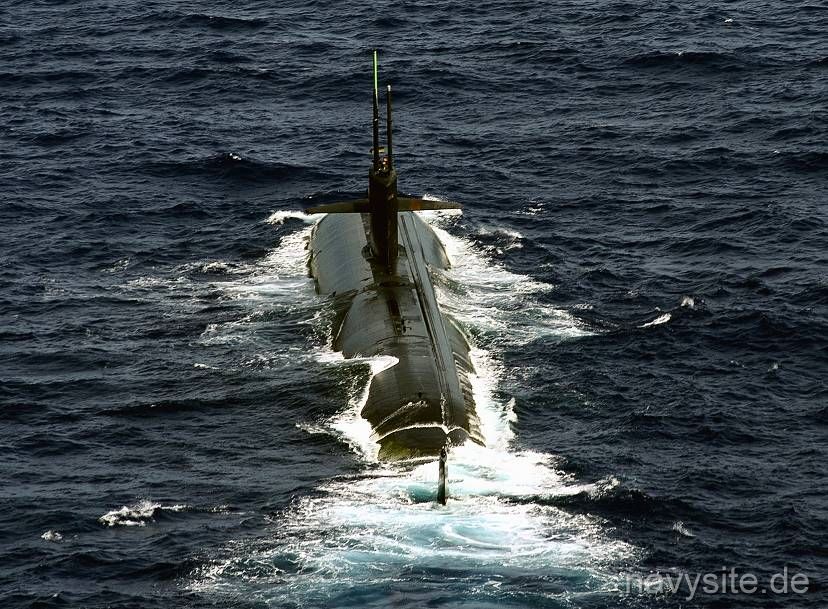
back to top go to the end of the pageUSS ALBUQUERQUE Image Gallery:
 |  |  |  |
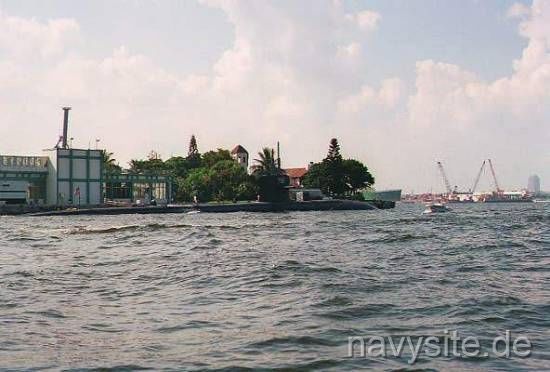
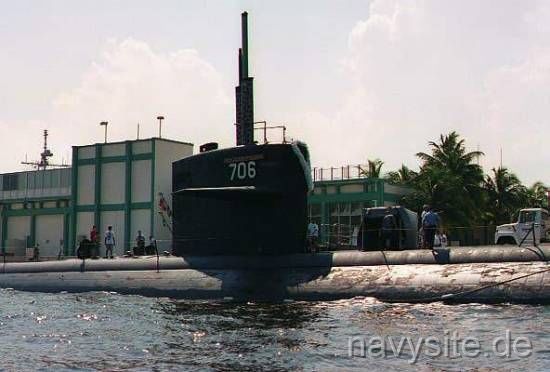
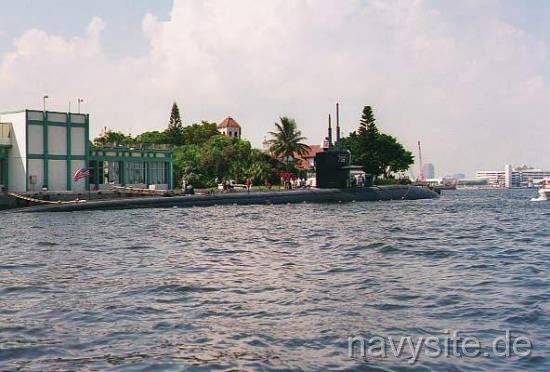
The photos below were taken by Howard Walsh jr. and show USS ALBUQUERQUE participating in the Broward Navy Days at Port Everglades, FL, in 2000.
 |  |  |  |
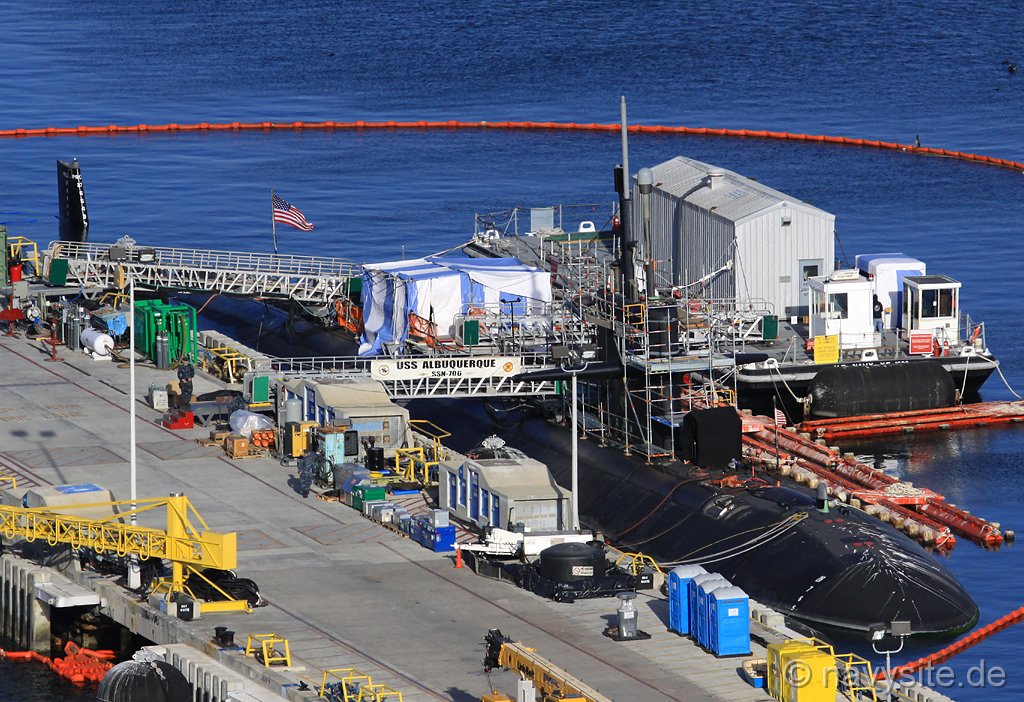
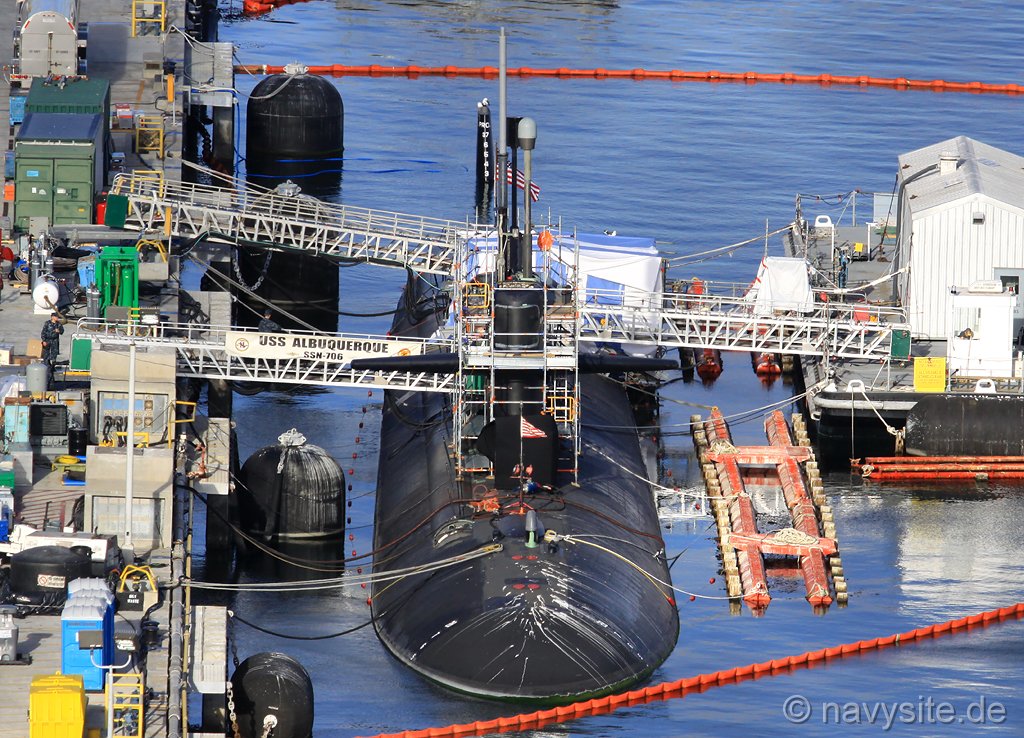
The photos below were taken by me and show the ALBUQUERQUE at Naval Submarine Base Point Loma, Calif., on March 14, 2012.
 |  |  |
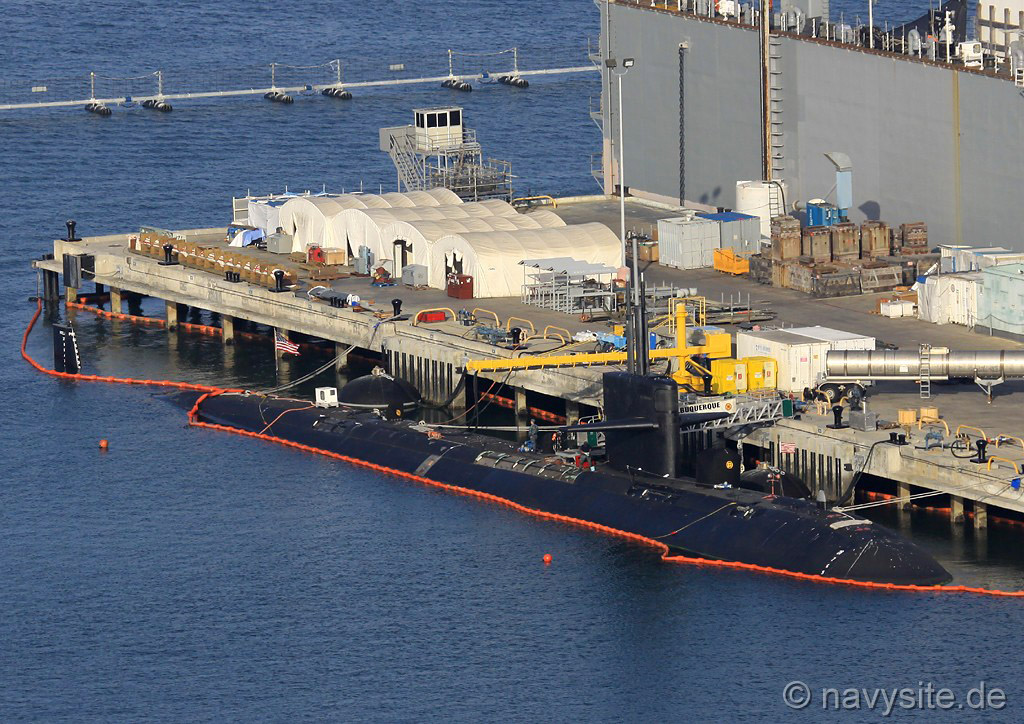
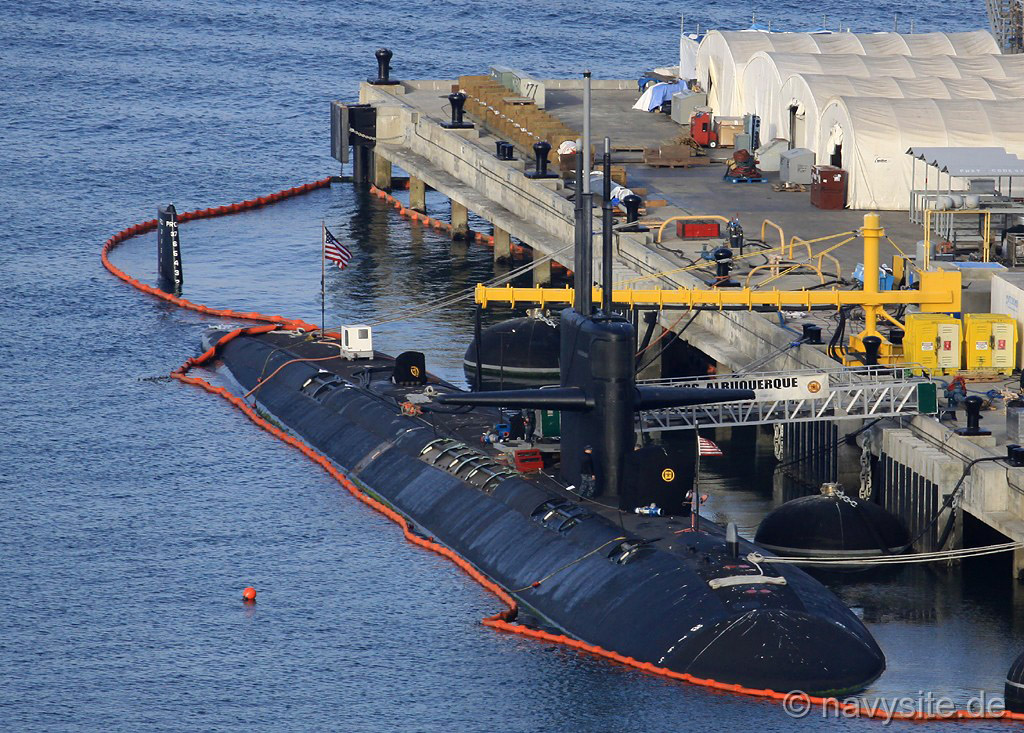
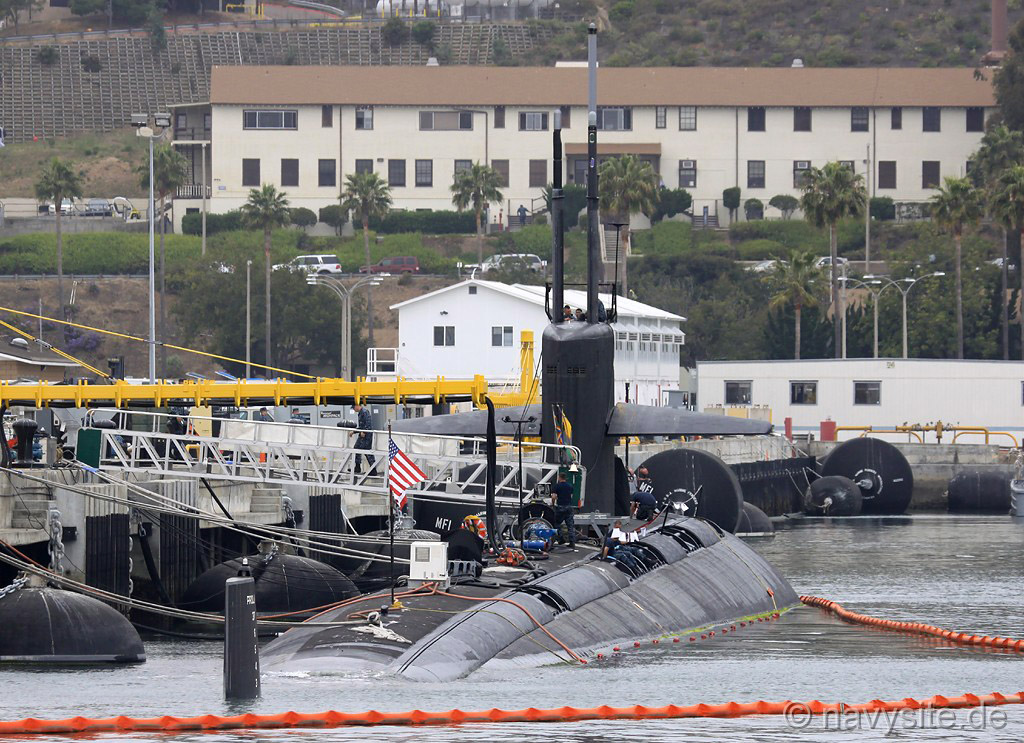
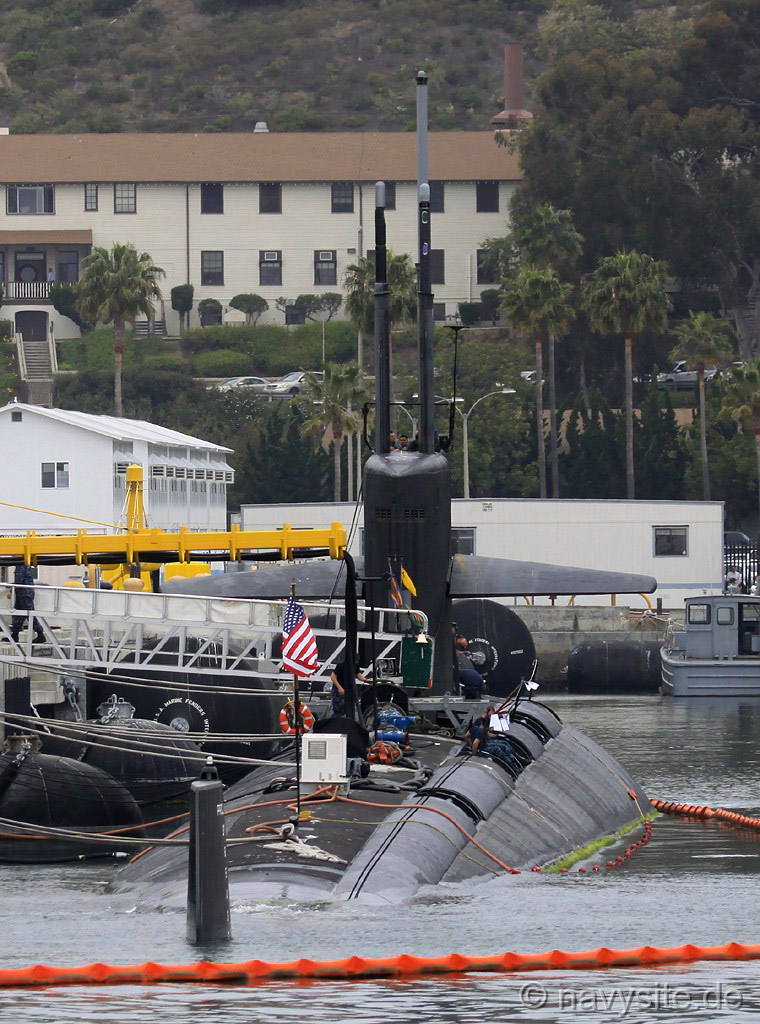
The photos below were taken by me and show the ALBUQUERQUE at Naval Submarine Base Point Loma, Calif., on May 8 and 10, 2012.
 |  |  |  |
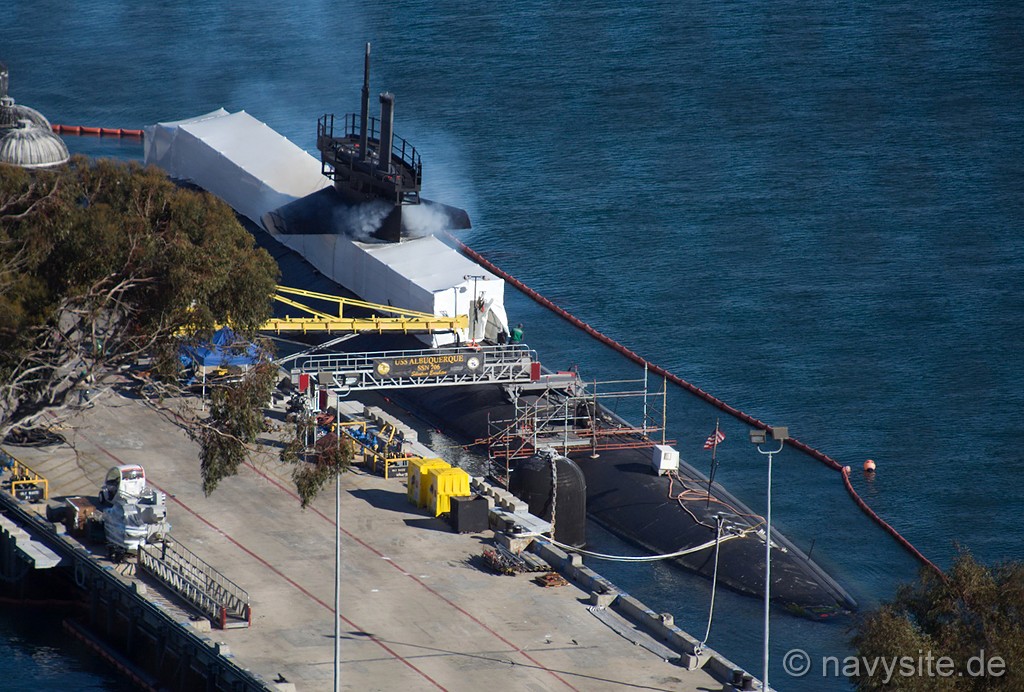
The photos below were taken by Michael Jenning and show the ALBUQUERQUE at Naval Submarine Base Point Loma, Calif., on December 27, 2014.
 |  |  |
back to top Back to Submarines list. Back to ships list. Back to selection page. Back to 1st page.