Search the Site with 
General Characteristics Crew List Memorabilia Accidents aboard the Ship History Image Gallery to end of page
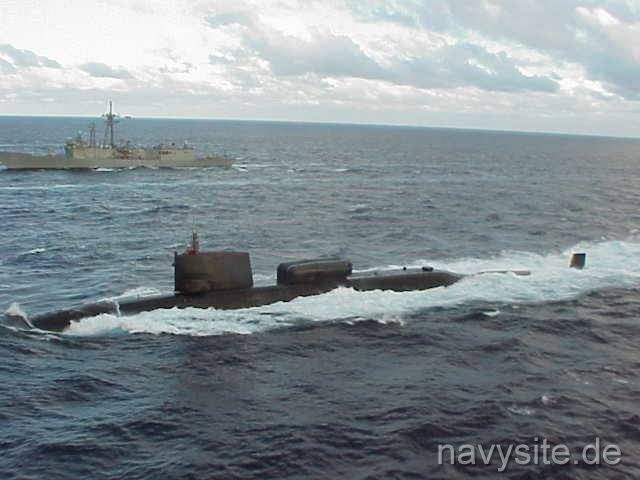
USS Kamehameha (SSBN 642)

- later SSN 642 -
- decommissioned -


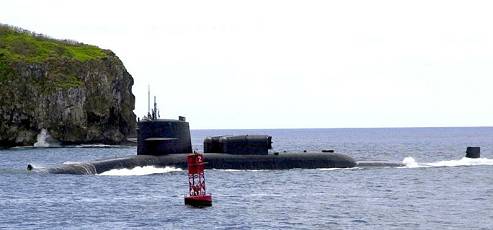
Commissioned as a ballistic missile submarine in December 1965, the USS KAMEHAMEHA completed a total of 63 deterrent patrols in this function. KAMEHAMEHA's missile systems were inactivated in July 1992 and she was converted to a special purpose, brown water attack submarine at Mare Island Naval Shipyard in Vallejo, California. This conversion installed modifications to support the surfaced and submerged deployment of Special Operations Forces. The KAMEHAMEHA served 8 years in this new role. Inactivation of KAMEHAMEHA started in October 2001 at Bremerton, Wash., before the submarine was both decommissioned and stricken from the Navy list on April 2, 2002. KAMEHAMEHA went through the Navy’s Nuclear Powered Ship and Recycling Program at Bremerton, Wash. from October 2001 - February 2003. On February 28, 2003, recycling was completed.

The KAMEHAMEHA was named after Kamehameha the Great, the warrior and statesman who first united the Hawaiian Islands under a single ruler.

During her 36 years of service, the KAMEHAMEHA was awarded the following awards: 63 awards of the SSBN Deterrent Patrol Pin, four Meritorious Unit Commendations, three Battle Efficiency Awards, the Armed Forces Expeditionary Medal, and at least three Sea Service Deployment Ribbons. More awards may have been given, but these are the only ones with proof shown aboard ship. In addition, USS KAMEHAMEHA proudly displays one Communications "C", three Deck Seamanship "D", one Tactical "T", and one Medical "M" awards. The ship has also received several Ney Awards for supply excellence.

General Characteristics:Keel laid: May 2, 1963
Launched: January 16, 1965
Commissioned: December 10, 1965
Decommissioned: April 2, 2002
Builder: Mare Island Division, San Francisco Naval Shipyard, Vallejo, Calif.
Propulsion system: one S5W nuclear reactor
Propellers: one
Length: 425 feet (129.6 meters)
Beam: 33 feet (10 meters)
Draft: 31.5 feet (9.6 meters)
Displacement: Surfaced: approx. 7,250 tons; Submerged: approx. 8,250 tons
Speed: Surfaced: 16 - 20 knots;Submerged: 22 - 25 knots
Armament as SSBN: 16 vertical tubes for Polaris or Poseidon missiles, four 21" torpedo tubes for Mk-48 torpedoes, Mk-14/16 torpedoes, Mk-37 torpedoes and Mk-45 nuclear torpedoes
Armament as SSN: four 21" torpedo tubes for Mk-48 torpedoes
Crew as SSBN: 13 Officers and 130 Enlisted (two crews)
Crew as SSN: 14 Officers, 15 Chief Petty Officers, 121 Enlisted + about 70 special forces personnel


Back to topback to top  go to endgo to the end of the page


Back to topback to top  go to endgo to the end of the page

Crew List:

This section contains the names of sailors who served aboard USS KAMEHAMEHA. It is no official listing but contains the names of sailors who submitted their information.


back to top  go to the end of the page


Back to topback to top  go to endgo to the end of the page

Accidents aboard USS KAMEHAMEHA:

DateWhereEvents
December 14, 1974central MediterraneanUSS KAMEHAMEHA strikes submerged fishing gear during independent exercises in the Mediterranean. Deep hull scrapes on the port side, a sheared underwater log sword, and a damaged screw result. The KAMEHAMEHA returns to port under her own power for repairs.


Back to topback to top  go to endgo to the end of the page

History of USS KAMEHAMEHA:

USS KAMEHAMEHA originated in the early 1960s as part of the final group of U.S. fleet ballistic missile submarines, the BENJAMIN FRANKLIN-class, built to sustain the sea-based leg of the American nuclear deterrent in the Cold War. The construction contract was awarded to Mare Island Naval Shipyard at Vallejo, California on August 31, 1962. The keel was laid there on May 2, 1963, and the hull took shape as the thirtieth of the "41 for Freedom" ballistic missile submarines. She was launched at Mare Island on January 16, 1965, sponsored by Pauline King, widow of Samuel Wilder King, former territorial governor of Hawaii, underscoring the close symbolic link between the submarine and the Hawaiian monarchy whose first king gave her his name. After fitting out and trials alongside the shipyard waterfront, the submarine was formally commissioned as USS KAMEHAMEHA on December 10, 1965, with separate Blue and Gold crews established from the start to support continuous deterrent patrols.

Following commissioning, USS KAMEHAMEHA conducted initial post-shakedown operations in the eastern Pacific. She carried out sea trials off the California coast to prove the propulsion plant, control systems and missile compartment, and then transited to the Atlantic missile test ranges. In this early period, she executed ballistic-missile firing tests at the Eastern Test Range off Cape Canaveral, Florida, validating her launch systems before entering operational service as a strategic deterrent platform. Once acceptance trials and missile tests were complete, the submarine sailed for the central Pacific. Pearl Harbor became her nominal home port, but in operational terms she was forward-based at Polaris Point, Apra Harbor, Guam, as part of Submarine Squadron 15, the U.S. Pacific Fleet's forward Polaris/Poseidon squadron. From Guam she joined the pattern of continuous deterrent patrols typical of the "41 for Freedom" boats: rotating Blue and Gold crews, lengthy submerged patrols in the Pacific, and refit periods alongside submarine tenders. Photographs from about 1968 show USS KAMEHAMEHA moored at Polaris Point with the submarine tenders USS HUNLEY (AS 31) and USS PROTEUS (AS 19), the cargo ship USNS FURMAN (T-AK 280) and the ballistic-missile submarine USS STONEWALL JACKSON (SSBN 634), illustrating her place within the larger support complex that sustained the Pacific strategic submarine force.

From 1966, she entered full deterrent operations. After joining the Pacific Fleet, the Blue Crew began the first deterrent patrol on August 6, 1966, sailing from Guam to an undisclosed patrol area in the Pacific Ocean. In November 1966, the Gold Crew relieved the Blue Crew and took the submarine on a subsequent patrol, establishing the alternating-crew rhythm that would characterize her ballistic-missile career. During these years, Pearl Harbor served primarily as an administrative home port and liberty location, while nearly all operational patrols started and ended at Apra Harbor to minimize transit time to and from patrol stations. On her final Pacific deterrent patrol, USS KAMEHAMEHA returned to a missile test role for part of the cruise, conducting two test launches with inert warheads on the Pacific Missile Test Range before heading back to Pearl Harbor to prepare for a permanent transfer to the Atlantic strategic submarine force.

In early 1970 the submarine left the Pacific. With the Gold Crew embarked, she departed Pearl Harbor, proceeded submerged across the eastern Pacific, and then transited the Panama Canal en route to the U.S. East Coast. After entering the Atlantic, she continued to Charleston, South Carolina, where she joined Submarine Squadron 18 of the Atlantic Fleet in June 1970. The ship began a new cycle of deterrent patrols in the Atlantic theater from Charleston, taking her place in the Polaris force that supported NATO's nuclear posture against the Soviet Union's expanding missile and submarine capabilities during the late 1960s and early 1970s. Shortly after arriving, she was ordered to deploy on patrol earlier than originally planned to cover for another submarine that had suffered machinery problems, demonstrating the flexibility expected of the ballistic-missile force as it maintained constant on-station coverage.

By mid-1971, the boat was due for a combined refueling overhaul and missile system upgrade. In July 1971, USS KAMEHAMEHA shifted to Groton, Connecticut, to enter the yard for an extended overhaul and weapons conversion. During this period, the submarine's ballistic-missile armament was converted from the Polaris A-3 system to the more capable Poseidon C-3 missiles, and her nuclear reactor received a refueling overhaul that would carry her through the remainder of her life as an SSBN. The work lasted until October 1972. Coming out of the yard, she spent a period operating off the U.S. East Coast completing sea trials, post-overhaul testing and crew training to validate the upgraded missile and engineering systems.

In June 1973, USS KAMEHAMEHA was reassigned to Submarine Squadron 16 and established an advanced operating base at Rota, Spain, while remaining administratively tied to the Atlantic Fleet. From Rota, she made a series of deterrent patrols into the Atlantic as part of the forward-deployed U.S. strategic submarine presence in European waters. This period coincided with the implementation of the first Strategic Arms Limitation Talks (SALT I) agreements between the United States and the Soviet Union, signed in May 1972, which capped certain categories of strategic weapons but left the sea-based ballistic-missile force as a central element of U.S. deterrence. As a Poseidon-armed SSBN operating from Rota between 1973 and July 1979, USS KAMEHAMEHA contributed to the routine but strategically important pattern of submerged patrols designed to remain undetected while guaranteeing a survivable second-strike capability.

In July 1979, the submarine left Rota and returned to the United States for reassignment to Charleston and Submarine Squadron 18. From Charleston, she resumed Atlantic deterrent patrols as part of the same squadron she had joined in 1970, now armed with Poseidon missiles and operating in an environment marked by renewed East-West tensions and modernization on both sides of the nuclear balance. In the first half of the 1980s, USS KAMEHAMEHA was transferred to Submarine Squadron 14, the ballistic-missile squadron based at Holy Loch on the Firth of Clyde in Scotland, a long-standing overseas refit site that supported U.S. FBM submarines in the eastern Atlantic and Norwegian Sea. During 1984 and 1985, she conducted operations as part of this squadron and was awarded the Meritorious Unit Commendation for her performance in those years. In 1985, the submarine was further recognized as the Atlantic Fleet Ballistic Missile Submarine "Top Performer", reflecting high marks in inspections and operations during a time of intensive patrol activity at the end of the Cold War's most confrontational decade.

To sustain her for continued service, USS KAMEHAMEHA underwent a major refueling overhaul at Portsmouth Naval Shipyard in Kittery, Maine, from November 1986 to December 1989. This extended yard period renewed her propulsion plant and modernized various systems. During the late 1980s, while she was in and out of the yard, global strategic conditions shifted: arms control negotiations advanced and the Berlin Wall fell in November 1989, foreshadowing the end of the Cold War, even as the U.S. Navy maintained the continuous-patrol posture that had characterized the SSBN force since the early 1960s. After completing the overhaul, she moved to Groton in December 1989 for recertification inspections, sea trials and crew training. As part of this post-overhaul work-up, the Gold Crew launched the last Poseidon C-3 missile (with an inert warhead) from missile tube 4 off Port Canaveral, Florida, during a demonstration and shakedown operation. Following successful recertification, she returned to Holy Loch in November 1990 to resume Atlantic deterrent patrols with Submarine Squadron 14.

In August 1991, as the U.S. Navy began deactivating the Poseidon missile system and shifting its strategic emphasis toward the newer Trident-armed OHIO-class submarines, USS KAMEHAMEHA left Holy Loch and returned to Groton. From there, she continued operations in a non-deterrent role while the ballistic-missile component of her mission wound down. Over her career as an SSBN she completed a total of 63 deterrent patrols. In July 1992, her missile systems were formally inactivated, ending her role as a ballistic-missile submarine. Instead of decommissioning her immediately, the Navy selected USS KAMEHAMEHA, along with USS JAMES K. POLK (SSBN 645), for conversion into a special-operations support submarine as part of the post-Cold War restructuring of undersea forces.

From September 1992 through July 1993, the submarine was back at Mare Island Naval Shipyard in California for this extensive conversion. During the work, her 16 missile tubes were disabled as launchers and repurposed structurally. External Dry Deck Shelters were added to support the deployment of SEAL Delivery Vehicles and other swimmer-delivery systems, and internal spaces were reconfigured to accommodate embarked special operations forces. With ballistic-missile capability removed, she was reclassified as an attack submarine and redesignated SSN 642. The conversion shifted her primary mission from strategic nuclear deterrence to support of special warfare and other non-strategic operations, reflecting the broader post-Cold War emphasis on regional contingencies and covert insertion capabilities rather than additional strategic launch platforms.

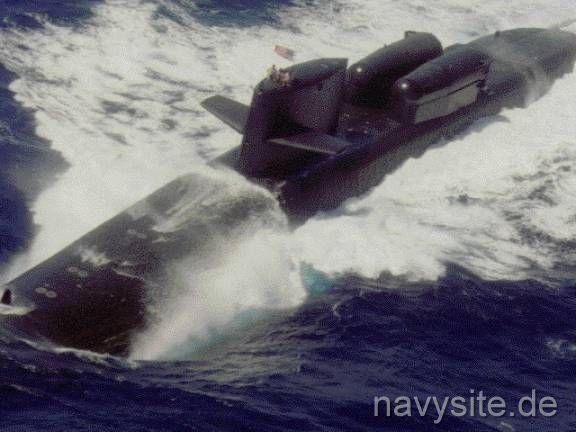
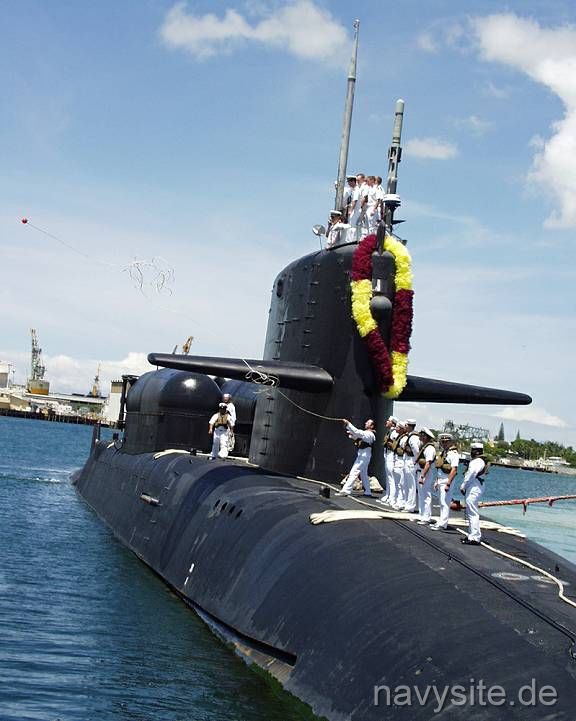
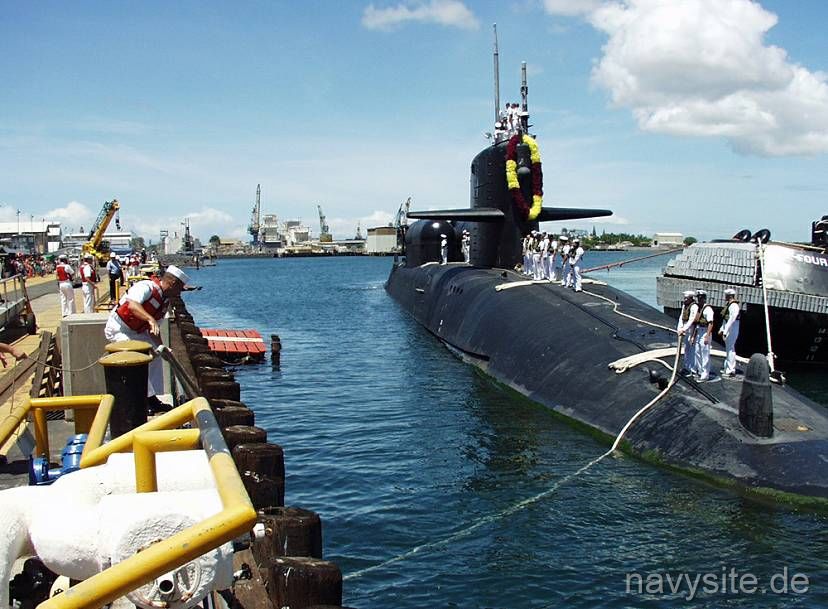
On completion of the conversion in mid-1993, USS KAMEHAMEHA returned once more to the central Pacific. In August 1993, she arrived at Pearl Harbor and joined Submarine Squadron ONE. Now operating as SSN 642, she regularly deployed across the Pacific in support of special operations training and contingency plans. Her Dry Deck Shelters allowed her to embark SEAL teams and special-operations divers, launch and recover swimmer delivery vehicles, and conduct exercises in coastal and shallow-water environments as well as deeper-water transits. Photographs and official captions from the late 1990s show her participating in major fleet exercises such as Rim of the Pacific (RIMPAC) 1998, where SEALs practiced helicopter approaches and landings onto the submarine's deck as part of combined special warfare training. Other imagery documents emergency blow drills and surfaced evolutions associated with these special operations roles.

Throughout the 1990s and into the early 2000s, USS KAMEHAMEHA continued this special-operations support pattern, deploying from Pearl Harbor on Western Pacific cruises and operating with other U.S. Navy units as required. By the early 2000s, the submarine had reached the end of her extended service life. On April 2, 2002, USS KAMEHAMEHA was decommissioned and stricken from the Naval Vessel Register at Pearl Harbor after more than 37 years of active duty, making her at that moment the oldest operational submarine in the U.S. Navy and the last of the original 41 Polaris/Poseidon fleet ballistic-missile submarines still in service. Shortly afterwards, she was towed to Bremerton, Washington, to enter the Ship and Submarine Recycling Program at Puget Sound Naval Shipyard. Scrapping began in October 2002 and was completed on February 28, 2003, formally ending the physical existence of the hull.

Several elements of USS KAMEHAMEHA have been preserved. Gifts presented at her commissioning by the state of Hawaii, such as the bust of King Kamehameha I, an acacia koa wooden plate, and traditional Hawaiian implements, are displayed today at the Pacific Fleet Submarine Museum at Pearl Harbor, maintaining the symbolic link between the boat and her namesake kingdom. Her periscopes were installed at Deterrent Park on Submarine Base Bangor in Washington as part of a static exhibit, connecting her long deterrent career with the current generation of ballistic-missile submarines based there. The submarine's long record - 63 strategic patrols across the Pacific and Atlantic, followed by a decade of special-operations duty - spans almost the entire late-Cold-War and immediate post-Cold-War period, and illustrates in one hull the U.S. Navy’s transition from Polaris and Poseidon deterrent patrols to more flexible, regionally focused undersea operations in the 1990s and early 2000s.


Back to topback to top  go to endgo to the end of the page


Back to topback to top


Back to Ballistic Submarines list. Back to ships list. Back to selection page. Back to 1st page.