Search the Site with

|
Search the Site with
|
 General Characteristics Crew List Memorabilia Cruise Books Notes of Interest Accidents aboard the Ship History Image Gallery end of page
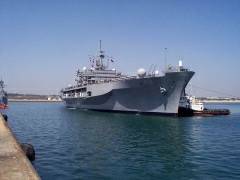 |  |  |
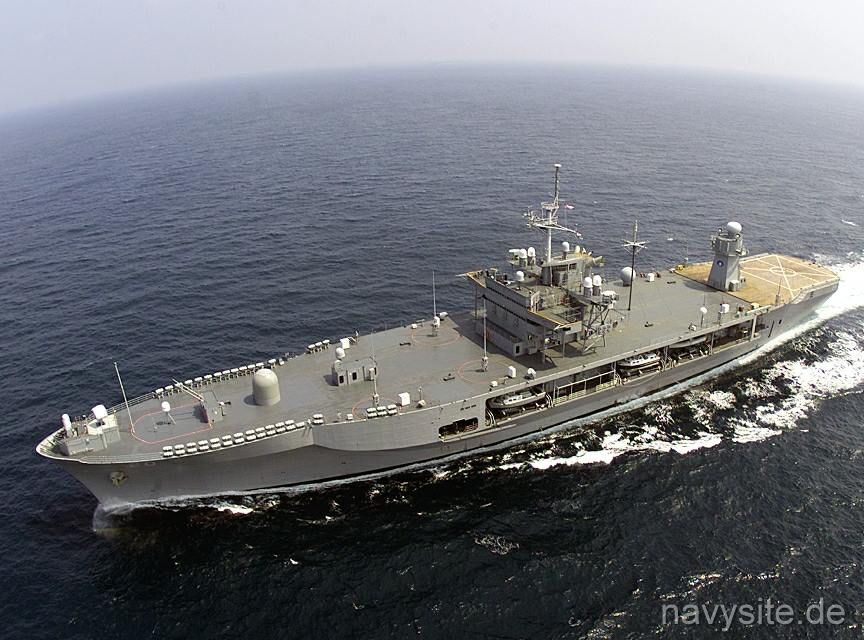
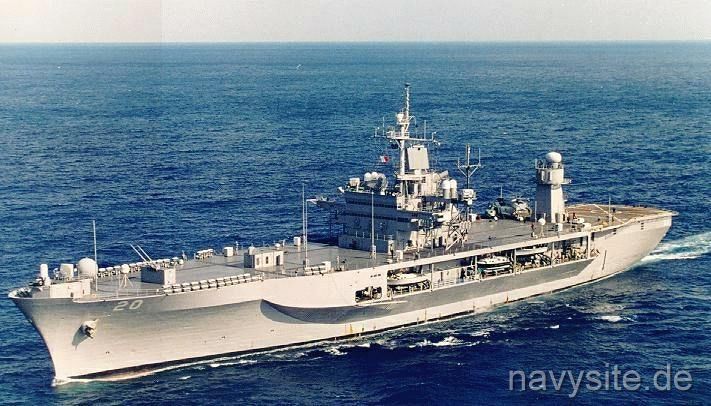
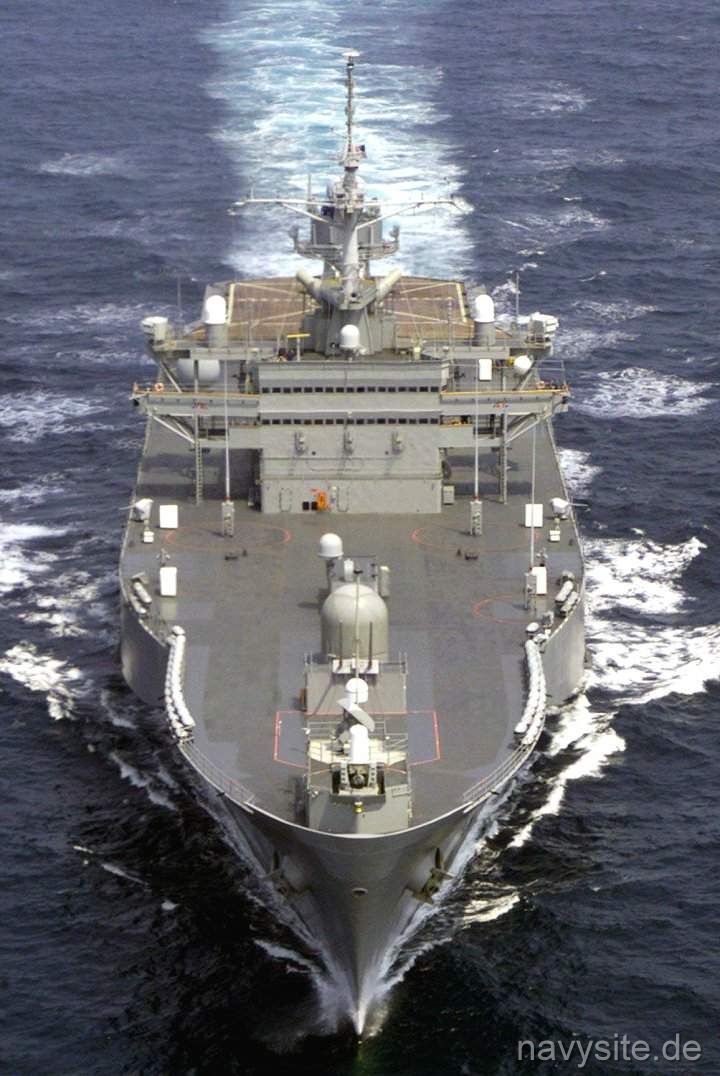
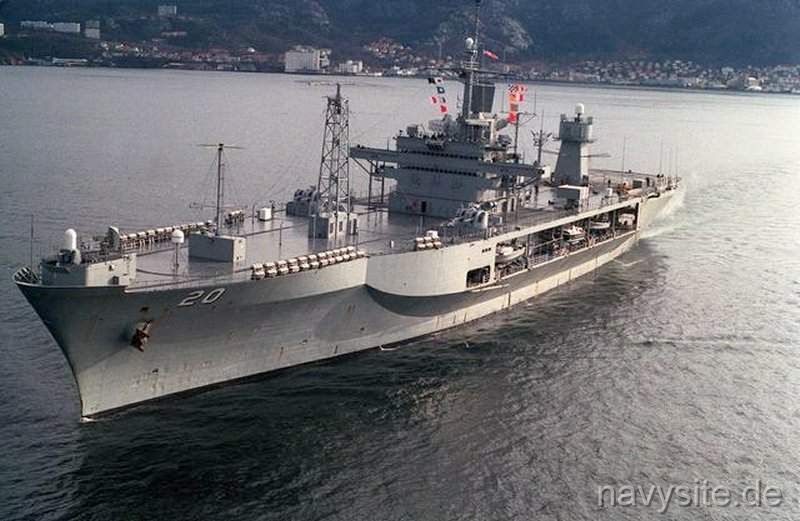
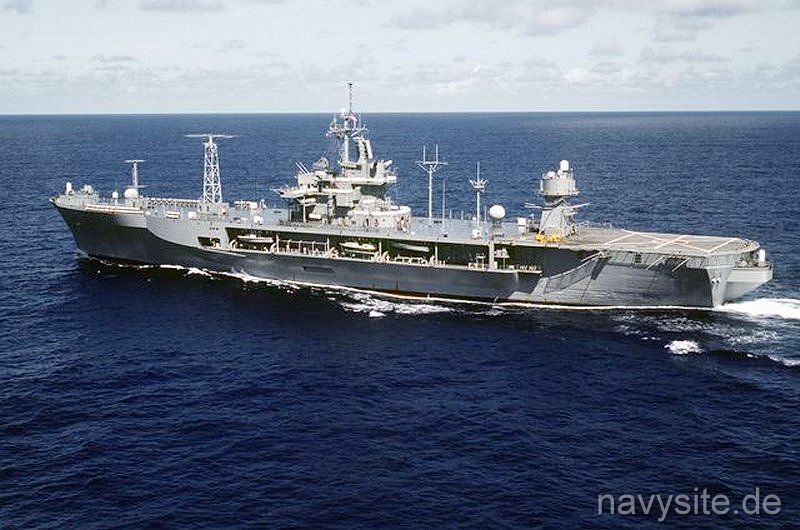
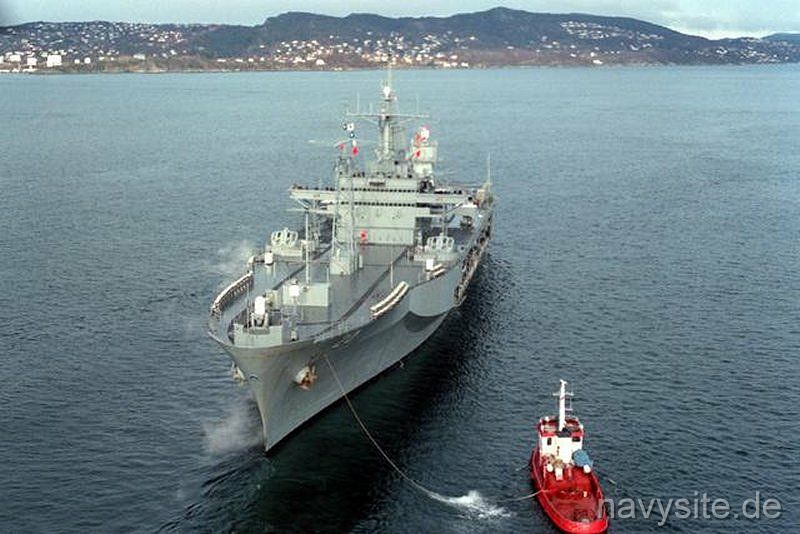
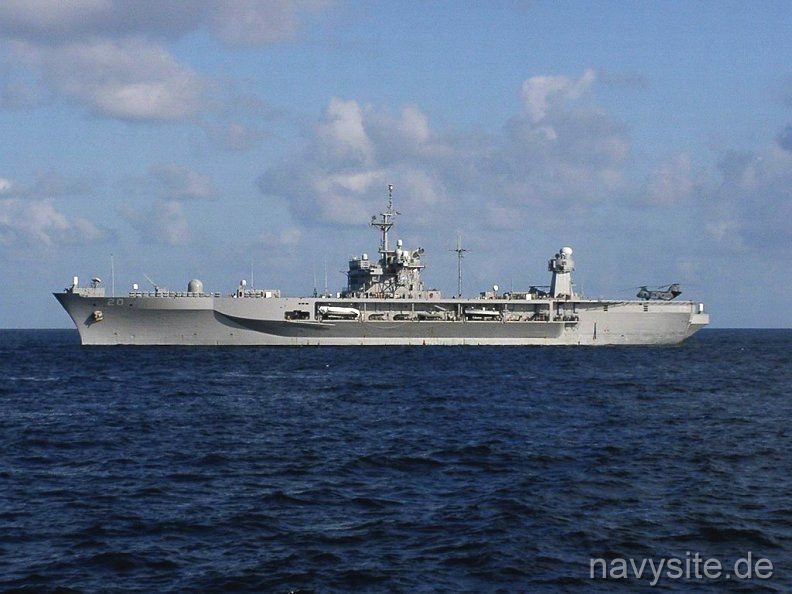
USS MOUNT WHITNEY is the first ship in the Navy to bear the name of the 14,946-foot peak in the Sierra-Nevada range in California, the highest point in the continental United States. Aboard the MOUNT WHITNEY, the navigation, deck, engineering, laundry and galley services are provided by Military Sealift Command civil service mariners.
USS MOUNT WHITNEY assumed duties as flagship for the 2nd Fleet in 1981. The ship deployed in 1994 to Haiti with Lt. Gen. Hugh Shelton, commander of the 18th Airborne Corps, in command of the Joint Task Force that conducted Operation Uphold Democracy. On November 12, 2002, MOUNT WHITNEY deployed to the Central Command area of responsibility in support of Operation Enduring Freedom. During the deployment the ship embarked elements of the 2nd Marine Division and II Marine Expeditionary Force (II MEF), based at Camp Lejeune, N.C., under the command of Maj. Gen. John F. Sattler. In 2004, MOUNT WHITNEY deployed to the Mediterranean relieving the command ship USS LA SALLE (AGF 3) and officially becoming the flagship for Commander, 6th Fleet, in February 2005.
| General Characteristics: | Keel Laid: January 8, 1969 |
| Launched: January 8, 1970 | |
| Commissioned: January 16, 1971 | |
| Builder: Newport News Shipbuilding Co., Newport News, Va. | |
| Propulsion system: two boilers, one geared turbine | |
| Propellers: one | |
| Length: 636,5 feet (194 meters) | |
| Beam: 108 feet (32.9 meters) | |
| Draft: 26,9 feet (8.8 meters) | |
| Displacement: approx. 18,400 tons full load | |
| Speed: 23 knots | |
| Aircraft: flight deck suitable for all helicopters | |
| Armament: two | |
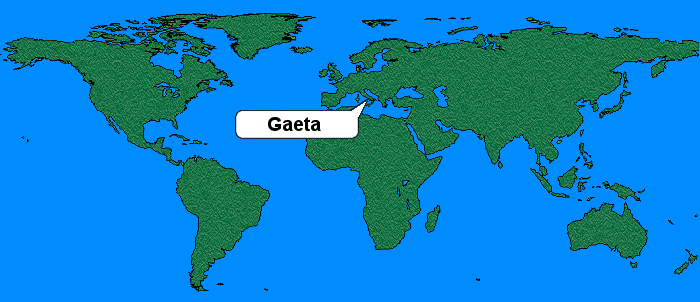
| Homeport: Gaeta, Italy | |
| Crew: 146 civilian crew, approx. 160 Navy crew and approx. 300 Navy staff |
 back to top go to the end of the pageback to top go to the end of the page
Crew List:
This section contains the names of sailors who served aboard USS MOUNT WHITNEY. It is no official listing but contains the names of sailors who submitted their information.
back to top go to the end of the pageback to top go to the end of the pageUSS MOUNT WHITNEY Cruise Books:
back to top go to the end of the page back to top go to the end of the page
Notes of Interest:
back to top go to the end of the pageAccidents aboard USS MOUNT WHITNEY:
| Date | Where | Events |
|---|---|---|
| July 31, 2015 | Viktor Lenac Shipyard, Rijeka, Croatia | USS MOUNT WHITNEY suffers a fire while undergoing an Extended Drydocking Selected Restricted Availability (E-DSRA) at Viktor Lenac Shipyard in Rijeka, Croatia. The fire is extinguished within 45 minutes and no injuries are reported. |
back to top go to the end of the pageUSS MOUNT WHITNEY History:
USS MOUNT WHITNEY was ordered on 10 August 1966 as the second unit of the BLUE RIDGE-class amphibious command ships, designed from the outset as afloat headquarters with extensive command, control and communications facilities for joint and combined operations. Her keel was laid at Newport News Shipbuilding and Drydock Company in Virginia on 8 January 1969, and she was launched exactly one year later, on 8 January 1970. After fitting out with an unusually large suite of communications and operations spaces, she was commissioned on 16 January 1971 as USS MOUNT WHITNEY, the first U.S. Navy ship named for the highest peak in the contiguous United States.
From commissioning, USS MOUNT WHITNEY was based at Norfolk, Virginia, serving as flagship for COMMANDER SECOND FLEET and for NATO's STRIKING FLEET ATLANTIC. In 1971, she began her operational career in the North Atlantic and North Sea, reflecting the Cold War focus on reinforcement and control of the North Atlantic sea lanes. Early deployments took her into northern European waters as a visible command platform for major NATO exercises. Her operations in these first years revolved around embarking fleet and NATO staffs, exercising the new C4I systems at sea, and refining procedures for coordinating carrier, surface, submarine and amphibious forces from an afloat command ship rather than from a shore headquarters.
During 1972 and 1973, USS MOUNT WHITNEY settled into a pattern of alternating Atlantic and Mediterranean deployments, mirroring the broader U.S. effort to maintain a large naval presence in the Mediterranean amid repeated crises in the Middle East. Command-history records show that on 17 May 1973 she deployed from the United States to the Mediterranean to support Exercise DAWN PATROL, a major NATO amphibious and maritime exercise. Later that year, she again entered the Mediterranean on 31 August 1973 for another large NATO evolution.
When the Yom Kippur War broke out on 6 October 1973 and both superpowers began reinforcing their naval forces in the region, USS MOUNT WHITNEY, already at sea as the fleet flagship in the Mediterranean, formed part of the U.S. naval build-up that brought dozens of American warships into the theater at a time of acute tension between NATO and the Soviet Union.
In the mid-1970s, the ship continued to act as the central afloat headquarters for SECOND FLEET and STRIKING FLEET ATLANTIC. Her communications outfit was periodically upgraded as the Navy moved from predominantly high-frequency radio links toward increasing use of satellite communications, a transition visible in the gradual replacement of long-wire and large directional HF antennas by additional satellite dishes and associated topside equipment.
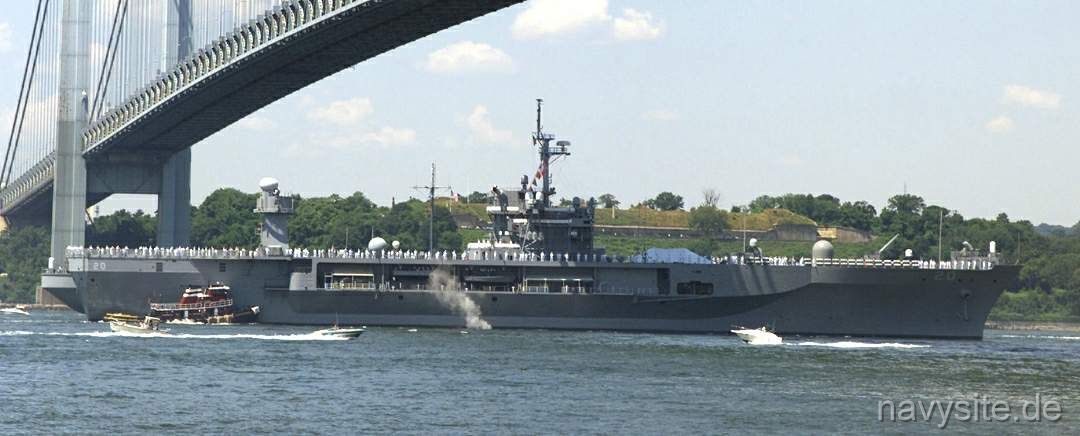
On 4 July 1976, she represented the operational U.S. fleet at the International Naval Review in New York Harbor during the American Bicentennial, a high-visibility diplomatic event that brought together a large multinational armada and underlined the role of USS MOUNT WHITNEY as a "fleet headquarters at sea". In the same period, she conducted weapons testing to validate her self-defence suite. A well-documented event is a live firing of a RIM-7 SEA SPARROW surface-to-air missile in 1976 during a missile exercise in which she served as the firing platform.
Throughout the late 1970s, USS MOUNT WHITNEY repeatedly deployed with SECOND FLEET for North Atlantic and Norwegian Sea exercises that practiced reinforcement of Europe and defense of the GIUK (Greenland-Iceland-United Kingdom) gap. Hull-history data indicate a period of dry-dock maintenance from June to December 1979, interleaved with a North Atlantic deployment that same year, underscoring the constant cycle of complex maintenance needed to sustain her large electronic plant and command spaces.
In the early 1980s, USS MOUNT WHITNEY continued intensive North Atlantic activity and, notably, undertook "Blue Nose" Arctic operations in 1982, crossing the Arctic Circle with embarked fleet staffs to rehearse command-and-control in extreme-latitude conditions. Additional North Atlantic deployments in 1983 and 1984 kept her closely involved in NATO's large Ocean Safari and Northern Wedding series of exercises, which tested reinforcement of Europe under wartime conditions. Although many individual port calls of this period are not publicly detailed, the ship routinely visited major NATO ports in the United Kingdom, the Netherlands, Germany and Norway while embarked admirals and multinational staffs used her as a mobile headquarters during large exercises and contingency planning conferences. The ship's command histories also note her participation in several search-and-rescue and assistance missions in the Atlantic during the 1970s and 1980s, reflecting the fleet's standing responsibility to respond to maritime emergencies.
By the end of the Cold War, USS MOUNT WHITNEY had become an established fixture in Atlantic and Mediterranean operations. In 1989, she acted as the host ship in Norfolk, Virginia, for the first visit of a Soviet naval delegation to the port, a symbolic event in the late-Cold-War thaw that highlighted her use not only as an operational headquarters but also as a venue for high-level naval diplomacy. The ship's extensive wardrooms, conference spaces and communications facilities made her well suited for such tasks, and she frequently hosted conferences, planning meetings and receptions for allied navies even as she continued routine fleet exercises.
After the end of the Cold War, USS MOUNT WHITNEY's focus shifted toward crisis-response and peace-support operations while she remained flagship for SECOND FLEET and STRIKING FLEET ATLANTIC. Command-history data show North Atlantic and Arctic deployments in 1992, again involving an Arctic Circle crossing and combined exercises, reflecting NATO's continued emphasis on northern waters even after the dissolution of the Soviet Union.
In 1994, she was at the center of two very different episodes that illustrate both her operational role and the training ethos of the period. During FleetEx 2/94, a large U.S. exercise, the Argentine diesel-electric submarine ARA SAN JUAN, acting as an opposition force, penetrated the escort screen and achieved a simulated "sinking" of USS MOUNT WHITNEY, highlighting the challenges of anti-submarine defense against modern conventional submarines. Later that year, she deployed to the Caribbean as flagship of the joint task force for Operation UPHOLD DEMOCRACY off Haiti, embarking Lieutenant General Hugh Shelton and his staff as they directed the U.S.-led multinational intervention that aimed to restore the democratically elected government in Port-au-Prince.
Through the later 1990s, USS MOUNT WHITNEY continued to serve as an afloat command platform for U.S. and NATO operations related to the conflicts in the former Yugoslavia. She supported command-and-control for operations over Bosnia and Herzegovina and, by the end of the decade, for the 1999 Kosovo campaign, when NATO forces conducted an extended air campaign against Yugoslav targets while maritime forces maintained presence and enforced embargoes in the Adriatic Sea. During these operations she gave embarked joint and combined staffs the ability to coordinate air and maritime assets close to the theater while remaining independent of host-nation infrastructure, a recurring theme in her later employment.
On 12 November 2002, USS MOUNT WHITNEY departed the U.S. East Coast for the U.S. Central Command area as the initial afloat headquarters for COMBINED JOINT TASK FORCE - HORN OF AFRICA, part of Operation ENDURING FREEDOM. With elements of the 2ND MARINE DIVISION and II MARINE EXPEDITIONARY FORCE embarked, she operated in the western Indian Ocean and off the Horn of Africa, providing the first dedicated command-and-control platform for U.S. efforts to counter terrorist networks and support partner forces in that region. In the course of this deployment she called at regional ports, including Djibouti, while serving as the afloat headquarters until shore facilities and a permanent headquarters ashore were fully established.
In 2004, the Navy integrated Military Sealift Command (MSC) civilian mariners into USS MOUNT WHITNEY's complement. The ship remained a commissioned warship under a Navy commanding officer, but the crew mix shifted to roughly 170 Navy personnel and about 150 civilians responsible for navigation, deck, and engineering functions. This hybrid manning model reduced the purely military crew size while preserving the ship's command-and-control mission and paved the way for her transition to a new theater. In February 2005, she sailed from Norfolk for Gaeta, Italy, where she formally relieved USS LA SALLE (AGF 3) as flagship of the U.S. SIXTH FLEET and became the afloat command platform for STRIKING AND SUPPORT FORCES NATO (today STRIKFORNATO). From 2005 onward her homeport remained Gaeta, and she became the only permanently assigned major surface combatant in SIXTH FLEET, embodying U.S. naval command presence in Europe and Africa.
As SIXTH FLEET flagship from 2005, USS MOUNT WHITNEY spent most of her time in the Mediterranean and adjacent waters. She embarked U.S. and NATO staffs for major exercises, high-level port visits and contingency operations, including repeated deployments to the Black Sea as part of U.S. and NATO engagement with Black Sea littoral states. The ship's operations included maritime security cooperation with partners around the Mediterranean and West Africa and support to humanitarian missions, in line with growing U.S. interest in the Gulf of Guinea and African maritime security.
In August 2008, after the brief Russo-Georgian War in South Ossetia and Abkhazia, USS MOUNT WHITNEY deployed into the Black Sea to support Operation ASSURED DELIVERY, the U.S. humanitarian effort to deliver relief supplies to Georgia. She became the first NATO ship to deliver aid into the port of Poti, operating under intense political scrutiny from Russia.
On 6 November 2008, she attempted to enter Sevastopol, Ukraine, but was unable to complete the port visit. Ukrainian sources later cited documentation issues and local protests against NATO presence as reasons the visit did not proceed, illustrating the sensitivity surrounding NATO naval activity in the Black Sea even before the 2014 Ukraine crisis.
In March 2011, USS MOUNT WHITNEY again took center stage during a major operation when unrest in Libya escalated into civil war and the United Nations authorized enforcement of a no-fly zone. From 19 March 2011, she operated in the central Mediterranean, about 12 nautical miles off the Libyan coast, as the main command vessel for Operation ODYSSEY DAWN, serving as flagship for Admiral Samuel J. Locklear and his joint task force headquarters. From her operations centers she coordinated multinational air and maritime forces enforcing United Nations Security Council Resolution 1973, directing strikes against Libyan air defenses and command nodes while also managing the transition of command arrangements as NATO took over the broader campaign.
After Libya, USS MOUNT WHITNEY entered the San Giorgio del Porto Shipyard in Genoa in February 2013 for a major sixty-day overhaul that addressed hull, machinery and extensive communications systems. She returned to active duty in April 2013, shortly thereafter conducting operations in the Baltic Sea and participating in commemorative events such as a Battle of Midway ceremony held on board on 5 June 2013. Later in 2013, she appeared in the Black Sea off Georgia, operating near Batumi alongside the Georgian coast guard ship SOKHUMI, underlining U.S. support for Georgia's maritime forces.
On 31 January 2014, USS MOUNT WHITNEY departed Gaeta for the Black Sea amid preparations for the Winter Olympics in Sochi, Russia. Together with the frigate USS TAYLOR (FFG 50), she became one of the first two U.S. Navy ships to operate in the Black Sea during the games, embarked with U.S. Marines and contingency equipment intended to support possible evacuation or assistance to U.S. citizens if security conditions deteriorated. Shortly thereafter, Russia's annexation of Crimea in March 2014 changed the strategic context for Black Sea deployments, and subsequent U.S. and NATO visits to the region, including those by USS MOUNT WHITNEY, took place against a backdrop of renewed East-West tensions.
From January 2015, USS MOUNT WHITNEY spent an extended period at the Viktor Lenac Shipyard in Rijeka, Croatia, undergoing a life-extension overhaul aimed at keeping her operational to about 2039. On 31 July 2015, a fire broke out on board while in the yard, but it was contained within about forty-five minutes by the crew and shipyard firefighters, with no injuries reported. After post-fire repairs and completion of the modernization work, she resumed operations, joining BALTOPS 2016 in the Baltic Sea and on 30 June 2016 visited Klaipeda, Lithuania, followed by a port call at Souda Bay, Crete, in October 2016, underlining ongoing NATO maritime presence in the Baltic and eastern Mediterranean in response to Russian activities and regional instability.
From early 2017 through October 2017, the ship again returned to Viktor Lenac for further upgrades to her information-technology infrastructure and other engineering systems, reinforcing her status as one of the most sophisticated afloat command centers in any navy.
In September 2018, she visited Thessaloniki, Greece, to support the 83rd Thessaloniki International Fair, where the United States was the country of honor, using her role as flagship to host high-level events. Immediately afterwards, from 25 October to 7 November 2018, she served as the command vessel for NATO's major exercise TRIDENT JUNCTURE 2018 off Norway, where STRIKFORNATO and SIXTH FLEET staffs on board directed a large multinational maritime force practicing collective defense in the North Atlantic and Norwegian Sea.
In 2019, she again took a central role as command ship during the BALTOPS 2019 exercise in the Baltic Sea, operating near Germany and Denmark in a scenario focused on high-end maritime warfare and deterrence against a peer adversary.
In the early stages of the COVID-19 pandemic, USS MOUNT WHITNEY remained in Gaeta, where imagery from 6 May 2020 shows her crew conducting large-scale testing on board. Even with public-health restrictions, she continued to support planning and command functions for SIXTH FLEET, demonstrating the value of an afloat headquarters that could operate with controlled access irrespective of conditions ashore. In November 2021, she returned to the Black Sea. NATO documentation records that allied fighters and surveillance aircraft guarded USS MOUNT WHITNEY and destroyer USS PORTER (DDG 78) during their entry, as the U.S. and NATO aimed to reassure allies and gather situational awareness amid a major Russian military build-up around Ukraine.
In April 2022, her employment shifted temporarily to the Red Sea region. Combined Maritime Forces, a Bahrain-based 34-nation coalition, created COMBINED TASK FORCE 153 to improve maritime security in the Red Sea, Bab-al-Mandeb and Gulf of Aden. Its initial staff, led by a U.S. Navy captain, embarked in USS MOUNT WHITNEY as she operated in regional waters under U.S. FIFTH FLEET. On 19 April 2022, the ship was photographed operating in the Red Sea with the Egyptian frigate ENS ALEXANDRIA, and for the task force's inaugural patrol she worked alongside ships such as HMS MONTROSE, RFA LYME BAY, destroyers USS GONZALEZ (DDG 66) and USS FITZGERALD (DDG 62) and high-speed transport USNS CHOCTAW COUNTY (T-EPF 2), supported by U.S. P-8A maritime patrol aircraft and unmanned systems. On 24 April 2022, she arrived in Djibouti for a sustainment and logistics visit supported by Camp Lemonnier, using the port as a hub while the task force conducted presence and security operations in nearby waters.
By late May and June 2022, USS MOUNT WHITNEY had shifted back to the Baltic Sea. She moored at Loudden Port in Stockholm by 5 June 2022 to serve as the lead ship for the BALTOPS 22 exercise, then on 16 June 2022 steamed into Kiel, Germany, for the exercise's concluding press events. BALTOPS 22 took place against the backdrop of Sweden's and Finland's NATO accession process and the ongoing war in Ukraine, and the ship's role as flagship for STRIKFORNATO and SIXTH FLEET underscored U.S. commitment to Baltic security.
On 18 October 2023, USS MOUNT WHITNEY departed Gaeta with SIXTH FLEET commander Vice Admiral Thomas Ishee and his staff embarked, heading to the eastern Mediterranean in response to the outbreak of war between Israel and Hamas after the 7 October attacks. For about six weeks, she operated in the region as an afloat headquarters coordinating U.S. and allied naval presence and contingency planning alongside an expanded U.S. force posture that included carrier strike groups centered on USS GERALD R. FORD (CVN 78) and USS DWIGHT D. EISENHOWER (CVN 69) and an amphibious ready group built around USS BATAAN (LHD 5), USS MESA VERDE (LPD 19) and USS CARTER HALL (LSD 50) with the 26TH MARINE EXPEDITIONARY UNIT embarked. Her presence allowed senior commanders to manage crisis-response, deterrence and potential non-combatant evacuation operations from international waters without relying on any host-nation facility.
In 2024, the ship continued to operate primarily in European waters. A U.S. Navy report from June 2024 describes a joint personnel-recovery exercise in the Baltic Sea on 10 June 2024 during BALTOPS, in which Helicopter Sea Combat Squadron HSC-28 aircraft worked with British and Lithuanian forces while embarked personnel on USS MOUNT WHITNEY coordinated the scenario, illustrating the continuing use of the ship as a platform for complex allied training in contested environments. At the same time, discussions within the U.S. Navy and in Congress intensified over budget plans that listed USS MOUNT WHITNEY for decommissioning, initially projected for 2026, as part of a broader "divest to invest" strategy. Critics warned that transferring her functions ashore would reduce flexibility and resilience, particularly in Europe and Africa.
On 31 January 2025, USS MOUNT WHITNEY held a change-of-command ceremony at Gaeta, Italy, passing command to a new commanding officer while SIXTH FLEET and STRIKFORNATO staff looked ahead to another busy year of operations. Early in 2025, she conducted multiple engagement cruises around the Mediterranean and North Africa. A Stars and Stripes article later that year noted that since January she had made port calls in Cyprus, Tunisia and Libya, including rare U.S. Navy ship visits to Tripoli and Benghazi - the first such U.S. naval visits to Libya in more than half a century - symbolizing renewed U.S. diplomatic engagement in North Africa at a time of heightened competition for influence.
In late April and early May 2025, USS MOUNT WHITNEY shifted to West Africa to support the annual maritime exercise OBANGAME EXPRESS 2025. On 4 May 2025, she arrived in Praia, Cabo Verde, as SIXTH FLEET flagship, embarking African and international guests for a series of engagements. She remained in Praia at least through 6 May 2025, hosting a leadership reception and other activities, and on 7 May 2025 departed the port to continue her role in the exercise, which focused on maritime security cooperation in the Gulf of Guinea and Atlantic approaches.
A planned port call in Nouakchott, Mauritania, shortly afterward had to be modified when tugboat availability and sea conditions made it unsafe to bring the 189-meter ship alongside. Instead, the commanding officer and a shipboard delegation flew ashore while Mauritanian naval leaders later came out by helicopter to visit the ship at sea, an example of the flexible diplomatic use of the vessel in countries with limited port infrastructure.
After completing her West African engagements, USS MOUNT WHITNEY called at Naval Station Rota, Spain, arriving on 13 May 2025 while returning from the Cape Verde and Mauritania activities. By late May 2025, she was publicly described in Stars and Stripes as a "floating Pentagon", with updated communications upgrades that allowed SIXTH FLEET and STRIKFORNATO to direct operations at sea or in crisis from a single embarked headquarters. The same report noted that although the Navy's budget documents still listed the ship for decommissioning - by then deferred to 2027 - many observers and sailors believed that her unique dual U.S.-NATO maritime operations centers would justify service life extensions beyond that date.
In parallel, the ship was preparing for a major northern deployment. On 1 June 2025, she arrived at Rostock, Germany, as the U.S. amphibious command ship assigned as flagship for the BALTOPS 25 exercise, marking the first time this long-running NATO maritime exercise started from the German port. In early June, she sailed from Rostock into the Baltic along with German units such as the frigate FGS BAYERN and corvettes FGS MAGDEBURG and FGS BRAUNSCHWEIG, joined by U.S. destroyer USS PAUL IGNATIUS (DDG 117) and many allied ships in a scenario that emphasized amphibious operations, air defense, mine warfare and the integration of unmanned systems. During BALTOPS 25, she also served as a testbed for Task Force 66's experiments with uncrewed surface vessels, including the GLOBAL AUTONOMOUS RECONNAISSANCE CRAFT, which simulated fast attack craft and drone boat threats in high-tempo scenarios against USS MOUNT WHITNEY and USS PAUL IGNATIUS.
On 17 June 2025, NATO and national leaders visited the ship in Gdansk, Poland, underscoring the exercise's political and strategic significance in deterring further Russian aggression in the Baltic region.
Following BALTOPS 25, USS MOUNT WHITNEY continued north-European engagement. On 27 June 2025, she arrived in Riga, Latvia, for a scheduled port visit that highlighted U.S.-Latvian defense cooperation and the enduring U.S. naval presence on NATO's eastern flank.
In early September 2025, the ship turned south again to the Adriatic and central Mediterranean. On 2 September 2025, she arrived in Bar, Montenegro, for a port visit emphasizing U.S.-Montenegrin partnership and NATO's commitment to the security of the Adriatic littoral. A week later, on 9 September 2025, she departed Bar and arrived at Porto Romano near Durres, Albania, becoming the first U.S. warship ever to dock at the newly developed port. The visit, conducted in the context of NATO's NEPTUNE STRIKE 2025 series of maritime activities, highlighted Albania's growing role as a logistics and operational hub on NATO's southern flank and served as a highly visible demonstration of U.S. support for the country's ongoing military modernization.
back to top go to the end of the pageUSS MOUNT WHITNEY Image Gallery:
 |  |  |  | |
 |  |  |  |  |
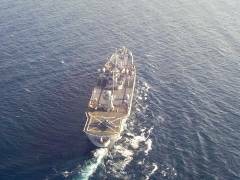
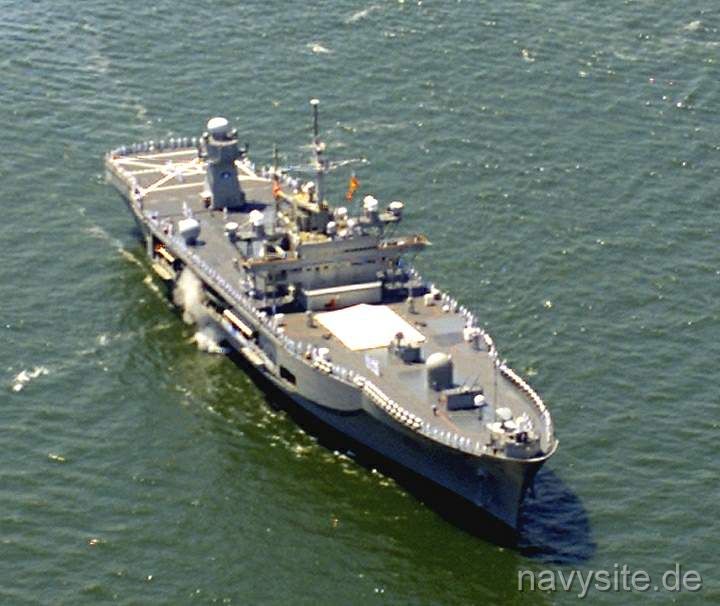
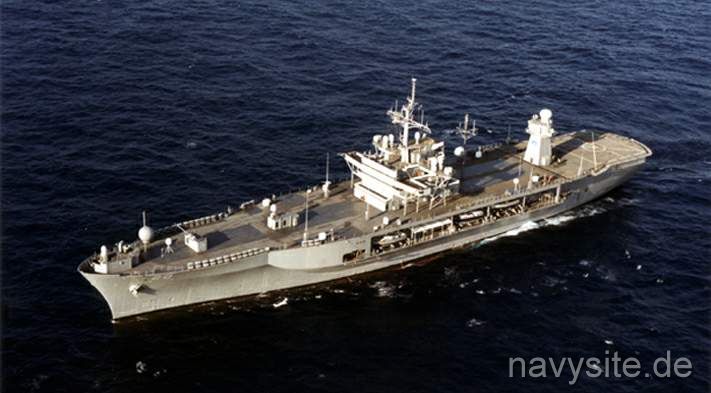
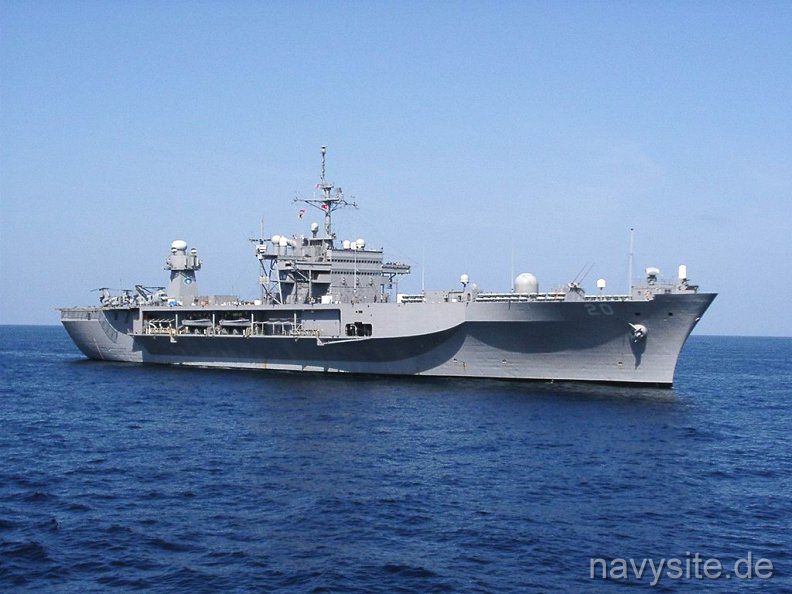
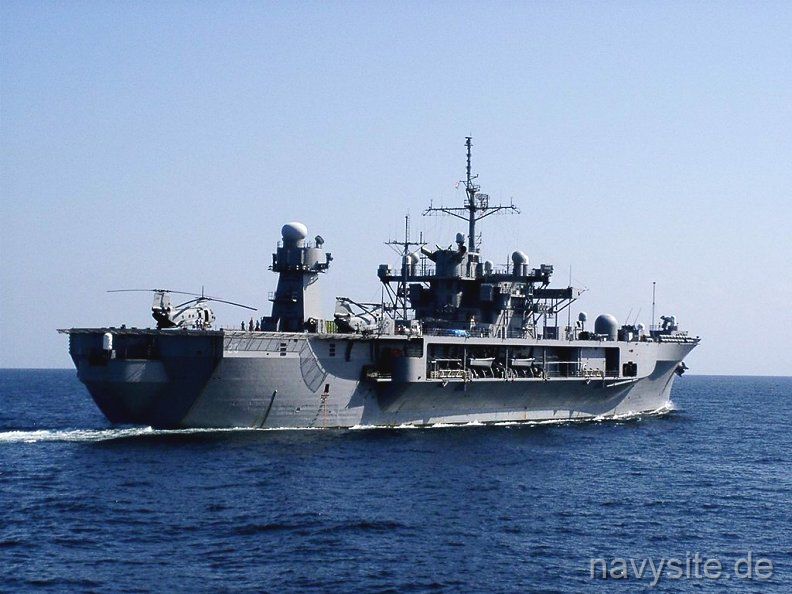
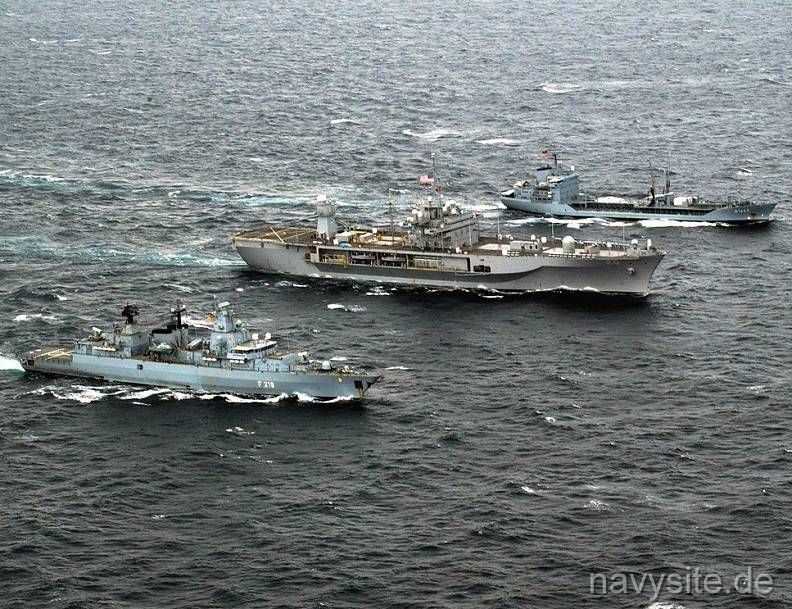
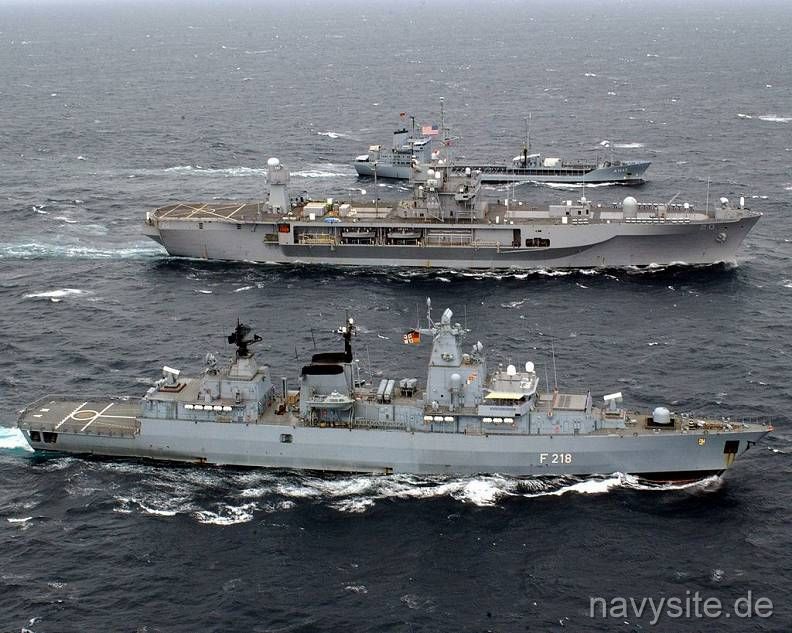
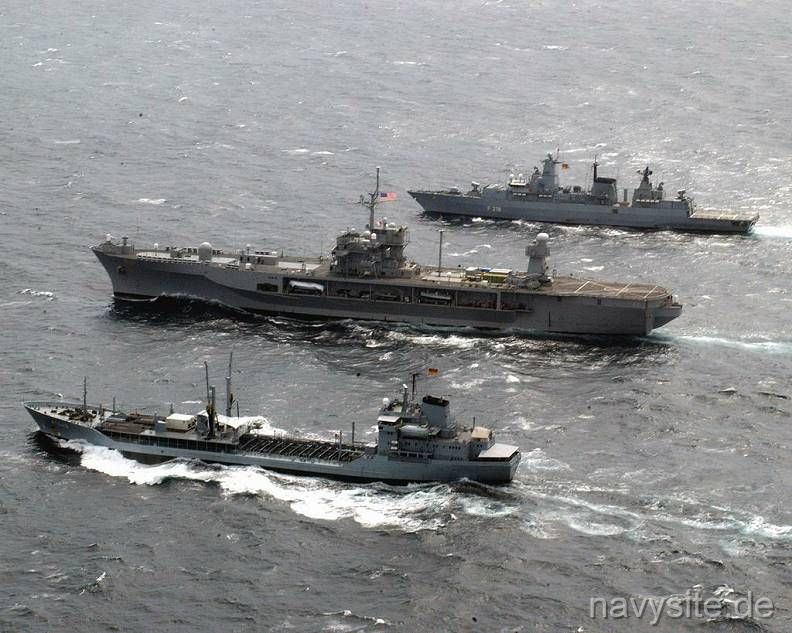
The photos below were contributed by Stefan Karpinski and were taken by him and the helo detachment of the German frigate MECKLENBURG-VORPOMMERN (F 218). They show the MOUNT WHITNEY underway in support of Operation Enduring Freedom and participating in the "Somali Maritime Exercise" with the MECKLENBURG-VORPOMMERN and the German oiler RHÖN (A 1443). All photos were taken in 2003.
 |  |  |  |  |
 |
The photos below were taken by me and show the WOUNT WHITNEY at Kiel, Germany, after her participation in BALTOPS 2009. The photos were taken June 19 - 21, 2009.
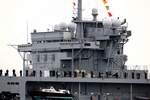 | 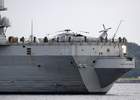 | 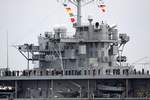 | Click here for more Photos. | |
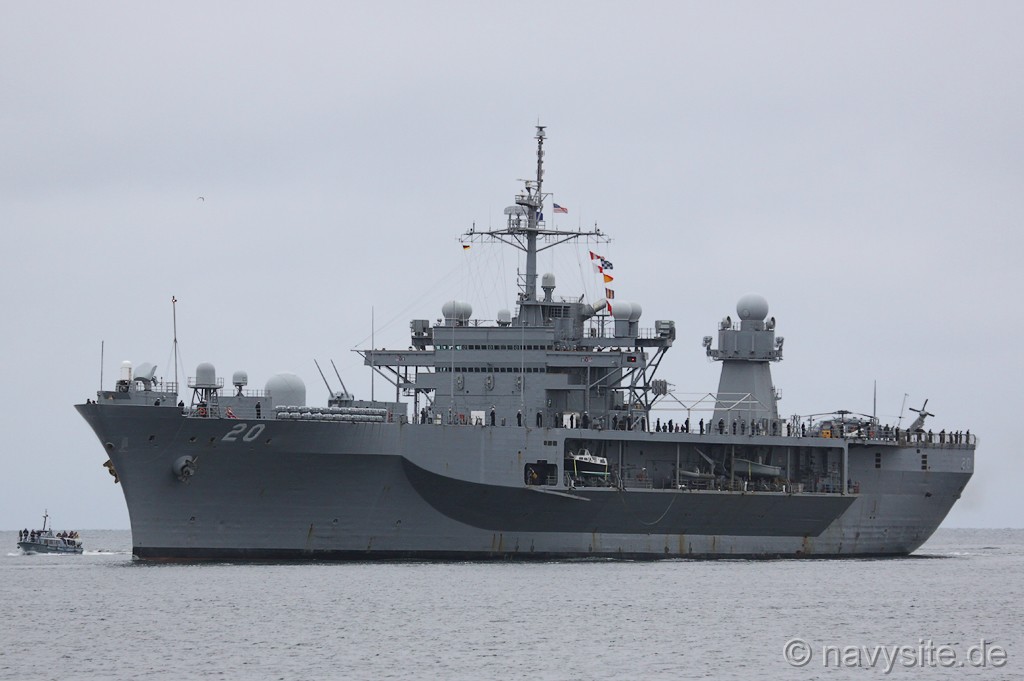
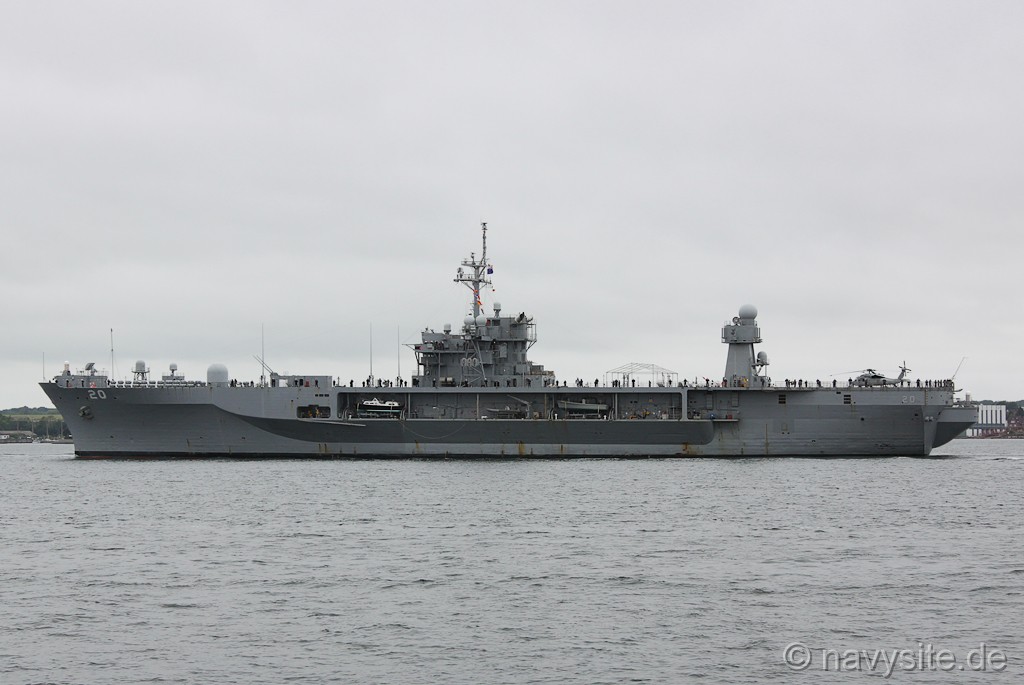
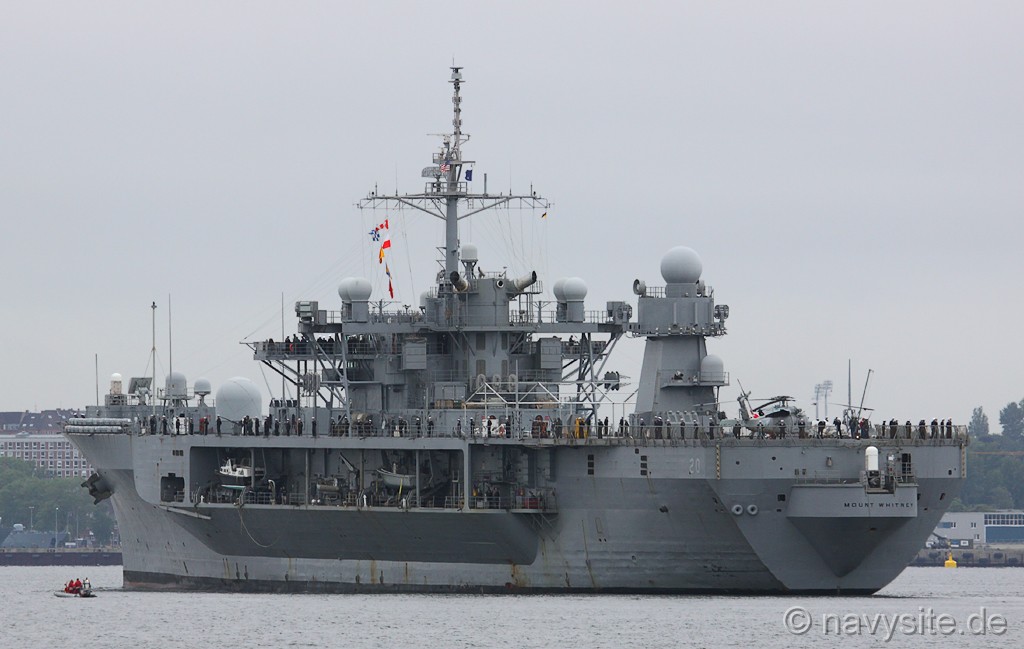
The photos below were taken by me and show the MOUNT WHITNEY arriving at Kiel, Germany, on June 18, 2010, after serving as flagship for exercise BALTOPS 2010 in the Baltic Sea.
 |  |  |  |
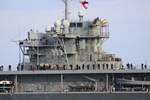
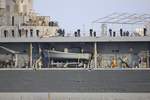
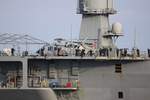
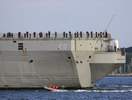
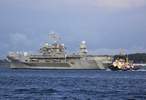
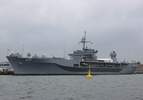
The photos below were taken by me and show the USS MOUNT WHITNEY at Kiel, Germany, after her participation in BALTOPS 2011. The photos show the ship arriving at Kiel on June 17, 2011; at the Naval Base on June 19; and finally departing Kiel on June 20, 2011.
 |  |  |  |  |
 |  |  | Click here for more Photos. | |
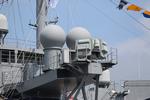
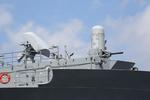
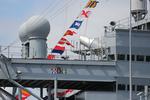
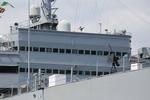
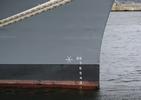
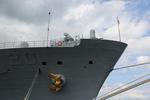
The photos below were taken by me on June 23, 2013, during a public tour aboard MOUNT WHITNEY while she was visiting Kiel, Germany, after her participation in BALTOPS 2013. USS MOUNT WHITNEY served as flagship of the exercise and visited Kiel from June 21-25, 2013.
 |  |  |  |  |
 |  |  | Click here for more Photos. | |
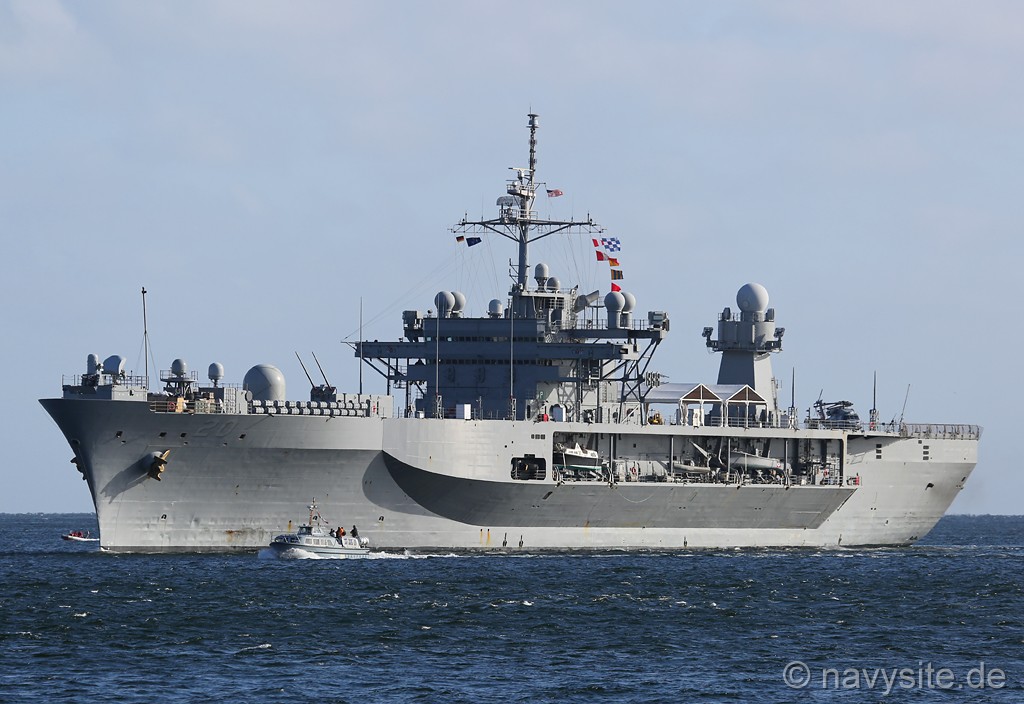
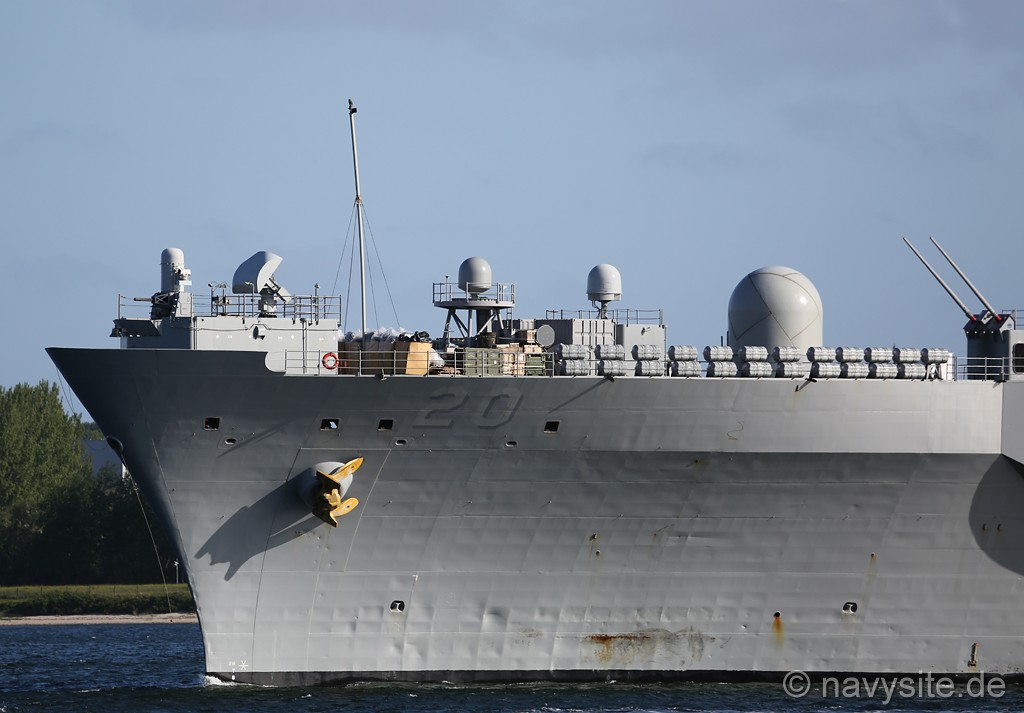
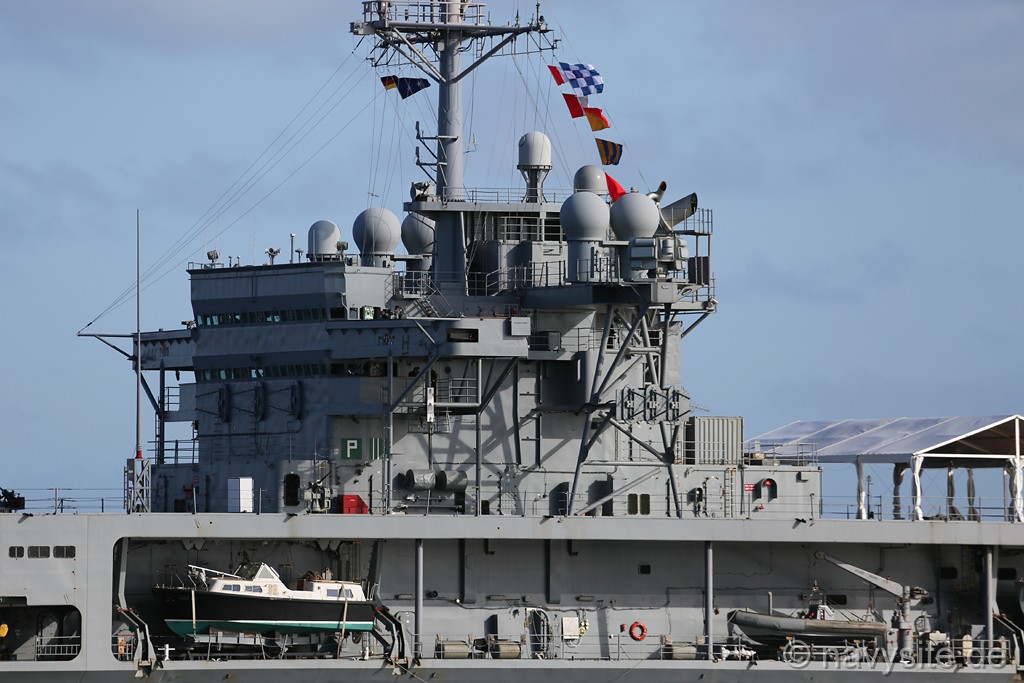
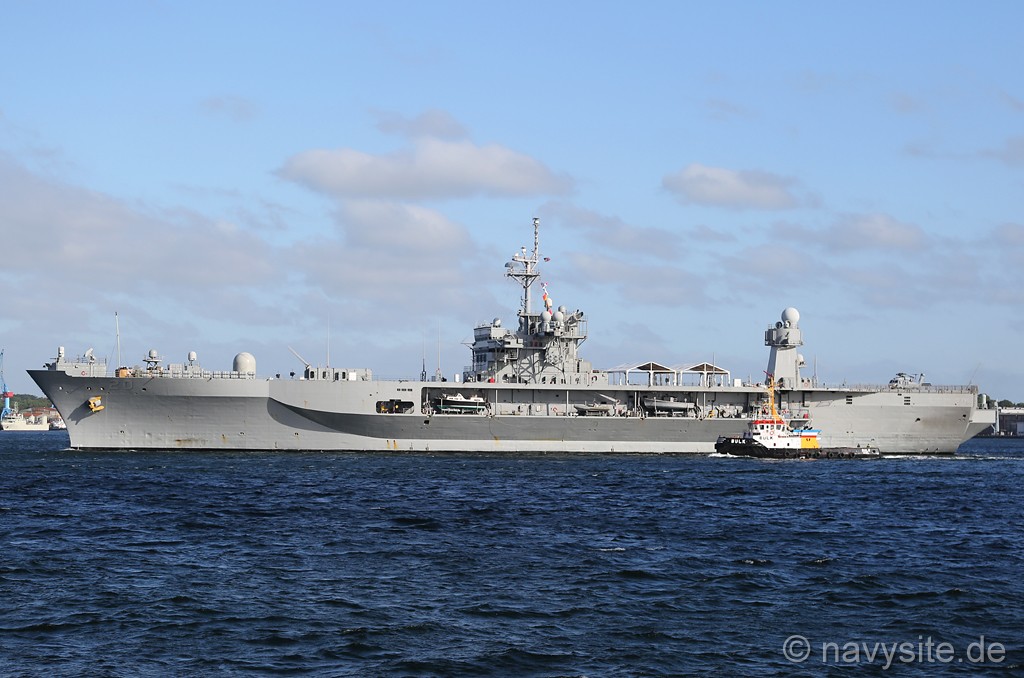
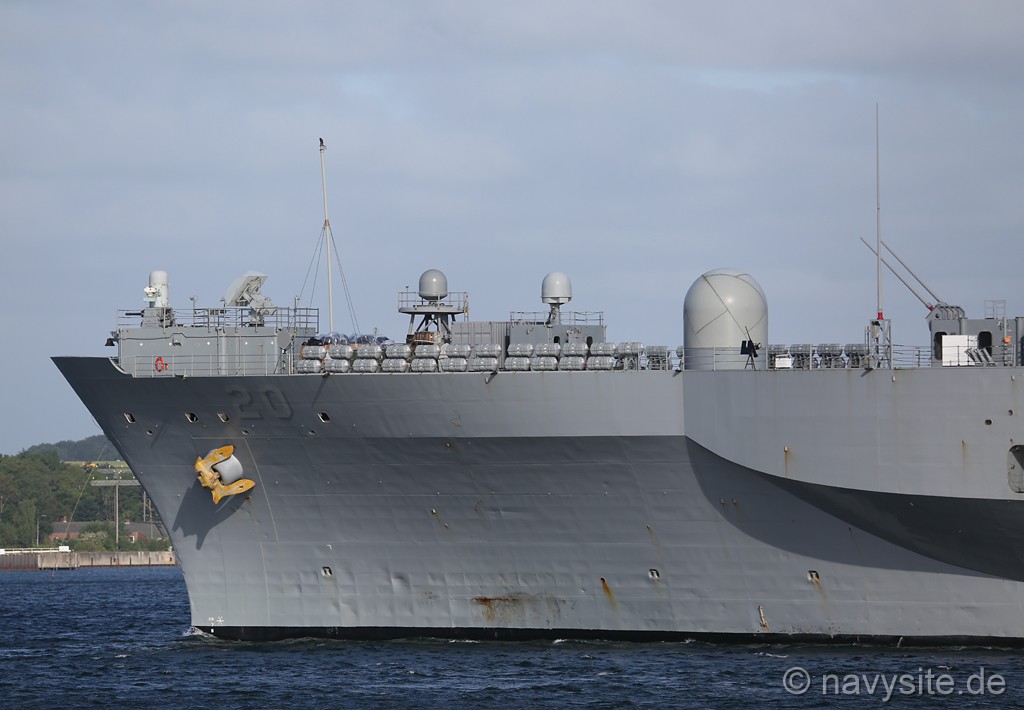
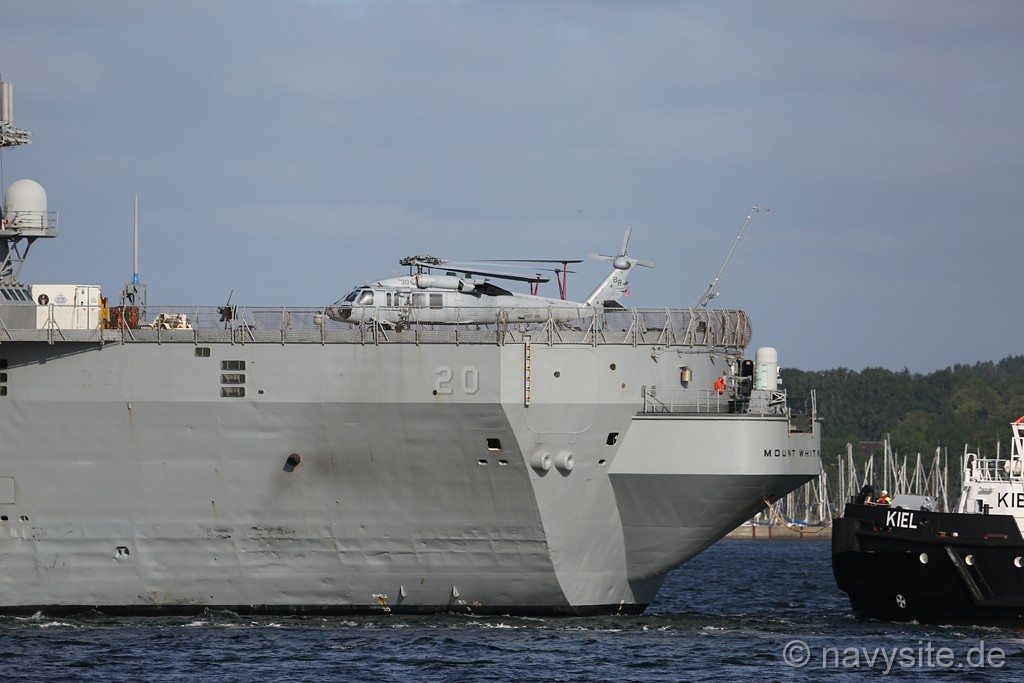
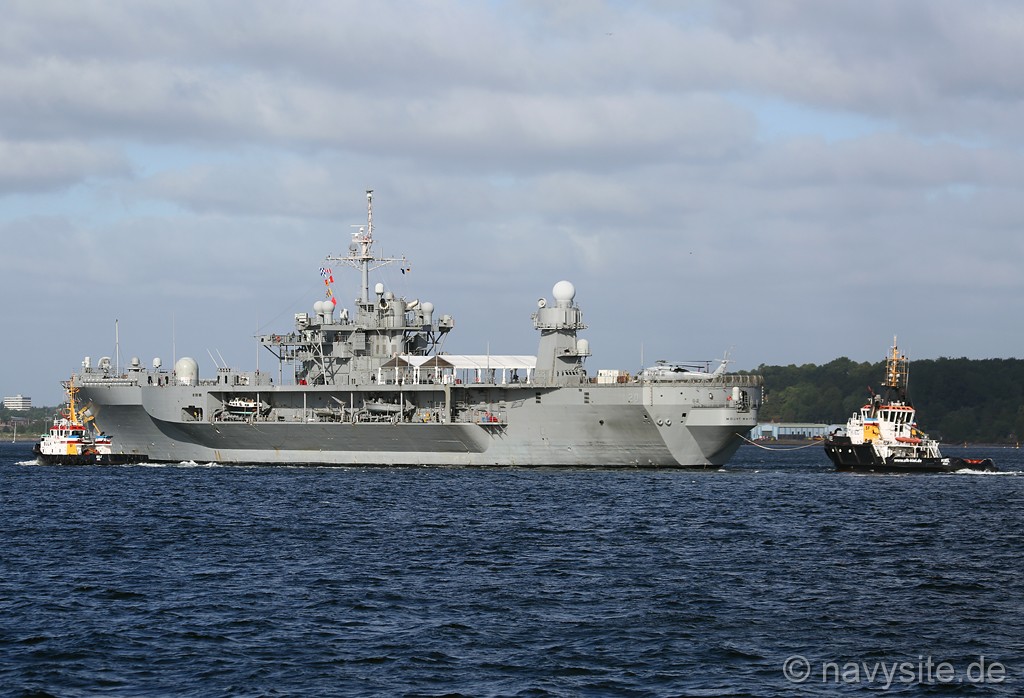
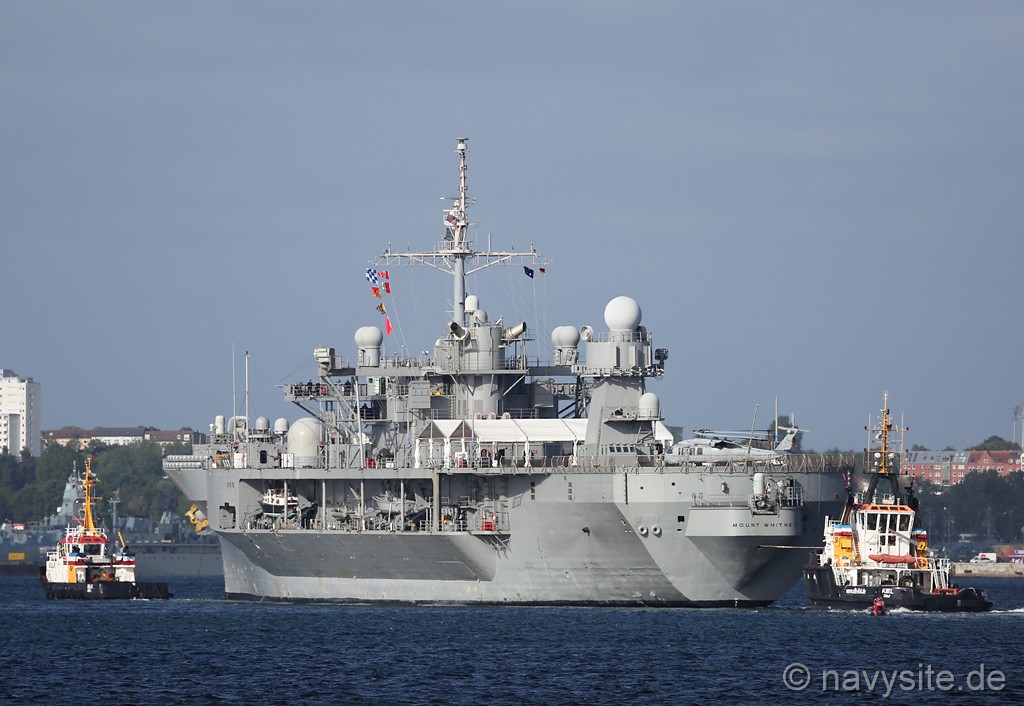
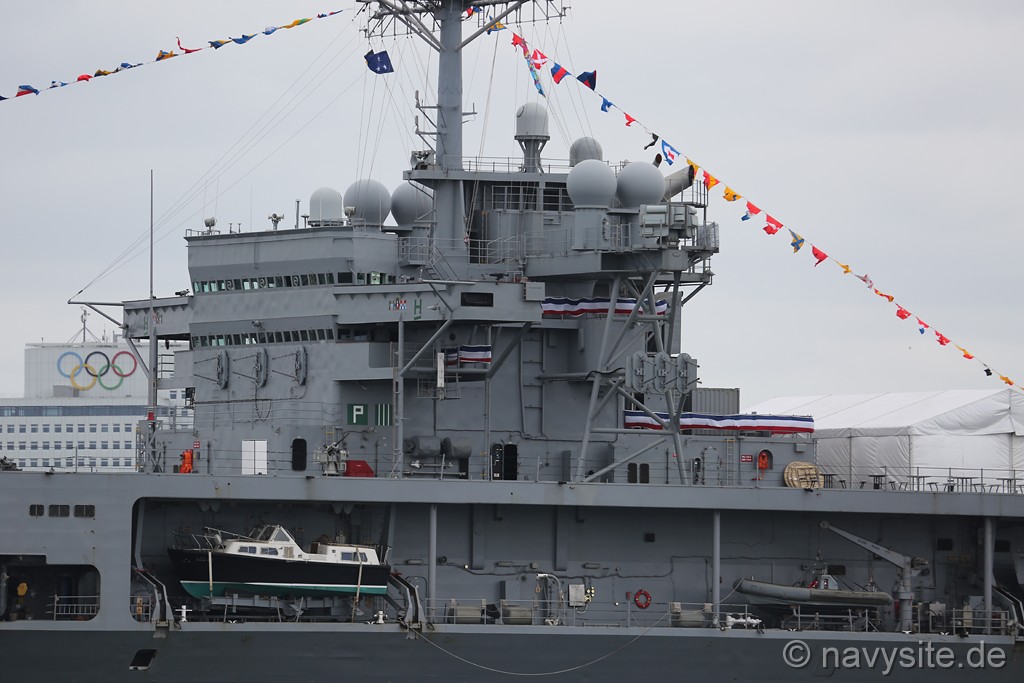
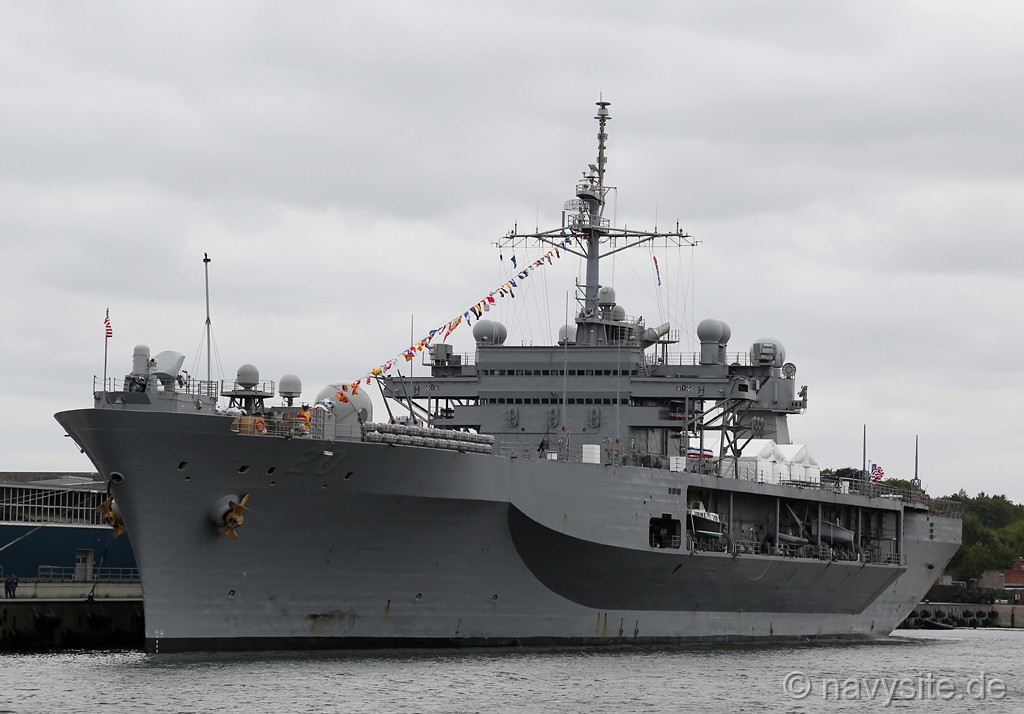
The photos below were taken by me and show the MOUNT WHITNEY arriving at Kiel, Germany, on June 20, 2014, after serving as flagship for exercise BALTOPS 2014 in the Baltic Sea.
 |  |  |  |  |
 |  |  |  |  |
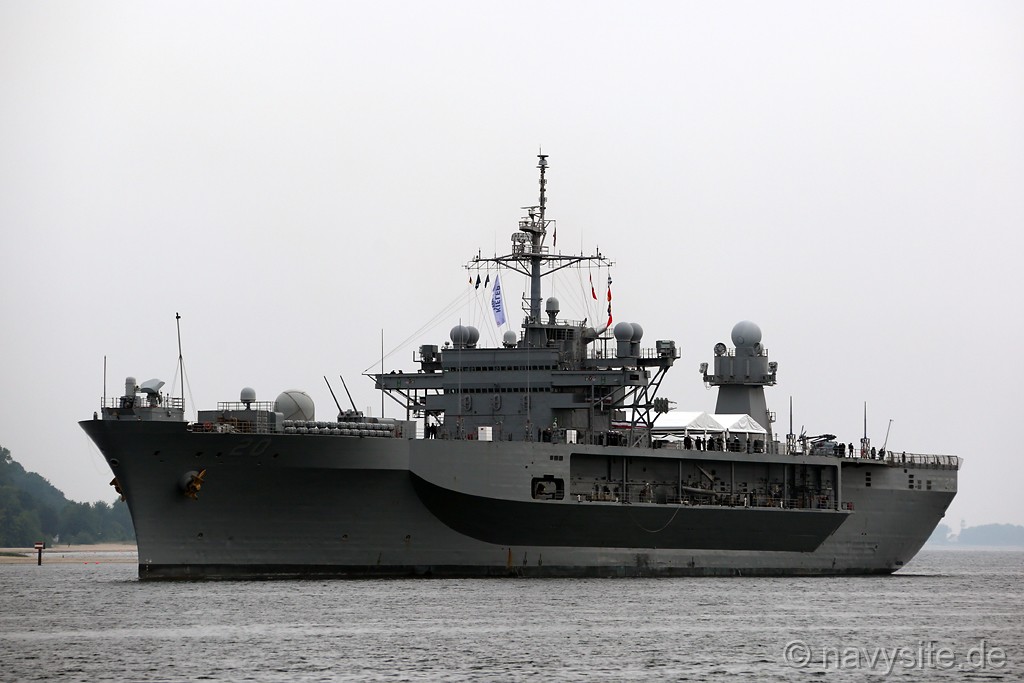
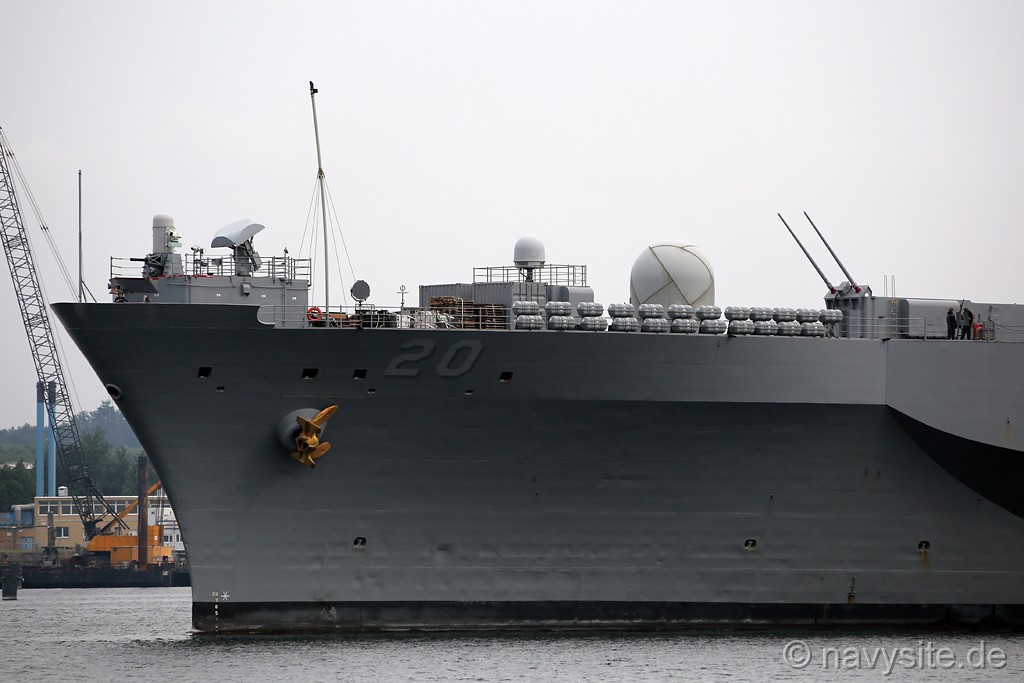
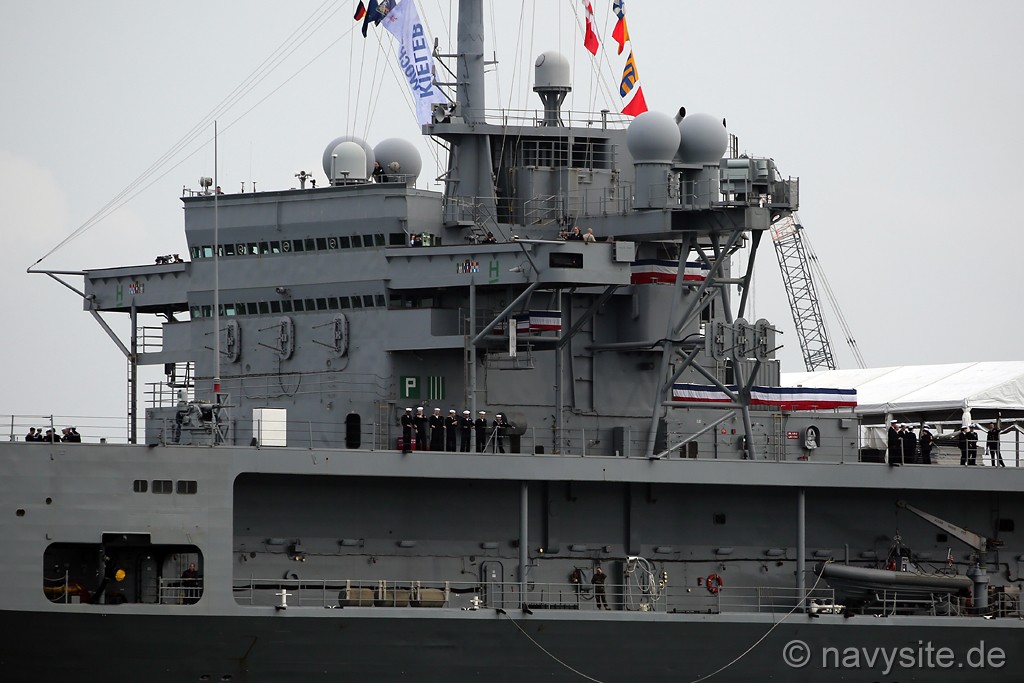
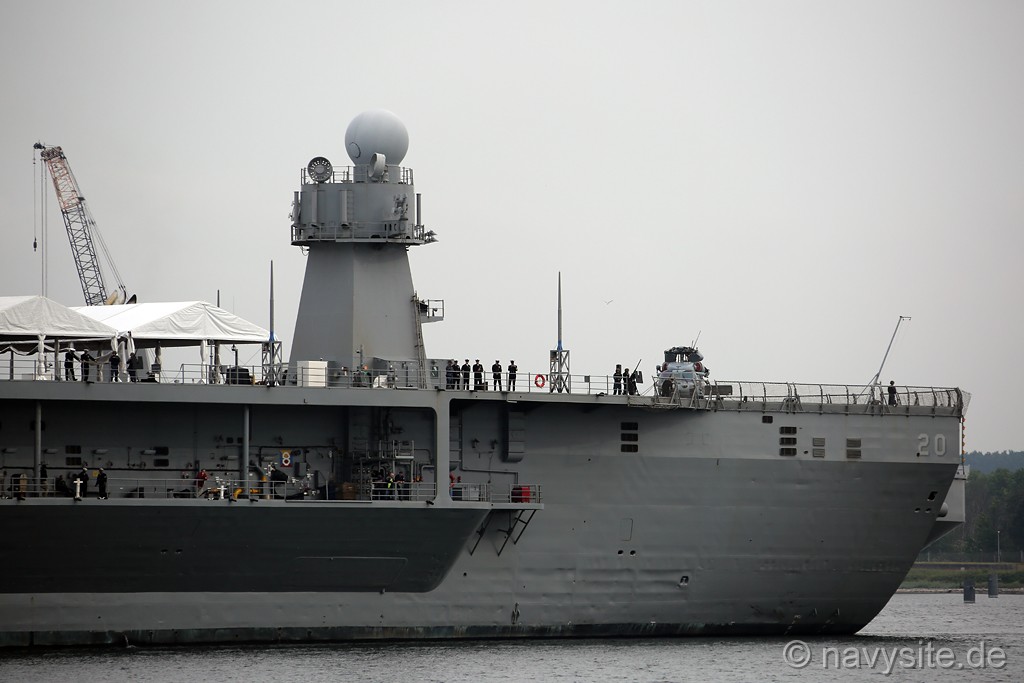
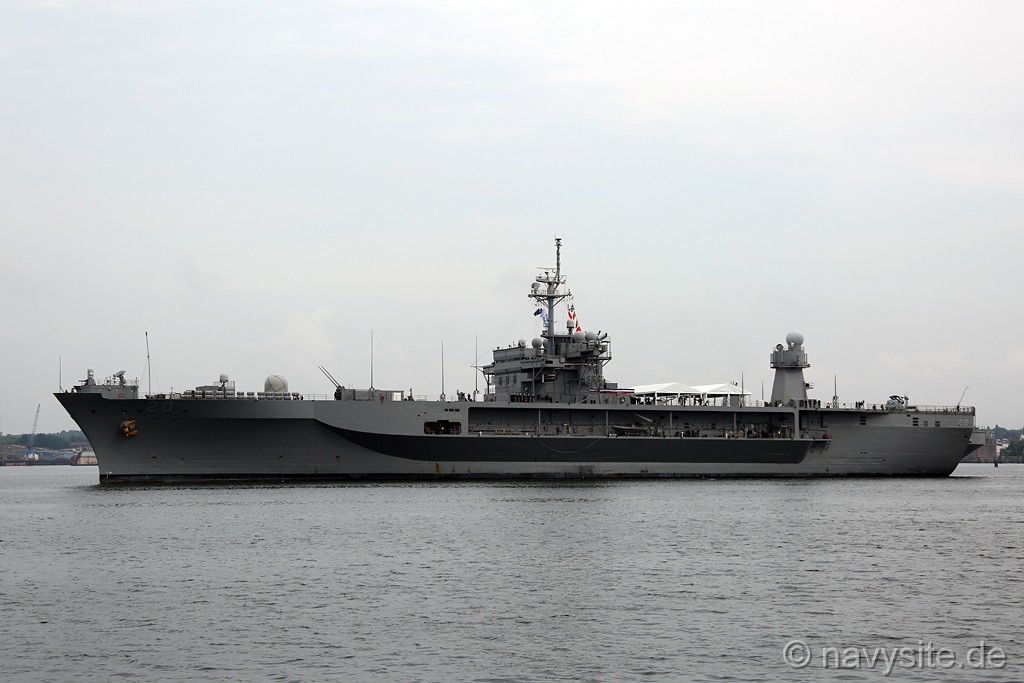
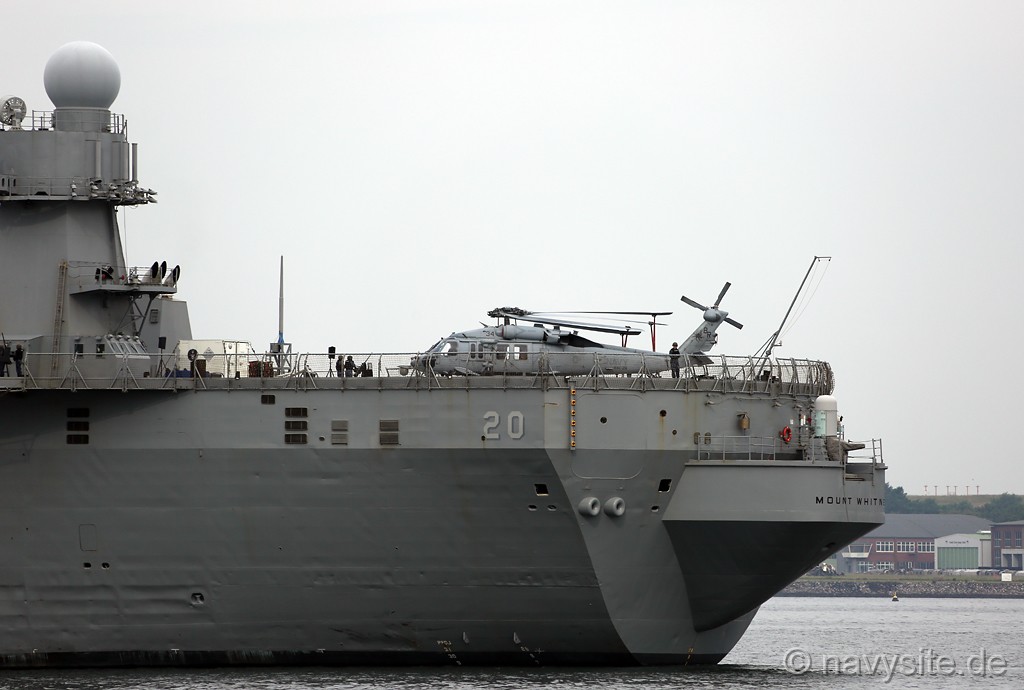
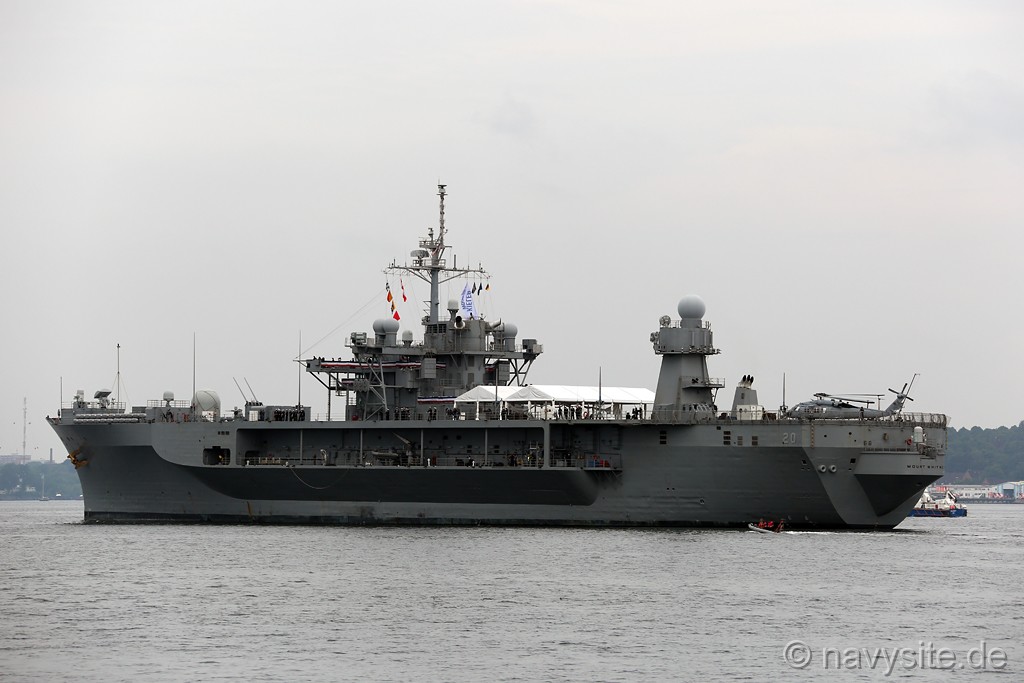
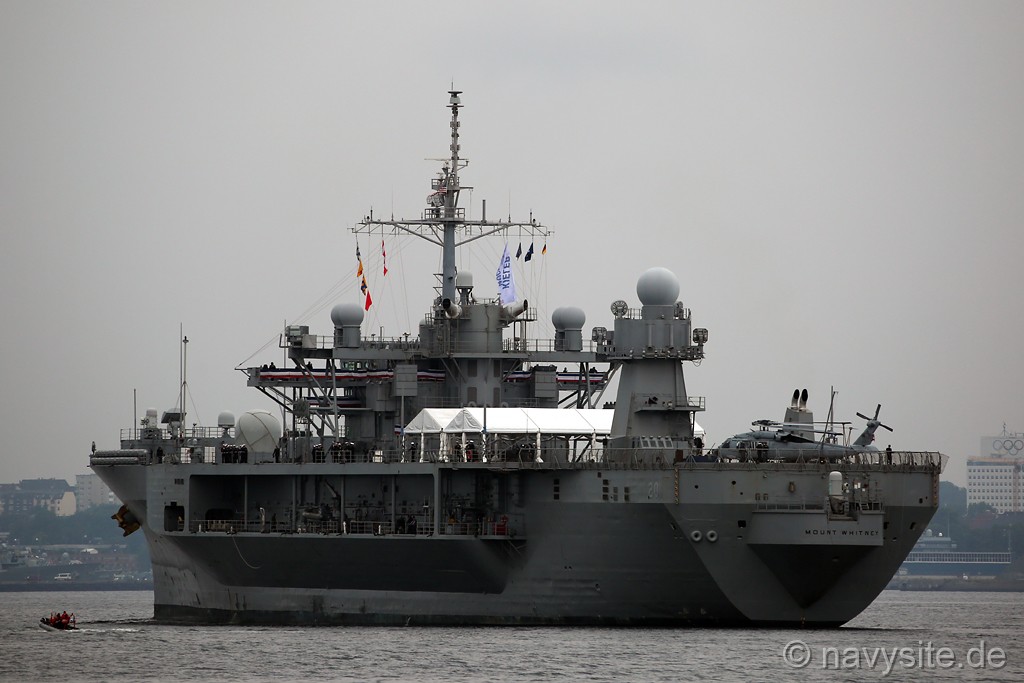
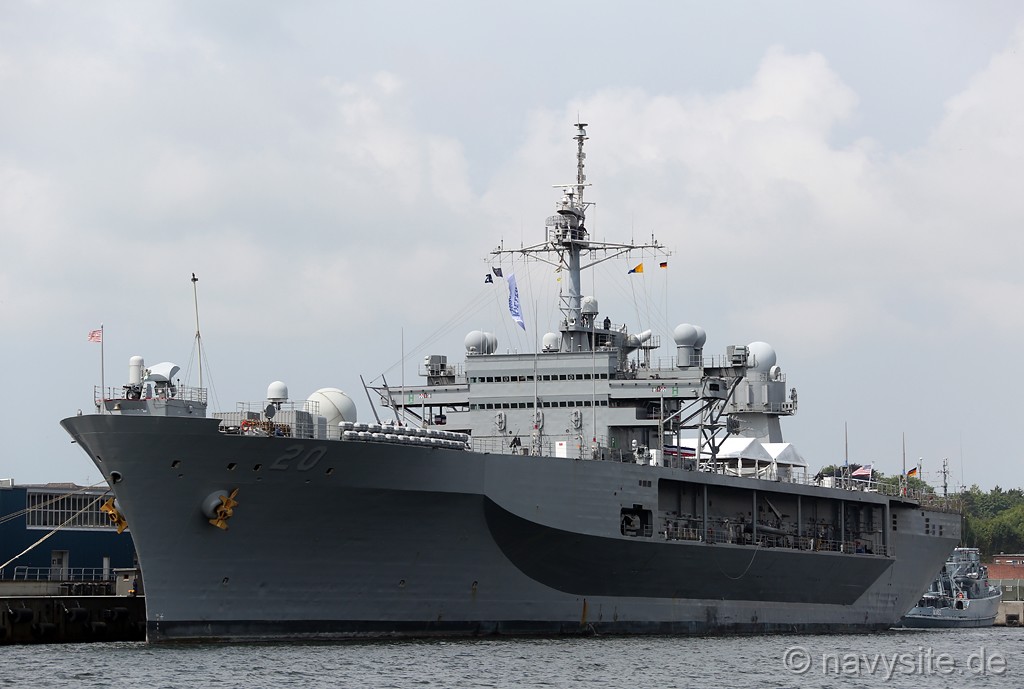
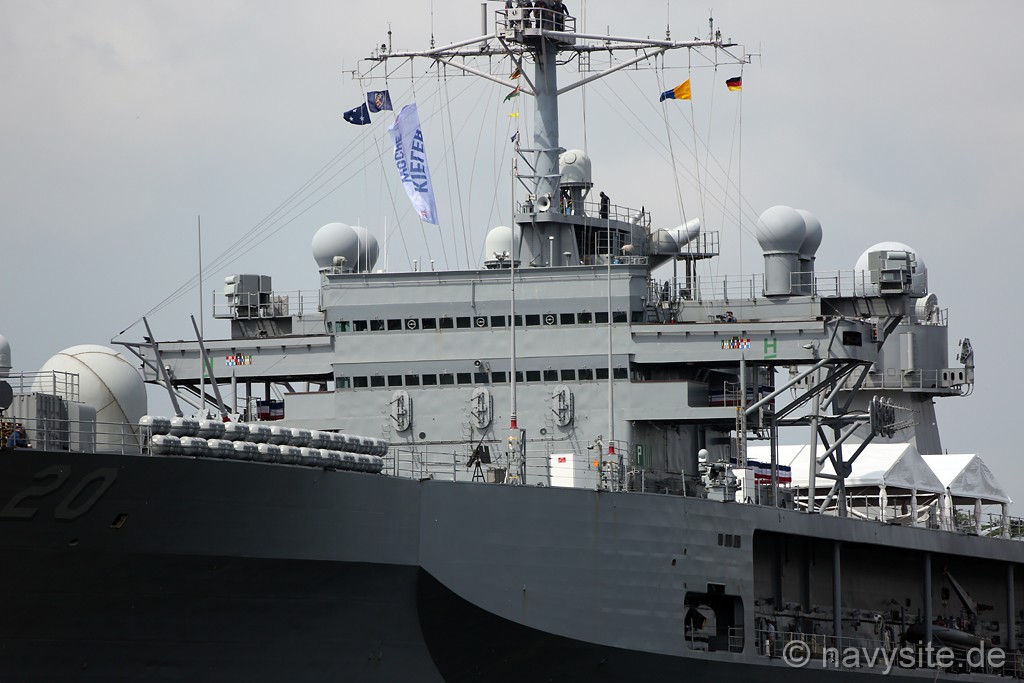
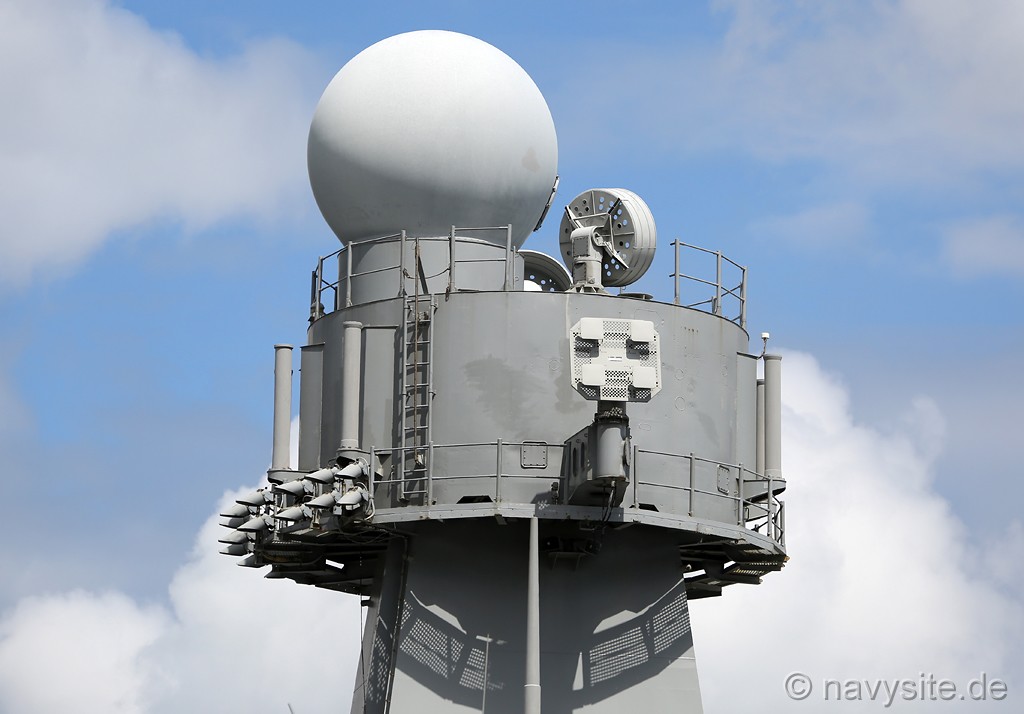
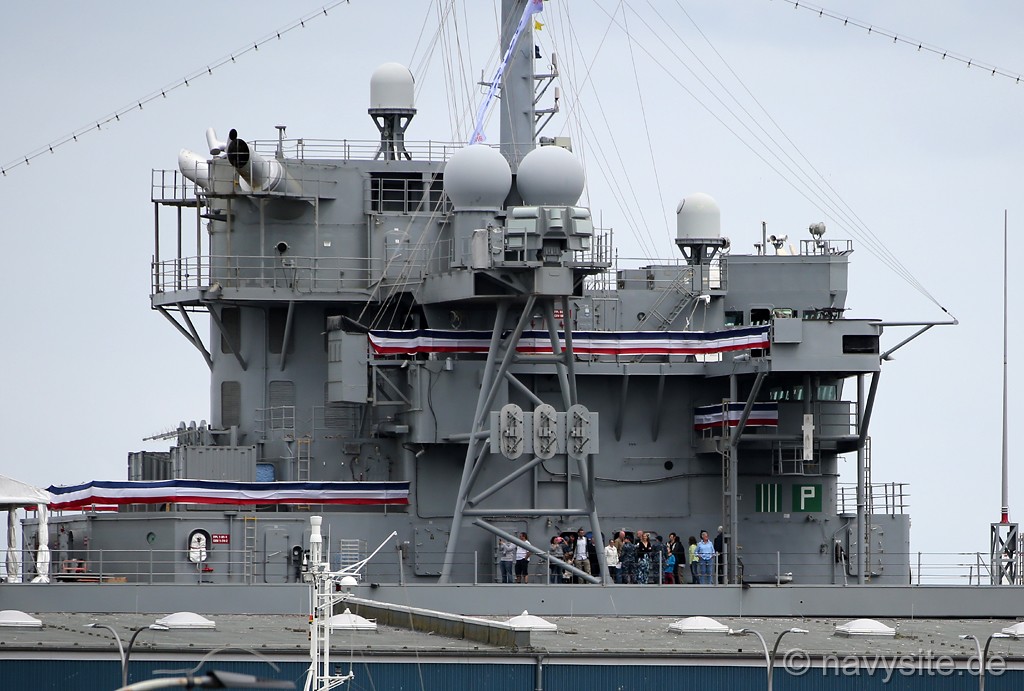
The photos below were taken by me and show the MOUNT WHITNEY arriving at Kiel, Germany, and later berthed at the Naval Base on June 17, 2016, after serving as flagship for exercise BALTOPS 2016 in the Baltic Sea. Note the new stack on the starboard side forward of the flight deck. This stack was installed during MOUNT WHITNEY's nine-month Extended Drydocking Selected Restricted Availability (E-DSRA) at Viktor Lenac Shipyard, Rijeka, Croatia, in 2015.
 |  |  |  |  |
 |  |  |  |  |
 |  |  |  |  |
 |
The video below was taken by me and shows the MOUNT WHITNEY arriving at Kiel, Germany, after participating in BALTOPS 2018 on June 15, 2018.
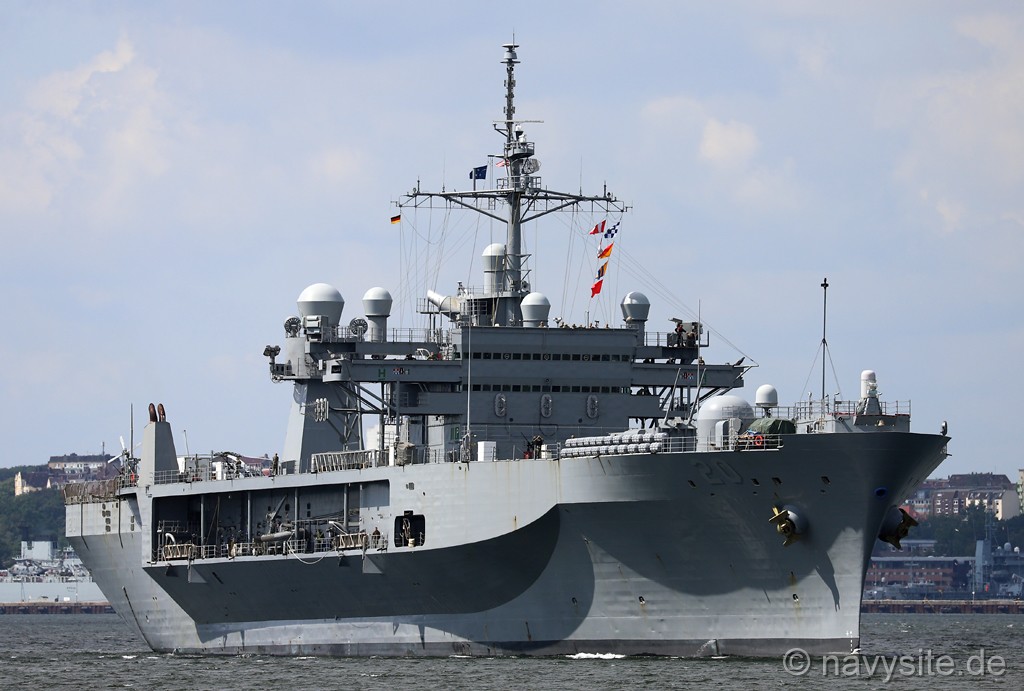
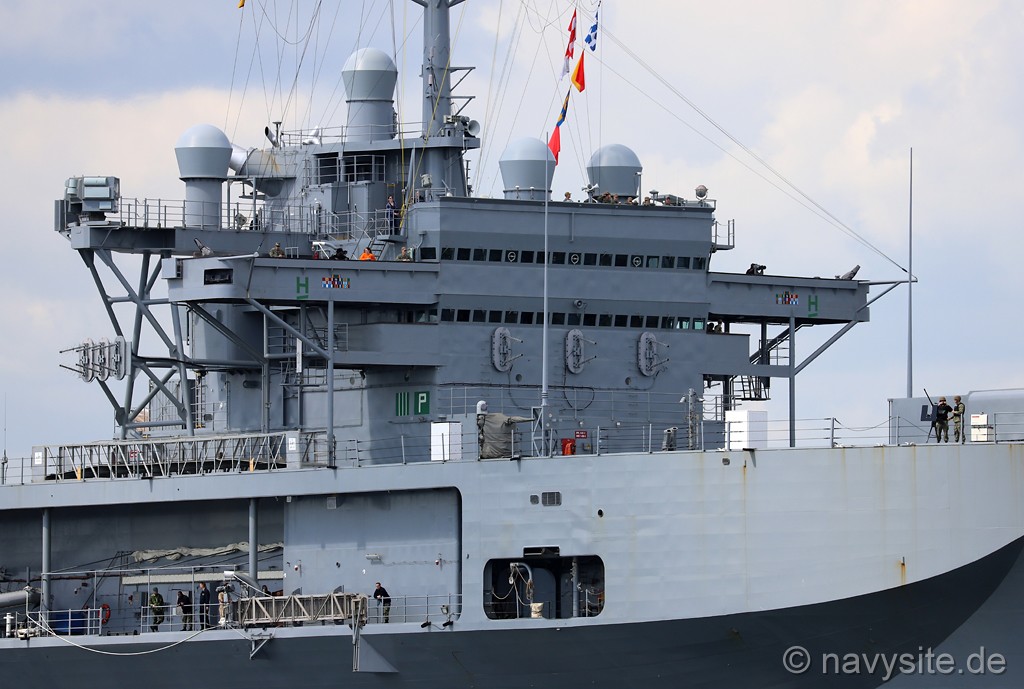
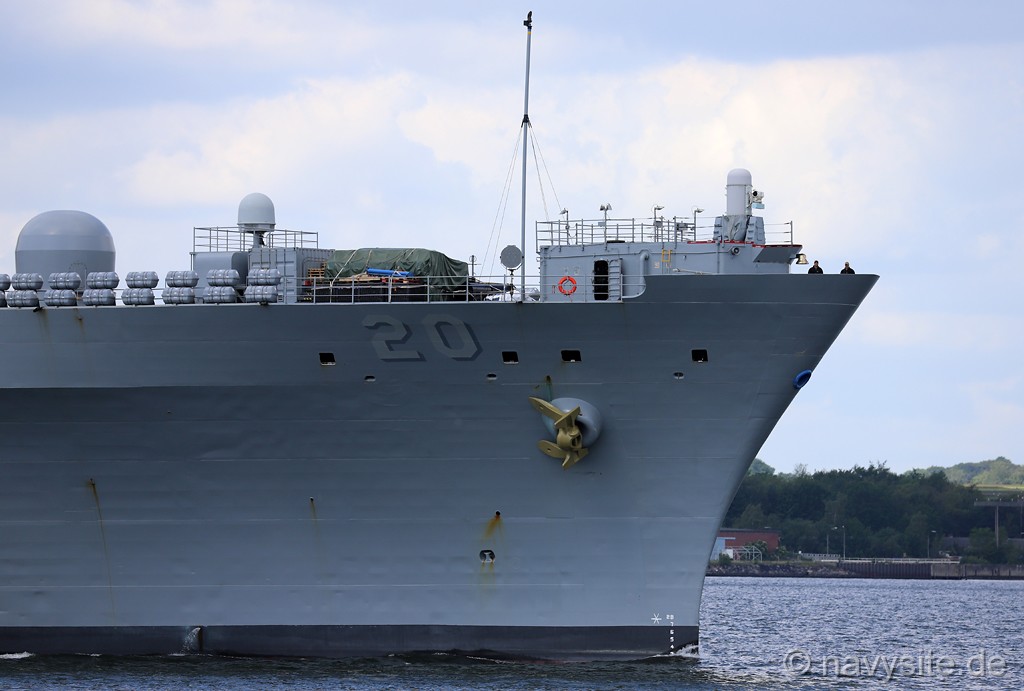
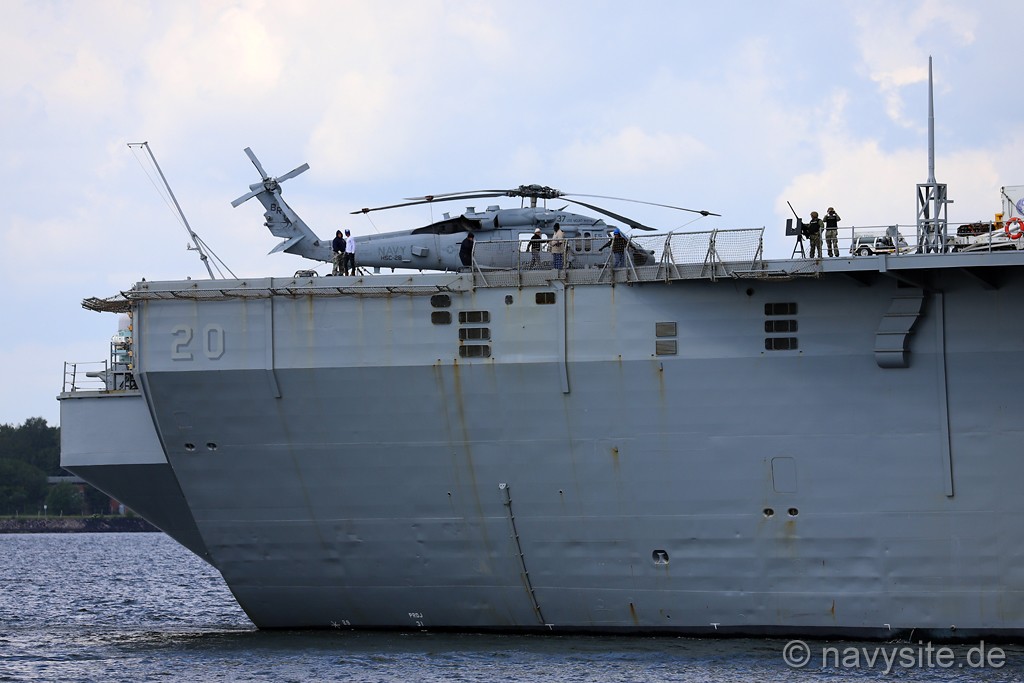
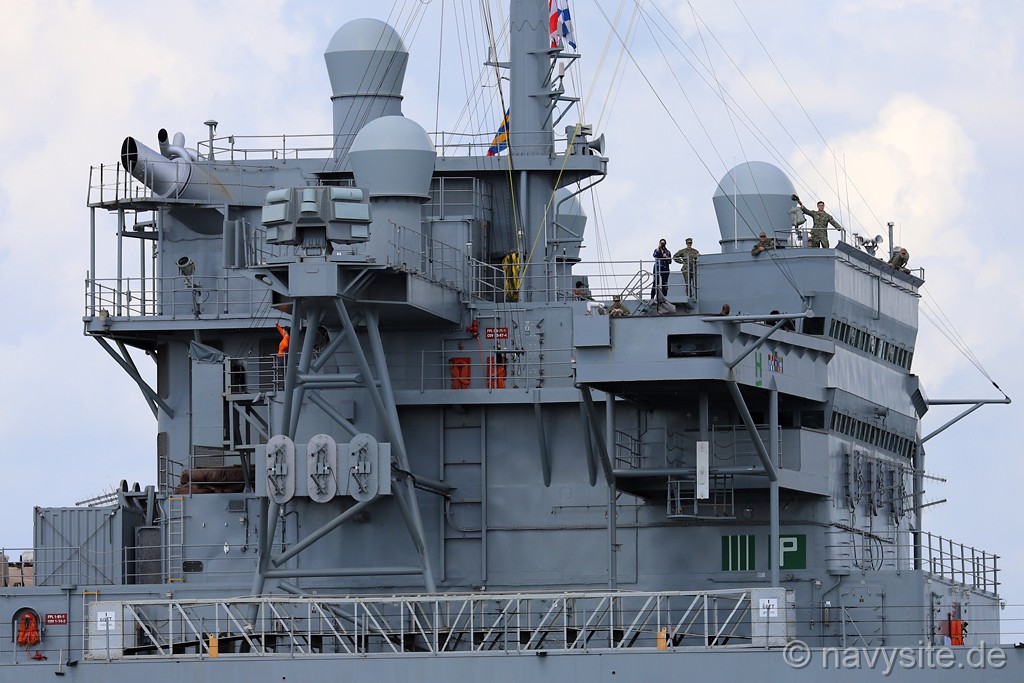
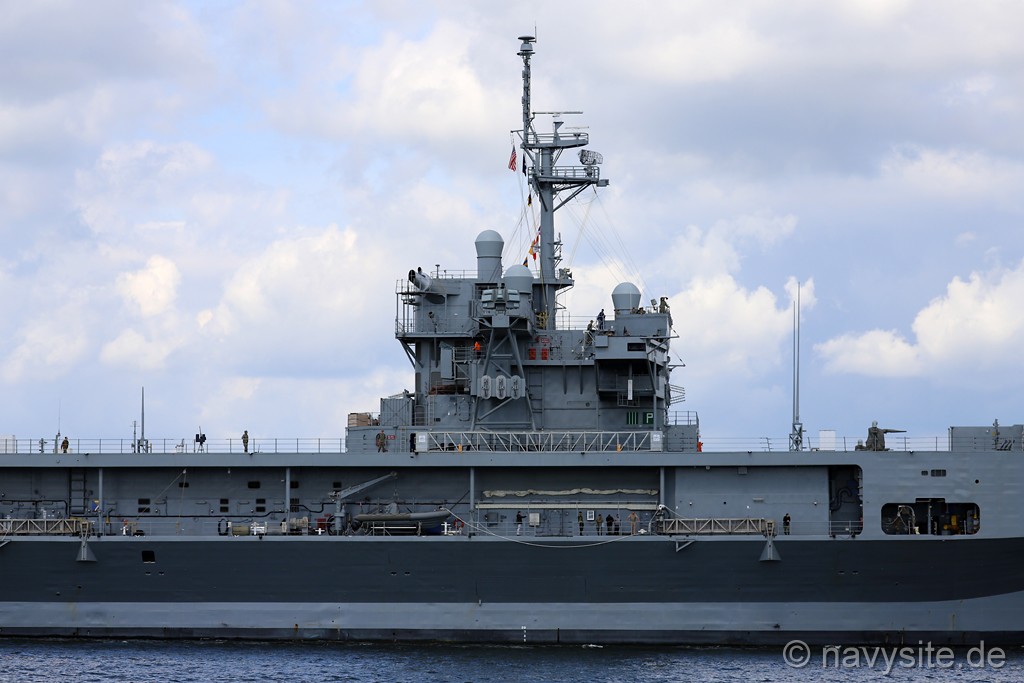
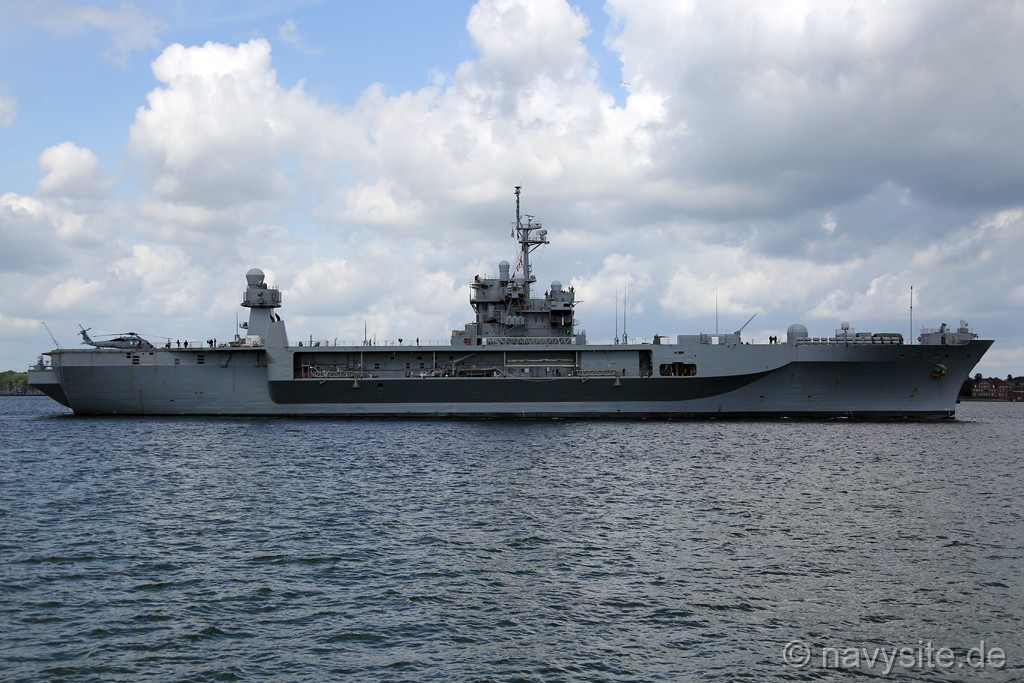
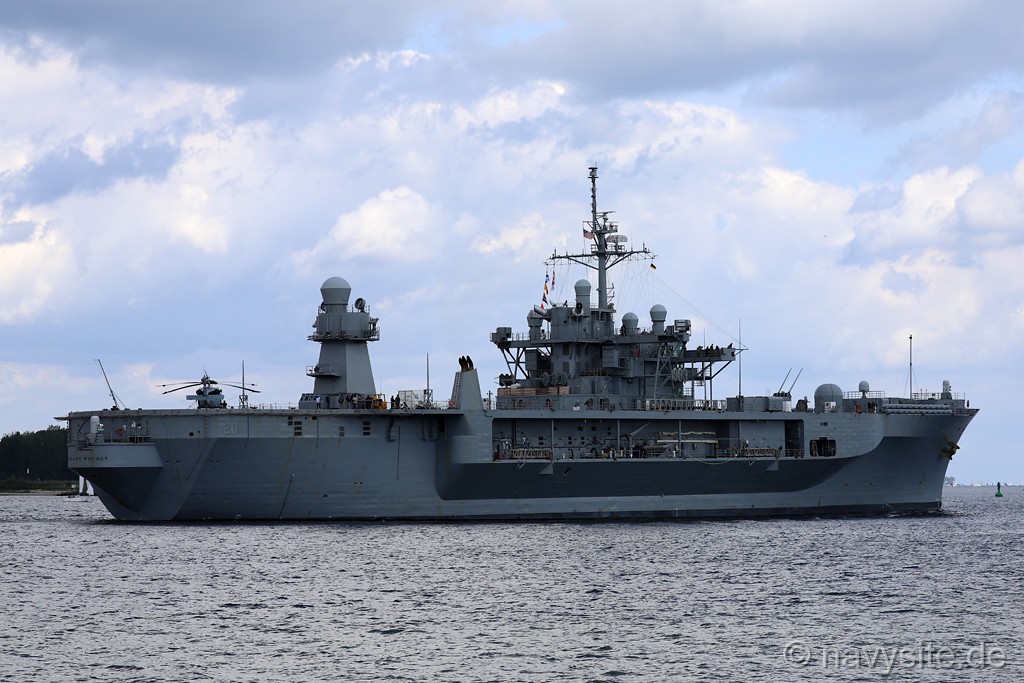
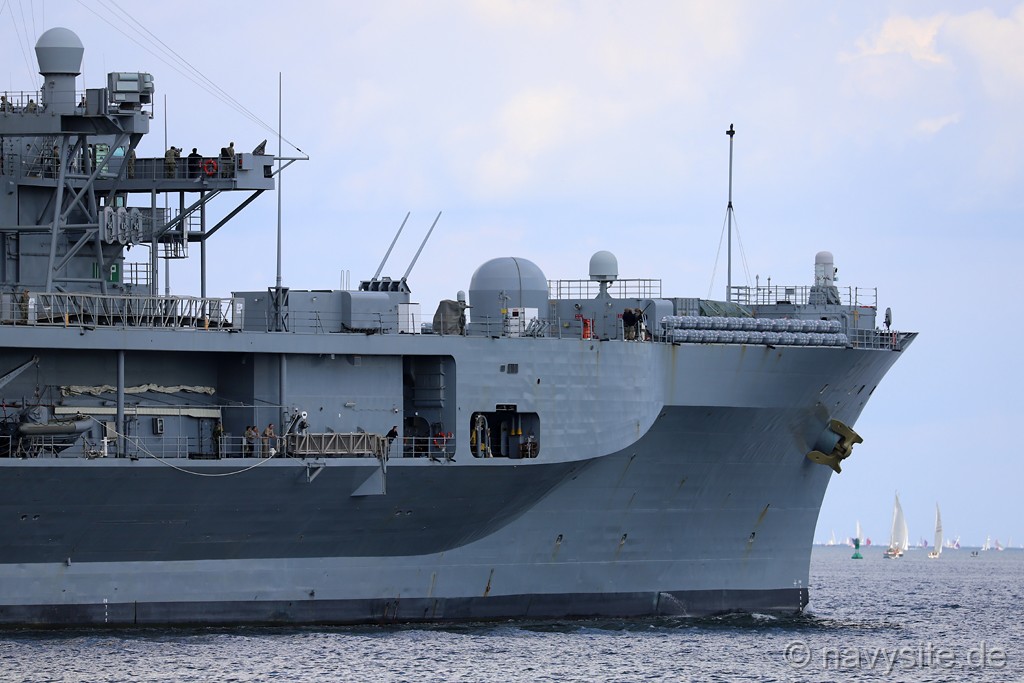
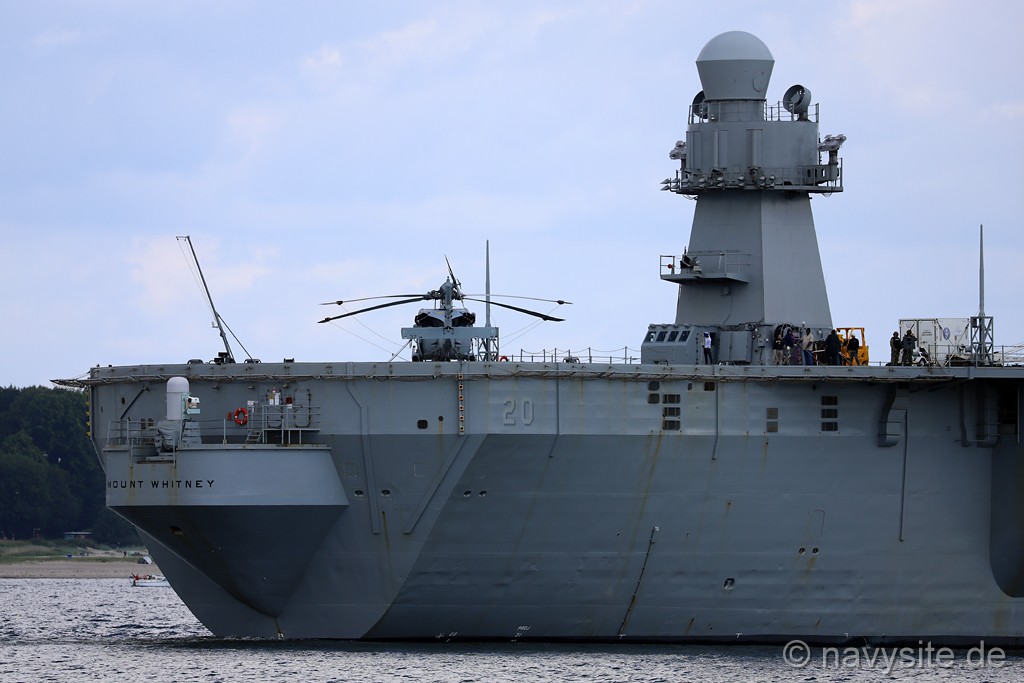
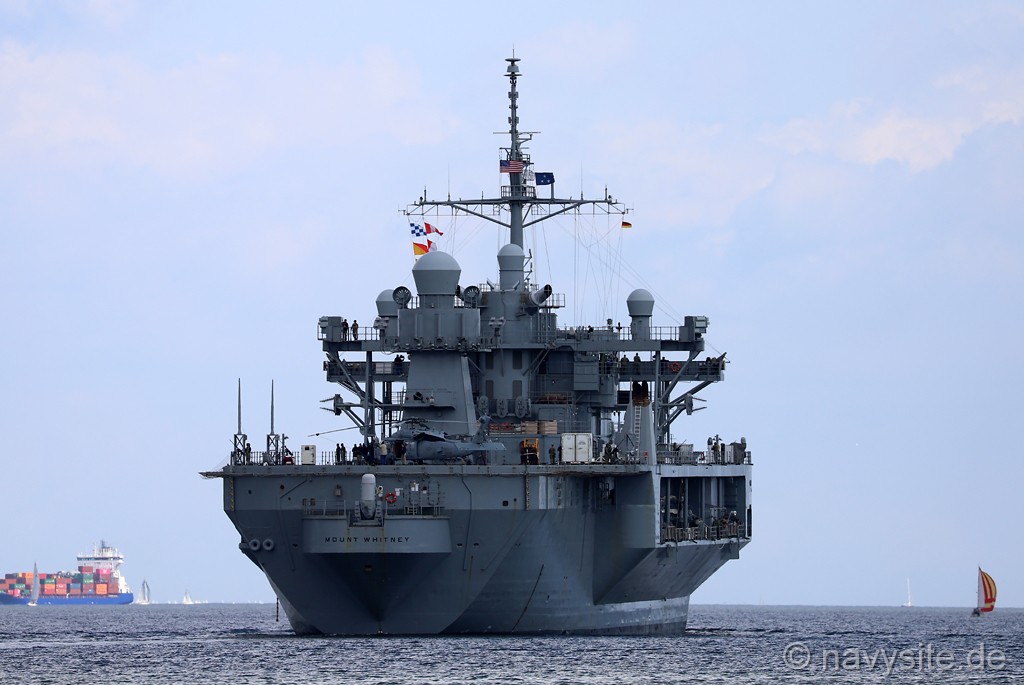
The photos below were taken by me and show the MOUNT WHITNEY departing Naval Base Kiel, Germany, to participate in BALTOPS 2019 on June 9, 2019. The MOUNT WHITNEY is serving as flagship for Vice Adm. Andrew Lewis, commander of the US 2nd Fleet, who leads the exercise on behalf of Naval Forces Europe.
 |  |  |  |  |
 |  |  |  |  |
 |
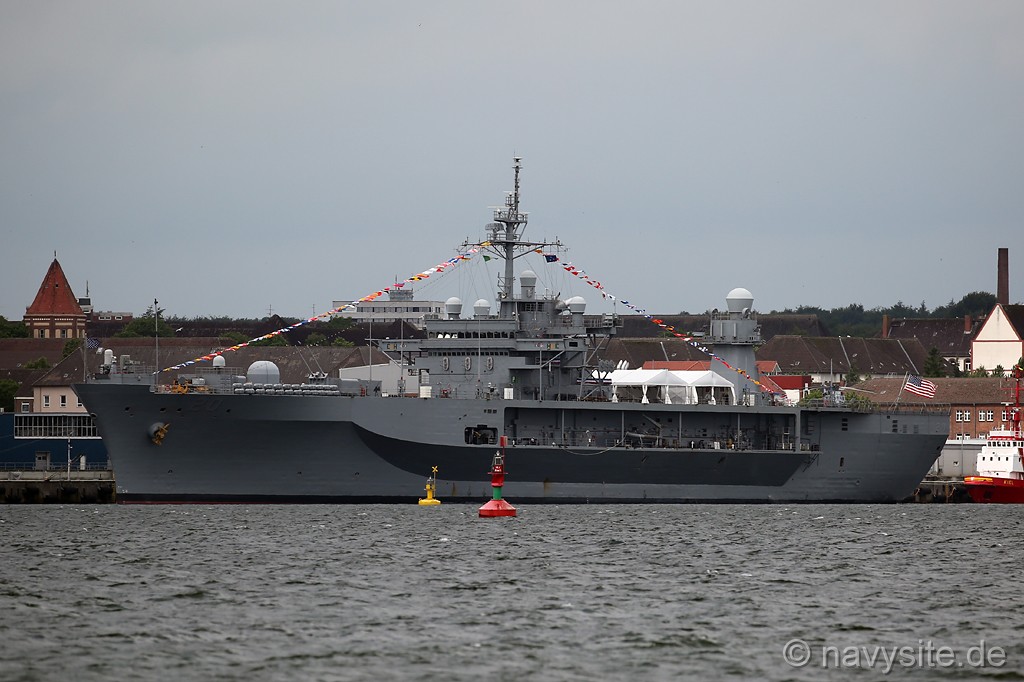
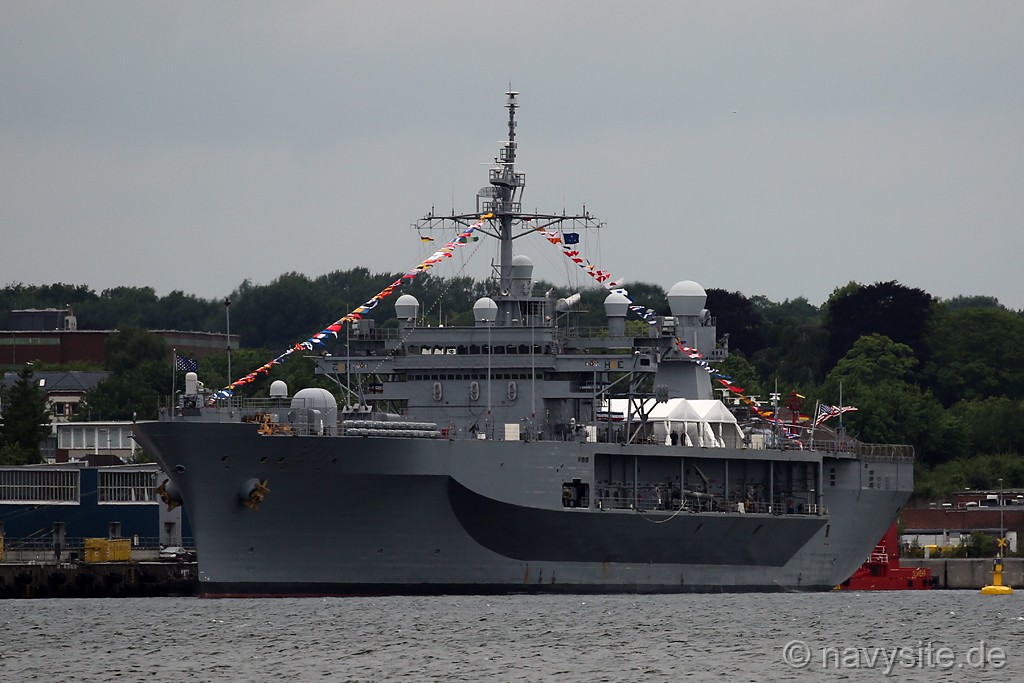
The photos below were taken by me and show the MOUNT WHITNEY at Naval Base Kiel, Germany, on June 20, 2021, after her participation in BALTOPS 50.
 |  |
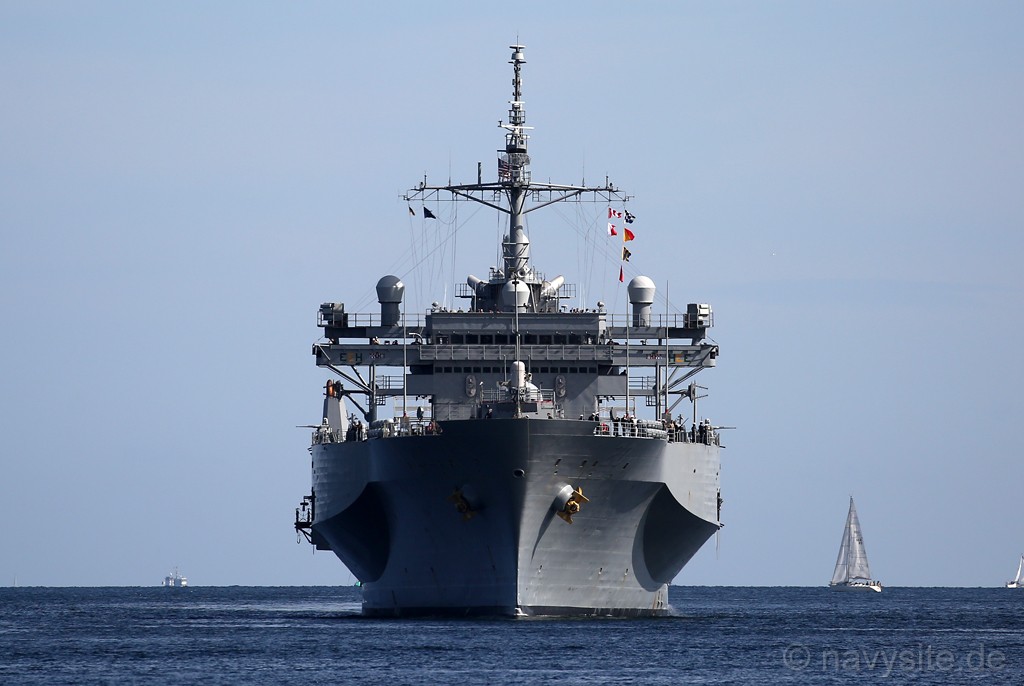
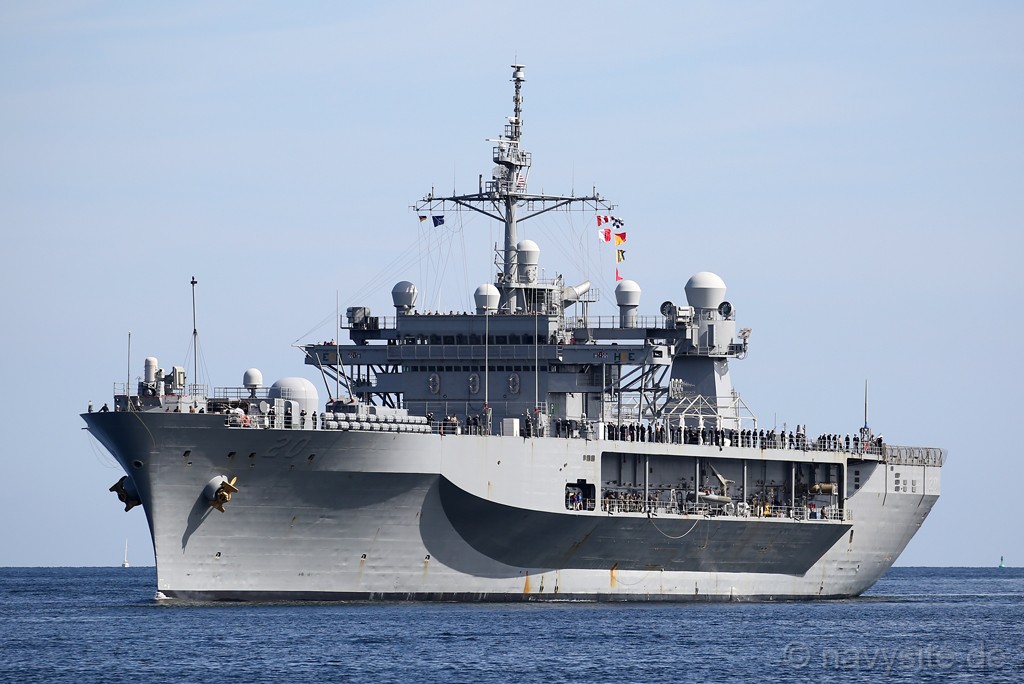
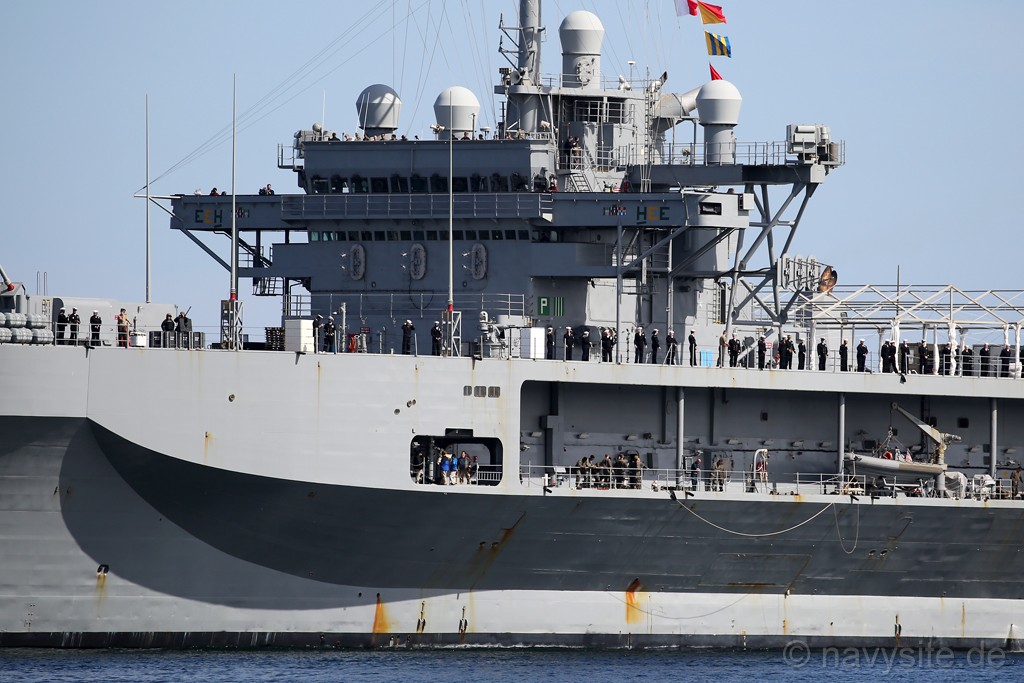
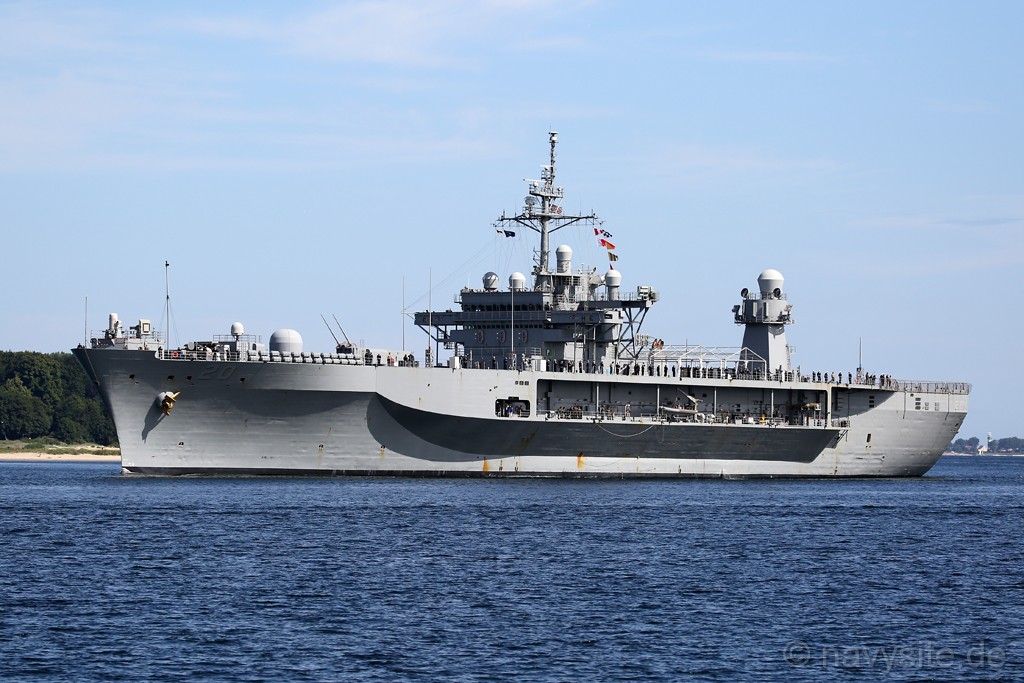
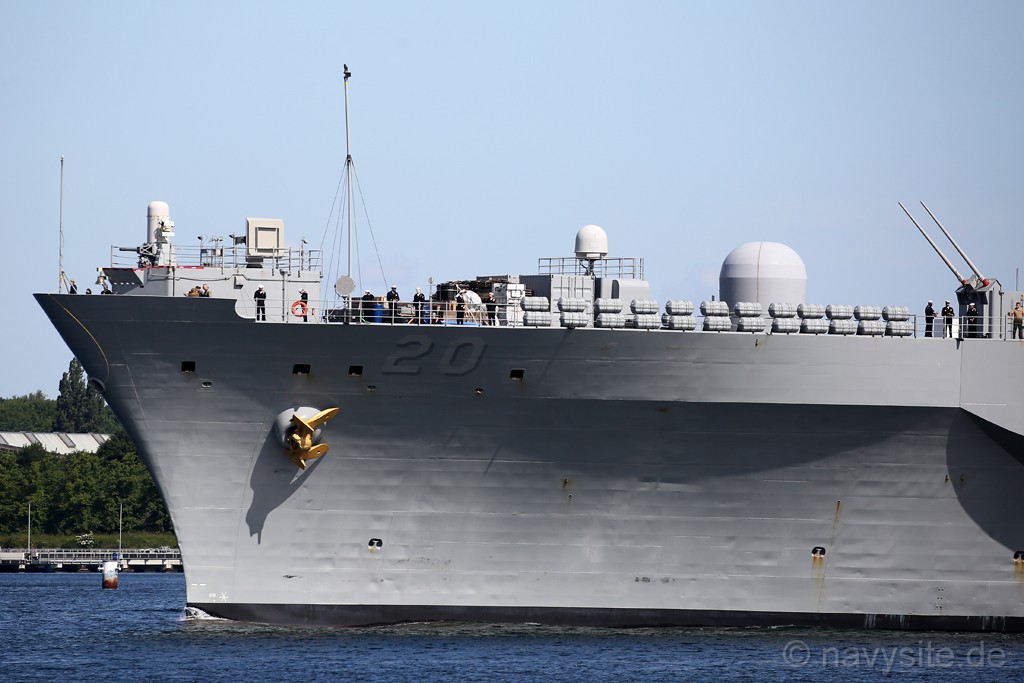
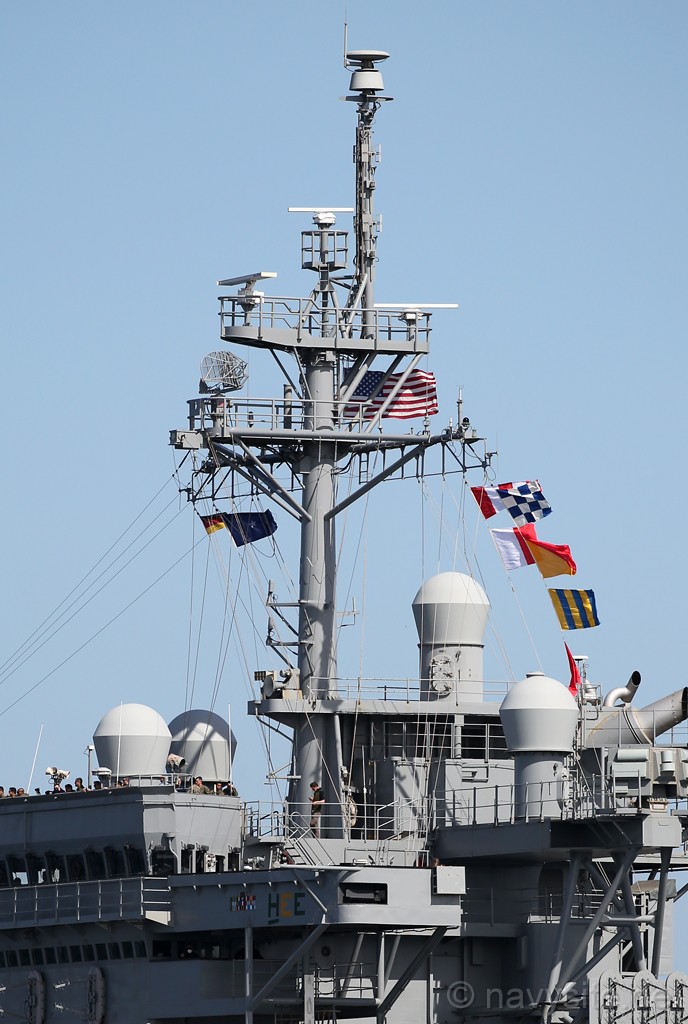
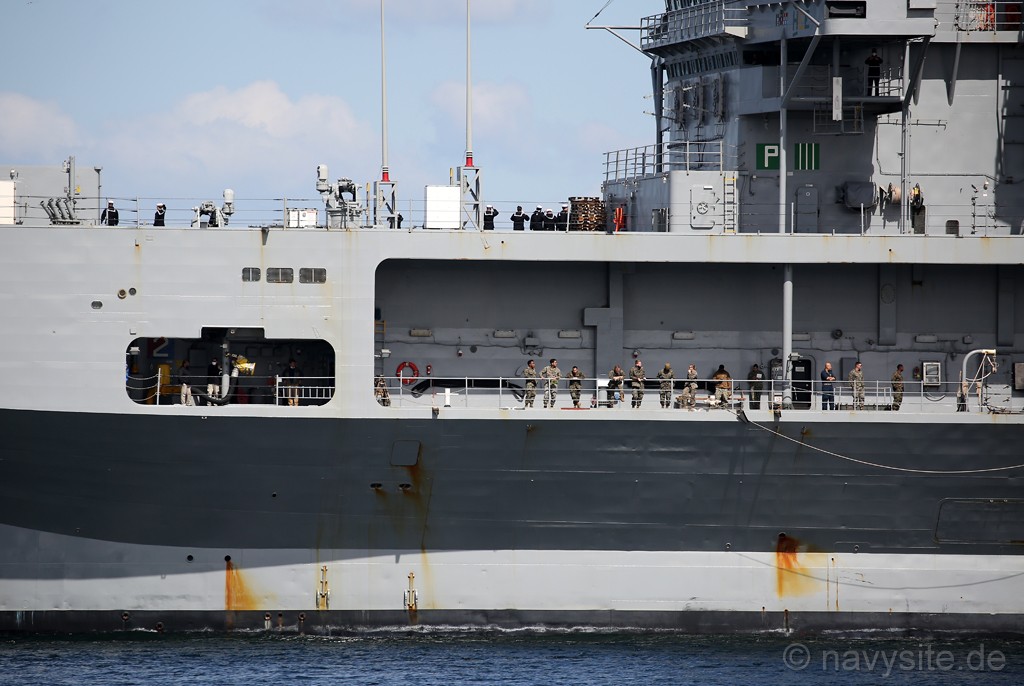
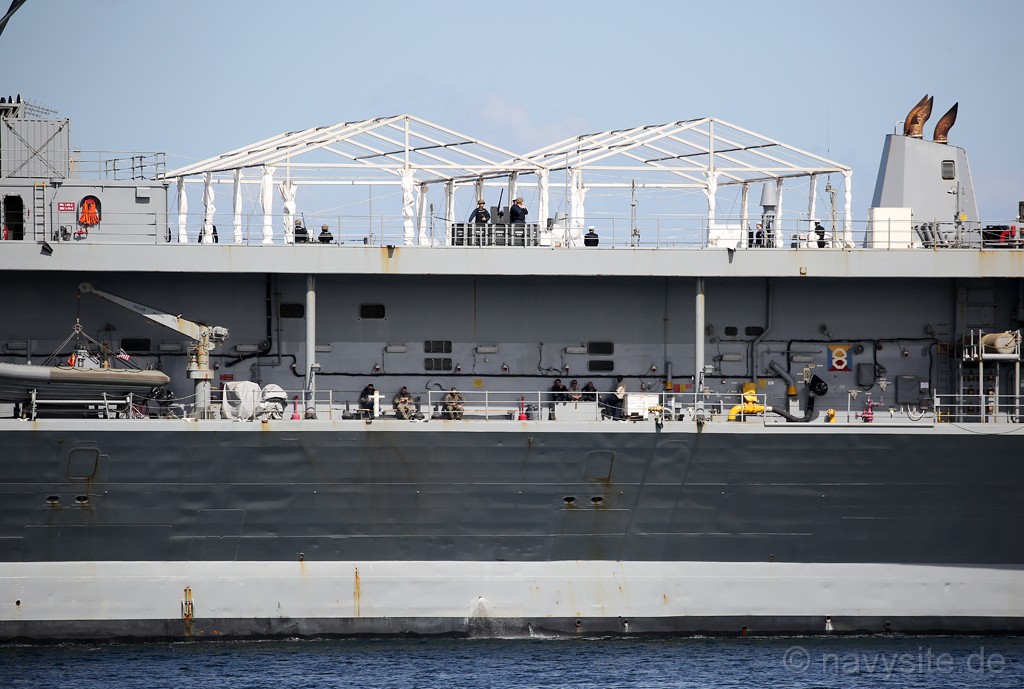
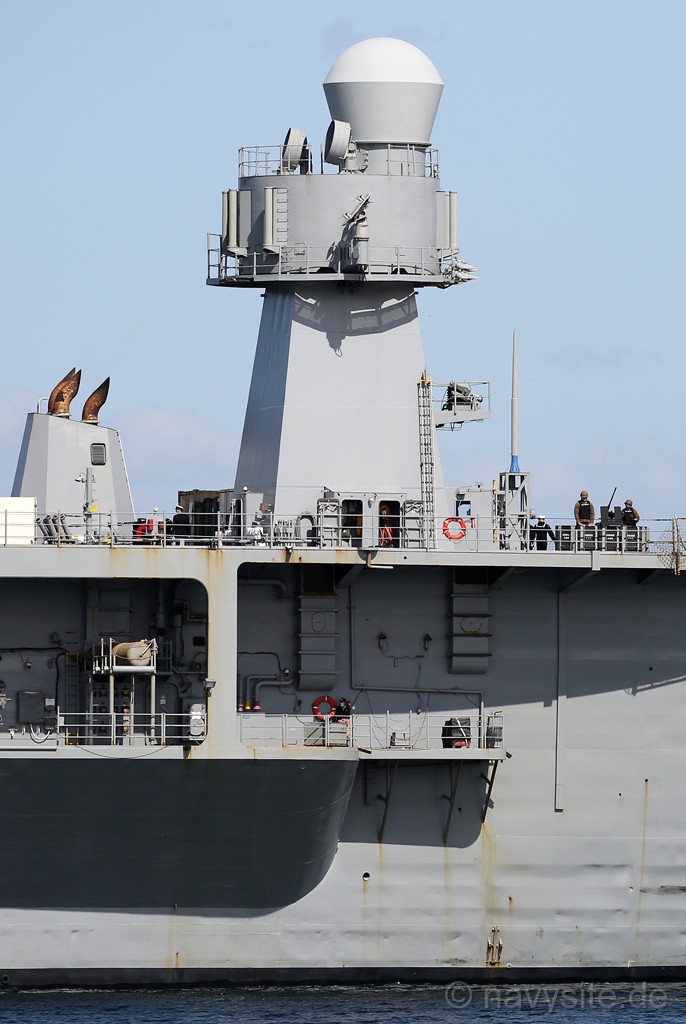
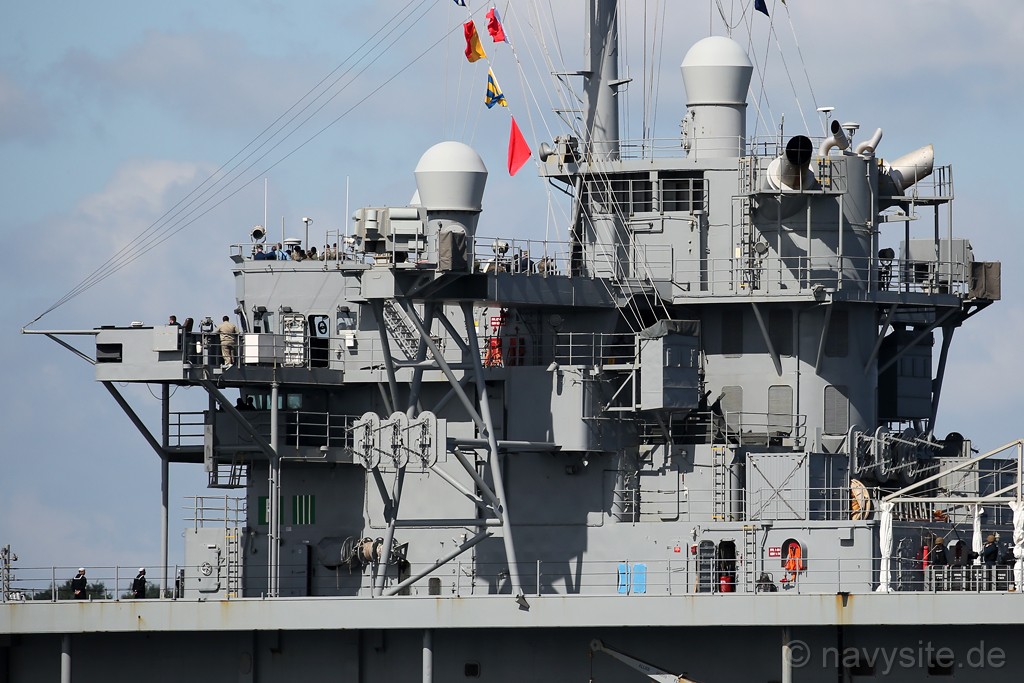
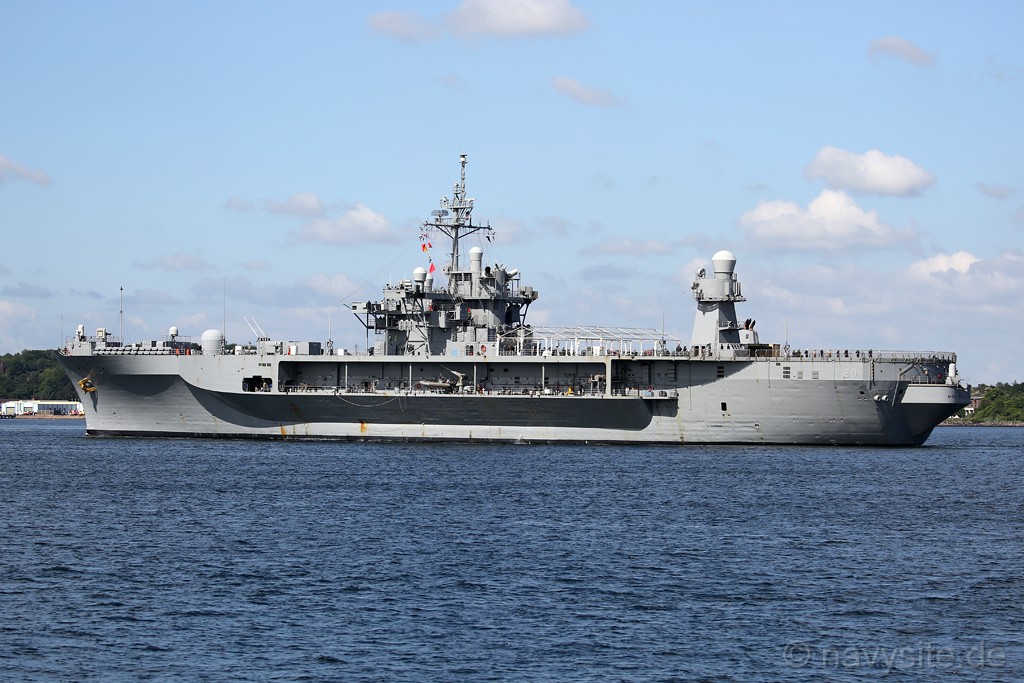
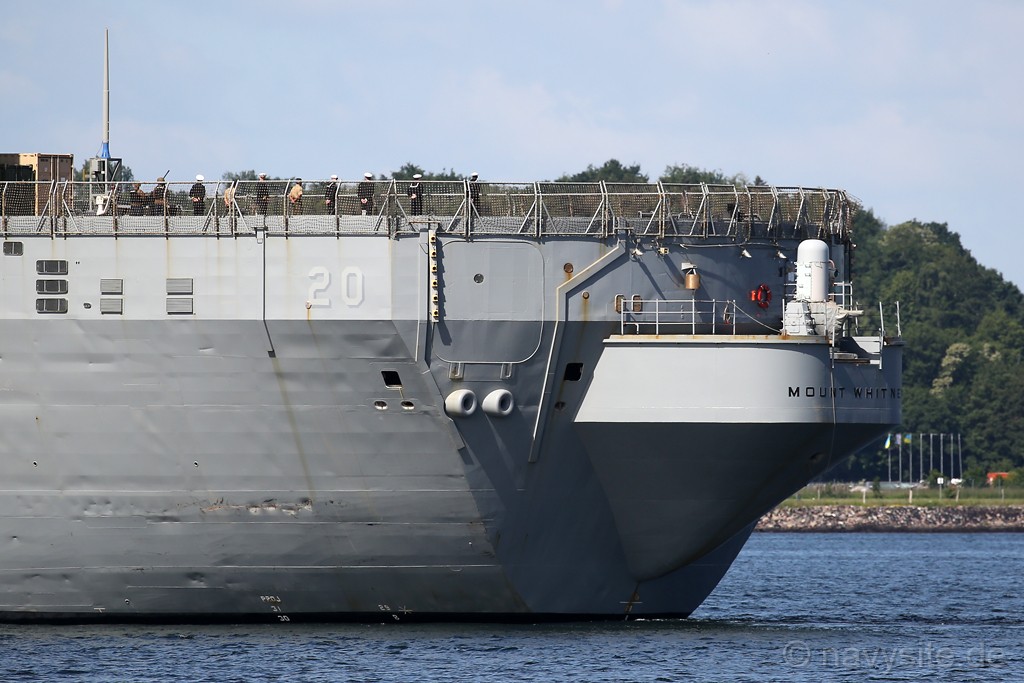
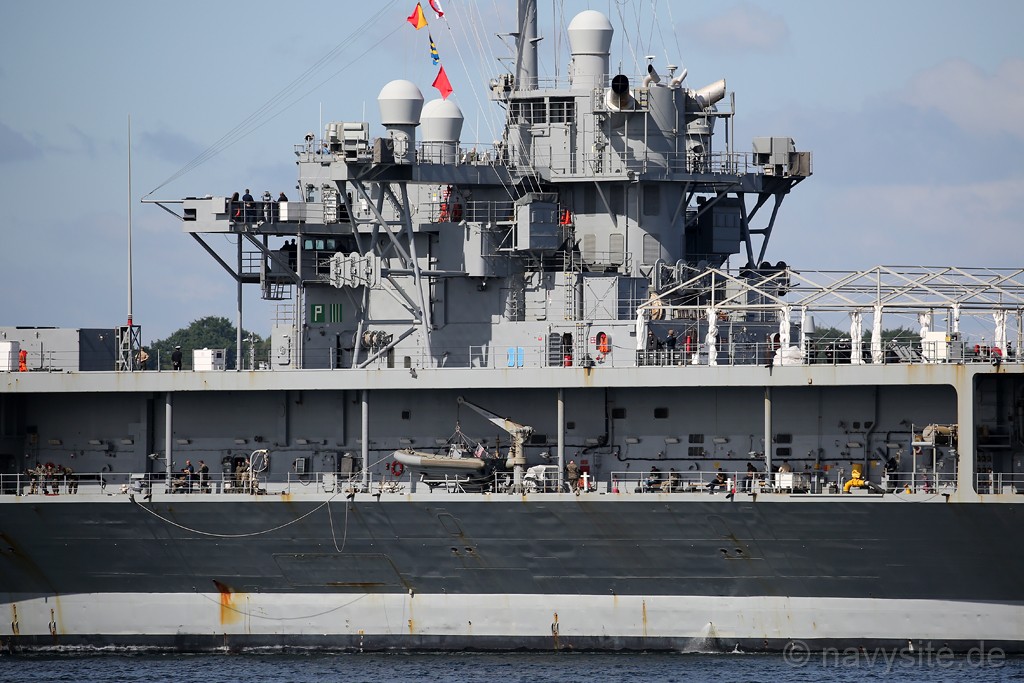
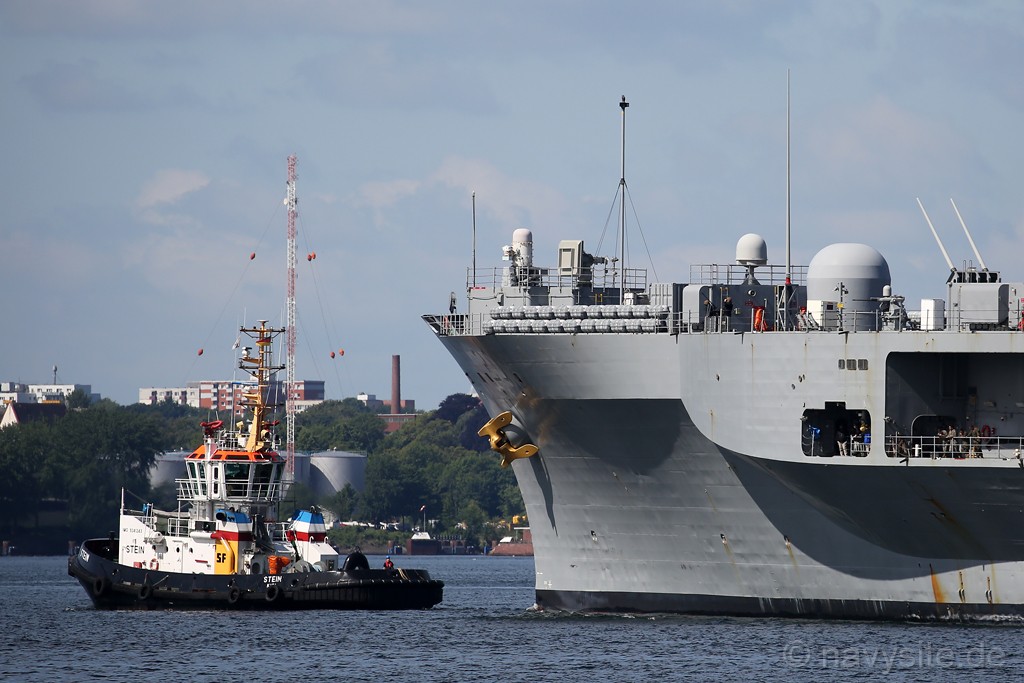
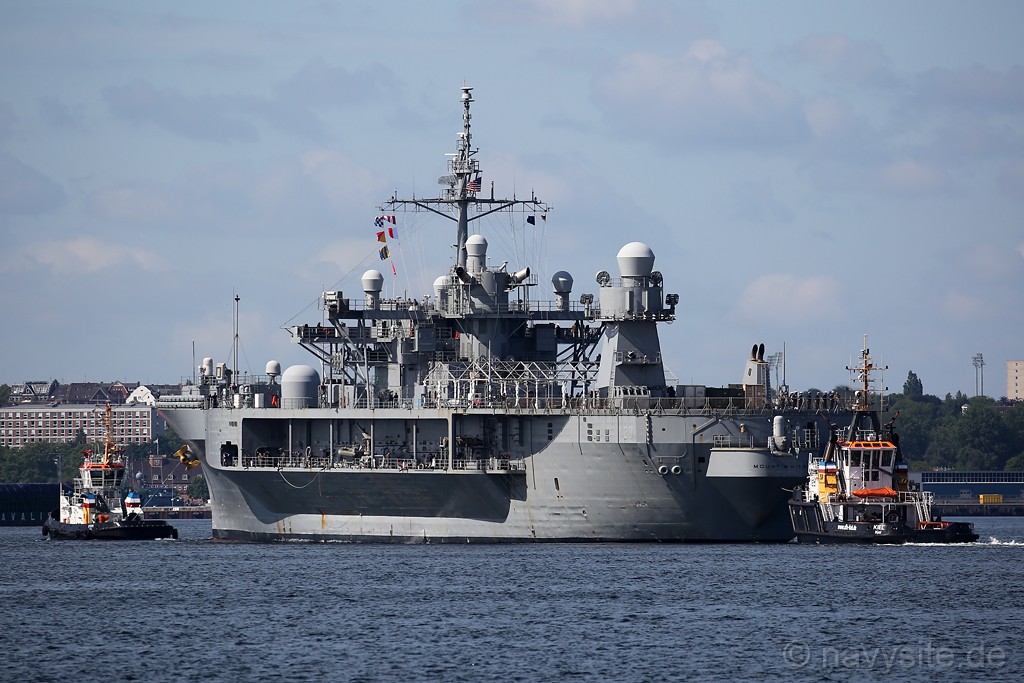
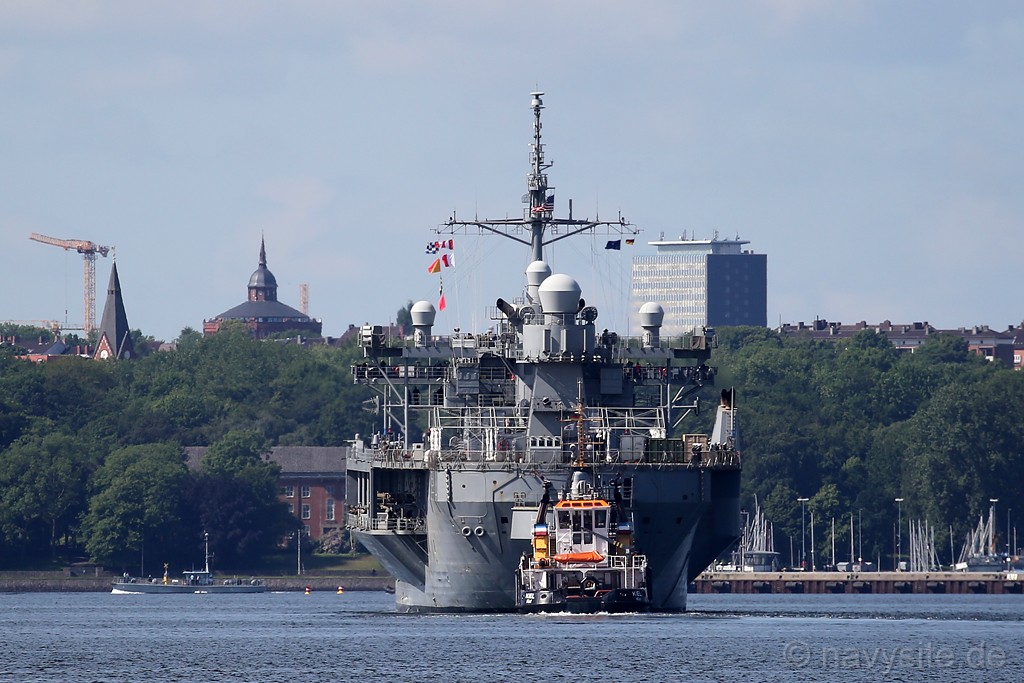
The photos below were taken by me and show the MOUNT WHITNEY arriving at Naval Base Kiel, Germany, on June 16, 2022, after her participation in BALTOPS 22.
 |  |  |  |  |
 |  |  |  |  |
 |  |  |  |  |
 |
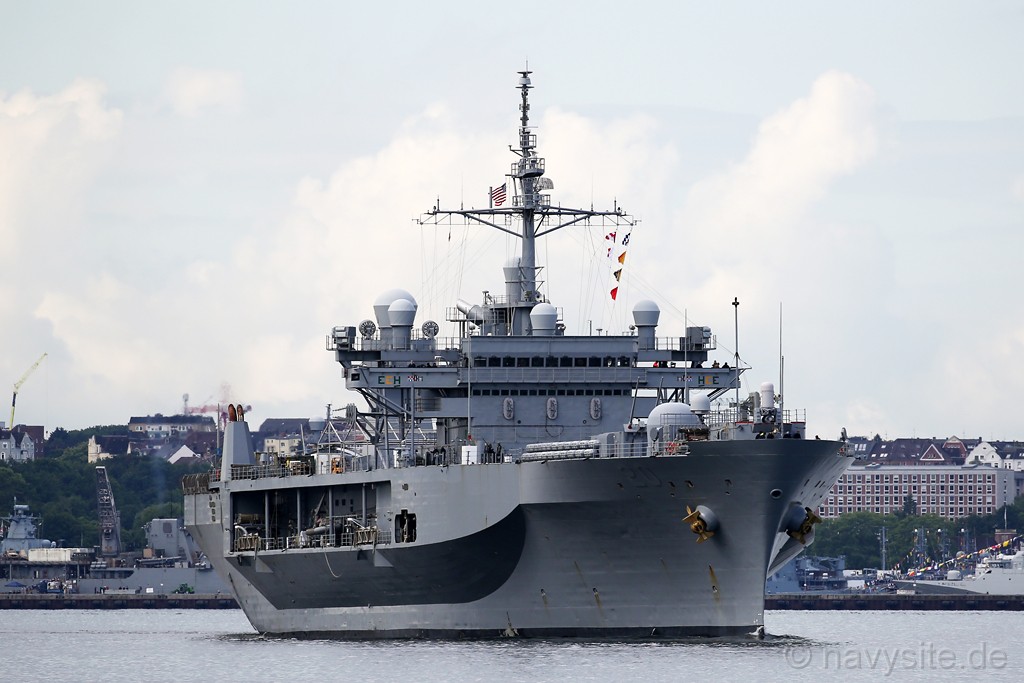
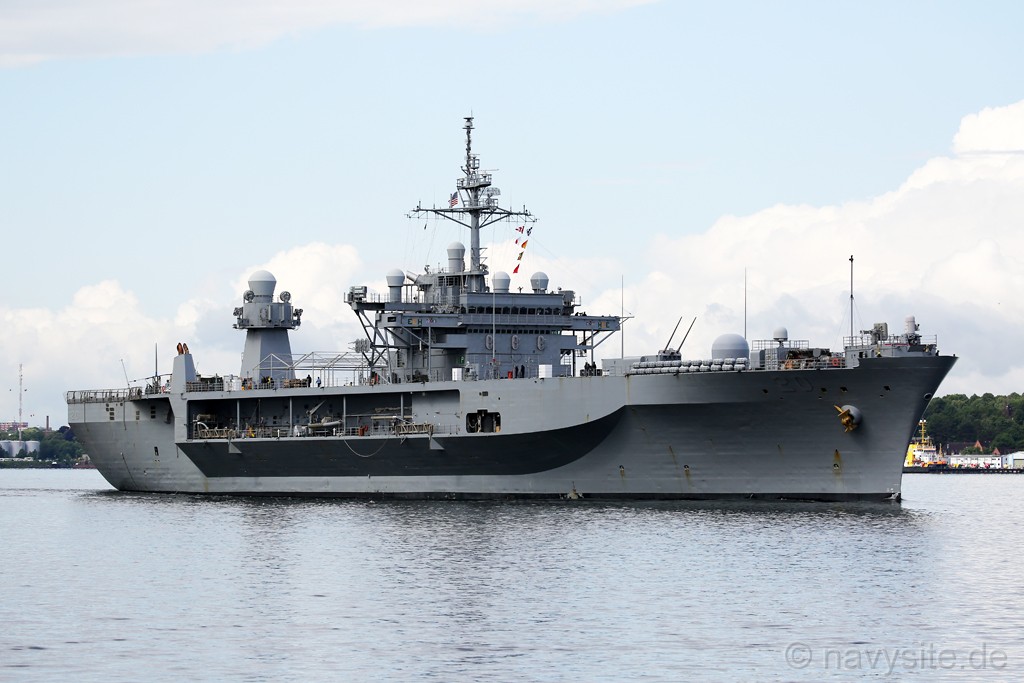
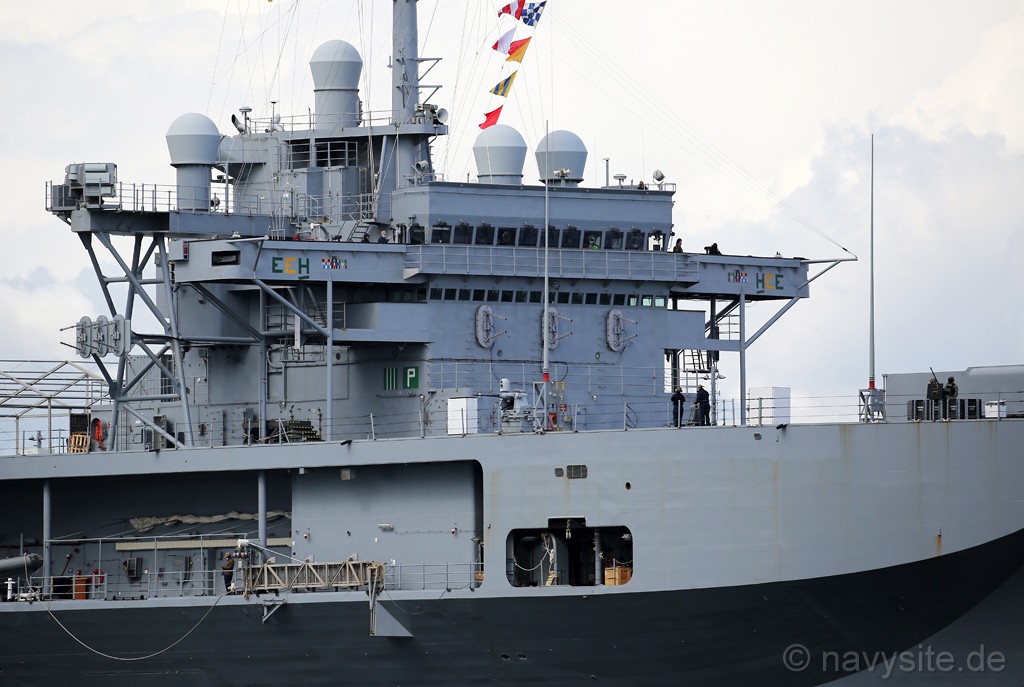
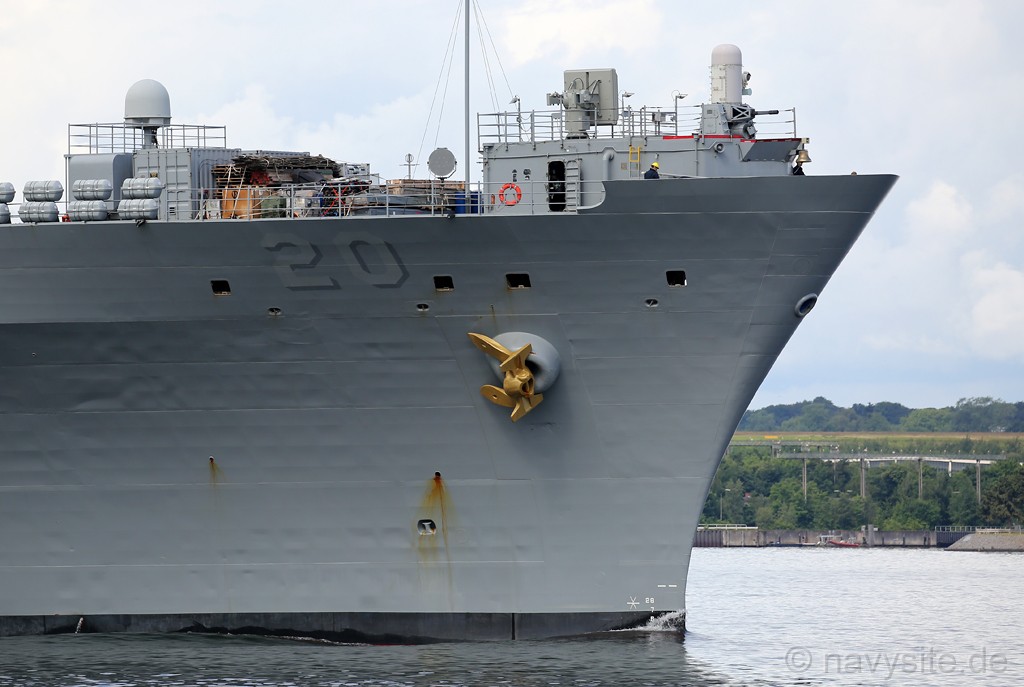
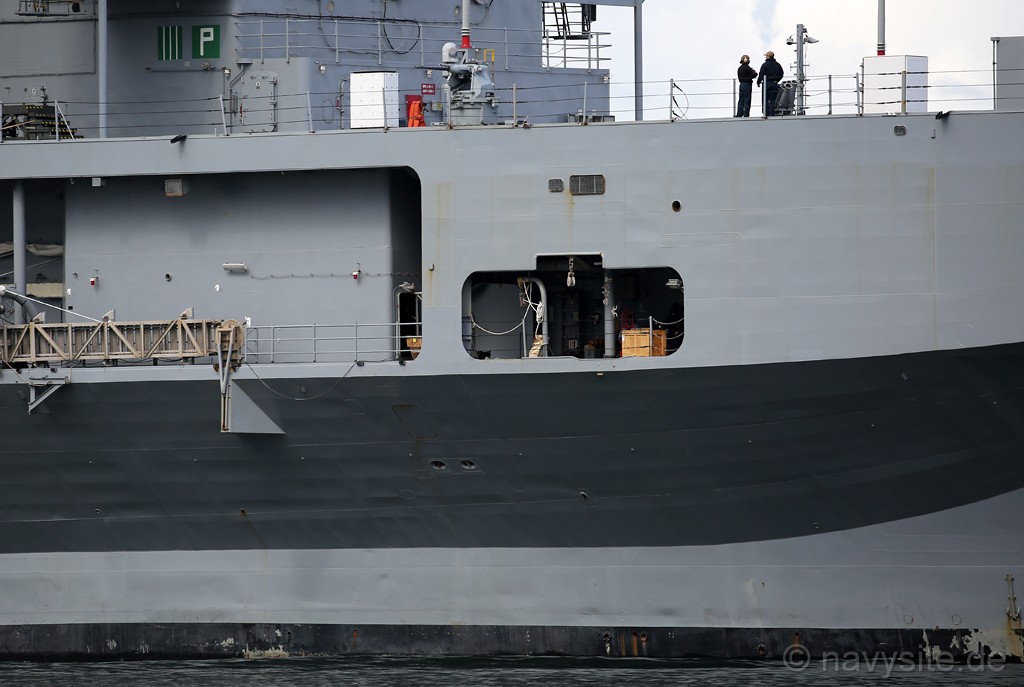
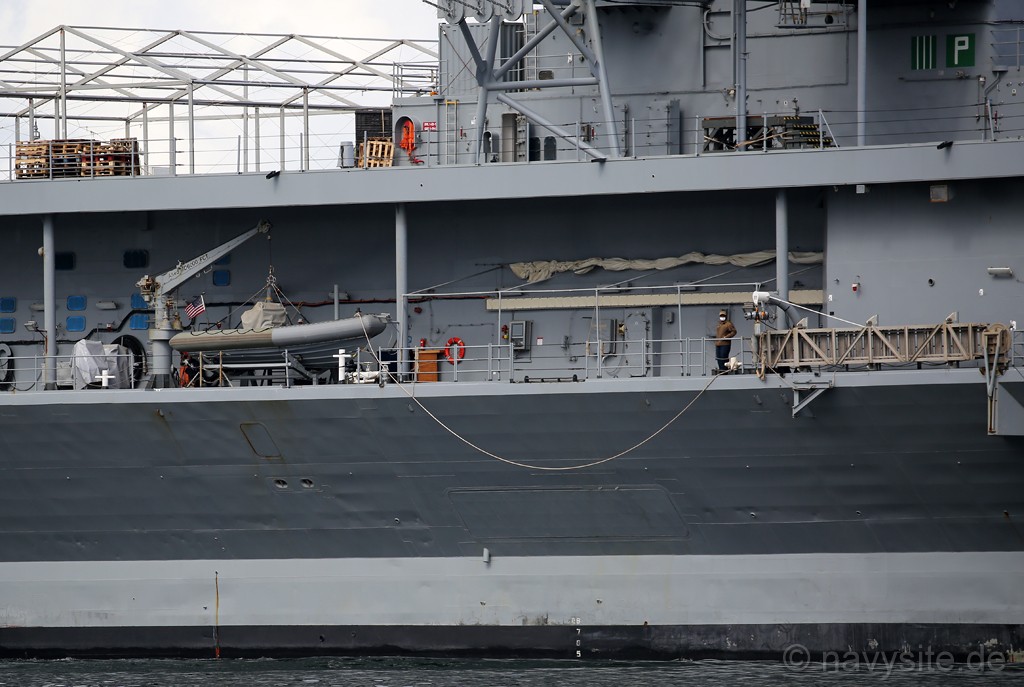
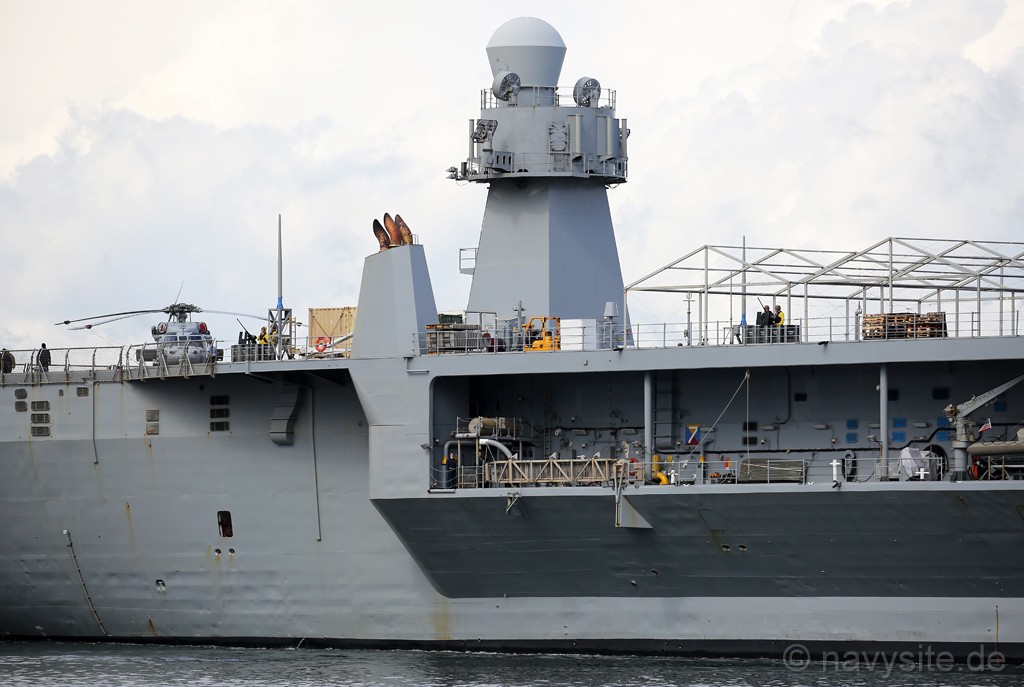
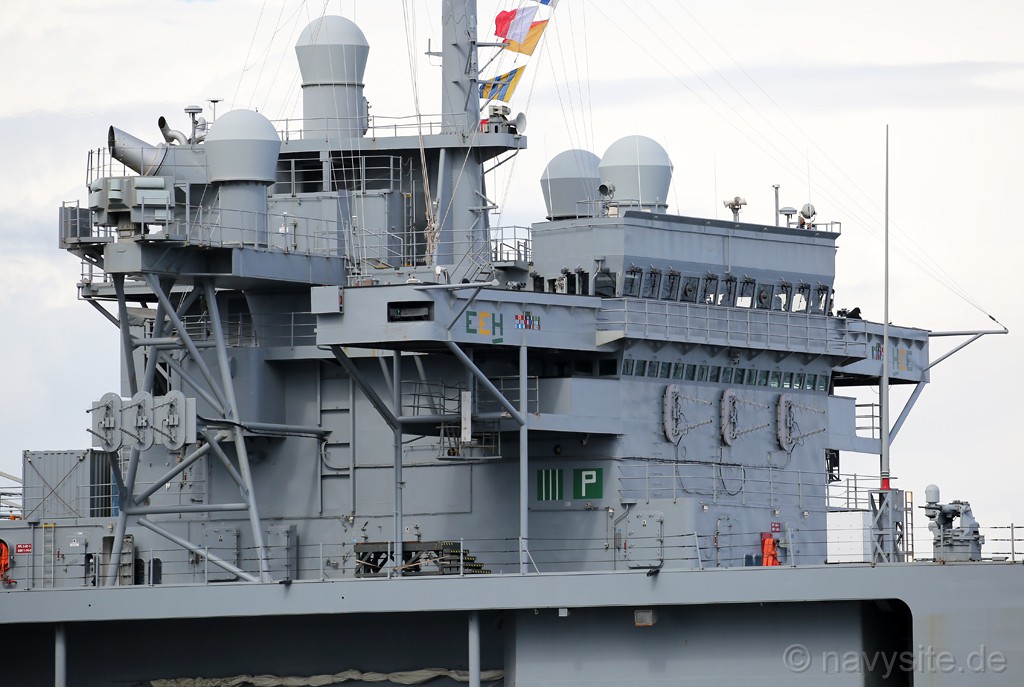
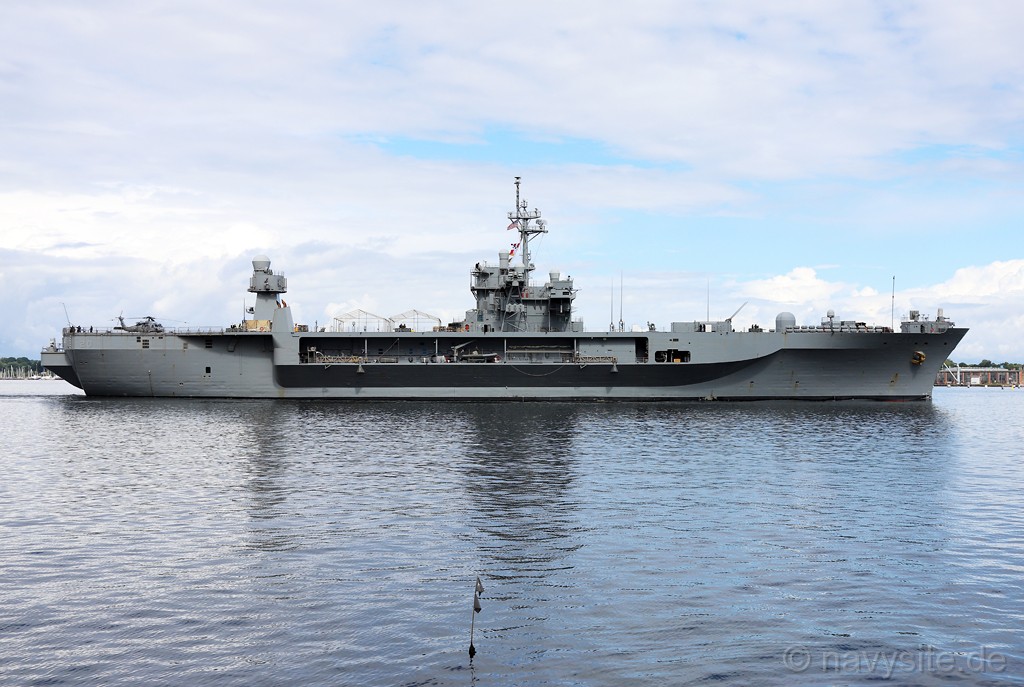
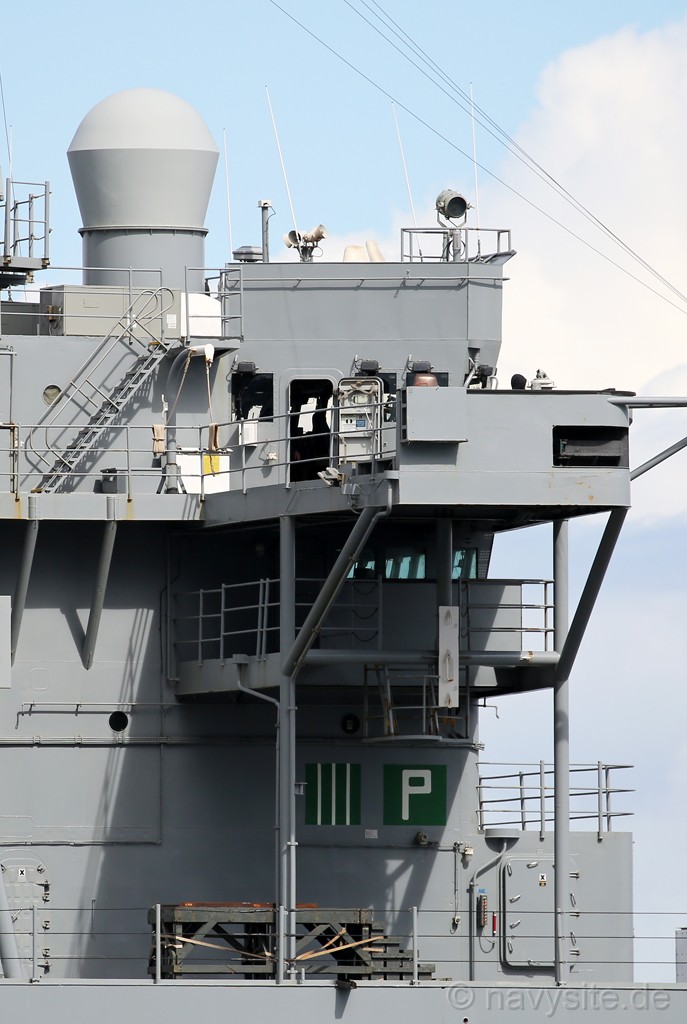
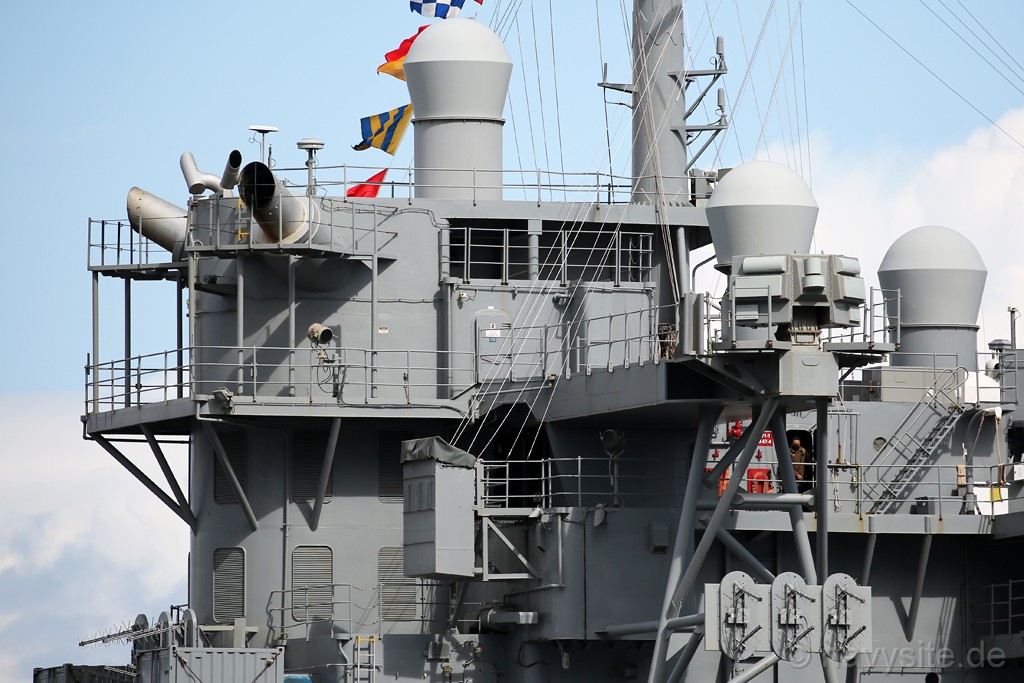
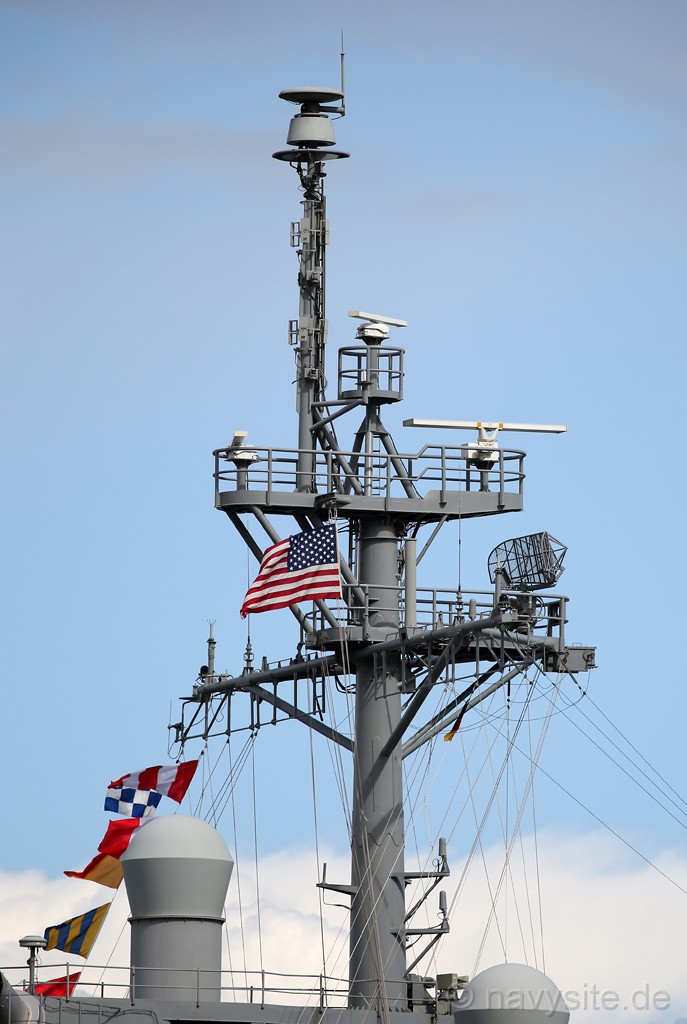
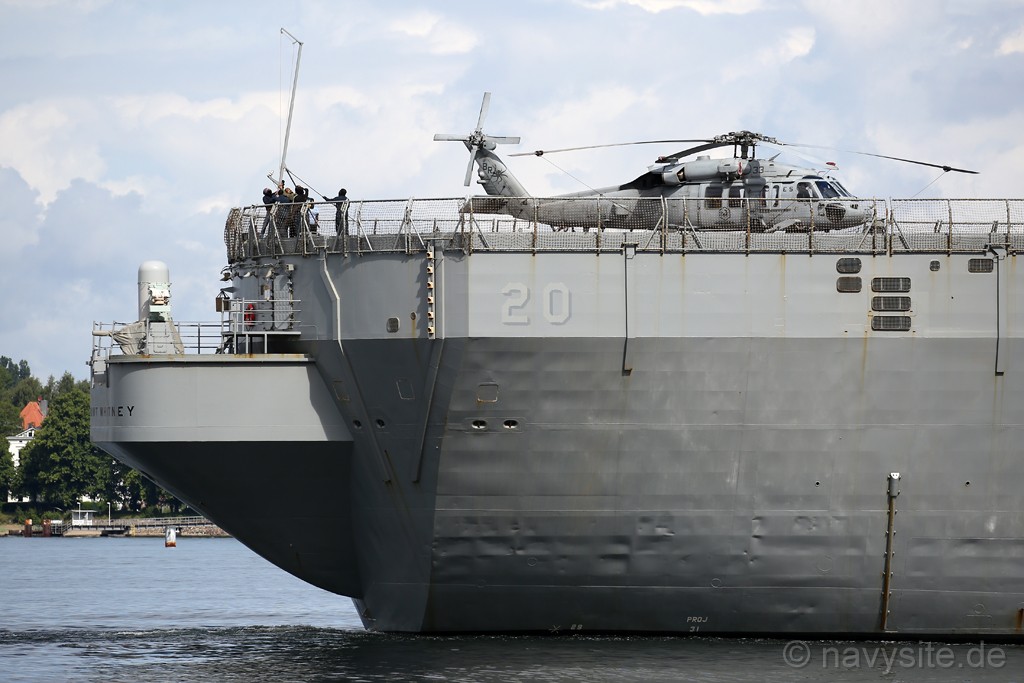
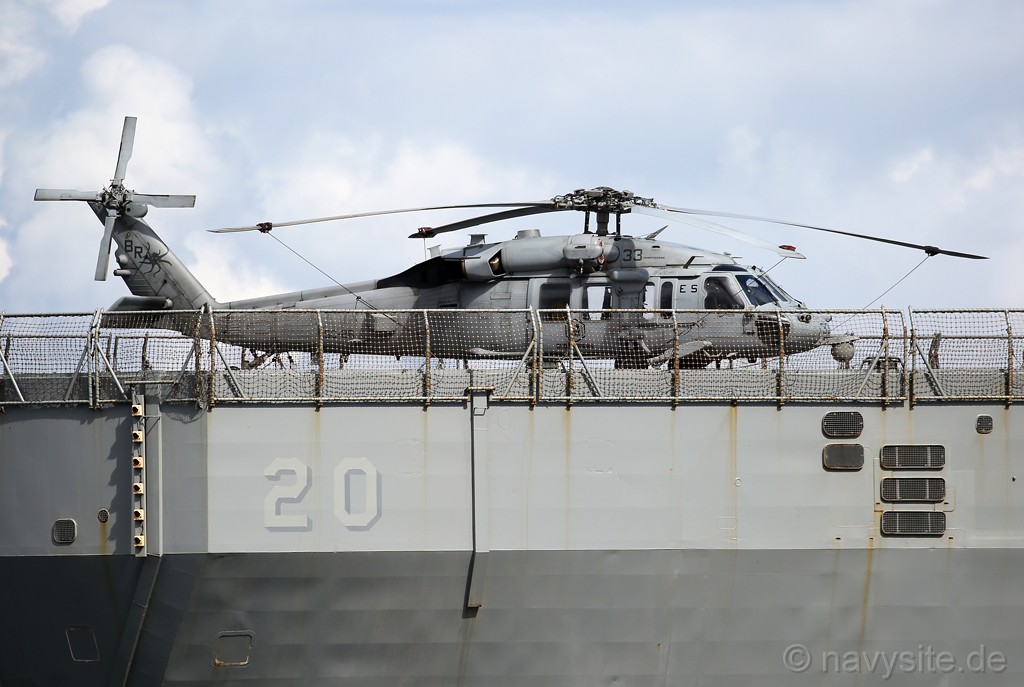
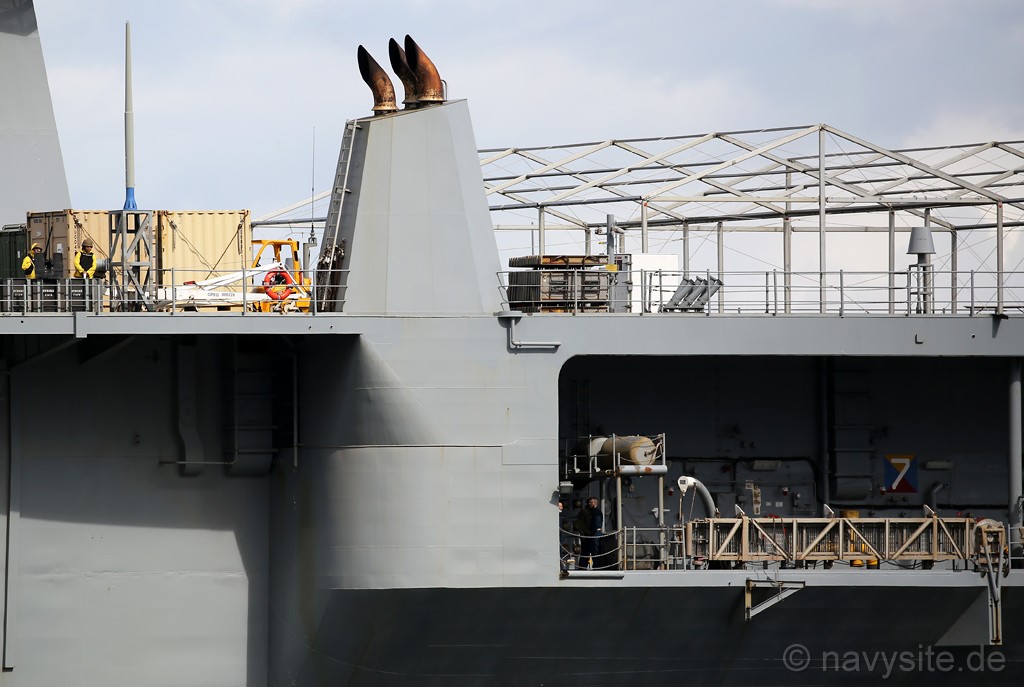
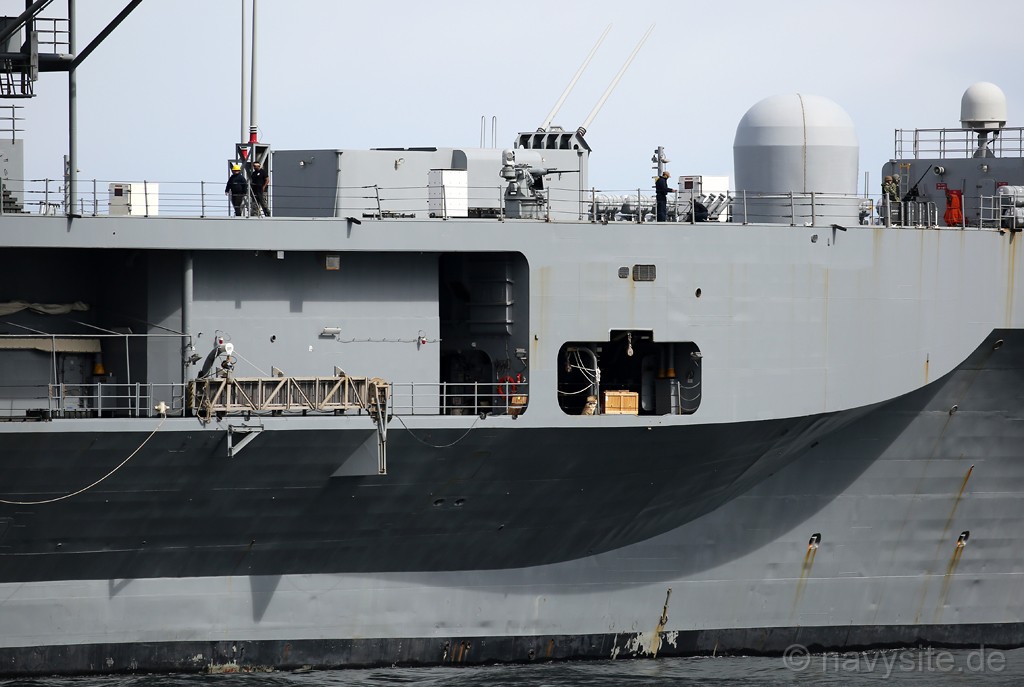
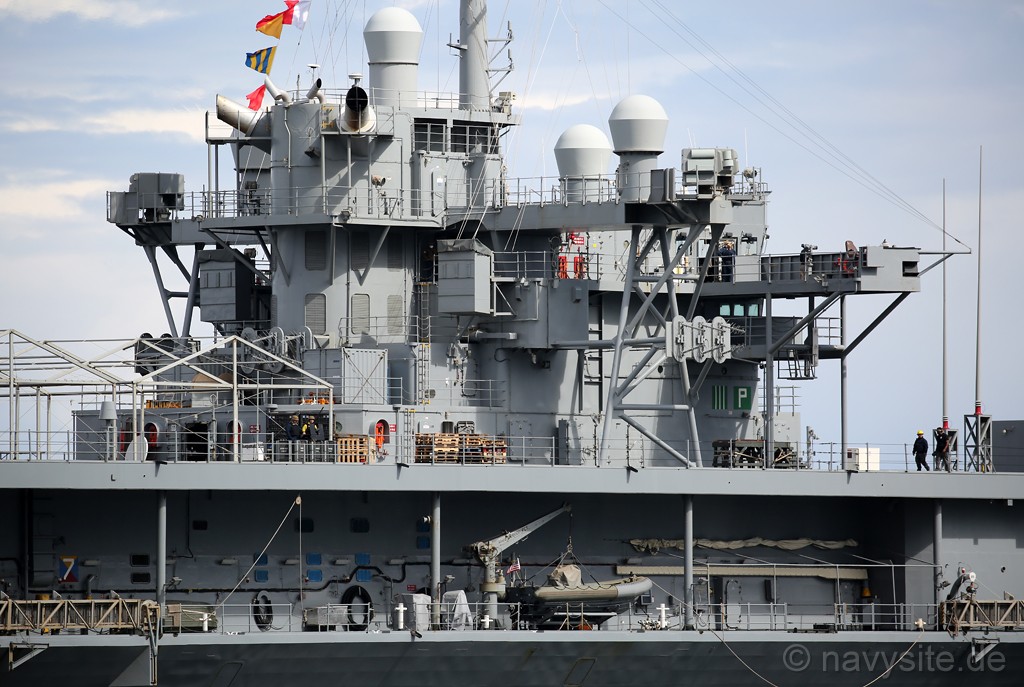
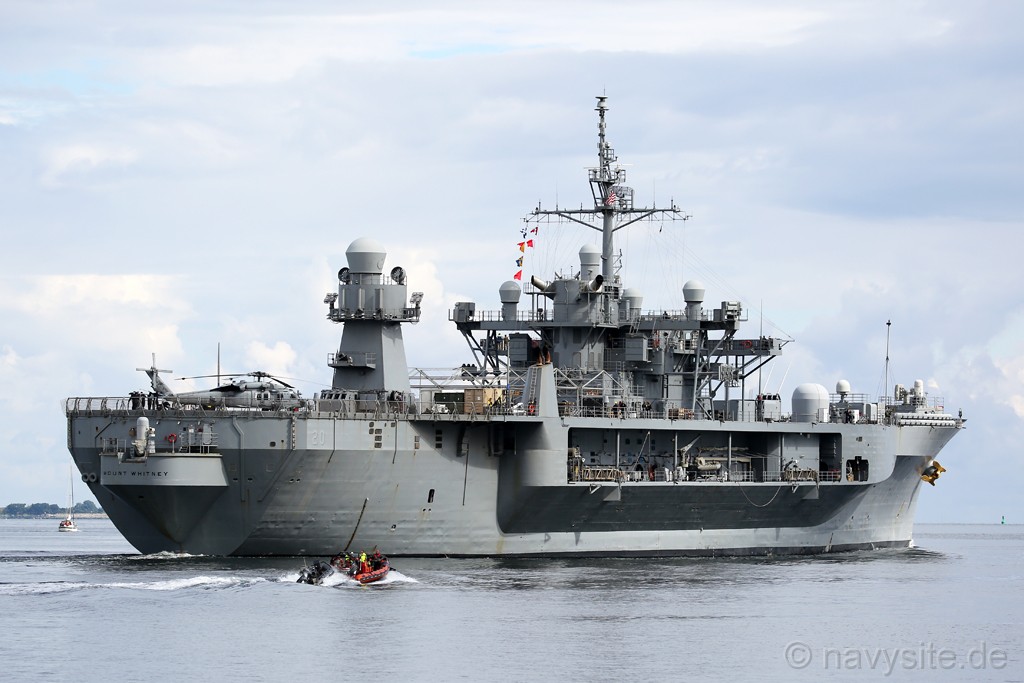
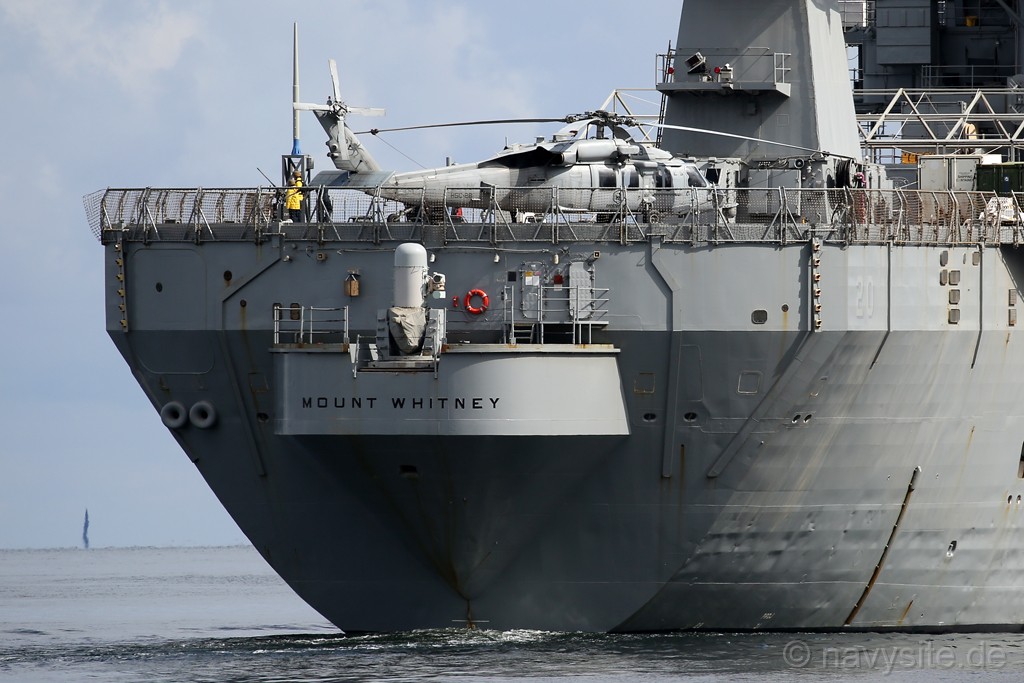
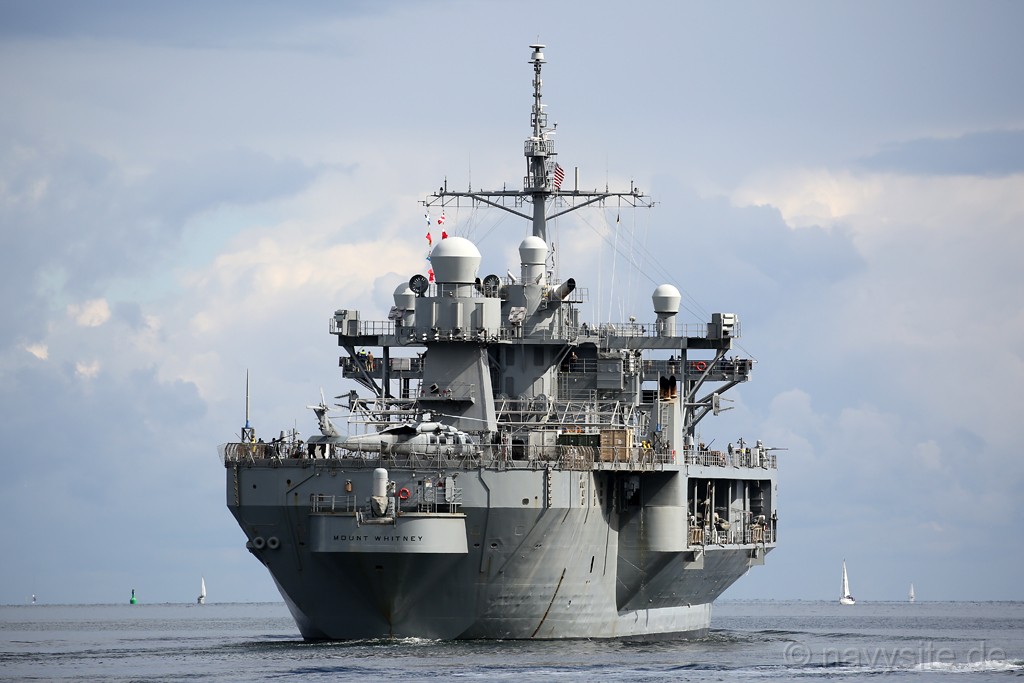
The photos below were taken by me and show the MOUNT WHITNEY departing Naval Base Kiel, Germany, on June 20, 2022, after her participation in BALTOPS 22.
 |  |  |  |  |
 |  |  |  |  |
 |  |  |  |  |
 |  |  |  |  |
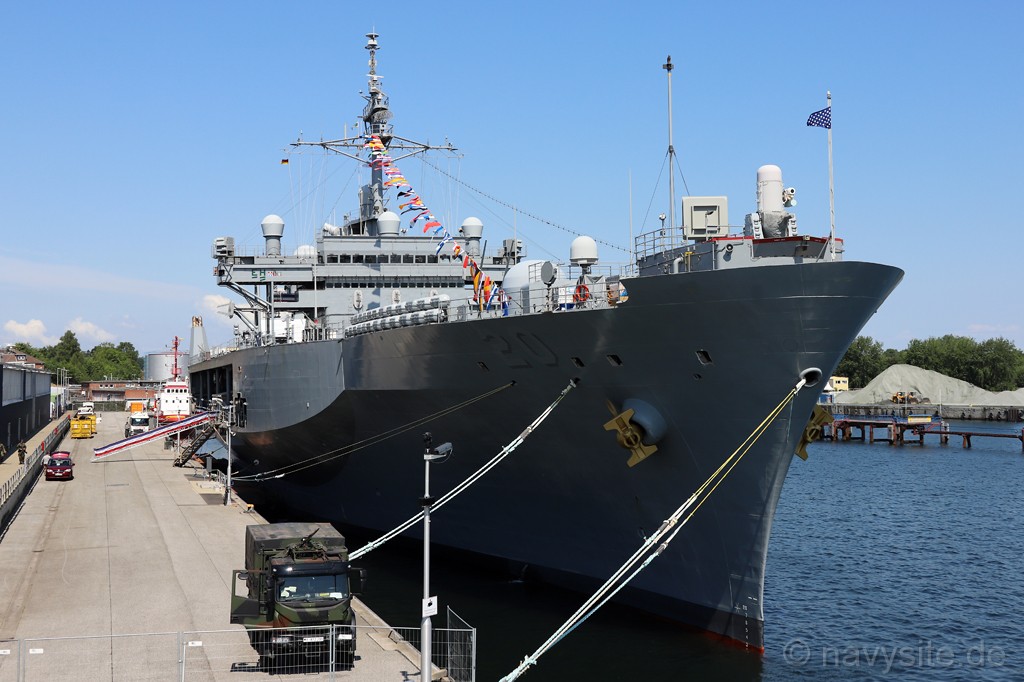
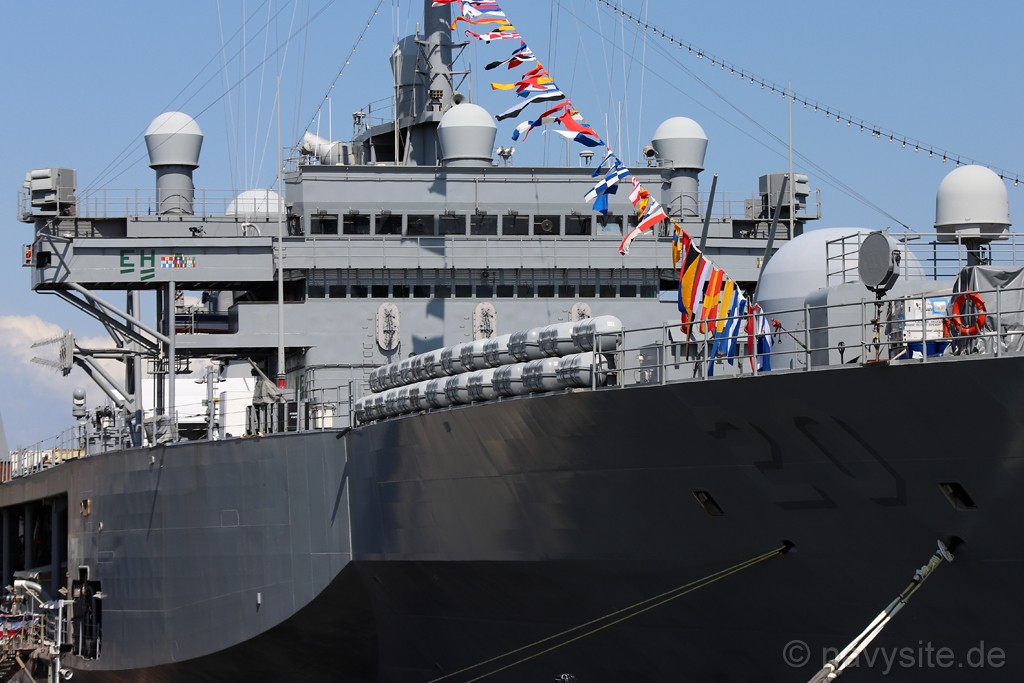
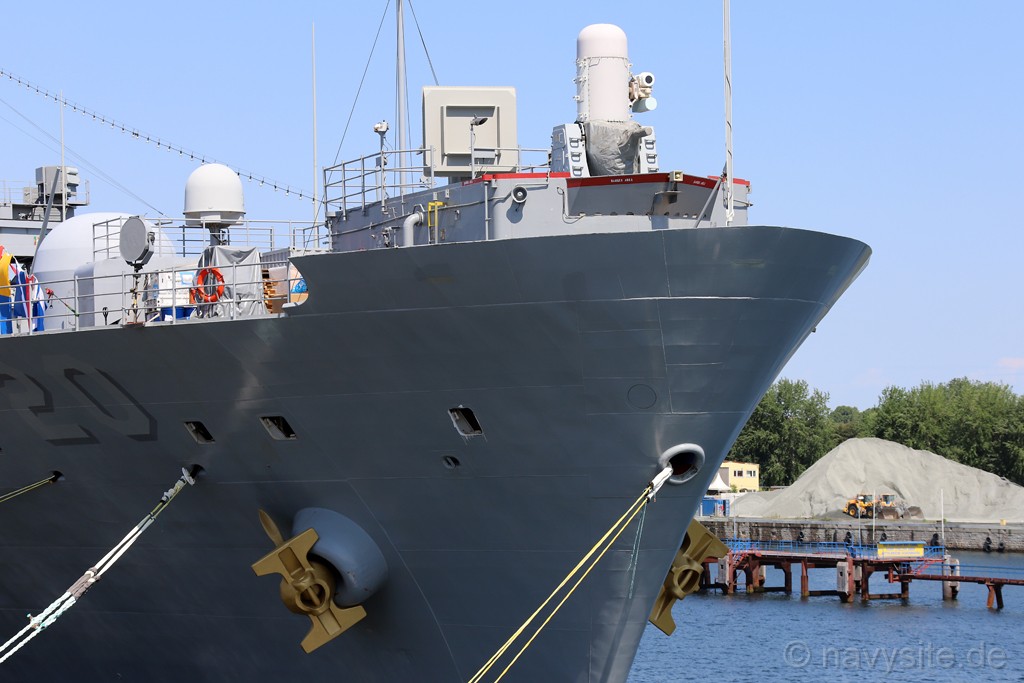
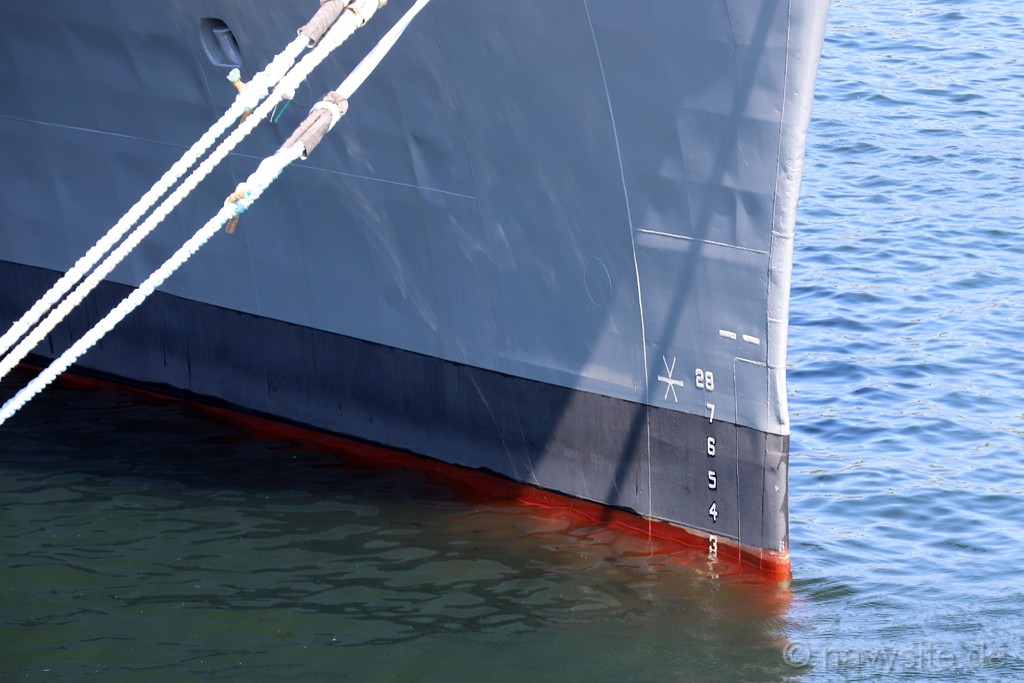
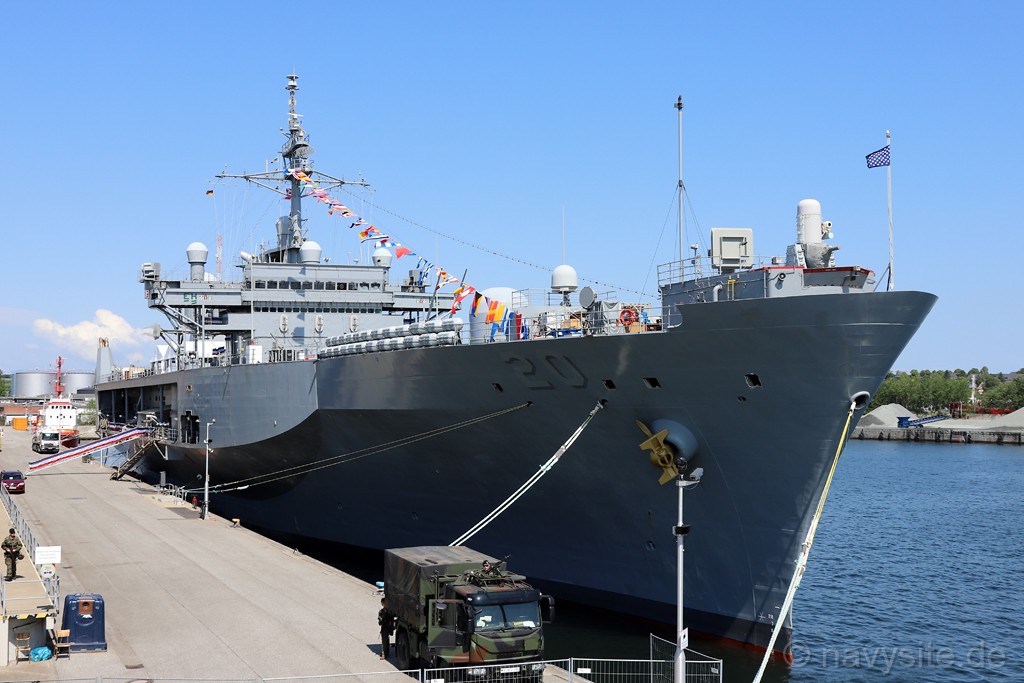
The photos below were taken by me and show the USS MOUNT WHITNEY at Naval Base Kiel, Germany, on June 17, 2023, after her participation in BALTOPS 2023.
 |  |  |  |  |
The photos below were taken by me and show the USS MOUNT WHITNEY at Naval Base Kiel, Germany, on June 21 and 22, 2024, after her participation in BALTOPS 2024.
 |  |  |  |  |
 |  |  |  |  |
 |  |  |  |  |
 |  |  |  |  |
 |  |  |  |  |
 |  |
The photos below were taken by me and show USS MOUNT WHITNEY at Rostock, Germany, on June 4, 2025, prior to the at-sea phase of BALTOPS 2025.
 |  |  |  |  |
 |  |  |  |  |
 |
The photos below were taken by me and show USS MOUNT WHITNEY departing Rostock, Germany, on June 5, 2025, for the at-sea phase of BALTOPS 2025.
 |  |  |  |  |
 |  |  |  |  |
 |  |  |  |  |
 |  |  |
back to top Back to Amphibious Command Ships list. Back to ships list. Back to selection page. Back to 1st page.