Search the Site with 
General Characteristics Crew List Accidents aboard the Ship History Image Gallery to end of page

USS Pegasus (PHM 1)

- decommissioned -
- formerly DELPHINUS -


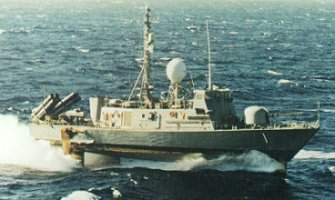
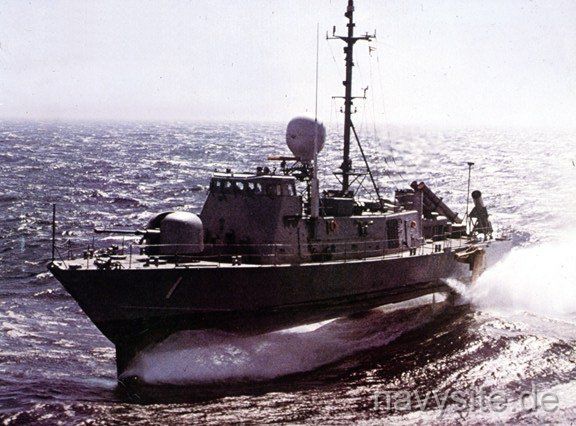
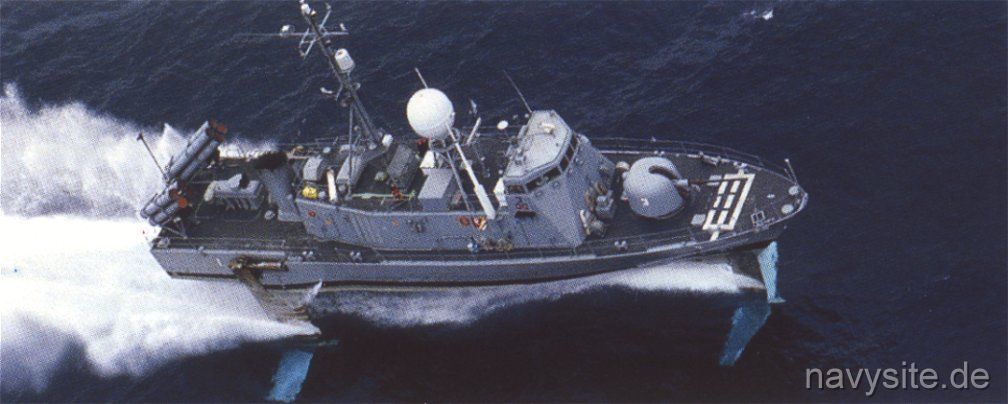
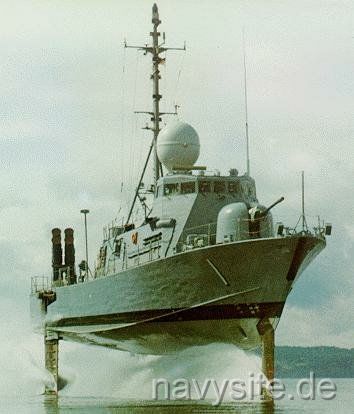
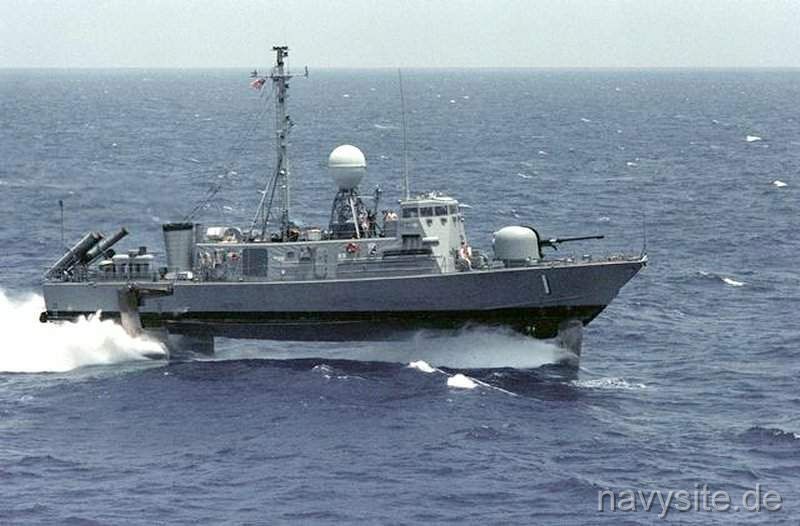
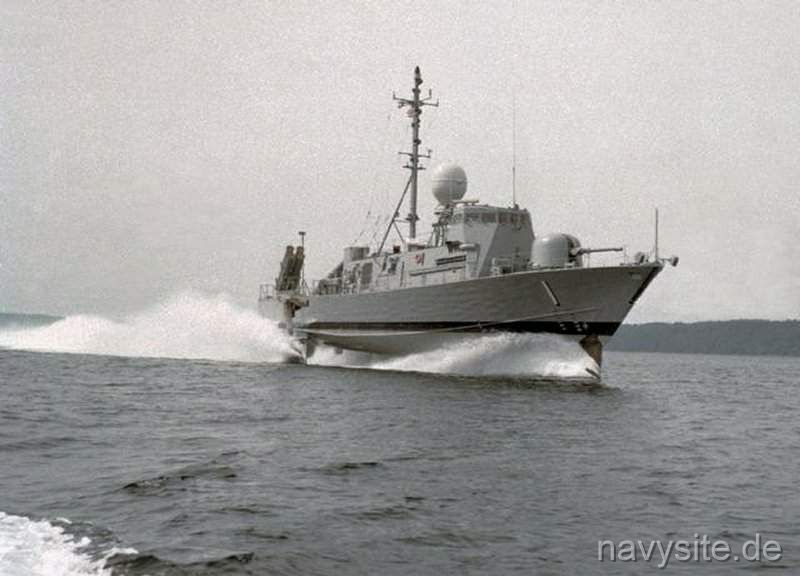
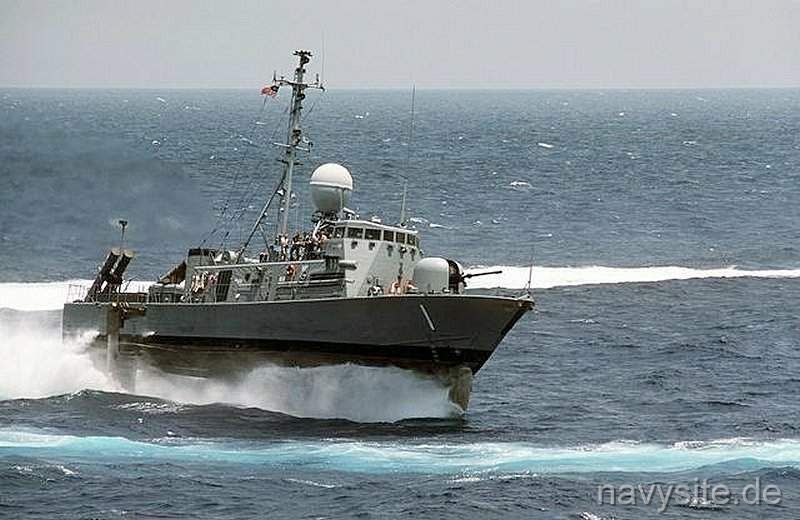
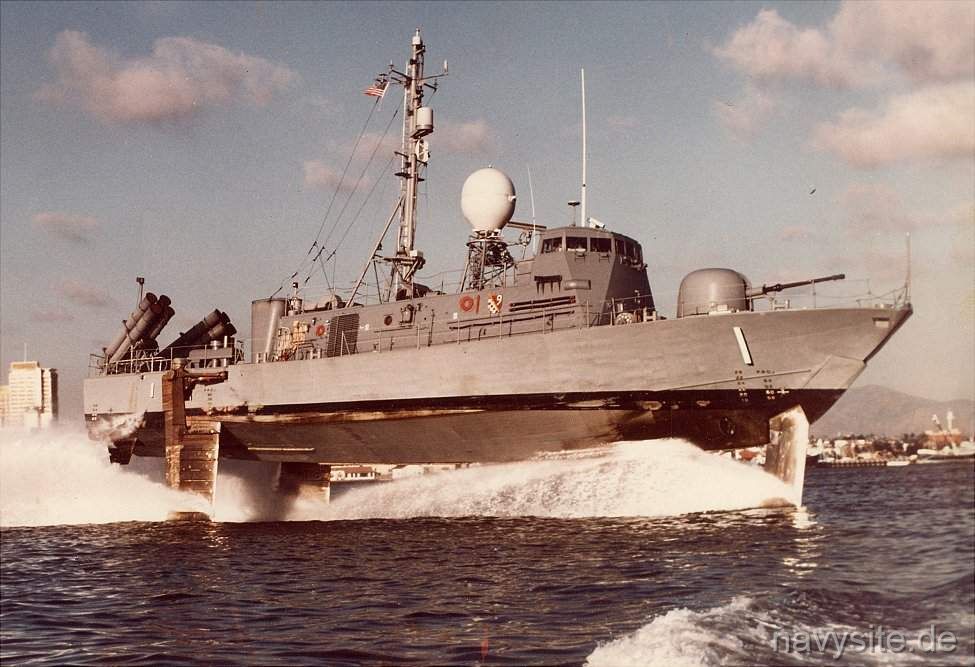
USS PEGASUS was the first PEGASUS class hydrofoil boat. Initially, it was planned to name the ship DELPHINUS but that brought about a slang nickname of "DullPenis" during some discussions and the CNO decided to name the ship PEGASUS. In fact, PHM 1 never officially carried the name DELPHINUS. Anyway, PEGASUS ended up with a nickname of "Pegasorous".

Homeported in Key West, Florida, all six ships of her class were decommissioned on July 30, 1993, and were stricken from the Navy list the same day. PEGASUS was sold for scrapping on August 19, 1996.

General Characteristics:Awarded: February 1, 1973
Keel laid: May 10, 1973
Launched: November 9, 1974
Commissioned: July 9, 1977
Decommissioned: July 30, 1993
Builder: Boeing, Seattle, Wash.
Propulsion system:
  • Foilborne:
    • one General Electric LM-2500 gas turbine engine; 18,000 shaft horsepower; waterjet propulsion units
  • Hullborne:
    • two diesels; 1,600 brake horsepower; waterjet propulsion units
Hull Length: 133 feet (40.5 meters)
Beam: 28 feet (8.5 meters)
Displacement: approx. 255 tons full load
Speed: hullborne: 12 knots  foilborne: 48 knots
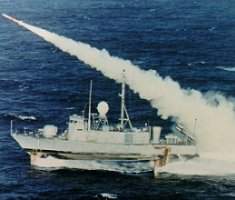
Armament: two Mk-140 Harpoon missile launchers, one Mk 75 76mm/62 caliber rapid firing gun
Crew: 4 officers, 17 enlisted


Back to topback to top  go to endgo to the end of the page


Back to topback to top  go to endgo to the end of the page

Crew List:

This section contains the names of sailors who served aboard USS PEGASUS. It is no official listing but contains the names of sailors who submitted their information.


Back to topback to top  go to endgo to the end of the page

Accidents aboard USS PEGASUS:

DateWhereEvents
September 30, 1981north of CubaUSS PEGASUS collides with USS NEWPORT (LST 1179) while making an approach to connect for towing causing minor damage.


Back to topback to top  go to endgo to the end of the page

USS PEGASUS History:

USS PEGASUS emerged from a very specific late-Cold War problem set: how to put credible anti-surface-warfare firepower into a very small hull that could sprint through constrained littorals faster than most threats could react. The resulting patrol hydrofoil missile craft concept - built around a foilborne "lift the hull, cut the drag" approach - promised destroyer-like reach against fast surface combatants in coastal waters, while also being adaptable to the surveillance-and-intercept work that dominated day-to-day realities in the Caribbean and approaches to the Americas. USS PEGASUS became the lead ship and practical testbed for that idea, and her service life ended up documenting both sides of the equation: impressive niche performance and persistent complexity in maintenance, logistics, and long-term affordability.

While still under construction, the ship's identity was formally settled by a name change: on April 26, 1974, Secretary of the Navy J. William Middendorf changed the name of the missile-armed hydrofoil patrol craft PHM-1 from Delphinus to Pegasus. Construction and early trials followed a timeline shaped by the program's developmental nature. USS PEGASUS was built by Boeing's marine organization in the Seattle-area industrial base, and she was launched on November 9, 1974, in Seattle, Washington. In the decommissioning-era documentation for the class, that launch is described as Boeing Marine Systems launching the hydrofoil DAUPHINE, a prototype that underwent extensive testing and research before entering Navy service as USS PEGASUS.

Photographic documentation from the Naval History and Heritage Command places her underway on Lake Washington for hull-borne trials, with that image recorded as having been received in September 1975 - evidence of how heavily the early period emphasized engineering confidence-building before operational routine ever became possible. The formal transition into commissioned Navy service came in mid-1977. USS PEGASUS was delivered to the Navy on June 15, 1977, and commissioned on July 9, 1977.

The ship's first commanding officer, Lieutenant Commander William J. Erickson, held command from July 1977 to July 1979, spanning the critical years when PEGASUS was proving whether the hydrofoil combatant concept could be made operationally credible, not merely technically feasible. A defining moment in that proof-of-concept phase came with her cross-theater movement from the Pacific to the Atlantic. On June 14, 1979, USS PEGASUS transited the Panama Canal in 2 hours and 41 minutes, setting a world record for the fastest canal transit and dramatically underlining the "rapid repositioning" promise that had helped justify the hydrofoil concept in the first place.

Command transitioned rapidly during that same summer - first to Lieutenant Commander Charles W. Penque (July 1979 to August 1979), then to Lieutenant Commander Glenn F. Gottschalk (August 1979 to November 1979), and then to Lieutenant Commander James W. Orvis (November 1979 to June 1981) - a sequence that, in practice, bracketed the ship's movement into an Atlantic-based employment pattern and the beginnings of a more routine operating life. By the early 1980s, USS PEGASUS was operating from Key West, Florida, as the hydrofoil squadron concept matured around her.

The period also produced a documented mishap typical of small, high-performance craft working at the edge of tow-and-assist procedures. On September 30, 1981, USS PEGASUS collided with USS NEWPORT (LST 1179) north of Cuba while making an approach to connect for towing, causing minor damage.

At that time, command passed from Lieutenant Commander Thomas H. Berns (June 1981 to July 1983) to Lieutenant Commander Drew W. Beasley (July 1983 to October 1985), marking continuity in the ship's Key West-centered operating rhythm as additional sister ships joined the broader PEGASUS-class force in the first half of the decade. Operationally, the Key West era put PEGASUS into the mission set that ultimately defined how the class was used: fast reaction, surveillance, and intercept in warm-water operating areas where speed could compress the time between detection and contact. In the class decommissioning documentation, USS PEGASUS is specifically credited with setting the precedent for Patrol Combatant Missile Hydrofoil Squadron Two's employment in counter-narcotics operations, becoming the first hydrofoil missile craft of the type to pursue, intercept, and seize a high-speed, drug-laden vessel. The ship's record in this role needs to be understood against the geopolitical and interagency backdrop of the era: during the 1980s and early 1990s, maritime interdiction and monitoring missions in the Caribbean and surrounding approaches were increasingly tied to transnational trafficking concerns and to cooperative efforts alongside other United States maritime forces, even as conventional Cold War planning still framed the "why" of having missile-armed fast craft in the inventory at all.

Command then shifted to Lieutenant Commander Robert C. Holt (October 1985 to January 1988), followed by Lieutenant Commander Michael C. Beck (January 1988 to October 1989). During the latter command window, USS PEGASUS conducted one of the most clearly documented major deployments of her career: she deployed from Key West as part of UNITAS Twenty-Nine, the long-running multinational naval exercise and engagement series in the Western Hemisphere. The deployment brought sustained interaction with partner navies and senior defense leadership, reflecting the diplomatic and interoperability dimension UNITAS had come to represent during the final decade of the Cold War.

The ship's final operational decade unfolded as the strategic environment changed faster than the class could be re-justified in purely warfighting terms. Lieutenant Commander Martin A. Drake's command (October 1988 to October 1991) bridged the end of the Cold War and the beginning of a period when budgets, priorities, and the cost-benefit logic of maintaining a small, specialized, high-maintenance combatant type were all shifting in ways unfavorable to continued service. Lieutenant Commander William F. Larson then commanded from October 1991 to July 1993, overseeing the period in which USS PEGASUS completed her final full year in commission.

For calendar year 1992, USS PEGASUS won the Battle "E" for overall excellence - an important marker because it shows that, even late in the ship's life and amid shrinking prospects for the class, her crew still met the Navy's competitive readiness and performance benchmarks. In July 1993, Lieutenant Commander Douglas E. LeMasters assumed command. This final command tenure was brief, ending within the same month as the ship left service. USS PEGASUS was decommissioned on July 30, 1993, and she was also stricken from the Naval Vessel Register that same day as part of the class-wide retirement. USS PEGASUS completed 19 years of service, making 3,181 foilborne flights totaling 4,517 hours. The ship's post-service disposition is consistently reported as a sale for scrapping on August 19, 1996.


Back to topback to top  go to endgo to the end of the page


Back to topback to top


Back to Patrol Combatant Missile (Hydrofoil) List. Back to Ships List. Back to selection page. Back to 1st page.