![]() |
Search the Site with
|
![]() | ![]() |
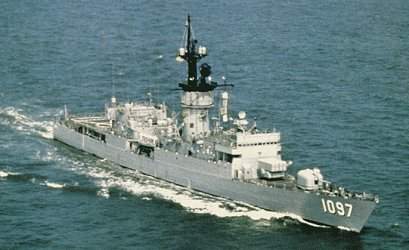
USS MOINESTER was the 46th and final KNOX-class frigate and the first ship in the Navy to bear the name. She was one of the eight ships of her class transfered to the Naval Reserve Force serving as Reserve Training Frigates (FFT). Each of the eight Reserve Training Frigates had its own reserve crew and was also assigned four "nucleus crews" which would man the 32 decommissioned KNOX-class frigates in the case of a reactivation of these ships.
USS MOINESTER (FFT 1097) was last homeported in Norfolk, Va. Decommissioned on July 28, 1994, the MOINESTER was subsequently leased to Egypt where she was recommissioned as RASHEED. Stricken from the Navy list on January 11, 1995, the MOINESTER was finally purchased by Egypt on March 25, 1998.
| General Characteristics: | Awarded: August 25, 1966 |
| Keel laid: August 25, 1972 | |
| Launched: May 12, 1973 | |
| Commissioned: November 2, 1974 | |
| Decommissioned: July 28, 1994 | |
| Builder: Avondale Shipyards, New Orleans, La. | |
| Propulsion system: 2 - 1200 psi boilers; 1 geared turbine, 1 shaft; 35,000 shaft horsepower | |
| Length: 438 feet (133.5 meters) | |
| Beam: 47 feet (14.4 meters) | |
| Draft: 25 feet (7.6 meters) | |
| Displacement: approx. 4,200 tons full load | |
| Speed: 27 knots | |
| Armament: one Mk-16 missile launcher for ASROC and | |
| Aircraft: one | |
| Crew: 18 officers, 267 enlisted |
Crew List:
This section contains the names of sailors who served aboard USS MOINESTER. It is no official listing but contains the names of sailors who submitted their information.
USS MOINESTER Cruise Books:
About the Ship's Name:
Robert William Moinester was born on 15 July 1943 in Brooklyn, New York, the son of Robert and Gertrude Moinester. He entered the United States Naval Reserve on 21 July 1965 following graduation from St. John's University. After completion of training at the Naval Amphibious Base Coronado, California, Lt(jg) Moinester was assigned to the United States Naval Support Activity, Danang, in the Republic of Vietnam.
On the morning of 31 January 1968, Lt(jg) Moinester was serving as Officer in Charge of the Hue Ramp Detachment. Unaware that the city had been infiltrated by a large number of North Vietnamese Army units during the night, Lt(jg) Moinester and his ramp personnel were enroute to their assigned work areas in Hue when they came under hostile mortar fire. Lt(jg) Moinester organized his men into an infantry platoon and led them in house-to-house clearing operations under intense hostile fire. Observing enemy soldiers in a building to his front, he organized a frontal attack. Although Lt(jg) Moinester was killed during the attack, the enemies were driven from their positions, sustaining heavy casualties. In addition to the Silver Star, Lt(jg) Moinester was posthumously awarded the National Order of Vietnam and Gallantry Cross with Palm from the Republic of Vietnam.
USS MOINESTER History:
USS MOINESTER was the forty-sixth and final KNOX-class frigate completed for the United States Navy and the first American warship to bear the name. She was named for Lieutenant junior grade Robert William Moinester, United States Naval Reserve. The contract for the ship was awarded to Avondale Shipyards, Inc., on August 25, 1966, as part of the large KNOX-class program. The keel of USS MOINESTER was laid at Avondale's Westwego, Louisiana, yard on August 25, 1972. She was launched and christened on May 12, 1973, sponsored by Mrs. Gertrude Mahoney Moinester, the mother of the ship's namesake.
USS MOINESTER was commissioned as DE 1097 at Naval Station Norfolk, Virginia, on November 2, 1974, with Commander George W. Stewart in command. She was assigned to Destroyer Squadron 10 at Norfolk. Her early months were spent in the standard post-commissioning sequence: crew training, engineering testing, weapons-system checks, shakedown operations, damage-control drills, communications exercises, and integration into the Atlantic Fleet. On June 30, 1975, she was reclassified from destroyer escort to frigate and became FF 1097 as part of the Navy-wide redesignation.
Commander Haig S. Alemian relieved Commander Stewart on June 10, 1976. USS MOINESTER's first major deployment period belongs to the Mediterranean in 1976. The Mediterranean Sea was one of the central Cold War naval theaters. The United States Sixth Fleet maintained a continuous presence there to support NATO, monitor Soviet naval activity, protect sea lanes, reassure allies, and remain available for crises around southern Europe, North Africa, and the Middle East.
The most significant publicly known event of USS MOINESTER's 1976 Mediterranean deployment occurred on August 28, 1976. On that day, USS MOINESTER and USS VOGE (FF 1047) were operating in the Mediterranean about 150 miles from Crete. A Soviet ECHO II-class nuclear-powered guided-missile submarine, identified as K-22, was also in the area. Public accounts agree on the basic sequence: K-22 was operating close to the American ships, apparently in relation to USS MOINESTER, but the collision occurred with USS VOGE. The Soviet submarine struck USS VOGE on the port quarter below the helicopter-deck area. USS VOGE suffered serious structural and propulsion-related damage, and one sailor was injured. K-22 also suffered damage and left the area under Soviet control. USS MOINESTER was not the ship struck, but she was directly present in the tactical situation that produced one of the better-documented Cold War collisions between a Soviet nuclear submarine and a United States Navy surface combatant.
After the 1976 Mediterranean cruise, USS MOINESTER returned to the regular Atlantic Fleet rhythm of upkeep, training, inspections, exercises, and deployment preparation. A cruise book confirms a 1977 USS MOINESTER cruise, and her command history for this period is partly preserved through command listings. Commander Alemian's period in command ended on August 18, 1977. Lieutenant Commander Thomas W. Wagner served briefly as acting commanding officer from August 18, 1977, to September 1, 1977. Commander Alemian was killed in an automobile accident while on a port visit to Naples, Italy. Commander Glenn E. Whisler Jr. took command on September 1, 1977, and led the ship through the next phase of her late-1970s service. Public records show continuing deployment activity in the 1977-1979 period.
Commander Thomas J. Colavito relieved Commander Whisler on October 22, 1979. During the early 1980s, USS MOINESTER remained based at Norfolk and continued to serve as a Cold War frigate focused on anti-submarine warfare, escort duties, and participation in Second Fleet and Sixth Fleet operations. By December 1981, USS MOINESTER was again operating in the Mediterranean. On December 1, 1981, she was photographed in port with "Med" lights strung in the rigging. On December 15, 1981, she was photographed from USS COONTZ (DDG 40) while the two ships practiced approaches for underway replenishment. Vice Admiral William H. Rowden, Commander Sixth Fleet, was present on the bridge of USS COONTZ during the maneuver.
Commander Forrest Austin Horton took command in August 1982, following Commander Colavito's command period. During 1982 and 1983, USS MOINESTER continued Atlantic Fleet and Mediterranean-related service. A 1983 USS MOINESTER cruise book confirms that the ship had a documented cruise that year.
On November 1, 1984, USS MOINESTER was photographed participating in a composite training unit exercise with USS RICHARD E. BYRD (DDG 23). Such exercises formed part of the certification process for ships and task groups before deployment. Commander Oliver K. Evans relieved Commander Horton on December 6, 1984.
On March 12, 1985, USS MOINESTER deployed on a Mediterranean cruise. The deployment placed USS MOINESTER back into the Sixth Fleet environment during a tense year in the Mediterranean. Regional instability, terrorism, the continuing effects of the Lebanon crisis, and confrontation with Libya shaped the political and military environment in which United States ships operated. A firm event from the 1985 deployment is the turnover with USS KOELSCH (FF 1049) at Malaga, Spain. USS KOELSCH's official history records that she completed turnover with USS MOINESTER at Malaga and departed on April 26, 1985, for Mayport. This confirms USS MOINESTER's presence at Malaga at the end of April 1985 and identifies a direct operational handoff between the two frigates.
In 1986, USS MOINESTER took part in one of the most important NATO maritime exercise cycles of the decade. On August 1, 1986, she was photographed conducting an underway replenishment with the battleship USS IOWA (BB 61). Later that year, she was associated with the North Atlantic deployment of USS NIMITZ (CVN 68) for Exercise Northern Engagement and Exercise Northern Wedding 86. USS NIMITZ deployed to the North Atlantic from August 15, 1986, through October 16, 1986, for these NATO exercises, which were designed to test NATO's ability to defend and reinforce northern Europe against a Warsaw Pact threat. For USS MOINESTER, this placed the ship in a classic North Atlantic escort role, operating with a carrier-centered force and contributing to sea-control and anti-submarine warfare training in waters central to NATO maritime planning.
The 1986 operating period also included Baltic-related activity. BALTOPS 87 was taking place from October 1, 1986, to October 17, 1986, and lists USS THORN (DD 988) and USS MOINESTER in connection with the exercise. The Baltic Sea was a sensitive Cold War operating area: enclosed, shallow, politically crowded, and bordered by NATO, neutral, and Warsaw Pact states. United States naval participation there demonstrated access, alliance coordination, and the ability to conduct maritime operations close to Soviet and Warsaw Pact territory. On December 1, 1986, after this demanding operating period, USS MOINESTER was photographed back at Naval Station Norfolk.
Commander Earl Jay Fought relieved Commander Evans on February 2, 1987. In 1987, USS MOINESTER entered a significant maintenance and modification period. On October 2, 1987, she was photographed in the Elizabeth River at Portsmouth, Virginia, undergoing overhaul and modifications at the Norfolk Shipbuilding and Dry Dock Corporation. This yard work reflected the maintenance demands of the aging KNOX-class. The ships remained useful anti-submarine platforms, but their steam plants, sensors, combat systems, helicopter-support equipment, habitability, and auxiliary systems required regular industrial attention.
Commander Michael Gattrell Gaffney relieved Commander Fought on January 12, 1989. During these years, USS MOINESTER served in the final phase of the Cold War. The Soviet Union was politically weakening, but Soviet naval forces still operated, and NATO anti-submarine warfare remained a serious operational requirement. Commander Pierre Grigsby Vining relieved Commander Gaffney on January 9, 1991.
In late November 1991, USS MOINESTER was steaming near Guantanamo Bay when lookouts spotted a 12-meter sailboat in distress. The ship rescued 198 Haitian refugees and brought them to Guantanamo Bay. A December 1991 photograph shows USS MOINESTER serving temporarily as shelter for roughly 200 Haitians at the naval base. This episode became one of the most visible humanitarian events in the ship's public record. It also placed USS MOINESTER within the early phase of the Haitian refugee crisis, before the later United States and multinational operations connected with Haiti in the mid-1990s.
On December 31, 1991, USS MOINESTER was reclassified from FF 1097 to FFT 1097 and assigned to the Naval Reserve Force, Atlantic, at Norfolk. She became one of the KNOX-class frigates shifted into a training role as the Navy adjusted to the post-Cold War drawdown. The Soviet Union formally dissolved in December 1991, and the United States Navy began reducing older force structure. The KNOX-class had been built for a large Cold War escort requirement, but by the early 1990s the ships were aging, manpower-intensive, and increasingly less central to the Navy's future force structure. Even so, they remained useful for training, reserve operations, presence, and limited operational tasking.
USS MOINESTER continued to operate during the early 1990s in this Reserve Training Frigate role. A 1992 photograph places her at Naval Station Guantanamo Bay, Cuba. That presence fits her recent Caribbean and humanitarian-service record, as well as Guantanamo's broader role as a naval base, training location, and contingency staging site. Commander Charles E. Morrison relieved Commander Vining on January 21, 1993, and became USS MOINESTER's final commanding officer.
USS MOINESTER was decommissioned at Mobile, Alabama, on July 28, 1994, after nineteen years and nearly nine months of United States Navy service. On the same date, she was leased to Egypt and renamed RASHEED. She was later sold to Egypt on March 25, 1998. Her subsequent Egyptian career continued the common post-American service pattern of several former KNOX-class frigates, which remained useful to allied and partner navies after leaving the United States fleet.
USS MOINESTER Image Gallery:
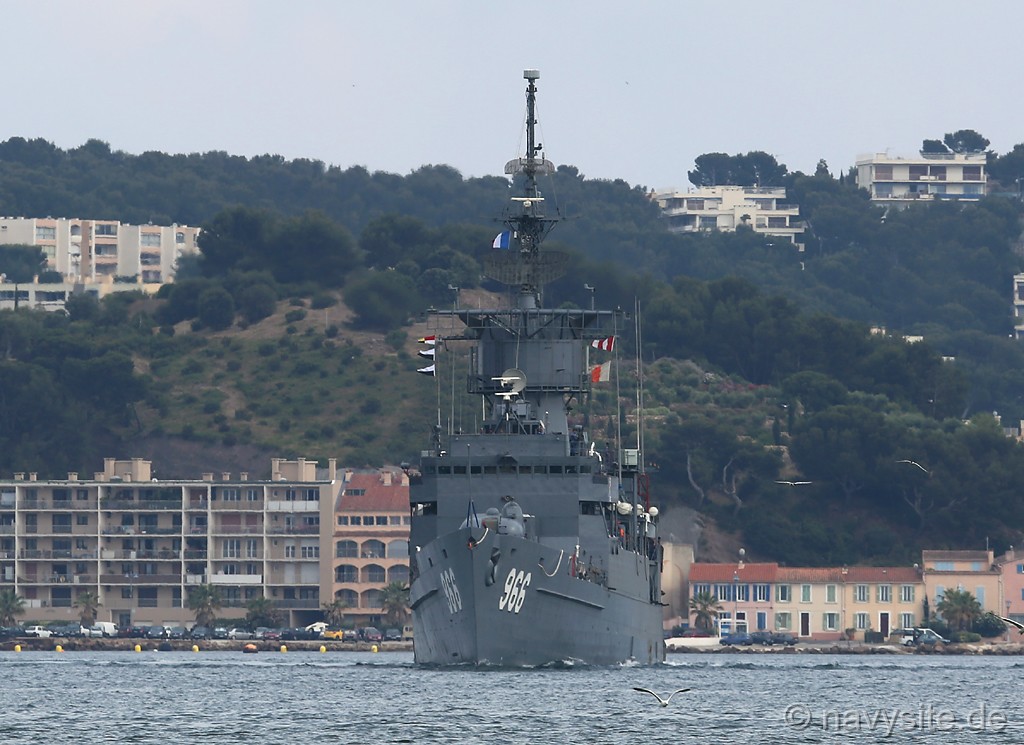
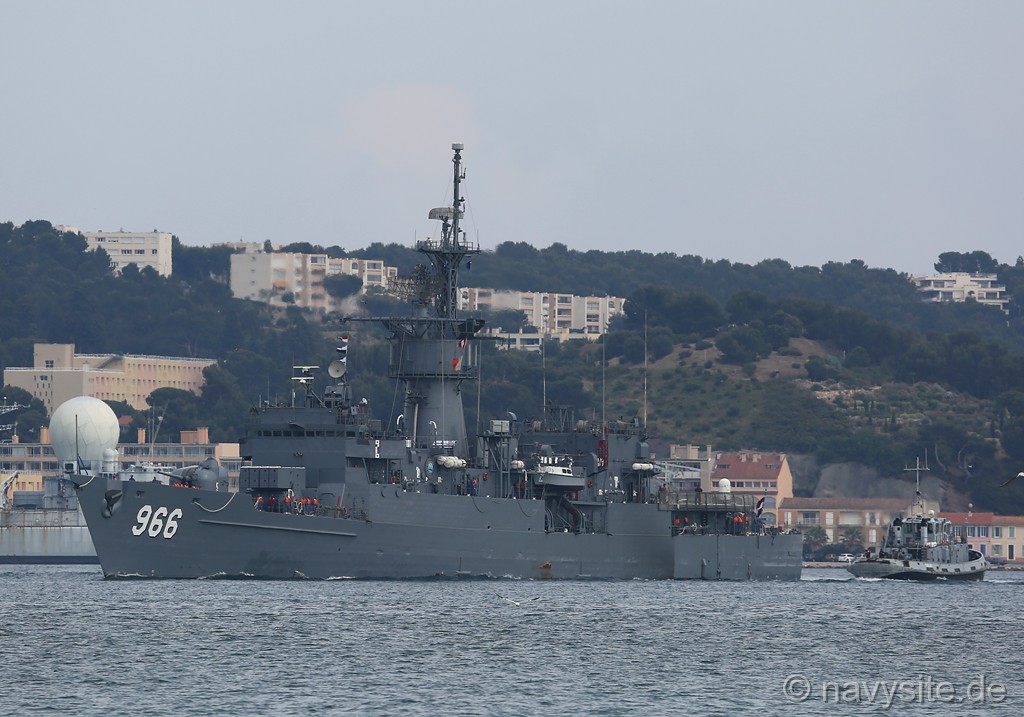
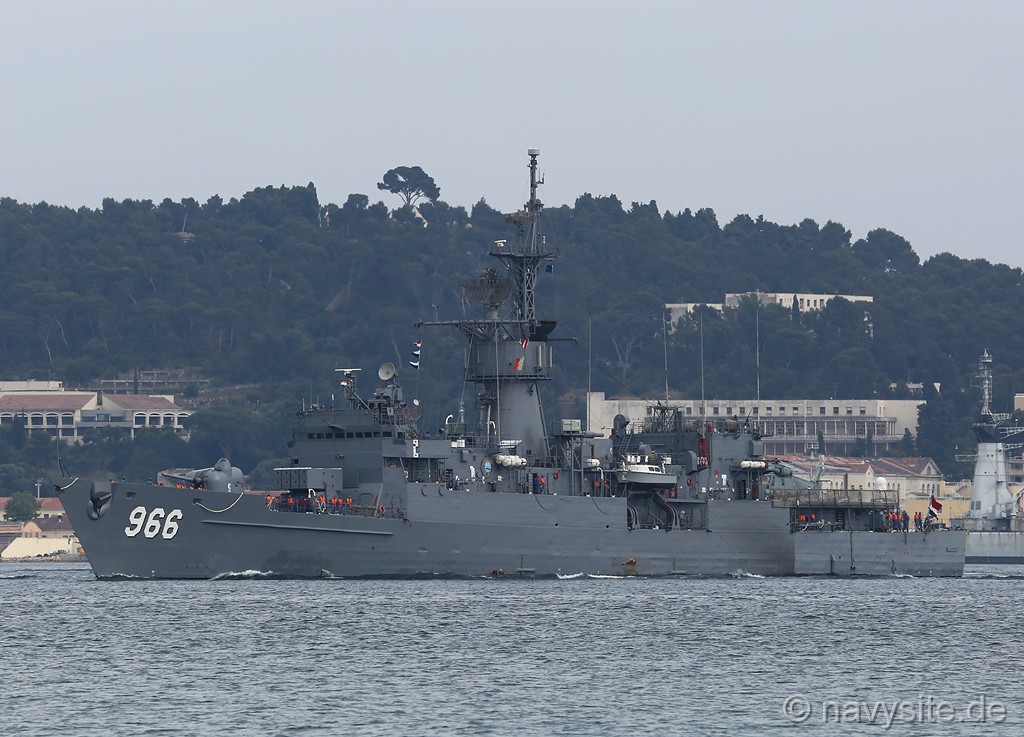
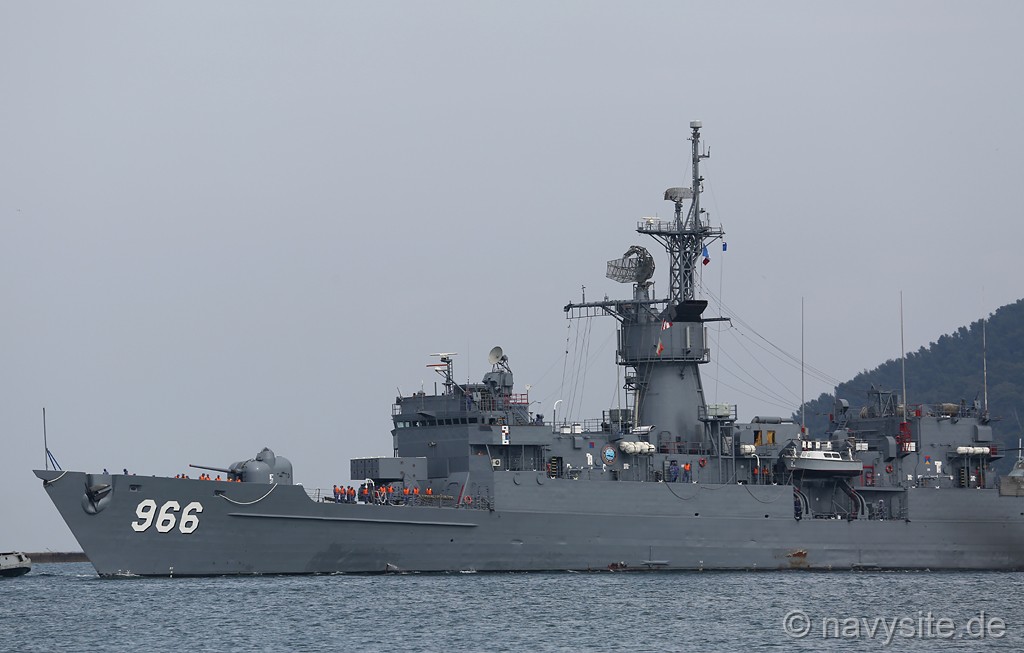
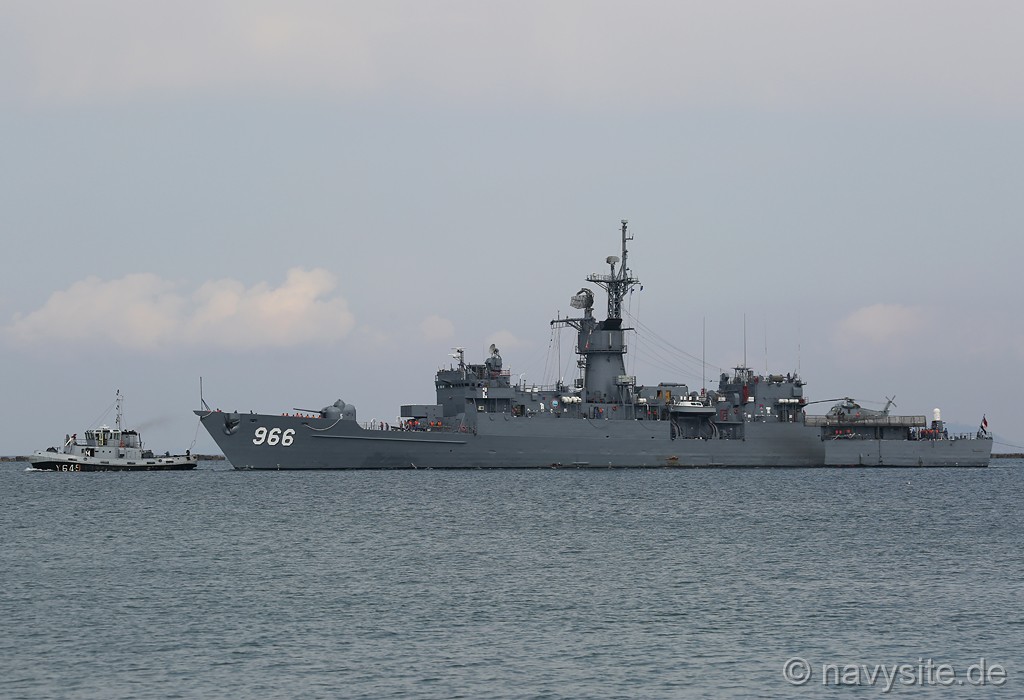
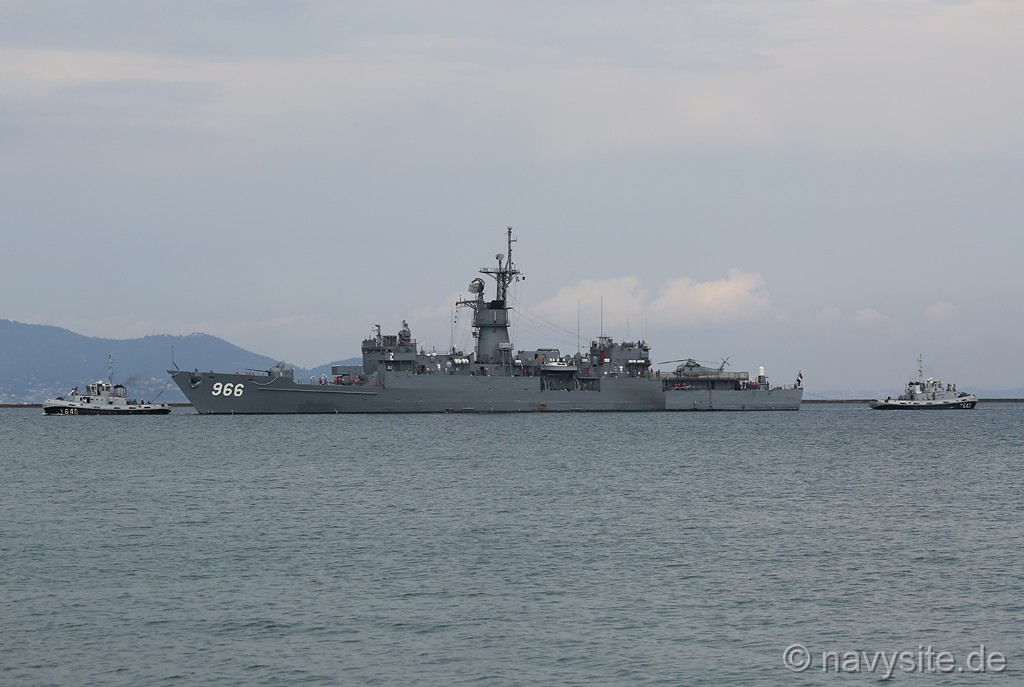
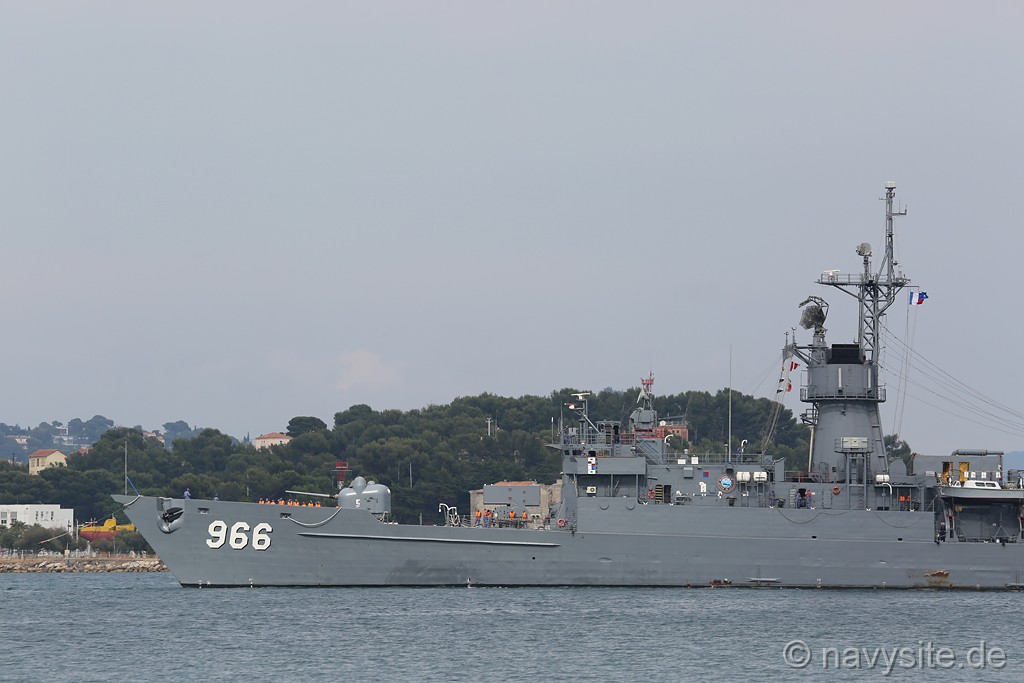
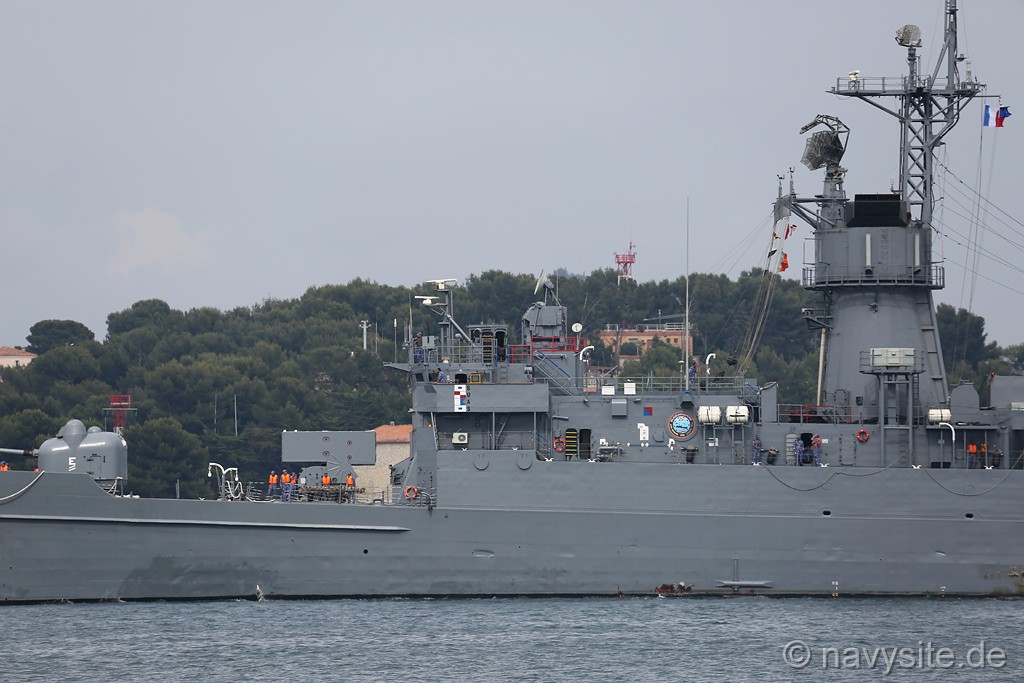
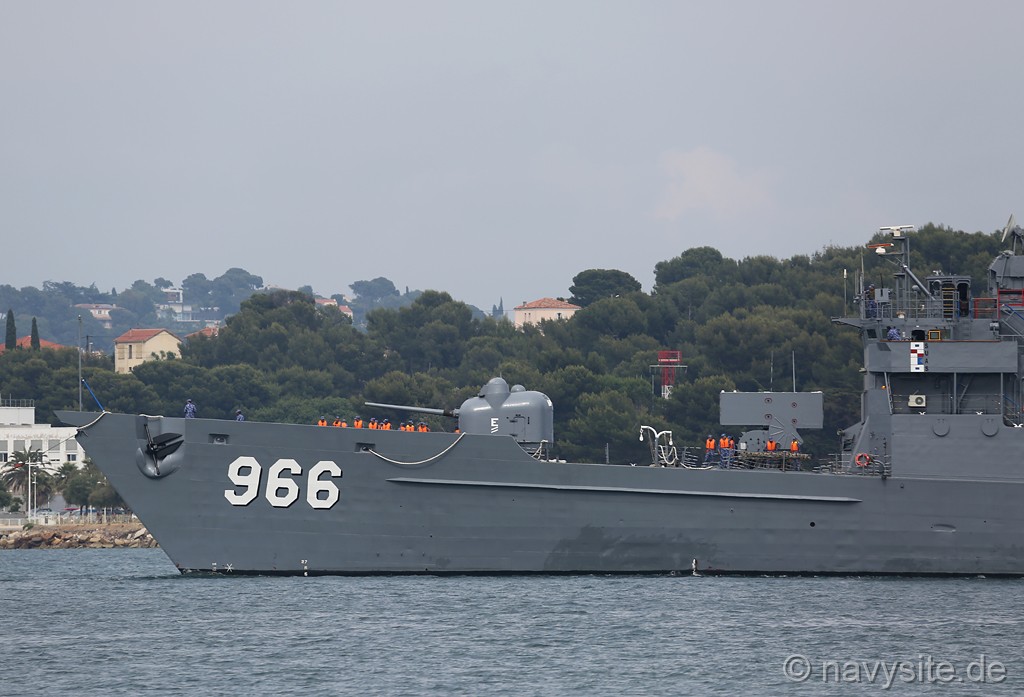
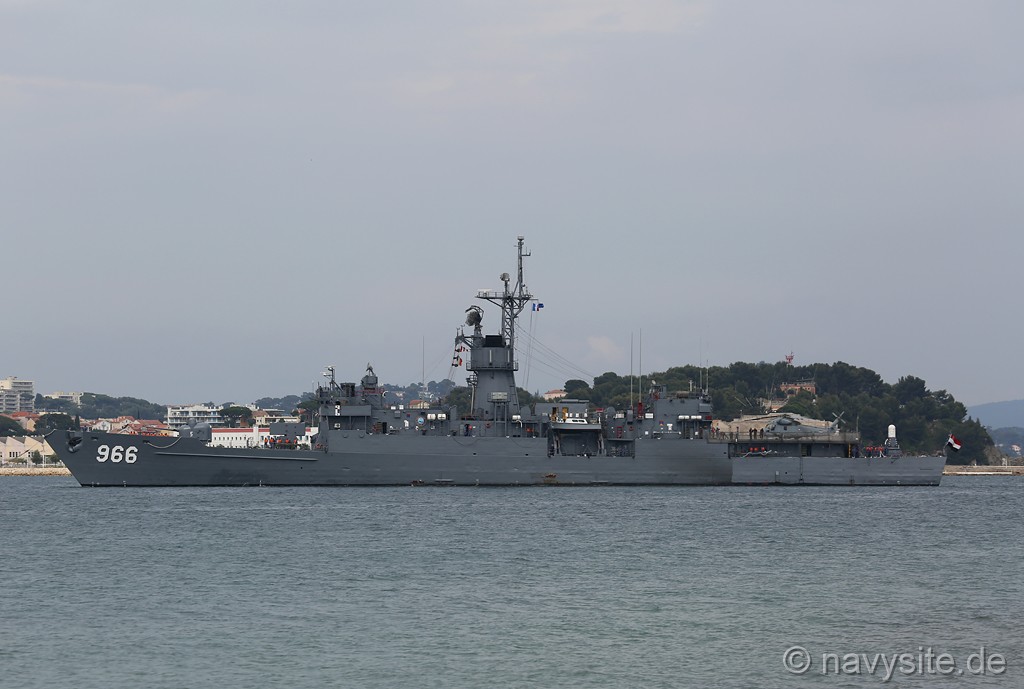
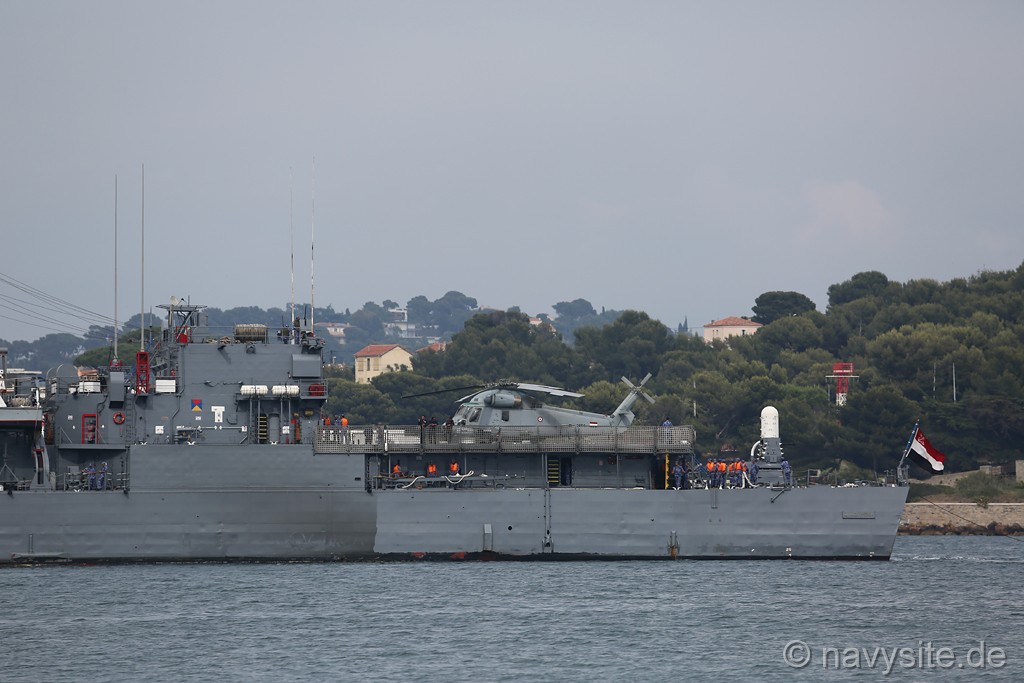
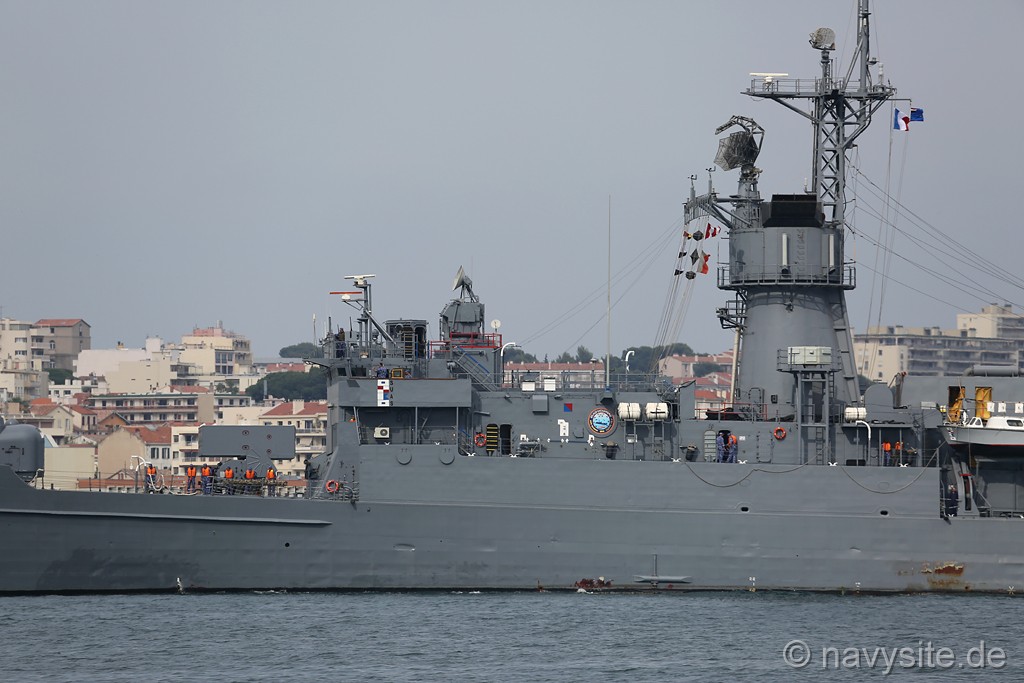
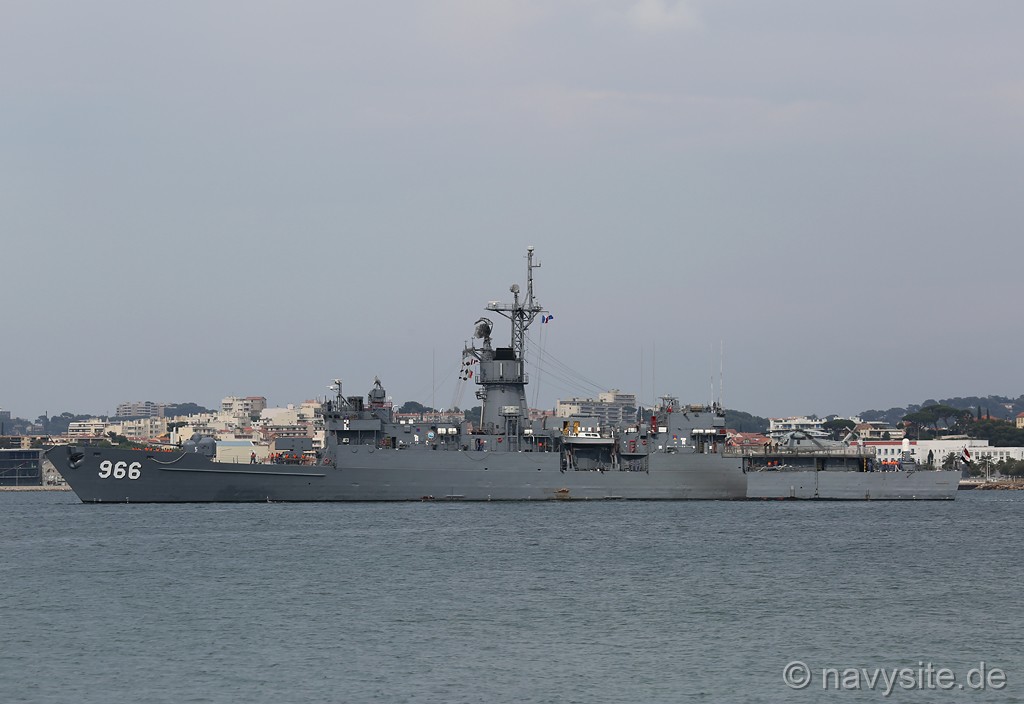
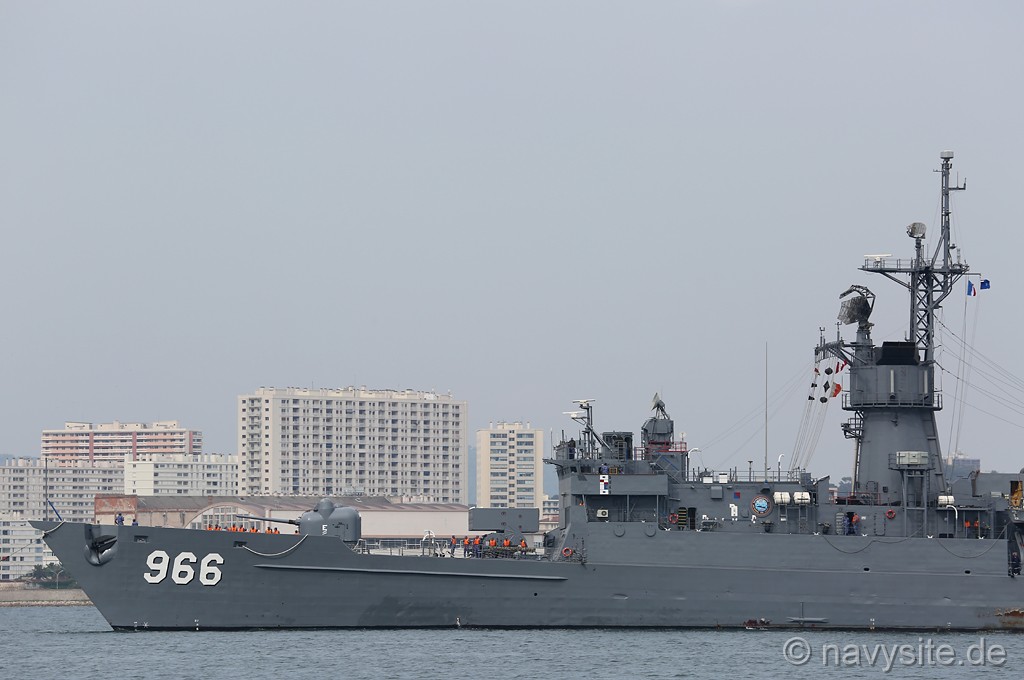
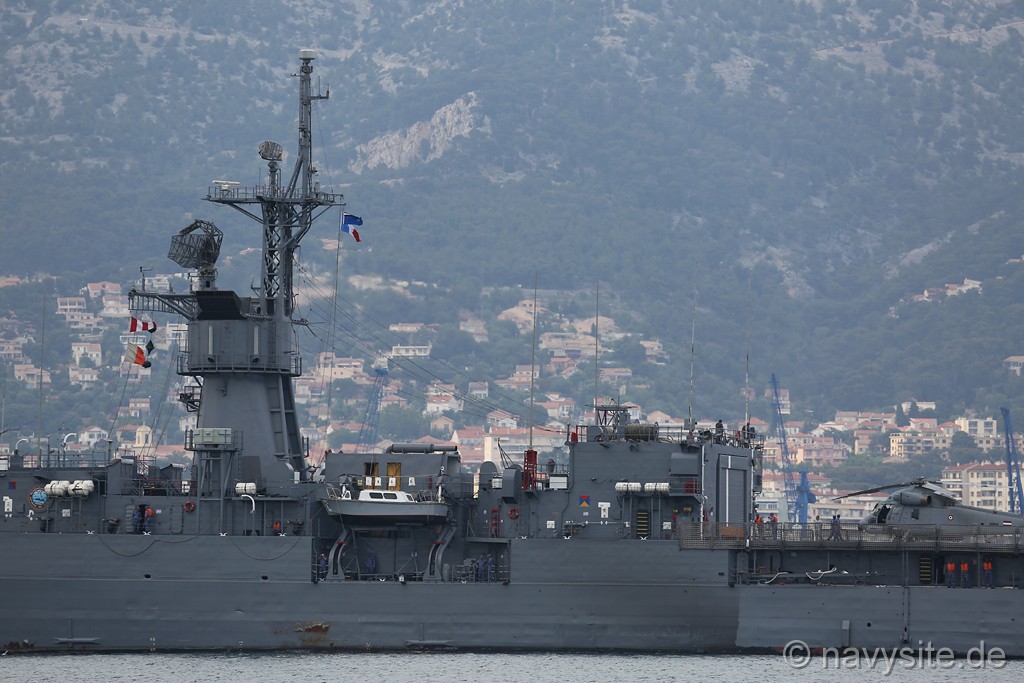
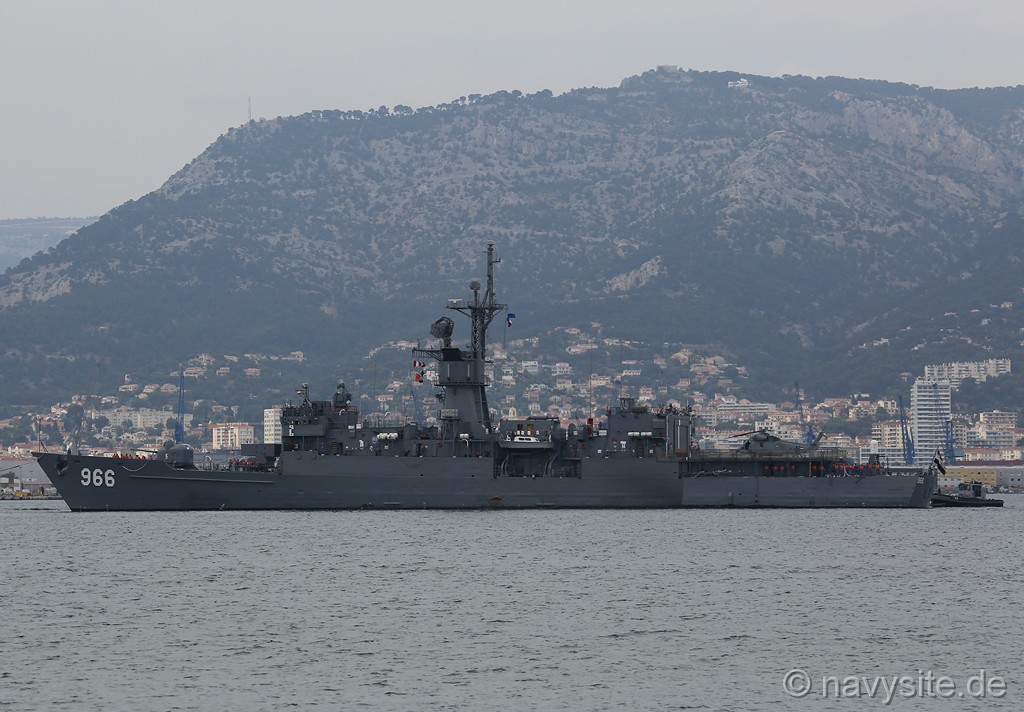
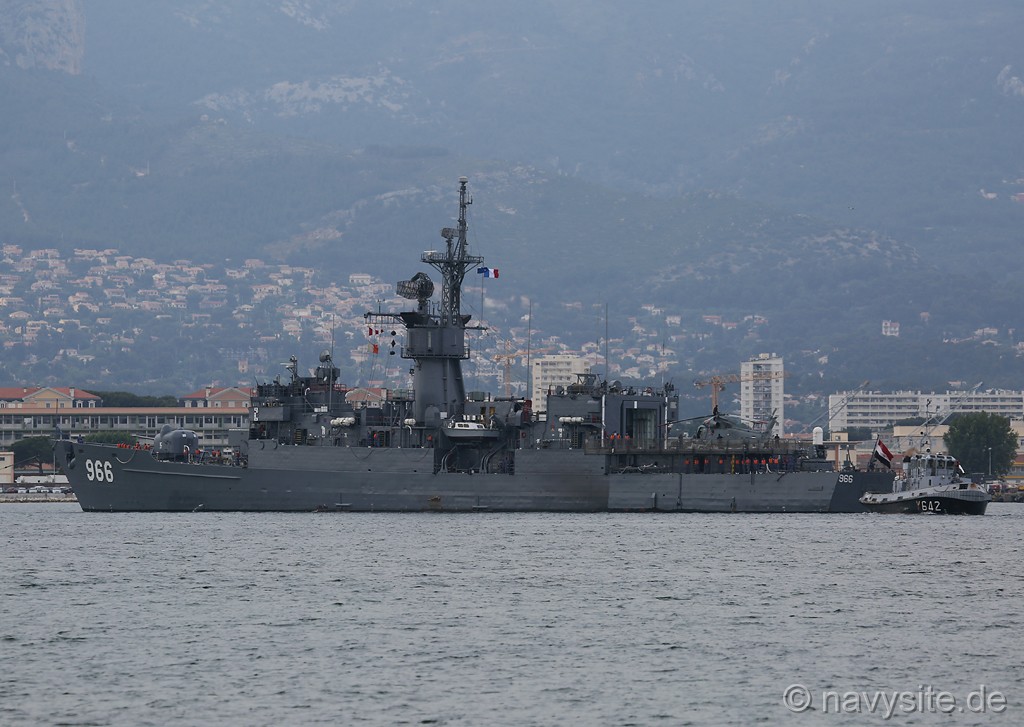
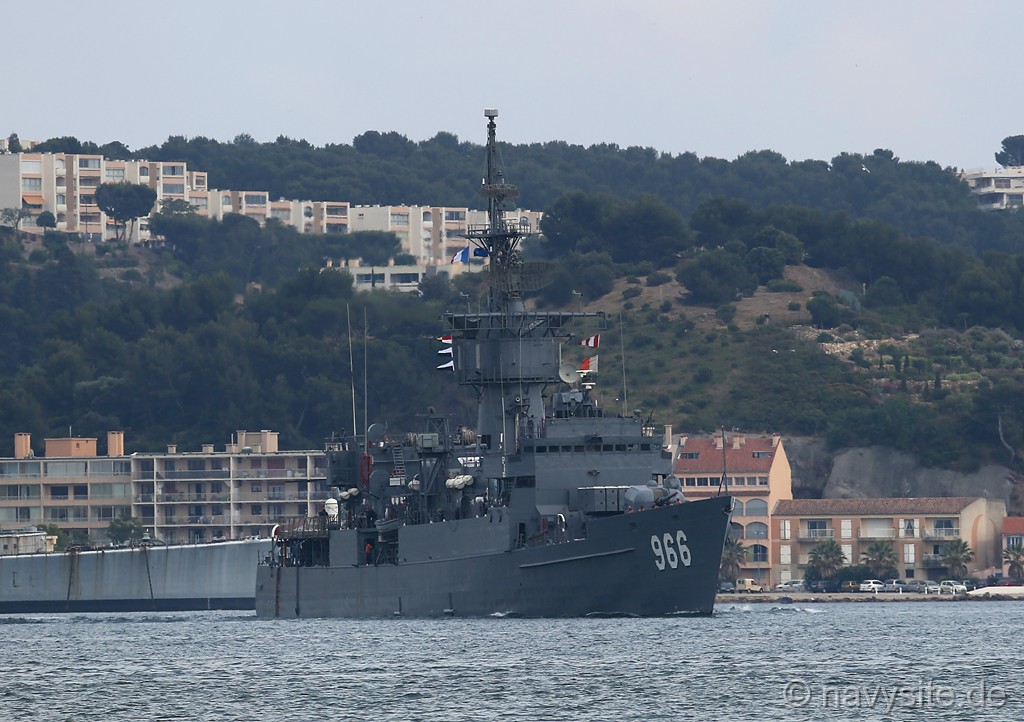
After decommissioning, the MOINESTER was recommissioned in the Egyptian Navy as RASHEED (966). The photos below were taken by me and show the RASHEED arriving at Naval Base Toulon, France, after participating in exercise Cleopatra 2014 which is a joint exercise of the French and Egyptian Navies. The photos were taken on June 4, 2014.
![]() | ![]() | ![]() | ![]() | ![]() |
![]() | ![]() | ![]() | ![]() | ![]() |
![]() | ![]() | ![]() | ![]() | ![]() |
![]() | ![]() | ![]() | ![]() | ![]() |
Back to Frigates List.
Back to Ships List.
Back to selection page.
Back to 1st page.