
Search the Site with

|
Search the Site with
|
 General Characteristics Crew List Memorabilia USS Curtis Wilbur History Homeports of USS Curtis Wilbur Interesting Facts About the Ship's Coat of Arms About the Name "Curtis Wilbur" Image Gallery to end of page
 |  |  |
USS CURTIS WILBUR is the fourth ship in the ARLEIGH BURKE-class of guided missile destroyers and the first ship in the Navy named in honor of Curtis Dwight Wilbur, the 43rd Secretary of the Navy.
| General Characteristics: | Keel Laid: March 12, 1991 |
| Launched: May 16, 1992 | |
| Commissioned: March 19, 1994 | |
| Builder: Bath Iron Works, Bath, Maine | |
| Propulsion system: four General Electric LM 2500 gas turbine engines | |
| Propellers: two | |
| Blades on each Propeller: five | |
| Length: 505,25 feet (154 meters) | |
| Beam: 67 feet (20.4 meters) | |
| Draft: 30,5 feet (9.3 meters) | |
| Displacement: approx. 8.300 tons full load | |
| Speed: 30+ knots | |
| Aircraft: None. But LAMPS 3 electronics installed on landing deck for coordinated DDG/helicopter ASW operations. | |
| Armament: two | |
| Homeport: San Diego, Calif. | |
| Crew: 23 Officers, 24 Chief Petty Officers and 291 Enlisted |
 back to top go to the end of the pageback to top go to the end of the page
Crew List:
This section contains the names of sailors who served aboard USS CURTIS WILBUR. It is no official listing but contains the names of sailors who submitted their information.
back to top go to the end of the pageback to top go to the end of the pageHistory of USS CURTIS WILBUR:
 USS CURTIS WILBUR was built by Bath Iron Works at Bath, Maine. Her keel was laid on March 12, 1991, and she was launched and christened on May 16, 1992. On February 14, 1994, CURTIS WILBUR departed Bath on her maiden voyage to California, conducting crew training and transiting the Panama Canal. She was commissioned at Long Beach, California, on March 19, 1994, with Secretary of the Navy John H. Dalton as the principal speaker. San Diego became her first homeport.
During the summer of 1994, CURTIS WILBUR participated in RIMPAC 1994, serving as Force Air Defense Coordinator during the multinational exercise in Hawaiian waters. Later that summer, she underwent Final Contract Trials conducted by the Board of Inspection and Survey (INSURV), completing the inspection without any mission-degrading deficiencies. In October 1994, she became the first Aegis-equipped U.S. Navy ship to integrate women into her crew.
On July 31, 1995, CURTIS WILBUR departed San Diego on her first Western Pacific and Arabian Gulf deployment. Operating with U.S. Naval Forces Central Command and the Fifth Fleet, she supported Operations Southern Watch and Vigilant Sentinel and helped enforce United Nations sanctions against Iraq through maritime interception operations. During approximately 100 days in the theater, the destroyer performed air, surface, undersea and strike warfare command responsibilities before completing the deployment and returning to the Pacific.
In September 1996, CURTIS WILBUR shifted her homeport from San Diego to Yokosuka, Japan, and joined the forward-deployed forces of the Seventh Fleet. Following her arrival, she completed Tailored Ship's Training Availability (TSTA) II and III and the Final Evaluation Period (FEP) in preparation for operations with the Japan-based carrier battle group.
On February 15, 1997, CURTIS WILBUR deployed with the USS INDEPENDENCE (CV 62) Battle Group, serving as Air Warfare Commander. The deployment included Exercise TANDEM THRUST 1997 in Australian waters in March and Exercise COBRA GOLD with Thai and U.S. forces in May. During the voyage she visited ports including Sasebo, Guam, Sydney, Fremantle, Port Klang and Singapore before returning to Yokosuka on June 10, 1997.
During the remainder of 1997, CURTIS WILBUR took part in exercises JAVELIN MAKER, MISSILEX 97-4, ASWEX 97-6JA, HARMEX 97-2, ANNUALEX 09G and COMPTUEX. She was selected as Destroyer Squadron 15's Battle Efficiency Award winner for 1997.
In January 1998, CURTIS WILBUR conducted naval surface fire support qualification and participated in the bilateral antisubmarine warfare exercise SHAREM 108 with Japanese forces in the East China Sea. She departed Yokosuka on February 17 for a deployment that included visits to Singapore, Darwin and Townsville in Australia, Guam, Hong Kong, Osaka and Tonghae, South Korea. In May, she participated in the Shimoda Black Ship Festival and returned to Yokosuka on May 19.
In June 1998, CURTIS WILBUR began a nine-week Selected Restricted Availability (SRA) at Yokosuka. The maintenance period included upgrades to combat systems and communications equipment, including Link 16, the Joint Maritime Command Information System and INMARSAT B. After sea trials in August, she resumed training and completed cruise missile and naval surface fire support qualifications. During October and November, she participated in the bilateral exercise FOAL EAGLE 1998 off Korea.
CURTIS WILBUR began 1999 with training and a change of command on January 11. After a visit to Hong Kong from January 29 to February 2, she participated in SHAREM 127 with the Republic of Korea Navy in the Sea of Japan later in February. She departed Yokosuka on March 15, arrived at Guam on March 19 and participated in TANDEM THRUST 1999 and a missile-firing exercise in waters near Guam.
On April 6, 1999, CURTIS WILBUR departed Guam for the Arabian Gulf with the USS KITTY HAWK (CV 63) Battle Group, which also included USS CHANCELLORSVILLE (CG 62). She entered the Fifth Fleet area of responsibility on April 18 and passed through the Strait of Hormuz into the Arabian Gulf on April 20. After arriving in Bahrain on April 22, she began maritime interdiction operations in support of United Nations sanctions against Iraq, conducting more than 50 boardings during the deployment. Her operations also supported Operation Southern Watch.
During the deployment, CURTIS WILBUR visited Dubai from April 29 to May 3, Bahrain again in May, Al Jubayl in Saudi Arabia in June and Abu Dhabi in July. She participated in Exercise NAUTICAL SWIMMER with the Royal Saudi Naval Forces in June and SHAREM 128 in the Gulf of Oman later that month. On July 14, she departed the Arabian Gulf through the Strait of Hormuz with the KITTY HAWK Battle Group. Following visits to Bunbury, Australia, from July 27 to August 1 and Pattaya, Thailand, from August 10 to 15, CURTIS WILBUR returned to Yokosuka on August 25.
In October 1999, CURTIS WILBUR participated in FOAL EAGLE off South Korea, with port visits to Busan on October 24-25 and October 28-29. She returned to Yokosuka on November 5, underwent a Combat Systems Readiness Review in late November and December, and completed an INSURV inspection on December 16.
On March 29, 2000, CURTIS WILBUR entered dry dock at Yokosuka for a Drydocking Selected Restricted Availability (DSRA), becoming the first Aegis destroyer to undergo this type of dockyard overhaul there. She was undocked on May 15 and continued the remaining work alongside the pier. Modifications included the installation of a reverse-osmosis water purification plant, a stern flap and additional waste-processing equipment. After the availability, she resumed training and Seventh Fleet operations.
Early in 2001, CURTIS WILBUR operated in Southeast Asian and Australian waters. She visited Darwin, Australia, from February 16 to 19, followed by Dili, East Timor, from February 22 to 24. During the Dili visit, crew members repaired electrical and sanitation facilities at two schools, provided technical instruction and assisted local youth organizations. The ship returned to Japan and underwent a Selected Restricted Availability at Yokosuka from July 11 to September 12.
On October 1, 2001, CURTIS WILBUR departed Yokosuka with the USS KITTY HAWK Battle Group for operations in support of Operation Enduring Freedom. On October 7, while transiting the Strait of Malacca, CURTIS WILBUR, USS KITTY HAWK and USS GARY (FFG 51) assisted in rescuing five people from a sinking Indonesian fishing vessel. The battle group subsequently operated in the northern Arabian Sea, where KITTY HAWK served as a sea base for U.S. special operations forces. After a visit to Phuket, Thailand, from December 13 to 16, CURTIS WILBUR returned to Yokosuka on December 23, 2001.
On February 7-8, 2002, CURTIS WILBUR took part in MISSILEX '02 off Okinawa, an exercise involving anti-ship missile defense training. Other participating U.S. Navy ships included USS O'BRIEN (DD 975), USS COWPENS (CG 63), USS JOHN S. McCAIN (DDG 56), USS CHANCELLORSVILLE, USS CUSHING (DD 985), USS VANDEGRIFT (FFG 48), USS GARY and USS ESSEX (LHD 2). The fleet oiler USNS JOHN ERICSSON (T-AO 194) and the Japanese support ship JDS SAGAMI (AOE 421) provided underway replenishment support during the exercise.
In the spring of 2003, CURTIS WILBUR participated in TANDEM THRUST 2003 near Guam as part of an experimental forward-deployed Expeditionary Strike Group centered on USS ESSEX. Other assigned units included USS ANTIETAM (CG 54), USS O'BRIEN and the attack submarine USS CITY OF CORPUS CHRISTI (SSN 705). The exercise involved American and allied forces and concluded in early May. CURTIS WILBUR's service during the January-May 2003 period was subsequently included in the Navy Unit Commendation credited to the ship.
In 2004, CURTIS WILBUR participated in the multinational exercise FOAL EAGLE in the spring and in Multi-Sail and integrated battle group operations in the western Pacific. On July 28, she arrived at Da Nang, Vietnam, for a scheduled port visit, becoming the first U.S. Navy warship to call at Da Nang since the Vietnam War. It was the second visit to a Vietnamese port by a U.S. Navy warship after the November 2003 visit of USS VANDEGRIFT.
Following modifications and trials associated with the Navy's ballistic missile defense program, CURTIS WILBUR began the first operational U.S. Navy ballistic missile defense (BMD) patrol on September 27, 2004. She operated in the Sea of Japan until mid-October and subsequently continued regional exercises, including TASWEX 04 and ANNUALEX 16G. The year's schedule also included port visits to Sasebo and Kagoshima before she returned to Yokosuka in December.
During 2005, CURTIS WILBUR continued Seventh Fleet training and patrols in the western Pacific, including exercises with Japanese and other allied naval forces. On February 17, 2006, a landslide struck Southern Leyte in the Philippines. CURTIS WILBUR arrived off the affected coast on February 19 alongside the amphibious ready group led by USS ESSEX and the 31st Marine Expeditionary Unit. She supported the ensuing humanitarian assistance and disaster relief operations, including the movement of relief supplies between ships and shore.
During a port visit to Vladivostok, Russia, on June 30, 2007, CURTIS WILBUR was reportedly involved in a minor berthing contact with a Russian Udaloy-class destroyer. In January and February 2008, she underwent further maintenance in dry dock at the Ship Repair Facility in Yokosuka, with contemporary photographs documenting her in dry dock on January 8 and preparations to leave it on February 20.
In 2009, CURTIS WILBUR conducted air-defense training, including an SM-2 missile firing against an aerial target. For her combat-systems performance during 2009, she received the Spokane Trophy, with the award announced on April 15, 2010. She subsequently continued regional patrols, training and ballistic missile defense duties with Seventh Fleet units during 2010.
Following the earthquake and tsunami that struck northeastern Japan on March 11, 2011, CURTIS WILBUR joined U.S. Navy relief operations under Operation Tomodachi. Operating with USS RONALD REAGAN (CVN 76) and other U.S. and Japanese naval vessels off northeastern Honshu, she supported the maritime disaster response. The ship was subsequently credited with the Humanitarian Service Medal for its assistance during the relief operation.
In January 2012, Boatswain's Mate 2nd Class Raymond M. Newton of CURTIS WILBUR was recognized with the Surface Navy Association's Admiral Zumwalt Award for Visionary Leadership. In 2013, the ship's food service department received the Captain Edward F. Ney Memorial Award in the Medium Afloat category. During these years, the destroyer continued forward-deployed patrols and exercises with U.S. and allied forces.
In March 2014, CURTIS WILBUR participated in Multi-Sail 2014 near Guam, conducting anti-air and antisubmarine warfare training that included an SM-2 missile firing on March 23 and recovery of a Mk 46 exercise torpedo. In early April, she operated with American and South Korean forces during FOAL EAGLE off the Korean Peninsula and moored at Pyeongtaek, South Korea, on April 8. She then entered an Extended Dry-Docked Shipboard Repair Availability (EDSRA) at Yokosuka. On November 22, she was preparing to leave dry dock as the overhaul continued.
CURTIS WILBUR completed sea trials on March 5, 2015, following the 335-day midlife EDSRA at Yokosuka. The availability was the longest and most extensive destroyer overhaul then conducted by the Forward-Deployed Naval Forces in Japan. On March 13, she loaded Standard Missile-2 weapons in Tokyo Bay, and on March 18 she visited Apra Harbor, Guam, during renewed operational training. On December 12, the destroyer conducted a Phalanx close-in weapon system live-fire exercise while operating in the South China Sea.
On January 30, 2016, CURTIS WILBUR conducted a freedom-of-navigation operation within 12 nautical miles of Triton Island in the Paracel Islands, challenging excessive maritime claims in the South China Sea. In March, she joined Multi-Sail 2016 near Guam, an exercise involving U.S. and Japanese surface ships. On July 20, the destroyer arrived in Manila, Philippines, for a port visit while operating with the USS RONALD REAGAN Carrier Strike Group.
In September 2016, CURTIS WILBUR participated in VALIANT SHIELD in the Philippine Sea, followed in October by Exercise INVINCIBLE SPIRIT with the RONALD REAGAN Carrier Strike Group and the Republic of Korea Navy near the Korean Peninsula. On March 14-15, 2017, she took part in a trilateral missile-warning information-link exercise with the South Korean destroyer ROKS SEJONG THE GREAT (DDG 991) and the Japanese destroyer JS KIRISHIMA (DDG 174).
In March 2018, CURTIS WILBUR participated in Multi-Sail 2018 near Guam alongside USS ANTIETAM, USS BENFOLD (DDG 65), USS MUSTIN (DDG 89) and the Japanese destroyer JS FUYUZUKI. After completing the Basic Phase of her training cycle on July 30, she resumed operational patrols in the western Pacific. On October 22, CURTIS WILBUR and USS ANTIETAM transited the Taiwan Strait.
On March 25, 2019, CURTIS WILBUR transited the Taiwan Strait in company with the U.S. Coast Guard cutter BERTHOLF. In May, she operated with the Japanese destroyers JS ARIAKE and JS ASAHI in the Philippine Sea. The ship held a change of command ceremony at Yokosuka on October 17 and continued Seventh Fleet training and patrol operations for the remainder of the year.
In 2020, CURTIS WILBUR continued operations in the western Pacific under restrictions associated with the COVID-19 pandemic. From October 26 to November 5, she participated in KEEN SWORD 21, a joint U.S.-Japan exercise in and around Japanese waters. On December 31, 2020, CURTIS WILBUR and USS JOHN S. McCAIN transited the Taiwan Strait.
On February 19, 2021, CURTIS WILBUR conducted a trilateral replenishment-at-sea with the Japanese replenishment ship JS HAMANA and the French frigate FS PRAIRIAL. She transited the Taiwan Strait on February 24, May 18 and June 22 during further regional operations. She also conducted antisubmarine warfare training and exercises with the Royal Australian Navy in the months before her change of homeport.
On August 18, 2021, CURTIS WILBUR departed Yokosuka for the final time as a permanently forward-deployed Seventh Fleet unit. She arrived at Naval Base San Diego on September 16, completing approximately 25 years of service based in Japan. After the homeport shift, she was assigned to the U.S. Third Fleet for maintenance and subsequent training.
On May 12, 2022, CURTIS WILBUR was announced as the Pacific Fleet recipient of the 2021 Anti-Submarine Warfare Bloodhound Award. A change of command took place in San Diego on September 8, 2022. During 2022 and 2023, the destroyer underwent a Drydocking Selected Restricted Availability at General Dynamics NASSCO in San Diego, followed by preparations to return to operational service.
On March 4, 2024, CURTIS WILBUR responded to a distress call off Southern California and rescued two men from a disabled, sinking boat. On May 31, Commander Yilei Liu relieved Commander Joseph M. Foster as commanding officer. From June 19 to 24, the ship tested six unmanned aerial systems during TRIDENT WARRIOR 2024, an experimentation event associated with RIMPAC 2024.
In 2025, CURTIS WILBUR deployed with the USS NIMITZ (CVN 68) Carrier Strike Group, which included USS GRIDLEY (DDG 101), USS WAYNE E. MEYER (DDG 108) and USS LENAH SUTCLIFFE HIGBEE (DDG 123). While operating in the South China Sea, CURTIS WILBUR conducted replenishments-at-sea with USNS JOHN LEWIS (T-AO 205) on May 6 and 14. On May 24, she was moored along the same pier as NIMITZ during a port visit to Port Klang, Malaysia.
On July 16, 2025, CURTIS WILBUR participated in a maritime cooperative activity with units of the Philippine Navy and Philippine Coast Guard. In September, she joined Japanese and South Korean forces for the trilateral exercise FREEDOM EDGE 25. On September 17, she conducted a replenishment-at-sea with the South Korean fast combat support ship ROKS DAECHEONG (AOE 58) and participated in medical evacuation training with personnel embarked in the Japanese helicopter destroyer JS HYUGA.
Following operations in the Third, Fifth and Seventh Fleet areas of responsibility during the deployment, CURTIS WILBUR returned to her homeport of San Diego, California, on October 24, 2025.
back to top go to the end of the pageHomeports of USS CURTIS WILBUR:
| Period | Homeport |
|---|---|
| commissioned at Long Beach, calif. | |
| 1994 - 1996 | San Diego, Calif. |
| 1996 - 2021 | Yokosuka, Japan |
| 2021 - present | San Diego, Calif. |
back to top go to the end of the pageInteresting Facts:
back to top go to the end of the pageAbout the Ship's Coat of Arms:
 ( Click on the Coat of Arms for a larger version )
The Shield:
Red, white and blue are our national colors. Dark blue and gold are the colors traditionally associated with the Navy. Red denotes courage, white is for integrity and gold stands for excellence and high ideals. The anchor is reminiscent of maritime tradition and excellence of achievement. The gavel represents Curtis Wilbur, for whom the ship is named, as a distinguished jurist. The hammer suggests his role in shipbuilding revival. His major objective was to unite a strong Navy. The gavel and hammer are crossed to express strength. The embattled bordure alludes to the fortress like quality of a DDG ship.
The Crest:
The eagle is adapted from the Secretary of Navy seal referring to Curtis Wilbur's support of naval aviation. The three missiles are reminiscent of a trident, a traditional symbol of sea power, and represent the modern technology and power of the ship in the three traditional warfare missions of a destroyer: air, surface, and subsurface.
The Motto:
Latin for "Judicious Power for Country"
back to top go to the end of the pageAbout the Destroyer's Name, about Secretary of the Navy, Curtis Dwight Wilbur:

 Curtis Dwight Wilbur was born on May 10, 1867, in Boonesboro, Iowa. His family later moved to Jamestown in Dakota Territory, where he attended school. In 1884, he entered the United States Naval Academy at Annapolis, Maryland, graduating with a Bachelor of Science degree in 1888. Shortly after graduation, Wilbur resigned from the Navy because of the limited number of available officer positions. He moved to Riverside, California, where he taught mathematics while studying law in the evenings. After being admitted to the California bar in 1890, he began practicing law in Los Angeles.
Wilbur entered public service in Los Angeles County, becoming chief deputy district attorney in 1899. In 1903, he was elected a judge of the Superior Court of Los Angeles County, a position he held until 1918. During his judicial career, he took a particular interest in juvenile justice and the welfare of children. In January 1918, he became an associate justice of the California Supreme Court. He was elected Chief Justice in November 1922 and assumed that position in January 1923, serving until March 1924.
On March 19, 1924, President Calvin Coolidge appointed Wilbur as the 43rd Secretary of the Navy, succeeding Edwin Denby. During his administration, Wilbur worked to modernize and expand the U.S. fleet within the limitations established by international naval arms agreements. He advocated additional cruiser construction, improved naval training and the expansion of naval aviation. His administration supported the Navy's five-year aircraft development and procurement program authorized by Congress in 1926, which provided for a substantial increase in naval aircraft and aviation capabilities.
An important development during Wilbur's tenure was the commissioning of the aircraft carriers USS SARATOGA (CV 3) on November 16, 1927, and USS LEXINGTON (CV 2) on December 14, 1927. Both ships had originally been designed as battle cruisers before being converted into aircraft carriers under the provisions of the Washington Naval Treaty. Wilbur's wife, Olive Doolittle Wilbur, sponsored SARATOGA at her launching on April 7, 1925. The two carriers subsequently played an important role in the development of American carrier aviation and naval tactics. Wilbur remained Secretary of the Navy until March 4, 1929, when the Coolidge administration ended.
After leaving the Navy Department, Wilbur returned to the judiciary. On April 18, 1929, President Herbert Hoover nominated him to the United States Court of Appeals for the Ninth Circuit. The Senate confirmed his appointment on May 2, 1929, and he received his judicial commission the same day. Based in San Francisco, Wilbur served as a federal appellate judge and was a member of the Conference of Senior Circuit Judges from 1931 to 1944. On May 10, 1945, his 78th birthday, he assumed senior status, allowing him to continue serving in a reduced judicial capacity.
Curtis Dwight Wilbur died on September 8, 1954, in Palo Alto, California, at the age of 87. His career encompassed service as a naval officer, attorney, state and federal judge, and Secretary of the Navy.
back to top go to the end of the page
USS CURTIS WILBUR Image Gallery:
 |  |  |  | |
 |  |  |  | |
 |  |  | Click here to view more Photos. | |
The photos below were taken by Hagen Wagner and show the CURTIS WILBUR at Fleet Activities Yokosuka, Japan, on July 28, 2017.
 |  |  |  |  |
 |  |  |  |
The photos below were taken by Shiu On Yee during USS CURTIS WILBUR's port visit to Hong Kong November 21-25, 2018.
 |  |  |  |  |
 |  |  |  |  |
 |  |  | Click here for more Photos. | |
The photos below were taken by Michael Jenning and show the CURTIS WILBUR at Yokosuka, Japan, on August 3, 2019.
 |  |  |  |  |
The photos below were taken by Michael Jenning and show the CURTIS WILBUR at Naval Base San Diego, Calif., on December 28, 2021.
 |  |
The photos below were taken by Michael Jenning and show the CURTIS WILBUR undergoing her Drydocking Selected Restricted Availability (DSRA) at General Dynamics NASSCO, San Diego, Calif., on October 10, 2022.
 |  |  |
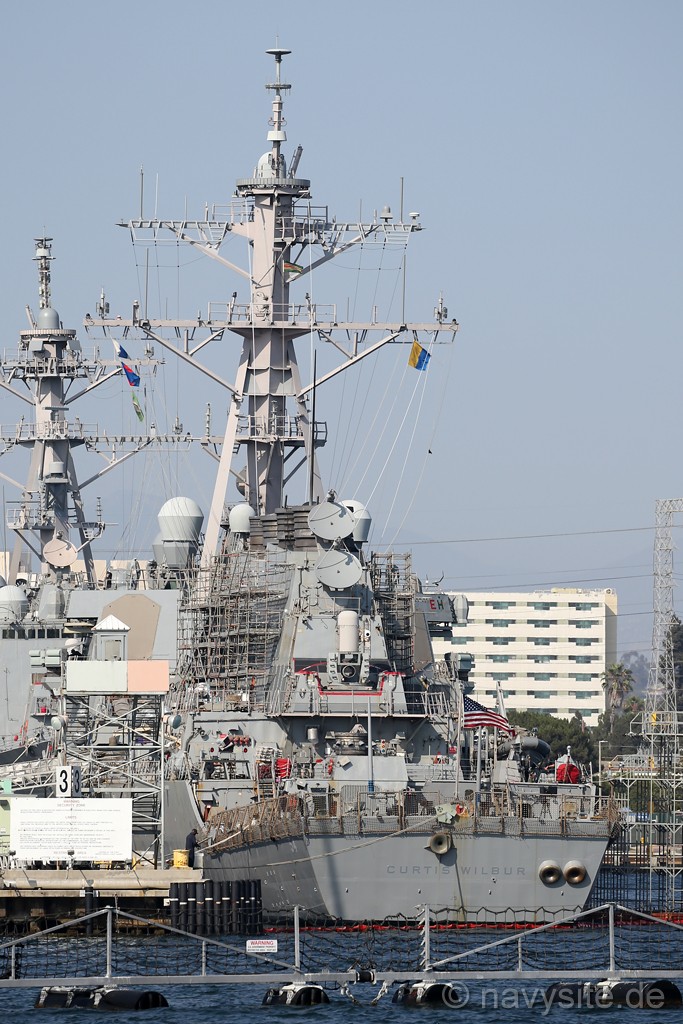
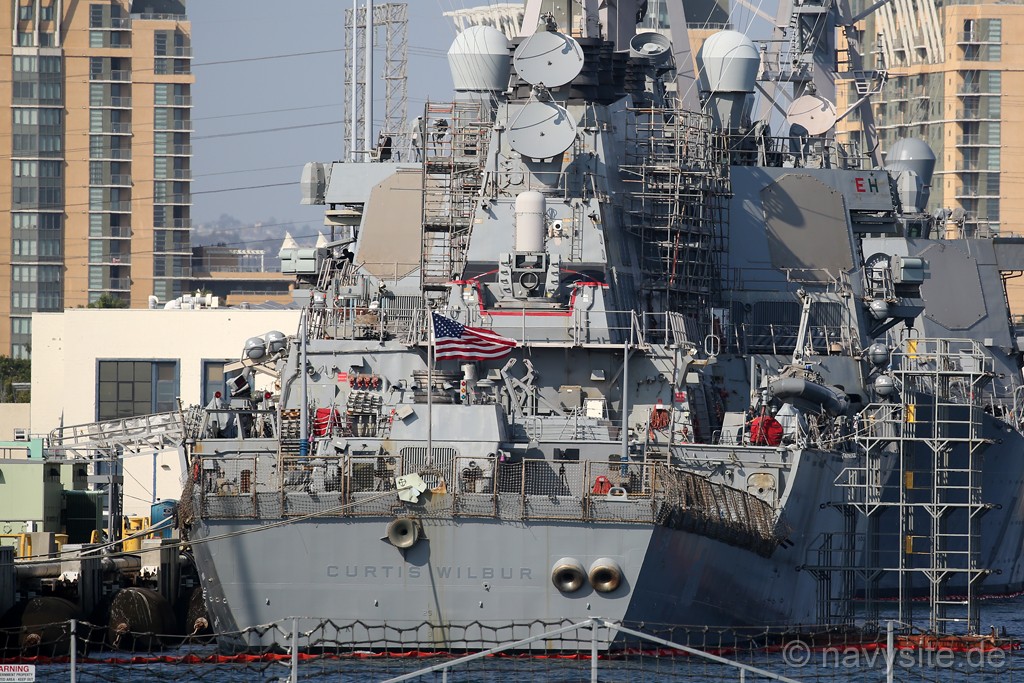
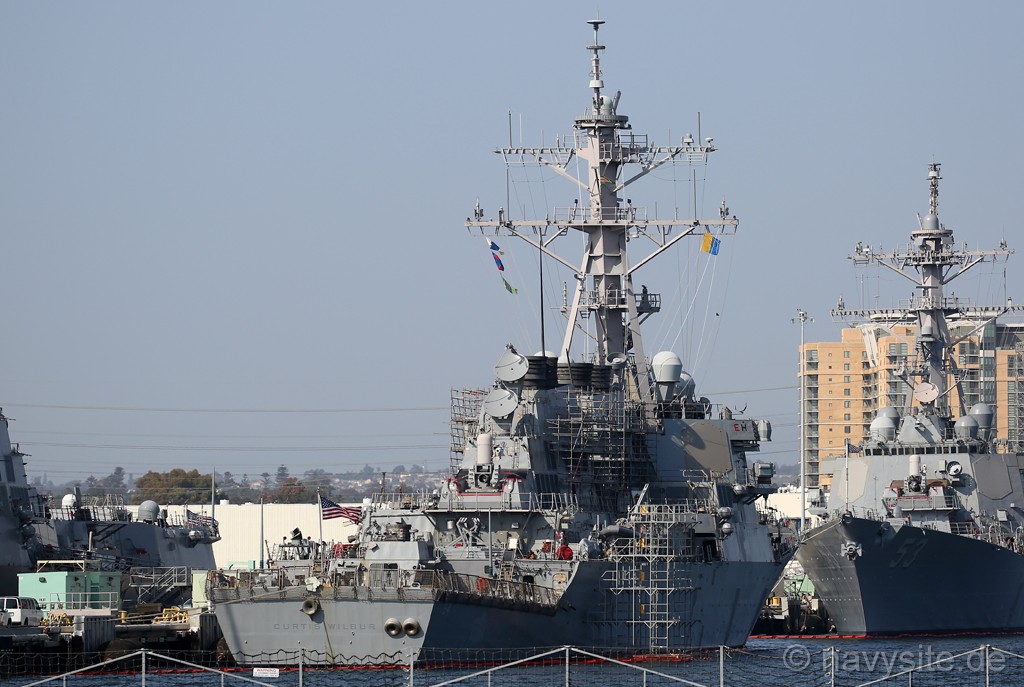
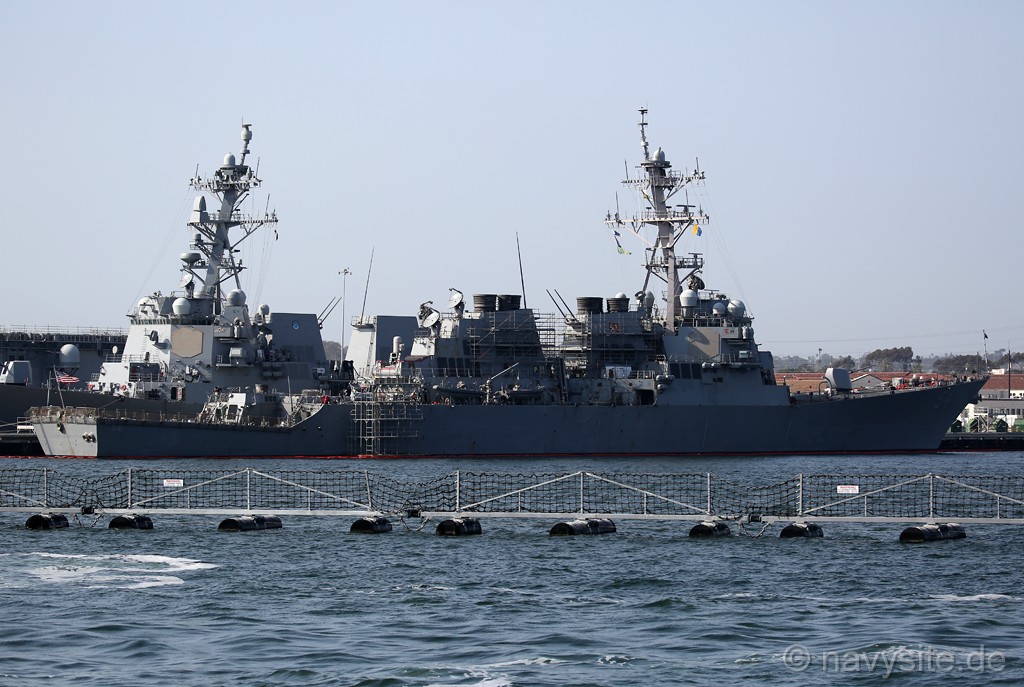
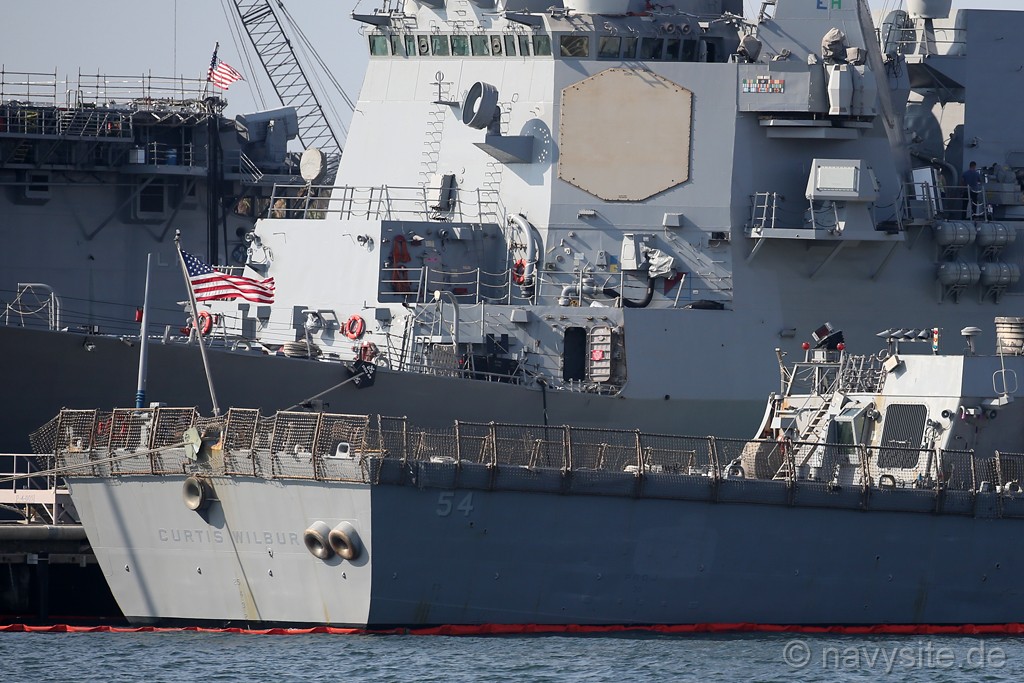
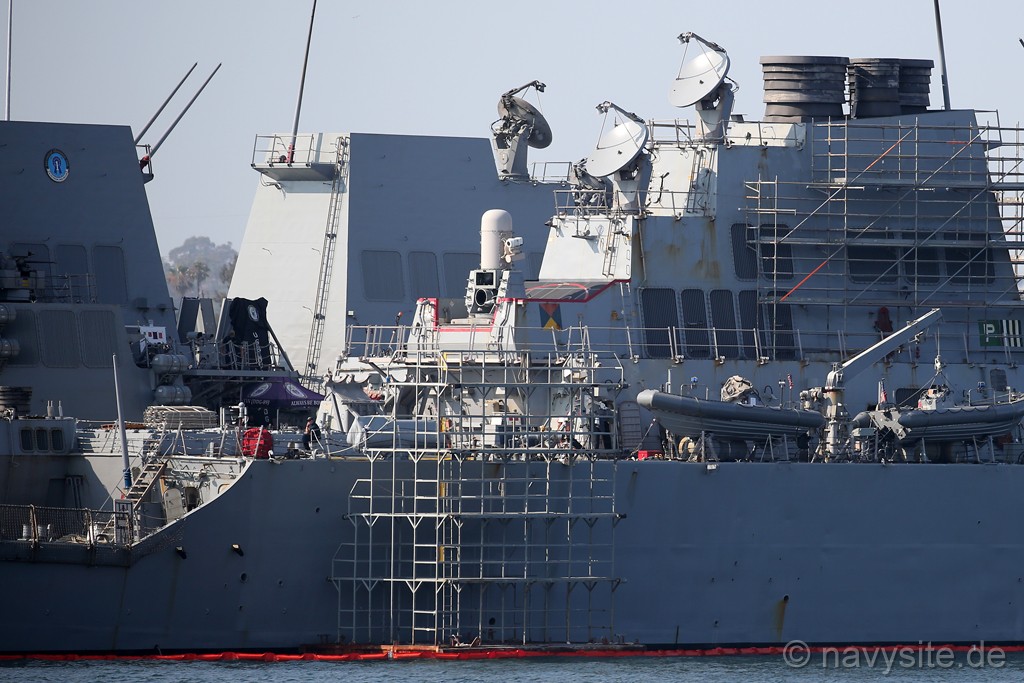
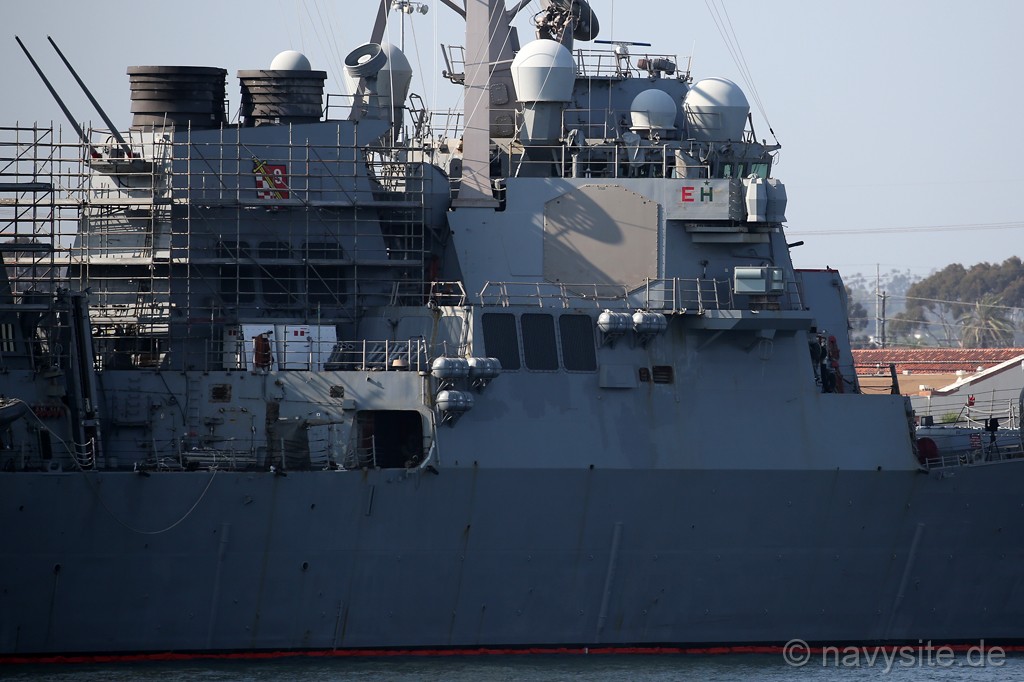
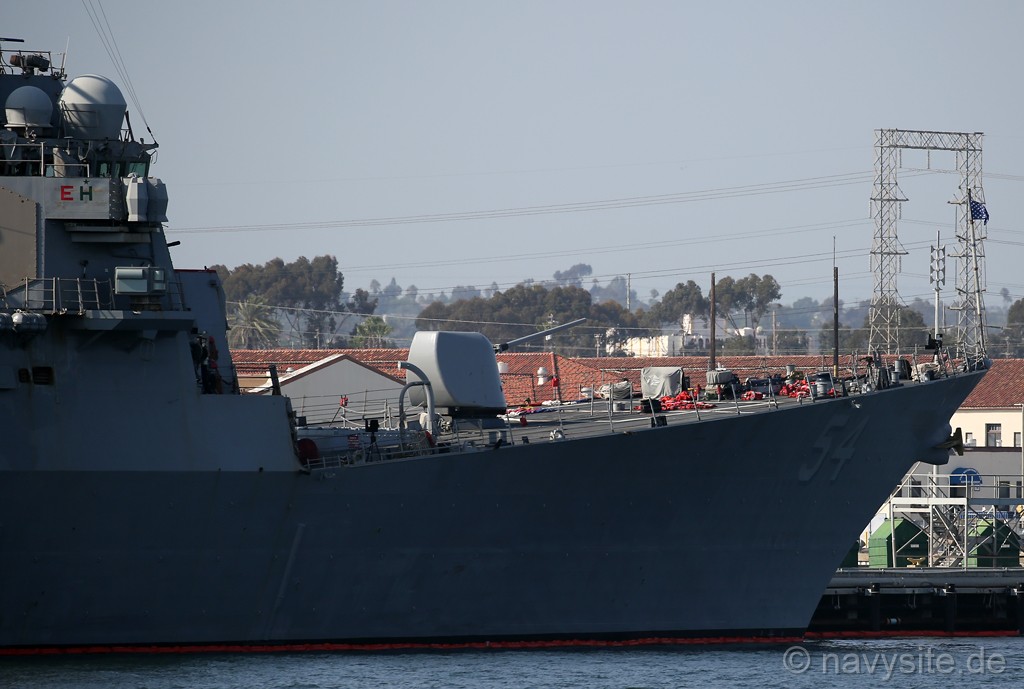
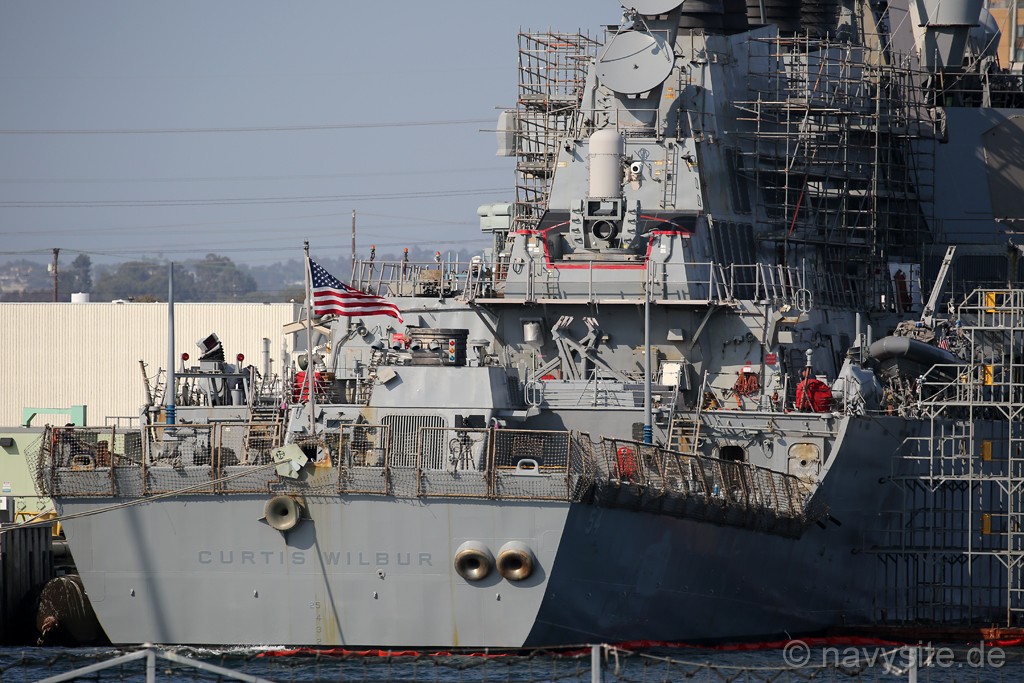
The photos below were taken by me and show USS CURTIS WILBUR at Naval Base San Diego, Calif., on July 26, 2024.
 |  |  |  |  |
 |  |  |  |
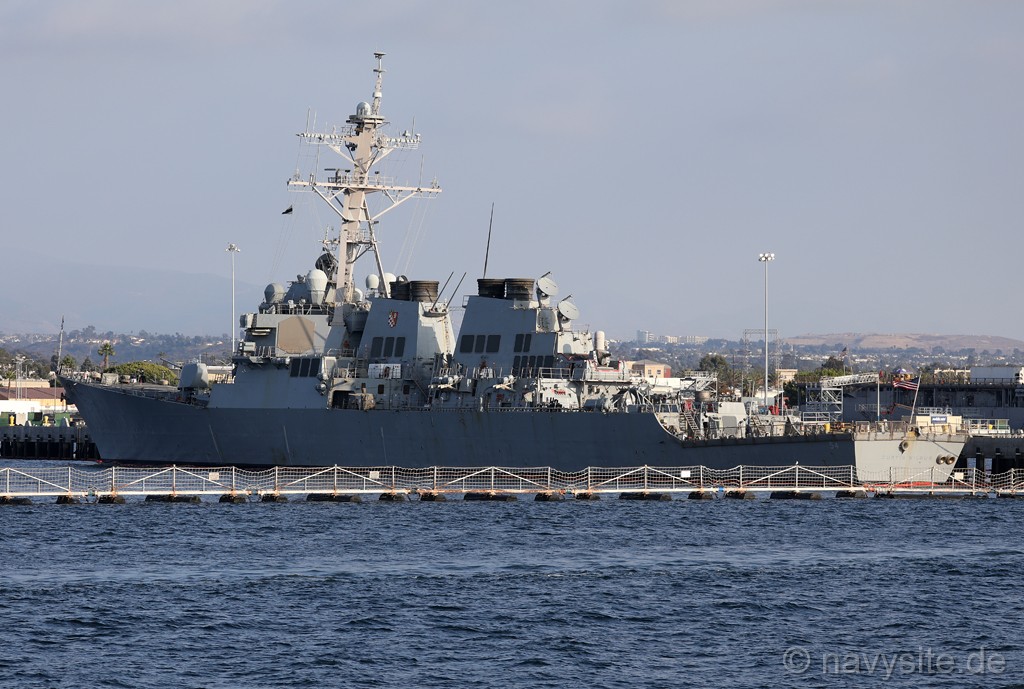
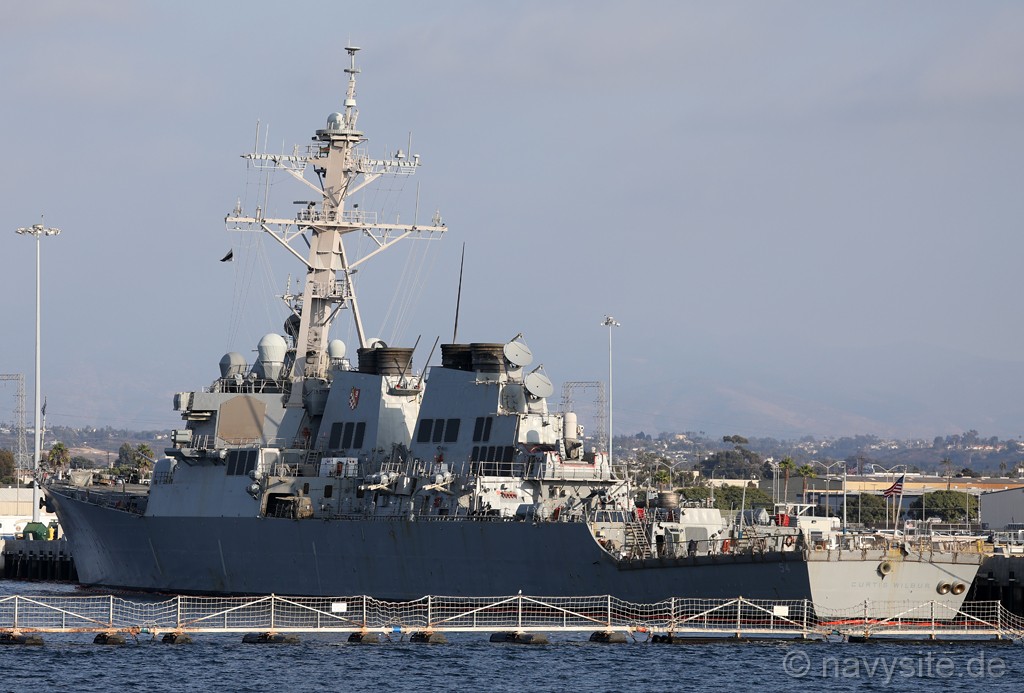
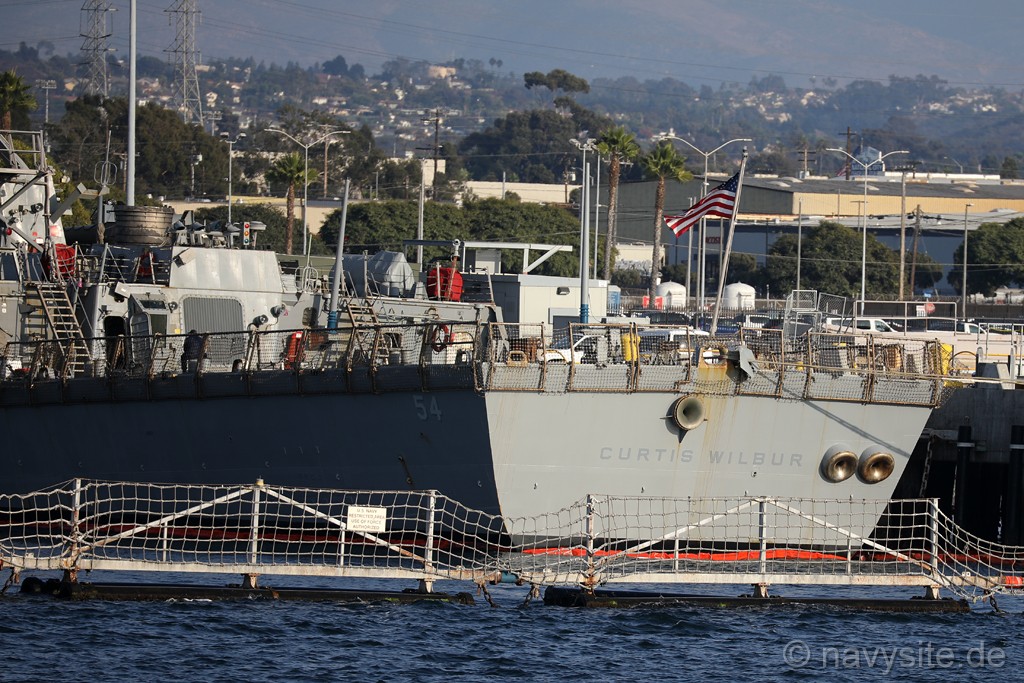
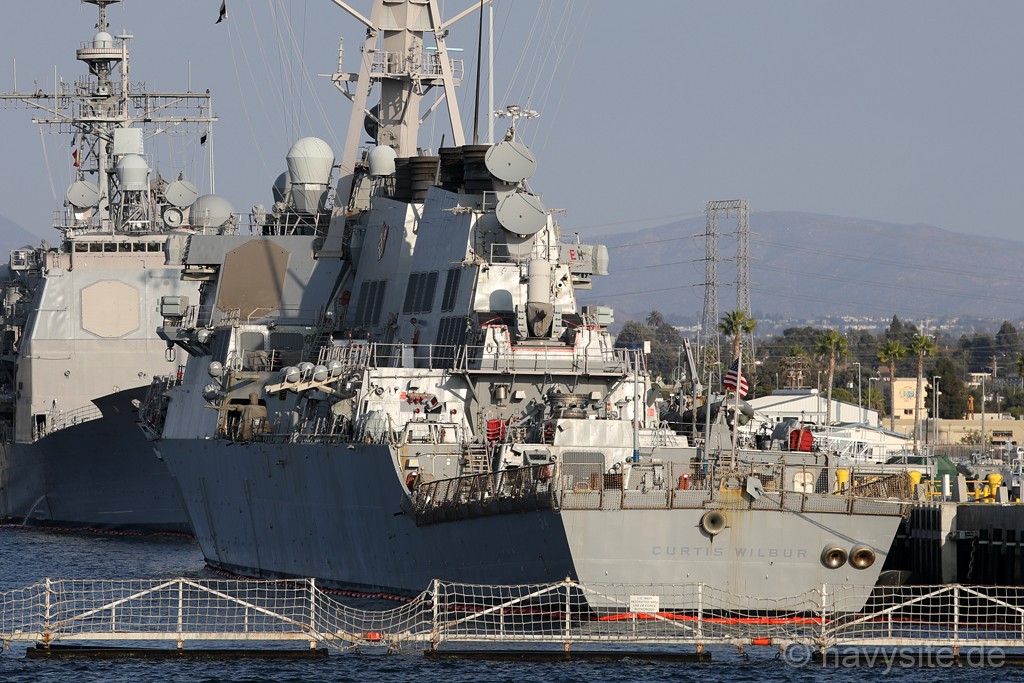
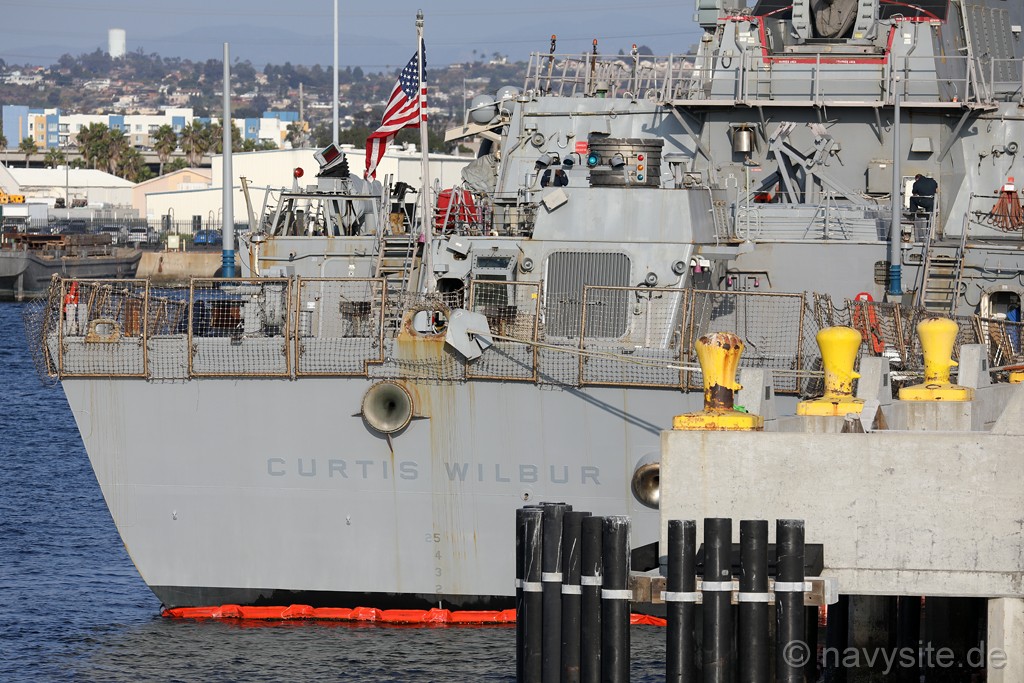
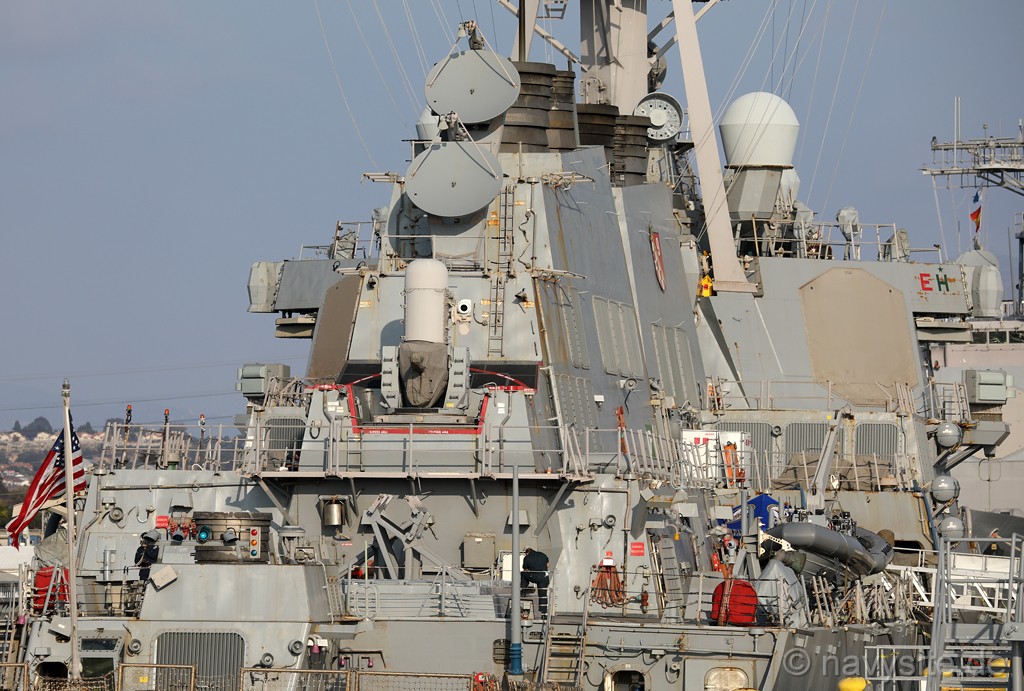
The photos below were taken by Michael Jenning and show USS CURTIS WILBUR at Naval Base San Diego, Calif., on October 15, 2024.
 |  |  |  |  |
 |
back to top
 Back to Destroyers list. Back to ships list. Back to selection page. Back to 1st page.