Search the Site with 
General Characteristics Crew List Memorabilia Cruise Books Patch Gallery About the Ship's Namesake History Image Gallery to end of page

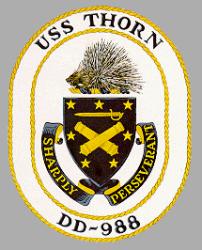
USS Thorn (DD 988)

- decommissioned -
- sunk as a target -


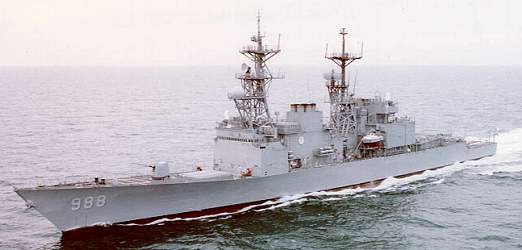
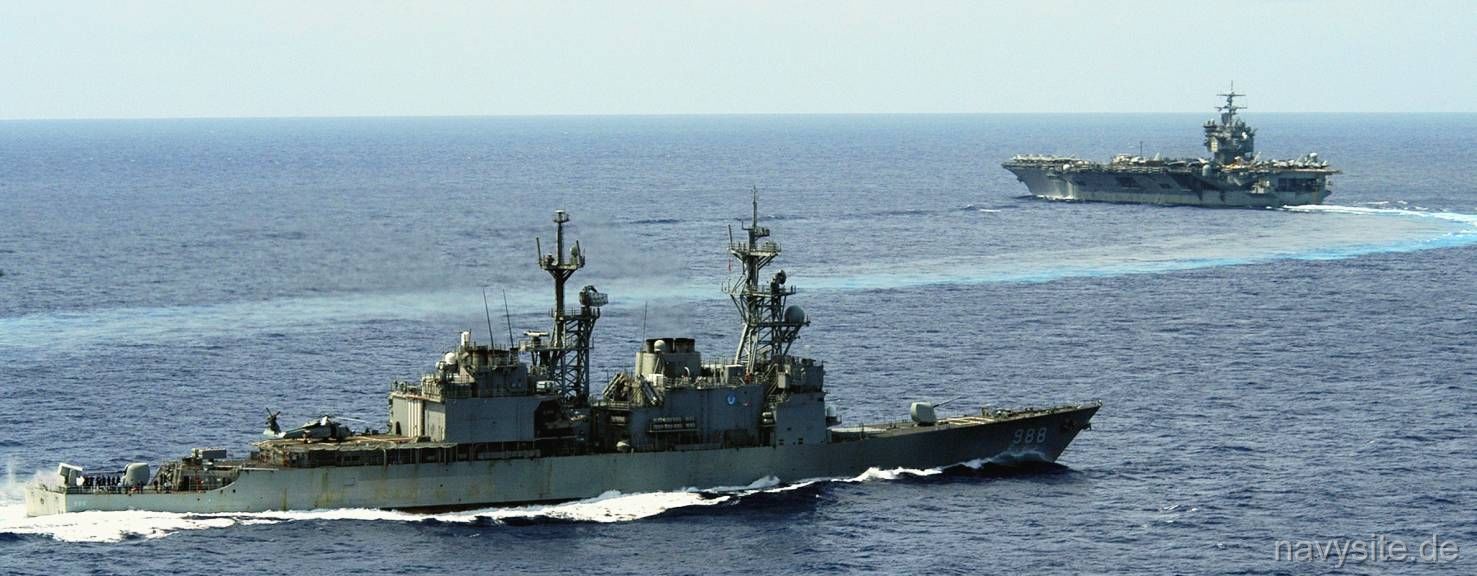
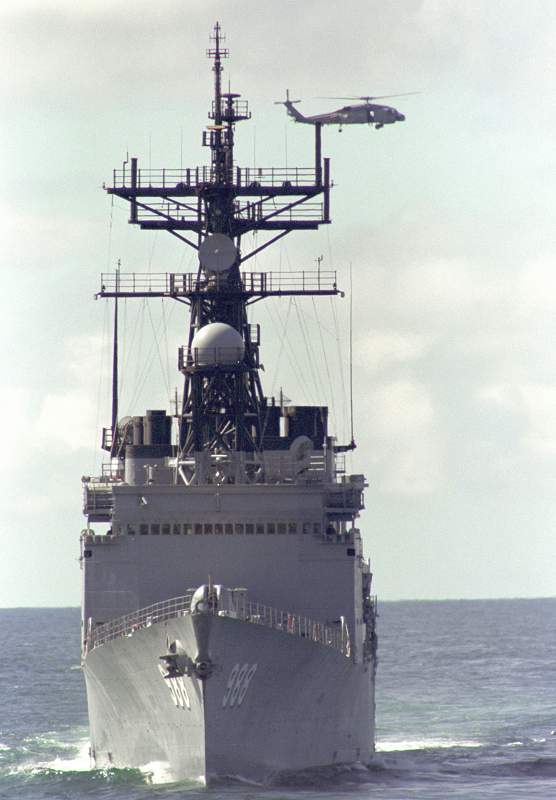
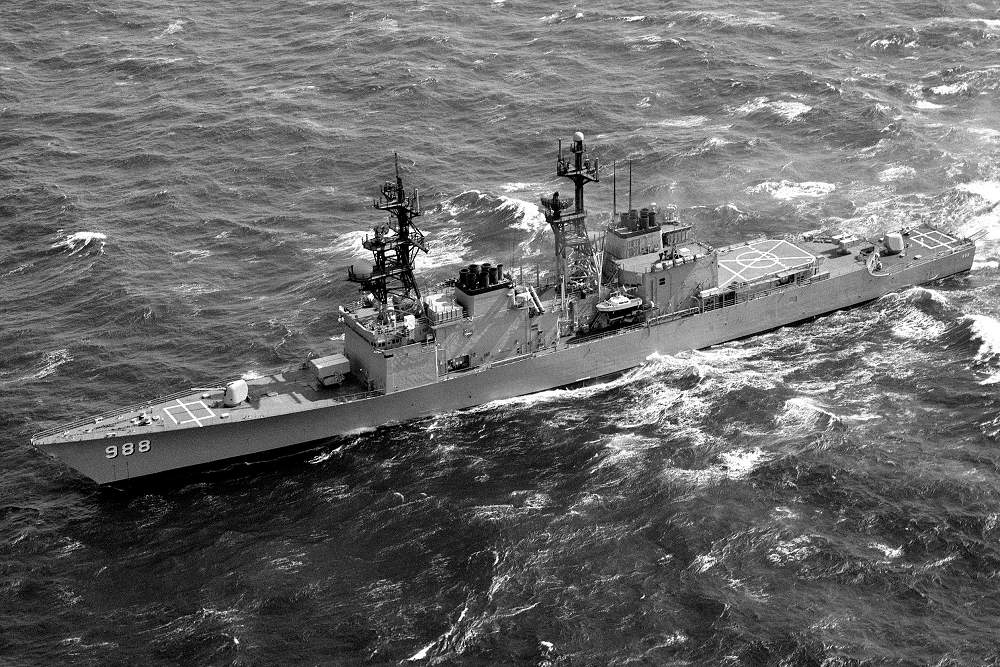
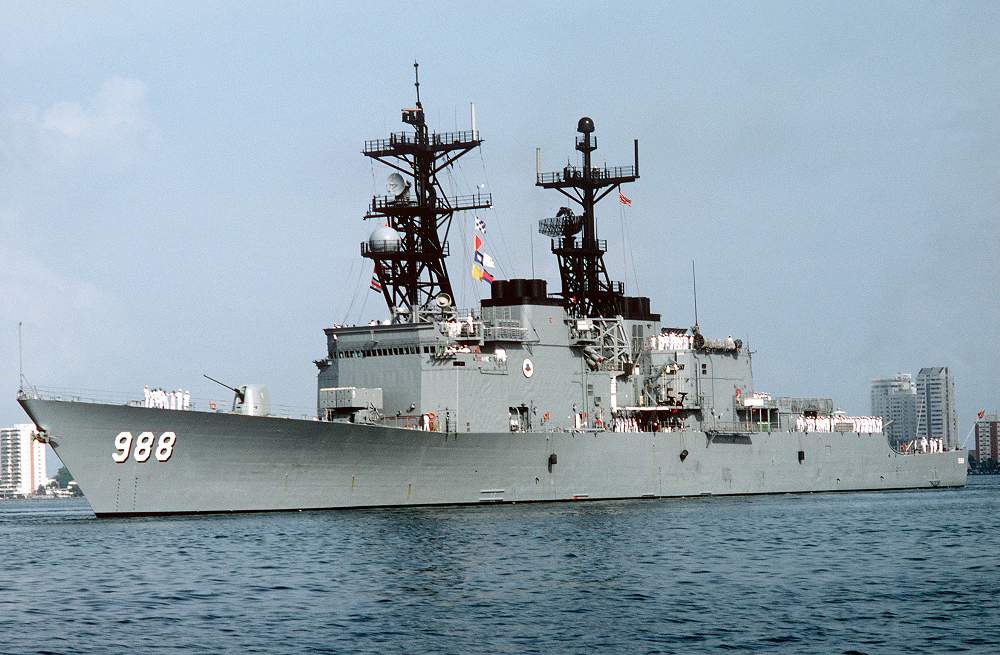
USS THORN was the 26th SPRUANCE - class destroyer and the second ship in the Navy to bear the name. Both decommissioned and stricken from the Navy list on August 25, 2004, the THORN was subsequently towed to the Inactive Ships On-site Maintenance Office, Philadelphia, Penn., where she remained until she was sunk as a target on July 22, 2006, off the US east coast.

General Characteristics:Awarded: January 15, 1975
Keel laid: August 29, 1977
Launched: February 3, 1979
Commissioned: February 16, 1980
Decommissioned: August 25, 2004
Builder: Ingalls Shipbuilding, West Bank, Pascagoula, Miss.
Propulsion system: four General Electric LM 2500 gas turbine engines
Propellers: two
Blades on each Propeller: five
Length: 564,3 feet (172 meters)
Beam: 55,1 feet (16.8 meters)
Draft: 28,9 feet (8.8 meters)
Displacement: approx. 9,200 tons full load
Speed: 30+ knots
Aircraft: two SH-60B Seahawk (LAMPS 3)
Armament: two Mk 45 5-inch/54 caliber lightweight guns, one Mk 41 VLS for Tomahawk, ASROC and Standard missiles, Mk 46 torpedoes (two triple tube mounts), Harpoon missile launchers, one Sea Sparrow launcher, two 20mm Phalanx CIWS
Crew: approx. 340


Back to topback to top  go to endgo to the end of the page


Back to topback to top  go to endgo to the end of the page

Crew List:

This section contains the names of sailors who served aboard USS THORN. It is no official listing but contains the names of sailors who submitted their information.


back to top  go to the end of the page


Back to topback to top  go to endgo to the end of the page

USS THORN Cruise Books:


Back to topback to top  go to endgo to the end of the page

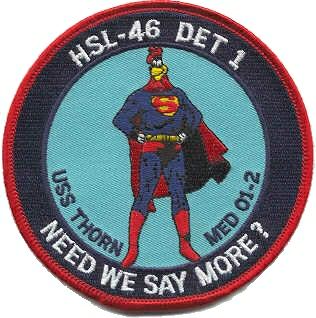
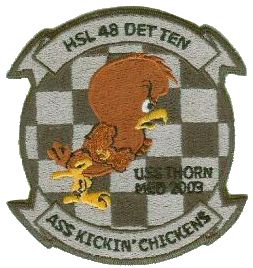
USS THORN Patch Gallery:

HSL-46 Det 1 - MED 2001HSL-48 Det 10 - MED 2003


Back to topback to top  go to endgo to the end of the page

About the Ship's Namesake:

Jonathan Thorn - born on 8 January 1779 at Schenectady, N.Y. - was appointed a midshipman on 28 April 1800. Subsequently serving with the Navy during the Tripolitan War, Thorn volunteered to take part in the hazardous expedition to destroy the captured frigate PHILADELPHIA, which lay beneath the guns of the shore batteries in heavily defended Tripoli harbor. On 16 February 1804, Lt. Stephen Decatur, Jr., led a party of these volunteers in the ketch INTREPID into Tripoli and burned the erstwhile American frigate.

Attached to the schooner ENTERPRISE, Thorn was then assigned to Gunboat No. 4, under Decatur's command. In this vessel, he participated in the attack on Tripoli, with Commodore Edward Preble's squadron on 3 August 1804. Specially commended by Decatur for his conduct in this battle, Thorn received command of one of the Tripolitan gunboats captured and commanded this vessel in the engagement with the Tripolitan pirates on 7 August.

Commissioned a lieutenant on 16 February 1807, Thorn became the first commandant of the New York Navy Yard at age 27. In 1810, he was granted a two-year furlough to command John Jacob Astor's sailing bark TONQUIN in a voyage slated to take the ship to the Pacific Northwest to establish a fur trading post. Anchoring off Nootka on 5 June 1811, after a voyage which had taken the ship around Cape Horn to the Hawaiian Islands and to the mouth of the Columbia River, Thorn soon began trading with the local Indians. Angered by what they considered a bad business deal, the Indians came on board TONQUIN and, in a brief, bloody action, massacred Thorn and his crew.


Back to topback to top  go to endgo to the end of the page

USS THORN History:

USS THORN was ordered on 15 January 1975, laid down at Ingalls Shipbuilding, Pascagoula, Mississippi, on 29 August 1977, launched on 22 November 1978, christened on 3 February 1979, and commissioned on 16 February 1980. She entered service as a SPRUANCE-class anti-submarine destroyer of the Atlantic Fleet, based on gas-turbine propulsion and designed around quieting, long-range sonar, and embarked LAMPS helicopters. Her early years were spent preparing for Sixth Fleet and NATO duties during the late Cold War.

After trials and work-ups, THORN began her first extended overseas employment with a Mediterranean deployment in 1981. The ship crossed the Atlantic via the Azores and entered the Mediterranean through the Strait of Gibraltar for operations with the U.S. Sixth Fleet. Cruise book evidence records liberty and logistics calls including Ponta Delgada (Azores), Palma de Mallorca, Naples, Alexandria, Mombasa (reflecting an excursion into the Indian Ocean), and Patras. Operationally, she alternated routine presence, multinational exercises, and periods at anchor or alongside tenders for maintenance.

In mid-1982, THORN again deployed, this time across June-December to the Mediterranean, Indian Ocean, and Persian Gulf. The itinerary reflected an Atlantic Fleet emphasis on both NATO presence and CENTCOM contingencies as the Iran-Iraq War entered a bloody middle phase. In October-November 1982, she operated in the Eastern Mediterranean during the Lebanon crisis, when the Multinational Force and U.S. Sixth Fleet ships maintained a stabilizing presence off Beirut and supported the deployment and protection of Marines ashore. Her movements fit the surge of amphibious and surface forces to the Levant in that period. She completed the cruise by year's end and returned to the United States.

THORN's 1983 operating year included time with the Sixth Fleet service force - photographs document her moored outboard at Gaeta, Italy, the home of the Sixth Fleet flagship USS PUGET SOUND (AD 38) - and typical NATO/Med evolutions and maintenance alongside the tender between short underway periods. The Gaeta nestings point to routine upkeep and staff-support tasks during intervals between exercises and patrols.

From June 1984, THORN pivoted to the Western Hemisphere for UNITAS XXV, the annual circumnavigation of South America with partner navies. Opening ceremonies were held at Roosevelt Roads, Puerto Rico. Imagery shows THORN serving in a prominent role for the anniversary iteration of the series. During the cruise she transited the Panama Canal - photography captures the ship approaching the Bridge of the Americas - and conducted combined exercises and port visits with regional navies, including events in Colombia documented by U.S. government imagery. Crossing the equator on 19 June 1984 marked a customary "shellback" milestone for the crew. By late year, the destroyer had completed the multinational phases of UNITAS and returned to U.S. waters. The aim of the deployment - interoperability, anti-submarine and surface warfare drills, and professional exchanges - matched U.S. policy in the Americas at the end of the Cold War.

The ship then entered a prolonged regular overhaul during 1985, a year in which numerous Atlantic Fleet combatants were in major maintenance. THORN spent most of the year completing that ROH and post-availability trials to restore full combat systems readiness.

Back at sea in 1986, THORN shifted to high-latitude NATO work. She operated in the North Atlantic and Norwegian Sea in the large-scale exercise NORTHERN WEDDING '86, part of the Cold War reinforcement scenario for Northern Europe, and participated in Baltic Operations (BALTOPS) activity clustered around the same season. Photography and captions from the period place her in the exercise stream and show a port call at Portsmouth, England, on 18 June 1986, alongside images of the ship underway in NORTHERN WEDDING evolutions. These operations rehearsed convoy defense, anti-submarine barriers, and coordinated air-maritime operations with allied navies.

Refresher training out of Guantanamo Bay in 1987 set up another extended deployment. In September 1987, THORN deployed with the Sixth Fleet to the Mediterranean, later ranging into the Indian Ocean before returning in March 1988, mirroring the late-Iran-Iraq War pattern of U.S. deployments that combined deterrent presence, escort contingencies, and routine exercises. Mid-deployment, the ship moored at Barcelona for holiday liberty on 21 December 1987. On 27 December, a grenade attack on the USO club near the waterfront killed one U.S. sailor and injured others. THORN and the frigate USS DONALD B. BEARY (FF 1085) cut short their visit and got underway. Press reports from the time name the victim and record both ships' early departure, an event that accelerated the curtailment of longstanding Sixth Fleet liberties in Barcelona. THORN completed the cruise early in 1988 and returned home.

Stateside in 1989, THORN's homeport remained Charleston, South Carolina, reflecting Destroyer Squadron basing on the U.S. Southeast coast. When Hurricane Hugo struck the region on 22 September 1989, Charleston-based ships - including THORN - sortied to sea to ride out the storm, then returned for post-storm repairs and preparations. Her next deployment, beginning in October 1989 and running to March 1990, took her once more to the Mediterranean for Sixth Fleet operations and port calls typical of a winter Med cruise. Battle group scheduling that season was affected by a contemporaneous fire aboard the carrier USS FORRESTAL (CV 59), which delayed related movements before the schedule stabilized. THORN's months in theater spanned the final months of the Cold War in Europe and a period of routine presence missions as the Warsaw Pact unraveled.

With the Gulf War concluded in February 1991, the destroyer's next major assignment returned her to the Mediterranean in the immediate post-conflict environment. From November 1991 to May 1992, she operated with the Sixth Fleet during the transition to sanctions enforcement and contingency planning in the broader theater. On 31 January 1992, for example, she conducted a replenishment-by-line (manila highline) transfer with the frigate USS CARR (FFG 52), evidence of ongoing underway logistics practice and inter-ship drills during the cruise. She completed the deployment in spring 1992 and returned to the United States in May.

USS THORN settled into a period of stateside upkeep and training. Command passed to CDR James Byron Campbell on 27 March 1992. Through the second half of 1992, the destroyer's routine centered on Atlantic Fleet work-ups - engineering drills, combat systems grooming, and type commander inspections - preparing the ship for higher-end operations as NATO shifted from late-Cold War patterns to post-Gulf War presence and sanctions tasks.

By early 1993, THORN was repeatedly at sea in the Western and North Atlantic. Across roughly April-June 1993 she operated in cold-water conditions characteristic of "blue nose" evolutions, as the ship trained for high-latitude convoy defense and anti-submarine warfare alongside other Atlantic units. The weather in these months foreshadowed the stormy North Atlantic passages the crew would later recall from the winter transit that capped the deployment to come.

THORN's next major deployment began in late summer 1993 and ran into early 1994, with the destroyer sailing for the Mediterranean in about August 1993 and remaining abroad until February 1994. That cruise coincided with the escalation of multinational maritime embargo operations in the Adriatic Sea. NATO's Operation Sharp Guard formally commenced on 15 June 1993 as a combined NATO/Western European Union blockade intended to enforce United Nations sanctions connected to the wars of Yugoslav succession, superseding earlier NATO/WEU patrol constructs. As the Sixth Fleet rotated combatants through the central Med, THORN took up patrol "boxes", exercised visit-board-search-and-seizure procedures, and provided radar picket and surface-picture support to the embarked task organization. Within this period, she served as flagship for Commander, Destroyer Squadron 22 in sanctions support, before a cruiser relieved her of that flag role in early 1994. The winter return leg in February brought the ship back across the North Atlantic in heavy weather - an enduring memory for many hands.

Back in the United States through the remainder of 1994 and into 1995, THORN entered an extended maintenance cycle. Crew accounts and official imagery from the era indicate a prolonged yard period on the order of many months, during which combat systems and hull-mechanical-electrical work dominated the schedule. Among visible upgrades were the installation of the Mk41 vertical launch system and Phalanx CIWS Block 1 improvements and associated combat systems refresh actions - part of mid-1990s efforts to keep SPRUANCE-class destroyers tactically current as they shouldered embargo enforcement, strike-warfare tasking, and theater air-maritime surveillance in both European Command and Central Command waters. The length of this availability and post-availability trials effectively stretched across 1994-1996, aligning with the wider Atlantic Fleet transition triggered by the Base Realignment and Closure process that culminated in the closure of Naval Base Charleston in 1996 and the migration of many destroyers' homeports to the Norfolk/Portsmouth complex.

By 1997, THORN was Norfolk-based and again ready for sustained operations. She deployed for roughly six months to the Arabian Gulf in the spring-summer of 1997, returning to Norfolk on 26 September 1997. The deployment profile reflected the post-Desert Storm security regime in the region: maritime interception operations in the Gulf and approaches under United Nations sanctions on Iraq, close coordination with allied and partner navies, and regular underway replenishment and escort tasks as part of the Fifth Fleet's combined maritime picture. In operational terms, that meant persistent surface surveillance, rehearsals of boarding procedures, and direct support to composite warfare commanders managing air defense, strike, and sea control across the Northern Arabian Gulf.

With the maintenance backlog worked down and the ship back on stride after her 1997 cruise, THORN shifted toward NATO standing-force duty as the alliance recalibrated from blockade enforcement to stabilization tasks around the Adriatic. In November 1998, she assumed Standing Naval Force Mediterranean duties from USS DEYO (DD 989), and through 1998-1999 she operated extensively with allied frigates and destroyers in the central Mediterranean and Adriatic. Exercises in early 1999 - among them "FlyEx '99", a multinational helicopter flight-operations drill conducted while ships were on station in the Adriatic - underscored the emphasis on interoperability, cross-deck aviation procedures, and standardized boarding/communications tactics developed during the embargo years and retained for crisis response.

As NATO began air operations against the Federal Republic of Yugoslavia on 24 March 1999, the destroyer remained with the multinational force in the central and northern Adriatic, maintaining sea-control stations, providing air and surface picture to the force commander, and drilling visit-board-search-and-seizure procedures that had become standard during the Balkan embargo years. She completed this Mediterranean commitment in May 1999 and returned to the United States to reset and train.

In April-May 2000, THORN headed back to sea for a short North Atlantic evolution. That two-month period concentrated on cold-water operations, replenishment practice, and anti-submarine and air-defense drills with Atlantic Fleet units, sharpening the crew for the longer cruise that would follow.

Ahead of deployment in 2001, THORN received the IT-21 local-area network and satellite communications suite that brought 24-hour e-mail and secure connectivity to ship's company - part of the early-2000s networking push across the surface force. In spring, she deployed with the ENTERPRISE (CVN 65) Carrier Battle Group: the carrier with CVW-8; cruisers PHILIPPINE SEA (CG 58) and GETTYSBURG (CG 64); destroyers STOUT (DDG 55), McFAUL (DDG 74), GONZALEZ (DDG 66), and NICHOLSON (DD 982); frigate NICHOLAS (FFG 47); combat support ship ARCTIC (AOE 8); and submarines PROVIDENCE (SSN 719) and JACKSONVILLE (SSN 699). The group worked a slate of multinational exercises and port visits across Spain, France, Italy, England, Portugal, and Greece before shifting to the Arabian Gulf for two months of Operation SOUTHERN WATCH and maritime interception operations. After the attacks of 11 September 2001, the battle group reversed course to the North Arabian Sea for the opening phase of Operation ENDURING FREEDOM, with THORN resuming screen, plane-guard, and maritime security duties before returning home in the autumn. Mid-deployment, on 12 July 2001, a small episode of note punctuated the routine: THORN recovered sea turtles entangled in a drift net after her embarked SH-60 spotted the hazard and guided a RHIB to the scene.

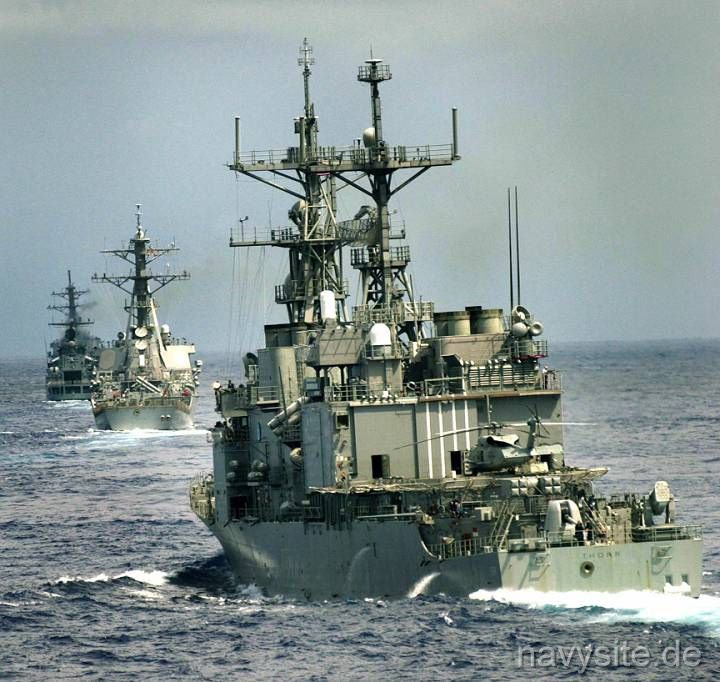
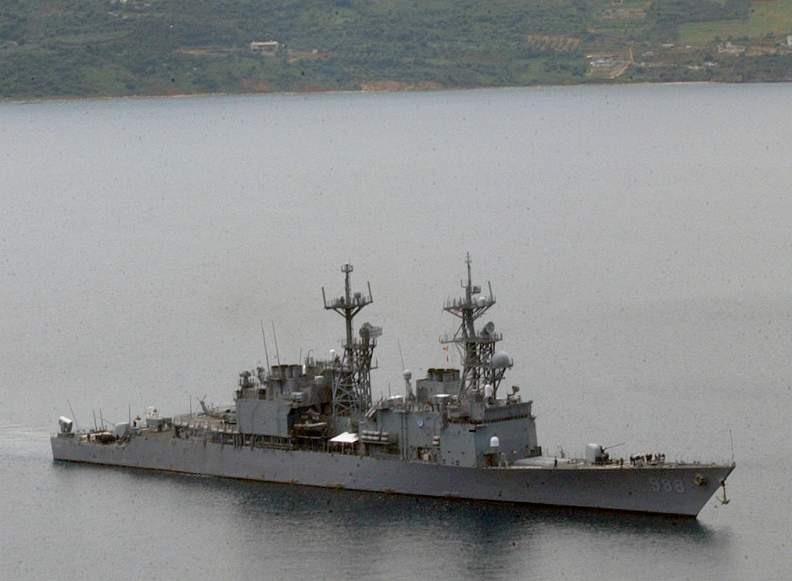
After stateside maintenance and work-ups through late 2002 and the summer of 2003, THORN formed up with USS COLE (DDG 67) and USS GONZALEZ (DDG 66) for pre-deployment training - the three ships were photographed conducting divisional tactics in the Atlantic on 5 September 2003 - then departed Norfolk on 29 November 2003 as a Surface Strike Group. The trio crossed into the Sixth Fleet theater for Mediterranean operations and, during the winter, pushed onward into the Indian Ocean for maritime security tasking. The crew marked a Shellback initiation on 20 February 2004, reflecting an equator crossing during that phase. On 23 April 2004, THORN made a brief liberty and logistics call at Souda Bay, Crete, before the group concluded operations and turned for home. GONZALEZ and THORN moored at Norfolk on 28 May 2004, COLE the day before, closing THORN's final deployment.

With more than two decades in commission, THORN was decommissioned and stricken on 25 August 2004 and subsequently towed to the Inactive Ships facility at Philadelphia. Two years later, on 22 July 2006, she was sunk as a target off the U.S. East Coast.


Back to topback to top  go to endgo to the end of the page


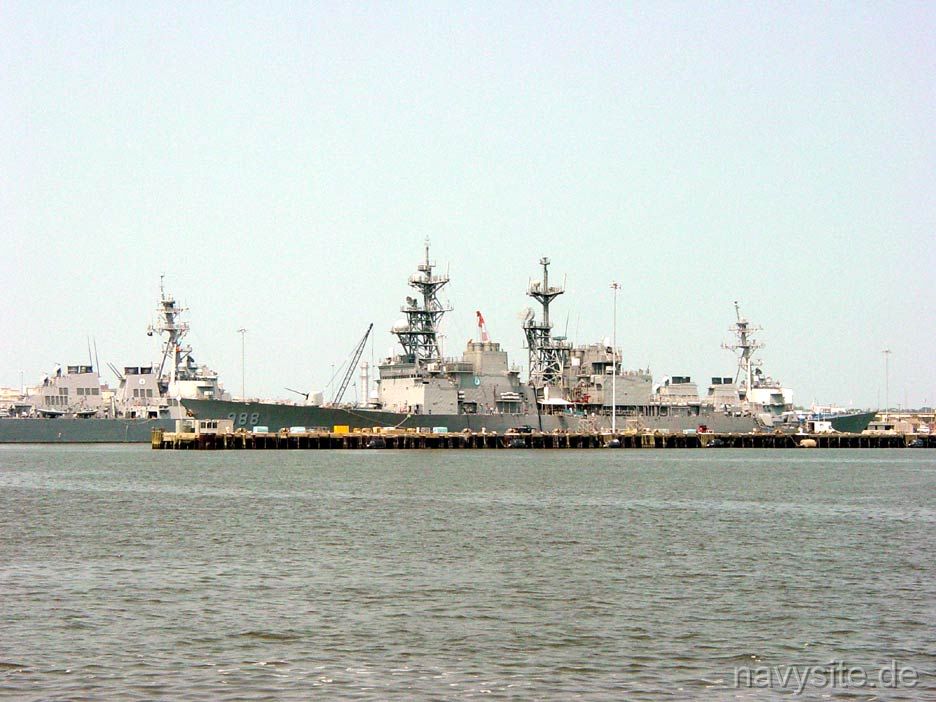
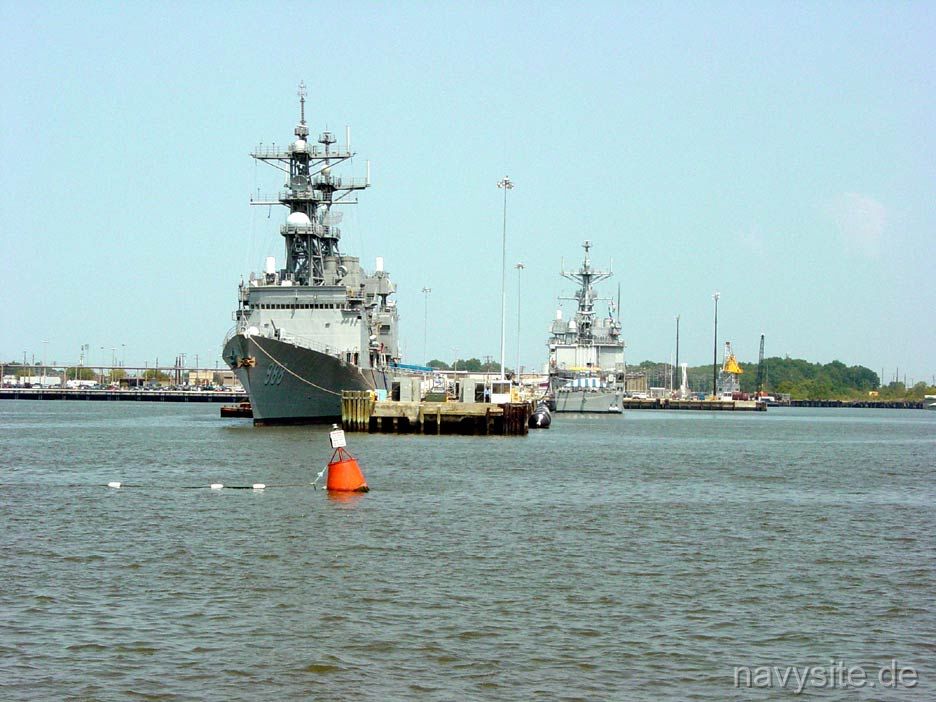
The photos below were taken by Brian Barton when USS THORN was at Naval Base Norfolk on July 23, 2002.


Back to topback to top


Back to Destroyers list. Back to ships list. Back to selection page. Back to 1st page.