
Search the Site with

|
Search the Site with
|
 General Characteristics Crew List Memorabilia About the Ship's Name About the Ship's Coat of Arms Image Gallery to end of page
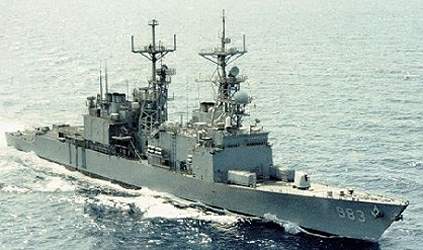 |  |
USS JOHN RODGERS was the 21st SPRUANCE - class destroyer and was homeported in Mayport, Fla.
JOHN RODGERS was christened by Mrs. Roy C. Smith, Jr., the great, great-granddaughter of Commodore Rodgers. Throughout her career the JOHN RODGERS has completed two overhauls. The first one was from June 10, 1984, till March 13, 1985, at Ingalls Shipbuilding in Pascagoula and the second overhaul was from April 1, 1991 till March 12, 1992 at Metro Machine, Chesapeake, Va.
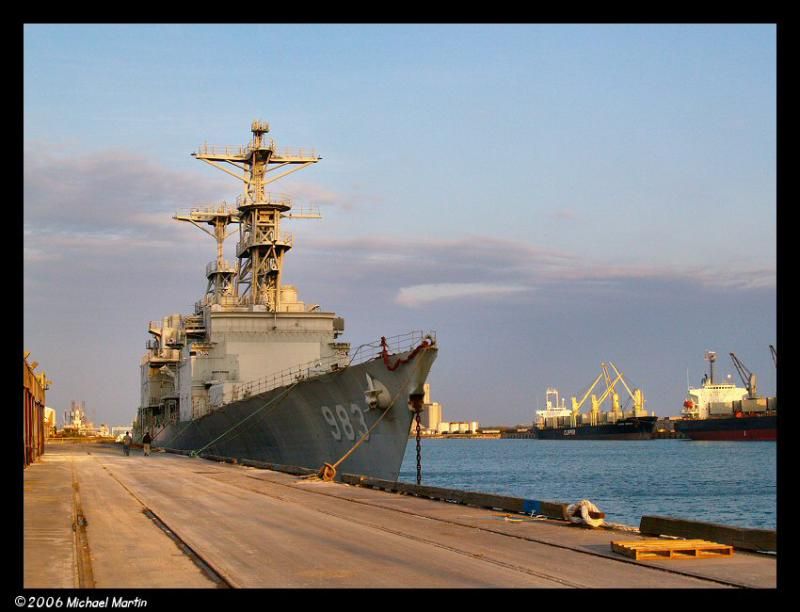
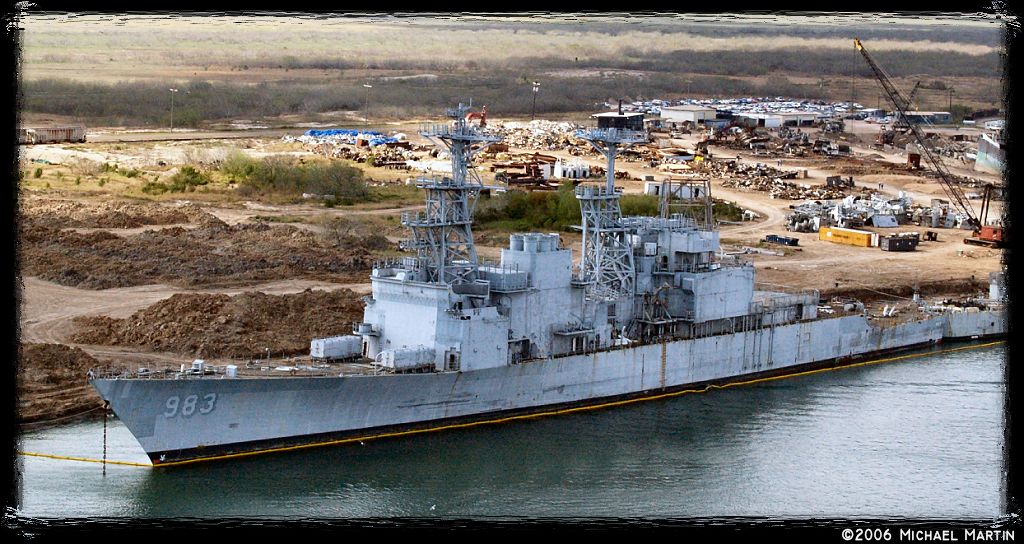
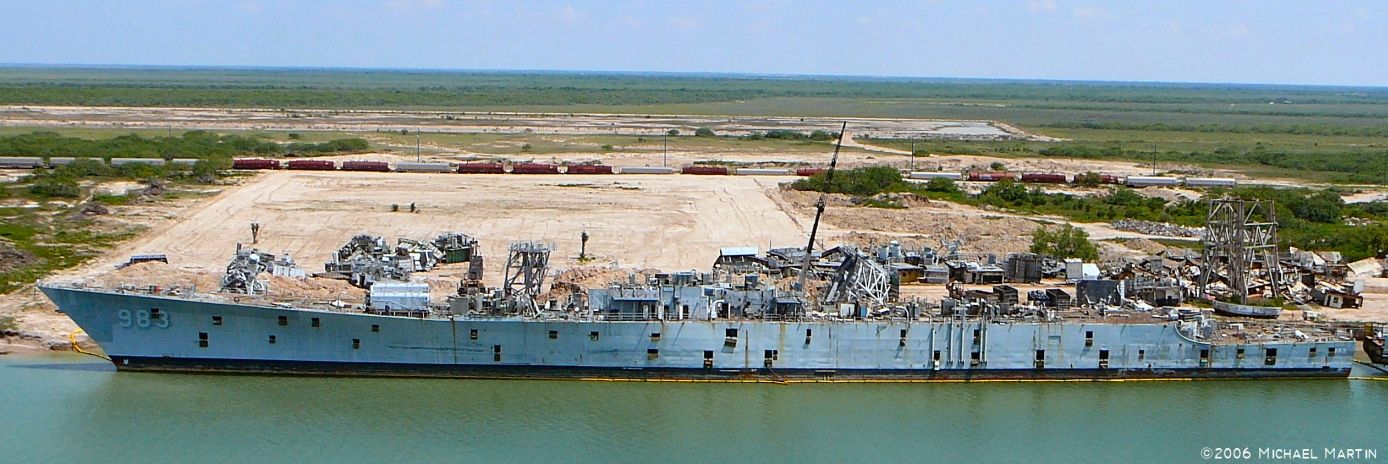
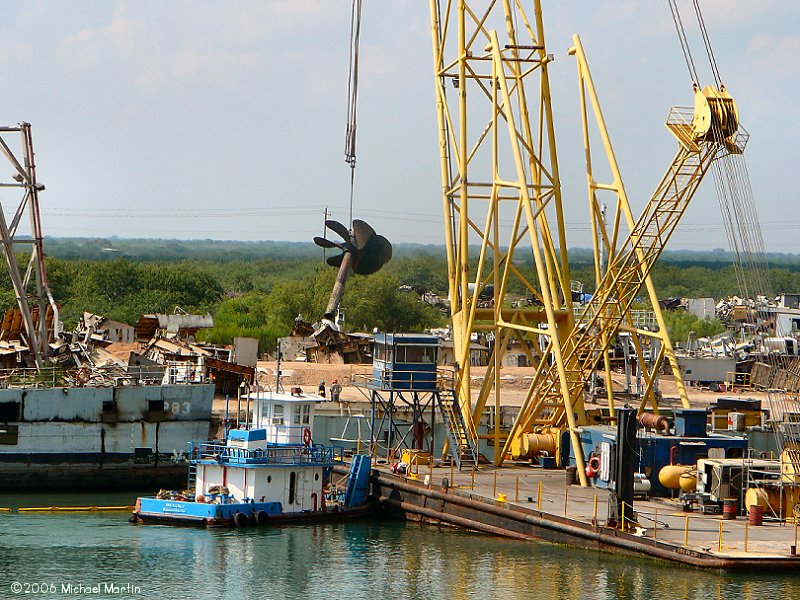
JOHN RODGERS was the sixth US Navy ship named for the Rodgers family. Decommissioned on September 4, 1998, the ship spent the following years laid-up at the Naval Inactive Ship Maintenance Facility (NISMF), Philadelphia, PA. In 2006, she was towed to Brownsville, TX., where she was scrapped.
| General Characteristics: | Keel Laid: August 12, 1976 |
| Christened: March 18, 1978 | |
| Commissioned: July 14, 1979 | |
| Decommissioned: September 4, 1998 | |
| Builder: Ingalls Shipbuilding, West Bank, Pascagoula, Miss. | |
| Propulsion system: four General Electric LM 2500 gas turbine engines | |
| Propellers: two | |
| Blades on each Propeller: five | |
| Length: 564,3 feet (172 meters) | |
| Beam: 55,1 feet (16.8 meters) | |
| Draft: 28,9 feet (8.8 meters) | |
| Displacement: approx. 9,200 tons full load | |
| Speed: 30+ knots | |
| Aircraft: two | |
| Armament: two | |
| Crew: approx. 340 |
 back to top go to the end of the pageback to top go to the end of the page
Crew List:
This section contains the names of sailors who served aboard USS JOHN RODGERS. It is no official listing but contains the names of sailors who submitted their information.
back to top go to the end of the pageback to top go to the end of the page
About the Ship’s Name:
JOHN RODGERS was named for three members of a distinguished Navy family. They were...
...Commodore John Rodgers (1772-1838):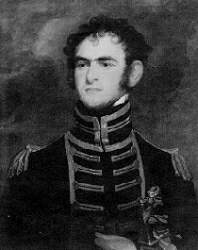 John Rodgers, born near present Havre de Grace, MD, 11 July 1772, entered the Navy as Second Lieutenant 8 March 1798 and was assigned to CONSTELLATION. He helped capture French frigate L'INSURGENTE 9 February 1799, and took command of her as prize master. He was promoted to Captain 5 March 1799, and 3 months later took command of MARYLAND. In March 1801, he transported the ratified French-American Peace Treaty to France.
Placed in command of JOHN ADAMS the following year, he sailed for the Mediterranean to attack Barbary forts and gunboats at Tripoli. His brilliant record fighting the corsairs won him appointment as Commodore of the Mediterranean Squadron in May 1805.
A year later he returned to the United States to take command of the New York Flotilla. After the Embargo Act was passed at the close of 1807, Rodgers commanded operations along the Atlantic Coast, enforcing its provisions.
In the spring of 1811, upon word that a British ship was impressing American seaman off Sandy Hook, NJ, Commodore Rodgers, in PRESIDENT, was ordered to investigate. On 16 May, he defeated British corvette LITTLE BELT in a spirited engagement, which foreshadowed his brilliant success in the forthcoming war with England.
On the sixth day of the War of 1812, still in PRESIDENT, Rodgers drove off British frigate BELVIDERA, and chased her for 8 hours before she escaped. During the remainder of the war, he captured 23 prizes and, on land, rendered valuable service defending Baltimore during the attack on Fort Henry.
Following the war, Rodgers headed the Board of Navy Commissioners until retiring in May 1837. Commodore Rodgers died in Philadelphia 1 August 1838.
...Rear Admiral John Rodgers (1812-1882):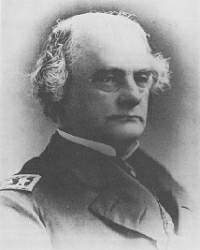 John Rodgers, son of Commodore John Rodgers, was born near Havre de Grace, MD, 8 August 1812. He entered the Navy as a Midshipman 18 April 1828. Service in the Mediterranean on board CONSTELLATION and CONCORD opened his long career of distinguished service. In the mid-1850s, he succeeded Commander Ringgold in command of the North Pacific Exploring and Survey Expedition, which added greatly to our knowledge of Far Eastern and Northern waters.
In the early months of the Civil War, Rodgers organized the Mississippi Flotilla, and supervised construction of the first ironclad gunboats on the western rivers. He took command of ironclad GALENA in April 1862, and operated with distinction in the James River, while supporting General McClellan's Peninsular Campaign. He was promoted to Captain 16 July 1862, and transferred to monitor WEEHAWKEN. In her, he distinguished himself during the attack on Fort Sumter, and in capturing Confederate ram, ATLANTA. The latter service won him the thanks of Congress and promotion to Commodore.
After the war, Rodgers commanded the Boston Naval Station until 1869. He was elevated to Rear Admiral in December 1869, and given command of the Asiatic Squadron. In this post, he ably handled diplomatic duties in addition to his naval responsibilities. Back in the United States, he commanded Mare Island Naval Station and the Naval Observatory. He died in Washington 5 May 1882.
...Commander John Rodgers (1881-1926):
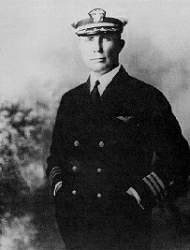 John Rodgers, great-grandson of Commodore Rodgers, was born in Washington 15 January 1881, and graduated from the Naval Academy in 1908. His early naval career included service on ships of various types before studying flying in 1911, and becoming the second American naval officer to receive a pilot's license.
He commanded Division 1, Submarine Force, Atlantic Fleet in 1916, and, after the United States entered World War I, he commanded the Submarine Base at New London, Connecticut.
Following the war, he served in European waters, and received the Distinguished Service Medal for outstanding work on mine-sweeping operations in the North Sea. After several important assignments during the next 5 years, he commanded Aircraft Squadrons, Battle Fleet, in LANGLEY in 1925. That year, he made the first attempt at a non-stop flight from California to Hawaii. In command of Seaplane PN-9, he departed San Pedro 31 August, but a fuel shortage forced his plane to land short of her destination 1 September. While ships searched for the plane, Commander Rodgers led his crew in improvising sails from the plane's wing material to continue the trip afloat. Finally, 9 days later, after sailing the plane to within 15 miles of Nawililwili Bay, Kauai, Rodgers hailed Submarine R-4 and was towed into port.
After this experience, he served as Assistant Chief of the Bureau of Aeronautics, until killed in an airplane crash 27 August 1929.
back to top go to the end of the pageAbout the Ship's Coat of Arms:
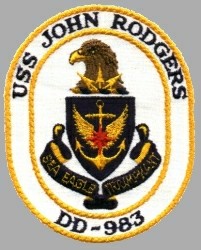
The official crest of JOHN RODGERS symbolizes the service of three members of a prominent Navy family. The anchor represents the service of Commodore John Rodgers, who acted as President of the Board of Naval Commissioners, following the War of 1812, until 1837. His son, Rear Admiral John Rodgers, led exploring expeditions in Chinese waters and through the Bering Strait in 1855; the compass rose is symbolic of his service. Commander John Rodgers II, great-grandson of Commodore Rodgers, was a pioneer of Naval Aviation, and his service is alluded to by the wings.
The sea eagle, a sharp-eyed, marine bird-of-prey, represents the ship's primary mission of detection and tracking, with the addition of incredibly deadly striking ability. The three arrowheads refer to the multi-mission capabilities of the SPRUANCE - class destroyer, as well as the Naval service of the father, son, and great-grandson for whom the ship is named.
back to top go to the end of the pageUSS JOHN RODGERS Image Gallery:
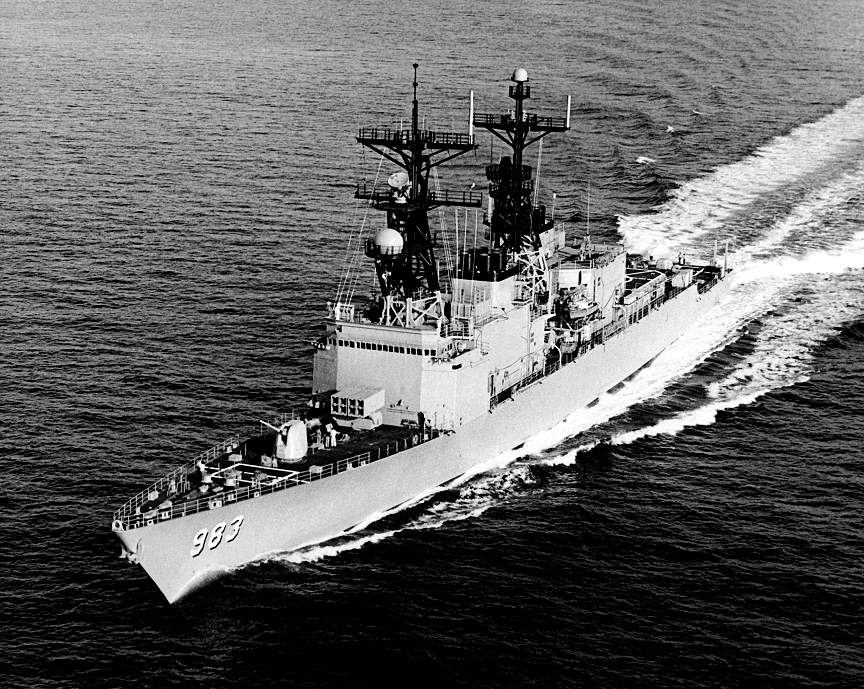 | 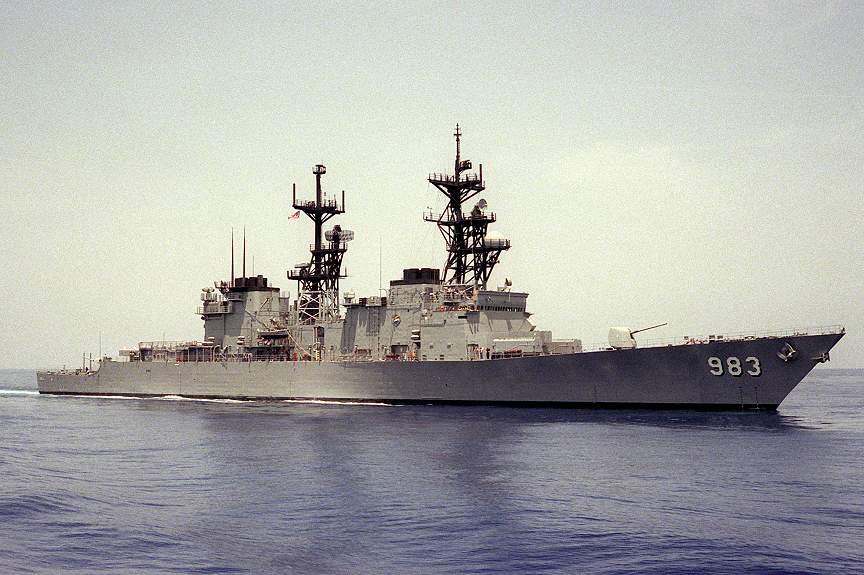 | 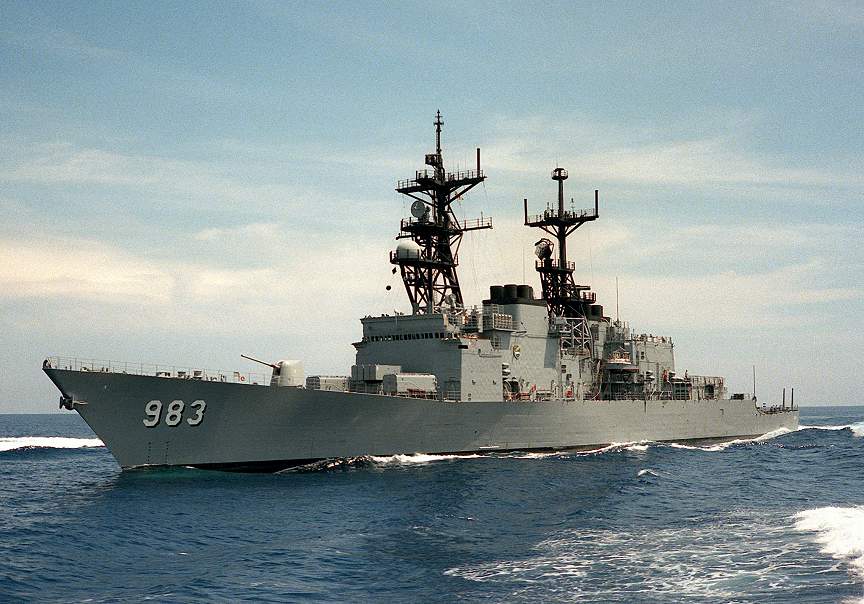 |
The photos below were taken and contributed by Michael Martin. They show the JOHN RODGERS being scrapped at Brownsville, Tx., in 2006.

 back to top
 Back to Destroyers list. Back to ships list. Back to selection page. Back to 1st page.