Search the Site with 
General Characteristics Crew List Memorabilia Cruise Books History Image Gallery to end of page

USS Cimarron (AO 177)

- decommissioned -

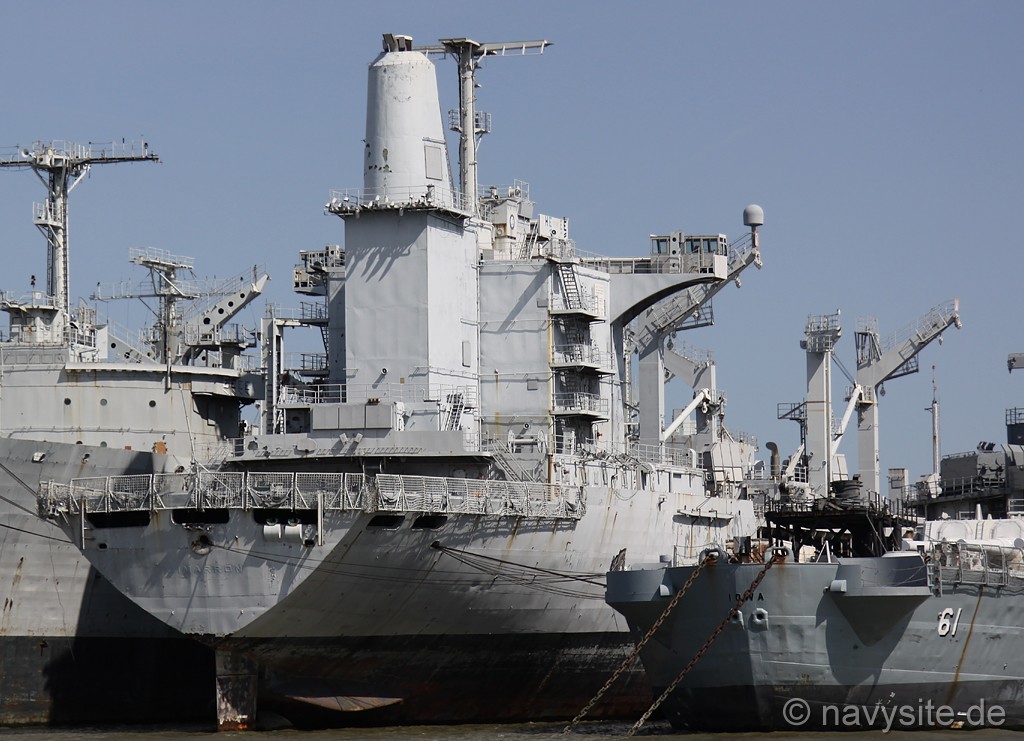
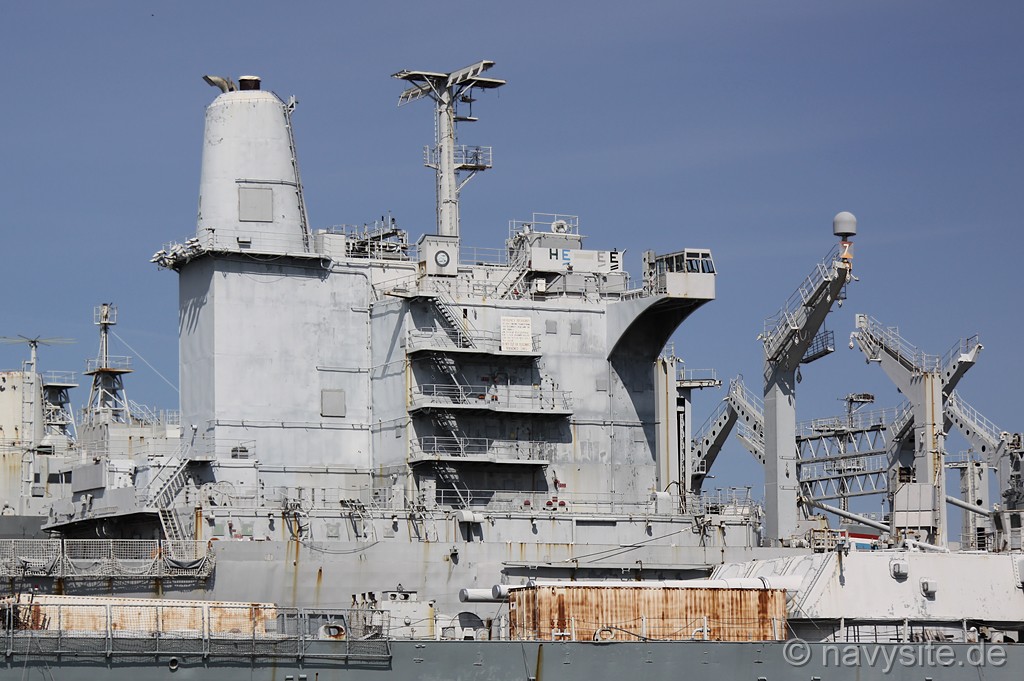
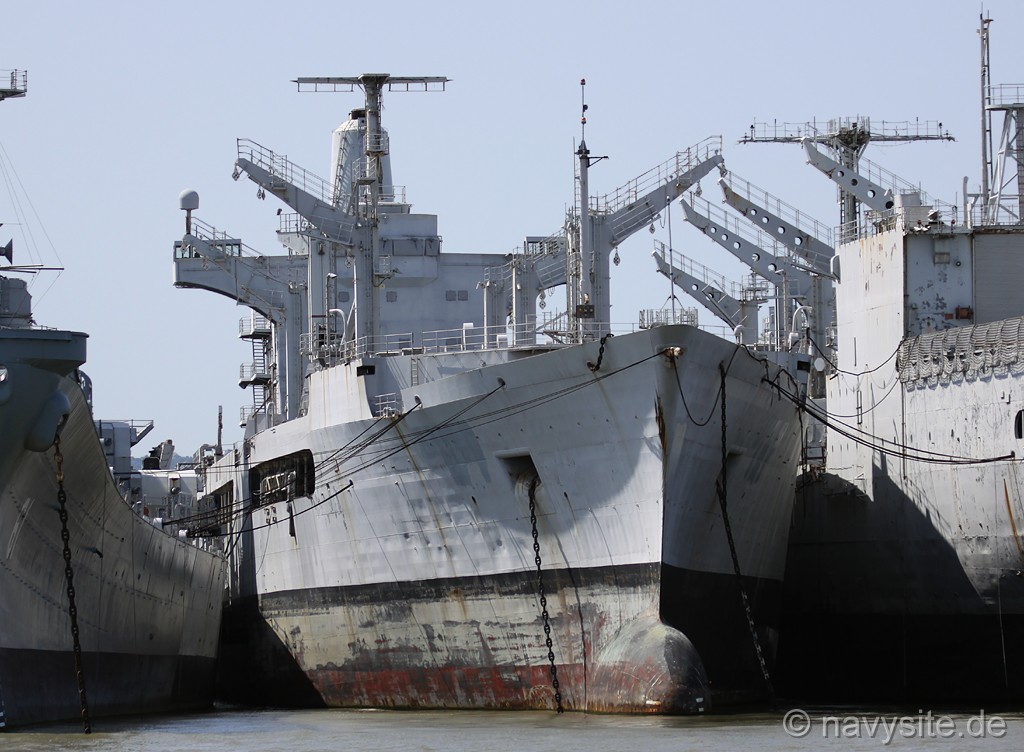
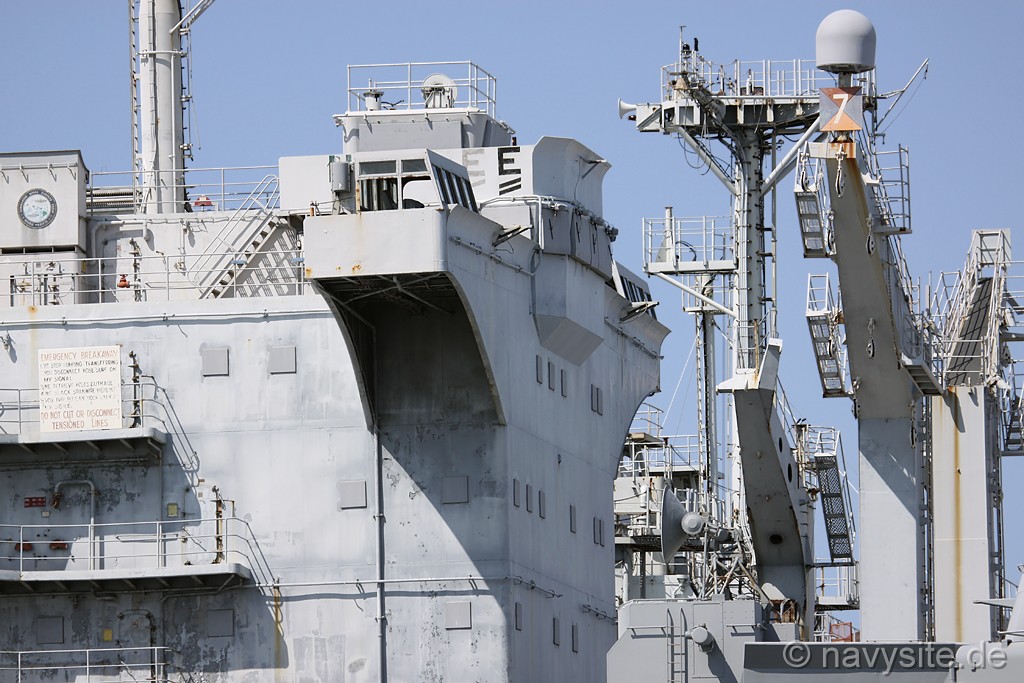
USS CIMARRON was the lead ship of a class of five fleet oilers. Decommissioned on December 15, 1998, the CIMARRON spent the following years laid up in Suisun Bay, Calif. She was sold for scrapping on October 1, 2012. Her last homeport was Pearl Harbor, Hi.

General Characteristics:Awarded: August 9, 1976
Keel laid: May 18, 1978
Launched: April 28, 1979
Commissioned: January 10, 1981
Decommissioned: December 15, 1998
Builder: Avondale Shipyards, Inc., New Orleans, LA
Propulsion system: two 600psi Boilers (Automated Steam)
Propellers: one
Length: 700 feet (213.4 meters)
Beam: 88 feet (26.8 meters)
Draft: 32 feet (9.7 meters)
Displacement: approx. 37,000 tons
Speed: 19 knots
Capacity: 150,000 barrels of fuel oil or aviation fuel and several tons of additional goods
Aircraft: none, but helicopter platform
Armament: two 20mm Phalanx CIWS
Crew:15 officers and 215 enlisted


Back to topback to top  go to endgo to the end of the page


Back to topback to top  go to endgo to the end of the page

Crew List:

This section contains the names of sailors who served aboard USS CIMARRON. It is no official listing but contains the names of sailors who submitted their information.


back to top  go to the end of the page


Back to topback to top  go to endgo to the end of the page

USS CIMARRON Cruise Books:


Back to topback to top  go to endgo to the end of the page

USS CIMARRON History:

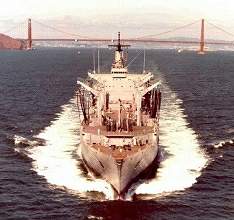
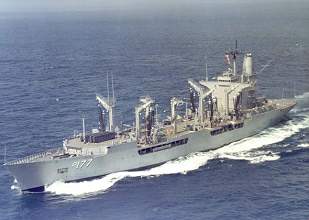
USS CIMARRON was ordered under the FY 1976 program as the lead unit of a new class of fleet oilers built for high-tempo replenishment of Pacific Fleet task groups. Her contract award in 1976 led to construction at Avondale Shipyards on the Mississippi River. The keel was laid on May 18, 1978, launch followed on April 28, 1979, and she was commissioned on January 10, 1981 at the Naval Supply Center, Oakland, California. Designed around automated 600-psi steam plants driving a single screw and a full suite of alongside (CONREP) and helicopter (VERTREP) stations, she would be homeported at Pearl Harbor after post-delivery trials. Period photography also places her on builders' trials in the Mississippi in mid-1980 and arriving on the U.S. West Coast soon after commissioning, marking the transition from yard work to fleet service.

Through 1981-1983, CIMARRON completed shakedown training and settled into the Western Pacific rhythm of workups and deployments from Hawaii, a pattern of six-month WestPac/Indian Ocean cycles that characterized her first decade. Her first listed Western Pacific/Indian Ocean deployment ran from November 1983 into April 1984, and on February 15, 1984 the crew marked an equator crossing - an incidental date that fixes the ship's presence in the Indian Ocean during that cruise. A second WestPac/Indian Ocean period followed from August to November 1984. A contemporary cruise book exists for the 1984 deployment, reflecting the combination of long underway stretches, UNREP serials, and liberty calls typical of Seventh Fleet logistics ships at the time.

CIMARRON remained a regular in Seventh Fleet operations in the mid-1980s. On April 24, 1986, while embarked families and sailors were forward-deployed, the ship hosted a high-school graduation ceremony aboard - an unusual but telling vignette of long deployments. A late-spring 1986 equator crossing is recorded on May 26, again placing the oiler in the Indian Ocean as U.S. naval presence remained steady during the closing years of the Iran-Iraq War. Another extended WestPac/Indian Ocean cruise is recorded from October 1987 to March 1988.

The ship also figured in two institutional milestones as the Navy diversified its at-sea force. In August 1988, CIMARRON became the first Combat Logistics Force ship to implement the Women at Sea program, when two female officers and twenty-two enlisted women reported aboard - years before mixed-gender crews were routine across the fleet. By December 1990, the oiler had completed six six-month WestPac/Indian Ocean deployments, a cumulative tempo that reflected the demand for fuel shuttle ships supporting carrier and surface groups from the Western Pacific to the northern Indian Ocean.

In 1990, the oiler operated primarily from Hawaii and forward areas in the Pacific. She is documented participating in RIMPAC 1990 off Hawaii - a large multinational exercise that summer - and then deployed westward from March to November. On July 25, 1990, while operating in the South China Sea southeast of Subic Bay, the ship rescued 25 refugees adrift at sea, an event later cited in Navy humanitarian summaries. These activities framed the last pre-conversion year for the class leader as the Navy prepared to enlarge the ships to increase capacity.

CIMARRON's mid-life rebuild ("jumboization") followed. According to her command history and program documentation, she entered Avondale for the conversion in August 1991; a 108-foot parallel mid-body was inserted, boosting petroleum capacity by roughly 30,000 barrels, adding about 625 tons of ordnance cargo capacity, and installing additional STREAM stations and an emergency diesel generator. A National Archives image places her pierside at Avondale on April 1, 1992, during the work. The conversion concluded in mid-1992, after which she transited the Panama Canal and made several port calls en route to Pearl Harbor to resume Pacific Fleet duty. The jumboization aligned the ship with the higher sortie rates and longer legs demanded of early-1990s battle groups.

Back in service, CIMARRON suffered a serious engineering casualty on March 26, 1993: a main steam leak precipitated a loss of main reduction gear lube-oil pressure, wiping multiple journal bearings. The rescue and salvage ship USS SALVOR (ARS 52) took her in tow back to Pearl Harbor. The oiler then spent March 27 to September 27, 1993 in repair before returning to sea.

Operations resumed in 1994 with another reminder of the hazards of close-quarters navigation. In the early hours of March 31, 1994, CIMARRON grounded on a sand bar off Iroquois Point at the entrance to Pearl Harbor. After unsuccessful self-extraction attempts she requested assistance. USS SALVOR again responded and pulled the oiler free. Inspections found only minor damage, and in April 1994, CIMARRON proceeded to American Samoa to take part in the island's Flag Day observances - an emblematic goodwill visit during a lull between underway periods.

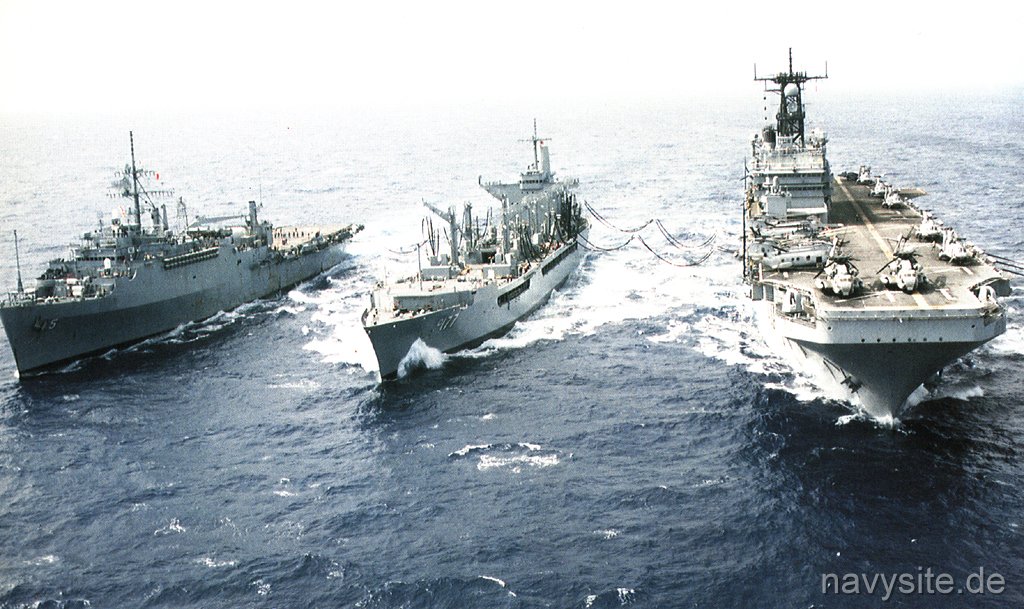
Through the mid-1990s, she cycled between Hawaii and the Western Pacific/Indian Ocean, with forward duty aligned to the sustainment of U.S. naval presence from the Arabian Sea to the Western Pacific as U.S. and coalition forces enforced post-Gulf-War maritime sanctions and maintained air policing over southern Iraq. Within this period, CIMARRON continued the long-range shuttle role for Seventh Fleet and, when tasked, NAVCENT units, moving black oil and JP-5 to station ships and combatants on both routine and contingency tasking across the theater.

Her port calls in Australia bookend the era. Local historical records in Western Australia note multiple visits to Fremantle - including during 1984 and again in 1997 - reflecting the steady use of that harbor for rest, resupply, and local engagement by U.S. logistics ships operating on the Indian Ocean line.

With the Navy's move toward diesel-powered, civilian-crewed HENRY J. KAISER-class oilers under Military Sealift Command, CIMARRON's active career drew to a close. She was decommissioned on December 15, 1998, at Pearl Harbor. On January 26, 1999, she departed Hawaii under tow and was placed in the National Defense Reserve Fleet at Suisun Bay, California. Title passed to the Maritime Administration on July 28, 2001. She remained at Suisun until sold for disposal on October 1, 2012, departed the reserve fleet on November 7, 2012, and transited the Panama Canal on December 15, 2012, en route to ESCO Marine at Brownsville, Texas, for dismantlement.


Back to topback to top  go to endgo to the end of the page


The photos below were taken by me and show the CIMARRON laid-up at Suisun Bay, Calif., on March 27, 2010.


Back to topback to top


Back to Fleet Oilers page. Back to ships list. Back to selection page. Back to 1st page.