Search the Site with 
GeneralGeneral Characteristics Crew List About the Ship's Name History Image Gallery to end of page

USNS Brittin (T-AKR 305)

- stricken -
- later MV NELSON V. BRITTIN (T-AKR 305) -


Sorry,
no coat of arms
available.

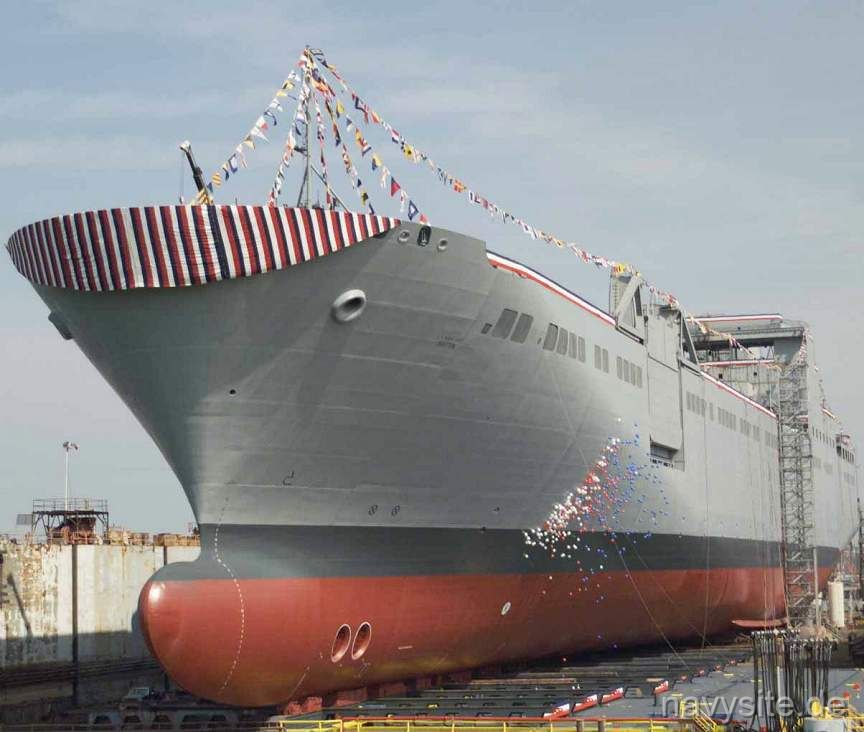
USNS BRITTIN is the sixth BOB HOPE - class large, medium-speed, roll-on/roll-off ship (LMSR) and the first ship in the Navy named after Army Sgt. 1st Class Nelson V. Brittin. USNS BRITTIN was inactivated and stricken on April 12, 2023, and subsequently disposed of through an inter-agency transfer to the U.S. Maritime Administration (MARAD). This transfer caused the loss of her "USNS" designation and she was renamed MV NELSON V. BRITTIN (T-AKR 305). She subsequently entered MARAD's Ready Reserve Force but is still available for military sealift missions.

General Characteristics:Awarded: November 14, 1997
Keel laid: May 3, 1999
Launched: November 11, 2000
Delivered: July 11, 2002
Stricken from Navy list: April 12, 2023
Builder: Avondale Shipyards, New Orleans, LA
Propulsion system: 4 Colt Pielstick 10 PC4.2 V diesels
Propellers: two
Length: 951.4 feet (290 meters)
Beam: 106 feet (32.3 meters)
Draft: 34.8 feet (10.6 meters)
Displacement: approx. 62,070 tons full load
Speed: 24 knots
Aircraft: helicopter landing area only
Armament: none
Capacity: 380,000 sq. ft.
Crew: 26 civilian crew (up to 45); up to 50 active duty
Homeport: Portland, OR.


Back to topback to top  go to endgo to the end of the page


Back to topback to top  go to endgo to the end of the page

Crew List:

This section contains the names of sailors who served aboard USNS BRITTIN. It is no official listing but contains the names of sailors who submitted their information.


Back to topback to top  go to endgo to the end of the page

About the Ship's Name:

USNS BRITTIN is named in honor of Army Sgt. 1st Class Nelson V. Brittin, a Korean War Medal of Honor recipient who distinguished himself as a member of Company I in Yonggong-ni, Korea, March 7, 1951.

Citation:

Sfc. Brittin, a member of Company I, distinguished himself by conspicuous gallantry and intrepidity above and beyond the call of duty in action. Volunteering to lead his squad up a hill, with meager cover against murderous fire from the enemy, he ordered his squad to give him support and, in the face of withering fire and bursting shells, he tossed a grenade at the nearest enemy position. On returning to his squad, he was knocked down and wounded by an enemy grenade. Refusing medical attention, he replenished his supply of grenades and returned, hurling grenades into hostile positions and shooting the enemy as they fled. When his weapon jammed, he leaped without hesitation into a foxhole and killed the occupants with his bayonet and the butt of his rifle. He continued to wipe out foxholes and, noting that his squad had been pinned down, he rushed to the rear of a machinegun position, threw a grenade into the nest, and ran around to its front, where he killed all 3 occupants with his rifle. Less than 100 yards up the hill, his squad again came under vicious fire from another camouflaged, sandbagged, machinegun nest well-flanked by supporting riflemen. Sfc. Brittin again charged this new position in an aggressive endeavor to silence this remaining obstacle and ran direct into a burst of automatic fire which killed him instantly. In his sustained and driving action, he had killed 20 enemy soldiers and destroyed 4 automatic weapons. The conspicuous courage, consummate valor, and noble self-sacrifice displayed by Sfc. Brittin enabled his inspired company to attain its objective and reflect the highest glory on himself and the heroic traditions of the military service.


Back to topback to top  go to endgo to the end of the page

USNS BRITTIN History:

BRITTIN (T-AKR 305) was built for the U.S. Navy's Strategic Sealift Program as a BOB HOPE-class large, medium-speed roll-on/roll-off (LMSR) cargo ship designed to move heavy Army unit equipment - tanks, trucks, wheeled vehicles, and associated supplies - rapidly from U.S. ports to overseas theaters as part of surge sealift in crises and major deployments. BRITTIN was laid down at New Orleans, Louisiana, on May 3, 1999, by Northrop Grumman Ship Systems' Avondale Operations. She was christened at the Litton-Avondale shipyard on October 21, 2000, and launched shortly thereafter on November 11, 2000. After completion, she entered non-commissioned U.S. Navy service with the Military Sealift Command (MSC) on July 11, 2002, operating as a noncombatant ship with a primarily civilian (contract mariner) crew rather than a commissioned Navy crew. From the start of her operational life BRITTIN was aligned to MSC's surge sealift construct and maintained in a reduced operating status posture intended to support rapid activation - specifically described for BRITTIN as a 96-hour readiness status at Puget Sound Naval Shipyard in Bremerton, Washington - so that she could transition quickly from layberth and maintenance routines to full mission operations when called forward.

BRITTIN's early years unfolded during the strategic shift that followed the September 11, 2001 attacks and the subsequent Global War on Terrorism, when sealift demand surged for sustained operations in Southwest Asia. In that mobilization environment, MSC's government-owned surge fleet of LMSRs and fast sealift ships carried a very large share of DoD dry cargo. Within that framework, the "Surge Project" LMSR force - described as 11 LMSRs held at four-day readiness at U.S. ports - was credited with rapid activations and sustained transoceanic performance during the 2004 deployment phase of OPERATION IRAQI FREEDOM troop and equipment rotations. In that period, the Surge Project LMSRs were characterized as activating within three days, averaging better than 17 knots on deployment voyages, and collectively delivering millions of square feet of unit cargo capacity in dozens of voyages, underscoring why a single LMSR could substitute for multiple commercial charters that had been needed in 1990-1991.

Contemporary Army logistics reporting from the IRAQI FREEDOM era also documented BRITTIN loading equipment bound for OPERATION IRAQI FREEDOM, reflecting her role in the sealift pipeline that linked European and U.S. embarkation networks with CENTCOM sustainment and rotation requirements. Through the following years, BRITTIN's verified, continuous throughline is her surge sealift readiness function: she remained a government-owned LMSR held in a reduced operating status construct so she could be activated on short notice for deployments, exercises, and contingency support, then return to layberth for maintenance and the next activation cycle.

By mid-decade, BRITTIN is specifically documented participating in joint logistics over-the-shore training concepts that are central to sealift's ability to discharge without relying on intact deep-water port infrastructure. In 2016, she took part in JOINT LOGISTICS OVER-THE-SHORE (JLOTS) 2016 in Washington State's Puget Sound region, where Army and Navy forces practiced moving cargo from ship to shore using lighterage and expeditionary port-opening techniques as part of broader defense support to civil authorities and disaster-response exercise constructs that year. The following year, BRITTIN supported U.S. Army deployments in the Pacific: during the OPERATION PATHWAYS framework, the U.S. Army's 2nd Infantry Brigade Combat Team, 25th Infantry Division ("Warrior Brigade") conducted a sea port of embarkation loadout at Joint Base Pearl Harbor-Hickam, Hawaii, with cargo moving onto BRITTIN. The ship's departure from Pearl Harbor was reported on January 13, 2017, as the sealift phase that enabled the brigade's forward movement for Indo-Pacific presence and training objectives.

In late 2017, BRITTIN shifted from routine deployment support into an explicitly documented humanitarian/disaster-response mission set after HURRICANE MARIA devastated Puerto Rico's power and transportation infrastructure. BRITTIN departed Newport News, Virginia, on October 25, 2017 to move disaster-relief cargo, then executed a load evolution in Charleston, South Carolina, to take on additional equipment and supplies destined for the island. She arrived in Puerto Rico on November 3, 2017, docking at the Rafael Cordero Santiago Port of the Americas in Ponce with a FEMA-funded shipment focused on power restoration and repair, including large numbers of mobile generators and specialized utility vehicles. Unloading began immediately with DoD, FEMA, and local port labor working to get critical equipment ashore. BRITTIN's Puerto Rico effort extended beyond a single delivery: the power-restoration mission reporting also noted that she would return with an additional shipment on November 20, 2017, illustrating how sealift was used not just for the initial surge but for sustained follow-on deliveries during the recovery phase.

In 2018, BRITTIN again operated in support of JLOTS - this time in the U.S. Southern Command exercise environment tied to BEYOND THE HORIZON and the annual USTRANSCOM JLOTS construct - linking the sealift ship's capabilities to a broader theater-security cooperation and logistics rehearsal context in the Caribbean and Central America. MSC reporting described BRITTIN being activated for BEYOND THE HORIZON/JLOTS 2018 and commencing the loading of Naval Beach Group equipment in March 2018 prior to deployment. During that evolution, BRITTIN's movements included operations tied to Puerto Rico and onward operations into the eastern Pacific side of Central America. She became notable in local port history when she made port at Acajutla, El Salvador, on April 23, 2018, described as the largest ship to dock there. The Acajutla operations were not limited to conventional pier-side discharge: reporting described BRITTIN anchoring offshore and supporting lift-on/lift-off and lighterage operations using Improved Navy Lighterage System causeway ferries and shipboard cranes with U.S. Navy and U.S. Army logistics units - an example of the "port-opening" skill set the JLOTS series is designed to validate before a crisis forces the issue.

In 2019 and 2020, BRITTIN's documented activity reflects the readiness-driven cycle typical of surge sealift ships - periods of layberth and preparation punctuated by activations for specific unit moves and logistics missions. On September 3, 2019, BRITTIN is specifically documented conducting port operations at Port of Port Arthur, Texas, where wheeled vehicles associated with the 3rd Infantry Brigade Combat Team, 25th Infantry Division rolled off the ship - an example of the kinds of continental U.S. embarkation/debarkation and distribution flows that support readiness and training requirements as well as deployments.

In fiscal year 2020, MSC reporting described BRITTIN conducting multiple cargo missions to and from the Middle East supporting the annual USTRANSCOM JOINT LOGISTICS OVER-THE-SHORE exercise and the deployments of specific Army formations (including 4-1 Air Defense artillery and the 63rd Engineering Brigade), keeping the ship in an active status for the first eight months of that fiscal year. The same reporting noted that she was activated again shortly after returning to her West Coast layberth to move the 3-25 Infantry Brigade Combat Team to the Joint Readiness Training Center for training. More granular ship-specific event documentation within 2020 includes BRITTIN conducting cargo operations at Shuaiba Port, Kuwait, during March 12-15, 2020, when Army terminal units prepared to unload and reload military equipment, and later supporting the download of cargo at the Port of Beaumont, Texas, on September 25, 2020, in an evolution described as part of a phased discharge executed by the 7th Transportation Brigade (Expeditionary). In July 2020, BRITTIN was also reported in the Columbia River system at the Port of Vancouver, Washington, reflecting how surge sealift ships can be routed into commercial or regional port infrastructure for layberth, staging, or support activities while remaining within the readiness ecosystem that allows rapid return to tasking.

After two decades as an MSC surge sealift asset spanning post-9/11 major operations, Indo-Pacific unit movement support, repeated JLOTS participation, and a documented humanitarian relief role after a major U.S. disaster, BRITTIN's Navy service concluded in 2023. She was inactivated and stricken on April 12, 2023, and subsequently disposed of through an inter-agency transfer to the U.S. Maritime Administration (MARAD). Her documented post-service location was the Willamette River in Portland, Oregon, marking the transition from active MSC surge sealift ship to reserve-administration status under MARAD rather than continued operation as a USNS vessel.


Back to topback to top  go to endgo to the end of the page


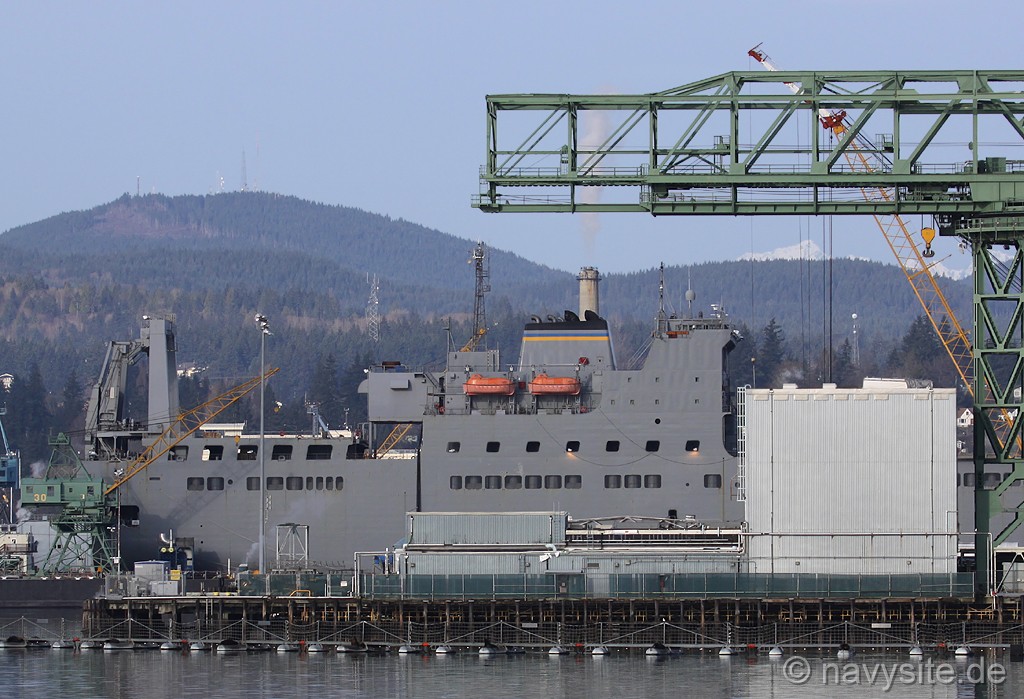
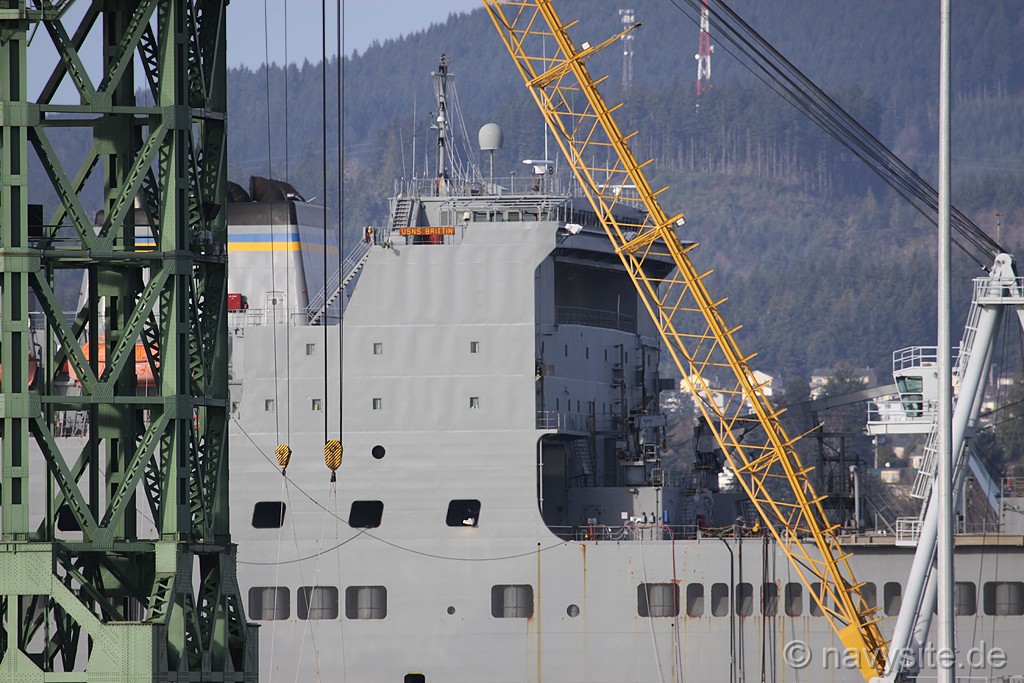
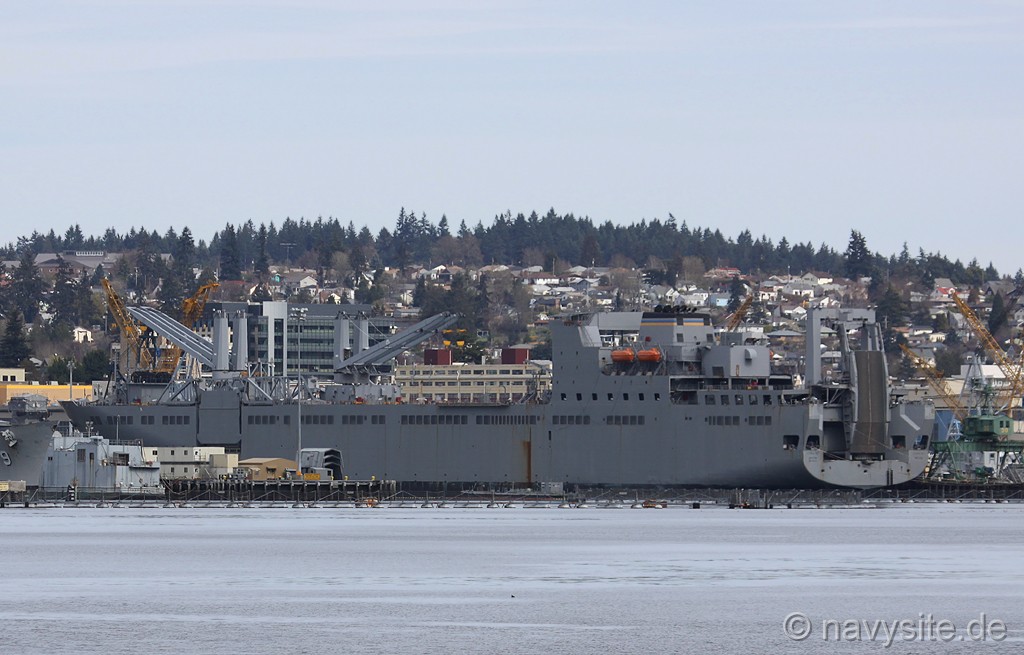
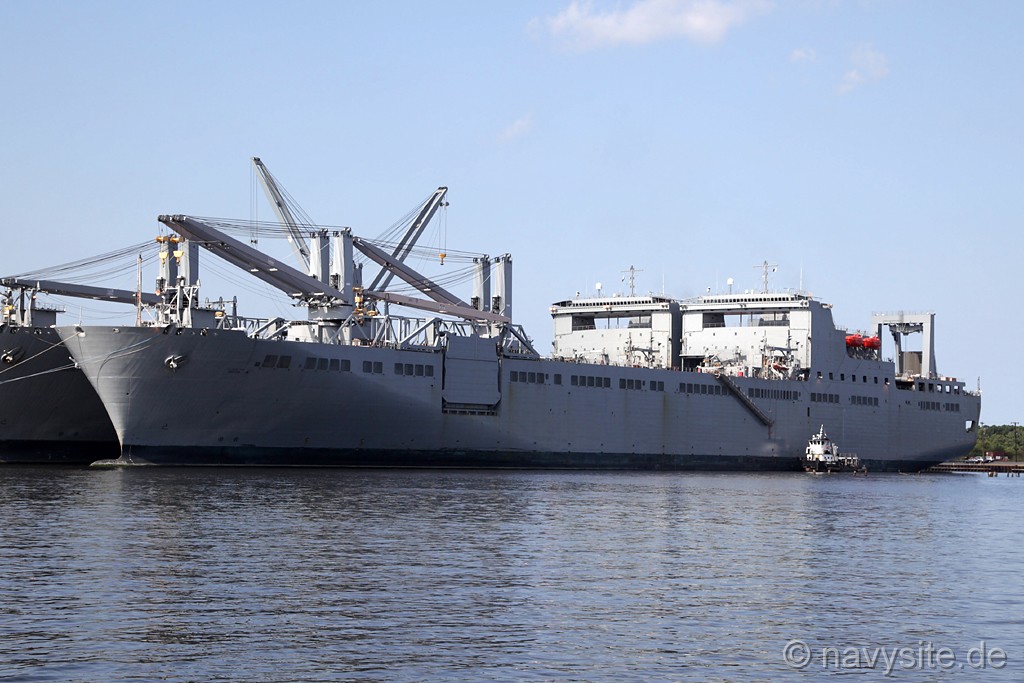
The photos below were taken by me and show the BRITTIN at the Puget Sound Naval Shipyard, Bremerton, Wash., on March 14, 2010.
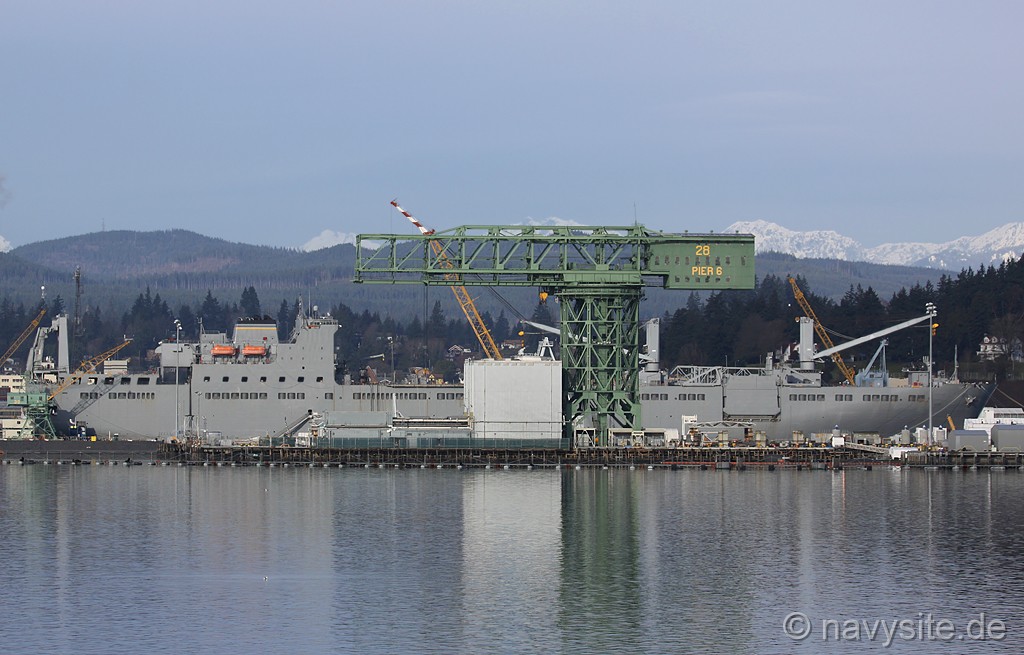


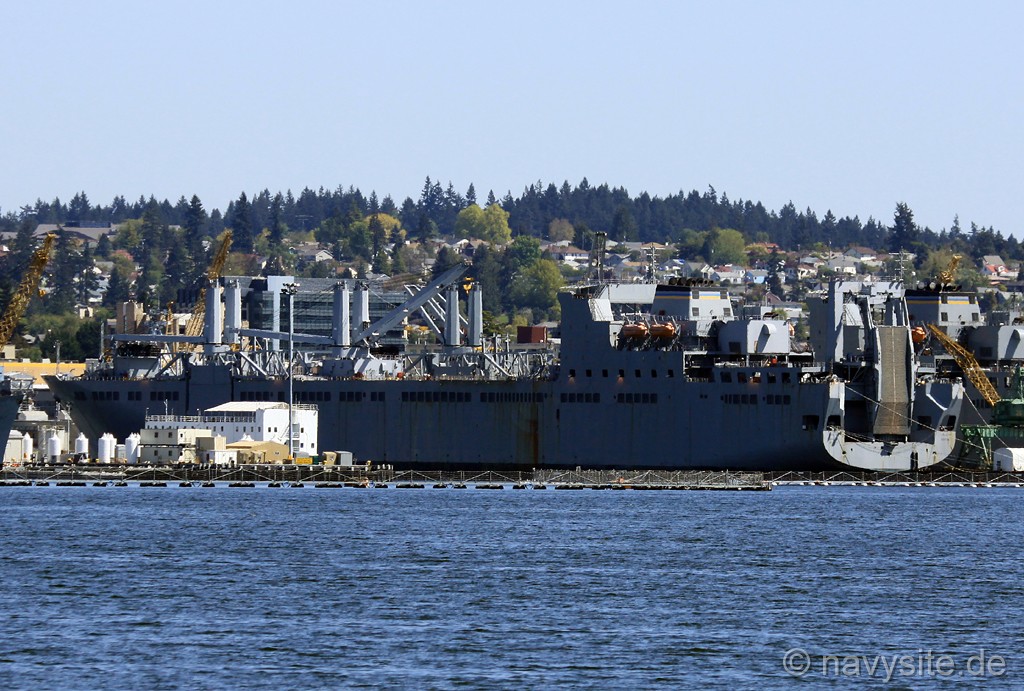
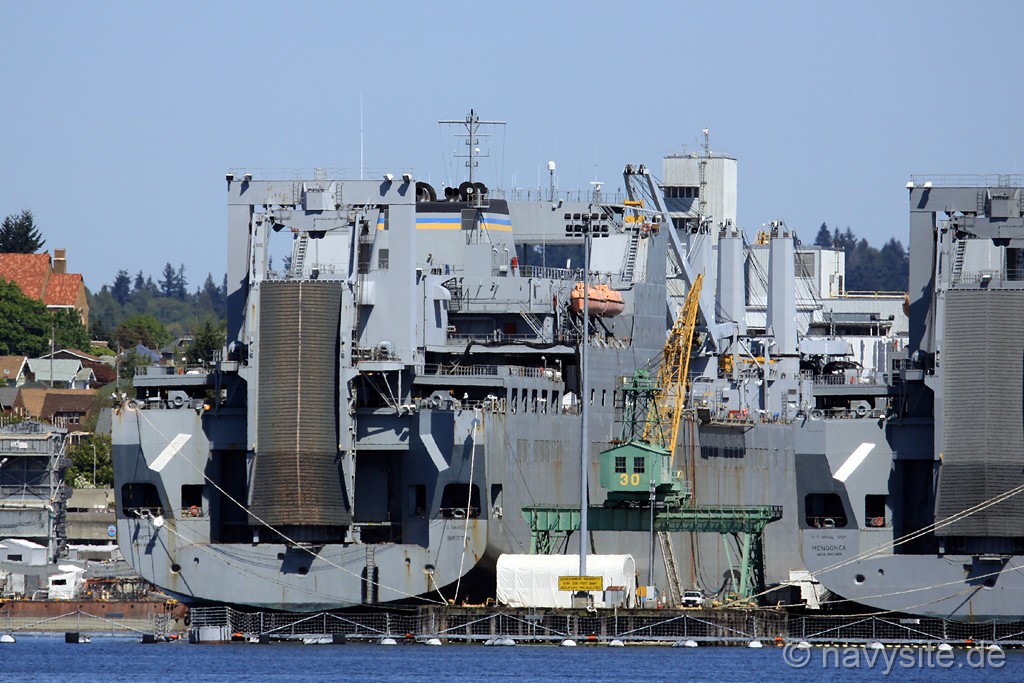
The photos below were taken by me and show the BRITTIN at the Puget Sound Naval Shipyard, Bremerton, Wash., on May 12, 2012.
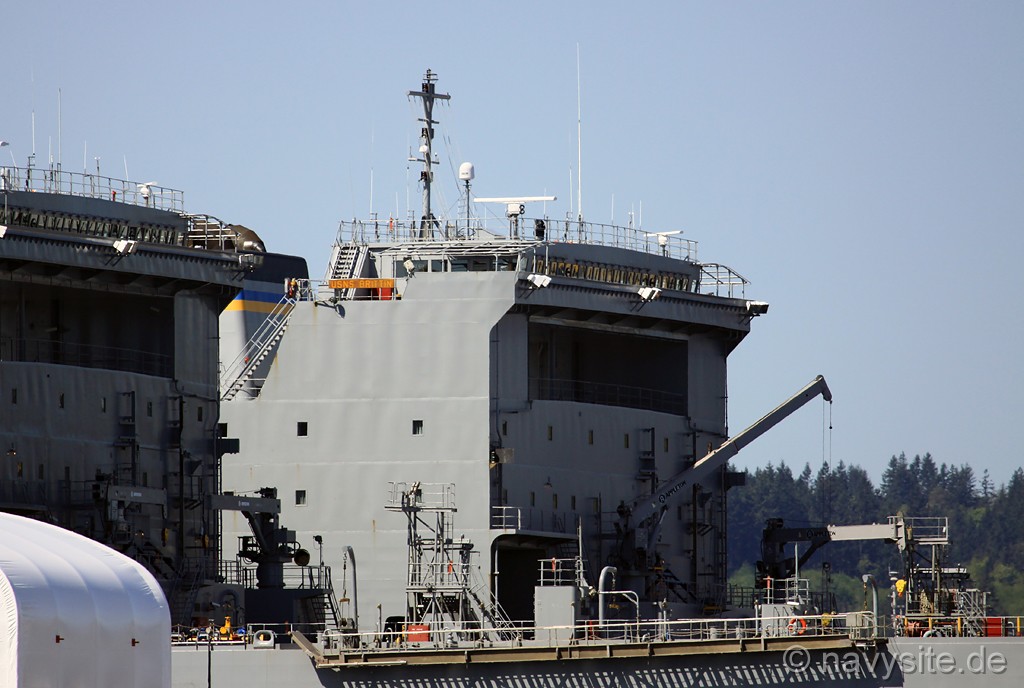


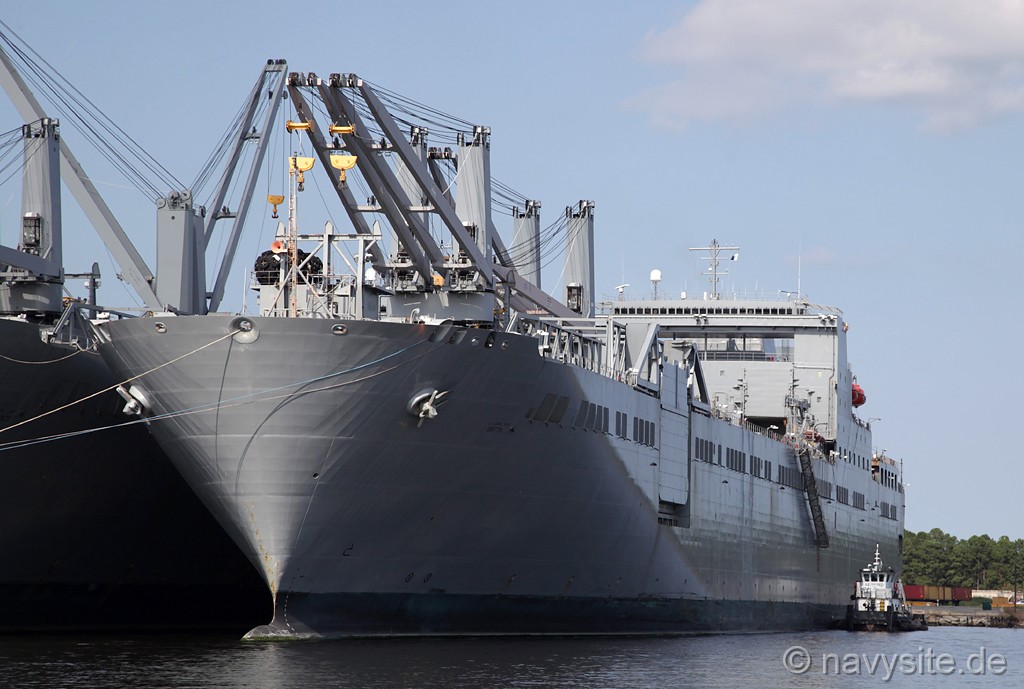
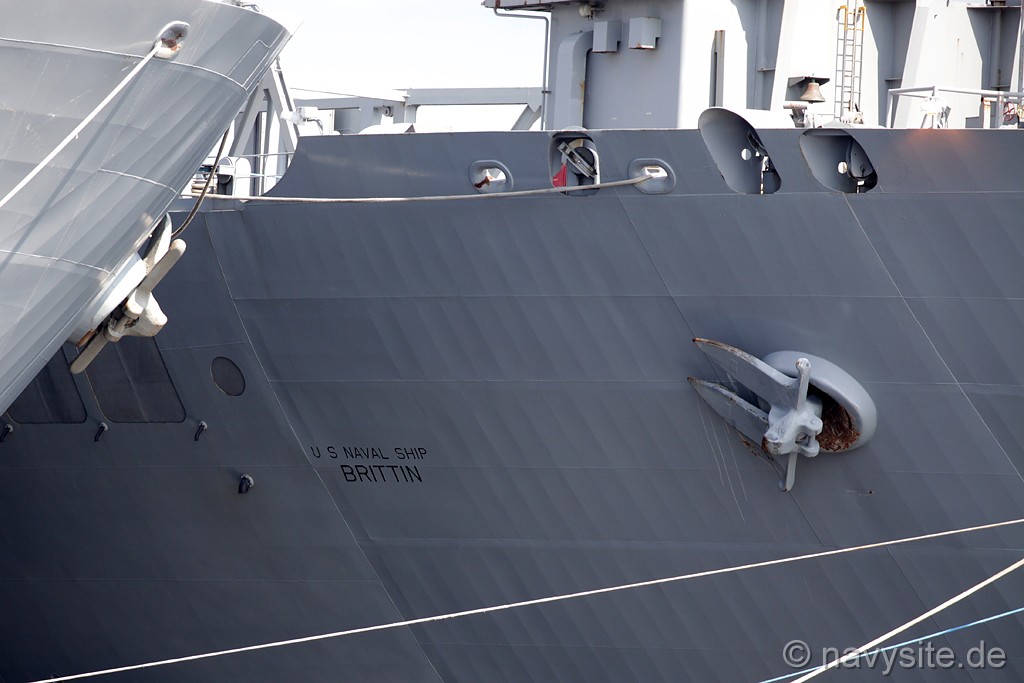
The photos below were taken by Michael Jenning and show the BRITTIN at Naval Base Norfolk, Va., on September 21, 2018.


Back to topback to top


Back to Vehicle Cargo Ships. Back to ships list. Back to selection page. Back to 1st page.