
Search the Site with

|
Search the Site with
|
 General Characteristics Crew List History Image Gallery to end of page
| Sorry, no coat of arms available. | 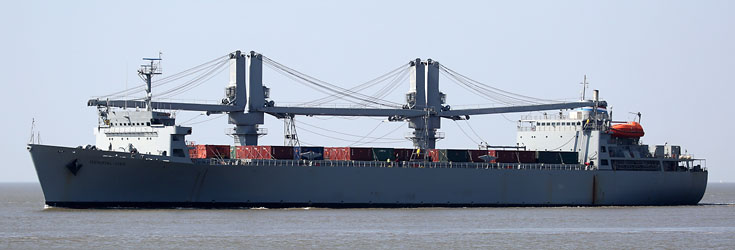 Photo by Thoralf Doehring. |
Built and delivered as cargo ship LIGHTNING for the Maritime Administration, the ship served as a container ship from 1969-86. Converted to a crane ship from December 18, 1986 till February 8, 1988 by Norshipco in Norfolk, Va., she was placed in service as FLICKERTAIL STATE on February 9, 1988. Berthed at Newport News, Va., FLICKERTAIL STATE was capable of being fully activated within 5 days. She was named after the state of North Dakota which is also refered to as Flickertail State. On August 18, 2021, her status was changed to "Logistics Support" meaning that she subsequently served as parts hulk for other ships and is now being laid up as part of the James River Reserve Fleet, Fort Eustis, Va.
| General Characteristics: | Awarded: November 30, 1965 |
| Keel laid: February 14, 1967 | |
| Launched: May 11, 1968 | |
| Delivered: February 21, 1969 | |
| Deactivated: August 18, 2021 | |
| Builder: Bath Iron Works, Bath, Maine | |
| Propulsion system: two boilers, two turbines | |
| Propellers: one | |
| Length: 610 feet (186 meters) | |
| Beam: 78.2 feet (23.83 meters) | |
| Draft: 31.6 feet (9.63 meters) | |
| Displacement: approx. 25,000 tons fully loaded | |
| Speed: 20 knots | |
| Aircraft: none | |
| Armament: none | |
| Capacity: 710 TEU | |
| Cranes: four 30-ton capacity cranes | |
| Crew: 9 (in reduced operation status), 32 (when activated) |
 back to top go to the end of the pageback to top go to the end of the page
Crew List:
This section contains the names of sailors who served aboard SS FLICKERTAIL STATE. It is no official listing but contains the names of sailors who submitted their information.
back to top go to the end of the pageSS FLICKERTAIL STATE History:
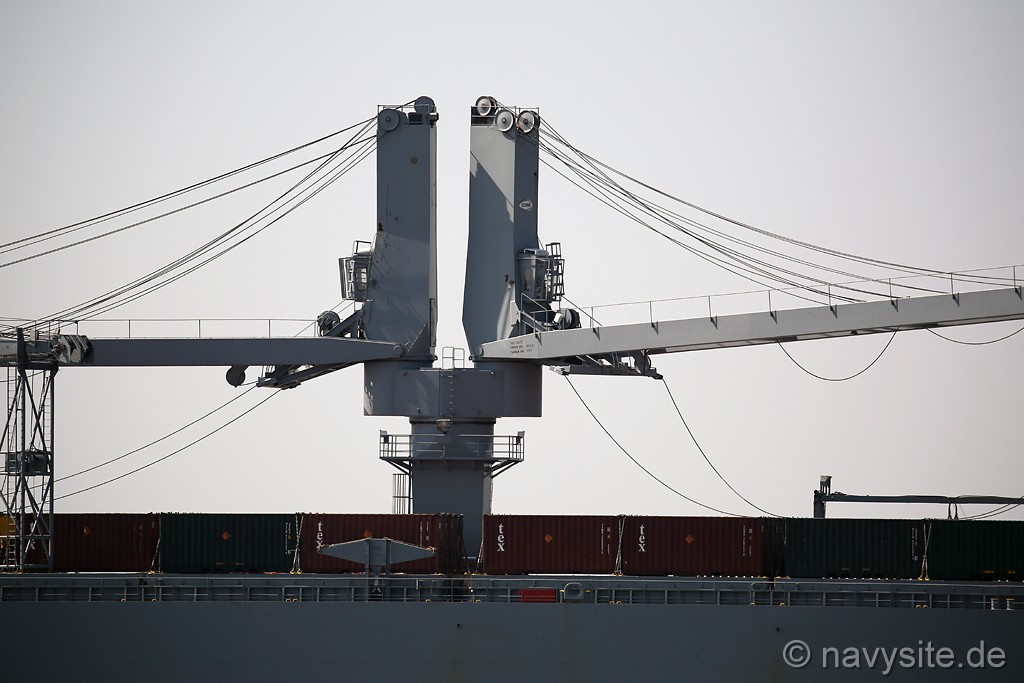
SS FLICKERTAIL STATE began life as the commercial container ship LIGHTNING, a Maritime Administration C5-S-73b hull built at Bath Iron Works - laid down on February 14, 1967, launched on May 11, 1968, and delivered for service on February 21, 1969. She operated for American Export-Isbrandtsen Lines and, from 1978, for Farrell Lines as the same-named container carrier. The Maritime Administration acquired the ship on December 15, 1986, renamed her FLICKERTAIL STATE on June 13, 1986, and contracted conversion at Norfolk Shipbuilding & Drydock to the C5-S-MA73c auxiliary crane configuration. She entered Military Sealift Command service on February 6, 1988, as a Ready Reserve Force crane ship, with three pedestal cranes intended to make her self-sustaining for cargo operations where shore infrastructure was limited or damaged.
Her first years in government service coincided with a major arms-control logistics mission. In mid-1990 the United States and West Germany executed the removal of unitary chemical munitions from storage depots near Clausen and Miesau to the North Sea port of Nordenham. There, on September 22, 1990, the munitions were loaded aboard FLICKERTAIL STATE and sister crane ship GOPHER STATE (T-ACS 4) for an ocean transit routed deliberately around Cape Horn. The voyage was conducted as a nonstop, at-sea-refueled passage under naval escort - among the escorts was the nuclear cruiser BAINBRIDGE (CGN 25) - and culminated at Johnston Atoll in the Pacific in November 1990, where the cargo was transferred to the U.S. Army's Johnston Atoll Chemical Agent Disposal System. A Navy photo places FLICKERTAIL STATE off the atoll on November 1, 1990. The offload sequence concluded later that month without reported incident. The operation, known as Operation Steel Box (also "Golden Python"), marked one of the most sensitive sealift movements of the post-Cold War transition.
With that mission complete, FLICKERTAIL STATE returned to her Ready Reserve pattern at Newport News, Virginia, maintained to short-notice activation and periodically used for training. By 1993, she was on the Newport News layberth, a status she would retain between activations in the decades that followed.
As joint logistics over the shore (JLOTS) concepts matured after the 1991 Gulf War, the crane ship took on exercise support and port-limited discharge roles. On February 6, 2007, imagery documents Army and Navy cargo-handling personnel working aboard FLICKERTAIL STATE at Puerto Quetzal, Guatemala - an event aligned with theater logistics training that used the ship's cranes to stage lighterage and causeway components for ship-to-shore movement. Later that year, on September 11, 2007, Mobile Security Squadron 2 conducted a visit-board-search-and-seizure evolution on board the ship at Naval Weapons Station Yorktown, Cheatham Annex, during the maritime security exercise "Comet 2007", underscoring the utility of RRF hulls as realistic platforms for fleet training.
In early April 2008, FLICKERTAIL STATE off-loaded cargo in Haiti, a photographed port call that illustrated the Ready Reserve Force's growing role in Caribbean and Western Hemisphere contingency throughput - even outside declared disaster responses. That summer she was a core participant in Pacific Strike 2008 off Camp Pendleton, California, a large JLOTS rehearsal that paired the crane ship's heavy-lift capability with barges, lighterage, and a temporary elevated causeway constructed ashore. The sealift roster and timeline were precisely staged: heavy-lift ship CAPE MOHICAN (T-AKR 5065) anchored on June 23, 2008, to deliver barges; FLICKERTAIL STATE arrived on June 30 with more than 350 pieces of construction cargo for the Seabees; transport oiler CHESAPEAKE (T-AOT 5084) reached the area on July 8 and provided water and fuel to support the watercraft fleet; and large, medium-speed, roll-on/roll-off ship PILILAAU (T-AKR 304) arrived on July 21 with nearly 1,000 vehicles and over 500 containers, which began off-loading to lighterage and the causeway on July 22. The result was a full end-to-end demonstration of moving brigade-scale cargo from ship to shore without a pier.
A subsequent innovation cycle centered on at-sea cargo transfer. In November 2009, at Yorktown's Cheatham Annex, the Office of Naval Research demonstrated its Large Vessel Interface Lift-on/Lift-off (LVI Lo/Lo) system aboard FLICKERTAIL STATE, using motion sensing and control to stabilize ISO containers for transfer between moving ships. Government testing continued at Naval Station Norfolk on April 14, 2010, and culminated in an at-sea evaluation in the Gulf of Mexico in early June 2010 using offshore-industry mooring techniques to simulate an operational environment. The LVI Lo/Lo series highlighted how self-sustaining auxiliary ships like FLICKERTAIL STATE could underpin distributed sustainment when alongside piers is not feasible or tactically acceptable.
Through the 2010s and into the 2020s, the ship remained on the Newport News layberth in Ready Reserve status, cycled through periodic maintenance and activation drills, and appeared in public inventories and fleet posters. On August 18, 2021, her status was changed to "Logistics Support" meaning that she subsequently served as parts hulk for other ships and is now laid up as part of the James River Reserve Fleet, Fort Eustis, Va.
back to top go to the end of the pageSS FLICKERTAIL STATE Image Gallery:
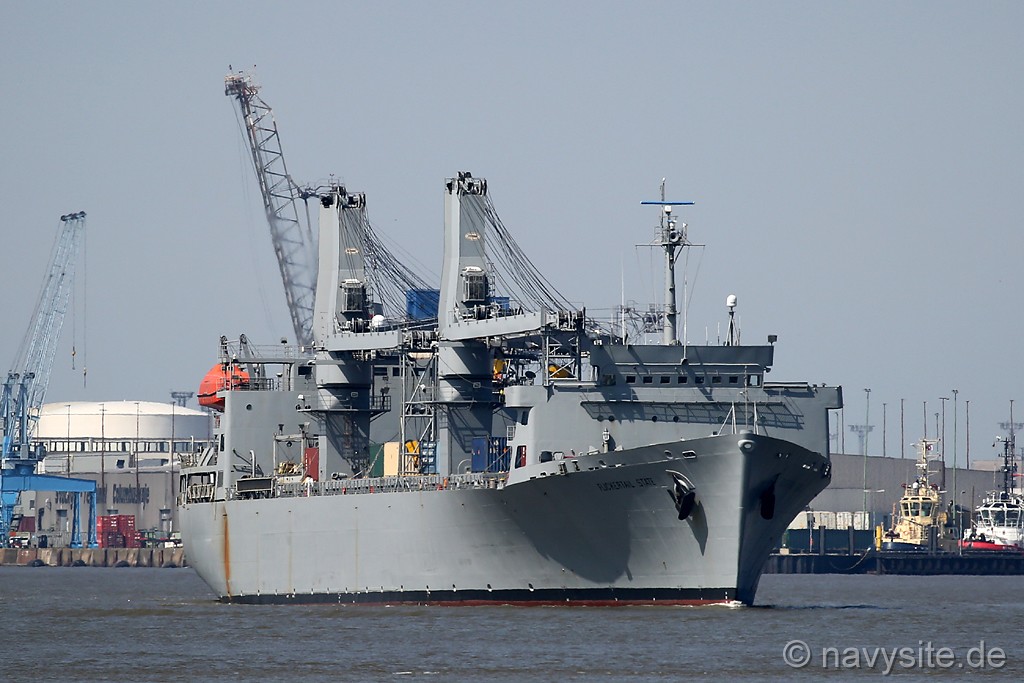
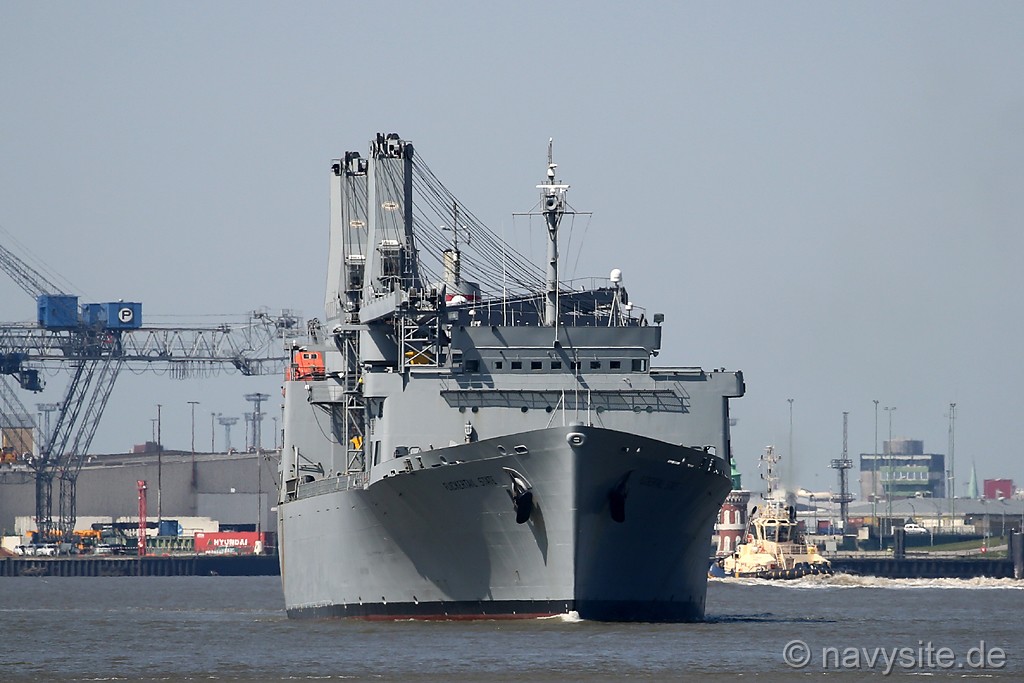
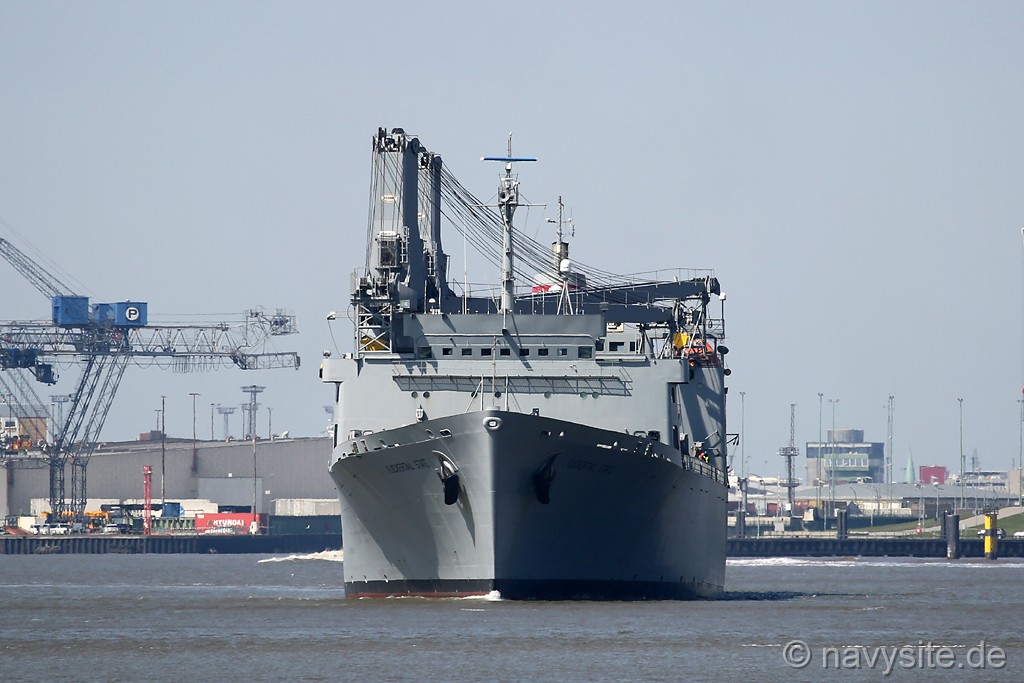
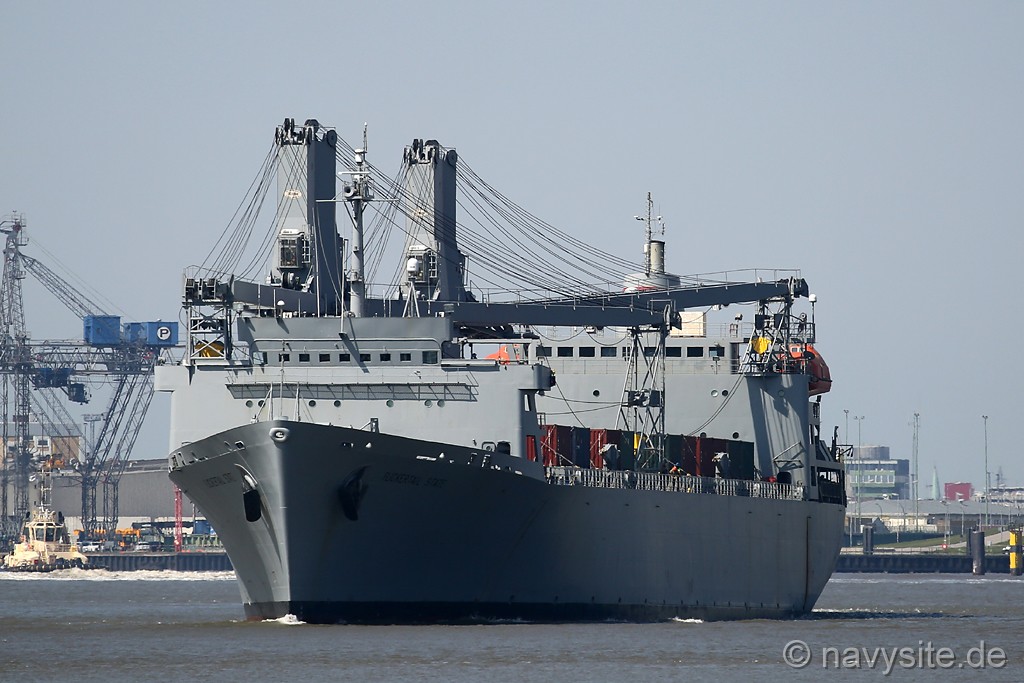
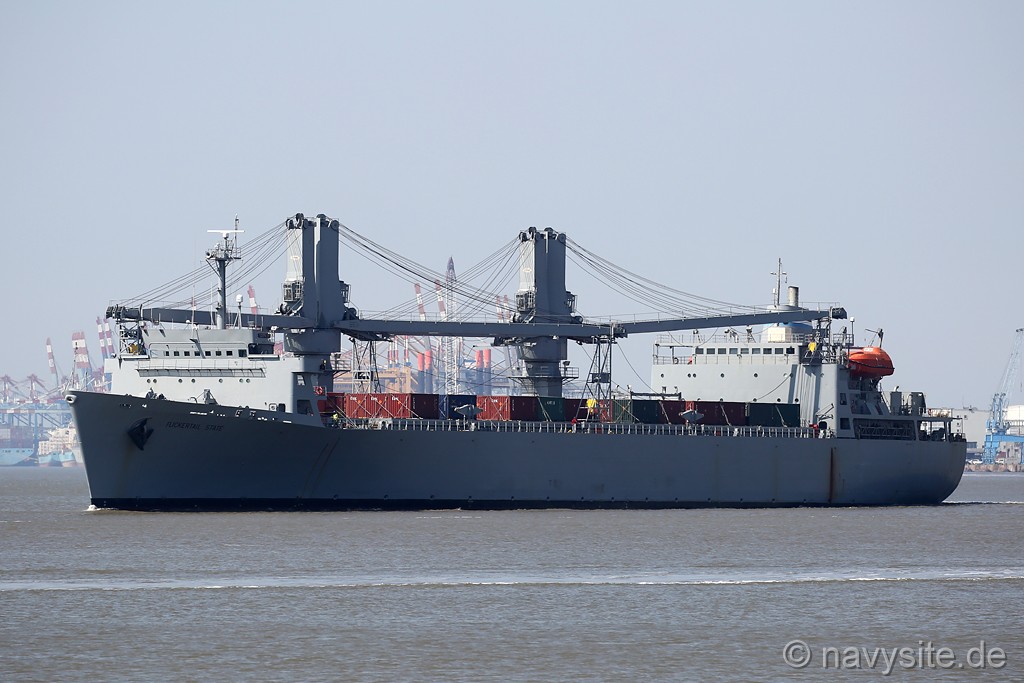
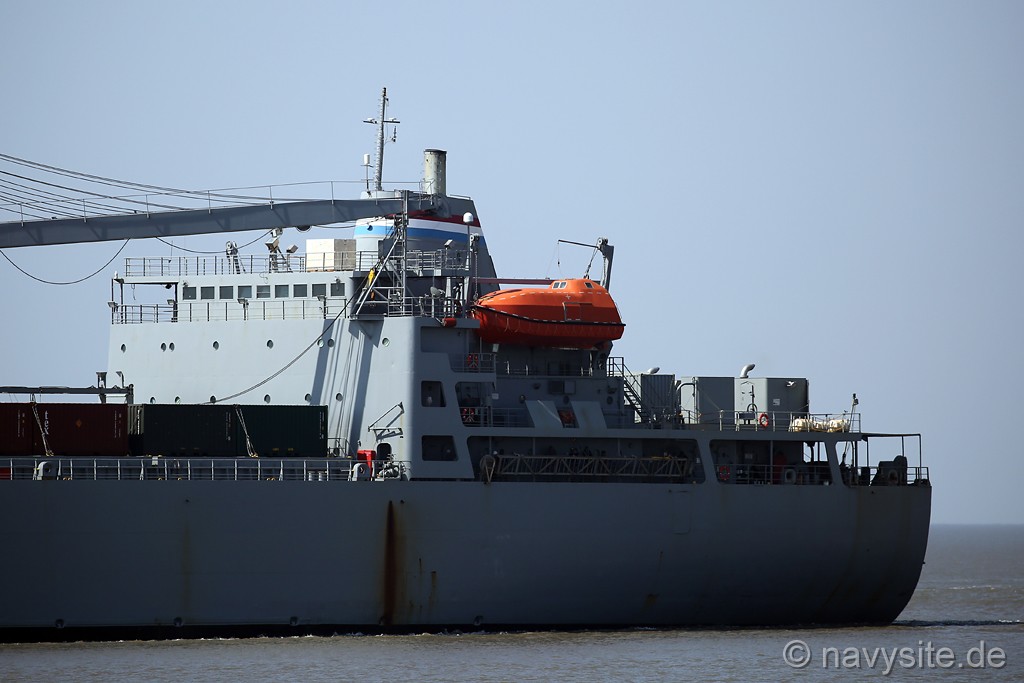
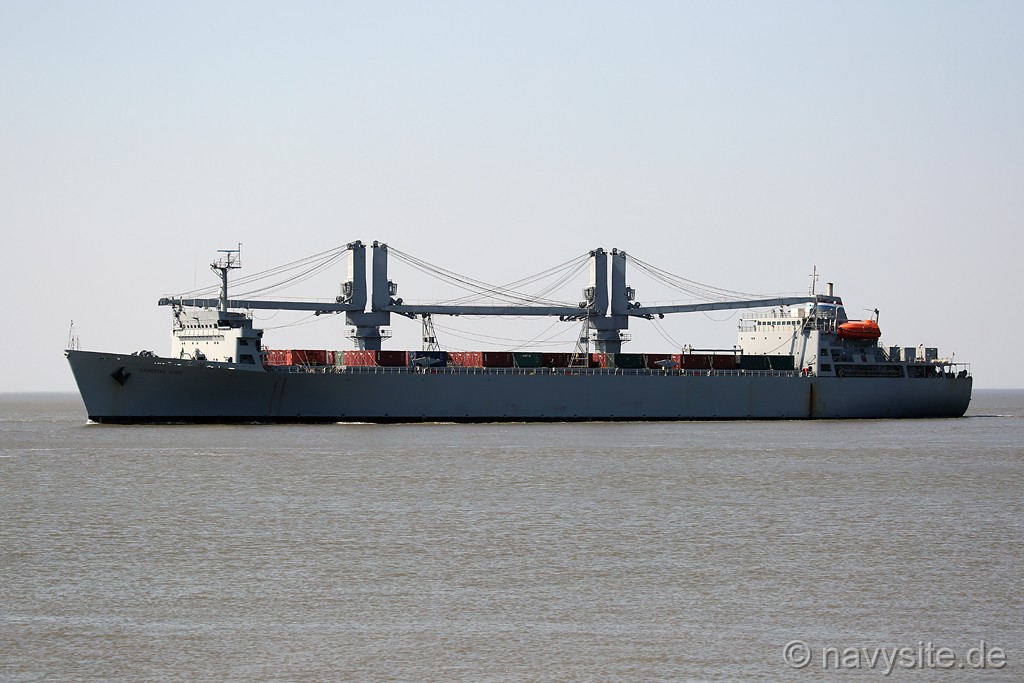
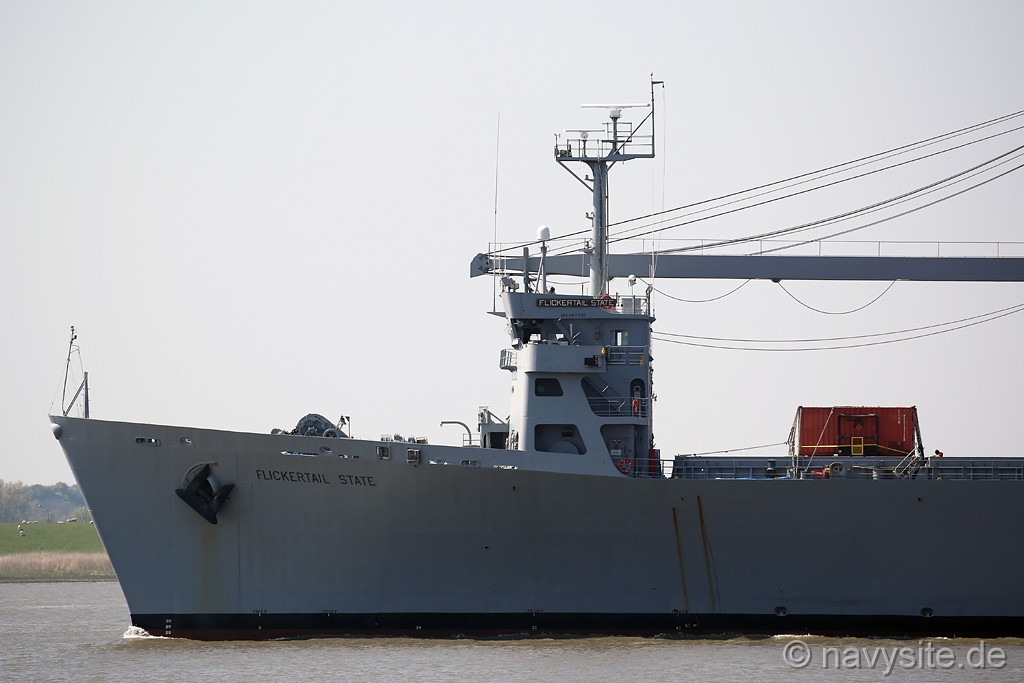
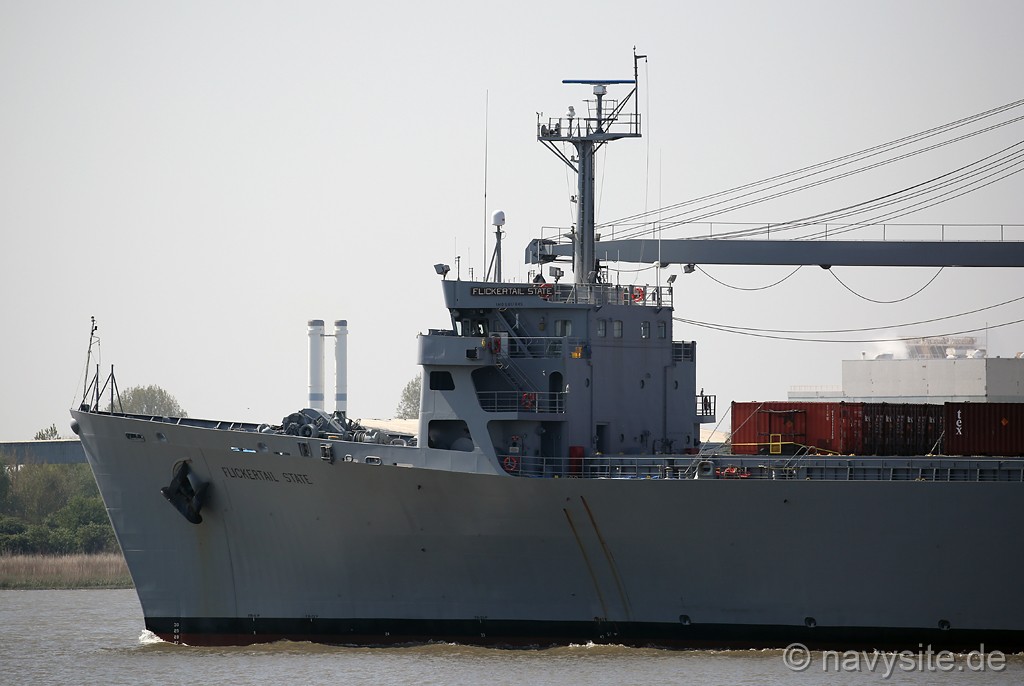
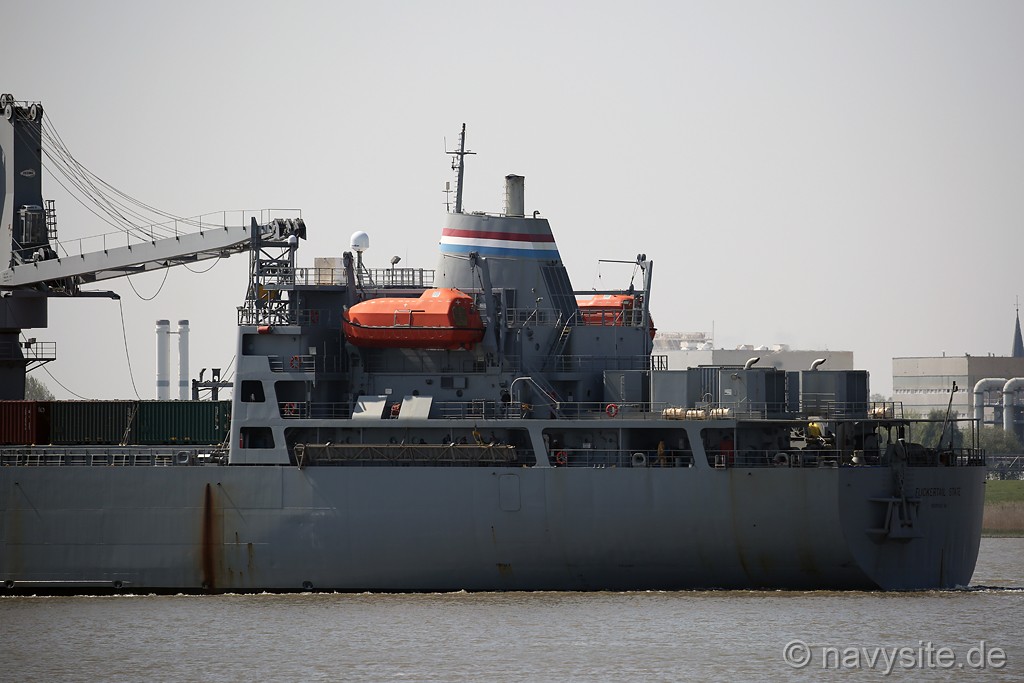
The photos below were taken by me and show the FLICKERTAIL STATE passing Bremerhaven, Germany, on her way to nearby Nordenham on May 11, 2017.
 |  |  |  |  |
 |  |  |  |  |
 |  |  |  |
back to top Back to Crane Ships Page. Back to Ships List. Back to Selection Page. Back to 1st Page.