Search the Site with

|
Search the Site with
|
 General Characteristics Crew List Memorabilia History Image Gallery to end of page


USS TENNESSEE is the ninth ship in the OHIO class of Fleet Ballistic Missile Submarines and the fourth ship and first submarine in the Navy to bear the name of the state.
| General Characteristics: | Awarded: January 7, 1982 |
| Keel laid: June 9, 1986 | |
| Launched: December 13, 1986 | |
| Commissioned: December 17, 1988 | |
| Builder: General Dynamics Electric Boat Division, Groton, Conn. | |
| Propulsion system: one nuclear reactor | |
| Propellers: one | |
| Length: 560 feet (171 meters) | |
| Beam: 42 feet (12.8 meters) | |
| Draft: 36,5 feet (11.1 meters) | |
| Displacement: Surfaced: approx. 16,765 tons Submerged: approx. 18,750 tons | |
| Speed: 20+ knots | |
| Armament: 24 Trident missile tubes (4 permanently deactivated under the New START Treaty), 4 torpedo tubes | |
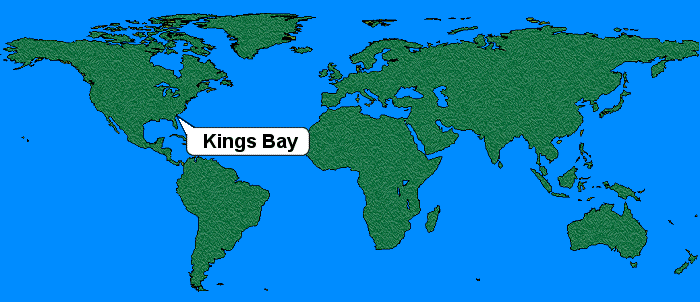
| Homeport: Kings Bay, Georgia | |
| Crew: 17 Officers, 15 Chief Petty Officers and 122 Enlisted (2 crews) |
 back to top go to the end of the pageback to top go to the end of the page
Crew List:
This section contains the names of sailors who served aboard USS TENNESSEE. It is no official listing but contains the names of sailors who submitted their information.
back to top go to the end of the pageback to top go to the end of the pageUSS TENNESSEE History:
USS TENNESSEE is the ninth OHIO-class nuclear-powered ballistic missile submarine. She was the first submarine of her class constructed from the outset to carry the Trident II (D5) submarine-launched ballistic missile system. Unlike the eight earlier OHIO-class submarines, which originally carried the Trident I (C4) missile, TENNESSEE entered service with launch tubes and associated equipment designed for the larger D5 missile.
Construction of TENNESSEE was authorized under the fiscal year 1980 shipbuilding program, and the contract was awarded to the Electric Boat Division of General Dynamics at Groton, Connecticut, on January 7, 1982. Her keel was laid on June 9, 1986, and she was launched and christened on December 13, 1986. The sponsor was Landess Kelso, wife of Admiral Frank B. Kelso II, then Commander in Chief, U.S. Atlantic Fleet. Following fitting-out, dock trials and sea trials, the submarine was delivered to the Navy on November 18, 1988, ahead of the contractual delivery date.
USS TENNESSEE (SSBN 734) was commissioned at Groton on December 17, 1988, with Captain Dennis Witzenburg commanding the Blue Crew and Captain Kenneth D. Barker commanding the Gold Crew. The submarine was assigned to the Atlantic Fleet, with Naval Submarine Base Kings Bay, Georgia, designated as her operational homeport. The base had been developed to support the Navy's Trident ballistic missile submarine force, including the facilities required for maintaining and loading the new D5 strategic weapons system.
On January 15, 1989, TENNESSEE arrived at Naval Submarine Base Kings Bay, becoming the first Trident-equipped ballistic missile submarine to be homeported at the installation. Following her arrival, the submarine began preparations for a series of submerged missile launches intended to demonstrate the performance and reliability of the Trident II system. These tests formed part of the Navy's effort to qualify the new missile and its associated submarine launch equipment for operational service.
On March 21, 1989, TENNESSEE conducted the first submerged launch of a Trident II (D5) missile off Cape Canaveral, Florida. The missile, designated Performance Evaluation Missile 1 (PEM-1), emerged from the water but became unstable shortly afterward and was destroyed by range safety personnel. The failure was attributed to unexpected hydrodynamic loads affecting the missile's first-stage nozzle assembly during the underwater launch sequence. The incident prompted modifications to the missile's structure and protection systems before submarine-launched testing resumed.
On August 2, 1989, TENNESSEE successfully launched another Trident II missile, demonstrating the effectiveness of modifications introduced after the first test failure. A further launch on August 15 was unsuccessful when additional problems associated with the first-stage nozzle occurred. The Navy subsequently implemented further corrective measures to address the stresses imposed on the missile during its passage through the water and transition into flight.
While the missile development program continued, TENNESSEE underwent a Post Shakedown Availability at Electric Boat in Groton. The availability, completed on October 26, 1989, included repairs, adjustments and modifications identified during the submarine's initial trials and missile tests. Additional operational training and inspections followed as the Navy prepared for the final series of launches required before the new strategic weapons system could enter operational service.
On December 4, 1989, TENNESSEE successfully launched another Trident II performance evaluation missile off Cape Canaveral. Two additional successful launches followed on December 13 and 15. The tests provided further data on missile performance and confirmed that the modifications introduced after the earlier failures had addressed the principal problems encountered during the underwater launch sequence.
The testing program continued in January 1990. On January 15 and 16, TENNESSEE successfully launched two additional Trident II missiles, followed by a two-missile ripple launch during Demonstration and Shakedown Operation 01 on February 12. The February launches completed a series of seven consecutive successful submarine-launched Trident II tests following the two failures of 1989. They also demonstrated the readiness of the missile launch system and associated shipboard equipment for operational deployment.
On March 23, 1990, Strategic Weapons Facility Atlantic at Kings Bay completed the first operational loadout of 24 Trident II (D5) missiles aboard TENNESSEE. The event marked the introduction of the D5 system into the Navy's operational strategic submarine force. Six days later, on March 29, TENNESSEE departed Kings Bay on the first strategic deterrent patrol conducted by a submarine equipped with Trident II missiles.
Following the initial deployment, TENNESSEE established the regular operating schedule maintained by OHIO-class ballistic missile submarines. Her Blue and Gold Crews alternated between extended submerged strategic deterrent patrols, maintenance periods and operational training. The two-crew arrangement enabled the submarine to remain available for strategic operations while one crew underwent training and leave ashore.
On November 3, 1990, TENNESSEE's Blue Crew successfully launched a Trident II missile during a Commander in Chief Evaluation Test on the Eastern Test Range off Cape Canaveral. The evaluation was the first of its type conducted with the operational D5 system and provided additional data on missile reliability and submarine launch procedures. Following the test, TENNESSEE continued her strategic deterrent patrol schedule from Kings Bay.
Throughout 1991, TENNESSEE remained part of the Atlantic Fleet's sea-based strategic deterrent force. Her crews conducted regular patrols, strategic weapons readiness exercises and periodic engineering and tactical evaluations. Maintenance and inspections were performed between patrols by the submarine's personnel and supporting commands at Kings Bay.
On April 25, 1992, TENNESSEE returned to Naval Submarine Base Kings Bay after completing a strategic deterrent patrol that marked the 3,000th such patrol conducted by the U.S. Navy's ballistic missile submarine force. The milestone was commemorated during a ceremony at the base attended by General Colin L. Powell, Chairman of the Joint Chiefs of Staff; Admiral Frank B. Kelso II, Chief of Naval Operations; and Vice Admiral Henry G. Chiles Jr., Commander, Submarine Force Atlantic. The ceremony recognized the uninterrupted strategic deterrent operations conducted by American ballistic missile submarines since the first Polaris patrol in 1960.
During the summer of 1992, TENNESSEE participated in further operational testing of the Trident II weapons system. On August 4, the Blue Crew successfully launched four unarmed D5 missiles during a Commander in Chief Evaluation Test. A second series of four successful launches was conducted by the Gold Crew on September 10. The evaluations provided additional information on missile performance, launch procedures and the operational readiness of the strategic weapons system.
During the following years, TENNESSEE continued strategic deterrent patrols from Kings Bay. Her crews participated in training, readiness inspections and periodic evaluations of the Trident II missile system. Maintenance periods at the Trident Refit Facility and other supporting facilities addressed the requirements of the submarine's nuclear propulsion plant, navigation equipment, weapons systems and auxiliary machinery.
On April 9, 1995, TENNESSEE successfully launched two Trident II missiles during a Follow-on Commander in Chief Evaluation Test. A further evaluation on October 28, 1996, included two additional successful D5 launches. These tests formed part of the continuing program to evaluate the performance and reliability of operationally deployed submarine-launched ballistic missiles.
Throughout the late 1990s and early 2000s, TENNESSEE maintained her strategic deterrent patrol schedule with alternating Blue and Gold Crews. Between patrols, she underwent regular refits, operational inspections and weapons system evaluations at Kings Bay. During this period, the Navy also began converting selected Trident I-equipped OHIO-class submarines to the D5 system, while TENNESSEE continued operating with the equipment installed during her original construction.
On March 1, 2005, TENNESSEE successfully launched two Trident II missiles during a Follow-on Commander Evaluation Test. The launches were conducted to assess the continuing reliability of the D5 system under operational conditions. Following the evaluation, the submarine resumed her regular patrol schedule while preparations continued for her approaching mid-life overhaul.
During the latter part of the decade, TENNESSEE was selected for an Engineered Refueling Overhaul at Norfolk Naval Shipyard in Portsmouth, Virginia. The availability began in 2009 and involved refueling the submarine's S8G nuclear reactor, extensive maintenance of propulsion and auxiliary machinery, and modernization of equipment required for continued strategic operations. The overhaul was intended to support the submarine's operation during the second half of her planned service life.
Throughout 2009 and 2010, shipyard personnel and TENNESSEE's crew carried out inspections, repairs and modifications to the submarine's engineering, mechanical, electrical and electronic systems. The work also included upgrades to navigation and communications equipment, improvements to habitability and replacement or refurbishment of components that had reached scheduled maintenance intervals. On June 18, 2010, a change-of-command ceremony for the Blue Crew was held at Naval Station Norfolk while the overhaul continued.
On July 29, 2011, TENNESSEE returned to Naval Submarine Base Kings Bay following approximately 30 months of refueling and overhaul work at Norfolk Naval Shipyard. The availability had required more than 400,000 workdays and included the replacement of selected analog systems with modern digital equipment. Following her return, the submarine began preparations for post-overhaul trials, strategic weapons certification and the resumption of regular deterrent patrols.
On February 3, 2012, TENNESSEE departed Kings Bay following a refit period of approximately two months. The following day, she briefly moored at the Trident Pier at Port Canaveral, Florida, while conducting training and operational preparations. The submarine subsequently proceeded to sea for additional evaluations of her strategic weapons system.
On February 22, 2012, TENNESSEE's Gold Crew successfully launched an unarmed Trident II (D5) missile in the Atlantic Ocean off Cape Canaveral. The launch was conducted during Demonstration and Shakedown Operation 23 following the submarine's refueling overhaul and marked the 137th consecutive successful Trident II test flight. The evaluation confirmed the readiness of the submarine's missile launch equipment and associated systems for continued operational service.
Following completion of the post-overhaul certification process, TENNESSEE resumed strategic deterrent patrols from Kings Bay. On February 6, 2013, the Blue Crew returned the submarine to her homeport after a patrol lasting more than three months. On March 8, Commander John L. Howrey relieved Commander Brett D. Moyes as commanding officer of the Blue Crew during a ceremony at the base chapel.
During the spring of 2013, TENNESSEE's Gold Crew conducted another strategic deterrent patrol. The Blue Crew subsequently resumed responsibility for the submarine and departed Kings Bay on July 2 for further operations. In September, TENNESSEE participated in a series of Trident II missile launches on the Eastern Test Range.
On September 10 and 12, 2013, TENNESSEE successfully launched four unarmed Trident II missiles during a Follow-on Commander Evaluation Test. Two missiles were launched on each date, representing the 145th through 148th consecutive successful Trident II test flights since the beginning of the successful flight sequence in December 1989. The launches were conducted to evaluate the operational reliability and performance of the strategic weapons system.
On April 4, 2014, Commander Christopher G. Bohner relieved Commander Richard F. Dubnansky Jr. as commanding officer of TENNESSEE's Gold Crew during a ceremony at Naval Submarine Base Kings Bay. The Gold Crew subsequently completed training and maintenance preparations for another strategic deterrent patrol. On July 22, TENNESSEE departed Kings Bay for operations in the Atlantic, continuing the alternating patrol schedule maintained by her two crews.
On March 20, 2015, Commander Charles A. McLenithan III relieved Commander John L. Howrey as commanding officer of TENNESSEE's Blue Crew. During the remainder of the year, the submarine continued operating from Kings Bay, conducting strategic deterrent patrols, maintenance and readiness evaluations. Her crews also participated in regular engineering inspections, weapons system training and operational exercises.
On May 1, 2016, TENNESSEE's Gold Crew returned to Naval Submarine Base Kings Bay following another strategic deterrent patrol. During the summer, the submarine underwent maintenance at the Trident Refit Facility, including a period in dry dock. Following completion of the work and subsequent operational preparations, TENNESSEE resumed patrol operations.
On October 7, 2016, TENNESSEE's Blue Crew arrived at His Majesty's Naval Base Clyde at Faslane, Scotland, for a scheduled port visit. The submarine moored at Valiant Jetty, where she received logistical support during operations in European waters. Faslane is the principal operating base of the United Kingdom's VANGUARD-class ballistic missile submarine force, and the visit provided an opportunity for cooperation between the American and British submarine services.
On March 24, 2017, Commander Jon P. Schaffner relieved Commander Christopher G. Bohner as commanding officer of TENNESSEE's Gold Crew during a ceremony at Kings Bay. During the summer, Commander Paul Seitz also assumed command of the Blue Crew, relieving Commander Charles A. McLenithan III. The submarine continued conducting strategic deterrent patrols and maintenance periods throughout the year.
On October 17, 2018, TENNESSEE's Blue Crew returned to Naval Submarine Base Kings Bay following another strategic deterrent patrol. After the submarine's return, maintenance and training preparations continued for the next operational period. The Gold Crew subsequently resumed responsibility for the submarine as the normal patrol rotation continued.
On January 11, 2019, TENNESSEE's Gold Crew returned to Kings Bay following a strategic deterrent patrol. The crew conducted further training and operational preparations during the following months before returning to sea. On August 8, the Gold Crew again brought the submarine back to Kings Bay after another patrol.
On August 13, 2019, TENNESSEE entered dry dock at the Trident Refit Facility Kings Bay for a scheduled maintenance period. The work included inspections, repairs and maintenance of equipment required for continued strategic operations. On August 29, Commander Matthew P. Luff relieved Commander Jon P. Schaffner as commanding officer of the Gold Crew during a ceremony at Kings Bay.
TENNESSEE was undocked on October 15, 2019, and subsequently moored at Refit Wharf 3. Additional maintenance and operational preparations continued following the undocking. The submarine subsequently returned to her regular patrol schedule with alternating Blue and Gold Crews.
On January 11, 2020, TENNESSEE's Blue Crew returned to Kings Bay following another strategic deterrent patrol. On March 6, Commander Justin M. Kaper relieved Commander Paul Seitz as commanding officer of the Blue Crew. The change of command occurred shortly before the Navy introduced additional health-protection measures in response to the COVID-19 pandemic.
Throughout 2020, TENNESSEE continued conducting strategic deterrent operations while implementing measures intended to prevent the introduction of COVID-19 aboard the submarine. These included additional medical screening, isolation procedures and changes to personnel movements before deployment. On November 17, the Blue Crew returned TENNESSEE to Kings Bay following another strategic deterrent patrol.
On February 1, 2021, TENNESSEE entered the covered dry dock at Trident Refit Facility Kings Bay for an Extended Refit Period. The availability involved extensive maintenance and modernization, including work under the Navy's Acoustic Superiority Program. TENNESSEE was the last submarine scheduled to use the covered dry dock before the facility underwent a major modernization project in preparation for future maintenance requirements.
The work package included preservation of the submarine's external hull, maintenance of propulsion and auxiliary systems, repairs to high-pressure air equipment and modernization of ship control and sonar systems. Additional work addressed the propeller, main ballast tank vent valves, stern planes, rudder linkages and torpedo tube equipment. The availability also included the installation of advanced acoustic sensing capabilities intended to improve the submarine's ability to detect and track underwater contacts.
During the summer of 2021, TENNESSEE completed the principal dry-dock phase of the Extended Refit Period. Trident Refit Facility personnel reported that the submarine had spent 149 days in dry dock and that the availability represented the most extensive maintenance package completed at the facility up to that time. Following undocking, additional equipment testing, inspections and operational preparations continued before the submarine resumed regular patrol operations.
On January 14, 2022, Commander Anthony M. Wilson relieved Commander Justin M. Kaper as commanding officer of TENNESSEE's Blue Crew during a ceremony at Kings Bay. On April 29, Commander Kenneth C. Packard relieved Commander Matthew P. Luff as commanding officer of the Gold Crew. Both crews subsequently continued training and preparations for strategic deterrent patrols.
On November 22, 2022, TENNESSEE participated in bilateral at-sea training with a Royal Navy VANGUARD-class ballistic missile submarine in the Atlantic Ocean. The exercise also involved a U.S. Navy E-6B Mercury airborne command-and-control aircraft from Fleet Air Reconnaissance Squadron 4 and an MH-60R Seahawk helicopter from Helicopter Maritime Strike Squadron 72. The operation focused on coordination, communications and procedures involving the American and British strategic submarine forces.
During 2023, TENNESSEE continued strategic deterrent patrols from Kings Bay and participated in operations involving allied naval forces in European waters. In the spring, her Gold Crew returned from another patrol and moored at Refit Wharf 3 at Kings Bay. Maintenance and training followed before the submarine resumed operations in the Atlantic.
On July 16, 2023, TENNESSEE conducted a brief logistics stop off the northwestern coast of the United Kingdom. General Christopher G. Cavoli, Commander, U.S. European Command, embarked aboard the submarine at sea, accompanied by Vice Admiral William Houston, Commander, Allied Submarine Command, and Commodore Paul Dunn of the Royal Navy. During the visit, the officers observed shipboard operations and received briefings on the submarine's capabilities and mission.
On July 18, 2023, TENNESSEE arrived at His Majesty's Naval Base Clyde at Faslane, Scotland, for a four-day port visit. The visit provided logistical support and an opportunity for coordination with British naval personnel. Following completion of the visit, TENNESSEE continued her operational assignments.
On February 15, 2024, Commander Edward May relieved Commander Anthony M. Wilson as commanding officer of TENNESSEE's Blue Crew during a ceremony at Naval Submarine Base Kings Bay. Following the command change, the Blue Crew continued preparations for further strategic deterrent operations, including training, maintenance and operational inspections.
During the summer of 2024, TENNESSEE operated in northern European waters as part of a strategic deterrent patrol. The submarine participated in activities involving American and allied naval and air forces in the Norwegian Sea. Norwegian military representatives also embarked aboard TENNESSEE during the deployment.
On June 23, 2024, TENNESSEE operated on the surface in the Norwegian Sea alongside the guided-missile cruiser USS NORMANDY (CG 60). An E-6B Mercury airborne command-and-control aircraft and a P-8A Poseidon maritime patrol aircraft also participated in the coordinated operation. The event was documented in photographs released by U.S. Naval Forces Europe-Africa and U.S. Sixth Fleet.
During the same deployment, TENNESSEE visited His Majesty's Naval Base Clyde at Faslane, Scotland, where she conducted a crew exchange. The operation enabled the submarine to continue her forward deployment while transferring responsibility between her Blue and Gold Crews. It represented a return to an overseas crew rotation procedure that had been used extensively by earlier generations of American ballistic missile submarines.
On November 22, 2024, TENNESSEE received visitors at Naval Submarine Base Kings Bay while undergoing a refit. Among those visiting were Congressman Buddy Carter of Georgia and Madison Marsh, Miss America 2024 and a U.S. Air Force officer. The visitors toured the submarine and other facilities at Kings Bay during a program intended to provide information about naval operations and the strategic submarine force.
For her operational performance during 2024, TENNESSEE's Blue and Gold Crews received the Commander, Submarine Force Atlantic Battle Efficiency "E" awards. The awards were announced in January 2025 and recognized the crews' readiness, training and performance in operational evaluations. TENNESSEE had also received the Battle Efficiency "E" award for 2023, marking consecutive years of recognition.
During the opening months of 2025, TENNESSEE entered dry dock at Trident Refit Facility Kings Bay for another maintenance availability. The work included inspections, repairs and maintenance of equipment required for continued operational service. Shipyard personnel worked with the submarine's crew and supporting commands to complete the scheduled maintenance package.
On May 6, 2025, General Anthony J. Cotton, Commander, U.S. Strategic Command, presented the 2024 Omaha Trophy to TENNESSEE's Blue and Gold Crews during a ceremony at Naval Submarine Base Kings Bay. The award recognized their performance in strategic deterrent operations during the preceding year. Commander Edward May and Commander Matthew Collinsworth, commanding officers of the Blue and Gold Crews respectively, accepted the award on behalf of their personnel.
On May 15, 2025, TENNESSEE was undocked at Trident Refit Facility Kings Bay following several months of maintenance. The undocking operation was conducted jointly by personnel from the refit facility, the submarine's crew and port operations. Following her departure from dry dock, additional preparations and testing continued as the submarine returned to her normal maintenance and training cycle.
During the remainder of 2025 and throughout 2026, TENNESSEE continued serving as part of the Atlantic Fleet's strategic submarine force. Her operational service was supported by the mid-life reactor refueling overhaul and the modernization and maintenance availabilities completed during her career. The Navy continued evaluating the material condition and remaining service lives of the OHIO-class ballistic missile submarines as preparations progressed for their eventual replacement by the COLUMBIA-class.
According to the U.S. Navy Shipbuilding Plan published in May 2026, TENNESSEE was scheduled for inactivation and subsequent nuclear ship recycling during fiscal year 2031. The planned retirement remained subject to further assessment of the submarine's material condition, maintenance requirements and operational needs.
back to top go to the end of the pageUSS TENNESSEE Image Gallery:
 |  |  |
The photos below were taken by me on October 27, 2010, and show the TENNESSEE at the Norfolk Naval Shipyard, Portsmouth, Va., during her 36-month Engineering Refueling Overhaul there. Note the crane lowering a launch tube hatch on the deck of TENNESSEE.
 |  |
The photo below was taken by me and shows the TENNESSEE at HMNB Clyde, Faslane, Scotland, on October 8, 2016. The submarine arrived at Faslane on October 7.
 |
back to top
 Back to Ballistic Submarines list. Back to ships list. Back to selection page. Back to 1st page.