 |
Search the Site with

|
 General Characteristics Crew List Memorabilia Cruise Books Different Armament V-2 Launch Accidents aboard the Ship Notes of Interest Patch Gallery COs of USS Midway History Deployments of USS Midway About the Ship's Name Gallery end of page
USS Midway (CV 41)
- formerly CVA 41, formerly CVB 41 -- decommissioned -
 |  |  |
Named for the Battle of Midway, USS MIDWAY was the lead ship of her class, three of which were completed, with another two ships cancelled. Serving her country for 47 years, more than 200,000 American veterans served aboard her. During that time, the USS MIDWAY saw service off Vietnam, in the Persian Gulf and in a number of other conflicts and crises. After being the first aircraft carrier forward deployed for 17 years in Yokosuka, Japan, she returned to North Island Naval Air Station in San Diego for decommissioning in April of 1992. In over five decades of service, she received the Presidential Unit Citation; Navy Unit Commendation; U.S. Navy & Marine Corps Expeditionary Medal; Navy Occupation Service Medal; China Service Expeditionary Medal; and Vietnam Service Medal.
Commissioned as CVB 41, the MIDWAY was redesignated as attack aircraft carrier CVA 41 on October 1, 1952, and multi-purpose aircraft carrier CV 41 on June 30, 1975.
Today, the MIDWAY is serving as a floating museum in the city of San Diego. There are two Photo Tours of the USS MIDWAY Museum available. Click here for a Photo Tour with photos from 2007 or click here for photos from 2008 and 2010.
| General Characteristics: | Keel laid: October 27, 1943 |
| Launched: March 20, 1945 | |
| Commissioned: September 10, 1945 | |
| Decommissioned: mid-1955 | |
| Recommissioned: September 30, 1957 | |
| Decommissioned: April 11, 1992 | |
| Builder: Newport News Shipbuilding, Newport News, Va. | |
| Propulsion system: 12 boilers, four Westinghouse geared turbines | |
| Propellers: four | |
| Aircraft elevators: three | |
| Arresting gear cables: three | |
| Catapults: two | |
| Length: 997,4 feet (304 meters) | |
| Flight Deck Width: 237,9 feet (72.5 meters) | |
| Beam: 121 feet (36.9 meters) | |
| Draft: 38,1 feet (11.8 meters) | |
| Displacement: approx. 64,000 tons full load | |
| Speed: 30+ knots | |
| Planes: 1945: 80-145 planes (highest number never embarked), later: approx. 65 planes | |
| Crew: ship: approx. 2,533 Air Wing: 2,240 | |
| Armament: see down below |
 back to top go to the end of the pageback to top go to the end of the page
Crew List:
This section contains the names of sailors who served aboard USS MIDWAY. It is no official listing but contains the names of sailors who submitted their information.
- Click here to view the list.
back to top go to the end of the page- Click here
to see which USS MIDWAY memorabilia are currently for sale on ebay.
back to top go to the end of the pageUSS MIDWAY Cruise Books:
- Mediterranean Cruise Book 1947-48
- Mediterranean Cruise Book 1950
- Mediterranean Cruise Book 1952
- Mediterranean Cruise Book 1952-53
- Mediterranean Cruise Book 1954
- World Cruise Book 1955
- WestPac Cruise Book 1958-59
- WestPac Cruise Book 1959-60
- WestPac Cruise Book 1961
- WestPac Cruise Book 1962
- WestPac Cruise Book 1963-64
- WestPac Cruise Book 1965
- WestPac Cruise Book 1971
- WestPac Cruise Book 1972-73
- WestPac Cruise Book 1974
- WestPac Cruise Book 1975-76
- WestPac Cruise Book 1977
- WestPac Cruise Book 1978-79
- WestPac Cruise Book 1979-80
- WestPac Cruise Book 1981-82
- WestPac Cruise Book 1982-83
- WestPac Cruise Book 1984-85
- WestPac Cruise Book 1985-87
- WestPac Cruise Book 1987-89
- WestPac Cruise Book 1989-90
- Operation Desert Storm Cruise Book 1990-91
back to top go to the end of the pageAbout the different armament:
- 1945: 18 5-inch (12,7 cm) 54 caliber guns, 84 40mm guns and 28 20mm guns
- 1950: 14 5-inch (12,7 cm) 54 caliber guns and 40 3-inch (7,6 cm) 50 caliber guns
- 1957: 10 5-inch (12,7 cm) 54 caliber guns and 22 3-inch (7,6 cm) 50 caliber guns
- 1961: 10 5-inch (12,7 cm) 54 caliber guns
- 1963: 4 5-inch (12,7 cm) 54 caliber guns
- 1970: 3 5-inch (12,7 cm) 54 caliber guns
- 1985: 2 Mk-25 launchers for Sea Sparrow, 2 Phalanx CIWS Mk-15
back to top go to the end of the pageAbout the V-2 Missile Launch aboard USS MIDWAY:
 On a cloudy September day, two years after the end of World War II, a captured German V-2 rocket was successfully test fired from the USS MIDWAY. This was a historic first in the annals of naval warfare.
Naval records indicate the test took place several hundred miles off the East Coast of the United States with the country's top naval and civilian rocketry experts in attendance. The goal of the test? To determine if modern rockets could be fired from naval platforms and perform as intended. At that time, there was some question as to whether major modifications might be necessary for shipboard launches of missiles.
The V-2 successfully lifted off the USS MIDWAY and was exploded about six miles away, just a few minutes after launch.
Although the test took place on September 6, 1947, the results and photography were not released to the public until the next month, on October 13, 1947. Rear Admiral D.V. Gallery, Assistant Chief of Naval Operations for Guided Missiles, declared the test a success. The MIDWAY missile test is now considered to have been the dawn of naval missile warfare.
back to top go to the end of the pageAccidents aboard USS MIDWAY:
| Date | Where | Events |
|---|---|---|
| February 18, 1948 | Gulf D'Hyeres, France | A liberty launch capsizes in heavy waves while attempting to return to the MIDWAY. Eight sailors are killed in the accident. |
| June 23, 1951 | western Atlantic | An F9F-2 aircraft assigned to the Naval Air Test Center and piloted by Commander George C. Duncan crashes into MIDWAY's ramp while attempting to land aboard. The aircraft struck the stern area and broke apart, with the cockpit section separating from the fuselage and tumbling along the flight deck. Duncan survived but suffered burns that required an extended period of recovery. |
| November 11, 1951 | western Atlantic | An F9F-2 assigned to VF-21 misses all wires on approach and engages the barricade. However, the plane breaks free and crahes into four other F9Fs parked forward on the flight deck and subsequently runs over the side into the Atlantic taking another F9F with it. The accident caused a fire on the flight deck that killed one plane captain and heavily burned two other sailors. The pilot of the crashing F9F, LT E. W. Keegan, survived the accident. |
| February 19, 1954 | Aegean Sea | USS MIDWAY collides with USS GREAT SITKIN (AE 17) at the end of an ammunition transfer in heavy seas. At breakaway, GREAT SITKIN's port quarter impacts MIDWAY's aft starboard quarter damaging one of the carrier's 5-inch guns and 40 feet of the sponson edge. |
| November 9, 1959 | Subic Bay, Philippines | Fire in the pump room of USS MIDWAY. Arson is blamed for the incident. |
| early 1964 | western Pacific | During an underway replenishment, MIDWAY's number 3 aircraft elevator is hit and lifted by a large wave. Parts of the wave also wash over the elevator almost washing several crewmembers into the sea. A subsequent large wave lifts the elevator again and breaks it from its guides. As a result the cables snap and the elevator falls into the sea. MIDWAY got a new elevator in June 1964 during a yard period at Hunters Point Shipyard at San Francisco, Calif. |
| October 24, 1972 | off Vietnam | An A-6A Intruder of VA-115 experiences a landing gear failure during recovery, causing the aircraft to miss the arresting wires and crash into aircraft parked on the flight deck. The impact caused extensive damage and a fire. Five men were killed and 23 were injured. Two aircraft were destroyed, another aircraft went overboard, and five additional aircraft sustained varying degrees of damage. Damage-control teams extinguished the fire within approximately three minutes, and the carrier resumed flight operations the following morning. A memorial service for the five men killed in the accident was held aboard MIDWAY on October 29. |
| October 21, 1973 | western Pacific | An SH-3G helicopter assigned to HC-1 crashes off MIDWAY's bow on take-off for an SAR mission. All three crew on board are killed. The helicopter was supposed to get underway to the crash site of two other MIDWAY aircraft that had a mid-air collision. Involved in the mid-air collision were an A-7A (VA-56) and an EA-6A (VMCJ-1). This collision killed all three crew of the aircraft involved. |
| July 20, 1975 | western Pacific | The navigator's ejection seat in a KA-6D assigned to VA-115 inadvertently fires during a cat shot and the pilot follows seconds later believing that his navigator ejected because of a problem with the plane. The KA-6D crashed into the sea. The pilot is killed in the incident. He was the squadron's XO. |
| November 25, 1975 | Indian Ocean | A plane attempting to land on USS MIDWAY strikes the ramp, bolts, impacts the barricade, and strikes another plane during post-"Midlink" exercises in the Indian Ocean. Two crewmen are injured. |
| January 13, 1977 | 250 miles north of Okinawa | An A-7A assigned to VA-56 taxies overboard. A plane captain is lost in the accident. |
| March 30, 1977 | western Pacific | The pilot of an A-7A assigned to VA-93 ejects after a catapult failure, however, the seat/man separation of the ejection seat does not work properly and the pilot is killed on impact. |
| December 7, 1977 | western Pacific | A KA-6D assigned to VA-115 hits MIDWAY's ramp on approach. Both crewmembers of the aircraft are recovered. |
| May 31, 1978 | in port Yokosuka, Japan | USS MIDWAY suffers a fire which originates in the exhaust ventilation system, quickly spreads through the 3A boiler uptakes on the second deck, and terminates in the main uptake space. The cause of the fire is later thought to be welding in a vent system containing a fine oil mist which ignited and spread. |
| April 16, 1979 | Indian Ocean | An F-4 suffers a complete hydraulic failure. The crew is ordered to do a controlled ejection 5 miles from the MIDWAY. After the ejection the plane turns towards the carrier but finally crashes one mile away. Both crewmembers of the F-4 are recovered safely. |
| August 9, 1979 | in port Yokosuka, Japan | A fire caused by a broken acetylene line breaks out aboard USS MIDWAY killing one worker and injuring 17 sailors. |
| January 7, 1980 | Indian Ocean | An F-4J assigned to VF-151 is lost after a catapult launch. Both crewmembers eject safely. |
| July 29, 1980 | Palawan Straits near the Philippines | USS MIDWAY collides with the Panamian freighter CACTUS while transiting the passage between Palawan Island and the coast of Northern Borneo 450 nautical miles off Subic Bay en route to Singapore. The MIDWAY, the Navy says, sustained no serious damage although two US sailors were killed, three were injured, and three F-4 Phantom aircraft parked on the flight deck were damaged. The damage aboard USS MIDWAY can be seen on the photos below.    |
| August 5, 1980 | between Philippines and Borneo | The crew of an F-4J assigned to VF-151 loses control of their plane during a touch-and-go aboard the MIDWAY and ejects. Both are recovered safely. |
| October 2, 1980 | Indian Ocean | An A-6E is lost at night during approach after an engine failure and the subsequent single engine recovery attempt. Both crewmembers were recovered safely. |
| November 4, 1980 | Indian Ocean | LCDR H. Meyers assigned to VA-56 is killed in a cat launch accident. |
| December 17, 1980 | off Ohshima Island, Japan | The pilot of an A-7E assigned to VA-56 inadvertently shuts down the engine after a bolter. He ejects and is rescued. |
| March 18, 1982 | western Pacific | An A-7E of VA-93 suffers and engine failure during the catapult launch. The pilot ejects and is rescued. |
| June 4, 1983 | western Pacific | An F-4S assigned to VF-161 strikes the ramp on approach, setting the flight deck on fire before going over the side. The RIO ejects safely while the pilot could not the recovered. |
| March 18, 1984 | Arabian Sea | An A-7E of VA-93 is lost when the port catapult fails during launch. The pilot is rescued. |
| April 2, 1984 | Indian Ocean | During the launch of an F-4 assigned to VF-161 the catapult breaks releasing debris into the jet's engine. After lift-off the plane rolled to the right and the crew ejected. The RIO made it, the pilot however, ejected into the water. Both were recovered alive but the pilot died from his injuries shortly afterwards. |
| August 21, 1984 | western Pacific | An A-7E assigned to VA-56 strikes the ramp on approach killing the pilot. |
| August 17, 1985 | Indian Ocean | An E-2C assigned to VAW-115 is lost when the pilot fails to add power after a bolter. Two crewmembers of the plane are killed. |
| November 18, 1985 | western Pacific | A SH-3H helicopter assigned to HS-12 fails an attempted emergency landing and crashes into the sea just forward of the angled deck. All crewmembers are recovered safely. |
| March 23, 1986 | Yellow Sea | USS MIDWAY collides with a South Korean fishing boat in the Yellow Sea, damaging the boat but leaving the carrier unscathed. |
| June 3, 1987 | western Pacific | A AIM-9M Sidewinder missile is falling off a F/A-18A from VFA-192 while the aircraft is landing on the flight deck of the USS MIDWAY. The missile slides along the deck and falls into the ocean. No injuries are reported. |
| June 23, 1989 | 90 miles west of Luzon, Philippines | An F/A-18 assigned to VFA-151 suffers an engine failure during her cat launch and crashes into the sea directly in front of the MIDWAY. The pilot ejected and was recovered safely. |
| June 20, 1990 | off Japan | USS MIDWAY experiences two explosions in an emergency equipment storeroom while operating off Japan, killing 2 and seriously injuring 9 with burns covering from 14 to 80 percent of their bodies. One of the injured sailors dies 8 days later as a result of his injuries. The explosions caused a fire that took 10 hours to extinguish. All sailors killed and injured in the accident were part of the "Flying Squad" which was the MIDWAY's elite fire fighting crew. They were sent to the storeroom to check out a report of smoke. The first explosion occurred shortly after the sailors entered the storeroom. |
back to top go to the end of the pageNotes of Interest:
- During three tours of duty in the Tonkin Gulf, aircraft from the USS MIDWAY downed the first three and last MiG in the Vietnam conflict.
- USS MIDWAY was the first carrier to be "forward deployed" in a foreign country, sailing for 17 years out of Yokosuka, Japan.
- When operating at sea, USS MIDWAY was refueled every three days. She burned approximately 100,000 gallons a day.
- When she was first built, USS MIDWAY's bow was open to the sea. It was enclosed in 1957 as part of a major overhaul.
- The MIDWAY was named for the Battle of Midway, considered by many to be the turning point in the Pacific War. The movie by the same name was actually shot aboard the USS LEXINGTON (CV 16) and USS CONSTELLATION (CV 64).
back to top go to the end of the pageUSS MIDWAY Patch Gallery:
 |  |  |  |  |
 |  | Click here to view more USS MIDWAY Patches. | ||
back to top go to the end of the pageUSS MIDWAY's Commanding Officers:
| Period | Name |
|---|---|
| September 10, 1945 - January 12, 1946 | Captain Joseph F. Bolger, USN |
| January 12, 1946 - July 18, 1946 | Captain Herbert S. Duckworth, USN |
| July 18, 1946 - August 11, 1947 | Captain John P. Whitney, USN |
| August 11, 1947 - April 22, 1948 | Captain Albert K. Morehouse, USN |
| April 22, 1948 - May 28, 1948 | Commander Forsyth Massey, USN |
| May 28, 1948 - September 7, 1948 | Commander Raymond N. Sharp, USN |
| September 7, 1948 - August 8, 1949 | Captain Marcel E. A. Gouin, USN |
| August 8, 1949 - July 1, 1950 | Captain Wallace M. Beakley, USN |
| July 1, 1950 - March 8, 1951 | Captain Frederick N. Kivette, USN |
| March 8, 1951 - April 2, 1952 | Captain Kenneth Craig, USN |
| April 2, 1952 - April 4, 1953 | Captain Frank O'Beirne, USN |
| April 4, 1953 - January 19, 1954 | Captain Clifford S. Cooper, USN |
| January 19, 1954 - October 1, 1954 | Captain William H. Ashford, Jr., USN |
| October 1, 1954 - September 7, 1955 | Captain Reynold D. Hogle, USN |
| September 7, 1955 - October 14, 1955 | Commander Richard S. Rogers, USN |
| September 30, 1957 - June 2, 1958 | Captain Francis E. Neussle, USN |
| June 2, 1958 - May 29, 1959 | Captain John T. Blackburn, USN |
| May 29, 1959 - June 15, 1960 | Captain James H. Mini, USN |
| June 15, 1960 - April 22, 1961 | Captain Ralph W. Cousins, USN |
| April 22, 1961 - April 21, 1962 | Captain Robert G. Dose, USN |
| April 21, 1962 - January 25, 1963 | Captain Roy M. Isaman, USN |
| January 25, 1963 - January 25, 1964 | Captain Leroy E. Harris, USN |
| January 25, 1964 - December 19, 1964 | Captain Whitney Wright, USN |
| December 19, 1964 - February 15, 1966 | Captain James M. O'Brien, USN |
| January 31, 1970 - July 10, 1971 | Captain Eugene J. Carroll, Jr., USN |
| July 10, 1971 - July 31, 1972 | Captain William L. Harris, Jr., USN |
| July 31, 1972 - September 7, 1973 | Captain S. R. Foley, Jr., USN |
| September 7, 1973 - March 26, 1975 | Captain R. J. Schulte, USN |
| March 26, 1975 - October 20, 1976 | Captain Larry C. Chambers, USN |
| October 20, 1976 - February 27, 1978 | Captain D. L. Felt, USN |
| February 27, 1978 - September 7, 1979 | Captain Thomas F. Brown III, USN |
| September 7, 1979 - February 17, 1981 | Captain E. Inman Carmichael, USN |
| February 17, 1981 - August 21, 1982 | Captain Robert S. Owens, USN |
| August 21, 1982 - January 31, 1984 | Captain Charles R. McGrail, USN |
| January 31, 1984 - June 22, 1985 | Captain Harry P. Kober, USN |
| June 22, 1985 - April 10, 1987 | Captain Riley D. Mixson, USN |
| April 10, 1987 - February 25, 1989 | Captain Richard A. Wilson, USN |
| February 25, 1989 - June 12, 1990 | Captain Bernard J. Smith, USN |
| June 12, 1990 - June 13, 1991 | Captain Arthur K. Cebrowski, USN |
| June 13, 1991 - April 11, 1992 | Captain Larry L. Ernst, USN |
back to top go to the end of the pageHistory of USS MIDWAY:
USS MIDWAY was the lead ship of the MIDWAY-class aircraft carriers and the second United States Navy ship named in honor of the Battle of Midway, fought in the Pacific from June 4 to 7, 1942. Her keel was laid at the Newport News Shipbuilding and Dry Dock Company in Newport News, Virginia, on October 27, 1943. The carrier was launched on March 20, 1945, sponsored by Mrs. Bradford William Ripley, Jr., and commissioned at Newport News on September 10, 1945, with Captain Joseph F. Bolger in command. Entering service eight days after the formal Japanese surrender that ended World War II, MIDWAY was the largest warship afloat at the time of her commissioning. Her original design incorporated an armored flight deck, an extensive antiaircraft battery, and facilities for operating a large air group. With a displacement exceeding 45,000 tons standard, she was also the first American aircraft carrier too large to transit the Panama Canal.
Following commissioning, MIDWAY conducted fitting-out activities and preliminary trials along the Atlantic coast before proceeding to the Caribbean for shakedown training. Her initial exercises included flight deck qualifications, weapons and machinery tests, damage-control drills, and training intended to prepare the crew for fleet operations. After completing the shakedown period, the carrier joined the Atlantic Fleet with Norfolk, Virginia, as her homeport. On February 20, 1946, she became flagship of Carrier Division One. During March, MIDWAY participated in Operation Frostbite, conducting cold-weather trials in the North Atlantic to examine the operation of aircraft, weapons, machinery, and flight deck equipment under sub-Arctic conditions. The trials provided information for naval operations in northern waters during the developing Cold War.
During the remainder of 1946 and the first half of 1947, MIDWAY conducted carrier qualifications, air group training, and fleet exercises along the eastern seaboard and in the Caribbean. Her activities also included the evaluation of new aircraft and aviation equipment as the Navy began replacing piston-engine aircraft with jet-powered types. During this period, MIDWAY was selected to participate in a project examining the feasibility of launching long-range ballistic missiles from ships. Under the direction of the Navy and Army, a captured German V-2 rocket was prepared for launch from the carrier's flight deck.
On September 6, 1947, MIDWAY conducted Operation Sandy in the Atlantic Ocean, approximately 250 miles south of Bermuda. A captured German V-2 rocket was launched from a specially prepared position on her flight deck, becoming the first large ballistic missile launched from a moving ship. The rocket rose only a short distance before veering off its intended trajectory and breaking up, but the launch demonstrated that a large missile could be handled, prepared, and fired from a naval vessel. The experiment provided experience in shipboard missile handling, launching arrangements, and associated safety procedures.
MIDWAY departed Norfolk on October 29, 1947, for her first Mediterranean deployment with Carrier Air Group One embarked. Her air group included F4U Corsair fighters, AD Skyraider attack aircraft, and supporting reconnaissance and airborne early-warning aircraft. During the deployment, the carrier conducted flight operations and exercises with the Sixth Fleet and visited Gibraltar; Bone, Algeria; Marsaxlokk Harbor, Malta; Genoa, Naples, Augusta Bay, and Taranto, Italy. While anchored off Hyeres, France, in February 1948, a motor whaleboat carrying returning liberty personnel capsized in heavy seas. Eight sailors were killed in the accident. MIDWAY subsequently continued her Mediterranean assignment and returned to Norfolk on March 11, 1948.
Following her return, MIDWAY underwent maintenance and resumed Atlantic Fleet operations. She departed Norfolk on January 4, 1949, for another Mediterranean deployment, operating with Carrier Air Group Six and Marine fighter squadrons VMF-225 and VMF-461. The deployment included aviation training and routine Sixth Fleet operations during a period of increasing tensions between the Western powers and the Soviet Union. MIDWAY returned to Norfolk on March 5. On April 7, 1949, the carrier participated in a demonstration of long-range aircraft launching capabilities when a Lockheed P2V-3C Neptune patrol bomber took off from her flight deck using jet-assisted takeoff equipment. The Navy was investigating the feasibility of operating large, long-range strike aircraft from carriers during the early development of its nuclear deterrent capability.
On January 6, 1950, MIDWAY departed Norfolk for another Mediterranean deployment, this time with Carrier Air Group Four embarked. During the cruise, she operated with destroyers including USS EVERETT F. LARSON (DDR 830), USS GLENNON (DD 840), and USS CHARLES R. WARE (DD 865). Her ports of call included Gibraltar; Augusta Bay, Naples, Livorno, Palermo, and Cannes; Sfax, Tunisia; Famagusta, Cyprus; Istanbul, Turkey; Athens and Souda Bay, Greece; Malta; Oran, Algeria; and Lisbon, Portugal. The carrier returned to Norfolk on May 23, 1950. Following maintenance and additional training, she departed on July 10 for another Mediterranean assignment with Carrier Air Group Seven embarked. The air group included F9F Panther jet fighters, F8F Bearcats, F4U Corsairs, and AD Skyraiders. MIDWAY operated in the Mediterranean during the opening months of the Korean War and returned to Norfolk on November 10.
During 1951, MIDWAY conducted flight operations and aircraft suitability trials in the western Atlantic. On June 23, Commander George C. Duncan of the Naval Air Test Center attempted to land an F9F Panther aboard the carrier during trials off the Virginia Capes. The aircraft struck the stern area and broke apart, with the cockpit section separating from the fuselage and tumbling along the flight deck. Duncan survived but suffered burns that required an extended period of recovery. The accident was recorded on film and subsequently appeared in several motion pictures. On November 11, another F9F Panther experienced an unsuccessful recovery aboard MIDWAY and struck parked aircraft on the forward flight deck. The resulting accident and fire killed one sailor and injured two others.
MIDWAY departed Norfolk on January 9, 1952, for her fifth Mediterranean deployment with Carrier Air Group Six embarked. The carrier operated with the Sixth Fleet and participated in Exercise Grand Slam, a multinational exercise involving American, British, French, and Italian naval forces. Her ports of call included Gibraltar, Augusta Bay, Naples, La Spezia, Genoa, Palermo, Golfe-Juan, Souda Bay, Athens, and Palma de Mallorca. The destroyer USS GOODRICH (DDR 831) was among the ships associated with the carrier during the deployment. MIDWAY completed her Mediterranean assignment and returned to Norfolk on May 5, 1952.
From May 26 to 29, 1952, MIDWAY served as a test platform for the angled flight deck concept. A simulated landing area was marked diagonally across her existing axial flight deck, allowing Naval Air Test Center and Atlantic Fleet pilots to conduct touch-and-go approaches using jet and propeller-driven aircraft. The trials demonstrated the feasibility of separating the landing path from the forward aircraft parking and launching areas, an arrangement subsequently incorporated into American aircraft carrier modernization programs. During August and September, MIDWAY participated in the NATO exercise Mainbrace in the North Atlantic and North Sea, operating with allied naval forces and American ships including USS FRANKLIN D. ROOSEVELT (CVB 42), USS WASP (CV 18), and USS WISCONSIN (BB 64). The carrier visited Greenock, Scotland; Cherbourg, France; and Plymouth, England, before returning to Norfolk on October 8. On October 1, 1952, MIDWAY was redesignated an attack aircraft carrier, CVA 41.
On December 1, 1952, MIDWAY departed Norfolk for another Mediterranean deployment with Carrier Air Group Six embarked. The air group included F9F Panther and F4U Corsair fighters, AD Skyraiders, F3D Skyknights, and AJ Savage aircraft, together with reconnaissance, electronic warfare, and airborne early-warning detachments. During March 1953, the carrier participated in NATO Exercise Rendezvous, conducting coordinated operations with allied naval forces in the Mediterranean. Her ports of call included Gibraltar; Marseille, Barcelona, Algiers, Augusta Bay, Taranto, Naples, Genoa, La Spezia, Rhodes, Thessaloniki, Palma de Mallorca, and Oran. MIDWAY completed her deployment and returned to Norfolk on May 19, 1953.
After conducting additional training along the Atlantic coast, MIDWAY departed Norfolk on January 4, 1954, for another Mediterranean deployment. Carrier Air Group Six was again embarked, now including F2H Banshee and F9F Cougar jet fighters, AD Skyraiders, AJ Savage aircraft, and supporting detachments. The carrier operated throughout the Mediterranean, conducting exercises with Sixth Fleet units and visiting Gibraltar, Algiers, Augusta Bay, Taranto, Thessaloniki, Athens, Cannes, Marseille, Barcelona, Genoa, Livorno, Palermo, Naples, and Tangier. On February 19, MIDWAY collided with the ammunition ship USS GREAT SITKIN (AE 17) during an underway ammunition transfer in heavy seas in the Aegean Sea. Both ships sustained damage, including damage to a 5-inch gun position and the starboard sponson structure aboard MIDWAY. The carrier continued her deployment and returned to Norfolk on August 4.
MIDWAY departed Norfolk on December 27, 1954, for a voyage around the world that would transfer her from the Atlantic Fleet to the Pacific Fleet. Carrier Air Group One was embarked, including F2H Banshee and F9F Cougar fighters, AD Skyraiders, and supporting aircraft. After calling at Mayport, Florida, the carrier crossed the Atlantic and proceeded around the Cape of Good Hope, visiting Cape Town, South Africa, and Colombo, Ceylon, before continuing into the Indian Ocean and western Pacific. On February 6, 1955, MIDWAY joined the Seventh Fleet in waters near Taiwan during the First Taiwan Strait Crisis.
During February 1955, aircraft from MIDWAY provided air cover for the evacuation of the Tachen Islands, which were being abandoned by Nationalist Chinese forces and civilians following increasing military pressure from the People's Republic of China. American naval forces supported the evacuation, maintaining air and surface protection while Republic of China vessels transported military personnel and civilians to Taiwan. MIDWAY subsequently continued operations in the western Pacific, including visits to Manila, Hong Kong, and Yokosuka. On June 28, she completed her Seventh Fleet assignment and departed for the United States, proceeding through Pearl Harbor to the West Coast. The carrier arrived at Alameda, California, on July 14, 1955.
Following her arrival on the West Coast, MIDWAY proceeded to Puget Sound Naval Shipyard at Bremerton, Washington, for an extensive modernization under the Navy's SCB-110 program. She was decommissioned on October 14, 1955, while the conversion work was undertaken. The reconstruction included installation of an angled flight deck, an enclosed hurricane bow, steam catapults, improved arresting gear, modified aircraft elevators, and changes to the ship's aviation fuel, weapons-handling, radar, and defensive systems. The modernization also incorporated structural changes intended to accommodate heavier and faster jet aircraft. MIDWAY was recommissioned at Bremerton on September 30, 1957, with Captain Francis E. Neussle in command.
Following recommissioning, MIDWAY conducted sea trials, aircraft handling tests, and refresher training along the Pacific coast. She established Alameda as her homeport and prepared for operations with the Seventh Fleet. On August 16, 1958, the carrier departed for her first western Pacific deployment following modernization, with Carrier Air Group Two embarked. The air group included F8U Crusader and F3H Demon fighters, FJ-4B Fury attack aircraft, AD Skyraiders, A3D Skywarriors, and supporting reconnaissance and airborne early-warning aircraft. MIDWAY visited Pearl Harbor, Buckner Bay, Yokosuka, Hong Kong, and Manila while conducting fleet exercises and aviation training. On December 8, 1958, VF-64 conducted the first firing of an AIM-7 Sparrow III air-to-air missile by a squadron deployed outside the United States. MIDWAY returned to Alameda on March 12, 1959.
The carrier departed Alameda again on August 15, 1959, with Carrier Air Group Two embarked for another deployment to the western Pacific. During the cruise, MIDWAY operated in the Philippine Sea, South China Sea, and waters around Japan and Okinawa. Ports visited included Pearl Harbor, Guam, Subic Bay, Buckner Bay, Yokosuka, Kobe, Sasebo, and Hong Kong. On November 9, a fire occurred in a pump room while the carrier was at Subic Bay. Following the deployment, MIDWAY returned to Alameda on March 25, 1960. She subsequently underwent maintenance and continued training along the Pacific coast, including aircraft suitability evaluations involving newer jet aircraft.
On February 15, 1961, MIDWAY departed Alameda for another western Pacific deployment with Carrier Air Group Two embarked. During the spring, she operated in the South China Sea as tensions increased in Laos, where competing political and military factions were involved in an expanding internal conflict. American naval forces maintained a presence in the region while diplomatic efforts continued. MIDWAY conducted flight operations, reconnaissance training, and exercises with Seventh Fleet units, visiting Pearl Harbor, Hong Kong, Yokosuka, Kobe, Sasebo, and Iwakuni. During this period, the carrier also participated in evaluations involving the F-4 Phantom II and A-5 Vigilante aircraft. She returned to Alameda on September 28, 1961.
Following maintenance and training along the California coast, MIDWAY departed Alameda on April 6, 1962, for another deployment to the western Pacific. Her aircraft operated in the Philippine Sea and waters around Japan, Korea, Okinawa, the Philippines, and Taiwan. During the deployment, Carrier Air Group Two conducted exercises intended to evaluate air defense procedures and the response of regional surveillance and interception systems to simulated aircraft threats. The carrier visited Pearl Harbor, Yokosuka, Hong Kong, Subic Bay, Okinawa, Sasebo, and Beppu. MIDWAY completed her deployment and returned to Alameda on October 20, 1962.
After undergoing a regular overhaul extending into April 1963, MIDWAY resumed trials and training along the Pacific coast. On June 13, 1963, Lieutenant Commanders Randall K. Billins and Robert S. Chew, Jr., of the Naval Air Test Center at Patuxent River, Maryland, conducted fully automatic carrier landings aboard MIDWAY in an F-4A Phantom II and an F-8D Crusader. Using production automatic landing equipment, the aircraft completed approaches and recoveries with their flight controls and throttles operated automatically through signals transmitted from the ship. The trials demonstrated the development of carrier landing systems intended to support flight operations under reduced visibility and adverse weather conditions.
MIDWAY departed Alameda on November 8, 1963, for another western Pacific deployment with Carrier Air Group Two embarked. The air group now included F-4B Phantom II and F-8C Crusader fighters, A-4 Skyhawks, A-1 Skyraiders, A-3 Skywarriors, and supporting reconnaissance and early-warning aircraft. The guided missile destroyers USS ROBISON (DDG 12) and USS PARSONS (DDG 33) were among the ships associated with the carrier during the cruise. MIDWAY conducted exercises in the South China Sea and Philippine Sea and visited Pearl Harbor, Subic Bay, Hong Kong, Sasebo, Beppu, Iwakuni, and Yokosuka. During an underway replenishment operation in heavy seas, one of the ship's aircraft elevators was damaged by waves and subsequently lost overboard. MIDWAY returned to Alameda on May 26, 1964, and the damaged elevator arrangement was repaired during a subsequent shipyard period at Hunters Point Naval Shipyard in San Francisco.
On March 6, 1965, MIDWAY departed Alameda for her first combat deployment to Southeast Asia with Carrier Air Wing Two embarked. The air wing included F-4B Phantom II fighters of VF-21, F-8D Crusaders of VF-111, A-4 Skyhawks of VA-22 and VA-23, A-1H Skyraiders of VA-25, A-3 Skywarriors of VAH-8, and supporting reconnaissance, airborne early-warning, and helicopter detachments. Ships operating with the carrier during the deployment included USS REEVES (DLG 24) and USS HENRY B. WILSON (DDG 7). After crossing the Pacific and completing preparations at Subic Bay, MIDWAY began combat operations off Vietnam in April.
During her initial combat periods, aircraft from MIDWAY participated in Operation Rolling Thunder, conducting strikes against military installations, transportation routes, bridges, storage facilities, and other designated targets in North Vietnam. The air wing also flew missions supporting South Vietnamese and American forces in South Vietnam, together with combat air patrols, reconnaissance, electronic warfare, and search-and-rescue support. Aircraft from MIDWAY operated primarily from Yankee Station in the Gulf of Tonkin, returning periodically to Subic Bay and other western Pacific ports for maintenance and replenishment.
On June 17, 1965, F-4B Phantom II fighters of VF-21 engaged four North Vietnamese MiG-17 fighters while escorting a strike mission over North Vietnam. Commander Louis C. Page and Lieutenant Jack E. D. Batson each shot down one MiG-17, recording the first confirmed American air-to-air victories over North Vietnamese aircraft during the Vietnam War. On June 20, an A-1H Skyraider of VA-25, flown by Lieutenant Clinton B. Johnson with Lieutenant Junior Grade Charles W. Hartman as his wingman, shot down another MiG-17 during an engagement over North Vietnam. The Skyraider victory was achieved with 20-millimeter cannon fire. MIDWAY continued combat operations throughout the summer and autumn, during which her air wing suffered aircraft losses from enemy fire and operational accidents.
After completing her final combat operating period, MIDWAY departed the western Pacific and returned to Alameda on November 23, 1965. The carrier subsequently began preparations for another major modernization at the San Francisco Bay Naval Shipyard at Hunters Point. She entered the shipyard on February 11, 1966, and on February 15 was placed in the special administrative status of Reserve, in commission special, while the conversion was undertaken.
The modernization continued for almost four years and substantially altered MIDWAY's flight deck and aviation facilities. The work included extending and enlarging the flight deck, repositioning aircraft elevators, modernizing the catapults and arresting gear, improving aviation support equipment, and updating communications, radar, electrical, and defensive systems. Changes were also made to machinery spaces, crew accommodations, and the ship's structural arrangements. The project encountered substantial delays and cost increases, extending the period during which MIDWAY was unavailable for operational service. She returned to regular commissioned status on January 31, 1970, with Captain Eugene J. Carroll, Jr., in command.
During 1970, MIDWAY underwent sea trials and a lengthy period of aircraft carrier qualifications, engineering evaluations, and refresher training. Her air group and flight deck crews conducted exercises along the California coast and in operating areas near San Diego, preparing the carrier for renewed service in the western Pacific. The modernization had increased her aviation capabilities but also introduced changes to her dimensions and operating characteristics that required further evaluation. By the beginning of 1971, MIDWAY was preparing for another combat deployment with Carrier Air Wing Five embarked.
MIDWAY departed Alameda on April 16, 1971, for the western Pacific. Carrier Air Wing Five included F-4B Phantom II fighters of VF-151 and VF-161, A-7B Corsair II attack aircraft of VA-56 and VA-93, A-6A Intruders of VA-115, and supporting reconnaissance, electronic warfare, airborne early-warning, and helicopter units. The carrier visited Subic Bay, Yokosuka, Hong Kong, and Sasebo during the deployment. On May 18, MIDWAY relieved USS HANCOCK (CVA 19) on Yankee Station and began combat flight operations off Vietnam. During the following weeks, her aircraft conducted strikes, reconnaissance missions, combat air patrols, and support operations. Single-carrier operations continued through the end of May, followed by additional line periods during the summer and autumn.
Throughout the 1971 deployment, MIDWAY maintained a schedule of flight operations from Yankee Station and replenishment periods at sea. The combat assignments included attacks against transportation and supply targets, support for allied forces in South Vietnam, and surveillance of North Vietnamese military activity. The carrier received logistics support from supply ships including USNS SAN JOSE (T-AFS 7). MIDWAY departed Yankee Station on June 5 after her first combat period and subsequently returned for further operations. She completed her final line period on October 31 and returned to Alameda on November 6, 1971.
Following a restricted availability at Hunters Point Naval Shipyard and additional training off California, MIDWAY departed Alameda on April 10, 1972, for another deployment to Vietnam. She had been designated as the ready carrier in the eastern Pacific and received orders to deploy on short notice in response to the North Vietnamese Easter Offensive. Carrier Air Wing Five was embarked with F-4B Phantom II fighters, A-7B Corsair II attack aircraft, A-6A Intruders, and supporting reconnaissance, electronic warfare, and helicopter detachments. Ships operating with the carrier included USS WORDEN (DLG 18) and USS TOWERS (DDG 9). MIDWAY arrived at Subic Bay on April 22 and began her first combat operating period off Vietnam on April 30.
During the opening weeks of the deployment, MIDWAY's aircraft provided air support to South Vietnamese forces defending An Loc, approximately 60 miles north of Saigon. The city was under attack by North Vietnamese forces advancing from Cambodia, and aircraft from the carrier struck artillery positions, bunkers, troop concentrations, vehicles, and supply facilities. As the United States expanded its air campaign against North Vietnam, MIDWAY shifted increasing numbers of missions to targets farther north. Her aircraft participated in Operation Linebacker, attacking transportation routes, bridges, rail facilities, supply depots, and other military targets intended to reduce the movement of equipment and reinforcements toward South Vietnam.
On May 11, 1972, aircraft from MIDWAY joined those of USS CORAL SEA (CVA 43), USS KITTY HAWK (CVA 63), and USS CONSTELLATION (CVA 64) in mining operations against North Vietnamese ports and coastal approaches. The mining campaign was intended to restrict maritime deliveries to North Vietnam and included approaches to Haiphong and other ports. MIDWAY's aircraft also continued armed reconnaissance and strike operations against transportation targets, encountering antiaircraft artillery, surface-to-air missiles, and North Vietnamese fighter aircraft.
On May 18, 1972, two F-4B Phantom II fighters of VF-161, flown by Lieutenant Henry A. Bartholomay with Lieutenant Oran R. Brown and Lieutenant Patrick E. Arwood with Lieutenant Michael J. Bell, shot down two MiG-19 fighters while protecting an air strike near Haiphong. On May 23, Lieutenant Commander Ronald E. McKeown and Lieutenant John C. Ensch, also of VF-161, shot down two MiG-17 fighters during another combat air patrol mission. MIDWAY continued operations through June and July, with her air wing conducting daytime strikes, nighttime armed reconnaissance, and attacks using guided weapons against bridges and other designated targets.
On August 7, 1972, a helicopter of Helicopter Combat Support Squadron Seven, Detachment 110, operating from MIDWAY, conducted a rescue mission deep inside North Vietnam. The helicopter was supported by aircraft from MIDWAY and USS SARATOGA (CVA 60) in searching for the pilot of an A-7 Corsair II from SARATOGA that had been shot down northwest of Vinh the previous day. Flying over mountainous terrain and under enemy ground fire, the helicopter located the pilot and recovered him before returning to an amphibious transport dock offshore. The mission was among the deepest helicopter rescue penetrations into North Vietnam since 1968. By the end of 1972, HC-7 Detachment 110 had completed 48 rescue missions, including 35 conducted under combat conditions.
On October 24, 1972, MIDWAY suffered a serious flight deck accident while operating off Vietnam. An A-6A Intruder of VA-115 experienced a landing gear failure during recovery, causing the aircraft to miss the arresting wires and crash into aircraft parked on the flight deck. The impact caused extensive damage and a fire. Five men were killed and 23 were injured. Two aircraft were destroyed, another aircraft went overboard, and five additional aircraft sustained varying degrees of damage. Damage-control teams extinguished the fire within approximately three minutes, and the carrier resumed flight operations the following morning. A memorial service for the five men killed in the accident was held aboard MIDWAY on October 29.
MIDWAY continued combat operations through the final months of 1972, participating in further strikes against transportation networks, military installations, and supply facilities in North Vietnam. Her aircraft conducted missions during the renewed bombing campaign associated with Operation Linebacker II in December. The carrier operated in repeated line periods with short maintenance and replenishment intervals at Subic Bay. In addition to her strike aircraft, MIDWAY employed reconnaissance and electronic warfare aircraft to support operations throughout the Gulf of Tonkin.
On January 12, 1973, an F-4B Phantom II of VF-161, flown by Lieutenant Victor T. Kovaleski with Lieutenant James A. Wise as radar intercept officer, shot down a North Vietnamese MiG-17 during a combat air patrol mission. The engagement was the final confirmed air-to-air victory by a U.S. Navy aircraft during the Vietnam War. Following the Paris Peace Accords and the January 27 ceasefire, MIDWAY remained in the region for a further period before departing the western Pacific. She returned to Alameda on March 3, 1973. The carrier and Carrier Air Wing Five received the Presidential Unit Citation for their operations from April 30, 1972, to February 9, 1973.
Following the deployment, MIDWAY underwent maintenance and preparations for a permanent homeport change to Japan. The administrative transfer of her homeport to Yokosuka became effective on June 30, 1973, as part of an agreement between the United States and Japan concerning the forward deployment of American naval forces. On September 11, MIDWAY departed Alameda for the voyage to her new homeport with Carrier Air Wing Five embarked. After visiting Pearl Harbor, she continued across the Pacific and arrived at Yokosuka on October 5, 1973. The arrival marked the establishment of the first permanently forward-deployed American aircraft carrier battle group based in a Japanese port.
On October 21, 1973, six members of Carrier Air Wing Five were killed in a series of flight accidents associated with MIDWAY's operations in the western Pacific. An A-7A Corsair II of VA-56 and an EA-6A Intruder of Marine Composite Reconnaissance Squadron One were lost, killing three aircrew members. During the ensuing search-and-rescue operation, an SH-3G Sea King helicopter of HC-1 crashed into the sea, killing its three crewmen. A memorial service was held aboard MIDWAY on October 25. Following the accidents, the carrier resumed training and continued preparations for regular operations from Yokosuka.
MIDWAY departed Yokosuka on November 26, 1973, for her first operational period following the homeport change. With Carrier Air Wing Five embarked, she conducted flight operations and exercises in the western Pacific and visited Subic Bay before returning to Yokosuka on December 22. On January 29, 1974, the carrier departed again for operations in the western Pacific, including training in the Philippine Sea and South China Sea. During this period she operated with USS WORDEN and visited Subic Bay and Hong Kong. MIDWAY returned to Yokosuka on March 6.
During the remainder of 1974, MIDWAY continued a pattern of deployments, maintenance periods, and aircraft carrier qualifications from Yokosuka. Her activities included air defense exercises, strike training, reconnaissance, replenishment at sea, and coordination with other Seventh Fleet units. The carrier departed for another western Pacific operating period on October 18 and returned to Yokosuka on December 20, 1974. Her escorts during these operations included USS WORDEN, and the deployment included visits to Subic Bay and Hong Kong.
MIDWAY departed Yokosuka again on January 13, 1975, for exercises in the western Pacific, returning on February 18. During March, the worsening military situation in South Vietnam led the United States to prepare for the possible evacuation of American citizens and designated South Vietnamese personnel. MIDWAY departed Yokosuka on March 31 and proceeded toward the South China Sea. As North Vietnamese forces advanced toward Saigon, American naval forces were concentrated off the South Vietnamese coast to support evacuation operations. MIDWAY arrived off Vung Tau on April 20 as preparations for the final evacuation intensified.
During the latter part of April 1975, MIDWAY operated with a naval force that included USS CORAL SEA, USS HANCOCK, USS ENTERPRISE (CVAN 65), and USS OKINAWA (LPH 3). Much of MIDWAY's conventional air wing was temporarily moved ashore or redistributed so that large U.S. Air Force helicopters could operate from her flight deck. The carrier supported the final evacuation preparations as American personnel and South Vietnamese civilians assembled for departure from Saigon.
On April 29, 1975, Operation Frequent Wind began as helicopters transported evacuees from Saigon to American naval vessels offshore. MIDWAY received U.S. Air Force helicopters and aircraft flown by South Vietnamese personnel escaping the advancing North Vietnamese forces. Her flight deck crews handled continuous arrivals, refueled and serviced helicopters, transferred evacuees below deck, and cleared landing areas as additional aircraft approached. During the two-day operation, MIDWAY took aboard approximately 3,073 evacuees.
During the evacuation, South Vietnamese Air Force Major Buang-Ly approached MIDWAY in a Cessna O-1 Bird Dog observation aircraft carrying his wife and five children. Unable to establish radio contact, he flew over the carrier and dropped messages requesting permission to land. Captain Larry C. Chambers ordered the flight deck cleared to provide a landing area for the small fixed-wing aircraft. Several abandoned South Vietnamese helicopters were pushed overboard to make sufficient space, and arresting cables were removed from the landing path. MIDWAY increased speed to provide additional wind over the deck, and Major Buang-Ly successfully landed without using arresting gear. The pilot and his family were taken aboard safely.
After the evacuation, MIDWAY assisted in transporting aircraft and personnel away from South Vietnam. She visited Sattahip, Thailand; Guam; and Subic Bay during the subsequent period. Her activities included the transfer of aircraft, equipment, and personnel associated with the evacuation. The carrier returned to Yokosuka on May 29, 1975. On June 30, she was redesignated a multipurpose aircraft carrier, CV 41, reflecting the Navy's revised classification system for aircraft carriers.
MIDWAY departed Yokosuka on October 4, 1975, for a deployment to the western Pacific and Indian Ocean. The carrier participated in Exercise Midlink, conducting operations with allied naval forces in the Arabian Sea and northern Indian Ocean. Her ports of call included Subic Bay, Karachi, Pakistan, and Bandar Abbas, Iran. During this deployment, the carrier conducted air defense exercises, simulated strike missions, electronic warfare training, and replenishment operations. On November 25, a landing aircraft struck the flight deck ramp, continued through the landing area, and collided with another aircraft, injuring two sailors. MIDWAY completed the deployment and returned to Yokosuka on December 19, 1975.
During the first half of 1976, MIDWAY conducted further training deployments from Yokosuka. She departed on March 13 for operations in the western Pacific and returned on April 26. On August 18, North Korean soldiers killed two U.S. Army officers during a confrontation involving the removal of a tree in the Joint Security Area at Panmunjom. The United States subsequently organized Operation Paul Bunyan to complete the tree-cutting operation under military protection. MIDWAY and accompanying naval units were ordered into waters near the Korean Peninsula as part of the American military response. On August 21, the carrier operated off Korea while American and South Korean forces conducted the operation ashore. MIDWAY subsequently resumed regular Seventh Fleet activities.
During 1977, MIDWAY continued operating from Yokosuka with Carrier Air Wing Five. Her deployments included carrier qualifications, air defense exercises, reconnaissance operations, and coordinated training with American and allied surface ships. On January 13, an A-7A Corsair II of VA-56 went overboard while taxiing, resulting in the loss of a plane captain. On March 30, the pilot of another A-7A was killed following a catapult-related aircraft accident. During subsequent operations, MIDWAY visited ports in Japan, the Philippines, and other parts of the western Pacific. Later in the year, the carrier also operated in the Indian Ocean, participating in Exercise Midlink and visiting Fremantle, Australia; Karachi, Pakistan; and Singapore.
MIDWAY continued regular operations during the first half of 1978. She departed Yokosuka on April 11 for another western Pacific deployment and returned on May 23. On May 31, while the carrier was at Yokosuka, a fire developed in a ventilation system and spread into the uptakes associated with one of her boiler rooms. The fire was attributed to ignition of oil deposits during maintenance work involving welding. Damage-control personnel brought the fire under control, and repairs followed. After completing the necessary maintenance, MIDWAY resumed operations in the western Pacific during the latter part of the year.
On November 9, 1978, MIDWAY departed Yokosuka for another operational period, returning on December 23. She sailed again on January 11, 1979, and continued training with Seventh Fleet units in the western Pacific until February 20. On April 7, MIDWAY departed Yokosuka for the Indian Ocean, where she relieved USS CONSTELLATION as the American carrier assigned to contingency operations in the region. Her operating areas included the Arabian Sea and waters associated with approaches to the Persian Gulf. During the deployment, the carrier visited Subic Bay and Diego Garcia while conducting aviation exercises and maintaining readiness for possible developments in the Middle East. MIDWAY returned to Yokosuka on June 18, 1979.
During the summer of 1979, MIDWAY conducted another western Pacific deployment, departing Yokosuka on August 20 and returning on September 14 after operations that included a visit to Hong Kong. On August 9, while the carrier was in port at Yokosuka, a fire caused by a damaged acetylene line killed one shipyard worker and injured 17 sailors. The accident occurred during maintenance operations and required damage-control and emergency response efforts aboard the ship.
On September 30, 1979, MIDWAY departed Yokosuka for an extended Indian Ocean deployment with Carrier Air Wing Five embarked. Her deployment came during a period of increasing instability in Iran following the overthrow of Shah Mohammad Reza Pahlavi and the establishment of the Islamic Republic. On November 4, Iranian militants seized the United States Embassy in Tehran and initially took 66 American citizens hostage. MIDWAY arrived in the northern Arabian Sea on November 18 as American naval forces increased their presence near the Persian Gulf.
On November 21, 1979, MIDWAY was joined in the region by USS KITTY HAWK. On January 22, 1980, USS NIMITZ (CVN 68) and her escorts also joined the American naval presence in the Arabian Sea. MIDWAY continued conducting combat air patrols, reconnaissance operations, and exercises while remaining available for possible contingency missions associated with the Iranian hostage crisis. The carrier was relieved by USS CORAL SEA in February and returned to Yokosuka on February 20, 1980.
Following maintenance at Yokosuka, MIDWAY resumed operations in the western Pacific. On May 30, 1980, she relieved USS CORAL SEA in waters south of Jeju Island, Korea, during a period of political unrest in South Korea following the military suppression of demonstrations in Gwangju. The carrier maintained readiness and conducted flight operations in the region before returning to normal Seventh Fleet activities.
MIDWAY departed Yokosuka on July 14, 1980, for another deployment to the western Pacific and Indian Ocean. On July 29, while transiting waters between Palawan Island in the Philippines and northern Borneo, she collided with the Panamanian merchant ship CACTUS. Two MIDWAY sailors were killed and three were injured. The collision damaged structures along the carrier's port side, including portions of her catwalks and flight deck supports, and several F-4 Phantom II aircraft parked on the flight deck. MIDWAY proceeded to Subic Bay, arriving on July 31 for repairs and inspection of the damage.
The collision delayed MIDWAY's scheduled relief of USS CONSTELLATION in the Indian Ocean. After completing the necessary repairs, MIDWAY resumed her deployment and relieved CONSTELLATION on August 19, 1980, joining American naval forces maintaining a presence in the Arabian Sea during the continuing Iranian hostage crisis. USS DWIGHT D. EISENHOWER (CVN 69) and her accompanying ships were also operating in the region. MIDWAY continued carrier flight operations, reconnaissance missions, and exercises through the autumn before returning to Yokosuka on November 26, 1980.
During the first half of 1981, MIDWAY continued deployments from Yokosuka to the western Pacific and Indian Ocean. She departed on February 24 for an operating period extending until June 5. On March 16, an A-6 Intruder of VA-115 sighted a civilian helicopter that had ditched in the South China Sea. MIDWAY dispatched helicopters of HC-1 Detachment Two to the scene, and all 17 occupants were rescued and brought aboard the carrier. The civilian helicopter was subsequently recovered from the water and hoisted onto the ship's flight deck. MIDWAY continued operations with Seventh Fleet units, including exercises and port visits in the western Pacific, before returning to Yokosuka.
Following additional local operations, MIDWAY departed Yokosuka on June 26, 1981, for another western Pacific operating period, returning on July 16. Later deployments continued the carrier's regular pattern of aviation training, fleet exercises, and operations in the Philippine Sea, East China Sea, and Indian Ocean. Her air wing included F-4S Phantom II fighters of VF-151 and VF-161, A-7E Corsair II attack aircraft of VA-56 and VA-93, A-6E Intruders of VA-115, E-2 Hawkeye airborne early-warning aircraft, EA-6B Prowler electronic warfare aircraft, and supporting reconnaissance and helicopter detachments.
During 1982 and 1983, MIDWAY continued operating from Yokosuka, conducting a series of deployments and shorter training periods throughout the western Pacific. Her exercises involved air defense, antisubmarine warfare support, electronic warfare, simulated strikes, and joint operations with other Seventh Fleet units. The carrier visited Subic Bay, Hong Kong, and Japanese ports during these periods. On March 18, 1982, an A-7E Corsair II of VA-93 suffered an engine failure during a catapult launch, forcing its pilot to eject. The pilot was recovered. On June 4, 1983, an F-4S Phantom II of VF-161 struck the flight deck ramp during recovery, causing a fire before the aircraft went overboard. The radar intercept officer ejected and survived, while the pilot was lost.
On December 28, 1983, MIDWAY departed Yokosuka for a deployment to the Indian Ocean and Arabian Sea with Carrier Air Wing Five embarked. Her accompanying ships included USS STERETT (CG 31), USS O'BRIEN (DD 975), USS FRANCIS HAMMOND (FF 1067), USS KIRK (FF 1087), and USS COCHRANE (DDG 21). Logistic support was provided by ships including USNS HASSAYAMPA (T-AO 145), USNS NAVASOTA (T-AO 106), and USNS KILAUEA (T-AE 26). During the deployment, MIDWAY conducted exercises with American and allied naval forces, including British ships operating in the Arabian Sea and Indian Ocean. She returned to Yokosuka on May 23, 1984.
During the 1984 deployment, MIDWAY experienced several aviation accidents. On March 18, an A-7E Corsair II of VA-93 was lost following a catapult malfunction, but its pilot was rescued. On April 2, an F-4 Phantom II of VF-161 experienced a catapult-related accident that damaged the aircraft during launch. Both aircrew members ejected, but the pilot died from injuries sustained during the accident. On August 21, another A-7E Corsair II struck the flight deck ramp during recovery, killing its pilot. These incidents occurred during a period of continued intensive carrier operations in the western Pacific and Indian Ocean.
MIDWAY departed Yokosuka on October 15, 1984, for operations in the western Pacific, participating in Fleet Exercise 85 and returning on December 12. On February 1, 1985, she sailed again for exercises that included Team Spirit, a major combined American and South Korean military exercise, returning to Yokosuka on March 28. The carrier subsequently departed on June 10 for another extended deployment to the western Pacific and Indian Ocean. During this cruise she participated in exercises Inferno Creek and Valiant Usher 85-5, operating with American and allied naval forces and visiting Fremantle, Australia, and Subic Bay. MIDWAY returned to Yokosuka on October 14, 1985.
On August 17, 1985, during the extended deployment, an E-2C Hawkeye of VAW-115 was lost during an attempted landing, killing two aircrew members. On November 18, during a subsequent operating period in the western Pacific, an SH-3H Sea King helicopter of HS-12 crashed into the sea near the carrier after an unsuccessful emergency landing attempt. The helicopter's crew was rescued. MIDWAY continued operations during November and December, including antisubmarine warfare and fleet exercises and a port visit to Hong Kong, before returning to Yokosuka on December 12.
MIDWAY departed Yokosuka on January 17, 1986, for another western Pacific deployment. During the cruise she participated in Exercise Team Spirit and visited Subic Bay, Pattaya, Busan, and Sasebo. On March 25, while conducting flight operations in the East China Sea, an F-4S Phantom II of VF-151 made the final carrier catapult launch by an operational U.S. Navy fleet Phantom. The aircraft was flown by Lieutenant Alan S. Cosgrove with Lieutenant Greg Blankenship as radar intercept officer. The Navy was replacing its remaining fleet Phantoms with more modern fighters, including the F/A-18 Hornet.
Following her return to Yokosuka on March 30, 1986, MIDWAY entered an extended maintenance and modernization period. The availability, which continued until November, included substantial modifications to the ship's hull and aviation facilities. Large buoyancy blisters were installed along both sides of the hull to increase reserve buoyancy and improve stability margins. The ship's rudder arrangements and aircraft launching equipment were also modified, including installation of nose-tow catapult equipment to accommodate the F/A-18 Hornet. The modernization was intended to extend MIDWAY's operational capabilities and improve her suitability for newer aircraft.
After completing the modifications, MIDWAY experienced unexpected seakeeping problems during trials and operations in heavy weather. The enlarged hull caused faster and more pronounced rolling motions in certain sea conditions, affecting the handling of aircraft and equipment on the flight and hangar decks. Water also reached parts of the flight deck and aircraft elevators during heavy seas. The Navy subsequently initiated further engineering studies and corrective work to improve the ship's operating characteristics.
On January 9, 1987, MIDWAY departed Yokosuka for another western Pacific deployment with a reorganized Carrier Air Wing Five. The air wing now included F/A-18A Hornet strike fighters of VFA-151, VFA-192, and VFA-195, together with A-6E Intruders of VA-115, E-2C Hawkeyes of VAW-115, EA-6B Prowlers of VAQ-136, and SH-3H Sea King helicopters of HS-12. Ships associated with the carrier during western Pacific operations included USS REEVES, USS ENGLAND (CG 22), USS OLDENDORF (DD 972), and USS TOWERS. MIDWAY continued flight operations and combined exercises in waters around Japan, Korea, and the Philippines before returning to Yokosuka on March 20.
Throughout 1987 and 1988, MIDWAY continued her operational schedule from Yokosuka, including fleet exercises, aircraft carrier qualifications, and port visits in the western Pacific. Her activities included combined operations with American and allied naval forces, air defense training, and simulated strikes. Additional adjustments were made to address the seakeeping problems that had followed the installation of the hull blisters. On October 8, 1988, while operating in the Sea of Japan during severe weather associated with a typhoon, MIDWAY experienced a roll of approximately 26 degrees, exceeding the ship's previously established operating limit. The carrier continued operations after the weather improved.
During 1989, MIDWAY maintained a regular schedule of deployments and training periods in the western Pacific. She departed Yokosuka on January 21 for a voyage that included a visit to Sydney, Australia, returning on February 24. On February 27, she departed again for Exercise Team Spirit with American and South Korean forces, visiting Busan and Hong Kong before returning to Yokosuka on April 9. Another western Pacific operating period followed from May 31 to July 25, including visits to Subic Bay and Pattaya, Thailand.
On August 15, 1989, MIDWAY departed Yokosuka for an extended deployment to the western Pacific and Indian Ocean. Carrier Air Wing Five was embarked, including F/A-18A Hornets, A-6E Intruders, E-2C Hawkeyes, EA-6B Prowlers, and SH-3H helicopters. The carrier's accompanying force included USS REEVES, USS BUNKER HILL (CG 52), USS FIFE (DD 991), USS TOWERS, and USS COCHRANE. Supporting ships included USNS KILAUEA, USNS SAN JOSE, and USNS ANDREW J. HIGGINS (T-AO 190).
During the deployment, MIDWAY participated in Operation Classic Resolve and conducted exercises in the western Pacific and Indian Ocean. Her ports of call included Subic Bay, Pattaya, Singapore, Mombasa, Kenya, Diego Garcia, Fremantle, and Perth, Australia. The carrier conducted sustained flight operations, replenishment exercises, air defense training, and coordinated operations with her accompanying ships. She returned to Yokosuka on December 11, 1989.
MIDWAY departed Yokosuka on January 25, 1990, for another western Pacific deployment with Carrier Air Wing Five embarked. The carrier operated in waters around Japan, Korea, and the Philippines and visited Hong Kong, Subic Bay, and Sasebo. She returned to Yokosuka on April 6. During the following months, the ship continued training and maintenance in preparation for additional Seventh Fleet operations.
On June 20, 1990, MIDWAY suffered a serious fire and explosions while conducting flight operations off the Japanese coast. Smoke was detected in a storeroom containing emergency and damage-control equipment several decks below the flight deck. Firefighters responding to the incident encountered a flash fire and subsequent explosions, which spread heat and smoke through adjoining spaces. Two sailors, Seaman Ulric Patrick Johnson and Fireman Jeffrey Allan Vierra, were killed, and 16 others were injured, including nine who suffered serious burns. The fire required several hours of damage-control efforts before it was extinguished. MIDWAY returned to Yokosuka on June 21 for inspection and repairs. On June 28, Petty Officer First Class Robert Kilgore died from injuries sustained during the fire, increasing the final death toll to three.
On August 2, 1990, Iraqi forces invaded Kuwait, prompting the United States and allied countries to begin deploying military forces to Saudi Arabia and the Persian Gulf region. MIDWAY departed Yokosuka on October 2, 1990, for a deployment to the Arabian Sea and Persian Gulf in support of Operation Desert Shield. Carrier Air Wing Five was embarked with F/A-18A Hornets of VFA-151, VFA-192, and VFA-195, A-6E Intruders of VA-115 and VA-185, E-2C Hawkeyes of VAW-115, EA-6B Prowlers of VAQ-136, and SH-3H helicopters of HS-12. The carrier visited Subic Bay and Singapore during the transit toward the Middle East.
MIDWAY arrived in the North Arabian Sea on November 1, 1990, relieving USS INDEPENDENCE (CV 62) as part of the American naval force assembled in the region. On November 15, she participated in Operation Imminent Thunder, a combined amphibious and air exercise conducted along the northeastern coast of Saudi Arabia. The exercise involved American naval vessels, Marine Corps units, and aircraft operating in the Persian Gulf region. MIDWAY subsequently continued contingency operations, conducting combat air patrols, reconnaissance missions, simulated strikes, and training exercises while preparations continued for possible military action against Iraq.
Following the expiration of the United Nations deadline for Iraqi withdrawal from Kuwait on January 15, 1991, American and coalition forces began Operation Desert Storm during the night of January 16-17. MIDWAY launched combat aircraft against Iraqi military targets as part of the opening air campaign. Her embarked F/A-18 Hornets and A-6 Intruders conducted strikes against airfields, radar installations, command-and-control facilities, military infrastructure, and other designated targets. Electronic warfare and airborne early-warning aircraft supported the attacks, while helicopters provided search-and-rescue and utility capabilities.
During the air campaign, MIDWAY operated in the Persian Gulf alongside USS RANGER (CV 61), while other American carriers assigned to the wider operation included USS THEODORE ROOSEVELT (CVN 71), USS JOHN F. KENNEDY (CV 67), USS SARATOGA, and USS AMERICA (CV 66). MIDWAY served as a flagship for American naval air operations in the Persian Gulf and coordinated carrier aviation activities with other coalition forces. Her air wing flew more than 3,000 combat sorties during the conflict without losing an aircraft in combat.
Following the beginning of the coalition ground offensive on February 24, 1991, MIDWAY's aircraft continued supporting military operations against Iraqi forces in Kuwait and southern Iraq. Coalition operations led to the withdrawal and defeat of Iraqi forces in Kuwait, and a ceasefire took effect at the end of February. MIDWAY remained in the Persian Gulf during the immediate postwar period and departed the region on March 11, 1991. During her return voyage she visited Abu Dhabi, United Arab Emirates; Pattaya, Thailand; and Hong Kong, before arriving at Yokosuka on April 17.
In June 1991, MIDWAY participated in Operation Fiery Vigil following the eruption of Mount Pinatubo on the Philippine island of Luzon. The eruption forced the evacuation of military personnel, dependents, and civilians from Clark Air Base and nearby American facilities. MIDWAY proceeded to the Philippines and participated in the evacuation and transportation of approximately 1,800 people. The carrier provided temporary accommodation, medical assistance, and transportation as American naval forces supported the relocation of personnel affected by the volcanic eruption.
During the summer of 1991, preparations began for the end of MIDWAY's assignment as the forward-deployed American aircraft carrier at Yokosuka. USS INDEPENDENCE was designated to replace her as the carrier assigned to the forward-deployed naval force in Japan. MIDWAY departed Yokosuka and proceeded to Pearl Harbor, where the formal transfer of forward-deployed carrier responsibilities took place in August 1991. The carrier subsequently visited Seattle, Washington, before continuing south to San Diego, California, where she began preparations for her final decommissioning.
During the final months of her commissioned service, MIDWAY underwent inspections, equipment removal, and administrative preparations for deactivation. Personnel and equipment were transferred to other Navy units, and the ship's remaining operational systems were progressively secured. On April 11, 1992, MIDWAY was decommissioned during a ceremony at Naval Air Station North Island, San Diego, ending nearly 47 years of commissioned service.
Following decommissioning, MIDWAY was transferred to the Naval Inactive Ship Maintenance Facility at Bremerton, Washington, where she remained in reserve while the Navy considered her future disposition. She was stricken from the Naval Vessel Register on March 17, 1997. During the following years, a nonprofit organization in San Diego pursued plans to preserve the carrier as a museum, developing arrangements for her transfer, restoration, and permanent berthing on the city's waterfront.
On August 29, 2003, the Navy formally transferred MIDWAY for preservation as a museum ship. She was subsequently towed to California and prepared for public display. The former carrier arrived in San Diego Bay on January 5, 2004, and was moved to her permanent berth at Navy Pier on January 10. After further preparations and the installation of museum exhibits, the USS Midway Museum officially opened to the public on June 7, 2004.
back to top go to the end of the pageAbout the Ship's Name, about the Battle of Midway:
 A strong Japanese thrust in the central Pacific to occupy Midway Island was led by a four-carrier Mobile Force, supported by heavy units of the Japanese First Fleet, and covered by a diversionary carrier raid on Dutch Harbor in the Aleutian Islands of Alaska. The Japanese attack on Midway was met by a greatly outnumbered U.S. carrier force composed of task Force 17 (Rear Adm. Fletcher) with USS YORKTOWN (CV 5) and Task Force 16 (Rear Adm. Raymond A. Spruance) with USS HORNET (CV 8) and USS ENTERPRISE (CV 6).
Early in the morning of 4 June, the Japanese sent their torpedo, horizontal and dive bombers against targets on Midway. HORNET, YORKTOWN, and ENTERPRISE launched strikes as the Japanese carriers struck their planes below to prepare for a second strike on Midway. HORNET‘s dive bombers missed contact, but 15 planes comprising her Torpedo Squadron 8 found the enemy and pressed home their attacks. They were met by overwhelming fighter opposition about 8 miles from three enemy carriers and followed all the way in to be shot down one by one.
Ens. George H. Gay, USNR, the only surviving pilot, reached the surface as his plane sunk. He hid under a rubber seat cushion to avoid strafing and witness the greatest carrier battle in history. Of 41 torpedo planes launched by the American carriers, only six returned. Their sacrifices drew enemy fighters away from dive bombers of ENTERPRISE and YORKTOWN which sank three of the four Japanese carriers (AKAGI, KAGA, and SORYU) with an assist from submarine USS NAUTILUS (SS 168). The fourth Japanese carrier, HIRYU, was sunk the following day.
On June 6, 1942, USS YORKTOWN (CV 5) was attacked by Japanese "Vals" and "Zeros". Intense antiaircraft fire greeted these planes as they approached YORKTOWN but three "Val" divebombers scored hits, each sending a bomb into the carrier. One bomb blew a 10-sq. ft. hole in the flight deck and started fires. The second pierced the flight deck and exploded in the lower part of the funnel. The third ripped through the number one elevator and exploded on the fourth deck. Within an hour, the crew had the fires sufficiently contained and were refueling aircraft.
The fueling had just begun with the ship's radar picked up more attackers. In minutes, Japanese torpedo planes were attacking. Although the ship was maneuvering radically, two torpedoes tore into her port side and she went dead in the water, listing to port. Without power, the list worsened and all hands were order to abandon ship.
When the ship stubbornly remained afloat, a salvage party was organized to save YORKTOWN. Power was supplied by USS HAMMANN (DD 412).
Just as it looked like the YORKTOWN could be saved, a Japanese submarine fired four torpedoes at the carrier and her assisting destroyer. One torpedo hit HAMMANN directly amidship and broke her back. She jackknifed and went down rapidly. Two torpedoes hit the carrier, and moments after HAMMANN‘s stern slid beneath the waves, her depth charges exploded, killing men in the water and further damaging YORKTOWN. Although the carrier stayed afloat throughout the night of June 6, men on the ships nearby noted her port list increasing rapidly. At 0701, the valiant flattop rolled over on her port side and sank in 3,000 fathoms of water, her battle flags flying.
Midway was one of the decisive battles of history that had far reaching and enduring results on the Pacific War. Midway was saved as an important base for operations into the western Pacific. Likewise saved was Hawaii. Of greatest importance was the crippling of Japan's carrier strength, a severe blow from which she never fully recovered. The four large aircraft carriers sent to the bottom of the sea carried with them 258 planes along with a high percentage of Japan's most highly trained and battle-experienced carrier pilots. Midway was the turning point of the war in the Pacific.
back to top go to the end of the pageUSS MIDWAY Image Gallery:
 |  |  |  |  |
 |  |  |  |  |
 |  | 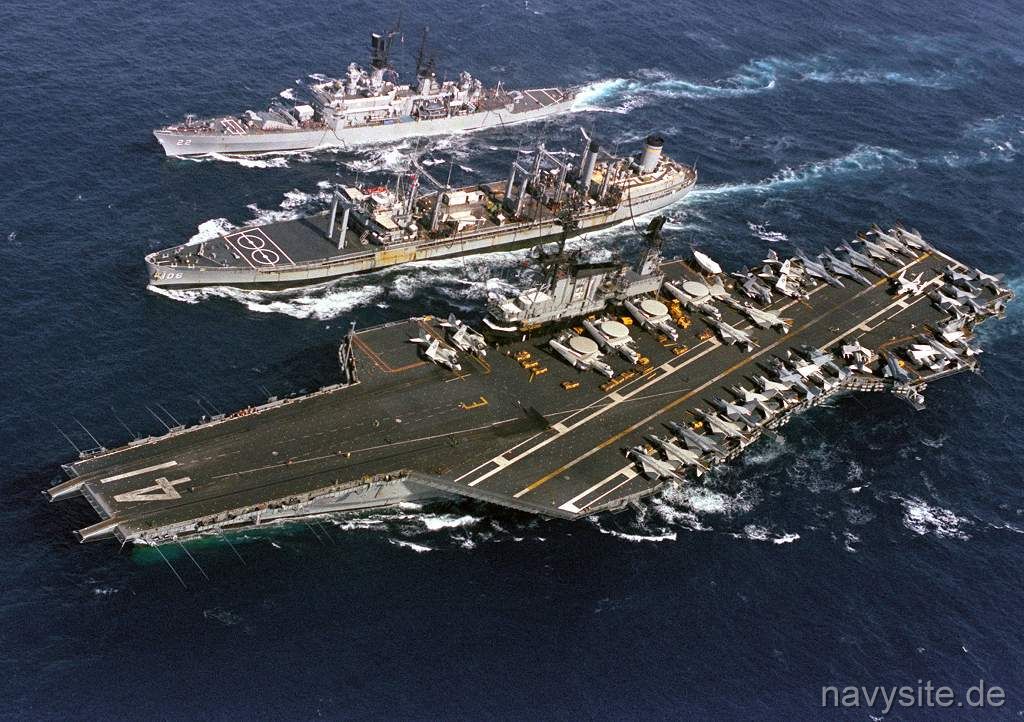 | ||
The photos below show the MIDWAY being towed to San Diego on April 1, 2005, for future use as a floating museum.
 |  |  |  |
The photos below were taken by Katja Bartz on September 12, 2007, during a visit to the USS MIDWAY museum in San Diego, Calif.
 |  |  |  |  |
 |  |  |  |  |
 |  |  | Click here for more Photos. | |
The photos below were taken by me during a visit to the USS MIDWAY museum in San Diego, Calif., on March 23, 2010.
 |  |  |  |  |
 |  |  |  |  |
 |  |  | Click here for more Photos. | |
The photos below were taken by Sebastian Thoma and show the MIDWAY Museum at San Diego, Calif., on December 20, 2016.
 |  |  |  |  |
The photos below were taken by Sebastian Thoma and show the MIDWAY Museum at San Diego, Calif., on November 28 and November 29 (aerial photos), 2021.
 |  |  |  |  |
 |  |  |  |  |
 |  |
back to top
 Back to Carriers list. Back to ships list. Back to selection page. Back to 1st page.