![]() |
Search the Site with
|
![]() | ![]() |
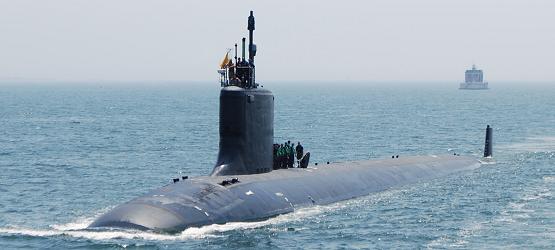
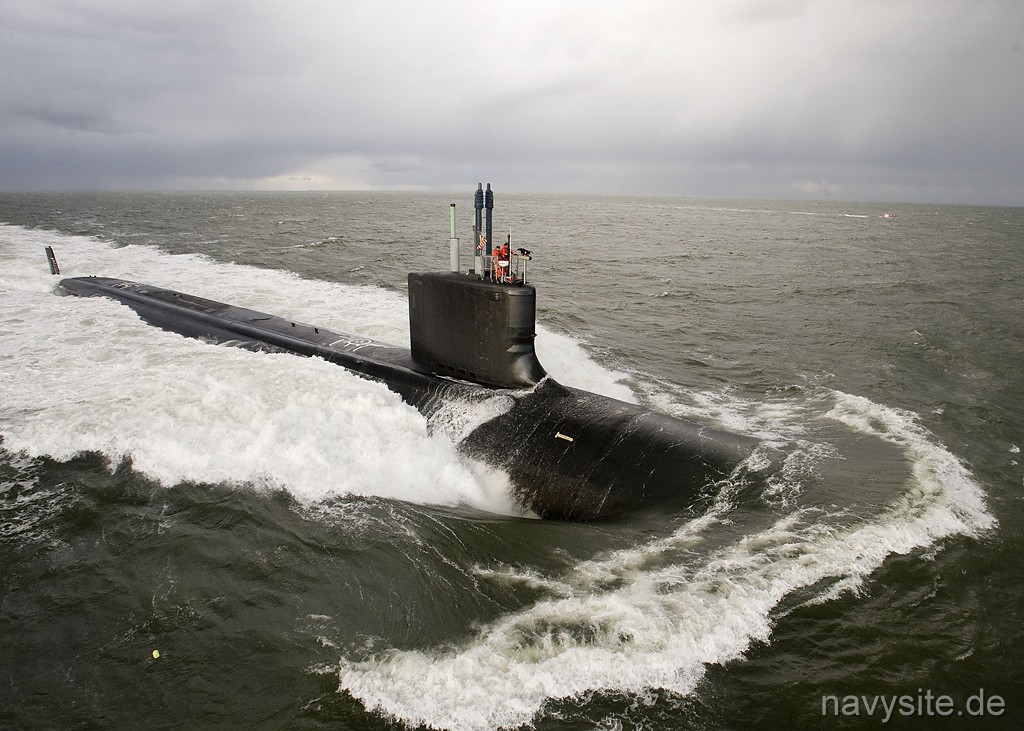
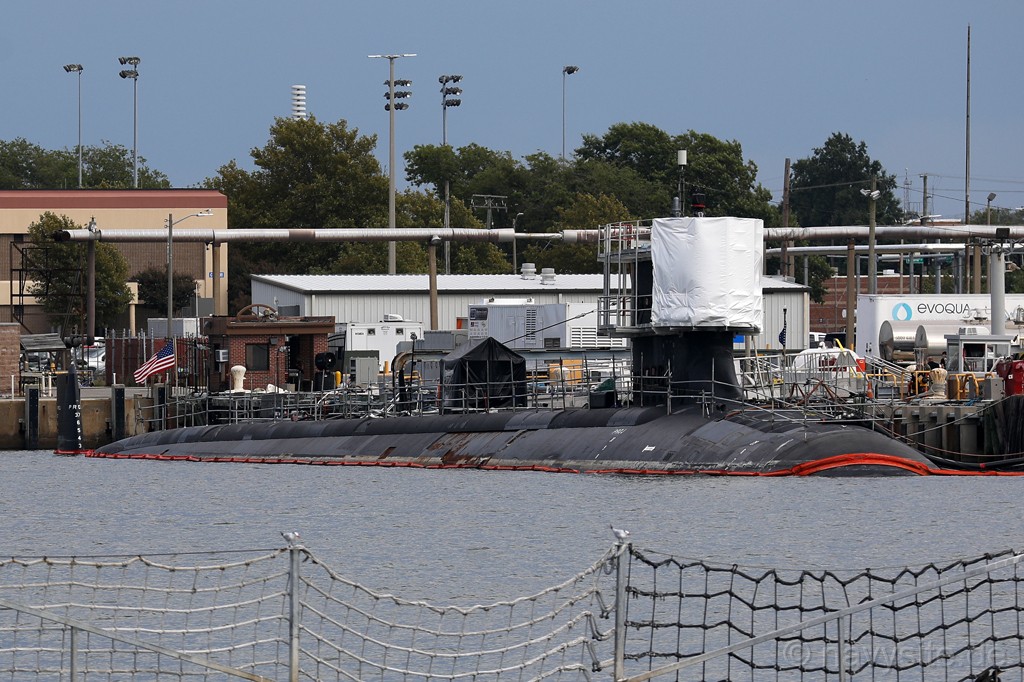
USS NEW MEXICO is one of the VIRGINIA - class nuclear-powered attack submarines and the second ship in the Navy to bear the name. Her construction was completed 4 months ahead of schedule.
| General Characteristics: | Awarded: August 14, 2003 |
| Keel laid: April 12, 2008 | |
| Launched: January 18, 2009 | |
| Commissioned: March 27, 2010 | |
| Builder: Northrop Grumman Newport News Shipbuilding, Newport News, Va. | |
| Propulsion system: one nuclear reactor | |
| Propellers: one | |
| Length: 377 feet (115 meters) | |
| Beam: 34 feet (10.4 meters) | |
| Draft: 30.5 feet (9.3 meters) | |
| Displacement: Surfaced: approx. 6,950 tons Submerged: approx. 7,800 tons | |
| Speed: Surfaced: approx. 25 knots Submerged: approx. 32 knots | |
| Armament: | |
| Homeport: Norfolk, Va. | |
| Crew: 15 officers, 117 enlisted |
Crew List:
This section contains the names of sailors who served aboard USS NEW MEXICO. It is no official listing but contains the names of sailors who submitted their information.
USS NEW MEXICO History:
The fast-attack submarine USS NEW MEXICO was conceived in the early 2000s as part of the U.S. Navy's VIRGINIA-class program to replace aging LOS ANGELES-class boats and provide a flexible platform for intelligence, strike and anti-submarine warfare in the post-Cold War security environment. On August 14, 2003, the Navy awarded the construction contract to Northrop Grumman Newport News, which would assemble the boat in partnership with General Dynamics Electric Boat using a modular build approach intended to reduce cost and construction time. Construction began in January 2004 at Electric Boat facilities in Groton, Connecticut, and Quonset Point, Rhode Island, where straight hull sections and other modules were fabricated before shipment to Newport News for final assembly. As work progressed, the Secretary of the Navy formally designated the sixth VIRGINIA-class submarine as USS NEW MEXICO, honoring both the state and the earlier battleship of the same name, and a citizen-led commissioning committee in New Mexico started lobbying and fundraising to support the future crew.
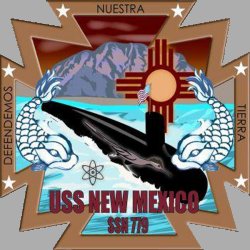
In January 2007, the submarine's crest was selected through a statewide competition among New Mexico high school students. The winning design, by Emilee L. Sena of Albuquerque, combined the Zia symbol from the state flag, the Sandia Mountains at sunset, a stylized VIRGINIA-class submarine, a roadrunner and atomic imagery referencing Los Alamos and Sandia National Laboratories, visually tying the new nuclear-powered boat to the state's culture and scientific heritage. Around the same time, the crew adopted the Spanish-language motto "Defendemos Nuestra Tierra" ("We defend our land"), underlining the namesake connection. The physical ship took shape at Newport News, and on April 12, 2008 her keel-laying ceremony marked the traditional birth of the boat. By May 18, 2008 the final pressure-hull welds were complete, a major structural milestone. On December 13, 2008, NEW MEXICO was christened at Newport News; Cindy Giambastiani, wife of retired Admiral Edmund Giambastiani, served as sponsor, and Representative Heather Wilson of New Mexico gave the keynote address. The hull then entered the water for the first time when NEW MEXICO was launched on January 18, 2009.
Mechanical issues discovered in the torpedo-room weapons-handling system delayed her originally planned August 2009 delivery, forcing additional work but also demonstrating the kind of pre-delivery scrutiny typical for new nuclear submarines. Builder's sea trials in the Atlantic concluded in late November 2009, and the Navy accepted the boat on December 29, 2009, several months ahead of the contractual delivery date despite the earlier technical setback. NEW MEXICO emerged as the second Block II VIRGINIA-class submarine.
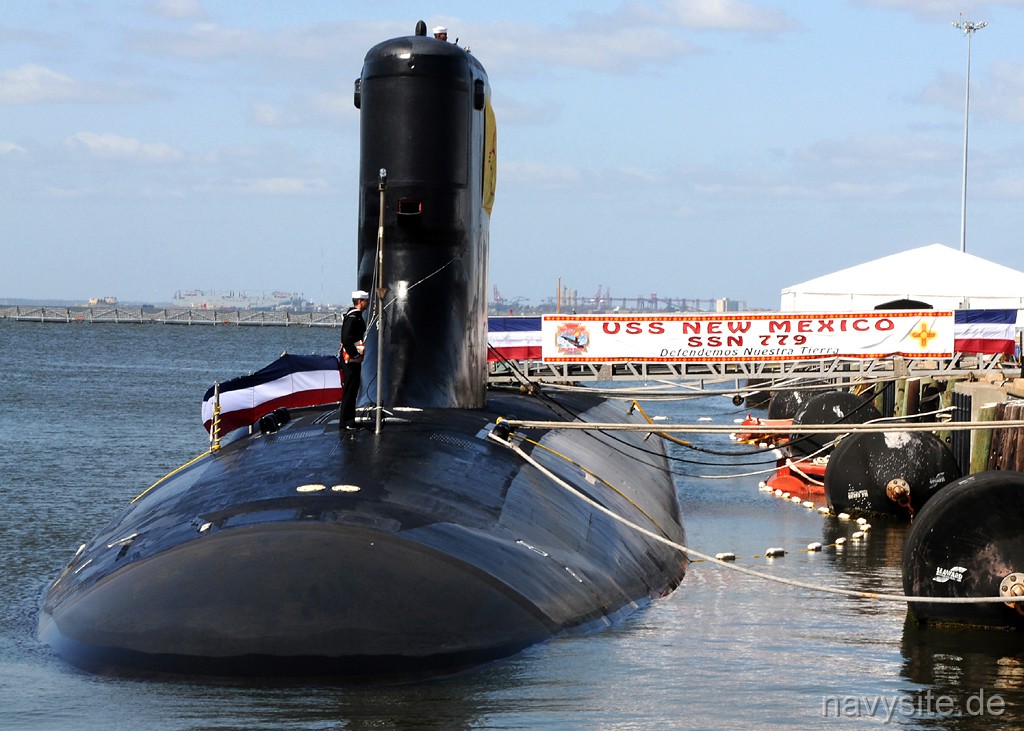
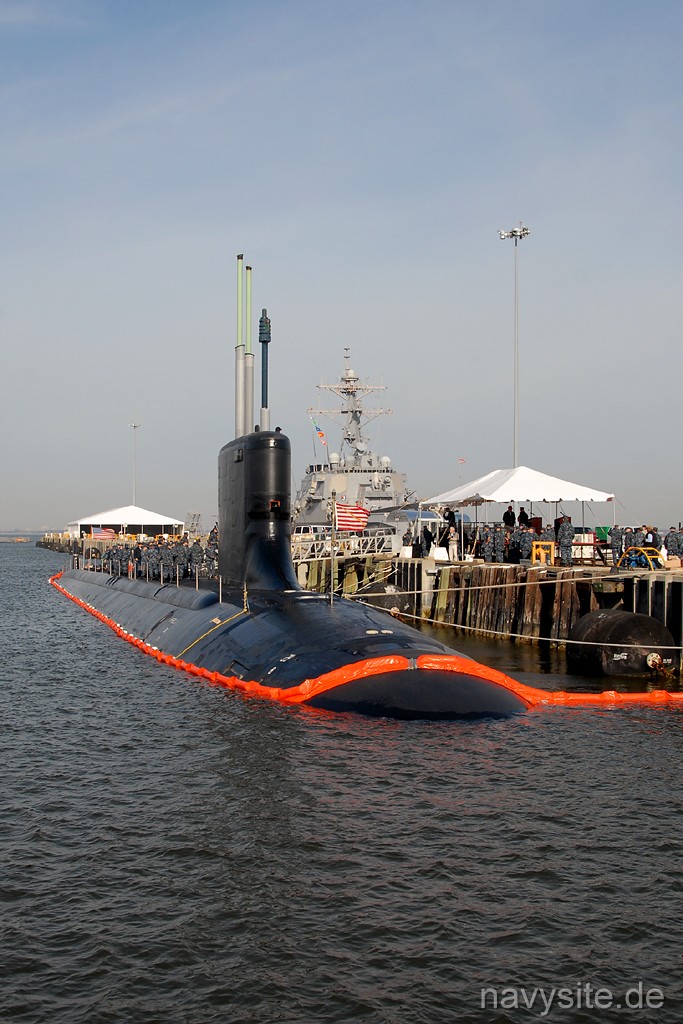
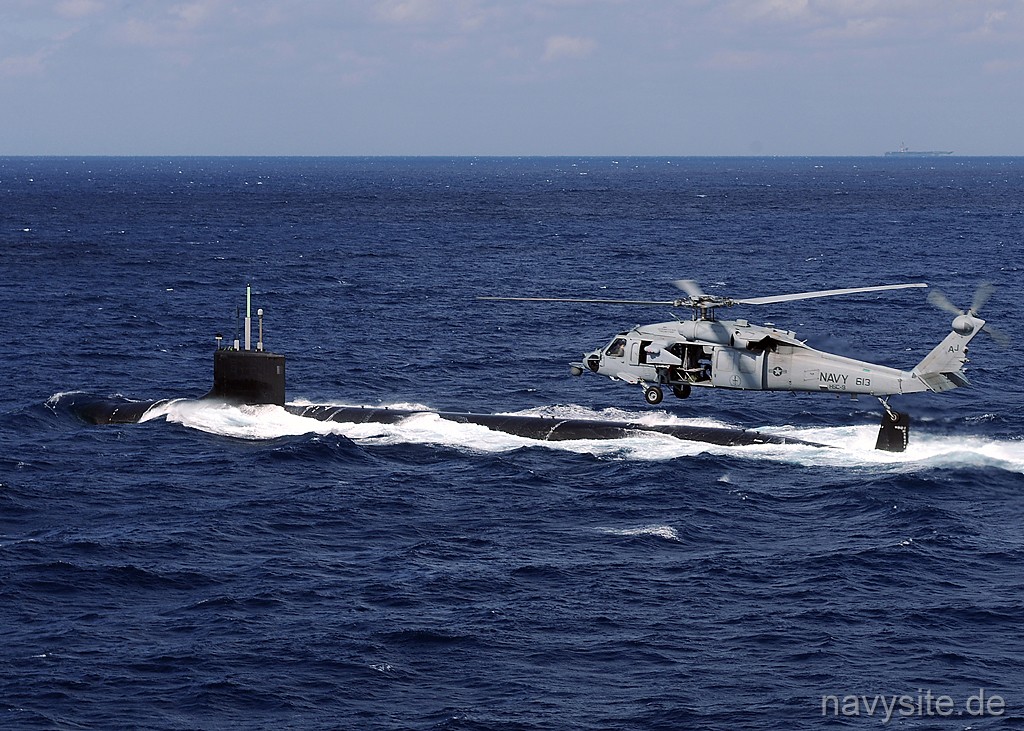
In early 2010, the new submarine began integration with the fleet. On March 3, 2010 she was photographed at sea in the Atlantic while operating with the carrier USS GEORGE H. W. BUSH (CVN 77) and an MH-60S helicopter from HELICOPTER SEA COMBAT SQUADRON NINE, a typical pre-deployment training pattern that familiarized the crew with joint operations alongside carrier strike groups. On March 27, 2010, NEW MEXICO was formally commissioned at Naval Station Norfolk, Virginia, joining the U.S. Atlantic Fleet as the sixth VIRGINIA-class boat. Her first commanding officer was Cmdr. Mark A. Prokopius, who had overseen much of the pre-commissioning work.
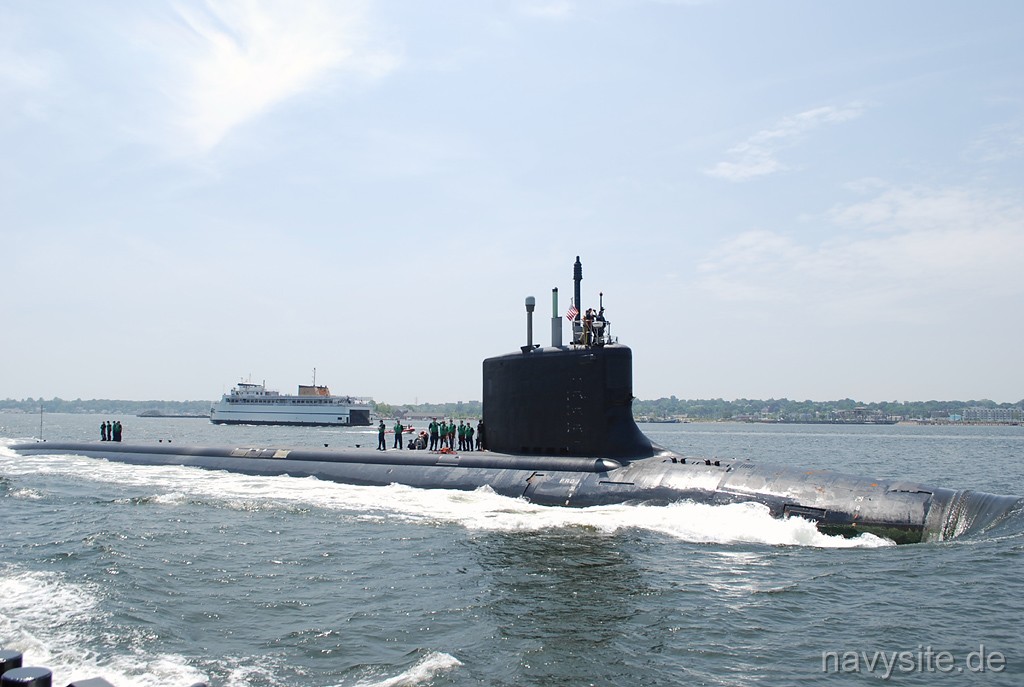
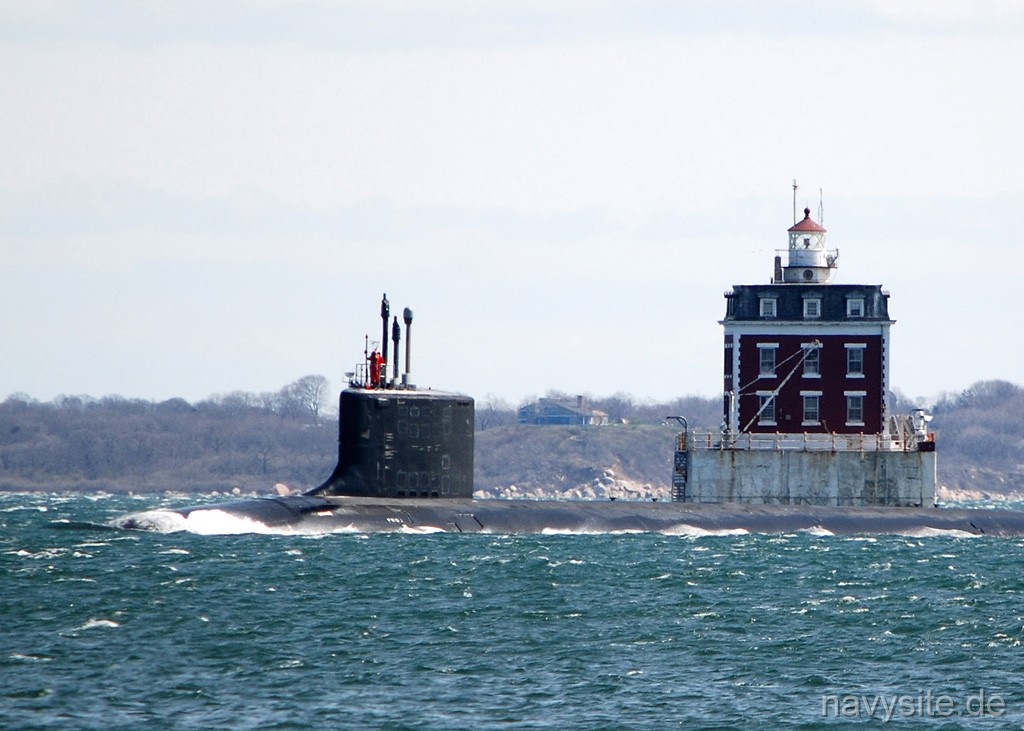
Shortly after commissioning, NEW MEXICO conducted shakedown operations and early public-relations engagements. On May 11, 2010 she visited Fort Lauderdale, Florida, where Secretary of the Navy Ray Mabus toured the submarine and observed operations in the control room as the boat got underway, during a period when the Navy was using Fleet Week visits to highlight the newest platforms to the public and political leadership. On June 1, 2010, NEW MEXICO transited up the Thames River to her first operational homeport at Naval Submarine Base New London in Groton, Connecticut, formally joining SUBMARINE SQUADRON FOUR. Her arrival in Groton - captured in Navy imagery - marked the integration of another modern fast-attack submarine into the traditional heart of the Atlantic submarine force.
In the months after arriving at Groton, NEW MEXICO completed one of the largest post-shakedown availabilities yet undertaken for a VIRGINIA-class boat. This intensive yard period corrected deficiencies discovered during early operations, incorporated lessons learned from the first boats of the class and brought the submarine up to full fleet standard more quickly than originally planned. In October 2010, Capt. George Perez Jr. relieved Cmdr. Prokopius and took command of NEW MEXICO, with a mandate to complete the post-shakedown work and drive the boat toward operational deployment. Under Perez's leadership the ship's performance was strong enough that she earned the 2011 Battle Efficiency "E" for overall readiness among Atlantic attack submarines, followed by the 2012 Supply "S" for excellence in logistics support. The crew also became the 2013 Atlantic attack-submarine nominee for the Captain Edward F. Ney Memorial Award for afloat food service, relatively technical but telling indicators that the ship was functioning well as a unit in all aspects of operations.
By 2011-2012, NEW MEXICO was routinely at sea in the western Atlantic, conducting the certifications, weapons tests and tactical training events required of a new attack submarine. A particularly visible milestone came in February 2012, when she took part in a bilateral exercise sometimes referred to as "Fellowship 2012" with the Royal Navy's ASTUTE-class submarine HMS ASTUTE. The two boats met underwater in the Atlantic Undersea Test and Evaluation Center (AUTEC) range in the Bahamas for a series of war games and tactical trials. At various points during the exercise the heads of both navies - Admiral Jonathan Greenert, Chief of Naval Operations, and Admiral Sir Mark Stanhope, First Sea Lord and Chief of Naval Staff - embarked aboard the U.S. and British submarines, creating a rare underwater meeting between the senior leaders of the two allied navies. The exercise tested interoperability, undersea tracking and weapons-employment tactics against a backdrop of renewed emphasis on NATO undersea cooperation.
After several years of training and workups, NEW MEXICO undertook her first extended operational deployment in 2013. In early 2013, she left Groton on what the Navy described as her inaugural, roughly six-month deployment to the Mediterranean and Middle Eastern regions, operating under U.S. 6th Fleet and 5th Fleet. Public reports do not detail her precise sailing date, mission tasking or port-visit sequence, reflecting the general sensitivity of fast-attack submarine employment. It is known that the deployment was considered successful enough to be highlighted in later change-of-command remarks as a key achievement of Perez's tour, and that the boat returned to Groton on August 12, 2013. That homecoming, at the end of a half-year away from homeport, drew national media attention when a petty officer from NEW MEXICO proposed to his boyfriend on the pier during the reunion - a widely reported moment that illustrated the rapid social changes in the U.S. armed forces in the years after the repeal of "Don't Ask, Don't Tell" in 2011.
On September 16, 2013, NEW MEXICO held a change-of-command ceremony at Naval Submarine Base New London. During the pierside event, Cmdr. Todd Moore relieved Capt. George Perez Jr. as commanding officer. Senior speakers at the ceremony praised Perez for moving NEW MEXICO from post-shakedown work into sustained operations ahead of schedule and for guiding her through the first deployment. Perez had taken command in October 2010. Moore, a 1996 U.S. Naval Academy graduate, now inherited a fully operational VIRGINIA-class submarine with one deployment behind her. In the months that followed, NEW MEXICO continued local and regional operations under Moore while also preparing for a demanding Arctic mission that required specialized training and material preparation.
Before that Arctic deployment, NEW MEXICO underwent an emergent dry-dock maintenance period to address issues requiring dockyard work. The availability was completed in time for the boat to participate in the Navy's Ice Exercise 2014 (ICEX 2014), part of a renewed focus on Arctic operations amid growing global interest in the region's shipping routes and natural resources. In February 2014, NEW MEXICO departed Groton for the Arctic, and on March 19, 2014, Commander, Submarine Forces announced that she and the LOS ANGELES-class submarine USS HAMPTON (SSN 767) had commenced ICEX 2014 in the Arctic Ocean. Operating from Ice Camp Nautilus - a temporary, ice-supported camp set up by the Arctic Submarine Laboratory - the two submarines conducted under-ice navigation, communications and weapons-system testing intended to refine tactics for operating beneath polar ice.
Late in March 2014, NEW MEXICO surfaced through the Arctic ice near the North Pole, an event captured in Navy imagery and video. During this period she became, according to multiple Navy and Navy-affiliated accounts, the first VIRGINIA-class submarine to surface at the North Pole. While at the pole, she conducted a burial at sea for a World War II combat submariner originally from New Mexico, symbolically linking the state's World War II submarine veterans with the new nuclear boat that carried their state's name. Chief of Naval Operations Admiral Greenert visited Ice Camp Nautilus during ICEX 2014 and presided over a reenlistment ceremony aboard NEW MEXICO, further underscoring the visibility of the Arctic exercise within Navy leadership. For the crew, ICEX 2014 marked a demanding technical achievement: navigating, surfacing and operating safely in a region where ice thickness, limited communications and extreme temperatures pose substantial challenges.
After ICEX 2014, NEW MEXICO returned to more conventional patterns of training and operations from Groton. Specific events during 2015 are not widely documented in open sources, but later official summaries of the boat's history emphasize that under Moore's command she tested experimental equipment, trained other submariners and participated in multiple fleet exercises, suggesting a mix of local operations, tactical development work and participation in larger Atlantic training events. On January 8, 2016, the submarine held another change-of-command ceremony at Dealey Center Theater on Naval Submarine Base New London, where Cmdr. Daniel J. Reiss relieved Cmdr. Moore. The Navy's account of that ceremony again highlighted ICEX 2014 and NEW MEXICO's role as the first VIRGINIA-class boat to surface at the North Pole, as well as Moore's success in bringing the boat through her Arctic mission and prior deployments.
Under Cmdr. Reiss, NEW MEXICO continued operating from Groton and took part in both training and outreach activities. In February and March 2016, she spent extended periods at sea off the U.S. East Coast conducting exercises and crew training. She then pulled into Port Canaveral, Florida, where she embarked a group of around ten congressional and Senate staffers and several civilians from New Mexico, including members of a Sea Cadet unit, for a one-day, roughly 12-hour demonstration cruise in the western Atlantic. This embark demonstrated to visiting civilians and staff the realities of modern submarine operations and strengthened the relationship between the namesake state and its boat. Shortly afterward, Reiss and several crew members traveled to New Mexico to meet Governor Susana Martinez and participate in events marking the 116th anniversary of the U.S. submarine force, continuing a pattern of regular interaction between the crew and the state.
Later in Reiss's tour, NEW MEXICO deployed again, this time on a regularly scheduled deployment to the U.S. European Command (EUCOM) area of responsibility. She departed Groton in late 2016. By the time she returned, the security environment in Europe was shaped by ongoing concerns following Russia's 2014 annexation of Crimea, instability in parts of the Middle East and North Africa and the need for NATO maritime forces to demonstrate presence in both the North Atlantic and Mediterranean. On April 26, 2017, NEW MEXICO returned to her homeport at Naval Submarine Base New London after what Navy and news accounts described as roughly a six-month deployment. Under Cmdr. Reiss she had steamed about 31,000 nautical miles, executed national-tasked missions in the EUCOM area and conducted a series of diplomatic port visits.
During that 2016-2017 deployment, NEW MEXICO visited Faslane, Scotland; Souda Bay, Crete; and Toulon, France. These stops brought the submarine into close contact with key NATO allies and partners at bases that support much of the alliance's maritime activity: Faslane as the Royal Navy's primary submarine base and home to the United Kingdom's nuclear deterrent, Souda Bay as a strategically placed support facility in the eastern Mediterranean and Toulon as a major French naval base on the western Mediterranean coast. The port calls, described in Navy statements as supporting diplomatic relationships, occurred against a broader backdrop of NATO reassurance measures and maritime security operations in European waters.
After returning from deployment, NEW MEXICO shifted into a major maintenance phase. In early September 2017, she arrived at Portsmouth Naval Shipyard in Kittery, Maine, for a lengthy yard period described in various accounts as an extended dry-dock selected restricted availability. The work package, which began around September 7, 2017, encompassed maintenance, modernization and inspections intended to keep the submarine combat-ready into the next decade. Extended availabilities of this type typically include hull, mechanical and electrical work; software and hardware upgrades to combat systems; and overhauls of key components as the ship approaches the mid-portion of her first reactor core's life. Biographical notes on senior enlisted leaders later associated with NEW MEXICO confirm that the crew lived through an extended dry-dock period followed by recertification and another EUCOM deployment, suggesting that the yard period lasted several years and concluded with a return to full operational status.
During this time the Navy also began to consolidate some VIRGINIA-class boats at Norfolk. By 2018, NEW MEXICO's designated homeport shifted from Naval Submarine Base New London in Groton to Naval Station Norfolk, Virginia, reflecting a broader redistribution of attack submarines between Groton and Norfolk. Subsequent lists of fast-attack submarine homeports and later open-source reports consistently identify NEW MEXICO as a Norfolk-based boat, and by the early 2020s she is routinely described as homeported there.
Once out of long-term maintenance, NEW MEXICO resumed deployments, now sailing from Norfolk into the Atlantic and European theaters. Details of her first post-yard deployment are not extensively documented in public, but by 2021, she was again operating in the U.S. 6th Fleet area of operations. In the spring of 2021, she took part in a deployment that highlighted the growing strategic importance of the High North. On May 10, 2021, NEW MEXICO arrived at Grotsund harbor near Tromso, Norway, for a scheduled port visit, as documented in a U.S. 6th Fleet and U.S. European Command press release. The visit was framed as an effort to deepen security cooperation with Norway, a close NATO ally whose northern coastline and sea approaches are of particular importance for monitoring Russian naval activity in the Barents Sea and North Atlantic. The port call was one in a series of visits by U.S. nuclear-powered submarines to Tromso in this period, underlining Norway's role as a host nation for allied undersea forces in the High North.
During the 2021 deployment, NEW MEXICO conducted what official statements described only as routine maritime security operations with allies and partners in the 6th Fleet area of operations. The specifics of submarine patrols in this region - whether in the Norwegian Sea, North Atlantic or Mediterranean - are not made public, but the combination of a High North port call in Tromso and a Norfolk homeport suggests a deployment focus on Atlantic and European waters rather than the Middle East. Photographs and later commentary show that NEW MEXICO returned to Naval Station Norfolk on September 15, 2021, where sailors were seen preparing to moor the boat at the pier, marking the end of this deployment.
In the early 2020s, NEW MEXICO also featured in internal Navy efforts to adapt submarine operations to the cyber domain. A 2022 Submarine Force newsletter noted that the boat was one of several submarines - alongside USS WASHINGTON (SSN 787), USS COLORADO (SSN 788) and the ballistic-missile submarine USS MARYLAND (SSBN 738) - participating in a pilot program to add a dedicated cyber watchstander position to the crew, reflecting recognition that network defense and cyber awareness were becoming integral to undersea warfighting. For NEW MEXICO, this meant integrating additional training and watchstanding roles into the existing manpower structure while maintaining traditional engineering, navigation and combat-systems watches.
By 2023, NEW MEXICO was under the command of Cmdr. Carlos Otero, as reflected in correspondence he provided to the Navy League's New Mexico Council that year summarizing the boat's recent activities. While the full details of her deployments and operations under his command are not public, his remarks and other open sources indicate that NEW MEXICO remained an active Norfolk-based fast-attack submarine, conducting Atlantic and European operations, completing certifications and continuing to represent her namesake state at sea. In 2023, she also contributed to community-relation events such as sending sailors to the New Mexico State Fair and other state-level engagements, continuing the longstanding pattern of close ties between the crew and the state.
Open sources through 2024-2025 indicate that USS NEW MEXICO remains in active service as a Norfolk-homeported VIRGINIA-class submarine. The boat has completed at least one additional multi-month deployment since 2021, returning to Naval Station Norfolk from a long deployment in the mid-2020s, though precise dates and port-of-call details for that cruise are not fully documented in publicly accessible sources.
USS NEW MEXICO Image Gallery:
![]() | ![]() | ![]() | ![]() | ![]() |
![]() |
The photos below were taken by Michael Jenning and show USS NEW MEXICO at the end of an Extended Drydocking Selected Restricted Availability (E-DSRA) at Portsmouth Naval Shipyard, Kittery, Maine, on September 14, 2019.
![]() | ![]() | ![]() | ![]() | ![]() |
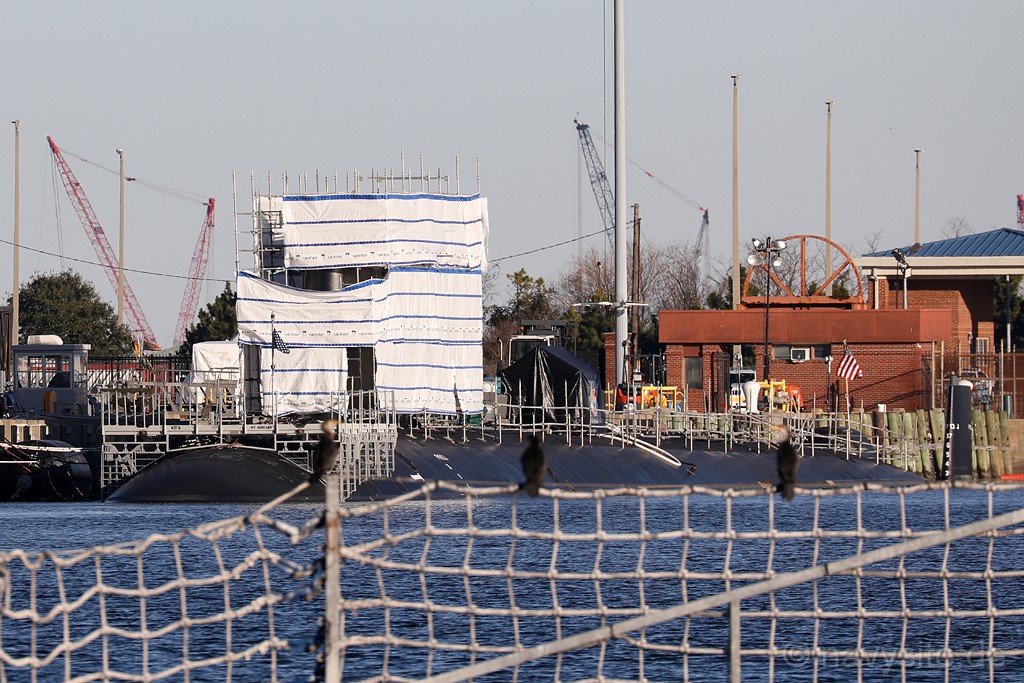
The photo below was taken by Michael Jenning and shows the NEW MEXICO at Naval Base Norfolk, Va., on December 26, 2021.
![]() |
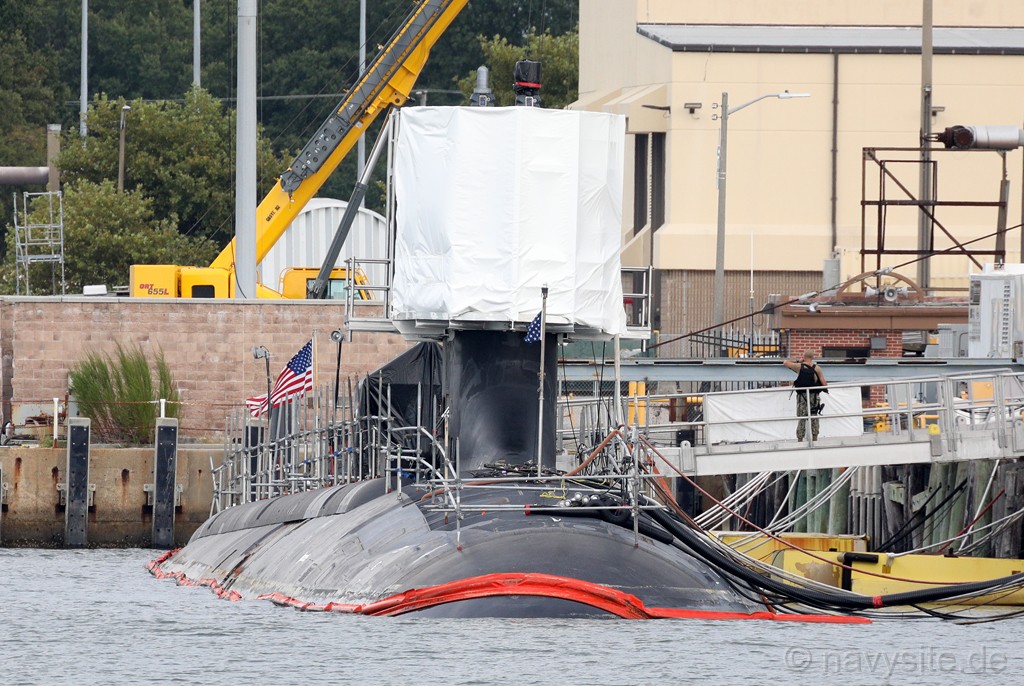
The photos below were taken by Michael Jenning and show the NEW MEXICO at Naval Base Norfolk, Va., on September 6, 2022.
![]() | ![]() | ![]() |
The photos below were taken by Michael Jenning and show the NEW MEXICO at Naval Base Norfolk, Va., on May 31, 2025.
![]() | ![]() | ![]() |
Back to Submarines list.
Back to ships list.
Back to selection page.
Back to 1st page.