Search the Site with

|
Search the Site with
|
 General Characteristics Crew List Memorabilia About the Name "Charlotte" History Image Gallery to end of page
 |  |  |
USS CHARLOTTE is the 16th improved submarine in the LOS ANGELES class and the 24th ship of that class built in Newport News. She is named after the 35th largest city in the United States.
| General Characteristics: | Awarded: February 6, 1987 |
| Keel laid: August 17, 1990 | |
| Launched: October 3, 1992 | |
| Commissioned: September 16, 1994 | |
| Builder: Newport News Shipbuilding Co., Newport News, Va. | |
| Propulsion system: one nuclear reactor | |
| Propellers: one | |
| Length: 360 feet (109.73 meters) | |
| Beam: 33 feet (10 meters) | |
| Draft: 32,15 feet (9.8 meters) | |
| Displacement: Surfaced: approx. 6,000 tons Submerged: approx. 6,900 tons | |
| Speed: Surfaced: approx. 15 knots Submerged: approx. 32 knots | |
| Armament: | |
| Cost: approx. $900 million | |
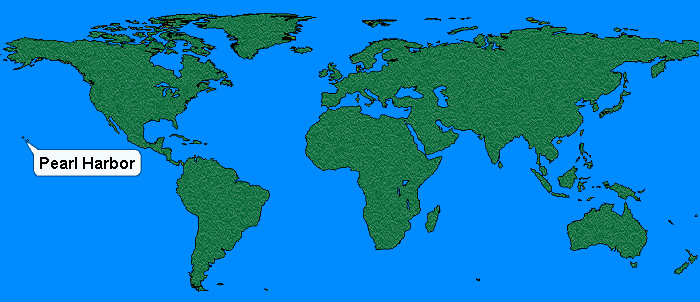
| Homeport: Pearl Harbor, HI. | |
| Crew: 13 Officers, 116 Enlisted |
 back to top go to the end of the pageback to top go to the end of the page
Crew List:
This section contains the names of sailors who served aboard USS CHARLOTTE. It is no official listing but contains the names of sailors who submitted their information.
back to top go to the end of the pageback to top go to the end of the page back to top go to the end of the page
About the Submarine's Name, about the City of Charlotte:
The tiny community of Charlotte, named for Queen Charlotte, wife of British King George III, was founded in 1768 and became the county seat in 1774. It was not long before the small city began to earn a reputation. Hostility towards the redcoats during the Revolutionary War earned the city and county their reputation as a "damned hornet’s nest" of resistance, and the name is proudly preserved to this day. After independence, Charlotte settled into a rural routine which lasted for the next hundred years.
Despite the prominence of agriculture in the city’s history, cotton was not the only stimulus to Charlotte’s nineteenth century economy. After gold was discovered here in 1802, there was a period of gold speculation the area. In 1837, Charlotte became the proud home of the first branch of the U. S. Mint of Philadelphia, but, by the 1850’s, interest in gold had waned.
Perhaps a more important phase in the area's history was the introduction of the railway beginning in 1852 with the Charlotte and South Carolina Railway. Previously, trading had been a difficult task for country farmers, for their nearest market was eight days along hazardous and difficult roads. By 1880, Charlotte was at the hub of a railway network with ties to Columbia and Atlanta in the south, Goldsboro, Raleigh and Wilmington in the east, Lincolntown in the west, and Statesville, Salisbury and Greensboro in the north.
Railway expansion was temporarily halted by the Civil War. There was no direct fighting or raiding in the city, and Charlotte benefited by being chosen as the site for the Confederate Naval Yard in 1862. Although a long distance from the ocean, Charlotte was located on two major railway lines and was strategically secure from attack. Many mechanics who accompanied the yard to Charlotte stayed on after the war, helping swell Charlotte’s population and providing valuable skills.
Between 1880 and 1930, the city experienced unprecedented growth under the leadership of businessmen such as E.D. Latta, D.A. Tompkins, J.B. Duke, and many others who provided the capital and enterprise necessary to stimulate industrial development. Throughout this period of hectic growth and change, the county maintained a strong sense of continuity with its rural past. Although the Civil War changed life considerably for the few wealthy planters, most Charlotte farmers continued to raise cotton, corn and other crops with the assistance of tenant farmers. The advent of the railroad had made the hauling of agricultural produce much more efficient, and the growth of Charlotte created a new market for truck farming and dairy products.
Since the 1930's Charlotte has continued to grow and is now the largest city in the Carolinas. Cotton brokerage has given way to banking, and the railways have been largely superceded by the flourishing trucking industry. Modern skyscrapers compete for attention on the horizon, and suburbs constantly spill over into the surrounding countryside.
back to top go to the end of the pageUSS CHARLOTTE History:
USS CHARLOTTE is an improved LOS ANGELES-class nuclear-powered attack submarine built by Newport News Shipbuilding in Newport News, Virginia, and named for the city of Charlotte, North Carolina. The U.S. Navy awarded the construction contract on February 6, 1987, and the keel was laid on August 17, 1990. The hull was launched on October 3, 1992, with Mary McCormack as sponsor, and after fitting out and trials she was commissioned on September 16, 1994, at Naval Station Norfolk, Virginia, with Commander Michael Matthews as her first commanding officer. Following post-commissioning shakedown and training on the U.S. East Coast, CHARLOTTE shifted to the U.S. Pacific Fleet, arriving at her permanent homeport of Naval Station Pearl Harbor on November 17, 1995, where she has remained an active unit of the Pacific submarine force.
From the mid-1990s onward, many of CHARLOTTE's specific movements and patrols remain classified, but the broad outlines of her operational life can be reconstructed from open sources. After settling into Pearl Harbor, she joined the pattern of local training, type exercises, and fleet operations typical of attack submarines of her class, working up with other Pacific units for deployments to the Western Pacific and the Middle East. Her early years in the Pacific coincided with a period in which the United States was reshaping post-Cold War naval strategy, increasing emphasis on littoral operations, long-range precision strike and the ability of fast-attack submarines to provide intelligence and special operations support in crisis regions.
One of the first clearly documented milestones in her career came in connection with the 1997-1998 confrontation with Iraq over weapons inspections. In early 1998, the United States and its allies assembled a substantial naval and air force presence in and around the Persian Gulf to pressure Saddam Hussein's government to allow United Nations inspectors to resume work. Open sources recording the order of battle for this build-up list USS CHARLOTTE among the submarines assigned to the region. She deployed westward from the Pacific to join a force centered on the carrier USS INDEPENDENCE (CV 62), operating alongside ships such as the cruiser USS BUNKER HILL (CG 52) and the destroyer USS JOHN S. MCCAIN (DDG 56). On February 5, 1998, this group was reported entering the Arabian Gulf as part of the wider Operation Desert Thunder show of force, which eventually contributed to a negotiated easing of the crisis without major combat. Public reporting focuses on the political context and the presence of the carrier battle groups. CHARLOTTE's detailed patrol tracks, port calls and the exact date of her return to Pearl Harbor are not disclosed, but the deployment marked her early participation in high-visibility deterrent operations in the Gulf.
In the early 2000s, with the focus of U.S. strategy shifting toward counter-terrorism, operations in Afghanistan and Iraq, and the rise of China as a maritime power, CHARLOTTE continued to operate from Hawaii, supporting U.S. Pacific Fleet tasking. A U.S. Navy photograph dated May 27, 2004, shows her off Oahu carrying the Advanced SEAL Delivery System (ASDS) minisub on her back, underscoring her role as a host platform for special operations forces and experimental undersea delivery systems. That image captures her participation in a broader effort at the time to integrate attack submarines more closely with naval special warfare, using their stealth and endurance to insert and recover small special-operations teams in coastal areas.
A particularly distinctive episode in CHARLOTTE's career occurred in 2005, when she was reassigned to the U.S. Atlantic Fleet and sent to Norfolk, Virginia, by way of the Arctic rather than the Panama Canal. In the autumn of that year, she departed Pearl Harbor and transited north, operating under the Arctic ice cap. During this voyage she surfaced at the geographic North Pole through approximately 61 inches of sea ice, a record thickness for a LOS ANGELES-class submarine, demonstrating both the class's capability and the Navy's interest in maintaining submarine proficiency in ice-covered waters at a time when Arctic sovereignty and navigation rights were beginning to attract renewed political attention. On November 29, 2005, CHARLOTTE arrived in Norfolk, Virginia, completing the under-ice transit and positioning herself for a major maintenance period.
From late 2005 until 2007, CHARLOTTE underwent an extended Depot Modernization Period (DMP) at Norfolk Naval Shipyard. This mid-life overhaul involved comprehensive maintenance and modernization of her propulsion plant, combat systems, and habitability spaces, typical of the deep refit cycle designed to keep LOS ANGELES-class submarines viable into their third and fourth decades of service. Navy accounts describe the period as lasting nearly two years, after which, on October 24, 2007, she departed Norfolk and returned to her long-time homeport at Pearl Harbor, completing the Atlantic detour and rejoining the Pacific submarine force.
Following her return to Hawaii, CHARLOTTE resumed a tempo of operations that included local training and a series of deployments with U.S. 7th Fleet in the Western Pacific. Public summaries note that over her career she has completed a total of five Western Pacific deployments, but only some of these cruises are described in open sources. The late 2000s and early 2010s were a period of growing U.S. emphasis on alliance relationships in Northeast and Southeast Asia and on undersea superiority in the Western Pacific. Submarines such as CHARLOTTE were central to surveillance, anti-submarine warfare training and presence missions in that theater.
One of these deployments culminated in mid-2011, when Commander, U.S. Pacific Fleet reported CHARLOTTE's return to Pearl Harbor from a Western Pacific cruise. The article, while not publicly detailing dates and port lists, describes a multi-month deployment in which the submarine operated under 7th Fleet control, conducted theater security cooperation activities and exercised with allied naval forces in the region before returning to Hawaii. As is typical for such reports, specific patrol areas and tactical details were omitted, reflecting the classified nature of submarine operations.
A similar pattern appears in an account from October 3, 2013, when the Navy again reported CHARLOTTE's return to Pearl Harbor from a Western Pacific deployment. The coverage emphasizes her contributions to fleet readiness and cooperation with regional partners but does not specify individual port visits. Taken together with the 2011 deployment and the earlier 1998 Persian Gulf cruise, these reports align with the statement that she has completed five Western Pacific deployments, even though only some of them are described individually in the unclassified record.
More detail is available for her mid-2010s operations. By early 2016, CHARLOTTE was once again deployed west of Hawaii on what was now often termed an "Indo-Asia-Pacific" deployment, reflecting the U.S. Navy's broadened strategic framing of the region. On January 5, 2016, she arrived at Fleet Activities Sasebo, Japan, for a port visit, providing rest and logistics for the crew and hosting local engagements while continuing a deployment under 7th Fleet. According to later summaries, this deployment lasted about six months. Public reporting and compiled reference works note that she completed a six-month Western Pacific deployment on May 13, 2016, returning to Joint Base Pearl Harbor-Hickam after operations that included Sasebo and other ports in the region that are not specified in the sources used here. The deployment took place against the backdrop of increasing regional tensions over maritime claims in the South and East China Seas and ongoing U.S. emphasis on undersea deterrence and surveillance in the Indo-Pacific.
In the years immediately after 2016, CHARLOTTE remained based at Pearl Harbor, participating in exercises, local operations and additional forward deployments whose specific details are not widely reported but which contributed to the cumulative count of five Western Pacific cruises mentioned in official summaries. During this period the U.S. Navy was both bringing newer VIRGINIA-class submarines into service and working to sustain the LOS ANGELES-class hulls through mid-life maintenance in order to meet global operational demands.
By 2019, CHARLOTTE had reached the point in her life cycle that required a more extensive engineering overhaul. In April 2019, she entered Pearl Harbor Naval Shipyard and Intermediate Maintenance Facility (PHNSY & IMF) for what the Navy termed an Engineered Overhaul (EOH), a multi-year maintenance and modernization period roughly analogous to the earlier DMP at Norfolk. The work package encompassed mandatory mid-life maintenance on the reactor plant, hull and internal systems, as well as modernization of combat systems and shipboard information technology.
A significant milestone in this overhaul came on January 26, 2021, when PHNSY & IMF undocked CHARLOTTE from Dry Dock 3. The evolution required the use of buoyancy assist modules to manage her draft and stability, and the shipyard emphasized the complexity of the undocking as a demonstration of the coordination between shipyard personnel and the submarine's crew. During this overall period CHARLOTTE also featured in less positive news: in 2021 USNI News reported that her commanding officer had been relieved following a command-climate investigation initiated after a sailor assigned to the boat died of a self-inflicted gunshot wound at Pearl Harbor Naval Shipyard, highlighting the human pressures associated with long maintenance availabilities.
Sea trials and post-overhaul testing followed. Open-source compilations and a detailed article from Pearl Harbor Naval Shipyard indicate that CHARLOTTE put to sea for trials in February 2022 after roughly three years in overhaul, and that on February 28, 2022 she was formally certified for unrestricted operations after completing those trials. The shipyard described the EOH as a 32-month effort that restored the submarine to full technical capability and extended her service life, underlining the importance of such overhauls in sustaining the Navy's attack-submarine force while new construction struggled to keep pace with operational demand.
Almost immediately after returning to operational status, CHARLOTTE re-entered high-profile fleet activity by participating in the 2022 Rim of the Pacific (RIMPAC) exercise. RIMPAC 2022, conducted from June 29 to August 4, brought together 26 nations, 38 surface ships, four submarines, more than 170 aircraft and around 25,000 personnel in and around the Hawaiian Islands and Southern California. CHARLOTTE was one of the four submarines involved. Navy imagery from July 10, 2022 shows an officer from CHARLOTTE briefing multinational special operations forces on board at Joint Base Pearl Harbor-Hickam, indicating that the submarine supported combined training for special operations units during the exercise.
After RIMPAC, CHARLOTTE resumed routine operations from Pearl Harbor, now as a fully overhauled attack submarine with an updated suite of systems. Open-source fleet trackers and readiness reports continue to list her as an active unit with Pearl Harbor as homeport, contributing to the U.S. undersea presence in the central and western Pacific. As with earlier years, detailed accounts of individual training periods and shorter patrols remain scarce in the public domain, but her appearance in major exercises and maintenance news demonstrates that she remained in the front line of the Pacific submarine force.
In 2024 CHARLOTTE returned to extended deployment. A post from Joint Base Pearl Harbor-Hickam records her homecoming on August 2, 2024, noting that the LOS ANGELES-class submarine had returned to the base after a scheduled deployment. Although the exact start date and itinerary of that cruise are not given in the publicly available text, the timing suggests a multi-month period of operations in support of U.S. 7th Fleet and Indo-Pacific Command tasking. On September 9, 2024, Commander, Submarine Squadron 1 reported that CHARLOTTE held a change-of-command ceremony following that deployment, underscoring the routine cycle of leadership turnover that accompanies major operational periods and the submarine's continued active status within the squadron.
back to top go to the end of the pageUSS CHARLOTTE Image Gallery:
 |  |  |  |  |
The photo below was taken by Michael Jenning and shows the CHARLOTTE at Naval Base Pearl Harbor, Hi., on October 14, 2017.
 |
back to top Back to Submarines list. Back to ships list. Back to selection page. Back to 1st page.