Search the Site with

|
Search the Site with
|
 General Characteristics Crew List Memorabilia History Patch Gallery Image Gallery to end of page
 |  |  |
USS COLUMBUS is the 51st attack submarine in the LOS ANGELES - class and the 12th of the 23 improved LOS ANGELES - class submarines.
| General Characteristics: | Awarded: March 21, 1986 |
| Keel laid: January 9, 1991 | |
| Launched: August 1, 1992 | |
| Commissioned: July 24, 1993 | |
| Builder: Electric Boat Division of General Dynamics Corporation, Groton, CT | |
| Propulsion system: one nuclear reactor | |
| Propellers: one | |
| Length: 360 feet (109.73 meters) | |
| Beam: 33 feet (10 meters) | |
| Draft: 32,15 feet (9.8 meters) | |
| Displacement: Surfaced: approx. 6,300 tons Submerged: approx. 7,100 tons | |
| Speed: Surfaced: approx. 15 knots Submerged: approx. 32 knots | |
| Armament: | |
| Cost: approx. $900 million | |
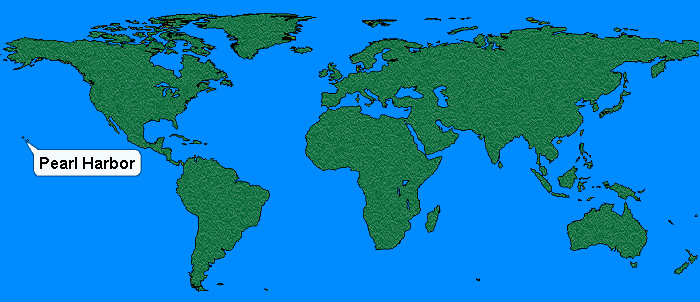
| Homeport: Pearl Harbor, HI | |
| Crew: 13 Officers, 116 Enlisted |
 back to top go to the end of the pageback to top go to the end of the page
Crew List:
This section contains the names of sailors who served aboard USS COLUMBUS. It is no official listing but contains the names of sailors who submitted their information.
back to top go to the end of the pageback to top go to the end of the page
USS COLUMBUS History:
The nuclear-powered attack submarine USS COLUMBUS traces its origins to the mid-1980s, when the U.S. Navy ordered another group of improved LOS ANGELES-class boats to sustain its Cold War undersea posture and then its post-Cold-War global presence. The construction contract for COLUMBUS, named for the city of Columbus, Ohio, was awarded to General Dynamics Electric Boat in Groton, Connecticut, on March 21, 1986, reflecting Electric Boat's longstanding role as a primary builder of U.S. nuclear submarines. Her keel was laid on January 9, 1991, at Groton, as the fifty-first LOS ANGELES-class attack submarine. She was launched on August 1, 1992, with Margaret DeMars, wife of Admiral Bruce DeMars, serving as sponsor, a symbolic link to the Navy's nuclear propulsion community. After fitting out and trials, COLUMBUS was commissioned on July 24, 1993, at Naval Submarine Base New London in Groton, Connecticut, with Commander Carl M. Smeigh Jr. as her first commanding officer and the motto "All Seas Are Navigable" formalised as part of her identity.
Following commissioning, COLUMBUS spent her first year in the Atlantic Fleet working up from New London. She conducted initial trials, crew training, and tactical development in the western Atlantic and off the U.S. East Coast, proving out her combat systems and propulsion plant. This period culminated in a Post-Shipyard Availability at Electric Boat in Groton, completed in June 1994, during which lessons from shakedown were incorporated in corrections and minor enhancements. With this work finished and the boat now fully ready for operational tasking, the Navy reassigned COLUMBUS to the Pacific Fleet. In September 1994, she conducted an interfleet transfer via the Panama Canal and Pacific transit to Naval Station Pearl Harbor, Hawaii, where she joined the Submarine Force, U.S. Pacific Fleet, and was assigned to Submarine Squadron Seven. From late 1994 into 1995, she operated primarily in the Hawaiian operating areas, building crew proficiency in Pacific anti-submarine warfare, strike warfare with Tomahawk land-attack missiles, and intelligence, surveillance, and reconnaissance tasks that would define her subsequent deployments.
COLUMBUS's first major overseas deployment came in the mid-1990s, when she deployed to the Western Pacific in late 1995, returning in early 1996 as part of U.S. SEVENTH FLEET forces during a period of heightened attention to maritime security in East Asia. On this cruise, she performed multi-mission submarine operations typical for the class - tracking surface and subsurface contacts, exercising strike and special operations capabilities, and contributing to regional presence and deterrence in the western Pacific. During the deployment, she made port visits to Hong Kong, Subic Bay in the Philippines, Apra Harbor in Guam, and Yokosuka, Japan, providing visible reassurance to regional partners while giving the crew periods of alongside maintenance and rest in major U.S. and allied naval hubs. In the same general timeframe, she earned several peacetime readiness awards, including a Pacific Fleet Golden Anchor Award and command-level excellence awards in engineering and medical readiness, formal recognition that her crew had achieved high standards in retention, engineering performance, and healthcare support.
Through the late 1990s, COLUMBUS continued to operate from Pearl Harbor on a pattern of local operations, major fleet exercises, and forward deployments characteristic of LOS ANGELES-class boats in the Pacific. She took part in the large multinational Rim of the Pacific (RIMPAC) exercise in 1998 in the waters around Hawaii, training in complex scenarios with U.S. carrier strike groups, surface combatants, maritime patrol aircraft, and allied ships and submarines from countries such as Japan, Canada, and Australia. In these exercises she practised high-end anti-submarine warfare, coordinated operations with surface and air units, and undersea surveillance tasks that reflected the evolving post-Cold-War focus on regional contingencies rather than bipolar superpower confrontation. Over these years, she accumulated further awards, including recognition for supply performance, seamanship, and engineering excellence, indicating sustained performance across her support departments as well as at sea.
As the global security environment shifted after the 1991 Gulf War and into the early 2000s, COLUMBUS remained a Pacific Fleet asset, and by 2001 she was still homeported at Pearl Harbor and undertaking Western Pacific deployments that placed her again under SEVENTH FLEET operational control. On these deployments, she would typically operate in the Philippine Sea, the broader Western Pacific, and occasionally the Indian Ocean, supporting contingency plans and exercising with regional navies. While the details of her 2001 deployment remain largely classified, available summaries show that she spent a significant portion of that year on a Western Pacific operation, underscoring how attack submarines continued to provide flexible, low-visibility options for national tasking as the United States confronted both legacy regional challenges in East Asia and emerging concerns in the Middle East.
A major milestone in the boat's technical development came in December 2002, when COLUMBUS became the first submarine in the U.S. fleet to be equipped with the BYG-1 fire control system. This digital combat system replaced older, more stove-piped architectures and fused sonar, navigation, weapons, and tactical data into a more integrated decision-support environment. For COLUMBUS this upgrade meant not only increased combat effectiveness, but also that she served as the lead platform for testing and refining the new system's software and tactics before wider fleet rollout. In May 2003, shortly after the initial phase of the Iraq War had demonstrated the importance of precision strike from the sea, COLUMBUS conducted two successful test launches of the Tactical Tomahawk (Block IV) cruise missile off the coast of Southern California. These at-sea tests validated the new missile variant's ability to be retargeted in flight and to loiter, capabilities that significantly expanded the flexibility of U.S. land-attack options from submarines.
Later in 2003, COLUMBUS again headed west for a deployment with SEVENTH FLEET, this time extending into early 2004. Operating in the Western Pacific at a time when North Korea's nuclear program and regional security were prominent concerns, she performed a mix of national tasking and theater-level missions. During this deployment, she took part in ANNUALEX 2003, a recurring bilateral exercise with the Japan Maritime Self-Defense Force, focusing on high-end anti-submarine and anti-surface warfare, coordinated operations with Japanese surface groups, and the refinement of combined procedures. In the course of the cruise, she made port calls at Yokosuka and Sasebo in Japan, Jinhae in the Republic of Korea, Singapore, and Apra Harbor in Guam, giving the crew shore leave and reinforcing ties with key regional partners while underscoring the undersea dimension of the U.S.-Japan and U.S.-ROK security alliances.
Following this series of deployments and exercises, COLUMBUS entered a major maintenance and modernization period. From 2004, she underwent a depot modernization period at Puget Sound Naval Shipyard in Bremerton, Washington, a multi-year refit that updated her combat systems, performed extensive hull and machinery work, and prepared her for continued service into the following decade. While in this yard period, an internal disciplinary incident drew public attention: in mid-April 2006, seven crew members were charged with offenses including assault, dereliction of duty, and hazing related to attacks on shipmates, highlighting concerns about command climate and standards of conduct. On June 13, 2006, the Navy removed the commanding officer, Commander Charles Marquez, citing loss of confidence in his ability to maintain professional standards and good order and discipline aboard the submarine. A senior officer, Captain Brian McIlvaine, formerly commanding officer of USS OHIO (SSGN 726), was brought in temporarily to stabilise the command, and after several months Commander James Doody assumed permanent command as COLUMBUS completed her modernization work.
By late 2006, the depot period was drawing to a close. After post-overhaul trials and systems testing in the Pacific Northwest, COLUMBUS departed Bremerton and relocated back to Hawaii, arriving at Pearl Harbor on December 22, 2006. With her updated combat systems, including BYG-1 and the now-proven Tactical Tomahawk capability, she rejoined SUBMARINE SQUADRON SEVEN as a modernised attack submarine ready for renewed operations. In 2007, she spent much of her time in local operating areas around Hawaii, requalifying crew on the upgraded equipment, participating in exercises, and preparing for another overseas cruise.
On March 11, 2008, COLUMBUS departed Pearl Harbor for a regularly scheduled six-month deployment to the Western Pacific, her first extended WestPac cruise in four years. Assigned to SEVENTH FLEET, she executed a demanding schedule of operations that included intelligence collection, surveillance of maritime activity, anti-submarine warfare training, and presence missions across key waters of the Western Pacific. During this deployment she made port visits in Saipan, Guam, Okinawa, Sasebo, and Yokosuka, linking U.S. submarine operations to a range of U.S. and allied ports from the Northern Marianas to Japan. When she returned to Pearl Harbor on September 11, 2008, family members and friends welcomed her back at the submarine piers after half a year of largely unseen patrols. In the aftermath of that year's performance she received multiple awards, including the Submarine Squadron Seven Battle Efficiency ("Battle E") Award and the Pacific Fleet's Arleigh Burke Fleet Trophy for 2008, distinctions that reflected a judged improvement and consistently high readiness across warfare areas.
In the years that followed, COLUMBUS continued to serve as a key element of the Pearl Harbor-based attack submarine force. She participated in ongoing training and certification cycles and in 2009 was publicly recognised with additional unit awards and department-level excellence awards, reinforcing the impression of a well-run, operationally ready boat. Throughout this period, the broader geopolitical context shifted toward a U.S. "rebalance to the Asia-Pacific", and COLUMBUS's operations - though largely classified in detail - fit into a pattern of sustained undersea presence in the Western Pacific and surrounding regions.
In early 2012, the submarine began another significant deployment cycle. After preparing through late 2011, COLUMBUS departed Joint Base Pearl Harbor-Hickam in early 2012 for a six-month deployment to the Western Pacific. During this cruise she integrated into SEVENTH FLEET operations and also supported combined exercises with regional allies. In March 2012, she pulled into the Republic of Korea naval base at Jinhae while taking part in exercise FOAL EAGLE 2012, a large U.S.-ROK field training event designed to demonstrate alliance readiness on and around the Korean Peninsula. Around this period, she also visited Yokosuka, Japan, and later in the deployment Apra Harbor, Guam, reflecting a routing through key U.S. and allied bases in Northeast Asia and the central Pacific. Returning to Pearl Harbor on August 21, 2012, she completed what was described in public summaries as a six-month deployment combining national-level tasking with theater security cooperation, and she subsequently received Submarine Squadron Seven's 2012 Battle Efficiency Award in recognition of her performance.
The submarine's operational tempo remained high into the middle of the decade. On February 19, 2014, COLUMBUS got underway from Joint Base Pearl Harbor-Hickam for another regularly scheduled deployment to the Western Pacific, as documented in departure imagery from Pearl Harbor. During this deployment, she again operated under SEVENTH FLEET, conducting submerged patrols in support of national objectives and contributing to alliances in Northeast Asia at a time of ongoing North Korean missile and nuclear activity. On March 3, 2014, she arrived in the South Korean port city of Busan. Public reporting described this port call as part of her routine Western Pacific deployment rather than a crisis response, but its timing underlined the continuous nature of U.S. maritime presence on the peninsula. Later in the same deployment, she was photographed in Yokosuka, Japan, indicating another visit to the principal U.S. Navy base in the Tokyo area, before returning to Pearl Harbor in August 2014.
Shortly thereafter, COLUMBUS took on a different regional role. In 2015, she deployed not west but south, to the U.S. Naval Forces Southern Command / U.S. FOURTH FLEET area of responsibility, an area encompassing the Caribbean, Central and South American waters, and adjacent Atlantic and Pacific sea lanes. Returning to Joint Base Pearl Harbor-Hickam on August 11, 2015, she completed what was characterised as a "unique" deployment to the south. During this cruise she transited the Panama Canal twice - eastbound and westbound - and became, according to official statements, the first LOS ANGELES-class submarine to make a port visit to Guantanamo Bay, Cuba. The deployment was described in terms of high operational tempo, supporting both national and theater tasking, and reflected an effort to employ fast-attack submarines in roles such as maritime security, regional engagement, and potentially counter-illicit-traffic missions in the SOUTHCOM area, complementing their more familiar presence in the Pacific.
After returning from the Southern Command deployment, COLUMBUS refocused once more on the Indo-Asia-Pacific theater. In early 2017, she deployed from Pearl Harbor on yet another Western Pacific cruise. Public information indicates that the deployment lasted approximately six months, with the submarine returning to Joint Base Pearl Harbor-Hickam on September 1, 2017. During those six months she was reported to have carried out three periods of national-level tasking and two distinct theater operation periods, as well as participating in a multinational exercise. She crossed the equator twice and travelled more than 34,000 nautical miles, earning a large portion of the crew their "shellback" status for equator crossings. Her deployment pattern again included port visits that combined liberty with engagement: she called at Singapore, arriving there on June 21, 2017, in the midst of her Indo-Asia-Pacific deployment, and she also visited Guam, along with two other ports that were not publicly specified. The Singapore visit, hosted in a strategically important maritime hub near the Strait of Malacca and South China Sea, underscored the submarine's role in the broader U.S. approach to the Indo-Pacific as attention increasingly focused on freedom of navigation and regional maritime disputes.
In October 2018, COLUMBUS left Hawaii en route to Newport News Shipbuilding for her Engineering Overhaul (EOH). She transited the Panama Canal on November 4, arriving at Naval Base Norfolk on November 13. On December 2, she move "dead-stick" to Newport News and commenced the overhaul. This period of work typically involves reactor plant refuelling or core-life work as needed, structural inspection and repair, combat system and sensors upgrades, and comprehensive maintenance of propulsion and auxiliary systems. The overhaul aligns with broader U.S. Navy efforts to maintain sufficient numbers of attack submarines in service while newer VIRGINIA-class boats continue to deliver. The overhaul is expected to be completed by 2025/2026.
back to top go to the end of the page
USS COLUMBUS Patch Gallery:
 |
back to top go to the end of the pageUSS COLUMBUS Image Gallery:
 |  |
back to top Back to Submarines list. Back to ships list. Back to selection page. Back to 1st page.